Historical Swords and Blades

A collection of historical swords, featuring ornate designs and historical significance, embodying craftsmanship from various periods.

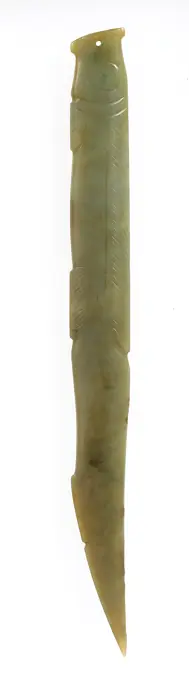
Drumsticks, anonymous, c. 1900 - c. 2000 musical instrument. elements (of musical instruments). percussion instrument. beater. drumstick - Replica Tromstok of a 17th or 18th century tromks. - Replica Tromstok of a 17th or 18th century Tromstok, the Netherlands, 20th century. Netherlands wood (plant material)
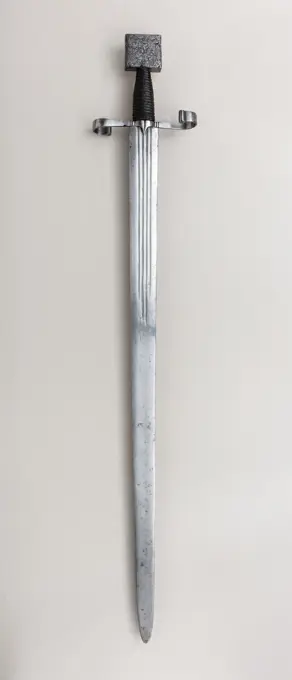
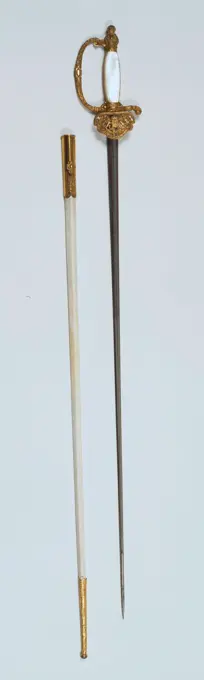
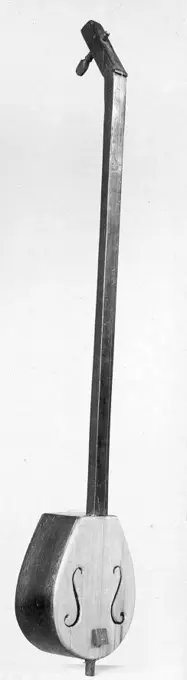
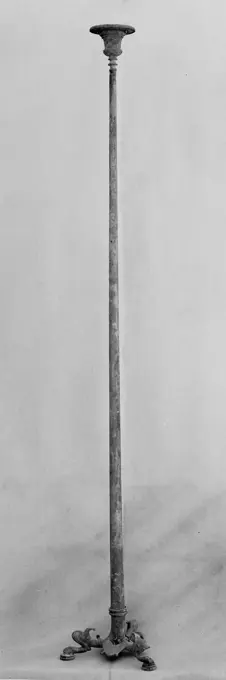
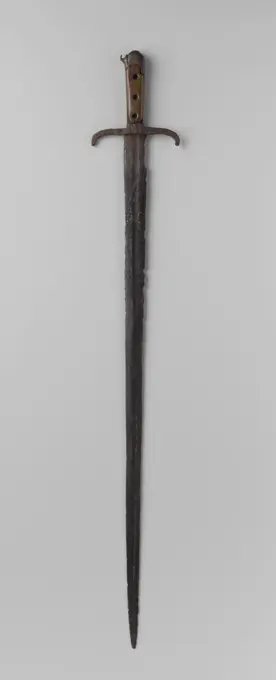
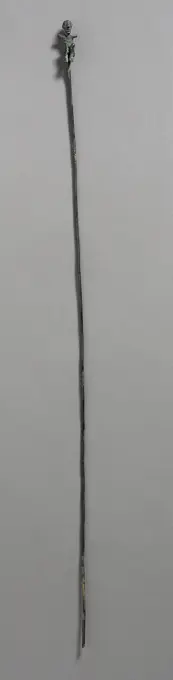
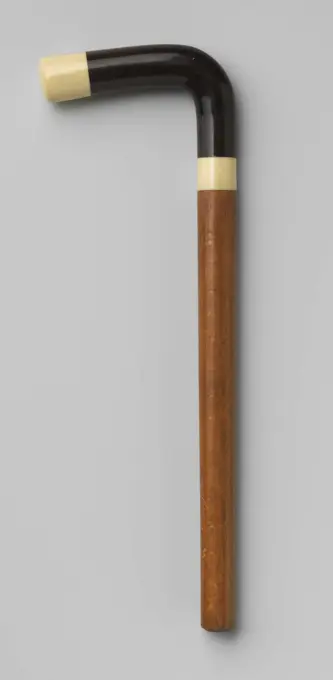
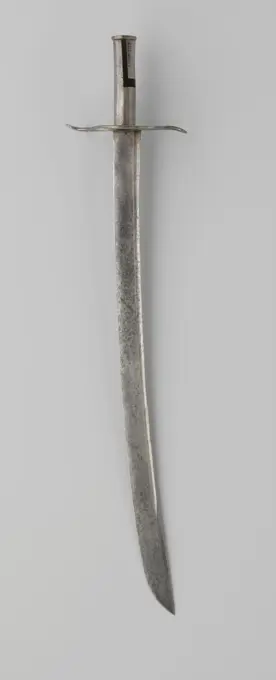
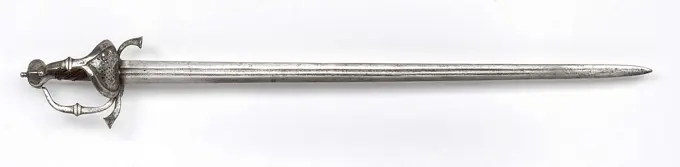
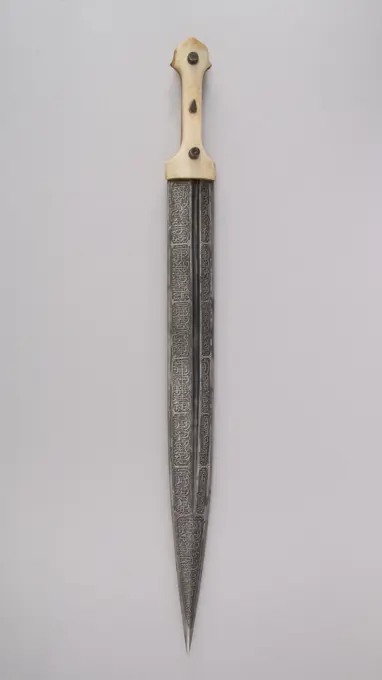
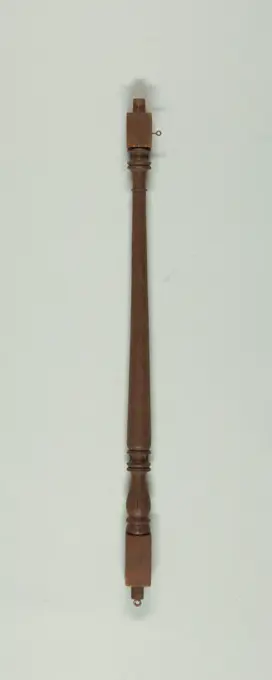
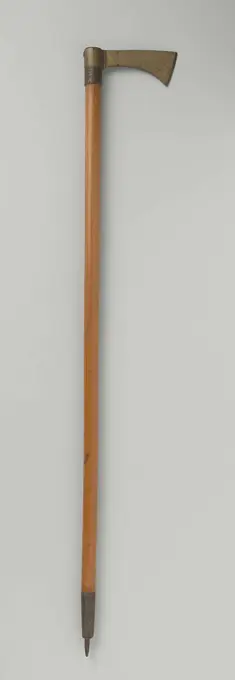
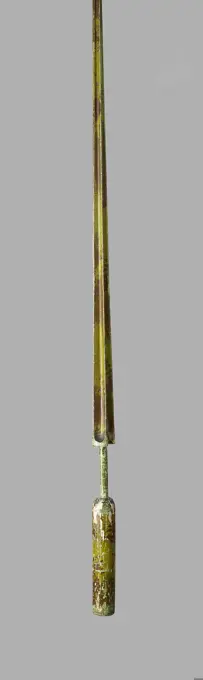
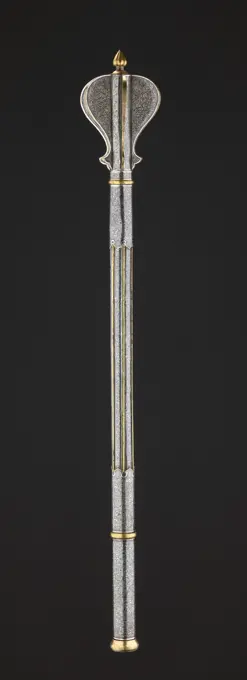
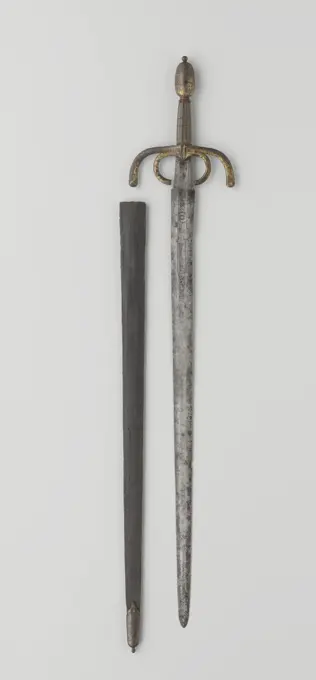
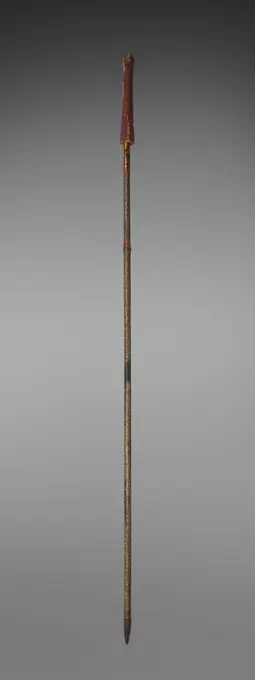
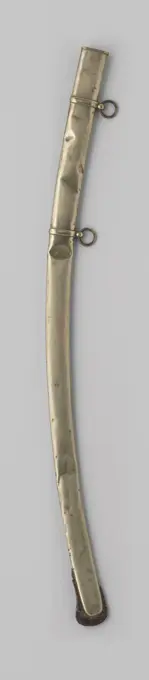
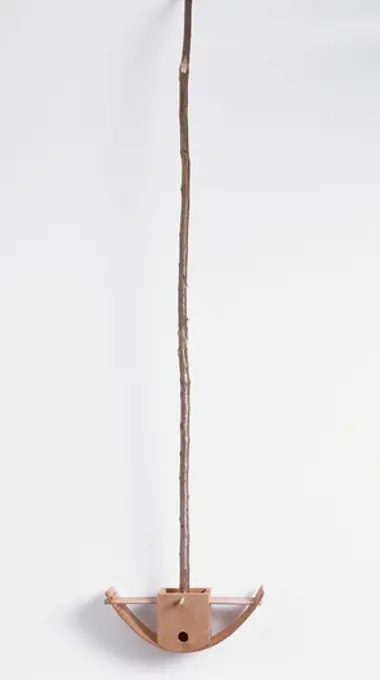
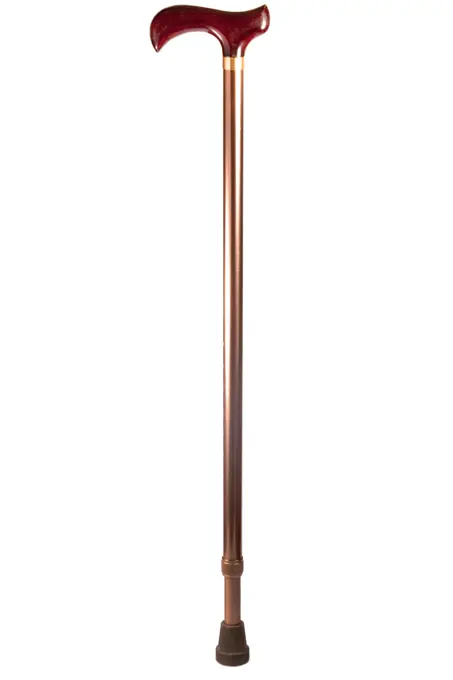
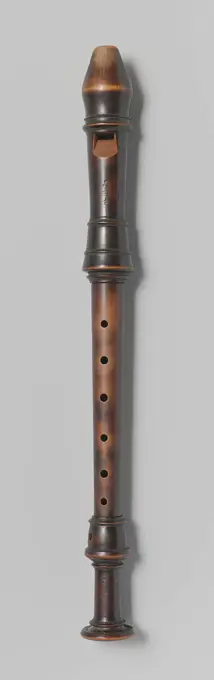
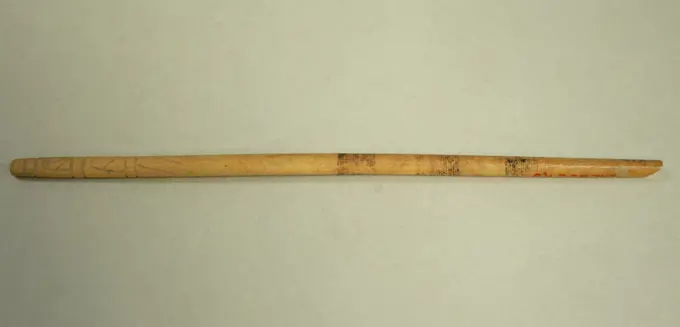
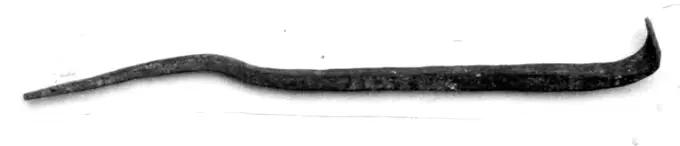
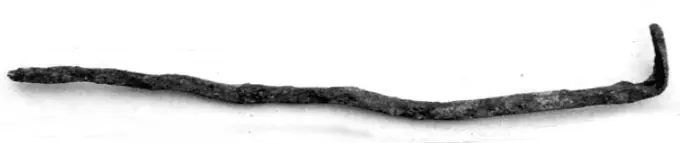
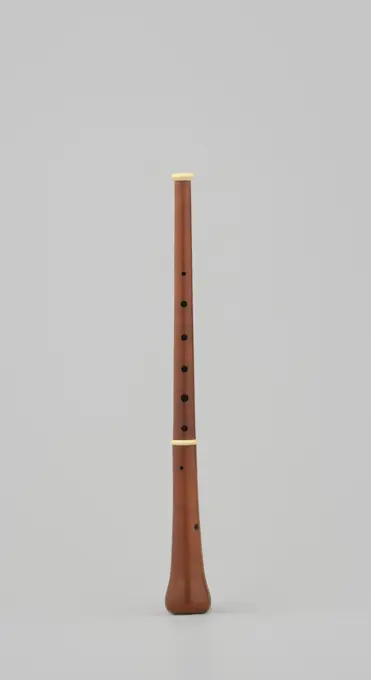
Sword of Burgomaster Van der Werff of Leiden.In 1574 Spanish forces besieged Leiden. The citys inhabitants were so hungry that they considered surrender. Legend has it that their mayor, Burgomaster Pieter van der Werff, gave them with his sword and demanded that they kill and eat him. This sword is believed to have belonged to the self-sacrificing mayor.Kling for Ruiterdegen, Anonymous, c. 1550 - c. 1900  Kling for Ruiterdegen with inscription: Sahagum and image of a running animal.  iron (metal)   NetherlandsSword ca. 1500 Spanish. Sword. Spanish. ca. 1500. Steel, leather. SwordsState patients with minister P.J. Old.Steastees with a triangular etched iron blade and a white leather sheath. The hilt consists of a side pearl bracket, a dependent baffle plate and a hold button. The entire hilt is made of copper and decorated with various motifs and curls. On the mouth band of the sheath an etched floremotief.Drumsticks, anonymous, c. 1900 - c. 2000 musical instrument. elements (of musical instruments). percussion instrument. beater. drumstick - Replica Tromstok of a 17th or 18th century tromks. - Replica Tromstok of a 17th or 18th century Tromstok, the Netherlands, 20th century. Netherlands wood (plant material)"Japanese Fiddle" 19th century American. "Japanese Fiddle" 500679Bronze candelabrum (lamp stand) ca. 1st century A.D. Roman An oil lamp, made of either bronze or terracotta, would have stood on the bell-shaped top. Such an arrangement formed the normal way of providing artificial lighting in the main rooms of a Roman house. A number of similar candelabra have been found at Pompeii and the other sites that were buried by the eruption of Mount Vesuvius in A.D. 79.. Bronze candelabrum (lamp stand). Roman. ca. 1st century A.D.. Bronze. Early Imperial. BronzesIron hunting sword, Anonymous, 1450 - 1499 hunting sword Right with a wide blind angle that forms a continuation of the blade shoulder and that ends asymmetrical at the top in a widening with a curly protruding on the front (resembles a silhouette of a bird head with beak). Two vertical grooves run along the edges that continue along the top end. On either side of the Klingangel a set of Horn handle, both attached to the sting by means of three rivets consisting of hollow brass tubes. Bowed downwards at the ends, rectangular of cross -section and thicker in the middle, namely where the Klingangel has to pass. Bemparting blade of flattened-side cross-section with a central trench continuously up to 305 mm from the parent bar. Marked. Netherlands iron (metal). brass (alloy). horn (animal material)Degen belonging to the Office Suit of Governor General J.B. Van Heutsz.Degen belonging to the official costume of Governor General J.B. Van Heutsz.Mounting Pin for a Finial. Iran, Luristan, Luristan bronzes, circa 1000-650 B.C.. Jewelry and Adornments; pins. Bronze, castSabel Light Cavalry Model No. 3, M.1814 with Schede, S. de Jager, 1814 - 1866 sabre Officer's label Cavalerie Model 1823 or 1846. Hinged half bump. On the Kling 'De Jager'. With steel sheath. One fixed and one loose ring. Holling up to 22 cm. Haarlem Kling, Schede: Iron (Metal). hilt: copper (metal). grip:. grip:   NetherlandsHandle made of wood, on which an L-shaped button of black horn, contained between two parts ivory, gelria, c. 1900 - c. 1930 Handle made of wood, on which an L-shaped button of Black Hoorn, contained between two parts ivory. Netherlands Handle: Wood (plant material). Button: Horn (Animal Material). button: Ivory cutting / lacquering / cutting Handle made of wood, on which an L-shaped button of Black Hoorn, contained between two parts ivory. Netherlands Handle: Wood (plant material). Button: Horn (Animal Material). button: Ivory cutting / lacquering / cuttingSabelbayonet of the Navy, Anonymous, c. 1700 - c. 1900 sword bayonet Bayonet table of the navy; on which (the inscription) 'Marine'.  iron (metal)Ship carpenter's passer with straight legs, an oval/round head and no hinge, anonymous, c. 1590 - c. 1596  Ship carpenter's passer with straight legs, an oval/round head and no hinge. The passer is forged from one piece.  iron (metal) forging  Nova Zembla. Saving HuysMeissel - Chisel on white Meissel - Chisel on white Copyright: xZoonar.com/lantapixx 7236806Zwaard.The iron hilt consists, among other things, from a heart-shaped gilt, two fist brackets with halfway through a diamond-shaped decoration in embossed and with the top clenched to the anti-clock, a pearer rod with keep-shaped decoration at the ends, a side bracket with an ajour processed plate with circles and stars, and an ajour edited pearer ring with a thumb bracket on the carrying side; The wooden handle is wounded with rotated copper wire (restored) and has braided handle rings on top and top. The straight, double-sided claling has stamped a hexagonal cross-section with two channels over the entire length and a maltthus cross.Dagger (Qama) 19th century Caucasian. Dagger (Qama). Caucasian. 19th century. Steel, ivory, gold, silver. DaggersSTOP fork; Gumpert, Georg Heinrich (Fl. 1850-1893); 2. PO. 19th century (1800-00-00-1810-00-00);Baluster; wood, turnedBow -Bergwerkersstok.Bamboo stick with a copper pipe with inscription at the end, at the other end faced in a wide iron batter and with a pin on the other side. Inscription: IHS. Dated: 1754.Lance for the Carousel (Running at the Ring) Made 1710-1720 Dresden. Iron, lead, gilding, wood, paint, gold, pigment, and varnish .Sabel Light Cavalry Model No. 3, M.1814 with Schede, Anonymous, 1814 - 1866 sabre Sabel Light Cavalry Model No. 3. Fixed side plate on the hilt. See nos. 296 and 298. Netherlands (possibly) Kling, Schede: Iron (Metal). hilt: copper (metal). Handle: Leather. grip:   NetherlandsBreech-Loading Center-Fire Gun in form of a Walking Stick 1800-1900 Europe. Iron, leather, brass, steel, and horn .Arming Sword Made 1490-1530 Italy. Steel, iron, gilding, wood, and silk textile (velvet) .Przeszo Przyszoci unknownSchede at the sword of Jacob van Heemskerk, Anonymous, 1580 - 1607 sheath Schede at the sword of Jacob van Heemskerk.  iron (metal). leatherWheel-Lock Spanner Combined with Screwdriver and Spring Clamp. German. Date: 1567. Dimensions: L. 22 cm (8 5/8 in.). Steel. Origin: Germany. Museum: The Chicago Art Institute, Chicago, USA.Object . Object  251920 Object , Bronze, Other: 7 5/16 in. (18.6 cm). The Metropolitan Museum of Art, New York. Fletcher Fund, 1925 (25.78.140)William Cawdell, Apostle Spoon: Saint Bartholomew, 1604/5, silver.Coach Horn () early 19th century American. Coach Horn () 505085Spear with Sheath, 1700s. Japan, Edo period (1615-1868). overall: 252.7 cm (99 1/2 in.); blade: 30.5 cm (12 in.).Candelabrum. UnknownSpoon; copperHalberd ca. 1575 Italian. Halberd 26761Cavalry label without hilt, Anonymous, 1800 - 1900 sabre 19th century cavalry label without hilt. Schede has a silvery glow. There are two supporting tires with two separate rings on the sheath. A rusted towing plate at the bottom of the sheath. West-Europa schede: iron (metal)   West-EuropaBarometer, anonymous, c. 1785 - c. 1800 Barometer. Northern Netherlands (possibly)Netherlands (possibly) walnut (hardwood) Barometer. Northern Netherlands (possibly)Netherlands (possibly) walnut (hardwood)Iron poker, anonymous, c. 1400 - c. 1950 A poker with a hook.  iron (metal) A poker with a hook.  iron (metal)Close-up of wooden bird-box on polewalking stick isolated on white walking stick isolated on white Copyright: xZoonar.com/VVxVoennyyx 5022369ContainerPin ca. 3rd-7th century A.D. Sasanian. Pin 322786Lower leg bones (tibia and fibula), computer artwork.List fragment of stepped profile frame with white inner edge: style., C. 1900 - c. 1999  Style of a painting list made of wood.  wood (plant material). gesso. bole (clay). paint (coating)Degen belonging to Consul General Daniël Jan Steyn Parvé.Degen with Black Sheath, Belonging to Consul General Daniël Jan Steyn Parvé's Office Suit.Hammer and Crowbar. Construction Tools. Vector Illustration. EPS10. Hammer and Crowbar. Construction Tools. Vector Illustration.Bassoon, Heinrich Borders, c. 1796 - c. 1806 Fagot, mounted with copper and with eight valves of leg. Dresden maple (wood). brass (alloy) Fagot, mounted with copper and with eight valves of leg. Dresden maple (wood). brass (alloy)Wallonian swordSword possibly ca. 1500 British. Sword. British. possibly ca. 1500. Steel, silver, leather. SwordsDagger ca. 10th-9th century B.C. Iran. Dagger. Iran. ca. 10th-9th century B.C.. Bronze. Iron Age II. Northwestern Iran, Caspian regionPin ca. 9th century B.C. Iran. Pin. Iran. ca. 9th century B.C.. Bronze. Iron Age II. Iran, HasanluWooden Staff or Support, Middle Kingdom, Dynasty 11-12, 2040-1914 BC. Egypt, Middle Kingdom, Dynasty 11-12, 2040-1814 BC. Wood; overall: 52.1 cm (20 1/2 in.). This staff has a terminal in the shape of papyrus umbel serving as a support for some other detail now missing.Descant Recorder.Soprano clasp flute, marked on a banderle Aardenberg, above which a deer and including a lily.High floor lamp on long leg with fabric top. Cartoon decoration for interior design of room. Room lighting element isolated in white background. Lighting device in flat design. Interior floor lamp. High floor lamp on long leg with fabric top. Room lighting interior device vector illustrationBone Weaving Bobbin 8th-mid-16th century Peru; north coast (). Bone Weaving Bobbin. Peru; north coast (). 8th-mid-16th century. Bone. Peru. Textiles-ImplementsBaluster mid-18th century British. Baluster. British. mid-18th century. Oak. WoodworkLadle 1758-59 John Wirgman. Ladle 192250. Waongoos of paper, tapered, exterior pasted with finely structured white paper, top lid with edge of clover leaves deposited, inside wrapped with light blue paper.Key 306-30 B.C. Ptolemaic Period. Key. 306-30 B.C.. Iron. Ptolemaic Period. From Egypt, Upper Egypt, Thebes, Dra Abu el-Naga, Carnarvon/Carter excavationsHandle-Shaped Jade. China. Date: 2000 BC-750 BC. Dimensions: 9 × 15/16 × 3/8 in. Jade. Origin: China. Museum: The Chicago Art Institute, Chicago, USA.Fork (possibly Germany); steel, silver, agate; L x W: 17.9 x 1.9 cm (7 1/16 x 3/4 in.); The Robert L. Metzenberg Collection, gift of Eleanor L. Metzenberg; 1985-103-121Lans from the arms rack of governor-general J.C. Baron Baud, Anonymous, c. 1800 - c. 1900 pike Round wooden shaft with iron cover on the bottom of a cone -shaped point. Top of shaft is wrapped with rope around which an iron ring. Short narrow blade, ending in a pointed point. Decoration (rooted steel) on blade. Kalimantan wood (plant material). iron (metal). rope cutting / forging / castingWoman's Tobacco-Pipe 19th century Japan. Woman's Tobacco-Pipe 61937Key 306-30 B.C. Ptolemaic Period. Key. 306-30 B.C.. Iron. Ptolemaic Period. From Egypt, Upper Egypt, Thebes, Dra Abu el-Naga, Carnarvon/Carter excavationsRobert Jygges, Apostle Spoon: Saint Matthew or possibly Saint Thomas, 1628/29, silver.Stocking of plain yellow silk jersey, c. 1910 Stocking of yellow silk jersey. Fairly coarse thread but strongly shiny. Seamless, square heel. Very close and little rack. Netherlands whole: Silk. knitting Stocking of yellow silk jersey. Fairly coarse thread but strongly shiny. Seamless, square heel. Very close and little rack. Netherlands whole: Silk. knittingFork;  19th century (1800-00-00-1848-00-00);Longbow, 19th century, Unknown Japanese, 84 × 1 3/4 × 9 1/2 in. (213.36 × 4.45 × 24.13 cm), Laminated lacquered bamboo, Japan, 19th century, Although the sword is the iconic weapon of the samurai, mastery of the longbow was also a highly regarded skill, and expert archers were the stuff of legends. Longbows were the main weapon during the Heian (784-1185) and Kamakura (1185-1333) periods and became formally accepted as a military weapon in 1252. During battle, samurai first shot arrows from horseback before they resorted to sword fighting. In the 1300s, long swords and spears became the weapons of choice for the main offensive, and guns were subsequently introduced in the early 1500s. Archery eventually evolved into a more formal and ceremonial tradition.Chopstick, 918-1392. Korea, Goryeo period (918-1392). Bronze; overall: 17.6 cm (6 15/16 in.).Dubbelloops flint turn rifle, Jan Kitzen, c. 1650 flintlock gun The lock consists of two parts: the rear slot plate and two pre -lock plates; The rear slot plate has chiseled relief decoration ending in the head of a monster; The lock is engraved with praise; De Haan has been edited ajour and engraved in bass relief in the form of a dragon and a squirrel; The two pre -lock plates each operate one of the two walking; One pre -lock plate is engraved Jan Kitzen: FT, the other à Maestricht. The two runs are mounted one above the other and provided with a entered ring; Stamped on top of the double -headed eagle of Maastricht; Two yellow wings form the rearvizier, the two visor grains are made of the same material; The tail of the loop is engraved with a dragon and praise. The flask consists of two parts, the flask and the frontade; The frontade is grooved on both sides, a groove of which offers space for the chest of drawers, and ends in the front in a hood of cow horn; The flask is brandedIchigen-kin (絃琴) 19th century Kasuke Satake This one string zither was probably invented during the 17th century and remained popular until the 1920's. Although a revival of the tradition is occuring, the instrument is still rarely heard. The player touches the silk string lightly with an ivory tube worn on the left middle finger. The string is plucked with a shorter, similar tube worn on the right index finger.. Ichigen-kin (絃琴) 502058Flageolet, Jean-Francois Martin, c. 1850 - c. 1870 Flageolet made of black ebony with silver mounted, with six holes and two valves. Sewing ebony (wood). silver (metal) Flageolet made of black ebony with silver mounted, with six holes and two valves. Sewing ebony (wood). silver (metal)Musette, anonymous, 1850 - 1899 Musette of stained palmhout, in two parts and with two ivory rings. There is a hole at the back and three holes in the cup. France boxwood. ivory Musette of stained palmhout, in two parts and with two ivory rings. There is a hole at the back and three holes in the cup. France boxwood. ivoryStaf van de bode van een liefdadigheidsinstelling.Ebony stitch with a round handle, including two twisted pieces, entirely under a grinding food. At the top above the grip a flax sty of a woman with a child on her arm one to her skirts (symbol of charity).Yeah dessert; Würtembergische metallwarefabrik - WMF (Germany; Wytwónia Z Otnarz; 1880-1914); after 1880 (1880-00-00-1905-00-00);Partzaan, anonymous, c. 1600 - c. 1699  Partizan with serrated wings. Open worked ax with heart-shaped recesses. Smooth, hexagonal center piece. Smooth shaft with ring ornament. Two feathers (50.3 cm). Round stick with a smooth, iron point at the end. (7.0 cm). Low Countries (possibly) iron (metal). wood (plant material) forging / polishing / cuttingChild's bow -Transverse Flute in G. Culture: German. Dimensions: Overall length: 69.5 cm (27 3/8 in.). Maker: Johann Wendelin Weisse (German). Date: ca. 1830. Museum: Metropolitan Museum of Art, New York, USA.Oboe, Hendrik Richters, c. 1720 - c. 1730 Hobo van Ebony, mounted with ivory. The three silver valves are richly engraved. Third and fourth hole are double. Two voice holes in the cup. Marked: H.Richters / clover with the steel to the left. Amsterdam ebony (wood). ivory. kleppen: silver (metal) Hobo van Ebony, mounted with ivory. The three silver valves are richly engraved. Third and fourth hole are double. Two voice holes in the cup. Marked: H.Richters / clover with the steel to the left. Amsterdam ebony (wood). ivory. kleppen: silver (metal)Souvenir spoon Saunders & Shepherd British 1895-96Looking Glass 1762-67 John Elliott Sr.. Looking Glass 4876Rura Melanesian (Aoba Island, Vanuatuan) late 19th century View more. Rura. Melanesian (Aoba Island, Vanuatuan). late 19th century. Bamboo. Aoba island, Ambae, Vanuatu. Aerophone-Blow Hole-end-blown flute (vertical)Gray suspenders with white piping, leather mounting parts and gold -colored buckles, as well as the gold -colored printers marked with "Hold Up"; marked in pen: cc, anonymous  Gray suspenders with white piping, leather mounting parts and gold -colored buckles, as well as the gold -colored printers marked with "Hold Up"; marked in pen: cc. Canter Cremers.  leather.Fork, Antler, steel, silver, Long two-tined fork, rounded shoulder, articulated neck. Silver reeded ferrule. Handle of antler carved as grotesque bearded male face with fur-trimmed head., Southern Germany or Austria, mid-late 18th century, cutlery, Decorative Arts, ForkDance PaddleLancer at perforations. Bronze Age. Copper alloy, cast iron. Coming from: Lit de la Seine, Pont de Bercy, 1853. Paris, Carnavalet Museum. Palter of spear to perforations Bronze age, copper alloy, weapon, cast iron, perforation, spearhead, protohistory, protohistoricTransverse Flute ca. 1840 Firth, Hall & Pond American. Transverse Flute 503273Vector drawing of one way arrow traffic sign.Scarf Made 1810-1830 Connecticut. Silk, double interconnected looping with crochet fringe .Serpent van hout met leer overtrokken met 5 kleppen en 7 gaten.Elongated wind instrument consisting of a thin black leather covered wooden tube that widens itself to the cup. The valves are of (partially fire-digging) buyer. The batter is made of metal. Around the cup a copper band is attached to nails. The inside of the cup is painted red with vines: the leaves in gold and black and the grapes in blue and gold. The nozzle and some valves are missing.Eka-Tara late 19th century Indian. Eka-Tara 500755Dagger (Katar) 17th-18th century Indian; blade, European. Dagger (Katar) 31501Drawing, Design for Hat Tree No. 5; Designed by A.N. Davenport Co.; graphite on thin cream laid paper; 17.1 x 5.4 cm (6 3/4 x 2 1/8 in. )Spoon Korea. Spoon 57385Funerary Mouth Cover. UnknownArrow with composite stone tip ca. 1479-1458 B.C. New Kingdom. Arrow with composite stone tip. ca. 1479-1458 B.C.. Reed, wood, quartz, adhesive. New Kingdom. From Egypt, Upper Egypt, Thebes, Sheikh Abd el-Qurna, Tomb of Senenmut (TT 71), below, deposit of bows and arrows, MMA excavations, 1935-36. Dynasty 18cymbalTang Kang late 19th century Bornean. Tang Kang 501437Needlepoint (Burano Point) Lace Edging, mid 18th century. Italy, Burano, mid 18th century. Lace, needlepoint: linen; average: 8.9 x 285.8 cm (3 1/2 x 112 1/2 in.).Xi Fish, 1100-771 BCE, 4 3/4 x 3/8 x 3/16 in. (12.07 x 0.95 x 0.48 cm), Green jade, China, 11th-8th century BCE