Historical Textile Fragments

Collection of intricate textile pieces from various periods, showcasing lace, silk, and detailed floral patterns with historical significance.

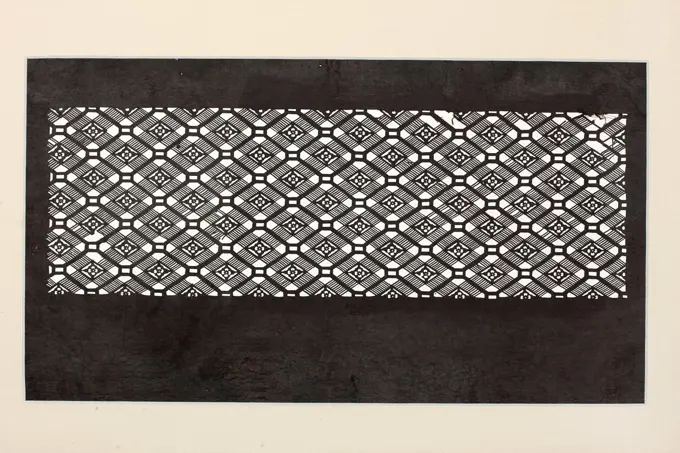
Textile, Medium: cotton Technique: plain weave, indigo dyed, resist applied with stencil (katazome), Oval and circular floral rosettes in dotted goemetrical framework, forming overall pattern, In white with occasional hand application of orange, on blue ground., Japan, late 19th century, printed, dyed & painted textiles, Textile
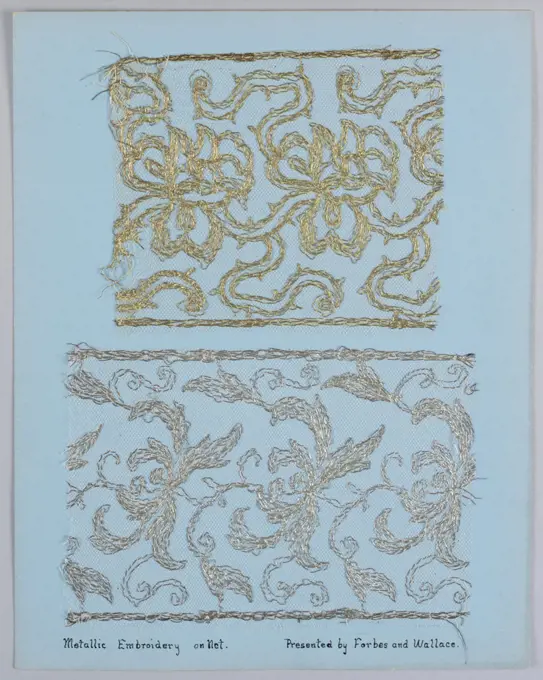
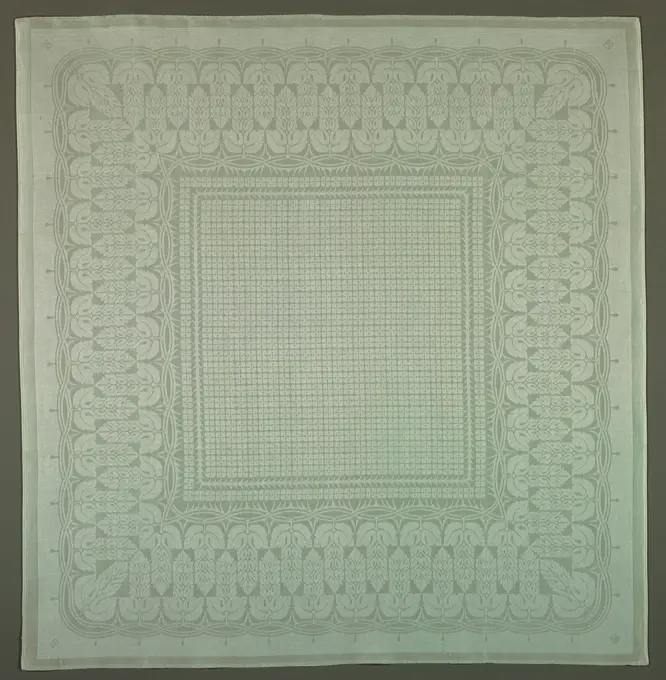
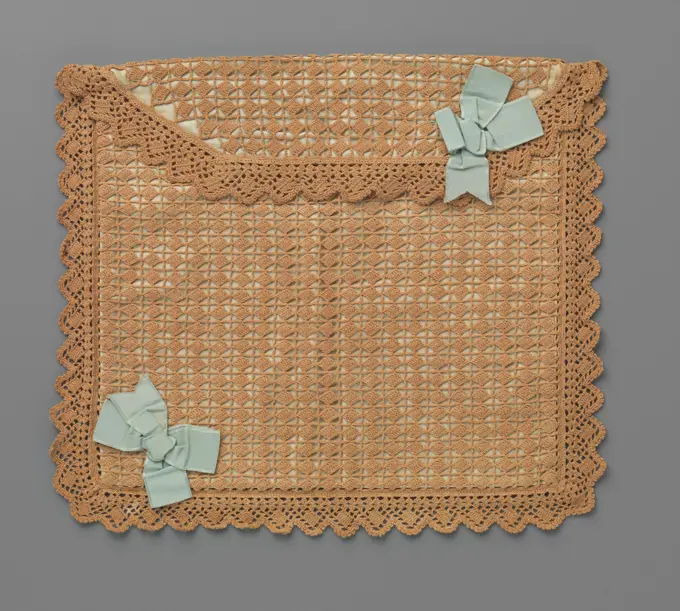
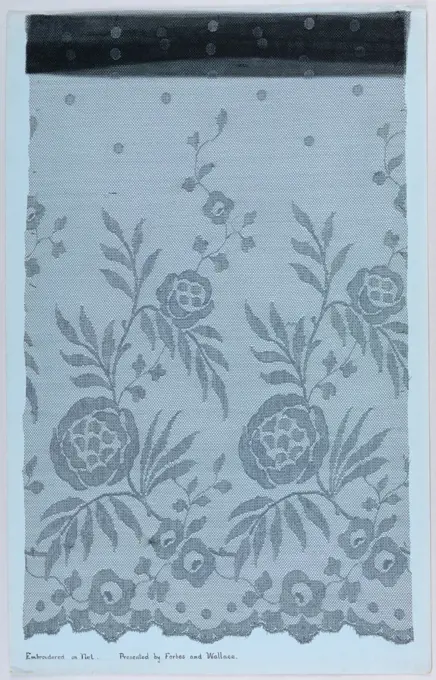
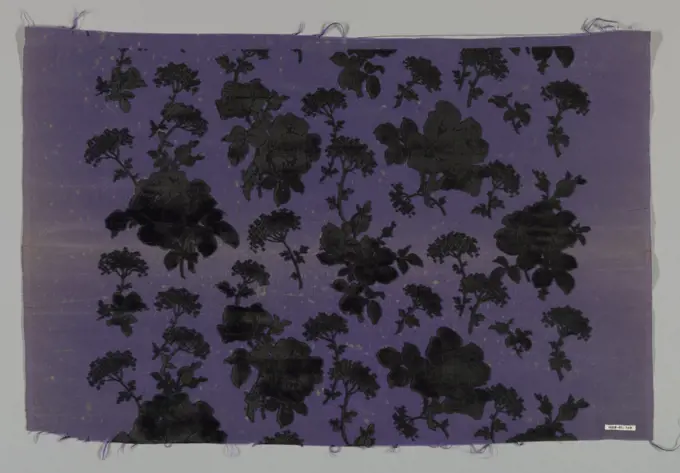
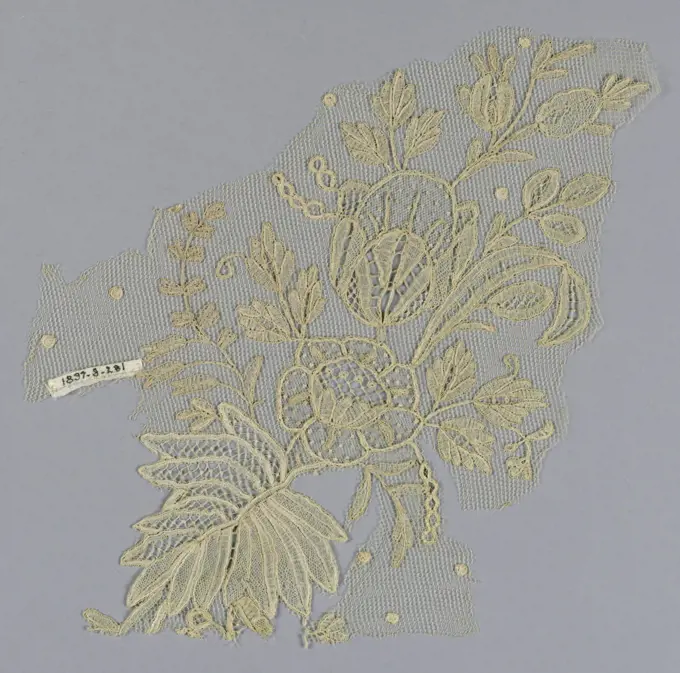
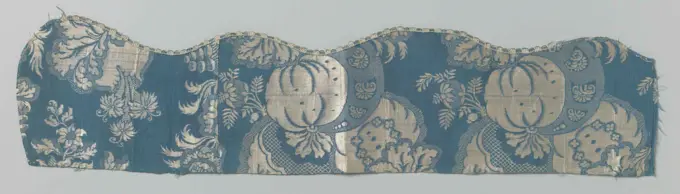
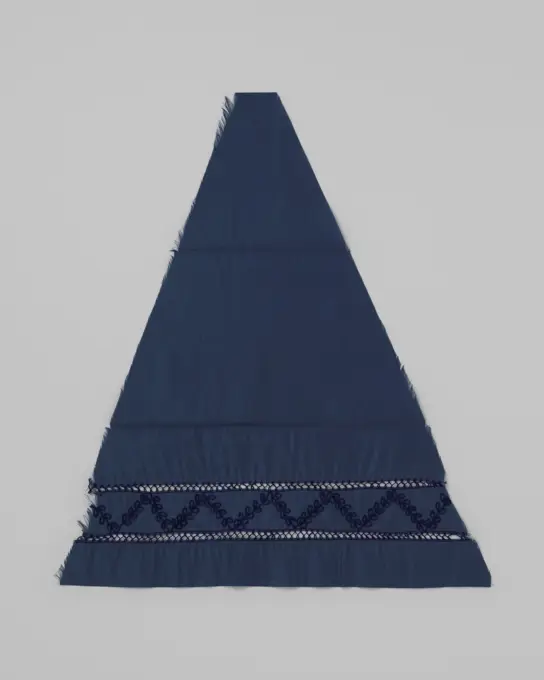
Demolition of white linen ,, 1825 - 1875 Wit linen Sloop Wh 2oonl. Northern Netherlands (Possible) linen (material) Wit linen Sloop Wh 2oonl. Northern Netherlands (Possible) linen (material)Headcloth Chancay. Headcloth, 1000-1532. Cotton, 32 11/16 x 34 5/8 in. (83 x 88 cm).   Arts of the Americas 1000-1532Machine-made openwork samples, Medium: cardboard, linen, silk, metallic Technique: linen embroidery with ground cloth dissolved Examples of embroidery on net produced by the Schiffli machine Metallic embroidery on net Machine-made openwork in imitation of hand-embroidered net Mostly floral and a few geometric patterns, some designs described as 'Spanish' Imitation hand-made filet Machine filet Imitation filet crochet Ploven (burnt-out lace) Fancy curtain lace made on the Levers machines Real filet (handmade) next to Machine-made filet Spotted curtain nets, made chiefly at Nottingham, England and Caudry, France., Samples of machine-made openwork and several examples of hand made lace mounted on boards. They imitate hand-embroidered net, crochet, or needlepoint. All are floral patterns plus a few of early 1920's geometric style., 'Embroidered net' produced by the Schiffli Machine., USA, ca. 1910, lace, Machine-made openwork samplesHandkerchief, Medium: linen, cotton Technique: cotton embroidery on linen plain weave, White on white embroidered handkerchief with wide floral borders and a plain center. Some openwork details., 19th century, costume & accessories, HandkerchiefTextile Swatch Textile Swatch, 1950s to 1960s. Silk, 22 x 13 3/4 in. (55.9 x 34.9 cm).    1950s to 1960sTextile Fragment 18th century. Textile Fragment 454538Napkin, Hawthorne: Design no. 528; Designed by Chris Lebeau (Dutch, 1875 - 1945); Manufactured by E.F.J. Van Dissel and Son; Netherlands; linen (quality no. 56)Nachtzak van bruin haakwerk met lichtblauwe voering en strikken.Night bag of brown colored crocheted, with a light blue lining and two light blue bows. Rectangular envelope model. The crocheted consists of a grid of rectangles with a diamond in each rectangle. Around the bag and continuous along the valve is a border crocheted in the same color and with a regularly wavy slip edge. The bag can be closed under the flap with two light blue upholstered buttons sitting on the bag and scented eyes that are on the inside of the valve.Linnamast finger cloth with butterflies, Chris Lebeau, c. 1904 Linnamast finger cloth with butterflies: butterfly motif, design no. 505. The finger cloth belongs to eleven finger cloths (BK-1979-260-A to BK-1979-260-L), thirteen napkins (BK-1979-259-A T/m BK-1979-259-M) and two tablecloths (BK-1979-258-A and BK-1979-258-B). Eindhoven linen (material) damask Linnamast finger cloth with butterflies: butterfly motif, design no. 505. The finger cloth belongs to eleven finger cloths (BK-1979-260-A to BK-1979-260-L), thirteen napkins (BK-1979-259-A T/m BK-1979-259-M) and two tablecloths (BK-1979-258-A and BK-1979-258-B). Eindhoven linen (material) damaskTraveling Writing Set 1855-1875 England. Silver plate and wax .Machine-made openwork samples, Medium: cardboard, linen, silk, metallic Technique: linen embroidery with ground cloth dissolved Examples of embroidery on net produced by the Schiffli machine Metallic embroidery on net Machine-made openwork in imitation of hand-embroidered net Mostly floral and a few geometric patterns, some designs described as 'Spanish' Imitation hand-made filet Machine filet Imitation filet crochet Ploven (burnt-out lace) Fancy curtain lace made on the Levers machines Real filet (handmade) next to Machine-made filet Spotted curtain nets, made chiefly at Nottingham, England and Caudry, France., Samples of machine-made openwork and several examples of hand made lace mounted on boards. They imitate hand-embroidered net, crochet, or needlepoint. All are floral patterns plus a few of early 1920's geometric style., 'Embroidered net' produced by the Schiffli Machine., USA, ca. 1910, lace, Machine-made openwork samplesTextile Swatch Textile Swatch, 1950s to 1960s. Silk, 58 1/2 x 21 1/2 in. (148.6 x 54.6 cm).    1950s to 1960sLid from toilet container; Mayerhofer, Stephan (1772-1852); 1830 (1830-00-00-1830-00-00);Fragment (Belgium); linenTextile Swatch , 1950s to 1960s. Silk, 18 3/4 x 22 1/4 in. (47.6 x 56.5 cm).    1950s to 1960s. Nearly square shawl of cotton crepe in ivory color, with spreamother of embroidered silk pink flowers on green leaf.Textile Swatches Onondaga Silk Company, Inc. (1925-1981). , 1948-1959. Silk, 23 1/2 x 17 in. (59.7 x 43.2 cm).    1948-1959Samples (5) early 19th century French. Samples (5) 219279Napkin of white linen ,, 1731 White linen napkin with cross -work pattern "lavender" or "kaffen roses". Brand Kroon WG 30 and 1731. Northern Netherlands linen (material) White linen napkin with cross -work pattern "lavender" or "kaffen roses". Brand Kroon WG 30 and 1731. Northern Netherlands linen (material)Textile, Fischreiher; Designed by Carl Otto Czeschka (Austrian, 1878 - 1960); Made for Wiener Werkstätte (Austria); silkTextile, Herman A. Elsberg, (American, 1869-1938), Medium: silk Technique: cut, uncut and voided supplementary warp pile in a plain weave foundation (ciselé velvet), Purple taffeta ground with an allover design of rose sprays and Queen Anne's Lace in black and uncut velvet., Lyon, France, ca. 1915, woven textiles, TextileTextile Swatches Onondaga Silk Company, Inc. (1925-1981). , 1948-1959. 67 acetate, 22 metal, 13 nylon, a: 32 1/2 x 18 1/4 in. (82.6 x 46.4 cm).    1948-1959Assyrian and Persian OrnamentTextile (USA); Manufactured by American Print Works; cottonNapkin with a flower pattern, anonymous, c. 1750 Linnamast napkin with a flower pattern. Among other things: Roos, Ranonkel, Lelietje van Dalen, Carnation, Tulp; With stems that are tilted and in rows of the opposite. Standing edge: thin -running volute vines, which among other things, papae flowers, poppy, chrysanthemum, acelei, and is bordered by large asymmetrical rocaillem motifs that are directed on the corners to the middle. Round: Blocking edge. Dresden linen (material) damask Linnamast napkin with a flower pattern. Among other things: Roos, Ranonkel, Lelietje van Dalen, Carnation, Tulp; With stems that are tilted and in rows of the opposite. Standing edge: thin -running volute vines, which among other things, papae flowers, poppy, chrysanthemum, acelei, and is bordered by large asymmetrical rocaillem motifs that are directed on the corners to the middle. Round: Blocking edge. Dresden linen (material) damaskApron, 20th century, 23 7/8 x 25 in. (60.6 x 63.5 cm), Cotton, China, 20th centuryNapkin with peel pattern. Brand: Kroon G 30. ,, c. 1725 - c. 1775 White linen napkin with peel pattern, Brand Kroon G 30 Northern Netherlands (Possible) linen (material) White linen napkin with peel pattern, Brand Kroon G 30 Northern Netherlands (Possible) linen (material)Playing board, Paulus van Beugen, c. 1812 - c. 1813 Playboard with engraved surfaces on one side and engraved lines for the mill game on the other side. The board is marked with a phases bundle and a dolphin in a triangle. the Bosch silver (metal) Playboard with engraved surfaces on one side and engraved lines for the mill game on the other side. The board is marked with a phases bundle and a dolphin in a triangle. the Bosch silver (metal)Napkin with peel pattern ,, 1756 Napkin made of white linen with peel pattern, brand Kroon G 30 and 1756. Northern Netherlands (Possible) linen (material) Napkin made of white linen with peel pattern, brand Kroon G 30 and 1756. Northern Netherlands (Possible) linen (material)Textile Swatches Onondaga Silk Company, Inc. (1925-1981). , 1948-1959. Silk, 23 3/4 x 17 in. (60.3 x 43.2 cm).    1948-1959Cotton damask finger cloth with rose pattern and trimmed with a red border, c. 1900 Finger cloth of cotton damask with red edges, with roses and a neo-Louis XIV ornament. The canvas has no Franjerand. Ten finger cloths (BK-1973-200-A to BK-1973-200-K) and a tablecloth (BK-1973-199) belong to the canvas. Belgium (possibly) cotton (textile) damask Finger cloth of cotton damask with red edges, with roses and a neo-Louis XIV ornament. The canvas has no Franjerand. Ten finger cloths (BK-1973-200-A to BK-1973-200-K) and a tablecloth (BK-1973-199) belong to the canvas. Belgium (possibly) cotton (textile) damaskTextile Swatches Onondaga Silk Company, Inc. (1925-1981). , 1948-1959. 38 rayon, 35 silk, 27 acrylic, 42 x 17 3/4 in. (106.7 x 45.1 cm).    1948-1959Communion cover from edge embroidery with the lamb on a book. Communion felt of natural-colored edge embroidery, tuled stones on machining. Rectangular model. Pattern with a detached, sloped motif from a lamb in the middle in the middle in an oval wreath. The lamb holds a stick with a vaantje with the I.H.s. monogram. The lamb is on a book placed in perspective, which is closed with seven stamps. The wreath is made from vines with grape vegetables, wine leaves and ears of corn. The rug is finished around with a slip edge, along which a closed edge with a concatenation of leaves with rosette flowers. One leaf is always in every shult. In the corners of the rug there is always a flower branch with spring leaves.Katagami stencil for kimono dyeing; koshi ornament (checker) with intertwined tiny flower rosettes. unknown, authorRoll painting, anonymous, 1368 - 1644 Basket filled with flowers. In wooden box. China silk. ink. dye Basket filled with flowers. In wooden box. China silk. ink. dyeFragment, Medium: linen Technique: bobbin lace appliquéd to net, Fragment of Brussels-style lace showing a large-scale design of a floral group, including a rose and lily., Belgium, 19th century, lace, FragmentTextile (Japan); silk; Warp x Weft (a): 22.5 × 6.7 cm (8 7/8 × 2 5/8 in.) Warp x Weft (b): 18.4 × 6 cm (7 1/4 × 2 3/8 in.); 1937-35-21-a,bTextile Swatch Textile Swatch, 1950s to 1960s. Silk, 22 x 11 1/4 in. (55.9 x 28.6 cm).    1950s to 1960sScandinavian abstract wall art. Minimalistic art vector poster. Hand drawn minimalism design for interior. Printable bundle. Vector illustration.ndinavian wall art poster. Scandinavian wall art posterLinen napkin with the embroidered initials BU, c. 1935 Linen napkin in flat binding, with open worked hems and the embroidered initials BU (Brusse-Urtebise). North Brabant linen (material) embroidering Linen napkin in flat binding, with open worked hems and the embroidered initials BU (Brusse-Urtebise). North Brabant linen (material) embroideringPiece 18th century Japan. Piece 71341White pillowcase of linen, marked Kroon WG, 1728 and HW 2, 1728 White pillowcase of linen. Marked; Hole brand "Kroon wg", "1728" and "HW 2" embroidered in pink. Cord closure.  linen (material) White pillowcase of linen. Marked; Hole brand "Kroon wg", "1728" and "HW 2" embroidered in pink. Cord closure.  linen (material)Piece French 19th centuryHandicraft with Bourbon lilies. Handicraft of diamond in blue and white with bourbon lilies in laid thread and cord abstract, on white satin square. Belonging to series of eight white and ten colored needlework, manufactured by Aagje tapp for obtaining the deed beautiful and / or useful needlework to the industrial school, BK-1974-105-A to R.Lace frill;  1690-1710 (1690-00-00-1710-00-00);Fragment van een zijdeweefsel met een patroon van een fors boeket en granaatappel in wit op blauw, een zogenaamd mozaïekdecor.Fragment of a silk tissue with an ongoing pattern of very large flowers and a fruit. A bouquet is arranged a hanging pomegranate. At the bottom left a pear-shaped leaf with lobed contours and mosaic edges and grain. At the bottom right of a loose flour, upper left a poppy with large seed bulb as a heart and at the top right of three dusting flowers. Under the leaf a curved flower branch on an obliquely cut base. Note: Fragment upholstery () From a "cheek seat".Double folded powder cushion of well -known satin and velvet, c. 1920 Double folded powder cushion of well -drained satin and velvet, on which still powder. France powder cushion: Silk. powder cushion: Velvet (Fabric Weave) cutting Double folded powder cushion of well -drained satin and velvet, on which still powder. France powder cushion: Silk. powder cushion: Velvet (Fabric Weave) cuttingTissues isolated on white background. Top viewSector of a parasold deck of dark blue cotton, decorated with embroidery, c. 1885 - c. 1900 Sector of a parasold deck of dark blue cotton, decorated with embroidery. The embroidery consists of two rows of stitching stitches with a flannel stitch, between which a swinging leaf vank. A label is attached to the deck with a metal clamp. Nijmegen Parasoldek: cotton (textile). Embroidery: Cotton (textile) embroidering Sector of a parasold deck of dark blue cotton, decorated with embroidery. The embroidery consists of two rows of stitching stitches with a flannel stitch, between which a swinging leaf vank. A label is attached to the deck with a metal clamp. Nijmegen Parasoldek: cotton (textile). Embroidery: Cotton (textile) embroideringFragment, Medium: silk Technique: cut and uncut supplementary warp pile (velvet) on satin ground, Fragment of red cut and uncut velvet on white ground. Design of diagonally running irregular areas in uncut pile connected by lines of cut pile with branches of tiny three-petal blossoms that curve over solid areas., France, mid-late 18th century, woven textiles, FragmentTile floor from the Dutch Reformed Church in Heukelum, Anonymous, 1325 - 1375 tile 10 different parts of tiled floor consisting of red-yellow, black and green tiles with different patterns. There are also a number of separate tiles. Heukelum . vitrification  HeukelumFragments, Medium: silk Technique: 4&1 satin damask, fragments from a chasuble., Palmette shapes within checkerboard strapwork in green., 17th century, woven textiles, FragmentsTile Wall Facing (Netherlands); tin-glazed earthenware, underglazeTextile Swatches Onondaga Silk Company, Inc. (1925-1981). , 1948-1959. Silk, 22 1/2 x 17 in. (57.2 x 43.2 cm).    1948-1959Coverlet. United States. Date: 1820-1825. Dimensions: 231.9 x 189.7 cm (91 3/8 x 74 5/8 in.)Repeat: 23.4 x 18.4 cm (9 1/4 x 7 1/4 in.). Cotton and wool, plain weave with supplementary patterning wefts (overshot) and main warp fringe; two loom widths joined. Origin: United States. Museum: The Chicago Art Institute, USA.Piece 19th century Japan. Piece. Japan. 19th century. Silk, metallic thread. Edo (1615-1868) or Meiji period (1868-1912). Textiles-WovenCuff, scalloped, with French embroidery, c. 1850 - c. 1920  Cuff, scalloped, with French embroidery. West-Europa linen (material) embroidering / sewingVintage looking Notepad Vintage looking Blank paper page of a note pad - isolated over white background Copyright: xZoonar.com/ClaudioxDiviziax 9929537Napkin from white Linnamast ,, 1800 - 1900 White linen dams napkin. Brand two palm branches, within which the crowned initials CB and 25. Netherlands (possibly) linen (material) damask White linen dams napkin. Brand two palm branches, within which the crowned initials CB and 25. Netherlands (possibly) linen (material) damaskNapkin (from a set of table linens) Belgian late 19th centuryFrieze (USA); Manufactured by M.H. Birge & Sons Co. (United States); machine-printed paper; 234 x 49.5 cm (92 1/8 x 19 1/2 in.)Sharf of a sign from the wreck of the East Indians Hollandia, Anonymous, 1700 - in Or Before 1743 plate (dishes) Porcelain, plate, type 2; fragm of base, sim. NG 1980-27H507. Netherlands porcelain   SecondTextile Swatches Onondaga Silk Company, Inc. (1925-1981). , 1948-1959. Silk, 23 x 16 1/2 in. (58.4 x 41.9 cm).    1948-1959Coverlet Made 1840 Ohio. Cotton and wool, plain weave with plain interlacings of secondary binding warps and patterning wefts (Beiderwand); woven on loom with Jacquard attachment; two loom widths joined; fringed . John Hartman (Weaver)Veil early 19th century American. Veil 98113Bedcover Made 1825-1850 France. Cotton, plain weave; backed with cotton, plain weave; quilted with cotton in raised areas (trapunto) .Servet van Pellendem, c. 1800 - c. 1899 Linen napkin from Pellendamast. The pattern has crossed rows of crosses and striped edges. Netherlands linen (material) Linen napkin from Pellendamast. The pattern has crossed rows of crosses and striped edges. Netherlands linen (material)Ring binder with memoFragment, Medium: cotton, silk, metal Technique: cut supplementary warp loops (velvet) in a plain weave foundation, Red allover cut velvet pattern of small blossoms arranged in offset rows with the slant of the flower alternating from row to row. Background is gold., possibly Near East, 19th century, woven textiles, FragmentBox-board Persian 19th centuryFragment (Japan)Waist Wrapper(Saput)Woolen socks isolated on white background Napkin from white Linnamast, 1800 - 1900 White linen Damstic napkin with stripped flowers and flower edge. Netherlands (possibly) linen (material) damask White linen Damstic napkin with stripped flowers and flower edge. Netherlands (possibly) linen (material) damaskTea towel ,, 1831 - 1850 Tea towel of linen with a red -striped edge. Brand HW24. Netherlands linen (material) Tea towel of linen with a red -striped edge. Brand HW24. Netherlands linen (material)Planets-manager. Cornalet Collection Sites 2013-2016. Numismatic.Piece 18th century Japan. Piece. Japan. 18th century. Silk / Compound weave. Edo period (1615-1868). Textiles-WovenAlbum with images of tombs and grave monuments; I.v. Frisius - Coenotaphia. Album with 26 etchings on 26 album blades. It concerns the series entitled: Picts, Statuarii, Architecti, Latomi, et Quicunque Principum Magnificrumque Uirorum Memoriae Aaltnae Inseruitis, Adeste & Hunc Libellum Uarias Coenotaphiorum, TumuRorum & Mortuorum Monumentorum Formas. The series consists of a title print and 25 images of tombs and grave monuments. The captions in the prints declare for which person or for which category people meant the monument. Red Moroccan tire, with the front and in the back of a bract.Textile Swatches Onondaga Silk Company, Inc. (1925-1981). , 1948-1959. Silk, 47 1/2 x 17 3/4 in. (120.7 x 45.1 cm).    1948-1959Ornament tile with blank squared and dotted decor, purple on white background, wall tile tile sculpture ceramic earthenware glaze tin glaze, in shape made baked glazed painted baked tempered Wall tile with purple decor on white background. Ornament tile with blank square or square squared in the center. Corner filling: triangle with dotted decor. Yellow shard Slightly slanted sides of indigenous potteryRobert Stewart, Vest Material, c 1936 Vest MaterialShards of a bowl from V.O.C. ship De 'Witte Leeuw', Before 1613 bowl Shards of a bowl from V.O.C. ship the 'Witte Leeuw'. Jingdezhen bone china (material)   Sint-HelenaEgyptian OrnamentTextile Swatches Onondaga Silk Company, Inc. (1925-1981). , 1948-1959. Silk, 23 1/4 x 19 in. (59.1 x 48.3 cm).    1948-1959Blank paper tag label Blank paper tag label or sticker with copy space - flat lay on violet desktop background Copyright: xZoonar.com/ClaudioxDiviziax 8963851Blue's mitaine, open knitting, c. 1750 - c. 1780 Blue's mitaine, open knitwear in a pattern of large flower baskets in staggered rows above each other. Zaanstreek whole: Silk knitting Blue's mitaine, open knitwear in a pattern of large flower baskets in staggered rows above each other. Zaanstreek whole: Silk knittingTextile; silk, metal thread; Warp x Weft: 73 x 53 cm (28 3/4 x 20 7/8 in.)Textile Swatches Onondaga Silk Company, Inc. (1925-1981). , 1948-1959. Silk, 23 x 8 1/2 in. (58.4 x 21.6 cm).    1948-1959Textile Sample Book 1850-1900 French, Alsace. Textile Sample Book. French, Alsace. 1850-1900. Silk. Textiles-Sample BooksTextile Swatches Onondaga Silk Company, Inc. (1925-1981). , 1948-1959. Silk, 41 x 24 in. (104.1 x 61 cm).    1948-1959Pricked pattern for lace, Medium: parchment Technique: pricked pattern for Binche lace, 1938-49-1, Pricked pattern on green parchment for lace piece 1938-49-1., Belgium, 18th century, lace, Pricked pattern for laceNapkin with the promised land, anonymous, c. 1600 - c. 1625 Linnamast napkin with the promised land. Midfield: The symmetrical pattern shows five scenes from bottom to top: 1 a pomegranate tree. 2 two and a half -fortified city, above which four flying birds and the word Tharan. 3 A kneeling figure, with staff and two horns on the head, at a tent camp, above which the word Moijses; In the middle of God the Father with halo and blessing, rising from the clouds in half; The words Numer.XIII C.A.P. 4 two men walking to the outside with a stick on which a giant grapesros, while one has a fruit basket in hand; The names Calep and iosue. 5 A Wingerdboom with grape bunches and the word Nehel and (halved) a standing harnessed warrior with a spear. Standing edges: single tendrils with birds and different flowers; Outside of that: blocking edge. Haarlem linen (material) damask Linnamast napkin with the promised land. Midfield: The symmetrical pattern shows five scenes from bottom to top: 1 a pomClose_up of embroidery, St. Gallen Textile Museum, St. Gallen, Switzerland, EuropeEdward W Buechner, Pa German Wallpaper Box, c 1937 Pa. German Wallpaper BoxWhite handicraft with art nouveau motif. Handicraft Ivan a scalloped border with two flowers in tuledo stop. Belonging to series of eight white and ten colored needlework, manufactured by Aagje tapp for obtaining the deed beautiful and / or useful needlework to the industrial school, BK-1974-105-A to R.Kenneth Koch Poem Lithograph. Jim Dine (American, born 1935); printed by Donn Steward; published by Universal Limited Art Editions (American, founded 1955). Date: 1966. Dimensions: 924 x 622 mm. Lithograph on paper. Origin: United States. Museum: The Chicago Art Institute, Chicago, USA.DETALLE DE LA COLUMNA DEL MARTYRIUM DE LA ALBERCA - SIGLO IV O COLUMNA DE LA BASILICA PALEOCRISTIANA DE ALGEZARES. Location: MUSEO ARQUEOLOGICO-COLECCION. MURCIA. SPANIEN.Textile, Medium: silk Technique: 4&1 satin damask, Ogival bands with heart-shaped leaves in red., 16th century, woven textiles, TextileBed isolatedGigerl-Tarock, Heart