Historical Textile Fragments

A selection of intricate textile fragments from different cultures and centuries, showcasing patterns and techniques in silk and wool.

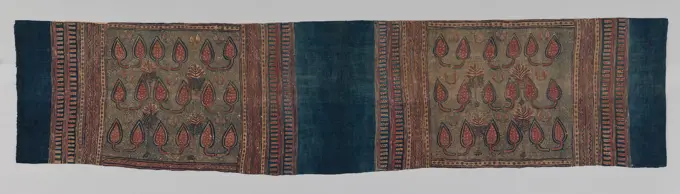
Shawl, late 20th century, 79 x 36 1/2 in. (200.66 x 92.71 cm), Natural dyed wool; supplementary and discontinuous supplementary weft patterning, India, 20th century
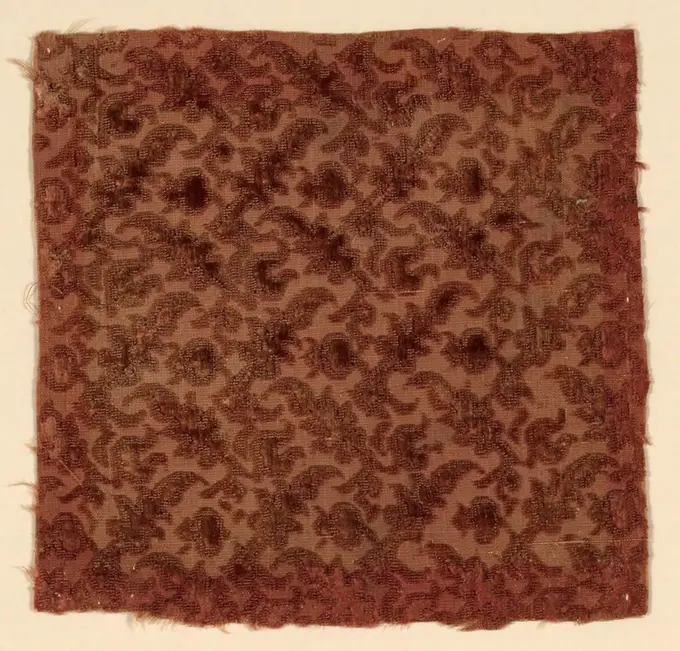
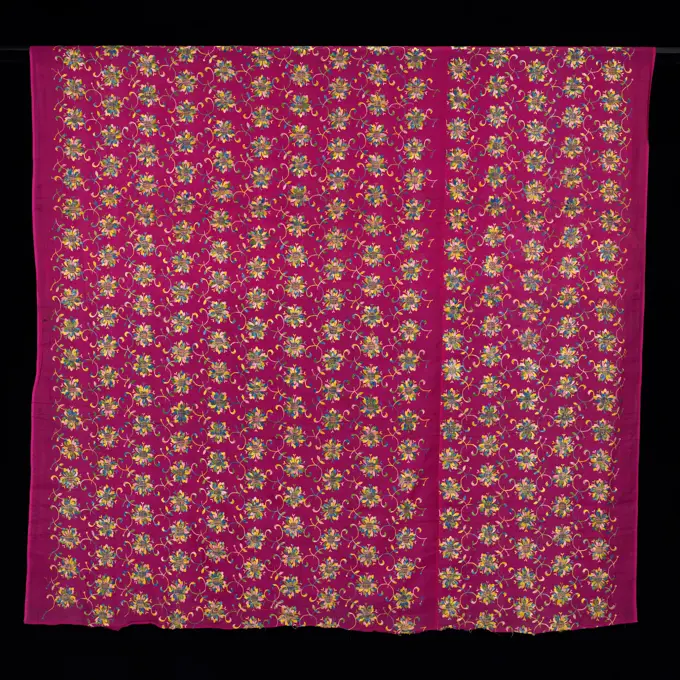
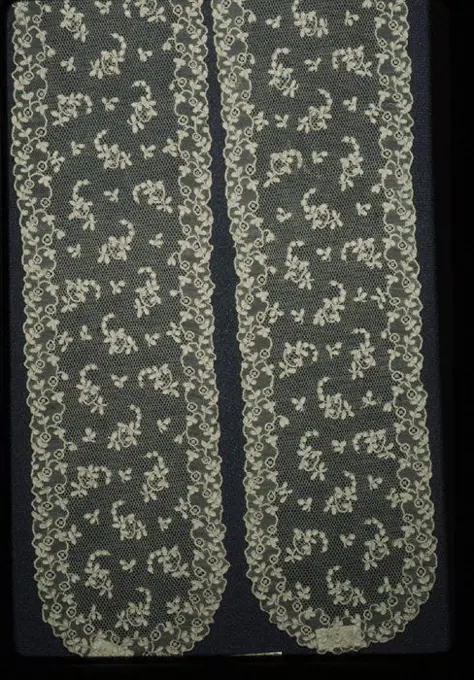
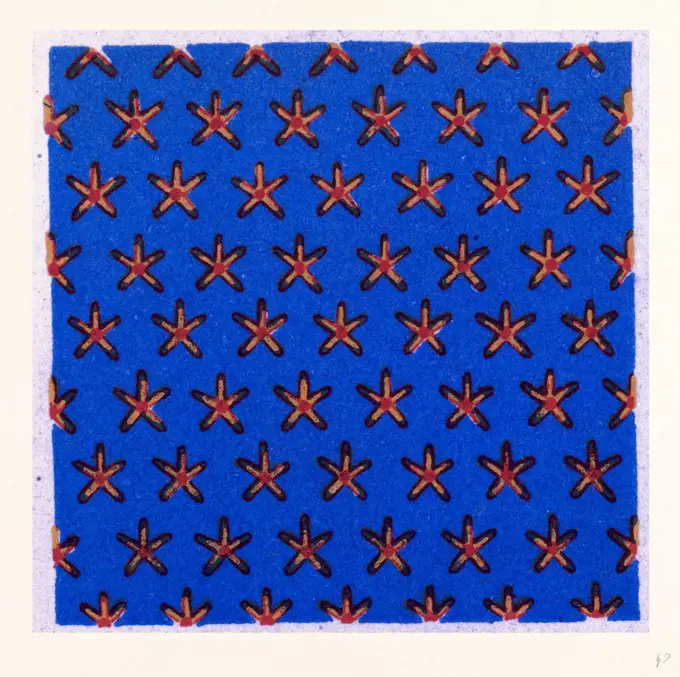
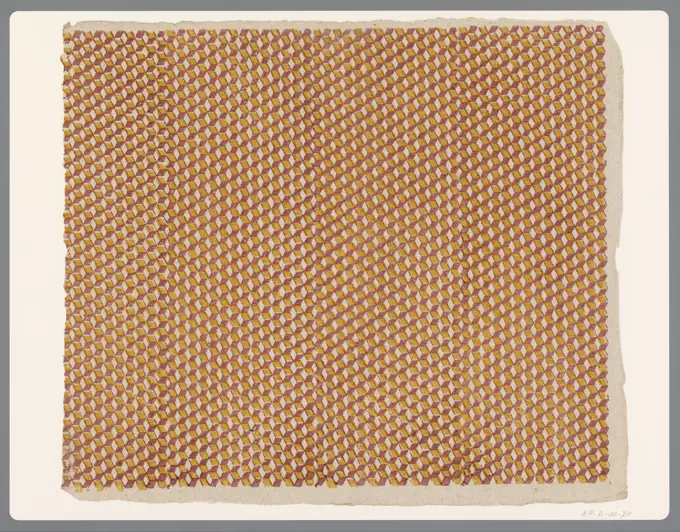
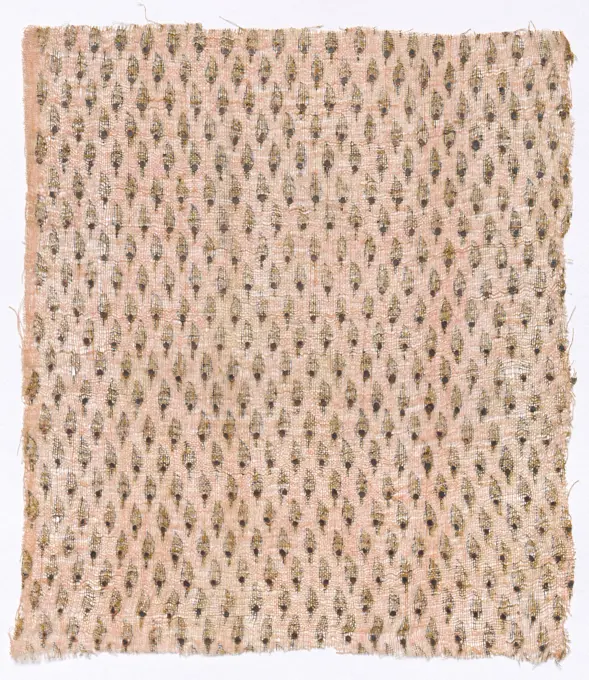
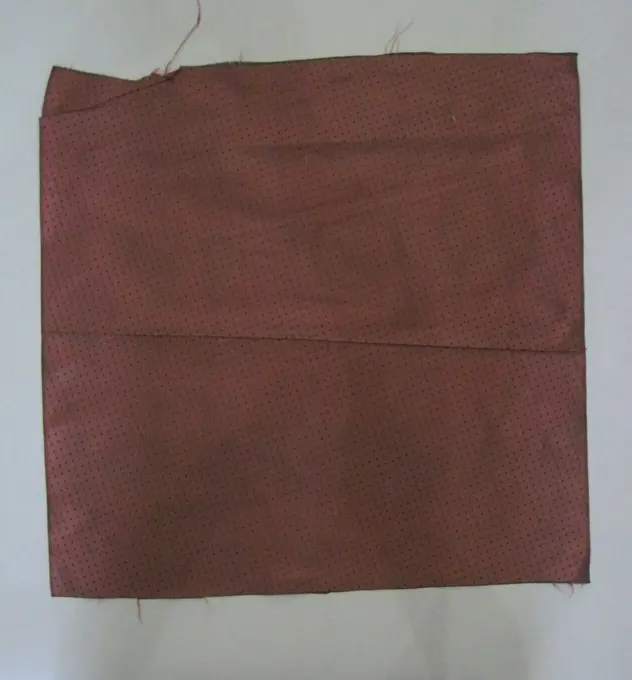
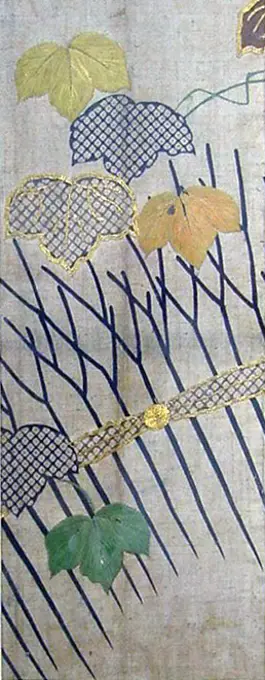
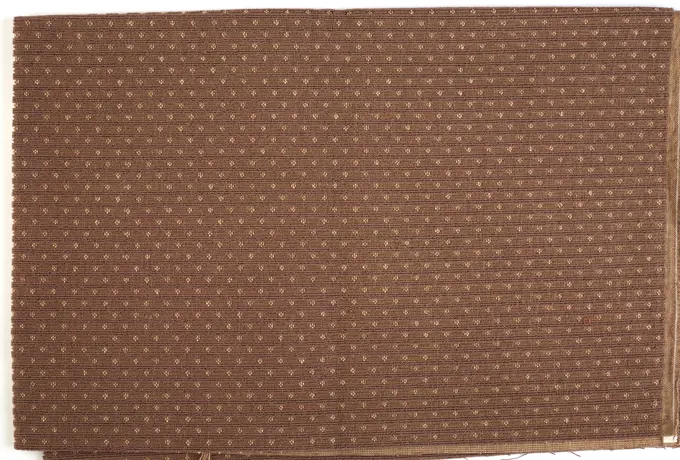
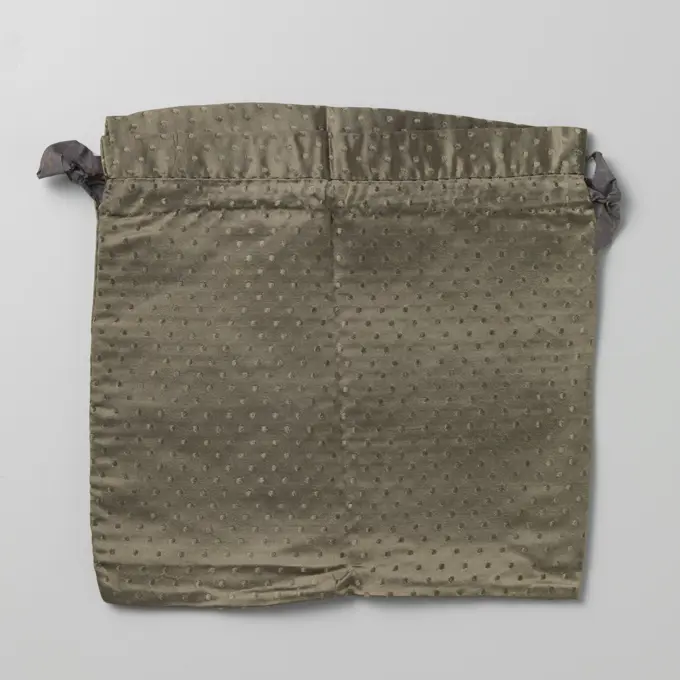
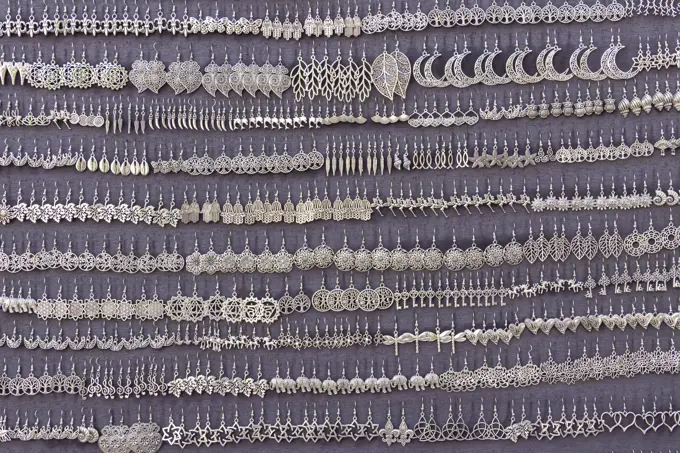
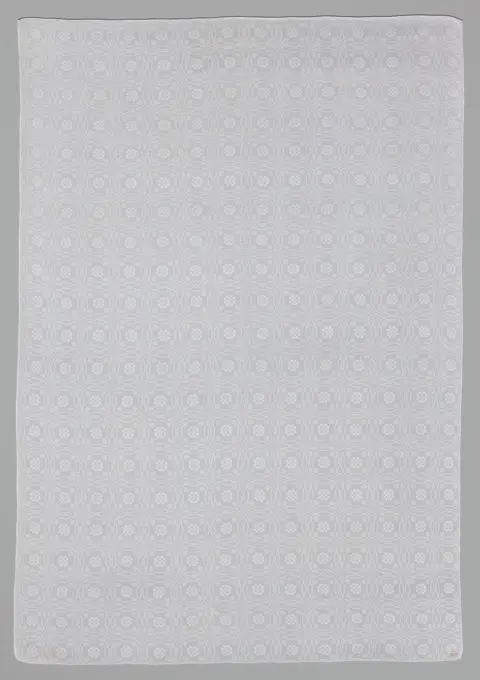
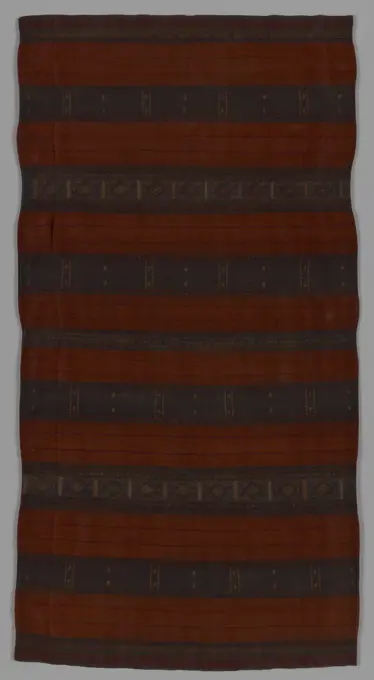
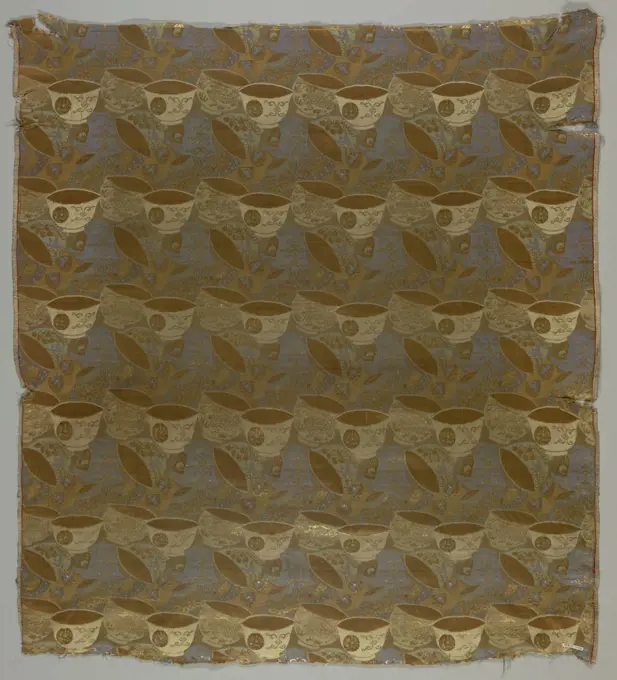
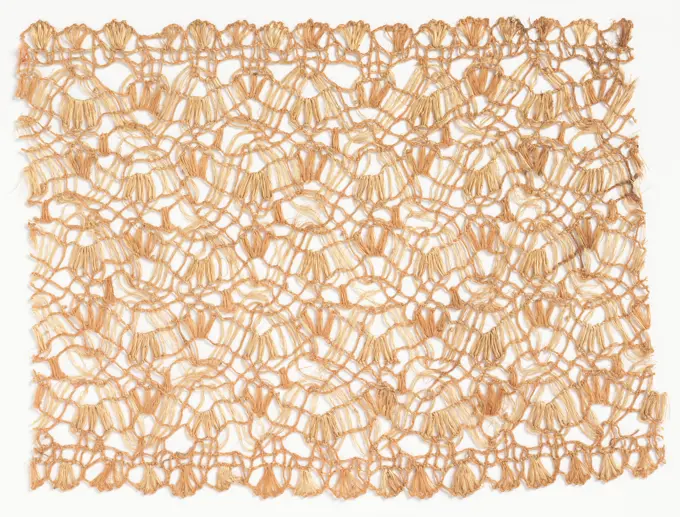
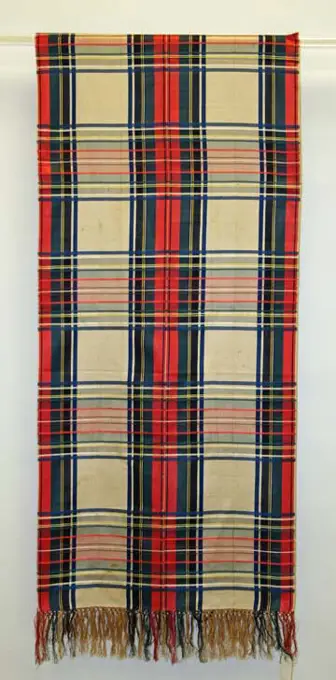
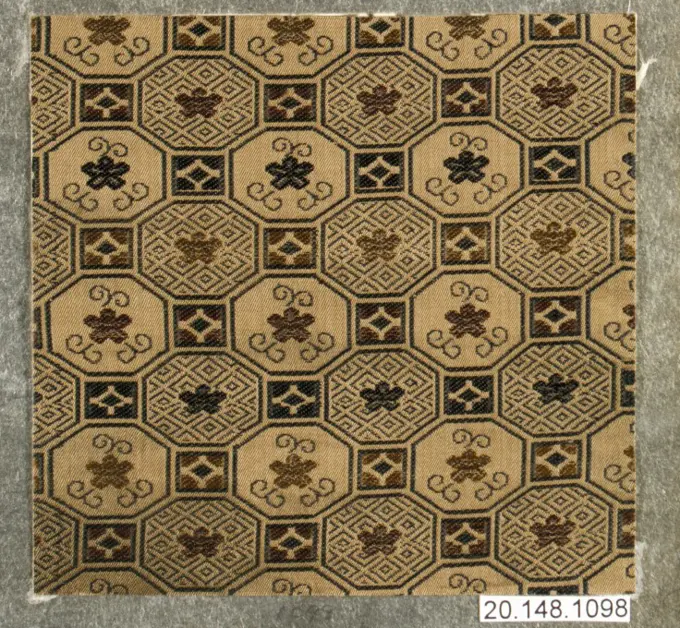
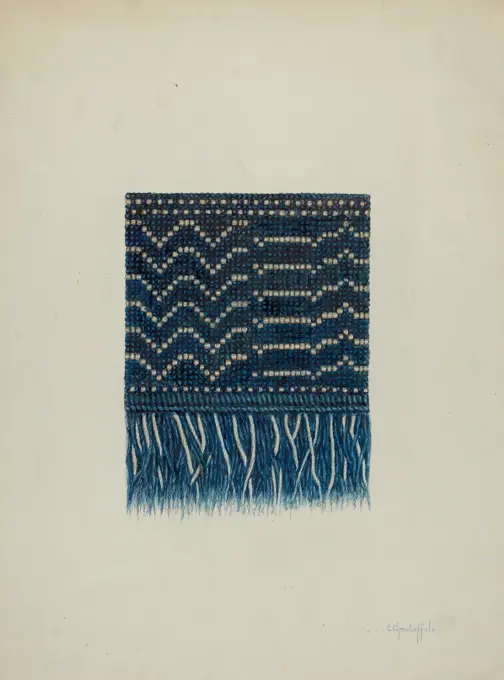
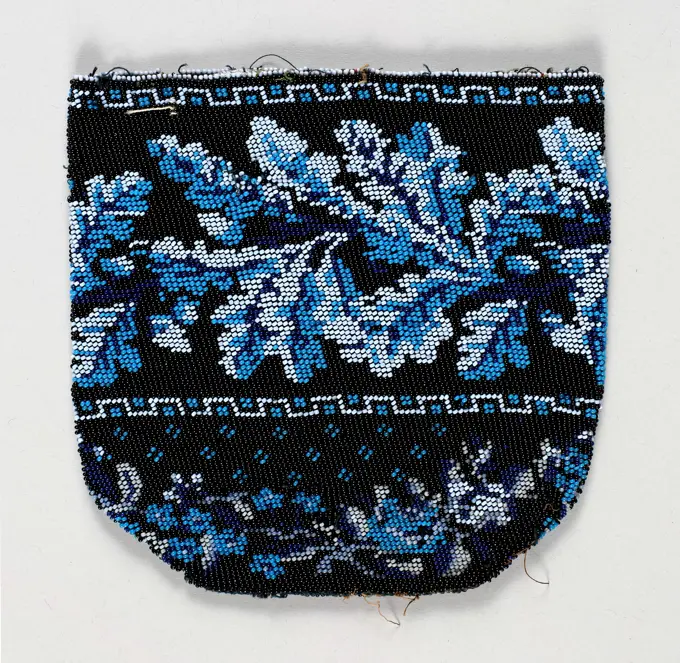
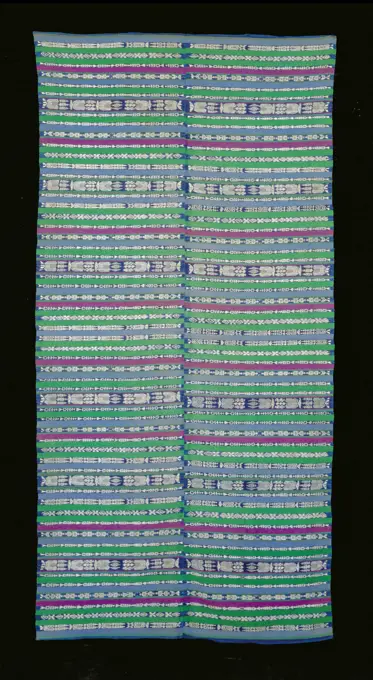
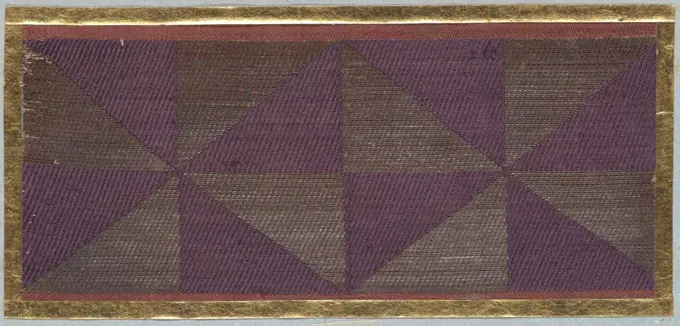
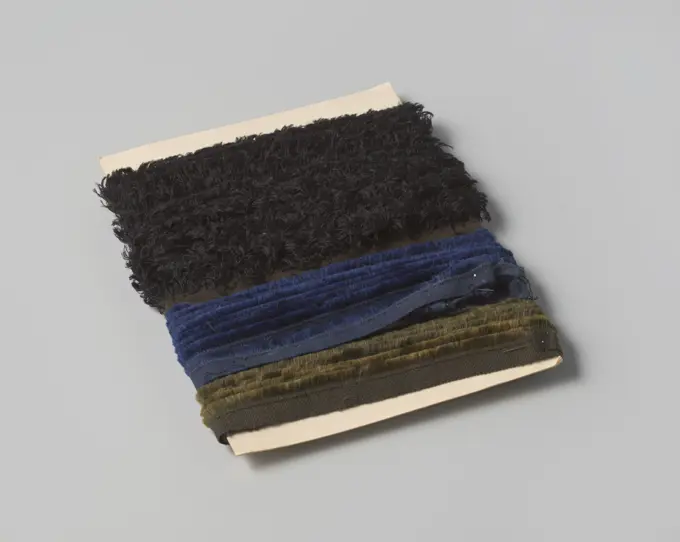
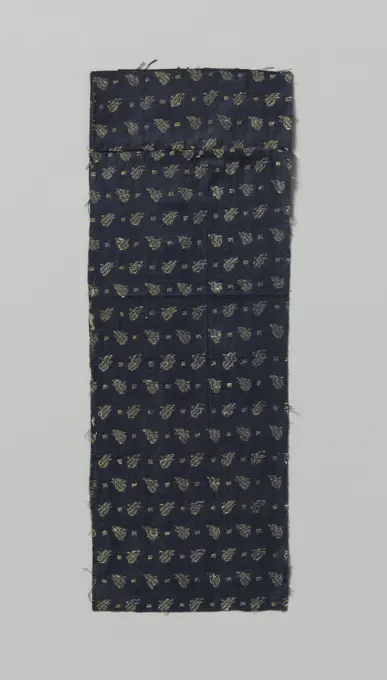
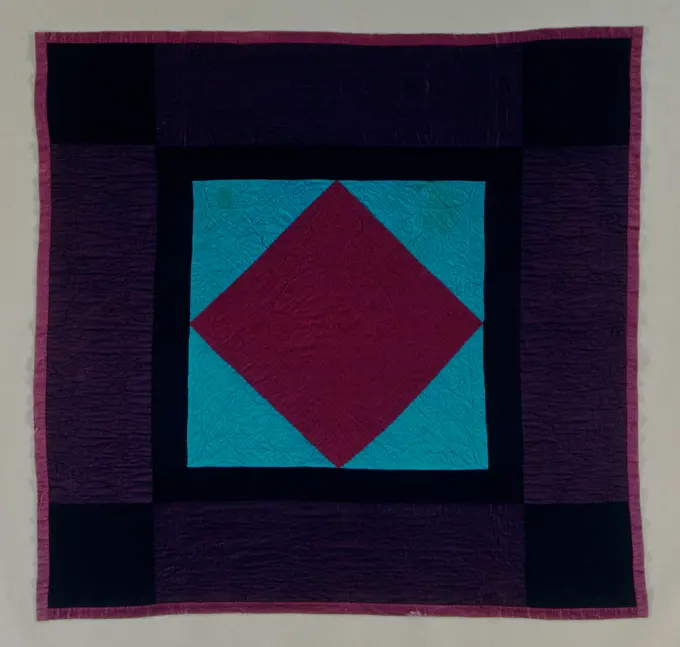
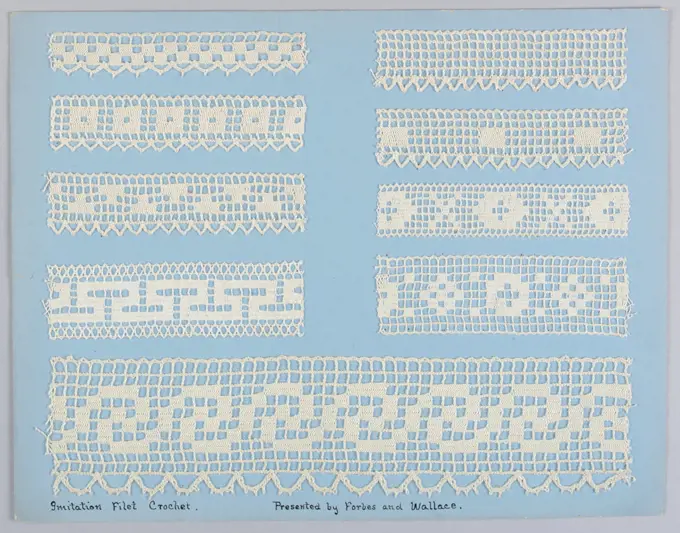
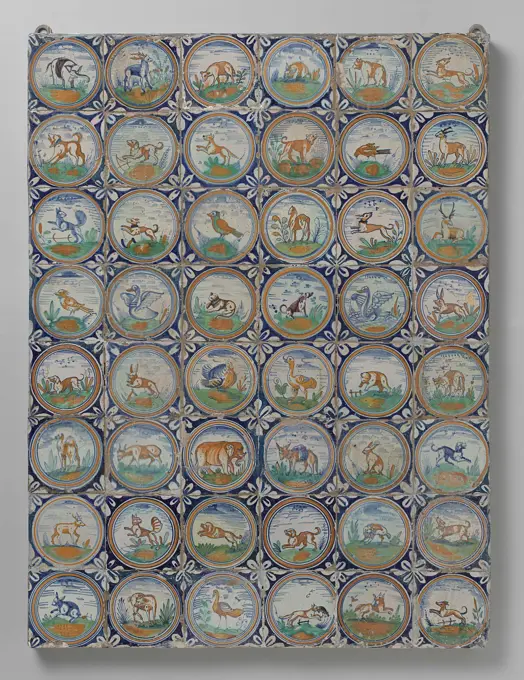
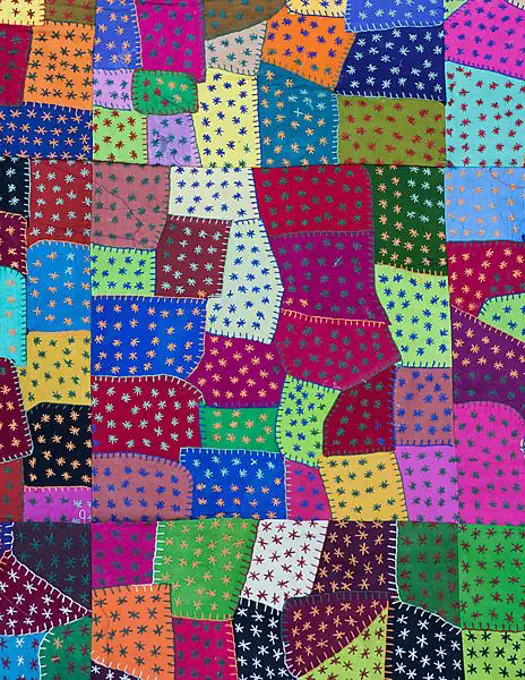
Fragment. Japan. Date: 1775-1800. Dimensions: 20.3 × 15 cm (8 × 5 7/8 in.). Silk, plain wave with supplementary patterning wefts. Origin: Japan. Museum: The Chicago Art Institute, Chicago, USA.Shawl, c. 1970, 90 x 65 in. (228.6 x 165.1 cm), Rayon; machine embroidery, India, 20th centurySidewall (Japan); fiber composition, tung oil; 51 x 36 cm (20 1/16 x 14 3/16 in.)Front wrapper. Photographs, Photograms, Book covers. 1849-11 - 1850-06. Spencer Collection. Plants in artPelete Bite Wrapper, 1980-1989, 71 x 35 1/8 in. (180.34 x 89.22 cm), Nigeria, 20th century, Kalabari men and women of Nigeria occasionally wear a unique cloth called pelete bite, which is created by altering fabrics imported from India. Starting with existing striped or checked patterns, new designs are made by cutting parts of the white threads with a razor and removing them. A few cut threads are still visible on this example. The technique also produces little holes, adding to the visual effect. The newly created motifs have descriptive names; here, for example, abili (checker board) and etere (mat).Cloth; Tapis. Cloth with tires and rosettes.Lappet (one of a pair) late 18th century French. Lappet (one of a pair) 223019Fragment of Persian silk fabric unknownVintage looking Fabric swatch Vintage looking Red fabric swatch cut with pinking shears zig zag scissors Copyright: xZoonar.com/ClaudioxDiviziax 9819204Piece 18th century French. Piece 220551Chinese ornamentKesa Made 1800-1868 Japan. Three sectsShingon, Shin, and Tendaifavored the use of this particular type of kesa. Two or three fabrics were typically employed, none with the colorful patterning that tends to be preferred by collectors. The blue damask fabric used in the borders and column dividers, patterned (in one color) with floral motifs, may be Chinese in origin or it may be of Japanese manufacture made in the Chinese style. The kesa is accompanied by its matching stole, or ohi, which was draped over the wearerís tight shoulder as a complement to the kesa covering the left.. Silk, satin damask and plain weaves .Bedcover, USA, ca. 1850, embroidery & stitching, BedcoverNapkin Made 1699 Netherlands. Linen, satin weave self-patterned by reversing of faces .Fragment Made 600 CE-800 CE Peru. Wool (camelid), plain weave of discontinuous warps and wefts; tie dyed . WariSari-length textile Bangladesh, Dacca 19th-early 20th century These two exceptionally fine muslin sari-length textiles are both decorated in the same in-weave technique with variants of the same design. Both may be termed jamdani muslin saris, a style of sari known for its unique patterns and representations of plants and flowers, skillfully adapted into the weave of the fabric. These designs are created in undyed muslin with deep blue in-weave patterning, with bold kalkas (mango) motifs, a common thematic element in jamdani saris distinguished by a prominent mango design inset in each corner. Floral repeats are woven in diagonal patterns. This motif is better known as a tear-drop motif made popular in so-called Paisley embroidered shawls of Kashmiri workmanship View more. Sari-length textile. Bangladesh, Dacca. 19th-early 20th century. Muslin with in-weave design. TextilesVelvet Fragment, late 1500s - early 1600s. Italy, late 16th century to early 17th century. Velvet; overall: 18.7 x 19.3 cm (7 3/8 x 7 5/8 in.).Egyptian OrnamentColorful and bright fabric samples of leatherette furniture and clothing upholstery. Close-up of a palette of textile abstract stripes of different colorsTextile Swatch , 1950s to 1960s. Silk, 22 x 16 in. (55.9 x 40.6 cm).    1950s to 1960sTextile Swatch Textile Swatch, 1950s to 1960s. Silk, 20 x 10 3/4 in. (50.8 x 27.3 cm).    1950s to 1960sHolzstricknadeln, Scheren und helles Garn. Zubehör für das Stricken. Liegt auf dunkelbeigem Hintergrund. Ansicht von oben Wooden knitting needles, scissors and bright yarn. Accessories for Knitting. Lies on dark beige background. Top view. LicenseRF Copyright: xZoonar.com/KatsiarynaxHuravax 23227173Block with geometric pattern of blocks, anonymous, 1750 - 1900  Leaf with geometric pattern of continuous blocks.  paper. block printing (relief printing process) ornament ~ geometric motifsPiece 18th-19th century Japan. Piece. Japan. 18th-19th century. Silk. Textiles-WovenRed Striped fabric sample Red Striped fabric sample swatch with zigzag border Copyright: xZoonar.com/ClaudioxDiviziax 9039793Fragment, 1700s. India, Rajasthan or Northern Deccan, 18th century. Block printed and applied silver leaf; pigments on dyed cotton; overall: 17.8 x 15.6 cm (7 x 6 1/8 in.).Heirloom Textile Made 1600-1700 India. Cotton, plain weave; block printed and resist dyed .Textile Swatch , 1950s to 1960s. Silk, 19 1/4 x 19 in. (48.9 x 48.3 cm).    1950s to 1960sPiece from a Summer Kosode (katabira) with Ivy and Garden Fence Japan. Piece from a Summer Kosode (katabira) with Ivy and Garden Fence. Japan. Resist-dyed and painted plain-weave bast fiber (asa), embroidered with silk and metallic thread. Edo period (1615-1868). Textiles-Dyed and EmbroideredHead scarf, c. 1985, 29 5/16 x 10 11/16 in. (74.45 x 27.15 cm), Silk, China, 20th centuryFragment (USA)Coverlet fragments, Medium: wool, cotton Technique: plain compound cloth (overshot), Very fine traditional geometric design of large decorated squares set in a broad framework of contrasting fancy weaves. In indigo-dyed blue wool pattern wefts faded to various shades of blue on undyed cloth ground. Reversible., USA, late 18th century, woven textiles, Coverlet fragmentsBamboo place mat on wooden deck table.Brocade 17th century China or Japan. Brocade 71070Textile Swatch Textile Swatch, 1950s to 1960s. Silk, 21 1/2 x 4 1/2 in. (54.6 x 11.4 cm).    1950s to 1960sPanels for Overdress, c. 1970, L.173 x W.37 in., Wool, Turkey, 20th centuryBorder Made 1801-1900 England. Cotton, plain weave, block printed .Fragment. Italy. Date: 1601-1625. Dimensions: 14.2 x 14.7 cm (5 5/8 x 5 3/4 in.). Silk, plain weave with supplementary pile warps forming cut and uncut voided velvet. Origin: Italy. Museum: The Chicago Art Institute, Chicago, USA.Piece 18th-19th century Japan. Piece 67451Upholstery fabric upholsteryChinese ornamentTextile Swatches Onondaga Silk Company, Inc. (1925-1981). , 1948-1959. Wool cotton blend, a: 21 1/2 x 15 in. (54.6 x 38.1 cm).    1948-1959Frivolité bag, flat, square model of dark green satin with grid motif of studs and a black ribbon in a tunnel along the top edge, anonymous, c. 1800 - c. 1810 Frivolité bag, flat, square model of dark green satin with grid motif of studs and a black ribbon in a tunnel along the top edge. Netherlands geheel: silk. lint: silk Frivolité bag, flat, square model of dark green satin with grid motif of studs and a black ribbon in a tunnel along the top edge. Netherlands geheel: silk. lint: silkSkirt, 66 x 27 in. (167.64 x 68.58 cm), Cotton, VietnamFragments of embroidery  a pattern of a small rhombic network unknownFragment (France); silk; Warp x Weft: 20.6 x 25.5 cm (8 1/8 x 10 1/16 in.)Albaicin, Province of Granada, Andalusia, Spain. Silver earrings in a shop.Skirt, 20th century, 35 1/2 x 39 in. (90.17 x 99.06 cm), Cotton, Mexico, 20th centuryWIT LINES POLLDER PERMETT, 1690 - 1710 White linen peel napkin, marked Kroon GS 12 and HW 23. Northern Netherlands linen (material) White linen peel napkin, marked Kroon GS 12 and HW 23. Northern Netherlands linen (material)Sampler, Medium: cotton Technique: looping with knot and running stitches (needle lace), Sampler divided with red woven tape into a grid of sixteen squares, each square filled with a different needle lace pattern. With bows of red tape at the corners., Germany, 19th century, embroidery & stitching, SamplerFragment of the lace;  XVII-XVIII century (1601-00-00-1800-00-00);Krzeszowice, collection, laceSewing sample, France, late 19th century, Sewing sampleWomans Ceremonial Sarung (Tapis Tusukan Ratu)Indian silk Pashmina, textile with traditional woven pattern. 21st CenturyTextile, Medium: silk and metallic yarns Technique: compound satin woven, Brown twill background with closely spaced allover design of teacups in extra wefts of light and dark blue, tan, white, green silks and gold strips applied to paper. Inside portion of teacups in brown satin. Extra weft threads floated out loose on reverse with three selveges present., Japan, 19th century, woven textiles, TextileHanging beads door entrance in Abruzzo, ItalyFragment (Spain); straw or raffia; Bequest of Marian Hague; 1971-50-453Woman scarf isolated on the white backgroundLegging strip -Shawl ca. 1822 probably British. Shawl 123133Purple, blue, pink, orange napkins on white wooden backgroundPiece 18th century Japan. Piece 72083Cornelius Christoffels, Coverlet, c 1940 CoverletSwatches (France); silk; 1896-27-6-1/13Fragment, medium: silk Technique: supplementary warp forming raised pile in plain weave foundation (velvet); then embossed., Triangular shaped piece of plain red velvet embossed (stamped) with pattern of ovals and stars., possibly 17th century, woven textiles, FragmentAbaye, early 20th century, 54 15/16 x 59 in. (139.54 x 149.86 cm), Silk, metallic threads; woven with embroidered trim, Syria, 20th centuryClose-up of threadLongyi, from a two-piece set, 20th century, 42 3/4 x 61 7/8 in. (108.59 x 157.16 cm) (irregular), Cotton, Myanmar (Burma), 20th centuryFragments, Medium: cotton Technique: block-printed on plain weave, White cotton block-printed in cone or pine-shaped motif in two shades of red and blue., India, early 19th century, printed, dyed & painted textiles, FragmentsEgyptian OrnamentDiagonal scarf Diagonal pattern of colourful knitted wool scarf Copyright: xZoonar.com/Baloncicix 7041859Sac GAL1985.200.2Shawl (Perraje), 1930-1935, 88 x 39 5/8 in. (223.5 x 100.6 cm), Wool, cotton; jaspé (ikat), Guatemala, 20th centuryDrawing, Textile Design: Kerker (Dungeon); Designed by Anny Schröder (Austrian, 1898-1972); Made for Wiener Werkstätte (Austria); brush and gouache on paper; 20.3 × 5.7 cm (8 in. × 2 1/4 in.) Mat: 55.9 × 40.6 cm (22 × 16 in.)Textile Swatches Onondaga Silk Company, Inc. (1925-1981). , 1948-1959. 47 silk, 36 nylon, 17 metal, 21 x 17 1/2 in. (53.3 x 44.5 cm).    1948-1959Close-up of a sockKnit structure with pink and gray colors.. Knit structure with pink and gray colorsCoverlet Made 1820-1830 United States. Cotton and wool, plain weave with supplementary patterning wefts (overshot); two loom widths joined .Fragment (Japan)Fragment; silk and metallic; Warp x Weft: 18.9 x 10.7 cm (7 7/16 x 4 3/16 in.)Strip of black fringes on broom band, on cardboard, gustav schnitzler, c. 1925 Strip black fringes on broom band, on cardboard. Nijmegen cardboard. textile materials Strip black fringes on broom band, on cardboard. Nijmegen cardboard. textile materialsFabric Swatch Fab-Tex Inc.. , 1963-1966. Cotton, sheet: 8 1/4 x 10 1/2 in. (21 x 26.7 cm).    1963-1966Swatches, Medium: silk Technique: velvet, France, late 19th century, woven textiles, SwatchesAncient floor decoration in the excavated Roman villa of Oplontis, ItalySample early 19th century French. Sample 224854Green cozy sweater knitted made of natural wool textureCornelius Christoffels, Coverlet  Section of Reverse Side, c 1937 Coverlet - Section of Reverse SideSleeve of Chain Mail, 1500s. Germany, 16th century. Steel; overall: 93.3 cm (36 3/4 in.); across top: 51.5 cm (20 1/4 in.).Excerpt Eastern textile, c. 1800 - c. 1850 Fragment Osterse textile from Gold to Blue. The pattern is a spray pattern of stylized leaves between which blocks. In the silk. cotton (textile) Fragment Osterse textile from Gold to Blue. The pattern is a spray pattern of stylized leaves between which blocks. In the silk. cotton (textile)Close up of radiator on old heavy plany equipment vehicleQuilt, 'Center Diamond'flat lay textileTextile Swatches Onondaga Silk Company, Inc. (1925-1981). , 1948-1959. 90 wool, 10 silk, 23 1/4 x 18 in. (59.1 x 45.7 cm).    1948-1959Machine-made openwork samples, Medium: cardboard, linen, silk, metallic Technique: linen embroidery with ground cloth dissolved Examples of embroidery on net produced by the Schiffli machine Metallic embroidery on net Machine-made openwork in imitation of hand-embroidered net Mostly floral and a few geometric patterns, some designs described as 'Spanish' Imitation hand-made filet Machine filet Imitation filet crochet Ploven (burnt-out lace) Fancy curtain lace made on the Levers machines Real filet (handmade) next to Machine-made filet Spotted curtain nets, made chiefly at Nottingham, England and Caudry, France., Samples of machine-made openwork and several examples of hand made lace mounted on boards. They imitate hand-embroidered net, crochet, or needlepoint. All are floral patterns plus a few of early 1920's geometric style., 'Embroidered net' produced by the Schiffli Machine., USA, ca. 1910, lace, Machine-made openwork samplesFragment (From a Bedcover) Made 1876 United States. Silk, plain, twill, and satin weaves; some with supplementary patterning and brocading wefts, some with self-patterning; some printed; some warp painted (chinÈ); pieced over paper .Field of fortyy tiles with animals. Field of forty-eight tiles (8 x 6) each with a multi-colored (blue, orange, green, yellow and purple) painted animal within a circle frame. In the corners, a quarter rosette in filling technology.Textile Swatches Onondaga Silk Company, Inc. (1925-1981). , 1948-1959. Silk, 58 x 33 in. (147.3 x 83.8 cm).    1948-1959Belt, 20th century, 3 3/8 x 201 in. (8.6 x 510.54 cm), Cotton, China, 20th centuryAragon typical blanket arab heritageTapestry of colourful patches, detail, Rajasthan, India, Asia