Historical Textile Fragments

Collection of intricate textile fragments from various cultures and centuries, showcasing rich patterns and textures.
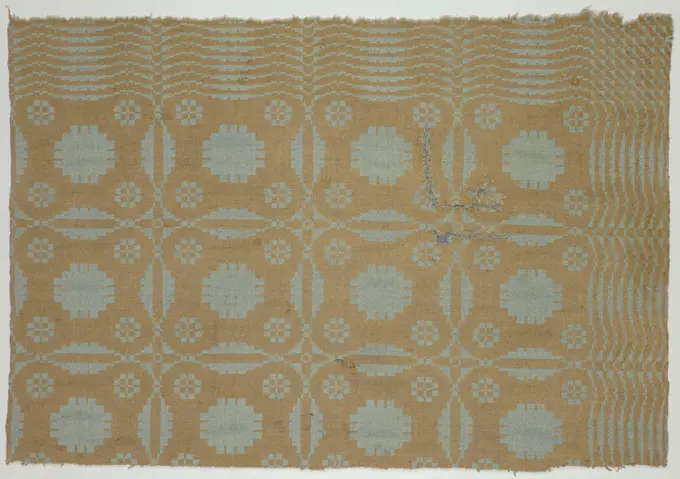
Coverlet fragment, Medium: wool Technique: double cloth, Single snowball pattern in tan and pale blue. Border on two sides suggests form of sunrise pattern. Plain cloth selvages on two short sides., USA, 18th century, woven textiles, Coverlet fragment
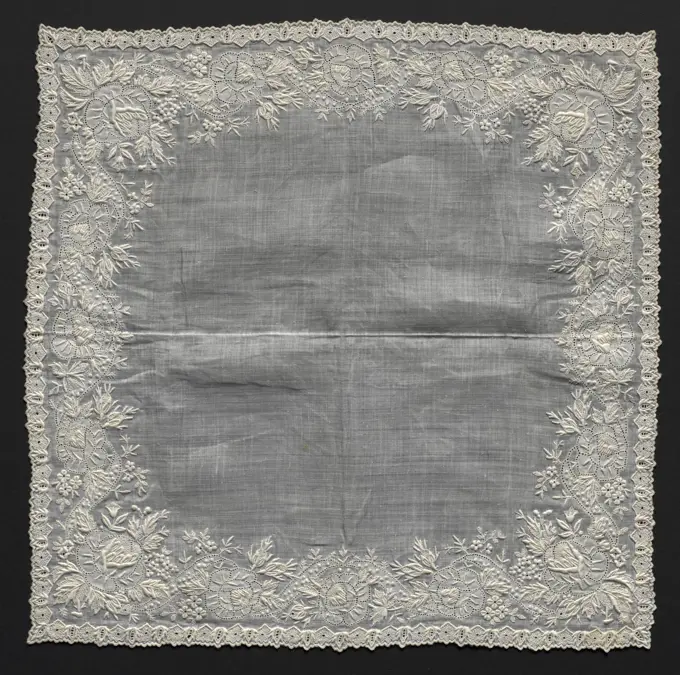
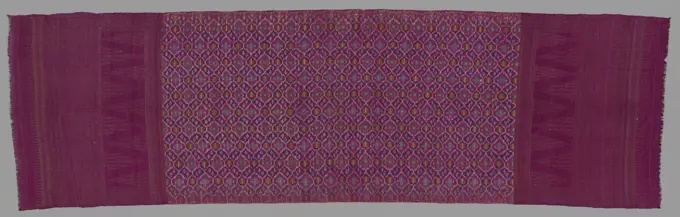
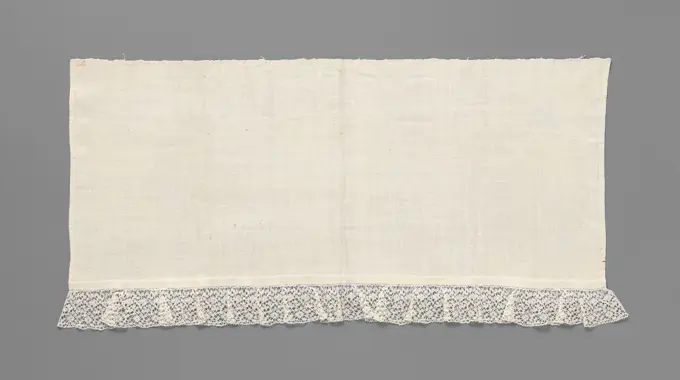
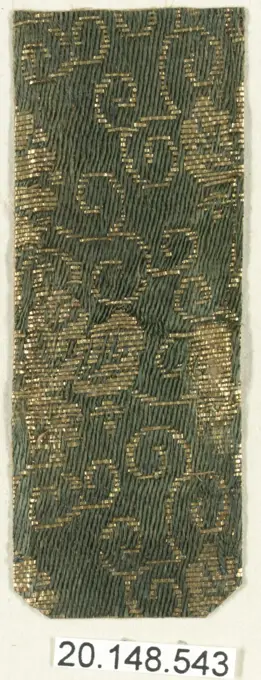
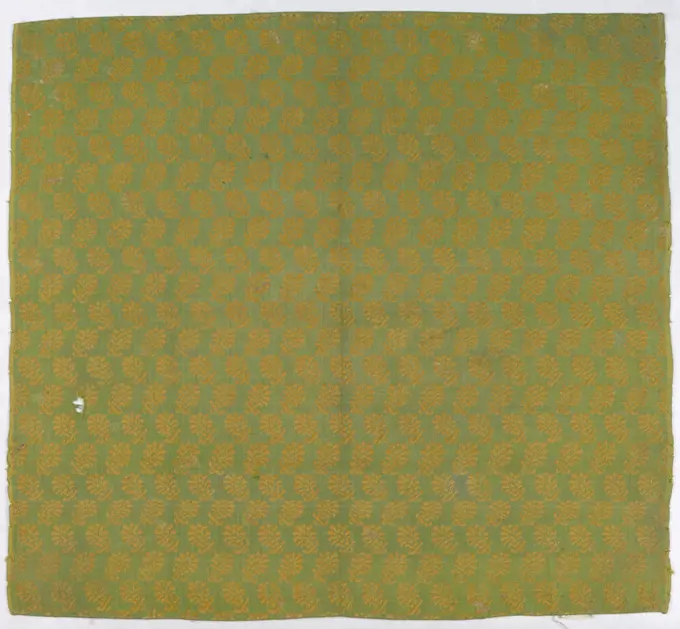
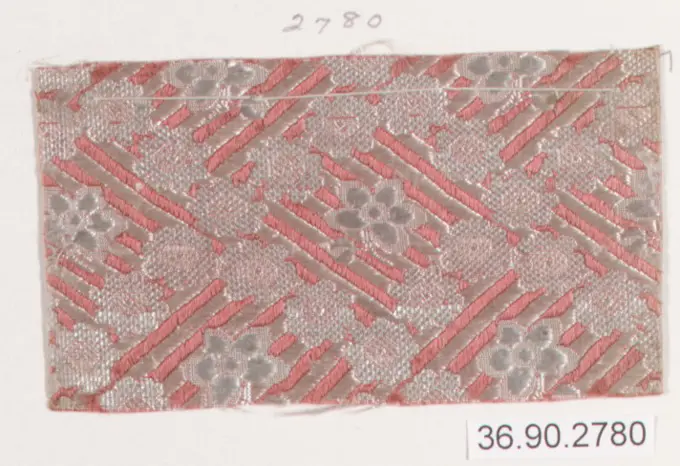
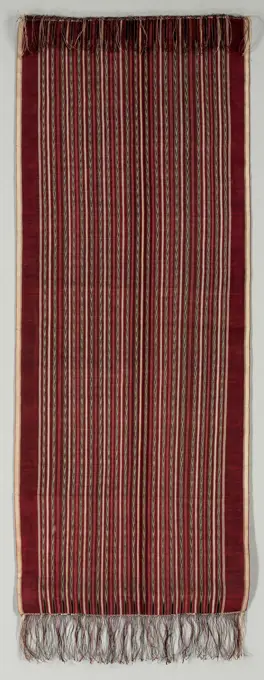
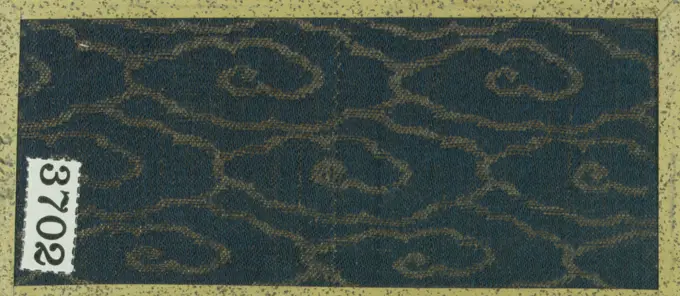
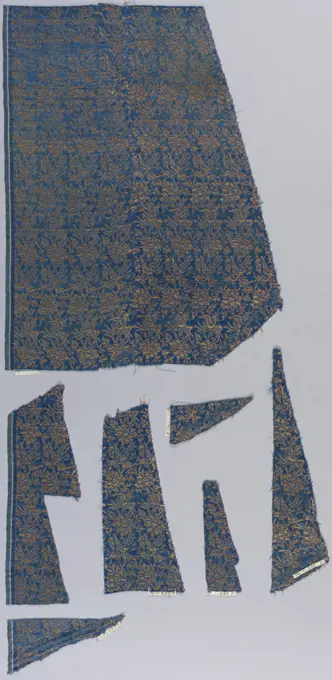
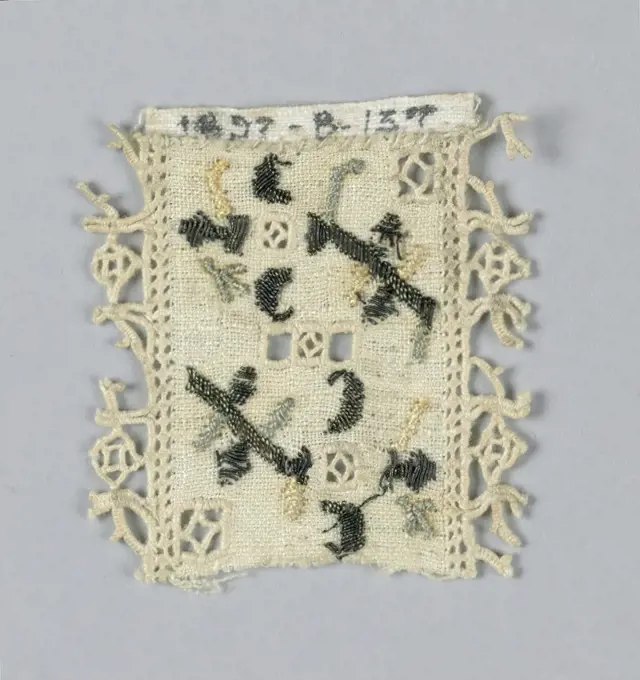
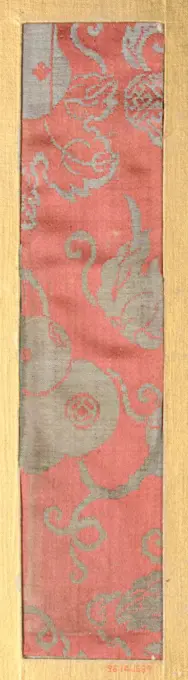
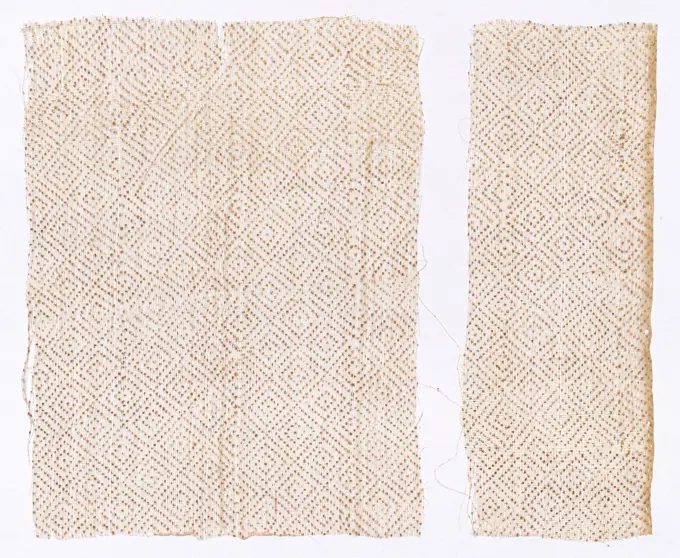
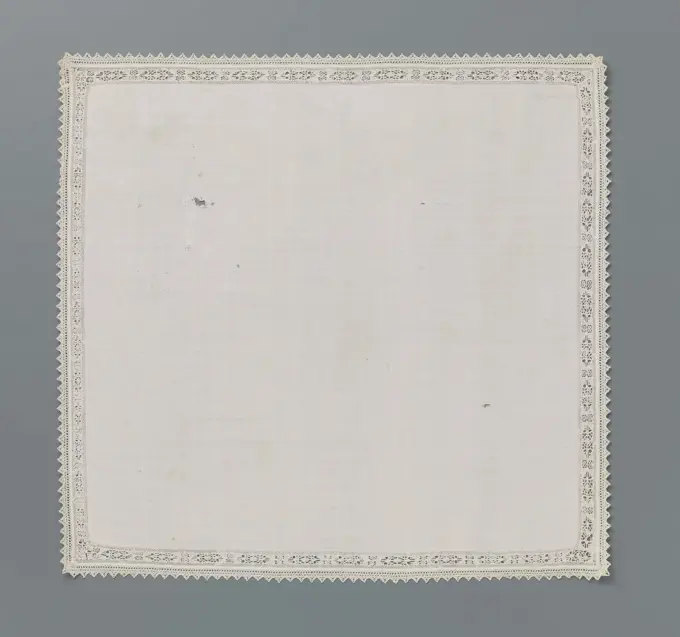
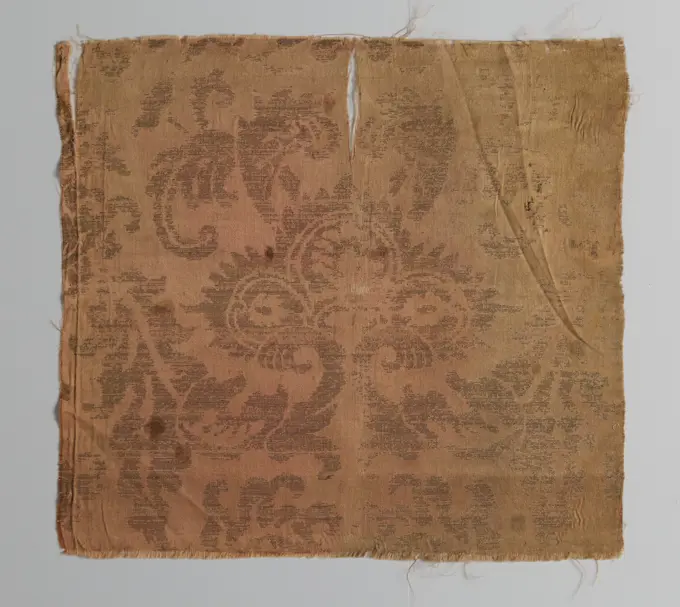
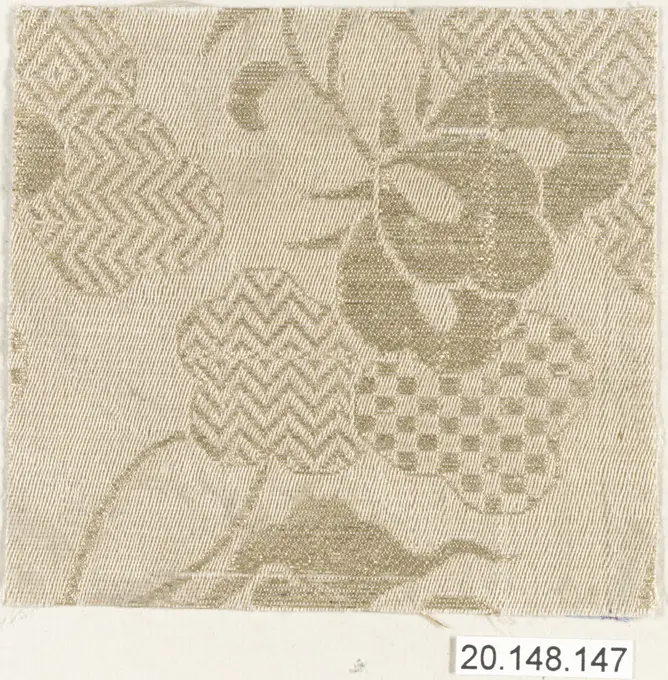
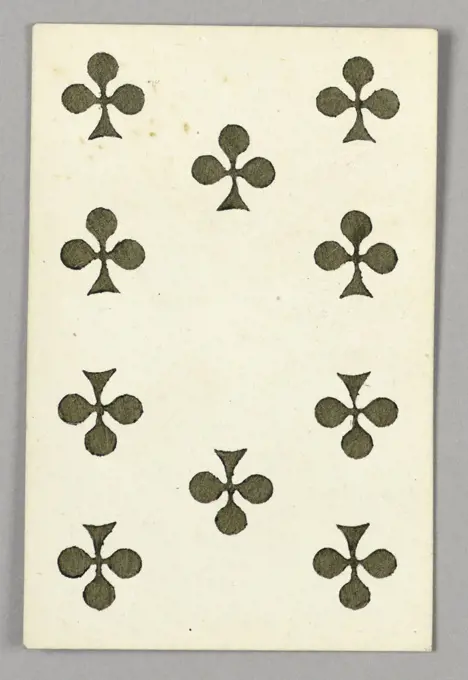
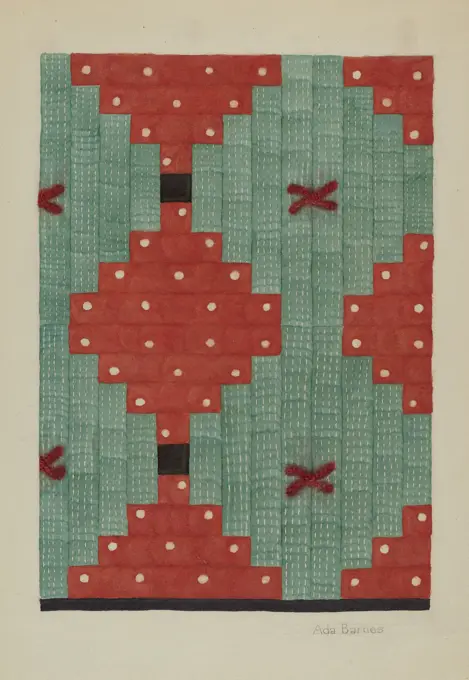
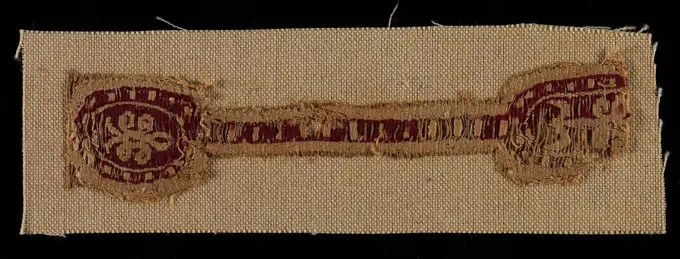
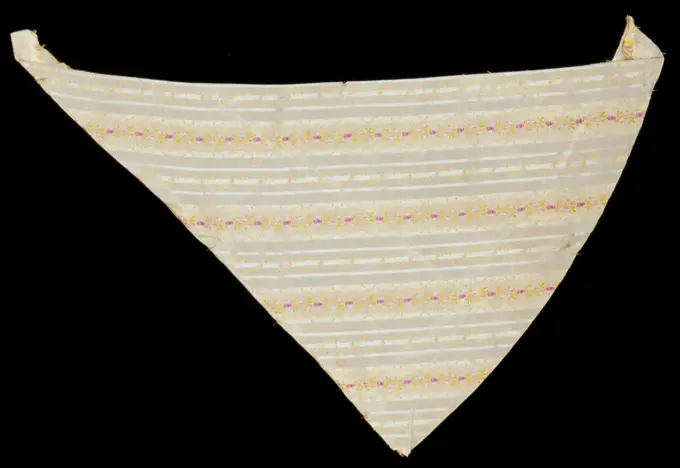
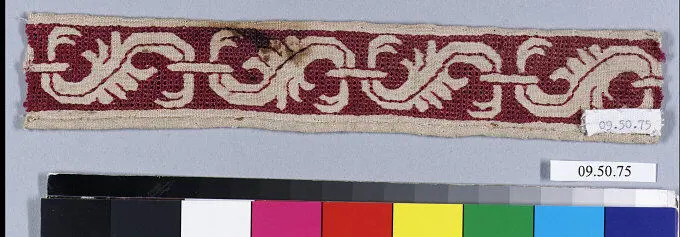
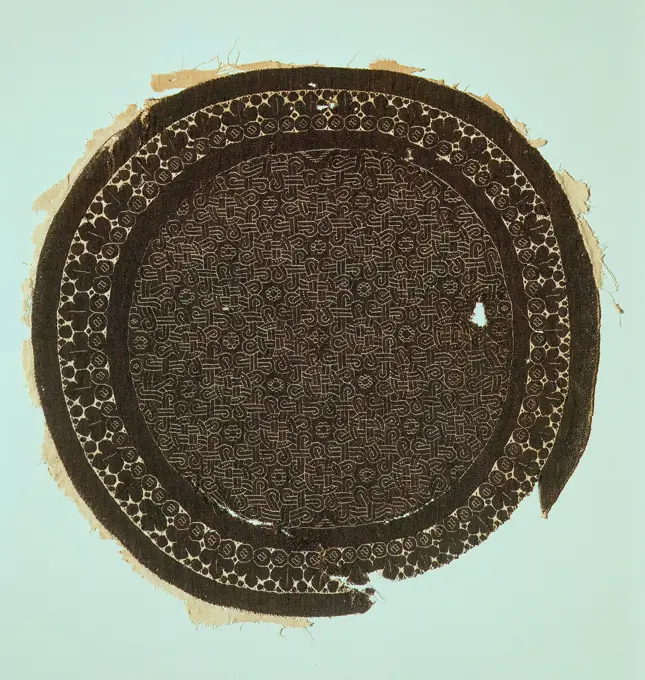
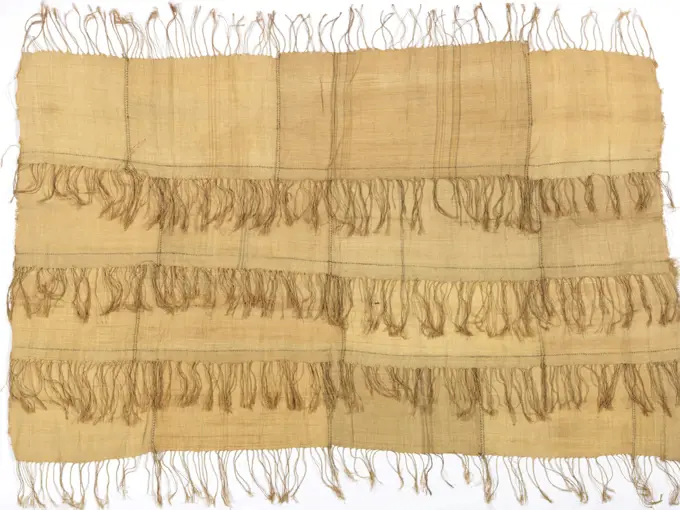
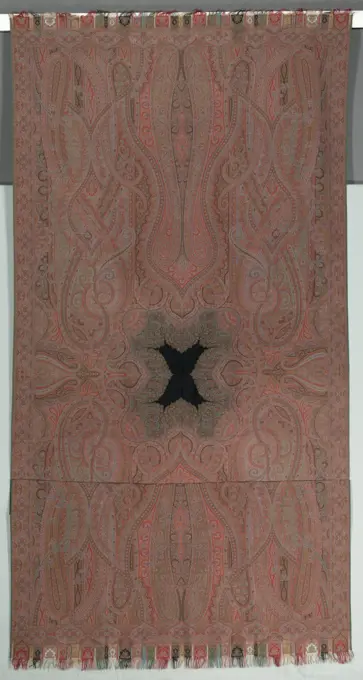
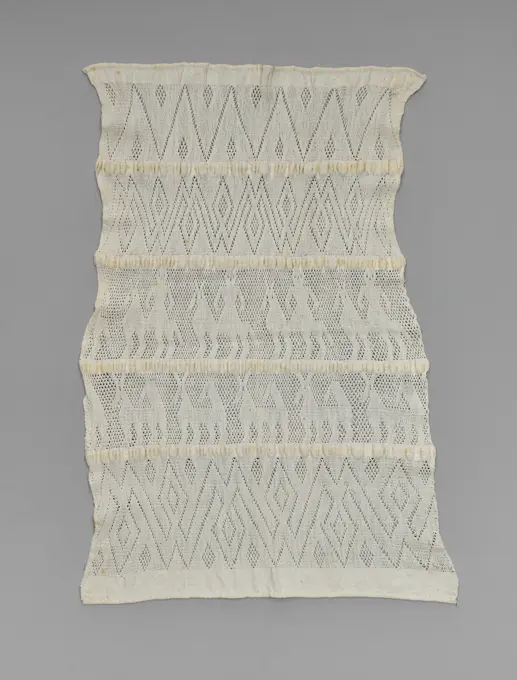
Cloth.   Maker: UnknownPiece 18th-19th century Japan. Piece 67535Fragment; wool mohairShoulder cloth, 20th century, Unknown Thai, 59 x 15 7/8 in. (149.86 x 40.32 cm), Cotton, silk; needlework, Laos, 20th centuryFragment (Japan)Handkerchief, 1800s. Flanders, 19th century. Embroidery: linen; overall: 31.2 x 31.2 cm (12 5/16 x 12 5/16 in.).Sarong; cottonShoulderClothLinen rug with a strip of bobbin with a maze of flowers and short tendrils with buttons, anonymous, c. 1650 - c. 1699 Dress of linen with a border of natural torway side: Old Flemish bobbin side. Side: The pattern consists of a maze of stylized flowers and short tifles with buttons (a kind of spiders or snowflakes), which are connected by an irregular braiding ground. The strip side is wrinkled on the rug and is straightened up with picots at the bottom. At the top left, the linen is marked with the letters SS, made with cross stitches in the soft yellow side. Flanders linen (material) bobbin lace / old Flemish lace Dress of linen with a border of natural torway side: Old Flemish bobbin side. Side: The pattern consists of a maze of stylized flowers and short tifles with buttons (a kind of spiders or snowflakes), which are connected by an irregular braiding ground. The strip side is wrinkled on the rug and is straightened up with picots at the bottom. At the top left, the linen is markePiece 19th century Japan. Piece. Japan. 19th century. Silk / Compound weave. Textiles-WovenLeaf with diagonal job pattern of flower pattern and stripes, anonymous, 1800 - 1900  Leaf with diagonal job pattern of flower pattern with stripes and points.  paper. paint (coating). block printing (relief printing process) ornament derived from plant formsMask, 20th century, 30 x 13 3/4 in. (76.2 x 34.9 cm) (without fringe), Cotton, wood; dyed, Mali, 20th centuryFragment; linen; 1938-30-3Bed Curtain, 18th century, L.89 x W.63 in., cotton; needlework, Uzbekistan, 18th centuryBook cover with red crisscross pattern with green florals 18th century Anonymous. Book cover with red crisscross pattern with green florals. Anonymous , 18th century. 18th century. Relief print (wood or metal). PrintsPiece 18th century China. Piece 71537Bedcover, India, 18th century, embroidery & stitching, BedcoverDoubled strip of needle side with round flowers, anonymous, c. 1833 - c. 1965 Doubled strip of natural -colored needle side: Venetian rose side. The strip is made up of two strips of each other. Pattern with multifaceted flowers of narrow tiflines. The seemingly randomly scattered, round flowers with double reliefrand are striking. Open bars of land with picoted bars. Both strips are finished on three sides with a straight, somewhat wavy strap. The underside is scooped. Venice linen (material) Venetian rose point Doubled strip of natural -colored needle side: Venetian rose side. The strip is made up of two strips of each other. Pattern with multifaceted flowers of narrow tiflines. The seemingly randomly scattered, round flowers with double reliefrand are striking. Open bars of land with picoted bars. Both strips are finished on three sides with a straight, somewhat wavy strap. The underside is scooped. Venice linen (material) Venetian rose pointFragment of a Turban Cloth, 1800. India, Rajasthan, Mughal period, early 19th Century. Block printed and over-printed with gold; cotton; overall: 106.7 x 55.9 cm (42 x 22 in.).Fragment, Medium: silk Technique: plain weave with supplementary warp floats, Detached leaf motifs in orange on green., 17th century, woven textiles, FragmentTextile Fragment 18th century. Textile Fragment 445928Piece French 19th century View more. Piece. French. 19th century. Textiles-WovenInfant's Carrying Cloth, or Man's Ceremonial Headgear, early 1900s. Indonesia, North Sumatra, Toba Batak People, early 20th century. Warp-faced tabby with areas of ikat; overall: 223.5 x 74.9 cm (88 x 29 1/2 in.).Starch paint paper in gray with pressed flower pattern, anonymous, 1900 - 1969 paste paper Starch paint paper with welding wave pattern in gray with spreading pattern of pressed floral pattern and a wreath to the right of the middle in green and blue.  paper. paste paper ornament derived from plant formsTextile Sample from Sample Book 19th century Japan. Textile Sample from Sample Book 68179Arabian ornamentFragment 18th century Italian, Varallo. Fragment. Italian, Varallo. 18th century. Needle lace, punto avorio. Textiles-LacesSidewall Sample; machine-printed on paper; 22.5 x 22.5 cm (8 7/8 x 8 7/8 in.)Fragment, Medium: silk, metallic threads Technique: compound satin, Dense, small-scale pattern of alternating bird and floral motifs in blue and gold., China, 19th century, woven textiles, FragmentWoven Coverlet, c. 1867-1868. America, 19th century. Wool and cotton; average: 170.2 x 198.1 cm (67 x 78 in.).Piece 17th century Japan. Piece 71086Albesto smoke (part) of Kloskant with feathered leaves and palm flowers, anonymous, c. 1680 - c. 1699 Albesto smoke (part) of natural -colored bobbin: Milanese side or Old Flemish side with braid soil. Pattern with large curly tendrils with feathered leaves and palm flowers. The motifs are connected by a braid of soil, with long -pot of braids. The circumference of the flowers and leaves is made in linen stroke with recesses and different ornamental land has been used within these contours. The top of the strip is straight finished, the bottom follows the lines of the pattern. Flanders (Possible) linen (material) bobbin lace / Milan lace / Flemish lace with plaited ground Albesto smoke (part) of natural -colored bobbin: Milanese side or Old Flemish side with braid soil. Pattern with large curly tendrils with feathered leaves and palm flowers. The motifs are connected by a braid of soil, with long -pot of braids. The circumference of the flowers and leaves is made in linen stroke with rRitual Cloth(Bidak)Textile, Medium: cotton Technique: plain weave, Two pieces of brown cotton with a windowpane plaid in white., USA, 1870-80, woven textiles, TextilePiece 16th-17th century Italian. Piece 216957Fragment of cotton IInen unknownChinese ornamentFragment, Medium: silk Technique: 4&1 satin damask, Small regular repetition in salmon and cream., Selvage at both sides., 17th century, woven textiles, FragmentPiece 18th-19th century Japan. Piece 65823Fragment, Medium: linen, metallic thread Technique: cutwork with needle-made fillings, Narrow insertion fragment embroidered in tiny diagonal leaf and branch design with blue and cream-colored silks and silver metallic thread. Tiny reticella squares and borders., Italy, 16th century, lace, FragmentCover 16th century Italian. Cover 215023Fragment Made 1575-1600 Italy. Silk, satin damask weave with plain weave patterning .Fragment from the Mantle of Don Felipe Made 1275-1300 Villalcázar de Sirga. Silk and gilt-animal-substrate-wrapped silk, bands of plain weave with inner warps and complementary weft plain weave with inner warps . IslamicWoman's Fichu. England, 1780-1790. Costumes; Accessories. CottonWooden rectangular piece. Black isolatedTextile Fragment 10th-11th century. Textile Fragment 452535Fragment Made 1701-1800 Italy. Linen; embroidered with silk .Fragment late 16th century Northern Italian. Fragment 230375Piece 18th-19th century China. Piece 67402Textile 19th century Japan. Textile 68067Coverlet. Jesse Hart (American, 1814-1894); United States, Ohio, Clinton County, Wilmington. Date: 1851. Dimensions: 229.9 x 198.3 cm (90 1/2 x 78 1/4 in.)Repeat: 48.1 x 48.1 cm (18 7/8 x 16 3/8 in.). Cotton and wool, plain weave double cloth; woven on loom with Jacquard attachment; full loom width; seamless. Origin: United States. Museum: The Chicago Art Institute, Chicago, USA. Author: James McDougal Hart.Fragments, 1800s. India, Rajasthan , 19th century. Block printed with gold leaf on cotton muslin; average: 39.2 x 11.5 cm (15 7/16 x 4 1/2 in.).Length of Velvet Made 1875-1900 Uzbekistan. The tiger-stripe pattern of this velvet is not traditional to Uzbekistan. It may have been inspired by Russian or East Asian designs; in the late nineteenth century imported luxury goods from these regions influenced local design. The technique of dyeing the warp before weaving is called ikat. Creating a velvet in this manner requires a significant amount of planning and skill on the part of the silk thread dyers and the weavers. The production of silk velvet ikat was a specialty of the highly skilled weavers in Bukhara between the late 1860s and about 1910. The luxurious fabric was fashioned into womenís robes as dowry items intended for special occasions such as weddings and funerals.. Silk, twill weave with supplementary warp forming cut velvet; pile warp-dyed (ikat) .Fragment (Japan)Template with butterflies and spirals, Anonymous, 1800 - 1909  Japanese template (Katagami) with a pattern of butterflies, spirals and loose round shapes, against a uniform background of vertical lines. Japan paper. silk cutting ornament derived from animal forms. ornament ~ rotating forms. insects: butterflyHandkerchief third quarter 19th century American. Handkerchief 169714Skirt, 20th century, 39 1/2 x 32 1/2 in. (100.33 x 82.55 cm), Rayon (), Myanmar (Burma), 20th centuryValance Made 1875-1900 China. Horizontal. Tan ground with design in colors and gold, blue border with flower sprays. .Piece 18th-19th century Japan. Piece 67290Textile Swatches Onondaga Silk Company, Inc. (1925-1981). , 1948-1959. 38 rayon, 35 silk, 27 acrylic fibers, 43 1/2 x 17 3/4 in. (110.5 x 45.1 cm).    1948-1959Belt. Inca; Probably south coast, Peru. Date: 1476-1532. Dimensions: 74.3 x 18.4 cm (29 1/4 x 7 1/4 in.). Wool (camelid) and cotton, two-color complementary warp tubular plain weave; edged with wool (camelid) in overcast and chain stitches; attached cotton and wool (camelid) square braided cord. Origin: Peru. Museum: The Chicago Art Institute, Chicago, USA.Fragment, 1800s. India, 19th century. Brocade; silk, gold and silver threads; overall: 7.6 x 8.3 cm (3 x 3 1/4 in.).Cover (USA); Made by Sybil Carter Indian Mission and Lace Industry Association (United States); linenBand fragment, Medium: silk. metallic, linen Technique: compound weft twill with inner warps, Blue star on metallic background. Two selvedges present., Germany or Spain, 14th century, woven textiles, Band fragmentPanel, Satin embroidered with gold metal thread, One small panel of black satin embroidered all-over in pointed bands of fret design with gold metal thread couched on with red silk thread., China, 19th century, embroidery & stitching, PanelPiece 18th-19th century Japan. Piece 67413Ingrain carpet piece ca. 1880 American. Ingrain carpet piece 20168Handkerchief of linen with a job side embroidery with wheels in openwork rectangles and finished with a border climbing side with point scallops. Natural linen handkerchief with openwork edges Edge embroidery: carved work or reticella between two narrow paths work with merchanded wires. Around the handkerchief is finished with natural colosside. The carved work has a repeating and symmetrical pattern of a rectangle with an open hexagon with wheel in it. The successive rectangles are interspersed by two placed small openwork squares placed together, with a wheel in each. The climbing side has a repeating pattern of point scallops with an asterisk in every scallop and above a border with small and larger holes.Textile FragmentFragment, Medium: silk Technique: cut supplementary warp pile (velvet) in a woven foundation, Sample of 'velours miniatures' has a printed pattern in orange with pink woven stripes., France, late 18th century, woven textiles, FragmentFragment (USA)Mourning Handkerchief (France); silkHandwoven Linen Samples (5). United States. Date: 1801-1825. Dimensions: 27.6 x 27.3 cm (10 7/8 x 10 3/4 in.). Five samples of plain woven white linen. Origin: United States. Museum: The Chicago Art Institute, Chicago, USA.Piece 17th century Japan. Piece 71135Textile Fragment 13th century This rectangular silk textile fragment is decorated with offset and overlapping roundels of varying sizes, containing confronted winged griffins, quadrupeds, and double-headed eagles. The void between the animals' bodies contains a plant-like motif. The smaller roundels display stylized floral patterns inside the classic eight-pointed star. Depictions of animal forms within framing devices were also common decorative motifs in objects produced around the Mediterranean in the medieval period, and can be found ornamenting wood, textiles, ivory, metalwork and ceramics.. Textile Fragment. 13th century. Silk; tapestry-woven. Attributed to Spain. Textiles-WovenTen of Clubs from Set of 'Jeu Imperial-Second Empire-Napoleon III' Playing Cards, F. Chardon, French, active 19th c., Lithograph on glazed paper, Ten of Clubs from Set of 'Jeu Imperial-Second Empire-Napoleon III' Playing Cards., Paris, France, 1858, Playing Card, Playing CardBand, Medium: linen, silk Technique: stem stitches tightly pulled to create openwork in plain weave; warps and wefts in groups of three, Two sections of an embroidered band with the repeat of a pillar and curving vine in red on a natural colored ground., Italy, 17th century, embroidery & stitching, BandTextile Fragment 3rd-4th century. Textile Fragment 443565Flounce late 17th century Italian, Venice. Flounce 218878Shawl early 19th century Indian. Shawl. Indian. early 19th century. no medium availableMedieval ornamentHals Neus cloth of linen all around with Dutch bobbin, anonymous, 1650 - 1699 Hals-Neus cloth of linen all around with Dutch bobbin side. Southern Netherlands linen (material) bobbin lace Hals-Neus cloth of linen all around with Dutch bobbin side. Southern Netherlands linen (material) bobbin laceCarpet Fragment (USA); wool and Ada Barnes, Log Cabin Quilt, c 1941 Log Cabin QuiltTextile Sample from Sample Book 19th century Japan. Textile Sample from Sample Book 68247Band (Peru); cotton, wool; Warp x Weft: 61.3 x 19.2 cm (24 1/8 x 7 9/16 in.); 1948-88-1Cloth with open zoom with sticks, and intermediate brush from Kloskant, Anonymous, 1724 Cloth with open zoom with sticks. Interest little edge of 18th century bobbin and fine embroidery at the top. In red in the middle tree with "anno 1724". Flanked by small four-legged and letters T and A, probably Trientje Alberts (1724-1797).  linen (material) Cloth with open zoom with sticks. Interest little edge of 18th century bobbin and fine embroidery at the top. In red in the middle tree with "anno 1724". Flanked by small four-legged and letters T and A, probably Trientje Alberts (1724-1797).  linen (material)Fragment, Medium: Technique: printed, USA, 19th century, printed, dyed & painted textiles, FragmentTextile Fragment, 7 3/4 x 1 3/4 in. (19.69 x 4.45 cm) (fragment)8 7/8 x 3 in. (22.54 x 7.62 cm) (mount), Linen, wool, EgyptHood from a Cope 18th century French. Hood from a Cope 460284Napkin, with woven peel pattern. Napkin of linen with peel pattern, cut from larger piece; zoomed on four sides.Fabric Piece, 19th century, 44 x 22 1/4in. (111.8 x 56.5cm), Jacquard woven silk, France, 19th centuryShoulderClothBorder 16th-17th century Italian or Greek. Border 215476Fragment (USA)Large Interlace Roundel from a Domestic Textile or Tunic 4th century Roundels like this one, adorned many types of cloth--hangings, covers, tunics, and shrouds. Without further evidence, it is impossible to determine this roundel's original application or use, though it seems large for a tunic.. Large Interlace Roundel from a Domestic Textile or Tunic 443514Skirt, Medium: raffia Technique: plain weave, pieced and sewn, with twisted warp fringes Label: woven raffia, pieced and sewn, with twisted warp fringes, Rectangular panel composed of four strips of woven raffia with twisted warp fringes. Each strip is composed of smaller pieces, stitched together with dark raffia strands., Democratic Republic of the Congo, late 19th century, woven textiles, SkirtFragment (USA)Long Shawl with Large Symmetrical Botehs and Small Black Center, 1855-1862. France, Paris, 19th century. Supplementary weft pattern; silk; overall: 355.7 x 165.1 cm (140 1/16 x 65 in.).Piece 17th century Japan. Piece 71310