Historical Textile Fragments

Collection of intricate textile fragments from various cultures and centuries, showcasing rich patterns and textures.
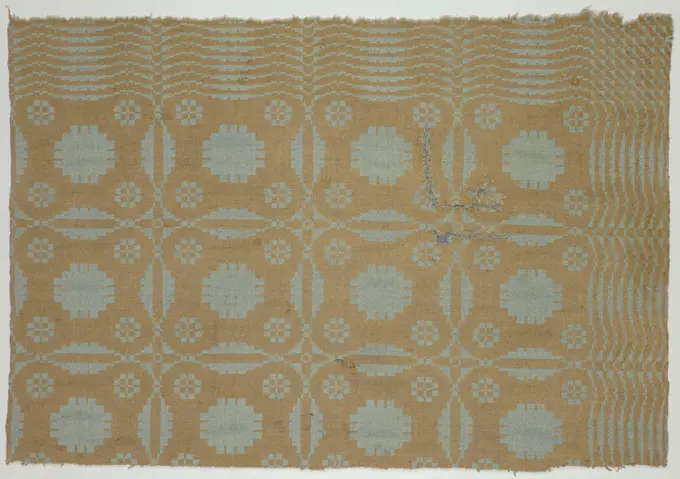
Coverlet fragment, Medium: wool Technique: double cloth, Single snowball pattern in tan and pale blue. Border on two sides suggests form of sunrise pattern. Plain cloth selvages on two short sides., USA, 18th century, woven textiles, Coverlet fragment
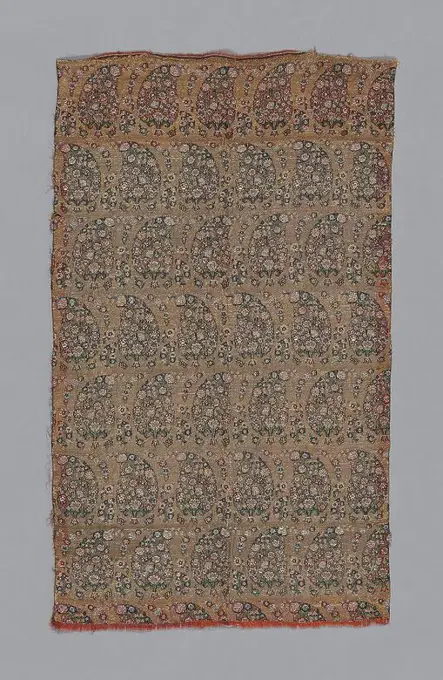
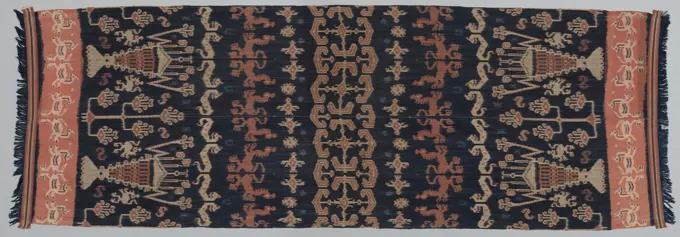
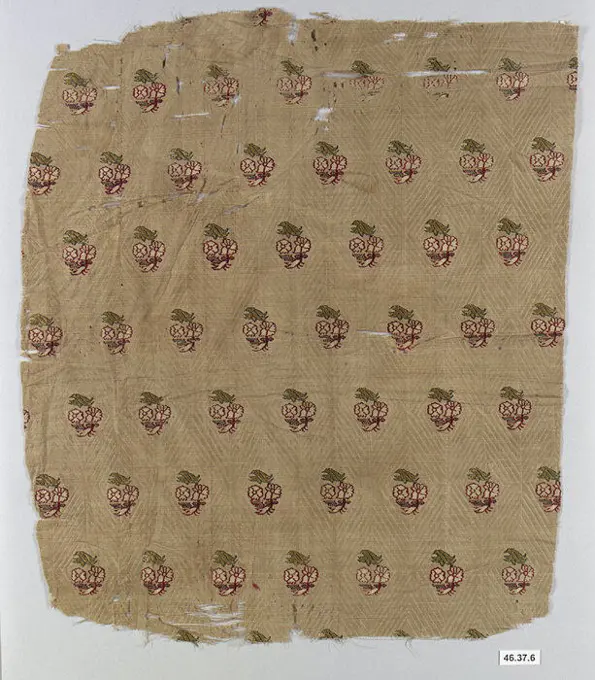
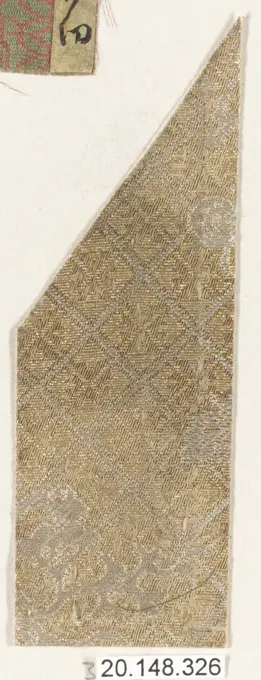
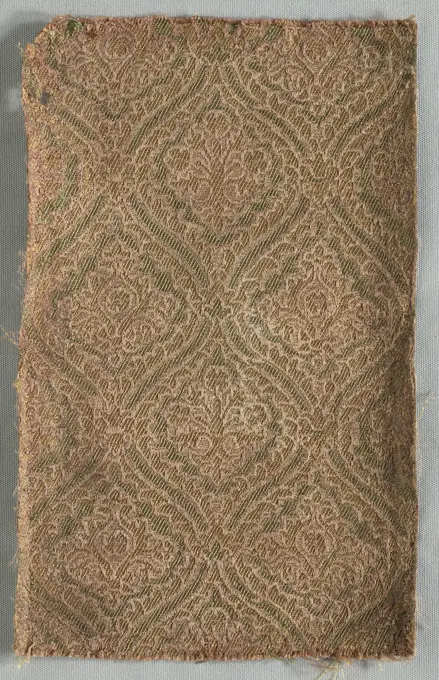
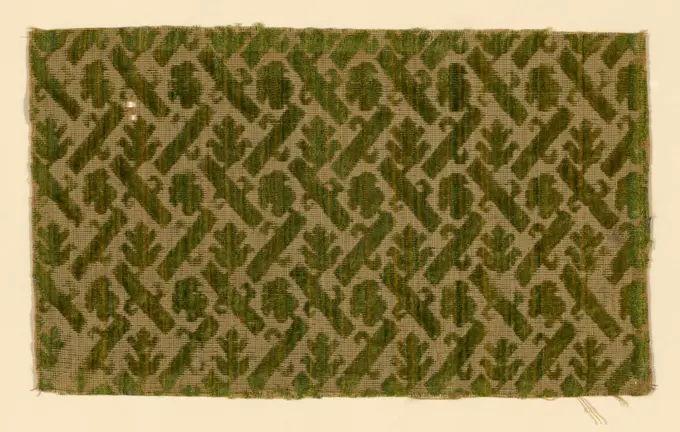
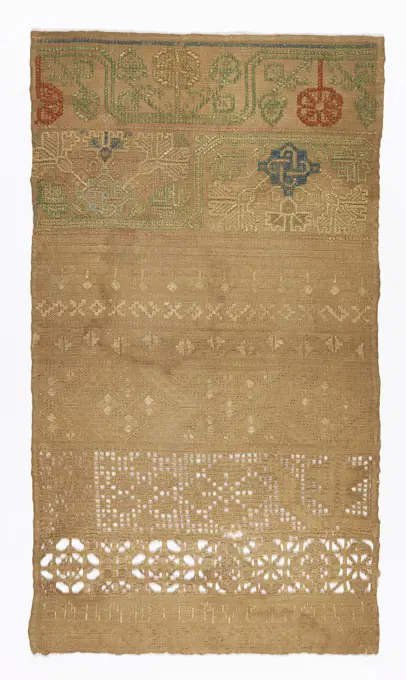
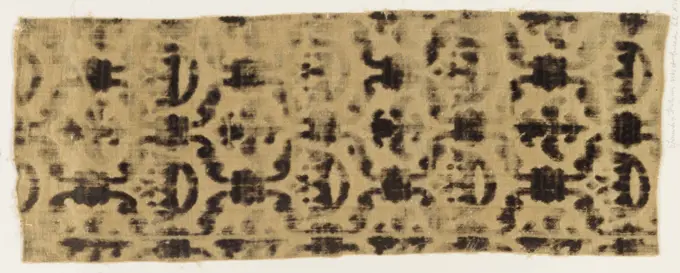
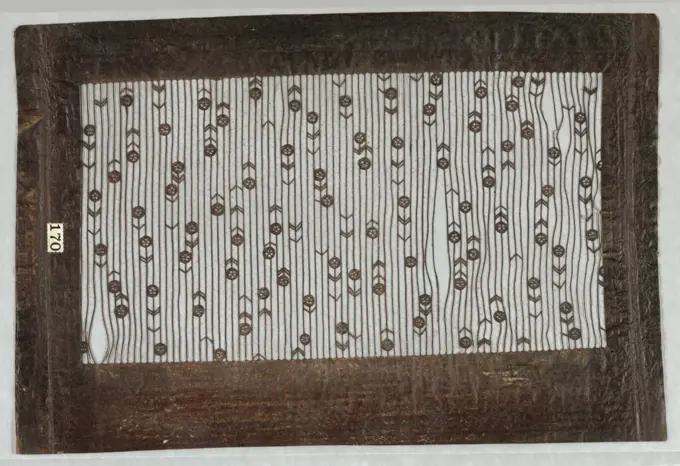
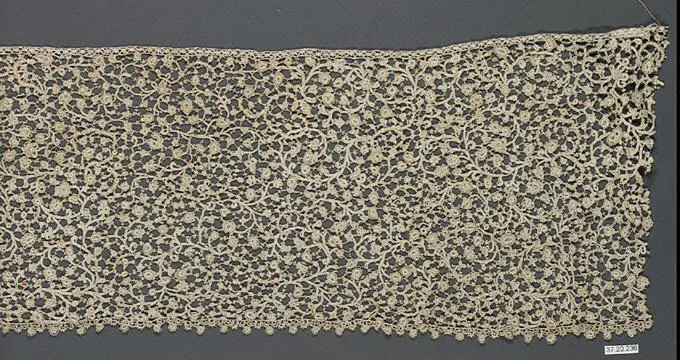
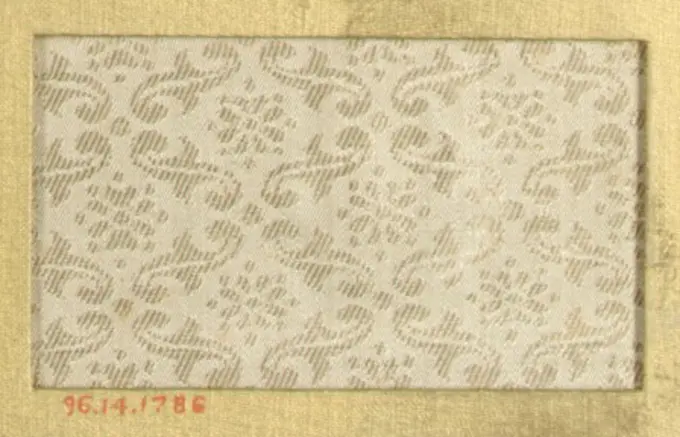
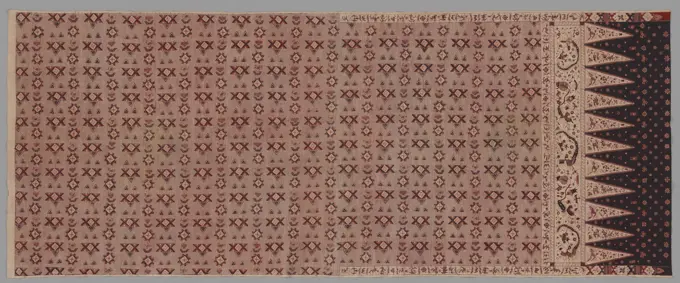
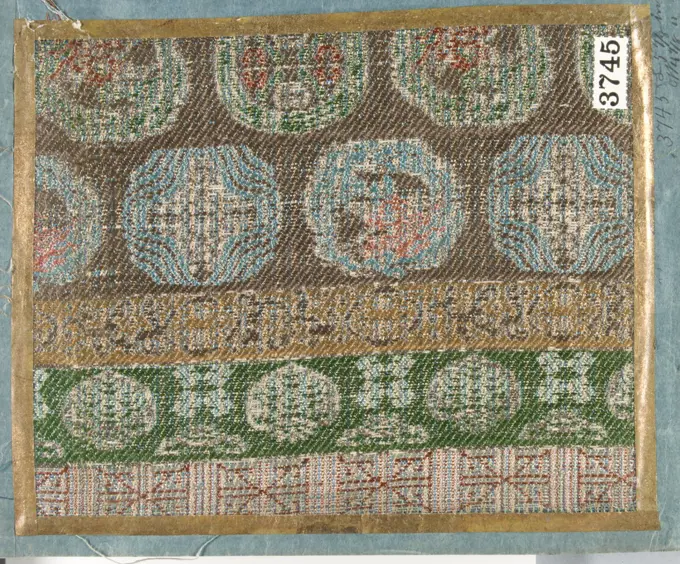
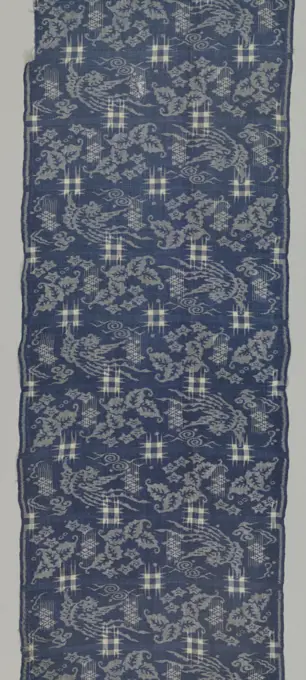
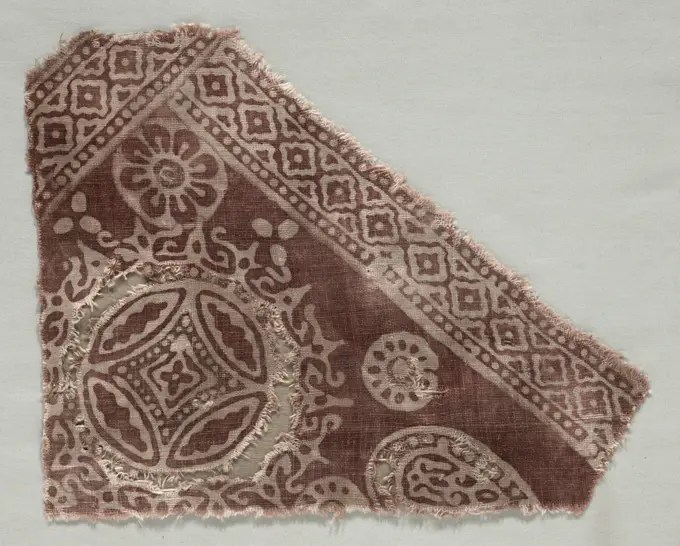
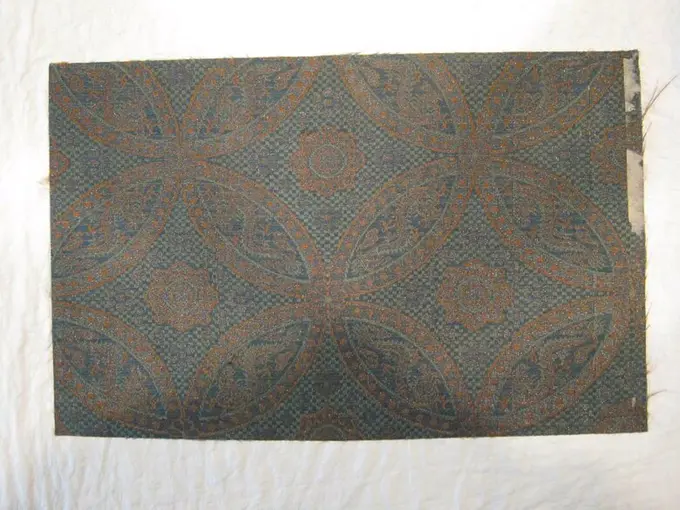
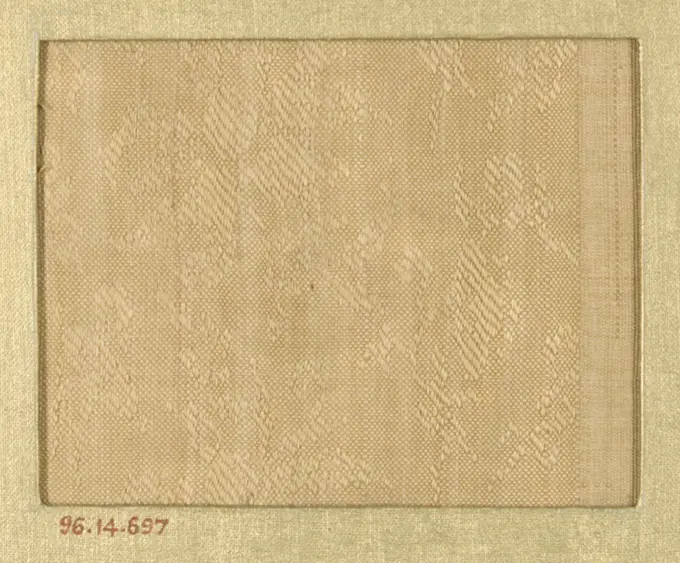
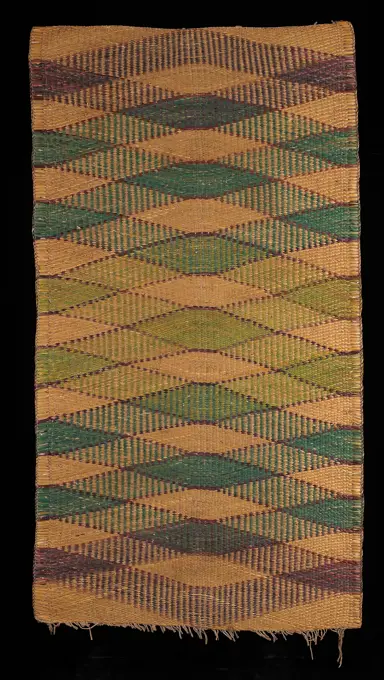
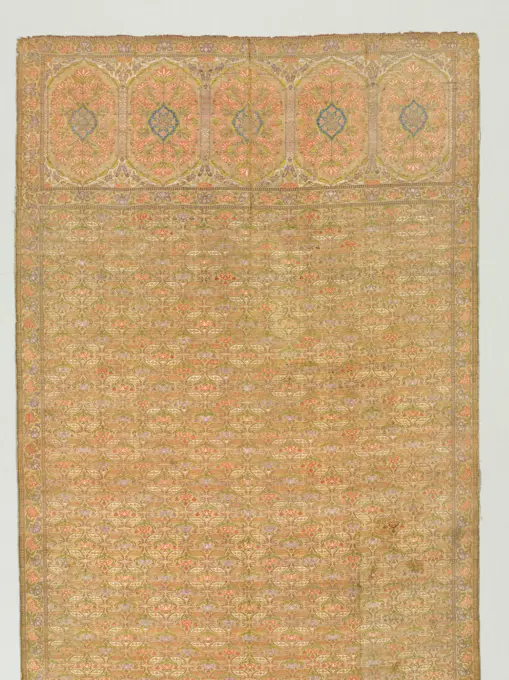
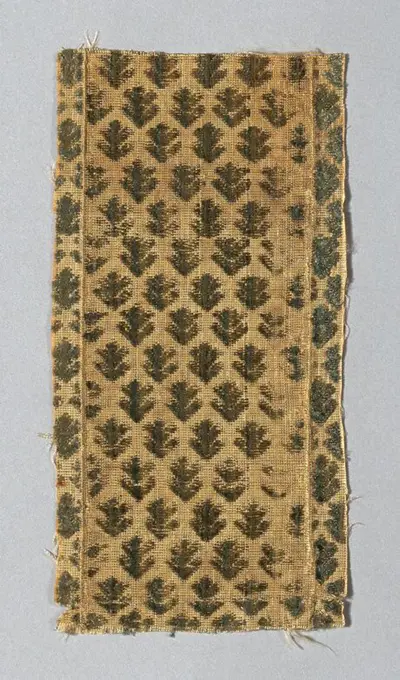
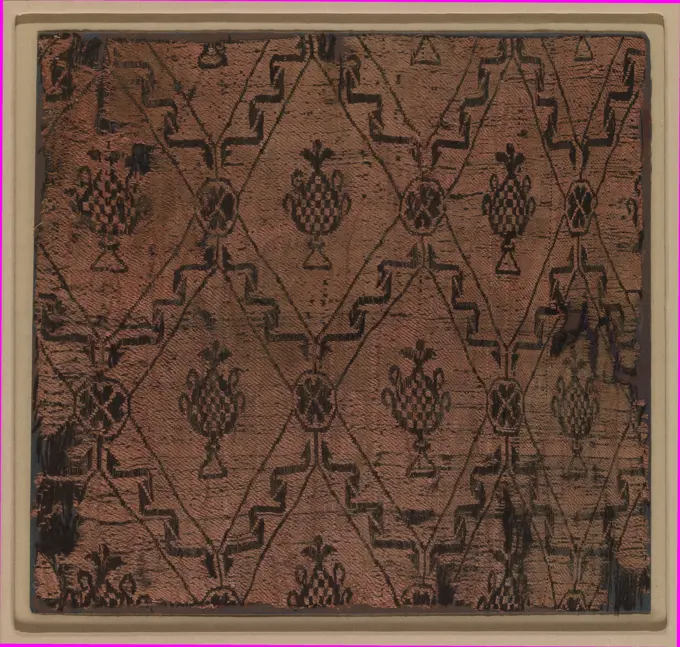
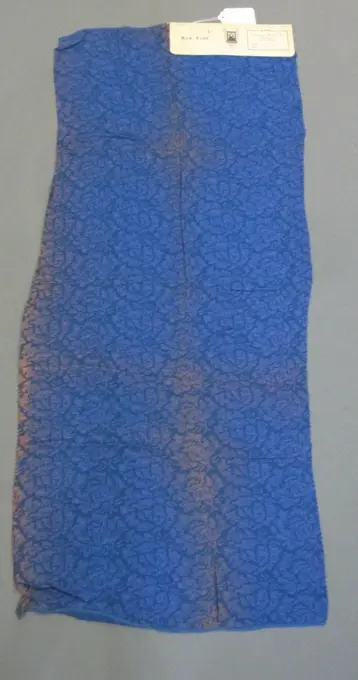
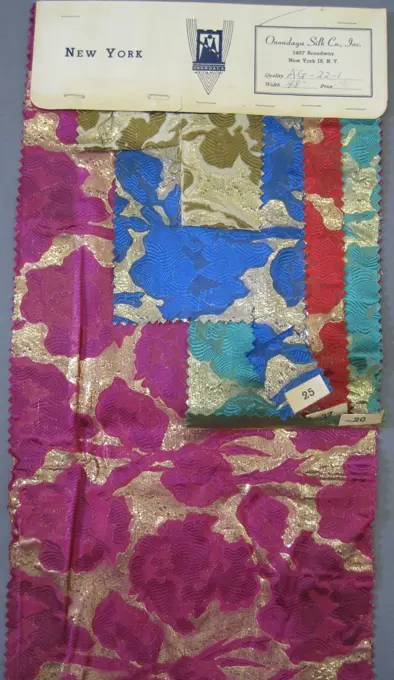
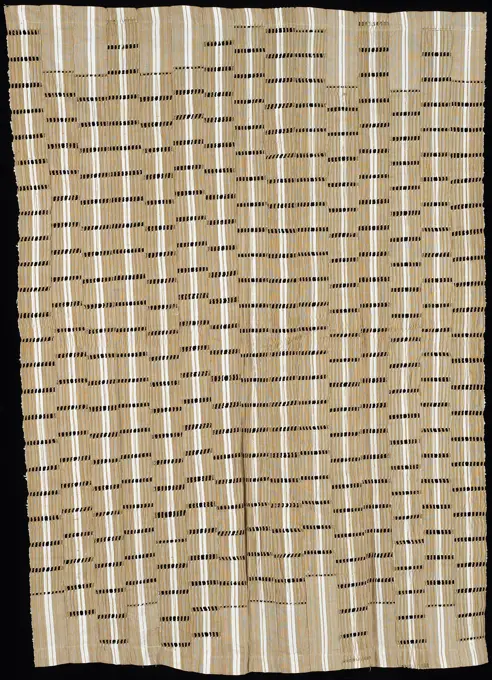
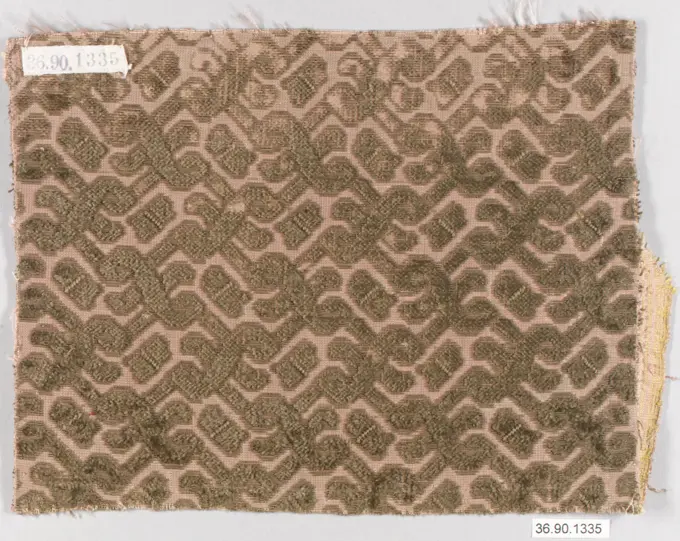
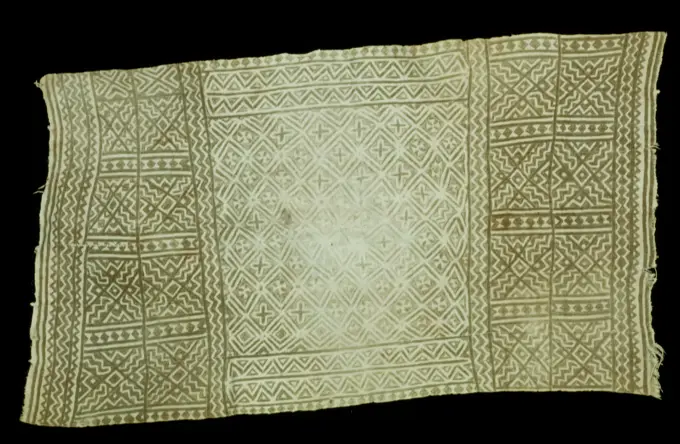
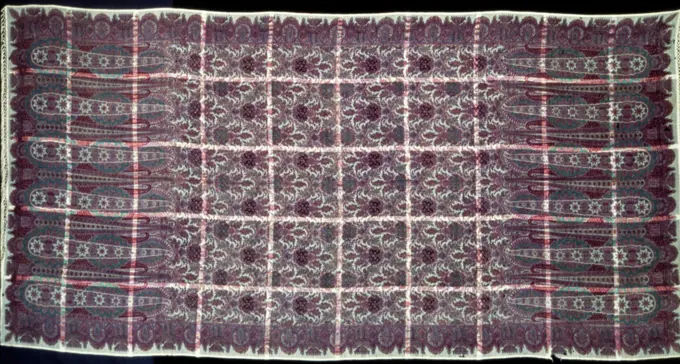
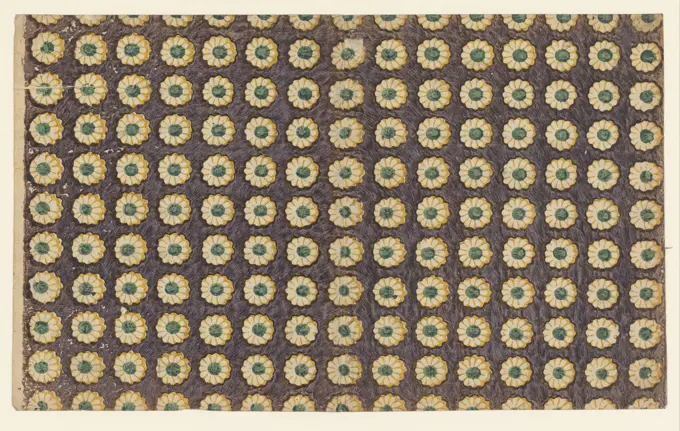
Fragment (India); silk, metallic threadFragment Made 1850-1900 Japan. .Coverlet fragment, Medium: wool Technique: double cloth, Single snowball pattern in tan and pale blue. Border on two sides suggests form of sunrise pattern. Plain cloth selvages on two short sides., USA, 18th century, woven textiles, Coverlet fragmentFragment 16th century Italian. Fragment 230109Piece 17th century Japan. Piece 71103Fragment (Dress Fabric). Iran (Persia). Date: 1801-1850. Dimensions: 54.6 x 32.7 cm (21 1/4 x 12 7/8 in.). Silk and gold wound on yellow silk core, plain compound twill. Origin: Iran. Museum: The Chicago Art Institute, Chicago, USA.Fragment late 16th century Italian. Fragment. Italian. late 16th century. Silk. Textiles-WovenFragment. Italy. Date: 1650-1700. Dimensions: . Brocaded silk. Origin: Italy. Museum: The Chicago Art Institute, USA.Length of Textile, late 1800s-early 1900s. Japan, late 19th-early 20th century. Silk; average: 391 x 65.7 cm (153 15/16 x 25 7/8 in.).Woman's wrapper (àdìrẹ ẹlé̩kọ) Yorùbá , unknown maker's mark. Woman's wrapper (àdìrẹ ẹlé̩kọ), 20th century. Commercial cotton cloth, synthetic indigo dye, 68 5/8 × 78 × 1/16 in. (174.3 × 198.1 × 0.1 cm).  Àdìrẹ is a Yorùbá textile whose patterns are made through resist dyeing. The àdìrẹ technique used to make this wrapper is àdìrẹ ẹlé̩kọ, wherein female artists paint cassava flour paste on fabric, preventing certain areas from soaking in blue indigo dye. This cloths name is Olókun, identifiable in part by the motif of a circular “stool” surrounded by “leaves.” As goddess of the sea, Olókuns domain is the source of wealth, lending the cloth the associated meaning “life is sweet.” Other àdìrẹ employ tie-and-dye techniques (àdìrẹ oníko), where raffia ties hold small stones or seeds in place to cover areas of the fabric during dyeing, resulting in àdìrẹ eléso patterns. One such àdìrẹ oníko was incorporated underneath a panel in the featured egúngún (see photograph). Arts of Africa 20th cTable Cover (France); linenHinggi, early 1900s. Indonesia, Sumba, early 20th century. Cotton, ikat dyed; overall: 258.4 x 87 cm (101 3/4 x 34 1/4 in.). Each hinggi consists of two panels stitched together down the center and often, as in this mantle, finished at either end with a band woven with supplementary warps. The geometric motif repeated across the center of this hinggi is a symbol of royalty; the rampant lions, borrowed originally from European coats-of-arms, designate royal power; the large marine shrimp signify longevity, while the Trees of Life between the shrimp symbolize fertility; and the paired deer in red bands at either end are emblems of royal privilege since the hunting of deer was, traditionally, the prerogative of the king.Textile Fragment 18th century. Textile Fragment 450699Piece. Culture: Spanish or Portuguese. Dimensions: Original measurement: 81 x 41 inches (205.7 x 104.1 cm)Current measurements: .4) L. 48 x W. 39 1/2 inches (121.9 x 100.3 cm) ; .4a) L. 48 x W. 39 1/2 inches (121.9 x 100.3 cm). Date: ca. 1700 (). Museum: Metropolitan Museum of Art, New York, USA.Piece 18th century Japan. Piece 71892Fragment; silkFragment; silk and metallic thread; Warp x Weft: 19.2 x 13.3 cm (7 9/16 x 5 1/4 in.)Fragment 18th century Italian. Fragment 230366Piece 18th century Japan. Piece 71286Piece early 19th century Japan. Piece 67440Panel, Medium: silk on cotton Technique: embroidery, Square divided into two parts: one showing tree-like forms in openwork and the other showing a series of eight pointed stars arranged in crossing diagonal lines. Entire piece surrounded by a border with hexagons in openwork. The stitches used are counted running and lace stitches., Armenia, 19th century, embroidery & stitching, PanelPiece 16th-17th century Italian. Piece 223458Piece 17th century Japan. Piece 71317Square, Medium: cotton Technique: printed on plain weave, Uncut handkerchief fabric in brown on a white ground in a design of a wide white border and white dots., USA, late 19th century, printed, dyed & painted textiles, SquareBlanket for crib or cot from silk in satiegation, quilted, stitched and embroidered. Blanket for crib or cot, silk in satin bond, quilted, stitched and embroidered with arabesque and a floral edge in red and green silk. Model: Rectangular. Filling of two woven woolen layers. Liner of plain silk in flat binding. Blind hem. Decoration: Midfield with twice a mirror pattern of linear curls. The embroidery at the top has been worked by the top layer of the woolen filling. The lining of silk in flat binding is crossed with the lower woolen intermediate layer in a typical Dutch pattern of 'shells'.Box covered with sit paper with a job pattern with flowers in red and green, anonymous, 1788 - 1790  Box with lid, covered with spa papier with a job pattern with flowers in red and green, covered on the inside with plain blue paper, inscription on the underside: 'Costs 30 ST uivers 1790'. On the top then a lid a loop, the lid is attached to the box with strings. Netherlands paper. block printing (relief printing process) ornament derived from plant formsWoman's Hip Wrapper (Sarung Kepala Pasung, Sarung Prada). Indonesia, Java, Lasem, circa 1880. Costumes; principal attire (lower body). Hand-drawn wax resist (batik) on machine-woven cotton, natural dyes and applied gold leafTwo Brocaded Fragments, late 1500s. Italy, late 16th century. Lampas weave (), silk and metal thread; overall: 22.5 x 13.5 cm (8 7/8 x 5 5/16 in.).Fragment Made 1601-1650 Italy. Cisele voided cloth velvet .Fragment zijdeweefsel, anonymous, c. 1500 - c. 1599 Fragment of dark red silk with pattern of pomegranates enclosed by rush -hour, formed by leaf work filled. Italy (possibly) silk damask Fragment of dark red silk with pattern of pomegranates enclosed by rush -hour, formed by leaf work filled. Italy (possibly) silk damaskSampler, Sarah Davenport, English, Medium: silk and linen embroidery on linen foundation Technique: embroidered in eyelet, satin, back, double running, cross, montenegrin, four-sided, and overcasting stitches, with two bands of withdrawn element work with needlemade fillings, looping, wrapping, and interlacing, on plain weave foundation., Bands of pattern in polychrome, white and withdrawn element work., England, October 7, 1681, embroidery & stitching, SamplerFragment (Dress Fabric) Made 1601-1800 Near East. Cotton, plain weave; possibly block printed .Panel (France); silk and metallic thread; Overall: 56.4 x 34.5 cm (22 3/16 x 13 9/16 in.)Piece 18th century Japan. Piece 71644Fragment; silk, metallic thread; Bequest of Richard Cranch Greenleaf in memory of his mother, Adeline Emma Greenleaf; 1962-56-127Fragment late 16th century Spanish or Italian. Fragment 230474Stripes and Dianthus Flowers, Mulberry paper (kozo washi) treated with fermented persimmon tannin (kakishibu), and silk threads (itoire), Dianthus flowers are commonly gifted on mother's day in Japan. In Latin 'Dios,' meaning gods, and 'Anthos,' meaning flower this is the flower of the gods. Thin stripes contain the flowers and their chevron leaves., Japan, mid 18th - early 19th century, textile designs, Katagami, KatagamiFlounce early 18th century Italian. Flounce. Italian. early 18th century. Needle lace. Textiles-LacesFragments; silkPiece 18th-19th century Japan. Piece 67499Piece 16th-17th century Italian. Piece. Italian. 16th-17th century. Silk. Textiles-VelvetsTrimming fragment, Medium: silk Tewchnique: woven, Vine and ornament within borders in yellow., France, 19th century, trimmings, Trimming fragmentTextile Fragment ca. 1500. Textile Fragment 454476Annie L Vaughn, Coverlet Detail, c 1942 Coverlet DetailHandkerchief French 19th centuryFragment (Italy), 17th century; silk; Warp x Weft: 10.5 x 22.7 cm (4 1/8 x 8 15/16 in.)Fragment 16th century Italian. Fragment 230162Textile (France); silk, metallic threadFragment. Italy. Date: 1775-1800. Dimensions: 17 x 13.4 cm (6 5/8 x 5 1/4 in.). Silk, plain weave with supplementary pile warps forming cut and uncut voided velvet. Origin: Italy. Museum: The Chicago Art Institute, Chicago, USA.Stencil with Pattern of Filled Squares 19th century Japan This design has a naturalistic associationthe hemp leaf. Hemp fiber was commonly grown and used for textiles throughout Japan.. Stencil with Pattern of Filled Squares 53658 Japan, Stencil with Pattern of Filled Squares, 19th century, Paper, Image: 9 7/8 ? 15 7/8 in. (25.1 ? 40.3 cm). The Metropolitan Museum of Art, New York. Gift of Leon Dabo, 1955 (55.175.16)Textile; wool, linenMantle. Peru, South Coast, Paracas, 200 B.C.-A.D. 200. Costumes. Camelid fiber plain weave with stem stitch and loop stitch embroideryWaist Wrapper (Kain Panjang,Pugeran)John Tubrant, Printed Cotton (Quilt), 1935 1942 Printed Cotton (Quilt)Piece 17th century Japan. Piece 71072Fragments (Italy); silk; Bequest of Richard Cranch Greenleaf in memory of his mother, Adeline Emma Greenleaf; 1962-56-46-a,bTextile Sample from Sample Book 19th century Japan. Textile Sample from Sample Book 68222Bedspread. Dated: c. 1939. Dimensions: overall: 43.9 x 52.1 cm (17 5/16 x 20 1/2 in.). Medium: watercolor and graphite on paper. Museum: National Gallery of Art, Washington DC. Author: A. Zimet.Band. Date/Period: 17th century. Band. Medium: silk embroidery on linen foundation. Technique: embroidered in double running stitch on plain weave, with needle lace edging. Author: UNKNOWN.Textile, Medium: hemp or ramie Technique: warp and weft ikat (kasuri) on plain weave, Length of indigo-dyed fabric, with a closely spaced design of swooping phoenixes and bunches of leaves and flowers, interspersed with small symbols in white on a deep blue ground. Selvedge on each side set off by a narrow weft ikat stripe., Japan, late 19th century, printed, dyed & painted textiles, TextileFragment, 1300s. India, 14th century. Drawn resist, painted mordant, dyed; cotton; overall: 32.7 x 25.7 cm (12 7/8 x 10 1/8 in.).Fragment. China. Date: 1700-1725. Dimensions: 32.4 x 20.6 cm (12 3/4 x 8 1/8 in). Fancy compound satin silk and silvered paper; 2 strips to m.m. Origin: Japan. Museum: The Chicago Art Institute, Chicago, USA.Piece 18th-19th century Japan. Piece 66421Mat, c. 1900, 86 3/8 x 48 3/4 in. (219.39 x 123.83 cm), Bulrush, pigment, cotton, United States, 19th-20th century, Baskets, like cloth textiles, are woven: they are composed of multiple elements that cross and bind one another. However, baskets are fashioned primarily by hand, without the use of a loom. With its combination of reeds traditionally used in basketry and an off-loom diagonal weaving technique, this two-dimensional mat demonstrates the affinities between textile weaving and basketry.Sash with floral field and end panels on a gold ground, 1700s. Iran. Taqueté with discontinuous wefts: silk, gilt- and silver-metal thread; overall: 449.5 x 59.7 cm (176 15/16 x 23 1/2 in.).Fragment 16th century Italian. Fragment 230552Fragment black velvet with recesses with pattern of pomegranate motifs. Fragment black silk velvet with recesses with a pattern of horizontal row five-spin leaves in which a pomegranate, with acanthusloof and closed surrounded by flowers. Mounted on linen.A Zimet, Bedspread, c 1939 BedspreadMetal Embroidery, early 1900s. India, early 20th century. Silk net with metal thread, embroidery and sequins; overall: 228.6 x 109.2 cm (90 x 43 in.).Fragment Made 1601-1625 Netherlands. Linen and wool, plain weave, tied and free double cloth .Fragment. Italy. Date: 1650-1700. Dimensions: 17.8 x 9.2 cm (7 x 3 5/8 in.). Cisele voided cloth velvet; Ecru ground; design in blue cut velvet outlined with uncut velvet. Origin: Italy. Museum: The Chicago Art Institute, Chicago, USA.Bedcover (Amish Plain Quilt) Made 1880-1900 Ohio. Cotton, plain weaves; pieced; backed with cotton, plain weave; cotton batting; quilted with cotton thread .Ribbon Lattice with Pinecone () 7th-9th century. Ribbon Lattice with Pinecone () 450731Textile Swatches Onondaga Silk Company, Inc. (1925-1981). , 1948-1959. 55 acetate, 45 rayon, 40 1/2 x 17 1/2 in. (102.9 x 44.5 cm).    1948-1959Head Shawl (Phulkari), 1800s. India, Punjab, 19th century. Embroidery; silk on cotton; overall: 116.8 x 264.2 cm (46 x 104 in.).Letter pouch of Michiel de Ruyter. Admiral de Ruyter perhaps had this letter pouch made during one of his campaigns against the Barbary pirates who were menacing the Mediterranean from their bases on the North African coast. Part of his strategy was to conduct regular negotiations with North African potentates in cities such as Salee, Algiers, Tunis and Tripoli. This case may be a souvenir of one of those trips ashore.Fragment late 15th century Italian, Venice. Fragment. Italian, Venice. late 15th century. Silk, metal thread. Textiles-VelvetsWomans Ceremonial Skirt (Tapis)Textile Swatches Onondaga Silk Company, Inc. (1925-1981). , 1948-1959. Silk and metallic threads, a: 9 x 23 in. (22.9 x 58.4 cm).    1948-1959Textile (China); silk; Warp x Weft: 248 x 67 cm (8 ft. 1 5/8 in. x 26 3/8 in.); 1966-66-1Piece 16th century Japan. Piece 71316Band. Egypt. Date: 1201-1400. Dimensions: 4.8 × 14.4 cm (1 7/8 × 5 3/4 in.). Linen, plain weave; embroidered with silk in cross and long-armed cross stitches. Origin: Egypt. Museum: The Chicago Art Institute, Chicago, USA.Piece 18th century China. Piece. China. 18th century. Silk / Compound weave. Qing dynasty (1644-1911). Textiles-WovenPiece 17th century Japan. Piece 71858Homespun Linen. Dated: 1938. Dimensions: overall: 20.9 x 25.7 cm (8 1/4 x 10 1/8 in.). Medium: watercolor, gouache, and graphite on paper. Museum: National Gallery of Art, Washington DC. Author: Marjorie McIntyre.Textile fragment, Medium: wool, cotton Technique: interlocked tapestry, minor use of non-horizontal wefts, Two fragments of very fine tapestry weave with cotton warps and wool wefts. B) Lozenge repeat in eccentric tapestry in red, blue, black, brown and tan., Peru, ca. 400, woven textiles, Textile fragmentFragment (Italy); silkFragment Made 1600-1650 Italy. Silk, velvet; cut, uncut, voided; plain weave foundation .Wrapper, c. 1950, 67 1/2 x 49 in. (171.45 x 124.46 cm), Cotton, Nigeria, 20th centuryPiece 17th century Japan. Piece 71330Hanging, 18th century, Embroidered satin brocade, China, 18th centuryFragment. Italy. Date: 1767-1799. Dimensions: 12.5 x 11 cm (4 15/16 x 4 5/16 in.). Origin: Italy. Museum: The Chicago Art Institute, Chicago, USA.Piece 16th-17th century Italian. Piece 224419Skirt for a Married Woman, 20th century, Bacho Tarawale, 50 1/2 x 29in. (128.3 x 73.7cm), Cotton; Stripwoven, mudcloth (bogolanfini); dyed, Mali, 20th centurySari India 19th centuryShawl, 19th century, 136 1/2 x 66 1/2 in. (346.71 x 168.9 cm), Wool; printed, France, 19th centuryChintz Bar and Broken Dishes, Medium: cotton Technique: pieced and sewn patchwork of roller-printed plain weave fabrics, Patchwork quilt top made of six broad whole-cloth strips and five narrow patchwork strips. The patchwork strips are made up of small square and triangular pieces in tans, browns, and dark blue. The strips on the two outer edges have a very distinctive leaf pattern on a lattice ground in off-white on brown, while the whole-cloth strips in the center are a small-scale floral in blue and tan on a brown ground., USA, mid-19th century, printed, dyed & painted textiles, Patchwork quilt top, Patchwork quilt topFragment, 1800s. China, 19th century. Silk; overall: 63.5 x 66.7 cm (25 x 26 1/4 in.).Dress of red sides velvet with a satin lining., 1600 - 1699 A rug of red silk velvet, composed of nine pieces. Redomed by a black tinted Golden Galon. Red Satin lining. Italy silk. satin. velvet (fabric weave). cotton (textile) A rug of red silk velvet, composed of nine pieces. Redomed by a black tinted Golden Galon. Red Satin lining. Italy silk. satin. velvet (fabric weave). cotton (textile)Leaf with litter pattern from Margrieten, Anonymous, c. 1785 - c. 1825  Leaf with litter pattern from Margrieten. Used as a cover for a publication from 1805.  paper. block printing (relief printing process) ornament derived from plant forms