Historical Textile Fragments

A collection of various textile fragments from ancient to medieval times, showcasing intricate patterns and designs in natural colors.

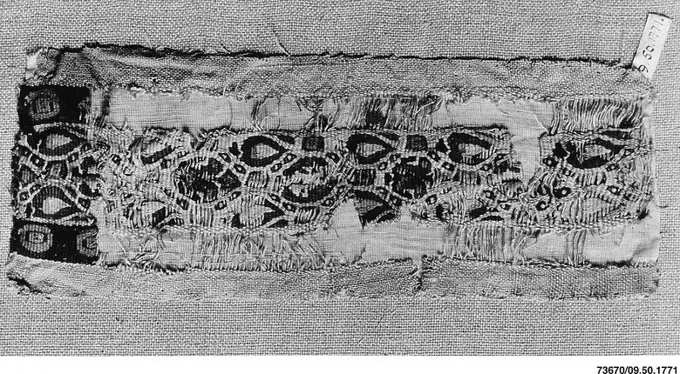
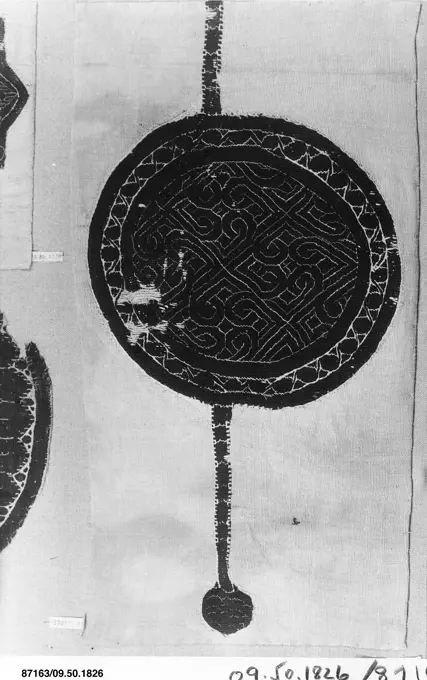
Textile Fragment 3rd-4th century. Textile Fragment 443275
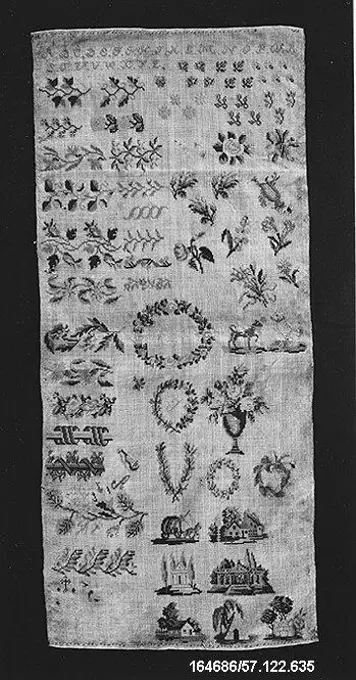
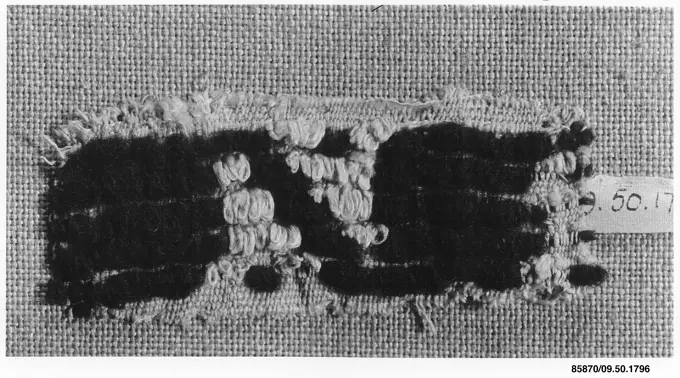
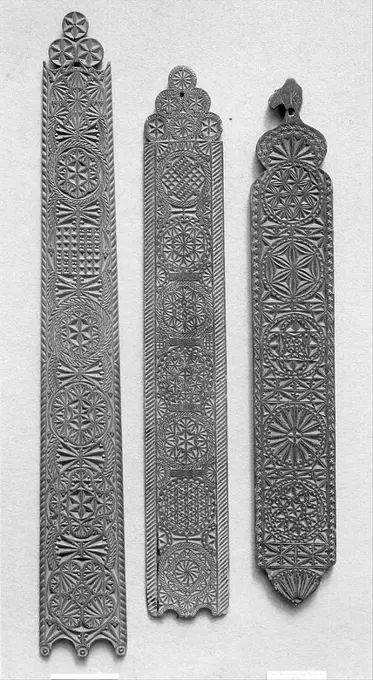
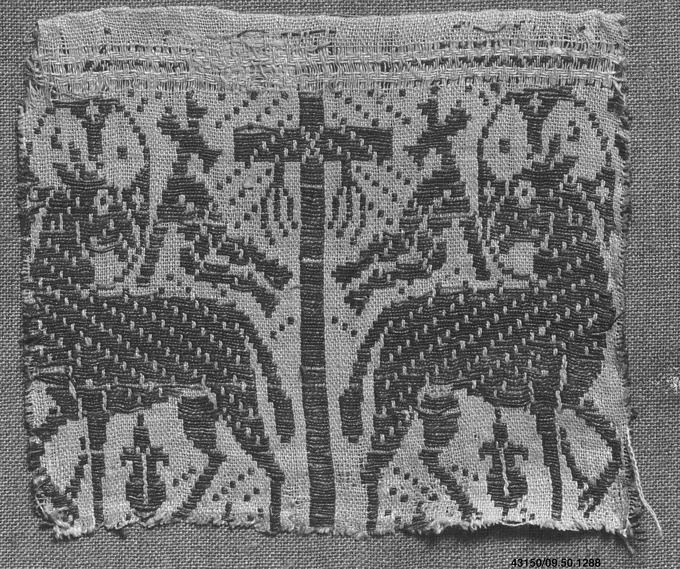
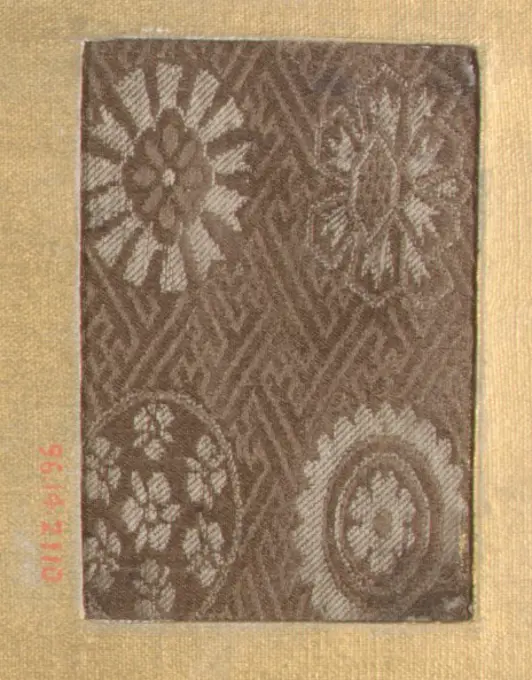
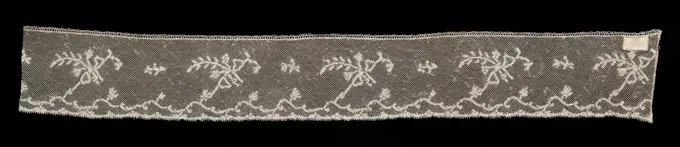
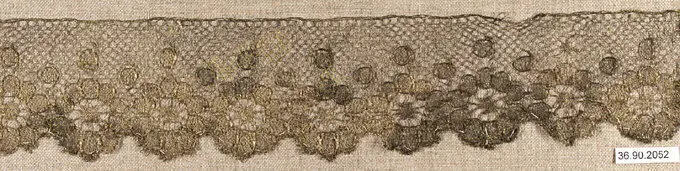
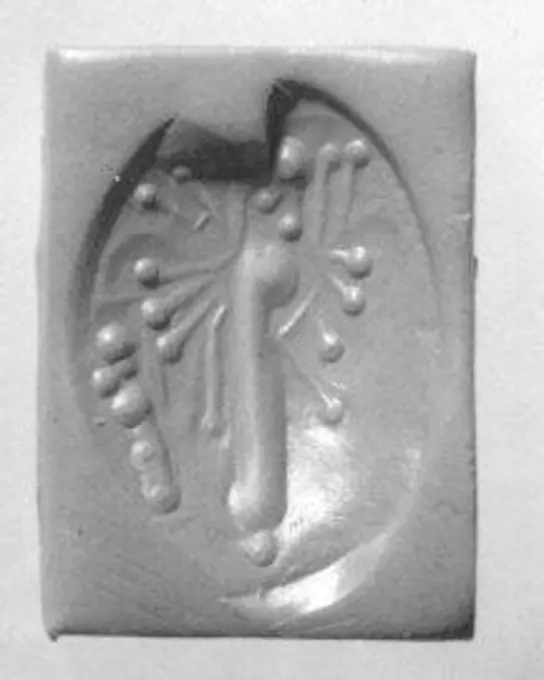
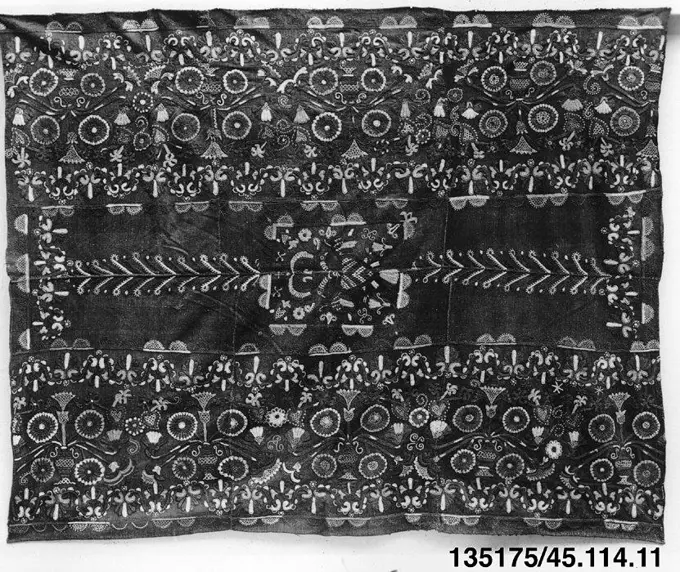
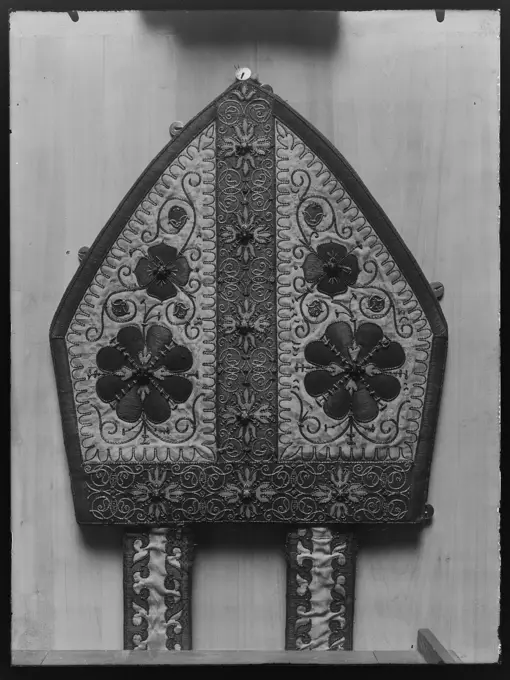
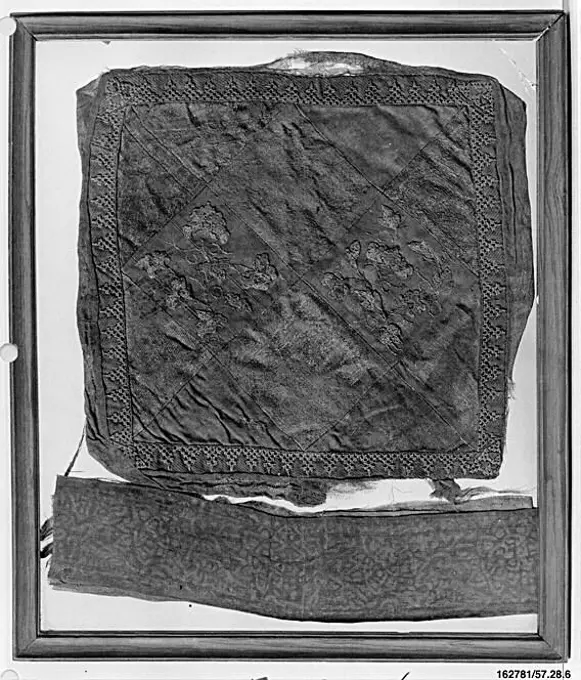
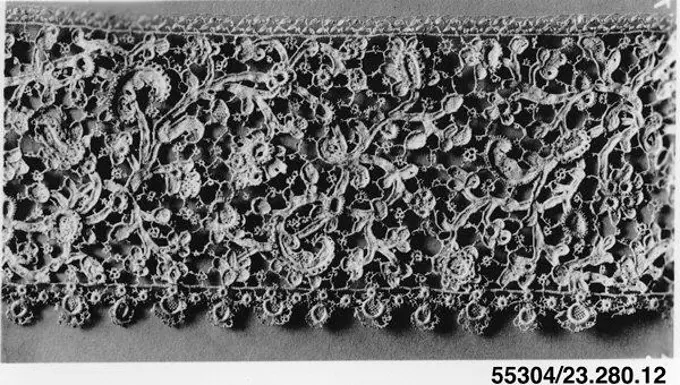
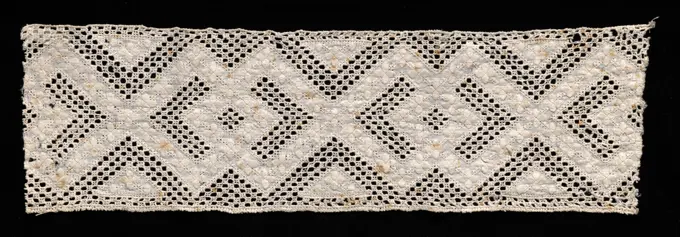
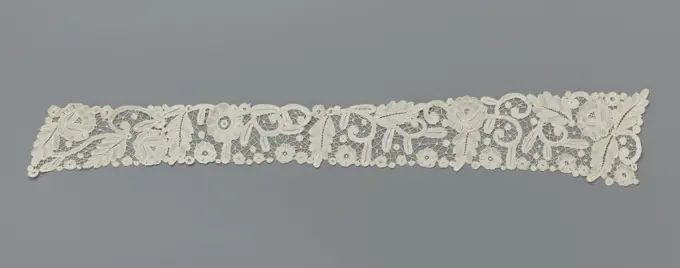
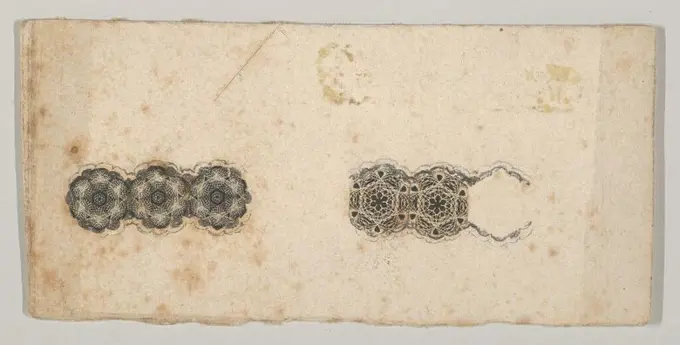
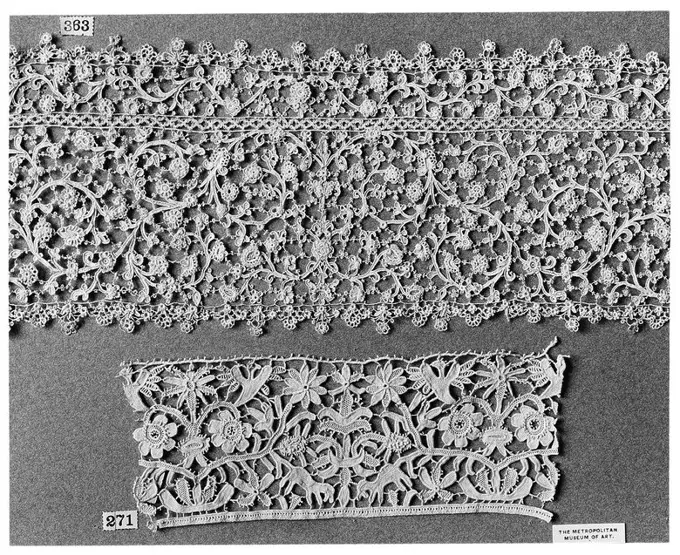
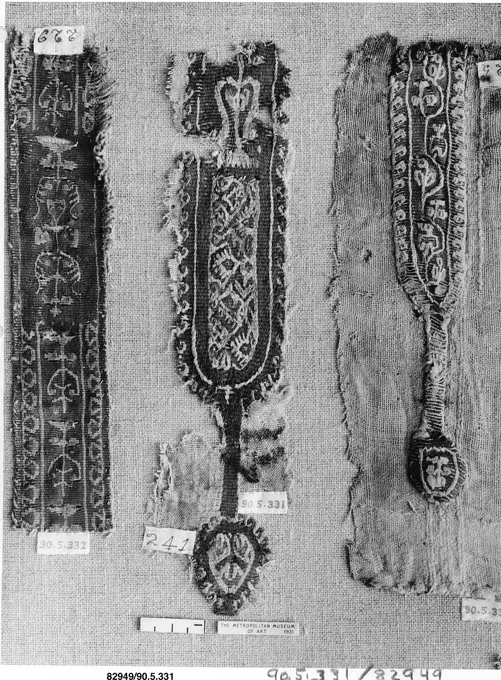
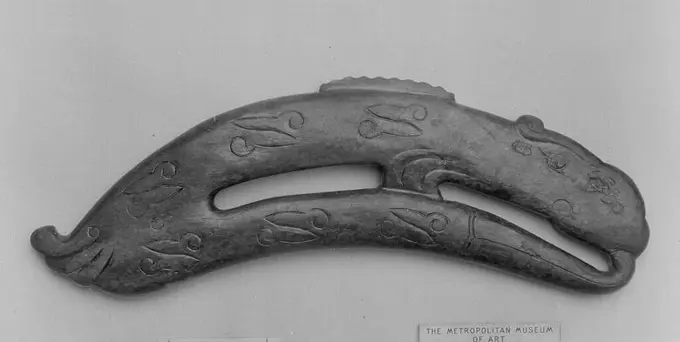
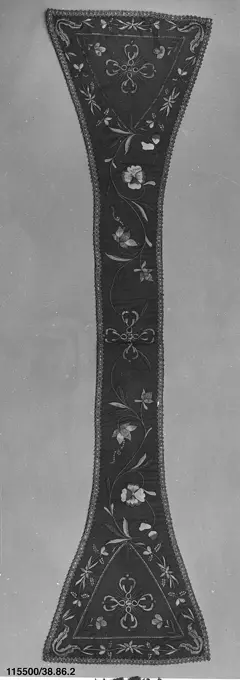
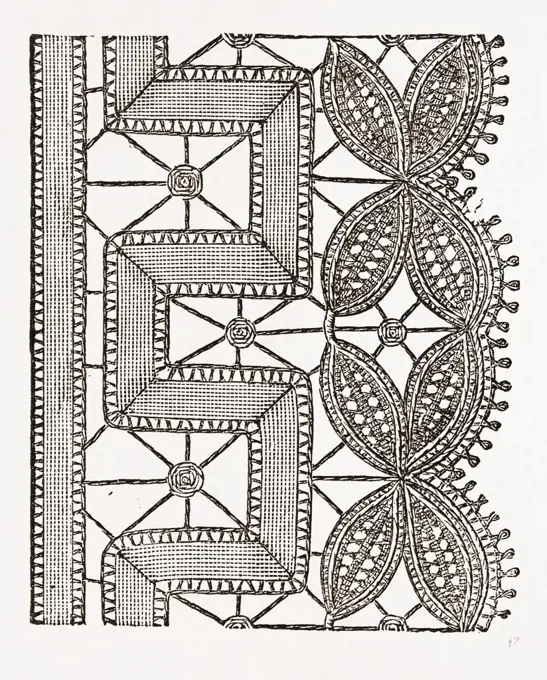
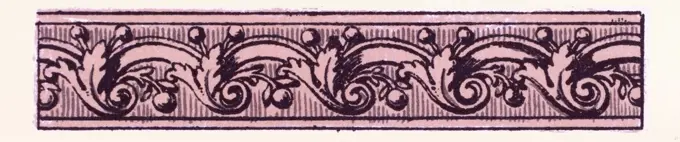
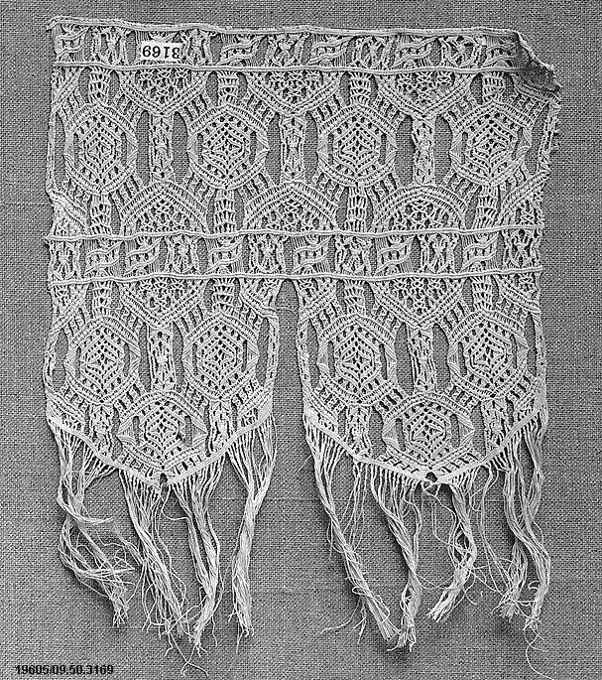
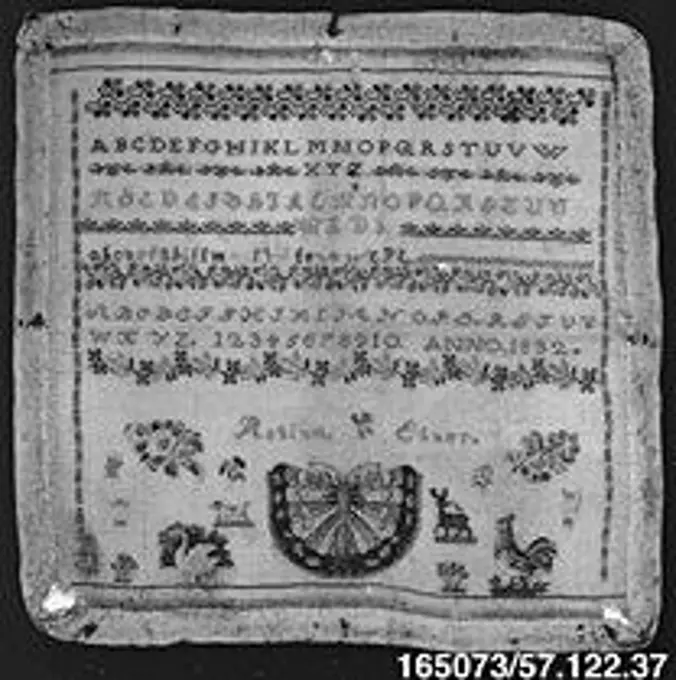
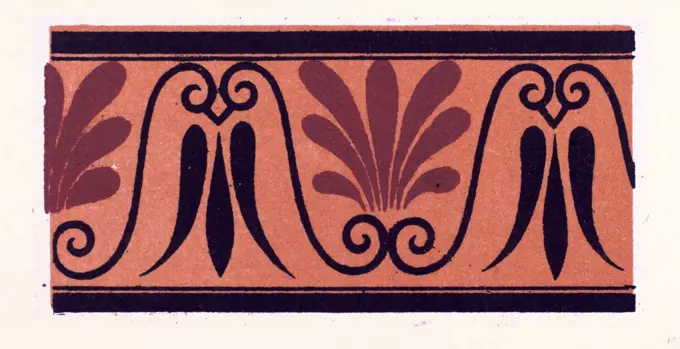
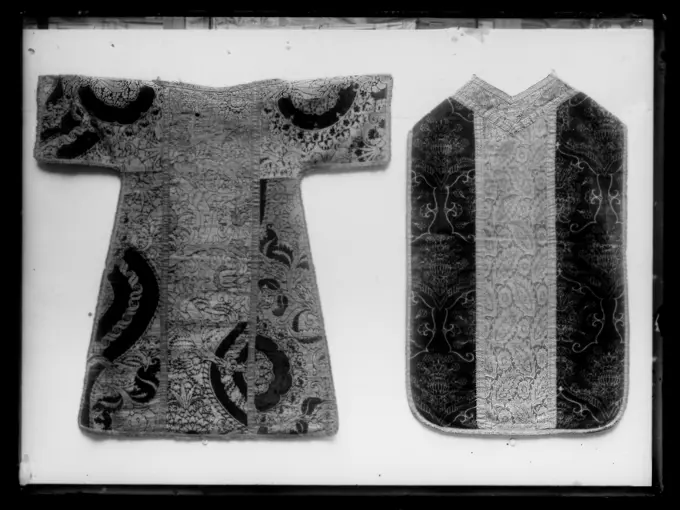
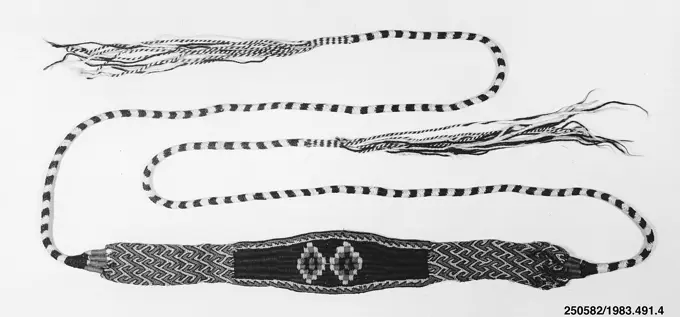
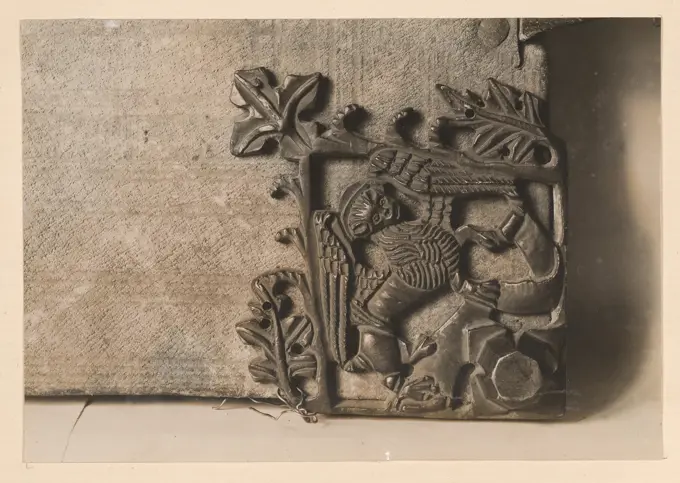
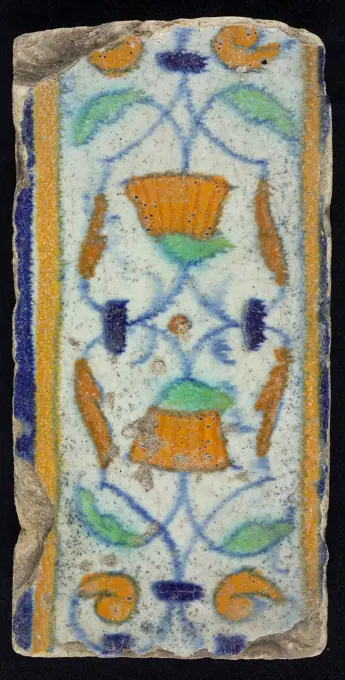
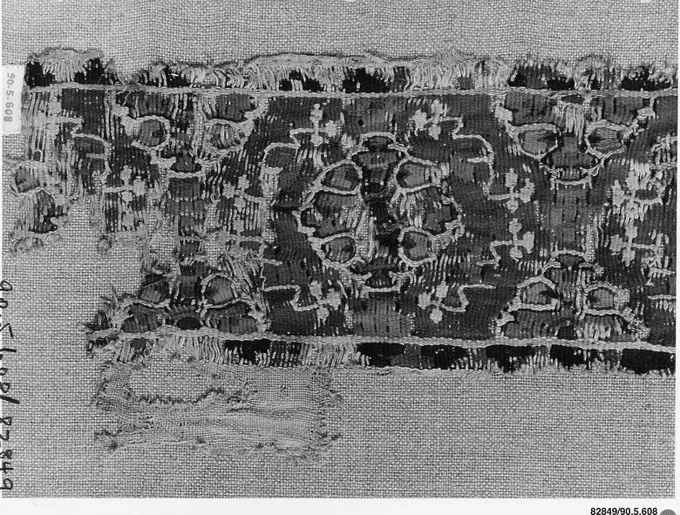
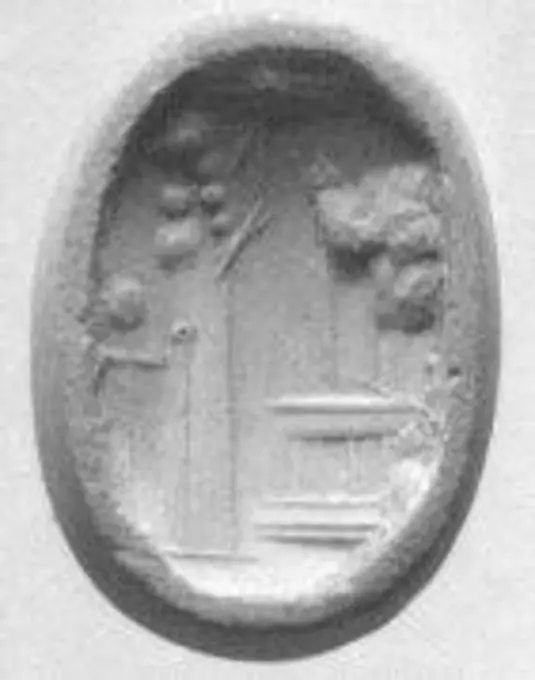
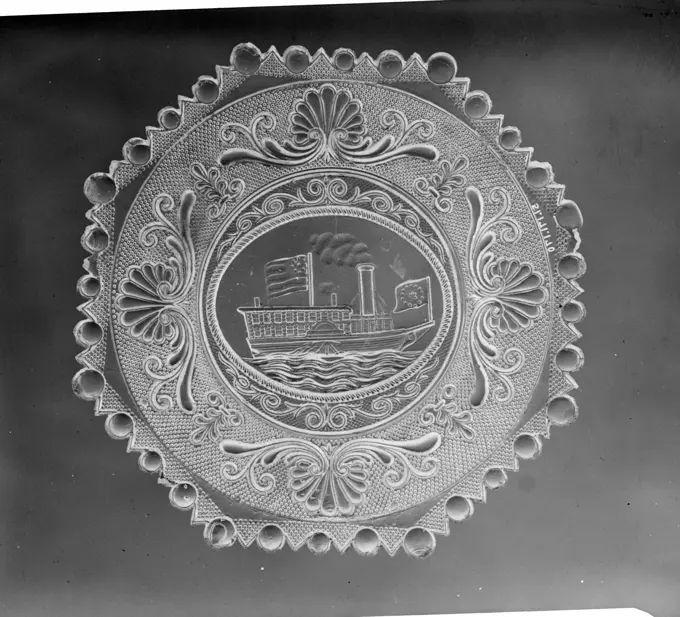
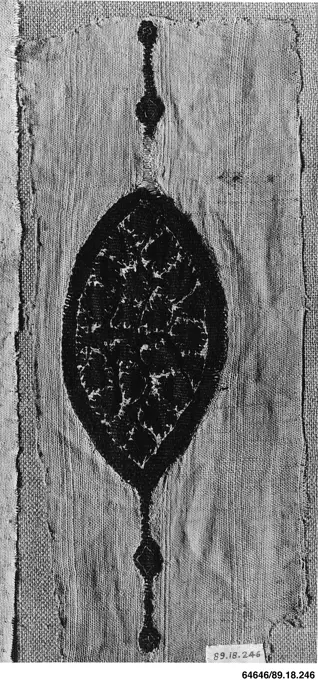
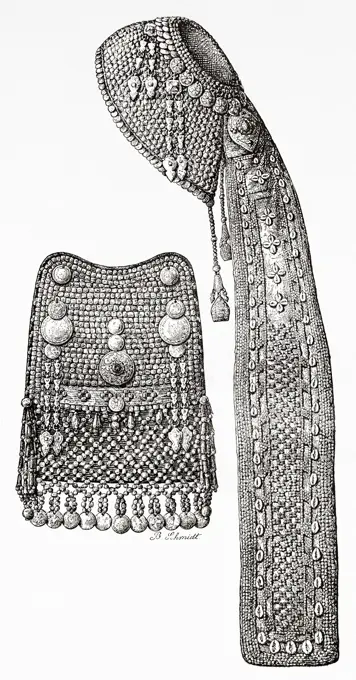
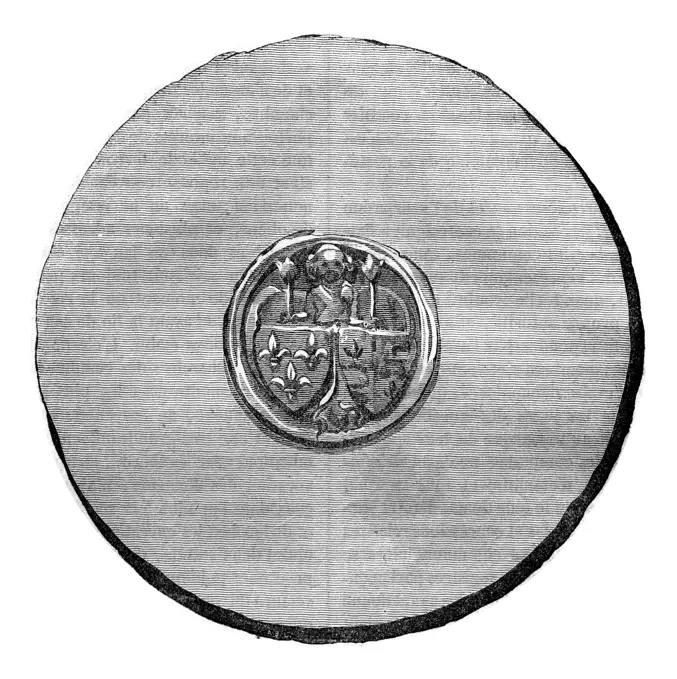
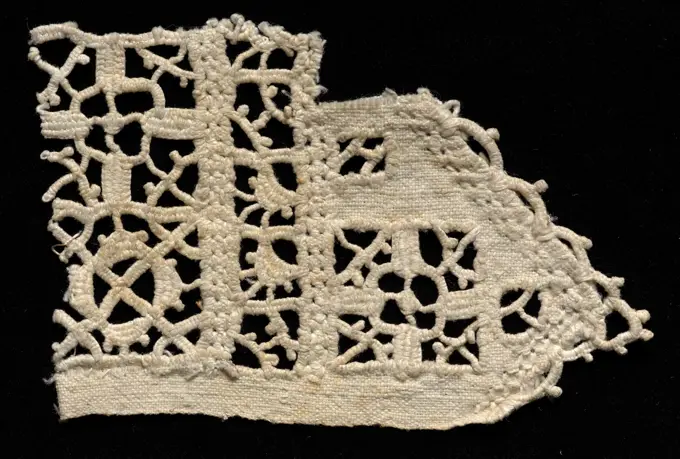
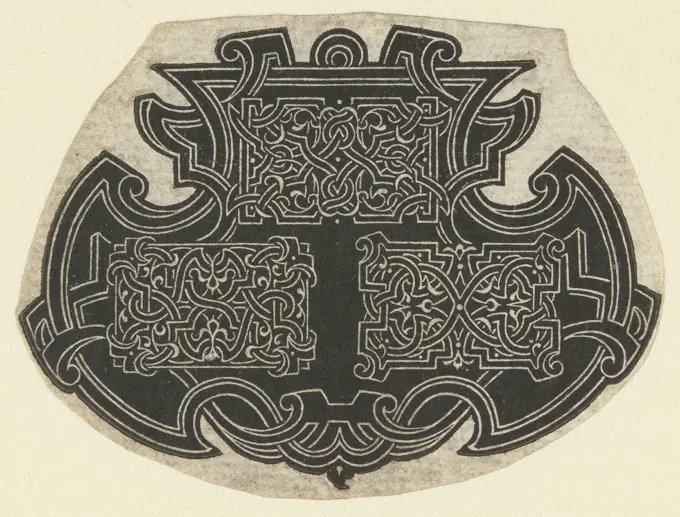
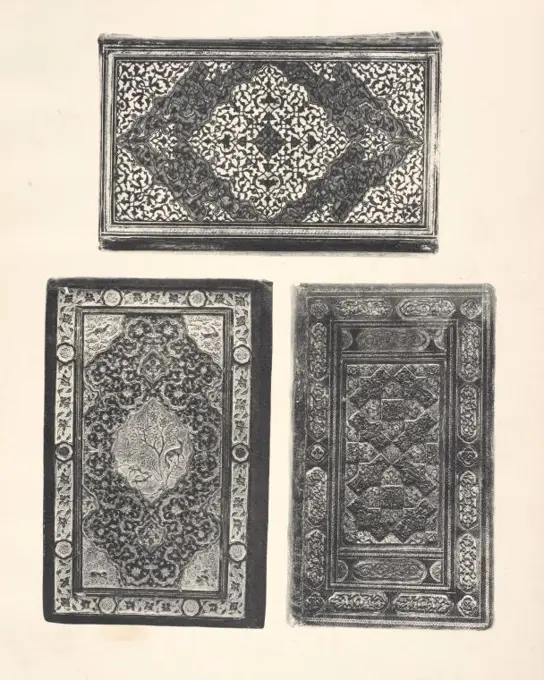
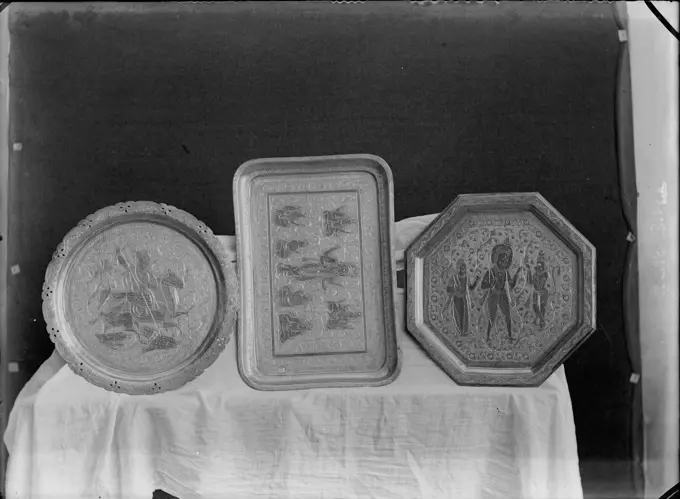
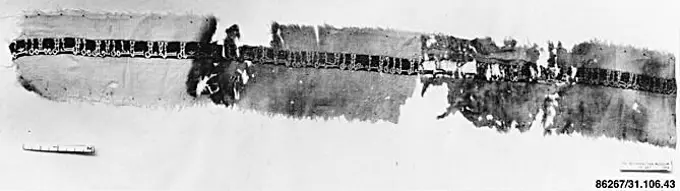
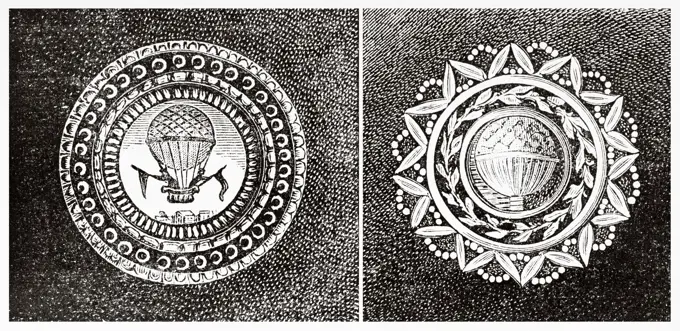
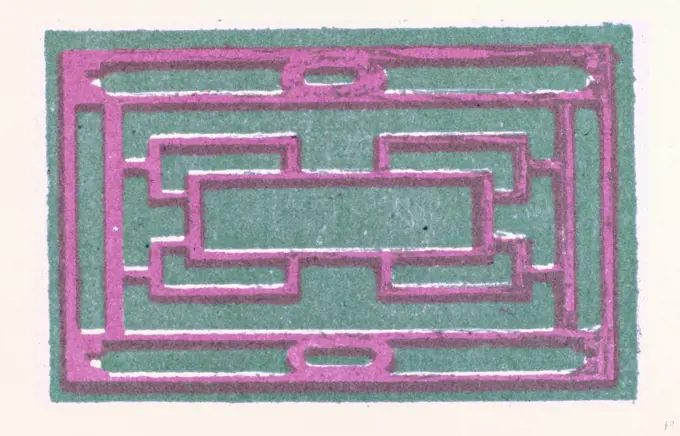
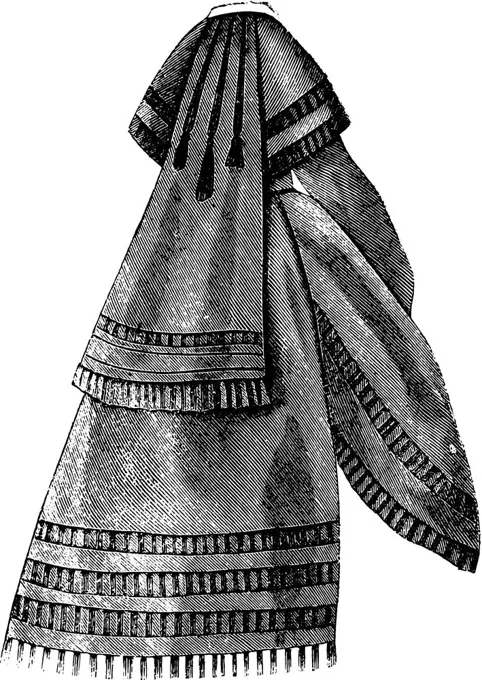
Textile Fragment 5th-6th century. Textile Fragment 444185Band 16th-17th century Italian or Greek. Band 215459Band. Dimensions: H. 7 1/2 in. (19.1 cm)W. 4 3/4 in. (12.1 cm). Date: 6th-7th century. Museum: Metropolitan Museum of Art, New York, USA.Fragment (Border). Peru, Probably central coast. Date: 1000-1476. Dimensions: 134.6 x 17.8 cm (53 x 7 in.). Wool and cotton; compound weave. Origin: Peru. Museum: The Chicago Art Institute, Chicago, USA.Textile Fragment 19th century. Textile Fragment 445647Piece 18th century Japan. Piece 71674Fragment of a Tunic 5th-6th centuryFragment of a Sleeve 5th century. Fragment of a Sleeve 443911Textile Fragment 3rd-4th century. Textile Fragment 443275Strip 16th century Italian. Strip 212301Textile Fragment 6th-7th century. Textile Fragment 444145Textile Fragment 7th-8th century. Textile Fragment 444024Fragment 17th century German. Fragment 217001Sampler fragments, Medium: silk, metal-wrapped silk, linen Technique: withdrawn element work with needle lace fillings, Three bands from a sampler. The bottom band is a scene which originally depicted Judith and her maid putting the newly severed head of Holofernes, Judith holds a sword in her left hand, the edge worked with red silk to indicate blood., England, ca. 1650, embroidery & stitching, Sampler fragmentsTextile Fragment 3rd-4th century. Textile Fragment 443354Carpet mid-19th century. Carpet. mid-19th century. Wool (warp, weff and pile); symmetrically knotted pile. Attributed to South Caucasus, Kazak. Textiles-RugsPiece 18th century French. Piece 216966Sampler 19th century German. Sampler. German. 19th century. Silk on canvas. Textiles-EmbroideredFragment of a Bowl. Date: 15th century. Museum: Metropolitan Museum of Art, New York, USA.Band Fragment 5th-6th century. Band Fragment 445827Fragment of a Tunic. Dimensions: 4 7/8 in. high 3 1/4 in. wide (12.4 cm high 8.2 cm wide). Date: 3rd-4th century. Museum: Metropolitan Museum of Art, New York, USA.Mangle-board. Culture: Dutch. Dimensions: 37 3/4 × 5 1/4 in. (95.9 × 13.3 cm). Date: 18th century. Museum: Metropolitan Museum of Art, New York, USA.Piece late 16th-early 17th century Italian or Austrian. Piece 216415Band. Dimensions: 9.75 in. high 3.50 in. wide (24.8 cm high 8.9 cm wide)H. 9 3/4 in. (24.8 cm). Date: 6th-7th century. Museum: Metropolitan Museum of Art, New York, USA.Piece 18th-19th century Japan. Piece 67822Bobbin Lace Edging, 18th century. France, Valenciennes or Flanders, 18th century (Louis XVI period). Lace, bobbin: linen; average: 5.7 x 41.3 cm (2 1/4 x 16 1/4 in.).Piece 18th-19th century Japan. Piece 67279Piece 18th century () European. Piece 225132Stamp seal (scaraboid) with deity second half of 7th century B.C. Assyrian. Stamp seal (scaraboid) with deity. Assyrian. second half of 7th century B.C.. White and neutral Agate (Quartz). Neo-Assyrian. Mesopotamia, Nimrud (ancient Kalhu)Piece mid-18th century Spanish. Piece 220715Textile Fragment 3rd-4th century. Textile Fragment 443495Fragment late 18th century French. Fragment 222153Fragment Made 1000-1476 Peru. Plain brocaded simple cloth or plain compound cloth ( ) .Textile Fragment 3rd-4th century. Textile Fragment 443497Cover 17th-18th century Spanish. Cover 227065Fragment. Dimensions: Textile: L. 20 9/16 in. (52.3 cm) W. 18 1/2 in. (47 cm)Storage mount: L. 34 in. (86.4 cm) W. 24 1/2 in. (62.2 cm). Date: 3rd-4th century. Museum: Metropolitan Museum of Art, New York, USA.Bliżej Kultury unknownBand, Medium: linen, silk Technique: silk embroidery on linen plain weave, Scrolling floral motifs in blue on white., Italy, 18th century, embroidery & stitching, BandSheath of which both sides are shown to be sides of the sheath are decorated with candelabers on which a man stands on the left and on the right a woman with a flower in her hand. In the middle a band runs with a candelabster, intended to decorate the side of the sheath.Strip 13th century Eastern Central Asia or China. Strip 64393Strip 18th century Italian, Venice. Strip 221503Needlepoint (Cutwork) Lace Insertion, 16th century. Italy, Venice, 16th century. Lace, needlepoint: linen; average: 9.3 x 32.8 cm (3 11/16 x 12 15/16 in.).Woman's Ceremonial Skirt (Tapis) 19th century Lampung. Woman's Ceremonial Skirt (Tapis). Lampung. 19th century. Cotton, gold wrapped thread. Indonesia, Sumatra, Lampung. Textiles-WovenSiercraft for an evening mantle of mixed side with rose hedge, Martha Berkers, 1915 Ornamental piece for an evening mantle of natural -colored mixed side - bobbin in combination with needle side - Brussels Duchesse. There are roses on a wide -spread braid that usually support on two leaves. An intermediate ornament consists of single and double volutes and many small flowers. Lock linen (material) mixed lace / mixed Brussels Ornamental piece for an evening mantle of natural -colored mixed side - bobbin in combination with needle side - Brussels Duchesse. There are roses on a wide -spread braid that usually support on two leaves. An intermediate ornament consists of single and double volutes and many small flowers. Lock linen (material) mixed lace / mixed BrusselsBanknote motif: two bands of ornamental lathe work resembling florets and hexagons. Artist: Associated with Cyrus Durand (American, 1787-1868). Dimensions: sheet: 2 13/16 x 1 5/16 in. (7.2 x 3.4 cm). Printer: Printed by A. B. & C. Durand & Company (American, active 1824-27); Printed by Durand, Perkins, and Company (New York). Date: ca. 1824-42. Museum: Metropolitan Museum of Art, New York, USA.Cover 17th-18th century. Cover 447873Phoenix Hat early 19th century Japan The phoenix hat is worn in the Manzairaku, an opening dance that sets the auspicious tone of a gagaku performance.. Phoenix Hat 45508Neckpiece. Culture: Italian, Venice. Dimensions: L. 49 x W. 5 1/4 inches (124.5 x 13.3 cm). Date: early 18th century. Museum: Metropolitan Museum of Art, New York, USA.Fragment of a Shoulder Band 4th-5th century. Fragment of a Shoulder Band 443819Border Fragment. Culture: Peru; central coast (). Dimensions: Overall: 8 1/2 x 11 3/16 in. (21.59 x 28.45 cm)Other: 8 1/2 in. (21.59 cm). Date: 10th-15th century. Museum: Metropolitan Museum of Art, New York, USA.Girdle pendant. Culture: China. Dimensions: H. 2 1/2 in. (6.4 cm); W. 6 1/4 in. (15.9 cm); D. 3/8 in. (1 cm). Museum: Metropolitan Museum of Art, New York, USA.Objects, wallpaper, various designs, from Samuel Fowler house, Danversport, 166 High Street , Wallpapers, Fowler, Samuel, 1776-1859. Frank Cousins Glass Plate Negatives CollectionFragment, Medium: Warp; S-spun linen. Wefts; S-spun linen, S-spun wool. Technique: slit tapestry with supplementary weft wrapping., Oval medallion of a leaf tapering to a twist at each end., Egypt, 3rd-4th century, woven textiles, FragmentManiple early 18th century possibly Italian. Maniple 226315Textile Fragment 5th-6th century. Textile Fragment 444225LACE EDGING FOR UNDERLINEN, NEEDLEWORK, 19th CENTURY EMBROIDERYElizabethan ornamentFragment 17th century Italian. Fragment 217756Sampler 1832 German. Sampler. German. 1832. Silk on wool. Textiles-EmbroideredGreek Ornament and Etruscan OrnamentPair of grills first half 18th century German. Pair of grills. German. first half 18th century. Iron. Metalwork-IronMantleshelf 15th century French. Mantleshelf 463927 French, Mantleshelf, 15th century, Oak (in three sections), Overall: 12 x 90 x 44 in. (30.5 x 228.6 x 111.8 cm) part a: 12 x 90 x 11 1/2 in. (30.5 x 228.6 x 29.2 cm) part b & c: 12 x 44 x 11 1/2 in. (30.5 x 111.8 x 29.2 cm). The Metropolitan Museum of Art, New York. Gift of J. Pierpont Morgan, 1916 (16.32.59)Temple Hanging () one of a pair 19th century China. Temple Hanging () one of a pair. China. 19th century. Silk, metallic thread; silk, metal bells for tassels. Qing dynasty (1644-1911). Textiles-WovenPilaster panel (part of a set of eight) 18th century French. Pilaster panel (part of a set of eight). French. 18th century. Oak. WoodworkBliżej Kultury unknownWoven Sling Shot 15th-18th century Inca. Woven Sling Shot 314616Unknown photographer, beam fragment in Baalbek (without dat.): View. Photo, 13.6 x 18.5 cm (including scan edges) unbek. Fotograf : Gebälkfragment in Baalbek (ohne Dat.)Crane circuit binding from the fifteenth century from the collections of the National Museum in Warsaw - view of the detail of the fitting of one of the corners;  around 1922 (not after 3.10.1922) (1920-00-00-1922-00-00);Iron vintage design elementVIGA TOLEDANA S XI EN MADERA. Location: INSTITUTO VALENCIA DE DON JUAN-COLECCION. MADRID. SPAIN.Ornament.A symmetrical ornament with plant and animal motifs.Furniture Cover for Chair China. Furniture Cover for Chair 65666Roundel 3rd-4th century. Roundel. 3rd-4th century. Linen, wool; tapestry weave. Attributed to Egypt. TextilesTextile Fragment 3rd-4th century. Textile Fragment 443932Keyhole escutcheon French 18th century View more. Keyhole escutcheon. French. 18th century. Gilt bronze. Metalwork-Gilt BronzeBorder tile, flower decoration in blue, yellow and green, upper and lower edge blue and yellow, border tile wall tile tile material ceramics pottery glaze, baked 2x glazed painted border tiles fragment flower decoration in blue yellow and green top and bottom edge blue and yellow.Border (France); block-printed on handmade paper; 86 x 12 cm (33 7/8 x 4 3/4 in.)Drawing, Bracelet; ItalyChimney Frisian with three coats of arms, including probably those of Egbert van Groenenberch and Mechtelt van Rodenburch, Anonymous, 1500 - 1550 Chimney frieze of oak wood with three coats of arms within medallions put into relief. The spaces filled with grotesks. The weapons on the middle shield are probably from Egbert van Groenenberch and Mechtelt van Rodenburch. The weapons on the heraldic right shield are probably from Joest van Ratigen and Janna van Rutenberch. The weapons on the Heraldic left shield are those of Rutenberch and an undisputed slaughter. Coming from Huis Oudaen or Huis Rodenburch in Utrecht Northern Netherlands wood (plant material). oak (wood) Chimney frieze of oak wood with three coats of arms within medallions put into relief. The spaces filled with grotesks. The weapons on the middle shield are probably from Egbert van Groenenberch and Mechtelt van Rodenburch. The weapons on the heraldic right shield are probably from Joest van Ratigen and Janna van RutenberchSeal against Henry IV, vintage engraved illustration. Colorful History of England, 1837Chest 15th century German. Chest 466591Square 19th century. Square 445794Fragment of Shoulder Band. Dimensions: 12 3/16 in. high 4 1/8 in. wide (31 cm high 10.5 cm wide). Date: 5th-6th century. Museum: Metropolitan Museum of Art, New York, USA.Stamp seal (octagonal pyramid) with cultic scene 7th century B.C. Assyrian. Stamp seal (octagonal pyramid) with cultic scene. Assyrian. 7th century B.C.. Banded and flawed neutral Chalcedony (Quartz). Neo-Assyrian. MesopotamiaPlate 1830-35 American. Plate. American. 1830-35. Lacy pressed glass. Made in Pittsburgh, Pennsylvania, United StatesTextile Fragment 3rd-4th century. Textile Fragment 443451Bashkir breastplate and cap, Southern Ural, Russia. From Orenburg to Samarkand 1876-1878 by Madame Marie Ujfalvy-Bourdon, Le Tour du Monde 1879Seal against Henry IV, vintage engraving. Seal against Henry IV, vintage engraved illustration. Colorful History of England, 1837. Copyright: xZoonar.com/PatrickxGuenettex 10656044Carved Figure 15th century China. Carved Figure 41928Fragment of Needlepoint (Cutwork) Lace, 19th century. Italy, 19th century. Lace, needlepoint: linen; average: 10.2 x 7 cm (4 x 2 3/4 in.).Decorated pin () Decorated with three rectangles with moresken; White moresken on a black fond. From series of 9 sheetsBucheinband; Bucheinband; Bucheinband.. Prints. 1912. The Miriam and Ira D. Wallach Division of Art, Prints and Photographs: Art & Architecture CollectionFine metalwork trays black-and-white negatives, gelatin dry plate negativesSash 12th-15th century Chimú. Sash 307887Stove plate with the lamb of God on a coat of arms, anonymous, 1650 - 1700 Stove plate made of cast iron. Central in a coat of arms, the Lamb of God with the head to the left. The coat of arms is worn by two putti. Immediately above four flying putti, with two garlands, two wreaths and a maskaron between them. Immediately under the scene a banderole with text. Germany iron (metal) casting Stove plate made of cast iron. Central in a coat of arms, the Lamb of God with the head to the left. The coat of arms is worn by two putti. Immediately above four flying putti, with two garlands, two wreaths and a maskaron between them. Immediately under the scene a banderole with text. Germany iron (metal) castingTextile Fragment ca. 1020-35. Textile Fragment 448622Louis XVI period balloon dress buttons. Old 19th century engraved illustration from La Nature 1883Chinese ornamentPaletot, vintage engraved illustration.Gallic bracelet. The Arts of the Middle Ages and at the Period of the Renaissance by Paul Lacroix, 1874