Historical Textile Fragments

Collection of vintage textile fragments showcasing intricate patterns and designs from different cultures and centuries, highlighting craftsmanship and historical significance.
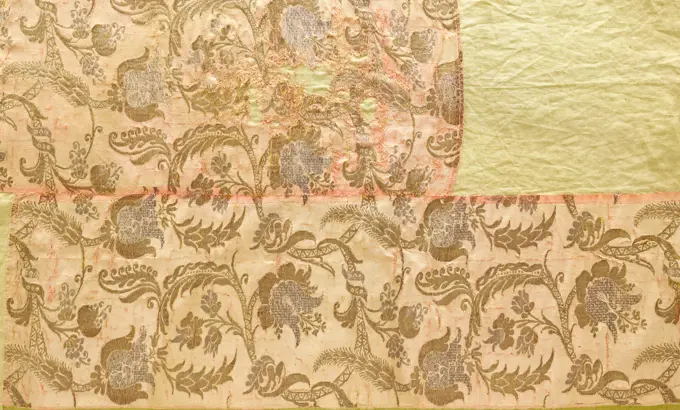
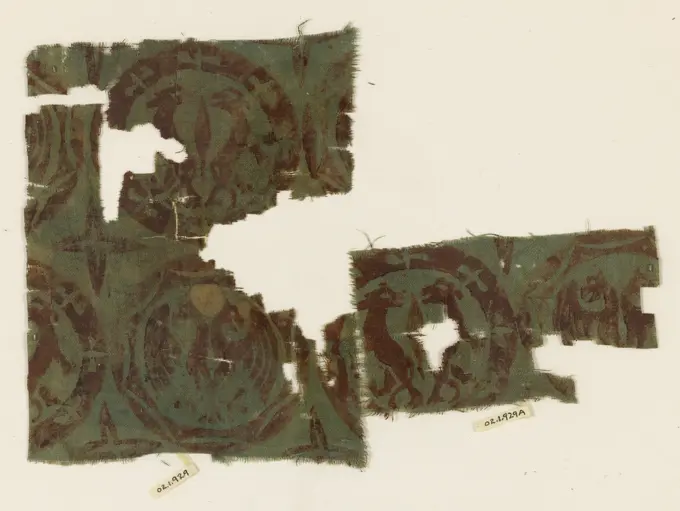
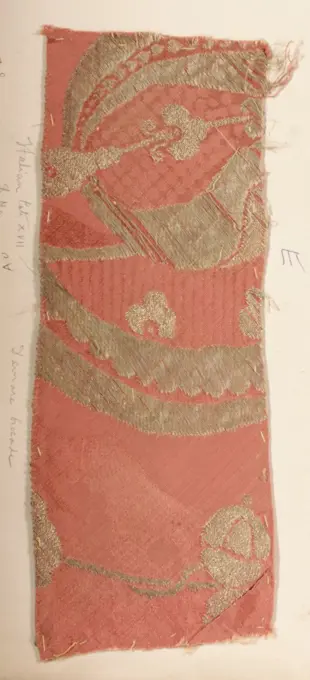
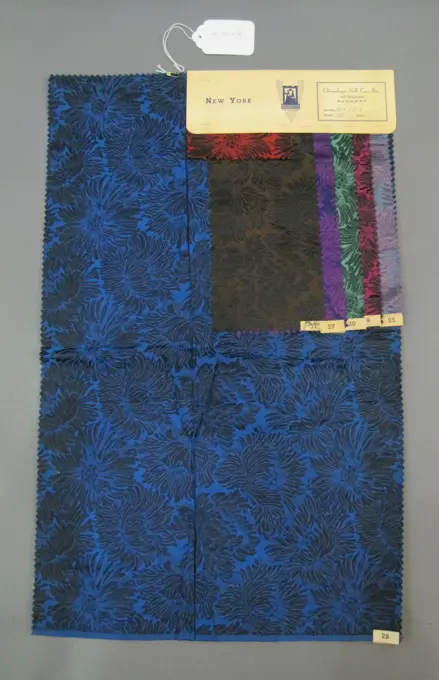
Fragments of silk fabric  Falist flagella unknown
Fragments of silk fabric Falist flagella unknown
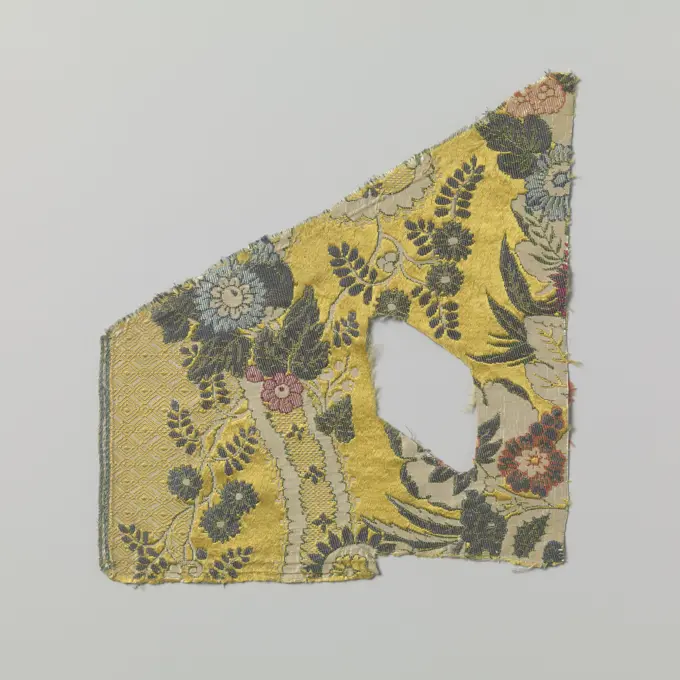
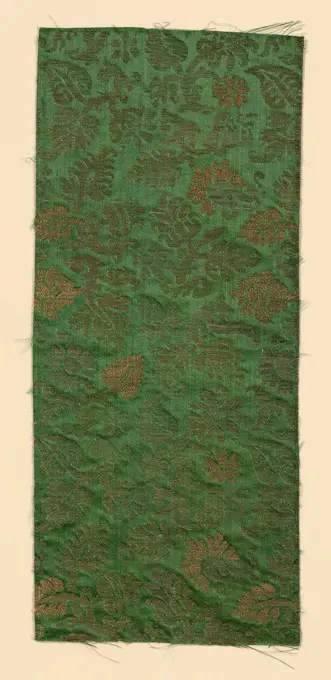
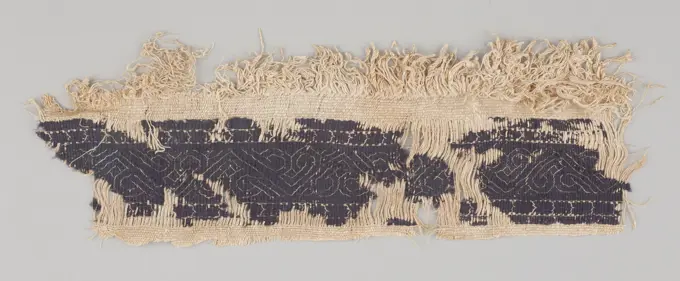
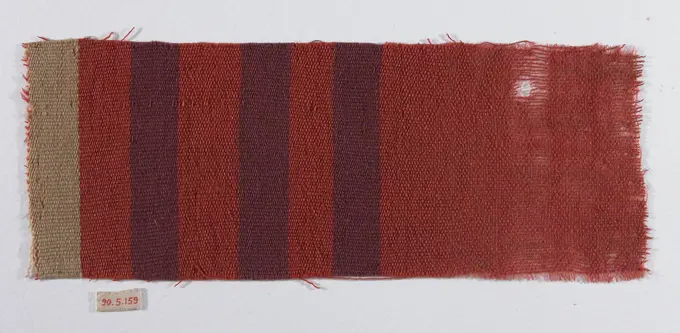
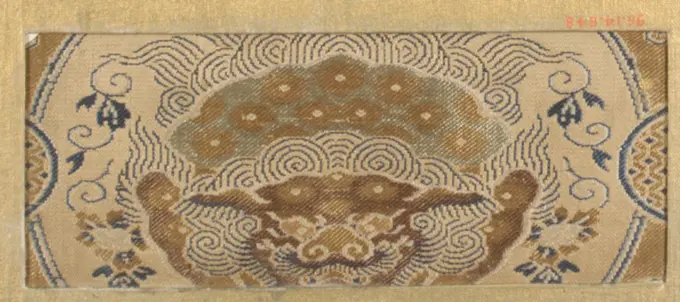
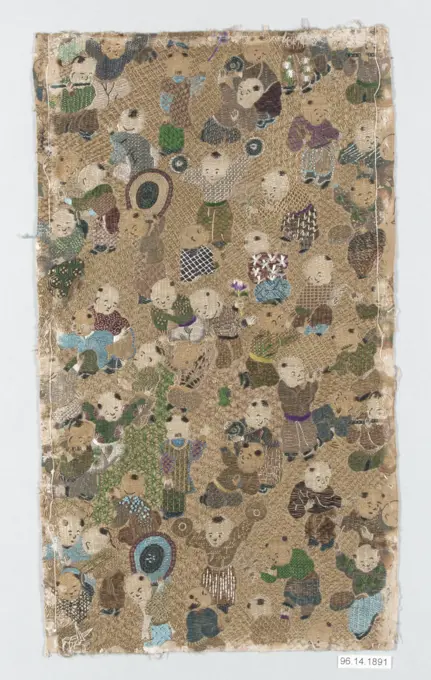
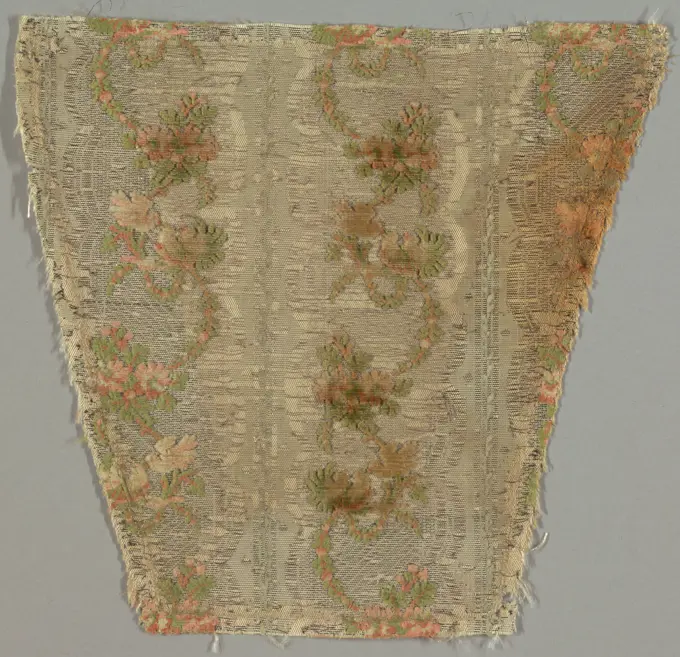
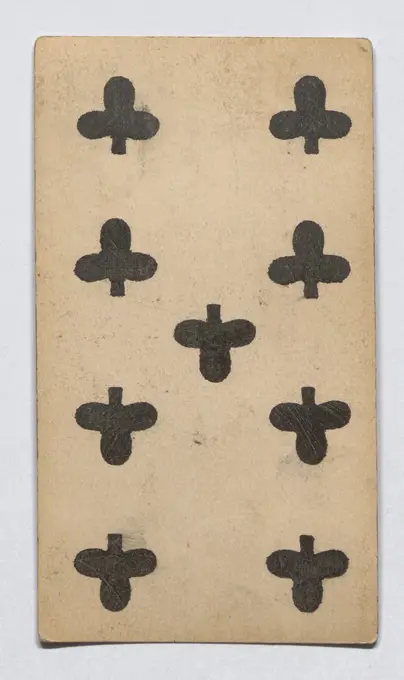
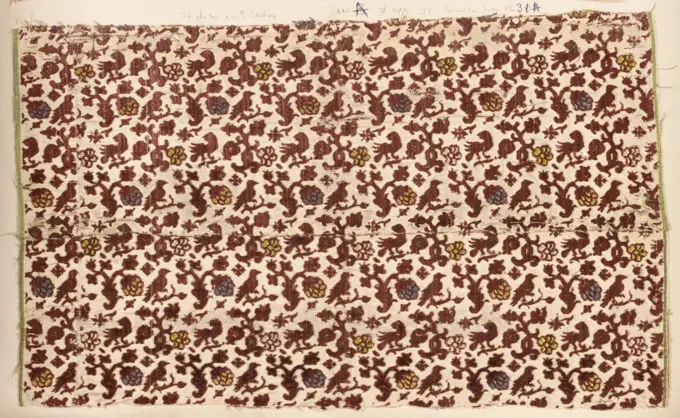
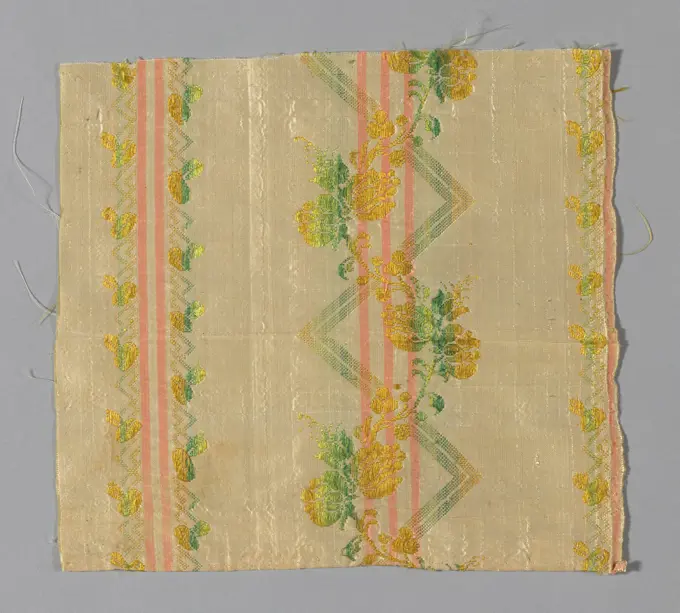
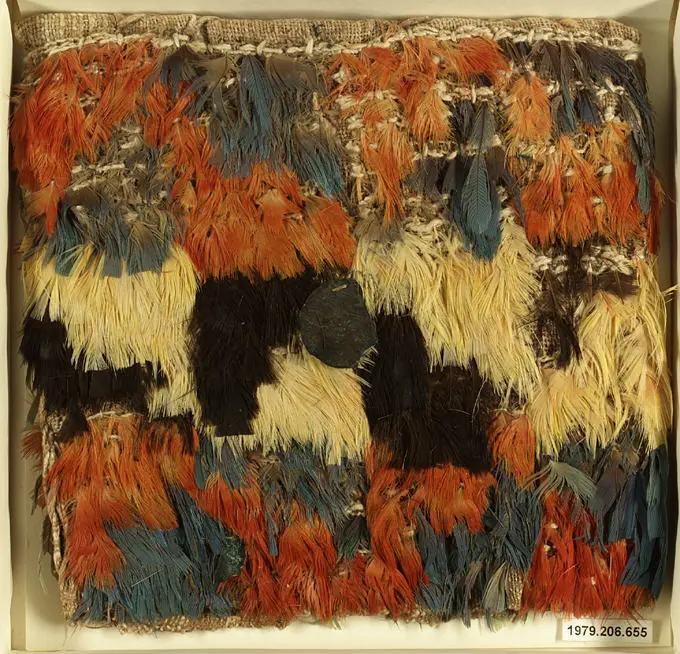
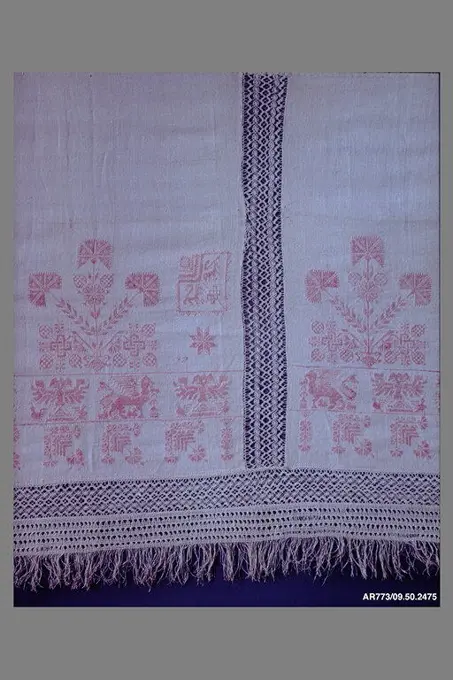
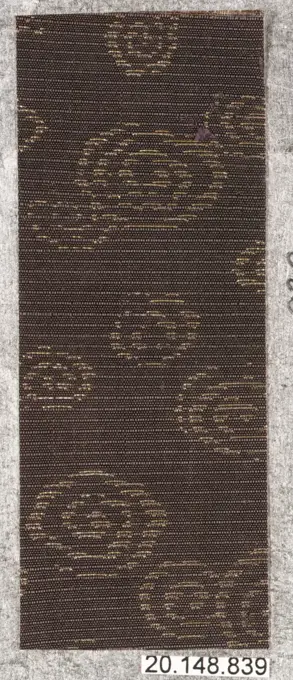
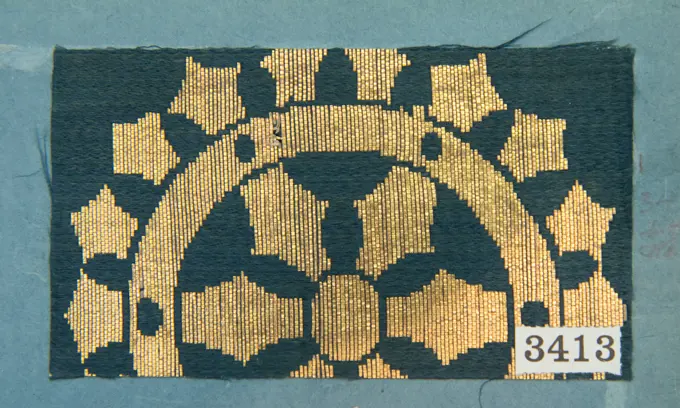
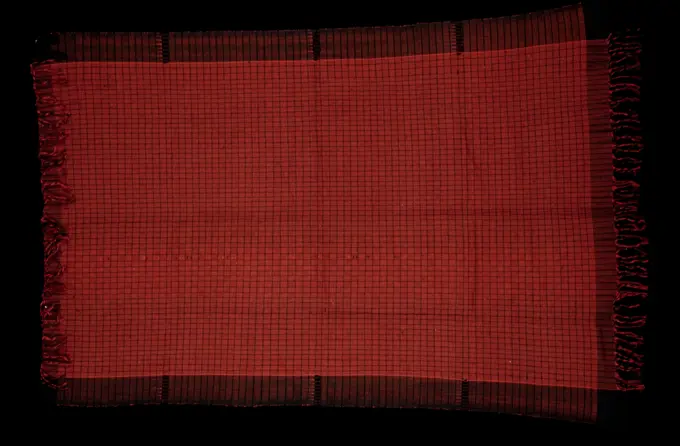
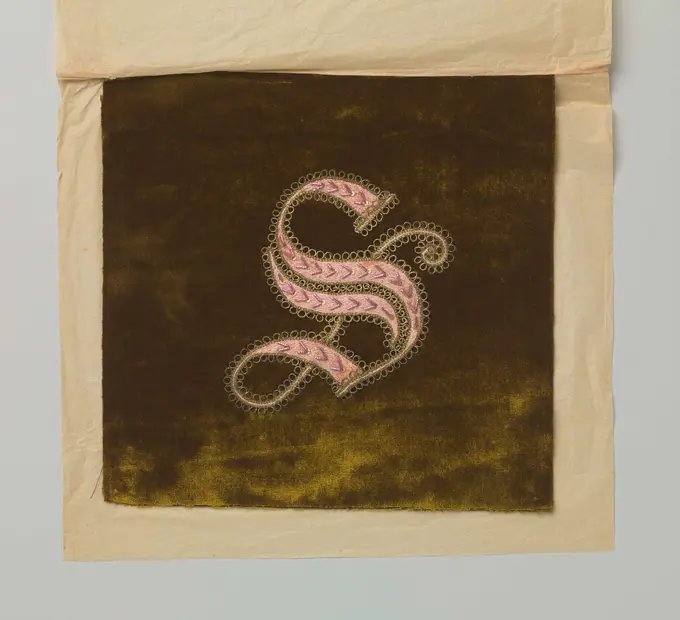
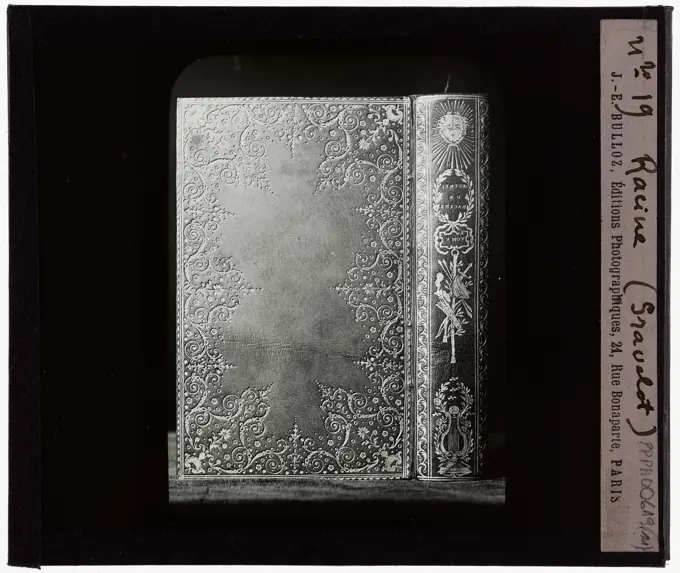
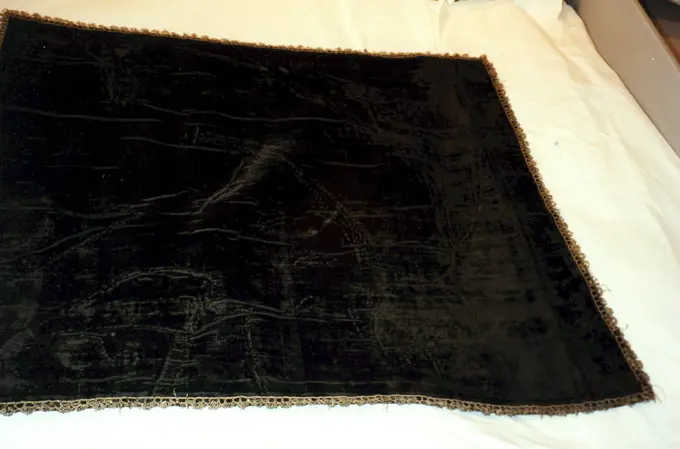
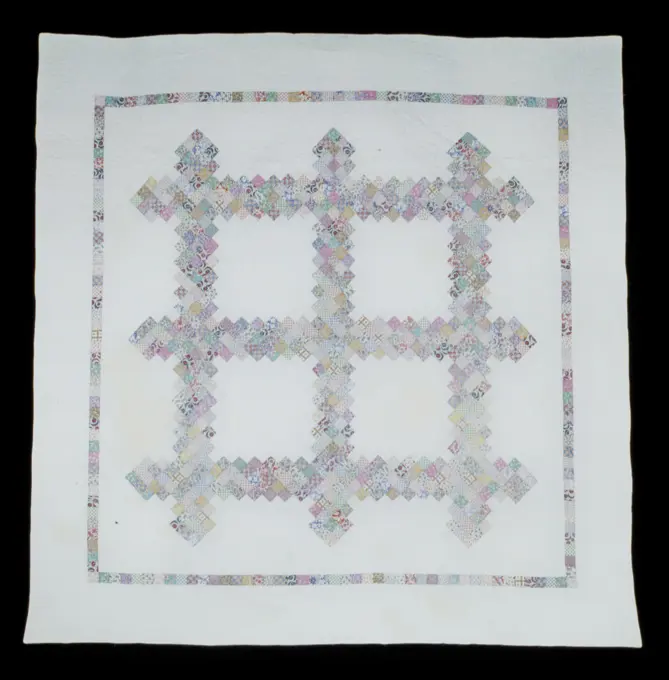
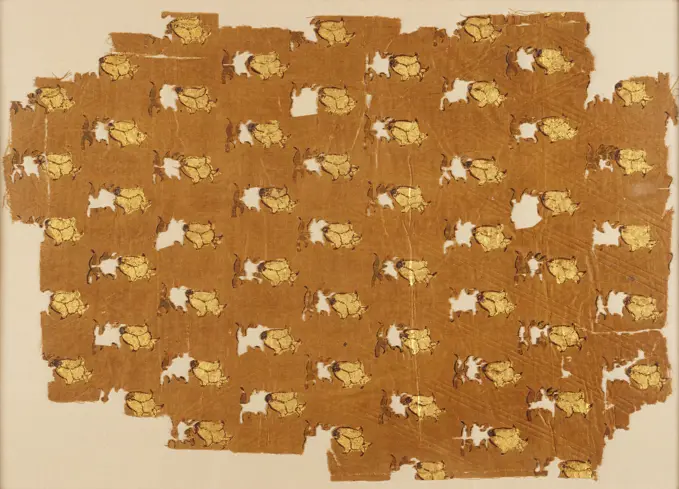
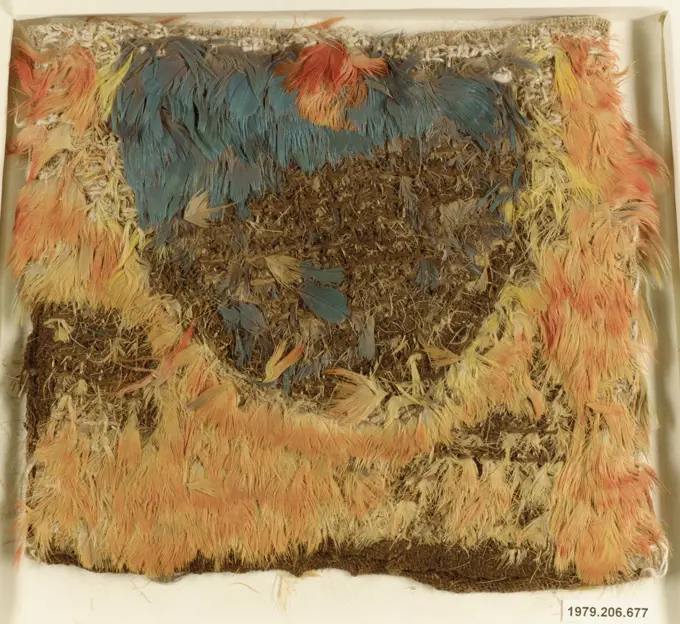
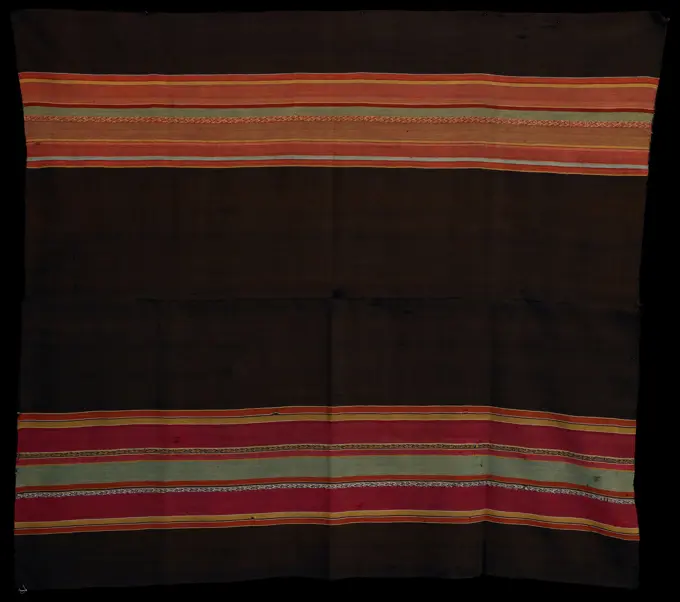
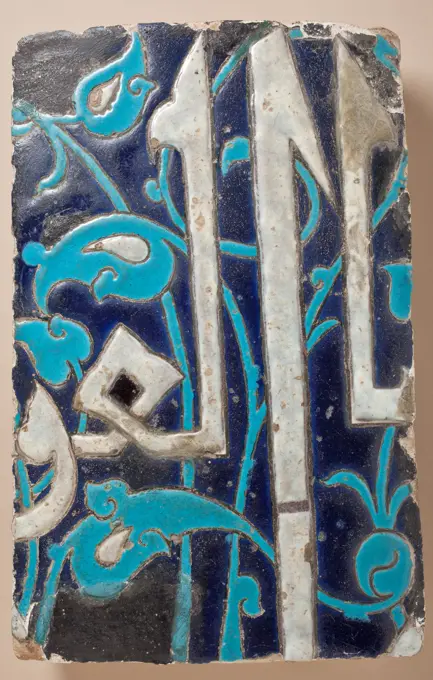
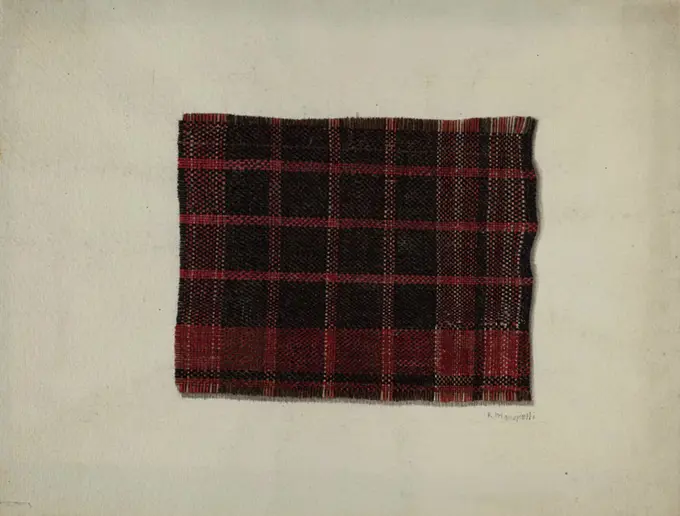
Fragment (Denmark); cotton; 1898-23-9Piece 18th-19th century Japan. Piece 66860Fragment multicolored brochure silk, c. 1750 - c. 1800 Fragment multicolored silk tissue. A yellow soil has a multi-colored pattern of garlands with flower and leaf decoration. Netherlands (possibly) silk. Fragment multicolored silk tissue. A yellow soil has a multi-colored pattern of garlands with flower and leaf decoration. Netherlands (possibly) silk.Handkerchief and range of lace; Exhibition Dutch heraldry from the textile collection of the Rijksmuseum. .Fragment Made 1601-1700 Italy. Silk and silvered- and gilt-metal-strip-wrapped silk, warp-float faced satin weave with supplementary brocading wefts .Piece 18th-19th century Japan. Piece. Japan. 18th-19th century. Silk. Textiles-WovenPashmina Carpet Fragment. Dimensions: Textile: L. 13 1/2 in. (34.3 cm) W. 5 1/4 in. (13.3 cm)Mount: L. 17 7/8 in. (45.4 cm) W. 10 1/8 in. (25.7 cm)D. 7/8 in. (2.2 cm). Date: first half 17th century.This carpet fragment and the others in the group come from a well-known carpet of which the main part is in the Frick Collection, New York. The rich red of the ground would have been achieved with the expensive insect dye called lac, probably combined with the madder plant. Museum: Metropolitan Museum of Art, New York, USA.Textile FragmentFingercap of linen with geometric design, Chris Lebeau, 1888 - 1945 Finger cloth of linen with geometric design Eindhoven linen (material) Finger cloth of linen with geometric design Eindhoven linen (material)Textile, Medium: cotton Technique: printed by engraved roller on plain weave, Two fragments of printed cotton imitating patchwork: rows of squares of two types each traditionally called 'log cabin' in a stepped arrangement of bars enclosing a central square. Each shape has a small scale dotted or floral pattern (several Indian Paisley type) in dark browns and rust-reds., USA, 1880s, printed, dyed & painted textiles, TextileCoptic fabric;  VI-VII century (501-00-00-700-00-00);Piece late 18th-early 19th century Japan. Piece. Japan. late 18th-early 19th century. Silk, metallic thread. Edo period (1615-1868). Textiles-WovenSketchbook (10 leaves, cream cardboardcover).  Artist: Edwin Austin Abbey, American, 1852-1911, M.A. (HON.) 1897Fragment of Coptic fabric unknownLinnamast napkin with the glorification of Charles VI of Habsburg, Anonymous, c. 1711 White Linnamasten Napkin with the glorification of Karel VI of Habsburg. Flanders (Possible) linen (material) White Linnamasten Napkin with the glorification of Karel VI of Habsburg. Flanders (Possible) linen (material)Leaf with spreading pattern of oval motif with dotted lines, anonymous, 1800 - 1900  Leaf with spreading pattern of oval motif with stripes and dotted lines.  paper. block printing (relief printing process) fantasy ornamentLaken., anonymous, 1700 - 1799 Sheet of white linen Northern Netherlands (Possible) linen (material) Sheet of white linen Northern Netherlands (Possible) linen (material)Textile Fragment 4th-5th century. Textile Fragment 443645Piece 18th-19th century Japan. Piece. Japan. 18th-19th century. Silk. Textiles-WovenFragment 16th century Italian. Fragment 230444Fragment (Germany); linen; Warp x Weft: 15.2 × 21.9 cm (6 in. × 8 5/8 in.)Napkin (Netherlands); linenPiece early 19th century Japan. Piece 67604Textile; wool, linenFragment; silk, metallic threadFragment 16th century Italian. Fragment 230166Antependium 15th century (antependium) and 16th century or 17th century (border) Italian At least six pieces of an Italian fifteenth-century green velvet make up this antependium (altar frontal), which is sectioned into squares with narrow silver tape. The edges are finished with wide silk and silver-gilt tape and the bottom is fringed. The appliquéd needlework border across the upper quadrant was worked over padding in gold and silver thread in a meandering scroll pattern reminiscent of Italian needle lace designs. It probably dates from the sixteenth or seventh century.. Antependium. Italian. 15th century (antependium) and 16th century or 17th century (border). Silk; metal. Textiles-EcclesiasticalAnni Albers, La Luz I, 1947, wire and linen, Bauhaus.Tarock game, tw, With Wiener Type,Volksleben representations - nine cross,meetingFragment 16th century Italian. Fragment 230039Textile Swatches Onondaga Silk Company, Inc. (1925-1981). Textile Swatches, 1948-1959. 72 silk; 28 metal, (a) - (c): 24 x 8 in. (61 x 20.3 cm).    1948-1959Linnamast napkin with a flower pattern, anonymous, c. 1680 - c. 1700 Linnamast napkin with volutes and stripped flowers. Satin 5 Binding. The napkin belongs to seven napkins (BK-1973-162-A to BK-1973-162-H) and a tablecloth (BK-1973-161).  linen (material) damask Linnamast napkin with volutes and stripped flowers. Satin 5 Binding. The napkin belongs to seven napkins (BK-1973-162-A to BK-1973-162-H) and a tablecloth (BK-1973-161).  linen (material) damaskSquare (Germany); linenMantle Nasca. Mantle, 0-100 C.E. Cotton, camelid fiber, textile: 118 1/8 x 63 3/4 in. (300 x 162 cm).   Arts of the Americas 0-100 C.E.Handkerchief Made 1840-1849 England. Linen, plain weave; cut work with cotton in darning, herringbone, and needle lace filling stitches; cut and drawn work with cotton in checker filling, hem, and wave filling stitches; embroidered with cotton in buttonhole, eyelet, padded overcast, padded satin and twined double running stitches; French knots .Fragment (Dress Fabric) Made 1775-1800 France. .Fragment batist, anonymous, c. 1800 - c. 1920 Fragment batist for a boudoir. Netherlands batiste Fragment batist for a boudoir. Netherlands batistePillowcase with a Pleated Flounce. This pillowcase is part of a trousseau made by Belgian nuns around 1932. The monogram consists of the grooms surname (Brusse) and the brides maiden name (Urtebise). When the linen had to be washed and ironed, it was sent from Amsterdam to Brussels. The handwritten laundry label recommends ironing the pleats by hand.Textile Fragment 17th-18th century. Textile Fragment 454453material of old sacking bag material of old sacking bag Copyright: xZoonar.com/SerhiixPavlovx 1719043Handkerchief (France); linen, cottonCarpet fragment Made 1850-1900 China. Solid cut and uncut velvet .Textile Swatches Onondaga Silk Company, Inc. (1925-1981). , 1948-1959. Silk, 47 x 17 in. (119.4 x 43.2 cm).    1948-1959Man's poncho, 20th century, 32 5/8 x 58 1/4 in. (82.87 x 147.96 cm) (folded), Alpaca, Bolivia, 20th centuryFragment from a Garment: Sleeve, 1900s. Iran or Iraq. Silk: lampas weave, brocaded; overall: 25.4 x 48.5 cm (10 x 19 1/8 in.).Napkin van Wit Linnamast, S.J. Spaniard, 1859 Napkin from white Linnamast with "apple branch", brand Kroon h. Borne linen (material) damask Napkin from white Linnamast with "apple branch", brand Kroon h. Borne linen (material) damaskBadagara. Sheila Hicks (American, born 1934); India. Date: 1965-1966. Dimensions: 227 x 192.8 cm (89 3/8 x 75 7/8 in.). Cotton, plain weave with supplementary wadding. Origin: India. Museum: The Chicago Art Institute, USA.Miniature Dress 12th-13th century Ica. Miniature Dress. Ica. 12th-13th century. Cotton, feathers. Peru, Ica Valley. Textiles-FeatherworkTextile Swatches Onondaga Silk Company, Inc. (1925-1981). , 1948-1959. Silk, 46 1/2 x 17 3/4 in. (118.1 x 45.1 cm).    1948-1959Cover, 18th century, 212 1/2 x 36 in. (539.75 x 91.44 cm), Linen; needlework, Turkey, 18th centuryFragment, Meduim: silk Technique: 4&1 satin damask, Diagonal branches with leaves in green and yellow, 17th century, woven textiles, FragmentBed valance 18th century Southern German. Bed valance 217141Fragment early 18th century Italian. Fragment 230053Textile Swatches Onondaga Silk Company, Inc. (1925-1981). , 1948-1959. Silk, 22 3/4 x 18 in. (57.8 x 45.7 cm).    1948-1959Piece ca. 1840 British or American. Piece. British or American. ca. 1840. Cotton. Textiles-PrintedSean Scully / 'Blue Robe Barcelona 3.21.07', 2007, Watercolour on paper, 76,2 x 55,9 cm.Piece 18th century Japan. Piece. Japan. 18th century. Silk / Compound weave. Edo period (1615-1868). Textiles-WovenPiece 18th century Japan. Piece 65782Silk with Gray and Purple Stripes, early 1800s. France, early 19th century. Silk; overall: 16.7 x 53.5 cm (6 9/16 x 21 1/16 in.).Piece 18th century Japan. Piece 72182Panel 14th-15th century. Panel 445068Piece 18th-19th century Japan. Piece 66528Textile 19th century Japan. Textile. Japan. 19th century. TextilesMan's Shirt (Poncho), 20th century, 22 1/2 x 90 in. (57.15 x 228.6 cm) (at sleeve), Cotton; dyed, Mali, 20th centuryTextile Swatches Onondaga Silk Company, Inc. (1925-1981). , 1948-1959. Silk, 23 3/4 x 14 3/4 in. (60.3 x 37.5 cm).    1948-1959Sample early 19th century French. Sample 219329Temple Banner, 18th century, H.126-1/4 x W.17-7/8 in., Silk brocade, velvet, China, 18th centuryFragment 17th-18th century French or Italian. Fragment 230323Textile Fragment; silk plain cloth brocaded with metalWrapper, 20th century, Cotton, Nigeria, 20th centuryFragments (Italy); silkGreen velvet with letter S embroidered in pink silk and gold thread with sequins. Paper for diploma Beautiful needlework. Green velvet with letter S embroidered in pink silk and gold thread with sequins.Binders. Root Binders. Root. Black and white projection plate. 1900-1930. Photograph of Jacques-Ernest Bulloz (1858-1942).Square of black silk cut velvet with applied metal thread edging 17th or 18th century Italian or Spanish. Square of black silk cut velvet with applied metal thread edging 460307Wedding Quilt, c. 1930s, Cotton; quilted, United States, 20th centuryFragment; silkTextile Swatches Onondaga Silk Company, Inc. (1925-1981). , 1948-1959. Silk, 40 1/4 x 14 1/2 in. (102.2 x 36.8 cm).    1948-1959Wood Anatomy - All States. Photographs Relating to National Forests, Resource Management Practices, Personnel, and Cultural and Economic HistoryFragments of silk fabric with a bizarre pattern unknownGlaumbaer open-air museum during winter, historic and traditional houses with sod roofs. (Large format sizes available)Textile Fragment 16th-17th century. Textile Fragment 454562Chinz Fragment, 18th century, 13 1/2 x 9 9/16 in. (34.29 x 24.28 cm), Cotton, gilt; printed, India, 18th centuryTextile Swatches. Dated: c. 1939. Dimensions: overall: 30.3 x 44.1 cm (11 15/16 x 17 3/8 in.). Medium: watercolor and graphite on paper. Museum: National Gallery of Art, Washington DC. Author: Charlotte Winter.Miniature Tunic 12th-13th century Ica. Miniature Tunic 312864Sample of printed IInen Unknown, Wiener Werkstättephoto frame on the background matropes and sack burlap on wooden backgroundWoman's ceremonial skirt (Asku), c. 1850, 55 x 63 1/2 in. (139.7 x 161.29 cm), Fleece, dye, Bolivia, 19th centuryTile. Turkey, last quarter of 14th century. Ceramics. Earthenware, glaze-paintedPiece of Wool Plaid. Dated: c. 1938. Dimensions: overall: 22.5 x 30.1 cm (8 7/8 x 11 7/8 in.) Original IAD Object: 6" wide; 4 3/4" long. Medium: watercolor, graphite, and pen and ink on paper. Museum: National Gallery of Art, Washington DC. Author: Raymond Manupelli.Panel Made 1702-1725 England. Linen, plain weave; embroidered with silk .Textile Swatches Onondaga Silk Company, Inc. (1925-1981). , 1948-1959. Silk, 25 x 23 in. (63.5 x 58.4 cm).    1948-1959Double Panel Made 1825-1900 Democratic Republic of Congo. Raffia, stripes of plain 1 1 gauze crossings and bands of plain weave and complementary weft plain weave self-patterned by complementary ground weft floats with ground weft and knotted main warp fringe . MangbetuNeedlepoint Lace Long Sampler, 17th century. England, 17th century. Lace, needlepoint: linen ground worked with linen; overall: 93.3 x 17.1 cm (36 3/4 x 6 3/4 in.); mounted: 106 x 29.5 cm (41 3/4 x 11 5/8 in.).Sampler. Chancay; Central coast, Peru. Date: 1000-1476. Dimensions: 28.9 x 14.3 cm (11 3/8 x 5 5/8 in.). Cotton and wool (camelid), bands of two-, three-, and four-color complementary weft weaves. Origin: Peru. Museum: The Chicago Art Institute, Chicago, USA.Fragment, Medium: silk Technique: supplementary warp forming raised pile in plain weave foundation (velvet), Diagonal leaves facing in alternate directions in blue on blue., Selvage on left side., 17th century, woven textiles, FragmentEmbroidery project Laboratory of the Industrial MuseumTile of pilaster, blue on white, part of column with continuous flux, tile pilaster footage fragment ceramic pottery glaze, baked 2x glazed painted Red shard single-row tile pilaster in Renaissance style four nail holes this tile: 6 or 9 and circle with cross 1914 construction City Hall Zandstraat Quarter Second World War War Bombardment Rotterdam City Triangle 1940 Renaissance Coming from debris after bombing on Rotterdam in May 1940.Fragment (France); silkCap crown late 18th century Flemish. Cap crown 214543