Historical Textile Fragments

A collection of textile fragments featuring intricate patterns in muted colors, showcasing techniques like damask and brocade from various centuries.

Fragment, Medium: silk Technique: damask, Chinoiserie design of symmetrical floral repeat with ragged head, straight stem, encircled with crown and supported at each side at the base by a twig rising from a thicker branch. Smaller variant in interspaces., China, 16th century, woven textiles, Fragment
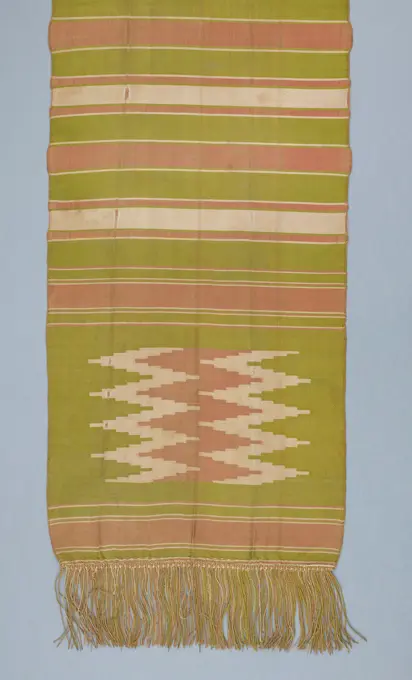
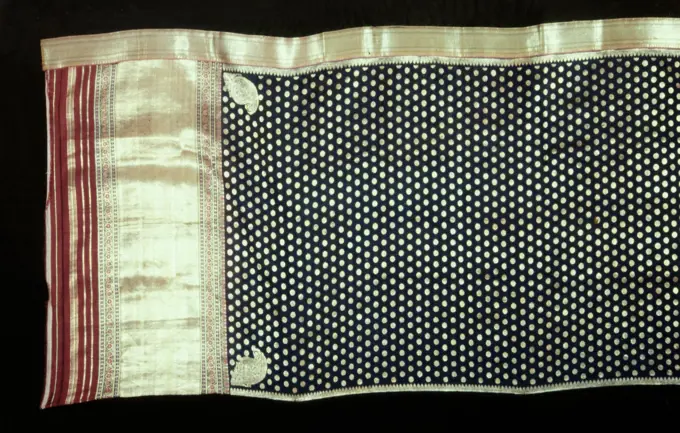
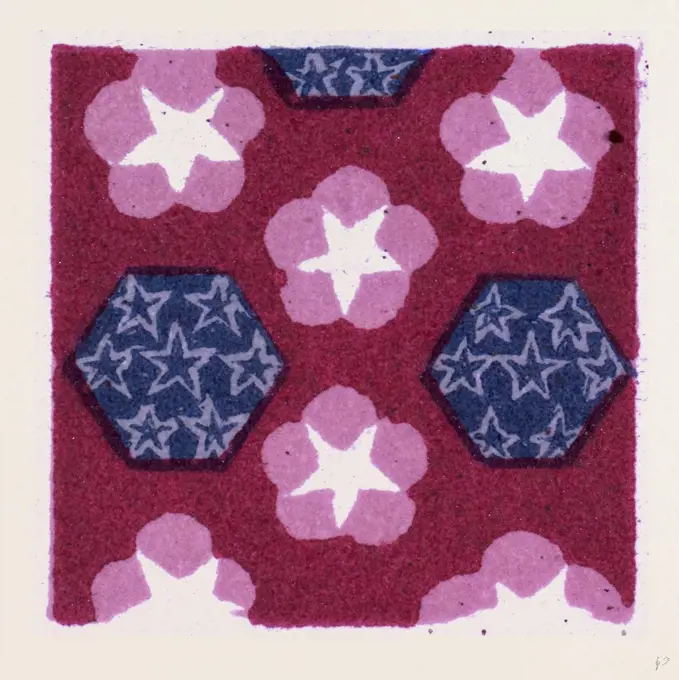
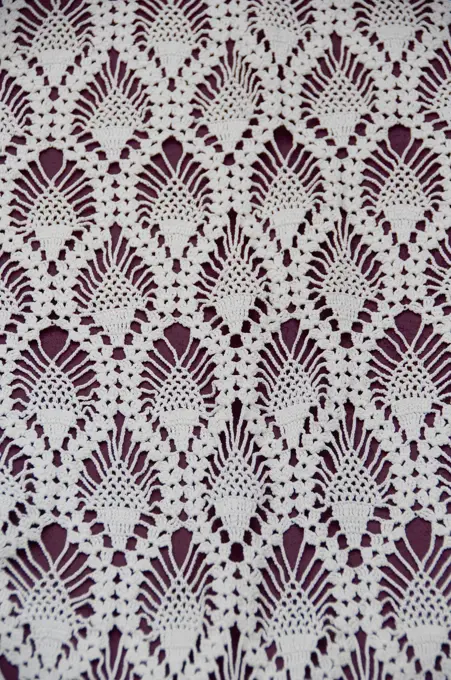
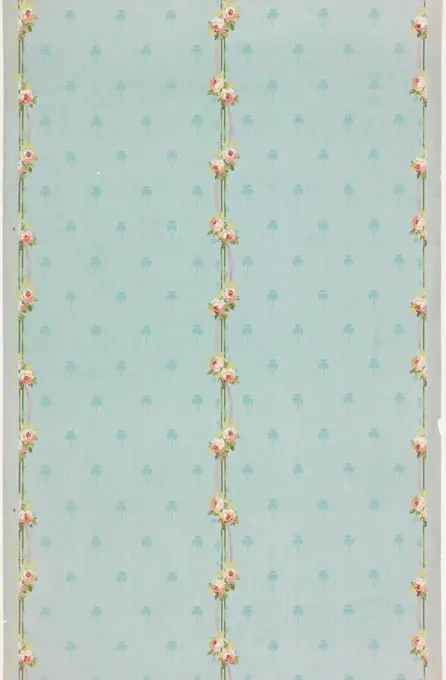
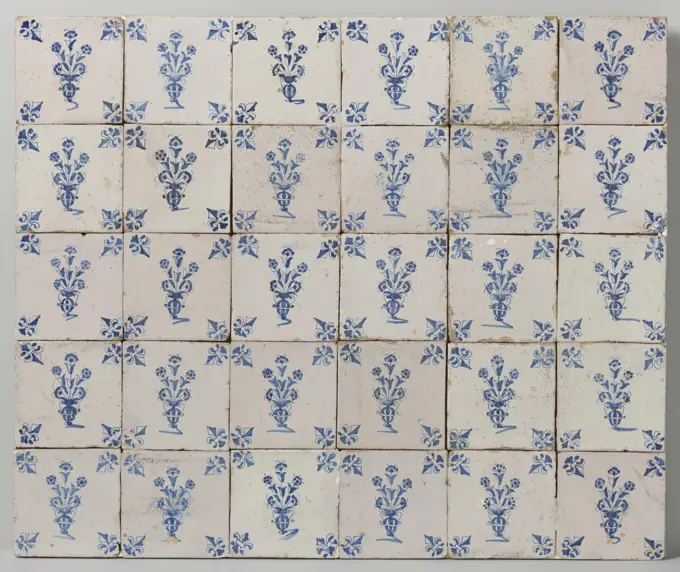
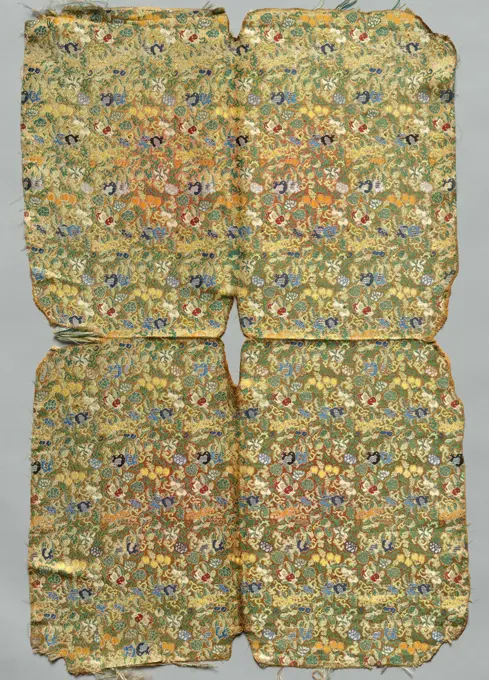
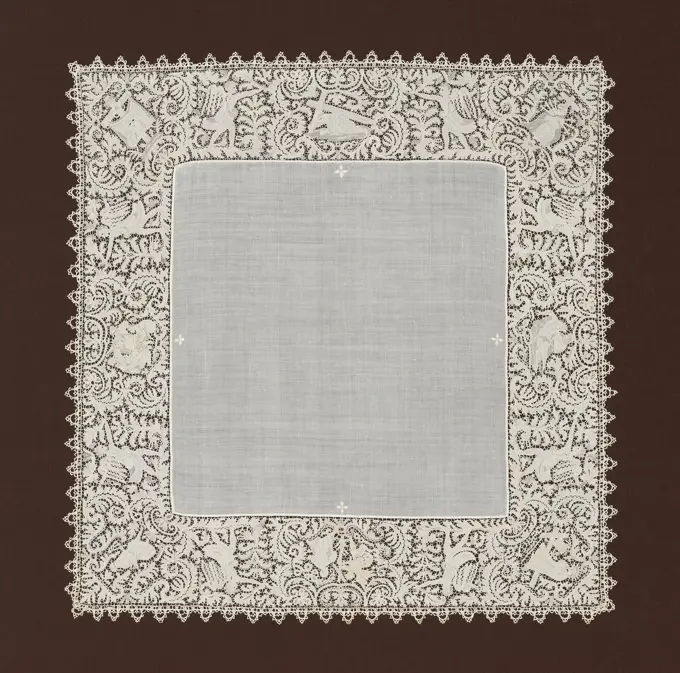
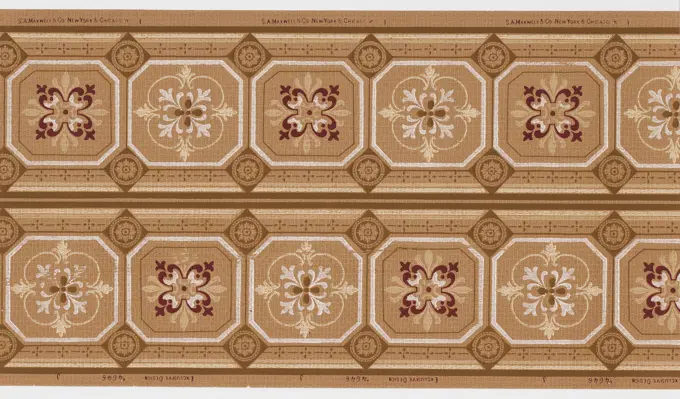
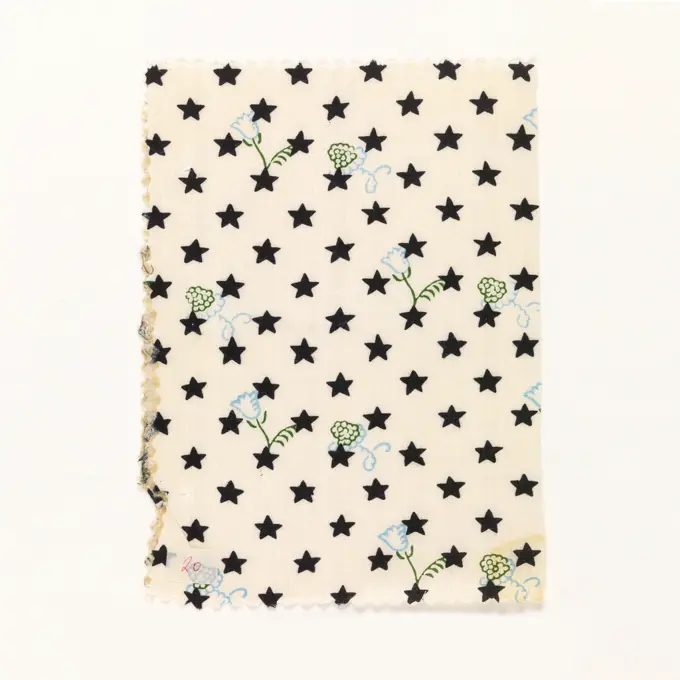
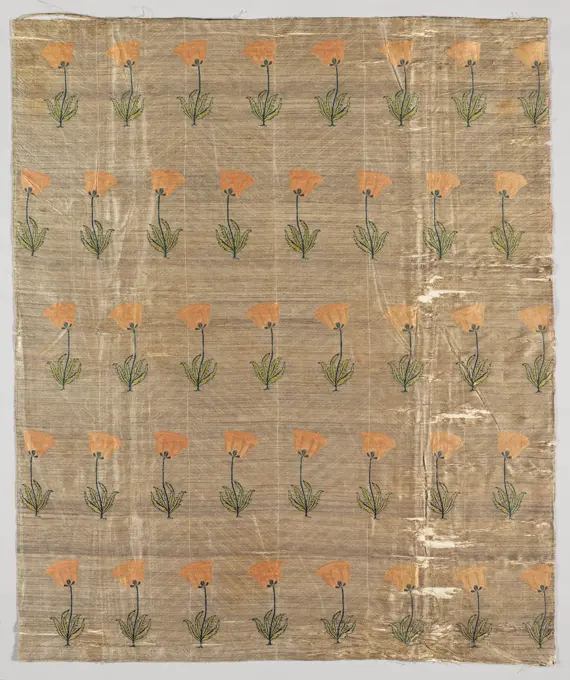
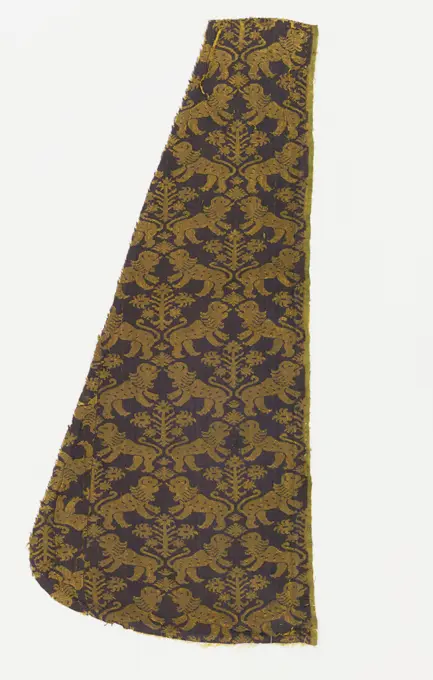
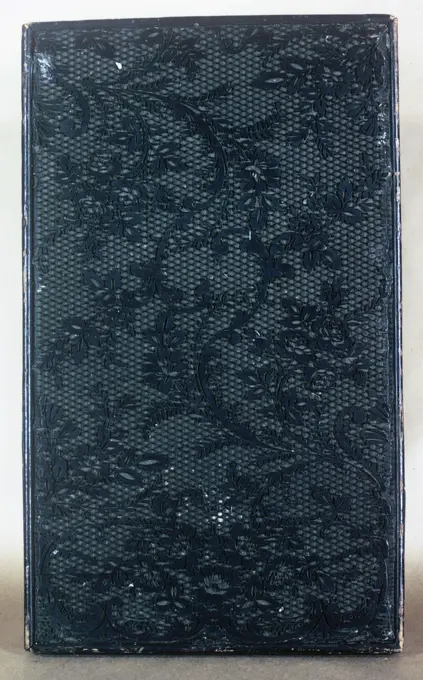
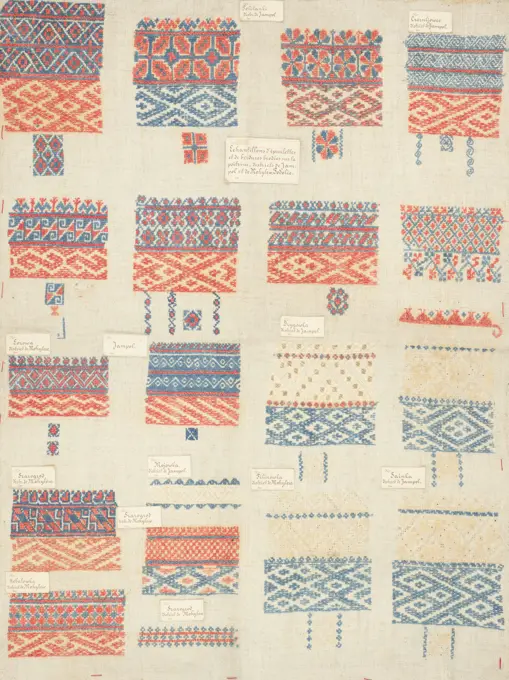
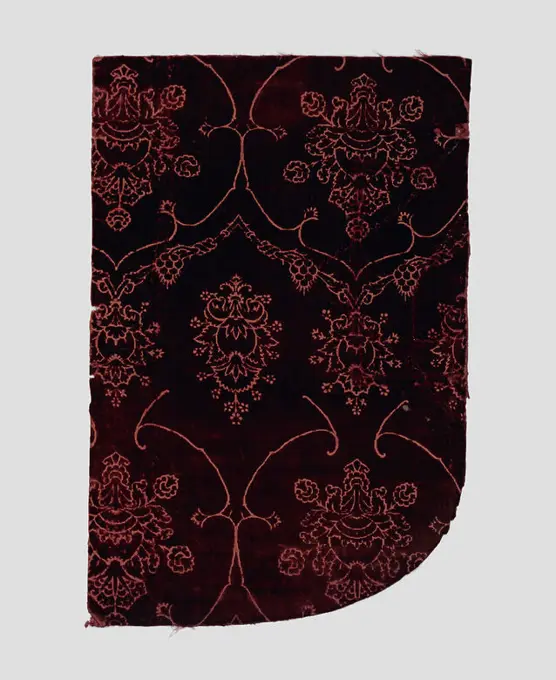
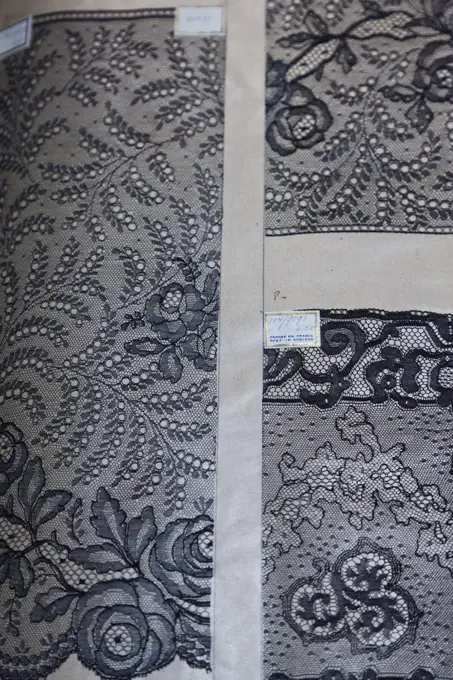
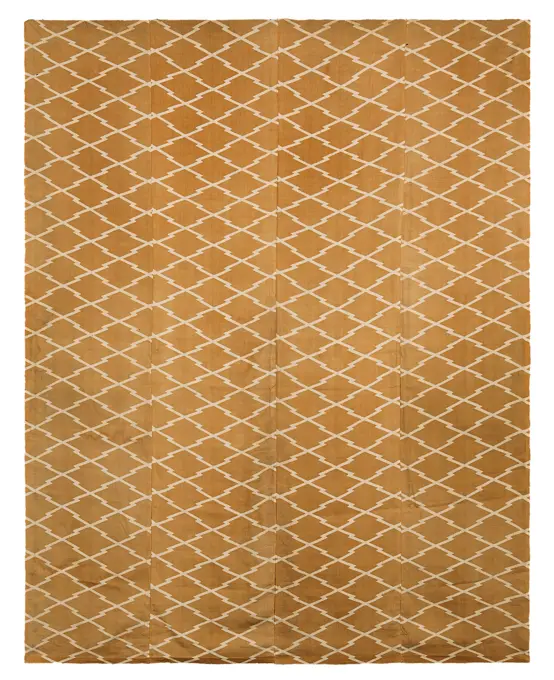
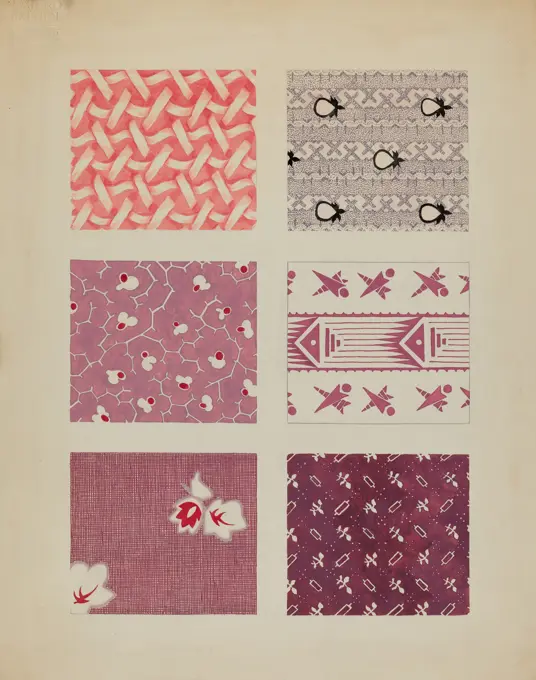
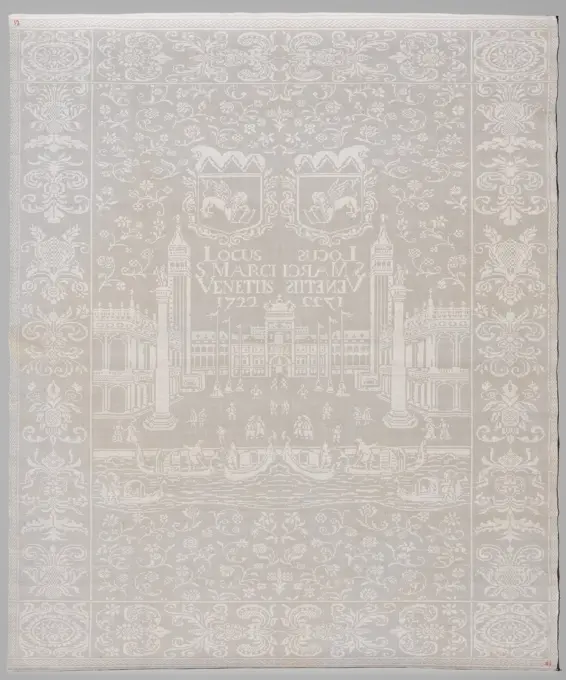
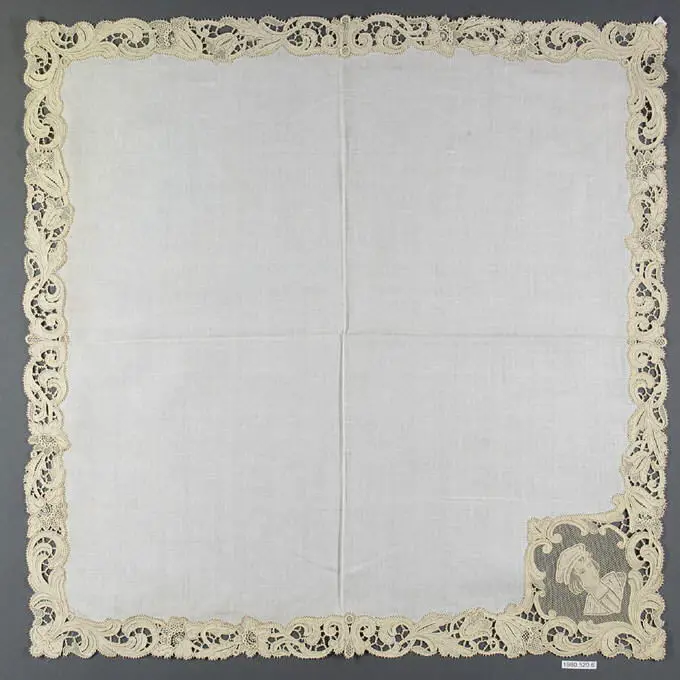
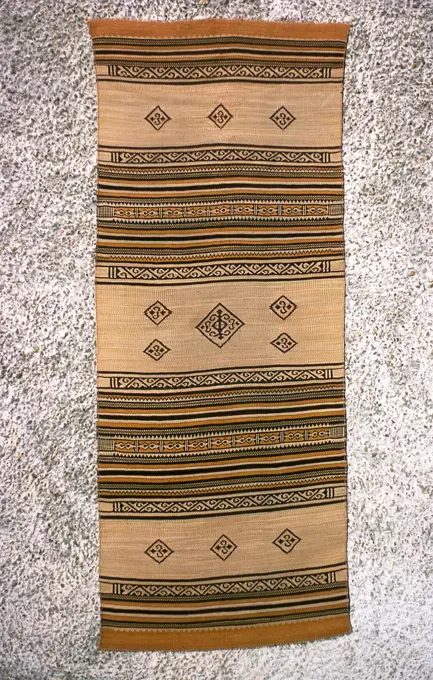
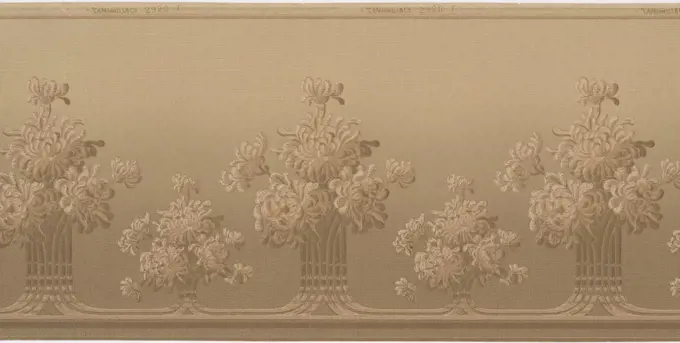
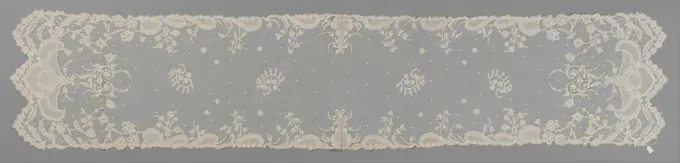
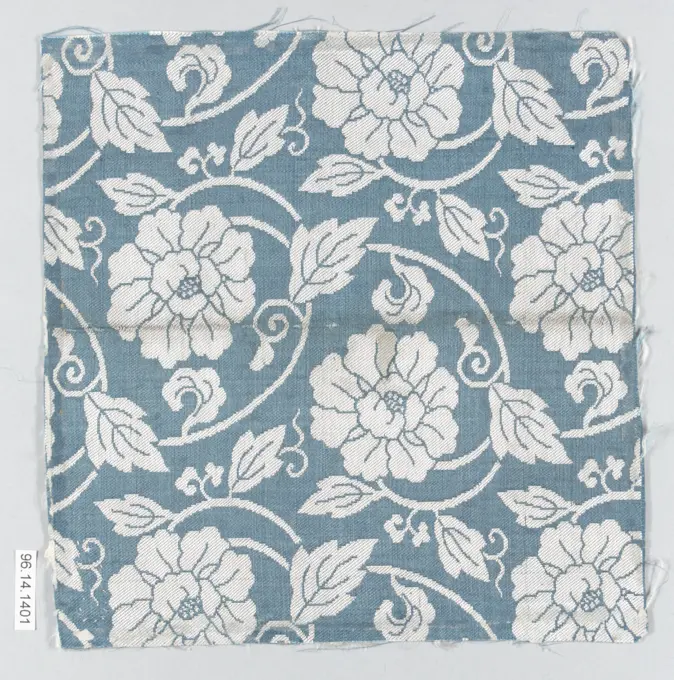
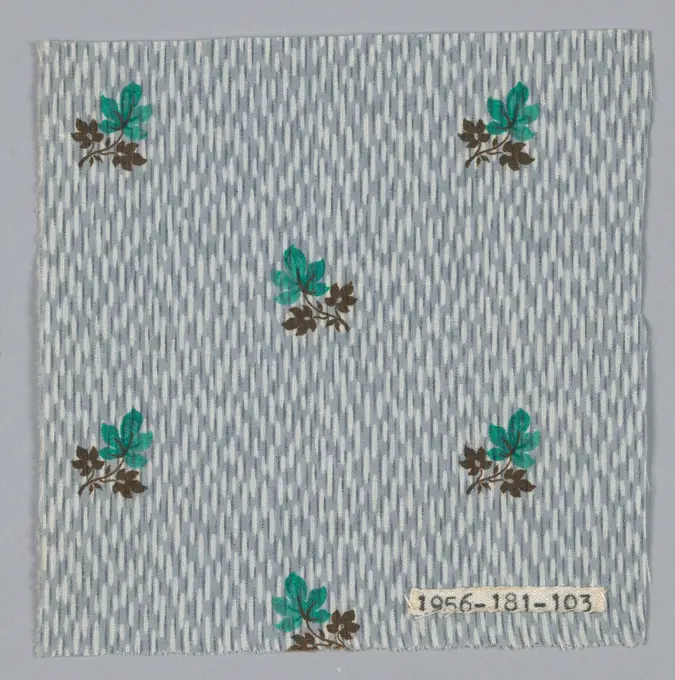
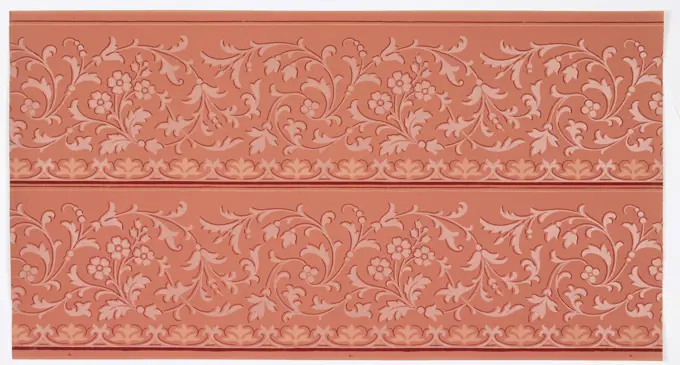
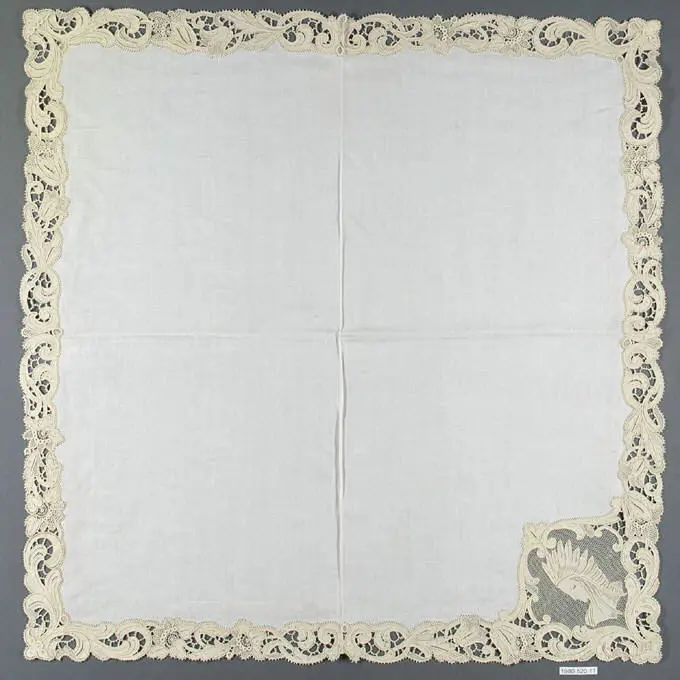
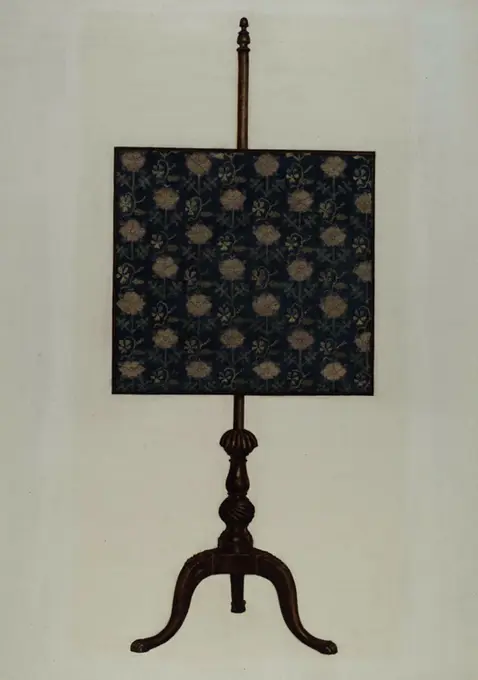
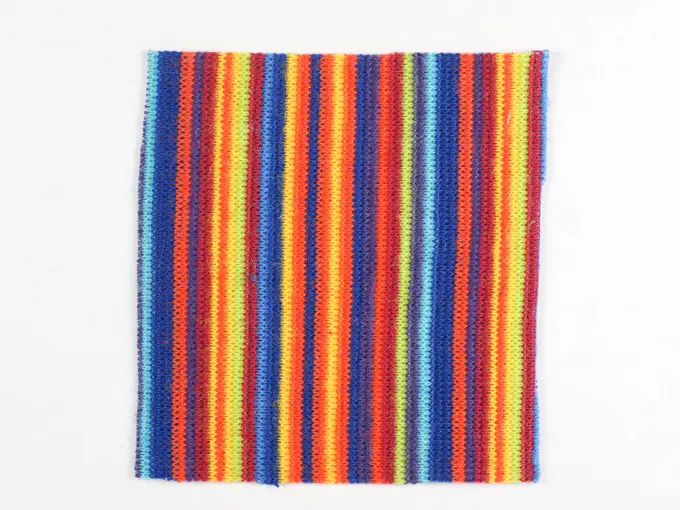
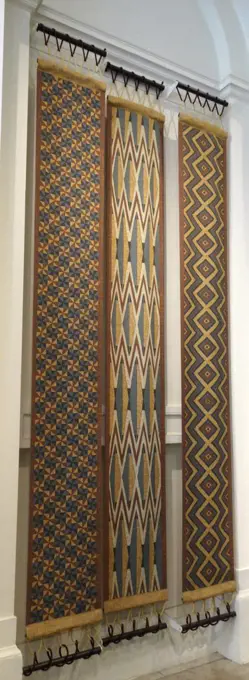
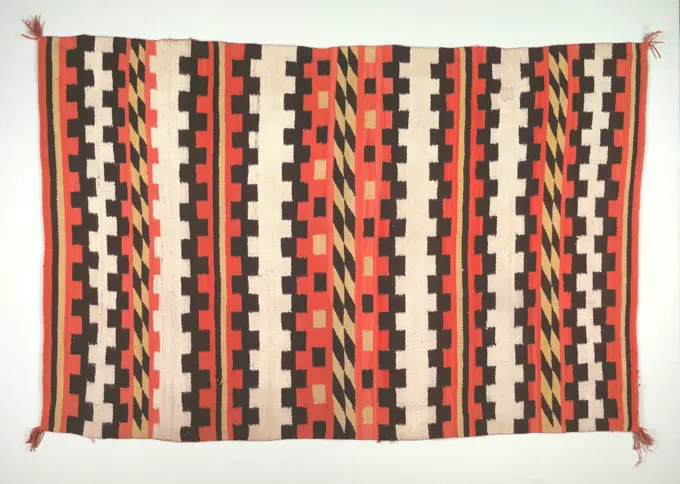
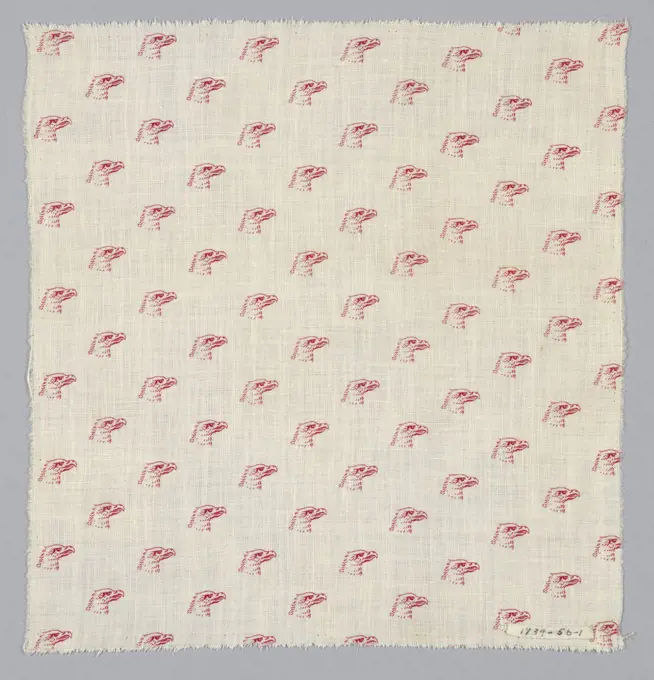
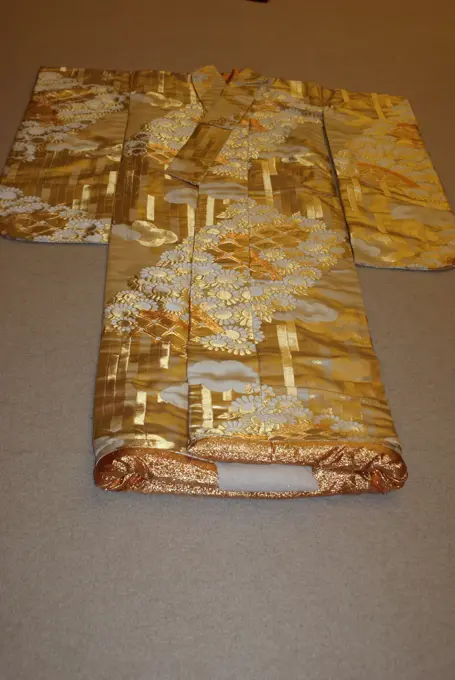
Handkerchief (USA); cottonDetail of Portuguese glazed tiles.Woven Coverlet, 19th century, 79 1/2 x 92 in. (201.93 x 233.68 cm), Linen, United States, 19th centuryEastern silk sash unknownSari, 19th century, L.316 x W.42-½ in., silk, gold thread, India, 19th centuryBag, 18th century, 10 3/4 x 11 in. (27.3 x 27.9 cm), Wool, India, 18th centuryHandkerchief second quarter 19th century American. Handkerchief 169317Chinese ornamentTextile Samples (France); Designed by Herman A. Elsberg (American, 1869-1938); silkHandkerchief 1840-80 French or Swiss. Handkerchief 236954Piece second quarter 19th century French. Piece 223098Fragments of silk fabric  tuIIp flower motif unknownCeiling Paper (USA); Manufactured by Maxwell & Co., S.A. (United States); machine-printed paper, liquid mica; 83.5 x 49 cm (32 7/8 x 19 5/16 in.)Fragment (Japan)Fragment multicolored browse silk, anonymous, 1740 Fragment multicolored silk tissue. White side garlands with a multicolored flower branch run on a white ground. Netherlands silk Fragment multicolored silk tissue. White side garlands with a multicolored flower branch run on a white ground. Netherlands silkSarong (Kain Panjang) Pekalongan mid-19th-early 20th centuryPhoto frame. .Serbia, the capital city of Belgrade. Traditional hand made Serbian lace.Sidewall And Frieze (USA); Manufactured by M.H. Birge & Sons Co. (United States); machine-printed paper, mica; 79 x 50 cm (31 1/8 x 19 11/16 in.)Half Shawl. Probably France, Bayeux. Date: 1860-1869. Dimensions: 142.7 × 290 cm (56 1/8 × 114 1/4 in.). Silk, bobbin straight lace (made in vertical strips). Origin: Bayeux. Museum: The Chicago Art Institute, Chicago, USA.Chasuble (Back) Made 1575-1625 Italy. Silk, plain weave with two color supplementary pile warps forming cut and uncut voided velvet .Lace Pattern (USA); cotton; 1973-61-5Fragment; medium; silkVariations on a Theme Variations on a Theme, 1958, Anni Albers,rayon, linen, cotton, plastic, Bauhaus Copyright: xZoonar.com/Tolox 21630103Sutra Cover Made 1590-1599 China. Silk, warp-float faced 4 1 satin weave with supplementary patterning wefts bound in weft-float faced 1 4 satin interlacings .Vintage floral ornamentHandkerchief, Medium: linen Technique: embroidered, Large sheer white linen handkerchief with wide drawnwork border. Monogrammed 'S.J.M.' with embroidery in one corner., France, 19th century, embroidery & stitching, HandkerchiefField of thirty tiles with vases. Field of thirty tiles (5 x 6) each with a blue painted vase. In the corners, a lily. Originally this was a field of 48 tiles.Fragment, 1800s. China, Qing dynasty (1644-1911). Silk; damask; overall: 74 x 49 cm (29 1/8 x 19 5/16 in.).Textile Swatches Onondaga Silk Company, Inc. (1925-1981). , 1948-1959. Silk, 27 1/2 x 23 1/2 in. (69.9 x 59.7 cm).    1948-1959Front doubleur. 1909. Aumale, Henri d'Orléans, duc d' (1822-1897). bindings (gathered matter components), Book covers. Spencer Collection. BookbindingBatist handkerchief with a wide edge bobbin with oval flowers, anonymous, c. 1850 - c. 1899 Batist handkerchief with a wide edge bobbin: Honiton side. Around the middle part of Batist. The pattern consists of a multitude of simple oval flowers or berries surrounded by a few more or less oval leaves. The motifs are connected to each other with thin stalks in linen stroke and with potented braids. Striking are the larger oval flowers in every corner and the bow with three loops in the middle of each side close to the inner edge. The flowers along the outer edge deviate slightly in design by the petals that are detailed elaborated with wavy edges. The succession of these flowers provides an irregular scrap of scales with many lobes. The motifs are made in linen battle with openwork edges and partly in netslag. They are partly equipped with contour threads. In Bloemharten, cubes made in shape, whether or not incorporated into decorative grounds. Assert cotton (textile). batiste bobbin laceLace doily. UnknownCorporal Made 1670-1690 Italy. Linen, plain weave; edged with linen, needle lace with raised details .Cushion cover ,, 1700 - 1900 Linen cushion cover with large double window and small blue window. Netherlands linen (material) Linen cushion cover with large double window and small blue window. Netherlands linen (material)Textile (England); cottonSeamless vintage ornament. Vector illustration.Fragment, 1700-1720. China, Qing dynasty (1644-1911). Silk; overall: 48.3 x 35.2 cm (19 x 13 7/8 in.).Fragment, 1100s - 1300s. India, 12th-14th century. Plain cloth, resist dyed; cotton; overall: 11.2 x 27 cm (4 7/16 x 10 5/8 in.).Fragment (China); silk, paper with applied gold foilSidewall (USA); Manufactured by Carey Bros. W.P. Mfg. Co.; machine-printed paper; 90.5 x 49 cm (35 5/8 x 19 5/16 in.)Fabric Coverings with Patterns of Gillyflowers and Water Lilies, Chris Lebeau, c. 1911 - c. 1915 Olive -green damask wall compartment with a pattern of water lilies. Eindhoven linen (material) damask Olive -green damask wall compartment with a pattern of water lilies. Eindhoven linen (material) damaskFragment, Medium: silk, cotton Technique: cut and uncut supplementary warp pile (velvet), Fragment of black cut and uncut velvet on white ground. Functional weft of white cotton. Serpentine floral design., France, 19th century, woven textiles, FragmentSkirt, mid 20th century, 40 1/2 x 29 in. (102.87 x 73.66 cm), Silk, cotton, Myanmar (Burma), 20th centurySidewall - fragment, Machine-printed paper, On blue textured ground, alternating off-white and tan urn-like motifs; wreathed in plumage and flowers; secondary motif of off-white and tan bouquets., 1860-1900, Wallcoverings, Sidewall - fragmentBorder (USA); Manufactured by Maxwell & Co., S.A. (United States); machine-printed paper, liquid mica; 91 x 49 cm (35 13/16 x 19 5/16 in.)Textile (Germany); linenTextile Swatches Onondaga Silk Company, Inc. (1925-1981). , 1948-1959. silk; metal, 22 x 18 in. (55.9 x 45.7 cm).    1948-1959Fragments (India); cotton; Warp x Weft (a): 5.1 x 51.4 cm (2 x 20 1/4 in.) Warp x Weft (b): 5.1 x 27.9 cm (2 x 11 in.) Warp x Weft (c): 3.8 x 36.8 cm (1 1/2 x 14 1/2 in.) Warp x Weft (d): 6.4 x 27.9 cm (2 1/2 x 11 in.) Warp x Weft (e): 4.4 x 26.7 cm (1 3/4 x 10 1/2 in.) Warp x Weft (f): 4.4 x 27.3 cm (1 3/4 x 10 3/4 in.)Sample, Kassiopäa (Cassiopeia); Designed by Wiener Werkstätte (Austria), Fredericka Löw-Lazar (Austrian, 1891-1975); Austria; silkScarf early 18th century. Scarf 447879Handkerchief isolated on the white backgroundTextile (Germany); linenTextile with field of poppies on a golden ground, 1600-1750. Iran, Safavid Period. Twill weave with supplementary weft, stamped: silk and gilt-metal thread; overall: 85.7 x 71.1 cm (33 3/4 x 28 in.); mounted: 92.7 x 78.7 cm (36 1/2 x 31 in.).Fragments; silkMan's Longyi, mid 20th century, 43 1/2 x 36 in. (110.49 x 91.44 cm), Silk, Myanmar (Burma), 20th centuryTwo Tiles with Continuous Floral Pattern Made 1550-1570 Iznik. During the sixteenth and seventeenth centuries, at the height of the Ottoman Empire, ceramic vessels and tiles of remarkable artistic and technical quality were produced at Iznik, a city in northwestern Anatolia. The middle of the sixteenth century was an important moment in the evolution of Iznik wares. To the existing blue-and-white palette was added color first turquoise, green, and purple, then a red slip. The earlier focus on tableware was supplemented by a new demand for architectural tilework. Also at this time a new style emerged that emphasized floral motifs, such as familiar flowers (roses, carnations, tulips, etc.), as well as compositions of leaves and palmettes. The enduring quality of Iznik at its best and most representative is the effect of bold patterning in brilliant polychrome set against a pure white ground.The design here consists of elaborate palmettes and sinuously writhing leaves with serrated edges.Fragment purple and green silk velvet with recesses with a pattern of coupled volutes with palmets. Fragment silk velvet with a pattern of coupled volutes with palmets in purple on light fond. Italy, 16th century.Printing Block (possibly England); wood, metalTwo, Anni Albers, 1952, rayon, linen, cotton, Bauhaus.Folk embroidery pattern unknownTextile Swatches Onondaga Silk Company, Inc. (1925-1981). , 1948-1959. Silk, 47 x 15 1/2 in. (119.4 x 39.4 cm).    1948-1959Textile Swatches Onondaga Silk Company, Inc. (1925-1981). , 1948-1959. Silk, 47 3/4 x 18 in. (121.3 x 45.7 cm).    1948-1959Frieze (USA); Manufactured by Maxwell & Co., S.A. (United States); machine-printed paper; 91.5 x 49 cm (36 x 19 5/16 in.)Fragment of a Chasuble. Culture: Italian. Dimensions: 26 1/2 x 17 3/4 in. (67.3 x 45 cm). Date: mid-15th century.This fragment of a chasuble (a liturgical garment used in the celebration of the Mass), together with another fragment in the Lehman Collection (1975.1.1878A) are of a dark red silk cut voided velvet, patterned in an allover straight vertical repeat of a five-lobed shape filled with a stylized plant with buds projecting into the lobes. Above the top lobe a smaller version of the plant grows from a branch with a curling cluster of berries and adouble knotting device. Additional stylized plants reminiscent of pomegranates fill the voids between the pattern repeats. Museum: Metropolitan Museum of Art, New York, USA.France, Pas de Calais, Calais, Musee de la Dentelle et de la Mode, museum of lace and fashion, lace detail.Yellow bedding cover (futonji) or furniture cover (yutan) with pine-bark diamond (matsukawabishi) motif, 19th century, Unknown Japanese, 67 3/16 × 53 3/4 in. (170.66 × 136.53 cm), Cloth: silk; katazome (stencil resist), Japan, 20th centuryDorothy Posten, Materials from Quilt, c 1936 Materials from QuiltFragment (Italy); silkNapkin van Linnamast, Anonymous, 1722 White Linnamasten Napret, dated 1722 and with the text "Locus S Marci Venetiis". Marked with IB and 13 in Red Cross stitch. Flanders (Possible) linen (material) damask White Linnamasten Napret, dated 1722 and with the text "Locus S Marci Venetiis". Marked with IB and 13 in Red Cross stitch. Flanders (Possible) linen (material) damaskFragment, Medium: silk, paper with applied gold foil Technique: plain compound weave, Octagonal motifs with a central medallion in green, gold, pink, yellow, red, and blue., China, 19th century, woven textiles, FragmentBamboo place mat on wooden deck table.Bamboo place mat on wooden deck table.Napkin (from a set of table linens) Belgian late 19th centuryKunaa weaving is an exclusively female occupation. The women of Gadu cross regularly to the neighbouring island of Gan where they harvest an especially resilient grass known as hau. This is then coloured with a variety of natural dyes before being woven into traditional designs on a simple loom. The designs are traditional, handed down from mother to daughter from generation to generation. By the mid-17th century so prized had Gadu kunaa become in the neighbouring Indian Ocean region that they were sent as part of the annual tribute from the Maldivian Sultan to the Kingdom of Sri Lanka.Piece 16th-17th century Italian. Piece 226413Quilt, circa 1850, maker unknown. Gift of Alison Williamson, 1983.Frieze, Maxwell & Co., S.A., Chicago, Illinois, USA, Machine-printed paper, A repeating floral candelabra design whose stems join and connect smaller floral candelabra on a diaper background of gradating tones within horizontal banded borders. Printed in brown, taupe, beige, olive green, khaki and moss green., USA, 1905-1915, Wallcoverings, FriezeApplication side scarf with heart -shaped motif at the ends, anonymous, c. 1900 Scarf of natural application side, Carrickmacross side. Elongated, rectangular model. On a tuler land, the motifs are partly applied in batist and surrounded with cordons and partly stuffed with gridwork signs. At the ends is a symmetrical motif in the form of a heart, made with a volute drink and flower garlands. The ends have three pointed sculptures of rosettes and a large leaf palm and garlands. The edge along the long sides consist of a succession of reserves, branches with rosette flowers, palm flowers and bell flowers. Halfway through the long sides you can see a motif in the form of a basket that is hung a two garlands with rosette flowers, with a bow at the top. In midfield there are some curved branches with rosette flowers, various loose rosette flowers and a spreading pattern of moesjes. Ierland (possibly) Scarf of natural application side, Carrickmacross side. Elongated, rectangular model. On aPiece 18th-19th century Japan. Piece 67114Fragment (USA)Frieze (USA); machine-printed paper, liquid mica; 92.5 x 49.5 cm (36 7/16 x 19 1/2 in.)Textile Swatch , 1950s to 1960s. Silk, 10 1/4 x 16 in. (26 x 40.6 cm).    1950s to 1960svintage fabric from the 50s with flowers and housesNapkin (from a set of table linens) Belgian late 19th centuryBandana (USA); Manufactured by Wamcraft; cottonFire Screen. Dated: c. 1941. Dimensions: overall: 52.1 x 35.2 cm (20 1/2 x 13 7/8 in.) Original IAD Object: 4'7 1/2"high overall; Screen 21 5/8"x22 5/8". Medium: watercolor, colored pencil, and graphite on paperboard. Museum: National Gallery of Art, Washington DC. Author: Rolland Livingstone and Arlene Perkins.Multicoloured fabric sample Multicolored striped fabric swatch over white background Copyright: xZoonar.com/ClaudioxDiviziax 7976680Replica Ancient Egyptian Mat work hangings. Copied from woven mats made of reeds; they were in use as wall decorations in official dwellings and official buildings as well as tombs throughout ancient Egypt. Recreated in 2011Fragment (USA)Rug (banded pound blanket style), c. 1895-1910. America, Native North American, Southwest, Navajo, post- Contact, Early Period. Tapestry weave: wool; overall: 220 x 138.8 cm (86 5/8 x 54 5/8 in.).Textile, American Print Works, founded 1835, Medium: cotton Technique: printed on plain weave, White fabric printed in a design showing red eagle heads in diagonal lines., Fall River, Massachusetts, USA, 1870s, printed, dyed & painted textiles, TextilePair of suspenders, Medium: cotton, glass, ceramic beads Technique: knitted, beaded, crocheted, Pair of mens suspenders. Knitted coarse cotton with glass beads showing a symmetrical pattern of floral swags, armorials and dancing women. Crocheted scalloped border all round., USA, late 19th century, knotted, knitted and crocheted textiles, Pair of suspendersTextile Sample (USA); Manufactured by American Print Works; cottonPiece 18th-19th century Japan. Piece 67245Stomacher. Culture: German. Date: third quarter 18th century. Museum: Metropolitan Museum of Art, New York, USA.Textile Swatches Onondaga Silk Company, Inc. (1925-1981). , 1948-1959. Silk, 23 x 17 in. (58.4 x 43.2 cm).    1948-1959Textile Swatches Onondaga Silk Company, Inc. (1925-1981). , 1948-1959. 57 acetate, 33 nylon, 7 metal, a: 17 1/2 x 17 1/2 in. (44.5 x 44.5 cm).    1948-1959Wedding robe (uchikake), 20th century, Unknown Japanese, 73 1/2 × 52 1/2 in. (186.69 × 133.35 cm), Silk brocade, Japan, 20th century