Historical Textile Fragments

A collection of textile fragments featuring intricate patterns in muted colors, showcasing techniques like damask and brocade from various centuries.

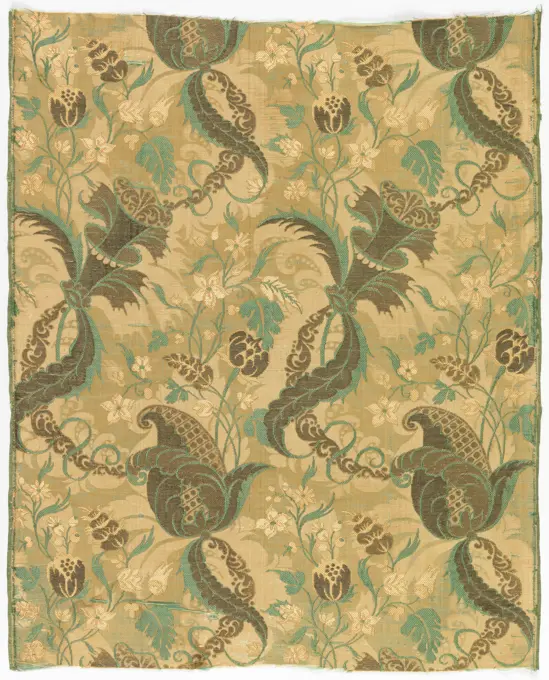
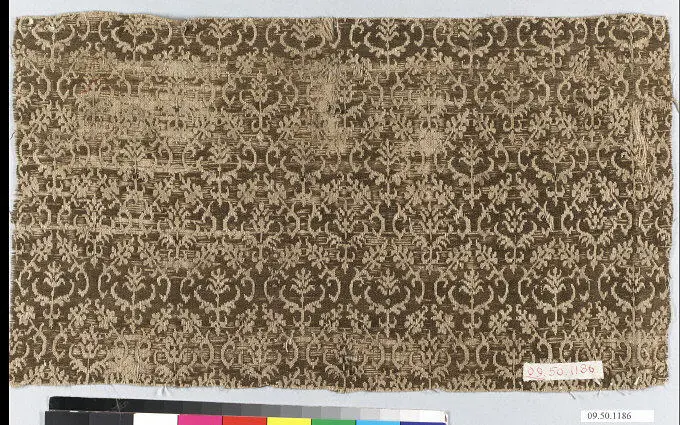
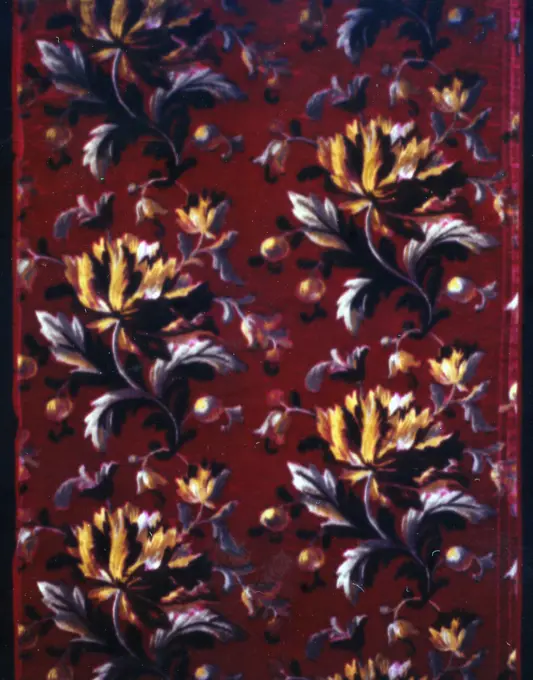
Fragment, Medium: silk Technique: damask, Chinoiserie design of symmetrical floral repeat with ragged head, straight stem, encircled with crown and supported at each side at the base by a twig rising from a thicker branch. Smaller variant in interspaces., China, 16th century, woven textiles, Fragment
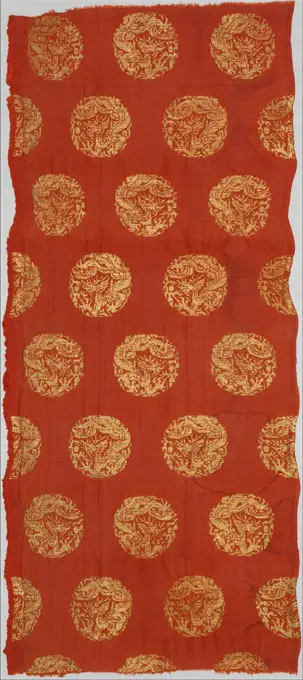
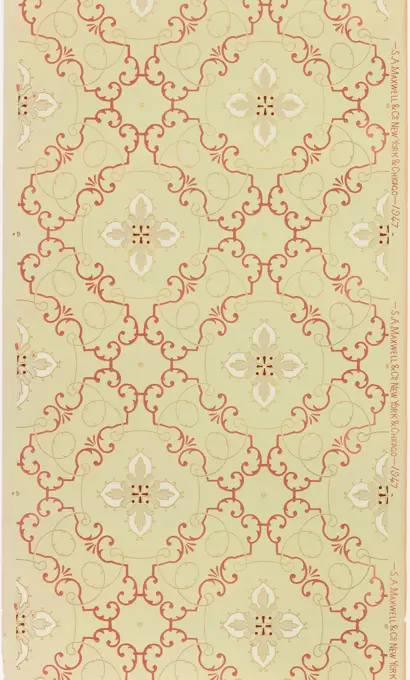
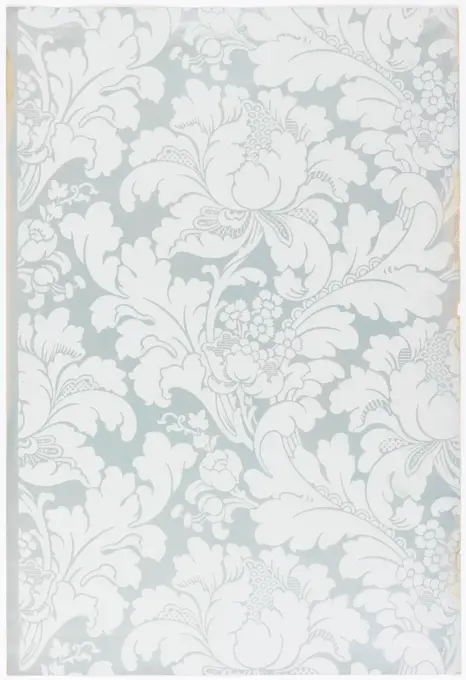
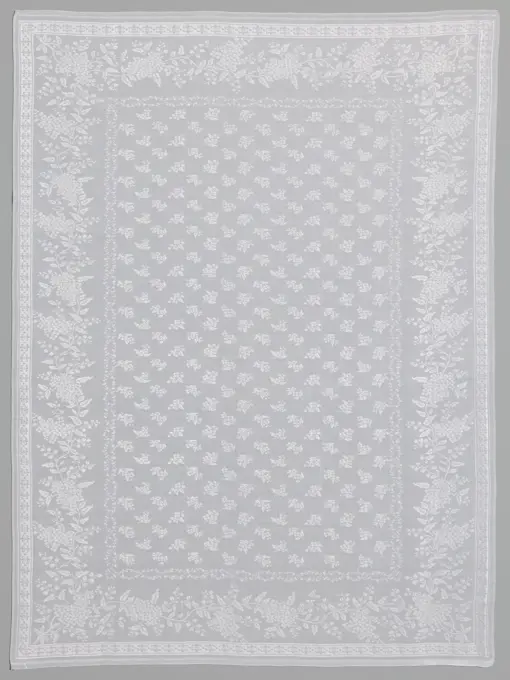
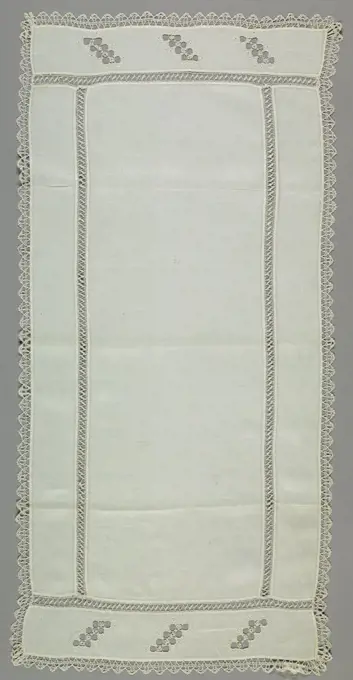
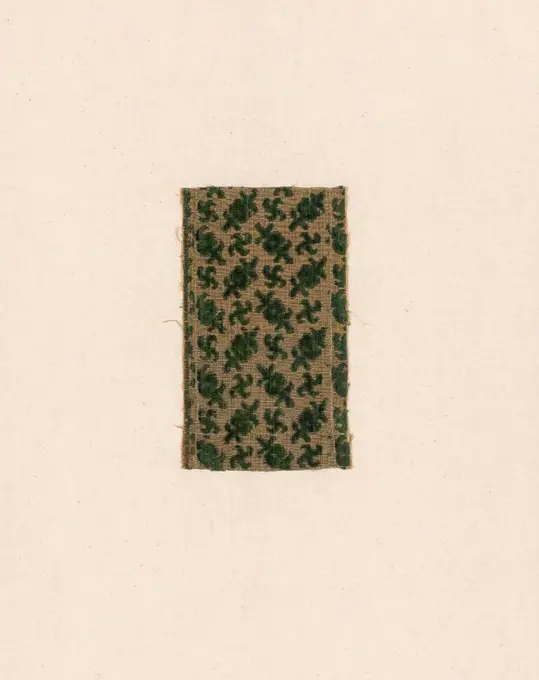
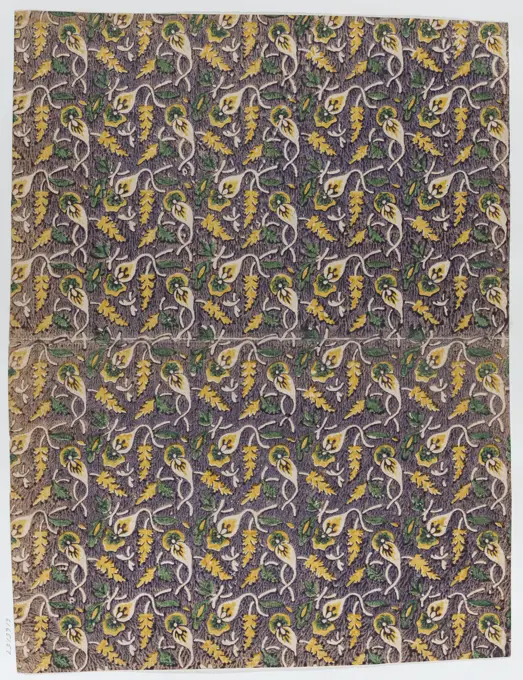
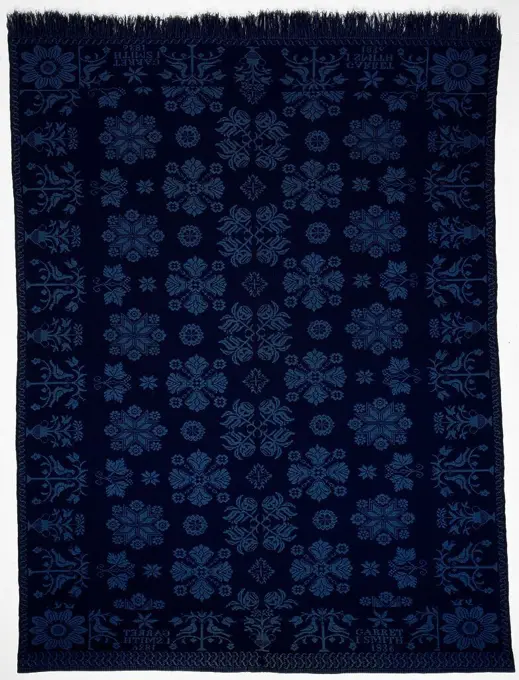
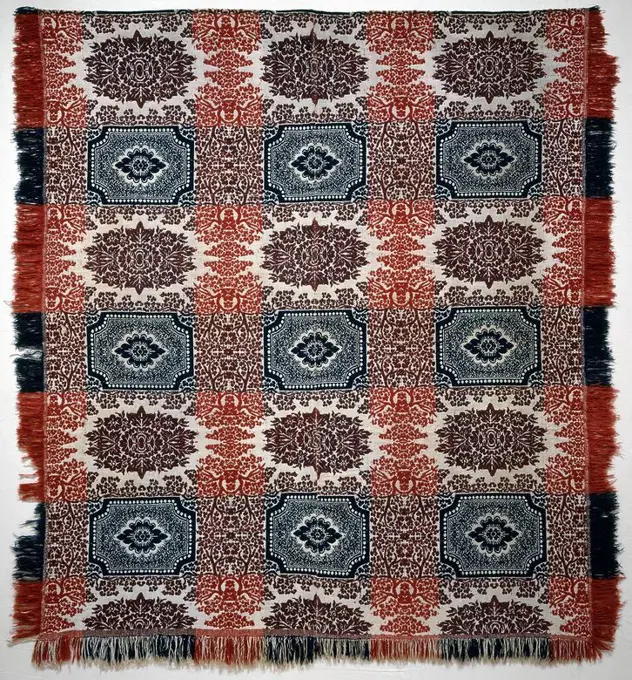
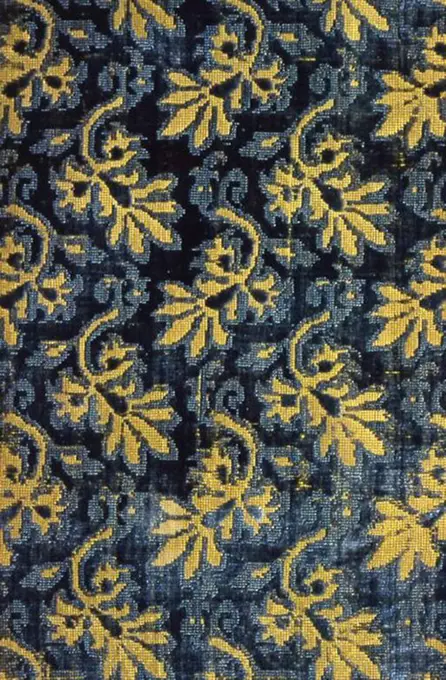
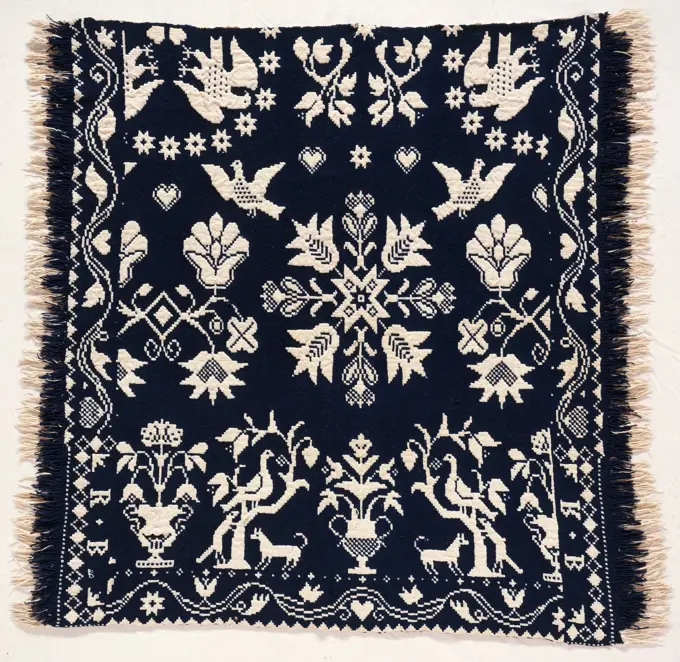
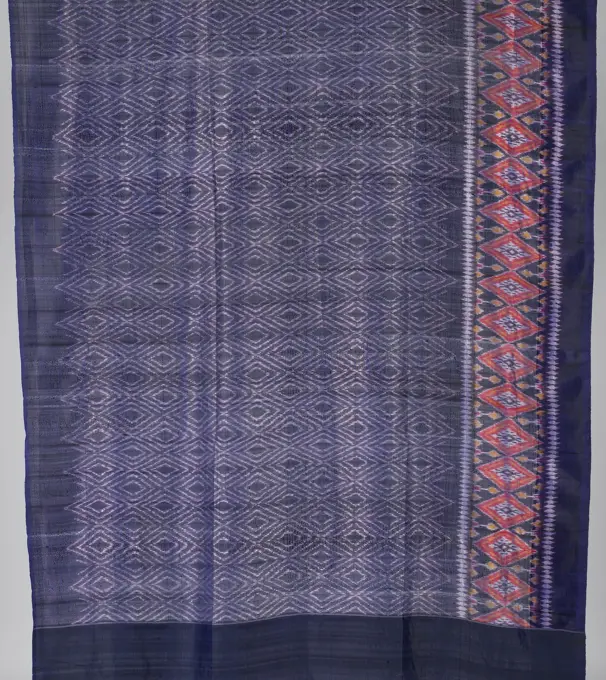
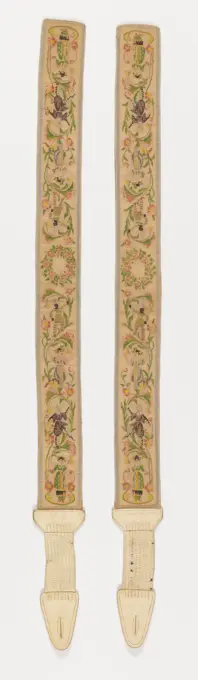
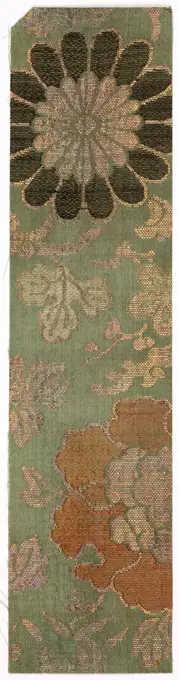
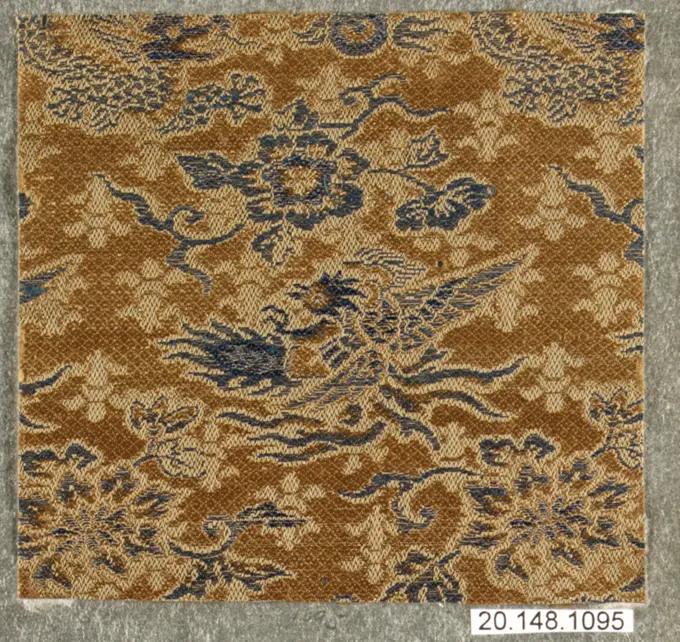
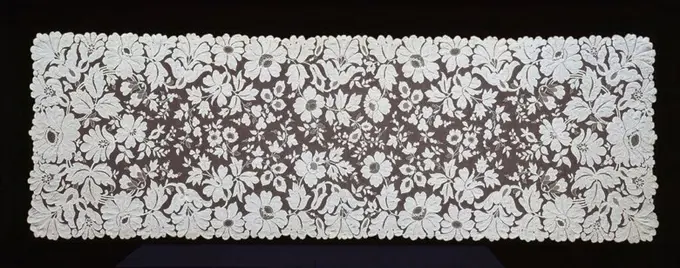
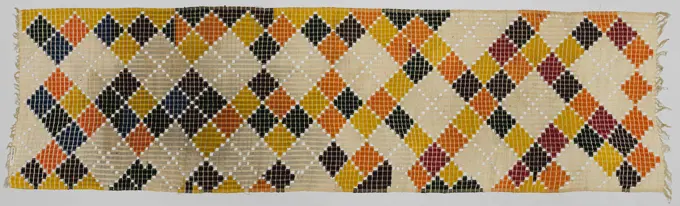
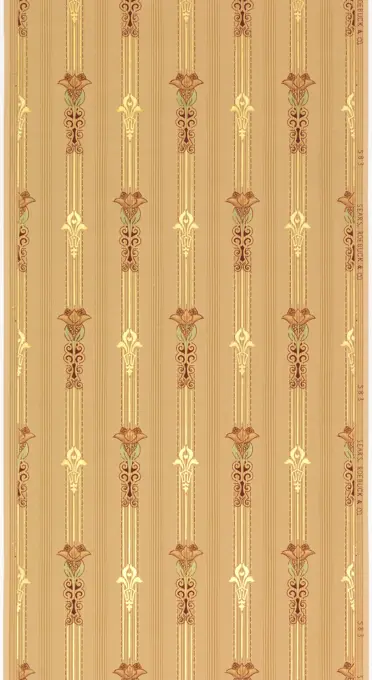
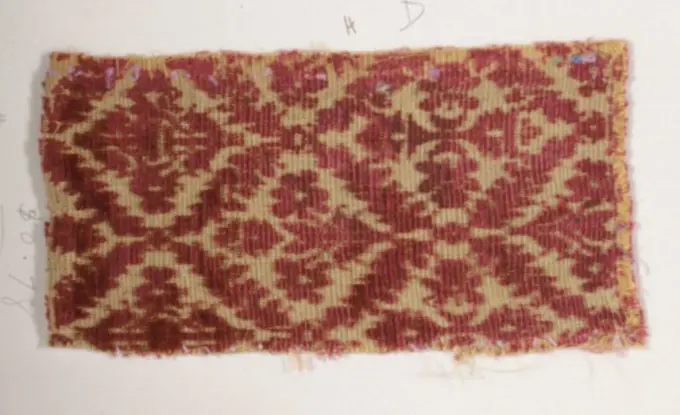
Textile Sample Book 1845-60 French. Textile Sample Book 229337Band, Medium: linen Technique: grid of laid cords with needle lace, reticella style, Italy, early 17th century, lace, BandTextile with Coiled Dragons China This textile represents the tradition of northern China's Jin dynasty, which was known for textiles brocaded in gold with offset asymmetrical motifs on a solid-colored background. The motif here is a coiled dragon with a flaming jewel. The coiled dragon, as a pattern for princes' robes, dates from the Tang dynasty and was also used for garments in the Song and Xixia dynasties. This example is an early instance of a dragon with five claws. It is woven in a variant of the brocading technique first seen in a Jin-dynasty princely tomb of 1162.. Textile with Coiled Dragons 39740Fragments, Medium: silk Technique: woven, Two lengths of woven fabric showing ribbons creating a diamond grid. Bows at the intersections of the grid and enclose a small floral sprig (alternate rows counterfaced) on a rust background., France, 18th century, woven textiles, FragmentsFragment, Medium: linen warp, cotton weft Technique: block printed on plain weave (red and black block printed, yellow and blue too faded to determine method of application), Bunch of flowers enclosed by a thin wreath and a ribbon tied to an oval frame showing a parrot on a perch. Picotage background., France, ca. 1775, printed, dyed & painted textiles, FragmentTextile, Schwartz-Huguenin, Medium: cotton Technique: printed by engraved roller on plain weave, Seven pieces, same design, different colors. A) Ground printed by 'molette' in diamond-shaped design of stripes composed of minute dots in pale blue. Flower clusters in rose and dull greens, printed over background. B) Grey ground and flowers, strong green leaves. C) Grey ground, flowers old rose with green foliage. D) Grey ground, blue flowers, grey foliage. E) grey ground, grey flowers, blue-green foliage. F) lighter grey ground, flowers with strong green foliage. G) Greey ground, blue flowers, green foliage., 1851-63, printed, dyed & painted textiles, TextileTextile (France); silkBed Hanging (France); silk, metal-wrapped silk-core threads; Warp x Weft: 381 x 102.2 cm (12 ft. 6 in. x 40 1/4 in.)Sidewall, York Card & Paper Co., 1891, Machine-printed paper, On gray ground, with vertical dark squares in stripes. White vases holding white bouquet, garlands connecting other vases., York, Pennsylvania, USA, 1905-1915, Wallcoverings, SidewallSidewall (USA); Manufactured by Maxwell & Co., S.A. (United States); machine-printed paper, liquid mica; 94 x 49 cm (37 x 19 5/16 in.)Piece 17th century China. Piece 72005Napkin with grape vines and weapons Nassau, Schagen, Hornes and Thiennes. Marked AVB 13., Anonymous, 1682 White linen dams napkin with grape vines and in the corners the weapons Nassau, Schagen, Hornes and Thiennes, marked AVB 13. Satin 5 Binding. Northern Netherlands linen (material) damask White linen dams napkin with grape vines and in the corners the weapons Nassau, Schagen, Hornes and Thiennes, marked AVB 13. Satin 5 Binding. Northern Netherlands linen (material) damaskTextile (England); cottonFragment; silk, linenByzantine ornamentTextile With Design of Floral Bouquets and MeandersCeiling Paper (USA); Manufactured by Maxwell & Co., S.A. (United States); machine-printed paper; 88 x 49 cm (34 5/8 x 19 5/16 in.)Sidewall - Sample (USA); machine-printed paper, liquid mica; 69 x 47 cm (27 3/16 x 18 1/2 in.)Napkin with iris and the year 1748, anonymous, 1748 Linnamast napkin with iris and the year 1748. The midfield, consisting of interlocking square band lists, between which checked diamonds and death figures, turns into the edge with triangular fields in between zigzag motifs, both blocked and flower branches, without a dividing line in between bearing. In the corners there is an iris overhoek and within a rectangle 1784. All around: Block edge. Germany (possibly) linen (material) damask Linnamast napkin with iris and the year 1748. The midfield, consisting of interlocking square band lists, between which checked diamonds and death figures, turns into the edge with triangular fields in between zigzag motifs, both blocked and flower branches, without a dividing line in between bearing. In the corners there is an iris overhoek and within a rectangle 1784. All around: Block edge. Germany (possibly) linen (material) damaskNapkin from white Linnamast ,, 1670 - 1680 White Linnamasten napkin with a pattern of stripped flowers and birds in edges. Northern Netherlands (Possible) linen (material) damask White Linnamasten napkin with a pattern of stripped flowers and birds in edges. Northern Netherlands (Possible) linen (material) damaskPiece 18th century Japan. Piece. Japan. 18th century. Silk / Compound weave. Edo period (1615-1868). Textiles-WovenNapkin with sprinkling flowers, anonymous, c. 1700 - c. 1899 Linnamast napkin with sprinkling flowers. Midfield: Sprinkling flowers. Standing and lying edges. Scissors (possibly) linen (material) damask Linnamast napkin with sprinkling flowers. Midfield: Sprinkling flowers. Standing and lying edges. Scissors (possibly) linen (material) damaskCover, Medium: linen Technique: cutwork, embroidery and bobbin lace, Cover with bobbin lace insertion and edging. At each end, there are three cutwork rectangles with embroidery in the design of a strawberry vine., USA, ca. 1900, lace, CoverTextile (France); silkFragment (Japan)George Constantine, Shaker Bedspread, 1935 1942 Shaker BedspreadPiece 18th-19th century Japan. Piece 67069Piece 17th century Japan. Piece. Japan. 17th century. Silk / Compound weave. Textiles-WovenPiece 18th-19th century Japan. Piece 66995Piece 18th-19th century Japan. Piece 66970Sleeve cuff, 19th century, 6 11/16 x 7 3/4 in. (16.99 x 19.69 cm), Cotton, silk, gold powder paint; printed, India, 19th centuryShawl ca. 1850-60. Shawl 450572Fragment (Spain); silkFragment 16th century Spanish. Fragment 216348Border, Medium: linen Technique: bobbin lace, discontinuous tape, Northern Europe, 18th century, lace, BorderShawl Or Stole (possibly England); linenTextile, Medium: cotton Technique: printed by engraved roller and block printed, Ground divided into diamond shapes by broad bands of solid tan, intersected by brown and white stripes. Each diamond shape frames a floral spray of roses printed in pink, red, blue-green and lavendar., 1851-63, printed, dyed & painted textiles, TextileTextile Sample from Sample Book 19th century Japan. Textile Sample from Sample Book 68213Tablecloth with swans and fruit trees, John Wilson's Successors Ltd., c. 1900 - c. 1905 Linnamast tablecloth with a central pattern of swans and trees within a rectangle. Around two rows of apple, pear and medal trees and a stooier motif of apple, pear and medel. Around it an edge of large trees with fruits, with fruit baskets in between and diving swallows left and right of the trunks. In the corners two -faced peacocks. In between wavy lines. Ireland linen (material) damask Linnamast tablecloth with a central pattern of swans and trees within a rectangle. Around two rows of apple, pear and medal trees and a stooier motif of apple, pear and medel. Around it an edge of large trees with fruits, with fruit baskets in between and diving swallows left and right of the trunks. In the corners two -faced peacocks. In between wavy lines. Ireland linen (material) damaskRussian sash Kiakow, Grigorij, Manufacturing Kiriokow G.Medieval ornamentFragment. Italy. Date: 1601-1650. Dimensions: 17.5 x 10.5 cm (6 7/8 x 4 1/8 in.)Repeat: 4.5 x 4.2 cm (1 3/4 x 1 5/8 in.). Silk, plain weave with silvered-metal strip supplementary facing wefts and supplementary pile warps forming cut and uncut voided velvet. Origin: Italy. Museum: The Chicago Art Institute, Chicago, USA.Fukusa (Gift Cover) Made 1800-1883 Japan. Patterned side silk, plain weave; resist dyed; lined with silk, plain weave (possibly dyed with safflower); sewn with front and lining matched in size; corners silk, knotted, cut fringe tassels .Textile, The Union Forever; USA; cottonCoverlet Made 1820-1840 Pennsylvania. Star work coverlets such as this one and the one on the opposite wall (2014.1165) are probably the work of German immigrant weaves in Pennsylvania between 1820 and 1840. Most of the weavers were anonymous, although there are a few instances in which individual practitioners are known and can be associated with particular technical features or pattern details.óA Global View Recent Acquisitions of Textiles, 2012-2016, April 8-September 5, 2016, Galleries 57-59. Cotton and wool, plain weave with supplementary wefts in composite point twill weave (star work, multiple shaft); two loom widths joined; edged with extended supplementary weft fringe .Baan z.g. Engels rood geciseleerd, gesneden en ongesneden zijdefluweel.Job Z.G. English Red Cisellated, sliced and uncut silk veal, the solid ground tissue in satin bond. Dessin: in the middle asymmetrically placed loose-facing flower branches, the leaves similar to oak leaves, the flowers on hibiscus; Framing by mirror symmetrically placed S-shaped upright peacock feathers with "eyes". Signature: Two leads attached in down corners in the side side: T & C Lyon and Deposé Paris. Origin: Huize Molecate in Hattum (written in attached note). Condition: as new.Daniel Fletcher, Patchwork Quilt with Eagles, c 1938 Patchwork Quilt with EaglesFragment, Medium: cotton, wool Technique: machine woven, Upholstery fabric in two shades of green. Pattern is an ogival frame enclosing stiff tree form with three pointed leaves. Suggest Art Nouveau style., USA, late 19th century, woven textiles, FragmentTextile, Schwartz-Huguenin, Medium: cotton Technique: printed by engraved roller on plain weave, A) Ground divided into broad stripes, one fancy ground of gray with small rosebuds in darker gray; broad white stripe with stiff green foliage bearing pink bell-shaped blossoms., B) Similar ground plan but with broad blue stripe made of diamond shapes., 1851-63, printed, dyed & painted textiles, TextileBook cover with overall yellow and green floral pattern 18th century Anonymous. Book cover with overall yellow and green floral pattern. Anonymous , 18th century. 18th century. Relief print (wood or metal). PrintsTextile (Italy); silk and metal-wrapped silk-core thread embroidery on linen foundationPanel Made 1752-1775 France. Silk, plain weave with brocading wefts .Textile (Spain); silk; Warp x Weft: 125 x 54 cm (49 3/16 x 21 1/4 in.)Piece 18th-19th century Japan. Piece. Japan. 18th-19th century. Silk. Edo (1615-1868). Textiles-WovenVariations on a Theme, 1958, Anni Albers,rayon, linen, cotton, plastic, Bauhaus.Woven carpet piece 1830-70 American. Woven carpet piece 13834Ribbon of purple side brochaged with silver thread, anonymous, c. 1735 - c. 1765 Ribbon of purple silk brooched with silver thread The brochure work has a pattern of a wavy leaf vank on which acanthus leaves and rosettes hang. West-Europa geheel: silk. silver thread Ribbon of purple silk brooched with silver thread The brochure work has a pattern of a wavy leaf vank on which acanthus leaves and rosettes hang. West-Europa geheel: silk. silver threadFragmentPersian ornamentTextile, Medium: silk, metallic thread Technique: fancy satin, brocaded, Only a part of complete pattern preserved: large-scale flowers brocaded in polychrome silks and silver thread (loosely wound on white silk core) on white satin ground. Areas of taffeta weave outline the floral units., France, 18th century, woven textiles, TextileCoverlet. Culture: American. Dimensions: 98 x 71 1/2 in. (248.9 x 181.6 cm). Date: 1836.This light and dark blue wool double cloth coverlet is woven in two panels and seamed at the center. The ground is decorated with various floral motifs associated with the Dutch weavers of the Bergen County, New Jersey/Rockland County, New York, area. The border is composed of birds and tree motifs alternating with vases of flowers. Each of the four corner blocks is decorated with a single large sunflower. The piece has a natural fringe along the bottom. Museum: Metropolitan Museum of Art, New York, USA.Coverlet. Culture: American. Dimensions: 89 x 81 in. (226.1 x 205.7 cm). Date: ca. 1850.This double cloth coverlet is woven with undyed cotton and red and blue wool in two panels and seamed at the center. It is patterned with rows of floral clusters alternating with rows of single flowers, each within a cartouche. The piece is hemmed along the top border and has a natural fringe on the left and right sides and along the bottom edge. Museum: Metropolitan Museum of Art, New York, USA.Piece 18th-19th century Japan. Piece 66854, Michaelerplatz  - Michaelerkirche - interior view - grille - detail, Josef Wlha -, photographerPanel. Italy or Spain. Date: 1601-1625. Dimensions: 69.5 x 66.2 cm (27 3/8 x 26 in.)Repeat: 6 x 5.3 cm (2 3/8 x 2 1/8 in.). Silk, plain weave with supplementary pile warps forming cut and uncut voided velvet. Origin: Italy. Museum: The Chicago Art Institute, Chicago, USA.Crib or Doll Coverlet ca. 1836 Probably David Daniel Haring American This dark blue wool and undyed cotton double cloth crib or doll coverlet is woven in one panel. Although the piece is meant to be displayed with the two R + B blocks at the foot, it is woven sideways. The natural fringes on the left and right sides are the ends of the cut warp threads. The animal and floral motifs are typical of Haring's work.. Crib or Doll Coverlet. American. ca. 1836. Wool and cotton, woven. Made in Bergen County, New Jersey, United StatesCover. Turkey. Date: 1601-1700. Dimensions: 89 x 88.3 cm (35 x 34 3/4 in.). Square embroidered with crescent shape leaf enclosing smaller leaf, floral sprays and tache de timur design. Origin: Turkey. Museum: The Chicago Art Institute, Chicago, USA.Sidewall (USA); Manufactured by Y.C. & P. Co.; machine-printedSari, c. 1970, 160 x 42 1/4 in. (406.4 x 107.32 cm), Silk; weft ikat, India, 20th centuryFragment Multicolor silk tissue .. Fragment Multicolored silk tissue. A white ground has a white lace garland with brown leaves, between which multicolored flower bouquets and flower garlands.Coverlet Made 1835-1855 United States. Cotton and wool, plain weave with plain interlacings of secondary binding warp and supplementary patterning wefts; main warp and supplementary weft uncut fringe; (tied double cloth) (Beiderwand); woven on loom with Jacquard attachment .Sample (USA); Manufactured by Orinoka Mills (United States); 1989-80-72Textile (Italy); silkTextile (USA); cottonSuspender (France); silk, leatherFragment Deventer carpet. Fragment Deventer carpet. Design: Midfield: Pattern of diamonds filled with Greek cross in dark green on green fond.Rit: walking dog in dark green with pink fillings, framed by dark green tires (the green in different color scheme of BK-1998-41-a).Textile Fragment, 1800s. Japan, 19th century. Silk, metallic thread; average: 25.1 x 6.4 cm (9 7/8 x 2 1/2 in.).. Damaken Napkin with Dessin Fuchsia, equipped with monogram's 'vd' of the Linen Weaustij van Dissel and in white unblooded monogram 'GW', own mark of the Gogh-Wibaut couple.Piece 18th century Japan. Piece 72080Textile (Japan); cottonValance ca. 1760 British, probably. Valance 14186Piece 18th century Japan. Piece 72179Cap crown, Medium: linen Technique: bobbin lace, Brussels style, Cap crown with a central cartouche surrounded by floral elements that are joined by connections., Belgium, late 17th-early 18th century, lace, Cap crownBedcover. United States, New England or Mid-Atlantic. Date: 1780-1800. Dimensions: 249.4 x 237.2 cm (98 1/8 x 93 3/8 in.)Repeat: 64.2-65.4 x 47-49 cm (25 1/4-3/4 x 18 1/2-19 1/4 in.). Three panels joined: cotton, plain weave; block-printed-resist-dyed; backed with linen, plain weave; edged with cotton, plain weave tape; block-printed-resist-dyed; quilted with linen. Origin: United States. Museum: The Chicago Art Institute, Chicago, USA.Piece mid-18th century Italian. Piece 216464Chalice veil early 18th century possibly Italian. Chalice veil 226317Shawl. Probably France. Date: 1860-1869. Dimensions: 285.1 × 94.7 cm (110 1/4 × 37 1/4 in.). Silk, Pusher machine lace. Origin: France. Museum: The Chicago Art Institute, Chicago, USA.Textile Fragment, 1774-1793. France, late 18th century, Period of Louis XVI (1774-1793). Droguet; silk and gold thread; overall: 10.5 x 11.1 cm (4 1/8 x 4 3/8 in.).Panel (Dress Fabric) Made 1875-1895 France. Silk, plain weave with supplementary pile warps in twill interlacings; after weaving, areas of twill floats are cut to form cut velvet au sabre; supplementary pile warp; printed .Sample Book Page (USA); cardboard, linenPiece 1774-92 French. Piece 220683Textile Swatches Onondaga Silk Company, Inc. (1925-1981). , 1948-1959. Silk, 46 1/4 x 16 1/4 in. (117.5 x 41.3 cm).    1948-1959Woven Coverlet. Dated: c. 1940. Dimensions: overall: 50.2 x 40.1 cm (19 3/4 x 15 13/16 in.) Original IAD Object: 84" wide; 96" long. Medium: watercolor and graphite on paper. Museum: National Gallery of Art, Washington DC. Author: John Gasaway.Curtain with imitation style directoire, anonymous, c. 1800 - c. 1825 Curtain with grotes' pattern of medallions, portrait busts, vases and volute vines in cream against a satin surface in dark brick red. Neo-Pompeiaan. Red lining. With large, profiled rings and fringes on one side.  satin. silk. ringen: brass (alloy). voering: cotton (textile) Curtain with grotes' pattern of medallions, portrait busts, vases and volute vines in cream against a satin surface in dark brick red. Neo-Pompeiaan. Red lining. With large, profiled rings and fringes on one side.  satin. silk. ringen: brass (alloy). voering: cotton (textile)Breast cloth. Ceremonial breast cover with diamond pattern for women from the highest caste (brahmins).Length. Culture: British, London, Spitalfields. Dimensions: L. 39 1/2 x W. 21 1/2 inches (100.3 x 54.6 cm)(excluding 4 1/2 in. heading of cotton tabby). Date: ca. 1755. Museum: Metropolitan Museum of Art, New York, USA.Sidewall (USA); Manufactured by Sears, Roebuck and Co. (United States); machine-printed paperFragment 18th century Italian. Fragment 230395Napkin van Linen with peel pattern ,, 1723 - 1769 White linen napkin with peel pattern, so -called oranjeboom, Brand Kroon WG 00 Northern Netherlands (Possible) linen (material) White linen napkin with peel pattern, so -called oranjeboom, Brand Kroon WG 00 Northern Netherlands (Possible) linen (material)Fragment (Italy); silk; Warp x Weft: 91.4 x 54.4 cm (36 x 21 7/16 in.); 1944-72-4