Historical Textile Samples

Images of delicate textile fragments and lacework, reflecting intricate craftsmanship from various historical periods.

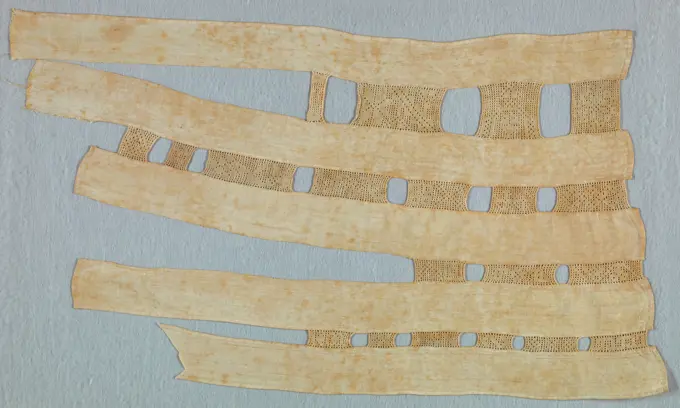
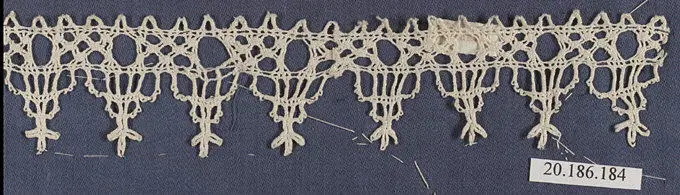
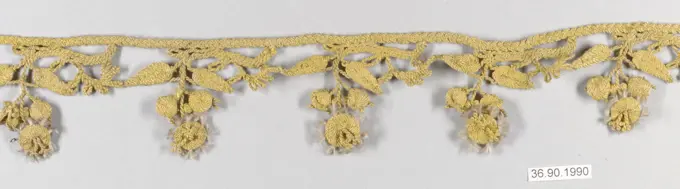
Strip of needle side with slanted rosette flower between three curling leaves and multifaceted flowers, anonymous, c. 1875 - c. 1899 Strip of natural needle side, Venetian rose side. The repeating pattern consists of multifaceted flowers and leaves, including a sloping rosette flower between three curling leaves in the upper part of the strip. The motives are connected by an irregular open bar with picots. The fullwork is made with feston stitches decorated with recesses, relief contours and raised kordons. Decorative lands have been used in various motifs. The top is finished with a border needle side with a zigzag pattern. The underside is finished with a straight border with shells on it, which are alternately formed by a rosette flower and picoted arches. BURANO linen (material) Venetian rose point Strip of natural needle side, Venetian rose side. The repeating pattern consists of multifaceted flowers and leaves, including a sloping rosette flower between three curling leaves in th
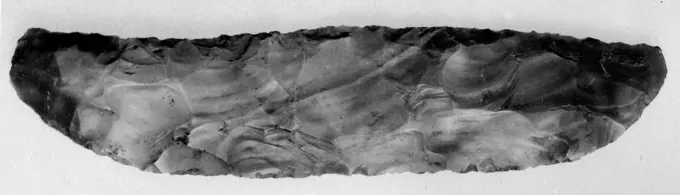
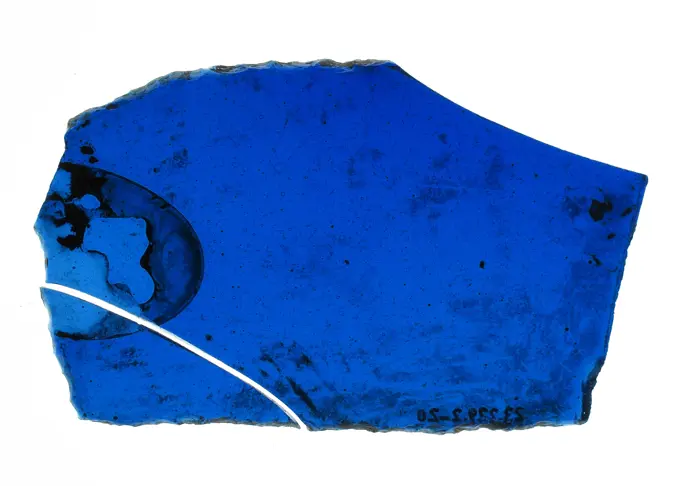
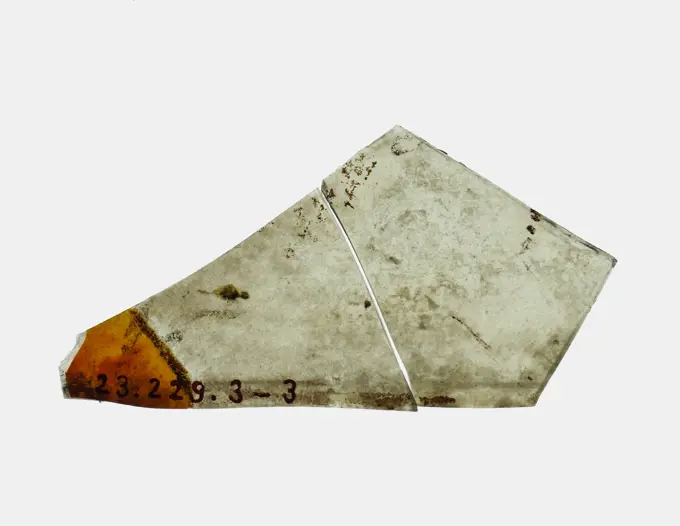
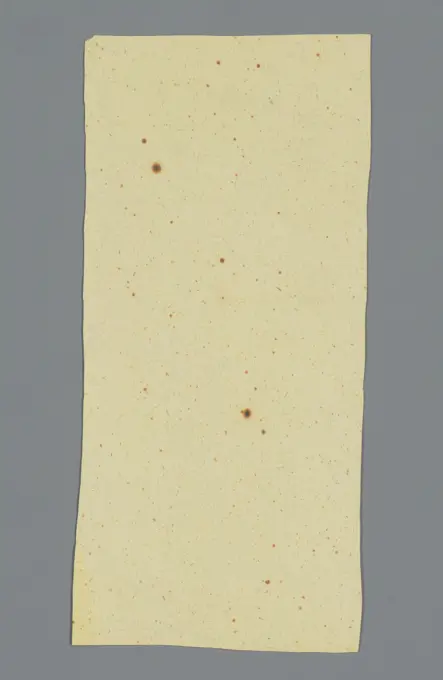
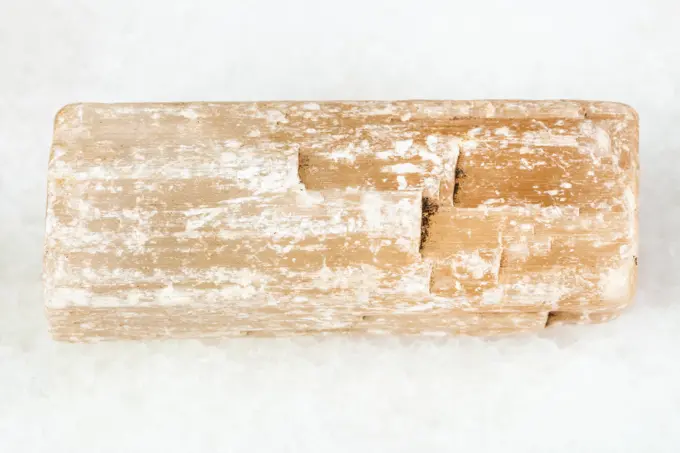
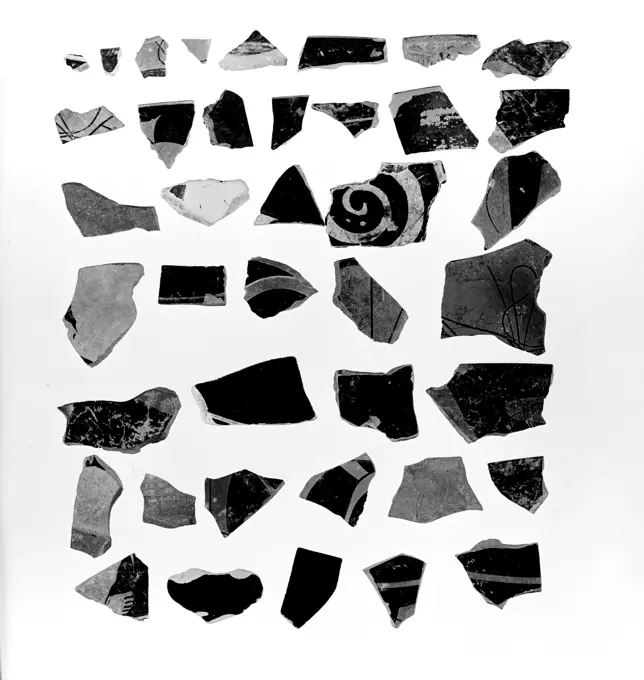
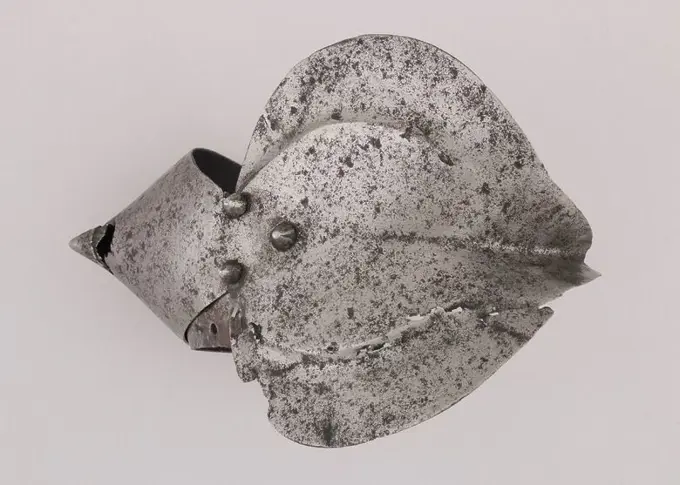
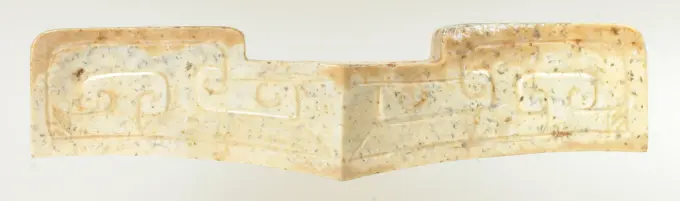
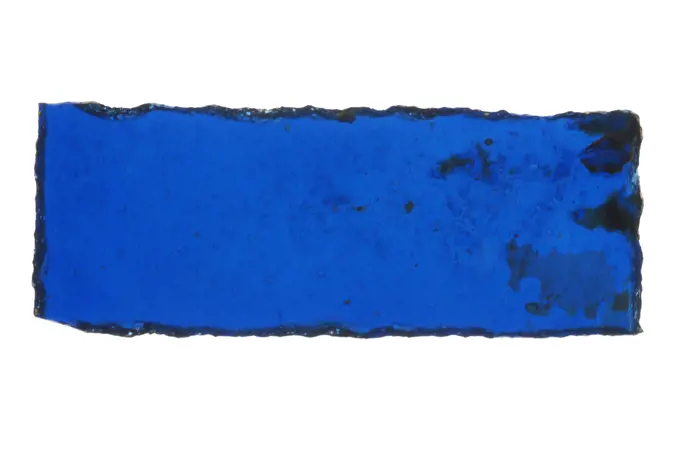
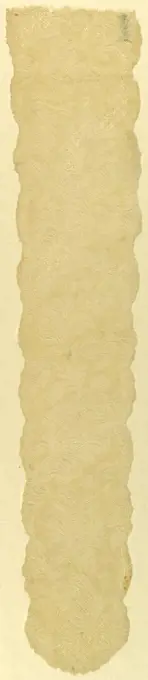
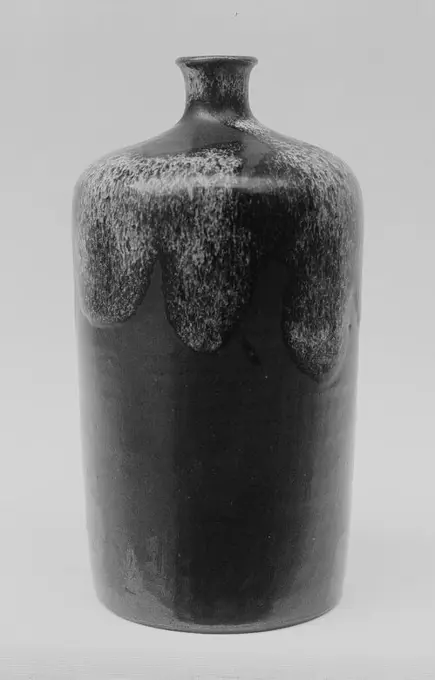
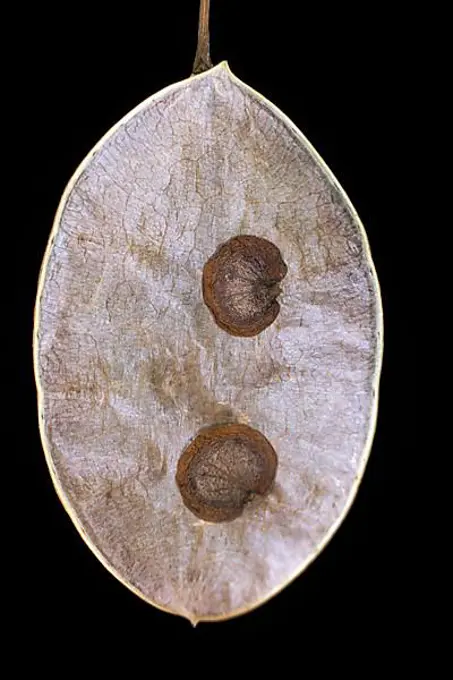
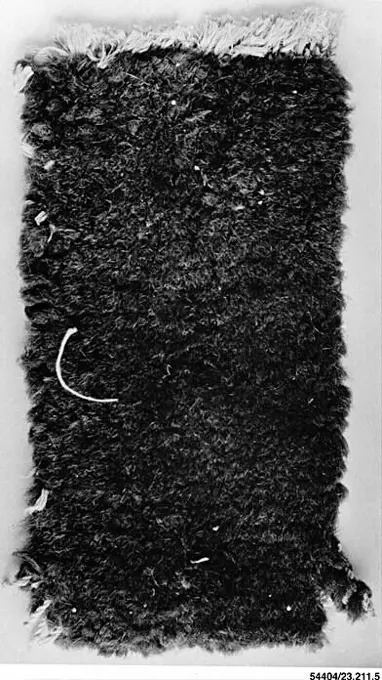
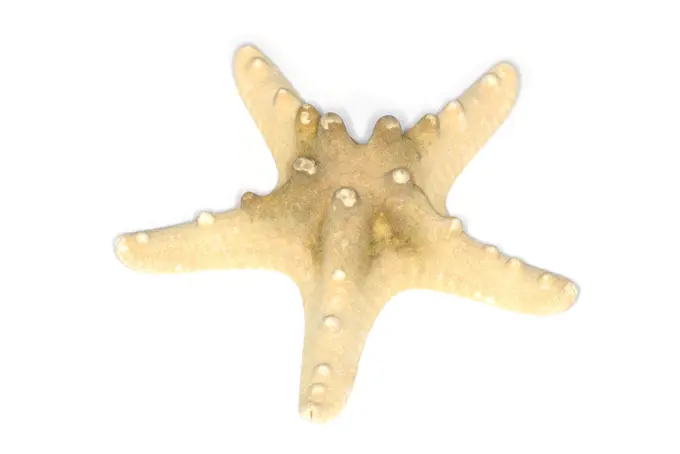
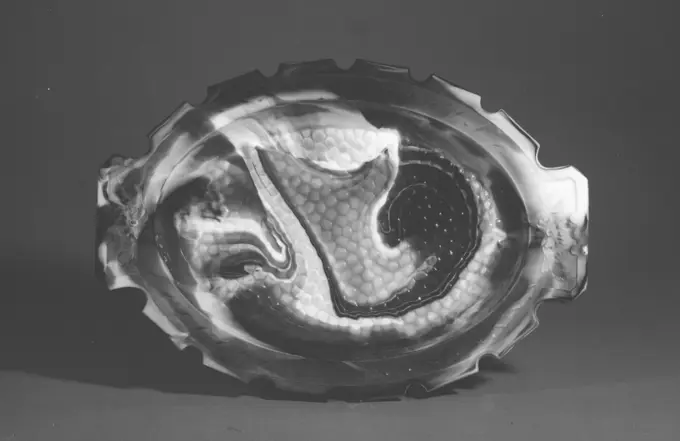
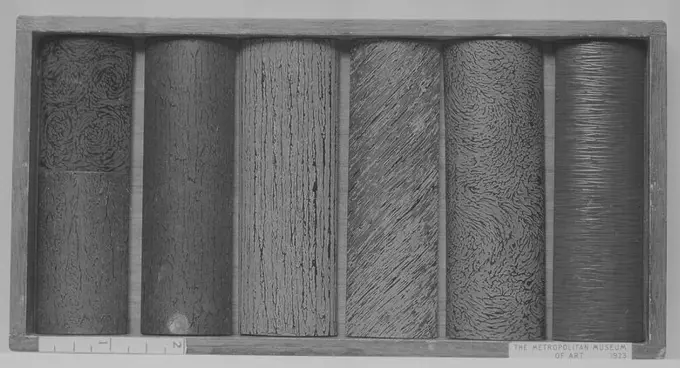
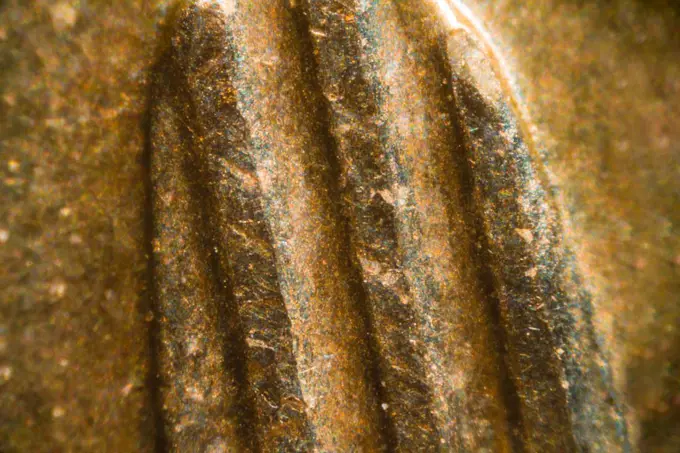
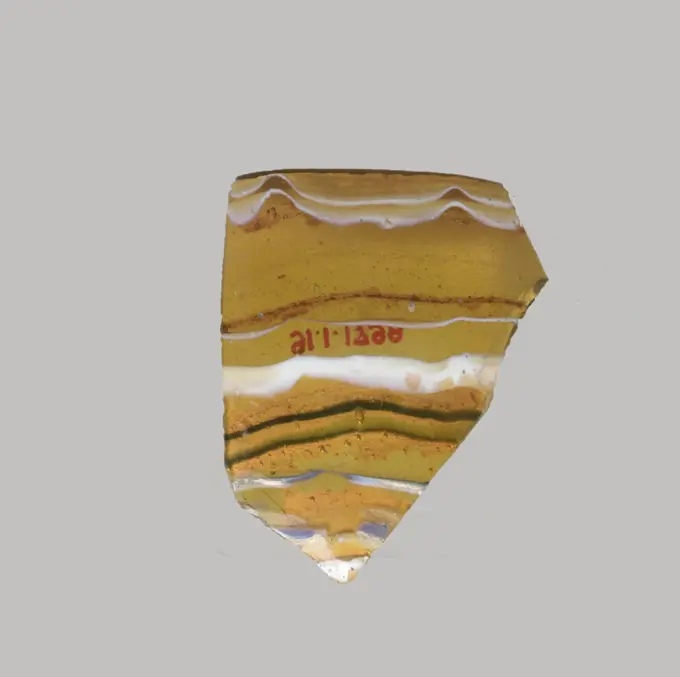
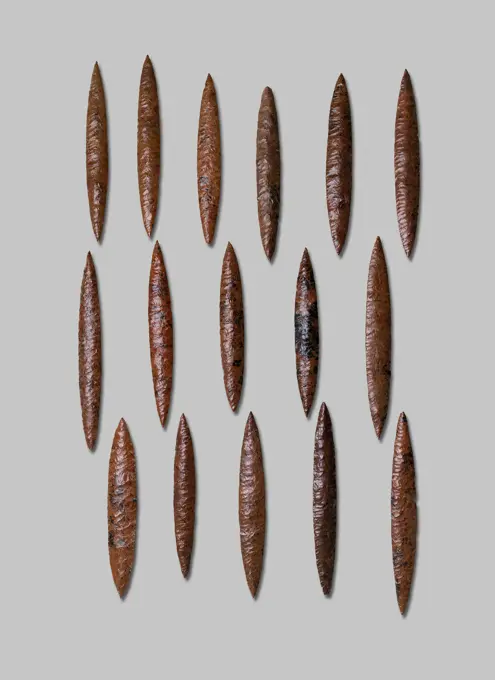
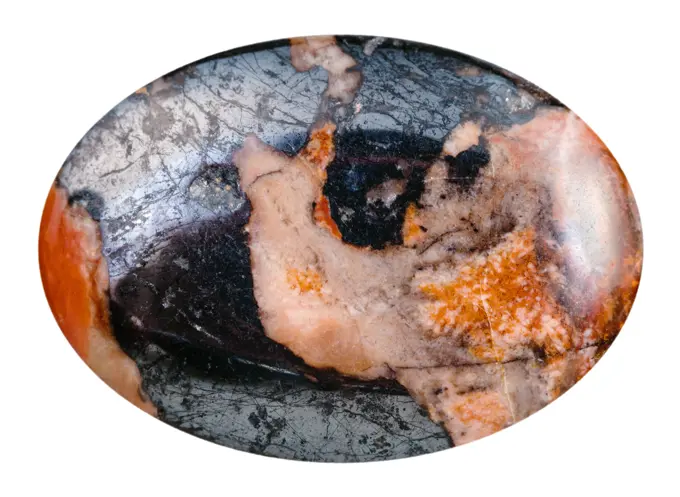
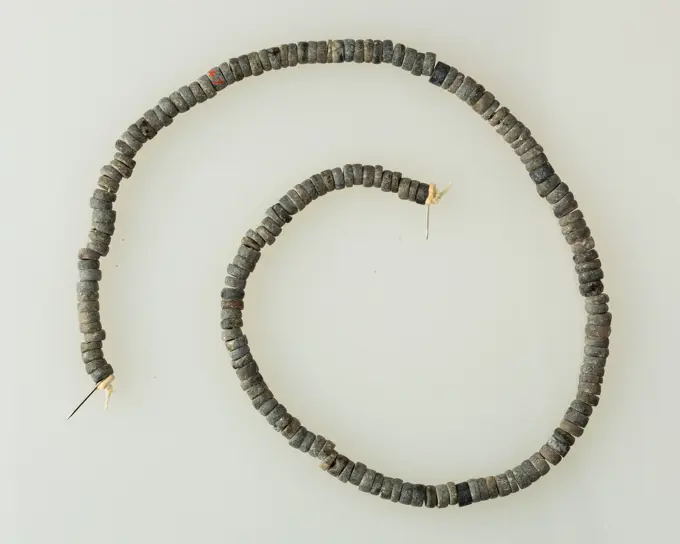
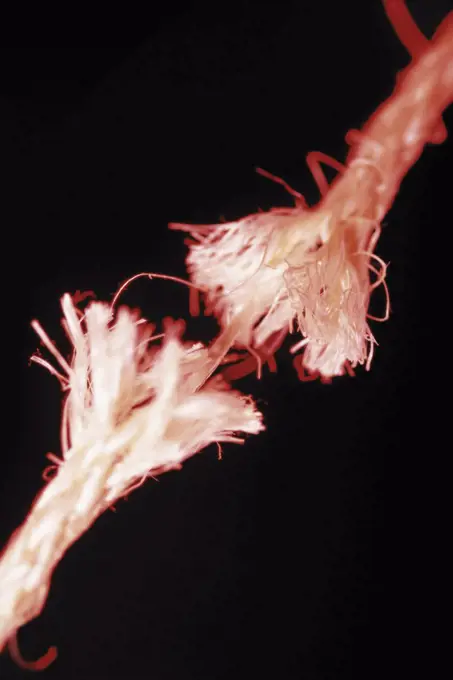
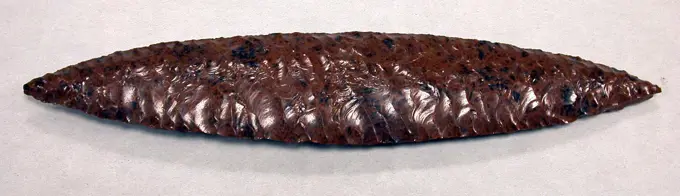
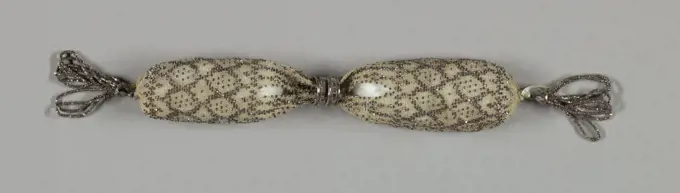
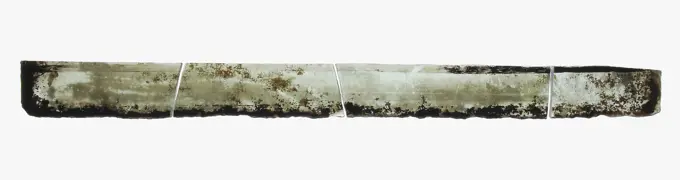
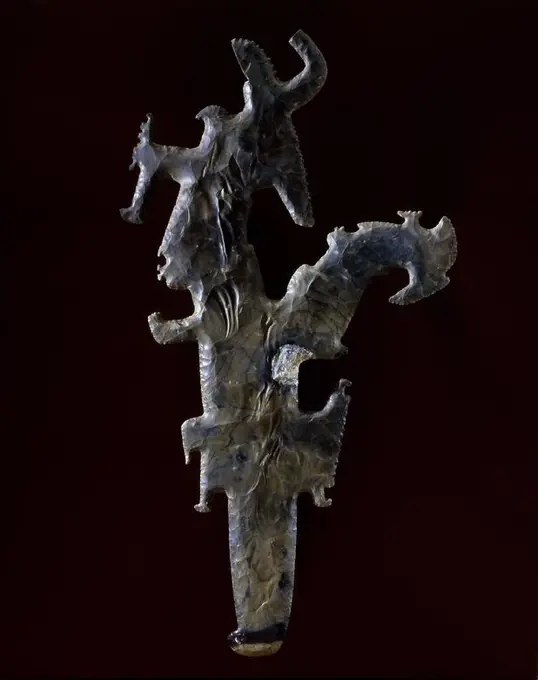
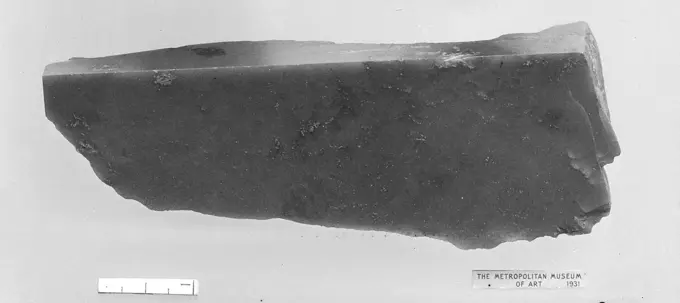
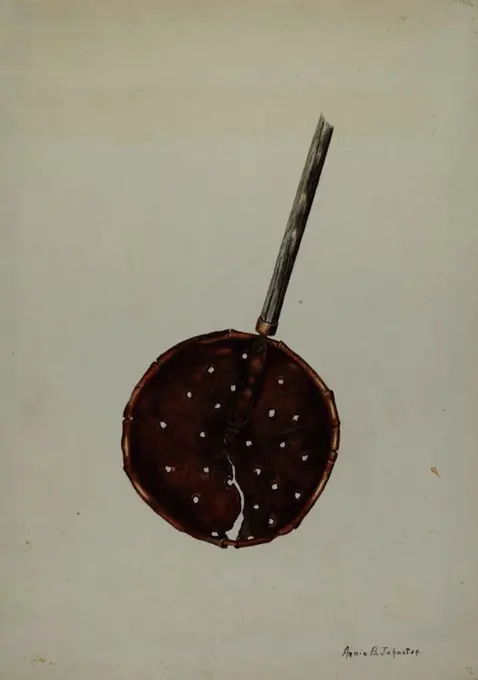
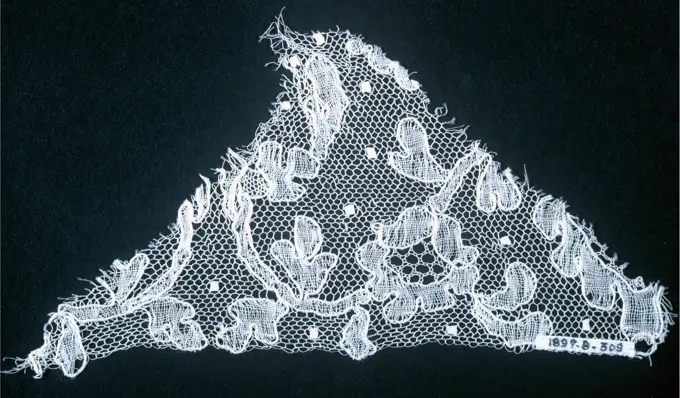
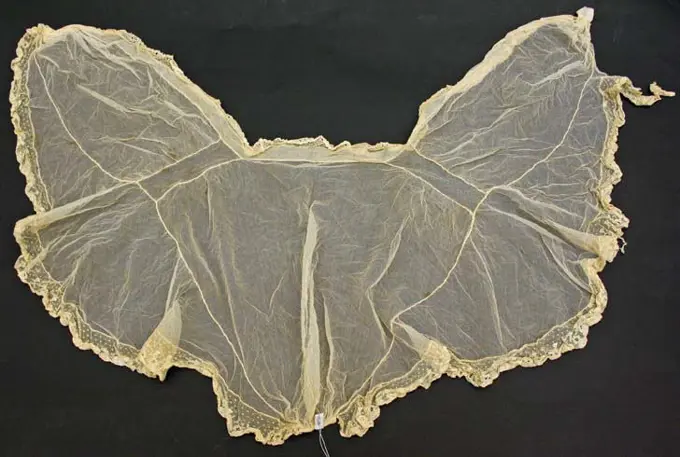
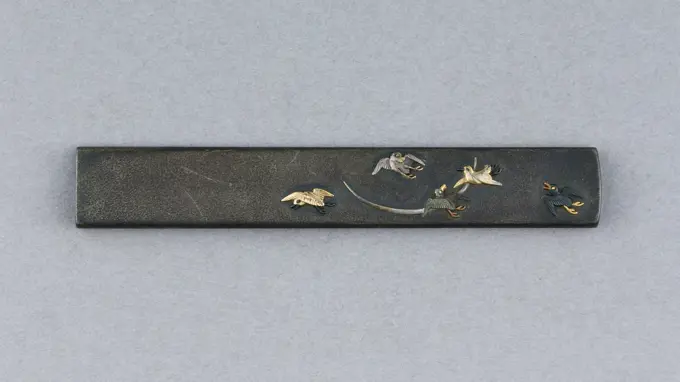
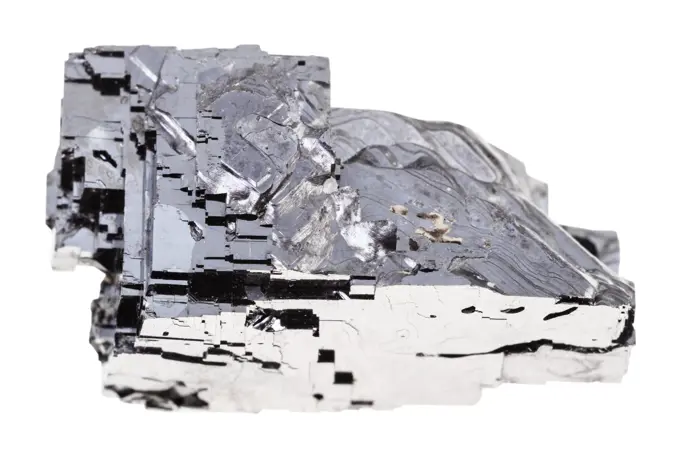
Attic Red-Figure Krater  Fragment. Unknown 5th century B.C.Strook naaldkant met c-voluten en veelsoortige bloemen.Strip natural needle side: Venetian rosary. Pattern with tendrils with c-voluten and multiplic flowers, without repetitive motif. Irregular open land with picoted bars. Full work with recesses and many different ornamental grounds. The top is finished with a straight edge with a picoted zigzag line below. The underside is finished with a straight picro strand with triangles and rosette flowers.Bifacial Knife ca. 3850-2960 B.C. Predynastic Period. Bifacial Knife. ca. 3850-2960 B.C.. Flint. Predynastic Period. From Egypt; Said to be from Egypt, Upper Egypt, Thebes, Dra Abu el-NagaStrip of needle side with slanted rosette flower between three curling leaves and multifaceted flowers, anonymous, c. 1875 - c. 1899 Strip of natural needle side, Venetian rose side. The repeating pattern consists of multifaceted flowers and leaves, including a sloping rosette flower between three curling leaves in the upper part of the strip. The motives are connected by an irregular open bar with picots. The fullwork is made with feston stitches decorated with recesses, relief contours and raised kordons. Decorative lands have been used in various motifs. The top is finished with a border needle side with a zigzag pattern. The underside is finished with a straight border with shells on it, which are alternately formed by a rosette flower and picoted arches. BURANO linen (material) Venetian rose point Strip of natural needle side, Venetian rose side. The repeating pattern consists of multifaceted flowers and leaves, including a sloping rosette flower between three curling leaves in thShawl mid-19th century Belgian. Shawl 102683Ornament ca. 2900-2350 B.C. Sumerian. Ornament 324886Fragment (Egypt); linen; 1939-11-16Sherd ca. early to mid-3rd millennium B.C. Indus. Sherd 324721Spoon 1770-1800 Probably Loring Bailey. Spoon 7762Glass Fragment 14th century North French. Glass Fragment. North French. 14th century. Colorless glass. Glass-StainedShard 15th century Korea. Shard. Korea. 15th century. Pottery. Joseon dynasty (1392-1910). CeramicsOne of Three Hundred Sixty Heads, Five Molds, Fifteen Oscilla and Other Figural and Vase Fragments. UnknownGlass Fragment 12th-13th century French. Glass Fragment. French. 12th-13th century. Glass. Made in Paris, France. Glass-StainedGlass Fragment 17th century North French. Glass Fragment. North French. 17th century. Glass-Vitrail. Glass-StainedPlain light yellow paper, anonymous, 1800 - 1900 decorated paper   paper. paint (coating) paintingAttic Black-Figure Neck Amphora Fragment. UnknownAttic Black-Figure Neck Amphora Fragment (comprised of 3 Joined Fragments). UnknownKey 7th century Frankish. Key 465591 Frankish, Key, 7th century, Iron, Overall: 3 15/16 x 1 1/4 x 9/16 in. (10 x 3.2 x 1.4 cm). The Metropolitan Museum of Art, New York. Gift of J. Pierpont Morgan, 1917 (17.193.265)rough Selenite Gypsum crystal on white macro shooting of natural mineral - rough Selenite Gypsum crystal on white marble from Iren river in Perm Krai, Russia Copyright: xZoonar.com/ValeryxVoennyyx 12349286Attic Red-Figure Kylix Fragment. UnknownTextile Fragment 10th century. Textile Fragment. 10th century. Linen, silk; plain weave, embroidered. Attributed to Egypt. Textiles-EmbroideredFragment of the lace;  18th century (1701-00-00-1800-00-00);Sleeves ca. 1850 Irish. Sleeves 102586Ceremonial Chandrasa (Large Socketed Axe). Indonesia, circa 1st-3rd century A.D.. Arms and Armor; axes. Copper alloyTINAJAS DE CERAMICA. Location: ALFARERIA. COLMENAR DE OREJA. MADRID. SPAIN.Elbow Defense (Couter). Culture: Italian. Dimensions: H. 5 1/4 in. (13.3 cm); W. 5 1/2 in. (14 cm); D. 8 in. (20.3 cm); Wt. 7.4 oz. (209.8 g). Date: ca. 1430-40. Museum: Metropolitan Museum of Art, New York, USA.Frozen iron chain, close-upPeng Sword Guard, 475-221 BCE, 2 1/4 x 1/2 x 3/8 in. (5.72 x 1.27 x 0.95 cm), Ivory jade, China, 5th-3rd century BCESampler (Mexico); cotton embroidery on cotton foundationIvory Fragment. UnknownShell fragment Sumerian ca. 2900-2350 BCETextile Fragment, undetermined Chimú. , 1000-1532. Cotton, camelid fiber, 9 1/16 x 6 1/2 in. (23.0 x 16.5 cm).   Arts of the Americas 1000-1532Attic Black-Figure Neck Amphora Fragment. UnknownSmall window of deep blue window glass, window glass building material soil find glass, cast drawn cut painted baked Small window of deep blue window glass Roughly worked edges and rough surface due to disappearance of thick layer of iris archeology Landpoortstraat Geervliet Bernisse indigenous glasswork adorn living building glazing court of Putten archaeological find in the soil Geervliet pit Landpoortstraat 1 September 1983.summer stationery mock-up scene. Blank business card with lavender flowers on beige textured table background. Flat lay, top view. summer stationery mock-up scene.Cap streamer, Medium: linen Technique: bobbin lace, Binche ground, Binche-style lace design composed of an asymmetric pattern of floral and foliated forms, balanced by serpentine garlands and complexly-shaped volutes at intervals., Belgium, mid-18th century, lace, Cap streamerAttic Red-Figure Duck Askos Fragment. UnknownBean in pod still life.Bottle. Culture: Japan. Dimensions: H. 5 1/2 in. (14 cm). Date: 1750. Museum: Metropolitan Museum of Art, New York, USA.Annual honesty (Lunaria annua) with seeds, studio photograph with black backgroundold burnt paper old burnt paper over white background ,model released, Symbolfoto Copyright: xZoonar.com/RuslanxNassyrovx 2020284 ,model released, Symbolfoto ,property releasedFragment blue velvet brocade with pomegranate moths, anonymous, c. 1420 - c. 1499 Fragment blue silk velvet brocade with a pattern of wavy tendrils, rose hottles and large pomegranates. For similar fragments, see A TM E. Italy silk. Fragment blue silk velvet brocade with a pattern of wavy tendrils, rose hottles and large pomegranates. For similar fragments, see A TM E. Italy silk.bracteate denarius. Zakon krzyżacki (1190-), issuerFragment of Rug 17th century() China. Fragment of Rug 68444Edging 17th century Italian, Venice. Edging 220994Sea star isolated over white backgroundPlatter 1870-90 Challinor, Taylor and Company. Platter. American. 1870-90. Pressed purple marble glass. Made in Tarentum, Pennsylvania, United StatesLacquer Samples. Culture: Japanese. Dimensions: H. 4 11/16 in. (11.9 cm); W. 1 1/2 in. (3.81 cm). Date: 19th century. Museum: Metropolitan Museum of Art, New York, USA.semolina flour as background textureIsraeli 10 Agorot coin under the microscope. Closeup macro photography.Wine Bottle dated 1835 Masamoto Naosaku Japanese. Wine Bottle. Masamoto Naosaku (Japanese,). Japan. dated 1835. Clay covered with glaze (Tanba ware). Edo period (1615-1868). CeramicsSingle Coral Branch A solitary coral branch isolated against a clean white background. This intricate marine specimen showcases the delicate structure of coral, perfect for educational or decorative purposes. The branch exhibits a hard, textured surface, typical of coral for Copyright: xarkelaxHUESO CON CABEZA DE CIERVO GRABADA. Location: MUSEO ARQUEOLOGICO NACIONAL-COLECCION. MADRID. SPAIN.Fringe early 18th century French. Fringe 225071Coffee cup stains and drops marks on white background. Coffee cup stainsWall arm in shape -leafed rank, from Zap. Mannheimer., 1700 A gilded iron wall arm. Formed by a long, oriented, with leaves -occupied slender that bends at the end and ends in a flower after a nodus. Just below the middle, a second sprouts to the wall bending rank with a disk -shaped nodus for the middle. This slender with a returning side drink is set with leaves and ends in a flower. Coming from the collection of Dr. F. Mannheimer. Venice iron (metal) gilding A gilded iron wall arm. Formed by a long, oriented, with leaves -occupied slender that bends at the end and ends in a flower after a nodus. Just below the middle, a second sprouts to the wall bending rank with a disk -shaped nodus for the middle. This slender with a returning side drink is set with leaves and ends in a flower. Coming from the collection of Dr. F. Mannheimer. Venice iron (metal) gildingBerthe with impeller-shaped flower. Berthe of natural needle side: Buranokant or flat Venetian grid side side. A wide-clocking model shows an ongoing pattern of wide standing, irregularly running tendrils with leaves, flowers in the shape of a range, a pomegranate and so on. The relief is everywhere equal to width and does not show any Picot.Buckle of a military belt, from plane wreck Junkers JU-52, Black Sea, Odessa, Ukraine, Eastern Europe, EuropeAdze blade 19th century or earlier Cook Islands (). Adze blade. Cook Islands (). 19th century or earlier. Stone. Cook Islands, Cook Islands. Stone-ImplementsGlass mosaic bowl fragment late 1st century B.C.-early 1st century A.D. Roman Thin-walled body fragment.Translucent honey brown, blue, and opaque white.Convex curving side.Ribbon mosaic pattern formed from lengths of one or more canes in a brown ground with wavy white and blue threads in parallel lines.Pinprick bubbles; polished exterior; pitting of surface bubbles on exterior; dulling and creamy iridescent weathering on interior and jagged edges.. Glass mosaic bowl fragment. Roman. late 1st century B.C.-early 1st century A.D.. Glass; cast. Early Imperial. GlassTextile Fragment 4th-5th century. Textile Fragment 443736Fragments, Medium: silk, metallic thread Technique: plain compound weave, Dark purple fragments with an allover pattern of tiny diamond shapes, almost tangent, in gold-pattern wefts., India, 19th century, woven textiles, FragmentsStone Grains and Carving View of grains and carving on stone wall at Victory Tower, Chittorgarh Fort, Rajasthan, India, Asia Copyright: xZoonar.com/MahanteshxCxMorabadx 16763057Goldsmithery, Damascened dagger made of gold, silver, bronze and niello, depicting gazelle hunt, from tomb IV at Mycenae, GreeceNatural organic poppies on a white background, minimalismPipette with serum on a beige background. High quality photo.Fifty -year commemoration of the Battle of Waterloo 1865 ,, 1865 history medal Small cast lead medal with a bearing eye on an orange bow, on the front the portrait of King William II with change, the lion of Waterloo between military attributes, above 18 Juny and below 1815-1865  lead (metal). textile materials castingObol ca. A.D. 241-72 Sasanian. Obol 323476Spike brush white table spaFragments of a terracotta kylix (drinking cup) ca. 520 B.C. Greek, Attic. Fragments of a terracotta kylix (drinking cup). Greek, Attic. ca. 520 B.C.. Terracotta; bilingual. Archaic. VasesCeremonial Blades Made 1 CE-200 CE Mexico, western. Red obsidian . Colimaoval mookaite with hematite mineral gemstone macro shooting - oval mookaite australian jasper with hematite mineral gemstone isolated on white background Copyright: xZoonar.com/ValeryxVoennyyx 8877108Dry autumn leaves flat layString of beads ca. 3650-2960 B.C. Predynastic, Naqada II-Naqada III. String of beads 547513Tearing ropeHandle fragment ca. 3rd-7th century A.D. Sasanian Glass vessels were very popular in the Sasanian period with a range from very simple to extremely decorated types. This handle fragment would probably have been attached to a decorated jar and is opaque white in color over a clear internal glass. The opaqueness may be a result of the oxidation process that happens as the glass decays. The city of Ctesiphon was located on the east bank of the Tigris River, 20 miles (32 km) south of modern Baghdad in Iraq. It flourished for more than 800 years as the capital of the Parthians and the Sasanians, the last two dynasties to rule the ancient Near East before the Islamic conquest in the seventh century. Systematic excavations in the Ctesiphon area were undertaken by an expedition in 1928-29 sponsored by the German Oriental Society (Deutsche Orient-Gesellschaft). The Metropolitan Museum of Art and the Staatliche Museen, Berlin, undertook a joint expedition for one season in 1931-32. Several excavCap ca. 1825 Textile by Horace Dean Walker. Cap 170284Fragment printed cotton, c. 1800 - c. 1899 Fragment printed cotton. Stylized flower branches are printed in red-brown colors on the white cotton. The outlets of the flower branches have dots.  cotton (textile) printing Fragment printed cotton. Stylized flower branches are printed in red-brown colors on the white cotton. The outlets of the flower branches have dots.  cotton (textile) printingObsidian Blade before 16th century Mexico (). Obsidian Blade 317108Cylinder seal ca. 15th-13th century B.C. Cypriot. Cylinder seal. Cypriot. ca. 15th-13th century B.C.. Steatite. Late Cypriot. CyprusMiser's purse, Medium: silk, steel Technique: crocheted, Crocheted white silk ornamented with cut steel beads in overall diamond pattern. Two steel rings control side opening; tassels of steel beads at either end., France, early 19th century, costume & accessories, Miser's pursePaperweight. Culture: China. Dimensions: H. 2 1/16 in. (5.3 cm); W. 4 1/2 in. (11.4 cm); L. 3 1/8 in. (8 cm). Museum: Metropolitan Museum of Art, New York, USA.Glass Fragment 16th century French. Glass Fragment. French. 16th century. Colorless glass. Glass-StainedScepter with Profile Figures. Culture: Maya. Dimensions: H. 13 5/8 x W. 7 1/2 x D. 5/8 in. (34.6 x 19.1 x 1.6 cm). Date: 7th-8th century.Artists transformed flint, a material abundant in the Maya Lowlands, into royal regalia. Representations of these blades appear in monumental sculptures, where rulers hold them mounted as scepters or ceremonial spears. The compositions here feature multiple profile heads with sloping foreheads and elaborate headdresses; the distinct frontal projections probably represent a "smoking celt," the hallmark of K'awiil, the Maya God of Lightning. Both the scepters and K'awiil's repeated faces may symbolize the multiple branches of lightning.Los artistas transformaban el pedernal, un material que abunda en las tierras bajas mayas, en ropajes reales. Se pueden observar representaciones de estos sílex en esculturas monumentales en las que los gobernantes los llevan como cetros o lanzas ceremoniales. Las obras aquí presentes muestran múltiples caras de perfilFragment China, Turkestan. Fragment 43484Copper Sugar Strainer. Dated: c. 1938. Dimensions: overall: 34.9 x 24.9 cm (13 3/4 x 9 13/16 in.) Original IAD Object: 13" in diameter; 68" long. Medium: watercolor and graphite on paper. Museum: National Gallery of Art, Washington DC. Author: Annie B. Johnston.Bead-like Ornament. UnknownIndian arrowhead from Georgia and North & South Carolina , Archaeological assemblages, Charles F. Walcott Archaleogical CollectionStrip of Goudkant.strip or Gold Side.Fragment; linen; 1897-8-309Mosaic glass fragment. The small glass fragment shows on a red background of several blue petals, which are surrounded by white and cross-shaped around a white center. In Roman times, they used colored, ornamented glass for vessels, mosaics, wall decorations and furniture ornaments. For the production, different colored glasses became tubes and Rods shaped. These were compressed and heated, causing a long bar. The glass sliced now had a wide variety of amorphous or floral patterns.Papyrus Fragments Inscribed in Hieratic and Demotic Papyrus Fragments Inscribed in Hieratic and Demotic, 664-30 B.C.E. Papyrus, ink, Glass: 6 1/8 x 8 1/4 in. (15.5 x 21 cm).   Egyptian, Classical, Ancient Near Eastern Art 664-30 B.C.E.Fichu 1830-37 American or European. Fichu 118989Knife Handle (Kozuka) 1843 Japanese A kozuka is a handle of a by-knife that is part of a sword mounting. It is kept in a slot on the reverse of a katana scabbard, often with a matching kōgai (hairdressing tool).. Knife Handle (Kozuka) 29774Old wooden fishing boat out of water, detail of paint. Crescent City, California.Piles of new lobster pots on Holy Island, Lindisfarne, Northumberland, England, UK close upraw Galena stone isolated macro shooting of geological collection mineral - raw Galena stone lead glance, Lead ore and Silver source isolated on white background Copyright: xZoonar.com/ValeryxVoennyyx 10454178Tassel (Italy); linenWhine transparent glass, India Copyright: xDxKanani/DinodiaxPhotoxin australian catamaran a old rope  in the sky like abstract concept