Historical Textiles

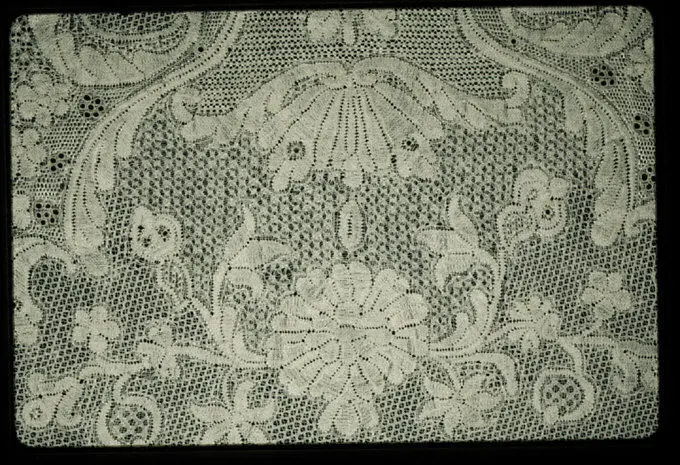
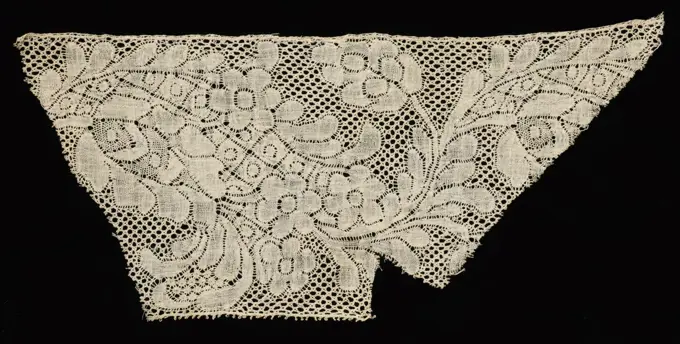
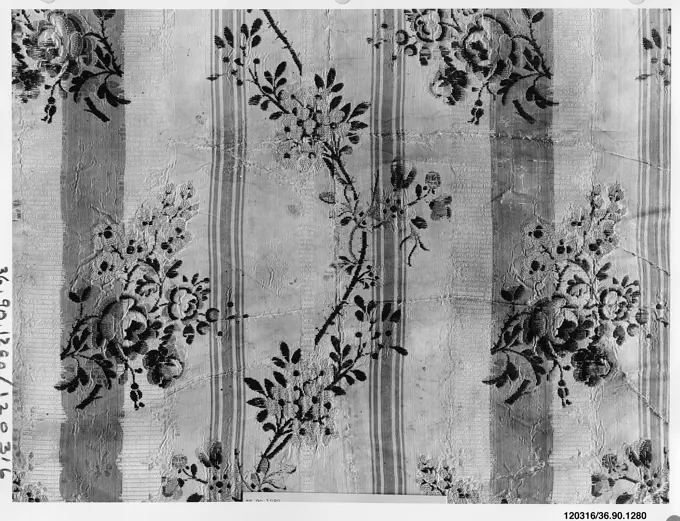
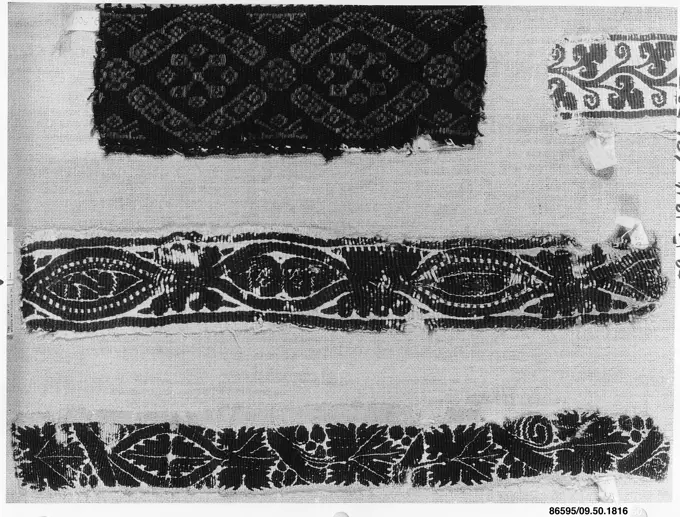
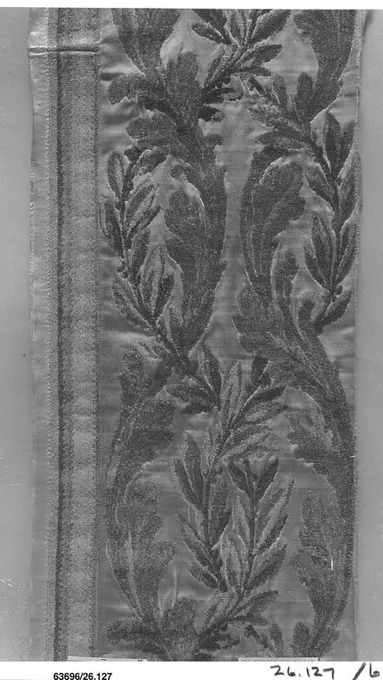
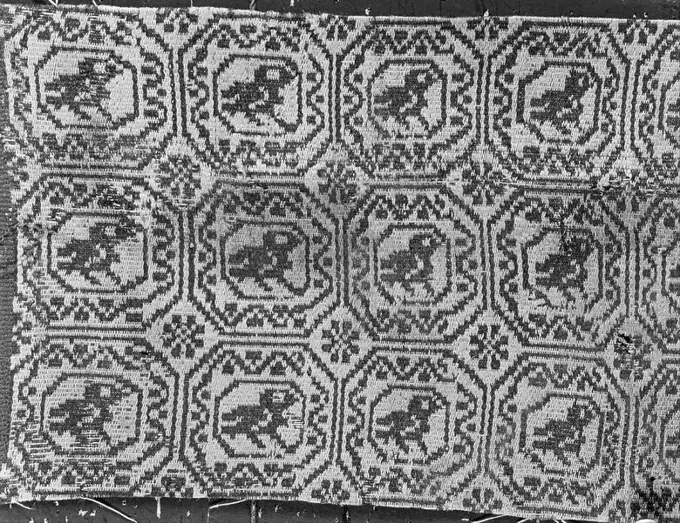
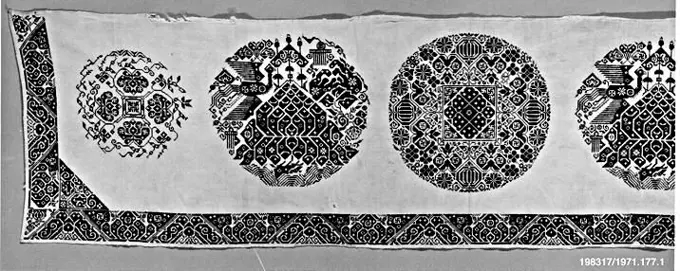
Vintage textile fragments and pieces displaying intricate patterns and designs from different centuries.

Piece 17th century Italian. Piece 224512
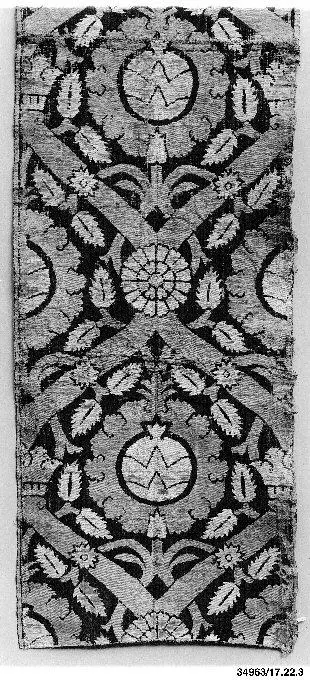
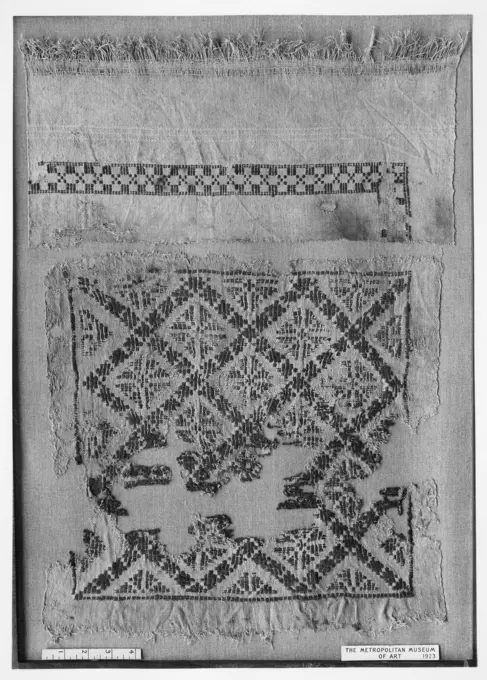
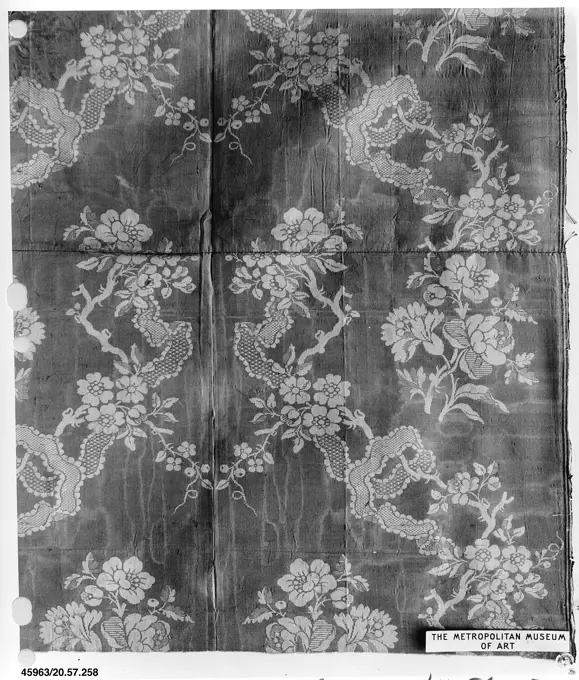
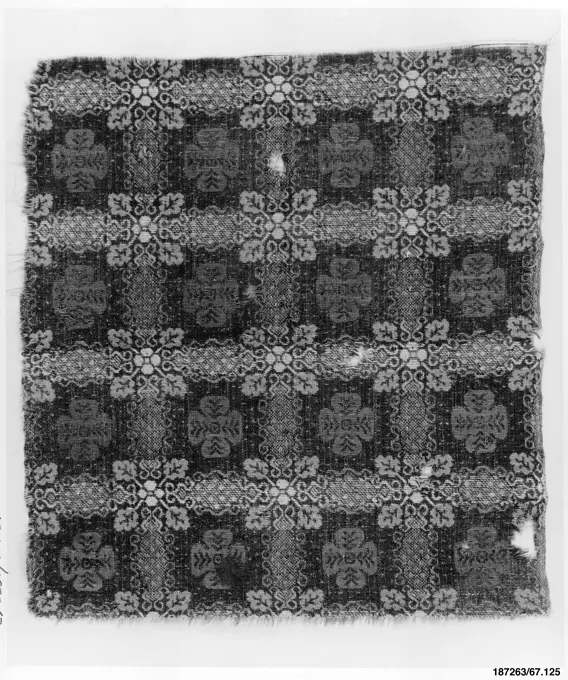
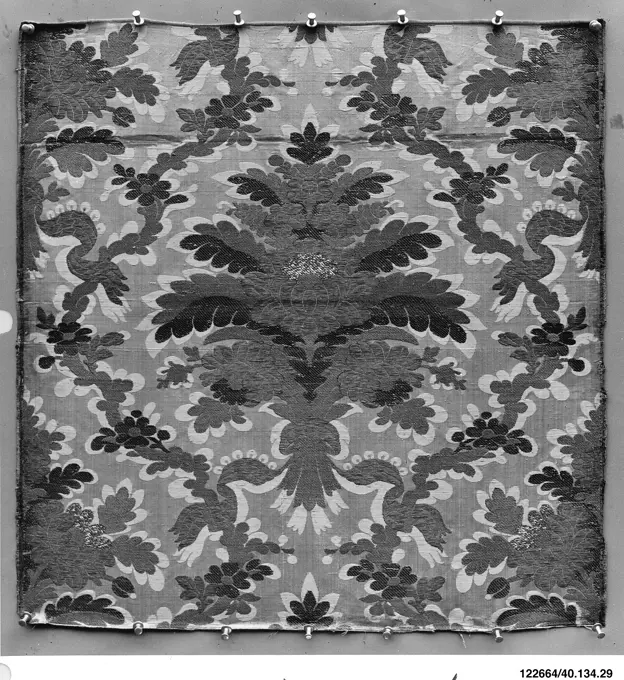
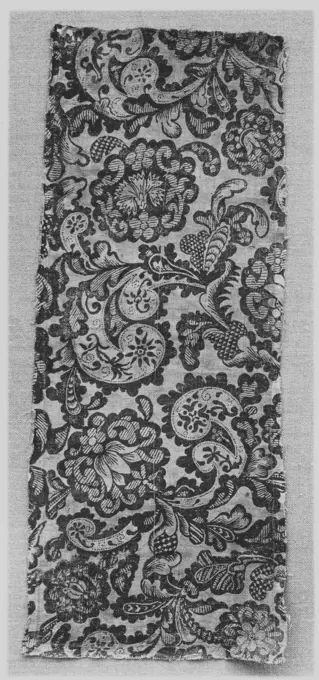
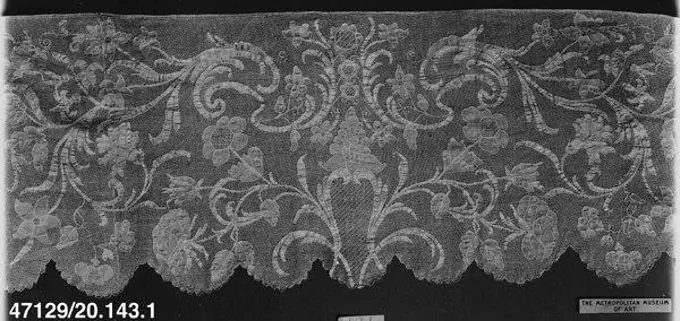
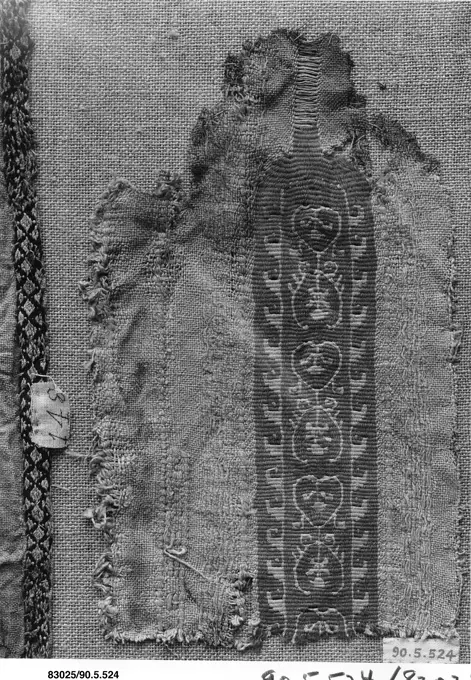
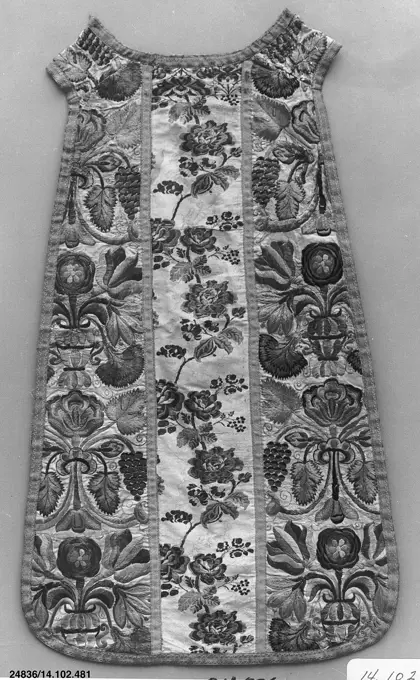
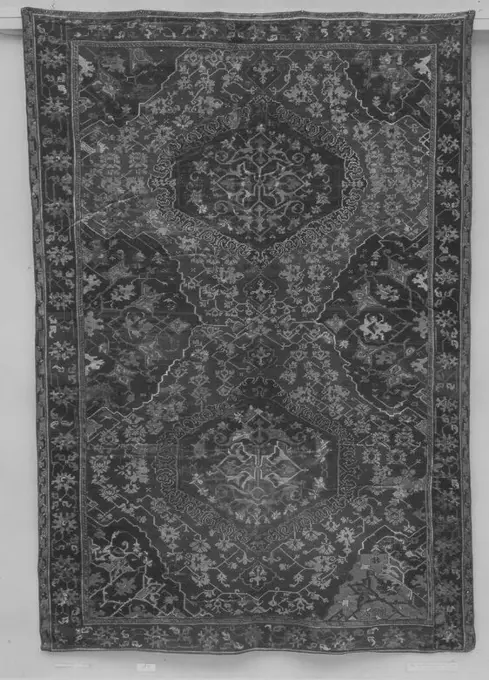
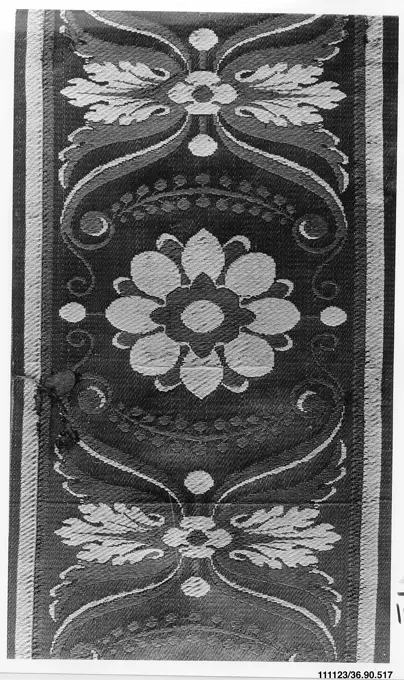
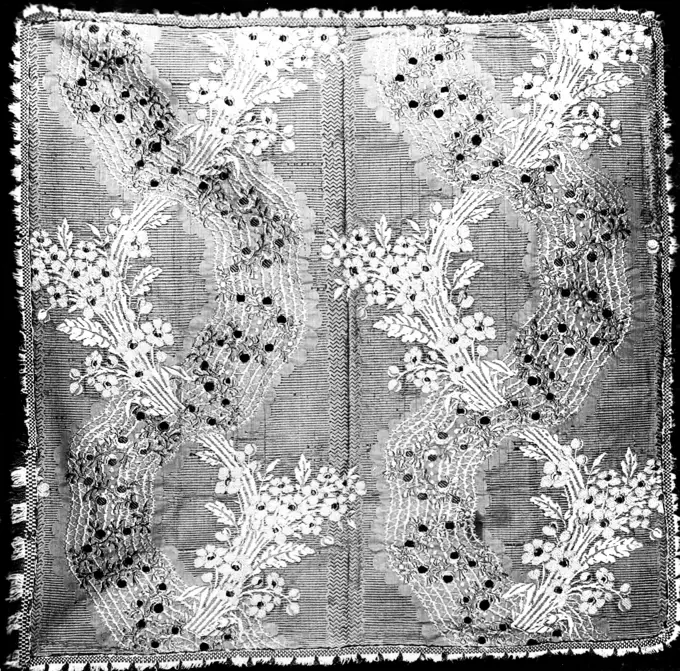
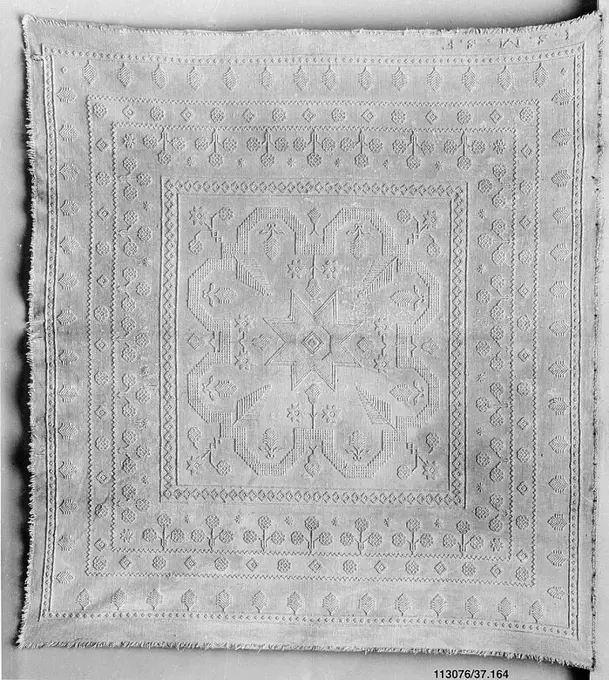
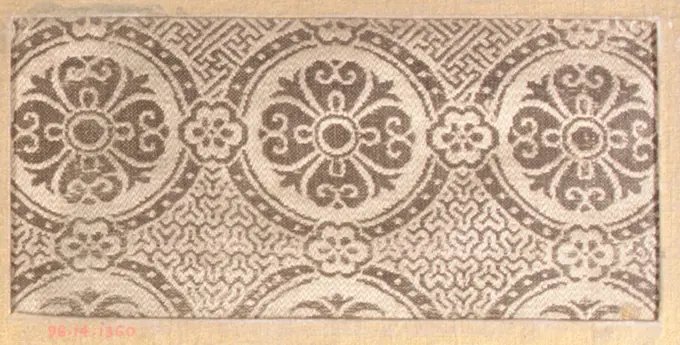
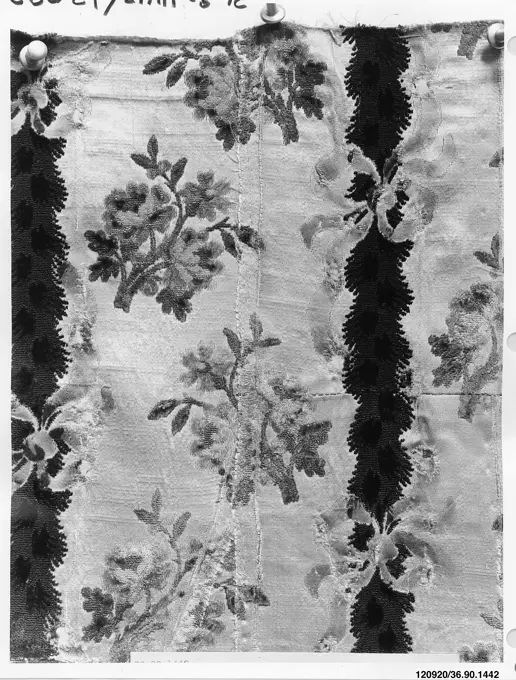
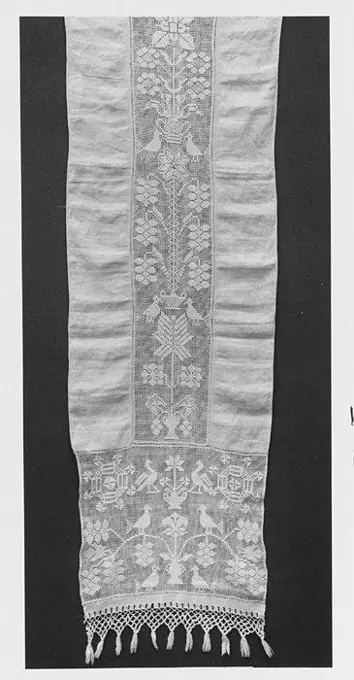
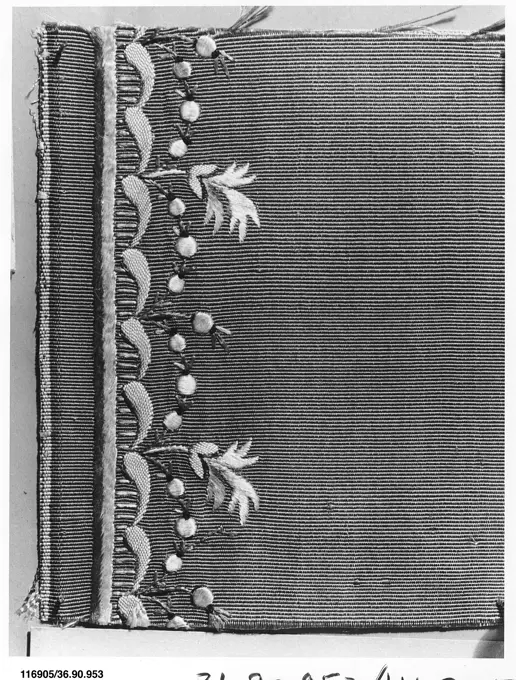
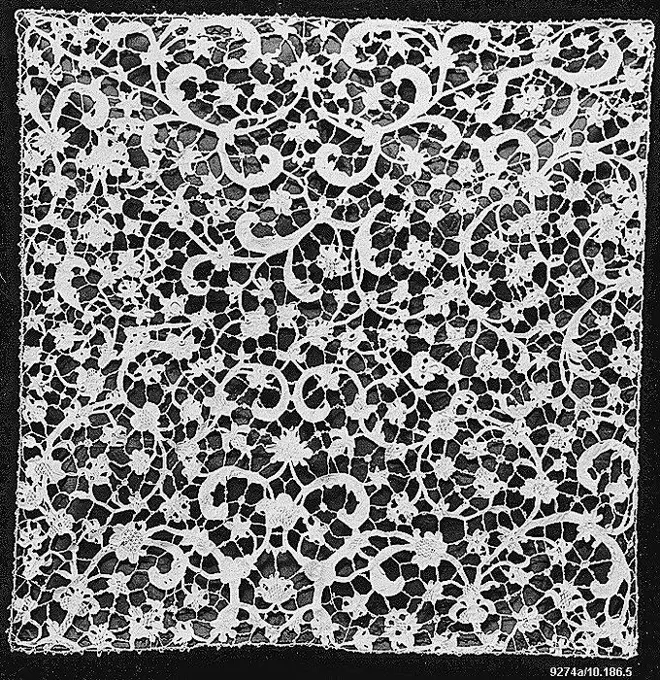
Piece 1770-80 French. Piece 223333Piece 17th century Italian. Piece 224512Textile Fragment late 16th century. Textile Fragment 446866Chasuble ca. 1700 Spanish or French. Chasuble 221629Fragment ca. 1500 Italian, Venice or Turkish. Fragment 226570Piece 16th-17th century Italian. Piece 223576Piece 1750-75 French. Piece 220567Scarf End 18th century. Scarf End. 18th century. Linen. Attributed to Algeria. Textiles-EmbroideredPiece 16th-17th century Italian. Piece 223591Textile Fragment 3rd-4th century. Textile Fragment 443232Piece of Cloth for Kimono with Pattern of Cherry Blossoms, Floral Medallions, Birds, and Vertical Splashes 19th century Japan. Piece of Cloth for Kimono with Pattern of Cherry Blossoms, Floral Medallions, Birds, and Vertical Splashes 45407Tunic with Interlace Decoration 4th-8th century Interlaces and knots are among the most frequently employed motifs in the arts of the early Byzantine period. They are especially common on textiles, including large hangings, furniture covers, and clothing, and the high level of craftsmanship required to create such patterns suggests luxury and wealth. The belief that a person could inflict harm with only a glance was widespread throughout the ancient world, and intricate interlaces and knots may have been intended to serve a protective function: they created a labyrinth for the eye, drawing in the injurious or envious gaze and thus preventing it from doing evil. Indeed, certain designs, such as the knot of Solomon - a motif formed by looped bands that interlace to form a cross - were believed to be apotropaic (from the Greek apotropaios, meaning "turning away evil"). The decoration of this tunic consists entirely of repeated patterns of interlace and knots. Nested squares form the tabulPiece 1750-60 French. Piece 220468Sleeve Band 19th century China. Sleeve Band 68755Woven Carpet ca. 1820-50 American. Woven Carpet 13582Piece early 19th century French, Lyons. Piece 226523Border 16th century Italian. Border 221176Fragment of printed linen ca. 1700 German. Fragment of printed linen 216284Piece early 17th century French or Italian. Piece 220542Piece 18th century French. Piece 224313Piece 16th-17th century Italian. Piece 223602Piece 18th century possibly Italian. Piece 224540Flounce 18th century Italian. Flounce 220785Piece 16th-17th century Italian. Piece 223427Textile Fragment 4th century. Textile Fragment 444010Piece 15th century Spanish. Piece 227143Chasuble back 18th century Italian or French. Chasuble back 219709Piece 16th-17th century Italian. Piece 223466Piece ca. 1840 French, Alsace. Piece 221587Piece 1735-40 Italian or French. Piece 227828Carpet. Dimensions: H. 118 in. (299.72 cm)W. 81 in. (205.74). Date: 18th century. Museum: Metropolitan Museum of Art, New York, USA.Piece 1720-25 French. Piece 217190Fragment 16th century German. Fragment 217157Piece 16th-17th century Italian. Piece 223549Curtain (For a Bed) Made 1601-1700 Pátmos. Linen, plain weave; embroidered with silk in running stitches (pattern darning); four loom widths joined .Border 17th century Italian, Sicily. Border 212472Piece ca. 1730 French. Piece 226446Sleeve band (). Culture: Central European. Dimensions: L. 13 5/8 x W. 5 1/2 inches (34.6 x 14 cm). Date: 18th century. Museum: Metropolitan Museum of Art, New York, USA.Fragment. Dimensions: 13 1/8 in. high 6 1/8 in. wide (33.4 cm high 15.5 cm wide). Date: 3rd-4th century. Museum: Metropolitan Museum of Art, New York, USA.Piece 17th century French. Piece 216968Piece. Culture: French. Dimensions: 18 x 13 1/2 inches (45.7 x 34.3 cm). Date: ca. 1750. Museum: Metropolitan Museum of Art, New York, USA.Towel End early 19th century. Towel End 443048Standard dated 1690 Spanish. Standard 25662Piece 1720-30 French. Piece 216257Piece 18th century Japan. Piece 71169Piece early 19th century French. Piece 223619Piece first half 17th century Spanish or Italian. Piece 220397Cover Made 1701-1800 France. .Altar Cloth 18th century Japan. Altar Cloth 68481Piece 16th-17th century Italian. Piece 223495Fragment of Sleeve 3rd-4th century. Fragment of Sleeve 443968Piece 16th century Italian. Piece 224289Piece 16th-17th century Italian. Piece 217069Counterpane, Bolton type. Culture: British, probably. Dimensions: 101 x 89 1/2 in. (256.5 x 227.3 cm). Date: ca. 1800-1830.This hand-loom-woven white cotton bed cover was made in one piece. The design is picked out in raised loops of heavy cotton weft threads. The heavy pattern wefts are in a 2:2 proportion to the lighter-weight main wefts. The piece has a central eight-pointed star motif, which is surrounded by various borders. It is self-fringed on all four sides. Museum: Metropolitan Museum of Art, New York, USA.Piece 18th-19th century Japan. Piece 67079Piece 15th century Italian. Piece. Italian. 15th century. Silk. Textiles-VelvetsFragment 18th century Spanish. Fragment 220794Strip 1800-1820 Danish. Strip. Danish. 1800-1820. Bobbin lace. Textiles-LacesPiece 18th century French. Piece 224525Cap crown (part of a garniture) 18th century French. Cap crown (part of a garniture) 226438Fragment of Needlepoint (Point de France) Lace Flounce, 1700-1715. France, early 18th century (Louis XIV Period,1638-1715). Lace, needlepoint: linen; average: 33.1 x 102.9 cm (13 1/16 x 40 1/2 in.).Piece 18th century French. Piece 224081Border of a Cushion Cover early 19th century. Border of a Cushion Cover 447681Piece second half 16th century Italian. Piece 223058Piece 18th century French. Piece 222921Textile Fragment 3rd-4th century. Textile Fragment 444071Piece 18th century French. Piece 224391Openwork Headband () 12th-15th century Chancay. Openwork Headband () 315792Sleeve Band 19th century China. Sleeve Band 68669Drawnwork Show Towel 1800-1850 American. Drawnwork Show Towel 14112Band 16th century Italian. Band. Italian. 16th century. Silk. Textiles-WovenSample early 19th century French. Sample 224054Piece 19th Century Japan. Piece 68495Chalice veil second half of 17th century Italian, Venice Due to its relatively flat surface, this densely-worked Venetian needle lace is known as point plat. Point plat was believed to have developed as a slightly less time-consuming version of the three-dimensional Venetian needle lace gros point. This particular piece was rearranged into a chalice veil as part of a set of church vestments. This is part of the set 10.186.1, .2, .3, .5 that comprises a chasuble, maniple, stole, and chalice veil.. Chalice veil 218989Piece ca. 1735 Italian. Piece 223724Fragment; linenPiece 18th century French. Piece 224364Valance 18th century China. Valance 68292Border early 19th century Belgian, Brussels. Border 218168Piece mid-18th century French. Piece 226732Band 4th-5th century. Band 445847Shawl Made 1860-1879 England. .Piece 18th-19th century Japan. Piece. Japan. 18th-19th century. Silk. Textiles-WovenBorder. Culture: French, Lyons. Designer: Philippe de Lasalle (French, 1723-1804). Dimensions: L. 31 x W. 8 3/4 inches78.7 x 22.2 cm. Manufacturer: Maison Pernon. Date: late 18th century. Museum: Metropolitan Museum of Art, New York, USA.Mantle 4th-6th century. Mantle 446257Piece early 18th century Italian or Flemish. Piece. Italian or Flemish. early 18th century. Bobbin lace. Textiles-LacesPiece Hungarian, Nytra 19th centurySampler 18th century German. Sampler 228405Fragment. Dimensions: H. 15 1/2 in. (39.4 cm)W. 5 1/4 in. (13.3 cm). Date: 4th-5th century. Museum: Metropolitan Museum of Art, New York, USA.Bedcover Made 1801-1900 France. Muslin; embroidered with cotton in tambour stitch and drawn work .Fragment; silkEdging 18th century Italian, Abruzzi (Pescocostanzo). Edging 221153Tiles 17th century Dutch, possibly Utrecht. Tiles. Dutch, possibly Utrecht. 17th century. Tin-glazed earthenware, lustred. Ceramics-PotteryPiece 16th-17th century Italian or Spanish. Piece 214350Piece 1750-60 French. Piece 224472Border (From an Altar Cloth) Made 1801-1900 Italy. .Cravat second quarter 18th century Belgian. Cravat 173283Dress border early 19th century French. Dress border 223157Valance 19th century China. Valance 70510Bed cover British ca. 1826