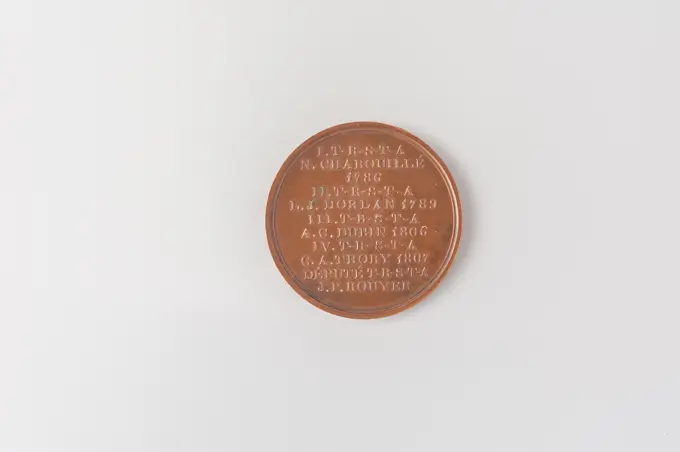
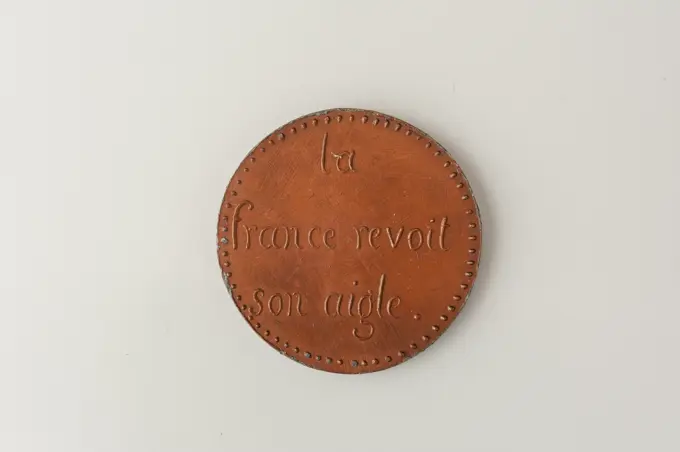
Historical Tokens Collection

A variety of antique tokens, showcasing intricate designs, potentially from a museum collection, highlighting historical significance.
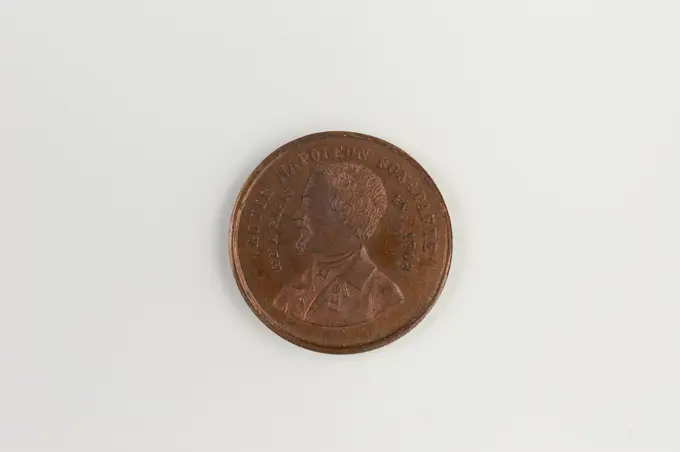
Carnavalet museum, medal collection Right bust to the left of Louis-Napoléon Bonaparte; Reverse on a degree platform, Louis-Napoléon Bonaparte taking oath on the Republic placed on a pedestal, surrounded by flags.
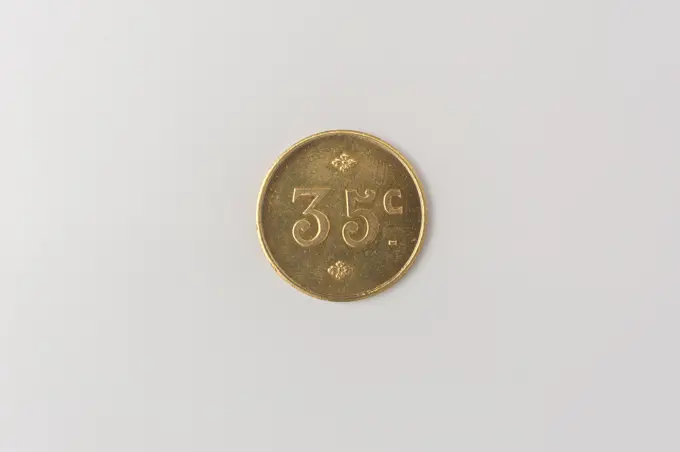
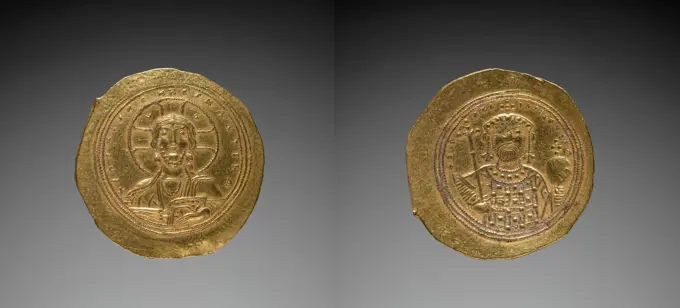
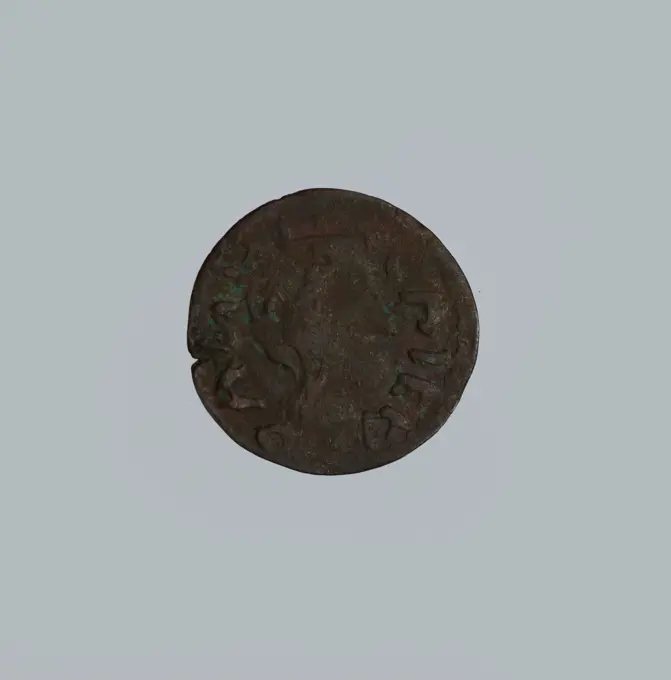
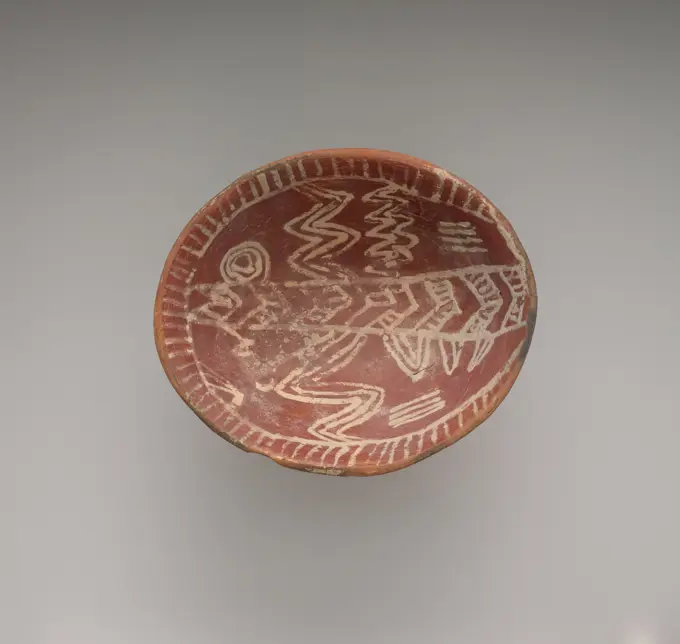
Carnavalet museum, medal collection Right registration on six lines; Reverse registration on five lines.Carnavalet museum, tokens collectionButton, Brass, gold plated, Button showing shaped shield with coat of arms under a crown. On reverse, 'Perfectionne Paris', Component -a is on card H, France, 19th century, costume & accessories, Decorative Arts, ButtonMedal of John C.Fremont.   Subject: John Charles Frémont, American, 1813-1890 Mint: Board of Revenue Artist: F. B. Smith and Hartmann N.Y.Nomisma with Constantine IX Monomachus , 1042-1055. Byzantium, 11th century. Gold; diameter: 2.9 cm (1 1/8 in.). Byzantine Gold Coins The vast number of surviving Byzantine coins attests to the level of trade across the empire. Controlled and supervised by the emperor, the producers of coins took care to represent his authority and reflect his stature. Talented artists were recruited to engrave the dies (molds) used for the striking of coins. Emperors increasingly came to include their heirs and co-emperors on their coinage, as well as other family members or even earlier rulers. Coins were recognized, then as now, as small, portable works of art. With their inscriptions and images, Byzantine coins provide valuable documentation of historical events and a record of the physical appearance of the emperors. The coins shown here include the solidus, the basic gold coin of 24 karats; the tremissis, a gold coin of one-third the weight and value of the solidus; and the nomisma, which in theClose up of wooden butterpatsCarnavalet museum, medal collection Ledru-Rollin's right head on the left followed by a star; Reverse registration on six lines in a oak crown.Dutch Cent, 1824, Willem I (King of the Netherlands), 1824 coin Copper mint. Front: Between the year crowned straight letter W. Rail side: between value designation 1 C. Crowned Rijksweapin shield. Smooth edge. Utrecht copper (metal) striking (metalworking)Mirror with Decoration of Paradise of the Immortals. Culture: Japan. Dimensions: Diam. 4 3/4 in. (12.1 cm). Museum: Metropolitan Museum of Art, New York, USA.Brazil, 1 penny; 2004 Mennica Rio de JaneiroFalse coin, IIthuanian shilIIng, John II Casimir (1649 1668)Carnavalet museum, tokens collectionCarnavalet museum, tokens collectionCarnavalet museum, tokens collectionSilver coin depicting Alexander the Great. Pergamum, Turkey. 306-281 BC. British Museum. London.Medal titled The Ruetli Oath,” (Ruetlischwur In Essen). Artist: Karl Goetz, German, 1875-1950Close-up of silver coinCarnavalet museum, medal collection Ledru-Rollin's right right on the right; Reverse inscription on five lines above a broken chain and faith.False coin, crown shilIIng, John II Casimir (1649 1668)Carnavalet museum, medal collectionPlanets-manager. Cornalet Collection Sites 2013-2016. Numismatic.Mezzo Ducatone of Duke Vincenzo Gonzaga of Mantua from Board ofRevenue. Ruler: Vincenzo I Gonzaga, Duke of Mantua, Italian, 1562-1612 Mint: Board of Revenue Artist: UnknownClose-up of silver coinWhite cross-lined bowl with four legs ca. 3700-3500 B.C. Predynastic, Late Naqada I-Early Naqada II. White cross-lined bowl with four legs. ca. 3700-3500 B.C.. Pottery, paint. Predynastic, Late Naqada I-Early Naqada II. From EgyptCarnavalet museum, tokens collectionRound Plaque 3rd century B.C.-A.D. 2nd century Vicús. Round Plaque 3155601 Farthing from Board of Revenue with George IV, King of GreatBritain.   Subject: George IV, King of Great Britain, British, 1762-1830, ruled 1820-30 Mint: Board of Revenue Artist: UnknownHalfpenny of George III, King of Great Britain fromLondon. Ruler: George III, King of Great Britain, British, 1738-1820, ruled 1760-1820 Mint: London Artist: UnknownTrial for the five decimates to the French regeneration (reverse), An II Augustin Dupr� (1748-1833). Trial for the five decreases in French regeneration (reverse), year II.Carnavalet museum, medal collection Coat of arms adorned with a Phrygian cap and a fleur -de -lis in front of a rooster passing to the left; Reverse registration on three lines.Carnavalet Museum, Medals Collection