Historical Wooden Furniture

Elegant wooden furniture pieces, including chairs and tables, showcasing detailed craftsmanship from the 17th to 18th centuries.

Arm chair of walnut with flared parts. Arming stars with half female figures. Covered with nailed velvet., Anonymous, 1650 Covered armchair of walnut, resting on flared legs with houses and connected by a flung H-shaped cross and at the front by a flared upper sport placed between houses. The armrests and the backs' backs are also thrown. The armrest stars consist of half -displayed female figures on a round pedestal, which is placed on a square base. The upholstery is nailed. Northern Netherlands wood (plant material). walnut (hardwood). velvet (fabric weave) Covered armchair of walnut, resting on flared legs with houses and connected by a flung H-shaped cross and at the front by a flared upper sport placed between houses. The armrests and the backs' backs are also thrown. The armrest stars consist of half -displayed female figures on a round pedestal, which is placed on a square base. The upholstery is nailed. Northern Netherlands wood (plant material). walnut (hardwood). velvet (fab
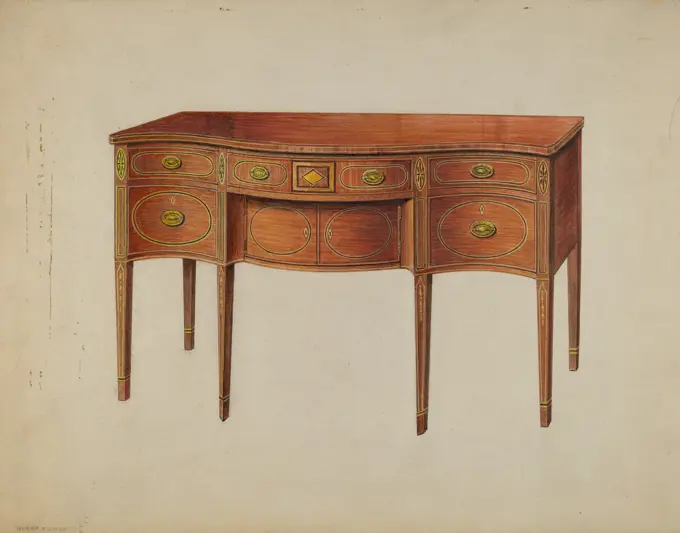
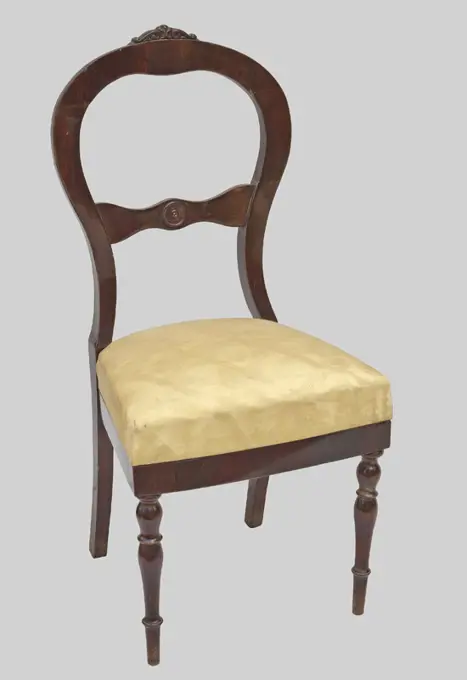
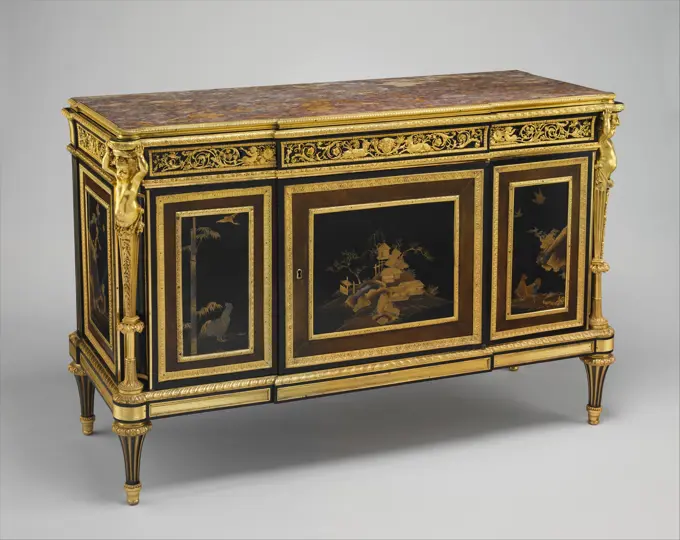
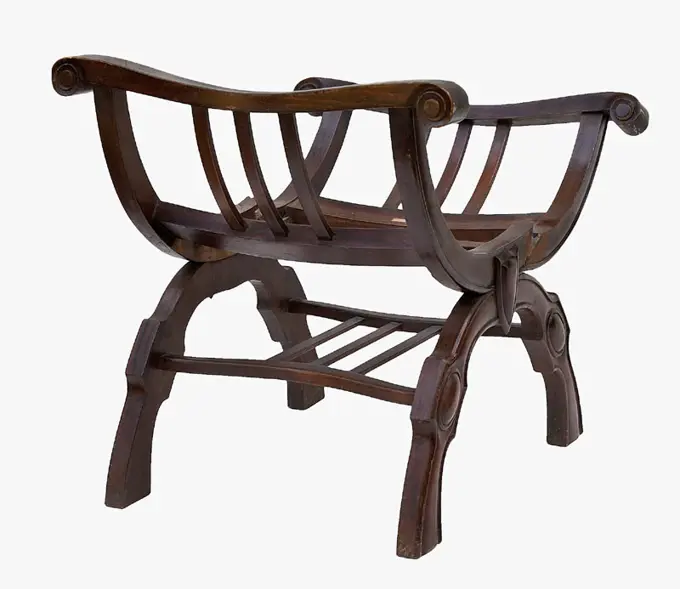
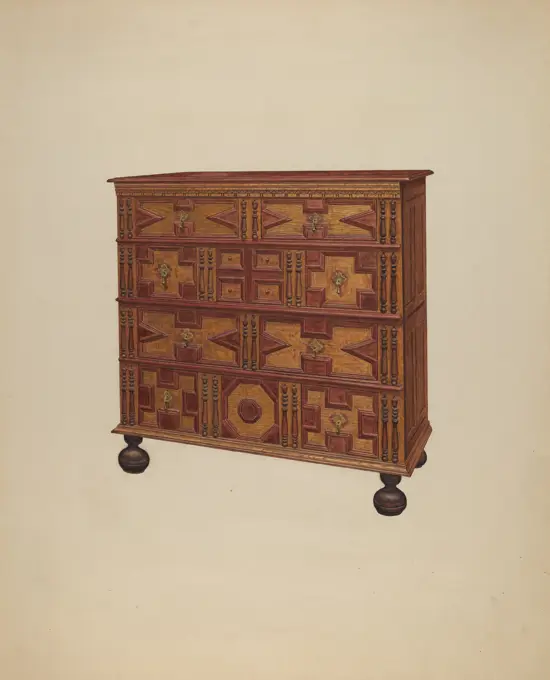
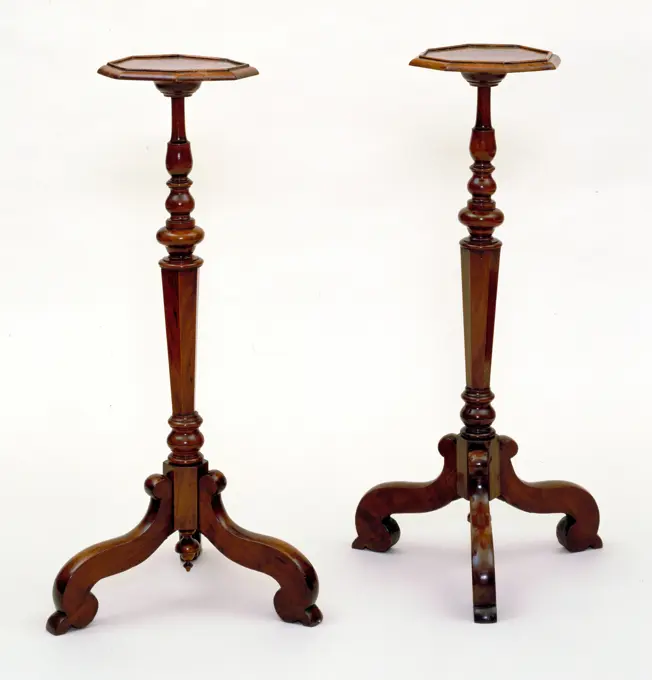
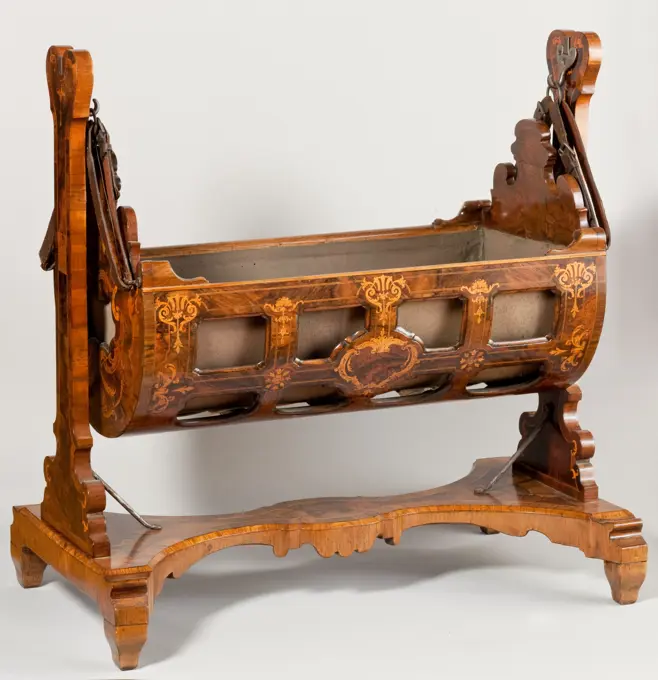
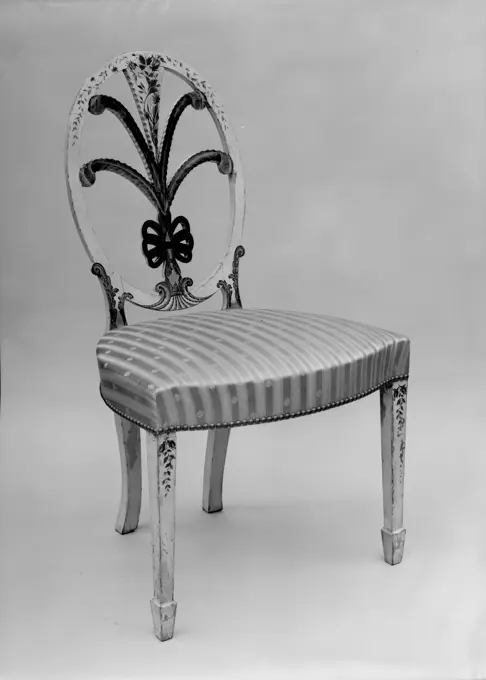
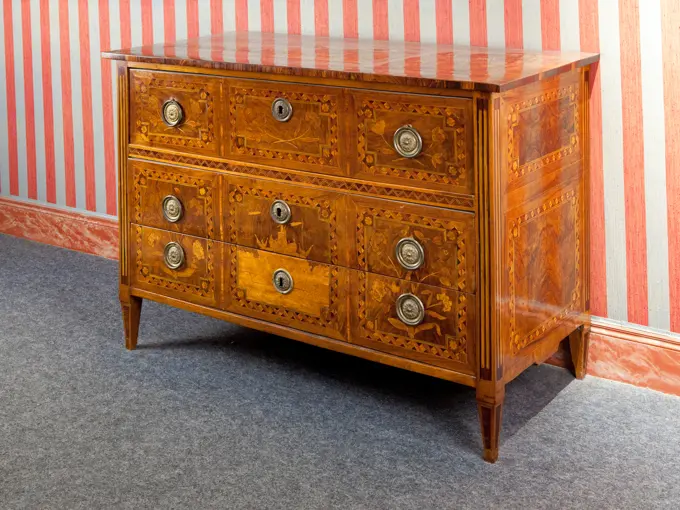
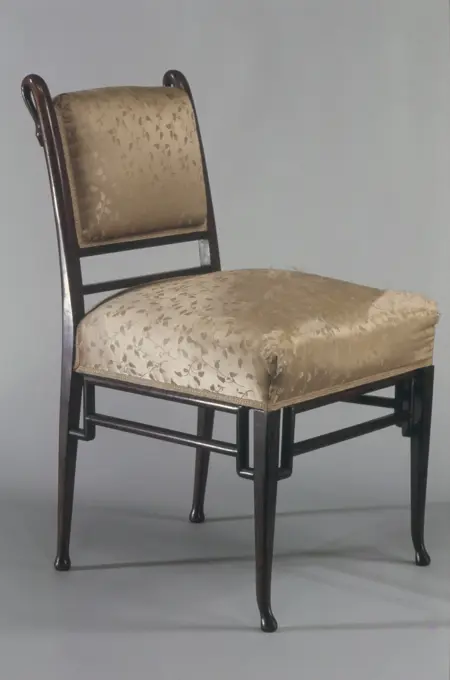
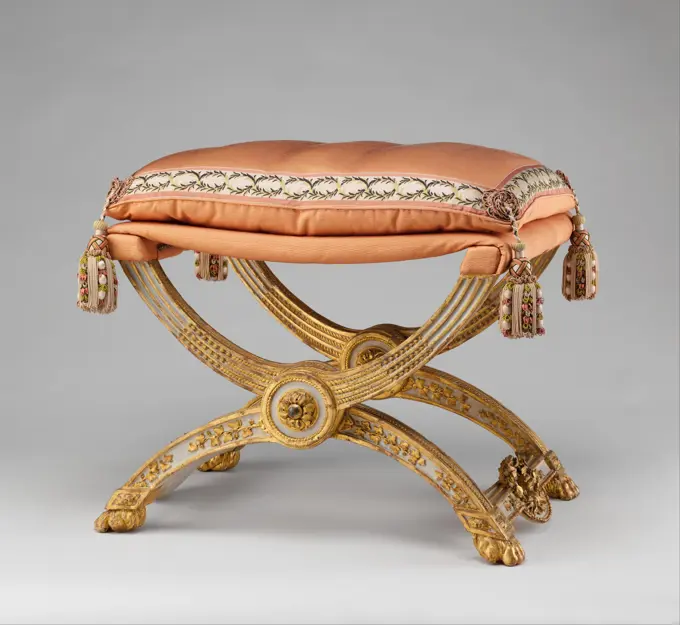
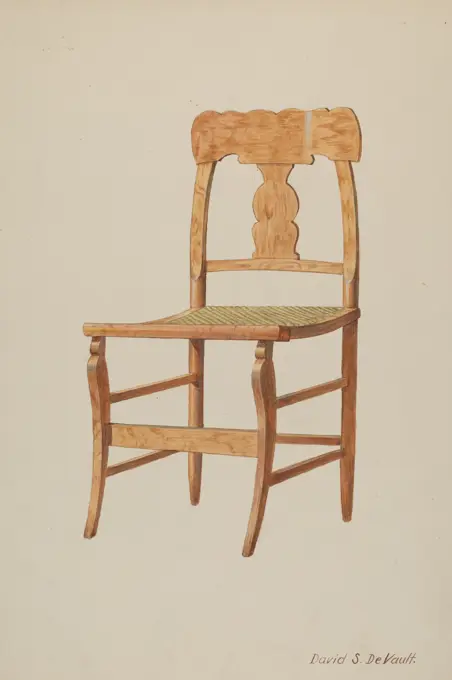
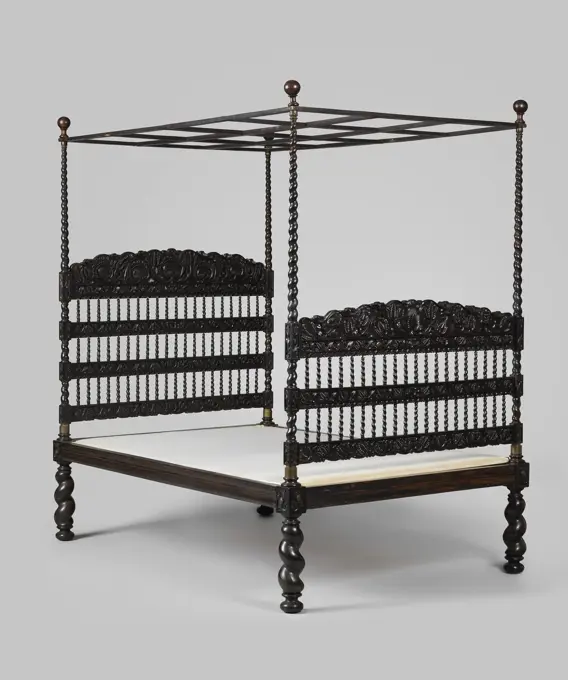
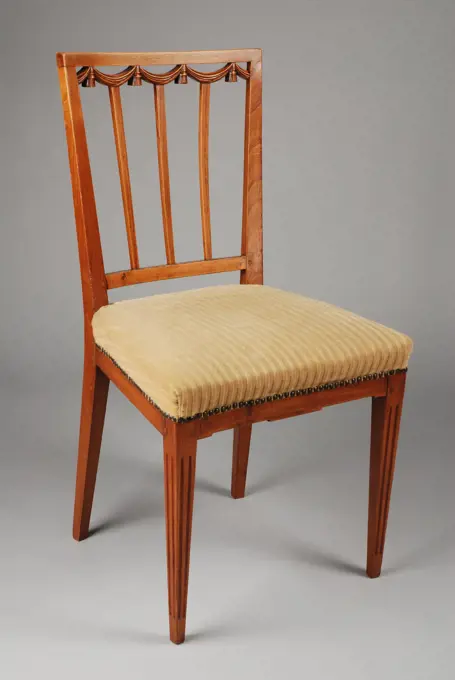
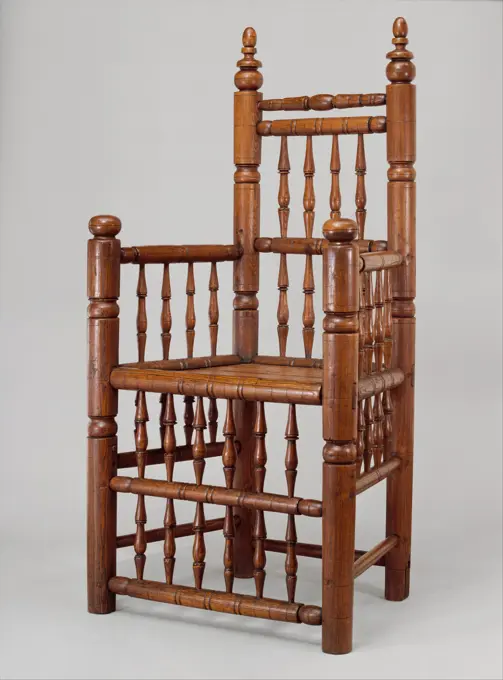
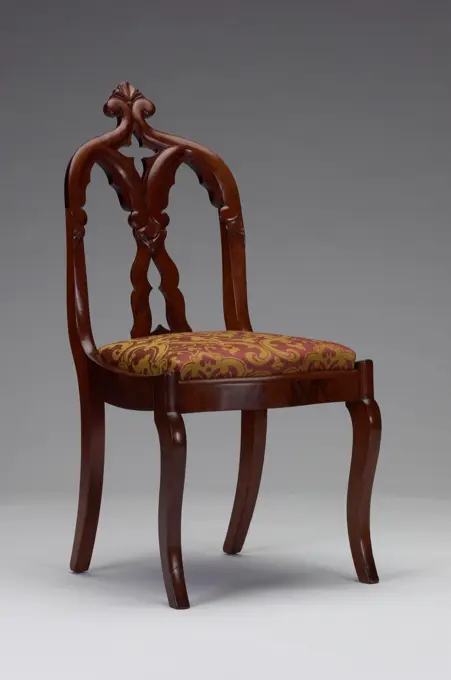
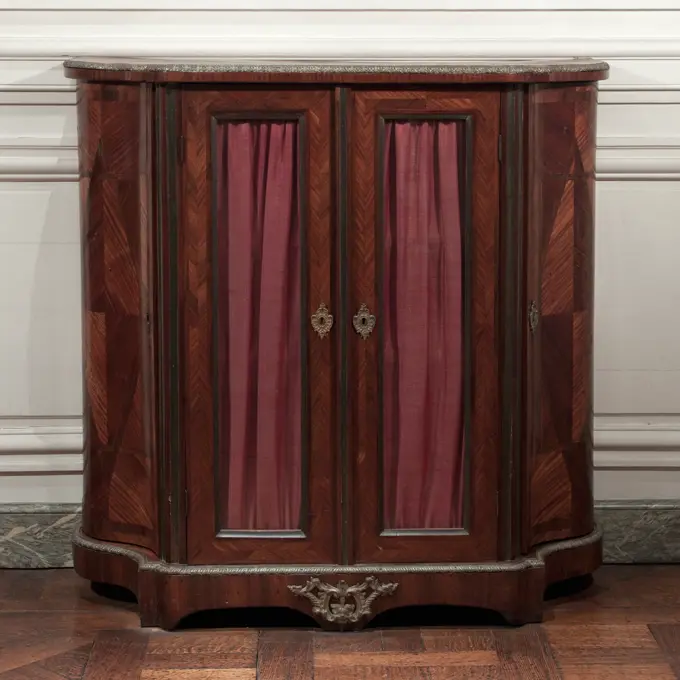
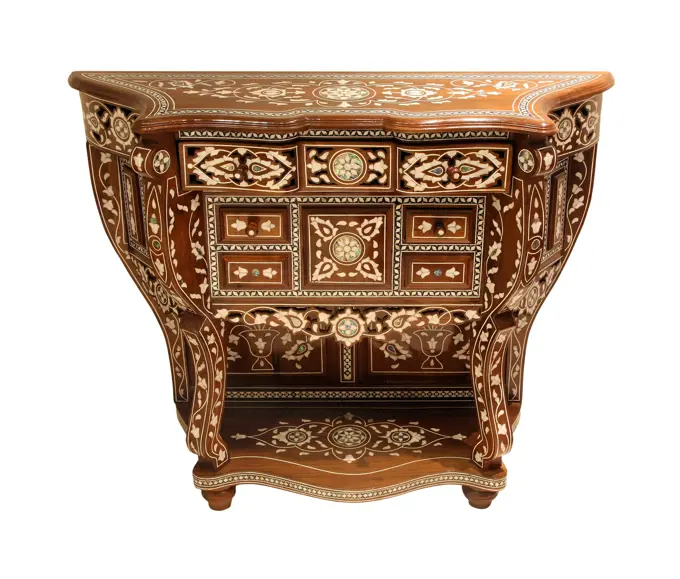
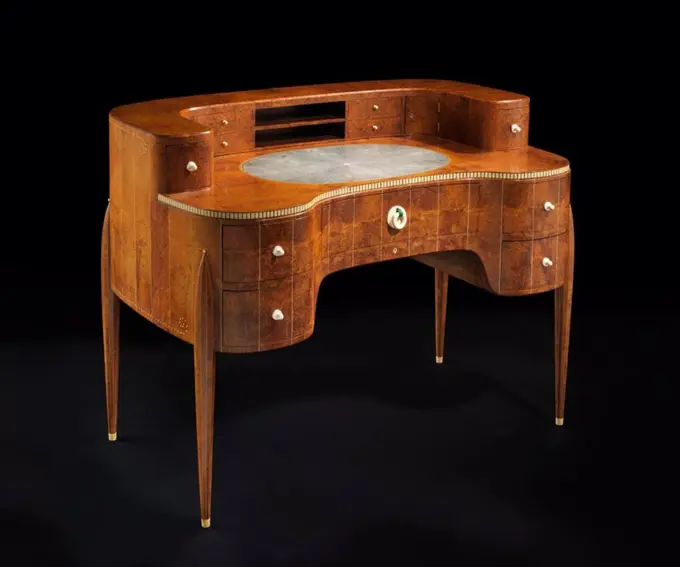
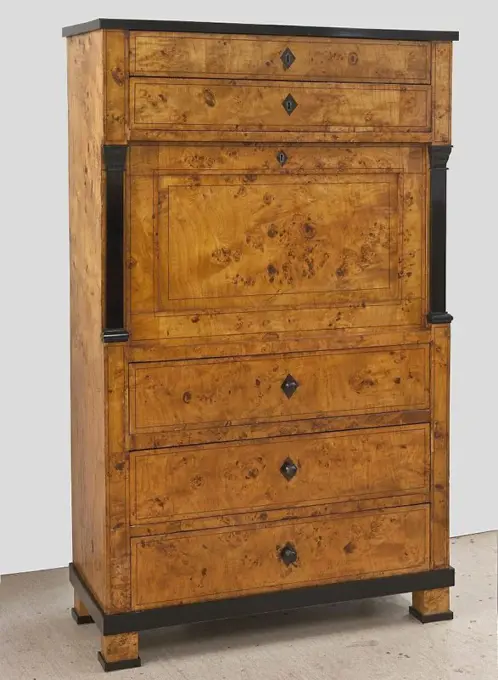
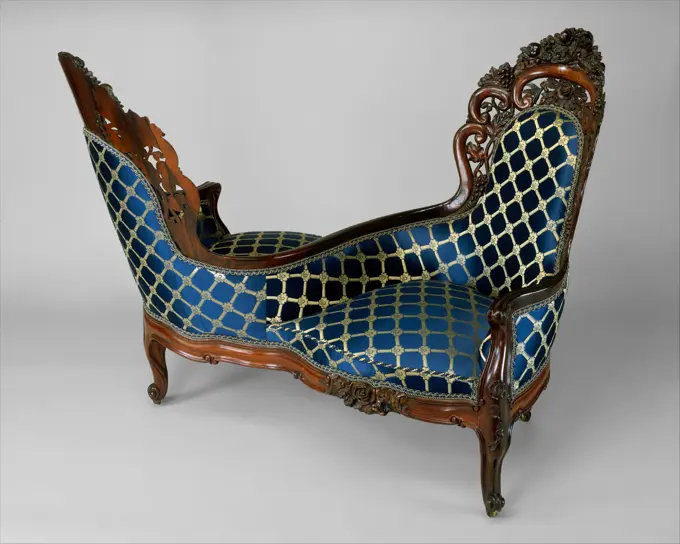
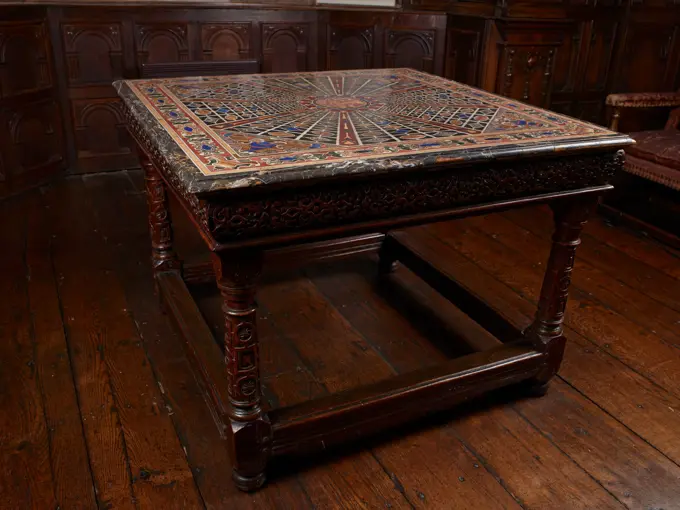
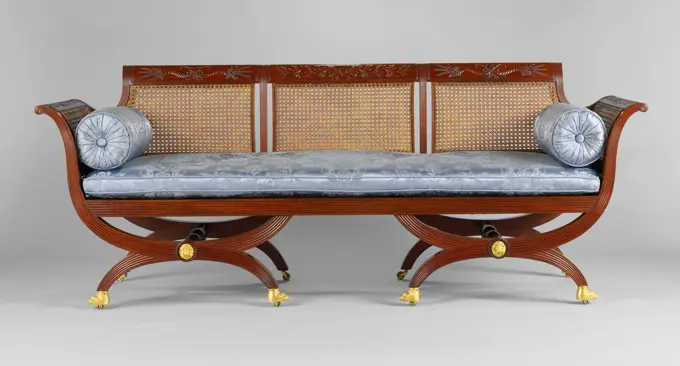
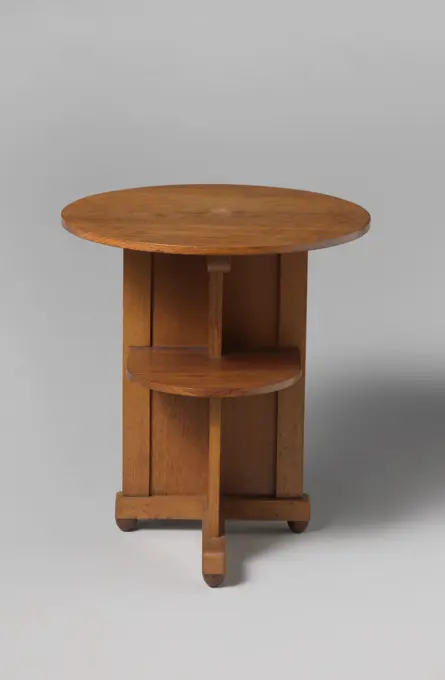
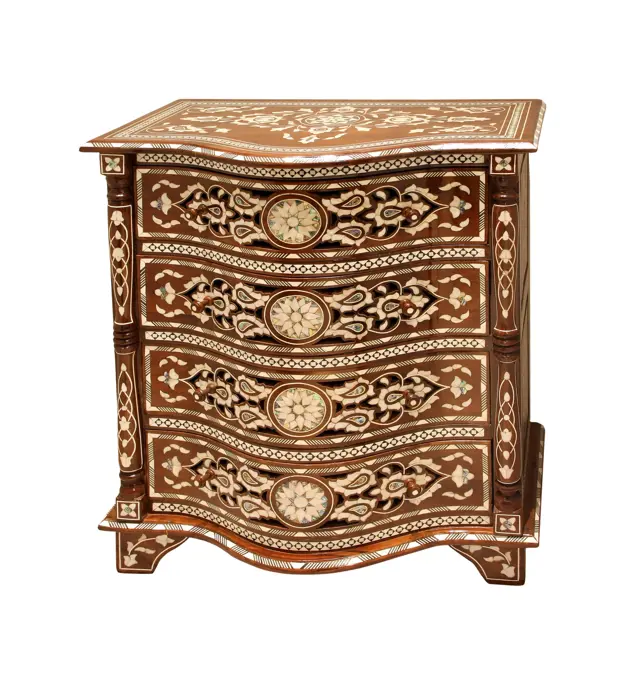
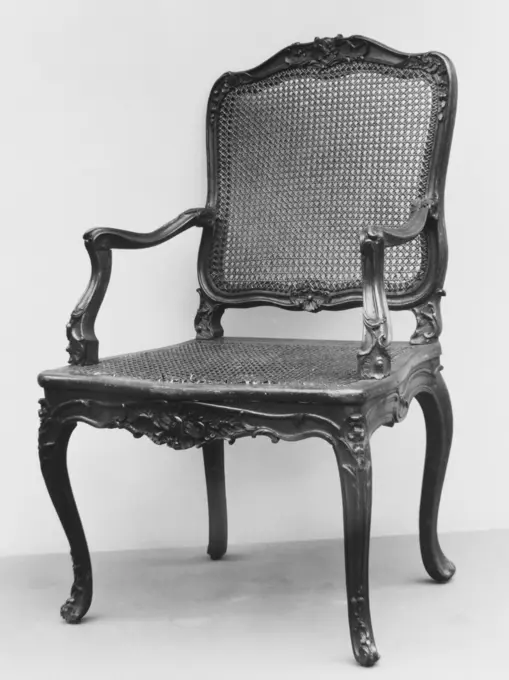
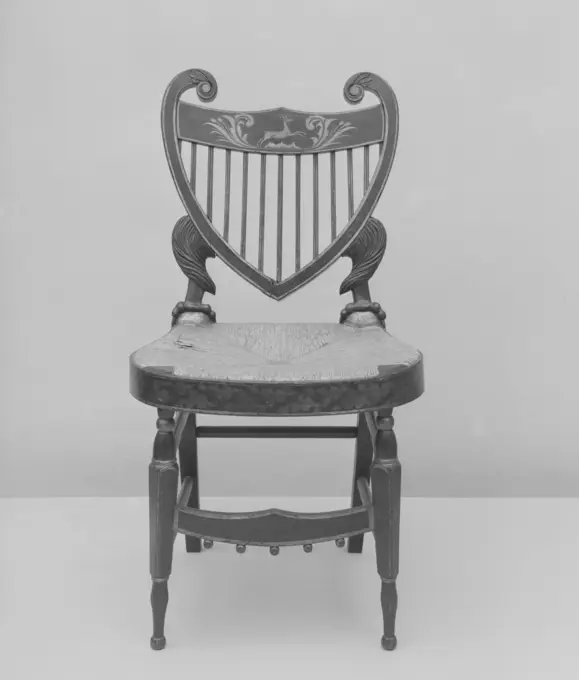
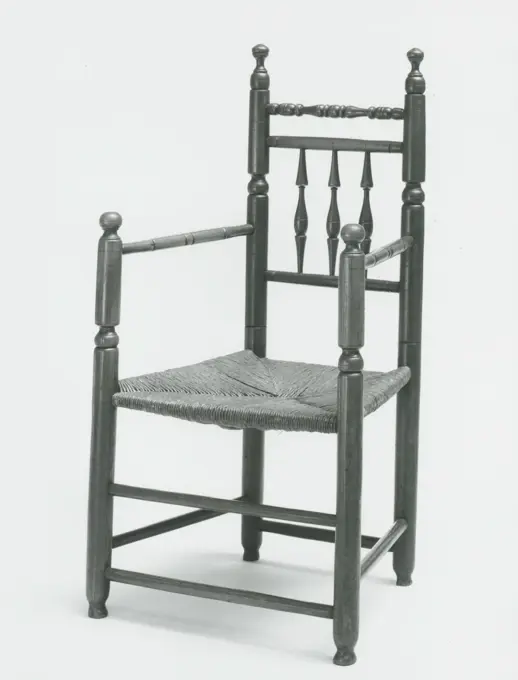
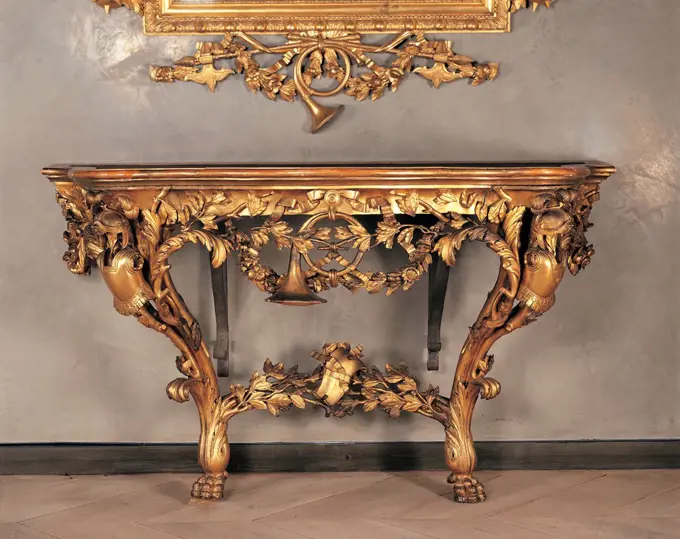
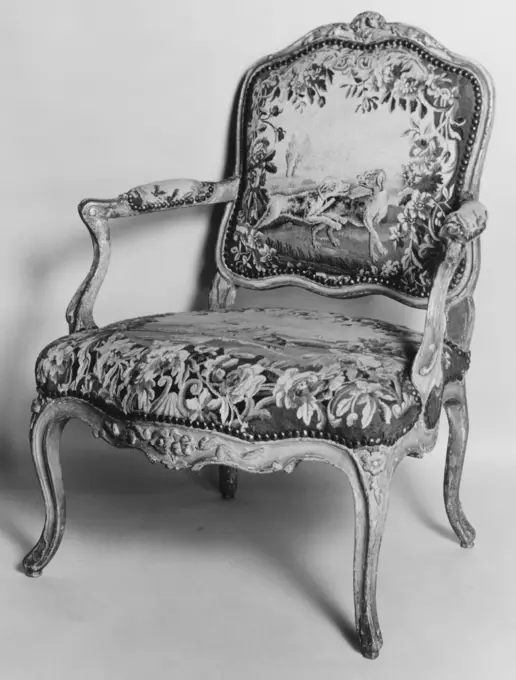
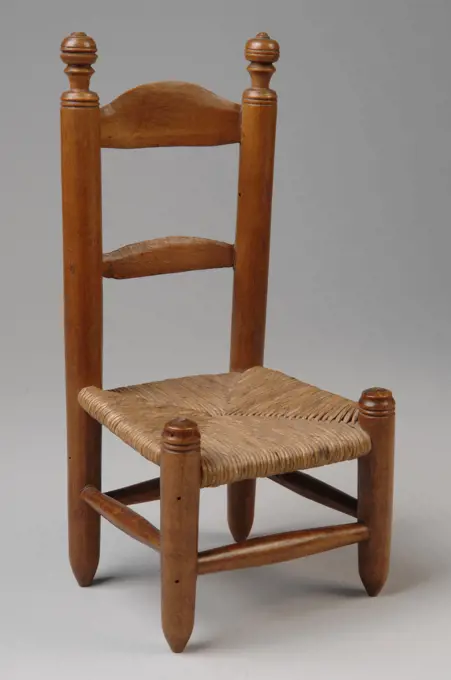
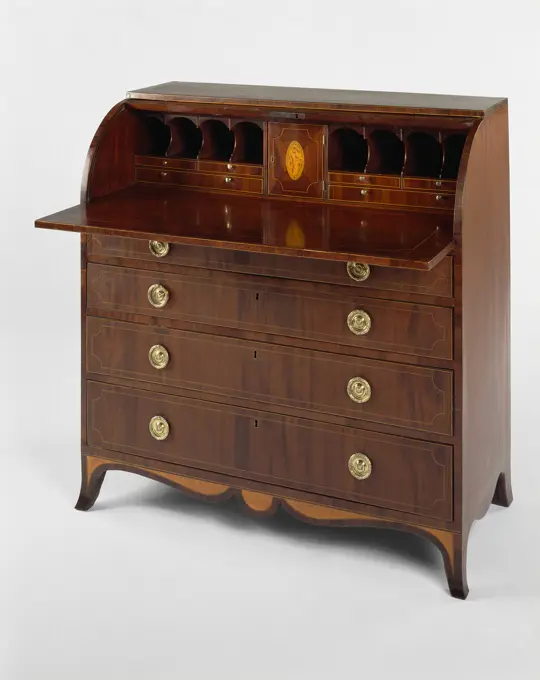
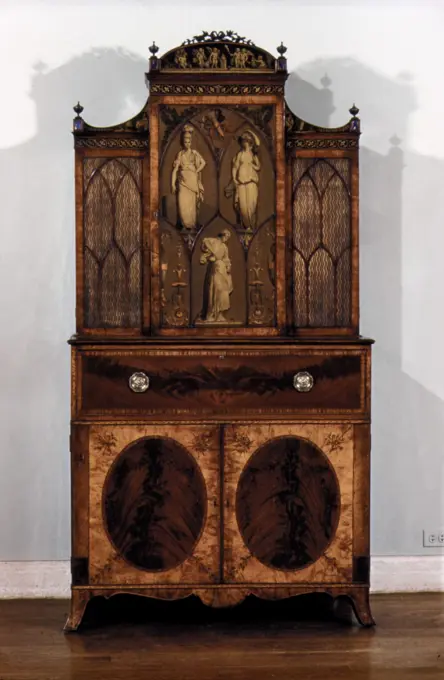
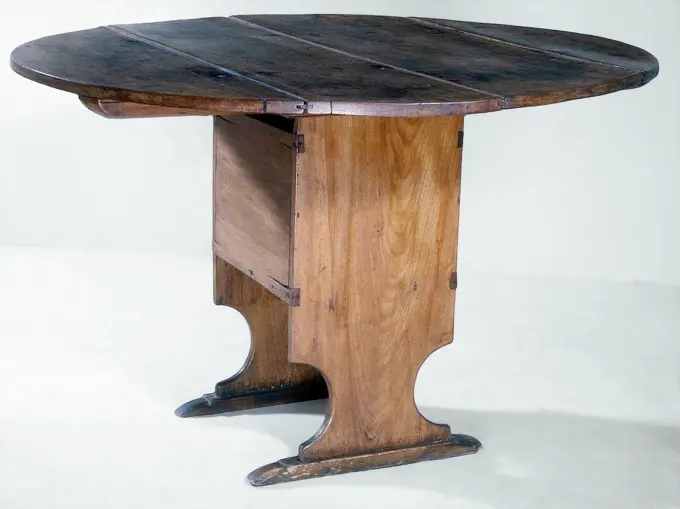
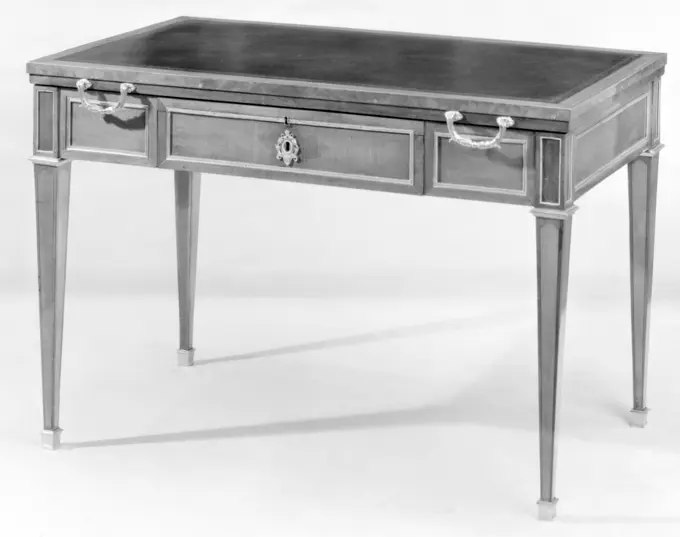
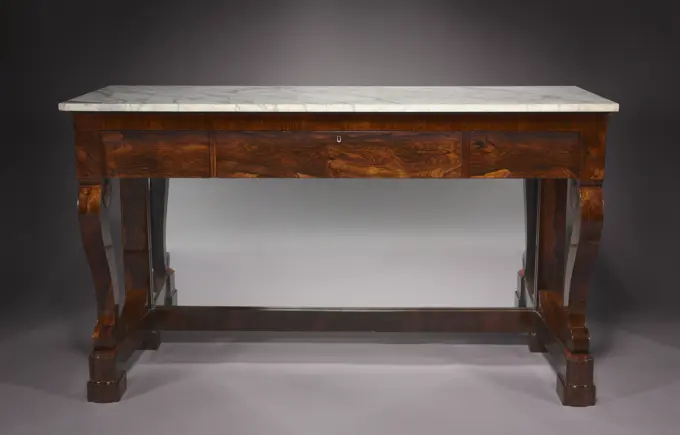
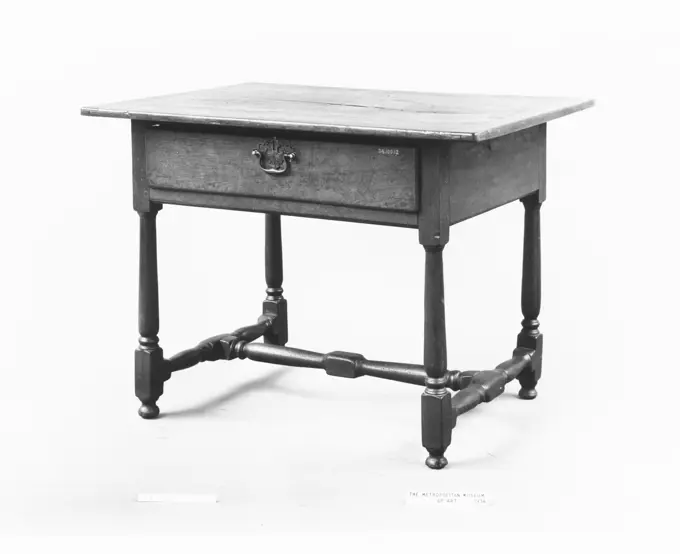
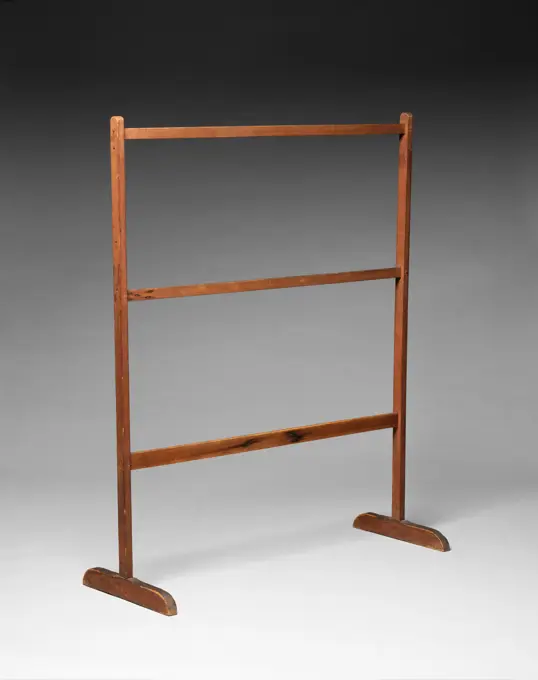
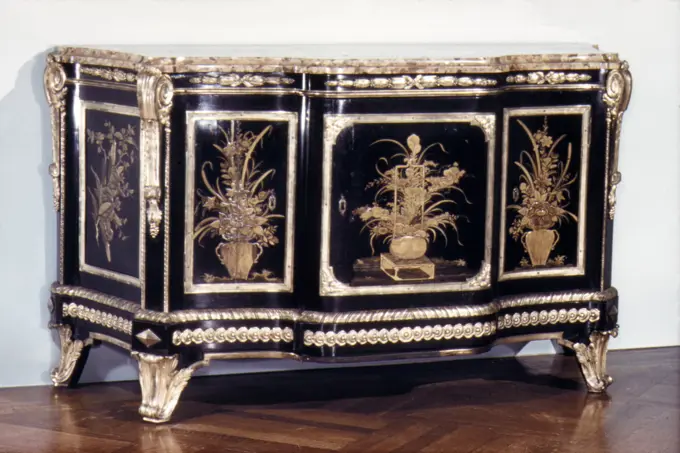
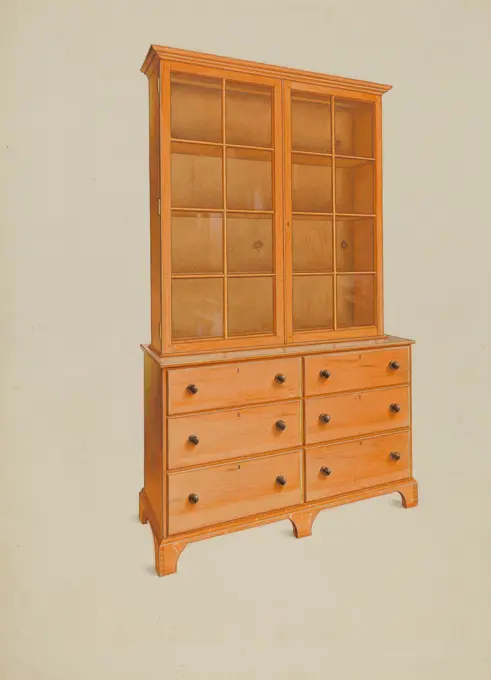
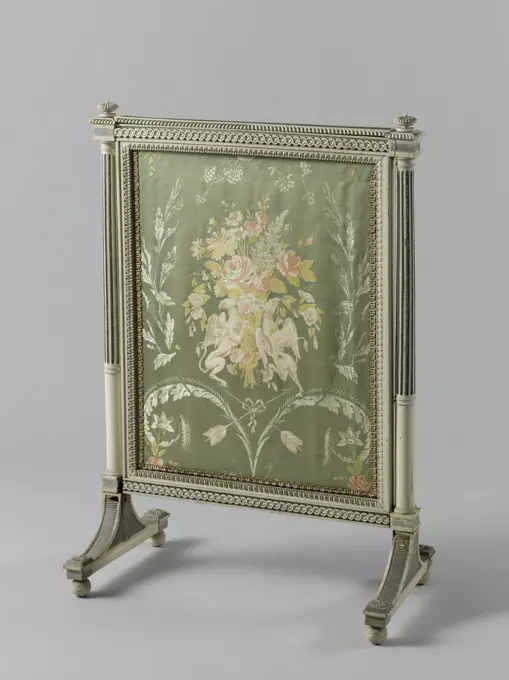
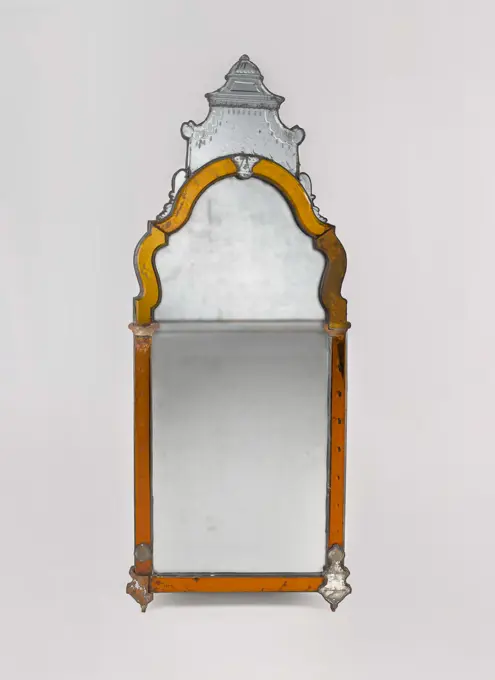
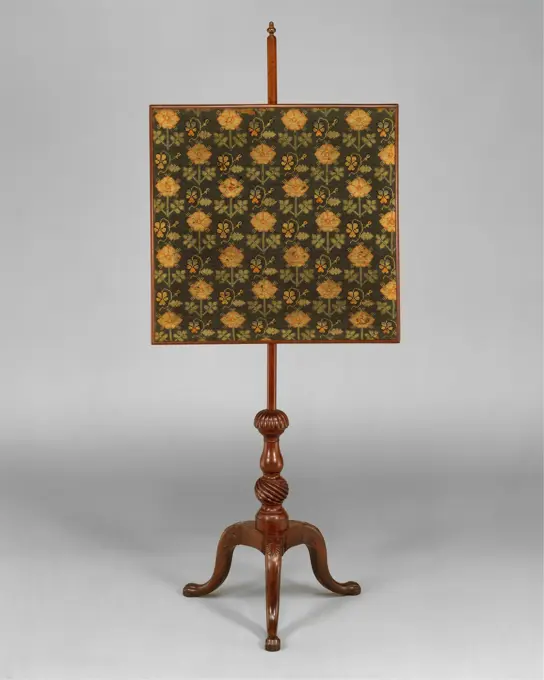
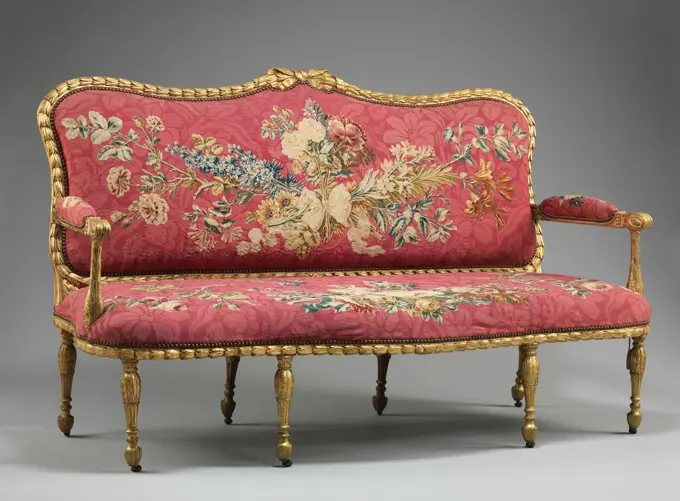
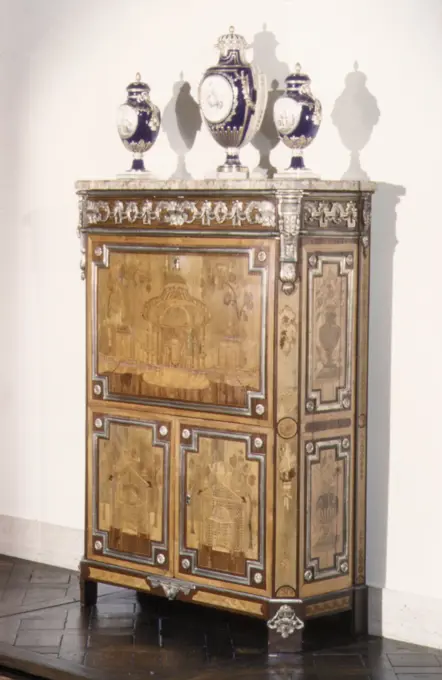
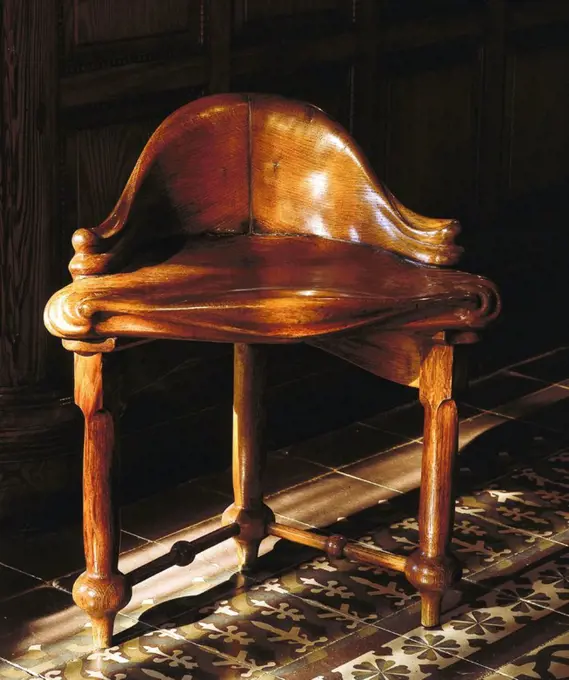
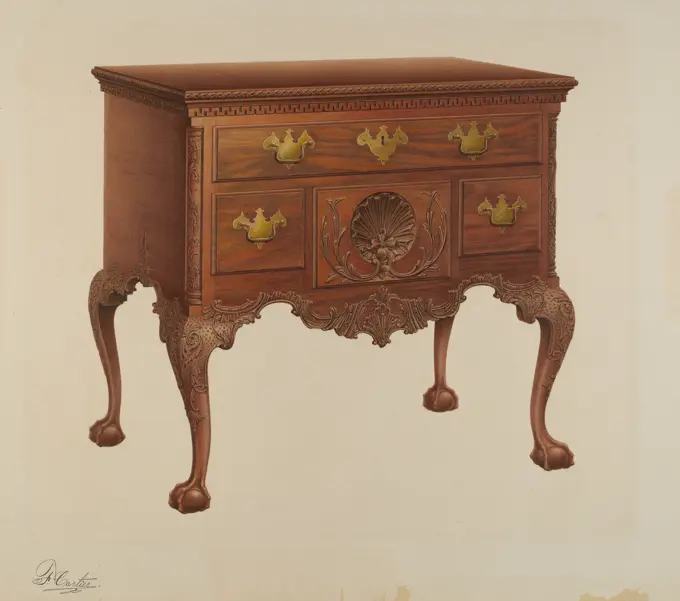
Ferdinand Cartier, Lowboy, 1940 LowboyCommode (commode à vantaux) (part of a set) ca. 1790 Adam Weisweiler French On October 7, 1790, many European royals and aristocrats were gathered in Frankfurt to attend the coronation of Leopold II as Holy Roman Emperor. Ferdinand IV (1751-1825), king of Naples, was among those present for this solemn event. Married to the new emperors sister, Maria Carolina, Ferdinand was the brother-rin-law of both Leopold and Marie-Antoinette. At this time of social and political instability caused by the French Revolution, the Parisian marchand-mercier Dominique Daguerre and his business partner, Martin-Eloi Lignereux, traveled to Frankfurt as well. They were looking for new clients and lucrative commissions. This secretary (or its pair) and a matching commode were among the luxury goods they brought along with them and offered for sale. Mounted with Japanese lacquer and exquisite gilt bronze, both pieces were purchased by the king of Naples, who ordered an additional secretary and a matching rolChair. unknown, authorSide table. Culture: French, Paris. Dimensions: Overall: 32 3/4 × 49 1/2 × 15 in. (83.2 × 125.7 × 38.1 cm). Maker: Georges Jacob (French, Cheny 1739-1814 Paris). Date: ca. 1774-92. Museum: Metropolitan Museum of Art, New York, USA.Children's seat;  3. W. 18th century; around 1870 (upholstery) (1750-00-00-1880-00-00);Foldable reader of Notenhout, Anonymous, 1500 - 1600 Foldable reader of walnut. The sloring legs are rectangular of cross -section, conically supposed to the bottom and connected to the intersections by a cross rule. At the top, the legs are also connected by cross rules, which are decorated with a stabbed attachment, formed by a leaf motif flanked by bonding volutes. At the top the rules are connected by a sheet of leather. Italy wood (plant material). walnut (hardwood). gilding (material). leather gilding Foldable reader of walnut. The sloring legs are rectangular of cross -section, conically supposed to the bottom and connected to the intersections by a cross rule. At the top, the legs are also connected by cross rules, which are decorated with a stabbed attachment, formed by a leaf motif flanked by bonding volutes. At the top the rules are connected by a sheet of leather. Italy wood (plant material). walnut (hardwood). gilding (material). leather gildingFrancis Borelli, Chest of Drawers, c 1938 Chest of DrawersCandlestand, one of a pair, c. 1700, 32 3/4 x 32 x 28in. (83.2 x 81.3 x 71.1cm), Walnut veneered, England, 17th-18th centuryCradleTea-table, by Piedmont Work, 1820 - 1830, 19th Century, egno impiallacciato di noce, applicazioni di metallo dorato, pi. Italy, Piemonte, Aglie, Turin, Castle. Whole artwork. Tea-table table decoration furniture furnishings interior: fittings design decoration gilt: gilding metal applications.Cherry-wood renaissance chair, chair seating furniture furniture interior design wood cherry wood leather metal, Twisted legs and double sports seat and backrest with leather covered lion heads on the renaissance stylesSide Chair 1795-1800 American This chair is thought to be from a set of twenty-four oval-back chairs that the Salem merchant Elias Hasket Derby (1739-1799) ordered from Philadelphia in 1796. The elliptical shape of the chair back is derived from Neoclassical London design as interpreted in George Hepplewhite's "The Cabinet-Maker and Upholsterer's Guide" (1788). In this instance the ostrich plumes and foliate designs are painted directly on a white ground rather than carved or made from applied composition ornament.. Side Chair. American. 1795-1800. Maple, ash. Made in Philadelphia, Pennsylvania, United StatesCabinet with baseMahoniehout fire screen, rectangular, on triangular feet on which winged half lions., Anonymous, c. 1800 - c. 1825 Mahoniehout fire screen. The rectangular window rests on triangular feet, on which winged half lions. On the sides, the rules and on all sides of the styles, gilded bronze decorations have been installed, including various animals, myth animals, palmets, rosettes, women's and mythological heads et al. On top is a round medallion with monogram, flanked by a lying sphinx; Pomegranates on the corners. The upholstery shows a floral wreath and palmetrands, passions and cord work. France wood (plant material). mahogany (wood). bronze (metal). velvet (fabric weave). wool. silk gilding Mahoniehout fire screen. The rectangular window rests on triangular feet, on which winged half lions. On the sides, the rules and on all sides of the styles, gilded bronze decorations have been installed, including various animals, myth animals, palmets, rosettes, women's and mythological heads et aChair Anonymous. Convenient secretary. Building: conifer and walnut; Placing: walnut, walnut ronceux, rosewood, violet wood, holly, tinted holly, rosewood, maple; Golden copper. 1792. Paris, Carnavalet museum. Mobilier, 18th 18th 18th 18th 18th 18th century, furnitureBrass design fitting wooden stand hanging on wall, Jodhpur, Rajasthan, India Copyright: xSafatxAli/DinodiaxPhotoxCard Table 1865-75 American. Card Table. American. 1865-75. Tulip, satinwood, ebony. Made in New York, New York, United StatesChair ca. 1880 Attributed to Herter Brothers. Chair 1672Writing Table (bureau plat).Folding stool (pliant) (one of a pair) 1786 Jean-Baptiste-Claude Sené On May 1, 1786, Jean Hauré (active 1771-after 1796) received a commission for a set of furniture comprising forty pliants or folding stools, twelve regular stools, or tabourets, a folding screen, and a fire screen for Marie Antoinette's Salon des Jeux at Compiégne. Twenty-four of the X-shaped folding stools, all the tabourets, and both screens were then sent instead to the queen's gaming room at Fontainebleau. On September 3 of the same year Hauré was asked to supply an additional twenty-four pliants, twelve tabourets, a chamber screen, and a fire screen for Compiegne. Two of the pliants are now in the Museum's collection, a gift of the Wrightsmans, but whether they were part of the first or the second order and whether they remained at Compiegne or were sent to Fontainebleau is not known.As was the case with the secretary, this large set of furniture was the fruit of a collaborative effort, and the record of the comDavid S De Vault, Maple Side Chair, c 1941 Maple Side ChairChippendale Mahogany Side Chair. Dated: 1936. Dimensions: overall: 29.8 x 22.7 cm (11 3/4 x 8 15/16 in.) Original IAD Object: none given. Medium: watercolor, gouache, and graphite on paperboard. Museum: National Gallery of Art, Washington DC. Author: ARTHUR JOHNSON.chest of drawers, wood, Sheraton satinwood bow front chest of drawers, three deep drawers., England, 18th century, furniture, Decorative Arts, chest of drawersCrib of ebony with cotton sky. Meat styles and lotus leaf decoration on sills and houses. Crib of ebony with cotton sky. The crib is ralanating on four, rejuvenating legs that continue in high styles awarded by bulbs, to which a framework is attached to the cotton sky. At the headboard, four peelets were made between these styles, ending in houses and separated by swatched colonets; There are three at the foot end. The wide upper hearts have a scalloped edge and the falls a scalloped lower edge. Sills and houses are decorated with lotus drinks.Library bookcase. unknown, creatorEgg-wood Louis Seize chair, chair seating furniture furniture interior design wood elm wood velor, Three bars in the back above garlands with tassels light green striped velvet upholstery Louis XVI Louis XVI Louis SeizeArmchair with overhoeks placed S-shaped legs, modern upholstery in diamond pattern. Armchair of walnut with modern upholstery in a diamond pattern, filled with a flower. The overhoeks placed S-shaped legs, the subordere, backwards placed S-shaped armrests and the upper shell of the scalloped back window are decorated with carving. The armrests wear pads. The coating is deposited with a band.Armchair. Bugatti, Carlo (1856-1940), designerSpindle-back armchair 1640-80 American The rarest and grandest of the early turned chairs are those with rows of spindles below the seat as well as above it. Although its boxlike form may look simple at first glance, this chair is a complex composition with subtle variations in the shaping of the rungs and in the spacing of its horizontal and vertical members.. Spindle-back armchair. American. 1640-80. Ash. Possibly made in Boston, Massachusetts, United States; Possibly made in Charlestown, Massachusetts, United StatesCommode 1770-1780 France. Oak, mahogany, kingwood, purple heart, and unidentified exotic woods, gilt bronze, and marble . Jean Henri Riesener (Cabinetmaker)Bench, early 17th century, 21 1/2 x 74 1/2 x 10 1/2 in. (54.61 x 189.23 x 26.67 cm), Oak, England, 17th centurySideChairDecorated bronze table, with feline paws, from House of F. Rufus, PompeiSupported support cabinet, opening with two glazed leaves in the center and two curved and full doors on the sides ". Satin, chiseled and gilded bronze. 18th century. Paris, Carnavalet museum. 72593-17 Bonze, double leaves, brass gorge, marquetry, furniture, satin plating, door, vitre, 18th century, furnitureKang Table, 17th century, 6 15/16 x 30 1/2 x 16 5/8in. (17.6 x 77.5 x 42.2cm), Huanghuali hardwood, China, 17th centuryHarry Eisman, Sideboard, 1935 1942 SideboardFour chairs, anonymous, c. 1780 - c. 1790 Chair of elm wood (series of six pieces: A to F). With the exception of the back completely decorated with marquetery work in satin, palm and ebony. Upholstery modern. Netherlands elm (wood). satinwood (wood). boxwood. ebony (wood). maple (wood). purpleheart (wood). rosewood (wood). textile materials Chair of elm wood (series of six pieces: A to F). With the exception of the back completely decorated with marquetery work in satin, palm and ebony. Upholstery modern. Netherlands elm (wood). satinwood (wood). boxwood. ebony (wood). maple (wood). purpleheart (wood). rosewood (wood). textile materialsStool. unknown, authorFurniture around the turn of the century 1900, desk with inlaid walnut wood (1911), Walnut inlaid writing-table (1911).Antique dresser Antique Arabic style dresser isolated with clipping path included Copyright: xZoonar.com/Baloncicix 7120147Chair with open backrest with middle style, the seat with green velvet, anonymous, c. 1750 Chair of mahogany, round open backrests with middle style; Straight pre-line, backward hind legs and overhoeks placed S-shaped front legs; Seat covered with green velvet with filling on board paper. Amsterdam (possibly) mahogany (wood). velvet (fabric weave) Chair of mahogany, round open backrests with middle style; Straight pre-line, backward hind legs and overhoeks placed S-shaped front legs; Seat covered with green velvet with filling on board paper. Amsterdam (possibly) mahogany (wood). velvet (fabric weave)Wardrobe from the Abbaye de Stavelot"David-Weill" Desk. Designer: Émile-Jacques Ruhlmann (French, Paris 1879-1933 Paris). Dimensions: 37 1/2 x 47 1/2 x 29 1/2in. (95.3 x 120.7 x 74.9cm). Date: ca. 1918-19.This desk is based on French and English kidney-shaped desks of the late eighteenth century known as "rognon" (kidney) desks; the link to historical precedent would have been obvious-- even desirable--to the client who commissioned it: David David-Weill (1871-1952), an Americanborn French financier who worked at Lazard Frères, his family's bank. A serious art collector, he bequeathed more than two thousand works to French and American museums. His greatest interest lay in the arts of eighteenth-century France, with which he decorated his home. Accordingly, Ruhlmann designed the desk specifically to harmonize with these surroundings, and David-Weill used a Louis XVI armchair with it. The aesthetic elegance, material sumptuousness, and high-quality craftsmanship of Ruhlmann's furniture hold their own against eighteenth-cCigar Cabinet 1862-1872 Paris. This cabinet is the work of three artists a designer, a cabinetmaker and retailer, and a sculptor. The composition balances monumental architectural forms with lively, playful bronzes. Designed as a humidor, it retains its interior drawers for cigars.The cabinetís sinister creatures were designed by Emmanuel FrÈmiet, one of the most sensitive and accomplished animal sculptors of the 19th century. He was a professor of zoological drawing in Paris and excelled at creating lifelike imaginary beasts such as the winged frog on this cabinet. Gothic in spirit, it reflects the fascination with Europeís medieval past that informed the work of many 19th-century French artists.. Oak, cedar and walnut veneers, patinated bronze, and caning . Charles-Guillaume DiehlArmchair (bergère) (part of a set). Culture: French, Paris. Dimensions: Overall: 39 × 27 1/4 × 25 1/4 in. (99.1 × 69.2 × 64.1 cm). Maker: Jean-Baptiste-Claude Sené (1748-1803); painted and gilded by Louis-François Chatard (ca. 1749-1819). Date: ca. 1788.Made for Marie-Antoinette's dressing room at the château de Saint Cloud. The queen's initials are carved on the top rail. Museum: Metropolitan Museum of Art, New York, USA.Square piano, Gabriel Buntebart & Sievers, 1788 Table piano, marked: Gabriel Buntebart et Sievers London Fecerunt 1788 Princesstreet Hannover's Quare. Size from counter -g to three -row f. Two registers on the left. London wood (plant material) Table piano, marked: Gabriel Buntebart et Sievers London Fecerunt 1788 Princesstreet Hannover's Quare. Size from counter -g to three -row f. Two registers on the left. London wood (plant material)Secretaire. unknown, creatorTête-à-tête 1850-60 Attributed to John Henry Belter German J. H. Belter has been described as the most original of America's mid-nineteenth-century cabinetmakers. One of the many German-born craftsmen working in New York, he was in his time and remains today renowned for his laminated and carved Rococo Revival rosewood parlor and bedroom suites. Although the process of lamination was not new, Belter patented a method of steaming several layers of wood glued together in "cawls," or molds, resulting in furniture that was thin, strong, and curved in two planes and could subsequently be carved to a degree previously unimagined. The graceful, sinuous shape of this tête-à-tête illustrates the importance of lamination and epitomizes the Rococo Revival style. Popular in America between 1845 and 1865, furniture in this revival style was inspired by eighteenth-century French sources and is characterized by curved, cabriole legs, strong C- and S-curves and scrolls, and the extravagant use of carv. Suitcase of wood with bombed lid. Painted with gold-plated, partially colored arabes. On the lid the letters Mo, below that a dolphin and there again under the letters VP.Armchair Jean Baptiste Gourdin (1723-1781), Jean Baptiste Gourdin, c. 1760 Arm chair, part of an ameublement, made of white with gold painted beech wood and covered on a loose window with tapisserie, decorated with bouquets, tied together by ribbons with bows, on red damaged soil. The front legs, by-line, upper sill and styles of the back window wear stabbed leaf and floral motifs. The armrests with cushions end in volutes; The S-shaped legs covered over-corner ends in an Acanthus leaf. Marked: I. Gourdin. See also: BK-16655-B/g. Paris wood (plant material). beech (wood). gilding (material). ketting: wool. inslag: wool. inslag: silk tapestry / gilding Arm chair, part of an ameublement, made of white with gold painted beech wood and covered on a loose window with tapisserie, decorated with bouquets, tied together by ribbons with bows, on red damaged soil. The front legs, by-line, upper sill and styles of the back window wear stabbed leaf and floral motifs. The armrests with cushions endTable, 1560-1600.  Chestnut-framed table with top of cut and polished inlaid polychrome marble and hardstones, including lapis lazuli, agate and chalcedony using technique known as pietra duraWall table. Table of walnut with four overhoeks. S-shaped legs places, ending in volutes. The legs and rules are decorated with carving of acanthus leaf, palm branch, festans and lobe ornaments. The front line, among other things, has an eagle with spread wings and headers used to the left.Armchair Used by William HowardTaftSofa ca. 1810-20 Attributed to Duncan Phyfe Scottish This sofa is part of a large suite of seating furniture in the Museum's collection that includes a pair of armchairs, ten side chairs, and two footstools once owned by Thomas Cornell Pearsall, a wealthy New York merchant and shipowner. Other chairs from the set are owned by the Museum of the City of New York. The attribution to Phyfe is based on the set's traditional history of ownership which is recorded in an inscription stamped on the inside of the seat rails on the sofa and several of the chairs. The skillful execution of the details also points to Phyfe. The curule-base design for the suite derives from Greco-Roman seating forms illustrated and described in the 1808 supplement to the London "Chairmakers' and Carvers' Book of Prices.". Sofa. American. ca. 1810-20. Mahogany, tulip poplar, cane, gilded brass. Made in New York, New York, United States. Folding chair from beech wood, with five slats in the back and nine in the seat. The upper solid of the back shows a simple notch cut decoration with a cut-out styled lily in the middle.Anonymous, low -class wardrobe (main title), 1770. Wood, marquetry of rose and amaranth, gilded bronze, marble. Petit Palais, Museum of Fine Arts of the City of Paris.Coffee table, E.G.C. SCHUBAD, 1910 - 1927  Netherlands oak (wood). rosewood (wood). plywood  Netherlands oak (wood). rosewood (wood). plywoodDresser Antique Arabic style dresser isolated with clipping path included Copyright: xZoonar.com/Baloncicix 7167683Armchair mid-18th century French. Armchair 196159Side Chair ca. 1815 Attributed to William Buttre. Side Chair 1666Retro style armchair isolated on whiteArmchairConsole, by perhaps by Marchetti Ignazio, 1770, 18th Century, wood carved and gilded. Italy: Emilia Romagna: Parma: National Gallery of Art. Front view wall table console gold phytomorphic motifs gilded wood cuirass bugle-horn lion's protomesArmchair (part of a set of nine) mid-18th century Tapestry woven at Aubusson. Armchair (part of a set of nine) 239166Te Poel, Miniature wooden kitchen chair, chair reclining furniture miniature toy relaxant model oak wood beech wood trim, trimmed braided tub chair twisted legs with knobs on top Biezen Session 1868 Sibilla van Embden play home kitchenCylinder Desk c 1785-1793 Baltimore. Mahogany, mahogany and satinwood veneers, and tulip wood . John BankstonSecretary and bookcase ca. 1775 Joseph Bramah British. Secretary and bookcase 201904HutchtableChest-on-chestWriting and dressing table ca. 1785 Martin Carlin French As was often the case with eighteenth-century French furniture, this table was intended for different purposes, in this case both writing and dressing. The green morocco leather panel fitted in the top as well as the writing slide in the central drawer makes this table suitable for letter writing. The square adjustable mirror inside the top and the two lidded compartments for the storage of toiletries also identify this piece as a dressing table. The marks M. CARLIN beneath the side rails indicates that this tablewas made by Martin Carlin, a celebrated cabinet-maker known for his elegant pieces of furniture commissioned by Queen Marie-Antoinette and many French aristocrats. The table's rectangular shape and its four square tapering legs are characteristic of the neoclassical style. Probably made around 1785, just before the French Revolution, this table may have been one of the lastpieces executed by Carlin.Its simplicity diffeSideboard, c. 1840. Firm of Duncan Phyfe and Son (American, 1768-1854). Chiefly rosewood veneer with pine and poplar secondary woods; overall: 99 x 168.9 x 59.7 cm (39 x 66 1/2 x 23 1/2 in.).Table 1725-50 American. Table. American. 1725-50. Walnut. Made in Pennsylvania, United StatesTowel or drying rack ca. 1830 United Society of Believers in Christs Second Appearing (“Shakers”), Mount Lebanon, New York In Shaker communities, tenoned drying racks were less frequently produced than x-shaped folding racks. Their placement in retiring rooms, kitchens, laundries, and shops showed their essential place in the daily activity of the Shakers. While an object of great utility, the streamlined, geometric shaping on the rack uprights and trestle feet correspond to the Shakers pioneering design aesthetics and proto-modernism that inspired folk art circles and contemporary abstractionists. As a gift from the heirs of Edward "Ted" (1894-1964) and Faith E. (1887-1990) Andrews, this towel rack joins many Shaker works acquired from their collection by the Metropolitan Museum.. Towel or drying rack. American. ca. 1830. White pine. Made in New Lebanon, New York, United StatesWriting table.A table of this format -with a single row of drawers and a leather writing surface -was the preferred writing desk for a gentleman in 18th-century Paris. Its curving form and fanciful mounts are typical of the Rococo style.Door wing;  1740-1760 (1740-00-00-1760-00-00);Commode ca. 1765-70 Bernard III van Risamburgh. Commode 202224SetteeCabinet. Attributed to Philippe-Claude Montigny (French, 1734 - 1800, master 1766)Chaise longue. unknown, creatorJohn W Kelleher, Shaker Cabinet, c 1937 Shaker CabinetFire screen, anonymous, c. 1793 - c. 1795 Fire screen of the Kopseublement, with an extendable plate. The upholstery shows a bouquet on light blue satin soil, amidst floral motifs and held by two griffins; Below are crossed arrows with a bow. The screen rests on a double-curved base and has detached Tuscan columns with smooth lower and tancidded above shaft on the corners. Sills with stabbed braid. Coming from the Nieuwe Gracht 74 building, Haarlem. See: BK-15615-A/P, 15614 and 15616-B. furniture worker: Netherlandsdesigner: Amsterdam wood (plant material). beech (wood). silk. paint (coating) Fire screen of the Kopseublement, with an extendable plate. The upholstery shows a bouquet on light blue satin soil, amidst floral motifs and held by two griffins; Below are crossed arrows with a bow. The screen rests on a double-curved base and has detached Tuscan columns with smooth lower and tancidded above shaft on the corners. Sills with stabbed braid. Coming from the Nieuwe Gracht 74 buildinArmchair (model button chair) of walnut with smooth, turned styles and transverse rules, front legs and rear styles ending in finely turned buttons. One of four armchairs (model button chair) of walnut, smooth-turned styles and transverse rules; Front legs and rear styles ending in finely turned buttons; sloping backwards with four flat cross sports; Armrests bent and ending in smooth volute, resting on baluster-shaped strut. Seat of braided piping, turned on top, under duty. On the seat of (a) loose trapezoid shaped cushion, hollowed out at corner styles, coated with wodealant red silk over a hard filling. The cushion is dropped off with passing with woven tassels of varied yellow and red silk (according to a special pattern). The Moiré effect is mirrored T.A.v. a fold (necessary to obtain this effect) that runs in the middle of the seat. Original Apprêt is still present. Silk and Galon Identical to Bed (BK-NM-1010-33), Health Seat (BK-NM-1010-12), Wiegled (BK-NM-1010-39-B), TableclotChair with trapezoidal open space in the backrest, fa. J.J. Side & Co., c. 1920 - c. 1930 Eikhout chair resting on four legs. The front legs are chamfered and rest on black -stained discs with convex sides. The hind legs continue in the backstyles and broaden from below, after which they narrow up at the height of the center. The backrest is composed of three panels. These are formed in such a way that a triangular shape has been created on the top and an open trapezoidal shape has been created on the bottom. The two outer panels are connected to the black -stained center panel by means of five beads on each side. The seat is covered with striped fabric in beige, red and purple. Amsterdam wood (plant material). oak (wood). textile materials. wool Eikhout chair resting on four legs. The front legs are chamfered and rest on black -stained discs with convex sides. The hind legs continue in the backstyles and broaden from below, after which they narrow up at the height of the center. The bHigh Chest ofDrawersConsole Table. Attributed to François Roumier; French, 1701-1748; Paris, France. Date: 1730-1740. Dimensions: 90.2 × 157.5 × 72.4 cm (35 1/2 × 62 × 28 1/2 in.). Wood, oak, gesso, and gilding. Origin: France. Museum: The Chicago Art Institute, Chicago, USA.Chest of Drawers 1780-1800 American. Chest of Drawers 2009Mirror. Urzecze (huta zwierciadlana ; 1737-1846), glass worksFour-legged stool third quarter 19th century Style of A. M. E. Fournier Stools of this kind, their frames imitating twisted rope, were fashionable during the third quarter of the nineteenth century. A set of similar stools, based on a design by the tapissier A.M.E. Fournier, is at the Chteau de Compiègne.. Four-legged stool 207512Henry Tomaszewski, Utility Table, 1937 Utility TableFirescreen 1760-90 Attributed to John Townsend American. Firescreen 3685Settee (one of a pair) 1769-71 John Mayhew British This settee and its mate (58.75.21) were made for the room in 1769 by Mayhew and Ince. The covers en suite with the tapestries were designed at the Gobelins by Maurice Jacques and Louis Tessier. The 1769 invoice indicates that the settees were meant to be placed on either side of the fireplace.. Settee (one of a pair). British and French. 1769-71. Gilded fruitwood; wool and silk (22-24 warps per inch, 9-10 per centimeter)Dolls house of Petronella Oortman, anonymous, c. 1686 - c. 1710 Dollhouse decorated in a cupboard with marquetery of turtle and tin on oak core. The two front doors have six faceted windows. The volute legs placed twice S-shaped overhoeks are connected by sculpted X-shaped crosses. Three drawers above the legs. Almost all parts of the furniture show thin symmetrical leaves; On the sides The initials B O. The house contains many upholstered, painted and furnished living and service areas. The original dolls are missing. Amsterdam wood (plant material). oak (wood). cedar (wood). rosewood (wood). walnut (hardwood). tin (metal). glass. marble (rock). paper. copper (metal). silk. velvet (fabric weave). yarn embroidering Dollhouse decorated in a cupboard with marquetery of turtle and tin on oak core. The two front doors have six faceted windows. The volute legs placed twice S-shaped overhoeks are connected by sculpted X-shaped crosses. Three drawers above the legs. Almost all parts of the fuCabinet on stand. unknown, contractorUpright secretary ca. 1775-80 Pierre I Roussel. Upright secretary 202159Chair. unknown, creatorPlate Warmer American or British 1815-20 View more. Plate Warmer. American or British. 1815-20. Tin. Possibly made in England; Possibly made in United StatesArmchair, 1600s. Italy, 17th century. Walnut; overall: 138.8 x 66.7 x 61.9 cm (54 5/8 x 26 1/4 x 24 3/8 in.).Fireworks. Fireworks of the cup-amublement, with an extendable board. The upholstery shows a bouquet in the middle of floral motifs on light blue satin ground by two griffins; Below crossed arrows are applied with bow. The screen rests on a double bent base and has detached Tuscan columns on the corners with smooth undercut and canceled top shaft. Sills with stabed braid. Coming from the new landscape 74, Haarlem. See: BK-15615-a / p, 15614 and 15616-a.Antoni Gaudi Stool, 1904. Casa Calvet. Modernism. Barcelona.