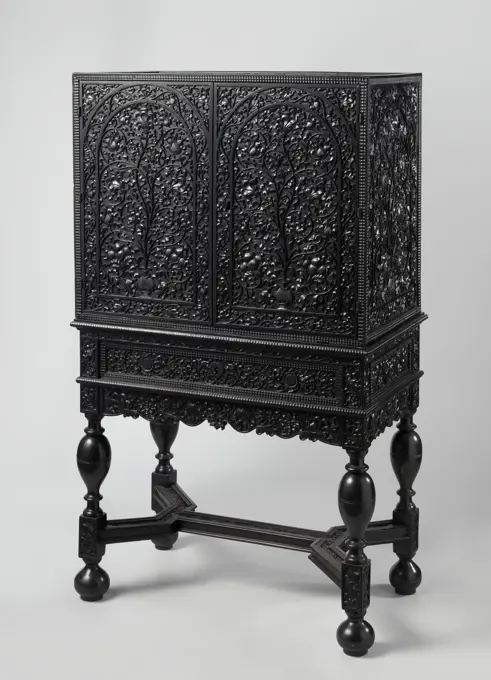
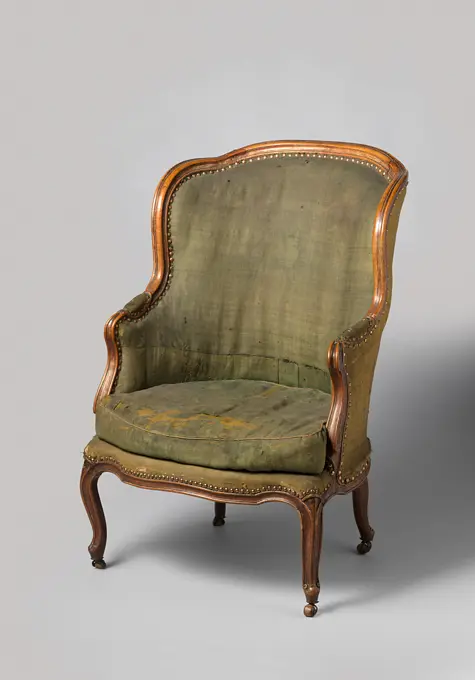
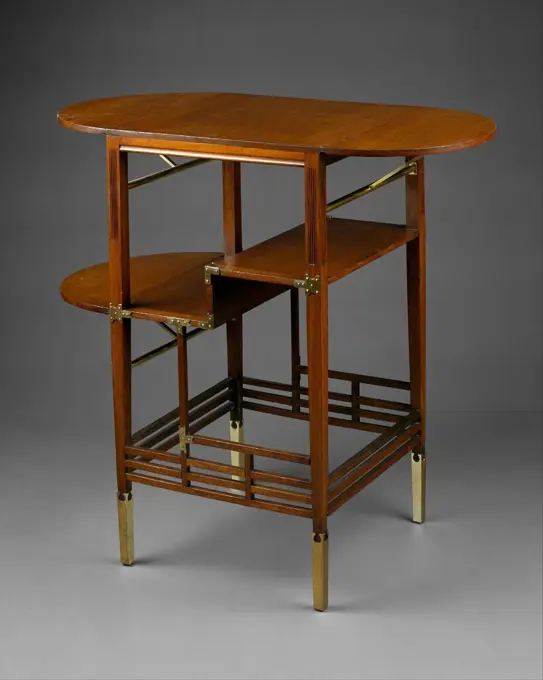
Historical Wooden Furniture

Elegant wooden furniture pieces, including chairs and tables, showcasing detailed craftsmanship from the 17th to 18th centuries.

Arm chair of walnut with flared parts. Arming stars with half female figures. Covered with nailed velvet., Anonymous, 1650 Covered armchair of walnut, resting on flared legs with houses and connected by a flung H-shaped cross and at the front by a flared upper sport placed between houses. The armrests and the backs' backs are also thrown. The armrest stars consist of half -displayed female figures on a round pedestal, which is placed on a square base. The upholstery is nailed. Northern Netherlands wood (plant material). walnut (hardwood). velvet (fabric weave) Covered armchair of walnut, resting on flared legs with houses and connected by a flung H-shaped cross and at the front by a flared upper sport placed between houses. The armrests and the backs' backs are also thrown. The armrest stars consist of half -displayed female figures on a round pedestal, which is placed on a square base. The upholstery is nailed. Northern Netherlands wood (plant material). walnut (hardwood). velvet (fab
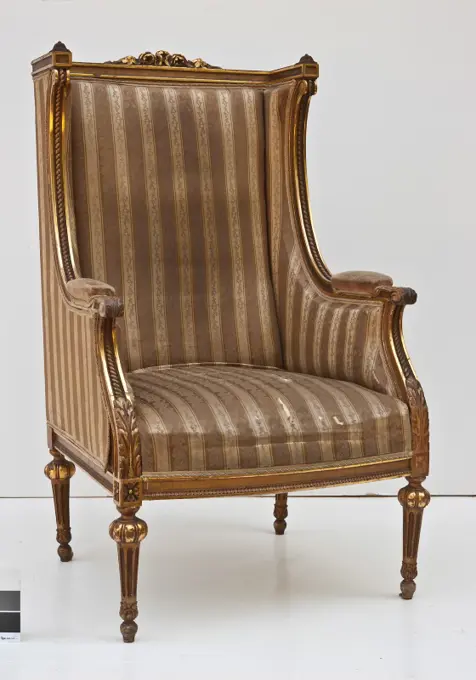
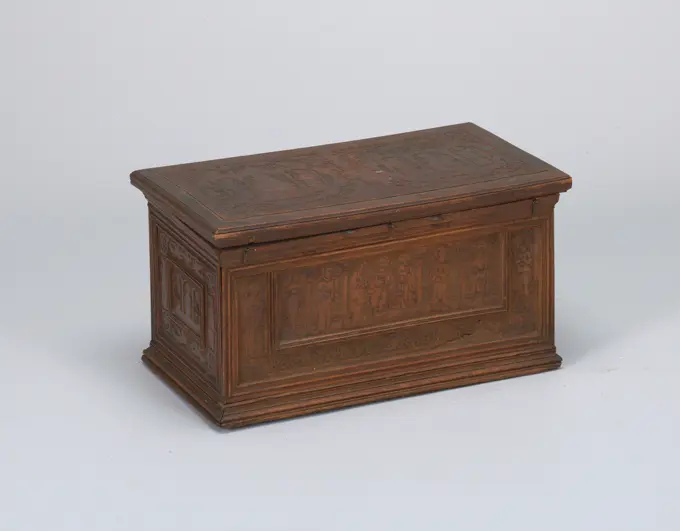
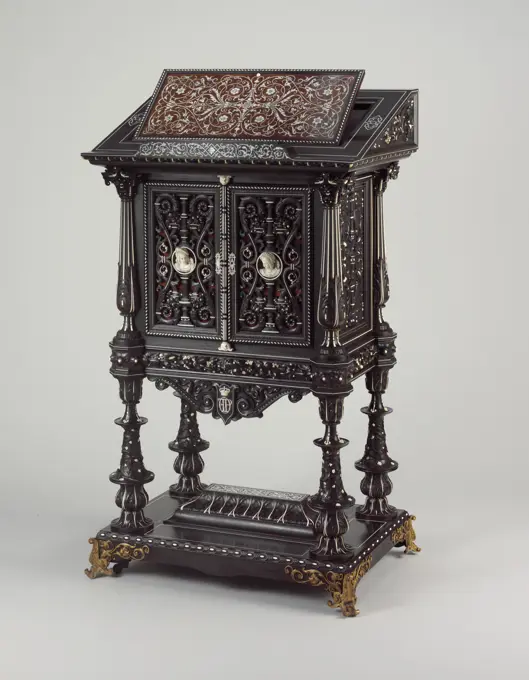
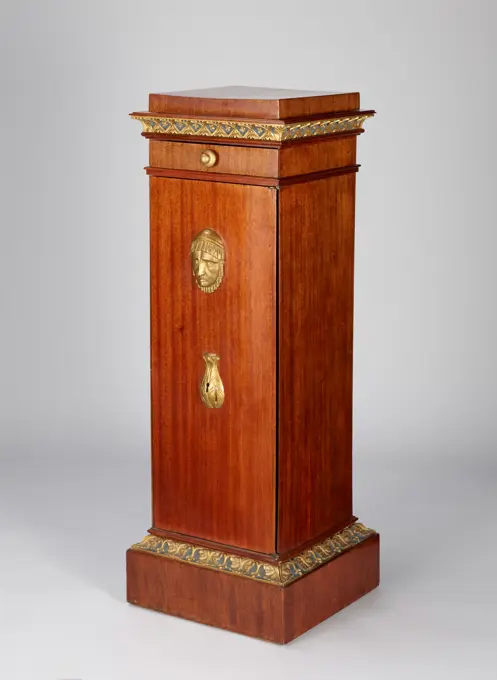
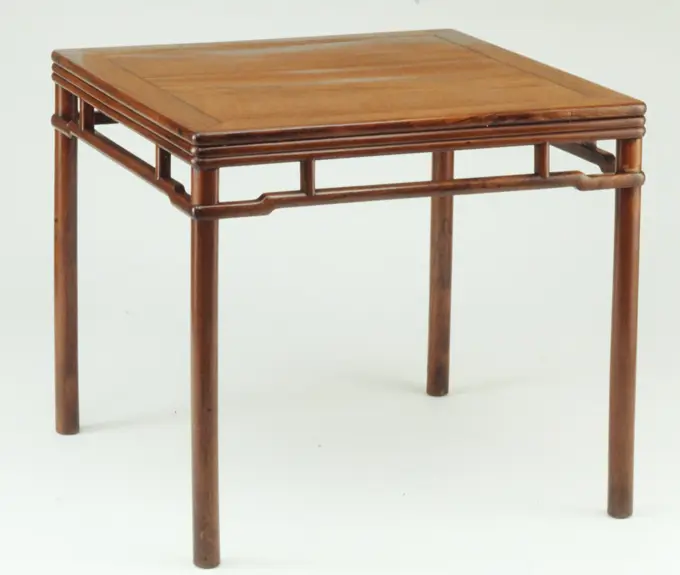
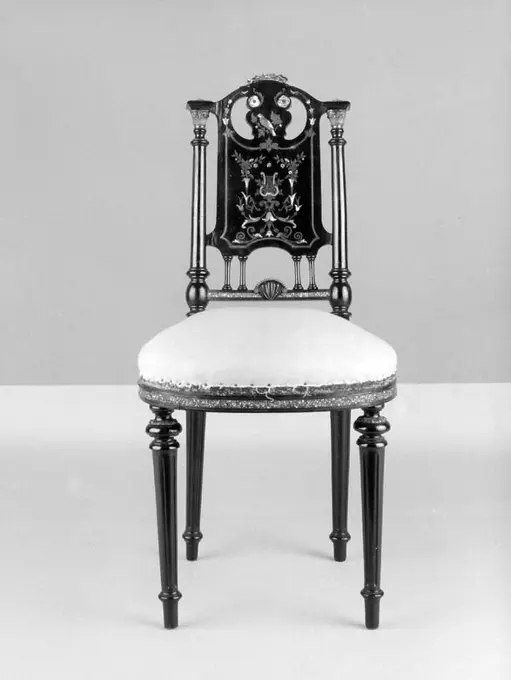
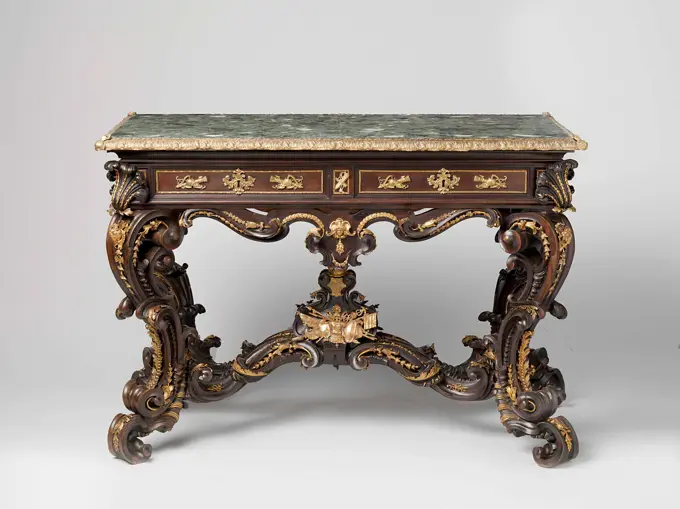
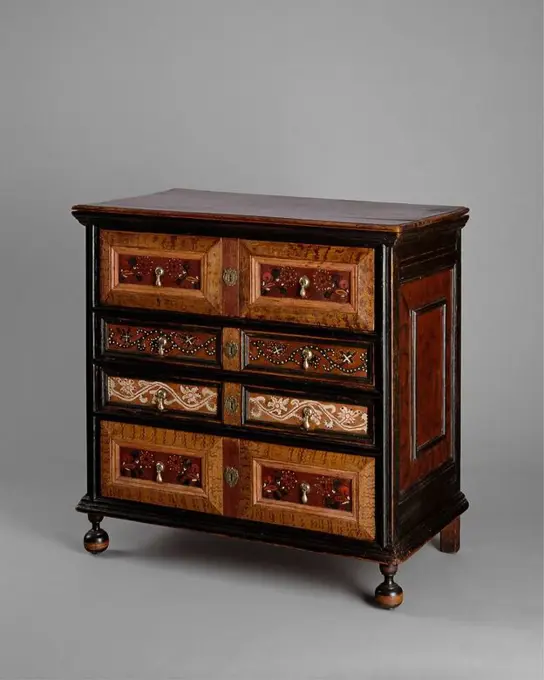
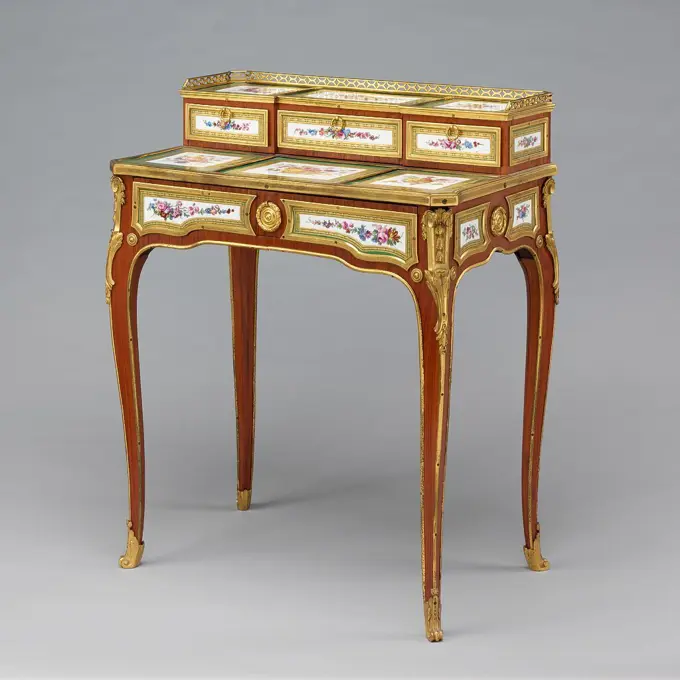
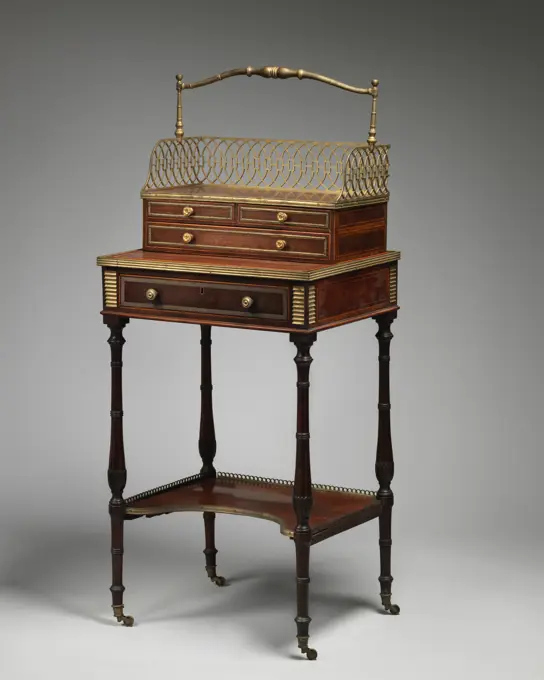
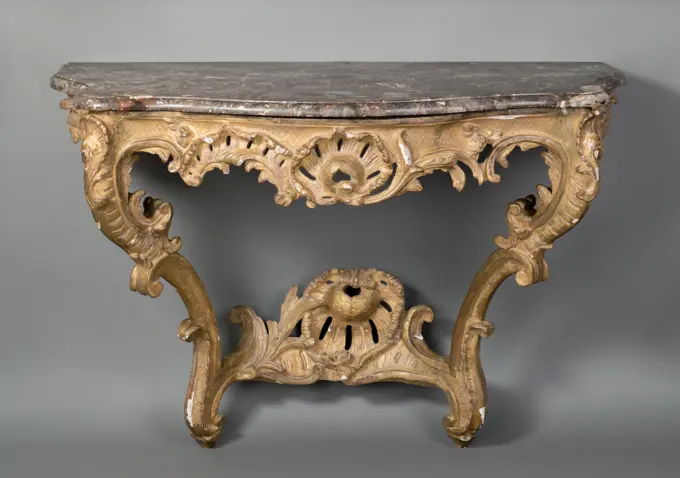
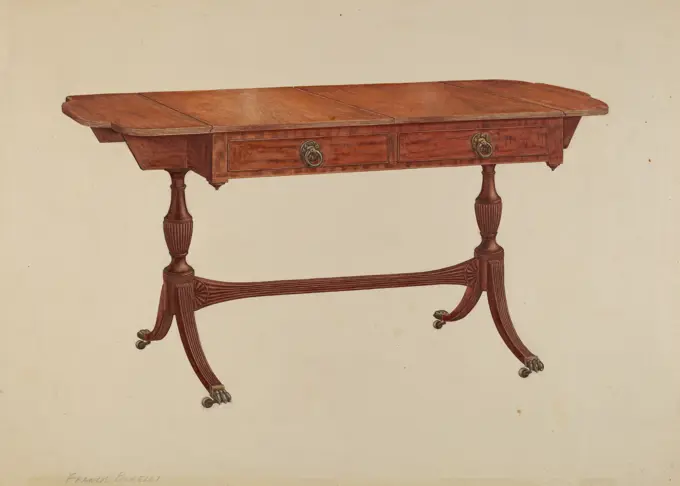
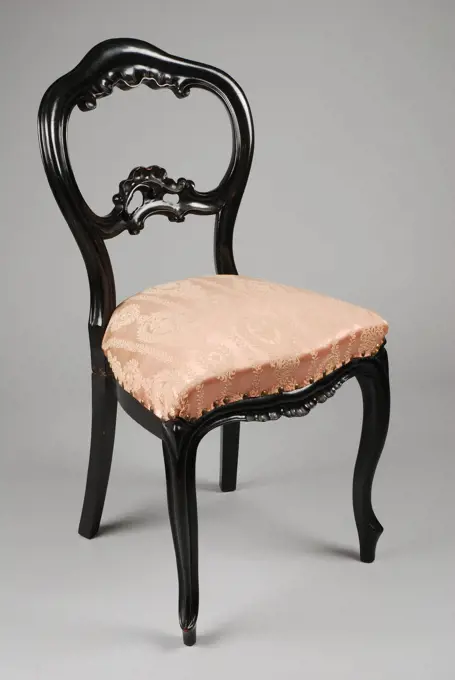
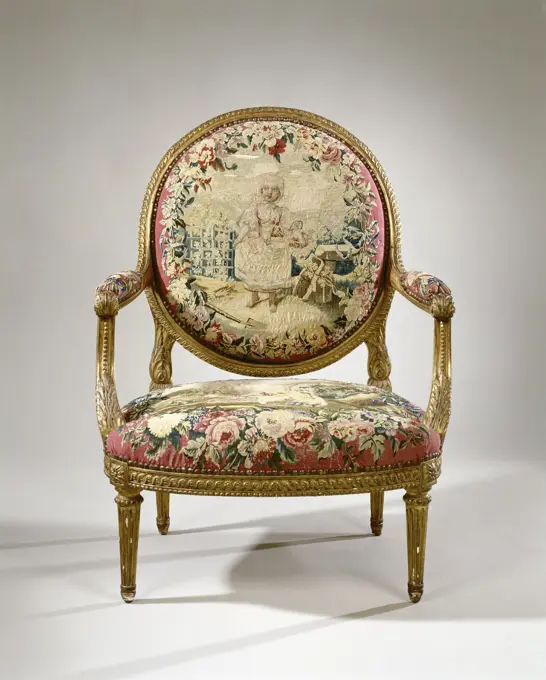
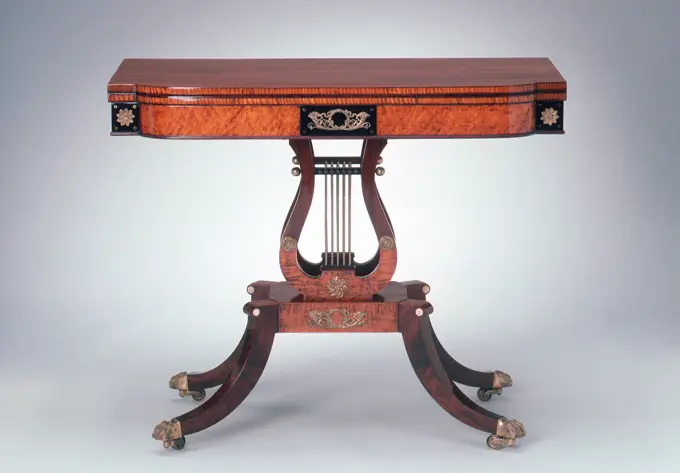
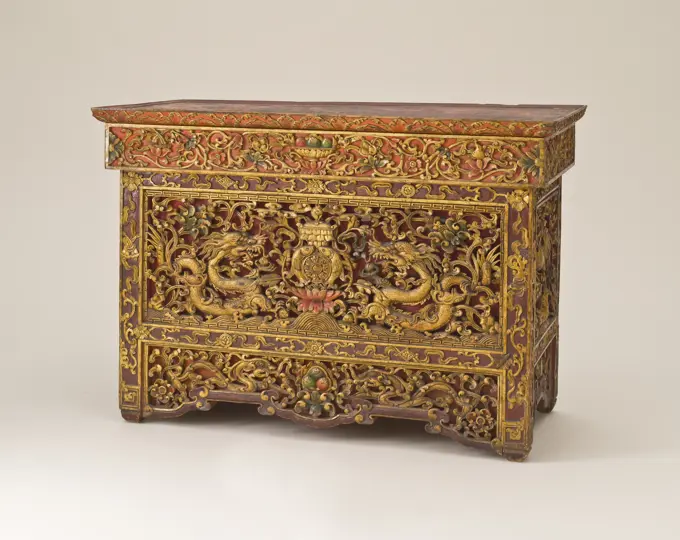
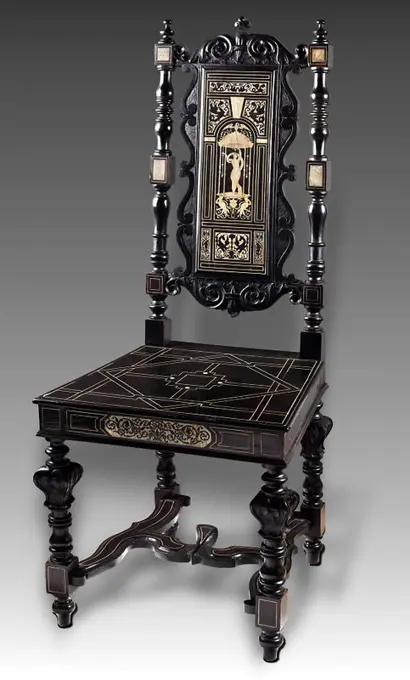
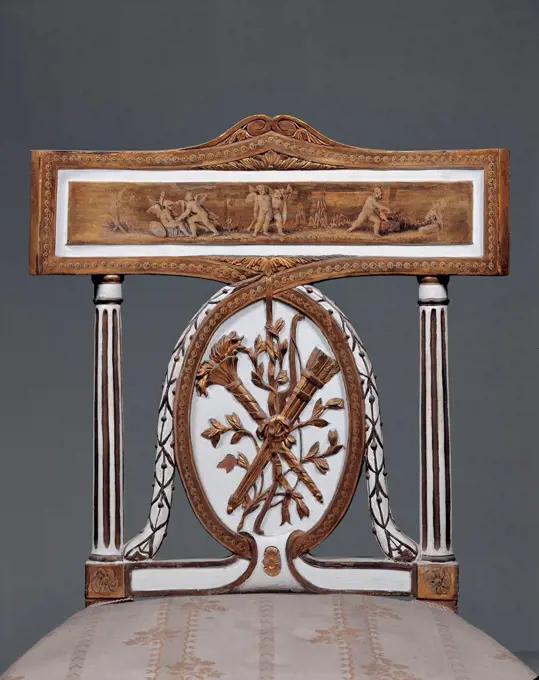
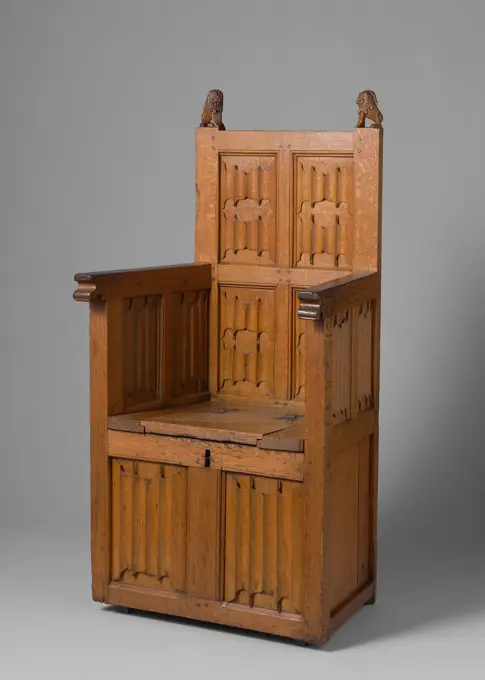
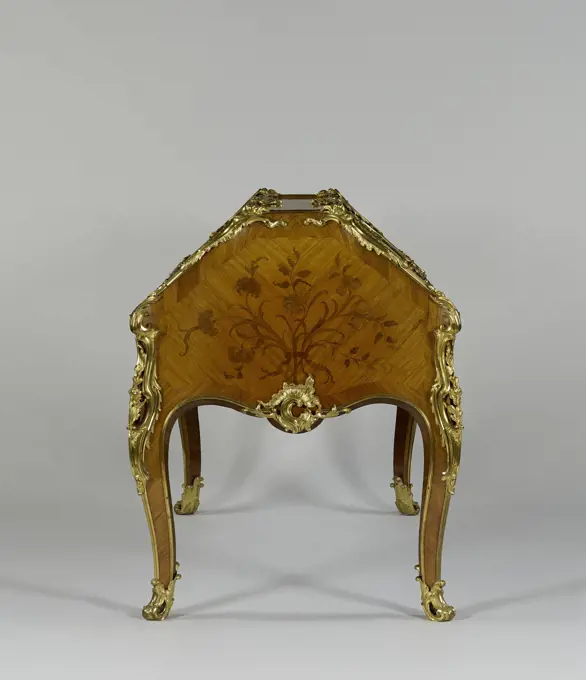
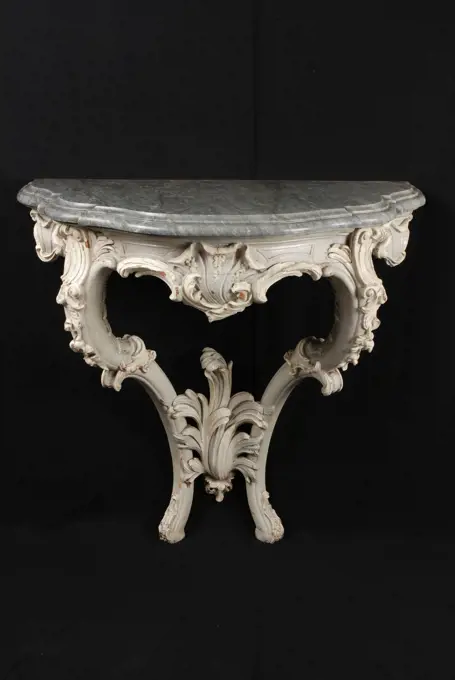
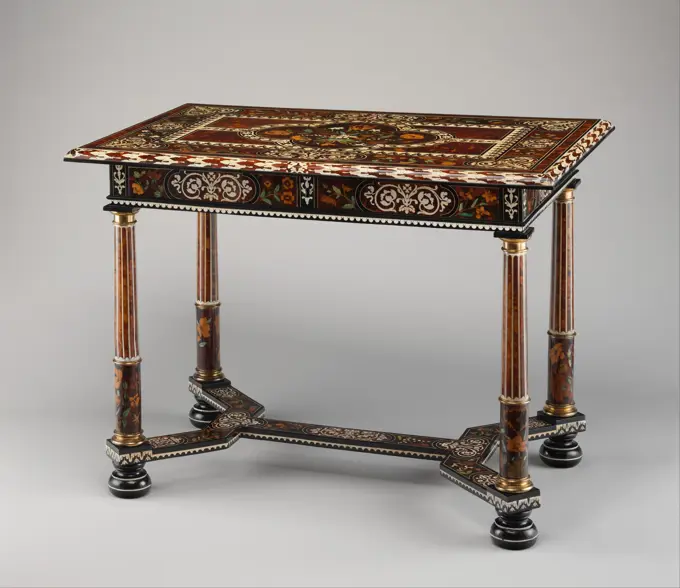
Table ca. 1660 Attributed to Pierre Gole When it was sold from Mentmore Towers, Buckinghamshire, in 1977, this exceptional table was described as in the manner of Leonardo van der Vinne. A talented artist of Flemish or Dutch origin, Van der Vinne made marquetry furniture at the Medici court in Florence during the second half of the seventeenth century.1 In the mid-1980s, however, the table was reattributed to Pierre Gole,2 based on documentary evidence and after comparison with a few extant pieces thought to be by the same hand.Gole, who was born in Bergen, near Alkmaar, the Netherlands, went to Paris about 1643 and there was apprenticed to Adriaan Garbrand (also recorded as Adrien Garbrant), a cabinetmaker known for his work in ebony.3 Having married Garbrand's daughter Anne in 1645, Gole eventually took over the workshop. He continued in the manner of his father-in-law, making large, elaborate cabinets veneered with ebony.4 On 26 September 1651 Gole was named menuisier en esbTable. unknown, authorSide chair (one of a pair) early 18th century Dutch. Side chair (one of a pair) 232601Table with rectangular leaf on four S-shaped legs. Table of mahogany, with rectangular leaf with rounded corners, on four s-shaped legsArmchair. unknown, creatorSide Chair. Culture: American. Dimensions: 35 3/4 x 21 x 17 1/2 in. (90.8 x 53.3 x 44.5 cm). Maker: Attributed to Léon Marcotte (1824-1887). Date: 1865-70. Museum: Metropolitan Museum of Art, New York, USA.Three-part corner cabinet with O.A. Segment-shaped fronton. Three-part corner cabinet glued with root nut wood on oak core. The base cabinet has two doors placed with piping, above which a folding sheet, with scalloped upper corners. Copper locking plates. The veneer of the leaf shows four fields, framed with trim and wide edge. The doors of the floor cupboard are bent at the top. The cupboard is crowned by a segment-shaped fronton with profiled edge and is internally decorated with paintwork with O.A. Landscapes, architecture, flowers and people.M Rosenshield von Paulin, Roll top Desk, 1941 Roll-top DeskTable. This Baroque masterpiece was made for Count Leopold Joseph von Lamberg, the Austrian ambassador in Rome from 1700 to 1705. The exuberantly carved base is enriched with numerous gilt-bronze mounts, a fairly unique feature for Roman furniture of this period. The top is made of re-used marble from Roman antiquity.Chest of drawers. Weiss, Jan Bogumił (fl. ca 1816), joinerChest of Drawers. Culture: American. Dimensions: 40 x 40 1/2 x 22 1/8 in. (101.6 x 102.9 x 56.2 cm). Date: 1700-1720.Eight different pigments were used to decorate the drawers and sides of this chest. The moldings on the four deep drawers were painted to imitate highly veined wood veneers, and the floral designs on the drawer panels relate to motifs found on inlaid English furniture. Vivid green moldings and orange accents add further vibrancy. When the paint was strong and fresh, the effect must have been dazzling. Museum: Metropolitan Museum of Art, New York, USA.Desk (bonheur du jour). Culture: French, Sèvres. Decorator: Plaques decorated by Jean-Jacques Pierre the Younger (French, active 1763-1800); and Guillaume Noël (French, active 1755-1807); and Denis Levé (French, active 1754-93, 1795-1805). Dimensions: Overall: 32 1/4 × 26 1/4 × 15 3/4 in. (81.9 × 66.7 × 40 cm). Factory: Porcelain plaques by Sèvres Manufactory (French, 1740-present). Maker: Attributed to Martin Carlin (French, near Freiburg im Breisgau ca. 1730-1785 Paris). Date: ca. 1769. Museum: Metropolitan Museum of Art, New York, USA.Wainscot armchair ca. 1600 British. Wainscot armchair. British. ca. 1600. Oak. Woodwork-FurnitureTable with book carrier (cheveret) early 19th century Attributed to John McLean and Son, London, England. Table with book carrier (cheveret). British. early 19th century. Rosewood, gilt bronze. Woodwork-FurnitureChairChest with Drawer 1650-1700 American. Chest with Drawer 2033Table withDrawersDesk and bookcase onframe. Maker, possibly by: Joseph C. ClarkWanging table made of walnut, anonymous, c. 1500 - c. 1600 Wanging table made of walnut. The cheeks are decorated with flat, stolen volutes that end in animal claws and have trenches on the sides. At the bottom they have two S-Voluten, which were tied together with the upper volutes. The cheeks are connected by a cross rule, which is held by a pin on either side and ends in buttons. The table top closes with two clamps over the rules above the cheeks. These rules have smooth S-shaped volutes at the ends. Florence wood (plant material). walnut (hardwood) Wanging table made of walnut. The cheeks are decorated with flat, stolen volutes that end in animal claws and have trenches on the sides. At the bottom they have two S-Voluten, which were tied together with the upper volutes. The cheeks are connected by a cross rule, which is held by a pin on either side and ends in buttons. The table top closes with two clamps over the rules above the cheeks. These rules have smooth S-shaped volutes atChest-with-drawers 1690-1710 American. Chest-with-drawers 2011Cardtable. Maker, attributed to: Charles-Honoré Lannuier, American, born France, 1779-1819Console Table. France. Date: 1775-1785. Dimensions: 86.4 × 78.1 × 43.2 cm (34 × 30 3/4 × 17 in.). Wood, carved and gilded; marble top. Origin: France. Museum: The Chicago Art Institute, Chicago, USA.Unknown, Side Table (Console), 18th century, pine and marble.Side Chair. Culture: American. Dimensions: 37 1/8 x 21 x 20 3/4 in. (94.3 x 53.3 x 52.7 cm). Date: 1760-90. Museum: Metropolitan Museum of Art, New York, USA.Chair with winding pots, covered with tripe with a pattern of red and green grenades, anonymous, 1650 - 1700 Chair of Notenhout, covered with Trijp. The chair has flung legs, which are connected by an H-shaped cross and a middle sport, all also thrown. The Trijp shows a pattern of red and green grenades on a soil of shaved pole. The fringe has small raised brushes above a fringe head. The backstyles are covered. One from a series of three seats (inv. No. BK-KOG-1443-A to -c). Northern Netherlands wood (plant material). walnut (hardwood). velvet (fabric weave) Chair of Notenhout, covered with Trijp. The chair has flung legs, which are connected by an H-shaped cross and a middle sport, all also thrown. The Trijp shows a pattern of red and green grenades on a soil of shaved pole. The fringe has small raised brushes above a fringe head. The backstyles are covered. One from a series of three seats (inv. No. BK-KOG-1443-A to -c). Northern Netherlands wood (plant material). walnut (hardwood).Miniature daybed ca. 1689-1702 British. Miniature daybed. British. ca. 1689-1702. Walnut and cane. Woodwork-FurnitureCommode. Culture: French, Paris. Dimensions: 34 1/2 x 55 x 22 3/4 in. (87.6 x 139.7 x 57.8cm). Maker: Charles Cressent (French, Amiens 1685-1768 Paris). Date: ca. 1745-49.Cressent is known to have made a group of commodes of this kind over the years, all with a serpentine facade, shaped doors in the sides, rounded forecorners, and extraordinary sculptural mounts. This commode can be dated to 1745-49 because of a tax stamp for that period found on the gilt-bronze mounts that were, against guild regulations, cast, chased and gilded in Cressent's own workshop. Museum: Metropolitan Museum of Art, New York, USA.ChairChest withdrawers. Maker, possibly by: Peter Blin, American, born England, died 1725Side Chair 1785-95 American. Side Chair. American. 1785-95. Mahogany, yellow pine, white pine. Made in Philadelphia, Pennsylvania, United StatesCross -foot cabinet with two doors on open base with twisted styles, with paint decoration in Eastern style, Unknown, c. 1670 Two -door cross -foot cabinet with Dutch paintwork panels, with interior with two shelves and four drawers, and below load over the full width. Netherlands oak (wood). softwood. beech (wood) lacquering Two -door cross -foot cabinet with Dutch paintwork panels, with interior with two shelves and four drawers, and below load over the full width. Netherlands oak (wood). softwood. beech (wood) lacqueringSet of four armchairs (fauteuils en cabriolet). Culture: French. Dimensions: Each, 34 1/4 x 25 1/2 x 26 in. (87 x 64.8 x 66cm). Date: ca. 1750-60. Museum: Metropolitan Museum of Art, New York, USA.Slat-back armchair. Culture: American. Dimensions: 42 x 24 x 15 1/8 in. (106.7 x 61 x 38.4 cm). Date: 1650-90.This is an example of the earliest known type of turned slat-back chair made in New England. The back consists of three broad, horizontal slats with straight upper edges cut away at the ends. The slats are graduated in height, with the largest at the top. Turned chairs with slat backs were found in both modest and affluent homes, where they provided practical, everyday seating alongside more fashionable and costly forms. Museum: Metropolitan Museum of Art, New York, USA.Writing Armchair 1820-25 American. Writing Armchair 10020Side Chair 1760-90 American. Side Chair 1847Console Table. Culture: American. Dimensions: 54 1/2 x 23 1/2 x 29 in. (138.4 x 59.7 x 73.7 cm). Maker: Attributed to John H. Belter (1804-1863). Date: ca. 1855.John H. Belter immigrated to New York City from Germany in 1833 and soon became the city's leading cabinetmaker. His work is distinguished by its technical virtuosity and exuberant carving. His furniture epitomizes the mid-nineteenth-century taste for the Rococo Revival style, which was often described as "Modern French.". Museum: Metropolitan Museum of Art, New York, USA.Armchair (Bergere). unknown, authorChest With KeyArmchair. American; Norwich or Lebanon, New London County, Connecticut. Date: 1660-1715. Dimensions: 113 × 59.7 × 43.2 cm (44 1/2 × 23 1/2 × 17 in.). Maple and ash. Origin: Norwich. Museum: The Chicago Art Institute, Chicago, USA.Armchair 1853 Julius Dessoir German (Prussian). Armchair 15298Cabinet (Cabinet). Roger Vandercruse Lacroix (French, 1727 - 1799, master 1755)Francis Borelli, Sofa Table, c 1939 Sofa TableArmchairOak inlaid chair, 1904. Artist: Shirley Slocombe.Table with hexagonal leaves resting on three panels opened in a claw fern motif. Table of oak with hexagonal leaves resting on three shouting panels that also serve as legs. The panels are triangular that rest with their pointed corners on the ground and whose straight angles touch each other near the leaf. The panels are partly open in a stylized claw fern motif. On the corners where the panels on the top touch each other are profiled panels attached to which black dots. The table top of Coromandelwood is hexagonal and tranquility through a star-shaped control work on the underside on the panels.Side Chair 1790-1800 American. Side Chair 1649Stool (2 of 2), 1700-25. China, Qing dynasty (1644-1911). Chicken-wing wood (jichimu); overall: 48.3 x 48.3 x 48.3 cm (19 x 19 x 19 in.).Pierre Roussel. "Wooden and bronze work table, closed". 18th century. Museum of Fine Arts of the City of Paris, Petit Palais. 70660-1 Bronze, Louis XV time, closed, old book, furniture, work, oeil trompe, wood, tableTable, c. 1780-1790. Adam Weisweiler (French, c. 1750-1810). Mahogany, gilt bronze, marble top; overall: 91.5 x 148.6 x 49.5 cm (36 x 58 1/2 x 19 1/2 in.).Dresser;  around 1790 (1780-00-00-1800-00-00);Anonymous, shepherdess in convertible (main title). Wood, Bordeaux velvet. Petit Palais, Museum of Fine Arts of the City of Paris.Stool 1750-90 American American stools are remarkably rare, particularly those with cabriole legs and Rococo carving. Although the claw feet of this one are in the English manner, the stool appears to be of New York manufacture. The bow shape of the scalloped edges of the long rails, a popular motif in eighteenth-century New York, and the flat carving with gouge-like finishing strokes on the knees were typical of local practice. The use of American beech also distinguished the stool from its English counterparts.. Stool 7911Secrétaire à abattant.Desk decorated with Marqueterie of different woods, Anonymous, 1700 Bureau luminated with several types of wood on an oak core. The twice four baluster-shaped overhoeks placed legs are connected by an X-shaped bent cross and walk into the corner styles. There are three drawers on the left and right side; In the middle a back -jumping box with door and drawer. The light-bent drawers, sides, door and corner styles show flower and leaf work in Marqueterie, with or without vase; On the door with Maskaron. The leaf is completely filled with grotesken. France wood (plant material). satinwood (wood). rosewood (wood). olive (wood). ebony (wood). spruce (wood). gilding (material). copper (metal). walnut (hardwood). tin (metal). bone (material) gilding Bureau luminated with several types of wood on an oak core. The twice four baluster-shaped overhoeks placed legs are connected by an X-shaped bent cross and walk into the corner styles. There are three drawers on the left and right side; In the miFa. Johann Diedrich Schmidt & Co. en Cord Heinrich Schmidt, Straight neo-rococo chair, straight-seat chair furniture furniture interior design wood mahogany elmwood shellac textile, Black polished mahogany with pink silk-damask covering on the hood and the front line rocailles and other rococo carving Rotterdam City Center Cool Schiedamsesingel neorococo Supposedly delivered to the Polak-Rosenthal couple in front of their house Schiedamsesingel 143 Rotterdam.Dressing table, Carel Breytspraak, c. 1808 - c. 1810 Toilet table made of mahogany, with white marble leaf, shea legs with lion claws. The toilet table is in empiric style. Manufactured for the sleeping room of Prince Napoleon Louis, the son of King Louis Napoleon, in the Palace on Dam Square in Amsterdam. Amsterdam wood (plant material). mahogany (wood). oak (wood). brass (alloy). marble (rock)   Holland. Royal Palace Amsterdam Toilet table made of mahogany, with white marble leaf, shea legs with lion claws. The toilet table is in empiric style. Manufactured for the sleeping room of Prince Napoleon Louis, the son of King Louis Napoleon, in the Palace on Dam Square in Amsterdam. Amsterdam wood (plant material). mahogany (wood). oak (wood). brass (alloy). marble (rock)   Holland. Royal Palace AmsterdamDresser; Weiss, Jan Bogumił (Fl. Ca 1816); 1816 (1816-00-00-1816-00-00);Chest of drawers. unknown, author. Upled armchair from rosewood. The legs, in the form from above the basic, Tuscan columns around the base, rest on houses, which are connected by four sports outlined on the underside. The armrests are led like the legs and rest on houses at the sitting window. The flat healed armrests end at the front in closed volutes. The rectangular back window deviates backwards; The styles are crowned by shielding sitting lions. Branded brand: B B M.Display cabinet with heavy superstructure and doors divided by rods, on very low wide base with four stocky legs connected by X-shaped cross, cutting, partially open, with flower, leaf and rocaillework, anonymous, 1700- 1800 Display cabinet of paduk and iron wood: heavy superstructure with two doors divided by rods, which rests on a very low wide base with four stocks, curved legs, which are connected by an X-shaped cross. The sculpture, which adorns this foot as well as the openwork cutting work on top of the curved hood, shows flower, leaf and rocailliwork. Indonesia padouk (wood). ironwood. glass Display cabinet of paduk and iron wood: heavy superstructure with two doors divided by rods, which rests on a very low wide base with four stocks, curved legs, which are connected by an X-shaped cross. The sculpture, which adorns this foot as well as the openwork cutting work on top of the curved hood, shows flower, leaf and rocailliwork. Indonesia padouk (wood). ironwood. glassLinen press. unknown, creatorArm chair lined with tapisserie with a girl with a basket of flowers (petite jardinière/petite fille portant des fleurs) (back) and the fable of the two roosters (session), manufacture royale des gobelins, c. 1935 Arm chair of gilded beech wood, resting on conical shaped legs. The armchair is part of an ameblement. On the covered bent sitting window and the covered oval back window have been installed on a pink long -distance performances within flower wreaths (Tapisserie de Beauvais). See also: BK-16657-A/E. ParisParisdesigner: Francedesigner: Francefurniture worker: France walnut (hardwood). gilding (material). ketting: wool. inslag: silk tapestry / gilding Arm chair of gilded beech wood, resting on conical shaped legs. The armchair is part of an ameblement. On the covered bent sitting window and the covered oval back window have been installed on a pink long -distance performances within flower wreaths (Tapisserie de Beauvais). See also: BK-16657-A/E. ParisParisdesigner: FrancedesigArmchair (part of a set of nine) mid-18th century Tapestry woven at Aubusson. Armchair (part of a set of nine) 239167Stool. Culture: British. Dimensions: Overall: 15 1/8 × 16 3/8 × 16 1/2 in. (38.4 × 41.6 × 41.9 cm). Date: ca. 1670. Museum: Metropolitan Museum of Art, New York, USA.Side Chair 1760-90 American. Side Chair. American. 1760-90. Mahogany, maple. Probably made in Boston, Massachusetts, United StatesChair;  End of the 18th century (1780-00-00-1800-00-00);Side chair, one of a pair, c. 1825, 32 3/4 x 19 1/4 x 22 1/2 in. (83.19 x 48.9 x 57.15 cm), Bird's eye and tiger maple, maple veneer, United States, 19th centuryCrook-back Side Chair with Slip Seat and Ball-and-Claw Feet. United States, New York, New York City, circa 1755. Furnishings; Furniture. Mahogany and replaced upholsteryLyre-Base Card Table. United States, Pennsylvania, Philadelphia, circa 1815. Furnishings; Furniture. Mahogany wood, maple wood, ebonized fruitwood, gilt bronze, brass, and ivoryConsole table. unknown, authorAltar Table with Dragons and Auspicious Symbols. Tibet, 18th-19th century. Furnishings; Furniture. Wood with mineral pigments and gilding; metal fittingSide Chair 1877-80 American. Side Chair 1802Center Table. George Washington Jack (England, 1855-1932)Morris & Co. (England, London and Merton Abbey, 1861-1940). England, circa 1885. Furnishings; Furniture. MahoganyChair. unknown, authorChair, by Naples workmanship, 1796 - 1799, 18th Century, wood carved, gilded and painted, padded seat covered. Italy: Campania: Caserta: Royal Palace of Caserta Reggia di Caserta: Queen Library, first room. Detail. Backrest chair armchair capriccio putti/cherubs decoration cornucopia arrows quiver upholstery furniture furnishings fittings design white goldCabinet base. unknown, contractorLift-Top Chest withDrawer. Maker, attributed to: Robert Crossman, American, 1707-1779LeatherChairEikhout chair with a seat and back of leather, anonymous, 1675 - 1700 Eight oak seats with leather seat and back. The legs show house and suffered and are connected by an H-shaped cross. At the front is, between two houses, a wide forecution. The hind legs turn back. The back rests high on the struts and is bent from above. Northern NetherlandsNetherlands wood (plant material). oak (wood). elm (wood). leather Eight oak seats with leather seat and back. The legs show house and suffered and are connected by an H-shaped cross. At the front is, between two houses, a wide forecution. The hind legs turn back. The back rests high on the struts and is bent from above. Northern NetherlandsNetherlands wood (plant material). oak (wood). elm (wood). leatherPair of Armchairs (bergères à la reine et à chssis, assise cannée). Nicolas-Quinibert Foliot (French, 1706 - 1776)SidechairArm chair with box -shaped frame, decorated with letter panels. Heads of the backstyles in the form of shield -bearing lions., Anonymous, c. 1500 Arm chair made of oak on a closed box -shaped frame, which is furnished as a storage place. All panels carry letter fillings. The armrests are gothically profiled at the ends. The heads of the backstyles have been treated as shield -bearing lions. The trapezoidal seat has a valve mounted with two hinges, which can be closed by means of a key (keyhole in the front plate). Coming from the former sacristy of the Dutch Reformed Church in Naaldwijk. Northern Netherlands wood (plant material). oak (wood)   Naaldwijk Arm chair made of oak on a closed box -shaped frame, which is furnished as a storage place. All panels carry letter fillings. The armrests are gothically profiled at the ends. The heads of the backstyles have been treated as shield -bearing lions. The trapezoidal seat has a valve mounted with two hinges, which can be closed by means of . Armchair from oak on a closed chest-shaped frame, which is furnished as a storage location. All panels wear letter fills. The armrests are gothically profiled at the ends. The heads of the rear styles are treated as shielding lions. The trapezoidal seat has a valve attached with two hinges, which can be closed by means of a key (keyhole in the front plate). From the former sacristy of the Dutch Reformed Church in Naaldwijk.Octagonal table early 20th century Italian () or American (United States). Octagonal table 460497Double Desk; Bernard II van Risenburgh (French, after 1696 - about 1766, master before 1730); Paris, France; about 1750; Oak veneered with tulipwood, kingwood and bloodwood; drawers of mahogany; gilt-bronze mounts; 107.8 × 158.7 × 84.7 cm (42 7,16 × 62 1,2 × 33 3,8 in.)MiniatureChestLouis Annino, Side Chair, 1937 Side Chair. German-born Blechschmidt worked for leading Paris cabinetmakers and specialized in colourful marquetry (inlaid work) in various materials. He used an Italian Renaissance style for the marquetry here. Friedrich Frickhinger, one of his pupils and also a German active in Paris, made the furniture. He placed his signature and the date, 1834, on the inside of the secretary.Painted lime wood rococo console table, console table side table table furniture interior design wood lime wood paint marble frame, Carved ornamentation: rocailles and S-curves linden wood gray painted white heightened. With gray marble top rococo Collection .O van Kerkwijk.Podium for product advertisement or restaurant menus with old pine wooden table 3d illustratedPiano.   Maker: John Geib, Jr., active 1815-22Cabinet, anonymous, c. 1680 - c. 1700 Ebbenhouten two -door cabinet on chassis, decorated with sculpture. The frame with drawer rests on vase-shaped legs with houses, connected by a double Y-shaped cross and resting on bulbs. The sculpture of the doors and the sides reflects Togen with small vases, from which leaf vines with flowers sprout, which fill the background winding and curling. The toographer, swing and the top of the cabinet, as well as the drawer, top line, houses and cross of the frame show rank motifs. Coromandelkust (possibly) wood (plant material). ebony (wood) Ebbenhouten two -door cabinet on chassis, decorated with sculpture. The frame with drawer rests on vase-shaped legs with houses, connected by a double Y-shaped cross and resting on bulbs. The sculpture of the doors and the sides reflects Togen with small vases, from which leaf vines with flowers sprout, which fill the background winding and curling. The toographer, swing and the top of the cabinet, as well as the Commode. Culture: French. Dimensions: Overall: 35 1/4 × 41 1/2 × 23 in. (89.5 × 105.4 × 58.4 cm). Date: ca. 1780. Museum: Metropolitan Museum of Art, New York, USA.Armchair (one of a pair) ca. 1768-70 Claude Chevigny. Armchair (one of a pair) 201601CardTableBookstand 1839 Design attributed to Charles-Auguste Questel The shaped aprons on the front and back of this bookstand bear the crowned initials FPO for Ferdinand Philippe, duc d'Orléans (18101842), oldest son of King Louis-Philippe. A noted patron of the arts with eclectic taste, the duke commissioned this striking black and white showpiece from the ébéniste Georges-Alphonse Jacob Desmalter, grandson of the celebrated eighteenth-century menuisier (joiner) Georges Jacob, in 1839. Most likely intended to display Les Offices de la Vierge, a lavish book of hours created for Ferdinand Philippe the previous year, the bookstand consists of a base, a bookcase with two openwork doors supported on baluster-shaped legs, and a sloping upper part with a book rest. A detailed mémoire by Desmalter indicates that the velvet-lined interior originally held a pillow for the missal. The top has a ratcheted mechanism that allows the central panel, embellished with marquetry of ivory, mother-of-pearl, and Closet-pedestal. unknown, creatorSquare Table, 17th century, 33 3/4 x 39 x 39in. (85.7 x 99.1 x 99.1cm), huang hua-li hardwood, China, 17th centuryChair of Willem Bilderdijk.Berère van Nuthout, lined with green boring and with a loose kisses and lead role. The furniture rests on S-shaped legs, which proceed to the seating without interruption. The semicircular sitting window is scalloped at the front. The armrests have cushions and end in Volutes. The armrest tricks have been placed backwards, come from the sitting window and go to the armrests S-shaped. These are left without interruption in the cheeks of the back window. Upper sill is scaled. Profile lists all around.Side table. Culture: British, London. Designer: Edward William Godwin (British, Bristol 1833-1886 London). Dimensions: Overall: 29 7/16 × 16 × 32 1/8 in. (74.8 × 40.6 × 81.6 cm). Date: ca. 1872.This table, designed by Edward William Godwin around 1872, demonstrates the ideals characteristic of the Aesthetic movement in Britain from the 1860s to 1880s. The overall composition of the table, with its attenuated lines and asymmetrical organization of stretchers and posts, creates a rhythm of horizontal and vertical elements that echo Asian as well as traditional English influences. Another example of this table was made in about 1871 for Godwin's wife, the actress Ellen Terry, and was used in their home.Among the first of the Victorian architect-designers to furnish in the Japanese style, Godwin began his career as a Gothic revivalist and disciple of John Ruskin. However, by the early 1860s, Godwin became a passionate admirer of the arts of Japan and one of the leaders of the Aesthetic m