Indian Portraiture of Nobility

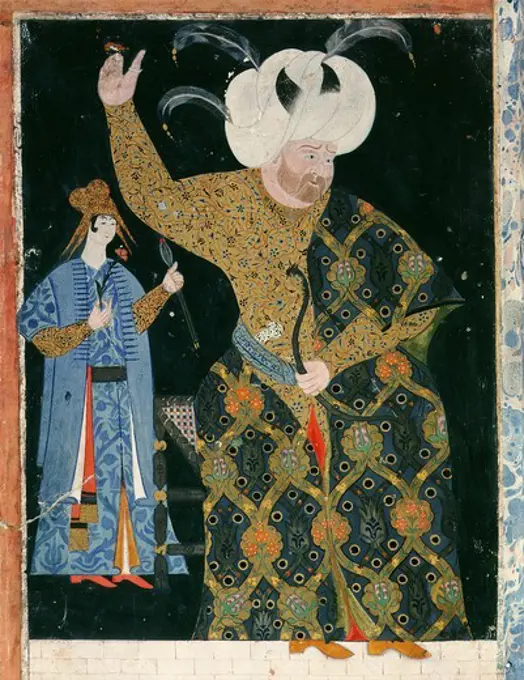
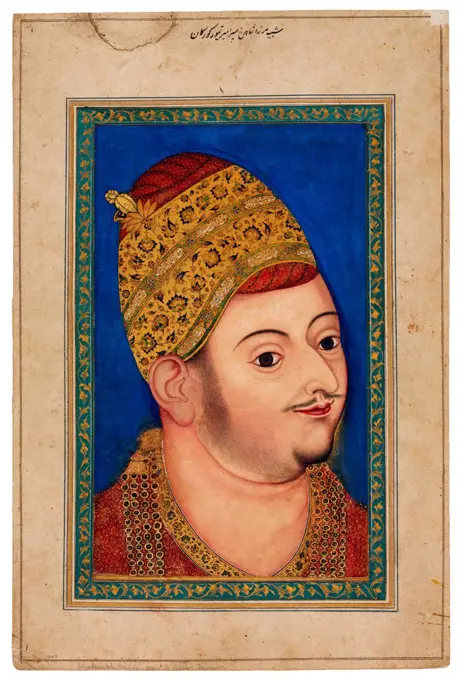
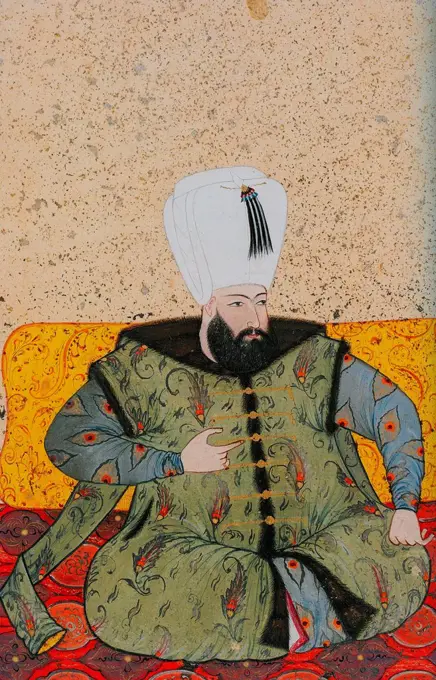
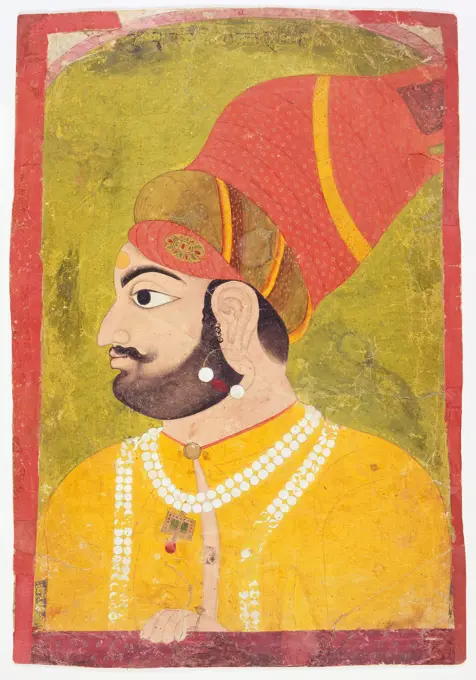
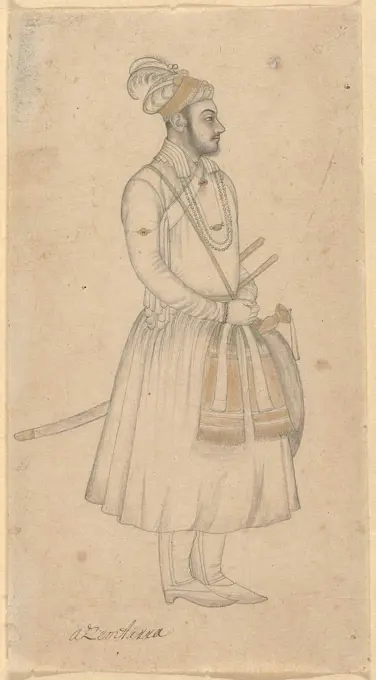
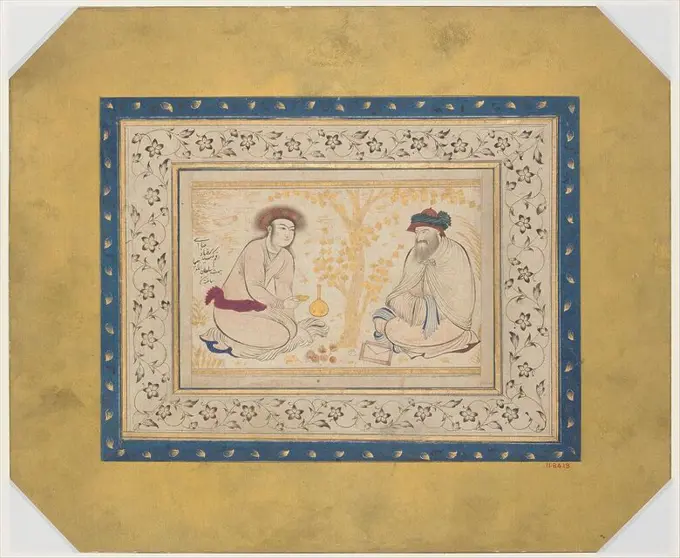
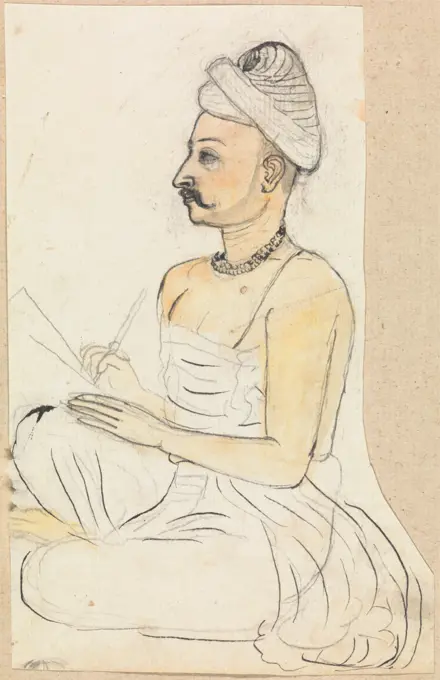
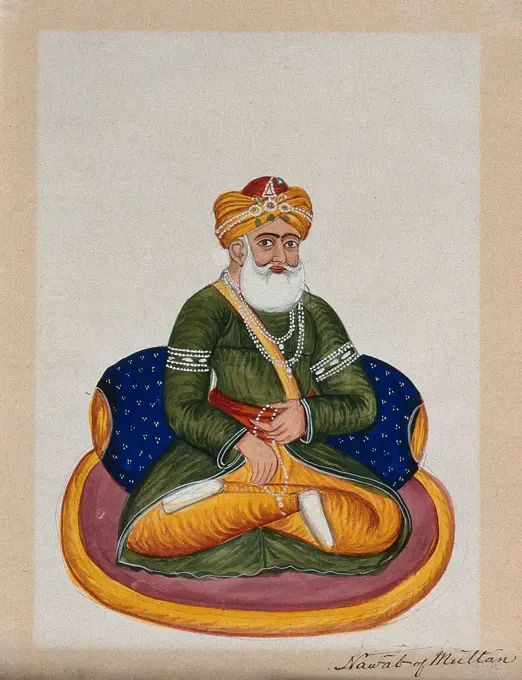
Elegant depictions of nobility from Mughal India, illustrating rich attire and opulent settings in vibrant colors and intricate designs.

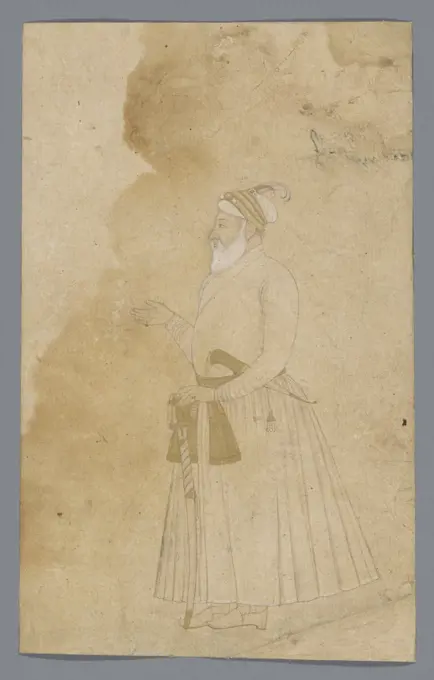
Portrait of Kapur Singh. The picture is framed by a narrow dark blue ornamental border with a motif of floral and foliage scrolls in gold and white, around it three red lines are drawn and the rest of the leaf is painted pink., Portrait of Kapur Singh, draughtsman: anonymous, Pahari, 1850, paper, brush, brush, h 144 mm × w 200 mm
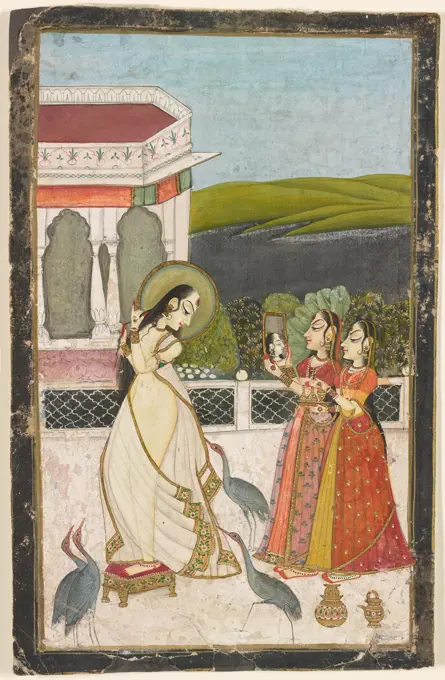
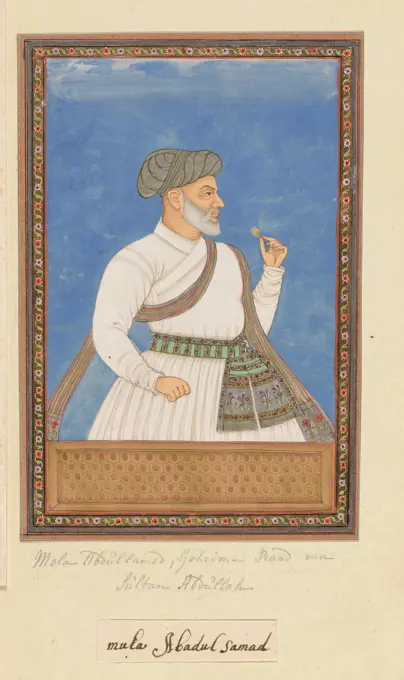
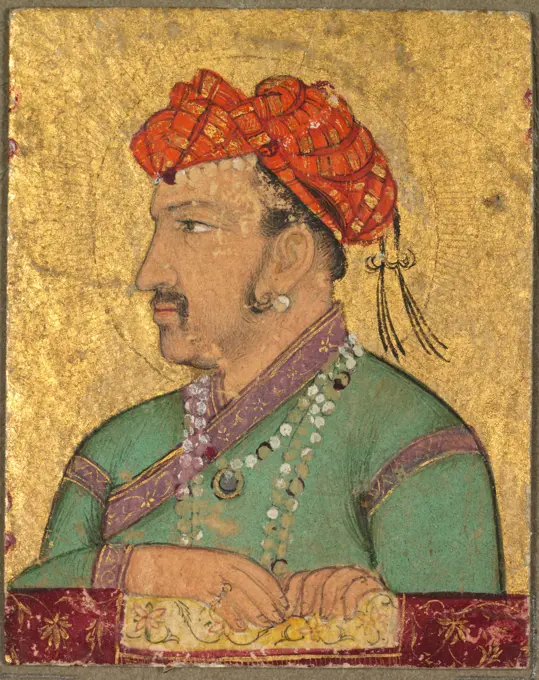
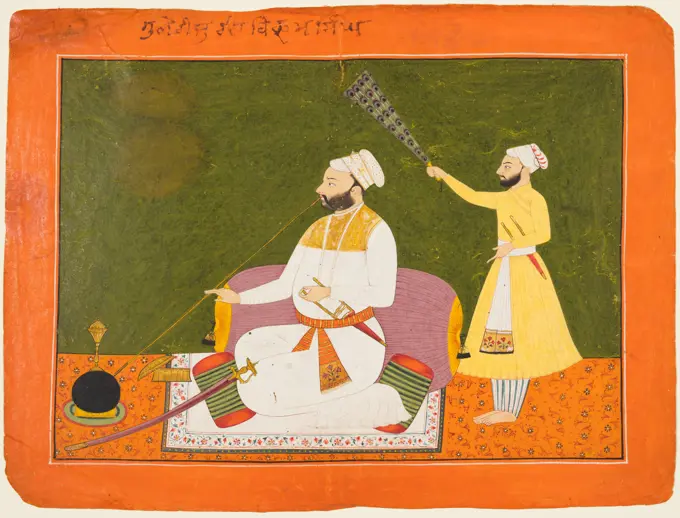
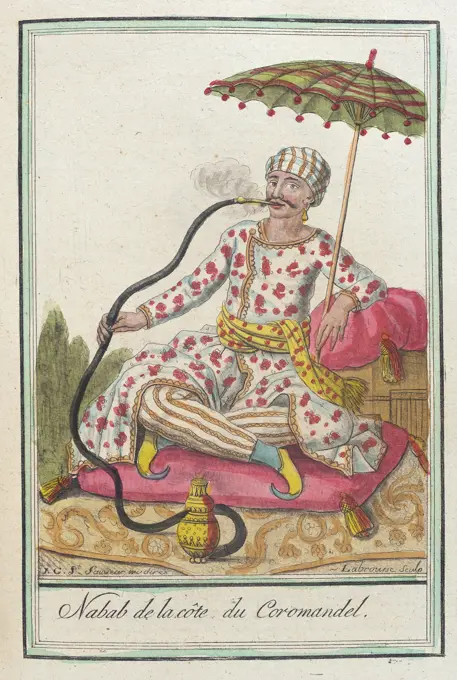
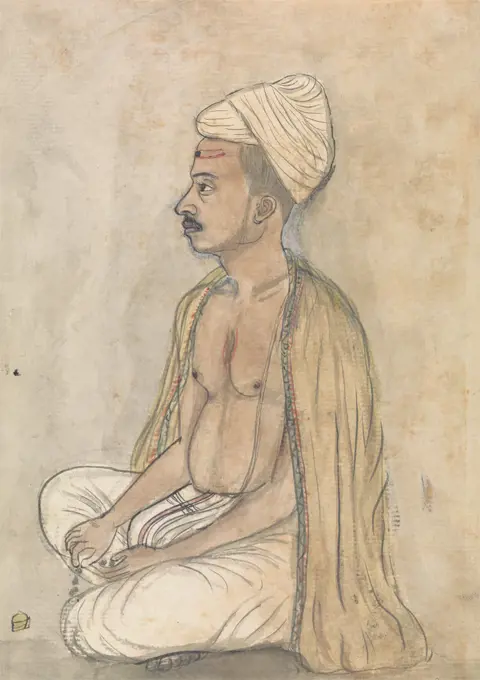
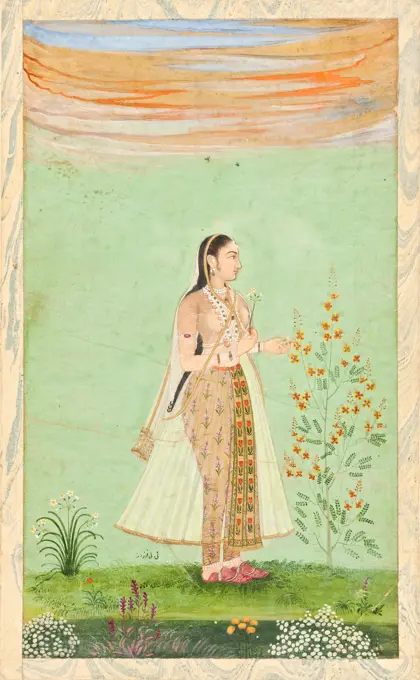
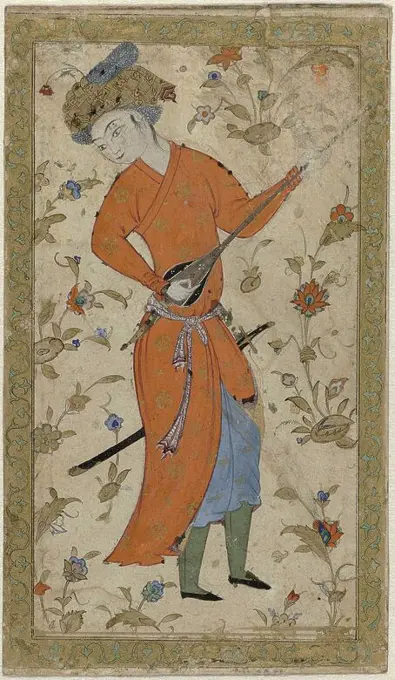
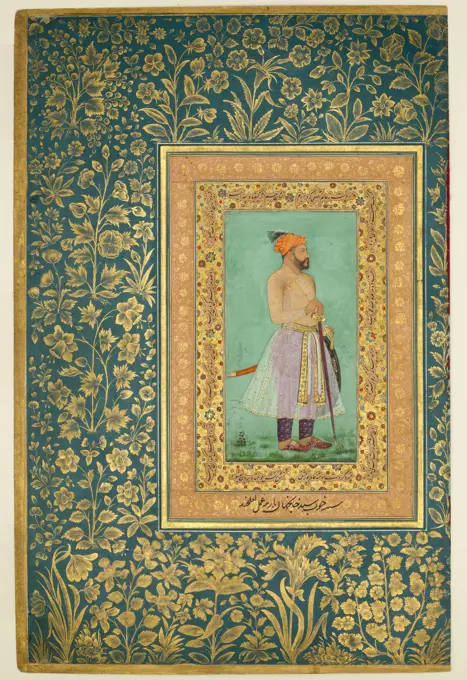
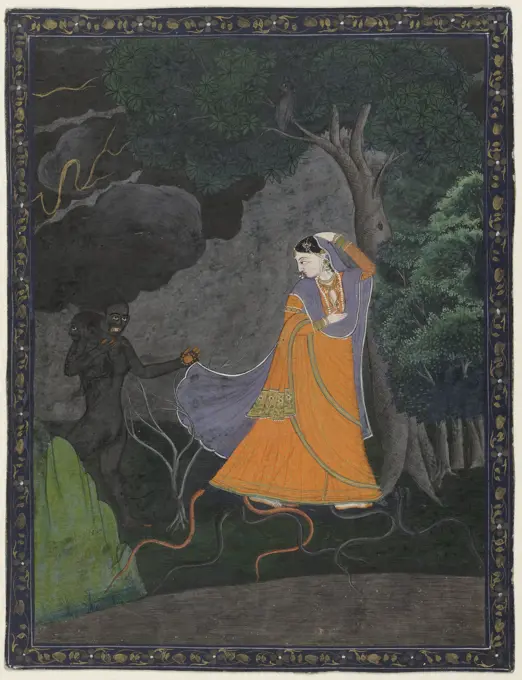
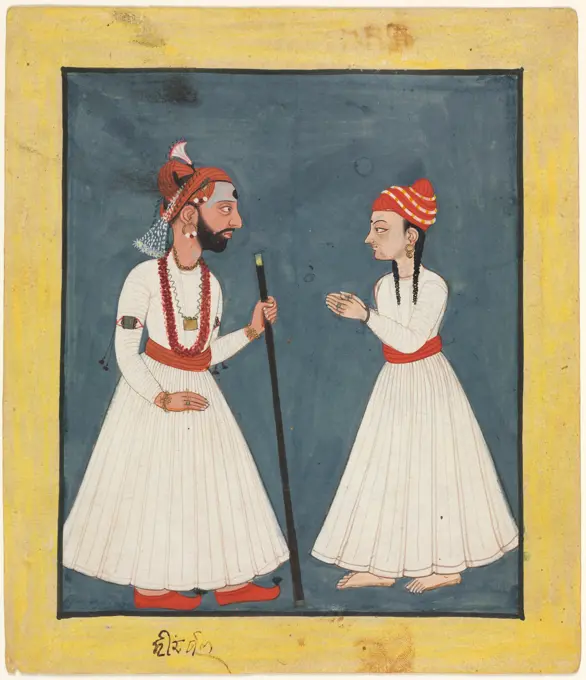
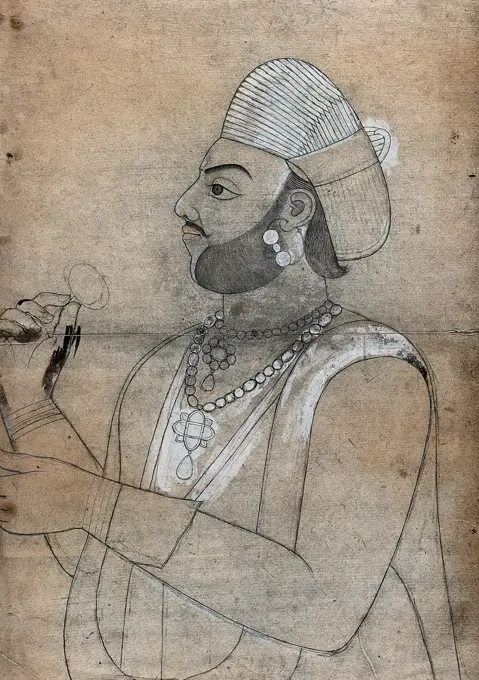
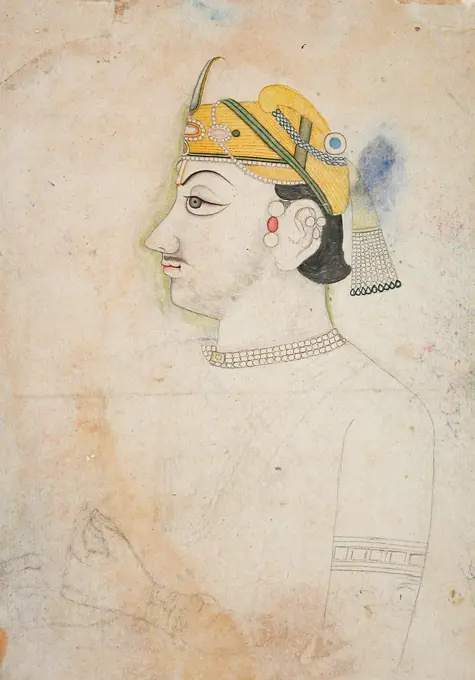
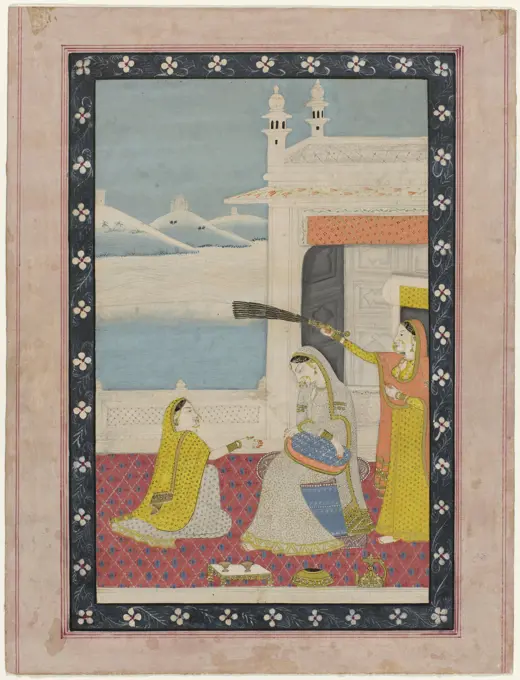
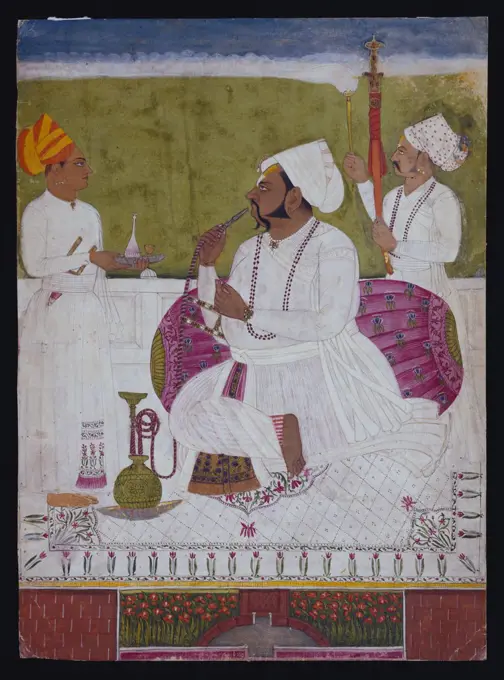
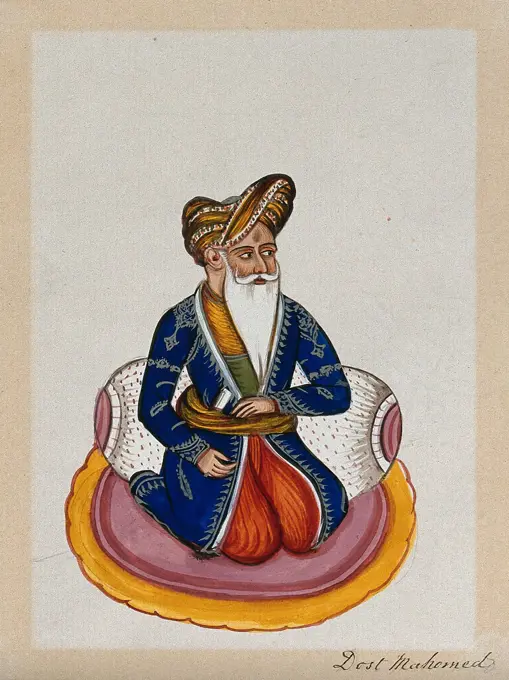
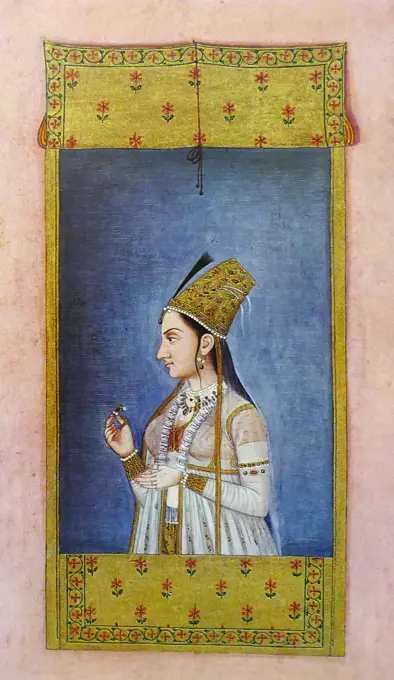
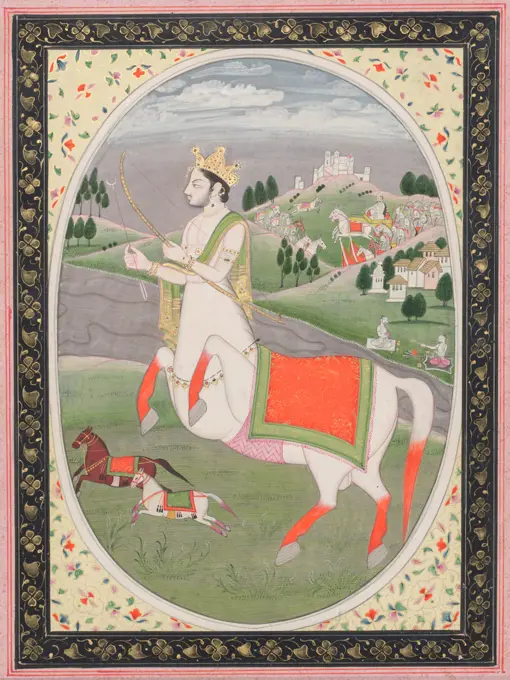
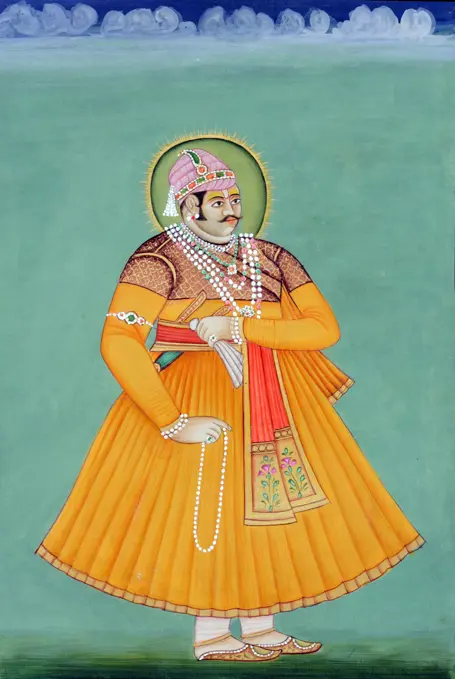
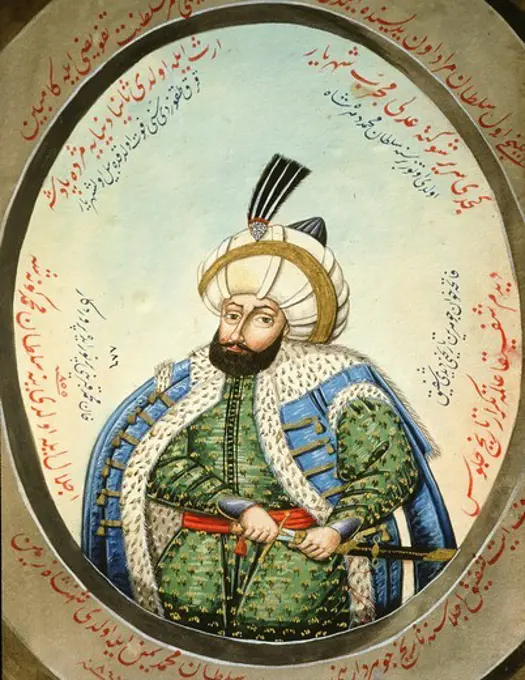
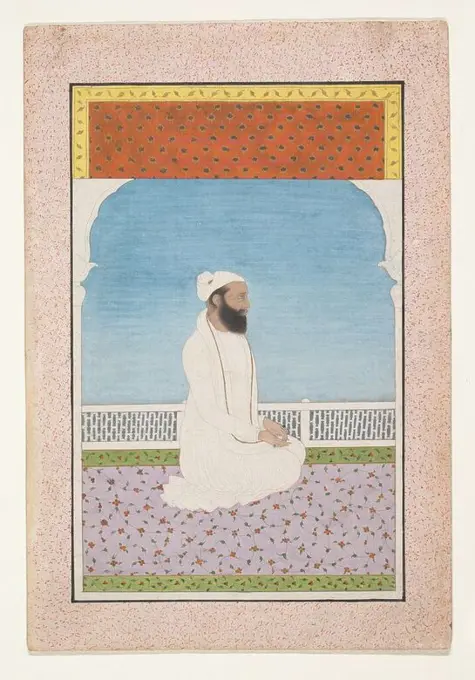
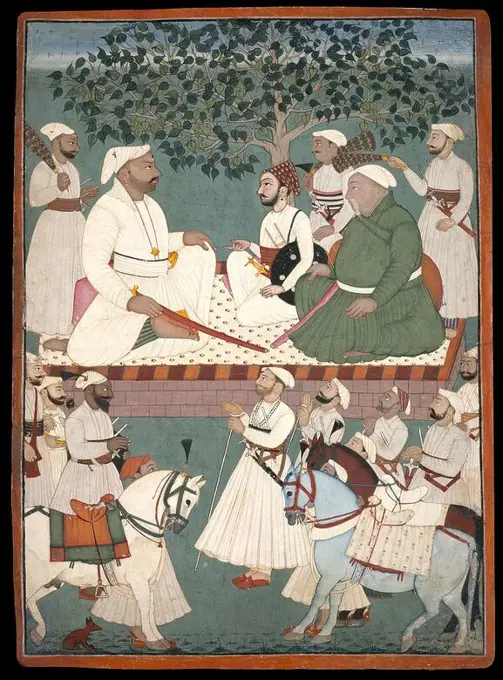
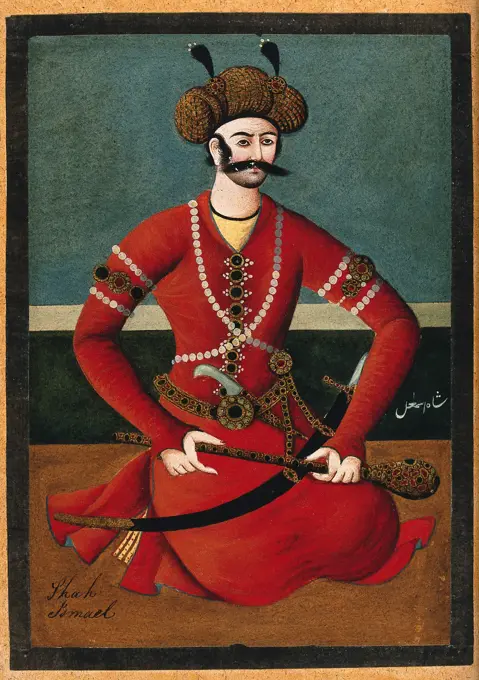
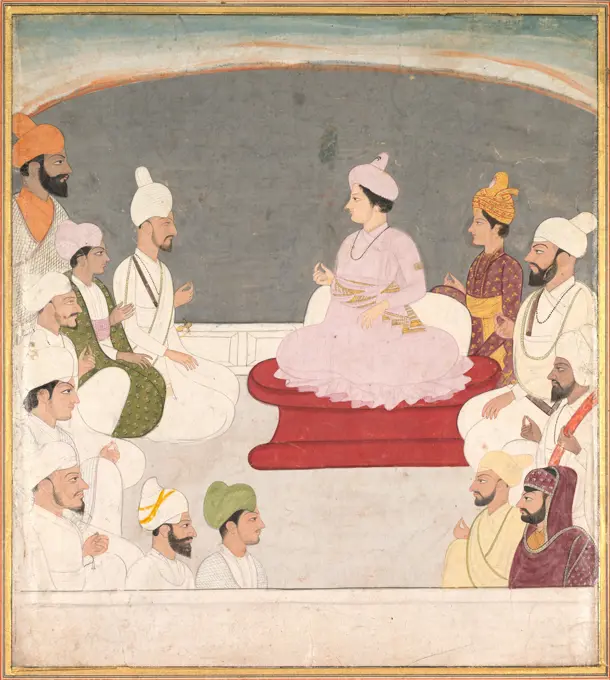
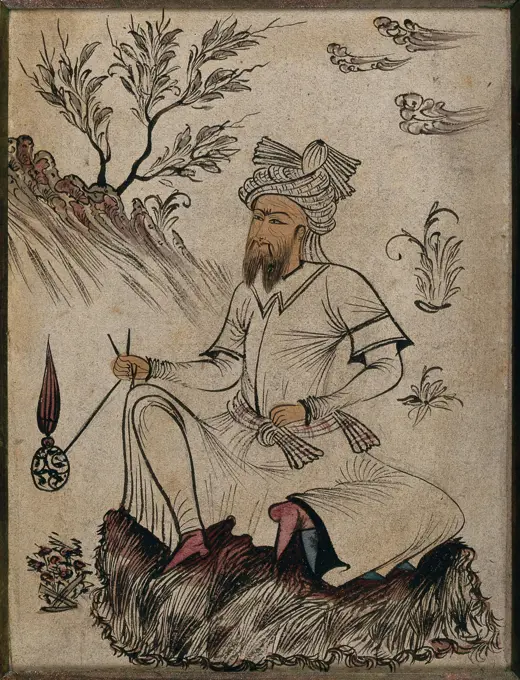
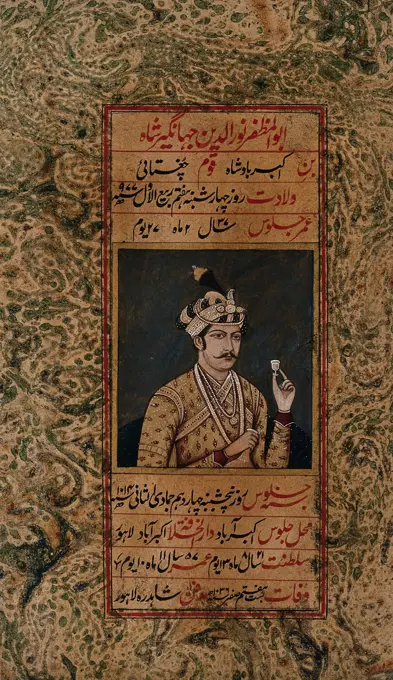
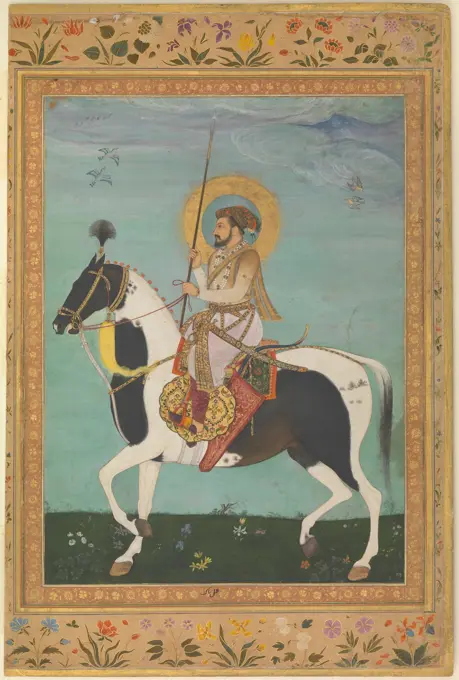
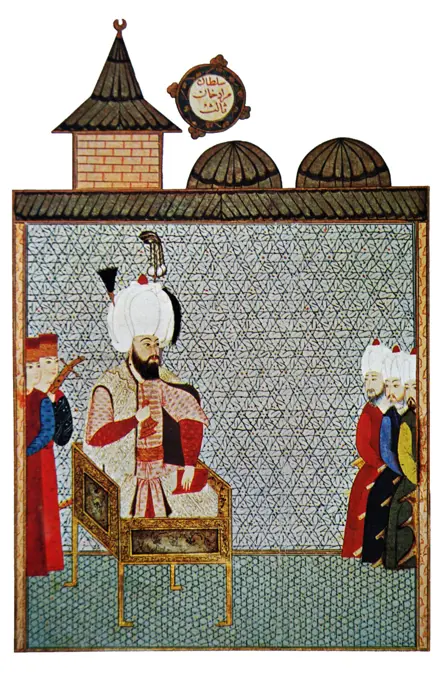
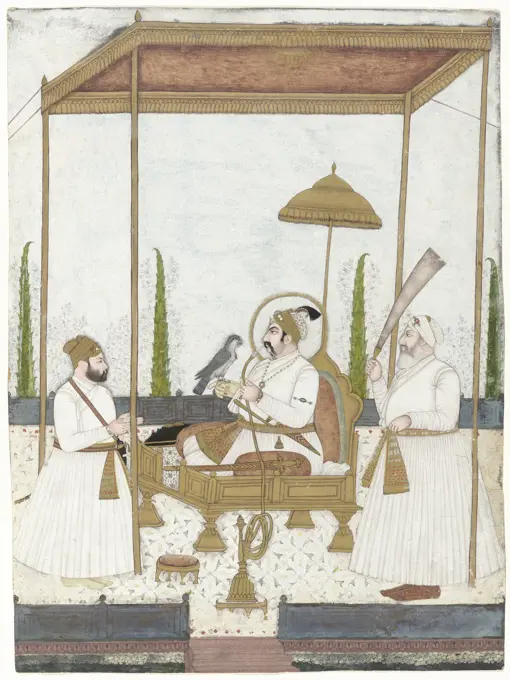
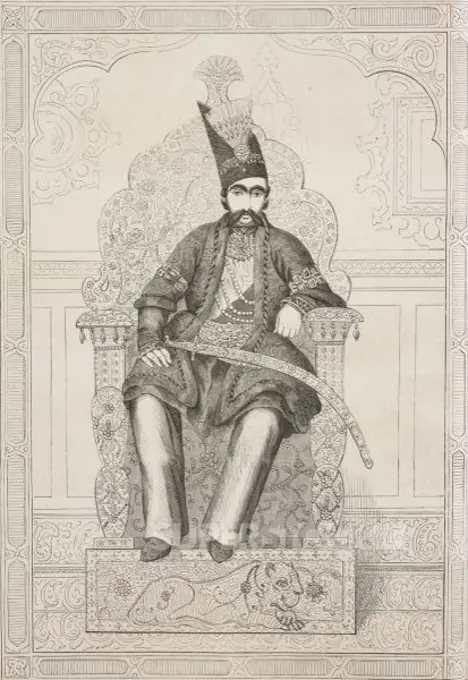
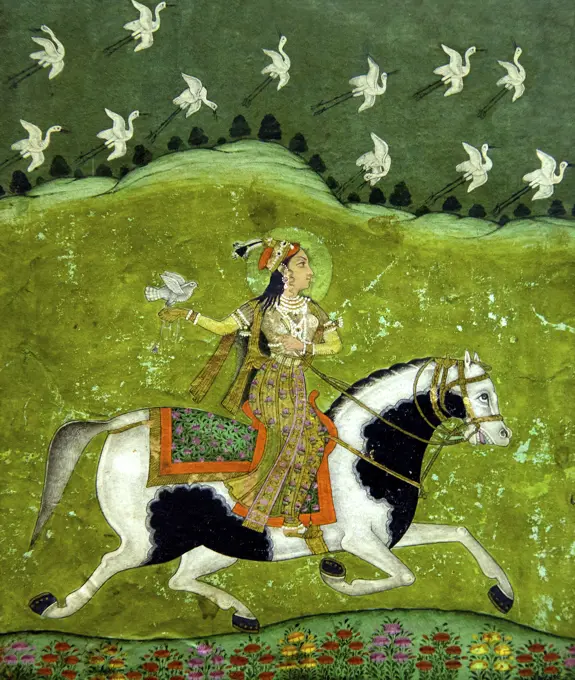
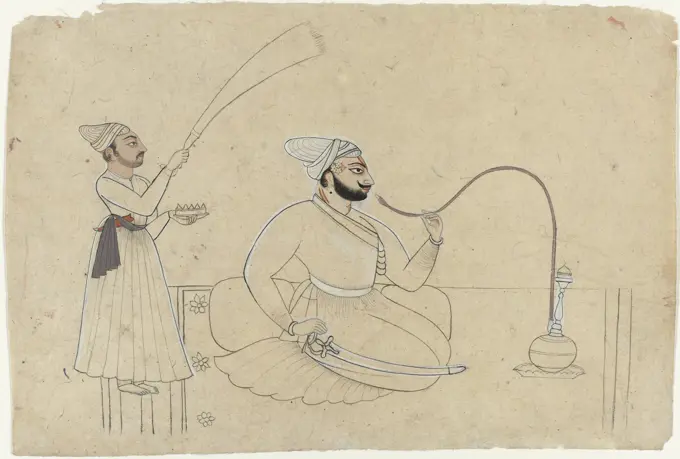
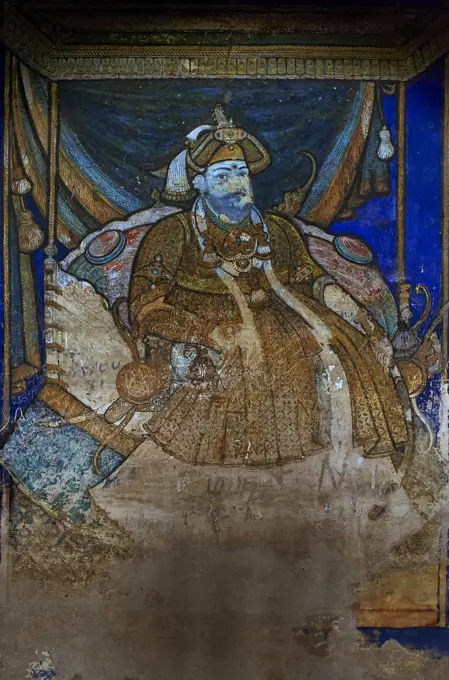
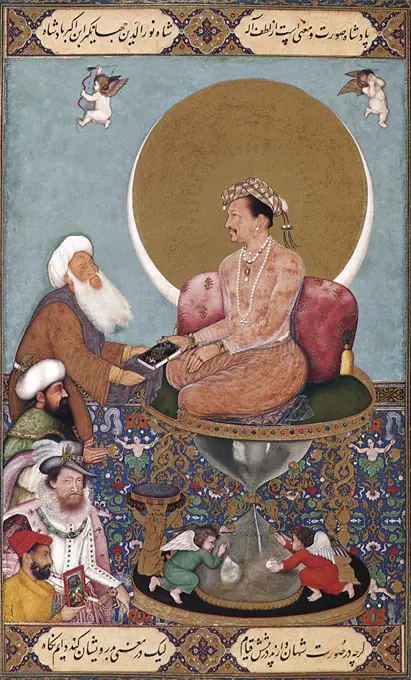
Jahangir on Hourglass 1625, Bichitr, 1625The Vilaval Ragini, c. 1780, 9 3/4 x 6 1/4 in. (24.77 x 15.88 cm), Opaque watercolor, gouache and gold on paper, India, 18th century, The central Rajasthan state of Kishangarh flourished as a painting center during the eighteenth century. Though closely tied to the Mughal court, it produced paintings with a unique figural style. Nihal Chand, a leading master of the school, is credited with creating an elegant, dignified figural type featuring the arched postures, receding foreheads, sharp noses, and elongated almond-shaped eyes associated with Kishangarh.Portret van Mulla Abd al-Samad, die secretaris (dabir) van Sultan Abdullah is geweest.Mulla Abd al-Samad has been depicted to his hips, turned to the right, with a flower in his left hand. Leaf 32 in the `Witsen album ', with 49 Indian miniatures of princes. Above the portrait a piece of paper with the name in Persian. Under the portrait a piece of paper with the name in Portuguese.Tonk was a Princely State of India which by treaty in 1817 accepted British suzerainty. Following the Partition of India in 1947, Tonk acceded to the newly independent Union of India. It was located in the region that is now the Tonk district.  The founder of the state was Muhammad Amir Khan (1768-1834), an adventurer and military leader of Afghan descent. In 1817, upon submitting to the British East India Company, he received the territory of Tonk and the title of Nawab. While retaining internal autonomy and remaining outside British India, the state came under the supervision of the Rajputana Agency and consisted of six isolated districts. Three of these were under the Rajputana Agency, namely, Tonk, Aligarh (formerly Rampura) and Nimbahera. The other three, Chhabra, Pirawa and Sironj were in the Central India Agency.  The total area of the princely state was 2553 sq. mi, with a total population in 1901 of 273,201. The town of Tonk, capital of the state, had a population of 38,759 inJahangir, early 1600s. Mughal India. Opaque watercolor and gold on paper; image: 4.8 x 3.2 cm (1 7/8 x 1 1/4 in.). Emperor Jahangir had tiny portraits of himself made to give as gifts to his friends, family, and courtiers as a sign of royal favor. These portraits were mounted and worn as jewels or turban ornaments. The carpet or textile under his hands references the covered rail of a balcony where the emperor addressed the public three times a day to hear complaints or petitions.Portrait of Bhuj Sing. Draughtsman: anonymous. Dating: 1830. Place: Mandi. Measurements: h 202 mm × w 148 mm. Museum: Rijksmuseum, Amsterdam.Gambhir Singh Receiving Gulabani. India, Madhya Pradesh, Orchha, circa 1775. Drawings; watercolors. Opaque watercolor and gold on paperCaricature of a hunchback archer, miniature by Riza I Abbasi, Persia 17th Century.A Rajput ruler riding on a horse. Gouache painting by an Indian painter.Raja Bikram Singh of Guler (r. 1661-75) Smoking a Hookah, c. 1680. Northern India, Himachal Pradesh, Pahari Kingdom of Chamba. Gum tempera and gold on paper; page: 21.7 x 28.8 cm (8 9/16 x 11 5/16 in.); image: 17.2 x 24.4 cm (6 3/4 x 9 5/8 in.). The portrait of Raja Bikram Singh is the earliest depiction of a Guler chief and was produced in Chamba, possibly under the patronage of Raja Chattar Singh (r. 1664-90). The painting bears several features of early portraiture in Chambaa straight Hookah pipe, striped trousers, large bolsters, and the sitting posture of the raja.Marwar - Hindi: ारवाड़ - is a region of southwestern Rajasthan state in western India. It lies partly in the Thar Desert. In Rajasthani dialect 'wad' means a particular area. The word Marwar is derived from Sanskrit word 'Maruwat'. The English translation is 'The region of desert'. Marwar includes the present-day districts of Barmer, Jalore, Lakshman Nagar, Jodhpur, Nagaur, and Pali. It is bounded on the north by the Jangladesh region, on the northeast by Dhundhar, on the east by Ajmer, on the southeast by Mewar, on the south by Godwar, on the southwest by Sindh, and on the west by Jaisalmer region."Portrait of Jahangir Beg, Jansipar Khan", Folio from the Shah Jahan Album verso: ca. 1627; recto: ca. 1530-50 Painting by Balchand Indian. "Portrait of Jahangir Beg, Jansipar Khan", Folio from the Shah Jahan Album 451284Portrait of a Prince, Perhaps Mahipat Dev of Mankot Indian. Portrait of a Prince, Perhaps Mahipat Dev of Mankot, ca. 1700-1710. Opaque watercolor, gold, and beetle wings on paper, sheet: 7 7/8 x 9 1/4 in. (20.0 x 23.5 cm).   Asian Art ca. 1700-1710Seven Paintings of Figures inLandscapesPortrait of Emperor Jahangir 1795-1805 India. Opaque watercolor and gold on paper . MughalCostumes de Différents Pays, 'Nabab de la Côte du Coromandel'. L. F. Labrousse (France, Bordeaux, active late 18th century)Jacques Grasset de Saint-Sauveur (France, 1757-1810). France, circa 1797. Prints; engravings. Hand-tinted engraving on paperYouth Dressed in Green. India, Karnataka, Bijapur (), 1600-1650. Drawings; watercolors. Opaque watercolor, gold, and ink on paperLady with a Black Buck Indian. , ca. 1750. Opaque watercolors and gold on paper, sheet: 8 1/2 x 6 1/4 in. (21.6 x 15.9 cm).   Asian Art ca. 1750Portrait of Mustafa Khan, who was the supreme commander of Sultan Mahmud. Draughtsman: anonymous. Dating: c. 1686. Place: Golkonda. Measurements: h 203 mm × w 140 mm. Museum: Rijksmuseum, Amsterdam.Portrait of Timur, also called Tamerlan. Draughtsman: anonymous. Dating: c. 1686. Place: Golkonda. Measurements: h 203 mm × w 140 mm. Museum: Rijksmuseum, Amsterdam.Man with a Yellow Shawl Sitting Crosslegged, Gangaram Chintaman Tambat, active 1790s, Anglo-Indian, undated, Watercolor, gouache, and graphite with pen and black ink on medium, slightly textured, cream laid paper, Sheet: 8 7/8 × 6 inches (22.5 × 15.2 cm)Bibi Ferzana. India, Mughal empire, circa 1675. Drawings; watercolors. Opaque watercolor, gold, and ink on paperPortrait of Allahwerdi Khan 17th century. Portrait of Allahwerdi Khan 450592Man in a red robe who plays a musical instrument. Draughtsman: anonymous. Dating: 1570 - 1590. Place: Iran. Measurements: h 164 mm × w 95 mm. Museum: Rijksmuseum, Amsterdam.Portrait of Muhammad Khan Shaibani, the Uzbek (d.1510) 16th century This painting, considered a portrait of the Shaibanid ruler Muhammad Khan, surrounds its subject with the accoutrements of cultureink pots, pen cases, and books. Upon his conquest of the Timurid political and cultural capital of Herat in 1507, this new ruler was eager to adopt the royal protocols established at the court of his predecessor, Sultan Husain Baiqara. This portrait may reflect Muhammad Khan’s interest in presenting himself as the legitimate ruler of this great, cosmopolitan city. Portrait of Muhammad Khan Shaibani, the Uzbek (d.1510) 451408Princess with Wine Bottle and Cup (recto), c. 1550-1600. Iran, Qazvin or Isfahan, Safavid period (1501-1722). Opaque watercolor and gold on paper; image: 12.2 x 5.7 cm (4 13/16 x 2 1/4 in.); overall: 37.1 x 24.8 cm (14 5/8 x 9 3/4 in.).COJEKAKAKAKE UL-HİZİJE Fi Schemail Osmanije"Portrait of Sayyid Abu'l Muzaffar Khan, Khan Jahan Barha", Folio from the Shah Jahan Album recto: ca. 1630; verso: ca.1530-50 Painting by Lalchand. "Portrait of Sayyid Abu'l Muzaffar Khan, Khan Jahan Barha", Folio from the Shah Jahan Album 451294A girl in a dark forest is chased by a black evil spirit with a child over his shoulder. The scene is framed by a narrow border of dull gold flowers and tendrils against a dark blue background with white frame lines, In search of her beloved, the intrepid heroine defies the elements., draughtsman: anonymous, Mandi, c. 1815 - c. 1825, paper, brush, h 205 mm × w 157 mm, h 189 mm × w 140 mmKrijgsman on horseback, Anonymous, 1800 Indian miniature. drawing A rider dressed in a white robe sits on a white horse with red decorations, in profile to the right. A red edge is stuck over the leaf of the performance that has largely disappeared on the left, the bottom and the bottom of the right side; The leaf is damaged on the lower corners and in a few places at the top. Jodhpur paper. deck paint brushPrince with two servants. Draughtsman: anonymous. Dating: 1670 - 1690. Place: Kashmir. Measurements: h 210 mm × w 125 mm. Museum: Rijksmuseum, Amsterdam.Raja Shamsher Sen with a Youth, 1760-70. India, Himachal Pradesh, Mandi. Opaque watercolor and ink on paper; image: 16.5 x 13.9 cm (6 1/2 x 5 1/2 in.); border: 20.3 x 17.6 cm (8 x 6 15/16 in.).A man wearing a turban and jewellery, holding a flower (). Pouncing drawing, pencil with watercolour and bodycolour, Indian (), 18--Prince. India, Rajasthan, Kishangarh, circa 1775-1800. Drawings; watercolors. Ink and opaque watercolor on paperOne of Set of Nine Watercolors showing Indians in Different Professions , 19th century. Watercolor on paper, 8 3/8 x 6 5/8 in. (21.3 x 16.8 cm).   Asian Art 19th centuryMiran Shah Indian. Miran Shah, 1875-1900. Opaque watercolor and gold on paper, sheet: 19 5/8 x 11 3/4 in. (49.8 x 29.8 cm).   Asian Art 1875-1900In front of a white palace sits a woman on a tabouret, standing on a red robe with blue floral motifs, in front of her lies a woman kneeling with both her arms forward, behind her a servant waving her cool, in the background a river with three white-blue hilltops with towers on top. Around the scene a dark blue (or black) border with floral and tendril motifs in white and red, around it a wide pink leaf edge with red frame lines., Sitting lady on terrace, draughtsman: anonymous, Guler, 1790 - 1810, paper, brush, h 253 mm × w 193 mm, h 220 mm × w 146 mmPortrait of Sayyid Amir Khan second half 17th century. Portrait of Sayyid Amir Khan 445961Portrait of Udai Singh, Thakur of Pali. Gouache heightened with gold on paper. Miniature, Pali early, 17th century, 19 x 12.1cm.Portrait of Bara Malik; He was first visor from the Sultan who ruled over the city of Bidar (); Later he became ruler of Golconda and founded Golconda. Bara Malik is depicted to his hips, half-turned right, with his right hand on his sword, and his left hand on a dagger in his belt. Leaf 19a in the `Witsen-album ', with 49 Indian miniatures of princes. Above the portrait a piece of paper with the name in Persian. Under the portrait a piece of paper with the name in Portuguese.Dost Mohamed. Gouache painting by an Indian painter.Mughal portrait of a Princess seen at a window holding a jewel. She faces left and is dressed in a transparent robe over a flowered skirt. She is richly bejewelled and wears a tall gold flowered hat with a black aigrette and a transparent veil falling over her shoulders; the window blind above her and the hanging draped over the sill are decorated with flowers on a gold ground, on an album leaf with a border of silver and gilt leaves on a dark blue ground, four lines of nasta'liq calligraphy on the verso on a gold and silver ground. Dated 18th CenturySagittarius, c. 1810. India, Himachal Pradesh, Pahari Hills, Mandi or Kangra, 19th century. Gum tempera and gold on paper; sheet: 20.3 x 26 cm (8 x 10 1/4 in.).Portrait of Ali Adil-shah, son of Sultan Mahmud; after his father he was ruler of Bijapur. Draughtsman: anonymous. Dating: c. 1686. Place: Golkonda. Measurements: h 203 mm × w 140 mm. Museum: Rijksmuseum, Amsterdam."Portrait of Raja Bikramajit (Sundar Das)", Folio from the Shah Jahan Album. Artist: Painting by Bichitr (active ca. 1610-60). Calligrapher: Mir 'Ali Haravi (d. ca. 1550). Dimensions: 15 1/4 x 10 1/8in. (38.7 x 25.7cm). Date: recto: ca. 1620; verso: ca. 1540.Sundar Das was a Hindu whoses ancestors had been considerable landowners. He entered the service of Prince Khurram (Shah Jahan) and in 1617 Jahangir awarded him the title of Raja Bikramajit "which among Hindus is the highest" as Jahangir wrote in his memoirs. Raja Bikramajit was a brilliant military strategist and instrumental to the success of Prince Khurram's campaigns in the Deccan. In Shah Jahan's rebellion against Jahanagir in 1623-24, Raja Bikramajit sided with the prince, and when he was killed in battle, Jahangir was unashamedly gleeful, writing "By losing him the Wretch Shah Jahan lost courage, as though his luck, ambition, and reason were all found up with that Hindu dog." In Bichitr's brilliant portrait, the figure positShah Abbas II (reigned 1642-1667) Unknown. Shah Abbas II (reigned 1642-1667), 17th century. Watercolor and gold on paper, 9 3/4 x 6 1/2 in. (24.8 x 16.5 cm).   Arts of the Islamic World 17th centurySELIM II, 1524-74 Ottoman sultan, c. 1570Portrait of Ibrahim Adil Shah II (1556-1627), Sultan of Bijapur by Anonymous   / The David Collection / The Oriental Arts / ca 1590 / India, Deccan sultanates / Gouache on paper / Portrait / 27x16,3Ahmed I (1590-1617), Sultan of the Ottoman Empire by Levni, Abdulcelil (-1732) / Topkap&#305 Palace, Istanbul / ca 1705 / Turkey / Gouache on paper / Portrait /Portrait of Shuja, the son of Shah Jahan, who was born after Dara Shikoh and reigned over Bengal during his father's time; After the death of his father, Aurangzeb killed him and took possession of Bengal. Draughtsman: anonymous. Dating: c. 1686. Place: Golkonda. Measurements: h 203 mm × w 140 mm. Museum: Rijksmuseum, Amsterdam.Iran, Tehran, Laleh Park, Carpet Museum of Iran, traditional Iranian carpet detailPrince Raj Singh of Bikaner. India, Rajasthan, Marwar, Jodhpur, circa 1775-1785. Drawings; watercolors. Opaque watercolor, gold, and ink on paper. Muhammad Ibrahim is depicted to his hips, turned to the right, in his left hand a flower. Leaf 29 in the `Witsen album ', with 49 Indian miniatures of princes. Above the portrait a piece of paper with the name in Persian. Under the portrait a piece of paper with the name in Portuguese.Kneeling princes. Draughtsman: anonymous. Dating: 1840. Place: Pahari. Measurements: h 144 mm × w 200 mm. Museum: Rijksmuseum, Amsterdam.Standing prince, anonymous, 1645 - 1655 Indian miniature. drawing   paper brushMiniature painting of Maharaja Sawai Madho Singh Jaipur Copyright: xBhagwandasxRupani/DinodiaxPhotoxOttoman Sultan OSMAN I,1258-1326, founder of Ottoman dynasty, watercolour, 19th centuryA Holy Man Seated on a Terrace. Culture: India (Punjab Hills, Kangra). Dimensions: 6 1/2 x 4 1/4 in. (16.5 x 10.8 cm). Date: ca. 1850.The artist has masterfully used the sparse setting to highlight his subject. The figure is placed against a pale sky of graduated blues, framed on the sides by a marble archway and above by a fabric blind, the hot orange and yellow of which contrast with the pink rug with a softer green border in the lower portion of the page. The white of the holy man's robe seems blinding in its stark whiteness. These deftly handled coloristic effects set the stage for the sensitively observed portrait. Museum: Metropolitan Museum of Art, New York, USA.Shahzadeh Wala Jah Indian. Shahzadeh Wala Jah, 1875-1900. Opaque watercolor and gold on paper, sheet: 19 5/8 x 11 13/16 in. (49.8 x 30.0 cm).   Asian Art 1875-1900Thakur Yaswanta Singhji (reigned 1688-1707). India, Rajasthan, Badnor, circa 1880-1900. Paintings. Oil on canvas; original wood frame inscribed in goldPortrait of Sultan Selim II (reigned 1566-1574). Turkey, circa 1600-1610. Manuscripts; folios. Ink, opaque watercolor, and gold on paper mounted on an album leafSeated Raja Smoking a Hookah Seated Raja Smoking a Hookah, ca. 1775. Ink and color on paper, mat (opening): 9 7/8 × 8 1/8 in. (25.1 × 20.6 cm).   Asian Art ca. 1775Persian miniature.. A few runs together to a ready bed; The man has hit his left arm around the shoulders of the woman and holds her left arm; In the right hand, both wear a white-red chain. The show is stuck on a piece of gray cardboard and refurbished by dark green strips of paper.Maharaja Sidh Sen Receiving an Embassy. Artist: A Master of the Mandi atelier (Indian). Culture: India (Himachal Pradesh, Mandi). Dimensions: 14 9/16 x 10 5/8 in. (37 x 27 cm). Date: ca. 1700-10.The subdues palette of grays, greens, and whites and the sophisticated drawing of this unusually large and ambitious painting mark it as the work of the most important Mandi painter of the early eighteenth century. The dual-level composition, in which the maharaja and two visiting dignitaries sit on a raised dais covered with a summer carpet while retainers and mounts stand on the ground below, derives from Mughal models. The subject is extremely unusual within the corpus of hill-state painting; the picture probably records an actual meeting, which seems filled with import. In Hindu painting, rulers are routinely portrayed on a larger scale than their courtiers, as befits their royal stature. Here, the two massive figures face each other; the white-robed Sidh Sen and his portly petitioner. MusPortrait of Muhammad Amin Khan with comprehensive Dutch caption on the decorated frame, Anonymous, c. 1675 - c. 1685 Indian miniature  Golkonda paper. deck paint. gouache (paint) brushA seated Mughal court attendant in a garden. Gouache preparatory painting, by an Indian artist, Mughal period.Portrait of the Great Mogul Farrukhsiyar, draughtsman: anonymous, Deccan, c. 1720, paper, h 203 mm × w 151 mmShāh Ismael. Gouache painting by a Persian artist, Qajar period.Raja Sansar Chand of Kangra and Courtiers, c. 1783. India, Pahari Hills, Kangra school, 18th century. Ink and color on paper; overall: 24.2 x 21.6 cm (9 1/2 x 8 1/2 in.).COJEKAKAKAKE UL-HİZİJE Fi Schemail OsmanijeFrost with a group of people ..A man seated, holding a string attached to a winged sphere. Coloured brush drawing.Portrait of Raja Bhao Sing Rajput, who has been a sight of Aurangzeb, c. 1686 drawing. Indian miniature Raja Bhao Sing Rajput is depicted to his hips, used to the right, with a spear in his right hand, his left hand on a shield, in his belt a kattan. Leaf 13 in the `Witsen-Album ', with 49 Indian miniatures of princes. Above the portrait a piece of paper with the name in Persian. Under the portrait a piece of paper with the name in the Portuguese. Golkonda paper. deck paint. gold leaf. gouache (paint) brush ruler, sovereign. historical person (...) - historical person (...) portrayed aloneAbū Al-Muzaffar Nūr Al-Dīn Jahāngīr Shāh bin Akbar Bādshāh Qūm Chaghatā'ī. Gouache painting by an Indian artist, ca. 1850 ().Portrait of a Mogol-Hoveling ..Youth and Dervish. Dimensions: 9 1/2 x 7in. (24.1 x 17.8cm). Date: second quarter 17th century.While the inscription in the drawing assigns it to the celebrated artist Riza-ye 'Abbasi of the Isfahan school, it is more likely by a pupil following the typical calligraphic style of the master. From about 1610 on, figures in Isfahan drawings and paintings have heavy pear-shaped thighs and wide, round cheeks. The subject of a youth paired with an older man, often a dervish or a poet, illustrated the relationship of the spiritual guide or 'pir' and his disciple, the 'murid'. Museum: Metropolitan Museum of Art, New York, USA.Tweede koning of mogol van Indostan.Drawing from the manuscript of the VOC servant Adrianus Canter Visscher with in the back of twenty-egypt Indian miniatures and two cards of places on the Coromandel coast. The text consists of two parts: a history of the Mogolrijk and the VOC branches on the Coromandel coast; This is followed by advice to the men's XVII about the economic situation of the VOC in the Coromandel.Attributed to Gangaram Chintaman Tambat, active 1790s, Anglo-Indian, Man Writing, undated. Watercolor and graphite with pen and black ink on medium, slightly textured, cream laid paper.An elderly Muslim man wearing a blue cap. Gouache painting on mica by an Indian artist.Page 116: three portraits of kings, princes or generals. Gouache drawing.Radha's Hidden Endeavors That Indicate Her Preoccupation with Love (Prachanna Chesta), Folio from a Rasikapriya (The Connoiseur's Delights). India, Rajasthan, Amber, circa 1650-1700. Drawings; watercolors. Opaque watercolor, gold, and ink on paperIraj Khan Indian. Iraj Khan, 1875-1900. Opaque watercolor and gold on paper, sheet: 19 5/8 x 11 13/16 in. (49.8 x 30.0 cm).   Asian Art 1875-1900. Against a simple green background is in the middle a woman on a tabouret, in the right hand she holds her hair, the left extends diagonally backwards in the scale that a servant stops and in which jewelry lying; Behind the taboer is a swan with the neck straight up, in the foreground and on the side some jugs and bottles. Around the show a narrow black border and some pink and yellow frame lines on a purple wide edge speckled with blue.SULEIMAN I, the Magnificant, 1494-1566, Ottoman sultan, from 16th century manuscript Memorie TurchescheThe Nawab of Multan. Gouache painting by an Indian painter.Officer with long coat, draughtsman: anonymous, India, 1690 - 1710, paper, brush, brush, brush, brush, h 215 mm × w 135 mm"Shah Jahan on Horseback", Folio from the Shah Jahan Album verso: ca. 1630; recto: ca. 1530-50 Painting by Payag Indian Payag worked for the emperors Akbar, Jahangir, and Shah Jahan over the course of a remarkably long, seven-decade career, and his brother Balchand was also a talented painter with whom he collaborated on a handful of paintings. The attribution of this portrait to Payag, written in the border below the painting by Shah Jahan, was recently confirmed by the discovery of a microscopic signature on the golden tip of the emperors bow.. "Shah Jahan on Horseback", Folio from the Shah Jahan Album 451267Young Man Holding a Cup Muhammad 'Ali. , 1650-1660. Ink on paper, 4 1/2 x 2 1/4in. (11.4 x 5.7cm).   Arts of the Islamic World 1650-1660Portrait of Murad III (1546-1595) emperor of the Ottoman Empire. Dated 16th CenturyA Courtesan and Her Lover Estranged by a Quarrel: Page from a Rasamanjari series. Artist: Devidasa of Nurpur (active ca. 1680-ca. 1720). Culture: India (Punjab Hills, Basohli). Dimensions: Overall: 8 5/8 x 12 3/4in. (21.9 x 32.4cm)Painting within rules: 6 3/4 x 11 1/4 in. (17.2 x 28.6 cm). Date: dated 1694-95.The Rasamanjari (Essence of the Experience of Delight) is a series of late fifteenth-century poems that subtly categorizes amorous situations, moods, and physical traits of women. In this image, the half-open doorway alludes to the lover's hasty departure from the palace of his mistress. The marble gateway with darkened portal visually separates the two and forms a visual metaphor for their rift. Unlike earlier versions of this theme, in which the nayaka (lover hero) is represented as Krishna, here that role is played by a princely figure, adding heightened realism to the scene. Museum: Metropolitan Museum of Art, New York, USA.Kakubha Ragini, c. 1610. India, Mughal Dynasty (1526-1756). Color on paper; overall: 21.5 x 16 cm (8 7/16 x 6 5/16 in.).Miniature painting on ivory Mughal emperor Shah Jahan Copyright: xBhagwandasxRupani/DinodiaxPhotoxMohammed Shah receives Qamar-Ud-Din Khan, Anonymous, 1736 Indian miniature  Murshidabad paper. deck paint. gouache (paint) brushPortrait of Maharaja Mahadji-Scindia, c. 1880, 9 13/16 x 6 7/8 in. (24.92 x 17.46 cm) (sheet), Opaque watercolors on paper, India, 19th century, Maharaja Mahadji-Scindia, ruler of the Gwalior district in central India, died in 1894. Although the ruler is shown in a formal pose, the painting is generally more illusionistic and less idealized than the earlier royal portraits exhibited here. This difference is due to the influence of both photography and the increased taste for naturalism engendered by so-called 'company school' painting. With the advent of photographic portraiture in the late nineteenth century, sketches such as this, as well as finished portrait paintings, increasingly resembled the work of the portrait-studio camera.Two ladies visit a friend in the evening. Draughtsman: anonymous. Dating: 1775. Place: Centraal-India. Measurements: h 177 mm × w 192 mm; h 225 mm × w 240 mm. Museum: Rijksmuseum, Amsterdam.Nasser al-Din Shah Qajar (1831-1896), Shia of Persia, illustration by Doussault from L'Illustration, Journal Universel, No 729, Volume XXIX, February 14, 1857.Sultan Razia of Delhi, 18th century, Archaeological Museum, Red Fort, Delhi, India, AsiaPortrait of Ajmat dev van Mankot, a hookah (water pipe) smoking, behind him a servant with a fan, anonymous, c. 1720 - c. 1730 drawing. Indian miniature  Tank paper. deck paint brushRaja serfoji ii painting, royal palace museum, thanjavur, tamil nadu, india, asia Copyright: xAnilxDave/DinodiaxPhotox