Intricate Decorative Boxes

A collection of ornate boxes from various cultures, showcasing intricate designs and materials used in traditional craftsmanship.
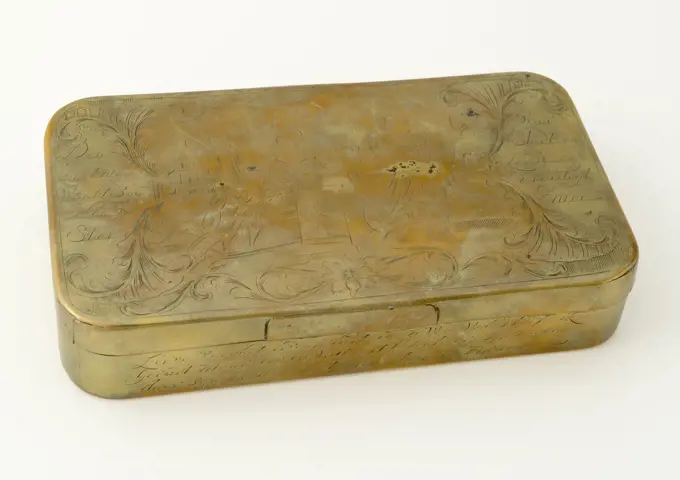
Tobacco box with Den Lantman guards as in Stee Voor Stadt and Land and Vreijhijt, tobacco box holder iron copper, cast copper engraved Rectangular hinged lid round corners Den Lantman watches as in Stee Voor Stadt and Land and Vreijhijt Rotterdam heraldry Freedom Bataafse Republic war and peace smoking store tobacco snuff box
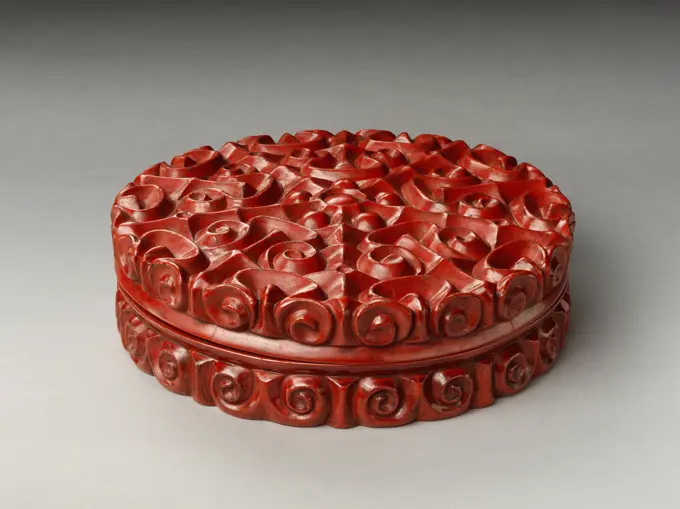
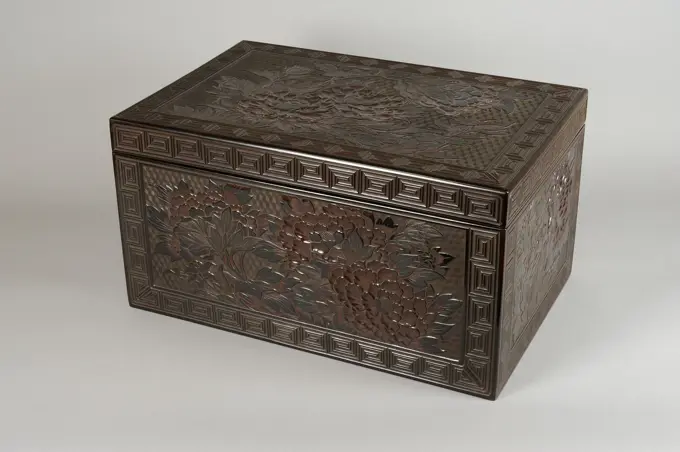
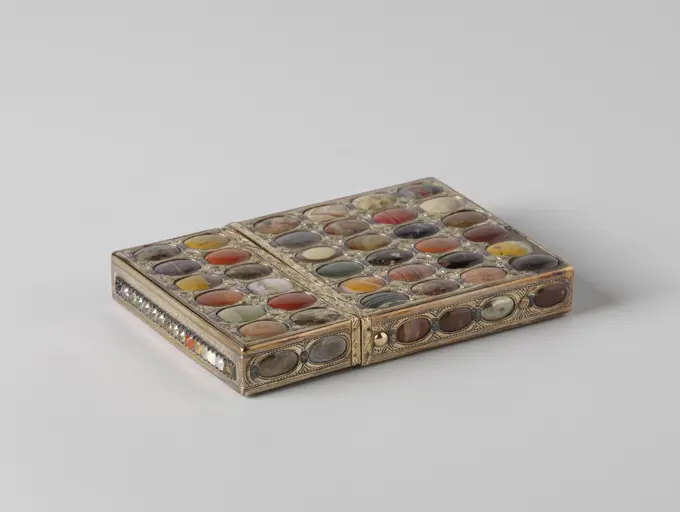
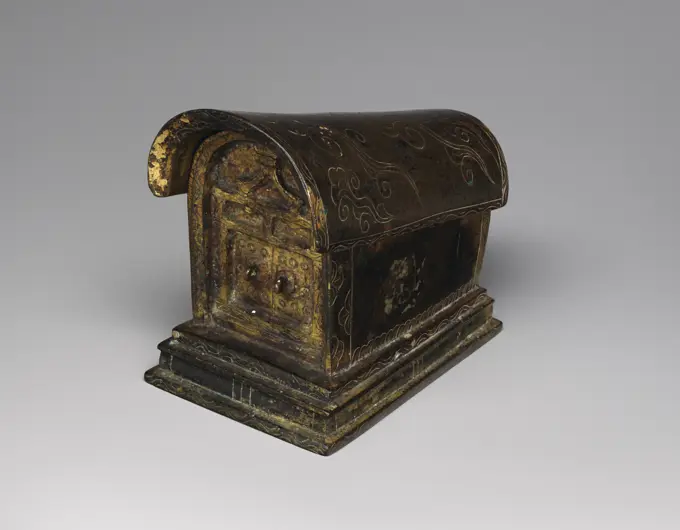
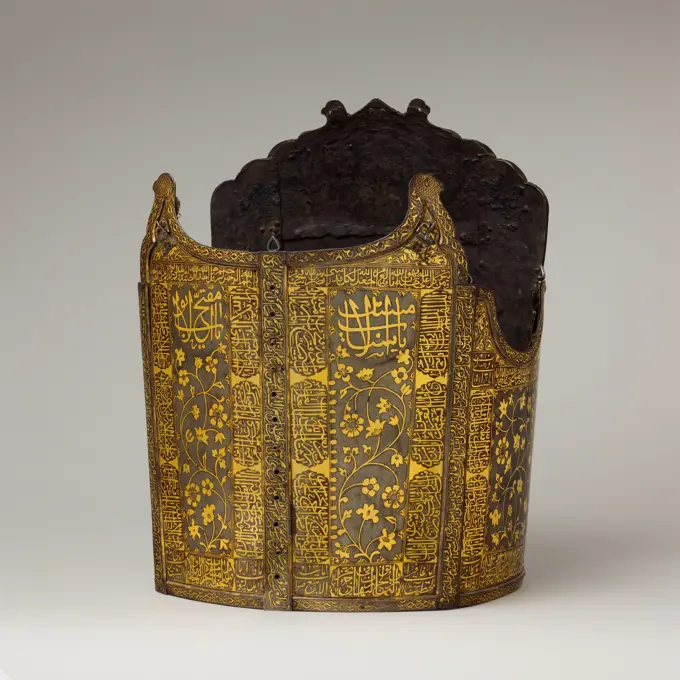
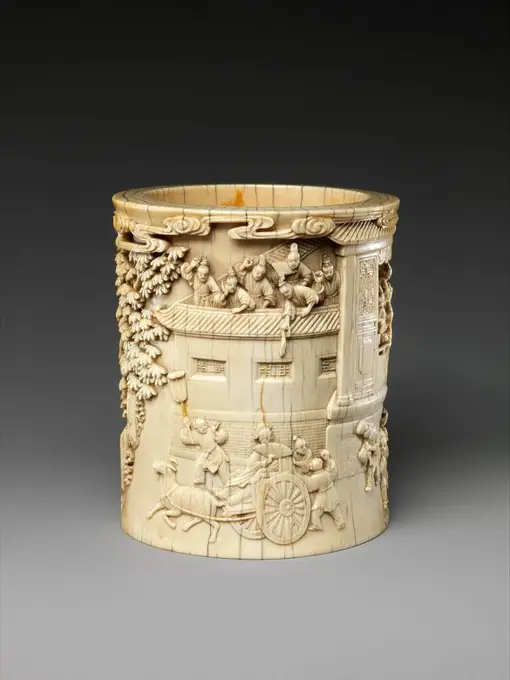
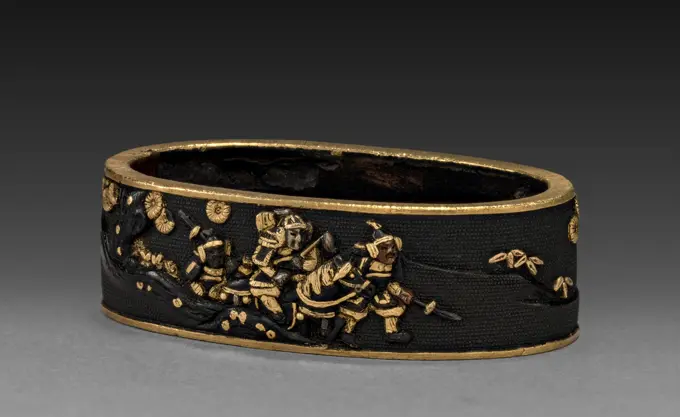
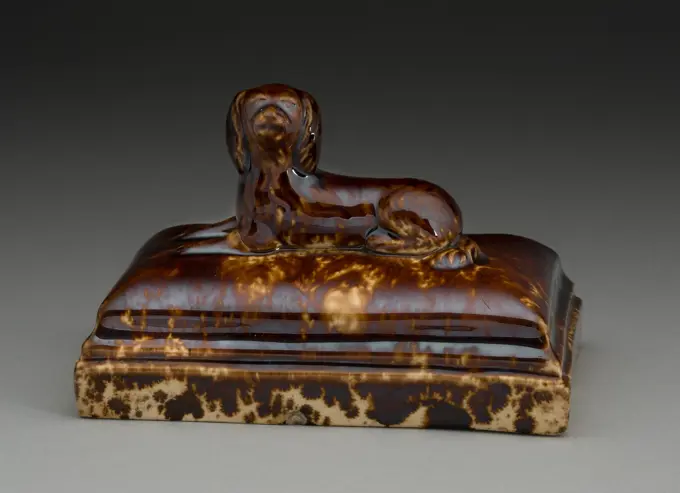
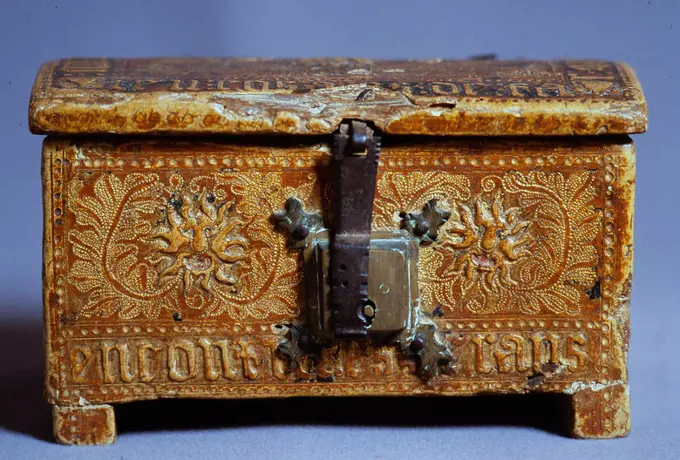
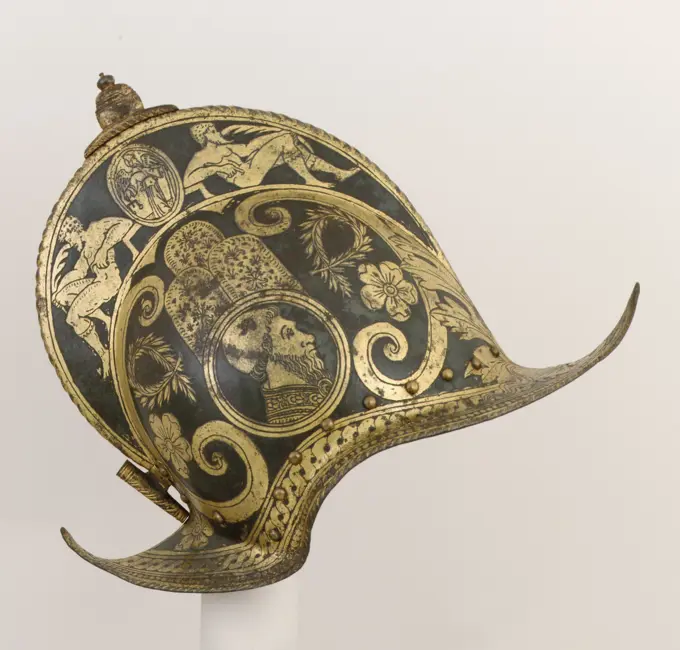
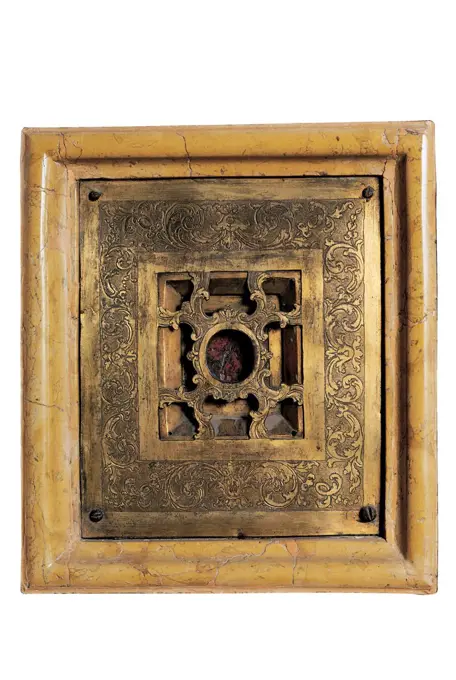
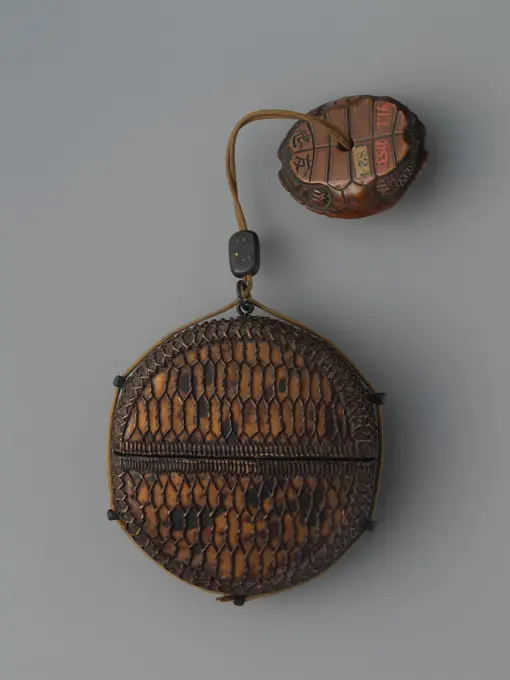
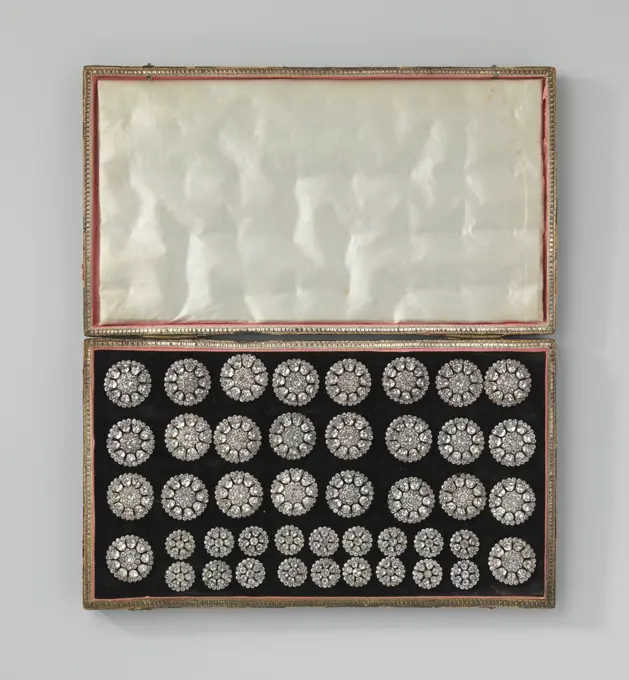
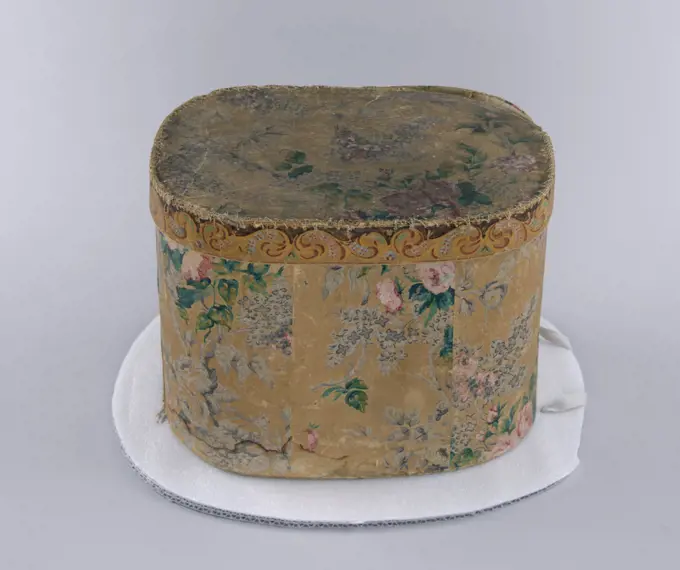
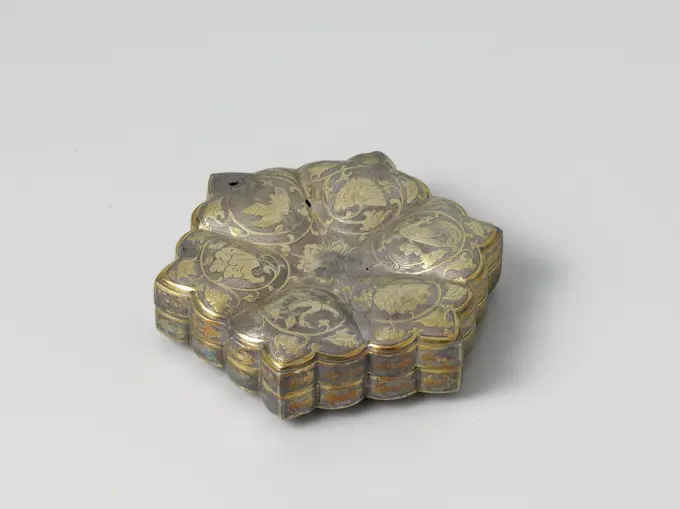
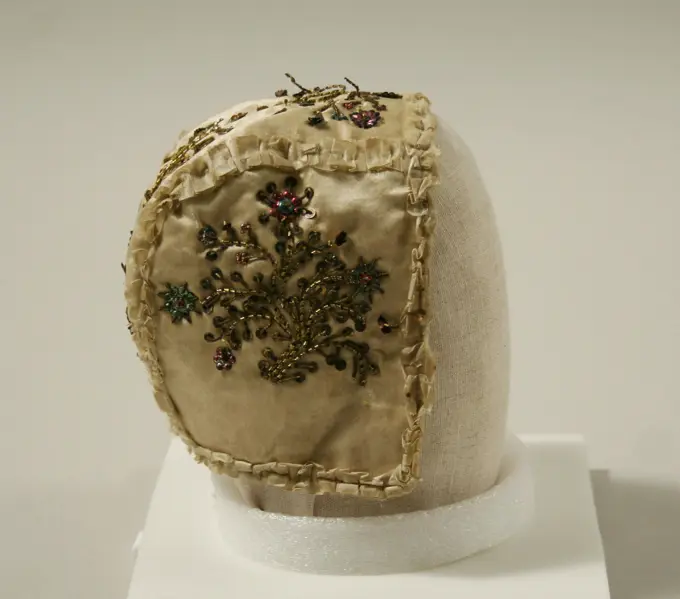
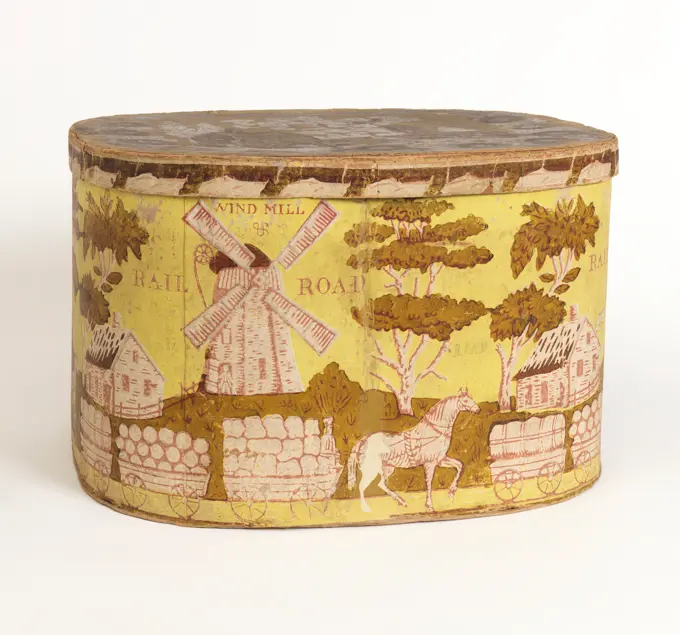
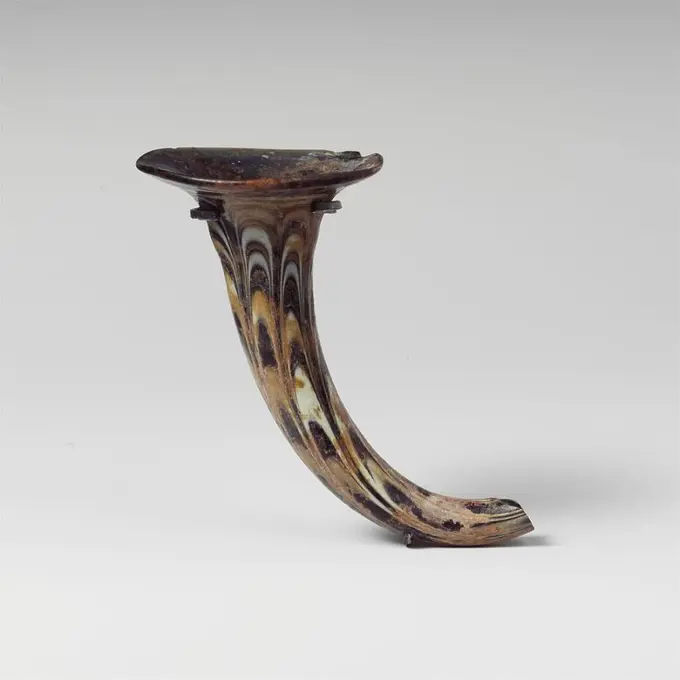
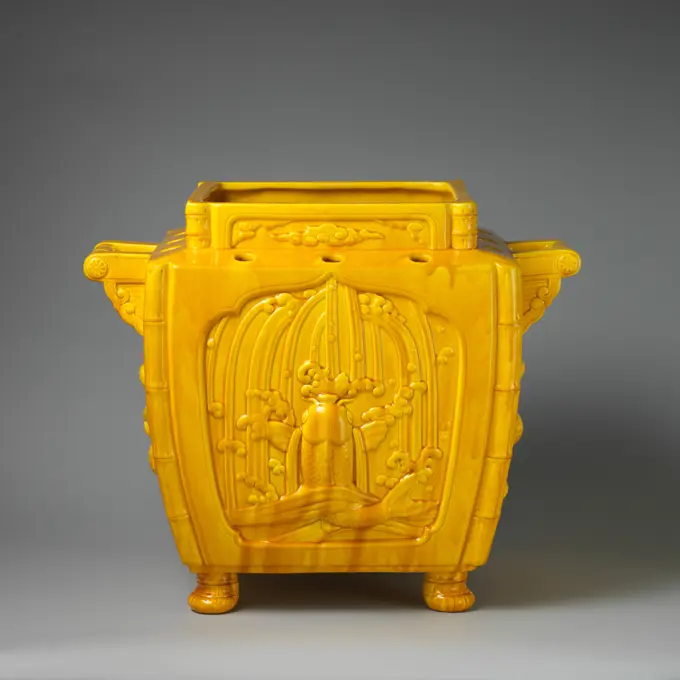
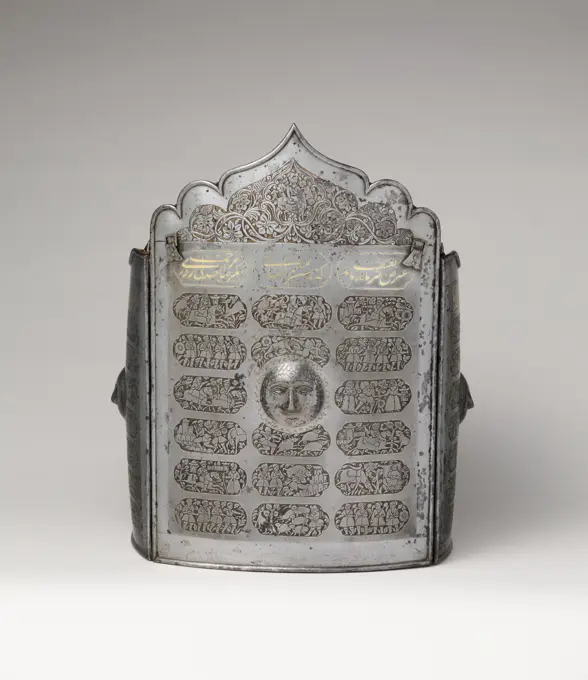
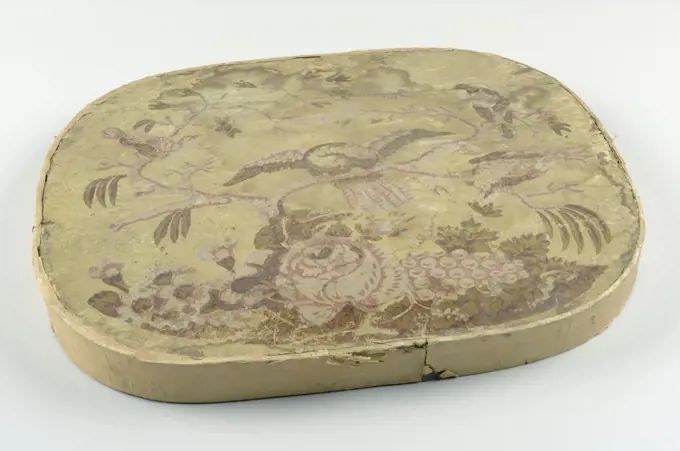
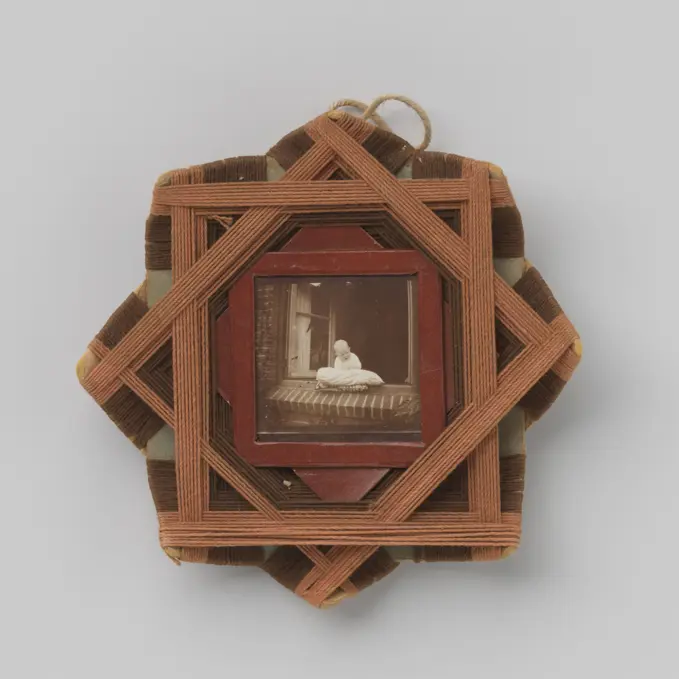
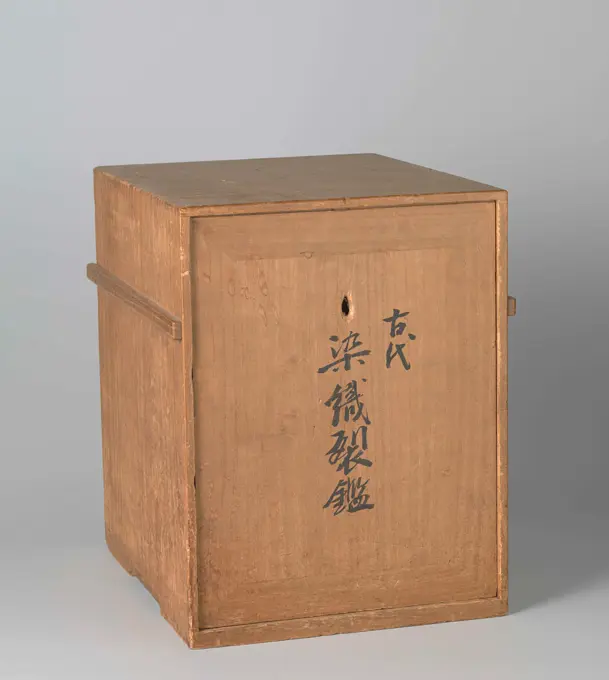
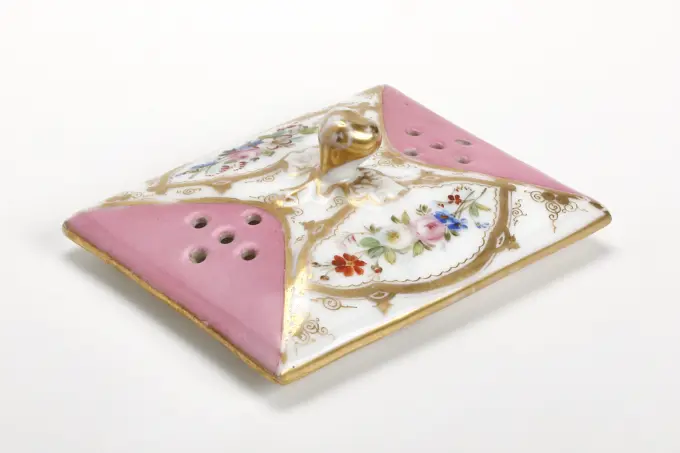
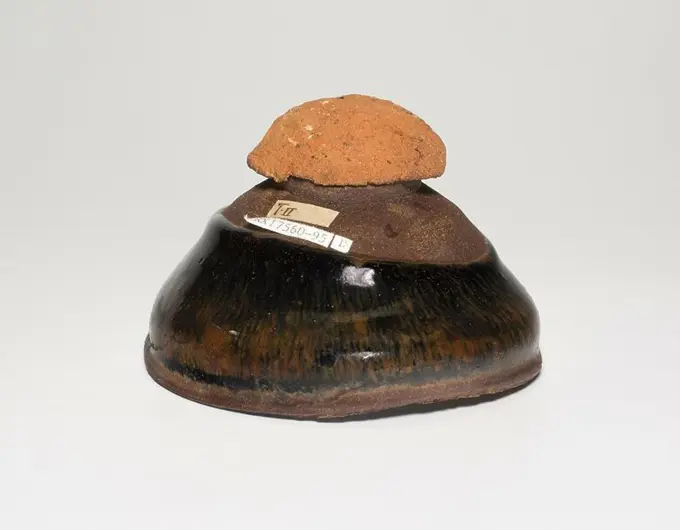
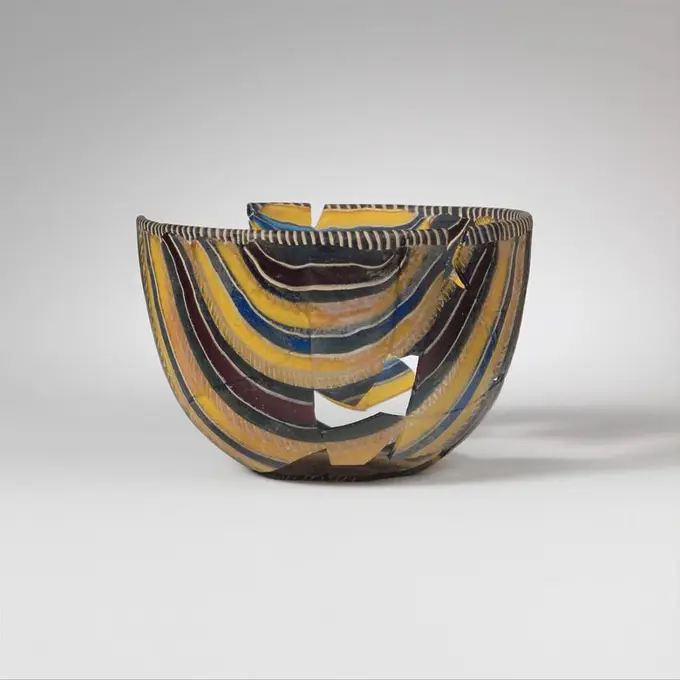
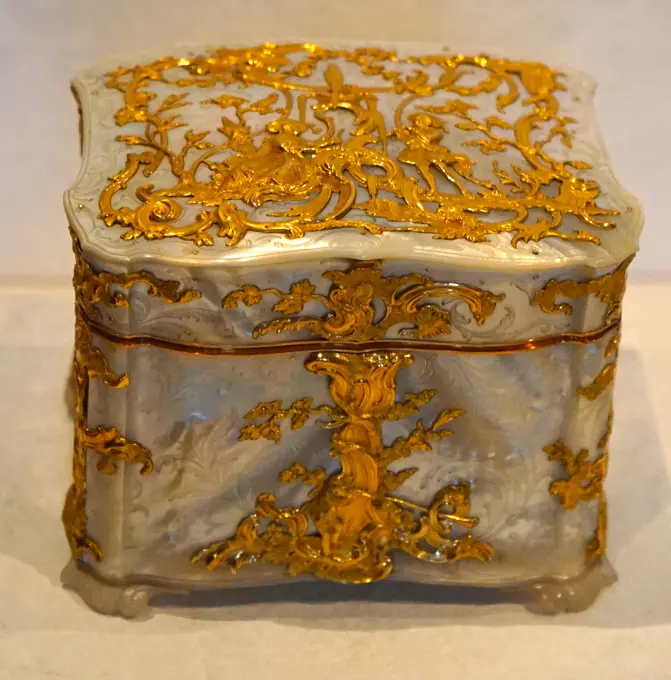
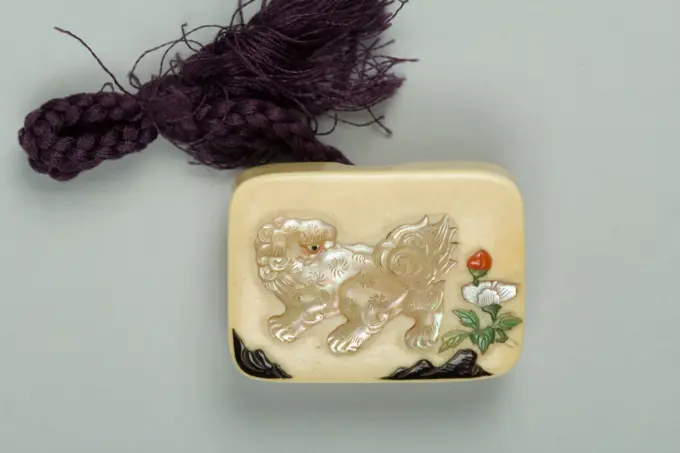
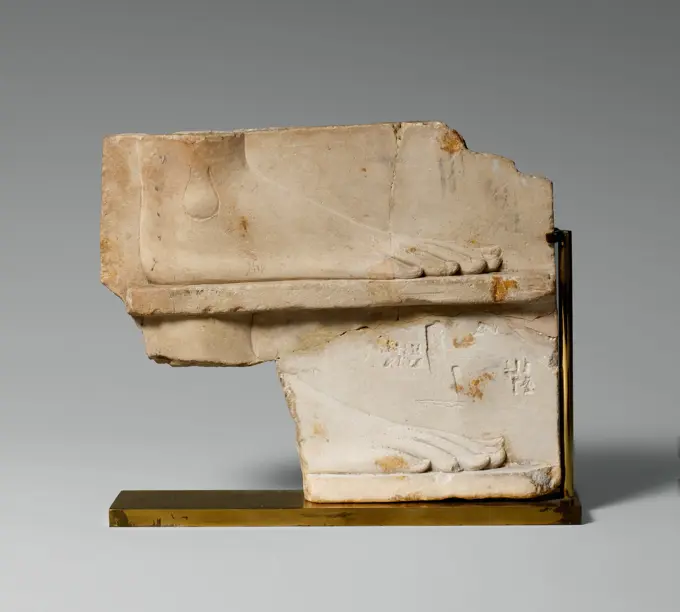
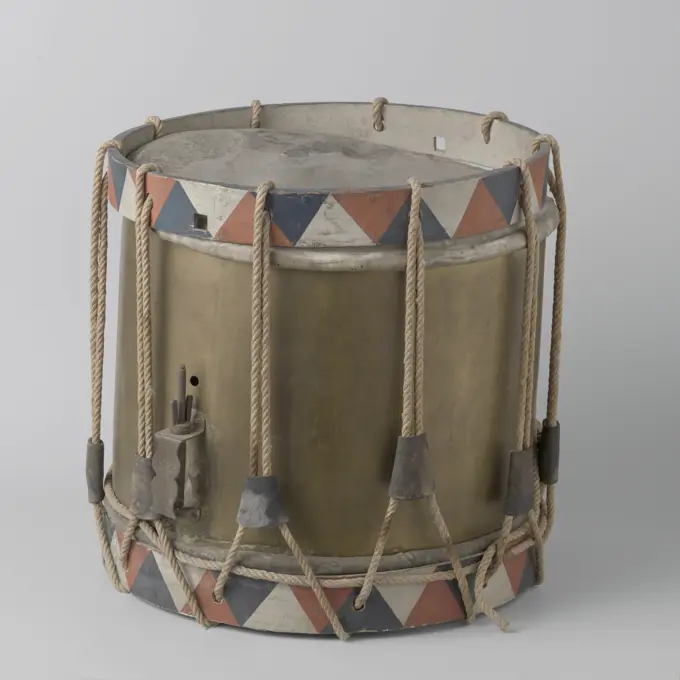
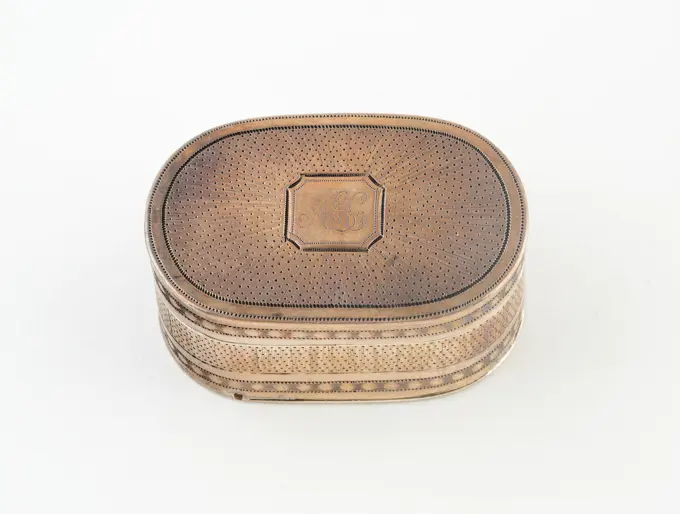
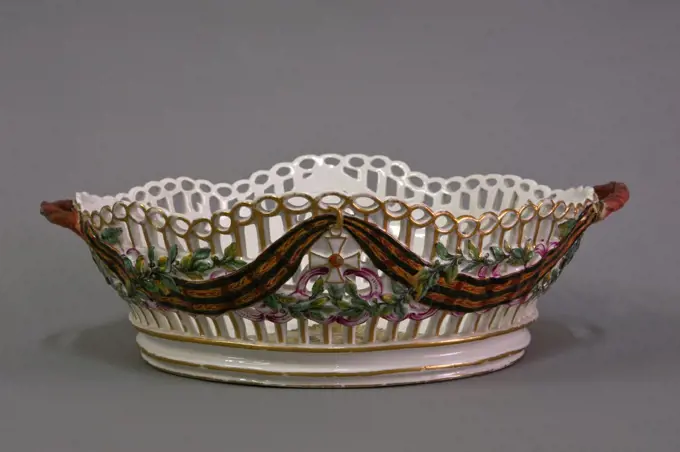
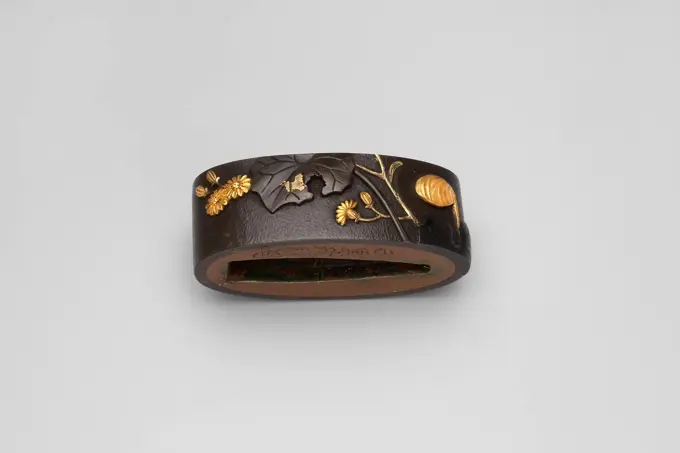
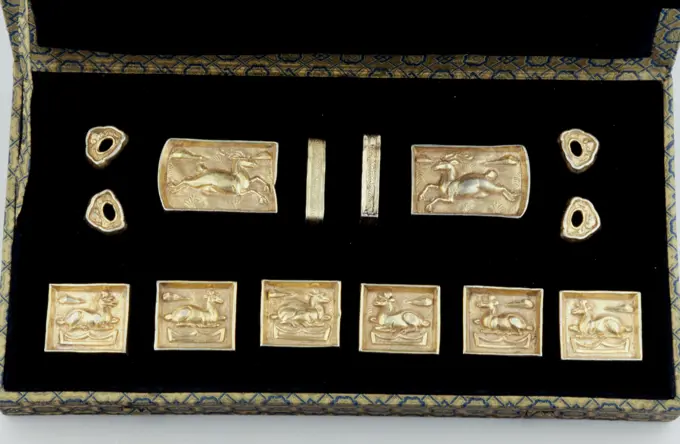
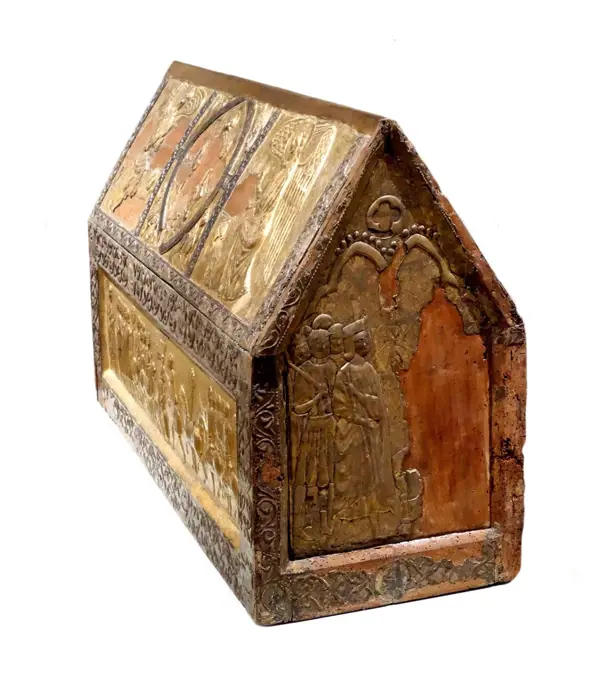
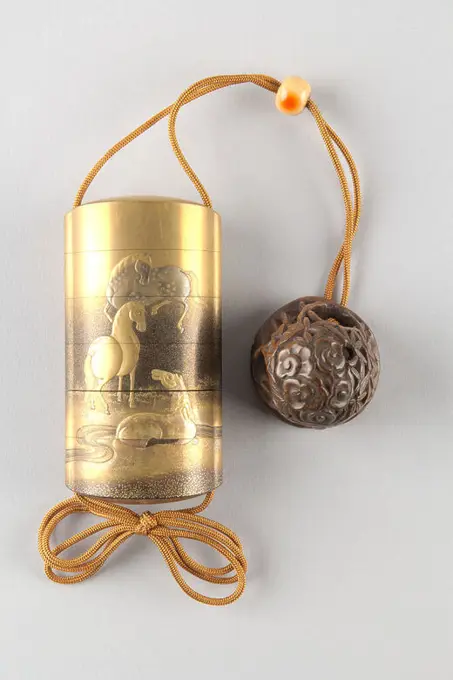
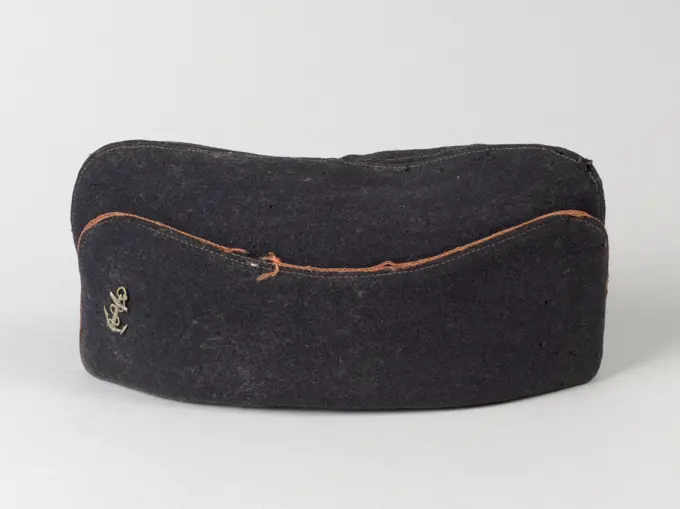
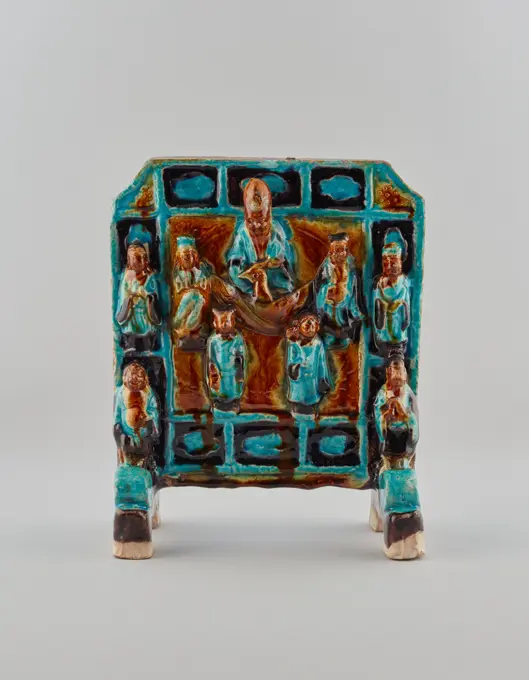
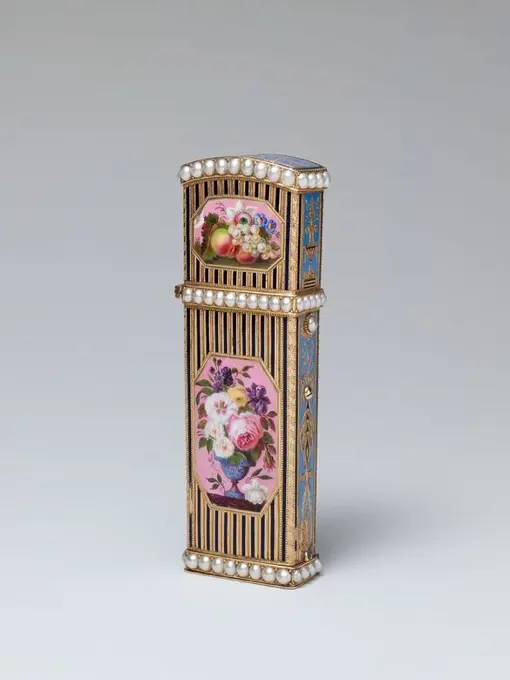
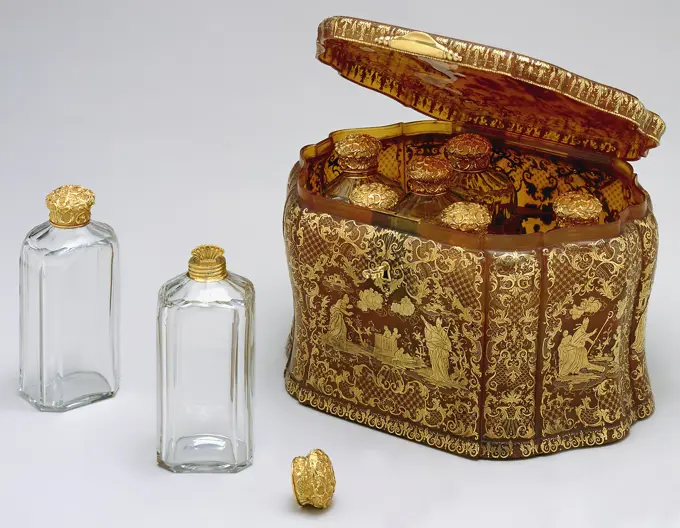
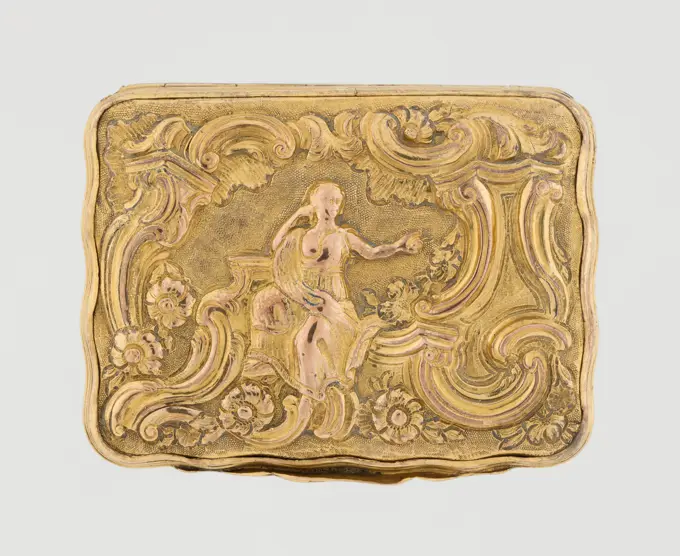
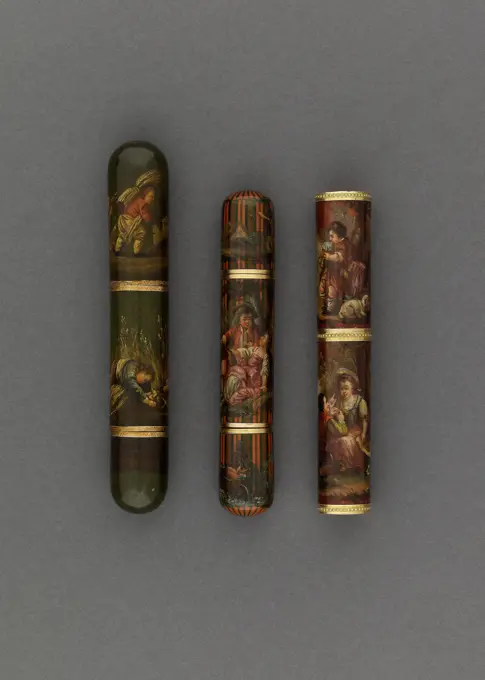
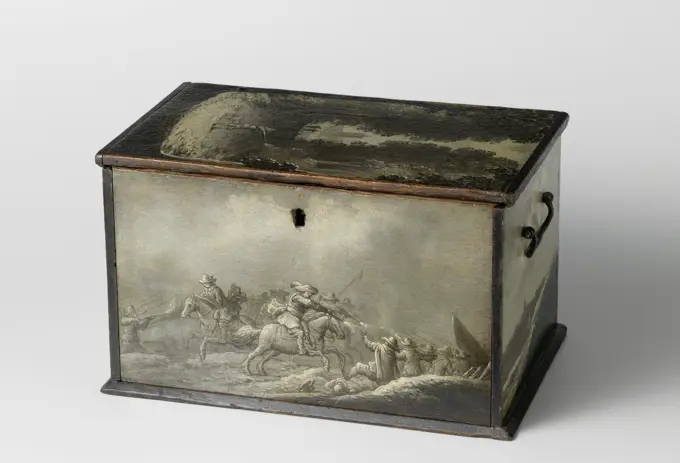
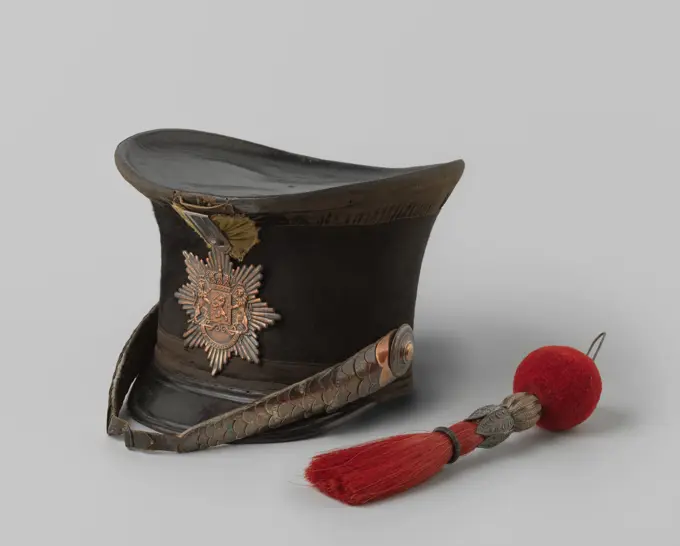
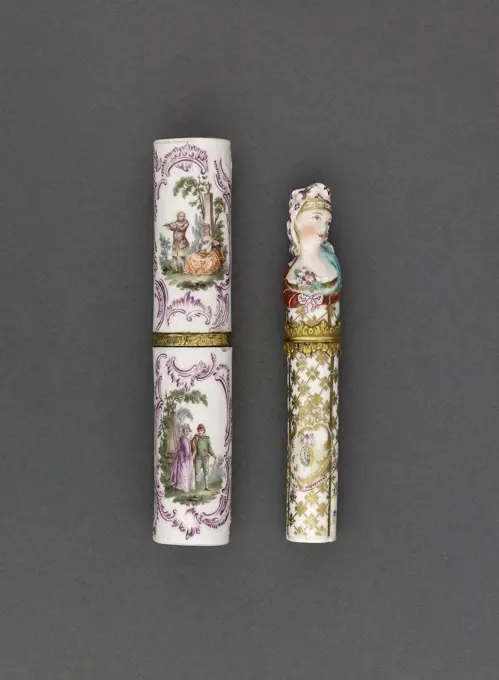
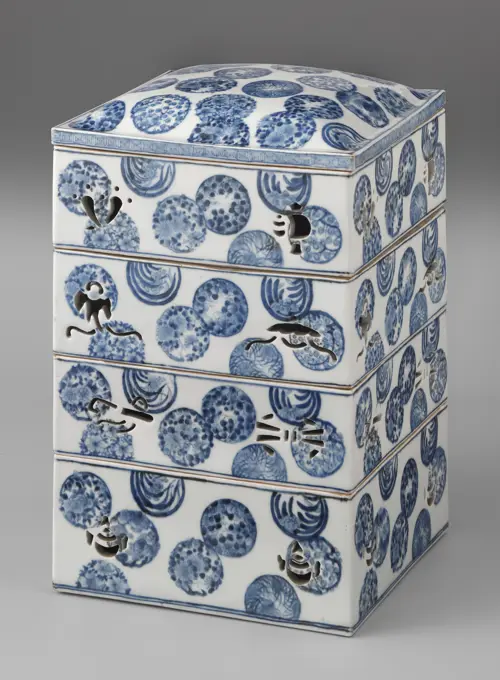
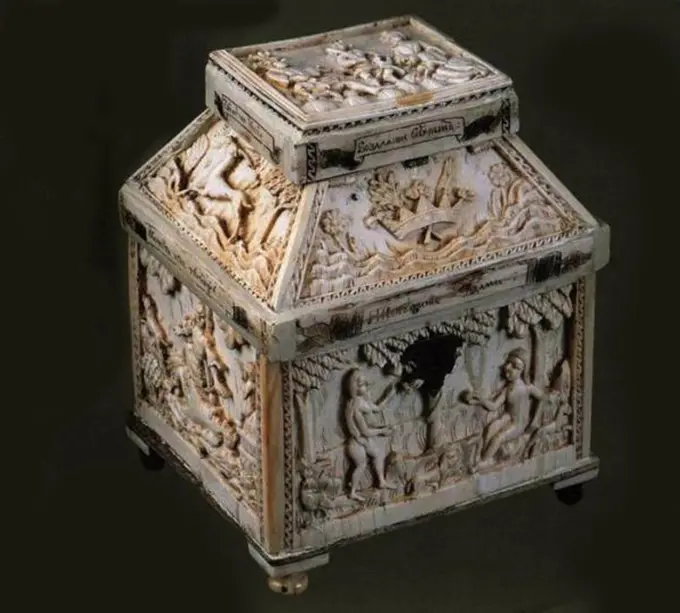
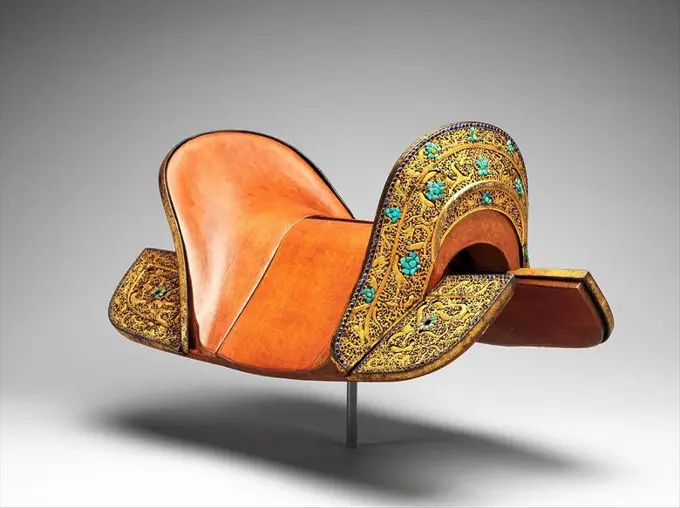
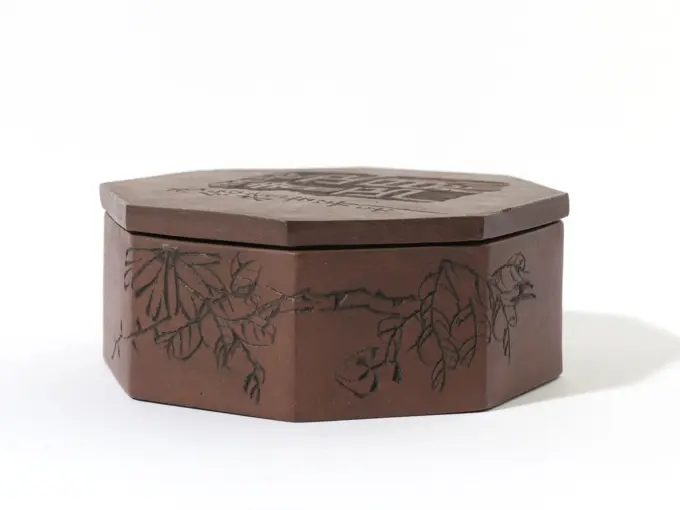
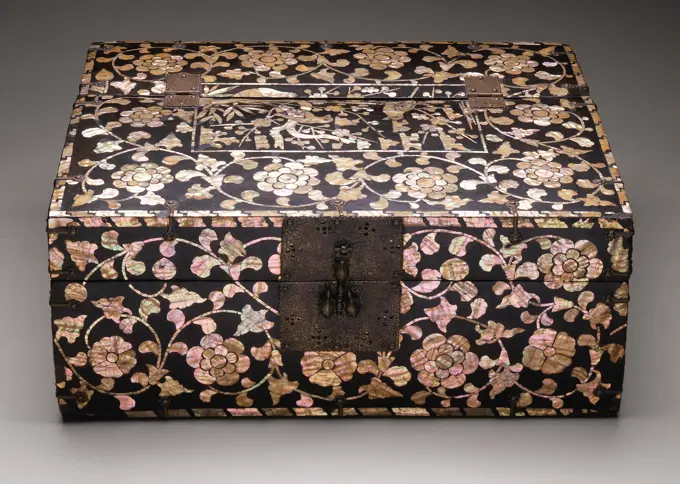
Box -Furniture. Crib with mattress, two cushions and two stitched silk blankets, fitted with red silk curtains, deposited with passing.Inrô - a medicine case, with netsuke and ojime,decorated on both sides with waterfall and stream among rocks; netsuke in the shape of a lion ( karashishi ) with a ball. unknown, craftsmanBadge (probably for Horse Harness). Culture: Spanish. Dimensions: H. 1 7/8 in. (4.8 cm); W. 2 3/8 in. (6 cm); Wt. 1 oz. (28.3 g). Date: 14th century. Museum: Metropolitan Museum of Art, New York, USA.Kościelna Kapa;  18th century (1701-00-00-1800-00-00);Incense box with guri pattern Japan 16th century Kamakura carving (Kamakura-bori) originated in the Muromachi period (1392-1573), when Zen Buddhism was introduced to Japan from China. Several Zen monasteries and temples were constructed in Kamakura during this period and Buddhist statues, artifacts as well as temple furniture were carved by skilled craftsmen often inspired by Chinese examples. They refined and further developed the techniques which involve the application of layers of black and red lacquer on the finely carved wooden surface. The Japanese artists created sophisticated copies of the painstakingly made Chinese carved lacquers, built up from numerous layers of lacquer. This round box (kg) was made to hold incense used in Buddhist rituals. The patterns are based on the Chinese stylized scrolls of sword-pommel shape (guri). The rendering of the motifs and the carving style reveal that the box was made by a Japanese artist. View more. Incense box with guri pattern. Japan. 16Vintage tea box isolated vintage metal tea box against a white background Copyright: xZoonar.com/YannxPoirierx 12727495Box 19th century Japan. Box 57590Gold case, decorated with a hundred different stones, a sample of Saxon rocks, Johann Christian Neuber, c. 1770 Gold case, decorated with 100 different stones, forming a sample of Saxon rocks. The case is intended for an ivory note sheet that is missing. Dresden gold (metal). precious stone (material) Gold case, decorated with 100 different stones, forming a sample of Saxon rocks. The case is intended for an ivory note sheet that is missing. Dresden gold (metal). precious stone (material)Stamp unknownReliquary in the shape of a coffin 8th century China. Reliquary in the shape of a coffin. China. 8th century. Gilt bronze. Tang dynasty (618-907). MetalworkSamurai-Class Womans Purse (hakoseko) with Carp in Swirling Water. Japan, late Edo period (1615-1868), 19th century. Costumes; Accessories. Wool plain weave with silk and gold-leaf-paper-wrapped-silk-thread embroidery, silk velvet appliqué, silk plain-weave trim, silk braided cord, and metallic beadCuirass (Char-aina) late 18th-early 19th century Indian or Iranian The Arabic inscriptions stress God as the God of Light, the rewards He will give His servants, and His punishment of unbelievers and evildoers. The light imagery is particulary appropriate for gold embellished armors of "four mirror" (char-aina) type.. Cuirass (Char-aina) 24793Unknown, Dish cover from the George Washington Memorial Service, c. 1800, porcelain, enamel, and gilding.Brush holder with story of Pan Yue or Wei Jie. Culture: China. Dimensions: H. 5 5/8 in. (14.3 cm); Diam. of rim: 4 3/4 in. (12.1 cm); Diam. of base: 4 5/8 in. (11.7 cm). Date: 18th century.The young women on the balcony of this wonderfully carved brush holder are throwing fruit at an attractive young man passing beneath them. He may be one of two individuals: the extraordinarily handsome scholar Pan Yue (ca. 265-319), who often drew such attention, or Wei Jin, who lived around the same time, rode a cart like the figure on this vessel, and was famed for his public speaking. Museum: Metropolitan Museum of Art, New York, USA.Sword-Hilt Collar (Fuchi), 1700-1850. Japan, Edo period (1615-1868). Shakudo; average: 3.9 x 2.3 cm (1 9/16 x 7/8 in.).Sheaf of farm wagon with carved lion with sword and arrows bundle, meager wood carving sculpture wood painting, Schamel with carved lion with sword and arrows (United Netherlands) coming from farmer's wagon adornment wagon driving Dutch lionPaperweight c 1849-1858 Bennington. Earthenware . Lyman, Fenton & Co.Arqueta, siglo XV. Fundación Juan March.Burgonet of the Guard of Pope Julius III ca. 1550-55 Italian, Brescia The bold and colorful decoration, etched and gilt on a blued ground, includes a medallion containing the profile portrait of Pope Julius III (Giovanni Maria del Monte, 1487-1555, elected pope in 1550) surmounted by the stylized three-lobed mountain of the del Monte arms. The style and technique of the decoration anticipate the Brescian-made armors traditionally worn by the Papal Swiss Guard from the late sixteenth century.. Burgonet of the Guard of Pope Julius III. Italian, Brescia. ca. 1550-55. Steel, gold, brass. Brescia. HelmetsReliquary, by Turin Work, 16th Century, polychrome marble, carved inlaid wood, nielloed bronze. Italy: Piemonte: Turin: Santi Martiri church. Whole artwork. Reliquary panel plant volutes/spirals leavesTortoiseshell and Basketry Inr 17th century Japan. Tortoiseshell and Basketry Inr. Japan. 17th century. Single case; tortoiseshell under bamboo or rattan covered with lacquer (urushi) Netsuke: turtle; wood Ojime: insects and butterflies; bronze with metal inlays. Edo period (1615-1868). InrBox with 26 Jas buttons and 18 vests, c. 1810 - c. 1829 Box with 44 Stras buttons in rose, 5 eyes and 14 hooks for men's skirt and vest. The buttons, 26 jacket knots and 18 vests, all with an eye at the rear, lie in a bed of black velvet, the hinged lid is lined with white satin. The box is black on the outside. Strasbourg (France) (Possible) Button: Paste (glass). Button: Metal. Box: Metal. Box: Satin. Box: Velvet (Fabric Weave). Box: Wood (Plant Material). box:. Box: Paper. Hook: Metal. Eye: Metal Box with 44 Stras buttons in rose, 5 eyes and 14 hooks for men's skirt and vest. The buttons, 26 jacket knots and 18 vests, all with an eye at the rear, lie in a bed of black velvet, the hinged lid is lined with white satin. The box is black on the outside. Strasbourg (France) (Possible) Button: Paste (glass). Button: Metal. Box: Metal. Box: Satin. Box: Velvet (Fabric Weave). Box: Wood (Plant Material). box:. Box: Paper. Hook: Metal. Eye: MetalCuboid shaped container with a floral motif unknownBandbox, Jesse Baker, Block-printed paper on pasteboard support, Inspired from printed chintz, design is of lilacs and roses in lavender and pink with green leaves on tan background. Lilacs in oil paints, roses and leaves in distemper. Label on inside of cover reads: 'From Jesse Baker, Paper Box Manfr. No. 21 Bank St. bet. Market & Chestnut & 2nd & 3rd, Phil-delphia.' This box belonged to Sarah Kirk, aunt of Elyah Hollingsworth; presented by his granddaughter, Mrs. Norton Paton, Irvington-on-Hudson, New York., Philadelphia, Pennsylvania, USA, 1800-1830, Wallcoverings, BandboxGlass mosaic inlay. Culture: Egyptian, Roman. Dimensions: Other: 1 5/16 in. (3.3 cm). Date: 1st century B.C.-1st century A.D..Opaque yellow ground; decoration in opaque white, red, and greyish green, and translucent deep purple appearing black.Narrow horizontal strip, tapering slightly towards the left and rounded left edge.Asymmetrical repetitive floral motif with palmettes, lotus buds, and stems flanked by four ivy leaves.Broken and repaired with some cracks and losses; upper, underside, and edges ground and polished; deep pitting of some surface bubbles.The strip is decorated with lotus and palmette motifs. Museum: Metropolitan Museum of Art, New York, USA.. Rectangular golden snuff box. With floral and fruit still lifes in email, inside a border of bright green boxes in Rocaille frame.Miniature canoe -Box and cup, anonymous, c. 700 - c. 800 Box in the shape of a hexagonal flower, decorated with flower branches in which three birds are also included. China silver (metal). gilding (material) gilding Box in the shape of a hexagonal flower, decorated with flower branches in which three birds are also included. China silver (metal). gilding (material) gildingCap 18th century European. Cap 79125Bandbox And Lid, Windmill and Rail Road; USA; block-printed on handmade paper, pasteboard support; 45 x 38.5 x 26 cm (17 11/16 x 15 3/16 x 10 1/4 in.)Cassone. Culture: Italian. Dimensions: 23 x 67 1/2 x 23 1/2 in. (58.4 x 171.5 x 59.7 cm). Date: early 15th century. Museum: Metropolitan Museum of Art, New York, USA.Glass horn. Dimensions: Height as extant 4in. (10.1cm).Translucent blue; trail in opaque white.Rim folded over and in, and smoothed into top surface of broad, flaring mouth; slender funnel-shaped body, curving down and outwards; jagged pontil scar inside mouth.Trail applied as a blob to underside of mouth and wound round and down in a spiral, then tooled with eight downward strokes around body, forming long upturned festoons.Complete, but chips in rim and tip of horn broken off with weathered edge; some pinprick bubbles; dulling, creamy enamel-like weathering, and iridescence. Museum: Metropolitan Museum of Art, New York, USA.Jardinière 1883 Probably after a model by Christopher Dresser British, Scottish The proliferation of European porcelain factories after about 1750, and the development of indigenous styles, led to a gradual decline in Asian influence. Interest in the Far East was dramatically revived in the second half of the nineteenth century with international exhibitions, the formation of new collections, and the travel to Japan of collectors, designers, and entrepreneurs who initiated a new cycle of interpretation.There is no known shape in Asian ceramics that correspond to this vessel. Various elements, such as the bamboo borders and the cloud formations within frames on the neck, are obviously derived from Chinese art. The theme of the "carp leaping in waves" symbolizes success in civil-service examinations-once the carp leaps over the "dragon gate," it becomes a dragon.. Jardinière. British, Stoke-on-Trent, Staffordshire. 1883. Glazed pottery (Minton majolica). Minton(s) (British, Stoke-on-TrenCuirass (Chair-a'ina) first half 19th century Iranian The Persian term char-a'ina (four mirrors”) refers to the four plates that compose this type of cuirass. The engraved decoration consists of traditional genre scenes, including those of war, hunting, and leisure. The inscriptions include a verse by the Persian poet Sa'di (ca. 1213-1292) from his Gulistan (Rose Garden) and another that refers specifically to the armor: Four mirrors are good for the hero’s back, and no one should ever see the back of a hero.”. Cuirass (Chair-a'ina) 27625. The scalloped box, with a straight back, has a hinged lid. He rests on a low, straight straight ring. The bottom is engraved at the bottom with a pattern of railing with rosettes. The wall of the box is clay by a profile edge; In this way he is somewhat sphere, rejuvenating to the soil, above that he has been slightly nosed. The lid has a profiled edge with a standing lip on the front. In the edge, a record was caught with a driven representation of a fountain in a basin, in a garden landscape with a circulatory colloade, buildings and trees and surrounded by an asymmetrical frame from C and S volutes, foam edges, shell motifs and a flower garland. A second, completely smooth plate is applied to the underside of this plate.Miniature Wedding Album of General Tom Thumb and Lavinia Warren ca. 1863 Mathew B. Brady American. Miniature Wedding Album of General Tom Thumb and Lavinia Warren 282753Myra Newswanger, Tray, 1935 1942 TrayBandbox, Block-printed paper, wood support, Wooden bandbox lid covered with wallpaper. Yellow background, on base of flowers and grapes, branch with four birds perched on it, in green and pinks. Brood of fledgling eagles -'Eagles on Aerie'. Rim: covered with plain paper., USA, ca. 1835, Wallcoverings, BandboxAnonymous, box (usual name), 1567. CERUNUSCHI Museum, Museum of Asia Arts in the city of Paris.Antique frames from the early 1900’s with work pathsBandbox (USA); block-printed on paper, pasteboard support; 43.5 x 35.5 x 36.5 cm (17 1/8 x 14 x 14 3/8 in.)Pair of Stirrups (Yob Chen) 16th-18th century Tibetan. Pair of Stirrups (Yob Chen) 25100Pen Box (Qalamdan) 1701-1900 Iran. Painted and lacquered papier-mchÈ . IslamicCover (Japan); woodPortrait of an unknown child by a window, 1880 - 1900 photograph. frame   rope. baryta paper. cardboard  child. anonymous historical person portrayedCoffin. Wooden box for 100 Japanese textile jacks (AK-MAK-392 TM 491).Box belonging to a ecclesiastical Austrian medal, Hermann Wittig, 1880 - 1889 box Round cardboard box belonging to a bronze medal. Rome cardboard   Rome. AustriaSoap dish lid - Inconnu / UnknownRobert WR Taylor, Cowhide Trunk, c 1941 Cowhide TrunkFragmentary Bowl, with clay firing cushion. China, Fujian Province, Jian ware kiln site. Date: 1100-1299. Dimensions: . Jian ware; stoneware with "hare's fur" glaze and clay firing cushion. Origin: . Museum: The Chicago Art Institute, Chicago, USA.Glass striped mosaic bowl. Culture: Roman, probably Italian. Dimensions: 2 5/8in. (6.7cm)Other: 4in. (10.2cm). Date: late 1st century B.C.-early 1st century A.D..Translucent purple and blue, opaque white and yellow, and colorless glass.Vertical rim with rounded edge; almost vertical side curving in below to concave bottom.Striped mosaic pattern formed from lengths of two alternating canes laid side by side in ten parallel rows and separated from one another by single lengths of a network cane in cololress glass wound spirally with two yellow threads; one cane comprises a central length of purple outlined in white and flanked by blue stripes, and the other comprises a central length of blue outlined in white and flanked by yellow stripes; a blue network cane wound spirally with a single white thread is attached as rim.Broken and repaired from many fragments with numerous losses; some pinprick bubbles; slight dulling and faint iridescent weathering. Museum: Metropolitan Museum of ArClock Take, wolfgangA boisseeau from Enkhuizen. Chain chain with block for dry goods from 1 Boisseeau with bridge and style, v.z.v. Brand, label and labels.Decorative box made from gold and nacre, also known as, mother of pearl. Dated 18th CenturyVinaigrette (England); silver, gilding; Overall: 3.1 x 2.1 x 0.9 cm (1 1/4 x 13/16 x 3/8 in.)Birdcage 18th century Japan The cranes, wheels, and flowing poem scripts decorating this birdcage refer to both Wakanoura, an inlet on the Kii Peninsula revered as the bay of poetry,” and to several famous compositions that celebrate this scenic place.. Birdcage 40474Netsuke of Miniature Box 19th century Japan. Netsuke of Miniature Box. Japan. 19th century. Ivory inlaid with mother-of-pearl. Edo (1615-1868) or Meiji period (1868-1912). NetsukeSculptor's model / votive relief with two sides: side one, two registers with a right foot on each; side two, a royal-like figure 400-200 B.C. Late Period-Ptolemaic Period Small Late Period and Ptolemaic reliefs or sculptures that depict a subject in a partial or unfinished way but are themselves finished objects constitute a special class of object. Guidelines like those for artists are often prominently exhibited as part of the object, although, in fact, many instances can be noted where the object simply could not serve as a suitable model for a traditional formal Egyptian representation. Personifications of kingship, figures that may represent the now emerging demigods Imhotep and Amenhotep Son of Hapu, and popular gods like Harpokrates or Isis, are heavily represented within the corpus. Taken together, the figures represented and the other features indicate the reliefs and sculptures of this class, sometimes called by Egyptologists "sculptors models / votives," were the material Drum, before c. 1833 musical instrument. percussion instrument. drum Trom of the militia. The brass kettle is equipped with a veal sheet on both sides, held by a hoop and tense by means of a tension with tractors and screws. Both hoops are decorated with a motif of triangles in the colors red, white and blue. With engraved numbers: 1833-1. Netherlands Kettle: Brass (Alloy). Hoop: Wood (Plant Material). Team resort: RopeBox with cover 18th century China. Box with cover 60963Nutmeg Grater 1793-1804 London. Silver and iron . T. Phipps and E. Robinson (Manufacturer)Five Dishes with Wave Design. Culture: Japan. Dimensions: Each: 4 1/2 in. (11.4 cm). Date: first half of the 18th century. Museum: Metropolitan Museum of Art, New York, USA.Basket with Ribbon of Saint George by Gavriil Ignatievich Kozlov, Porcelain, overglaze decoration, 1777, 1738-1791, Russia, St. Petersburg, State Open-air Museum PeterhofSword-Hilt Collar (fuchi). Ishiguro, Masaaki (1813-), craftsmanGilt Silver Belt Set, 916-1125, 1 7/8 x 22 1/4 x 3/4 in. (4.76 x 56.52 x 1.91 cm), Chased silver with gilt, China, 10th-12th century, Worked in high relief, these fourteen silver plaques originally embellished a leather belt belonging to a member of the Liao (916-1125) aristocracy. The two large pieces are decorated in repoussé with a stag running in a sparse landscape through rocks and tufts of grass. The six square plaques are each decorated with a recumbent doe in high relief. The four small shield-shaped fittings acted as grommets from which various items were suspended. While the basic repoussé techniques and taste for precious metals can be seen as a carryover from Tang, the subject matter of relatively naturalistic deer in an open landscape would have been especially relevant to the semi-nomadic Liao people.Urn reliquary of St. Candide by Anonymous. Dated 13th CenturyCard Case (Spain); silk, metal, paillettesSnuif box with the portrait of Anna van Barnevelt (1725-1789), Nicolas-Augustin Delions, c. 1773 - c. 1774 Oval snuff box in four colors of gold. On the lid a painted women's portrait in an oval medallion behind glass. Citelated Louis XVI Ornament. Miniature portrait of a woman, perhaps Anna van Barnevelt (1725-1789), wife of Abraham del Court, lord of Krimpen. Bust, the eyes a little to the right. goldsmith: Parispainter: Northern Netherlands gold (metal). ivory. glass Oval snuff box in four colors of gold. On the lid a painted women's portrait in an oval medallion behind glass. Citelated Louis XVI Ornament. Miniature portrait of a woman, perhaps Anna van Barnevelt (1725-1789), wife of Abraham del Court, lord of Krimpen. Bust, the eyes a little to the right. goldsmith: Parispainter: Northern Netherlands gold (metal). ivory. glassQuarter's cap of Belgian Artillery Regiment, ca. 1830-1832, Anonymous, c. 1800 - c. 1850  Head cover of blue sheet with stored edge on which red galon, on the front a red grenade and red galons. Left to Paperclip A label with text: Roosdorp NM 10385-211 B. Interior: Linen lining with two stamps: 1979 (A). Mot holes. Belgium cloth. linen (material)   BelgiumInro with Seven Horses by a River. Culture: Japan. Dimensions: H. 3 1/2 in. (8.9 cm); W. 1 3/4 in. (4.5 cm); D. 1 1/8 in. (2.9 cm). Date: late 18th-early 19th century. Museum: Metropolitan Museum of Art, New York, USA.Caster (France); Made by Gavet Coutelier (France); horn, ivory; The Robert L. Metzenberg Collection, gift of Eleanor L. Metzenberg; 1985-103-281-jTraditional cap. Felt, 1939-1945. General Leclerc Museum of Hauteclocque and the Liberation of Paris, Jean Moulin Museum. 78981-9 American army, Calot, traditional calot, military equipment, felt, war 1939-1945, war 39-45, Second World WarTable screen (username). Turquoise glaze, amber and dark purple. Cernuschi Museum, Asia Museum of Asia in the city of Paris.Embossing on antique wooden boxes, Jodhpur, Rajasthan, India Copyright: xSafatxAli/DinodiaxPhotoxEsquila, cencerro pequeño, Marqués del Collar. Museu Català de les Arts i Tradicions Populars.Music Box. Culture: French or Swiss. Dimensions: H. 8.3 cm (3 1/4 in.). Date: early 19th century.Gold music box in the shape of a fitted necessaire, featuring four reserves, three decorated with flowers, one blank for engraving initials, vertical blue enamel stripes and bands of half pearls. Museum: Metropolitan Museum of Art, New York, USA.Embossing on antique wooden napkin holder box, Jodhpur, Rajasthan, India Copyright: xSafatxAli/DinodiaxPhotoxBox for toilet articles, c. 1745, 6 1/4 x 10 1/8 x 7 5/8 in. (15.88 x 25.72 x 19.37 cm), Tortoise shell, gold inlay (box) and glass (bottles), Italy, 18th century, This tortoise shell perfume bottle container is fashioned with a piqué technique. The shell was boiled and softened, then shaped and decorated with sheets of gold that locked in place as the shell hardened. This technique was introduced in 16th-century Naples, but soon spread to northern Europe and remained fashionable throughout the 19th century. The shell typically derived from hawksbill sea turtles found in tropical coral reefs. Today the species is threatened.Casket with hinged lid, Enameled copper, Rectangular casket with convex sides and lid, and concave bottom. Opaque white enamel, with raised diaper and scroll pattern, surrounding oblong cartouches painted with pastoral scenes in rose camaieu. Plan white counter enamel. All edges mounted in scrolled copper gilt; lid piano-hinged; thumb piece bow-shaped., England, mid-late 18th century, containers, Decorative Arts, Casket with hinged lidSnuffbox;  Ok. PO. 18th century (1746-00-00-1755-00-00);Brush Pot, 17th century, 8 7/8 x 10 5/16 in. (22.54 x 26.19 cm), Huang-hua-li hardwood, China, 17th century, The grain of this large brush holder is strongly figured in a shape suggesting some type of animal. Unusual markings such as this were highly valued by the literati. As with convoluted t'ai-hu garden rocks, root furniture, or burlwood patterns, there was a high appreciation for qualities of abstraction found in nature.Anonymous French. Studies. Martin varnish. 18th century. Paris, Cognacq-Jay museum. 56641-9 Etui, Martin, varnishDecorated Painter's Box, Anthonie Jansz. van der Croos (attributed to), 1640 - 1660 Oak black painted painting box, marbled on the inside or covered with red sheet and painted on the outside with performances, including two equestrian fights, a grisail with hunters with hunters, a water landscape with a duck cage and ducks, and two village faces; A shepherd scene on the inside of the lid. The coffin contains three drawers with tension ring, the upper of which does not cover the entire width, with 34 painting supplies; Under the lid eight boxes of different sizes. Northern Netherlands wood (plant material). oak (wood). cloth. iron (metal). earthenware. glass. paint (coating). oil paint (paint) Oak black painted painting box, marbled on the inside or covered with red sheet and painted on the outside with performances, including two equestrian fights, a grisail with hunters with hunters, a water landscape with a duck cage and ducks, and two village faces; A shepherd scene on the inside ofBox 17th century Dutch. Box 191294Legging strip -Snuff Box, 1860-70. Italy. Goldstone, gold, micro mosaic glass; overall: 2 x 7.7 x 5.6 cm (13/16 x 3 1/16 x 2 3/16 in.).Beggar's Bowl (Kashkul) late 19th-early 20th century The kashkul, or beggars bowl, is perhaps the most emblematic accoutrement of the wandering dervish. These typically boat-shaped vessels were made in a variety of media, including coco-de-mer shell, wood, metal, and ceramic. Dervishes used them primarily to collect and store alms (their main source of sustenance) and occasionally as drinking vessels. In later centuries, many were marketed as decorative objects since a devoted dervish would be unlikely to carry an elaborately carved kashkul as it would contradict his belief in the renunciation of worldly goods in favor of unconditional devotion to the Divine. The kashkul has a number of metaphorical associations. For example, it represents the cleansing of a Sufis soul of all extraneous earthly desires in preparation for the acceptance of Divine love and a dervish's life of poverty. The inscription, an excerpt from the Qur'an, has been skillfully pierced into the steel body of the veRed pompon with red (horse hair) plume with ball and tulip of white metal (red metal shines through), c. 1815 - c. 1850  Red pompon with red (horse hair) plume with ball and white metal ball (red metal shines through). Corning with Sjako NG-2010-86.  iron (metal). textile materials. copper (metal)German anonymous. Studies. Porcelain. 18th century. Paris, Cognacq-Jay museum. 56648-1 Etui, porcelain, gallant scene, female face, 18th centurywooden plate isolated on white background with clipping path. Lid of square stack box (Jubako) of porcelain consisting of four layers with openwork walls in different shapes, painted in underglaze blue. On the walls medallions formed from different flower drinks (prunus, chrysanthemum, peony, orchid, lily, etc.). On the edge of the lid a meander pattern. Blue White.Casket by Russian Master, Mammoth tusk, metal, 1718-1725, Russia, Moscow, State United Museum Centre in the Kremlin,Set of Saddle Plates. Culture: Tibetan or Chinese. Dimensions: H. 10 7/8 in. (27.6 cm); L. 23 1/2 in. (59.7 cm); W. 13 3/4 in. (34.9 cm). Date: ca. 1400.This set of saddle plates represents a high point in the medium of pierced ironwork, equaling or excelling anything of its type. Each plate is chiseled from a single piece of iron. The long, thin four-clawed dragons, carved in high relief in great detail, are cut entirely free from the surrounding scrollwork ground so that they can move slightly within it. The scroll patterns are undercut to give the appearance of depth and overlap, in addition to the areas where the bodies of the dragons actually do overlap. There is a Wish-Granting Jewel motif made with pieces of blue and green turquoise set in shaped compartments in the center of both the pommel and the cantle, and scattered lotus blossoms made in the same way. The outer edges of the plates are bordered by rows of semicircular pieces of lapis. The iron surfaces of the plates are daTreasure chest, pirate's treasure, cut-out, mockup,Wear rack with stabbed decoration in Louis XVIE style, Anonymous, 1650 - 1700 Rear rack of nuthout, formed by two vestical styles sculpted with lobe ornament, on which four volutes, in front of the guns, are applied perpendicularly. The styles are applied in pairs on rear plates, surrounded by Louis XVI lists. The rack shows remains of dark brown, perhaps later applied paint. Northern Netherlands wood (plant material). walnut (hardwood). oak (wood). paint (coating). gilding (material) gilding Rear rack of nuthout, formed by two vestical styles sculpted with lobe ornament, on which four volutes, in front of the guns, are applied perpendicularly. The styles are applied in pairs on rear plates, surrounded by Louis XVI lists. The rack shows remains of dark brown, perhaps later applied paint. Northern Netherlands wood (plant material). walnut (hardwood). oak (wood). paint (coating). gilding (material) gildingBox. Sandstone., Modern. Provenance: China. Paris, Cernuschi museum. 78846-28 Asian art, Chinese art, living art, box, ceramic, gresTowel isolated on the white backgroundFour-Cornered Hat 7th-9th century Tiwanaku Finely woven, brightly colored hats, customarily featuring a square crown, four sides, and four pointed tips, are most frequently associated with two ancient cultures of the Andes: the Wari and the Tiwanaku. The Wari Empire dominated the south-central highlands and the west coastal regions of what is now Peru from 500-1000 A.D. The Tiwanaku occupied the altiplano (high plain) directly south of Wari-populated areas around the same time, including territory now part of the modern country of Bolivia. The cultures not only developed and flourished as contemporaries, but also occupied adjacent lands for nearly four centuries. A Wari ceremonial center called Cerro Baúl was located a mere five miles from Tiwanaku-settled fields in the Moquegua Valley of Peru. The two cultures likely encountered each other at Cerro Baúl and elsewhere, but the nature of these interactions remains largely unknown. Four-cornered hats from both the Wari and the Tiwanaku wLacquer Box with Plum Tree, Bird, Bamboo, Chrysanthemum and Arabesque Design. Korea, Joseon (1392-1910), 18th century. Furnishings; Accessories. Brown lacquer on wood core with mother-of-pearl inlay and brass fittings