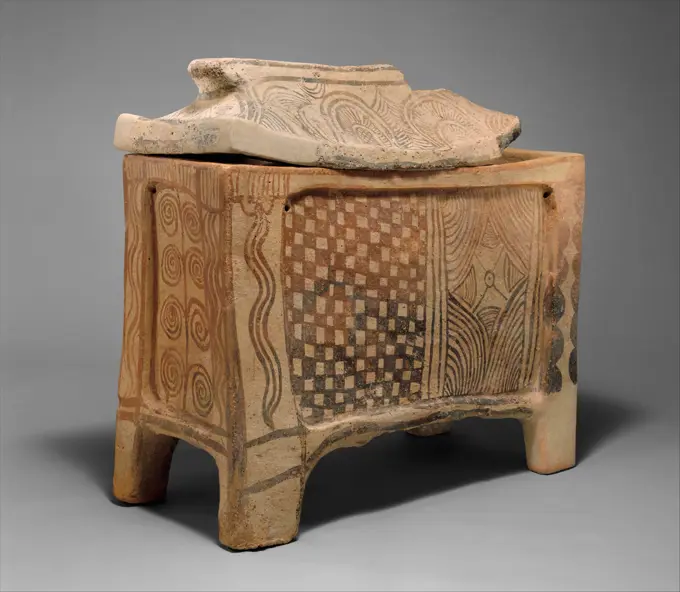
Intricate Decorative Boxes

A collection of ornate boxes from various cultures, showcasing intricate designs and materials used in traditional craftsmanship.
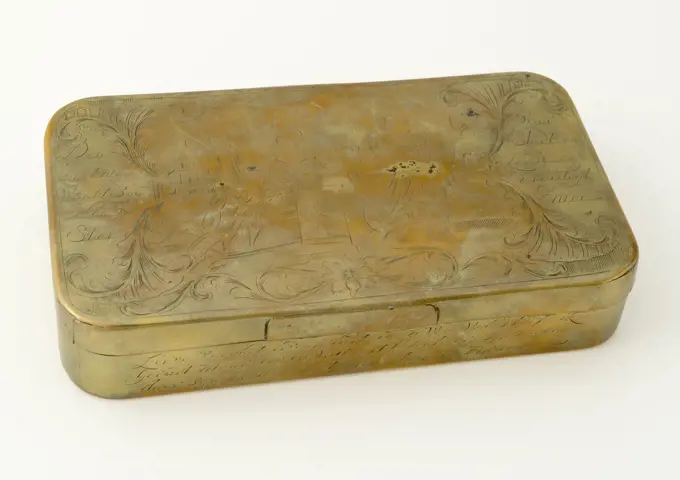
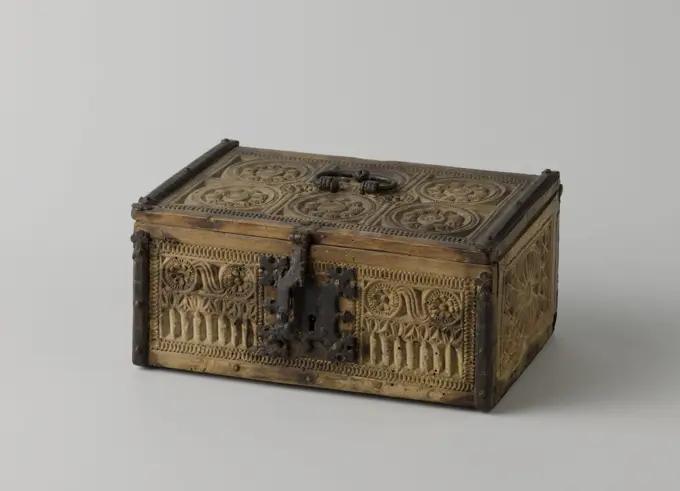
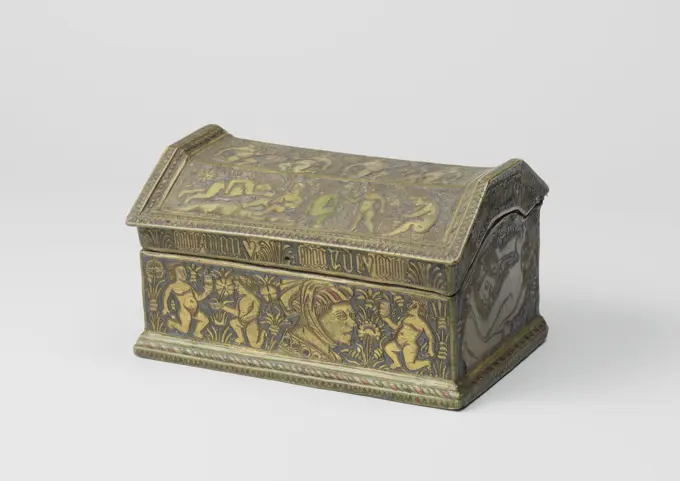
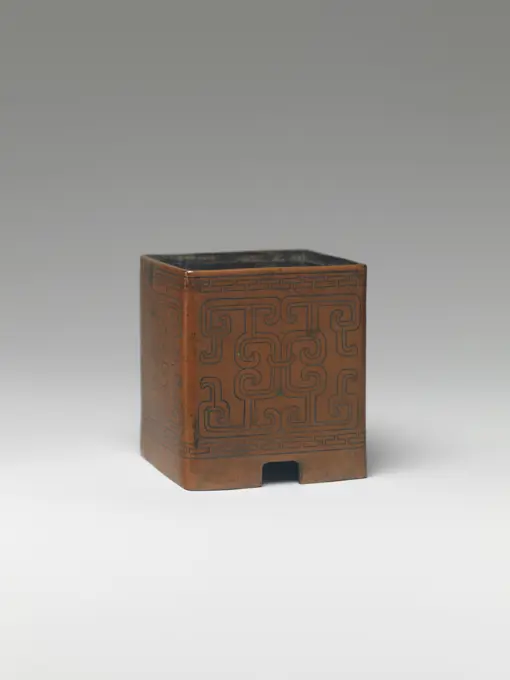
Tobacco box with Den Lantman guards as in Stee Voor Stadt and Land and Vreijhijt, tobacco box holder iron copper, cast copper engraved Rectangular hinged lid round corners Den Lantman watches as in Stee Voor Stadt and Land and Vreijhijt Rotterdam heraldry Freedom Bataafse Republic war and peace smoking store tobacco snuff box
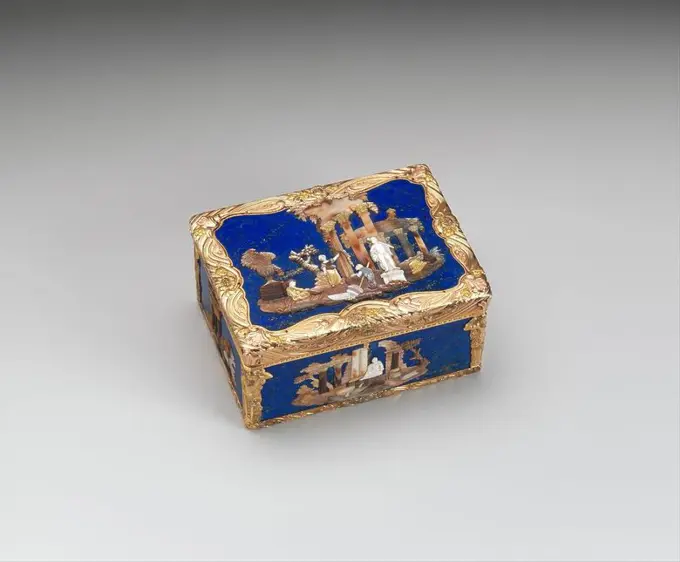
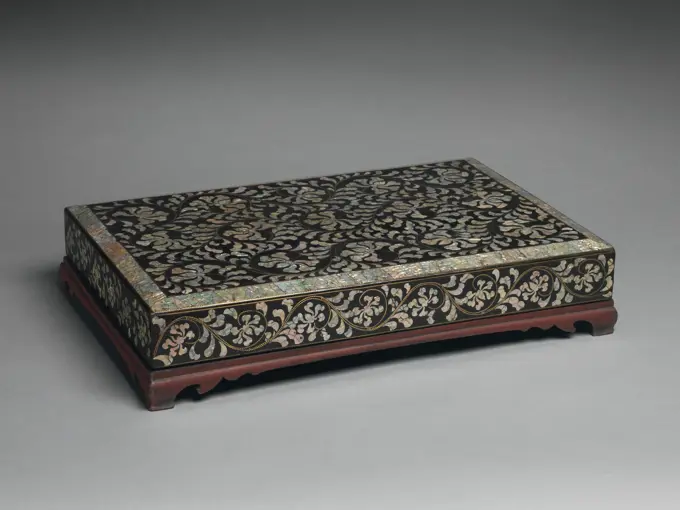
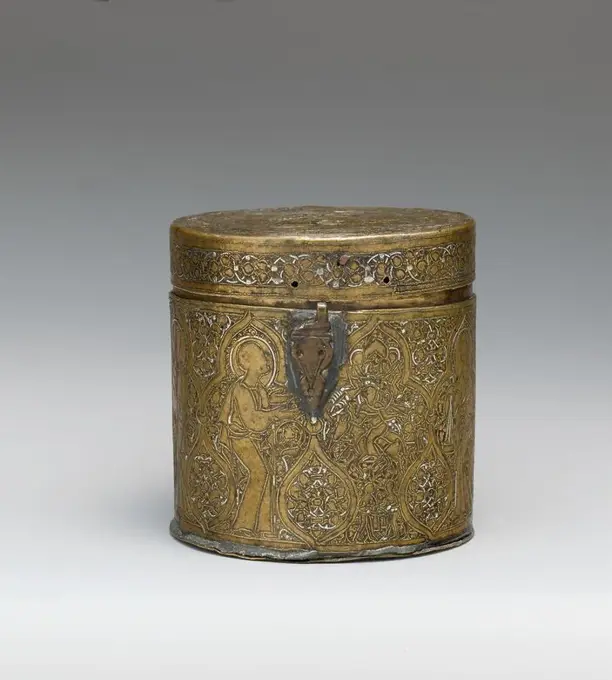
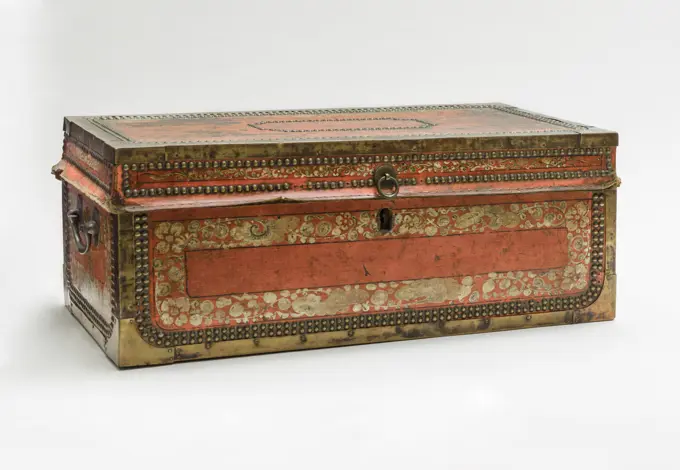
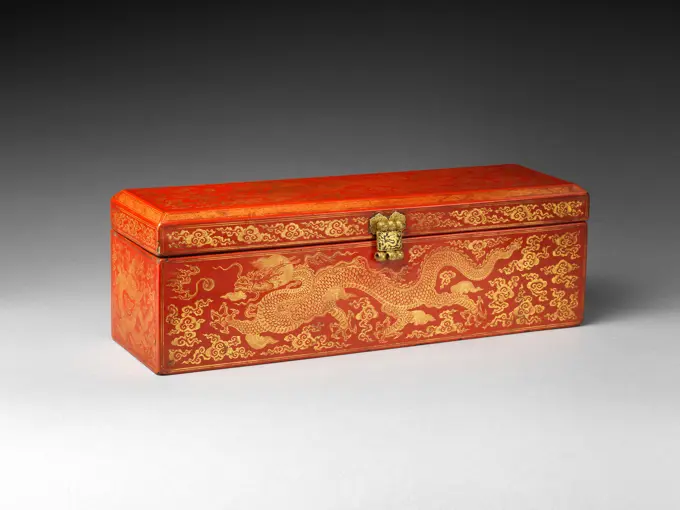
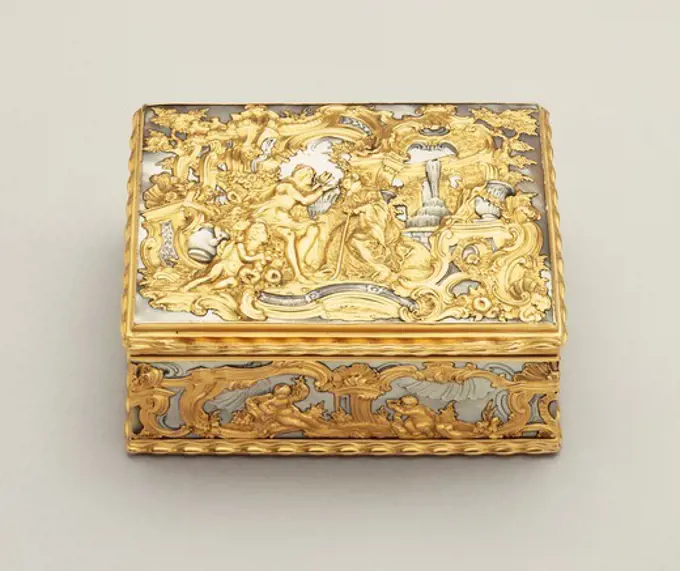
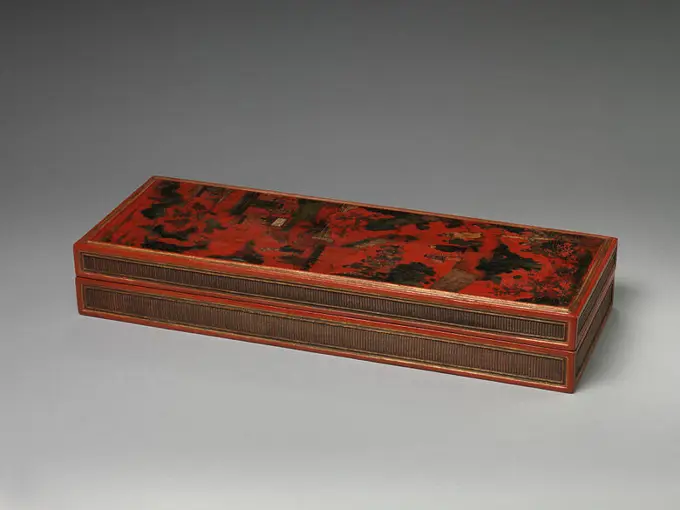
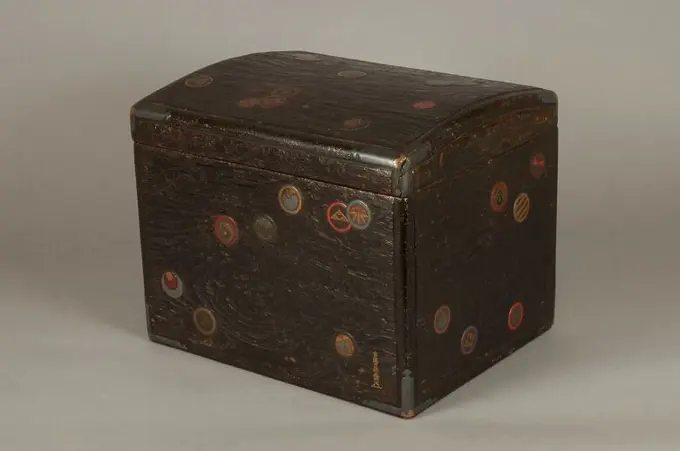
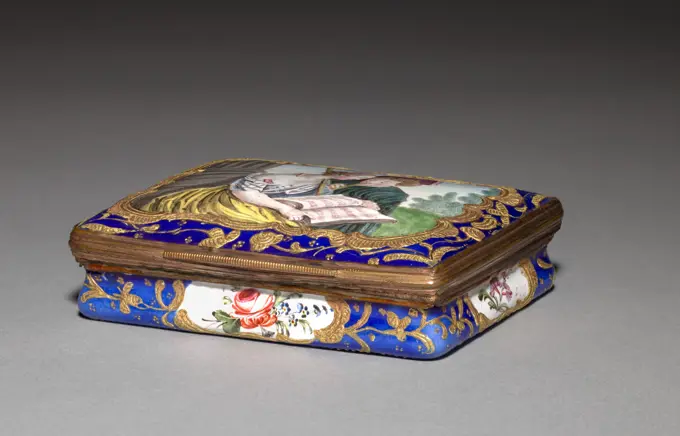
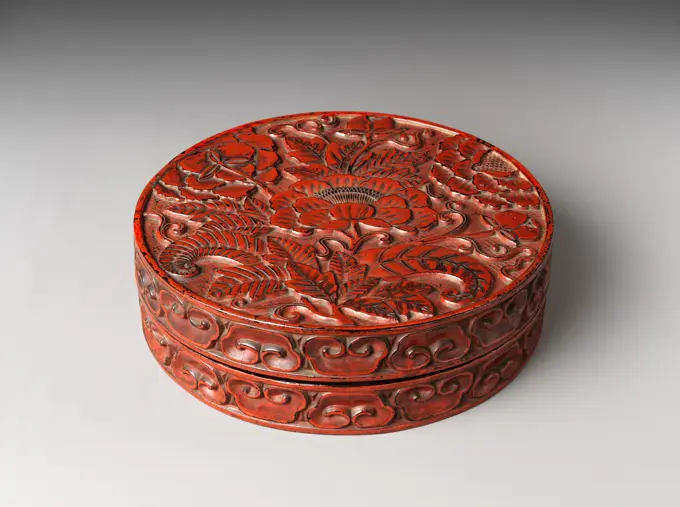
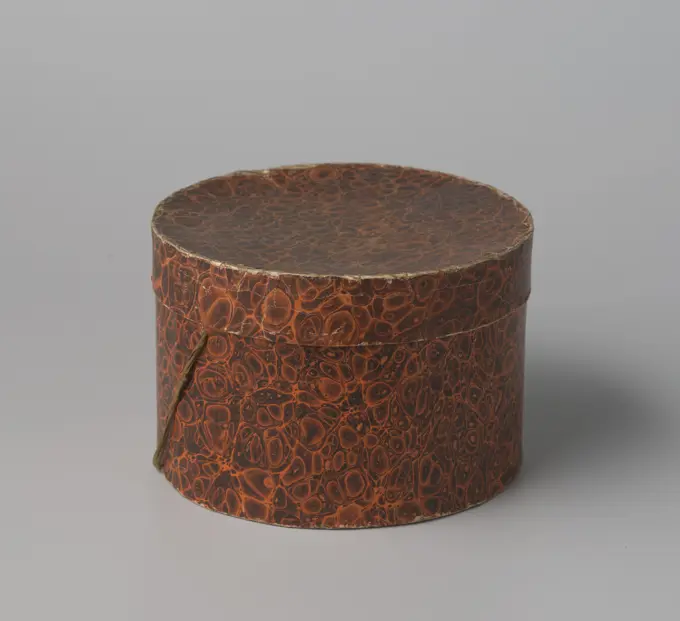
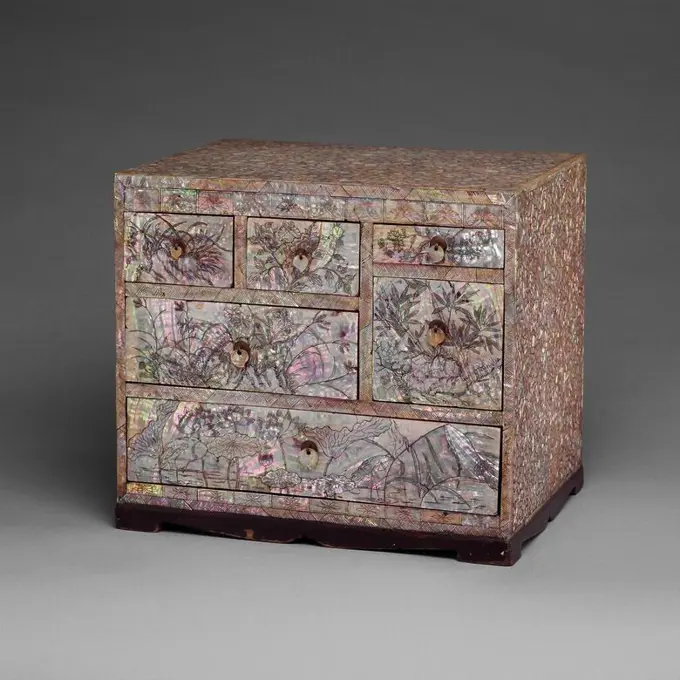
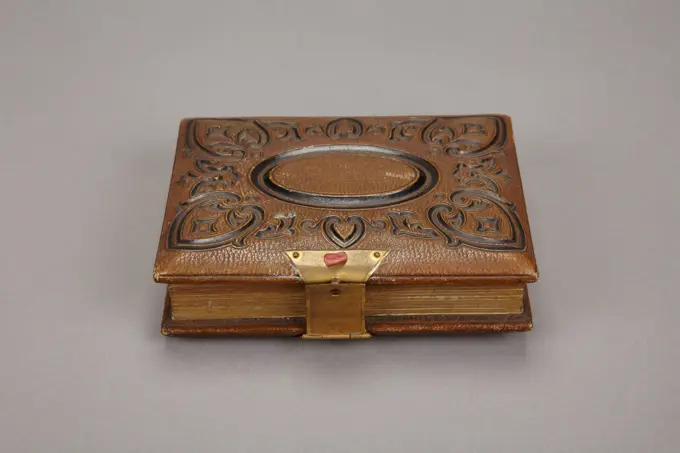
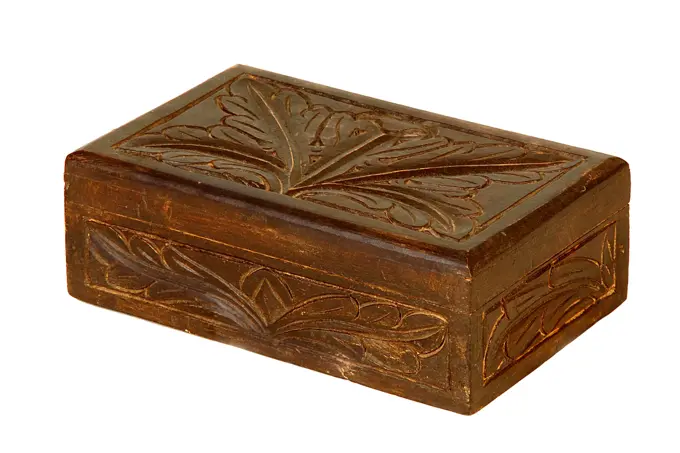
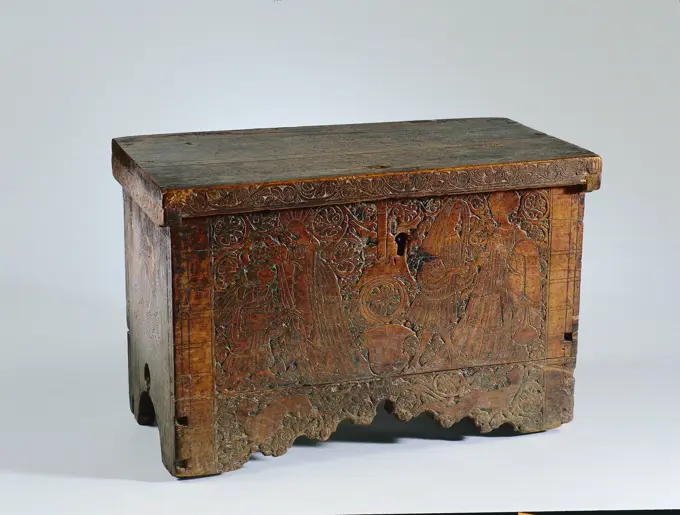
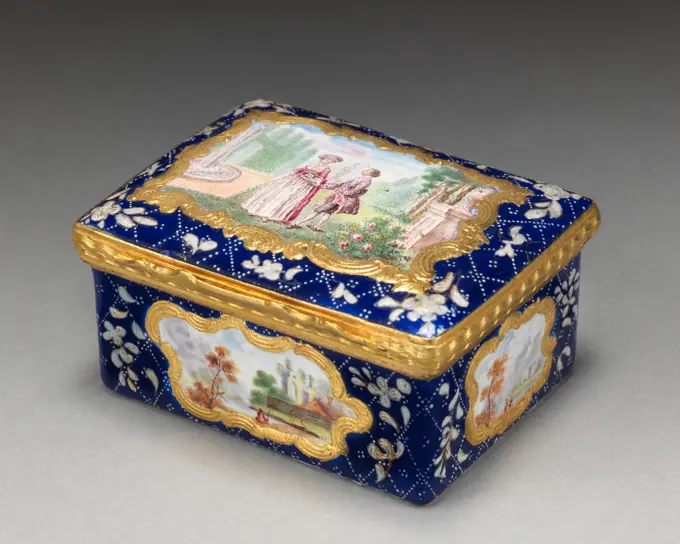
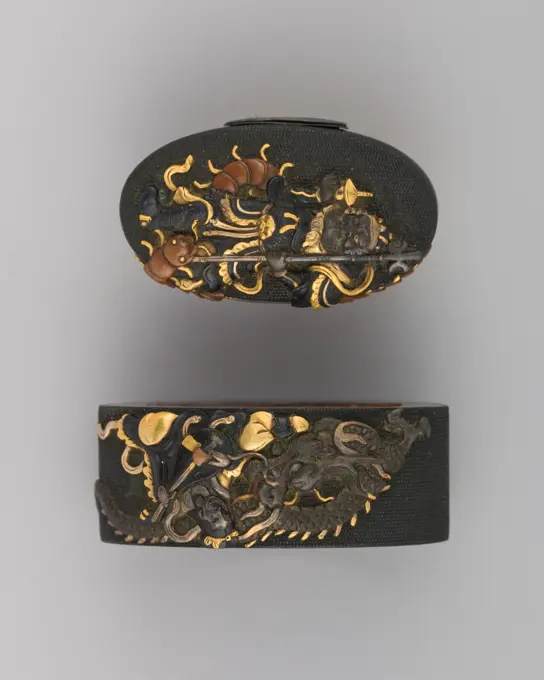
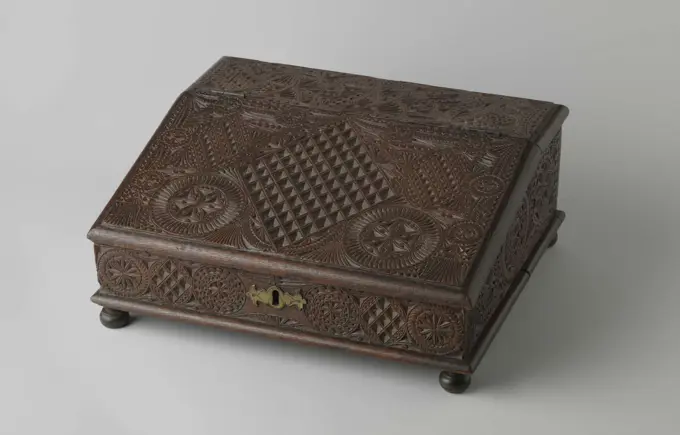
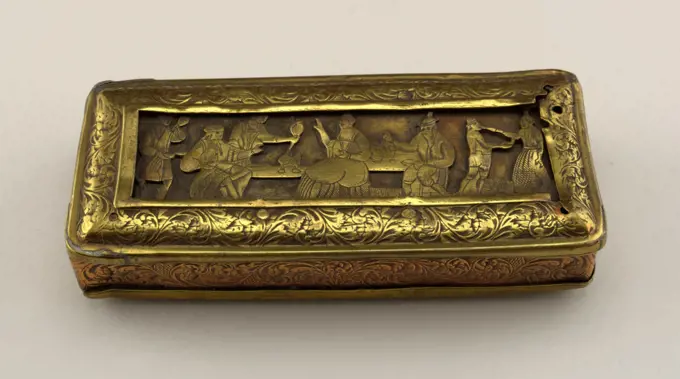
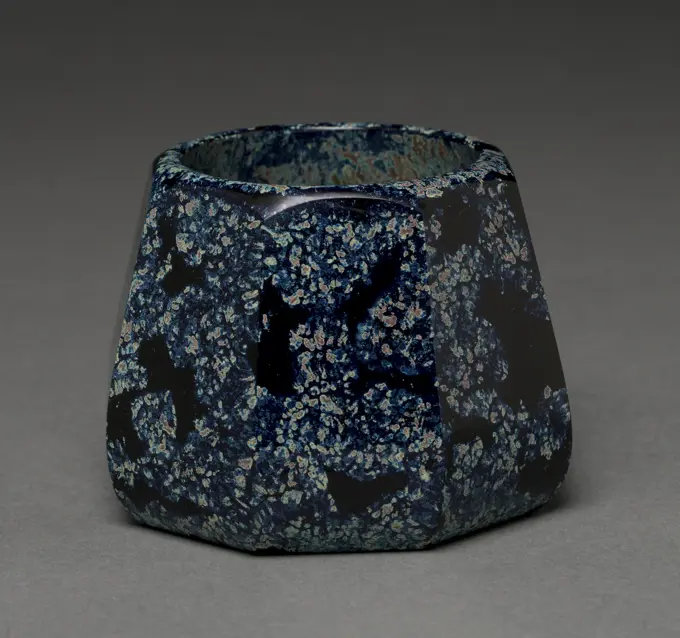
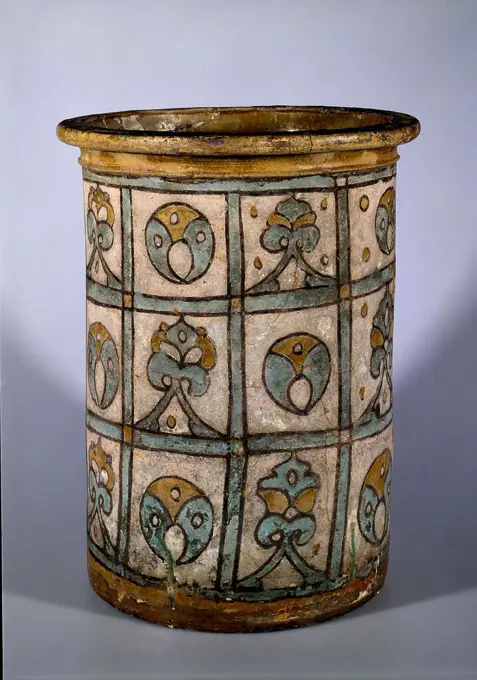
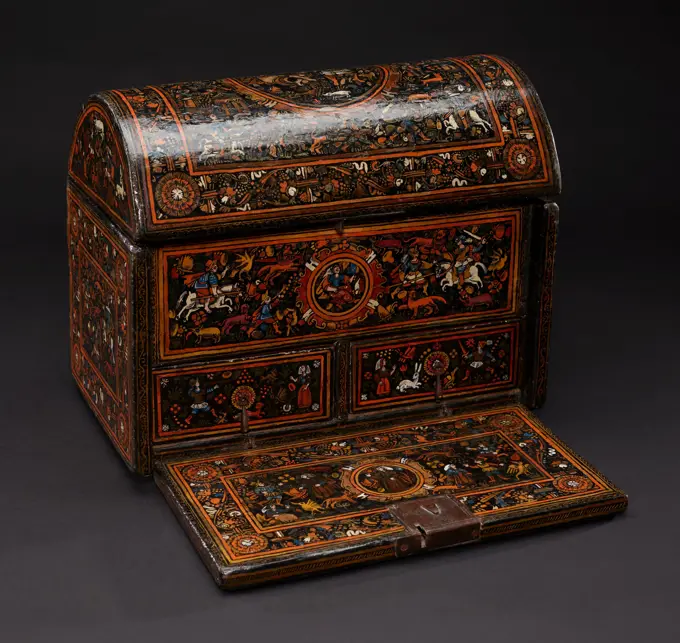
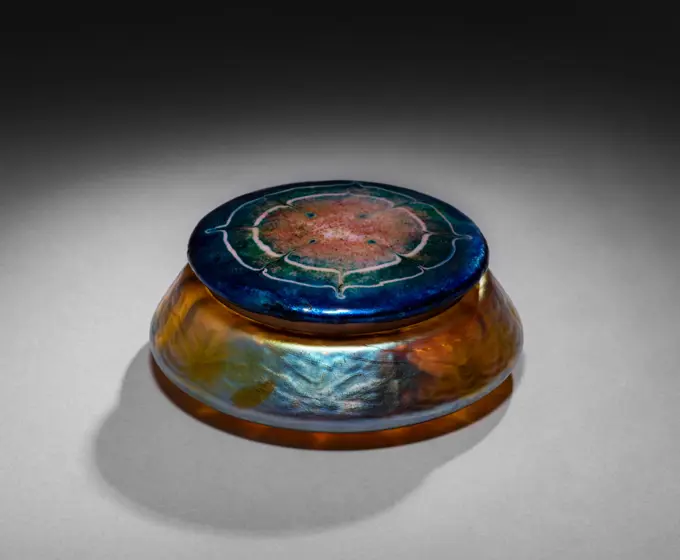
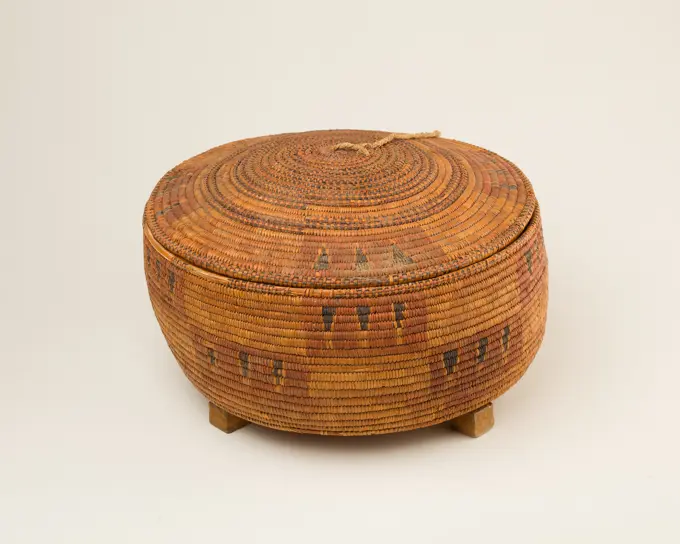
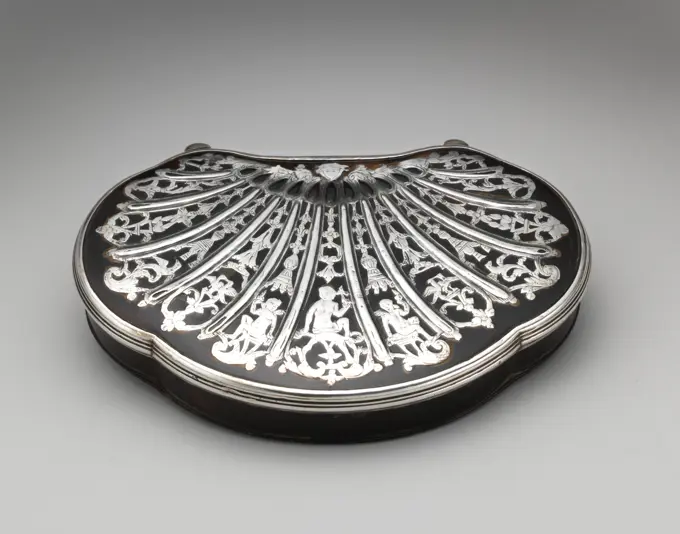
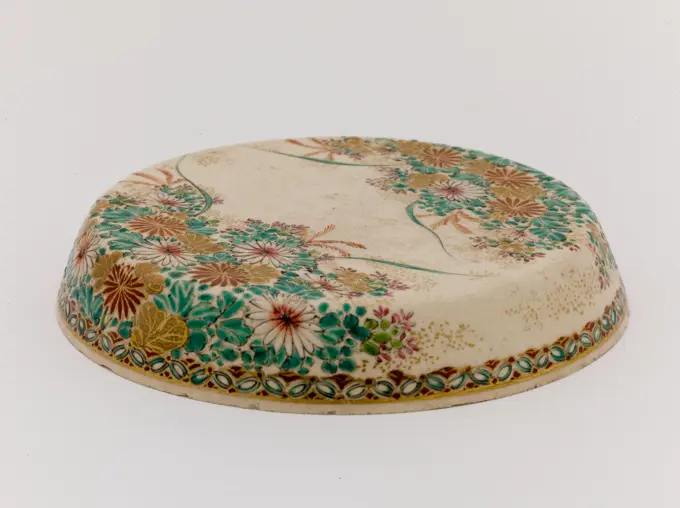
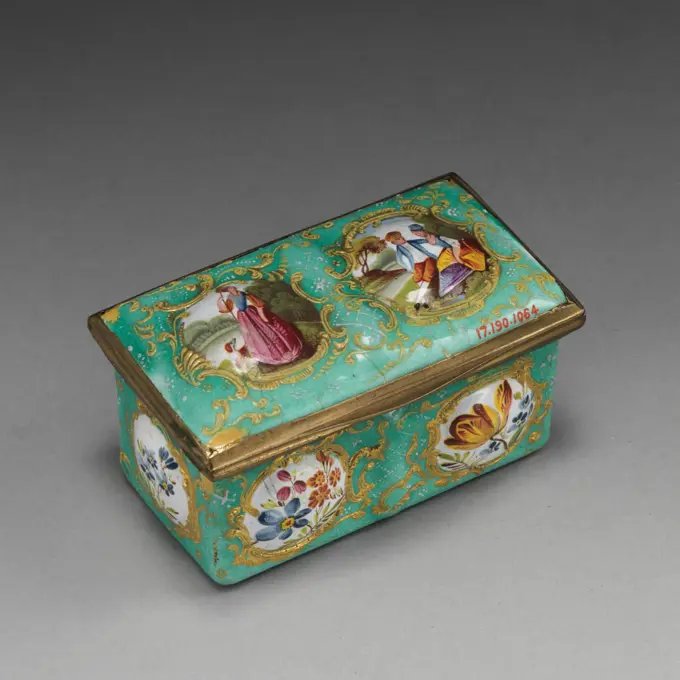
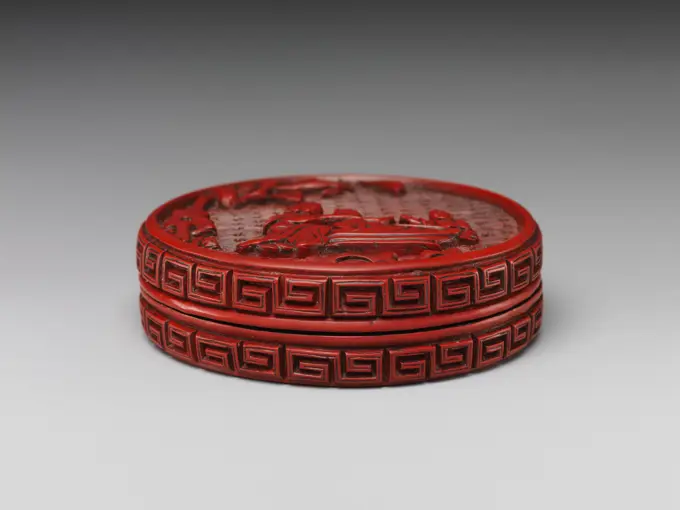
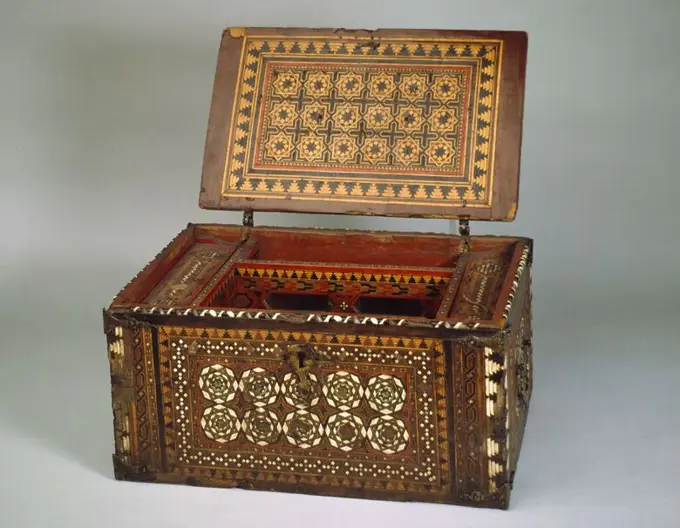
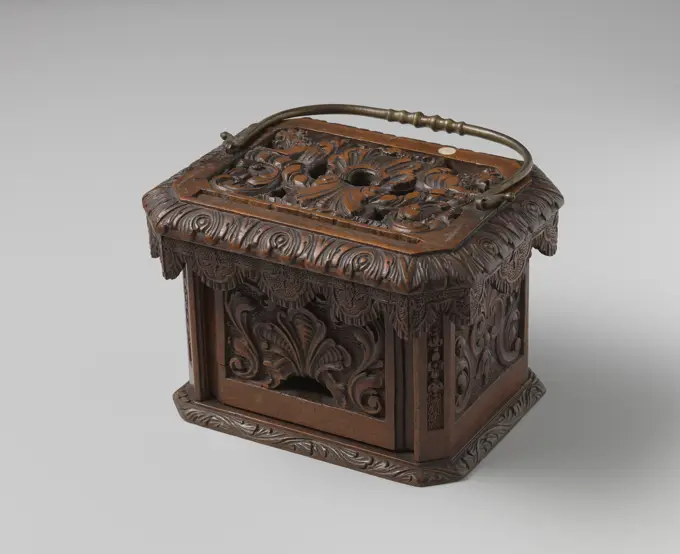
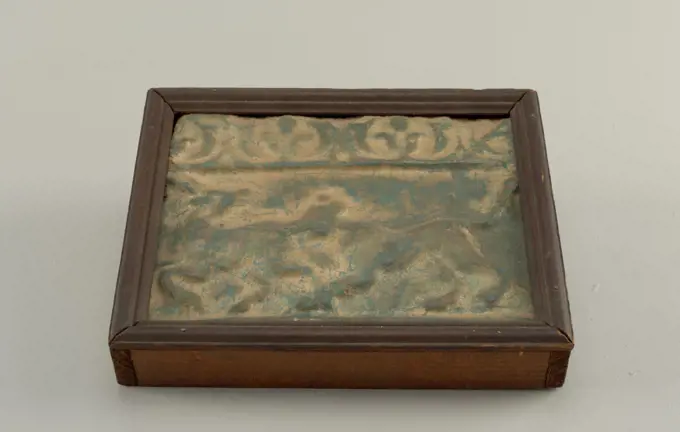
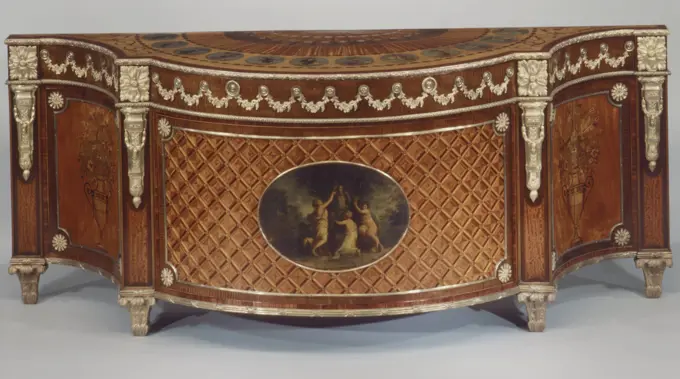
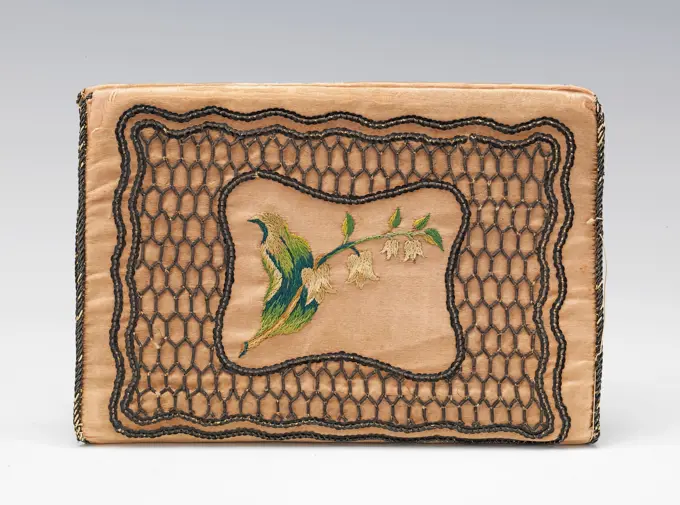
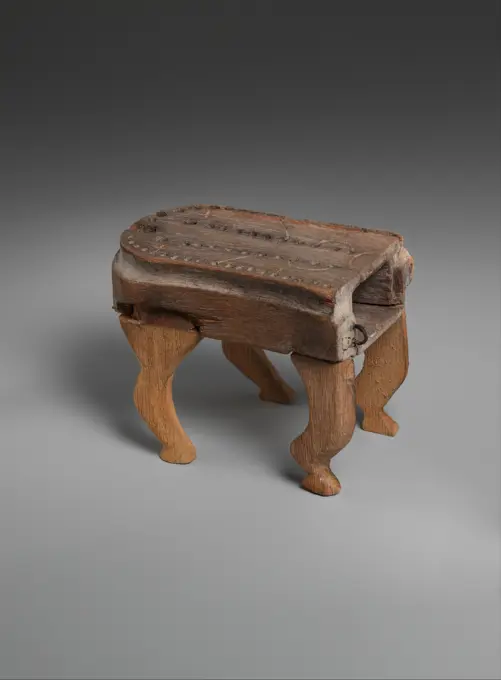
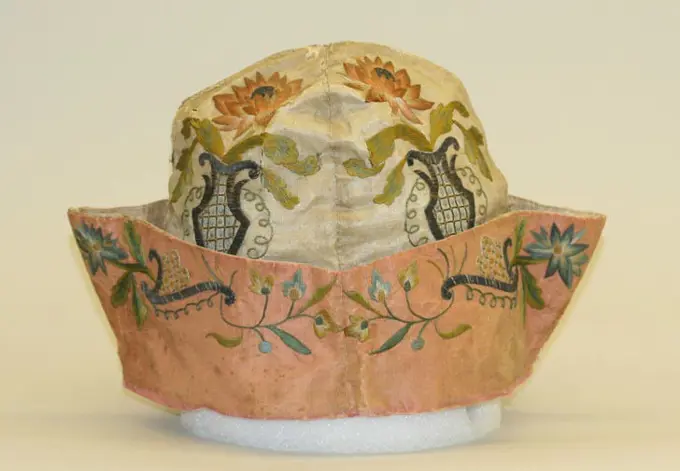
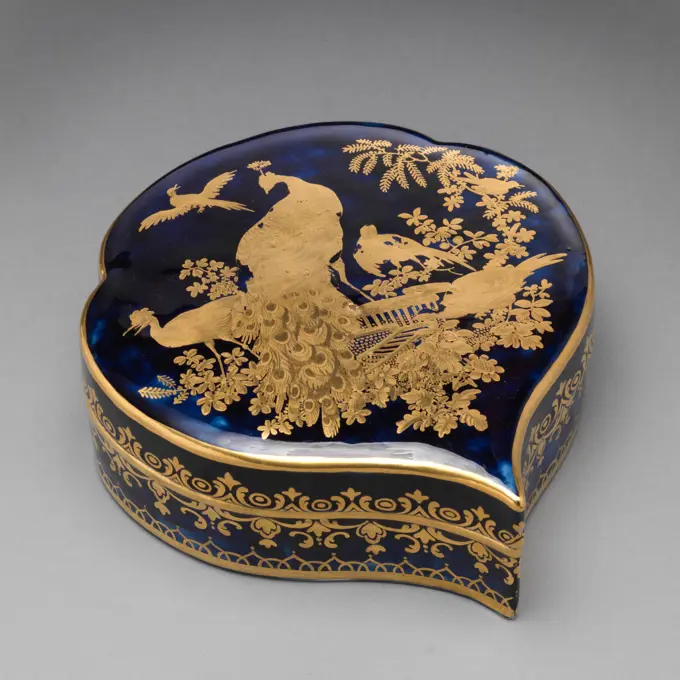
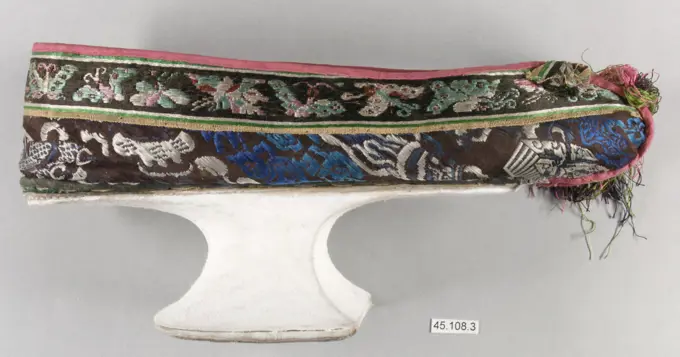
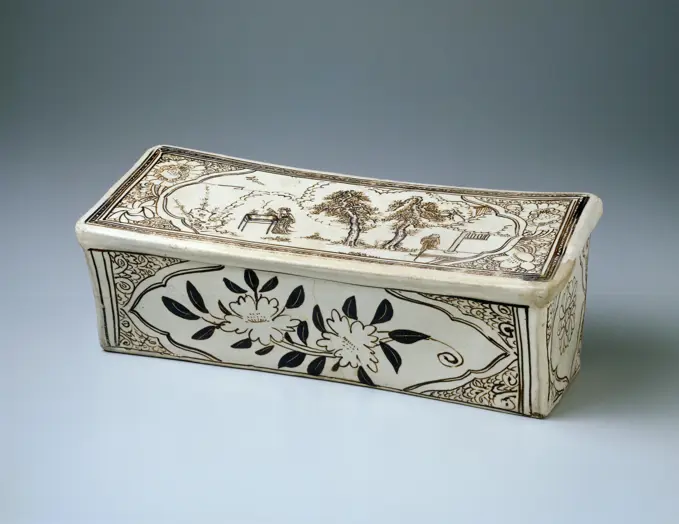
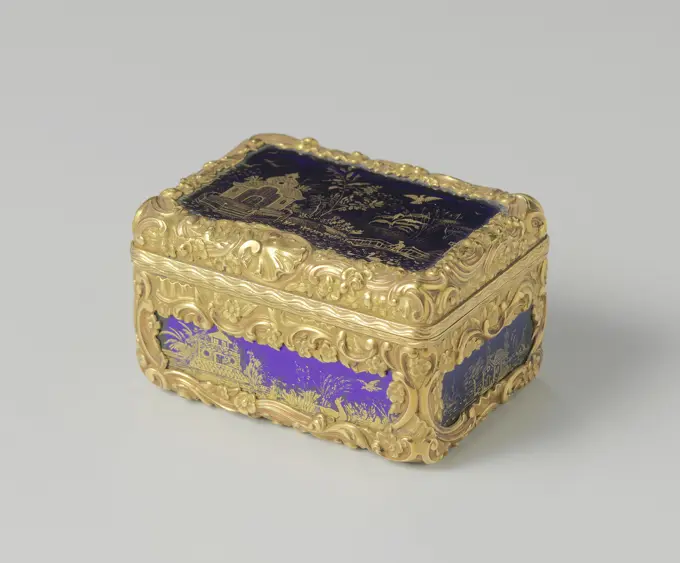
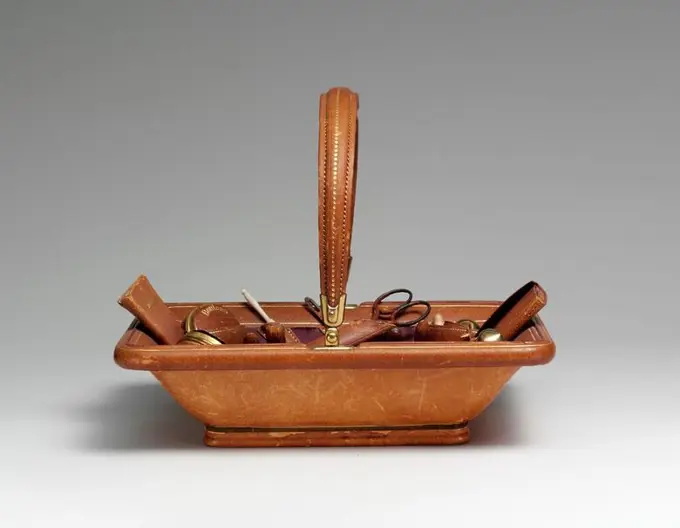
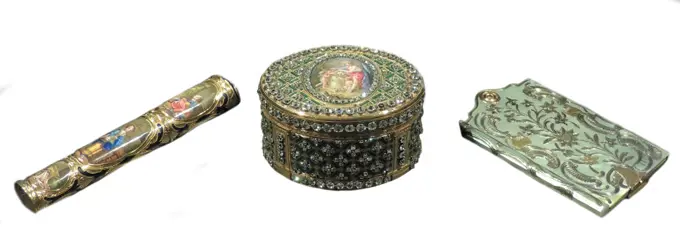
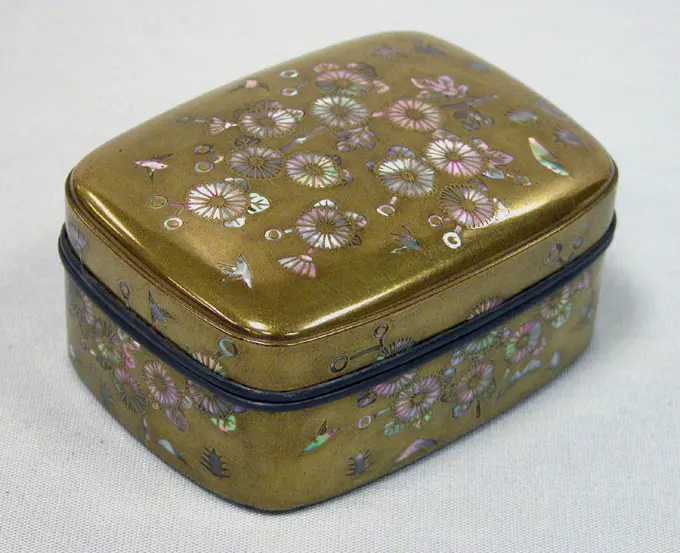
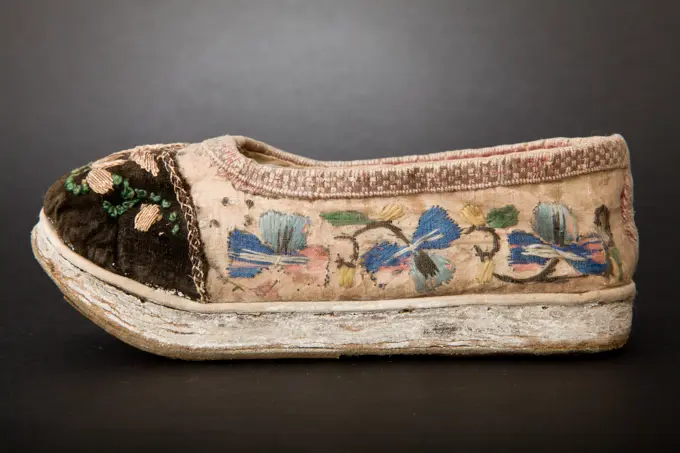
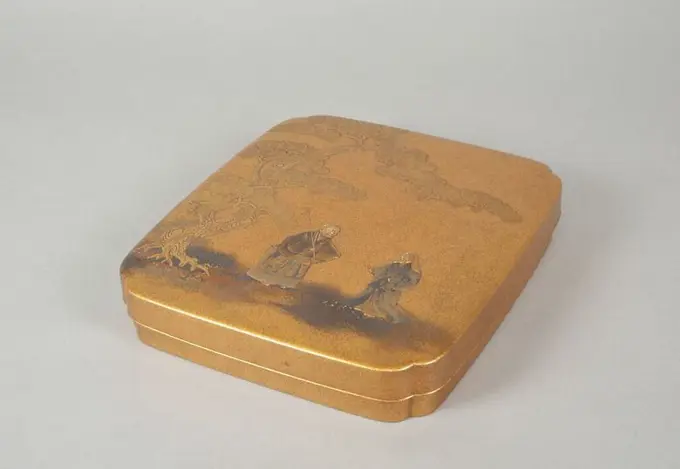
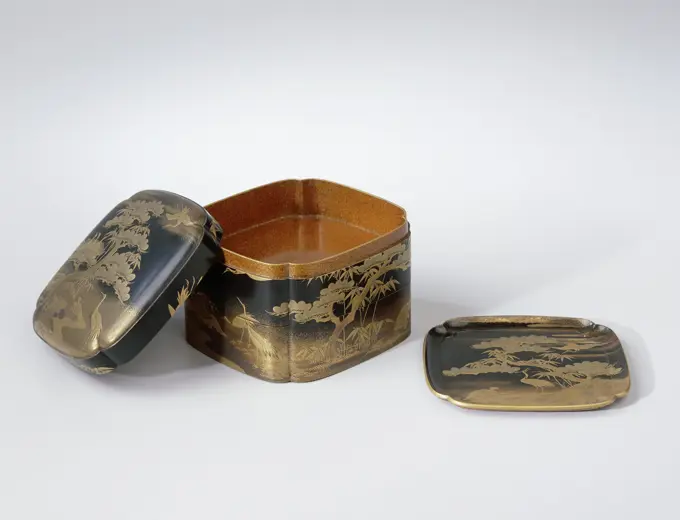
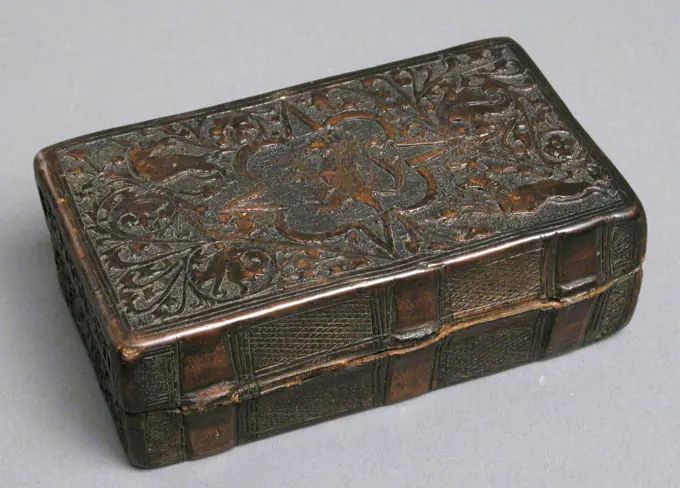
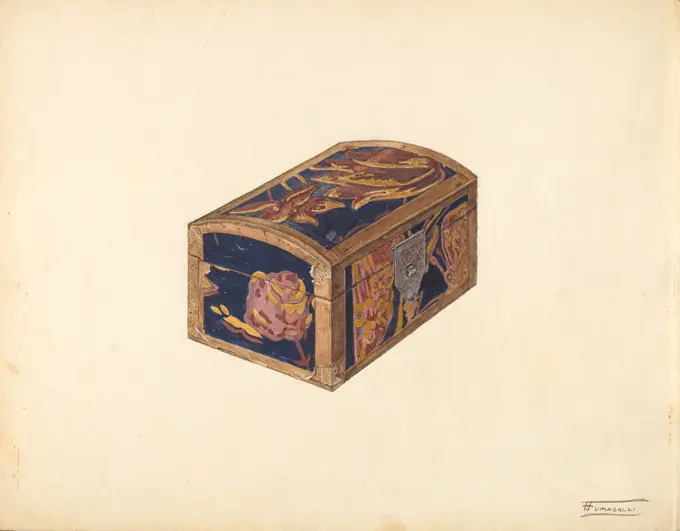
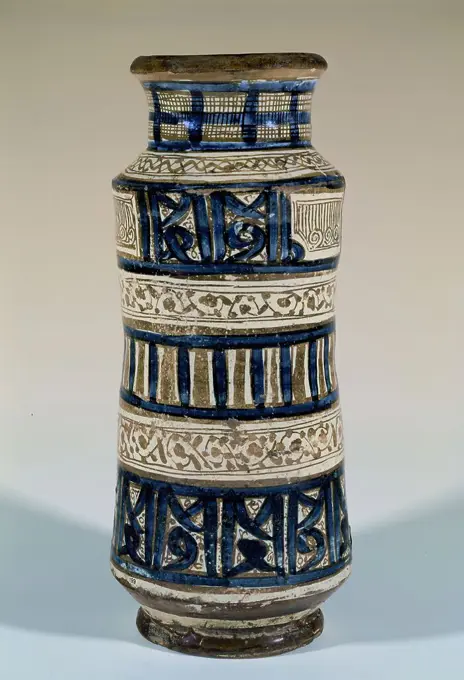
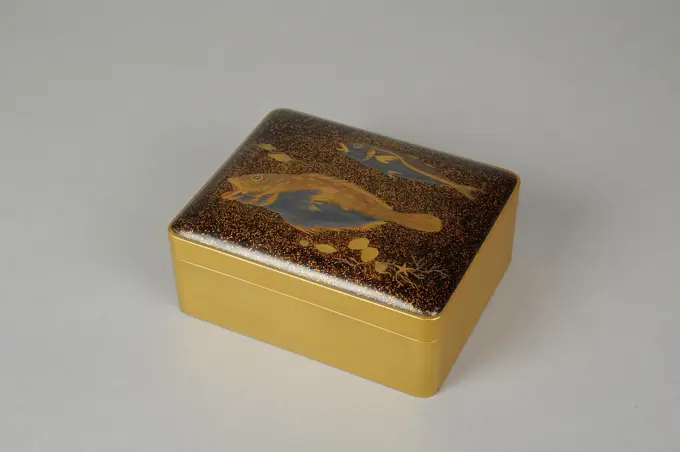
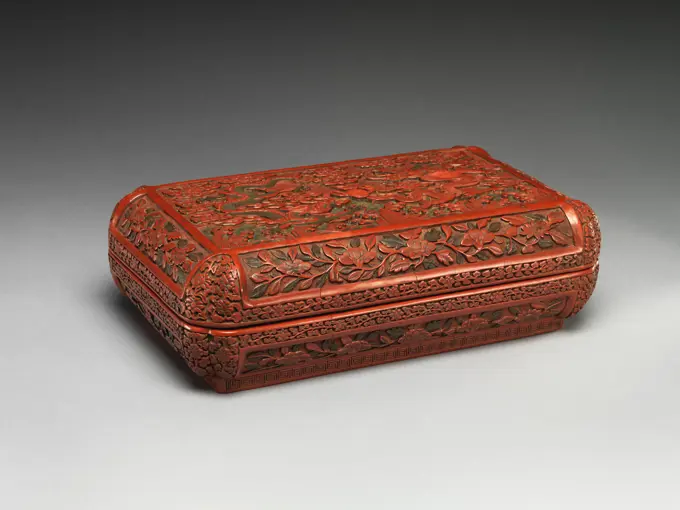
Rectangular box with double dragons China Boxes of this type were also produced in porcelain and were principally used to present important documents or gifts. The four claws on the dragons feet suggest that this example was made for a member of the nobility; five-clawed dragons symbolized the emperor.. Rectangular box with double dragons. China. Carved red, black, yellow, and green lacquer. Ming dynasty (1368-1644), Wanli period (1573-1620). LacquerSnuffbox. Culture: German, Berlin. Dimensions: Overall: 1 7/8 × 3 3/4 × 2 3/4 in. (4.8 × 9.5 × 7 cm). Maker: D. B., Stettin, Germany. Date: 1765-70.Appreciated for its intense blue color enriched with shimmering bits of pyrite, lapis lazuli was long mined exclusively in Afghanistan until deposits were discovered in the Ural Mountains of Russia during the eighteenth century. The frame of this snuffbox consists of four different tones of gold, which were achieved by alloying the gold with small amounts of other metals. Museum: Metropolitan Museum of Art, New York, USA.Chest; wood, inlaidStationery box decorated with peony scrolls 18th century Korea Lacquer inlaid with mother-of-pearl became widespread in Korea in the twelfth century and continued to be the primary type of lacquer produced there into the nineteenth century. The lively and linked floral scrolls that cover the surface of this box are ubiquitous to the decoration of Korean lacquer.. Stationery box decorated with peony scrolls 40527Pyxis Depicting Standing Saints or Ecclesiastics and the Entry into Jerusalem with Christ Riding a Donkey. Dimensions: (a+b):H. 4 1/8 in. (10.5 cm)Diam. 4 1/16 in. (10.3 cm)Wt. 13.9 oz. (394.1 g). Date: mid-to late13th century.During the course of the thirteenth century, luxurious inlaid brasses signed by al-Mawsili (from Mosul) artists or made in their style began to display a very particular iconography borrowing from Christian motifs, namely Gospel scenes, images related to the life of Christ, and standing figures of saints and ecclesiastics. These images appear alongside traditional Islamic themes that were popular in the Seljuq era, such as the courtly cycle and astrology. It is noteworthy that such Christian motifs were largely depicted with deliberate variations. The artists either did not entirely understand the iconography or they did not care much about the established canon. The juxtaposition of Christian and medieval Islamic themes suggests that these brasses were probaCovered Box with Dragons, 1573-1620. China, Jiangxi province, Jingdezhen kilns, Ming dynasty (1368-1644), Wanli reign (1572-1620). Porcelain with underglaze blue decoration; overall: 8.9 x 15.2 cm (3 1/2 x 6 in.).Camphorwood Trunk (Baúl de alcánfor). Unidentified artist. China, made for export market, including Latin America, first half of the 19th century. Furnishings; Furniture. Leather, camphorwood, brass, polychromeTobacco box with Den Lantman guards as in Stee Voor Stadt and Land and Vreijhijt, tobacco box holder iron copper, cast copper engraved Rectangular hinged lid round corners Den Lantman watches as in Stee Voor Stadt and Land and Vreijhijt Rotterdam heraldry Freedom Bataafse Republic war and peace smoking store tobacco snuff boxSutra box with dragons amid clouds China Vigorous, sinewy dragons are frequently depicted on works produced during the reign of the Yongle emperor. This luxurious box, made to hold a sutra in the Chinese album format, was created for use at court. Listen to experts illuminate this artwork's story Listen Play or pause #7328. Sutra Box with Dragon Supported by Bloomberg Philanthropies We're sorry, the transcript for this audio track is not available at this time. We are working to make it available as soon as possible.. Sutra box with dragons amid clouds. China. Red lacquer with incised decoration inlaid with gold; damascened brass lock and key. Ming dynasty (1368-1644), Yongle period (1403-24). LacquerTwo -segment box;  18th century (1701-00-00-1800-00-00);Pair of boxes with covers (part of a toilet service) 1683-84 William Fowle. Pair of boxes with covers (part of a toilet service). British, London. 1683-84. Silver gilt. Metalwork-SilverCut box with iron batter, anonymous, c. 1500 - c. 1550 Cut box with iron batter and lock. On top of a handle.  iron (metal) Cut box with iron batter and lock. On top of a handle.  iron (metal)Goldsmith's art, 18th century. Gold and mother-of-pearl snuffbox with carved lid depicting mythological scene.Player to the roast;  2 after. 18th century (1751-01-01-1800-12-31);Rectangular Box with Scene of a Reception. Culture: China. Dimensions: H. 4 1/4 in. (10.8 cm); W. 10 1/4 in. (26 cm); L. 27 3/4 in. (70.5 cm). Date: 17th century.The scene represented on this box is the arrival of guests at a grand reception. The host and hostess are seated in the reception hall at the upper right of the composition, which resembles that of a traditional Chinese-style horizontal or hanging scroll. A member of the household stands before the hosts, awaiting a messenger carrying a pink calling card. The guests, who are about to cross a stone bridge, are shown in the lower part of the painting. On their way to the reception, the guests will pass a group of musicians playing behind silk curtains. Most of the musical instruments they use are displayed in the case nearby. Museum: Metropolitan Museum of Art, New York, USA.Box. Culture: Japan. Dimensions: H. 8 3/4 in. (22.2 cm); W. 11 1/4 in. (28.6 cm); D. 9 1/8 in. (23.2 cm). Date: 18th century. Museum: Metropolitan Museum of Art, New York, USA.Snuff Box, c. 1770. England, South Staffordshire. Enamel on copper, gilt metal; overall: 2.3 x 7 x 5.5 cm (7/8 x 2 3/4 x 2 3/16 in.). Luxurious personal objects, like this snuff box, were an essential part of a privileged wardrobe during the 1700s and early 1800s, emphasizing their owners refinement and wealth. Their glittering surfaces, however, disguised a system based on the labor and suffering of enslaved or indentured people, whether in gold or stone mines, tobacco farms, or shops where these goods were made. Like cotton, sugar, and tea, snuff came from British colonies in America, India, and the Caribbean, where enslaved people were exploited to grow these crops under extremely harsh conditions. Slavery was not abolished in much of the British Empire until 1833. Britain and other European nations continued to pursue colonialism with a sense of superiority that found its way into all aspects of life, including decorative objects glorifying their conquests.Covered incense box with design of tree peonies 16th century Japan. Covered incense box with design of tree peonies. Japan. 16th century. Red and black lacquer; Kamakurabori ware. Muromachi period (1392-1573). LacquerSnuffbox British, Staffordshire ca. 1750-80 View more. Snuffbox. British, Staffordshire. ca. 1750-80. Copper, enamel. Enamels-PaintedCovered Cosmetic Box with Chrysanthemum Flower Heads. Korea. Date: 1265-1299. Dimensions: H. 5.8 cm (2 1/4 in.); diam. 12.2 cm (4 13/16 in.). Celadon-glazed stoneware with underglaze inlaid decoration of black and white clays. Origin: Korea. Museum: The Chicago Art Institute, Chicago, USA.Dish and cover, George Jones & Sons, Ltd., active 1861 - 1951, Glazed earthenware, Oval, flat-based dish (a). Sides tapered toward lip, molded with swagged nets alternating with game trophies. At edge of base and lip molded ochre-glazed twisted-rope border. Ground glazed brown, with molded motifs picked out in yellow, white, blue, and brown. Interior glazed with bright mauve; underside mottled green and brown. Oval cover (b) glazed mauve on underside. Exterior molded with central finial in form of a fox on fern fronds and a dead duck. Cover in polychrome colors as on base., England, ca. 1875, ceramics, Decorative Arts, Dish and coverRound hat box of cardboard, covered with rust -brown -marbled paper, anonymous, c. 1830 - c. 1840 Round hat box of cardboard, covered with rust -brown -marbled paper. The box is covered with blue paper on the inside. With a green bow ribbon as a handle. Belongs to two doll's hood hats (BK-1983-68-A/B). Netherlands Cardboard. upholstery: paper. Lint: Linen (Material) Round hat box of cardboard, covered with rust -brown -marbled paper. The box is covered with blue paper on the inside. With a green bow ribbon as a handle. Belongs to two doll's hood hats (BK-1983-68-A/B). Netherlands Cardboard. upholstery: paper. Lint: Linen (Material)Isaac Anthony, Patch Box, c. 1750, silver.Small Chest of Drawers with Decoration of Flowers, Birds, and Insects. Culture: Korea. Dimensions: H. 11 3/8 in. (28.9 cm); W. 12 7/8 in. (32.7 cm); D. 9 7/8 in. (25.1 cm). Date: early 20th century.This chest is an excellent example of an early twentieth-century lacquer box with allover mother-of-pearl decoration. The incised floral motifs filled with black ink or charcoal make the piece particularly striking. The shape, size, and compartments suggest that this chest held writing or cosmetic paraphernalia. Museum: Metropolitan Museum of Art, New York, USA.Cylinder Music Box in the Form of a Photograph AlbumBox with Landscape and Scroll Pattern Japan The technique of carving lacquer was brought to Japan from China in the fourteenth century. Originally found primarily in temples, particularly those affiliated with the Zen (Chinese: Chan)tradition, utensils made using this laborious technique become popular as secular household goods during the Edo period.. Box with Landscape and Scroll Pattern 58275Square Plate with Design of Grapes and Squirrel 19th century Japan. Square Plate with Design of Grapes and Squirrel 50351Antique wooden carving box, Jodhpur, Rajasthan, India Copyright: xSafatxAli/DinodiaxPhotoxChest with gold leather covered with Ave Maria Gra, Anonymous, 1500 - 1520 in the lid Ave Maria Gra Box, rectangular, made of wood, completely covered with gold leather; the lid on the sides. The decoration consists of, in the thin parchment of the upholstery, figures and inscriptions. On the lid a banderole with Ave Maria Gr, otherwise two rows of naked children among vines. On the edge of the lid at the front: some text rules interspersed with heart shapes. On the upright sides of the box from the front a men's head and three naked children with a NAP and lid crawles between vines; At the rear naked children at the wine harvest, on the right Hercules struggling with Anteus as have figures, left naked children in wine presses. All figures in gold on blue soil with ornaments in red and green. On the inside rosettes, characters, chessboard and diamond patterns in red, green and gold. Italy wood (plant material). parchment (animal material). leather Box, rectangular, made of wood, compleChest with a kneeling nobleman -litip player with standing noble woman and a knight on the right, anonymous, 1400 - 1500 Cipressenhout box. The front board shows a flat-stabbed representation with a coat of arms in the middle, on the left a kneeling nobleman-lut player with standing noble woman and on the right a knight in conversation with a noble woman. Left and bottom right an averted leopard. The soil is filled with palm bars. The sides are decorated with bred tenders, line and leaf ornament. The undersides of the front and side walls have been scooped out. Italy wood (plant material). cypress (wood). softwood. paint (coating) Cipressenhout box. The front board shows a flat-stabbed representation with a coat of arms in the middle, on the left a kneeling nobleman-lut player with standing noble woman and on the right a knight in conversation with a noble woman. Left and bottom right an averted leopard. The soil is filled with palm bars. The sides are decorated with bred tenders, lineSnuffbox ca. 1760-1800 British, Staffordshire. Snuffbox. British, Staffordshire. ca. 1760-1800. Enameled copper. Enamels-PaintedDocument case, anonymous, anonymous (rejected attribution), c. 1740 chest Rectangular box with lid with large copper hinges and lock with iron mechanism and brackets and square silver plate, opened and engraved with plant motifs and 2 putti. Oraly silver handles on openly worked silver plate on either side. Completely inlaid with ivory rank and flower motifs, on which details engraved with East Indian ink. In the middle of the lid an oval medallion with a helmeted weapon with bird and bird as a helmet sign. Inside lid decorated with flowers in vase. Masipatnam wood (plant material). ivory. silver (metal). copper (metal). iron (metal). rope. India ink (ink) cutting / inlay (process) / engraving / forging flowers ~ ornament JavaPatch Box, c. 1809-1819. France, 19th century. Enamel on gold; overall: 1.6 x 4.8 cm (5/8 x 1 7/8 in.).Sword-Hilt Collar and Pommel (Fuchigashira) 19th century Japanese A fuchigashira is a pair of matching sword fittings comprising the fuchi (collar at the base of the grip of the sword hilt) and kashira (pommel cap at the end of a sword hilt).. Sword-Hilt Collar and Pommel (Fuchigashira). Japanese. 19th century. Gold, silver, copper, copper-silver alloy (shibuichi), copper-gold alloy (shakud). Sword Furniture-Fuchi-KashiraHalf Oval Lidded Cosmetic Box (Banduoyuan He) with Scrolling Clouds and BirdsMountMirror in a Lacquer Case, c. 1800-1825. China, Qing dynasty (1644-1911). Lacquered paper; glass mirror; overall: 3.2 x 31.8 x 32.4 cm (1 1/4 x 12 1/2 x 12 3/4 in.).Goldweight Stool, 19th-20th century, 1 3/8 x 2 1/4 x 1 1/16 in. (3.49 x 5.72 x 2.7 cm), Brass, Ghana, 19th-20th centuryWriting box. Writing box, decorated with sliced leaf motifs and diamond pattern on the lid on four round paws. Gold plated lock plate (key lacking). The inside of the coffin contains four drawers with copper () Buttons. On the inside lid the initials g d L.POST O BOTE DECORADO CON "SEBQA" - MANISES - SIGLO XV. Location: INSTITUTO VALENCIA DE DON JUAN-COLECCION. MADRID. SPAIN.Box with ReticulatedLidBox, Engraved brass and copper, Rectangular box with hinged cover (sliding top). The sides of copper. Top and bottom have cut-out figures feasting and quarreling respectively, framed in scroll work., b) sliding top, covering scene on bottom. Similar top for cover missing., The Netherlands, mid-18th century, metalwork, Decorative Arts, BoxVase, c. 1906. Carl Goldberg (Bohemian, 1891-1938). Dark blue glass imitating lapis lazuli; overall: 8.1 x 10.4 cm (3 3/16 x 4 1/8 in.).Tea Caddy early 19th century Japan. Tea Caddy. Japan. early 19th century. Lacquer on wood. Edo period (1615-1868). LacquerAlmohad chamber pot. Cuerda seca technique. Green and orange flowers.. Madrid, Instituto Valencia de Don Juan. Location: INSTITUTO VALENCIA DE DON JUAN-COLECCION. MADRID. SPAIN.1 Schepel from Groenlo, Anonymous, c. 1800  Wooden and iron content measure for dry goods with bridge and style of 1 scoop, v.z.v. stamp and labels. Groenlo wood (plant material). iron (metal)   GroenloBufetillo, 17th century, 9 3/4 × 12 3/8 × 7 3/4 in. (24.77 × 31.43 × 19.69 cm) (closed), Lacquered wood, wrought iron, Mexico, 17th centuryCase Factory of Piotr and Aleksander ŁukutinówCovered Box, 1898-1901. Louis Comfort Tiffany (American, 1848-1933), Tiffany Glass & Decorating Company (American, New York, 1892-1902). Favrile glass, enamel on copper; diameter: 13.1 cm (5 3/16 in.). By 1900 Tiffany had expanded his empire by increasing the firms production of “fancy goods,” including inkstands, candlesticks, clocks, small boxes, desk sets, tea screens, and other functional objects. Along with the array of artistic glass designs from his factory in Corona, Queens, works in ceramic, bronze, other metals, and even jewelry abounded. These smaller, more affordable luxury items were designed with as much thought to artistry as the great stained glass windows and lamps through which the firm enjoyed unrivaled success.Circular Lided Basket on a Wood Stand ca. 1492-1473 B.C. New Kingdom This small circular basket and its convex lid are made entirely of of halfa grass. The coils of the basket have been woven together with strips of grass, some of which have been dyed red and blue to create the pattern. A wood stand made of two bars ending in low feet has been tied to the bottom of the basket with linen cord. The basket was part of the tomb furnishings of Hatnefer (36.3.1), mother of Senenmut, who was an official in the time of Hatshepsut. When found by the Museum's excavators, the cords that were intended to tie the lid shut had been broken and the contents of the basket had been plundered before it was placed in the tomb. The basket still contained a small basket (36.3.60), an alabaster jar (36.3.61), and, a kohl jar (36.3.62) and stick (36.3.63).. Circular Lided Basket on a Wood Stand 548734Box late 17th-early 18th century French or British. Box. French or British. late 17th-early 18th century. Tortoiseshell, silver. Metalwork-Silver In CombinationLambal or strip of application embroidery, anonymous, c. 1500 - c. 1599 Lambal or strip of application registration on a wine red velvet stock. The pattern has symmetrical s-ranks, tied together in the middle with a lily and a rose. The richly branched rank is occupied with leaf rosettes and ends in volutes of acanthus leaves and silver sutures. The strip is finished with gold consideration and gold frills along the bottom. The strip is part of three strips (BK-17292-A to BK-17292-D). Italy (possibly) velvet (fabric weave). silk. embroidering Lambal or strip of application registration on a wine red velvet stock. The pattern has symmetrical s-ranks, tied together in the middle with a lily and a rose. The richly branched rank is occupied with leaf rosettes and ends in volutes of acanthus leaves and silver sutures. The strip is finished with gold consideration and gold frills along the bottom. The strip is part of three strips (BK-17292-A to BK-17292-D). Italy (possibly) velvet (fabric wLid. Porcelain, cream covered, polychrome enamels, gilding. Paris, Cernuschi museum. Chinese art, Chinese ceramic, lid, cream, gilding, flower motif, porcelainTable with Two Boxes, 14th-17th century, 6 1/2 x 5 13/16 x 3 5/8in. (16.5 x 14.8 x 9.2cm), Glazed earthenware, China, 14th-17th centuryInscribed Table ScreenBox with Pommel Scroll Design 13th century China. Box with Pommel Scroll Design 72758Box c 1750-1850 United States. Maple . Artist unknownBox 18th century British, Staffordshire. Box. British, Staffordshire. 18th century. Enameled copper. Enamels-PaintedIncense burner 18th century China. Incense burner 60998Terracotta tripod kothon (vessel for perfumed oil) mid-6th century B.C. Attributed to the Group of the Boeotian Dancers On the body are a bearded siren, a sphinx, and a lion. The legs are decorated with two padded dancers, two men with spears, and a running winged figure representing Aristaios, a son of Apollo and the nymph Cyrene, who was well-known in Boeotia. Aristaios was celebrated for his agricultural discoveries and for his gifts to mankind. Here he holds a mattock in his left hand and a small pot in his right. The mattock would have been used to cover the newly sown seeds with soil to protect them from birds; the pot may contain seed.. Terracotta tripod kothon (vessel for perfumed oil). Greek, Boeotian. mid-6th century B.C.. Terracotta; black-figure. Archaic. VasesBox with scene of bathing children 14th century China This tiny box, previously thought to date to the sixteenth century, can be reassigned to the fourteenth after comparison with an example bearing an image of the poet Tao Qian, which dates to the first half of the fourteenth century. The large, unarticulated shapes of the rocks and the use of a single pattern for the low-relief background are similar on both boxes, as are the thick incisions used to define the figures' clothing and the large oval faces with nondescript features.. Box with scene of bathing children 40234Madrid, M.A.N. Arte Edad Media. Arqueta de escribano en madera y taracea del círculo granadino, de finales del s.XIV con tapa superior y compartimientos para tintero y cáñamo. Museum: MUSEO ARQUEOLOGICO, MADRID, SPAIN.Stew, richly cut and with buyer handle. Stew with beveled corners, from rosewood. The stew is cut richly and has a copper handle.Border Tile, Glazed earthenware, Horizontal border tile with relief of lioness attacking antelope; above, conventionalized tulip border. Turquoise glaze with gold iridescence., Persia, possibly 16th century, tiles, Decorative Arts, Border TileCommode ca. 1780 British. Commode 203855Purse 1815 British. Purse 156491Small Hounds & Jackals Game Board ca. 2030-1640 B.C. Middle Kingdom The game played on this small board is now call "hounds and jackals," a name derived from the animal heads atop the tall, narrow playing pieces that are not preserved on this set (for the most complete surviving example see 26.7.1287a-k). A cavity under the gameboard originally held a drawer to store the playing pieces; the metal loop was part of the mechanism that secured it. The board is supported by animal-shaped legs, probably those of a bull, only one of which is original. The ancient Egyptians often used bovine and feline legs as supports for furniture and other objects.The ancient Egyptian name and the rules of hounds and jackals are unknown, but the configuration of the board's fifty-eight peg holes and the original two sets of five playing pieces indicate that it was a race game pitting two opponents against each other. The game probably began in the two larger, central peg holes near the curved back of the boBox with Joan van Hoorns coat of arms, anonymous, c. 1700 - c. 1710 Octagonal box with lid on which weapon (from Governor-General Joan van Hoorn). Outdoor wall decorated in gold lacquer with buildings, rocks, flowers and two standing female figures. Japan lacquer (coating) lacquering Octagonal box with lid on which weapon (from Governor-General Joan van Hoorn). Outdoor wall decorated in gold lacquer with buildings, rocks, flowers and two standing female figures. Japan lacquer (coating) lacqueringNavigation, anonymous, c. 1590 - c. 1596 lid Ink pot, rectangular with a round hole at the top for a container for the ink and a hole in front of the pen. Tin lid. The ink tray is missing.  lead (metal) casting  Nova Zembla. Saving HuysWall Facing (Holland); tin-glazed earthenware, underglazeCap 1720 French. Cap 112625Wooden writing box with flower decoration, inside writing surface, storage compartments and two ink bottles, writing box box casket wood rosewood metal closed, inlaid Wooden rectangular writing box for use on the table with lock and matching key If the lid is opened, continuous slanting desk is created with hinge in the middle; the wooden tabletop is covered with green paper background with gold trim and corner figures wood framed; underneath this writing surface there is storage space on both sides which can be reached by hinging the surface openly; above the writing surface there is an elongated box in the middle with two square smaller compartments on the left and right respectively for stamps and two glass square ink bottles with round silver-plated lids, including cork closure; an elongated hollow pen tray that can be removed fits in the middle compartment; below is space for other pens no Nieuwe Waterweg Hook of Holland Rotterdam Pieter Caland Thorbecke J.F. Boogaard writing furnBox with cover. Culture: Japan. Dimensions: 3 1/8 x 9 3/4 x 7 1/8 in. (7.9 x 24.8 x 18.1 cm). Date: 19th century.This covered box, part of a wedding trousseau, comprised of thirty-one pieces, represents late Edo-period maki-e (decoration in gold and/or silver sprinkled powder) art at its finest. The Shimazu family, lords of Satsuma in Kyushu, ordered this traditional trousseau most likely for Taka-hime, who was married to Matsudaira Sadakazu, lord of Kuwana (Ise Province), around 1830.The items of the wedding set are decorated with various auspicious motifs. The evergreen pine represents longevity and also symbolizes renewal. The fast-growing, springy, but at the same time very strong and enduring bamboo also stands for longevity and represents endurance and strength. The plum blossoms are the first flowers of spring, representing the renewal of nature. The combination of the "Three Friends of Winter"--originating from China--is associated with celebration, and considered to be an auToilet box containing four smaller boxes ca. 1761 Chelsea Porcelain Manufactory Containing a nest of smaller boxes, these pieces may have belonged to a luxurious dressing-table set similar to one advertised by the dealer Burnsall on July 21, 1764: "A most grand and capital Lot of.. Chelsea Porcelain, containing a dressing Glass and three Drawers.. with different Gold Instruments and Twelve Toilet Boxes to ditto, all of the rich Mazarine Blue and Gold." The deep blue ground color, known as Mazarine blue, combined with the lavish gold decoration, used at Chelsea as early as 1756, clearly was influenced by Vincennes and Sèvres porcelain. Listen to experts illuminate this artwork's story Listen Play or pause #413. Retail Value. High and Low Supported by Bloomberg Philanthropies We're sorry, the transcript for this audio track is not available at this time. We are working to make it available as soon as possible.. Toilet box containing four smaller boxes. British, Chelsea. ca. 1761. Soft-paCasket with a sign lid; Mappin & webb LTD (company Z Otnicz, Platernicza, seller; Fl. 1859-); 1912 (1912-00-00-1912-00-00);Sugar bowl (box). Chromecki, Wincenty (fl. 2 ćw. XIX w.-1853), goldsmithManchu Woman's Shoe late 19th-early 20th century China. Manchu Woman's Shoe 69726Rectangular Pillow, late 13th-early 14th century, Wang Family Workshop, 6 1/8 x 16 1/4 x 6 3/4 in. (15.56 x 41.28 x 17.15 cm), Tz'u-chou ware Stoneware with iron-brown painted décor on a white slip under transparent glaze, China, 13th-14th century, The Daoist scene depicted on this headrest suggests a ritual performed in honor of Chang'e, the Goddess of the Moon. A well-attired woman is burning incense at a table in a garden. Two tall pines, a tai hu garden rock, bamboo, and a pavilion complete the scene. The front panel encloses a camellia branch with two blossoms, and the back displays a fantastic bird amidst peonies. Other auspicious flowers (a lotus and peony) adorn the side panels. Dense, leafy scrollwork fills the corners of each register. During the Jin and Yuan dynasties (10th-14th centuries), the rectangular pillow shape was often used for pictorial representations reminiscent of paintings on silk, paper, or in illustrated books. Popular subjects included narratives from literBox with star motif on cover, c. 1970, 2 5/8 × 4 3/8 × 4 3/8 in. (6.67 × 11.11 × 11.11 cm), Sweetgrass, birch bark, porcupine quills, Canada, The Anishinaabe woman artist who created this intricately adorned and finely woven basket utilized locally harvested porcupine quills, birchbark, and sweetgrass. Artists often incorporated abstraction into their work, layering quills in complex patterns and forms that reveal both technical mastery and artistic ingenuity. For more than two hundred years, Anishinaabe women sold many of their birchbark containers and baskets to non-Native people to sustain their families during a time of major cultural disruption, including forced assimilation and removal onto governmental and religious controlled reservations. Quillboxes exemplify the power of Anishinaabe women to create a new and unique artform that expresses cultural and individual resiliency and creativity.Doos, anonymous, c. 1800 - c. 1850 Rectangular golden snuff box. With heavy rocaille listings within which, on the lid and along the walls on blue glass of chinioseries are drawn in gold. goldsmith: unknowngoldsmith: Paris gold (metal). glass Rectangular golden snuff box. With heavy rocaille listings within which, on the lid and along the walls on blue glass of chinioseries are drawn in gold. goldsmith: unknowngoldsmith: Paris gold (metal). glassCabinet with Design of Pine, Bamboo, and Cherry Blossom 19th century Japan. Cabinet with Design of Pine, Bamboo, and Cherry Blossom 57870Sewing Kit. Culture: American. Dimensions: Basket: 8 x 9 3/8 x 7 in. (20.3 x 23.8 x 17.8 cm). Date: ca. 1874. Museum: Metropolitan Museum of Art, New York, USA.Terracotta larnax (chest-shaped coffin) mid-13th century B.C. Minoan The larnax was the standard type of coffin in Crete from the early fourteenth century to the twelfth century B.C. The structure with recessed panels on each side suggests a wooden prototype, and recent scholarship has identified Egyptian chests as the probable models. The decoration on each side consists of geometric and vegetal ornaments well represented on contemporary pottery. The larnax stands at the beginning of an impressive series of large-scale funerary monuments in the Greek and Roman collection.. Terracotta larnax (chest-shaped coffin). Minoan. mid-13th century B.C.. Terracotta. Late Minoan IIIB. TerracottasSnuffbox by Jean George (-1765) Paris, c 1763-1764 - painted decoration : Tourcaty gold, silver, enamel, diamonds.Drom, old model of the arches. Groom of the militia. The brass boiler is provided with a veal sheet on both sides, held by a hoop and tense by means of a tensioner with tractors and screws. Both hoops are decorated with a motif of triangles in the colors red, white and blue. With engraved numbers: 1855-30.Tea caddy (part of a set) ca. 1770 British, South Staffordshire Containing two canisters for tea (green and black) and a larger one for sugar, this chest could be locked to secure its valuable contents; both tea and sugar were expensive commodities during the eighteenth century. The polychrome pastoral scenes and Italianate landscapes, combined with Rococo-style gilding against a pink ground, create an opulent effect.. Tea caddy (part of a set). British, South Staffordshire. ca. 1770. White enamel on copper painted in polychrome enamels. Enamels-PaintedHeirloom Chest(Hombung)Military accessory. Culture: Austrian. Date: 1830-60.Military officers began wearing hat plates of this type at the beginning of the 19th century. The lions depicted on the plate are highly refined; differentiating male and female creatures is integral to iconography and symbolism. This particular emblem is from the collection of Archduke Leopold of Austria. Museum: Metropolitan Museum of Art, New York, USA.Patten-type Shoe, c 1800s. Africa, Central Africa, Democratic Republic of the Congo, Kuba or Bushongo, 19th century. Wood and glass beads; overall: 29.2 x 9 x 6.1 cm (11 1/2 x 3 9/16 x 2 3/8 in.).Incense Box dated 1876 Ogawa Shomin. Incense Box. Ogawa Shomin. Japan. dated 1876. Gold hiramaki-e, mother-of-pearl and gold ground. Meiji period (1868-1912). LacquerBoys unknownWriting Box with Design of Elderly Couple under Pine from the Noh Play Takasago. Culture: Japan. Dimensions: H. 1 1/2 in. (3.8 cm); W. 8 in. (20.3 cm); D. 9 3/4 in. (24.8 cm). Date: 19th century. Museum: Metropolitan Museum of Art, New York, USA.Stack box, black lacquer and cranes and turtle in gold Makie, Anonymous, 1700 - 1800 High box with ingredmen corners, consisting of two seven -closing containers and a somewhat convex lid. A suitable leaf in the box. Covered from the outside with black lacquer with trees, mountains and cranes in gold makie. Inside Nashiji. Japan wood (plant material). lacquer (coating). gold (metal) lacquering High box with ingredmen corners, consisting of two seven -closing containers and a somewhat convex lid. A suitable leaf in the box. Covered from the outside with black lacquer with trees, mountains and cranes in gold makie. Inside Nashiji. Japan wood (plant material). lacquer (coating). gold (metal) lacqueringCornelis Johannes Krayenhoff fought as a cavalry officer at the Battle of Waterloo. He was struck by a bullet and fell from his horse, but fortunately lived to tell the tale. Krayenhoff and his descendants imbued this event with heroism and martyrdom: they kept as family relics the cartridge case crushed by his fall and the bullet that struck him.Cabinet with Grapevine design, 17th century, Unknown Japanese, 7 1/2 × 6 1/2 × 11 13/16 in. (19.05 × 16.51 × 30 cm), Black lacquer with sprinkled gold and e-nashiji, Japan, 17th centuryBox late 15th century Italian Throughout the Middle Ages, household goods of all types were stored in boxes and coffrets which both protected the goods in the home and provided traveling cases on journeys. The great number of these of all sizes, shapes, and materials that have survived from the medieval period testify to this method of storage.This small container may have been intended to hold rings, ring brooches, and other jewels or trinkets. A small inscription appears on this box, AMA DIO DE BON CORE A FIN (Love God with a good heart to the end”). Unfortunately, this inscription does not provide a clue to the specific use for which the container was intended.. Box 468512Frank Fumagalli, Box, c 1939 BoxPOT O BOTE DECORADO CON ALAFIAS GRUESAS EN COBALTO Y ORLAS - CERAMICA DE MANISES - SIGLO XIV. Location: INSTITUTO VALENCIA DE DON JUAN-COLECCION. MADRID. SPAIN.Box 19th century Japan. Box 42571Tea utensil box (chabako) Japan 17th century View more. Tea utensil box (chabako). Japan. 17th century. Mother-of-pearl and makie. Edo period (1615-1868). Lacquer