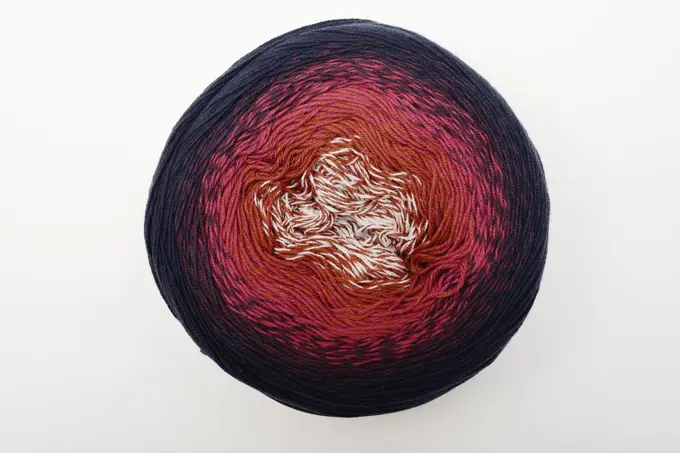
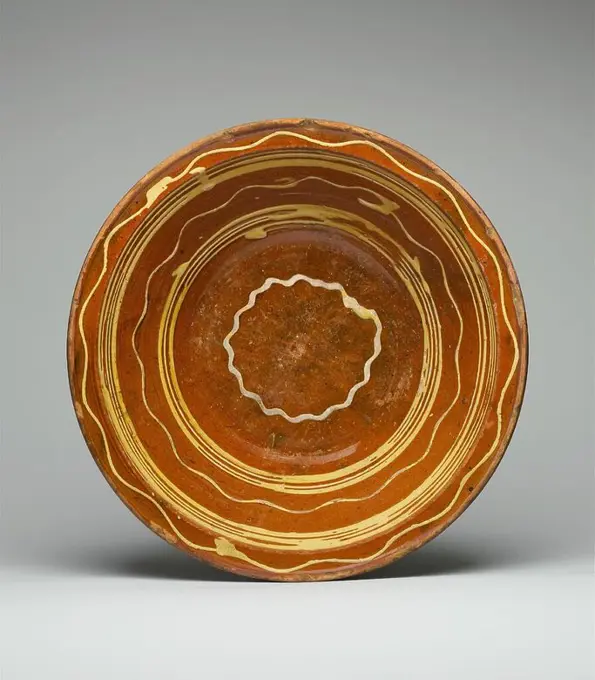
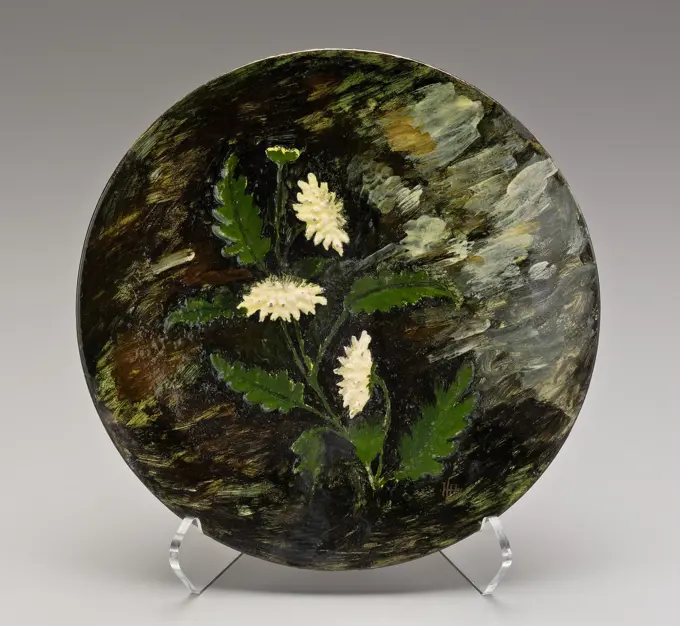
Intricate Glass Paperweights

Beautiful glass paperweights featuring colorful floral designs and geometric patterns, showcasing artistic glasswork from the 19th century.

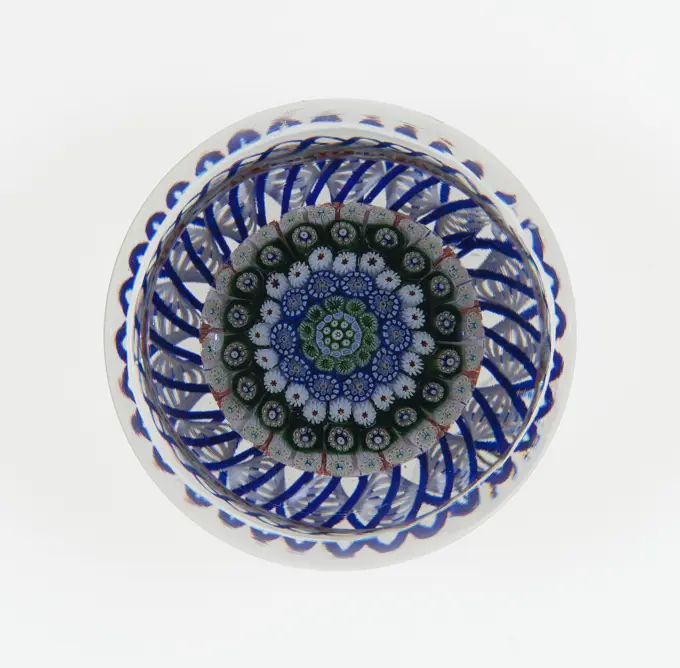
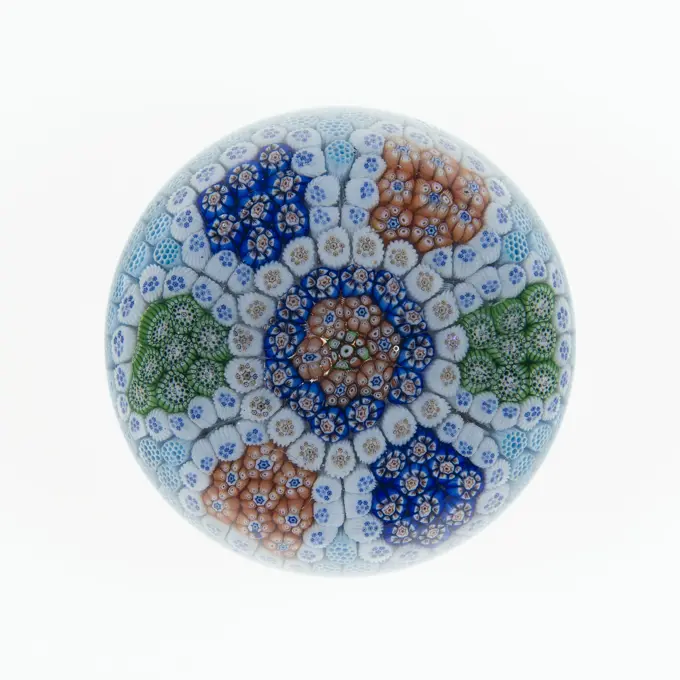
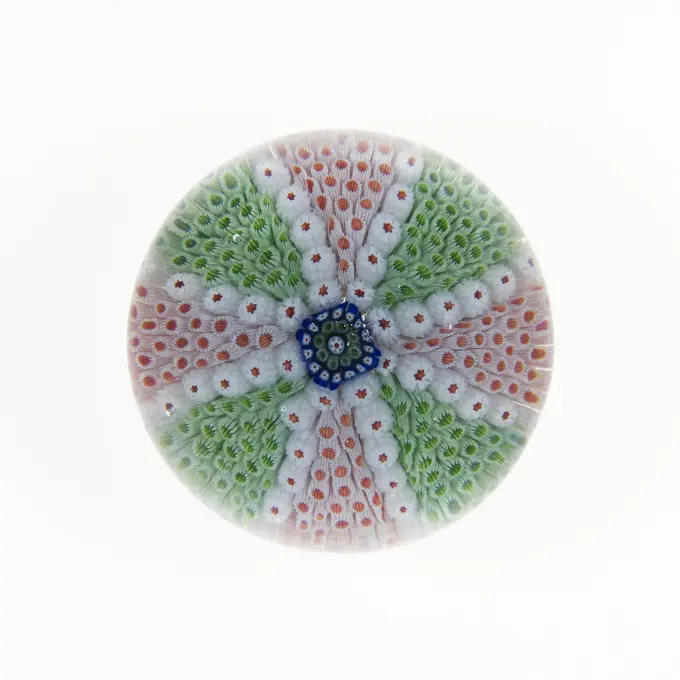
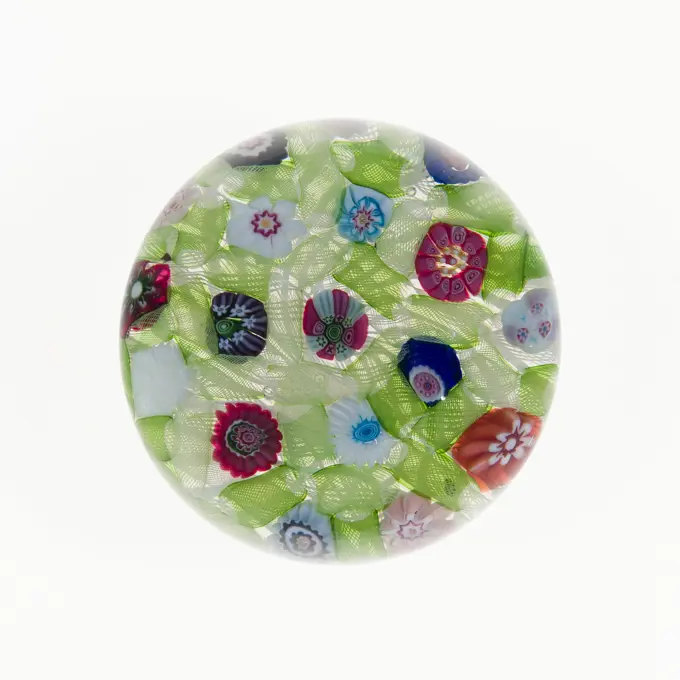
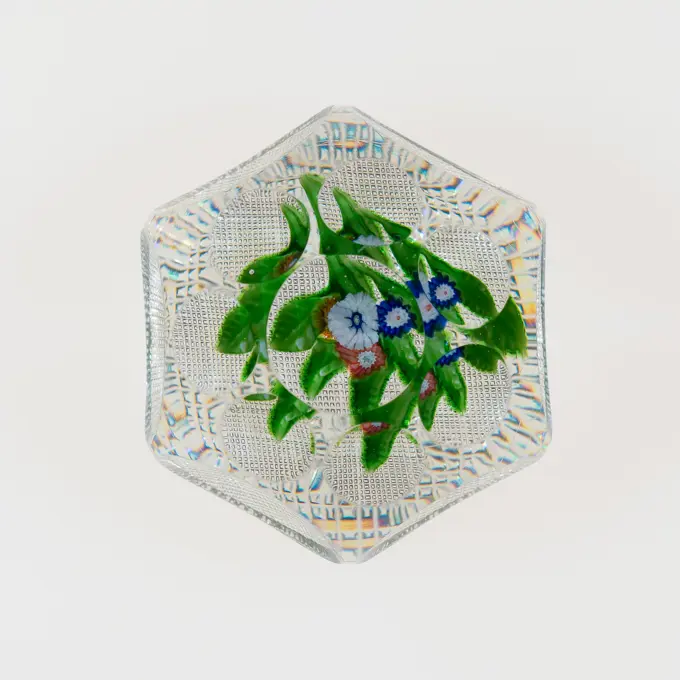
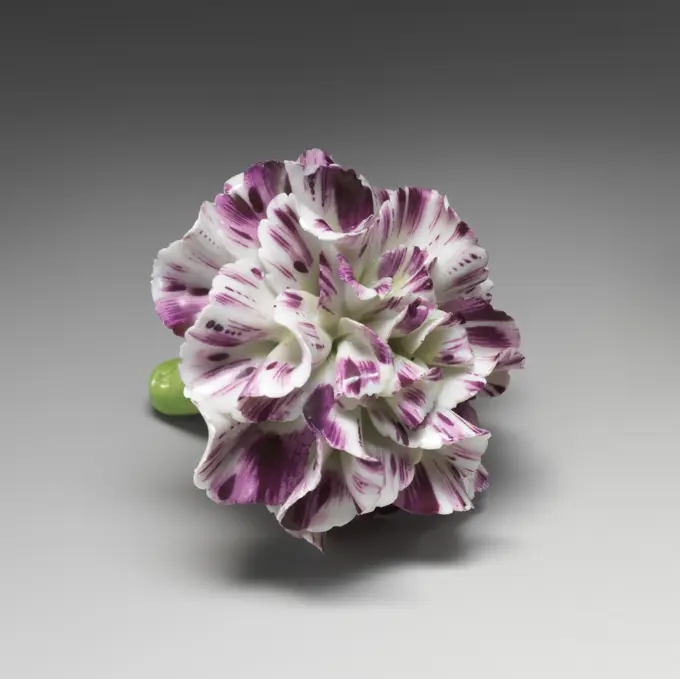
Paperweight, 19th century, Saint Louis Glass Works, 2 3/8 x 3 x 3 in. (6.03 x 7.62 x 7.62 cm), Glass, France, 19th century
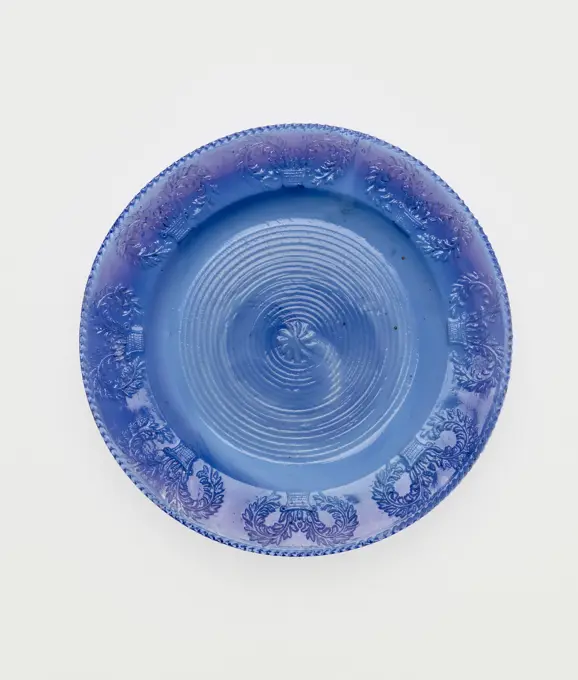
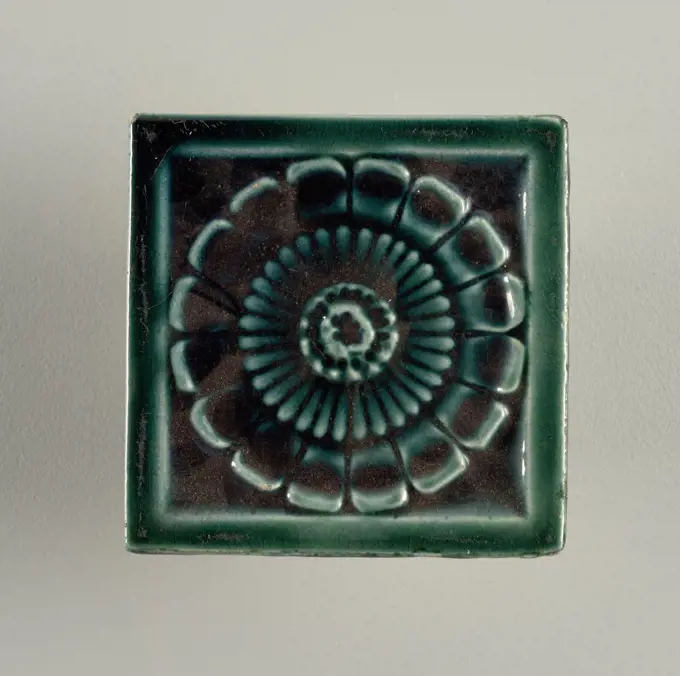
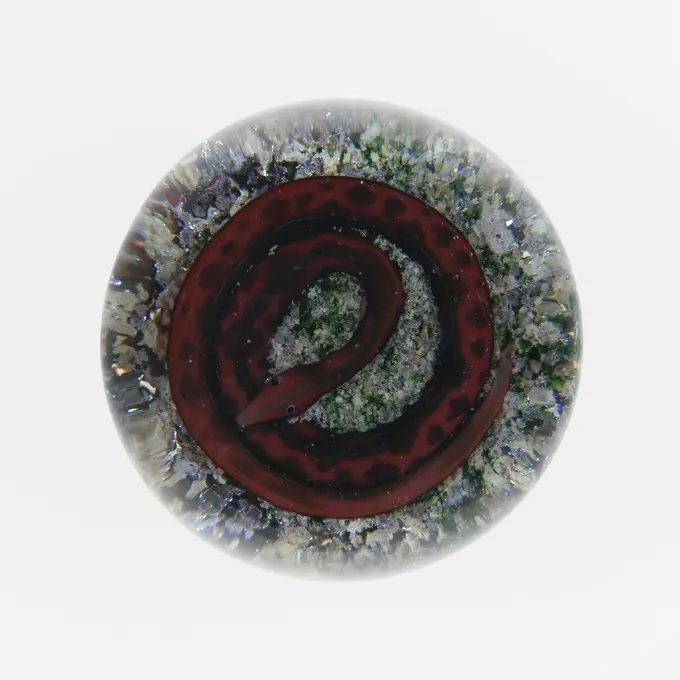
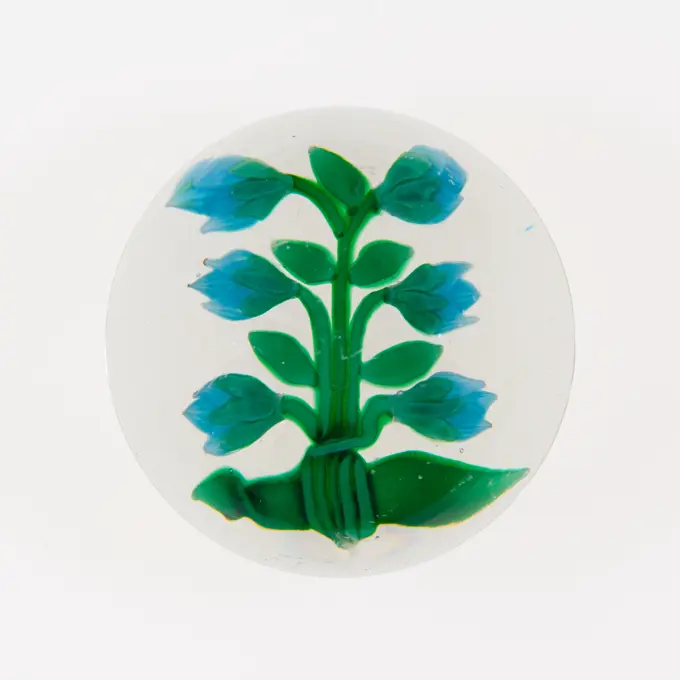
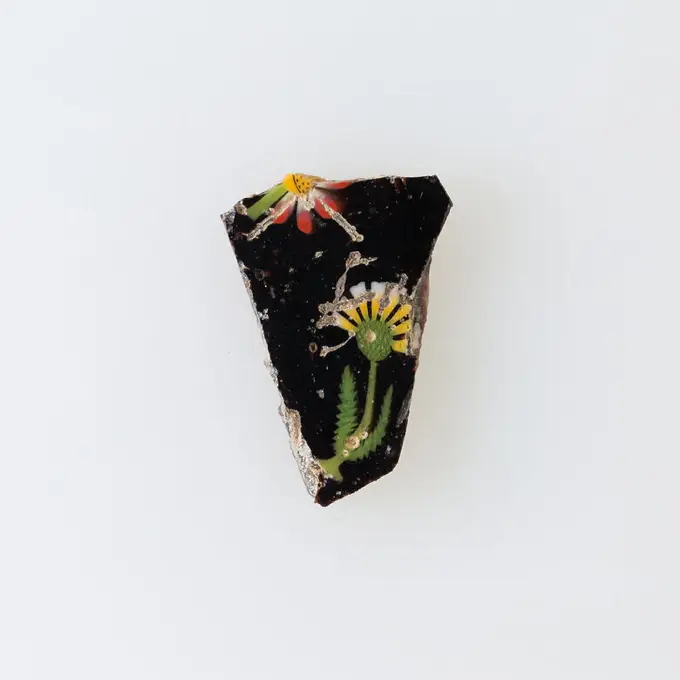
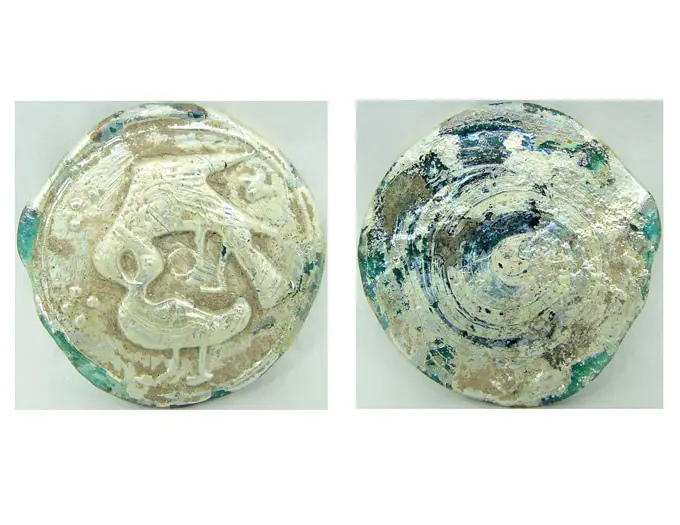
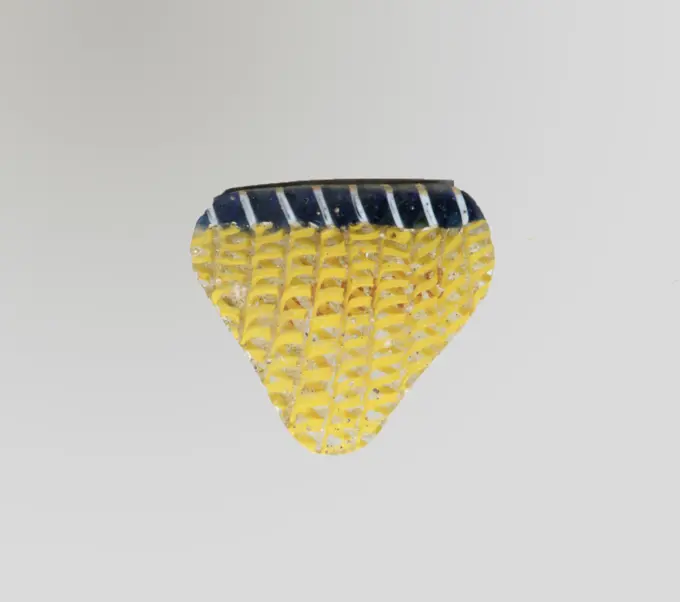
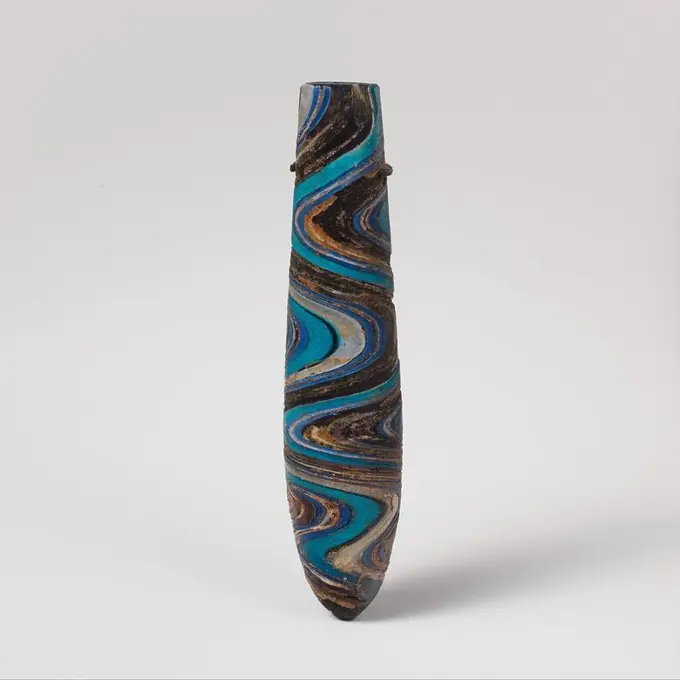
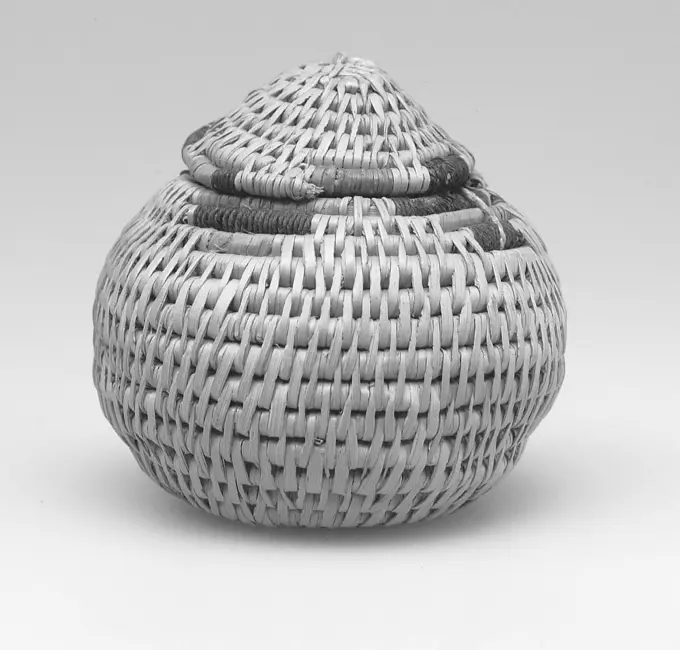
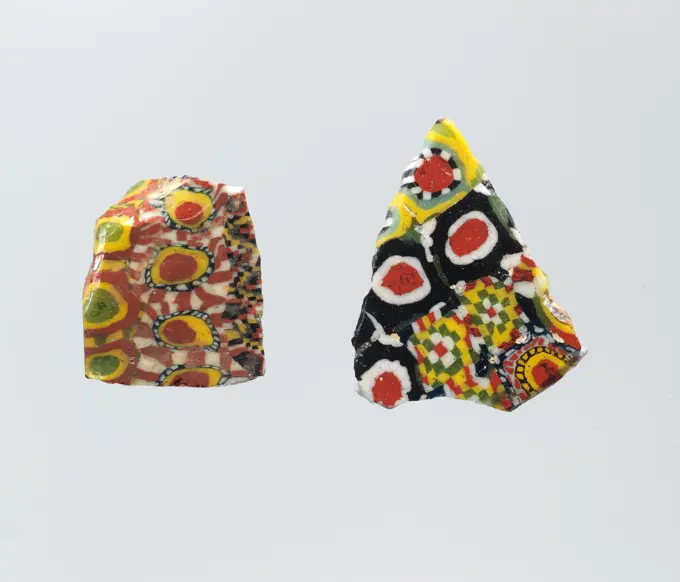
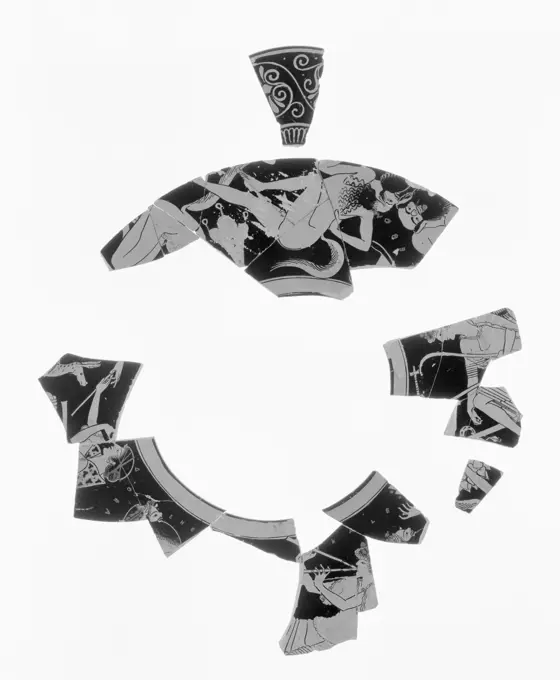
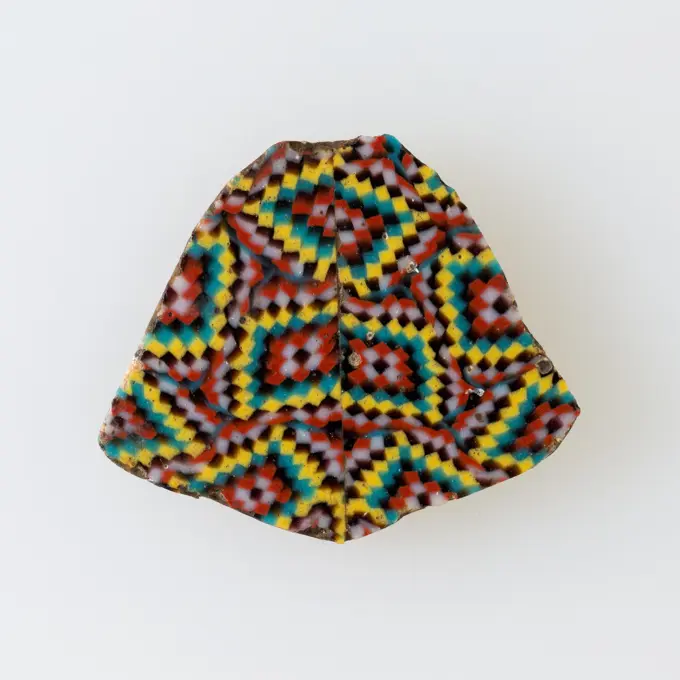
Paperweight 1800-1899 Baccarat. The colorful geometric clusters embedded in this paperweight reflect the nineteenth-century European fascination with optical effects. Sir David Brewster invented the kaleidoscope in 1815, and its colorful and changing patterns brought great visual entertainment. Paperweights such as this example reformed this childlike pastime for a sophisticated adult audience. Depicted in glass were tiny glittering flowers, small black and blue cameos of figures, and even miniature bottlecaps. These were delicately arranged within the orb for the observant eye to discover.From the late 1840s to early 1860s, French manufacturers of fine glass and crystalósuch as Baccarat (Alsace), Clichy (Paris), and Saint-Louis (Lorraine)ócatered to the vast public enthusiasm for beautiful yet functional desk accessories. Paperweights, which were designed to secure loose papers against drafts, were among their most popular products.. Glass . Baccarat GlassworksPaperweight, 19th century, Saint Louis Glass Works, 2 3/8 x 3 x 3 in. (6.03 x 7.62 x 7.62 cm), Glass, France, 19th centuryPaperweight 1843-1860 France. Technological improvements to optical scientific instruments in the mid-nineteenth century spurred a veritable obsession across Europe with identifying and classifying the natural world. Amateur botanists were eager to collect and preserve floral specimens, which they intently researched and catalogued. In response to this broad appeal, French glassmakers made paperweights that portrayed the very botanical subjects that were so enthusiastically sought. Many weights represented specimens with horticultural correctness, but others were entirely fanciful creations. Paperweights like this example speak to the periodís fascination with taxonomic systems.From the late 1840s to early 1860s, French manufacturers of fine glass and crystalósuch as Baccarat (Alsace), Clichy (Paris), and Saint-Louis (Lorraine)ócatered to the vast public enthusiasm for beautiful yet functional desk accessories. Paperweights, which were designed to secure loose papers against drafts, wePaperweight 1840-1865 France. The colorful geometric clusters embedded in this paperweight reflect the nineteenth-century European fascination with optical effects. Sir David Brewster invented the kaleidoscope in 1815, and its colorful and changing patterns brought great visual entertainment. Paperweights such as this example reformed this childlike pastime for a sophisticated adult audience. Depicted in glass were tiny glittering flowers, small black and blue cameos of figures, and even miniature bottlecaps. These were delicately arranged within the orb for the observant eye to discover.From the late 1840s to early 1860s, French manufacturers of fine glass and crystalósuch as Baccarat (Alsace), Clichy (Paris), and Saint-Louis (Lorraine)ócatered to the vast public enthusiasm for beautiful yet functional desk accessories. Paperweights, which were designed to secure loose papers against drafts, were among their most popular products.. Glass . Baccarat GlassworksPaperweight 1840-1860 Saint-Louis. This paperweight uses a traditional glass-making technique called millefiori to great effect. Italian for ìone thousand flowers,î millefiori was first developed in fifteenth-century Venice. In the nineteenth century, French glassmakers revived the technique with a cultural twist. Arranged to evoke traditional French gardens such as the Tuileries in Paris, paperweights like this example brought a little of this landscaping magic indoors.From the late 1840s to early 1860s, French manufacturers of fine glass and crystalósuch as Baccarat (Alsace), Clichy (Paris), and Saint-Louis (Lorraine)ócatered to the vast public enthusiasm for beautiful yet functional desk accessories. Paperweights, which were designed to secure loose papers against drafts, were among their most popular products.. Glass . Compagnie de Saint LouisCup plate 1829-30 Possibly Boston & Sandwich Glass Company. Cup plate. American. 1829-30. Pressed glass. Probably made in Sandwich, Massachusetts, United StatesPaperweight 1840-1865 Baccarat. This paperweight uses a traditional glass-making technique called millefiori to great effect. Italian for ìone thousand flowers,î millefiori was first developed in fifteenth-century Venice. In the nineteenth century, French glassmakers revived the technique with a cultural twist. Arranged to evoke traditional French gardens such as the Tuileries in Paris, paperweights like this example brought a little of this landscaping magic indoors.From the late 1840s to early 1860s, French manufacturers of fine glass and crystalósuch as Baccarat (Alsace), Clichy (Paris), and Saint-Louis (Lorraine)ócatered to the vast public enthusiasm for beautiful yet functional desk accessories. Paperweights, which were designed to secure loose papers against drafts, were among their most popular products.. Glass . Baccarat GlassworksPaperweight 1843-1853 Saint-Louis. The colorful geometric clusters embedded in this paperweight reflect the nineteenth-century European fascination with optical effects. Sir David Brewster invented the kaleidoscope in 1815, and its colorful and changing patterns brought great visual entertainment. Paperweights such as this example reformed this childlike pastime for a sophisticated adult audience. Depicted in glass were tiny glittering flowers, small black and blue cameos of figures, and even miniature bottlecaps. These were delicately arranged within the orb for the observant eye to discover.From the late 1840s to early 1860s, French manufacturers of fine glass and crystalósuch as Baccarat (Alsace), Clichy (Paris), and Saint-Louis (Lorraine)ócatered to the vast public enthusiasm for beautiful yet functional desk accessories. Paperweights, which were designed to secure loose papers against drafts, were among their most popular products.. Glass . Compagnie de Saint LouisDrawer Pull 1810-60. Drawer Pull 14229Urn CupPlate. Maker, probably by: Boston and Sandwich Glass Works, American, 1826-88Maker, possibly by: New England Glass Company, American, 1818-1878Paperweight 1840-1865 France. This paperweight uses a traditional glass-making technique called millefiori to great effect. Italian for ìone thousand flowers,î millefiori was first developed in fifteenth-century Venice. In the nineteenth century, French glassmakers revived the technique with a cultural twist. Arranged to evoke traditional French gardens such as the Tuileries in Paris, paperweights like this example brought a little of this landscaping magic indoors.From the late 1840s to early 1860s, French manufacturers of fine glass and crystalósuch as Baccarat (Alsace), Clichy (Paris), and Saint-Louis (Lorraine)ócatered to the vast public enthusiasm for beautiful yet functional desk accessories. Paperweights, which were designed to secure loose papers against drafts, were among their most popular products.. Glass . Compagnie de Saint LouisMexikanischer Hut Blue Mexican sombrero isolated over white background Copyright: xZoonar.com/IvonnexWierinkx 21329388Tile, J. & J. G. Low Art Tile Works, 1877 - 1883, Glazed stoneware, Molded, square tile made of white clay, reverse bears impressed inscription set in a double-line frame: J. & J.G. Low, Patent art Tile Works, Chelsea Mass. U.S.A., copyright 1881 by J. & J.G. Low'. Face is decorated with a simple rosette framed in a plain, narrow border; glazed a dark crackle green., Chelsea, Massachusetts, USA, late 19th century, tiles, Decorative Arts, TilePaperweight 1840-1865 France. Glass . Clichy GlasshousePaperweight 1801-1900 Clichy. Glass . Clichy GlasshousePaperweight 1840-1865 Baccarat. Glass . Baccarat GlassworksLidded Box (He) with Figures in a GardenArt Nouveau ashtray. Werner i S-ka (Warszawa ; wytwórnia złotnicza ; 1864-1939), silverware factoryBrooch;  XIX W (1801-00-00-1900-00-00);Paperweight 1801-1900 France. Technological improvements to optical scientific instruments in the mid-nineteenth century spurred a veritable obsession across Europe with identifying and classifying the natural world. Amateur botanists were eager to collect and preserve floral specimens, which they intently researched and catalogued. In response to this broad appeal, French glassmakers made paperweights that portrayed the very botanical subjects that were so enthusiastically sought. Many weights represented specimens with horticultural correctness, but others were entirely fanciful creations. Paperweights like this example speak to the periodís fascination with taxonomic systems.From the late 1840s to early 1860s, French manufacturers of fine glass and crystalósuch as Baccarat (Alsace), Clichy (Paris), and Saint-Louis (Lorraine)ócatered to the vast public enthusiasm for beautiful yet functional desk accessories. Paperweights, which were designed to secure loose papers against drafts, wePaperweight 1840-1865 France. This paperweight uses a traditional glass-making technique called millefiori to great effect. Italian for ìone thousand flowers,î millefiori was first developed in fifteenth-century Venice. In the nineteenth century, French glassmakers revived the technique with a cultural twist. Arranged to evoke traditional French gardens such as the Tuileries in Paris, paperweights like this example brought a little of this landscaping magic indoors.From the late 1840s to early 1860s, French manufacturers of fine glass and crystalósuch as Baccarat (Alsace), Clichy (Paris), and Saint-Louis (Lorraine)ócatered to the vast public enthusiasm for beautiful yet functional desk accessories. Paperweights, which were designed to secure loose papers against drafts, were among their most popular products.. Glass . Clichy GlasshousePaperweight 1840-1860 Clichy. Glass . Clichy GlasshouseDeity Ornament 6th-7th century Moche (Loma Negra). Deity Ornament 314530Paperweight 1843-1860 Saint-Louis. Technological improvements to optical scientific instruments in the mid-nineteenth century spurred a veritable obsession across Europe with identifying and classifying the natural world. Amateur botanists were eager to collect and preserve floral specimens, which they intently researched and catalogued. In response to this broad appeal, French glassmakers made paperweights that portrayed the very botanical subjects that were so enthusiastically sought. Many weights represented specimens with horticultural correctness, but others were entirely fanciful creations. Paperweights like this example speak to the periodís fascination with taxonomic systems.From the late 1840s to early 1860s, French manufacturers of fine glass and crystalósuch as Baccarat (Alsace), Clichy (Paris), and Saint-Louis (Lorraine)ócatered to the vast public enthusiasm for beautiful yet functional desk accessories. Paperweights, which were designed to secure loose papers against draftturquoise bird mosaic pendant, Museum of Northern Arizona, Flagstaff, ArizonaLobed Mirror with Images of the Moon Palace” Hare Pounding Elixir, Toad, and Chang E Holding Peaches of Immortality 700 CE-799 CE China. Bronze .Georges Despret (1862-1952). Cup. Glass, glass paste. XIXth-XXth century. Museum of Fine Arts of the City of Paris, Petit Palais. 19th XIXth XIX 19th 19th 19th century, XXth XXth XX 20th 20th 20th centuryDrawer Pull 1810-60. Drawer Pull 14232Paperweight 1840-1865 France. Technological improvements to optical scientific instruments in the mid-nineteenth century spurred a veritable obsession across Europe with identifying and classifying the natural world. Amateur botanists were eager to collect and preserve floral specimens, which they intently researched and catalogued. In response to this broad appeal, French glassmakers made paperweights that portrayed the very botanical subjects that were so enthusiastically sought. Many weights represented specimens with horticultural correctness, but others were entirely fanciful creations. Paperweights like this example speak to the periodís fascination with taxonomic systems.From the late 1840s to early 1860s, French manufacturers of fine glass and crystalósuch as Baccarat (Alsace), Clichy (Paris), and Saint-Louis (Lorraine)ócatered to the vast public enthusiasm for beautiful yet functional desk accessories. Paperweights, which were designed to secure loose papers against drafts, wePlate of multi -colored hard baked pottery; Staffordshire., Anonymous, c. 1750 - c. 1780 Plate of multi -colored hard baked pottery. The edge is decorated in relief with grille work, interspersed with two next to each other -placed symmetrical floral motifs. The scalloped edge is decorated on the inside with volutes and leaf motifs. The plate is covered with a spotted lead glaze in manganese, green, gray and yellow. The back is dotted in manganese and has a foot edge. The sign is part of five plates (BK-1987-39-A to BK-1987-39-F). England earthenware. lead glaze Plate of multi -colored hard baked pottery. The edge is decorated in relief with grille work, interspersed with two next to each other -placed symmetrical floral motifs. The scalloped edge is decorated on the inside with volutes and leaf motifs. The plate is covered with a spotted lead glaze in manganese, green, gray and yellow. The back is dotted in manganese and has a foot edge. The sign is part of five plates (BK-1987-39-A tPaperweight 1843-1860 Saint-Louis. Glass . Compagnie de Saint LouisSilver bow on white backgroundBrown pod or capsule on a white backgroundSilver gift bowClose-up of a paper lanternSubdated butter dish or terrine in the form of a grape trim. Botersuit or terrine of faience. Consisting of a container with lid in the form of a grape tray, and a subset in the form of a grape sheet.Japanese tea pot with tea bag and floral pattern on white backgroundFigure of A Flower Spray. Image of a flower branch of porcelain, partially covered with underglaze blue. The image consists of four branches with leaves, two flowers and a button, held together by a ribbon. A branch has been broken. Undergilate blue with biscuit.Button. Button, black yarn braid.Floral plaque. Dimensions: H. 2.1 × W. 3.3 cm (13/16 × 1 5/16 in.). Date: 100 BC-100 AD. Museum: Metropolitan Museum of Art, New York, USA.Sauce Dish. Culture: American. Dimensions: H. 6 7/16 in. (16.4 cm); Diam. 3 7/16 in. (8.7 cm). Maker: Boston & Sandwich Glass Company (American, 1825-1888, Sandwich, Massachusetts). Date: ca. 1867. Museum: Metropolitan Museum of Art, New York, USA.beautiful vintagel chandelier hanging under a ceilingPaperweight 1843-1860 Clichy. Glass . Clichy GlasshousePaperweight 1848 France. Technological improvements to optical scientific instruments in the mid-nineteenth century spurred a veritable obsession across Europe with identifying and classifying the natural world. Amateur botanists were eager to collect and preserve floral specimens, which they intently researched and catalogued. In response to this broad appeal, French glassmakers made paperweights that portrayed the very botanical subjects that were so enthusiastically sought. Many weights represented specimens with horticultural correctness, but others were entirely fanciful creations. Paperweights like this example speak to the periodís fascination with taxonomic systems.From the late 1840s to early 1860s, French manufacturers of fine glass and crystalósuch as Baccarat (Alsace), Clichy (Paris), and Saint-Louis (Lorraine)ócatered to the vast public enthusiasm for beautiful yet functional desk accessories. Paperweights, which were designed to secure loose papers against drafts, were amCOLLAR PROCEDENTE DE ITALIA - 1940 -BISUTERIA - DISEÑO DE COPPOLA Y TOPPO. Location: PRIVATE COLLECTION.Glass striped mosaic bowl fragment late 1st century B.C.-early 1st century A.D. Roman Rim fragment.Translucent cobalt blue, purple, opaque white and yellow, and colorless.Applied coil rim with rounded edge; almost vertical side. Rim in purple with single spiral thread in white; body decorated with striped quadripartite pattern formed from lengths of different canes: one in colorless layered with purple and flanked by white; a colorless network cane wound spirally with two yellow threads; blue layered with white; polygonal cane in a purple ground with a circle of yellow dots and a central blue rod surrounded by a white circle, alternating with a square cane in colorless layered with white; a colorless network cane wound spirally with two yellow threads; and a cane in colorless layered with yellow. Rotary grinding marks on interior.Chipped edges and interior; polished exterior; pitting of surface bubbles on exterior; pitting, dulling, and faint iridescent weathering on interior and jaggeFragment of a Bowl 100 BCE-100 CE Roman Empire. In ancient Rome, there was a high demand for colorful glass that could dazzle banquet guests alongside the expensive silver and gold serving wares meant to impress. Fragments like this one would have once been a part of larger mosaic dishes. The mosaic pattern was made by sagging molten glass into bowl-shaped molds, a technique used on many of these fragments is similar to millefiori, ìthousand flowersî in Italian, a modern glass-making method in which tiny rods of colored glass are bundled together, wrapped in a sheet of glass, fused, and then thinly sliced to reveal swirls of a flower-like patterns. They were arranged side by side, sometimes together with bits of colored glass, and fused together with heat.. Glass, mosaic glass technique . Ancient RomanGarbage bin with paper waste isolated on whiteMetal pot cleaner, stainless steel, white background,Glass bowl in blue and colorless bands. Culture: Greek. Dimensions: 10 1/2 in. (26.7 cm). Date: 1st century B.C..Translucent cobalt blue and colorless.Plain rounded rim; slightly convex side tapering diagonally downward; convex bottom.Two large segments of blue fused to either side of a broad central strip of colorless glass. On interior, a band below rim, comprising a narrow horizontal groove and a ridge, undercut below, and further down side a broader band comprising a narrow groove, followed below by a broader groove, a central slightly raised plain band, undercut below, and finally another narrow groove. Broken and repaired, with several large areas missing, especially on rim and bottom; pinprick bubbles; dulling, pitting, and iridescent creamy weathering.Rotary grinding marks on interior and exterior.Very few bicolored glass vessels survive from antiquity. Apart from this bowl, most examples are slender alabastra (perfume vases). All appear to be in the same combination of tGlass Medallion with Molded Decoration 12th century. Glass Medallion with Molded Decoration 456072Snowflake cookie cutter.Sea shell on a light backgroundFlower Basket, 1870. Manufactured by Barnes & Co .Christmas decorations and white fireplace. Sudio shot. Christmas decorationsPodium with copper ring and flying, glossy metallic spheres on cream background. Elegant podium for product, cosmetic presentation. Mock up. Pedestal or platform for beauty products. 3D rendering. Podium with copper ring and flying, glossy metallic spheres on cream background. Elegant podium for product, cosmetic presentation. Mock up. Pedestal or platform for beauty products. 3D rendering.Glass network mosaic fragment late 1st century B.C.-early 1st century A.D. Roman Rim fragment.Translucent blue, opaque yellow, and colorless.Applied coil rim with vertical rounded lip; slightly tapering side. Rim in blue with white spiral thread; body decorated with ten colorless vertical narrow canes, decorated with double spiral yellow threads.Pinprick bubbles; exterior polished, with slight pitting of surface bubbles; dulling and creamy iridescence weathering on interior; jagged, weathered edges.. Glass network mosaic fragment. Roman. late 1st century B.C.-early 1st century A.D.. Glass; cast. Early Imperial. GlassVase 19th century China. Vase. China. 19th century. Jade. JadeGlass gold-band mosaic alabastron (perfume bottle). Culture: Greek, Eastern Mediterranean. Dimensions: H.: 3 13/16 in. (9.7 cm). Date: 1st century B.C..Translucent cobalt blue, colorless, translucent turquoise blue, translucent purple, opaque white, and gold leaf.Plain vertical rim, ground flat; slender body, expanding downwards, then curving in to pointed bottom.On exterior, parallel wavy lengths of five canes set vertically on blue body: the first in turquoise blue; the second in cobalt blue with a central white stripe; the third in purple with two white stripes, the fourth again in cobalt blue with a central white stripe; and the fifth in gold leaf sandwiched between two layers of colorless glass. The first four canes are repeated twice over the body, but the gold leaf cane only appears once.Intact body, except for slight chipping to bottom (the alabastron would originally have had a separate neck piece with broad horizontal rim disk); dulling, deep pitting, and brown weatheringFangreen spiral shell of sea mollusc snail isolated green spiral shell of sea mollusc snail isolated on white background Copyright: xZoonar.com/ValeryxVoennyyx 8554467white flowerSpindle Whorl, 700s - 900s. Iran, early Islamic period, 8th - 10th century. Bone, incised; overall: 0.9 x 3 x 3 cm (3/8 x 1 3/16 x 1 3/16 in.).european anchovy fish fillet in a black plate isolated on a white background top view european anchovy fish fillet in a black plate isolated on a white background top view Copyright: xZoonar.com/gutaperx 18294130ein Garnstrang mit einem Farbverlauf von tiefem Marineblau an den äußeren Rändern zu Schattierungen von Dunkelrot, Burgunderrot und Weiß in der Mitte This image shows a skein of yarn with a gradient color transition from deep navy blue on the outer edges to shades of dark red, burgundy, and white in the center. The yarn is wound tightly in a circular shape, giving a clear view of the color variation as it moves from dark to light. The yarn s texture is soft and ideal for knitting or crocheting projects. This photo can be used to represent different colorways of yarn or artistic knitting supplies Copyright: xZoonar.com/MIKHAILxOLYKAYNENx 22361942Bowl. Culture: American. Dimensions: H. 3 5/8 in. (9.2 cm); Diam. 12 7/8 in. (32.7 cm). Maker: Attributed to Hervey Brooks (1779-1873). Date: 1803-67. Museum: Metropolitan Museum of Art, New York, USA.Hair comb of imitation turtle with smooth, parabolic back, four teeth, anonymous, c. 1800 - c. 1825 Hair comb of imitation turtle with smooth, parabolic back in which two jobs in relief. Four teeth. Netherlands (possibly) celluloid (cellulosic). cellulose acetate sawing / filing / polishing Hair comb of imitation turtle with smooth, parabolic back in which two jobs in relief. Four teeth. Netherlands (possibly) celluloid (cellulosic). cellulose acetate sawing / filing / polishingPlaque ca. 1876-80 Chelsea Keramic Art Works. Plaque. Hugh C. Robertson (1844-1908). American. ca. 1876-80. Earthenware. Made in Chelsea, Massachusetts, United StatesUruguayische Kokarde isoliert Uruguayische Kokarde isoliert Copyright: xZoonar.com/GABRIELAxBERTOLINIx 22542555Paperweight 1840-1865 France. This paperweight uses a traditional glass-making technique called millefiori to great effect. Italian for ìone thousand flowers,î millefiori was first developed in fifteenth-century Venice. In the nineteenth century, French glassmakers revived the technique with a cultural twist. Arranged to evoke traditional French gardens such as the Tuileries in Paris, paperweights like this example brought a little of this landscaping magic indoors.From the late 1840s to early 1860s, French manufacturers of fine glass and crystalósuch as Baccarat (Alsace), Clichy (Paris), and Saint-Louis (Lorraine)ócatered to the vast public enthusiasm for beautiful yet functional desk accessories. Paperweights, which were designed to secure loose papers against drafts, were among their most popular products.. Glass . Clichy GlasshouseChristmas or thanksgiving decoration with scented cones and nuts in a glass vaseBasket with Lid ca. 712-525 B.C. Late Period Found buried near a child, this small basket of palm fiber contained assorted trinkets: strings of shells, beads, and amulets of various materials; a faience finger ring; glass stud; a gold-mounted steatite scaraboid; a ball of mud containing human hair; a silver amulet wrapped in scrap of linen; two fragments of knotted string, the longer one with hair tied on one end;and a flake of red stone. The basket itself was made of palm fiber and split reeds, with decorations of red and brown patches around the edges of the lid and the mouth. The lid was fastened to the basket on opposite sides of the mouth with linen strings which were twisted together and tied into the center of the lid.. Basket with Lid 552485Pink seashell with black stripes isolated on light background, selective focusMillefiori Glass Tile Fragments 9th century Glassmakers at Samarra used ingenious techniques to decorate the interiors of the caliphs palaces. These multicolored fused millefiori glass fragments belonged to larger tiles that were probably used on a wall. They were found in the rubble of Samarras Main Caliphal Palace (Dar al-Khilafa) along with opaque black glass tiles and shaped glass inlay pieces.. Millefiori Glass Tile Fragments 447647Shards of signs from the wreck of the East Indies Hollandia, c. 1700 - In or Before 1743 plate (dishes) Containers; plates; type 3; fragm of rim, sim. 80H3202c. Netherlands porcelainHeart shaped boxIvory box in the shape of an egg with a cut-away wall. Box of ivory in the shape of an egg. Lid is turning the box, the seam runs in the middle of the body. The wall is divided into different compartments through C-voltages that are opened with geometric patterns.polished white Howlite gemstone isolated on white closeup of sample of natural mineral from geological collection - polished white Howlite gemstone isolated on white background Copyright: xZoonar.com/ValeryxVoennyyx 14989774Attic Red-Figure Lidded Jar Fragment (comprised of 5 joined fragments). Onesimos (Greek (Attic), active 500 - 480 B.C.). One of a few Ko-Dogu (cf. Mak 146). Convex box, stitched on the corners, consisting of four sections and a lid. Golden Swastika motifs against black fond.Colored basket of the ears of wheat with Easter eggs. 3d renderYoung gingerPorcelain flower (one of a set of nine) mid-18th century French When the Vincennes manufactory opened around 1740, it specialized in making soft-paste porcelain flowers, many of which would have been combined with Meissen porcelain and pieces exported from China to make unique ornamental wares for the mantel. The luxury sellers known as marchand-merciers helped to market this combinatory aesthetic to elite consumers in eighteenth-century Paris.. Porcelain flower (one of a set of nine). French. mid-18th century. Soft-paste porcelain. Ceramics-PorcelainPendant with the rest on the flight to Egypt, Anonymous, c. 1675 - c. 1700 Pendant consisting of a sliced medallion of blood coral, bordered by a wide open worked gold frame. The medallion represents 'rest on the flight to Egypt'. The list is covered with Émail and set with turquoise and blood coral. Netherlands gold (metal). red coral (material). turquoise (mineral) Pendant consisting of a sliced medallion of blood coral, bordered by a wide open worked gold frame. The medallion represents 'rest on the flight to Egypt'. The list is covered with Émail and set with turquoise and blood coral. Netherlands gold (metal). red coral (material). turquoise (mineral)Beads ca. 9th century B.C. Iran. Beads 325318Inlay fragment, small colored squares forming a diamond pattern 100 BC-100 AD Ptolemaic Period-Roman Period A mosaic glass technique allowed multiples of an image to be created: a figural or design composition was made by bundling colored glass canes, which were then drawn out into a long bar. The bar was then sectioned at right angles, probably by striking the bar with appropriate tools, to produce small inlay tiles. The tile would then be smoothed and polished on the face intended to appear outwards.. Inlay fragment, small colored squares forming a diamond pattern. 100 BC-100 AD. Glass. Ptolemaic Period-Roman Period. From EgyptSingle wooden and white winter snowflake ornament on light blue backgroundVase (England); etched overlay glassSung/ Song Dynasty ceramic peony jar, 11c, China.Elegant necklace isolated on white backgroundPendant: Petals of Cornflower ca. 1390-1353 B.C. New Kingdom. Pendant: Petals of Cornflower. ca. 1390-1353 B.C.. Faience. New Kingdom. From Egypt, Upper Egypt, Thebes, Malqata, Palace of Amenhotep III, MMA excavations, 1910-11. Dynasty 18Cup of tea. White cup of chamomile tea against white backgroundThree metal pot cleaner in net package, white background,Textile Ornament 1st-2nd century Nasca Like other Precolumbian American peoples, the ancient Peruvians panned most of their gold from placer deposits in the coastal rivers. They worked the gold into sheet and used it to fashion a variety of ornaments. These star-shaped objects were cut from the sheet and decorated with samll repousse faces on the projections. The ornaments were probably sewn onto clothing.. Textile Ornament 312946colorful pinwheels colorful pinwheels Copyright: xZoonar.com/yogeshxmorex 6801147Close-up metal biscuit-cuttersConcept, growth Indian currency lot of five rupees coins in basket India Copyright: xNirmalaxMishra/DinodiaxPhotoxConstruction With and Within a Cube. Max Bill; Swiss, 1908-1994. Date: 1945. Dimensions: 22 1/2 x 13 1/2 x 6 1/4 in. (57.2 x 34.3 x 15.9 cm). Gilded bronze. Origin: Switzerland. Museum: The Chicago Art Institute, Chicago, USA.Slinky toySpittoon -