Intricate Lace Designs

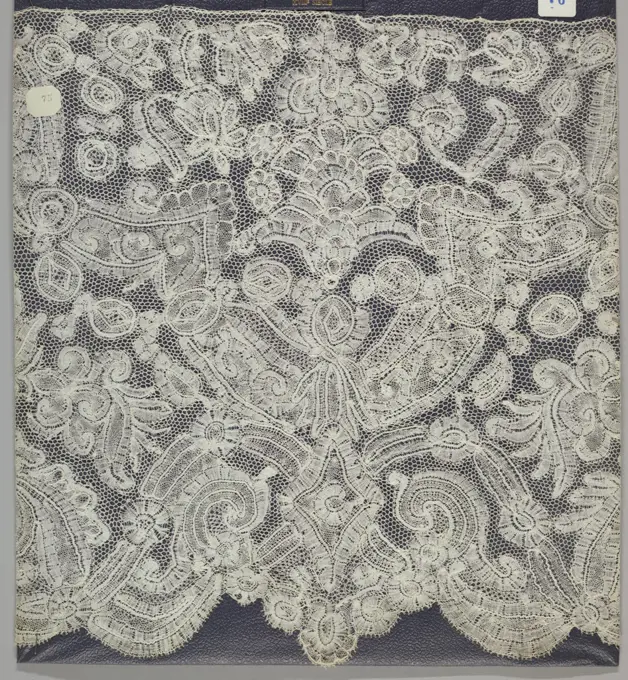
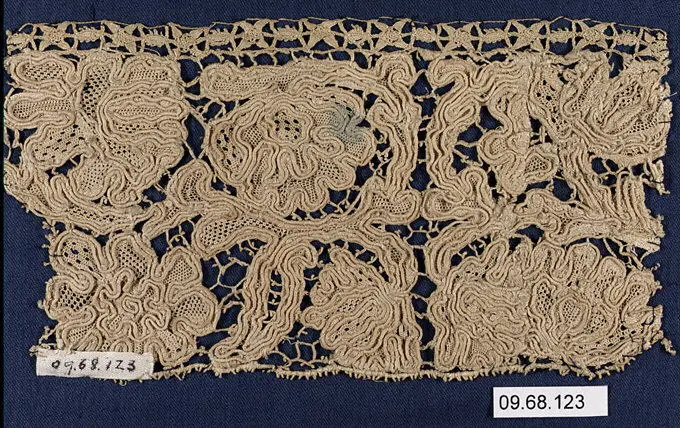
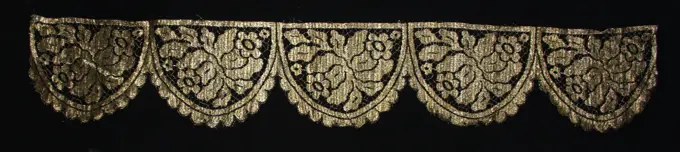
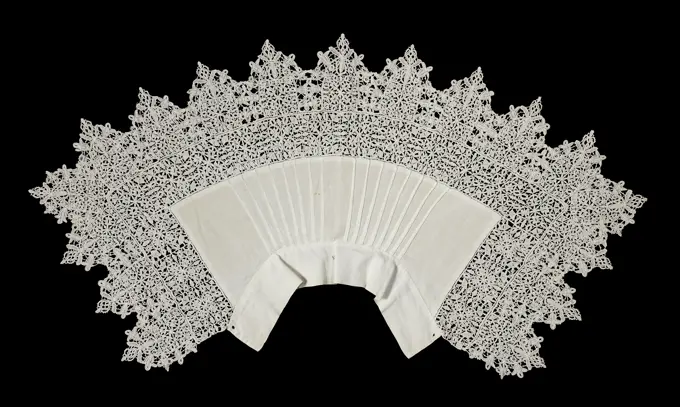
Delicate lace strips and cuffs showcasing intricate floral and geometric patterns. The collection emphasizes craftsmanship and historical textile art from different eras.

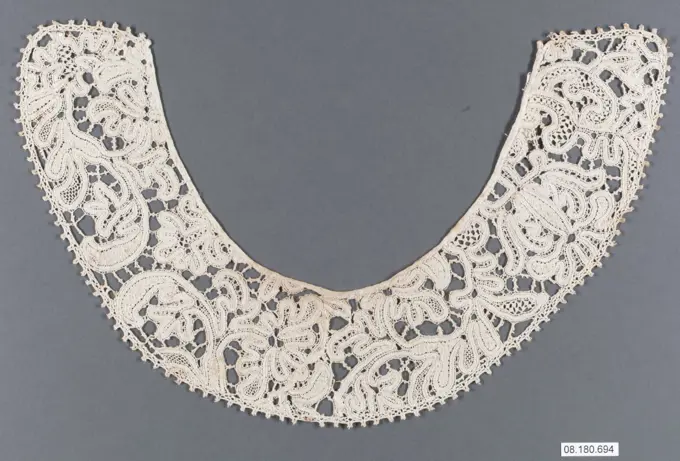
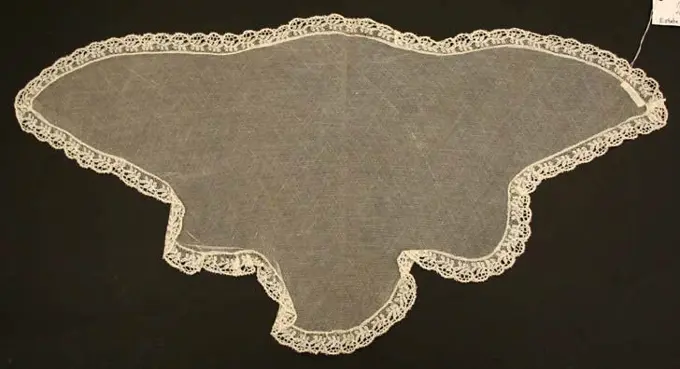
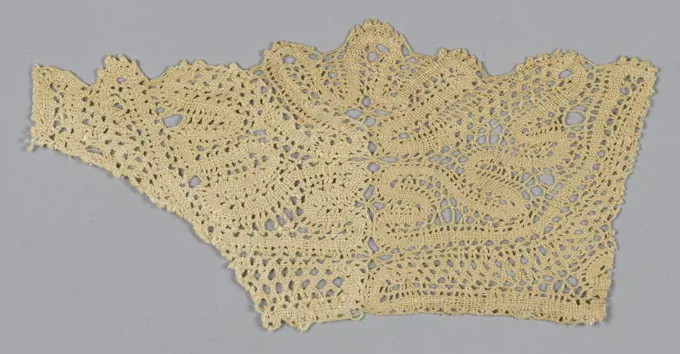
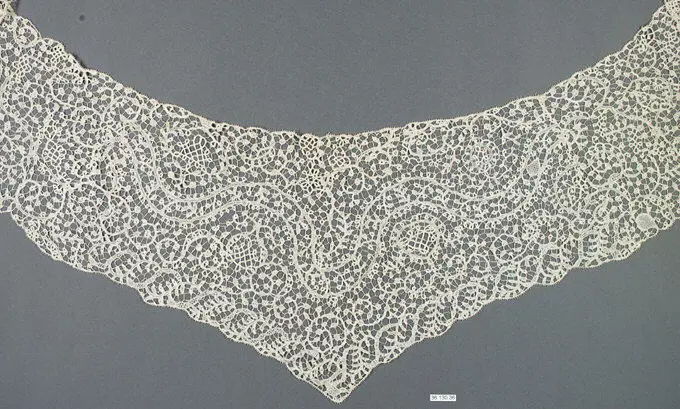
Cuff of needle side with bows, anonymous, c. 1875 - c. 1909 Cuff of natural -colored needle side: Venetian relief side. On a very open bar of land there are irregular volute vines with leaf voltuties and multifaceted flowers. List of triangles. Venice (possibly) linen (material) Venetian raised work Cuff of natural -colored needle side: Venetian relief side. On a very open bar of land there are irregular volute vines with leaf voltuties and multifaceted flowers. List of triangles. Venice (possibly) linen (material) Venetian raised work
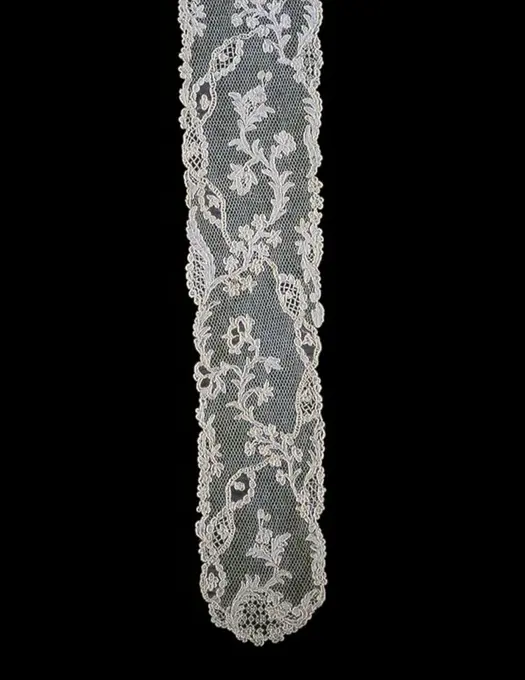
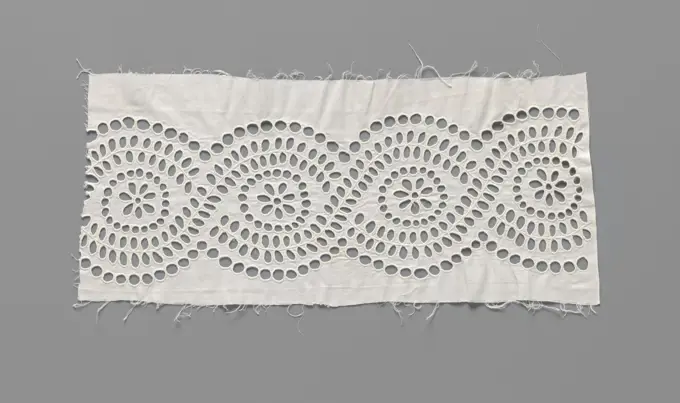
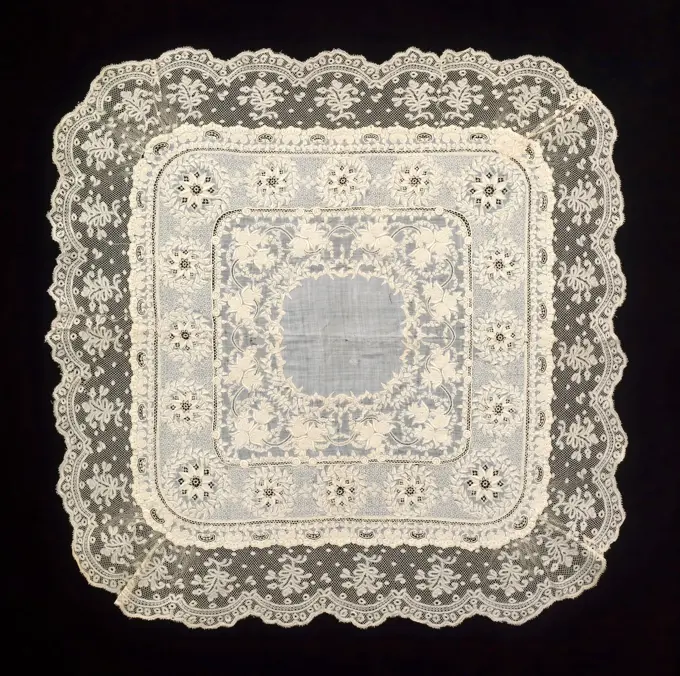
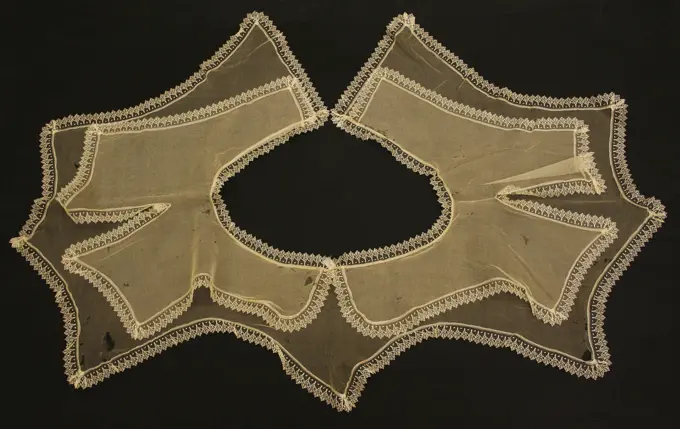
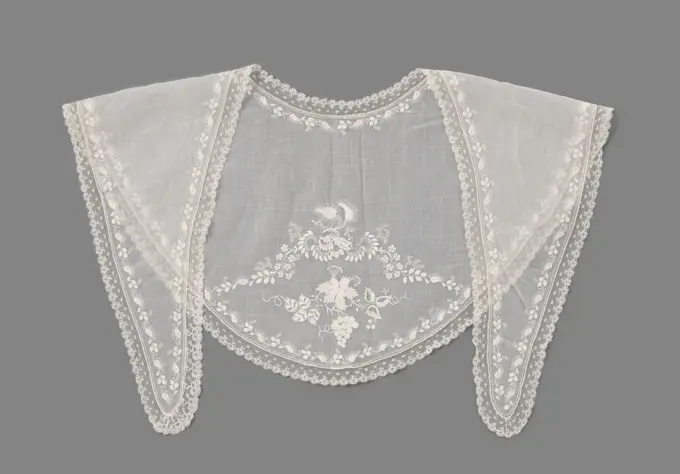
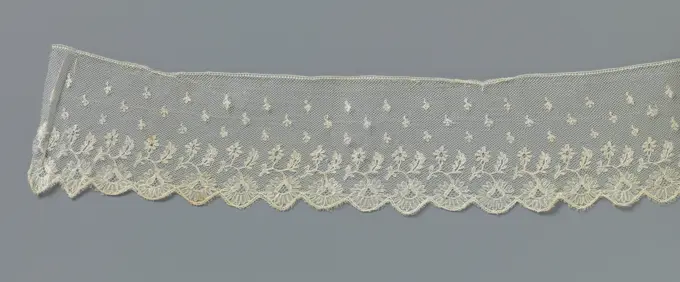
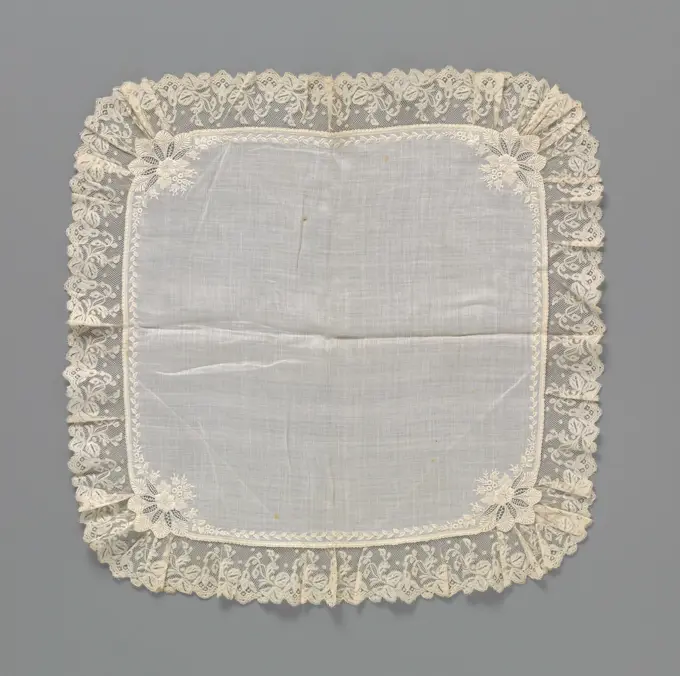
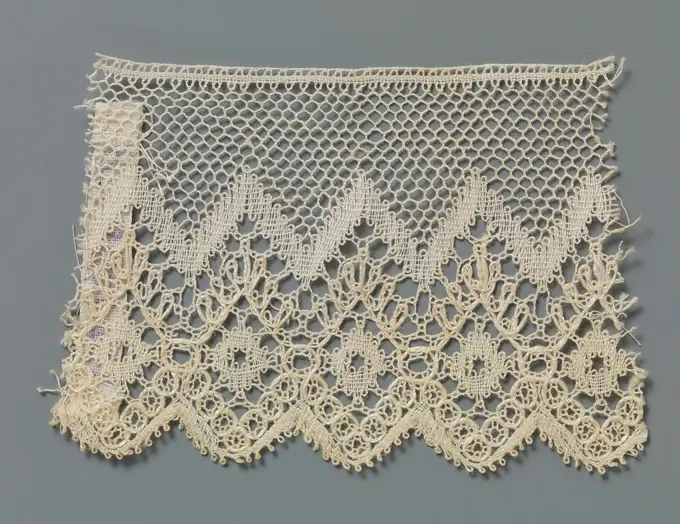
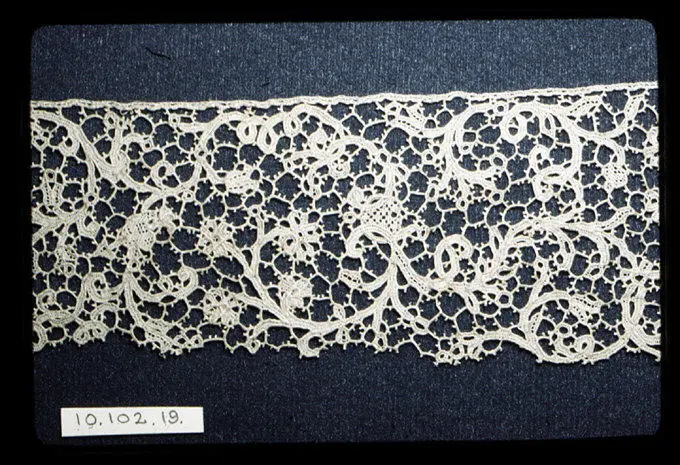
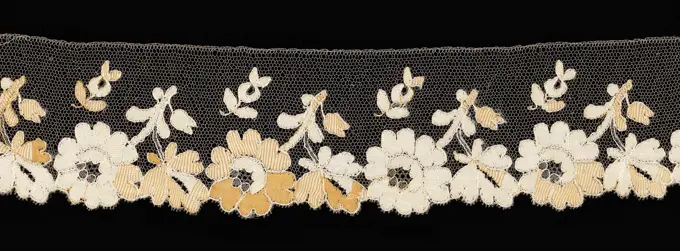
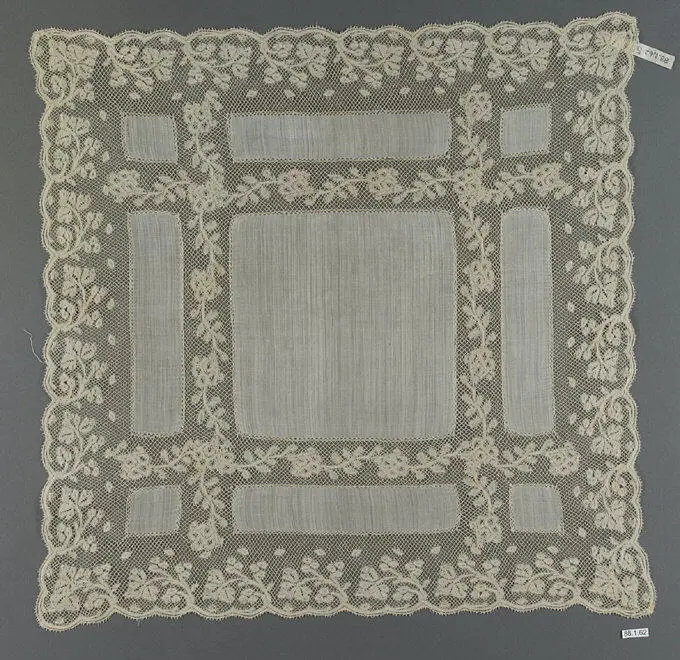
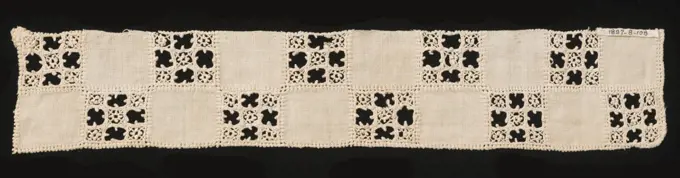
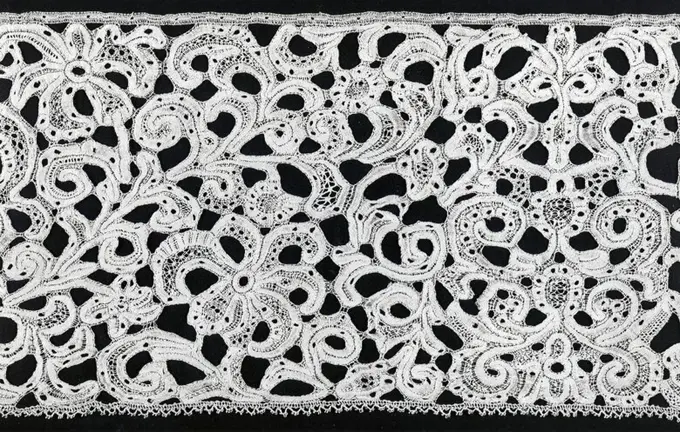
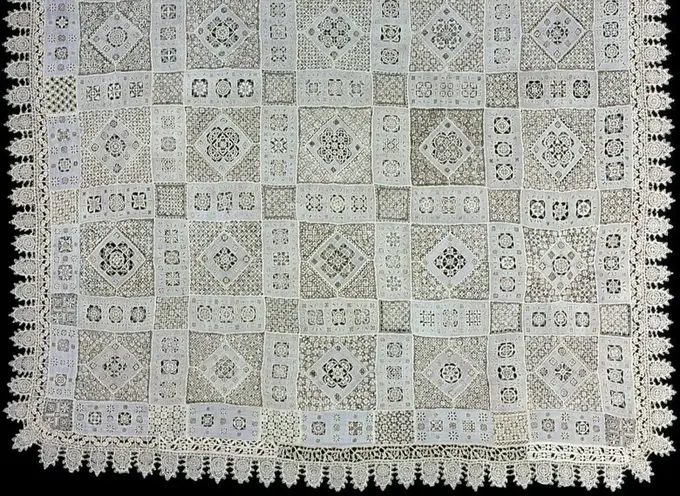
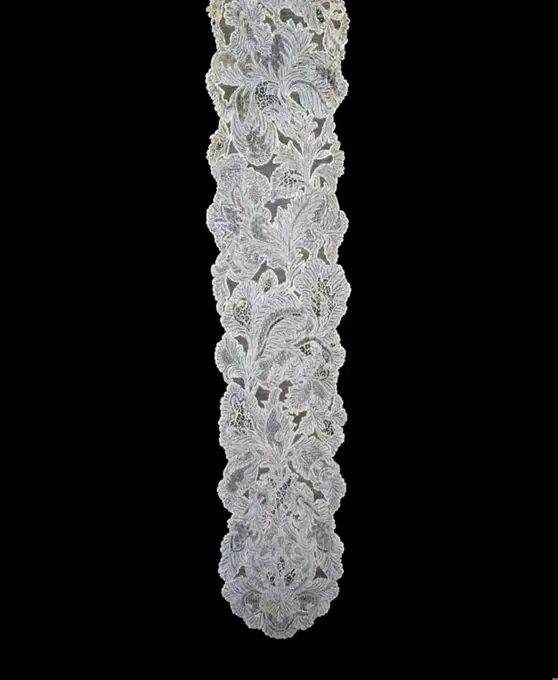
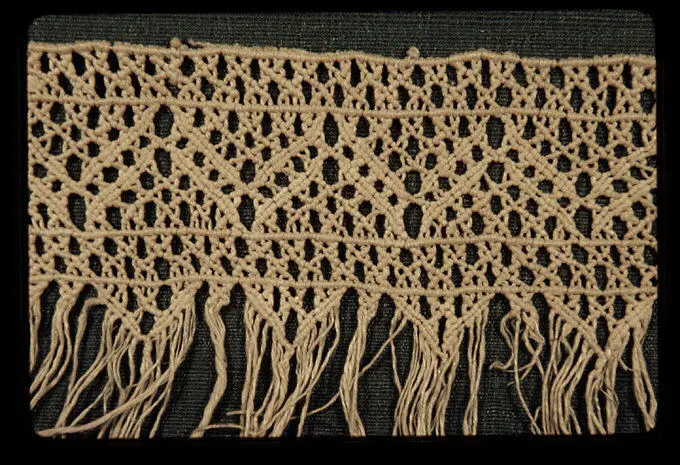
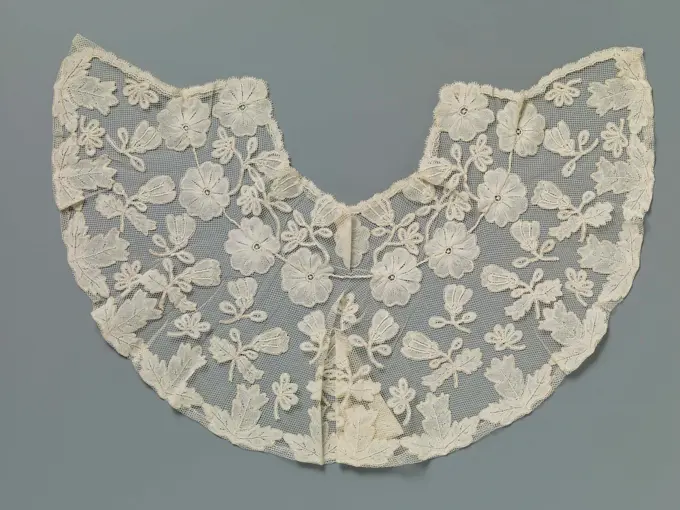
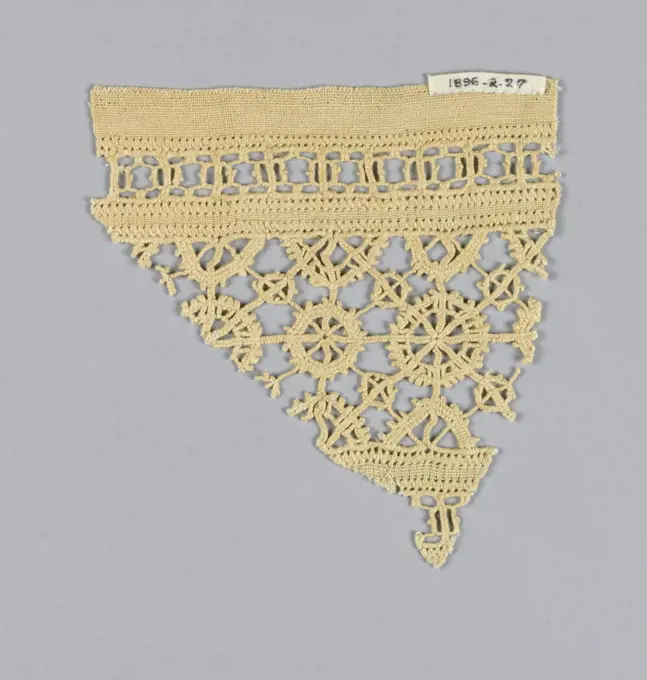
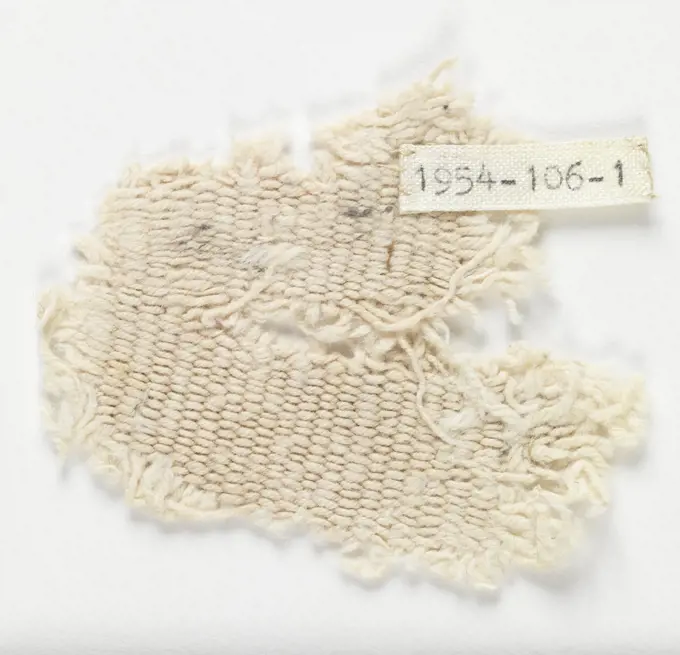
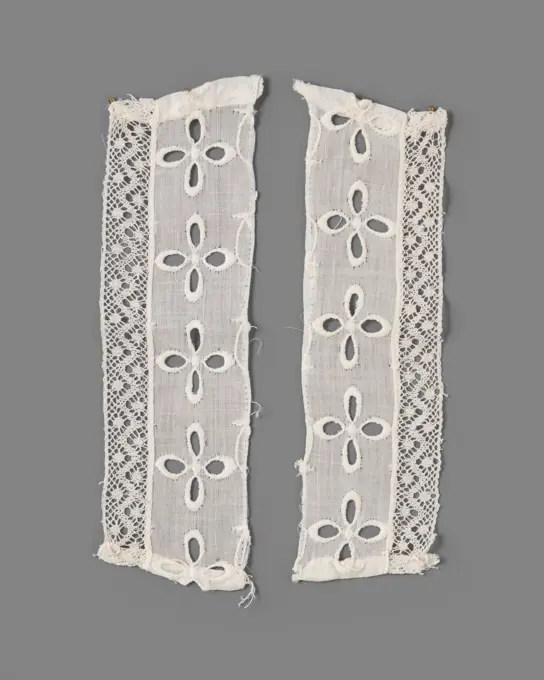
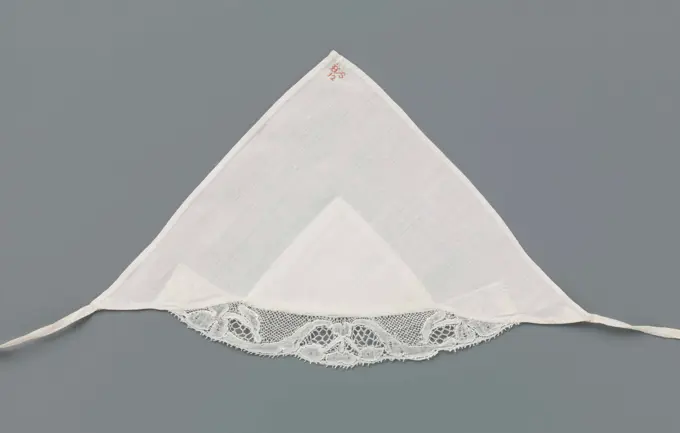
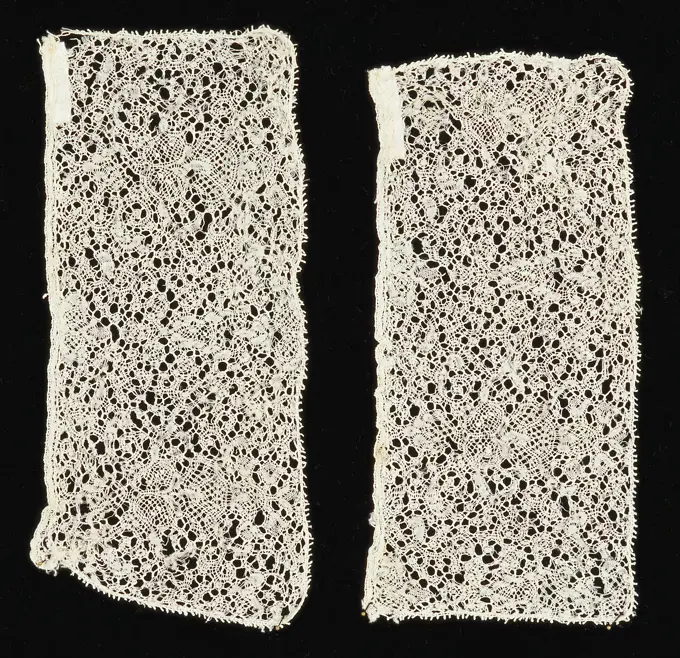
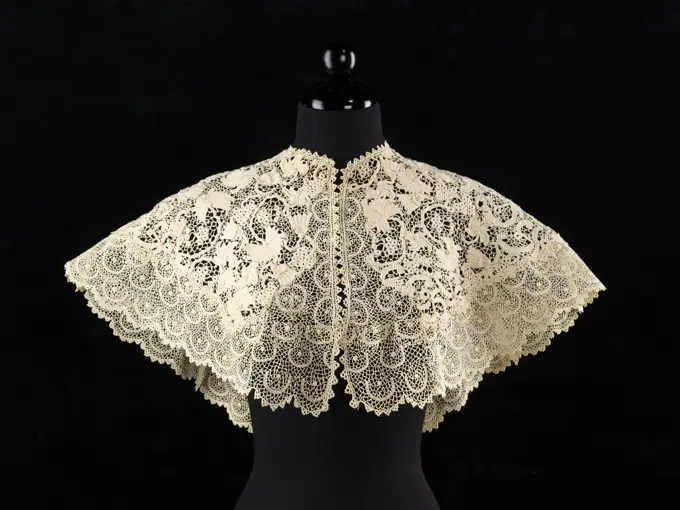
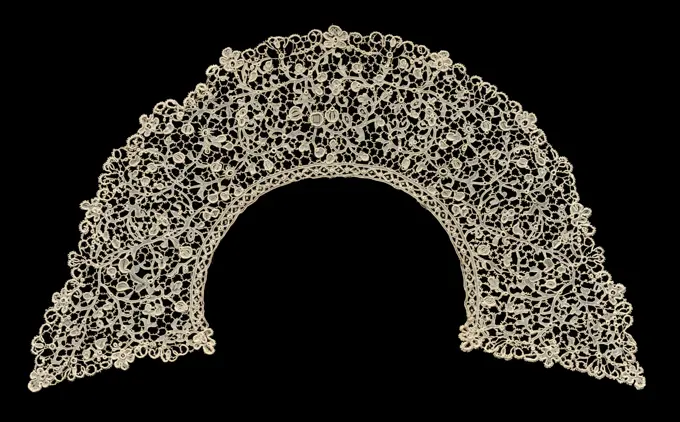
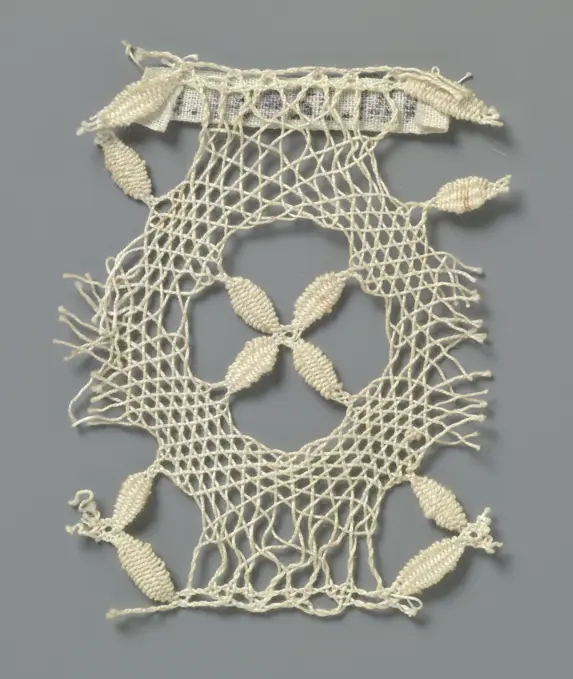
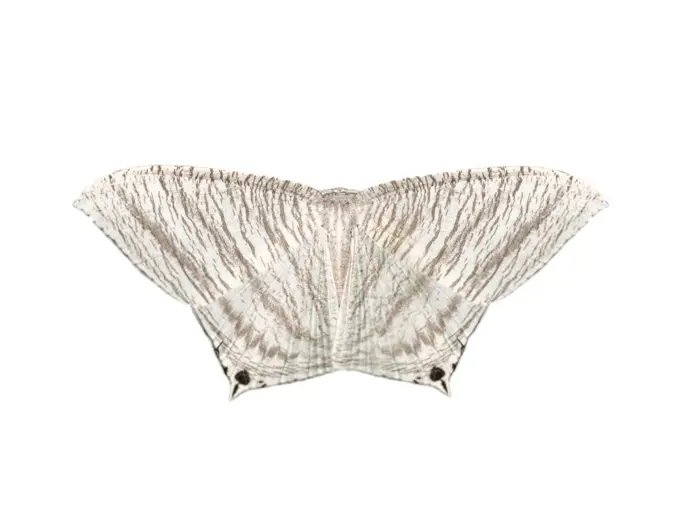
Gordijnstrook van katoen met kloskant-traliegronden in grote opengewerkte motieven waar.Curtain strip of natural-colored cotton with large openwork motifs with deployment of two different types of grille (dick edge). Ornaments have been made around the motifs with embroidery: white work. The motifs are arranged in three rows and five columns with the largest motifs in the middle row. The motifs include circular, heart-shaped, butterfly-shaped and half moon. The strip is rectangular in shape and finished on all sides with a narrow mull.Insertion 16th century Italian, Venice. Insertion 221046Cuff 18th century Italian, Burano. Cuff. Italian, Burano. 18th century. Needle lace. Textiles-LacesInsertion 16th century Italian, Venice. Insertion 221050Fragment early 19th century Italian, Venice. Fragment 212744Handkerchief;  19th/20th century (1890-00-00-1920-00-00);Criege blind or skirt from application side with redoute roses on a branch and snowballs above bent feathered leaves, anonymous, c. 1825 - c. 1835 Criege blinds or skirt from Brussels application side: Kloskant Applicated on Drochelgrond. Long rectangular model with a quarter circle round down corners. Along the two short sides and continuously in the underside, a double edge pattern runs, with semi -rounds on the outside. Within the pattern edge, up to the long side at the top, the field is littered with mosies. The scrap edge is formed by a repeating pattern of equal circle arches of one feathered leaf with a flower closs on top, a snowball. A repeating pattern is running above this witch pattern with a large redoute rose on a branched branch with spines, three blades and two rose buttons. The rose branch is contained in a semi -circular leaf branch, along which bunches of mimosa or berries run on the inside. The motives are made in linen and mains and are equipped with burst relief Fragment Made 1701-1750 Flanders. Linen, bobbin part lace (worked in small sections) .Dress of edge embroidery with emerging suns along diamond shape. Square dress of natural-colored edge embroidery, carved work. Pattern with a square made up of four small squares. Each small square is divided by a diagonal line, with a 'rising sun' on the outside and a triangle on the inside. Together this ensures a diamond shape in the large square with a four-pointed star in the middle. To the large square on all sides a border with rectangles, filled with bundles of wires or with a dense grid work with opened diamonds. A finished edge in linen stroke on all sides.Pair of Lappets (Joined). France. Date: 1760-1769. Dimensions: 136.2 × 9.3 cm (53 5/8 × 3 5/8 in.). Linen, needle lace of a type known as "Point d'Argentan" with buttonholed mesh ground. Origin: France. Museum: The Chicago Art Institute, Chicago, USA.Bobbin Lace Insertion with Selvage, mid 16th century. Italy, Venice, mid 16th century. Lace, bobbin; average: 3.5 x 34.3 cm (1 3/8 x 13 1/2 in.).Strip of batist with openwork circles above a scum, anonymous, c. 1850 - c. 1870 GLASS LAND OF GLASS BATIST WITH SIDE BRAND AREA: English Embroidery. Along the upper and bottom edge, a scrap edge runs above which a continuous 'pearl necklace' runs from openwork circles. Above the cord two staggered rows with larger openwork circles. Netherlands (possibly) cotton (textile). GLASS LAND OF GLASS BATIST WITH SIDE BRAND AREA: English Embroidery. Along the upper and bottom edge, a scrap edge runs above which a continuous 'pearl necklace' runs from openwork circles. Above the cord two staggered rows with larger openwork circles. Netherlands (possibly) cotton (textile).Fragment; linenBorder Made 1825-1850 Flanders. Cotton, bobbin straight lace .Anonymous / 'Rock crystal salver with pierced border and ten engraved stems'. Ca. 1615. Rock crystal / Hyaline quartz, Silver-gilt. Museum: Museo del Prado, Madrid, España.Fragment; linen; 1933-1-217Border (From an Insertion). Italy. Date: 1690-1710. Dimensions: 7.7 x 231.2 cm (3 1/8 x 91 1/8 in.). Linen, bobbin straight lace (continuous clothwork tapes). Origin: Italy. Museum: The Chicago Art Institute, Chicago, USA.Cotton intermediate base with lace plunge with a large double -leaf garland framed by 'pearls' and filled with a small Margriet, C.I. Bosch Reitz-Teding van Berkhout, c. 1860 - c. 1880 Piles of natural cotton with lace bobbins: English embroidery. The pattern consists of connected circles formed by interlocking S-shaped branches with open-worked leaves on either side. Within the Spitsovale fields that are created in this way there is a circle of connected openwork circles with a Margriet in it. The whole is framed on top and bottom by a continuous 'pearl necklace'. The strip may have been used or intended as an intermediary. The sides are unfinished, one short side concerns the fringes of the cotton. Amsterdam cotton (textile) Piles of natural cotton with lace bobbins: English embroidery. The pattern consists of connected circles formed by interlocking S-shaped branches with open-worked leaves on either side. Within the Spitsovale fields that are created in this way there is a circle oBorder 18th century French or Italian. Border 226052Handkerchief 1875-99 French The late 19th century marked a period of excess ornament and dazzling ostentation in the decorative arts. This handkerchief with its profuse display of embroidered elements and frothy lace offers an example of the ornateness that was in vogue at the time. The development of machine-made production made this excess in presentation available to a wide range of consumers.. Handkerchief 157758Edge, Medium: linen Technique: bobbin lace and deflected work in peasant style, Edge composed of a band of deflected work and scalloped edge in bobbin lace., Russia, 19th century, lace, EdgeCollar 1830s probably American. Collar 110199Strip bobbin with star and crescent, anonymous, c. 1900 - c. 1929 Strip of black bobbin, cluny side. Symmetrical design with deep scoops and a braid ground. Each shell is filled with an eight -pointed star that is comprised by a lying half moon at the bottom. The scrap edge is finished with arcs and fine dots of potented braids. The top of the strip is straight finished. Le Puy-en-Velay (Possible) silk bobbin lace / Cluny lace Strip of black bobbin, cluny side. Symmetrical design with deep scoops and a braid ground. Each shell is filled with an eight -pointed star that is comprised by a lying half moon at the bottom. The scrap edge is finished with arcs and fine dots of potented braids. The top of the strip is straight finished. Le Puy-en-Velay (Possible) silk bobbin lace / Cluny lacePiece 18th century German. Piece 220618Fragment 18th century French. Fragment 212945Cuffs ca. 1650 Flemish. Cuffs 212915Border, Technique: bobbin lace, Bobbin lace sample, dense floral; early 18th century Maline, early 18th century, lace, BorderFragment (two parts) 17th century Italian. Fragment (two parts) 215286Encaje de bolillos. Museu Català de les Arts i Tradicions Populars.Flounce, Medium: linen Technique: bobbin lace, Bobbin lace flounce, symmetrical floral forms in brackets; 18th century Brussels bobbin lace, 18th century, lace, FlounceTrimmings (Italy); linen; a) H x W: 38.1 x 5.8 cm (15 x 2 5/16 in.) b) H x W: 43.2 x 4.8 cm (17 x 1 7/8 in.) c) H x W: 43.2 x 4.8 cm (17 x 1 7/8 in.) d) H x W: 19.1 x 4.8 cm (7 1/2 x 1 7/8 in.) e) H x W: 19.1 x 4.8 cm (7 1/2 x 1 7/8 in.) f) H x W: 73.7 x 25.4 cm (29 x 10 in.) g) H x W: 74.9 x 23.5 cm (29 1/2 x 9 1/4 in.); 1967-46-12-a/gNeedlepoint 17th century possibly Italian. Needlepoint 218062Lace, 1800s, maker unknown. Acquisition history unknown.Band; 1902-23-2Mitaine of white knitted cotton in ajour pattern, anonymous, c. 1800 - c. 1825 Mitaine of white knitted cotton in ajour pattern of vertical stripes with holes and ridges, the top scum, on the underside hole edge for a riding slip, for baby or child Netherlands whole: Cotton (textile) knitting Mitaine of white knitted cotton in ajour pattern of vertical stripes with holes and ridges, the top scum, on the underside hole edge for a riding slip, for baby or child Netherlands whole: Cotton (textile) knittingCollar with festonated leaves between spiders caught in an edge of founded squares, anonymous, c. 1865 Collar with festonated leaves between spiders caught in an edge of founded squares trimmed with a smooth -set strip of machine side. The collar is straight from behind and has two slipper at the front. West-Europa linen (material) Collar with festonated leaves between spiders caught in an edge of founded squares trimmed with a smooth -set strip of machine side. The collar is straight from behind and has two slipper at the front. West-Europa linen (material)Collar of Linen and Needle Lace, anonymous, c. 1625 - c. 1640 Lying smoothly, lined on a collar of linen with natural -colored needle side: Reticella and Punto in Aria. The shape of the collar is rectangular, with the long sides laid in a round shape by hand -sewing spine loads in the linen. The intermediary (Reticella) has a geometric pattern of squares, with two axes of symmetry. From the middle there are four spoon -shaped leaves in the squares of the squares containing punted palm flowers, surrounded by an edge of oval and triangles. The scalloped edge (Punto in Aria) always consists of a square with a wide edge of clocks interspersed by Driebladen. Each shell ends at the bottom with a drop -shaped motif. The motifs are connected to each other within the squares with short, sometimes picoted bars. The fullwork is made of closed feston stitches, decorated with recesses. Very faint relief along some contour lines. The collar is on the board, marked with a Gothic letter H and the numbFichu van Linnenbatist, embroidered on the back with a vine with grapes and vulerd in plumetis of white cotton, inside a floral border and trimmed all around with a wrinkled strip of Mechelse side, anonymous, c. 1840 - c. 1845 Fichu van Linnenbatist, embroidered on the back with a vine with grapes and vine in Plumétis of white cotton, inside a floral border and trimmed all around with a wrinkled strip of Mechels Kloskant. Model: two tapered slippering ending in a round point, with a hemisphere hanging on the back. Decoration: Set all around with a small open hem above which a floral border in white cotton. In the middle behind a cartouche crowned by a motif of flowers and leaves in different stitches, where under button stitch, needle side, steel stitch and stalk. Below a wine rank with leaf of stitches and grapes composed of button stitches, flanked by fantasy leaves. The whole is trimmed all around with a narrow wrinkled strip Mechels Kloskant. Netherlands (Possible) Mechelen whole: Strip Machine side with a row of hanging daisies along the underside, anonymous, c. 1880 - c. 1899 Strip of natural -colored machine side: Machinal Mechelen side. Under a spreading pattern of three rows of leaves, the repeating pattern consists of stalking of a row of bent stalks along the bottom of the strip that always hangs one daisy down. Two smaller flowers or leaves on the stem are upset. The motifs are equipped with thicker and shiny contour threads and are connected by a fine mechanical Mechelen soil. A decorative land has been used in the Bloemharten, a machine rose ground. The top of the strip is straight finished. The scrap edge along the bottom is finished with picots. Europe cotton (textile) Strip of natural -colored machine side: Machinal Mechelen side. Under a spreading pattern of three rows of leaves, the repeating pattern consists of stalking of a row of bent stalks along the bottom of the strip that always hangs one daisy down. Two smaller flowers or leaves on the steHat of Binchekant, Anonymous, c. 1750 Binchekant hats that consists of bullied bobbins. The lace has a pattern of leaves and flowers. A brand () Is embroidered on the edge in black. Binche . Binche Lace Binchekant hats that consists of bullied bobbins. The lace has a pattern of leaves and flowers. A brand () Is embroidered on the edge in black. Binche . Binche LaceCollar (Belgium); linen; 1898-24-5Collar;  19th century (1801-00-00-1900-00-00);Zakdoek van batist met borduurwerk en rondom afgewerkt met een rand kloskant.Handkerchief from Batist with embroidery and completed around with an edge natural colosside: Valenciennes-side. Square model with rounded corners. Embroidery: Along the edge runs a continuous pattern of small leaves and there is a flower bouquet in every corner, with needle lace agent in open sewing between palm with leaves. Side: The repeating pattern consists of a hanging fuchsia flower on a crooked stalk, which rises between two oval leaves along the outer edge.Strip clamp side with windows under zigzag line. Strip natural colosside, Buckingham side. The repeating pattern exists slightly above the center line of the strip from a zigzag line, with a concatenation of windows below. The motifs are connected to each other at the top by a Maas soil, a toel. The zigzag line and the center of each window is made in linen stroke, with a recess in each window. Dikke and shiny contour wires do not run directly around the fuller. They form around the windows a decorative tire of circles and tabs in the rose ground, which has been applied as ornamental soil. The top of the strip is straight finished. The slip edge along the underside is finished with picots.Workpiece for diploma beautiful crafts, Geesje Smid, c. 1890 - c. 1900 Strip of fat. Netherlands . tape lace (mixed lace) Strip of fat. Netherlands . tape lace (mixed lace)Collar 18th century Italian. Collar 215043Hemenbol of needle side with acanthus leaves, anonymous, c. 1720 - c. 1730 Hat of natural-colored needle side, régence side. Pattern with acanthus leaves and lush flowers, decorated on a mesh soil with square mushes. Fullwork with recesses and multifaceted decorative stitches. Relief contours with feston stitches. The hat is not made up. France whole: Linen (Material) Hat of natural-colored needle side, régence side. Pattern with acanthus leaves and lush flowers, decorated on a mesh soil with square mushes. Fullwork with recesses and multifaceted decorative stitches. Relief contours with feston stitches. The hat is not made up. France whole: Linen (Material)Collar (Belgium); linen; 1940-105-1Fragment 17th century Italian, Venice. Fragment 218769Edging (Spain); silkCollar (England); linenCollar of lace worn by Queen Wilhelmina for a drawn portrait of Cor Visser. Cuisine of Queen Wilhelmina from the estate of the artist Cor Visser. She is wearing this collar on a portrait drawn by fisherman. Lace collar, curved shape, with a mesh edge, beigular, slightly wider at the ends.Fragment of needlelace unknownMachine lace;  1st half 20th century (1901-00-00-1950-00-00);Magdalena, Witwińska, Dar (provenance), lace, cotton fabricsHandkerchief 19th century French. Handkerchief. French. 19th century. Bobbin lace. Textiles-LacesFragment (France); silkNeckpiece 1700-1945 American or European. Neckpiece 119281Border, Medium: linen Technique: grid of laid cords with needle lace, reticella style; edge of punto in aria, Small squares making up a border with small-scale triangular pendants. Modes: brides picotées, portes., Italy, late 16th-early 17th century, lace, BorderFragment, Medium: linen Technique: bobbin lace (continuous tape with bars added), Fragment with a symmetrical, wavy, ribbon-like design. Several types of ground used between the toile., Belgium, 17th century, lace, FragmentFragment, Medium: linen Technique: withdrawn element work with needle lace fillings (reticella), Two rows of squares with an alternating pattern of plain weave and reticella lace., Italy, 16th century, lace, FragmentFragment, Medium: linen Technique: bobbin lace (Mechlin-style with Point de Paris ground), Fragment with a design of detached floral sprays., 18th century, lace, FragmentBobbin Lace (Plaited Lace) Edging of Points, second half of 16th century. Italy, Genoa, second half of 16th century. Lace, bobbin; average: 3.2 x 9.9 cm (1 1/4 x 3 7/8 in.).Strip early 17th century Italian Punto in arialiterally, "stitches in the air"is one of the earliest styles of needle lace, which is itself developed from cutwork of primarily geometric design. When lacemakers transitioned to using a foundation of threads laid out according to a pattern drawn on parchment, they were able to incorporate more fluid lines and curves into their designs.. Strip 222260Kloskant curtain edge with geometric figures and frills, anonymous, c. 1800 - Before 1936 Curtain edge with a narrow and a wide strip of light brown bobbin side. The top of the curtain edge is made of linen, on which a woven band is sewn that is laid in a long track with palm with shapes. Below that a narrow strip of bobbin with a pattern of connected circles or wheels, inspired by early bobbin. The majority of the curtain edge consists of a wide strip of bobbin with squares, in which geometric figures are worked, inspired by Reticella. The narrow and wide strip of bobbins are separated by a linen strip. At the bottom of the curtain edge, on the wide strip of bobbin, tassels hang. unknown linen (material) bobbin lace / tape lace (mixed lace) Curtain edge with a narrow and a wide strip of light brown bobbin side. The top of the curtain edge is made of linen, on which a woven band is sewn that is laid in a long track with palm with shapes. Below that a narrow strip of bobbin with a patteCap streamers, Medium: linen Technique: bobbin lace, Brussels style, Pair of cap streamers in a design arranged around a series of diamond shapes, over and between which curves delicate floral designs. Smaller floral motifs fill square frames. Scalloped edges and ends., Belgium, ca. 1730, lace, Cap streamersFragment (Italy); linenCollar late 1890s American. Collar 118991Fragment, Medium: linen Technique: needle lace, Fragment of raised lace with a design of an ornamental scrolling leaf with openwork center and superimposed rosette and leaves., Venice, Italy, 17th century, lace, FragmentNeteldoek handkerchief surrounded by intermediate base of Reticella and trimmed with bobbin, anonymous, 1600 - 1615 Dun nettle cloth handkerchief surrounded by an intermediate creature of reticella and deposited by a shrewd side consisting of repetitive point motifs. The Reticella has a backdrop of alternating circles with eight-pointed stars and thinly worked eight-pointed stars for a small rosette motif. Italy buckram. bobbin lace Dun nettle cloth handkerchief surrounded by an intermediate creature of reticella and deposited by a shrewd side consisting of repetitive point motifs. The Reticella has a backdrop of alternating circles with eight-pointed stars and thinly worked eight-pointed stars for a small rosette motif. Italy buckram. bobbin laceFlounce. Italy, probably Milan. Date: 1701-1725. Dimensions: 27 x 186.7 cm (10 3/4 x 63 1/4 in.). Linen, bobbin part lace. Origin: Italy. Museum: The Chicago Art Institute, Chicago, USA.Strip needle side with tulips and pineapples. Piece of natural coniferous side, knotted side. The pattern is based on a 17th-century drawing and consists of two tulip-like flowers with a smaller tulip flanked on either side by a pineapple and crowned by a rosette flower.Cover. Italy. Date: 1601-1625. Dimensions: 195.7 x 147 cm (77 x 57 7/8 in.). Squares and rectangles of: linen, plain weave; cut and drawn work embroidered in back, hem, overcast, square open work stitches and needle lace fillings; and squares of linen, knotted square netting embroidered in cloth, darning, and interlocking lace stitches; darned and overcast bars, darned points and squares, and darned and woven wheels; edged with linen, bobbin lace; linen, plain weave cut work with needle lace fillings, and points of linen, needle lace worked on a cut and drawn thread grid. Origin: Italy. Museum: The Chicago Art Institute, Chicago, USA.Pair of Lappets (Joined) Made 1730-1739 Flanders. Linen, needle laceTriangular scarf of application office with rosary and tulip. Natural application side scarf, coniferous side applicated on machining tulle. Triangular model. The pattern consists of a rosary roof and a tulip, above a garland of tulips, carnations and other flowers. The scarf has a scalloped edge of hanging tulips and leaves.Edging 17th century Italian. Edging 220851Guimpe of application office with coarse flower cables. Flumpy of natural applicating office, mixed side - Duchesse-lace - applicated on machine tulle. Part of a circle of tulle is a standing edge sewn on which loose ornament parts from side, consisting of twigs with floral cables are applicated. Outer edge of eike leaves; On the seam of the board a border of large 'dune roses'.Collar 1850s American. Collar 110203Garniture 17th century Flemish. Garniture. Flemish. 17th century. Bobbin lace. Textiles-LacesFragment, Medium: linen Technique: withdrawn element work with needle lace insertions (reticella), Fragment with three partial reticella insertions. Two small insertions on the outer edge and one wide central insertion in a circular design., Italy, 16th century, lace, FragmentFragment, Medium: cotton Technique: warp faced plain weave, Part of mile-long piece (end not reached) brought back by Columbia University expedition; found in Cahuachi hacienda, about 15 miles from town of Nazca which is about 80 miles from Paracas. From cache of cloth to be used inside Paracas mummy bundles. White cotton, bleached (). Heavy weft: Z-piled cotton (4 slightly s-spun strands). Heavier warp: 2-plied strands (2) of S-plied Z-spun cotton., Peru, before 600 AD, woven textiles, FragmentBorder fragment, Medium: linen Technique: continuous braid-like bobbin lace, Fragment of a border of three pendants showing circular motifs divided into symmetric sections., Venice, Italy, 17th century, lace, Border fragmentBelt.Women in early 17th-century portraits are often shown wearing belts made of precious metal. Small useful items, such as cutlery and toilet accessories, could be fastened to them. There were a number of variations in the belts. This one is assembled of three-dimensional cast links. The parcel-gilding of the links creates a variegated effect.Cuff 18th century German. Cuff 217697Collar of Mechelse side, round model with potented scales, anonymous, c. 1750 - c. 1800 Collar of Mechelse side, round model with potented scales. The pattern has covered a river of square meshes and surrounded by praise with carnations and a sculpted openwork edge with flowers. Mechelen linen (material) Mechlin (lace) Collar of Mechelse side, round model with potented scales. The pattern has covered a river of square meshes and surrounded by praise with carnations and a sculpted openwork edge with flowers. Mechelen linen (material) Mechlin (lace)Double collar of bobbin with mountain and valley line, anonymous, c. 1740 On a fine grid, a Mechelen soil (also known as ice soil), is a symmetrical pattern. Within a stretched scallop of lobed leaves and florets, triple flower branches are on weather sofa from a leaf rosette under a 'mountain and valley' line. This limits two halved diamond -shaped medallions with a grid filling of crucifixes. The narrow strip of the collar shows an ongoing pattern of a flower vank between omega-shaped lobed lobe. Mechelen side. Southern Netherlands linen (material) bobbin lace / Mechlin (lace) On a fine grid, a Mechelen soil (also known as ice soil), is a symmetrical pattern. Within a stretched scallop of lobed leaves and florets, triple flower branches are on weather sofa from a leaf rosette under a 'mountain and valley' line. This limits two halved diamond -shaped medallions with a grid filling of crucifixes. The narrow strip of the collar shows an ongoing pattern of a flower vank between omega-shaCollar 1850-69 American. Collar. American. 1850-69. cottonCap Streamers (France); linenBatist cuff with English embroidery and a strip of machine side, anonymous, c. 1880 Batist cuff with a closure of two hooks and eyes. The batist is decorated with English embroidery in the form of four -leaf flowers. A strip of machine side is attached to the cuff. Amsterdam (possibly) batists. band: Batist cuff with a closure of two hooks and eyes. The batist is decorated with English embroidery in the form of four -leaf flowers. A strip of machine side is attached to the cuff. Amsterdam (possibly) batists. band:Bobbin Lace Insertion with Edging of Points, 16th-17th century. Italy, Venice, 16th-17th century. Lace, bobbin; average: 6.7 x 24.8 cm (2 5/8 x 9 3/4 in.).Intermediate base of embroidered linen with lace plunger in a window between crosses, anonymous, anonymous (rejected attribution), c. 1700 - c. 1899 Piles of natural -colored embroidered linen - Whitework - with lace bobbins: sliced work. The embroidery pattern consists of a window that arises between two crosses. Both the crosses and the window are made with decorative tires in which geometric flowers are embroidered, surrounded with countless very small recesses. The openwork center of the window consists of squares that are cut from the linen and where the cutting edges are tied off with feston stitches. MarkenItaly (possibly) linen (material) embroidering Piles of natural -colored embroidered linen - Whitework - with lace bobbins: sliced work. The embroidery pattern consists of a window that arises between two crosses. Both the crosses and the window are made with decorative tires in which geometric flowers are embroidered, surrounded with countless very small recesses. The openworMitaine of white knitted cotton, c. 1800 - c. 1850 Mitaine of white knitted cotton in ajour, short model, with pleated upper edge, for child. Netherlands whole: Cotton (textile) knitting Mitaine of white knitted cotton in ajour, short model, with pleated upper edge, for child. Netherlands whole: Cotton (textile) knittingBonnet Veil Made 1850-1859 France. Silk, bobbin straight lace (made in horizontal strips) .Bobbin Lace Edging, mid 16th century. Italy, Venice, mid 16th century. Lace, bobbin; average: 2.6 x 20.4 cm (1 x 8 1/16 in.).Fontaneldoek met een randje kloskant van Helena van Slingelant-Slicher.Fontanet cloth of natural colored linen with a natural-colored clamping edge on one side: Mechelen side. The 'brainpipe for bells' has a triangular model. The edge side is slightly curved, smoothly turned and covers a large part of the longest side of the triangle. The curved ends partly overlap the linen. The lace pattern is symmetrical and consists of a rank in brace shape with three simple flower or leaf shapes. The motifs are connected by a grille. The motifs are made in linen stroke and one type of ornamental ground has been used. The motifs are fitted with thicker shiny contour wires. On the two corners of the cloth, left and right from the side to which the side is attached, a long narrow linen strap is attached. On the third corner the cloth is marked with red embroidery with HVS / 12, which stands for Helena van Slingelant-Slicher.Cuffs, 17th-18th century, 3 x 6 1/2 in. (7.62 x 16.51 cm) (single element) a, Linen; bobbin lace, Belgium (Flanders), 17th-18th centuryCollar ca. 1850 American. Collar 169200Collar ca. 1890 probably Irish. Collar 156774Needlepoint (Venetian Rose Point) Lace Collar, 17th-18th century. Italy, Venice, 17th-18th century. Lace, needlepoint; overall: 28.5 x 47 cm (11 1/4 x 18 1/2 in.).Strip bobbin with a cross of four leaves, anonymous, c. 1800 - c. 1899 Strip of natural -colored bobbin, straw side. The strip is short, only part of the pattern is visible. In a sort of octagonal shape made in Netslag, an open -up center has been made with a cross made of four leaves made in shape. These crosses in an open part repeat themselves along the lower and top of the strip, but only a part of that is visible. Top and bottom of the strip are straight. Brazil linen (material) Bobbi lace / lace cloth Strip of natural -colored bobbin, straw side. The strip is short, only part of the pattern is visible. In a sort of octagonal shape made in Netslag, an open -up center has been made with a cross made of four leaves made in shape. These crosses in an open part repeat themselves along the lower and top of the strip, but only a part of that is visible. Top and bottom of the strip are straight. Brazil linen (material) Bobbi lace / lace clothImage of Pointed flatwing butterfly (Micronia aculeata) isolated on white background. Insect. Animals.