Intricate Lace Designs

Delicate lace strips and cuffs showcasing intricate floral and geometric patterns. The collection emphasizes craftsmanship and historical textile art from different eras.

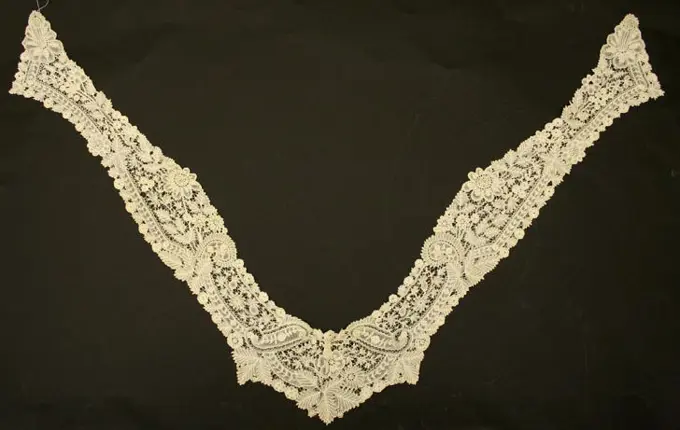
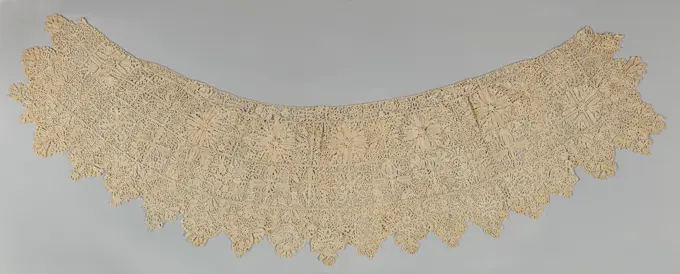
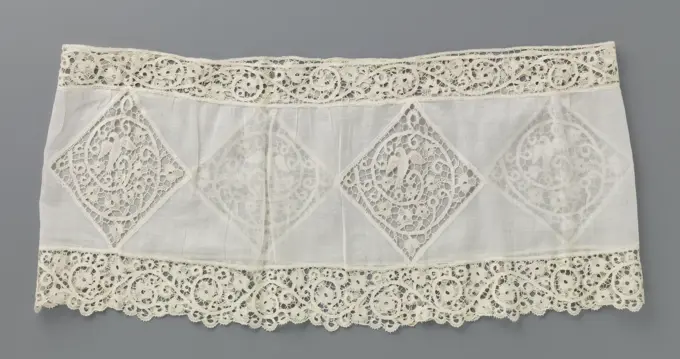
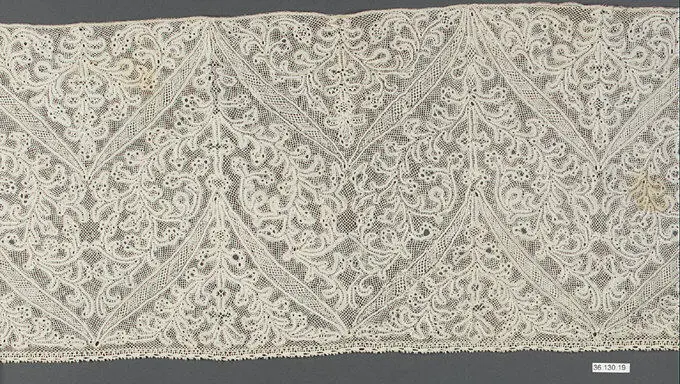
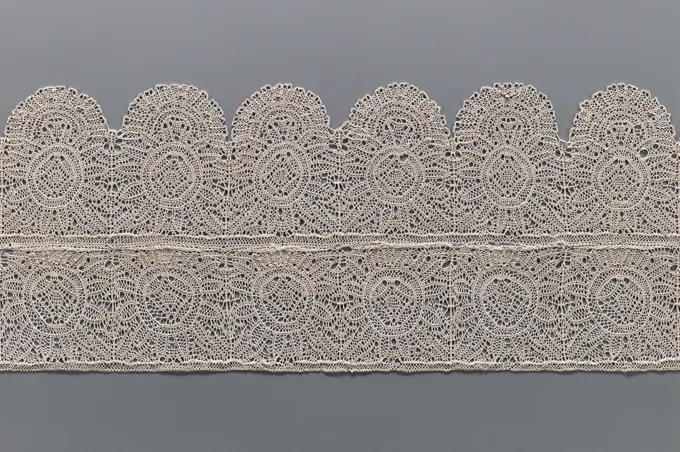
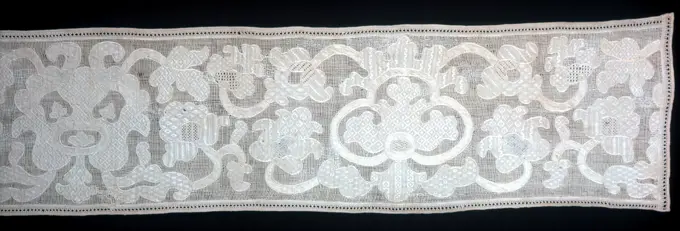
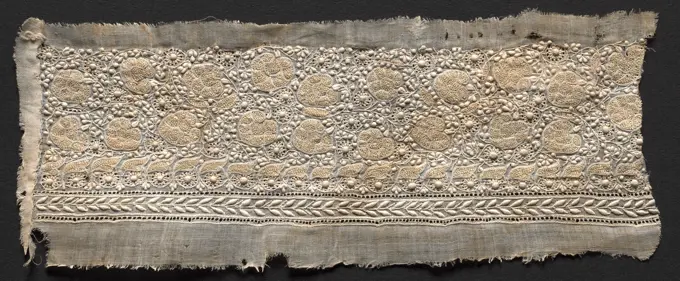
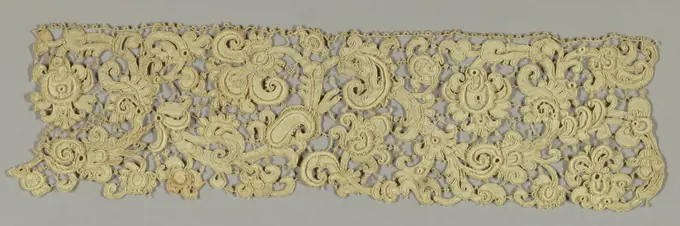
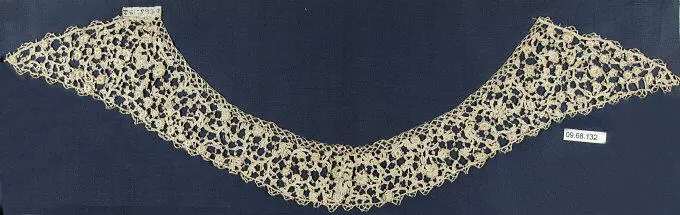
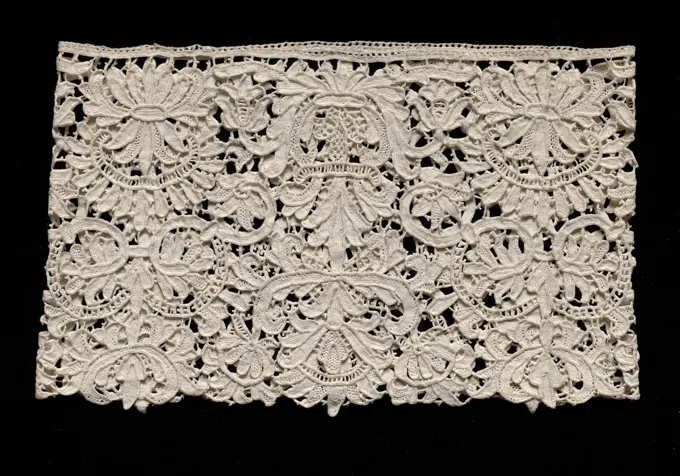
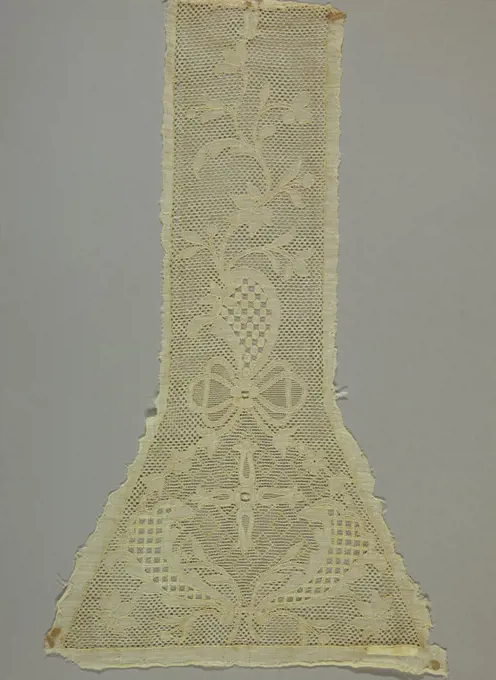
Cuff of needle side with bows, anonymous, c. 1875 - c. 1909 Cuff of natural -colored needle side: Venetian relief side. On a very open bar of land there are irregular volute vines with leaf voltuties and multifaceted flowers. List of triangles. Venice (possibly) linen (material) Venetian raised work Cuff of natural -colored needle side: Venetian relief side. On a very open bar of land there are irregular volute vines with leaf voltuties and multifaceted flowers. List of triangles. Venice (possibly) linen (material) Venetian raised work
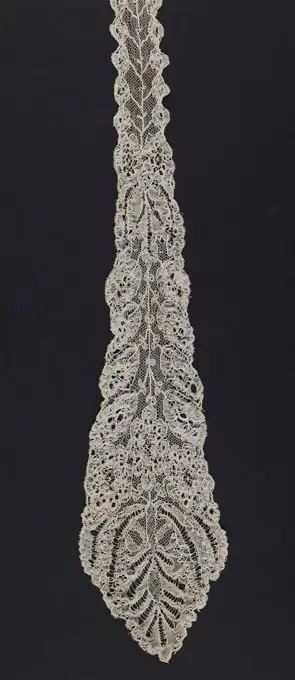
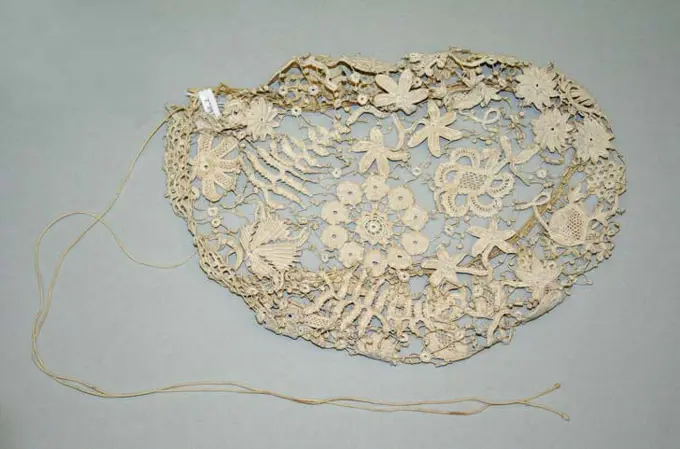
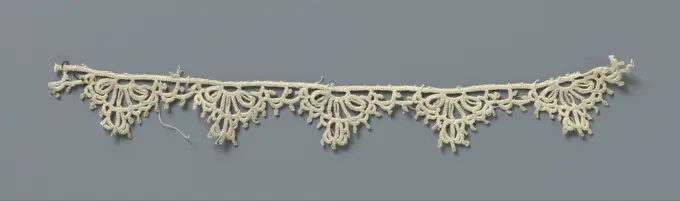
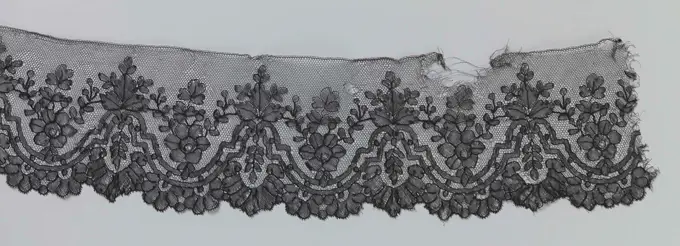
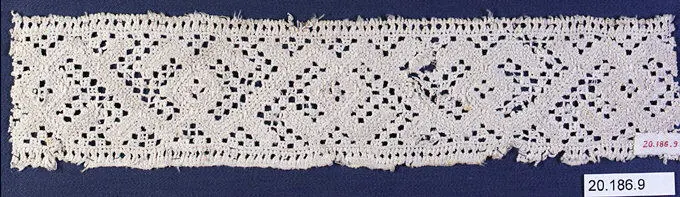
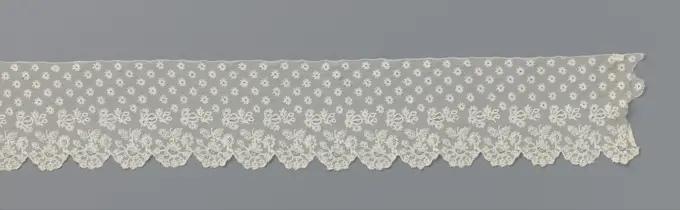
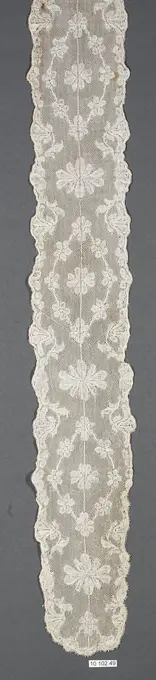
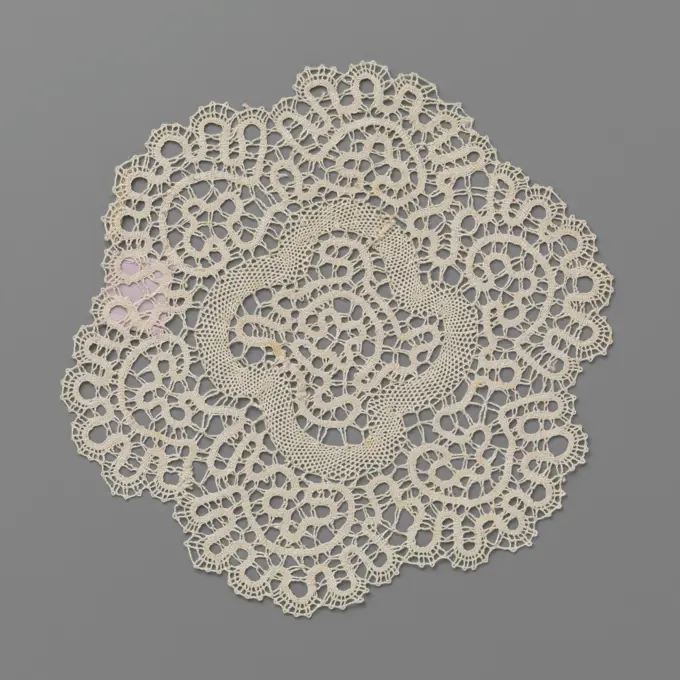
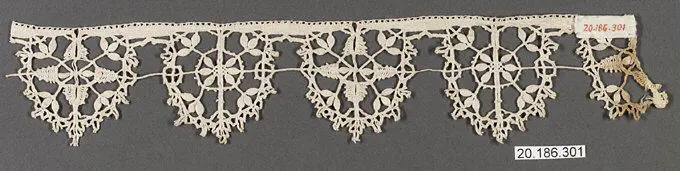
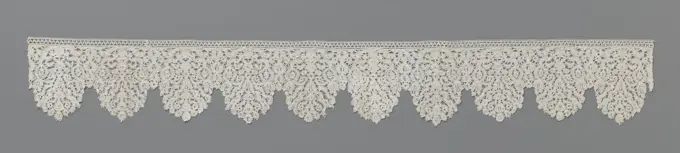
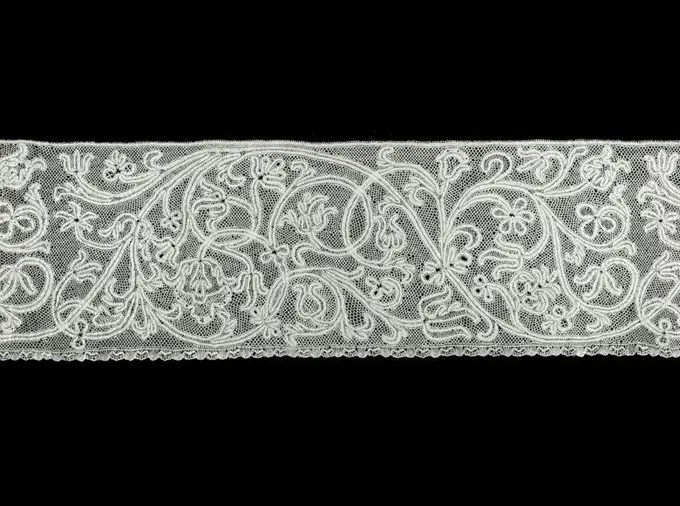
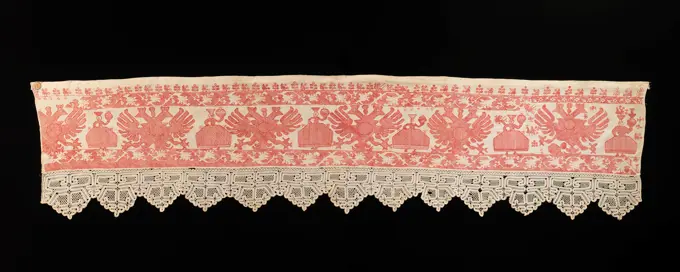
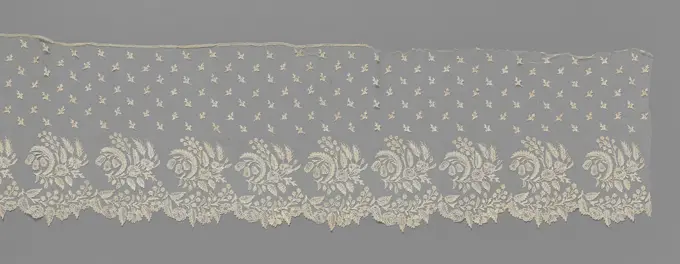
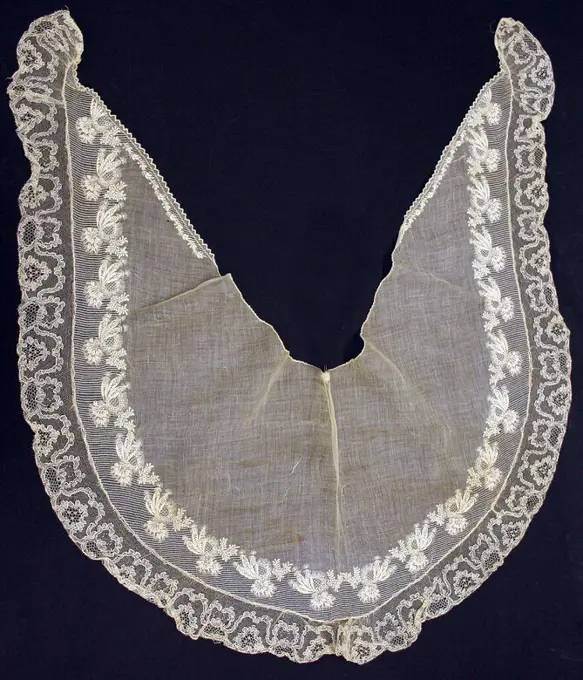
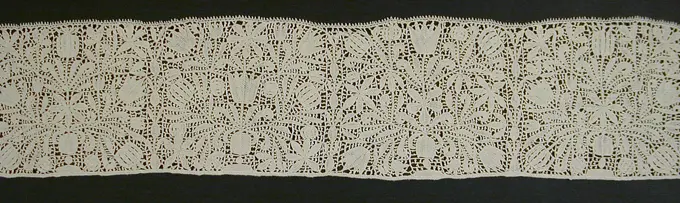
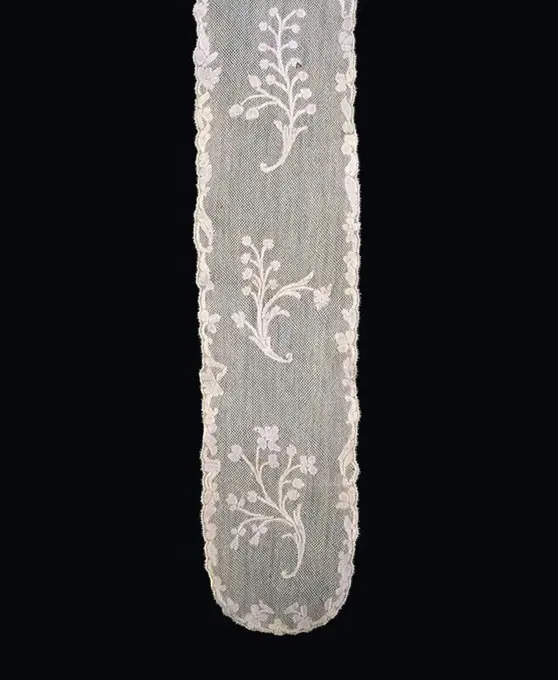
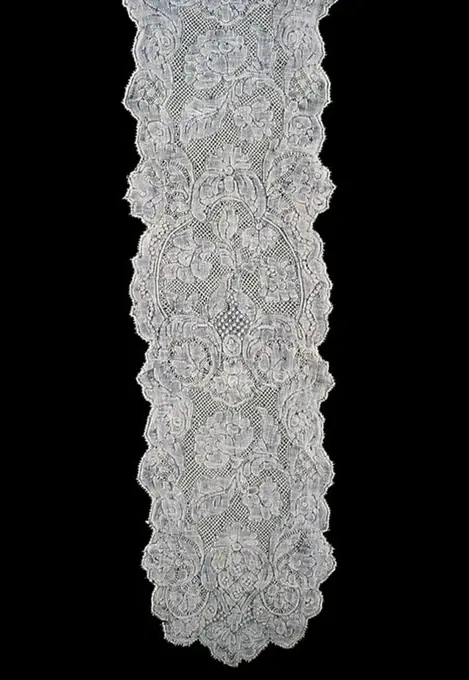
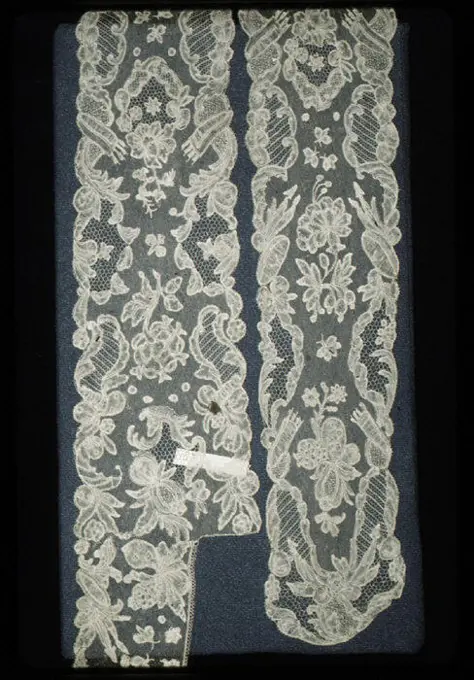
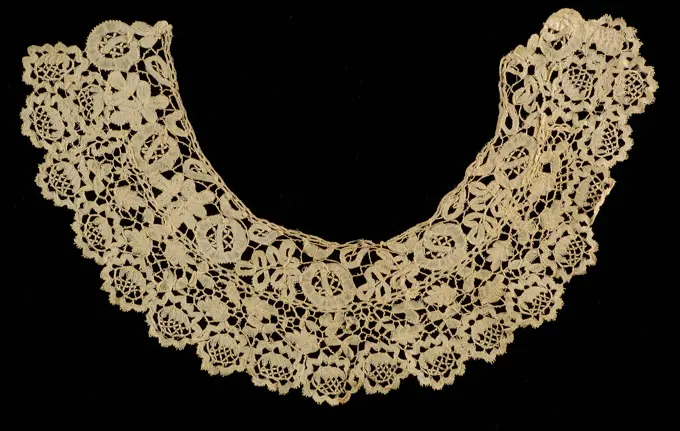
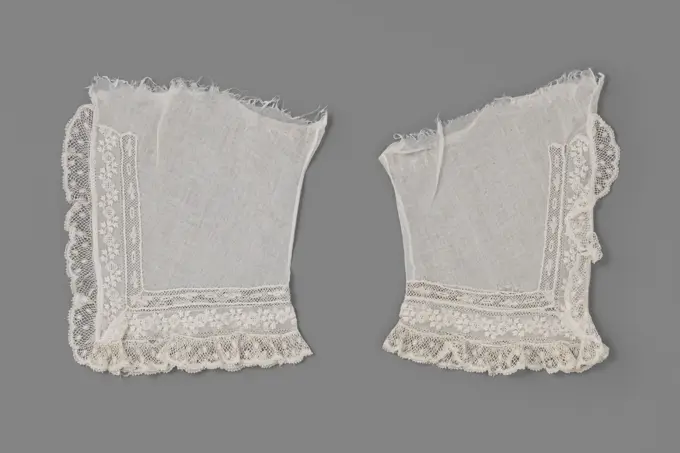
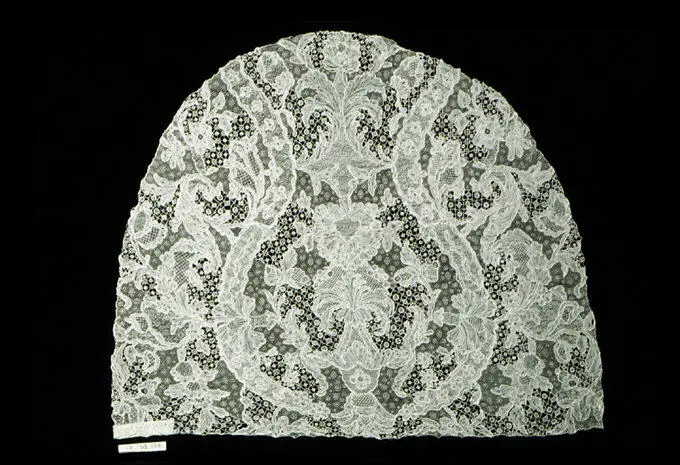
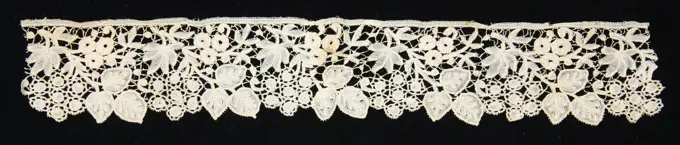
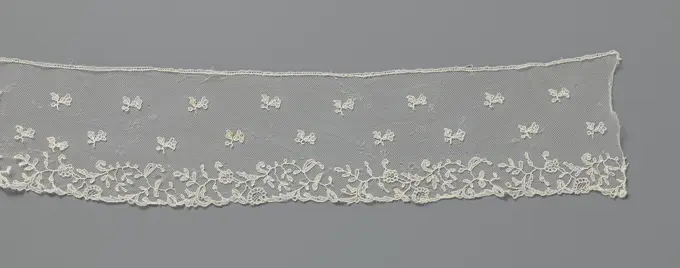
Strip application side with bell flowers and wavy flower branch, anonymous, c. 1840 - c. 1849 Strip of natural -colored Brussels application side, needle side applied on mechanical tulle. Strooi pattern with two rows of twigs on which one bell flower always, on a fine hexagonal mesh ground. The faintly scalloped lower edge comes from the repetitive motif of a wavy leaf branch with two flowers and a flower bud. Motives with relief contours of wide -founded wire bundles. Ornamental stitches in the flowers and flower buds and between a few leaves. The top is finished with a messing strap. Brussels linen (material) Brussels Applied Strip of natural -colored Brussels application side, needle side applied on mechanical tulle. Strooi pattern with two rows of twigs on which one bell flower always, on a fine hexagonal mesh ground. The faintly scalloped lower edge comes from the repetitive motif of a wavy leaf branch with two flowers and a flower bud. Motives with relief contours of wide -foundeStrip crocheted side with fan -shaped reticella sculptes, anonymous, c. 1890 - c. 1909 Strip of natural -colored Irish crocheted side, inspired by reticella. Crochet wire or line with fan -shaped potented sculptes, made up of loops and arches. Ireland cotton (textile) Strip of natural -colored Irish crocheted side, inspired by reticella. Crochet wire or line with fan -shaped potented sculptes, made up of loops and arches. Ireland cotton (textile)Strook van kloskant met holle en bolle dubbele lijsten.Strip of black climbing side: Chantilly side. A ground ground shows an empty top and a downwardly severely symmetrical design. Hollow and convex double tables, cascading, follow the slot, which exist for turns from half rosettes and a bow of leaves.Strip 16th century Italian. Strip 220819Bobbin Lace Cuff, 16th century. Italy, Venice, 16th century. Lace, bobbin; average: 4.2 x 18.2 cm (1 5/8 x 7 3/16 in.).Strip bastard with a part of two round flowers with bow, anonymous, c. 1750 - c. 1799 Strip of natural -colored bobbin, stuck side. The pattern is not complete, it is part of the pattern such as from BK-1978-588-A, where at least one of the two round flowers can be seen and a piece of the oval flower. The top and bottom are straight. The short sides are finished with a zoompje. Southern Netherlands linen (material) bobbin lace / pot lace Strip of natural -colored bobbin, stuck side. The pattern is not complete, it is part of the pattern such as from BK-1978-588-A, where at least one of the two round flowers can be seen and a piece of the oval flower. The top and bottom are straight. The short sides are finished with a zoompje. Southern Netherlands linen (material) bobbin lace / pot laceStrip of needle side with rush -hour and flower pots, anonymous, c. 1740 - c. 1760 Strip of natural needle side: Argentella side. Pattern with a regular wavy pendulum with zigzag line, flower branches, cartouches and flower pots. The pendulum forms whole and half pointed so, with a flower branch with three flowers in the entire oval and a cartouche with flowers and leaves in half oval. Motives in the ovals occur alternately in two variations. The pattern along the underside includes rocaille cartouches with a hanging flowerpot with a large daisy flower. The motifs are connected by many different types of decorative land, including diamond soil with the roses of hexagon roses and alençon-Mazen with mosques for the Argentella side. In addition to the many ornamental grounds also fullwork with recesses to fill the flowers, leaves and pendulum. The top is trimmed with a border bobbin. Faintly shocked lower edge. Argentan linen (material) Argentella (point) Strip of natural needle side: ArgStrip bobbin with two rows of flowers, anonymous, c. 1820 - c. 1830 Strip of natural -colored bobbin: Mechelen side. Under a stray pattern of 'daisies' is a row of one -sided flower branches and there again under larger, hanging flower branches, which fill the scallops. The motifs are made in linen stroke and equipped with thicker and shiny contour threads. The motifs are connected by a fine grid, a Mechelen soil. The scrap edge is finished with picots. The top of the strip is straight finished. Southern Netherlands linen (material) bobbin lace / Mechlin (lace) Strip of natural -colored bobbin: Mechelen side. Under a stray pattern of 'daisies' is a row of one -sided flower branches and there again under larger, hanging flower branches, which fill the scallops. The motifs are made in linen stroke and equipped with thicker and shiny contour threads. The motifs are connected by a fine grid, a Mechelen soil. The scrap edge is finished with picots. The top of the strip is straight finished.Border; cotton, metalLappet late 19th-early 20th century probably Belgian. Lappet. probably Belgian. late 19th-early 20th century. linenCollar 1630s British or Netherlandish Punto in arialiterally, "stitches in the air"is one of the earliest styles of needle lace, which is itself developed from cutwork of primarily geometric design. When lacemakers transitioned to using a foundation of threads laid out according to a pattern drawn on parchment, they were able to incorporate more fluid lines and curves into their designs.. Collar. British or Netherlandish. 1630s. Needle lace, reticello, punto in aria. Textiles-LacesFragment early 19th century possibly French. Fragment 218671Cap crown mid-18th century Flemish, Brussels. Cap crown 222794Kloskant lampshade with birds on spiral, anonymous, c. 1900 - c. 1924 A batists, rising middle part has four widely used windows, an Entre-deux on the top and a shell strip at the bottom. A stock of bars shows current spiral vines. Every window has a single, large spiral, on which a bird has spread wings. The strips show tendrils with op and down spirals, on which glans-shaped flower buds and sutures grow. Bobbin, possibly cantu side. Italy linen (material) bobbin lace A batists, rising middle part has four widely used windows, an Entre-deux on the top and a shell strip at the bottom. A stock of bars shows current spiral vines. Every window has a single, large spiral, on which a bird has spread wings. The strips show tendrils with op and down spirals, on which glans-shaped flower buds and sutures grow. Bobbin, possibly cantu side. Italy linen (material) bobbin laceStrip bobbin with stripped butterflies and flower branches along the bottom, anonymous, c. 1850 - c. 1870 Strip of natural -colored bobbin, Lille side. Under a spreading pattern of butterflies, an edge of connected ovals, with an open -up center, rises along the underside of the strip, from which a one -sided flower branch originates. The motifs are connected to each other by a Maas soil, the tuler land. The sparing fullwork is made in linen battle, with thicker and shiny contour threads dominating. At the top and bottom are straight finished, with the bottom with picots. Lille linen (material) bobbin lace / Lille lace Strip of natural -colored bobbin, Lille side. Under a spreading pattern of butterflies, an edge of connected ovals, with an open -up center, rises along the underside of the strip, from which a one -sided flower branch originates. The motifs are connected to each other by a Maas soil, the tuler land. The sparing fullwork is made in linen battle, with thicker and shiny coCuff 18th century Flemish, Mechlin. Cuff 218177Top of a childhood of crocheted lace with rosette wreath. Upper of a childhood made from natural-colored Irish crochet side. In the middle a wreath of six rosette flowers with a symmetrical scattering pattern of loose rosette flowers and left and right next to the wreath a group of three rosette flowers together. Irregular crocheted Maas soil with picots. In the wreath, a coarser irregular Maas soil without picots. The upper position is straight finished with picots along the side and undersides.Strip crocheted side with five -pointed stars and flowers made with open circles, anonymous, c. 1890 - c. 1909 Strip of natural -colored Irish crocheted side. Pattern consists of a double row with triangular floral motifs made with open circles, interspersed with one five -pointed star with a circle in the middle and a circle on each point. Crochet irregular mesh soil with picots. Top finished with a picoted bow edge. The potented scales on the underside stem from the pattern with the triangular floral motifs and stars. Ireland cotton (textile) Strip of natural -colored Irish crocheted side. Pattern consists of a double row with triangular floral motifs made with open circles, interspersed with one five -pointed star with a circle in the middle and a circle on each point. Crochet irregular mesh soil with picots. Top finished with a picoted bow edge. The potented scales on the underside stem from the pattern with the triangular floral motifs and stars. Ireland cotton (textile)Hapslip van Kloskant with Rivières, Anonymous, c. 1750 - c. 1760 Capslip of natural -colored Brussels bobbin side. A rivière with a malie stock is cut over by a branched branch with flowers and lancet leaves, while on the fields with a fine mesh network one branch grows with a flower, the open heart of pear -shaped. The scums are flat and show many medallions filled with gridwork. By mistake, a Mechelen and a Brussels hat -slip were set together, while the matching second Brussels Capse Sleep remained separately. Brussels linen (material) bobbin lace / Brussels bobbin lace Capslip of natural -colored Brussels bobbin side. A rivière with a malie stock is cut over by a branched branch with flowers and lancet leaves, while on the fields with a fine mesh network one branch grows with a flower, the open heart of pear -shaped. The scums are flat and show many medallions filled with gridwork. By mistake, a Mechelen and a Brussels hat -slip were set together, while the matching second BrusselsBarbe (one of three pieces) 18th century French. Barbe (one of three pieces) 218798Border, Medium: linen Technique: bobbin lace, continuous braid-like, Border of almost circular pendants attached to narrow border of squares filled with circular motifs., Genoa, Italy, early 17th century, lace, BorderBorder 18th century Italian. Border 226039Bobbin Lace (Needlepoint Design) Edging of Round Points, 17th century. Italy, Genoa, 17th century. Lace, bobbin; average: 9 x 24.2 cm (3 9/16 x 9 1/2 in.).Collar second quarter 19th century British. Collar 79077Kloskant cardigan decorated with three -lobe fan flowers, Martha Berkers, c. 1915 Vest of natural-colored bobbin, Duchesse side. The vest is triangular. A very fine symmetrical design is on a stock of bars. A large chalice and a star -shaped five -leaf alternate with a large fan -shaped flower, which is made up of a chalice with a semicircle as a heart and three radiating lobes. Small grit from chalices, rosettes and sequins serves as a filling. Almost tight outsides, consisting of fine flowers. Lock linen (material) bobbin lace Vest of natural-colored bobbin, Duchesse side. The vest is triangular. A very fine symmetrical design is on a stock of bars. A large chalice and a star -shaped five -leaf alternate with a large fan -shaped flower, which is made up of a chalice with a semicircle as a heart and three radiating lobes. Small grit from chalices, rosettes and sequins serves as a filling. Almost tight outsides, consisting of fine flowers. Lock linen (material) bobbin laceFragment, Medium: linen Technique: bobbin lace, peasant style, Italy, 19th century, lace, FragmentJapon strip of application side with palm tree, anonymous, c. 1840 Japon strip of natural -colored application side, bobbin side with some details in the needle side applied on mechanical tulle. The stock is evenly filled with a running pattern of palm trees, which tilted to the left and start with a trunk and a fan -shaped crown, and then split into various tribes and smaller crowns. From the latter, multifaceted branches, among other things with arrow -shaped leaves, hang out, which hang deeply on the left and right, while here and there garlands have been hung in their voluten garlands. A low flowering plant grows between two tribes, which starts with a fine leaf rosette. The scales are formed by winding lace strips and feathered leaves. Belgium linen (material) Japon strip of natural -colored application side, bobbin side with some details in the needle side applied on mechanical tulle. The stock is evenly filled with a running pattern of palm trees, which tilted to the left and stStrip bobbin with wheel in semicircular shell, anonymous, c. 1800 - c. 1899 Strip of natural-colored bobbin, cluny side. The repeating pattern consists of a circle with spokes in a semicircular shell. The circle is a succession of eight leaves, made in form. The spokes are braids that turn into the center of the circles into a mesh ground, a tie. Along the top runs a straight strap with smaller square meshes, finished with picots. Along the sculptures, a strap runs in a linen stroke, which is finished at the bottom with an open edge with picots. Buckingham cotton (textile) bobbin lace / Cluny lace Strip of natural-colored bobbin, cluny side. The repeating pattern consists of a circle with spokes in a semicircular shell. The circle is a succession of eight leaves, made in form. The spokes are braids that turn into the center of the circles into a mesh ground, a tie. Along the top runs a straight strap with smaller square meshes, finished with picots. Along the sculptures, a strap runs iTrimming, Medium: metal strip, metal strip wrapped around silk core Technique: bobbin lace, metallic, Wide border of metallic lace in bold design of large diamond shapes alternating with large floral forms. Outer edge is scalloped., Europe, mid-late 18th century, lace, TrimmingStrip bobbin with butterflies, anonymous, c. 1850 - c. 1899 Strip of natural-colored bobbin, Honiton side. The repeating pattern consists of flowers and leaves in different shapes and sizes between which a butterfly fluttered down. The motifs are connected by picoted braids. The motifs are made in closed linen battle and in netslag, with fine openwork edges and recesses. The motifs are accentuated with contour threads and burst relief contours. In a few open worked flower hearts, one or more squares are made in shape. The top of the strip is finished with a separate strap. The sculpe edge along the bottom follows the shapes of the bottom row of flowers and leaves and is finished with picots. The short sides are finished with a zoompje on which some press studs are sewn. Assert cotton (textile) bobbin lace / Honiton lace Strip of natural-colored bobbin, Honiton side. The repeating pattern consists of flowers and leaves in different shapes and sizes between which a butterfly fluttered doTable scarf, Medium: cotton Technique: embroidered, Rectangular table scarf with round center piece and two five-sided pieces embroidered finely in white cotton floral design. Corners and filler pieces in embroidered net; lace edging., Normandy, France, 19th century, embroidery & stitching, Table scarfRound rug van Kloskant with winding tires and four -lobbig center, anonymous, c. 1900 - c. 1999 Round rug of natural -colored bobbin. The pattern consists of narrow swinging tires in linen battle, which are connected by crossing couples. A wider band runs around the winding tires in the center in Netslag, which forms a frame with four lobes. Around it, a continuous narrow swinging tire always forms a three -lobe shape with six half -doval lobes along the outer edge. This pattern with the three -lobe mold repeats itself six times and forms a scrap of six sculptures with six lobes. As linen (material) bobbin lace Round rug of natural -colored bobbin. The pattern consists of narrow swinging tires in linen battle, which are connected by crossing couples. A wider band runs around the winding tires in the center in Netslag, which forms a frame with four lobes. Around it, a continuous narrow swinging tire always forms a three -lobe shape with six half -doval lobes along the outer edge. This pNeckpiece 1700-1945 American or European. Neckpiece 119276Fragment 18th century Flemish. Fragment. Flemish. 18th century. Bobbin lace, point d'Angleterre. Textiles-LacesFragment, Medium: linen Technique: grid of withdrawn element with needle lace (reticella), Fragment with rows of squares with diamond shapes in the center., Italy, 16th century, lace, FragmentLace pillowcover, 19th century, 18 1/4 x 18 1/4 in. (46.36 x 46.36 cm), Lace, France, 19th centuryChalice Cover (Italy); linenWomans tie unknownFragment of lace. unknown, authorEdging 17th century Italian, Genoa. Edging 221112Strip bobbin with thistle in flowerpot, anonymous, c. 1625 - c. 1649 Strip of natural -colored bobbin: Old Flemish side. The sculptures from which the strip is built are half -round with whimsically formed edges. The sculptes arise from a repeating symmetrical motif of a flowerpot with a thistle. The flowerpot hangs on the head compared to the straight upper edge. The successive flower pots are separated by a small lobed leaf. The motifs are made in linen battle with openwork edges. In the recesses, Spitsovaal -shaped leaves are made in form in various places. The scoops are deposited with fine picots. The top is finished with a separate strap. Southern Netherlands linen (material) bobbin lace / old Flemish lace Strip of natural -colored bobbin: Old Flemish side. The sculptures from which the strip is built are half -round with whimsically formed edges. The sculptes arise from a repeating symmetrical motif of a flowerpot with a thistle. The flowerpot hangs on the head compared to the sFlounce (Possibly From an Alb). Italy. Date: 1701-1750. Dimensions: 25.7 x 286.2 cm (10 1/8 x 112 5/8 in.)Width repeat: 68 cm (26 3/4 in.). Linen, bobbin part lace (continuous clothwork tapes). Origin: Italy. Museum: The Chicago Art Institute, Chicago, USA.Bobbin Lace Point, 17th century. Italy, Abruzzi, 17th century. Lace, bobbin; average: 9 x 10.8 cm (3 9/16 x 4 1/4 in.).Bobbin Lace (Needlepoint Design) Insertion, second half of 16th century. Italy, Genoa, second half of 16th century. Lace, bobbin; average: 2.6 x 25.7 cm (1 x 10 1/8 in.).Table Runner (Russia); linenTray Cloth, 1800s , maker unknown. Gift of Joan Moore, 1983.Hapslip van Kloskant with horn of abundance and peacock eyes, anonymous, c. 1725 - c. 1749 Heat slips of natural -colored bobbin, Mechelen side. The barbes are sewn. The repeating pattern consists of a horn of abundance that a Riviére cuts through and from which a leaf vank grows, half feathered and half with peacock eyes. Faint scrap edge with sewn picotrand. The motifs are made in linen battle with thicker contour thread and connected by a grid, a five -part ground. South of the Netherlands linen (material) bobbin lace / Mechlin (lace) Heat slips of natural -colored bobbin, Mechelen side. The barbes are sewn. The repeating pattern consists of a horn of abundance that a Riviére cuts through and from which a leaf vank grows, half feathered and half with peacock eyes. Faint scrap edge with sewn picotrand. The motifs are made in linen battle with thicker contour thread and connected by a grid, a five -part ground. South of the Netherlands linen (material) bobbin lace / Mechlin (lace)Insertion 16th century Italian, Venice. Insertion. Italian, Venice. 16th century. Bobbin lace. Textiles-LacesModestie with strip of bobbin with feathered leaves, anonymous, c. 1750 Modestie with a strip of natural-colored bobbin side: binche side. A rectangular piece of natural linen (new), partly with an open edge decoration, is deposited with a strip of bobbin. On a ringed snowflake ground is a long, running S-rank with three flowers, cut by an S-shaped and feathered leaf. The motifs are made in linen battle and mains with openwork edges. As a decorative land, another snowflake land has been used in one of the flowers. The top of the strip is straight finished. The scrap edge along the bottom is finished with picots. The short sides are finished with a zoompje. The linen is finished on three sides with a zoompje. One short side concerns the fringes of the textile, this side may have been a zoompje, because it runs a little longer through the strip side. Southern Netherlands linen (material) bobbin lace / Binche lace / large snowflake ground with ring Modestie with a strip of natural-coloredBed curtian border early 19th century Russian This object is from the collection of Natalia de Shabelsky (1841-1905), a Russian noblewoman compelled to preserve what she perceived as the vanishing folk art traditions of her native country. Traveling extensively throughout Great Russia, she collected many fine examples of textile art of the wealthy peasant class. From the 1870s until moving to France in 1902, Shabelsky amassed a large collection of intricately embroidered hand-woven household textiles and opulent festival garments with rich decoration and elaborate motifs. The Brooklyn Museum holdings include many fine examples including the majority of the garments. Portions of Shabelsky's collection are also housed at the Museum of Fine Arts, Boston, the Cleveland Art Museum, and the Russian Museum of Ethnography in St. Petersburg.The goddess in Russian embroidery is a symbol of fertility. She is commonly depicted with upraised arms and accompanied by birds and flowers. This language Edge, Medium: linen Technique: bobbin lace, Binche style with snowball ground, Belgium, 18th century, lace, EdgeEdge, Medium: linen Technique: bobbin lace (continuous braid-like), Band with fringe edge and stars alternating with circles., Italy, late 17th century, lace, EdgeBobbin Lace (Needlepoint Design) Edging of Round Points, 17th century. Italy, Genoa, 17th century. Lace, bobbin; average: 10.8 x 55.9 cm (4 1/4 x 22 in.).Edging 17th century Italian, Liguria. Edging 221010Strook applicatiekant met strooipatroon en eenzijdig gebogen bloemtakken.Strip natural colored Brussels application side: needle side applicated on slighten ground. Sprinkle pattern with a repetitive motif of a one-sided bent composite flower branch with, among other skylights, a rose, small rosette flowers, a cornflower or carnation, corners and feather-shaped leaves. The scalloped edge along the bottom is formed by curved flower branches with similar flowers and leaves. The top edge is finished with a soil.Bobbin Lace Lappet, 18th century. Belgium, Brussels, 18th century. Lace, bobbin: linen; average: 12.7 x 57.2 cm (5 x 22 1/2 in.).Fragment; linen; 1897-8-296Fragment of a Cap Band, late 1800s. India, Lucknow, late 19th century. Embroidery ("chikan" type); overall: 7.6 x 19.1 cm (3 x 7 1/2 in.).Fragment 17th century Italian. Fragment 214868Sleeve Ruffle; linenVerdubbelde strook naaldkant met hartvormige rankjes.Strip natural needle side: Flat Venetian side. On a bar soil that forms regular six-sided mesh, a fine pattern of two symmetrical, heart-shaped ranks is connected by serpentine ranks. Straight finish of large triangles.Piece ca. 1840 French. Piece 212896Tie  womans jabot unknownFichu. Culture: American. Date: 1855. Museum: Metropolitan Museum of Art, New York, USA.Border. Date/Period: 17th century. Border. Medium: linen. Technique: grid of laid cords with needle lace (reticella style), edge of bobbin lace in discontinuous tape. Author: UNKNOWN.Scarf mid-19th century French. Scarf 102690Fragment, Medium: linen Technique: needle lace, Band fragment with elaborate floral scrolls and raised three-dimensional details. Padded areas connected by brides decorated with rings and picots., Italy, 1650-1700, lace, FragmentCollar and Pair of Cuffs. Belgium. Date: 1880-1899. Dimensions: 71.9 × 94.7 cm (28 1/4 × 37 1/4 in.). Cotton, mixed lace: bobbin part lace of a type known as "Duchesse" and of needle lace of a type known as "Point de Gaze". Origin: Belgium. Museum: The Chicago Art Institute, Chicago, USA.Round rug of octagonal batist with a wide border bobbin with hearts formed by curling flower vines, anonymous, c. 1900 - c. 1924 Dress of natural -colored batist with a wide edge bobbin: ribbon side. Round model with a small octagonally sculpted inner piece of Batist. The lace pattern consists of curling flower vines formed by narrow ribbons and is symmetrical to one central axis. The tenders form a heart along two opposite sides of the batist. The curls end alternately in a rosette flower or a pear -shaped flour, with a saved flower heart. The motifs are made in linen and are connected by a braid ground. Part of the petals is made in a grid. The scrap edge along the outer edge of the rug stems from the pattern and is finished with a narrow ribbon with picots. Italy (possibly) cotton (textile) bobbin lace / tape lace (bobbin lace) Dress of natural -colored batist with a wide edge bobbin: ribbon side. Round model with a small octagonally sculpted inner piece of Batist. The lace pattern Lace. England, circa 1630. Textiles; textile lengths. Linen needle lacePair of Lappets (Joined). France, Valenciennes. Date: 1775-1785. Dimensions: 112.3 x 9.6 cm (44 1/4 x 3 3/4 in.). Linen, bobbin straight lace of a type known as "Valenciennes" with a square Valenciennes mesh ground. Origin: Valenciennes. Museum: The Chicago Art Institute, Chicago, USA.Lappet. France, Valenciennes. Date: 1740-1749. Dimensions: 63.1 × 12.0 cm (24 3/4 × 4 3/4 in.). Linen, bobbin straight lace of a type known as "Valenciennes" with a five hole mesh ground. Origin: France. Museum: The Chicago Art Institute, Chicago, USA.Pair of cuffs unknownKloskant strip with hollow and convex double frames, anonymous, c. 1850 - c. 1860 Black bobbin strip: Chantilly side. A grid -founded shows an empty top and a very heavier symmetrical design. Holle and Bolle Double Lists, step -by -step together, follow the sculptures, which in turns consist of half rosettes and an arc of leaves. Belgium silk bobbin lace Black bobbin strip: Chantilly side. A grid -founded shows an empty top and a very heavier symmetrical design. Holle and Bolle Double Lists, step -by -step together, follow the sculptures, which in turns consist of half rosettes and an arc of leaves. Belgium silk bobbin laceStrip bobbin with palm flower in heart -shaped vase, anonymous, c. 1625 - c. 1649 Strip of natural -colored bobbin: Old Flemish side. Pattern of connected and symmetrical scales that consist of a paving palm flower in a heart -shaped vase with foot. The motifs are connected by a braid ground. The motives are made in linen battle. The top is straight. Southern Netherlands linen (material) bobbin lace / old Flemish lace Strip of natural -colored bobbin: Old Flemish side. Pattern of connected and symmetrical scales that consist of a paving palm flower in a heart -shaped vase with foot. The motifs are connected by a braid ground. The motives are made in linen battle. The top is straight. Southern Netherlands linen (material) bobbin lace / old Flemish laceFragment; linen; 1897-8-307Collar 17th century Italian, Venice. Collar 218071Border Made 1875-1900 Italy. Linen, needle lace .Needlepoint (Punto in aria) Lace Cuff, early 17th century. Italy, early 17th century. Lace, needlepoint; average: 10.9 x 17.8 cm (4 5/16 x 7 in.).Border 17th century Italian, Genoa. Border. Italian, Genoa. 17th century. Bobbin lace. Textiles-LacesFragment early 19th century British, Buckinghamshire. Fragment 219452Strook naaldkant met spichtige bloemen.Strip natural colored Venetian needle side "Gros Point". On an open bars soil there is a running rank with large-fashioned small flowers, which are occupied with a spandy, strongly curved petals. The richly varied leaf volutes, are also strongly curved.Fragment, Medium: linen Technique: needle lace, Border of elaborate floral forms with symmetrical branches and curving lines of raised work., Italy or Spain, late 17th-early 18th century, lace, FragmentEdging of bobbin lace early 17th century Italian, Genoa. Edging of bobbin lace 218028Strip of bobbin with circle and diamond -shaped spokes in openwork linen work, anonymous, c. 1925 - c. 1930  Strip of natural-colored bobbin, cluny side. The repeating pattern consists of stiff linen work with a large open -shaped field, in which a circle is made with a horizontal center line with picoted braids from which four diamond -shaped spokes spring. With small recesses in the linen work, the contours of a square are made around this field. Along the underside of the strip is located directly under this square a shell opened in the linen work and a short distance from this, right under the dividing line between the squares another open -worked scoop. The top of the strip is straightened out. Switzerland linen (material) bobbin lace / Cluny laceTwo joined lappets and papillon edging mid-18th century Flemish The Metropolitan Museum's great lace collection was started when the Museum became the first among American museums to organize a permanent collection of lace with the acceptance of the McCallum Collection in 1879 and the bequests of Mrs. John Jacob Astor, Mrs. Robert L. Stuart, Mrs. Augustus Cleveland, and Mrs. A. W. Winters shortly thereafter. In 1893 a loan collection of antique laces shown at the World's Columbian Exposition in Chicago was assembled by a committee of New York women headed by Catharine Augusta Newbold. About 1900 Miss Newbold arranged and labeled an exhibition of laces and linenworks lent to the Metropolitan Museum by Mrs. James Boorman Johnstone and the Misses Johnstone. "Her scholarly knowledge of lace technique enabled the Museum for the first time to offer a comprehensive display of lace illustrating its historical development," wrote Miss Frances Morris, then curator of the textile department. MissCollar, Medium: linen Technique: needle lace with ground of loop & twist with loop & twist return, Pattern of roses and leaves surrounded by a border in an open design., Commonly called Point de Gaza., Belgium, 19th century, lace, CollarCurtain panel, Medium: cotton Technique: embroidered, Part of a white muslin curtain embroidered in white. Design has a repeating pattern of vases with flowers connected by garlands. Both edges scalloped., France, 1800-1850, embroidery & stitching, Curtain panelNeedlepoint Lace Lappet, 1715-1774. France, Argentan, 18th century (Louis XV Period, 1715-1774). Lace, needlepoint: linen; average: 96.6 x 9 cm (38 1/16 x 3 9/16 in.).Collar ca. 1860 British. Collar. British. ca. 1860. LinenEdging with fringe 16th century Italian. Edging with fringe 220963Cuff made of glass batist, with transhipment, decorated with lace and whitework, anonymous, c. 1870 - c. 1880 Glasbatist cuff, with transhipment, with a white-decorated Entre-Deux between a border and a strip of Valenciennes side. Netherlands . Valenciennes lace Glasbatist cuff, with transhipment, with a white-decorated Entre-Deux between a border and a strip of Valenciennes side. Netherlands . Valenciennes laceCap crown 18th century French. Cap crown 218856Neckpiece. Culture: Belgian. Date: ca. 1870.This neckpiece, in its original form, was made to be worn under a jacket. Brussels point de gaze lace was much favored in the Victorian period. This is a good example of the typical motifs and variety of fillings used in its design. Museum: Metropolitan Museum of Art, New York, USA.Lace, 1830-1840, Brussels, maker unknown. Gift of Mrs G. Acland Allen, 1955.Stole fragment, Medium: linen Technique: withdrawn element with needle-made fillings, End of a stole with a design of floral forms and ribbons., France, 18th century, lace, Stole fragmentBorder, Technique: bobbin lace, Edge of bobbin lace, staggered floral brackets; late 18th century Buckinghamshire., late 18th century, lace, BorderSnood third quarter 19th century American or European. Snood 83752Fragment 18th century Flemish. Fragment 214489Fragment 18th century French. Fragment 214634