Intricate Lace Trimmings

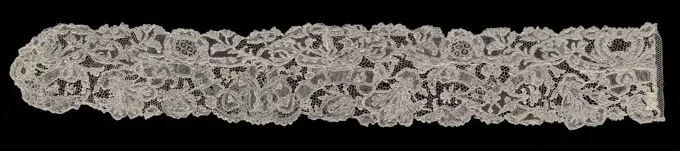
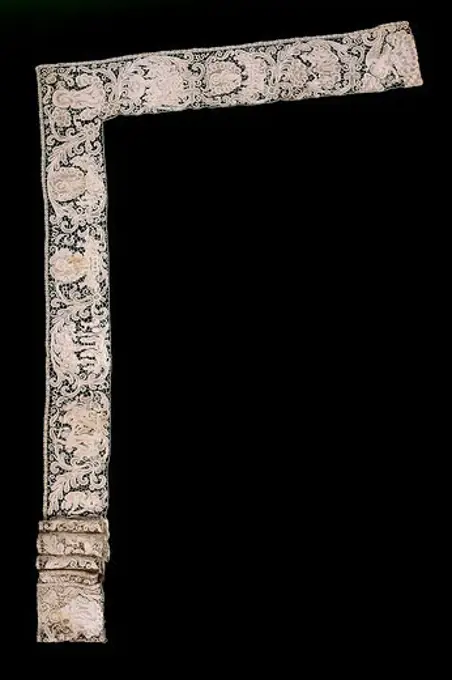
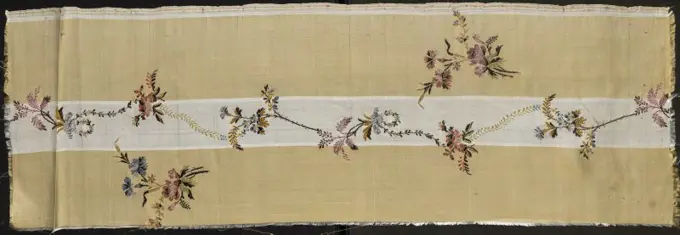
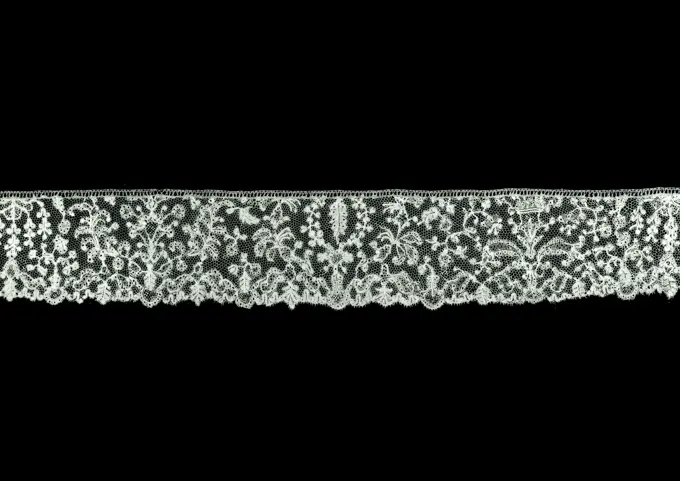
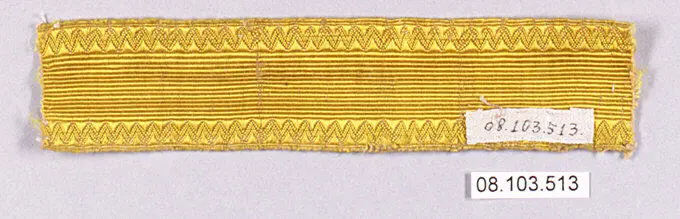
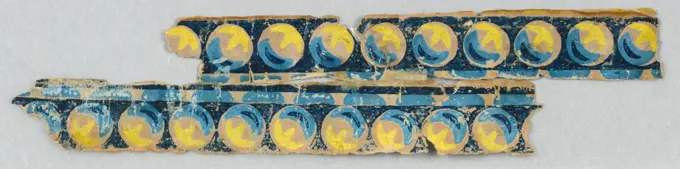
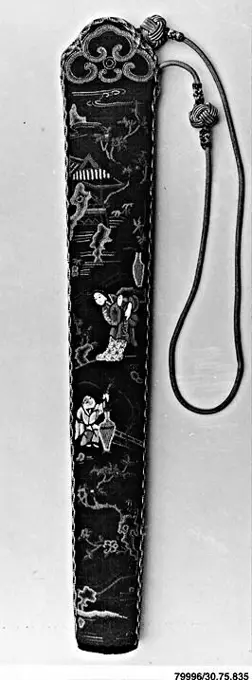
Delicate lace strips featuring floral patterns, with varying textures and materials, showcasing historical craftsmanship in intricate designs.

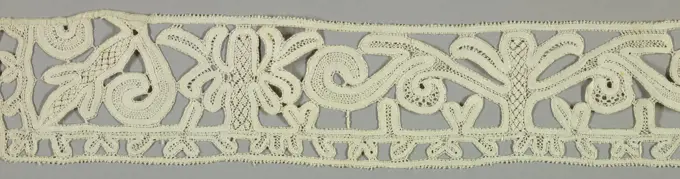
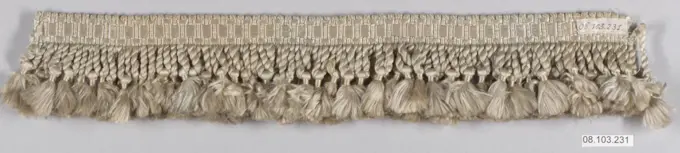
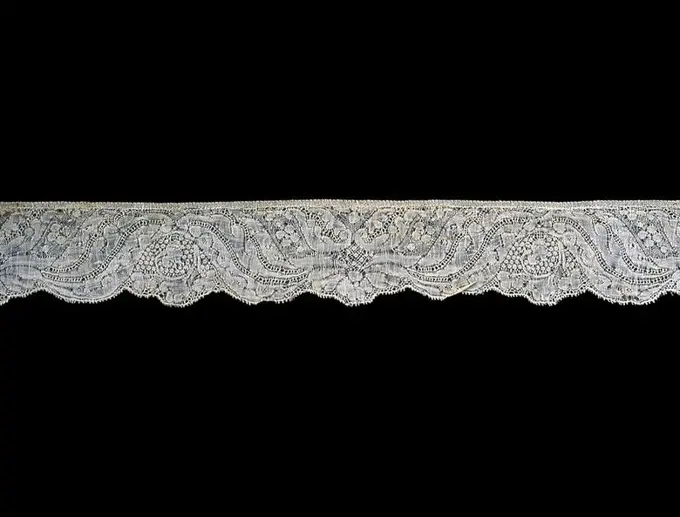
Edge, Medium: straw, silk Technique: bobbin lace, Switzerland, Appenzell , 19th century, lace, Edge
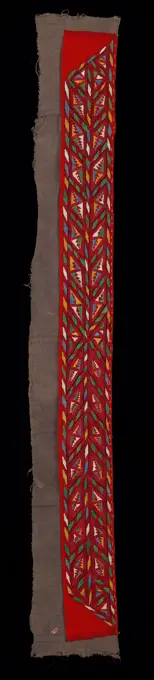
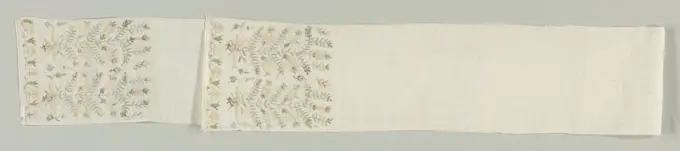
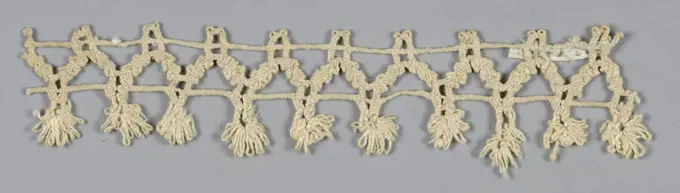
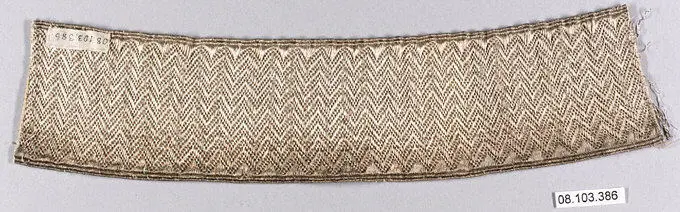
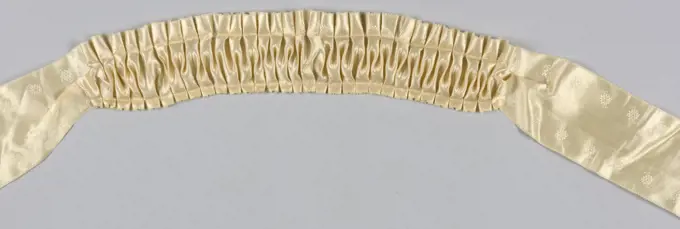
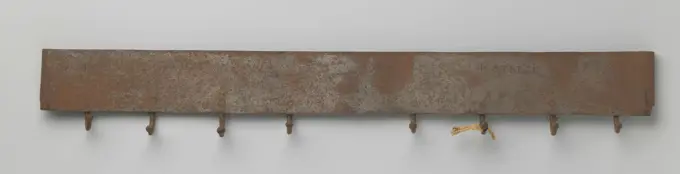
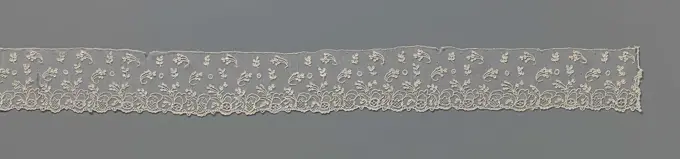
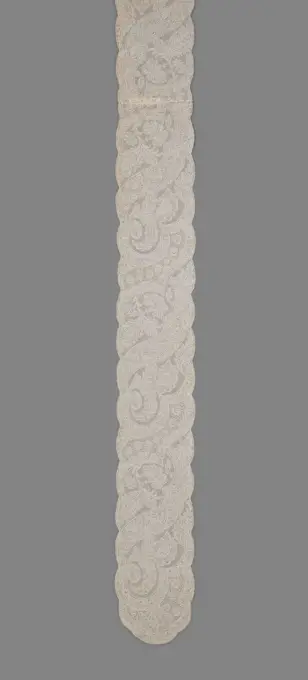
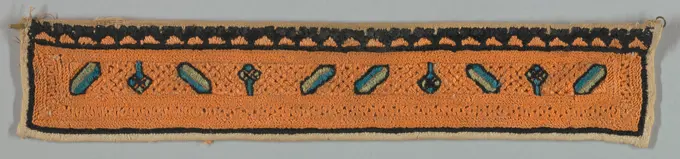
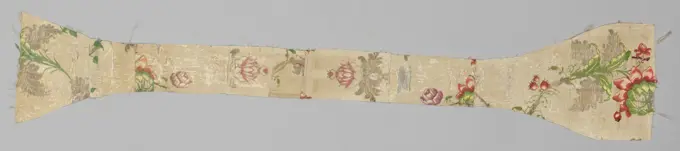
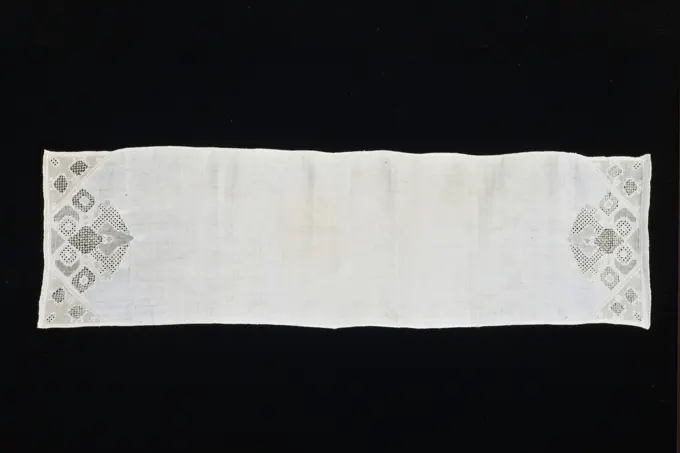
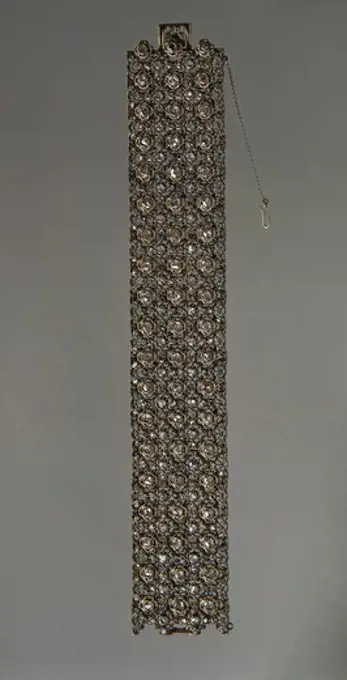
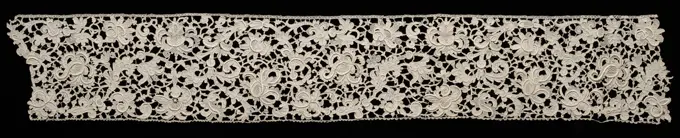
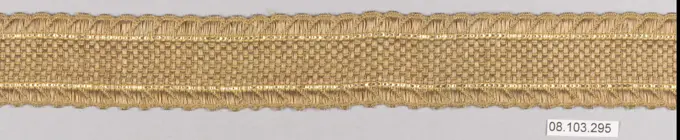
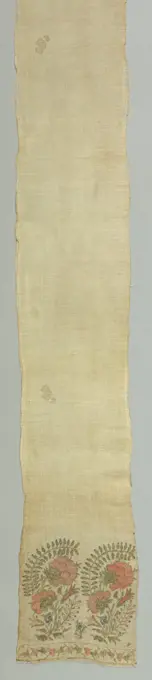
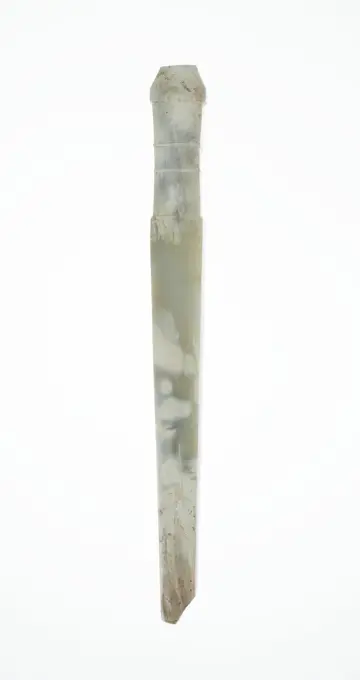
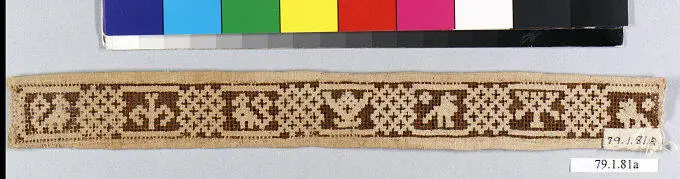
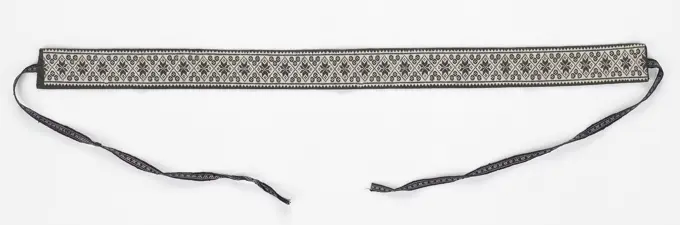
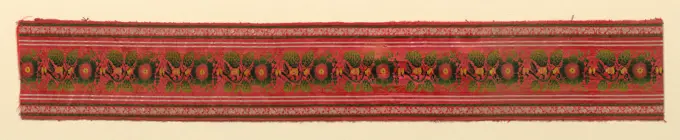
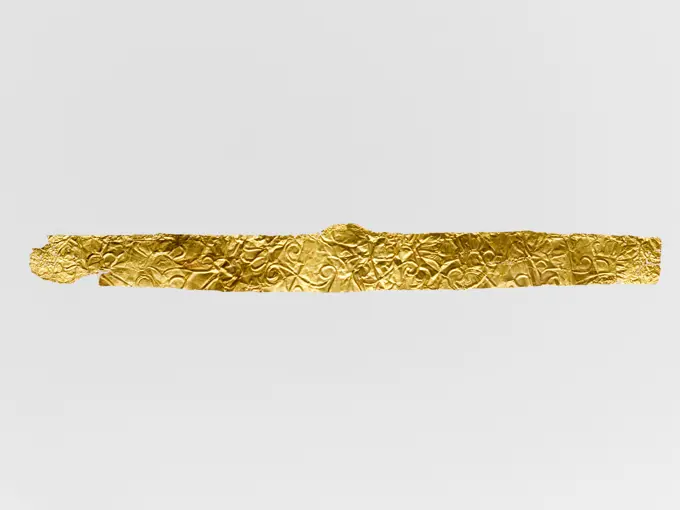
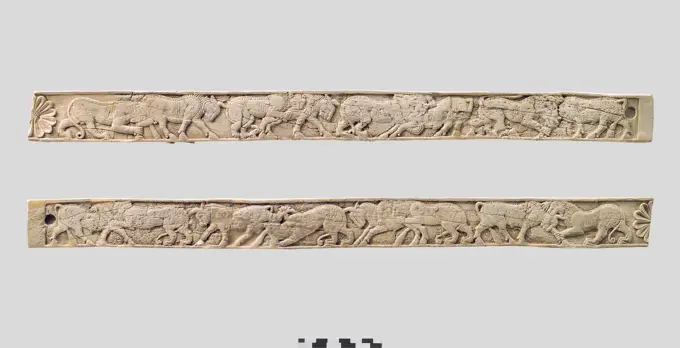
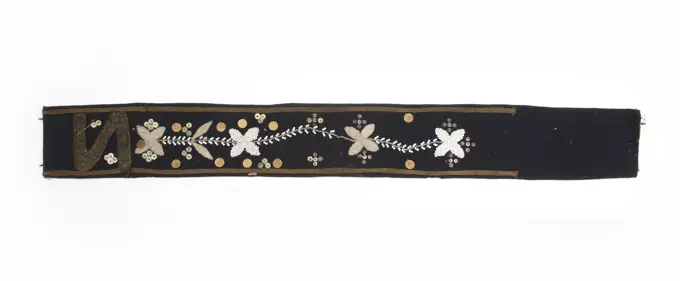
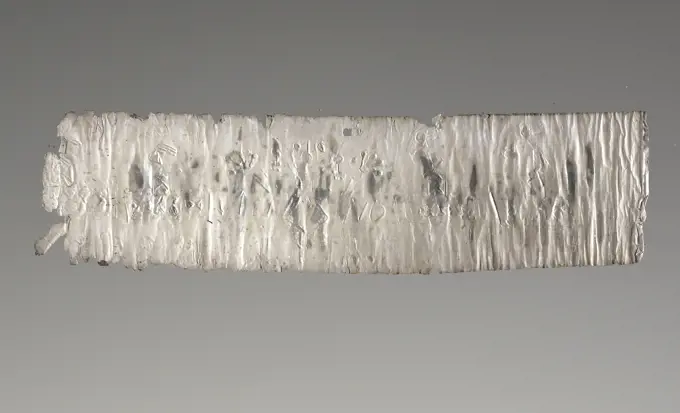
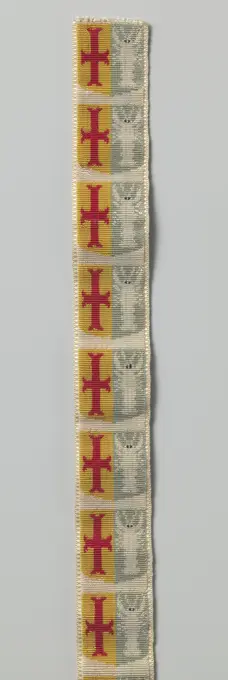
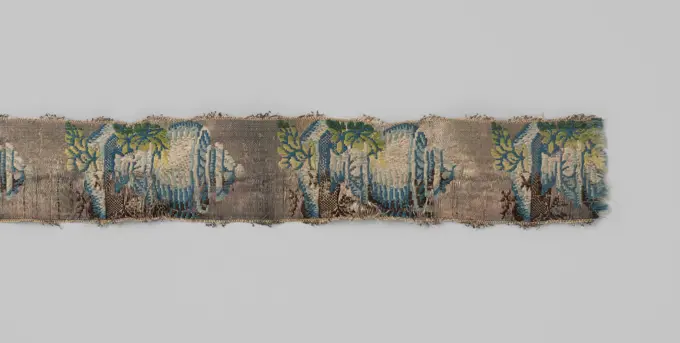
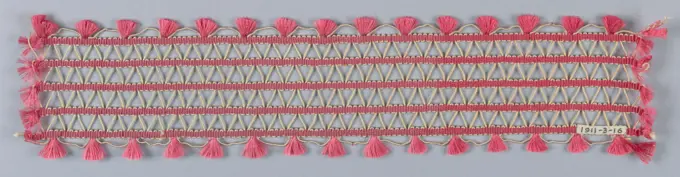
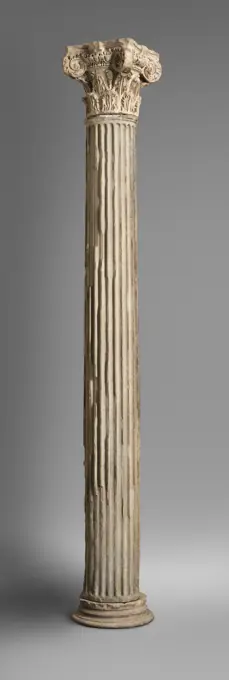
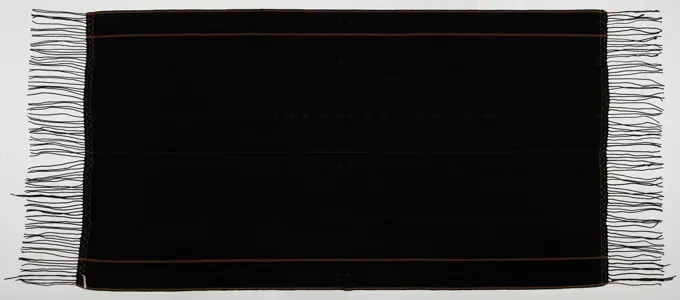
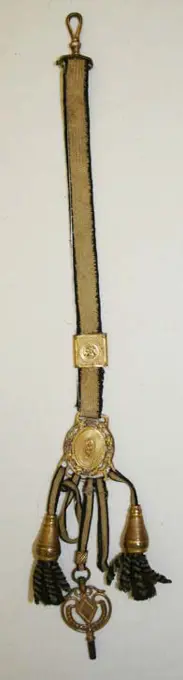
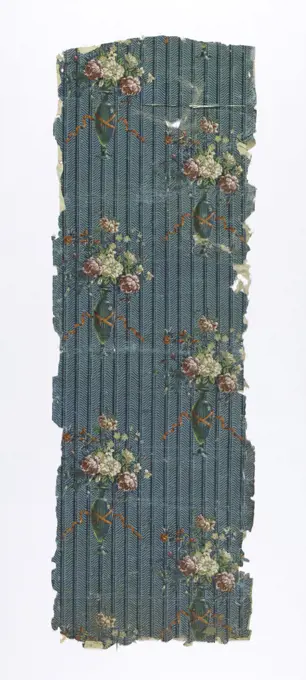
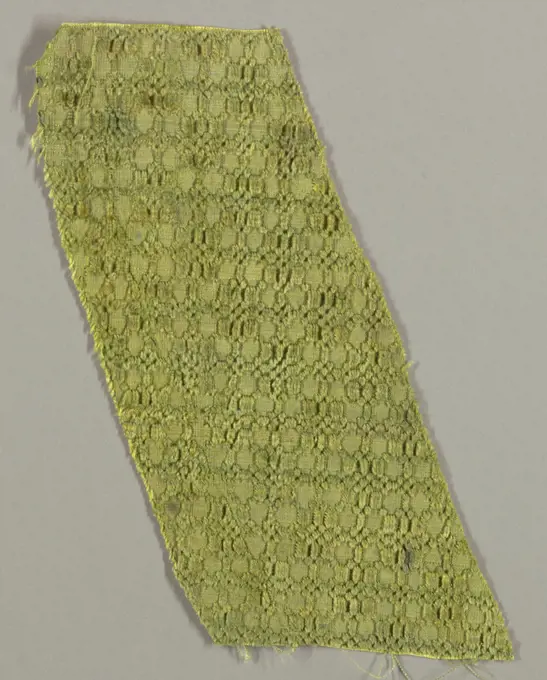
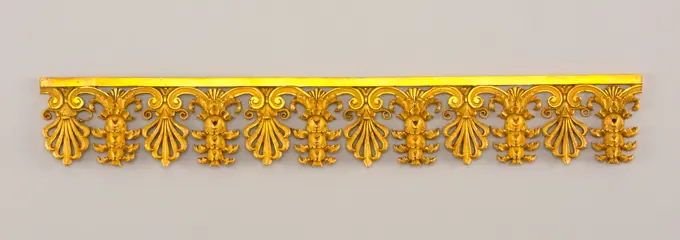
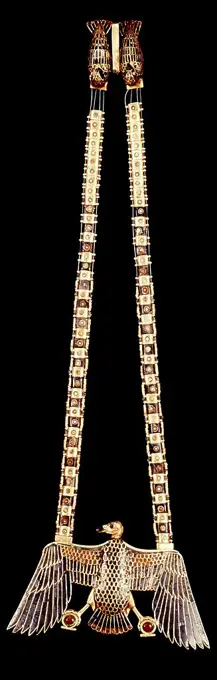
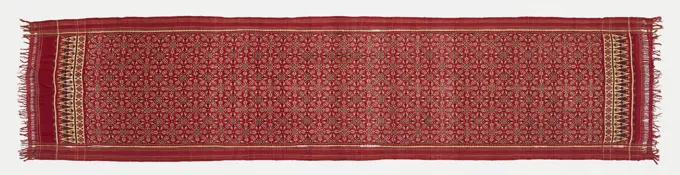
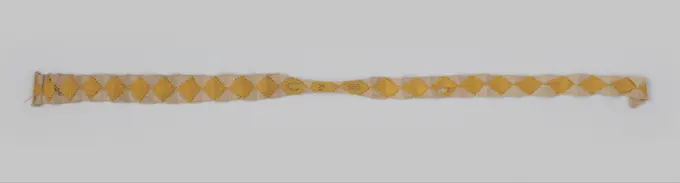
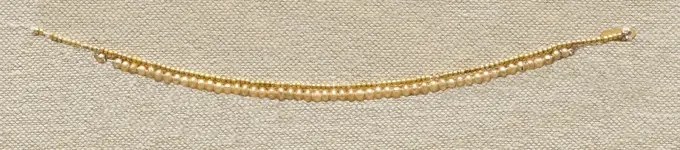
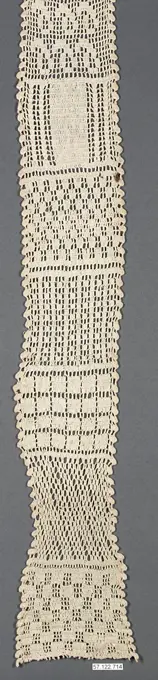
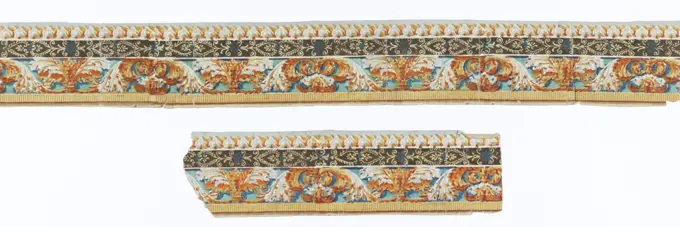
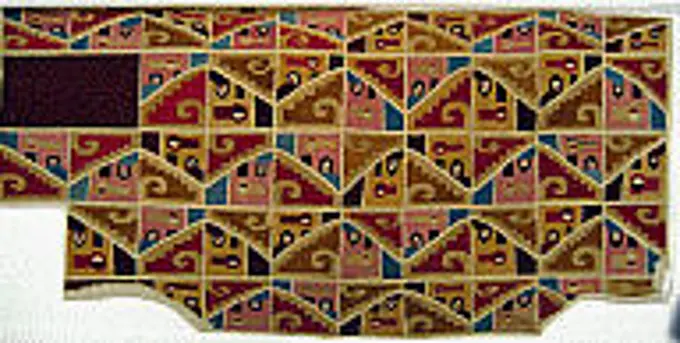
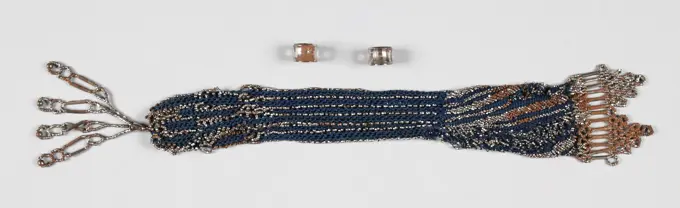
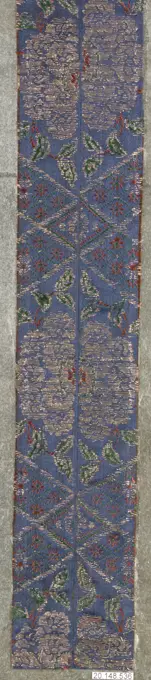
Band, Medium: linen Technique: bobbin lace, continuous tape with bars added, Band of northern Italian guipure with connections. Early 17th century style, but worked later., Italy, 17th century, lace, BandCollar for neck of a chirpi, 1930-1940, 48 x 6 3/4 in. (121.92 x 17.15 cm), Wool, cotton; needlework, Uzbekistan, 20th centuryEmbroidered Sash (Uckur), 18th century. Turkey, 18th century. Embroidery: silk and silver filé on linen tabby ground; average: 113.3 x 23.7 cm (44 5/8 x 9 5/16 in.).Trimming, Medium: linen Technique: bobbin lace (continuous braid-like), Fragment of edging lace in a zigzag design and trimmed with tassels., Italy, 16th century, lace, TrimmingTrimming (France); silkGalloon 17th-18th century probably European. Galloon 213883Collar, Medium: silk Technique: woven, Collar made by pleating an ivory-colored ribbon with a small woven ornament., USA, late 19th century, woven textiles, CollarCoat rack with 8 hooks, Anonymous, 1789 A coat rack, on which rough and poorly engraved a lumberjack, a lady and a gentleman, a goose, a dog and a flowerpot. Coarse work.  iron (metal) A coat rack, on which rough and poorly engraved a lumberjack, a lady and a gentleman, a goose, a dog and a flowerpot. Coarse work.  iron (metal)Galloon early 17th century Italian. Galloon. Italian. early 17th century. Metal thread. Textiles-TrimmingsBorder, c. 1957, 52 x 4 7/8in. (132.1 x 12.4cm), Synthetic; supplementary weft patterning, Thailand, 20th centurySemi-diadem ca. 3500-3300 B.C. Predynastic, Naqada II. Semi-diadem. ca. 3500-3300 B.C.. Serpentinite, lapis lazuli, glazed steatite. Predynastic, Naqada II. From Egypt, Southern Upper Egypt, Hierakonpolis (Nekhen), Fort Cemetery (Hk 27), Tomb 81, MMA excavations, 1934-35Strook naaldkant met rijen gestrooide bladertakken.Strip natural-colored coniferous lace: Alençon side. Pattern with rows of sprinkled leaf branches on a fine hexagonal maas soil. The pattern at the bottom of the strip consists of crooked branches coordinated medallions, filled with various ornamental grounds. The top is finished with a straight edge. The underside is finished with a sloping edge that comes from the pattern.Flounce first half 18th century French. Flounce 226272Belt -Hats slips from Kloskant that are sewn together, anonymous, c. 1730 - c. 1740 Heat slips of natural-colored bobbin, binche side. The barbes are sewn. The pattern consists of diagonally placed C-shaped volutes with spring-like leaves and flowers in between, including half rosette flowers. The motifs are largely made in linen battle and are connected by a traly land, a five -part ground. A snowflake soil has been used as a decorative soil. The silly scrap around is finished with picots. Southern Netherlands (possibly) linen (material) Bobbi Lace / Binche Lace Heat slips of natural-colored bobbin, binche side. The barbes are sewn. The pattern consists of diagonally placed C-shaped volutes with spring-like leaves and flowers in between, including half rosette flowers. The motifs are largely made in linen battle and are connected by a traly land, a five -part ground. A snowflake soil has been used as a decorative soil. The silly scrap around is finished with picots. Southern Netherlands (poBand; silk and wool on cottonTweezer. UnknownPieces of white silk, c. 1725 - c. 1799 Fragment of Witte Silk Manipel with woven flowers of silk and gold thread and served as a manipel. This belongs to a set with a manipel and another loose piece. The Stola consists of six pieces, the manipel from eight pieces, another loose piece.  silk. metal thread Fragment of Witte Silk Manipel with woven flowers of silk and gold thread and served as a manipel. This belongs to a set with a manipel and another loose piece. The Stola consists of six pieces, the manipel from eight pieces, another loose piece.  silk. metal threadEdging 16th century Italian, Venice. Edging 221082Textile Fragment 17th century. Textile Fragment 454463Fringe European 19th centuryTowel, 19th century, 30 x 16 in. (76.2 x 40.6 cm), Linen; cutwork; lace, Turkey (), 19th centuryGoldsmith's art, Italy, 20th century. Mario Buccellati, Gold and silver band bracelet set with diamonds, 1920s.Attic Red-Figure Stamnos Fragment. UnknownMedical Instrument with Paddle Finial. UnknownNeedlepoint (Venetian Raised Point) Lace Flounce, 17th century. Italy, Venice, 17th century. Lace, needlepoint: linen; average: 114.3 x 19.1 cm (45 x 7 1/2 in.).Galloon 17th-18th century Unknown. Galloon 213792Souvenir of Józef Czapski  Pencil GILBERT A PARISTrimming, Medium: silk Technique: woven, Green trimming fragment in a design of stripes between checkerboard borders., France, 19th century, trimmings, TrimmingWhite silk stocking in jersey stitch, decorated on one side with an embroidered decorative line, ending in a flower, anonymous, c. 1815 - c. 1830 Knitted white side in jersey stitch, decorated on one side with an embroidered decorative line, ending in a flower; marked in black cross stitch: xx2. Possible court clothing. Netherlands (possibly) whole: Silk. knitting / embroidering Knitted white side in jersey stitch, decorated on one side with an embroidered decorative line, ending in a flower; marked in black cross stitch: xx2. Possible court clothing. Netherlands (possibly) whole: Silk. knitting / embroideringTrimming (France); silkTrimming, Medium: silk Technique: woven, Trimming fragment in a design of crossing ribbons enclosing six-petal flowers; in yellow on blue ground with red borders., France, 19th century, trimmings, TrimmingSash, Medium: silk and metal-wrapped silk on cotton Technique: uncounted stitches; satin and double running stitches on plain weave; foundation has a crepe effect due to over twisted z-spun yarns used for warp and weft, Sash with identical ten inch high embroidered border at each end. The border consists of two five-inch wide repeats of a flowering plant in shades of red, green, blue and metallic silver. The lower border, about one inch high, is a three-inch repeat of a curving vine., Turkey, 19th century, embroidery & stitching, SashBand; linen; 1945-9-12Handle-Shaped Jade 2000 BCE-750 BCE China. Jade .Needlepoint (Point Alençon) Lace Lappet, 1715-1774. France, Alençon, 18th century (Louis XV Period, 1715-1774). Lace, needlepoint: linen; overall: 66 x 10.5 cm (26 x 4 1/8 in.).Frame fragment (Dessus d'alcove) second quarter 18th century French. Frame fragment (Dessus d'alcove) 189483 French, Frame fragment (Dessus d'alcove), second quarter 18th century, Oak (), 5 1/8  72 in. (13  182.9 cm). The Metropolitan Museum of Art, New York. Gift of J. Pierpont Morgan, 1906 (07.225.217)Fragment 16th century Italian. Fragment 213001Band; linenBorder, Medium: linen Technique: bobbin lace, Brussels style, Border alternating bird in flight and resting with shepherdess's crook with sheaves of grain and quiver with bow and arrows. Butterflies and six petalled blossoms scattered and ground., Belgium, 18th century, lace, BorderLaces, 17th century. Needle lace hem for an altar tablecloth with vegetable shoots and Gospel episodes, made for the church of Saint Martin in Burano, cm 12,5 high , approximately 1650.Piece of fabric. unknown, authorBorder Made 1690-1710 Brussels. Linen, bobbin part lace .Strip 16th century Italian. Strip 212281Sash, Medium: wool Technique: diagonal interlacing, Sash of interlaced wool in pattern suggesting arrowhead. Known as 'ceinture flêche'., Canada, 19th century, woven textiles, SashTrimming (France); 1909-2-224Fragment, Purple satin ribbon with picot edges. All-over ornament of small silver stars formed of flat strips of metal clipped through the fabric., mid-19th century, FragmentEdging, Technique: bobbin lace, Bobbin lace edge sample, wave band and blossom border; late 18th century Valenciennes, late 18th century, lace, EdgingBelt, c. 1990s, 26 1/2 x 1 7/8 in. (67.31 x 4.76 cm) (without ties), Cotton, silk, China, 20th centuryEdge, Medium: linen Technique: bobbin lace (Valenciennes ground), Narrow band with scalloped edge and abstract blossoms., Belgium, late 17th century, lace, EdgeRibbon Made 1830-1860 England. Silk, plain weave; brocaded .Gold diadem 4th century B.C. Cypriot The gold foil of which the diadem is made indicates that its use was exclusively funerary. The repoussé decoration was evidently applied to a larger sheet of foil from which the diadem was cut.. Gold diadem. Cypriot. 4th century B.C.. Gold. Classical. Gold and SilverBorder. France, Valenciennes. Date: 1720-1739. Dimensions: 4.6 x 248.4 cm (1 3/4 x 97 3/4 in.)Width repeat: 15.2 cm (6 in.). Linen, bobbin straight lace of a type known as "Valenciennes" with a square Valenciennes mesh ground. Origin: Valenciennes. Museum: The Chicago Art Institute, Chicago, USA.Piece 18th century Japan. Piece 71211Glass Fragment 14th-15th century European. Glass Fragment. European. 14th-15th century. Colorless glass. Glass-StainedTrimming; metallic, silkWealing the greenhouse from green silk with silver wire; With the text: 'Ieudg and Virtue Veugd and Joy joy and IJdde into a wreath t Saam strayed clean that is really engaged by opportunity w v maurik', Anonymous, Before 1877 Garbage strap from green silk with silver wire. In the length, the inscription 'Ieudg and Virtue Virtue and Joy joy and IJdde into a wreath is to read that it is really a menspoad that is really possible by chance. Netherlands geheel: silk. silver thread Garbage strap from green silk with silver wire. In the length, the inscription 'Ieudg and Virtue Virtue and Joy joy and IJdde into a wreath is to read that it is really a menspoad that is really possible by chance. Netherlands geheel: silk. silver threadNeedlepoint (Point de Gaze) Lace Narrow Strip, 19th century. Belgium, Brussels, 19th century. Lace, needlepoint; overall: 40.7 x 5.5 cm (16 x 2 3/16 in.).Gallon;  19th century (1801-00-00-1900-00-00);Furniture plaques carved in relief with animal combat ca. 8th century B.C. Assyrian These long ivory strips were found in a storage room in Fort Shalmaneser, a royal building at Nimrud that was used to store booty and tribute collected by the Assyrians while on military campaign. Since the wooden frame to which the ivory panels were attached had disintegrated, it was not possible to fully reconstruct the piece of furniture to which they belonged. They were probably part of a bed or couch, judging from the large panel associated with them, which is also in the Metropolitan Museums collection (59.107.1). Both strips show lions attacking bulls, with half a rosette on one end and a flat edge with a dowel hole on the other end. Originally, the two strips were probably connected to form a single strip, with the half-rosettes lined up to join each other. The dowel holes likely aided the attachment of the ivory veneer to a frame. Slight differences in the carving of the strips led the excavatBelt -Glass Fragment 15th century () European. Glass Fragment. European. 15th century (). Colorless glass, silver stain. Glass-StainedLamella; Roman Empire; 3rd century; Silver; 4.2 x 16 cm (1 5,8 x 6 5,16 in.)Galloon Made 1701-1800 Italy. .Ritual Cloth(Mawa’)Attic Black-Figure Band Cup Fragment. UnknownMetrage Livreiband with the coat of arms of the Haarlem Fabricius, Anonymous, c. 1700 - c. 1800 Metrage Livreiband, Polychrome, with the coat of arms of the Haarlem Fabricius (who owned one Heukelom). Haarlem silk Metrage Livreiband, Polychrome, with the coat of arms of the Haarlem Fabricius (who owned one Heukelom). Haarlem silkMosaic tiles decorative border 6Ribbon of side brokaat; On a silver -colored stock, a repeating pattern of a lid vase with leafwork is applied, in the colors blue, cream and green, anonymous, c. 1790 - c. 1810 Ribbon of side brokaat. On a silver -colored stock there is a repeating pattern of a lid vase with leaf work, in the colors blue, cream and green. The edges are trimmed with a decorative edge. West-Europa whole: Silk. Decoration: Silver thread. brocade (textile) Ribbon of side brokaat. On a silver -colored stock there is a repeating pattern of a lid vase with leaf work, in the colors blue, cream and green. The edges are trimmed with a decorative edge. West-Europa whole: Silk. Decoration: Silver thread. brocade (textile)Upholstery Trimming (USA); silkMarble column with base and capital ca. A.D. 117-138 Roman The capital belongs to the Roman composite order, in which the volutes of the Ionic order are at the top and the rows of acanthus fronds of the Corinthian order are below. This combination gave the capital greater height and, together with the narrow vertical fluting of the column, lent the architecture a graceful and delicate appearance.. Marble column with base and capital. Roman. ca. A.D. 117-138. Marble. Hadrianic. Stone SculpturePassementerie 18th century French. Passementerie. French. 18th century. Silk and parchment. Textiles-TapestriesShoulder cloth, Anonymous, 1900 - 1949 Shoulder cloth with horse motifs. Flores cotton (textile) Shoulder cloth with horse motifs. Flores cotton (textile)Insertion Hungarian-Slovak 19th centuryFob late 18th century British. Fob 102449Sidewall, Block-printed, Vases with floral bouquets on blue simulated textile ground. Lined with linen., France, ca. 1800, Wallcoverings, SidewallBand, Medium: silk on linen Technique: embroidered on plain weave, Embroidery in dark red silk forms the background and black silk forms the outlines of birds facing a geometric form alternating with a plant form. Border at top and bottom of stylized leaf forms. Three pieces sewn together., North Africa, late 19th century, embroidery & stitching, BandFringe, Medium: silk Technique: woven, Light green fringe with a plain-woven heading and a skirt of light green threads., Spain, 17th century, trimmings, FringeFragment, Medium: silk, velvet Technique: supplementary warp pile (velvet), Small scale pattern of blocks in a grid creating roughly a floral pattern., 17th century, woven textiles, FragmentMillefleurs with Animals (Fragment), anonymous, c. 1525 - c. 1550 Fragment of a Mille-Fleurs carpet. A blue-black stock is harmoniously strewn with rosette-shaped plants with flower stalks. Recognizable are the cuckoo flower, violet, periwinkle, daisy and different bell flowers. In between, small animals are hidden, like a pigeon, henje, pheasant, rooster, heron and half cut, a lynx. Southern Netherlands Chain: Wool. impact: Wool tapestry Fragment of a Mille-Fleurs carpet. A blue-black stock is harmoniously strewn with rosette-shaped plants with flower stalks. Recognizable are the cuckoo flower, violet, periwinkle, daisy and different bell flowers. In between, small animals are hidden, like a pigeon, henje, pheasant, rooster, heron and half cut, a lynx. Southern Netherlands Chain: Wool. impact: Wool tapestryBracket; bronze (gilt), gold; L x W x D: 39.5 x 6 cm (15 9/16 x 2 3/8 in.)TESORO DE TUTANKAMON - COLLAR CON COLGANTE DE BUITRE - XVIII DINASTIA. Location: EGYPTIAN MUSEUM. KAIRO. EGYPT.Indian Trade Cloth(Patolu)Garter - part of pair - from silk, crocheted in white with yellow cubes, anonymous, before 1886 Garter - part of pair - from Fijhakkakte silk, white with yellow cubes.  whole: Silk crocheting Garter - part of pair - from Fijhakkakte silk, white with yellow cubes.  whole: Silk crochetingString of 53 Beads 2nd century BC-2nd century AD Ptolemaic or Roman Period. String of 53 Beads. 2nd century BC-2nd century AD. Gilt glass. Ptolemaic or Roman Period. From EgyptSampler 19th century German. Sampler 228637Ribbon early 19th century possibly French. Ribbon. possibly French. early 19th century. Silk and metal thread. Textiles-TrimmingsBand, Medium: silk, Diamond-shaped openwork band of loosely chained blue cords sewn with serpentines of colored knotted silk floss. Floral pompom of silk floss and silk cord centered in each scallop. Edging in scalloped white chenille., France, 18th century, woven textiles, Banddecorative frame on white backgroundSaranjint ,, c. 1787 ribbon (material) Blue ribbon with a white lane in which a red ribbon has the following symbols with each other: hat, apples, eagle, banderol with inscription, arrow bundle with staff. Inscription: M.: Allians. Netherlands silk printingBorder, Block-printed on handmade paper, This piece is probably one band of a border design originally printed in five or six bands, for the width of the wallcovering. Each band consists of four strips of varied patterns: the top strip forms a continuous dentilled 'fringe'; the center strip is the widest, containing an acanthus rinceau design. The bottom strip is a combination of what appears to be fleur-de-lis edged in a scalloped line; printed in blues, yellow, ochre, orange, tan, magenta, ecru, white and burnt sienna., H#614, France, 1795-1805, Wallcoverings, BorderTunic Fragment 7th-10th century Peruvian. Tunic Fragment. Peruvian. 7th-10th century. Cotton, camelid hair. Peru. Textiles-WovenBourse. GAL1961.34.68Pottery Flute ca. 1200-1521 Aztec. Pottery Flute. Aztec. ca. 1200-1521. Clay. Pre-Columbian. Mexico. Aerophone-Whistle Flute-recorderPiece 18th century Japan. Piece 71530Galloon 18th century French. Galloon 214010Cord late 18th century French. Cord. French. late 18th century. Silk. Textiles-TrimmingsBorder, Medium: raffia Technique: plain weave embroidered with stem and pile stitches, Long narrow band made from two shorter pieces stitched together. All natural raffia color, in a creamy tone. Three pattern areas of geometric interlacing of alternating bands of textured pile embroidery and stem-stitch embroidery. The areas are separated by solid bars of pile. Long edges are hemmed, with decorative buttonhole stitch along one long edge., Democratic Republic of the Congo, late 19th century, embroidery & stitching, BorderBorder; block-printed paper; 27.5 x 6 cm (10 13/16 x 2 3/8 in.)Fan Holder 18th-19th century China. Fan Holder 68825