Intricate Textile Patterns

Detailed textile pieces featuring elaborate designs and historical motifs, highlighting craftsmanship in embroidery and fabric art.

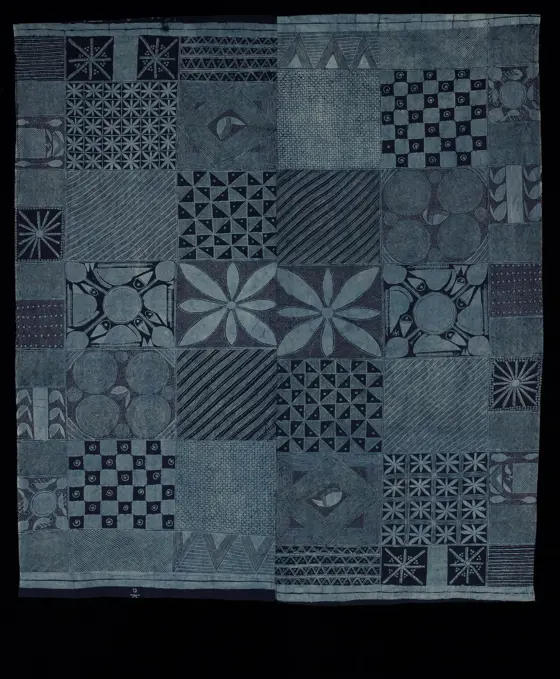
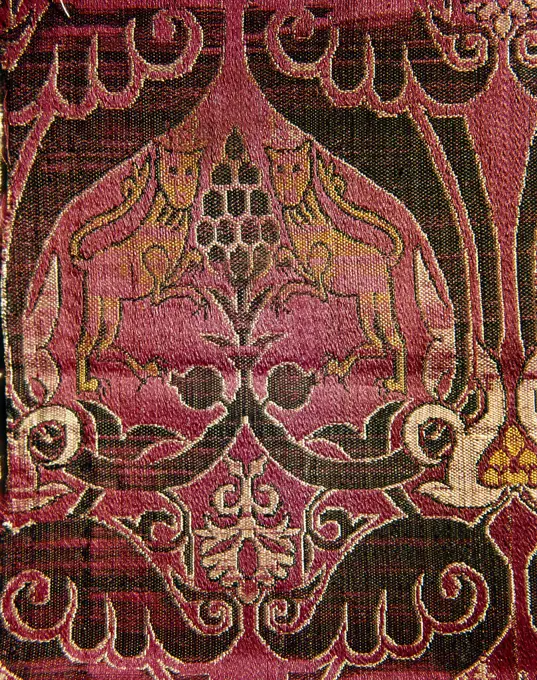
Piece 18th century German, Schleswig-Holstein Silk textiles composed of paired animals nestled in dense foliage were woven in Europe before 1400 and were probably inspired by precious Central Asian textiles. These two double cloths 34.41.7 and 09.50.1037 illustrate how the tradition continued, and their graphic quality mirrors that of Brother Rabbit.. Piece 216260
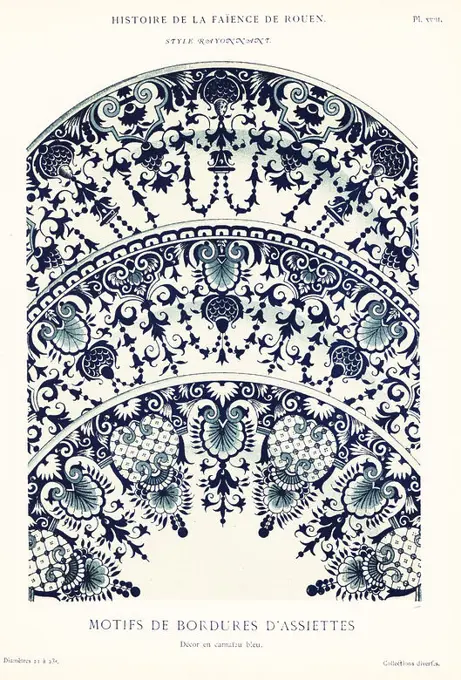
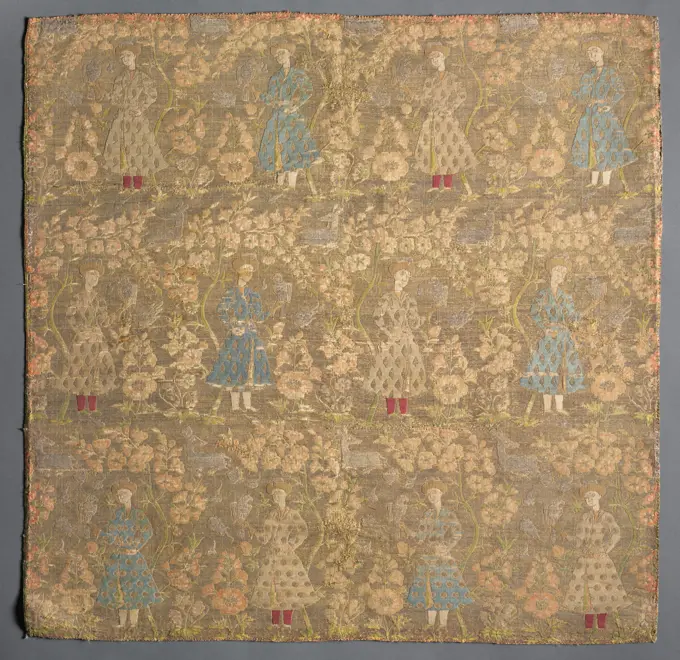
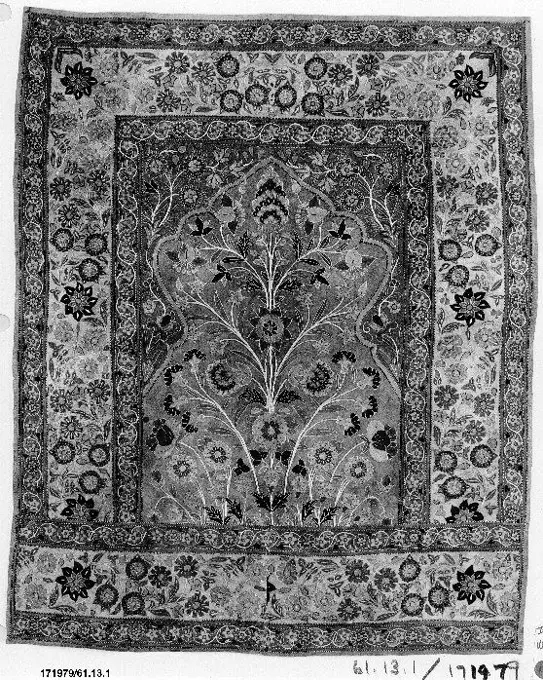
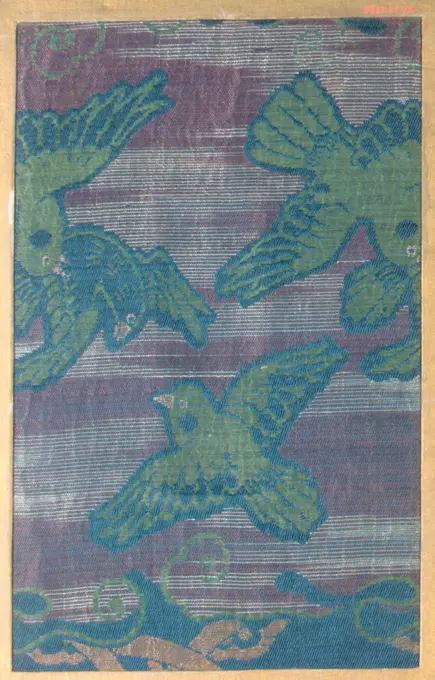
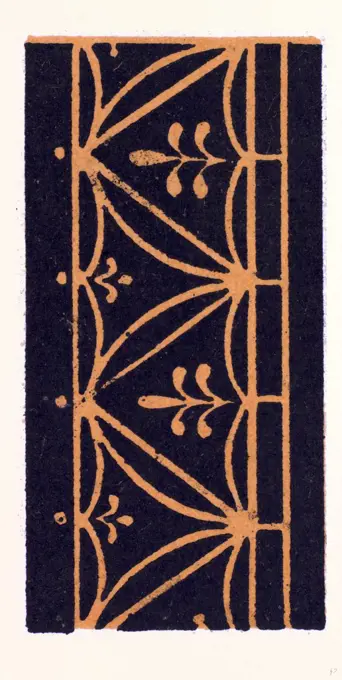
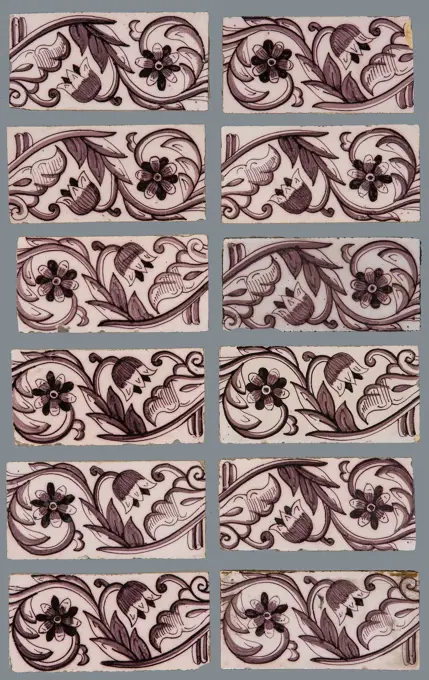
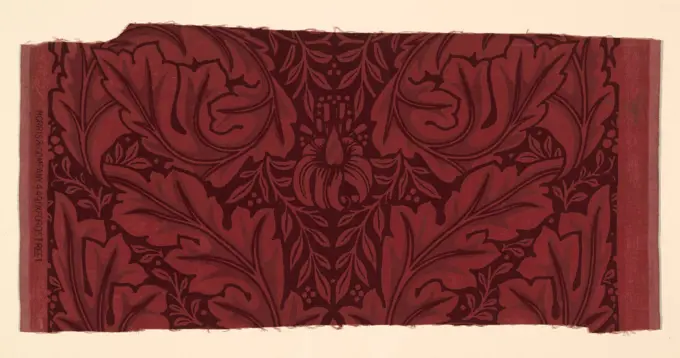
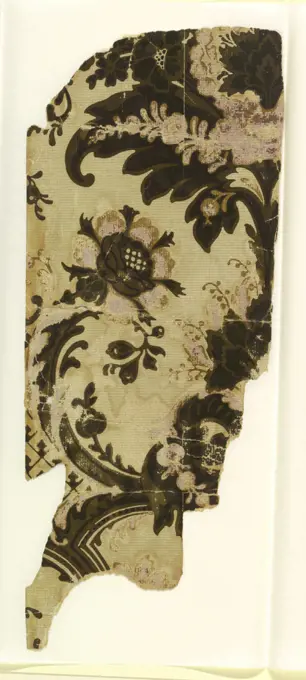
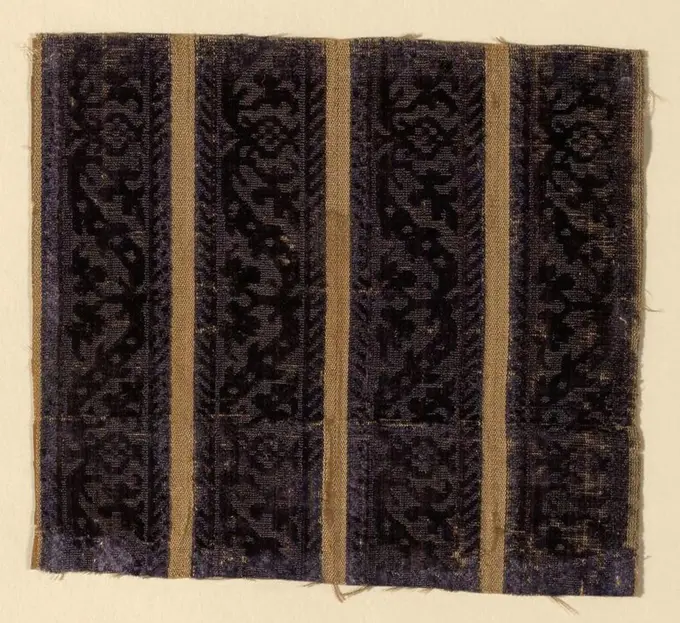
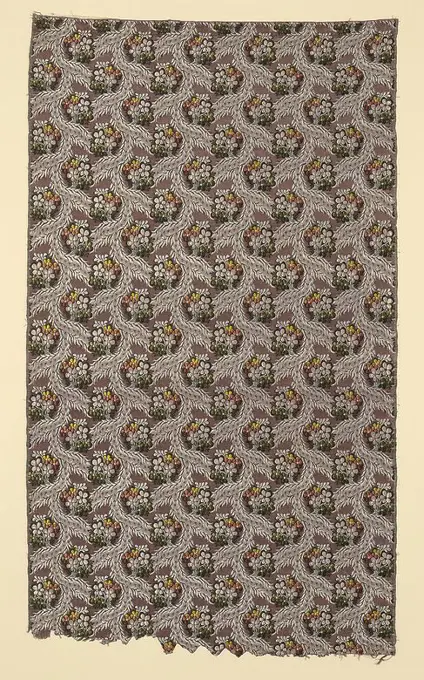
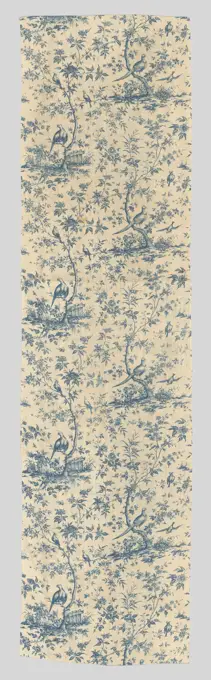
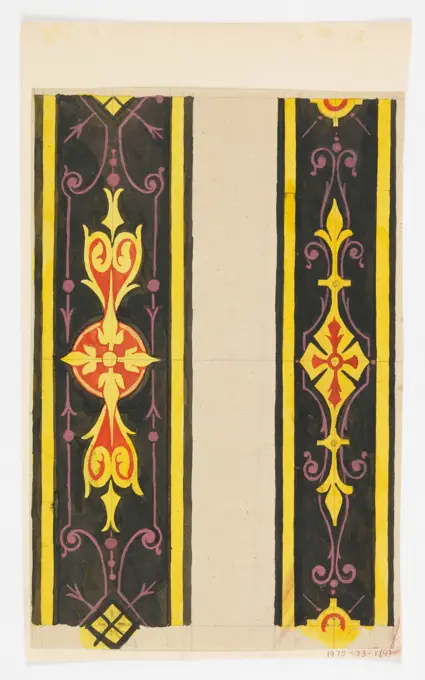
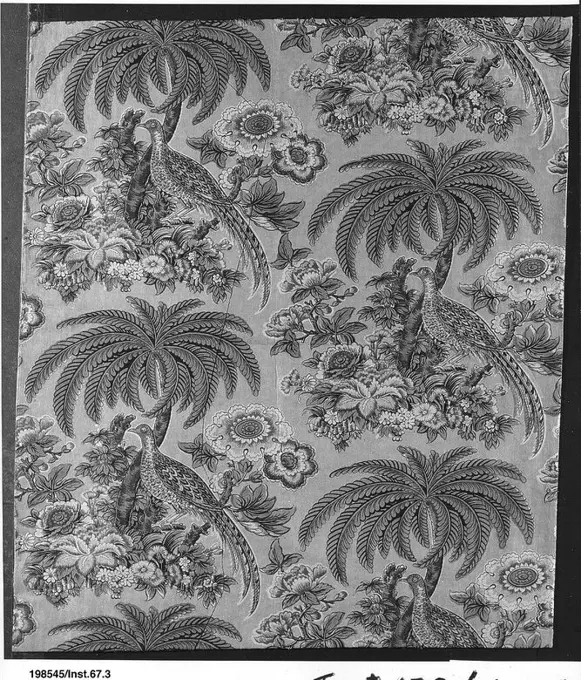
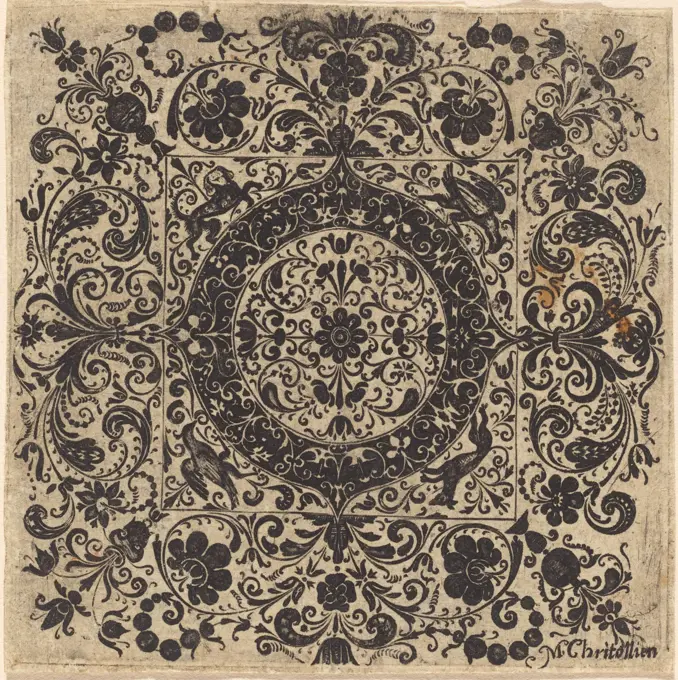
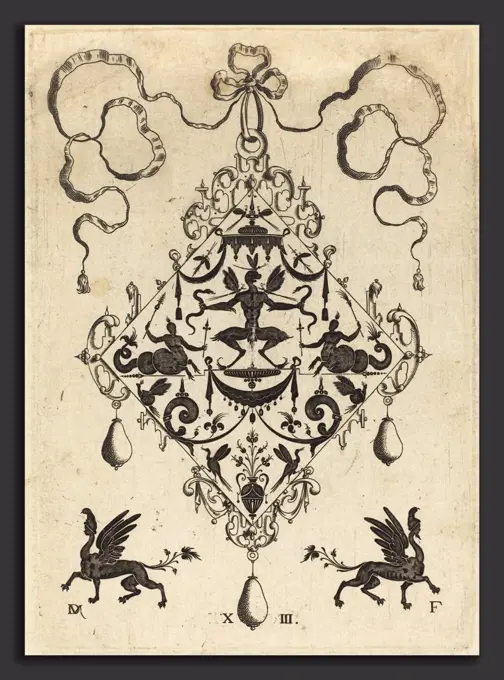
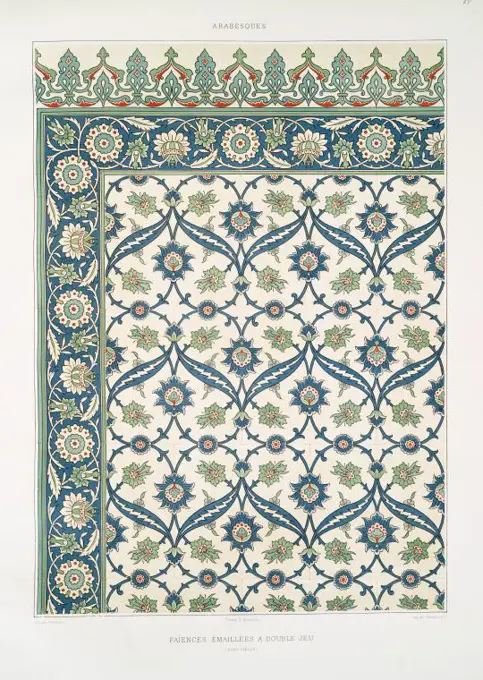
Piece. Culture: Italian, Venice. Dimensions: L. 35 1/2 x W. 40 3/4 inches (90.2 x 103.5 cm). Date: ca. 1700.Panels such as this--with its extraordinary patterns in long repeats--were called "bizarre" by the Danish scholar Slomann, who believed they were made in India. Most scholars consider them an exotic phase in the history of European silk weaving. Museum: Metropolitan Museum of Art, New York, USA.Plate border mofifs in blue camaieu, festoon style. Motifs de bordures d'assiettes en camaieu bleu, style rayonnant. Chromolithograph after an illustration by Emilie Pottier from Andre Pottier's Histoire de la Faience de Rouen, Auguste le Brument, Rouen, 1870.Section of Silk Fabric with Falconers Amid Rose Bushes, c. 1675. Iran, Safavid period (1501-1722). Silk and silver-metal thread: twill weave with complementary and discontinuous weft; overall: 47.7 x 48.3 cm (18 3/4 x 19 in.); mounted: 58.4 x 58.4 cm (23 x 23 in.).Sidewall, Block-printed, Bold foliate design, possibly palm fronds., France, 1830-31, Wallcoverings, SidewallPanel 18th century. Panel 451633Piece 18th-19th century Japan. Piece 67105Border Fragment of a Shawl, early 1800s. India, Kashmir, early 19th century. Tapestry twill; wool; overall: 52.1 x 32.4 cm (20 1/2 x 12 3/4 in.).Alokun, 75 1/8 x 68 1/8 in. (190.82 x 173.04 cm), Cotton; dyed, Nigeria, Adire is a popular form of surface ornamentation in the Yoruba culture in which designs are created by resist-dye techniques. This is an example of adire eleko, a technique in which a paste is hand-painted onto the fabric using the quill of a feather prior to immersing the cloth in indigo; the paste is then rinsed away, revealing the design. Rather than being purely decorative, the design motifs on adire textiles are often intended to play a protective rold and have mythical significance for the Yoruba.Sheet with hunting scenes, anonymous, 1700 - 1850  Shooting hunter leaf with jumping deer, hare and dog, alternately in six rows from left to right.  paper. block printing (relief printing process) hunting, chaseDesign for a carpet, anonymous, c. 1859  Manufacturer: Deventeramsterdam paper. gouache (paint) brush  Manufacturer: Deventeramsterdam paper. gouache (paint) brushPiece. Culture: Italian, probably Venice. Dimensions: L. 15 1/8 x W. 8 inches (38.4 x 20.3 cm). Date: 16th century. Museum: Metropolitan Museum of Art, New York, USA.Stencil 19th century Japan. Stencil. Japan. 19th century. Paper, silk. StencilsPanel 18th century. Panel 445895Peacock and Dragon, Woven woollen fabric, 1878. Designer: William Morris. Designer: William Morris & Co .Kesa. Japan. Date: 1775-1800. Dimensions: . Origin: Japan. Museum: The Chicago Art Institute, Chicago, USA.Piece 18th century Japan. Piece. Japan. 18th century. Silk / Compound weave. Edo period (1615-1868). Textiles-WovenDrawnwork 16th-17th century Italian, Sicily. Drawnwork 217244Medieval ornamentBedcover (Feather-Edged Star Quilt). Nancy Margaret (née Crow) Mooney (American, 1850-1925); United States, Pennsylvania or West Virginia. Date: 1880. Dimensions: 212.1 x 181.6 cm (83 1/2 x 71 1/2 in.). Origin: Pennsylvania. Museum: The Chicago Art Institute, Chicago, USA.Sampler. Culture: Dutch. Dimensions: H. 17 1/4 x W. 16 1/2 inches (43.8 x 41.9 cm). Date: 18th century. Museum: Metropolitan Museum of Art, New York, USA.Matoi Motif, Mulberry paper (kozo washi) treated with fermented persimmon tannin (kakishibu), and silk threads (itoire), In Japan, firefighters would use a unit called a matoi to put out fires. Each firehouse would have a unique matoi. This stencil represents team four. Edo is also known as the city of fires since houses were built from timber and paper. There were five hundred major fires known between 1951 and 1867. Matoi is a popular motif in ukiyo-e prints from the nineteenth century., Japan, mid 18th - early 19th century, textile designs, Katagami, KatagamiKesa. Japan. Date: 1650-1700. Dimensions: 119.4 x 210.5 cm (47 x 82 7/8 in.). Silk and gilt-paper strip; twill weave with secondary binding warp and supplementary patterning wefts. Origin: Japan. Museum: The Chicago Art Institute, Chicago, USA.Mosquée de Qaoum el-Dyn : détails du tombeau. Prisse d'Avennes, 1807-1879. Prisse d'Avennes, 1807-1879. Prints, Drawings. 1877. The Miriam and Ira D. Wallach Division of Art, Prints and Photographs: Art & Architecture Collection. Architecture, Islamic, Architecture , Egypt , Cairo, Art , Egypt , Cairo, Art, Islamic, Islamic decoration and ornament, Decoration and ornament, Islamic, ArabesquesPiece. Culture: French. Dimensions: L. 10 3/4 x W. 5 inches27.3 x 12.7 cm. Date: 18th century. Museum: Metropolitan Museum of Art, New York, USA.Coverlet. Dated: c. 1937. Dimensions: overall: 67 x 48.7 cm (26 3/8 x 19 3/16 in.) Original IAD Object: 80" square. Medium: gouache on paperboard. Museum: National Gallery of Art, Washington DC. Author: Edward White.Fragment (Dress Fabric) Made 1501-1550 Venice. Silk, warp-float faced 3 1 broken warp chevron twill weave with supplementary pile warps forming cut, pile-on-pile solid velvet .Piece 18th-19th century Japan. Piece. Japan. 18th-19th century. Silk. Edo period (1615-1868). Textiles-WovenSidewall - Sample, Marigold; Designed by William Morris (British, 1834-1896); Manufactured by Jeffrey & Company (United Kingdom); Made for Morris & Co. (United Kingdom); block-printed paperPompeian ornamentFloor mosaic from a room in the viridarium (garden) in the House of Vesonius Primus, a fuller. Chromolithograph by Victor Steeger after an illustration by Geremia Discanno from Emile Presuhns Les Plus Belles Peintures de Pompei (The Most Beautiful Paintings of Pompeii), Leipzig, 1881.Piece. Culture: French. Dimensions: 6 3/4 x 25 1/2 inches (17.1 x 64.8 cm). Date: last quarter 18th century. Museum: Metropolitan Museum of Art, New York, USA.Frieze (possibly USA); machine-printed, embossed; 30 x 26 cm (11 13/16 x 10 1/4 in.)Mildred E Bent, Quilt Applique, 1935 1942 Quilt AppliqueTwelve purple borders, with flowers, edge tile wall tile tile sculpture ceramics earthenware glaze, baked 2x glazed painted Rotterdam Hillegersberg-Schiebroek Hillegersberg Noord Grindweg 19 RotterdamTextile with Large Chintamani Design 16th century This textile features large chintamani motifs, each filled with delicate blue cloud bands. The chintamani design was one of the most popular in Ottoman Turkey and is seen across a wide range of media, including ceramics and textiles. The motif likely originated in China as a Buddhist emblem symbolizing the three pearls of wisdomone of the attributes of bodhisattvas (Buddhist saints). In its Ottoman context, the motif was associated with good luck and power.. Textile with Large Chintamani Design 445249Band; silk embroidery on linen foundationDesign for a carpet, anonymous, c. 1864  Manufacturer: Deventeramsterdam paper. gouache (paint) brush  Manufacturer: Deventeramsterdam paper. gouache (paint) brushOrphrey. Culture: Italian, possibly Florence. Dimensions: L. 41 3/8 x W. 9 1/2 inches (105.1 x 24.1 cm). Date: 15th-16th century. Museum: Metropolitan Museum of Art, New York, USA.Piece 18th century Japan. Piece 71409Shawl, Medium: silk Technique: bobbin lace, Chantilly style, Triangular black silk lace shawl with scalloped edge with design of broad ribbon crossed at regular intervals by narrow leaf. Central floral motif., Chantilly, France, ca. 1860, lace, ShawlTextile, Medium: cotton Technique: block printed with resist, indigo dyed, plain weave, Textile with design of stylized floral scrolls, in white on a blue ground., Sain-Bel, France, ca. 1790, printed, dyed & painted textiles, TextileAcanthus (Formerly a Furnishing Textile) from the John J Glessner House, Chicago Made 1887 England. Cotton, twill weave with supplementary pile wefts forming cut velveteen ; block printed . William Morris (Designer)Ornament leaf with thistle motifs.Back doublure. Laborde, M. de (Jean-Benjamin), 1734-1794. bindings (gathered matter components), Book covers. 1773. Spencer Collection. BookbindingAbruzzo L'Aquila L'Aquila Museo Nazionale d'Abruzzo97. Hutzel, Max 1960-1990 Tabernacle from S. Maria delle Grotte in Fossa with scenes of the Presentation at the Temple, the Flagellation, the Annunciation, and the Betrayal by Judas. Museo Nazionale housed in Castle: several exterior views (The Archeological Museum is one gallery (Sala IV) of the Museo). Remaining views of museum collection, including paintings, processional crosses, reliquaries, chalices, ceramics, textiles, manuscripts, and a number of eighth century Abruzzan Madonna sculptures. Works from the church Madonna del Soccorso also stored in Museo. Museo Nazionale d'Abruzzo Roman inscriptions, sculpture and relief German-born photographer and scholar Max Hutzel (1911-1988) photographed in Italy from the early 1960s until his death. The result of this project, referred to by Hutzel as Foto Arte Minore, is thorough documentation of art historical development in Italy up to the 18th century, including objects of the Etruscans"Temple des Souvenirs" first quarter 19th century French. "Temple des Souvenirs" 236792Sidewall, Machine-printed, This design is a large scaled formal one. It simulates a damask design of stylized acanthus scrolls and roses. The field is crossed with fine parallel horizontal lines., possibly USA, 1870-80, Wallcoverings, SidewallPiece. Culture: French. Dimensions: L. 32 1/2 x W. 19 inches82.6 x 48.3 cm. Date: 18th century. Museum: Metropolitan Museum of Art, New York, USA.Fragment. Italy. Date: 1575-1600. Dimensions: 15.7 x 17.5 cm (6 3/16 x 6 7/8 in.). Cisele voided twill velvet. Origin: Italy. Museum: The Chicago Art Institute, Chicago, USA.Piece. Culture: French. Dimensions: H. 14 x W. 18 3/4 inches35.6 x 47.6 cm. Date: 18th century. Museum: Metropolitan Museum of Art, New York, USA.Piece. Culture: French. Dimensions: L. 25 3/4 x W. 16 3/4 inches (65.4 x 42.5 cm). Date: 1760-70. Museum: Metropolitan Museum of Art, New York, USA.Schon newes Modelbuch...Page 12(r). Designer: Sigismundus Latomus (German, active 1599-ca. 1627). Dimensions: plate: 6 7/8 x 10 1/2 in. (17.5 x 26.7 cm). Date: 1617. Museum: Metropolitan Museum of Art, New York, USA.Piece. Culture: French. Dimensions: L. 17 1/4 x W. 7 inches43.8 x 17.8 cm. Date: 1750-60. Museum: Metropolitan Museum of Art, New York, USA.Piece. Culture: China. Dimensions: 12 x 28 3/4 in. (30.5 x 73 cm)Mount: 16 3/8 × 33 3/4 in. (41.6 × 85.7 cm). Date: early 18th century. Museum: Metropolitan Museum of Art, New York, USA.Frieze (USA); Manufactured by Maxwell & Co., S.A. (United States); machine-printed paper; 91.5 x 49 cm (36 x 19 5/16 in.)Sits of Sits with Cypress-shaped tree. Sprei from SITS: Printed and painted cotton, with remains of gold. Dessin: Cypress-shaped tree. Oriental textile.Panel. England or France. Date: 1752-1775. Dimensions: 85 × 49.2 cm (33 1/2 × 19 3/8 in.)Repeat: 8.6-9 × 8 cm (3 3/8-1/2 × 3 1/8 in.). Silk, plain weave with supplementary patterning warps, supplementary patterning wefts, and self-patterned by three-color complementary ground wefts. Origin: England. Museum: The Chicago Art Institute, Chicago, USA.LA GRANADA EMBLEMA DE LA CIUDAD SOSTENIDA POR LOS LEONES DE CASTILLA - TEJIDO DE SEDA HISPANOMUSULMAN - SIGLO XV. Location: ALHAMBRA-MUSEO TEXTIL. GRANADA. SPAIN.Brocado de tres tramas de seda y lino, siglo XVI, MTIB 22293-2. Museu del Disseny de Barcelona.Sample. Designed by Paul Follot (French, 1877-1941) or Joseph Urban (Austrian, 1871-1933) after Edgar Brandt (French, 1880-1960); France, Paris; Produced by F. Schumacher & Co. (Founded 1889); United States, New York, New York. Date: 1930-1939. Dimensions: 61.1 x 59.5 cm (24 1/8 x 23 1/2 in.). Cotton, plain weave with self-patterning complementary ground wefts bound by secondary binding warps in plain interlacings. Origin: Paris. Museum: The Chicago Art Institute, USA.Piece. Culture: French. Dimensions: L. 20 1/2 x W. 18 1/2 inches52.1 x 47.0 cm. Date: 1745-50. Museum: Metropolitan Museum of Art, New York, USA.Fragment. Culture: Portuguese. Dimensions: 21 3/4 x 19 3/8 inches (55.2 x 49.2 cm). Date: 17th century. Museum: Metropolitan Museum of Art, New York, USA.Piece ca. 1780 Possibly Bromley Hall. Piece. British, London. ca. 1780. Linen. Textiles-PrintedNapkin with the history of Abraham. Napkin of Linnendamast with the history of Abraham. Midfield: The symmetrical pattern shows three scenes from bottom to top. 1 Flying angel, which grabs the sword. 2 God's word in cloud wreath. Capures: Abraham. Below the kneeled Abraham and Adsum DNE. 3 Forecast to Abraham. Abraham on the outside sitting on a shell. For him, an angel with the text Genesis 18 stands in a long robe between the wings, which are still spread aside of the head; The hands of both have been raised in gestures. Behind Abraham is the head and an arm of Sarah visible. Standing and lying edges: doubled mirror-image rank with small birds. Corners: rosettes.Panel 17th century British or Italian. Panel 230879Nine pieces of Italian side from around 1620, from the collection of the Kunstwerbemuseum in Dresden, Anonymous, 1888 photomechanical print This print is part of a cover with 49 prints and a list of images. Dresden paper collotype lace Artificial museumPanel early 17th century. Panel 445955Piece 18th-19th century Japan. Piece. Japan. 18th-19th century. Silk. Textiles-WovenPiece. Culture: Italian. Dimensions: L. 7 x W. 3 1/2 inches (17.8 x 8.9 cm). Date: 16th-17th century. Museum: Metropolitan Museum of Art, New York, USA.Piece. Culture: British. Dimensions: L. 12 1/2 x W. 23 inches31.8 x 58.4 cm. Date: ca. 1850-75. Museum: Metropolitan Museum of Art, New York, USA.Fragment. France, Lyon. Date: 1775-1800. Dimensions: 16.8 × 22.2 cm (6 5/8 × 8 3/4 in.). Silk, cut, and voided velvet with additional patterning weft floats in silver foil; against twill weave foundation. Origin: Lyons. Museum: The Chicago Art Institute, Chicago, USA.Stencil 19th century Japan. Stencil. Japan. 19th century. Paper. StencilsPiece 18th-19th century Japan. Piece 66834Drawing (USA); brush and gouache, graphite on cream paper, mounted on cream paper; 25.8 x 17.7 cm (10 3/16 x 6 15/16 in.)Shawl. Culture: French. Date: 1860-69.This intricate shawl has the mark of a finely woven French piece with its velvety feel and the appearance of a smooth back, which is the result of the clipping process. The elegant curving lines of the cone shapes and the interior border indicate its French origins. The signature is also of interest in that the maker's mark is woven into the shawl to imitate the style of the embroidered makers' marks of Indian shawls. Signed French shawls are of the highest quality of the shawls made outside India.The shawl held a place as a high fashion accessory for a relatively large period between the end of the 18th century to the 1870s. These accessories were originally adopted by men with exposure to India and Persia through the Trading Companies. The changing fashions near the end of the 18th century brought a renewed interest in Indian and Persian shawls as a form of warmth over the thin muslins of fashionable Empire silhouette dresses. The shawls came iHippocampes et algues, bordure. Les quatre éléments, carreaux céramiques, et lézards, bordure. Iris et libellules, papillons, jeux de fond.. Verneuil, M. P. (Maurice Pillard), 1869-1942. Prints. 1897. The Miriam and Ira D. Wallach Division of Art, Prints and Photographs: Art & Architecture Collection. Decoration and ornament , Animal formsPiece. Culture: British. Dimensions: L. 30 x W. 25 3/4 inches (76.2 x 65.4 cm). Date: 1830-35. Museum: Metropolitan Museum of Art, New York, USA.Floral field and border, White on glazed paper, France, 1780-1815, textile designs, Drawing, DrawingStencil 19th century Japan. Stencil 69230Lower salon, tile detailLa Pratique de l'Aiguille, page 16 (recto) 1605 Matthias Mignerak Written by Matthias Mignerak, title page engraved by Pierre Firens, French, born Paris 1641, dedicated to Marie de Medici, Florence 1575-1642 Cologne, published by Jean Le Clerc, Paris.From top to bottom, and left to right:Design is printed upon a grid and is decorated with a scene depicting the personification of Autumn who hold a cornucopia and a stalk of wheat.. La Pratique de l'Aiguille, page 16 (recto) 662996M Christollien, Goldsmith's Ornament in Square Goldsmith's Ornament in SquarePanel Made 1401-1425 Italy. Silk, plain weave with three-color supplementary pile warps forming cut solid velvet .Padded Quilt. Dated: c. 1938. Dimensions: overall: 50.8 x 42.7 cm (20 x 16 13/16 in.) Original IAD Object: 92" long; 83" wide. Medium: watercolor and graphite on paperboard. Museum: National Gallery of Art, Washington DC. Author: Eva Wilson.Daniel Mignot (German, active 1593-1596), Large Pendant, Winged Fantasy Creature Holding Two Snakes, 1596, engravingDETALLE DE LA ALFOMBRA RENACENTISTA DE BROCADOS CON DECORACION VEGETAL Y GEOMETRICA - SIGLO XVI - LANA Y CAÑAMO - 6,80x3,45 m - Conj nº 2550. Location: MUSEE D'ARTS DECORATIFS. MADRID. SPAIN.TEJIDO HISPANO-MUSULMAN. Location: PRIVATE COLLECTION. MADRID. SPAIN.Hand drawing. Hand drawin backgroundArabesques : faïences emaillées a double jeu (XVIIIe. siècle). Prisse d'Avennes, 1807-1879. Prisse d'Avennes, 1807-1879. Prints, Drawings. 1877. The Miriam and Ira D. Wallach Division of Art, Prints and Photographs: Art & Architecture Collection. Architecture, Islamic, Architecture , Egypt , Cairo, Art , Egypt , Cairo, Art, Islamic, Islamic decoration and ornament, Decoration and ornament, Islamic, Arabesques, Faience tiles, Tiles, IslamicHooked Rug. Dated: c. 1936. Dimensions: overall: 35.9 x 26.8 cm (14 1/8 x 10 9/16 in.). Medium: watercolor, graphite, and pen and ink on paper. Museum: National Gallery of Art, Washington DC. Author: Ruth M. Barnes.Pompeian ornamentTyler Coverlet. Dated: c. 1941. Dimensions: overall: 67.7 x 54.8 cm (26 5/8 x 21 9/16 in.). Medium: watercolor and graphite on paper. Museum: National Gallery of Art, Washington DC. Author: Arthur G. Merkley.Corner Tile early 14th century With its exquisite palette and elegant scrolling vine design, this tile, one of three corner tiles, once formed part of a sumptuous architectural installation. Inscribed with verses of the Qur'an, the tiles presumably decorated a religious structure, such as a mosque or tomb complex. The inscription that runs along the top of one of these tiles would have continued in the form of a friezeas can be seen in the series of related tiles on display in the nearby wall case.. Corner Tile 450365Panel (Belgium); linen; 1957-190-3Sidewall, Leather, stamped, embossed, silvered, varnished,, Smaller portion of a slightly larger panel, in varnished silver, blue and green. Cartouche framework with scrollwork, fruit, flowers, trellis work and confronted birds., Flanders, ca. 1700, Wallcoverings, SidewallWoolen Coverlet. Dated: c. 1941. Dimensions: overall: 41 x 50.6 cm (16 1/8 x 19 15/16 in.). Medium: watercolor and graphite on paperboard. Museum: National Gallery of Art, Washington DC. Author: Edmond Lorts.Sidewall - Fragment (England); Made by Shand Kydd, Ltd. (United Kingdom); block-printed and stencilled; 55.5 x 27 cm (21 7/8 x 10 5/8 in.)Panel (Furnishing Fabric) Made 1760-1770 England. Cotton, plain weave; copperplate printed . Bromley Print Works (Producer)Sleeve bands, Medium: silk Technique: embroidered on leno weave, Allover fret forming tangent geometric medallions in multicolored silk in form of Florentine stitch on undyed silk leno ground. Sleeve bands are joined down one long side to make rectangular panel., China, 19th century, embroidery & stitching, Sleeve bandsNapkin with a hunting scene and the weapons of Alckemade and Haerlem van Berckenrode, Anonymous, 1644 Linnamast napkin with a hunting scene and the weapons of Alckemade and Haerlem van Berckenrode. Midfield: The symmetrical pattern shows three scenes from bottom to top: 1 a hunting lock with a hunter blowing on a horn and jumping dogs. 2 Jager with spear -aiming on upright deer, including two running dogs and a tree with three dogs and a rabbit at the bottom. 3 fountain with water spitting figure and on top of double -headed eagle; Next to it, among other things, a boar, a jumping unicorn and a peacock. In addition to the scenes, flowers, leaves and various small animals and birds. Corners: at the bottom of the men's weapon of Alckemade with a clawing lion; At the top of women's weapon Haerlem van Berckenrode (celebrated: 1 and 4 from Berckenrode (Lion) 2 and 3 Haerlem (a cross tilted with twelve merlets). Waited at the top dating in 1644. Lying and standing edges: block edge. Haarlem