My Boards
View Pictures
  • My Boards
← Artworks

Japanese Actors in Woodblock Prints

Vibrant woodblock prints of Japanese actors in traditional clothing, depicting scenes from theater with beautiful colors and intricate patterns.

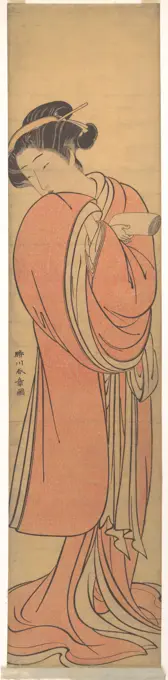
Woman in kimono by Keisai Eisen, colour woodcut, 1825-1835, 1790-1848, Russia, Moscow, State Pushkin Museum of Fine Arts, 35, 3x24, 5
168 assets in this story
4443-19375560
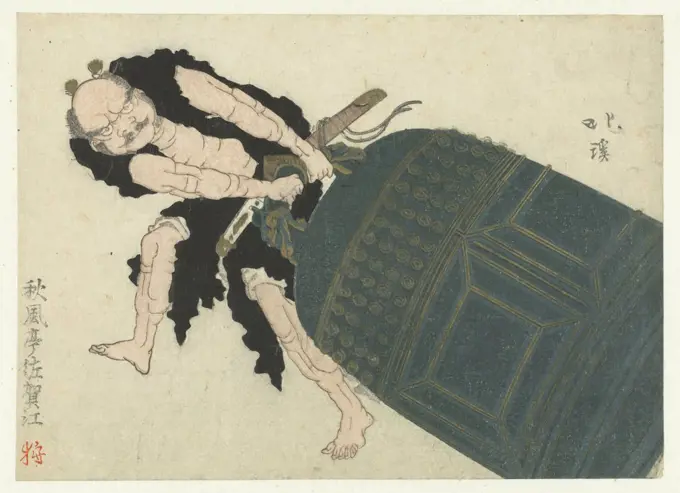
Musashibô Benkei drags with a large temple bell, A ferocious looking man drags with a huge temlokloklok. The man is the famous warrior Musashibô Benkei, who, according to tradition, already possessed enormous strength at a young age. Exiled from the Miidera Temple, he tried to drag the temple bell from Miidera to the Enrykuji Monastery on Mount Hiei., Totoya Hokkei (mentioned on object), Japan, c. 1810 - c. 1820, paper, colour woodcut, h 141 mm × w 192 mm
1899-18713716
Toyotomi Hideyoshi (February 2, 1536 or March 26, 1537 - September 18, 1598) was a daimyo in the Sengoku period who unified the political factions of Japan. He succeeded his former liege lord, Oda Nobunaga, and brought an end to the Sengoku period. The period of his rule is often called the Momoyama period, named after Hideyoshi's castle. He is noted for a number of cultural legacies, including the restriction that only members of the samurai class could bear arms. Hideyoshi is regarded as Japan's second 'great unifier'.
4409-28962481
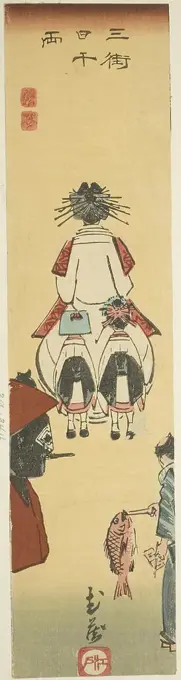
Courtesans of the Three Capitals: Kyoto, Osaka, and Edo. Date: 1777. Origin: Japan. Period: Edo period. Ink and color on silk. Museum: Freer Gallery of Art and Arthur M. Sackler Gallery.
6145-30187759
Ukon, from the series Pictures of No Performances (Nogaku Zue) 1893-1903 Japan. Color woodblock print . Tsukioka Kôgyo
6145-45436814
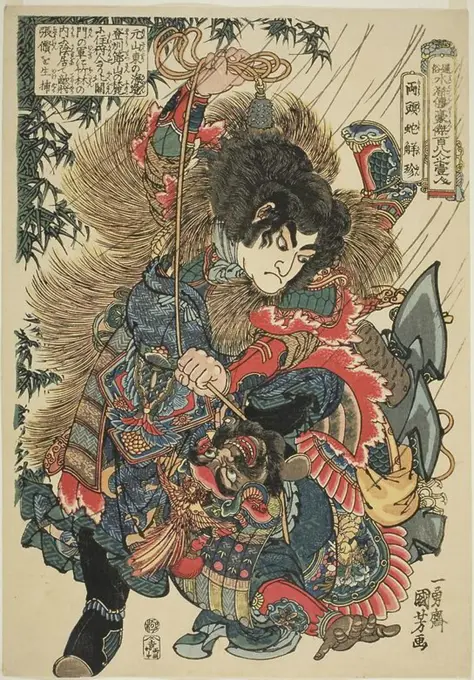
Ryotoja Kaichin hunter binding in the rain of a fallen attacker / Ryotoja Kaichin, from a series: one hundred eight heroes of Suikoden / Tsuzoku Suikoden Goketssu Hyakuhachi Nin No Hitori Utagawa, kuniyoshi (1797 1861)
4409-17563596
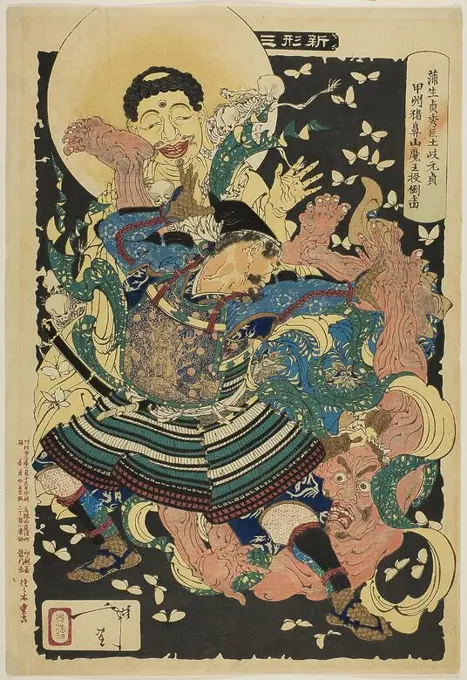
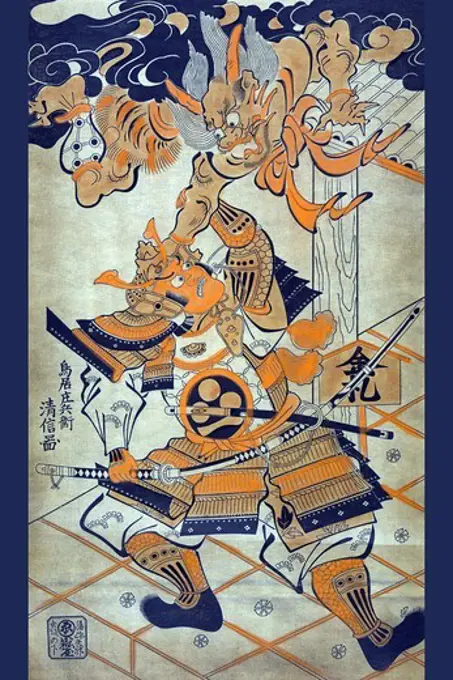
Gamo Sadahide's Servant, Toki Motosada, Hurling a Demon King to the Ground at Mount Inahana, from the series "New Forms of Thirty-Six Ghosts (Shinkei sanjuroku kaisen)". Tsukioka Yoshitoshi; Japanese, 1839-1892. Date: 1890. Dimensions: . Color woodblock print; oban. Origin: Japan. Museum: The Chicago Art Institute, Chicago, USA.
6145-59593429
FIGHT ON THE ROOF BETWEEN THE RIVALS GENPACHI En Shino On the Hotherûkaku, TSUKIOKA YOSHITOSHI, 1887 print A fight between the brothers Inuzuka Shino and Inukai Genpachi on the roof of the Hôryûkaku pavilion. This print depicts a part from the story 'The adventures of the eight dogs of Satomi' (Nansô Satomi Hakkenden), written between 1814-41 by Takizawa Bakin. It talks about the eight brothers who had Princess Fuse as a mother and a dog as a father. To be lost after each other and many adventures and fights later, they recognize each other again by their tattoo. (vertical diptych)  paper color woodcut fighting. roof (of house or building)
7105-70366686
Close-up of Japanese paper (Washi), Mino, Gifu, Japan
6145-30189005
Sparrowhawk (Konori taka) 1711-1721 Japan. Hand-colored woodblock print; vertical o-oban, tan-e . Torii Kiyomasu I
1899-17834914
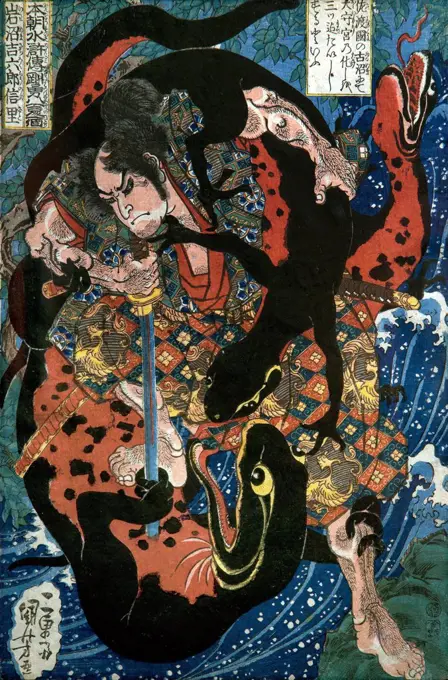
Utagawa Kuniyoshi 1798-1861. Iwanuma Kichirokuro Nobusato Series: One of the Eight Hundred Heroes of the Water Margin of Our Country (Honcho Suikoden goketsu happyakunin no hitori). about 1836. Oban vertical cm 37.4 x 25.6.
4409-17379103
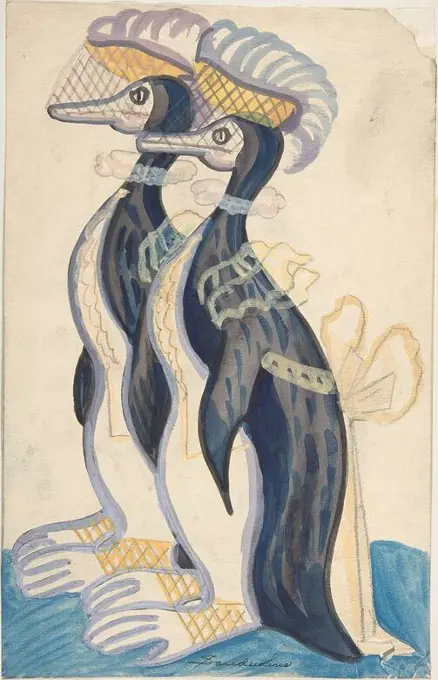
Two female penguins. Artist: Sergey Sudeykin (Russian, Smolensk 1882-1946 Nyack). Dimensions: sheet: 12 1/16 x 7 11/16 in. (30.7 x 19.5 cm). Date: n.d.. Museum: Metropolitan Museum of Art, New York, USA.

1899-17834885
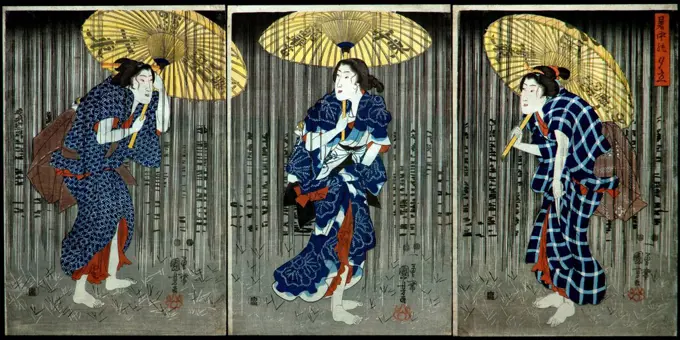
Utagawa Kuniyoshi 1798-1861. Sudden Shower in the Summer Heat (Shochu no yudachi).  about 1849-1851. Oban vertical triptych cm 37.6 x 25.4 - 37.4 x 25.5 - 37.5 x 25.2.
4443-75471035
Actor in Lion Dance costume., 1825 - 1875. Woodcuts., Color; surimono. Paper/Sheet 8 1/16 x 6 7/8 in. (20.5 x 17.5 cm)
4266-11625
Bakst, Leon (1866-1924) Wadsworth Athenaeum, Hartford 1911 68x48,5 Pencil, watercolour, gouache, gold and silver colours on paper
4443-19375264
Actor Matsumoto Koshiro III in the role of Soga no Goro, Man, in robe with butterfly and fan patterns, standing, with long sword in hand, in front of a closed gate, Ichikawa Danjûrô V, Ippitsusai Bunchô (mentioned on object), Japan, 1769, paper, colour woodcut, h 315 mm × w 146 mm
6145-30149261
The Actors Sawamura Sojuro II as the Chinese Sage Huangshi Gong (on horseback), and Ichikawa Danzo III as the Chinese Warrior Zhang Liang (mounted on a dragon), in the Finale of the Play Otokoyama Yunzei Kurabe (At Mt Otoko, a Trial of Strength in Drawing the Bow), Performed at the Ichimura Theater from the First Day of the Eleventh Month, 1768 1763-1773 Japan. Color woodblock print; hosoban . Katsukawa Shunsho
6145-29712222
The Actor Ichikawa Danz IV in the Role of Ono Sadakur ca. 1781 Katsukawa Shun'ei  Japanese. The Actor Ichikawa Danz IV in the Role of Ono Sadakur. Katsukawa Shun'ei  (Japanese, 1762-1819). Japan. ca. 1781. One sheet of a triptych of woodblock prints; ink and color on paper. Edo period (1615-1868). Prints
6145-51827053
Young Samurai and Female Attendants Practicing Archery, Half of a Diptych Utagawa Toyokuni I (Japanese, 1769-1825). Young Samurai and Female Attendants Practicing Archery, Half of a Diptych, ca. 1800. Woodblock print, 15 1/8 x 10 in. (38.4 x 25.4 cm).  In addition to his celebrated kabuki actor prints, Toyokuni excelled at pictures of beautiful women, incorporating the long, lithe figure type that had come into vogue with the work of Kitagawa Utamaro (1750-1806) and Torii Kiyonaga (1752-1815) in the preceding decades. Archery was a refined activity associated with the samurai warrior class; the man kneeling in the middle is clearly identified as a young samurai with his shaved forelock and hakama pants. Asian Art ca. 1800
6145-59562233
Love couple views a Shunga booklet, Anonymous, 1800 - 1899 print A few views a Shunga booklet. The clothes opened shows the man's member.  paper color woodcut scabrous scenes, pornography. penis, phallus
1899-19188880
Japan: Konsei Mao or Kotenmao Hazui, one of the 'One Hundred and Eight Heroes of the Water Margin', grasping his spear, falls back before an apparition of demons. Woodblock print by Utagawa Kuniyoshi (1797-1863), 1827-1830. The Water Margin (known in Chinese as Shuihu Zhuan, sometimes abbreviated to Shuihu, known as Suikoden in Japanese, as well as Outlaws of the Marsh, Tale of the Marshes, All Men Are Brothers, Men of the Marshes, or The Marshes of Mount Liang in English, is a 14th century novel and one of the Four Great Classical Novels of Chinese literature. Attributed to Shi Nai'an and written in vernacular Chinese.
4409-17562917
Xie Zhen (Ryotoda Kaichin), from the series "One Hundred and Eight Heroes of the Popular Water Margin (Tsuzoku Suikoden goketsu hyakuhachinin no hitori)". Utagawa Kuniyoshi; Japanese, 1797-1861. Date: 1822-1835. Dimensions: 38.8 x 27.0 cm (15 1/4 x 10 5/8 in.). Color woodblock print; oban. Origin: Japan. Museum: The Chicago Art Institute, Chicago, USA.
4408-12424
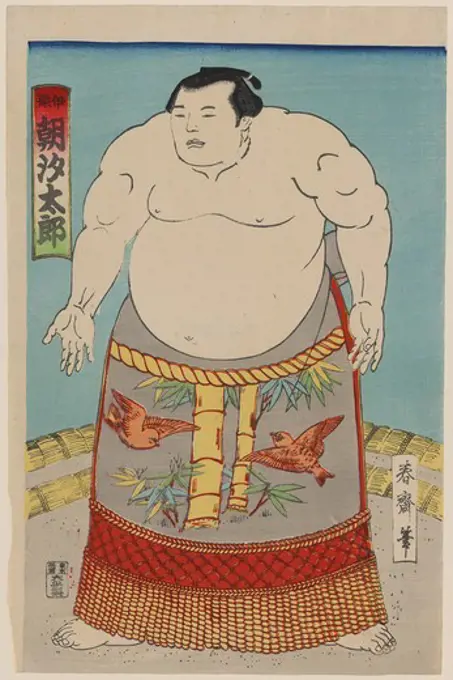
Sumo Wrestler, Japanese Prints
6145-29249337
A Lohan (disciple of Buddha), with very long eyebrows, seated on a rock. Woodcut in manner of ink stone rubbing, China, 18--
6145-51818670
Woman Playing with a Cat, Parody of Nyosan no Miya Suzuki Harunobu (Japanese, 1724-1770). Woman Playing with a Cat, Parody of Nyosan no Miya, ca. 1767. Woodblock color print, Sheet: 26 x 4 5/8 in. (71.0 x 11.8 cm).   Asian Art ca. 1767
1899-19188844
Japan: The tattooed Zhang Shun or Rorihakucho Cho Jun, one of the 'One Hundred and Eight Heroes of the Water Margin', smashes a water-gate with a sword between his teeth. Woodblock print by Utagawa Kuniyoshi (1797-1863), 1827-1830. The Water Margin (known in Chinese as Shuihu Zhuan, sometimes abbreviated to Shuihu, known as Suikoden in Japanese, as well as Outlaws of the Marsh, Tale of the Marshes, All Men Are Brothers, Men of the Marshes, or The Marshes of Mount Liang in English, is a 14th century novel and one of the Four Great Classical Novels of Chinese literature. Attributed to Shi Nai'an and written in vernacular Chinese.
1899-19136960
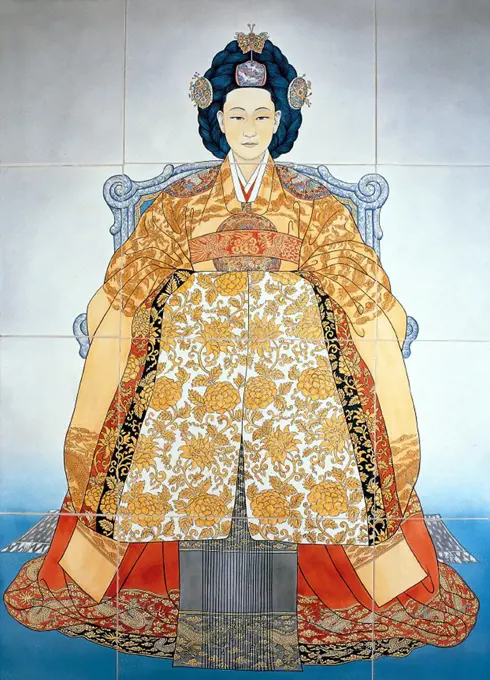
Korea: Empress Myeongseong (1851 - 1895), known informally as Queen Min, was the first official wife of Gojong of Korea, the twenty-sixth king of Joseon and the first emperor of the Korean Empire. Portrait in ceramic tiles, Seokbong Ceramic Museum, Seoul, 1997
6145-29794117
The Kabuki Actor Segawa Kikunoj II as a Woman Reading a Letter ca. 1760s Torii Kiyomitsu Japanese. The Kabuki Actor Segawa Kikunoj II as a Woman Reading a Letter. Torii Kiyomitsu (Japanese, 1735-1785). Japan. ca. 1760s. Woodblock print; ink and color on paper. Edo period (1615-1868). Prints
4409-17584974
Musashi, section of sheet no. 6 from the series "Cutout Pictures of the Provinces (Kunizukushi harimaze zue)". Utagawa Hiroshige  ; Japanese, 1797-1858. Date: 1852. Dimensions: 32.5 x 8 cm (12 13/16 x 3 1/8 in.). Color woodblock print; section of harimaze sheet. Origin: Japan. Museum: The Chicago Art Institute, USA.
1899-18857145
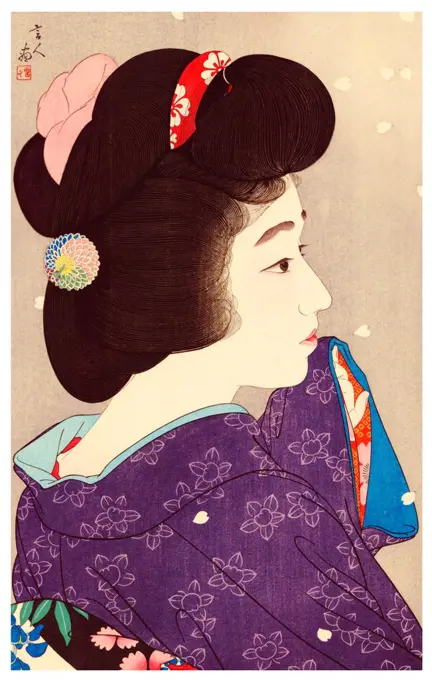
Torii Kotondo is known to have made only 21 prints - all of them images of bijin or beautiful women. They belong to the finest works of art of the Shin Hanga movement. Shin hanga ('new prints') was an art movement in early 20th-century Japan, during the Taisho and Showa periods, that revitalized traditional ukiyo-e art rooted in the Edo and Meiji periods (17th-19th century). The movement flourished from around 1915 to 1942, though it resumed briefly from 1946 through the 1950s. Inspired by European Impressionism, the artists incorporated Western elements such as the effects of light and the expression of individual moods, but focused on strictly traditional themes of landscapes (fukeiga), famous places (meisho), beautiful women (bijinga), kabuki actors (yakusha-e), and birds and flowers (kachoga).
6145-30153190
Courtesan Admiring Morning Glories while Cleaning Her Teeth 1770-1780 Japan. Color woodblock print; hashira-e . Isoda Koryusai
4409-17359193
Jean de Villiers-l'Isle-Adam, Lord of L'Isle-Adam, governor of Paris, 1384-1437. Chromolithograph from Loredan Larchey's Ancien Armorial Equestre de la Toison d'Or et de l'Europe au 15e siecle (Ancient Equestrian Armorials of the Order of the Golden Fleece and Europe in the 15th century), Paris, 1890. From illustrated manuscript 4790 in the Bibliotheque de l'Arsenal.
6145-30390171
FemaleImmortal. Artist, attributed to: Kitagawa Utamaro, Japanese, 1753-1806
1899-18856776
Bancho Sarayashiki or Bancho Sarayash ('The Dish Mansion at Banchō') is a Japanese ghost story (kaidan) of broken trust and broken promises, leading to a dismal fate. The story of Okiku and the Nine Plates is one of the most famous in Japanese folklore, and continues to resonate with audiences today.
4409-17550260
A Mandarin Duck on a Snowy Bank. Utagawa Hiroshige  ; Japanese, 1797-1858. Date: 1830-1839. Dimensions: 13 3/8 x 4 1/2 in. Color woodblock print; ko-tanzaku. Origin: Japan. Museum: The Chicago Art Institute, USA.
1899-18309687
Moon and Smoke, Yoshitoshi, Tsukioka
1899-18789368
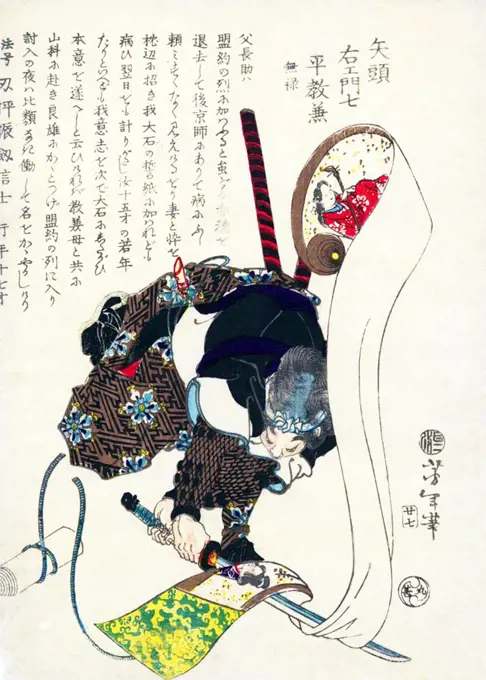
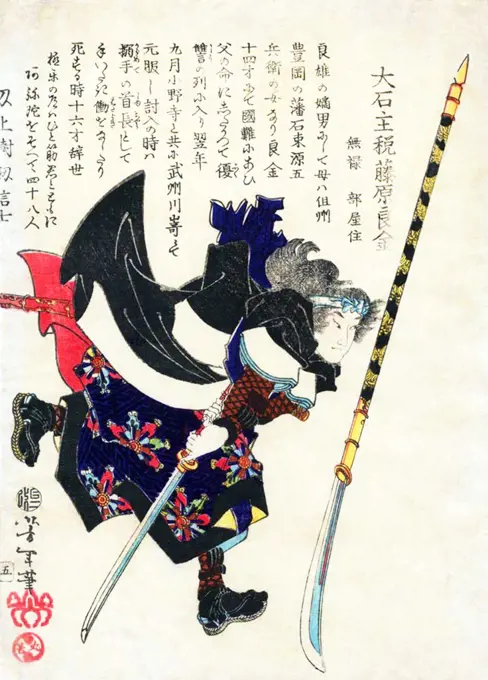
The revenge of the Forty-seven Ronin (Shi-ju-shichi-shi), also known as the Forty-seven Samurai, the Aki vendetta, or the Genroku Aki incident (Genroku aki jiken) took place in Japan at the start of the 18th century. One noted Japanese scholar described the tale as the country's 'national legend'. It recounts the most famous case involving the samurai code of honor, bushidi. The story tells of a group of samurai who were left leaderless (becoming ronin) after their daimyo (feudal lord) Asano Naganori was forced to commit seppuku (ritual suicide) for assaulting a court official named Kira Yoshinaka, whose title was Ki zuke no suke. The ronin avenged their master's honor after patiently waiting and planning for two years to kill Kira. In turn, the ronin were themselves ordered to commit seppuku for committing the crime of murder. With much embellishment, this true story was popularized in Japanese culture as emblematic of the loyalty, sacrifice, persistence, and honor that all good peopl
6145-29780956
An Umbrella Jump ca. 1769 Isoda Koryūsai Japanese. An Umbrella Jump 54578
6145-29720503
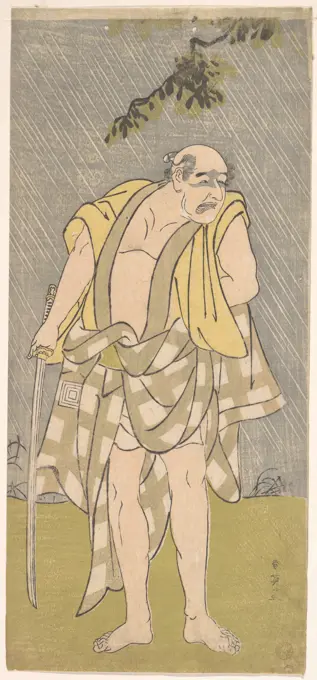
Head of an Unidentified Actor as a countryman in Rags ca. 1793 Katsukawa Shun'ei 川春英 Japanese. Head of an Unidentified Actor as a countryman in Rags 55701
6145-51819448
Leaf from an Album Tosa Mitsuyoshi (Japanese, 1539-1613). , 16th century. Hanging scroll, ink and color on paper, Painting Section: 9 11/16 x 8 3/8 in. (24.6 x 21.3 cm).   Asian Art 16th century
1899-18853689
Utagawa Hiroshige (1797 - October 12, 1858) was a Japanese ukiyo-e artist, and one of the last great artists in that tradition. He was also referred to as Ando Hiroshige, and by the art name of Ichiyusai Hiroshige. Among many masterpieces, Hiroshige is particularly remembered for 'The Sixty-nine Stations of the Kisokaido' (1834-1842) and 'Thirty-six Views of Mount Fuji' (1852-1858).
1899-19134699
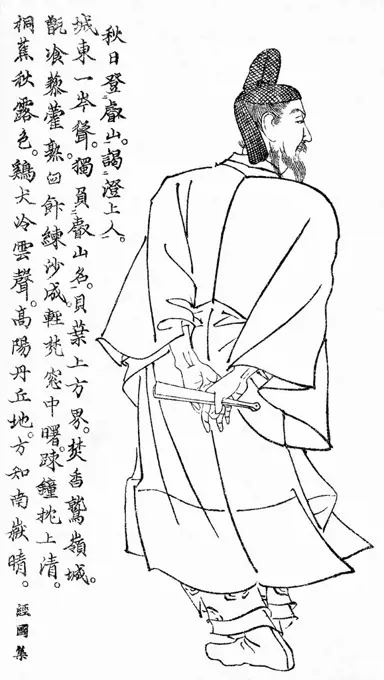
Japan: Fujiwara no Tsunetsugui (-840 CE), Japanese scholar and diplomat during the Heian Period (794-1185). Kikuchi Yosai, mid-19th century
6145-29189291
The Third Sawamura Sojuro as a Man Standing in a Room ca. 1793 Katsukawa Shun'ei 川春英 Japanese. The Third Sawamura Sojuro as a Man Standing in a Room 36786
4408-19613
Raj_mon , Japanese Prints
4443-73252674
Tokyo, Akiyama Buemon, Japan, Enkatsu, Noguchi, Yoshitoshi, Tsukioka, Tsuki hyakushi, One Hundred Aspects of the Moon, Ugo no sangetsu - Tokimune, Tokimune and the Moon above the Mountains after Rain, verso - stamped, The hero Tokimune, with drawn sword, looking up at a cuckoo flying by a crescent moon and clouds., print, engraving, prints, engravings, Japan (collection), height 368 mm, width 248 mm, Japanese, 1839 - 1892, print maker, printmaker, 1885-12-10, fourth quarter 19th century, paper, colour woodcut, blind stamping, polishing, block cutter, Publication (Event), Publication, publisher
6145-51817608
The Actor Ichikawa Monnosuke II as Otaka Gengo, from Chushingura Katsukawa Shunei (Japanese, 1762-1819). The Actor Ichikawa Monnosuke II as Otaka Gengo, from Chushingura, 1783. Color woodblock print on paper, 11 13/16 x 5 3/4 in. (30.0 x 14.5 cm).   Asian Art 1783
6145-44322863
Rokugō Ferry between Shinagawa and Kawasaki: The actor Onoe Kikugorō III as Hirai Gonpachi, leaf 2.5 from the series: The 53 stations of the Tōkaido. .
6145-30155010
Parody of Matsukaze dancing beneath Yukihira's robe 1766-1776 Japan. Color woodblock print; hashira-e . Isoda Koryusai
4443-28742213
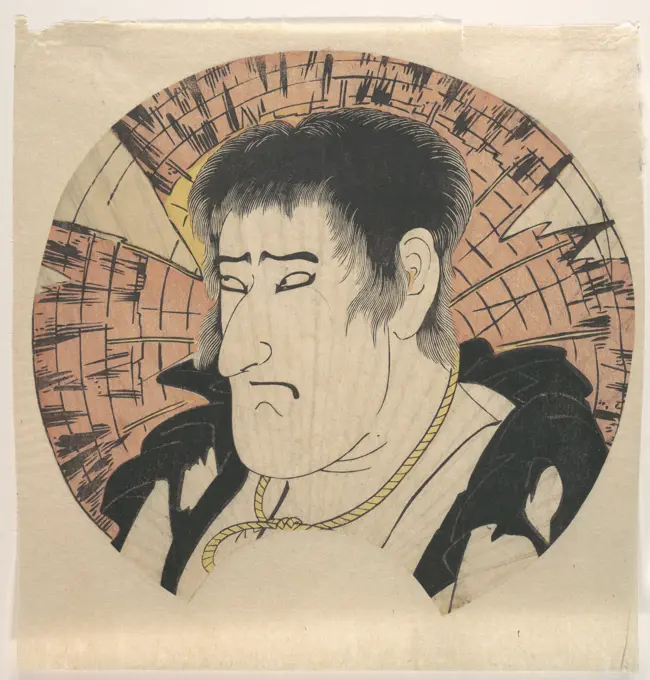
Actor Sakata Hangorō III as Tanba no Suketarō, 1791, 8th lunar month, Katsukawa Shun'ei, Japanese, 1762 - 1819, 12 9/16 × 5 11/16 in. (31.9 × 14.4 cm) (image, sheet, hosoban), Woodblock print (nishiki-e); ink and color on paper, Japan, 18th century, Actor Sakata Hangorō III as Tanba no Suketarō in the play Kanagaki Muromachi bundan, performed at the Nakamura Theater in the 8th lunar month 1791. Right panel of a diptych; on the left is Ichikawa Monnosuke II.
6145-30172964
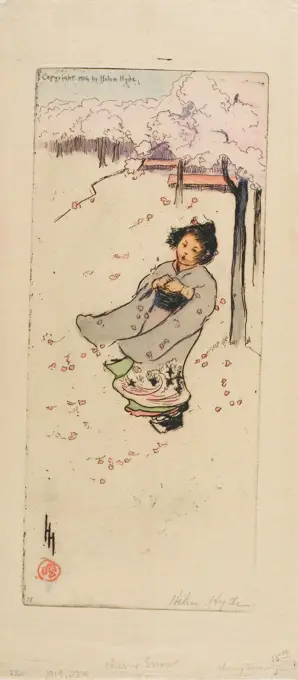
Cherry Snow 1906 United States. Color etching on cream Japanese paper . Helen Hyde
6145-52847458
Color print by James Ensor depicting the Salon des Cent exhibition in December 1898.
1899-18789386
The revenge of the Forty-seven Ronin (Shi-ju-shichi-shi), also known as the Forty-seven Samurai, the Aki vendetta, or the Genroku Aki incident (Genroku aki jiken) took place in Japan at the start of the 18th century. One noted Japanese scholar described the tale as the country's 'national legend'. It recounts the most famous case involving the samurai code of honor, bushidi. The story tells of a group of samurai who were left leaderless (becoming ronin) after their daimyo (feudal lord) Asano Naganori was forced to commit seppuku (ritual suicide) for assaulting a court official named Kira Yoshinaka, whose title was Ki zuke no suke. The ronin avenged their master's honor after patiently waiting and planning for two years to kill Kira. In turn, the ronin were themselves ordered to commit seppuku for committing the crime of murder. With much embellishment, this true story was popularized in Japanese culture as emblematic of the loyalty, sacrifice, persistence, and honor that all good peopl
6145-52339751
Contes bleus de ma mère-grand.. Robert-Dumas, Charles (d. 1946). Illustrations. 1912. The Miriam and Ira D. Wallach Division of Art, Prints and Photographs: Picture Collection. Snow, Geese, Horses, Winds, Capes (Clothing), Men , Clothing & dress, Girls , Clothing & dress
6176-66096545
The caption for this print readsKiyomasu: Theatrical trio (print in hoso-ye form).  This art form of theatrical prints had its origin in the large posters displayed outside the theaters as advertisements of the play. Torii Kiyomasi was a Japanese painter and printmaker of the school known as Torii. The style of painting was ukiyo-e. Kiyomasi is believed to have been active in early 1700s. Ukiyo-e is Japanese for "picture or pictures of the floating world."
6145-29741370
Woman in Red late 18th century Katsukawa Shunsh Japanese Shunsh was a master at capturing the drama of the moment. He was the founder of the Katsukawa school, which devoted itself to depicting Edo's actors. Shunsh excelled at dramatic designs for pillar prints, which were made to be hung from house posts. He created linear figures that related in ingenious ways to this expressive and demanding shape.In this subtle yet erotic work, Shunsh exploits a single color to accentuate the sweeping lines of his drawing. An ordinary courtesan is defined by the fabric of her clothing, except for one arm, which pierces the folds of her long sleeve. She holds the bottom of this sleeve up to her face in a contrived gesture of modesty. A sheaf of tissue paper is in her other hand. Her simple robe is decorated with tie-dyed dots (kanoko shibori) in the traditional hemp-leaf pattern, a stylized motif often used for clothing.. Woman in Red. Katsukawa Shunsh (Japanese, 1726-1792). Japan. lat
1899-19188887
Japan: Red Haired Devil Liu Tang or Sekibakki Ryuto, one of the 'One Hundred and Eight Heroes of the Water Margin', half-naked seated on a throne beneath a brocade curtain. Woodblock print by Utagawa Kuniyoshi (1797-1863), 1827-1830. The Water Margin (known in Chinese as Shuihu Zhuan, sometimes abbreviated to Shuihu, known as Suikoden in Japanese, as well as Outlaws of the Marsh, Tale of the Marshes, All Men Are Brothers, Men of the Marshes, or The Marshes of Mount Liang in English, is a 14th century novel and one of the Four Great Classical Novels of Chinese literature. Attributed to Shi Nai'an and written in vernacular Chinese.
6145-30154855
Courtesan and Her Attendant on a Balcony Overlooking River 1766-1776 Japan. Color woodblock print; hashira-e . Isoda Koryusai
6176-66096839
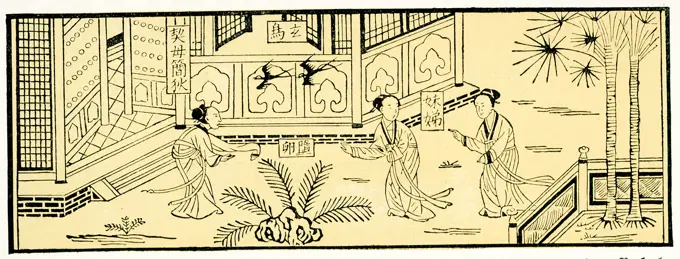
The 1910 image shows: A Song dynasty 960-1279 princess finds a swallow egg. Woodcut from the Book of Famous Women.
1848-49169224
Vive La resistance Ukrainienne (Long live the Ukrainian resistance), symbolic painting for the Ukrainian resistance on a house wall, Paris, France, Europe
1899-19134795
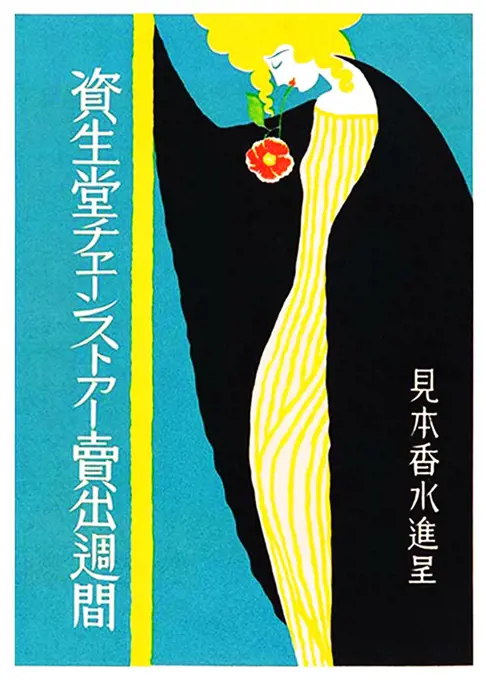
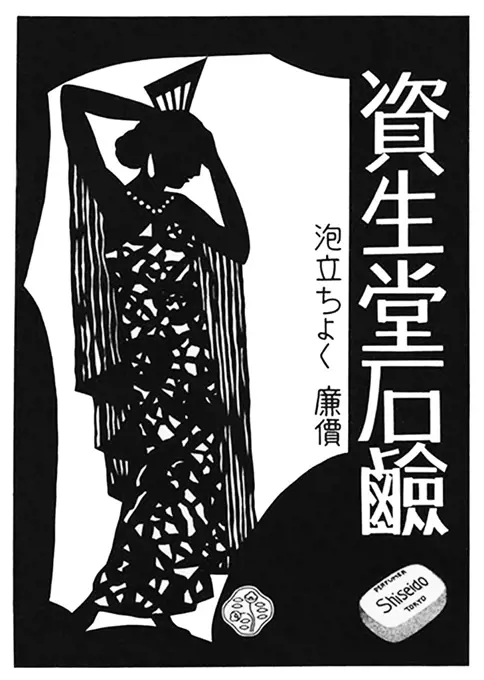
Japan: Advertising poster for Shiseido Cosmetics, Ginza, Tokyo, 1925
6145-51835674
Shunga Album (Woodblock Print) Kitagawa Utamaro (Japanese, 1753-1806). Shunga Album (Woodblock Print), 18th-19th century. Ink and color on paper, 8 3/4 x 12 1/2 in. (22.2 x 31.8 cm).   Asian Art 18th-19th century
1899-19134915
Japan: Advertising poster for Shiseido Cosmetics, Ginza, Tokyo, 1925
6145-29787794
Geisha Seated dated 1795 Katsukawa Shuntei. Geisha Seated 45792
6145-29252787
Actors in a confrontation in a Chinese palace. Colour woodcut by Yoshitaki, early 1860s.
6145-29706388
Rank Badge Korea. Rank Badge. Korea. Silk. Joseon dynasty (1392-1910). Textiles-Embroidered
6176-67071786
'No dance', Japan, 1904. Artist: Unknown
6145-59570811
The ghost of Sakura No Kiuchi Sogoro Ichikawa Udanji is avenges on warriors of the Shogun, 1893 print Vertical triptych with female ghost that attacks two warriors.  paper
1899-18712728
Exposition poster art in Japan between approximately 1925 and 1941 mirrors the rapid militarisation of society and the growth of militarism, statism and fascism during the Showa Era. In the 1920s expo poster art features elements of modern art and even Art Deco. Themes are whimsical and outward looking, representing Japan's growing importance and influence in the world of international commerce and art. By the 1930s this kind of poster art had grown much more bleak, less concerned with human themes and more directed towards statism and social control. Feminine imagery disappears to be replaced by wheels of industry, with distinct similarities to contemporary Nazi art in Fascist Germany. From the outbreak of full scale hostilities with China through to Pearl Harbour and Japan's entry into World War II, ponderous, heavy machinery, marching soldiers, menacing guns and above all bomber aircraft combine to give the posters a crushing, inhuman, Orwellian aspect. This epitomises Japanese fasc
6145-29184550
Sunset Magazine ca. 1900 William Stevens. Sunset Magazine 680853
PREVIOUS
of 2
NEXT
2401 S. Ervay, Suite 206
Dallas, Texas 75215
United States
Get Started
Free ResearchMy BoardsMy Cart
For Creators
How To License Your ContentContributor PortalFrame of Mind
Resources
API accessPricing
Contact
+1 866 236 0087help@viewpictures.co.uk Contact form
©2026 View Pictures. All Rights Reserved. -B
This site is protected by reCAPTCHA and Google Privacy Policy and Terms of Service apply.