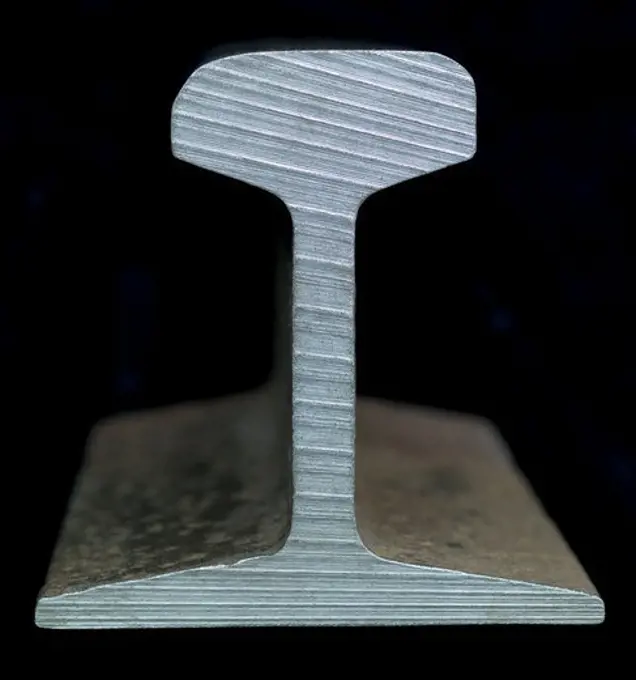
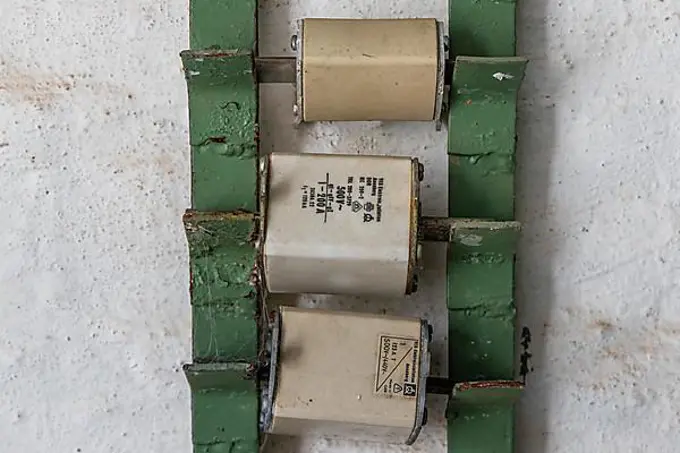
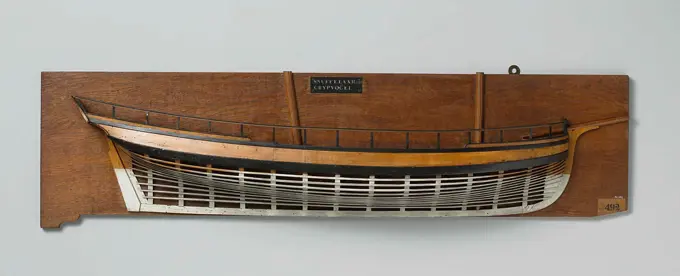
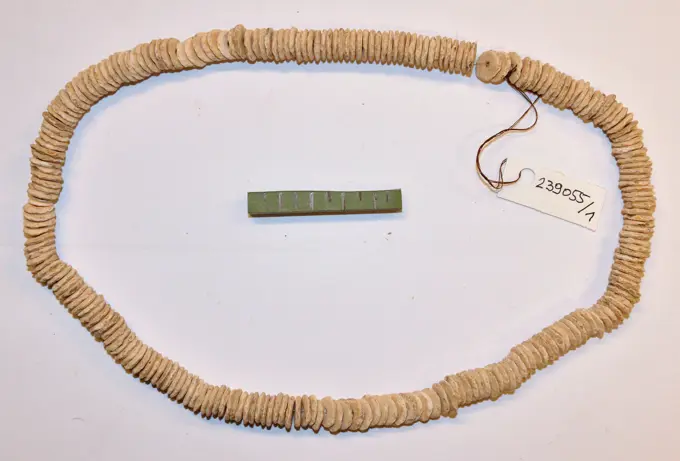
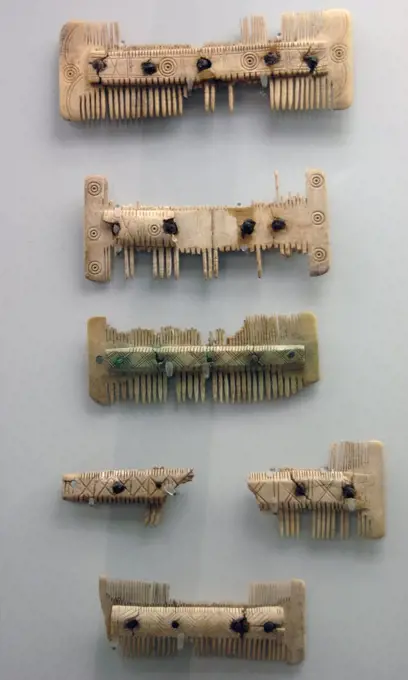
Japanese Decorative Artifacts

An assortment of traditional Japanese items including a floral fan case, silk ribbons, knife handles, and ornate tablecloth fragments.
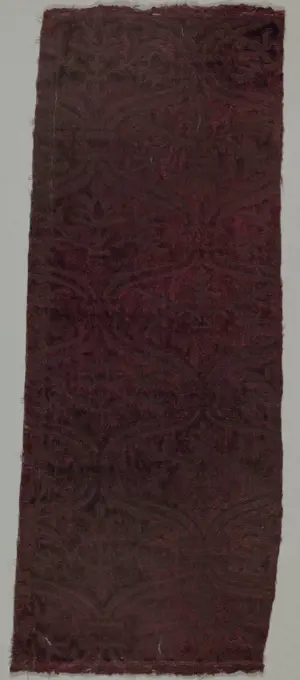
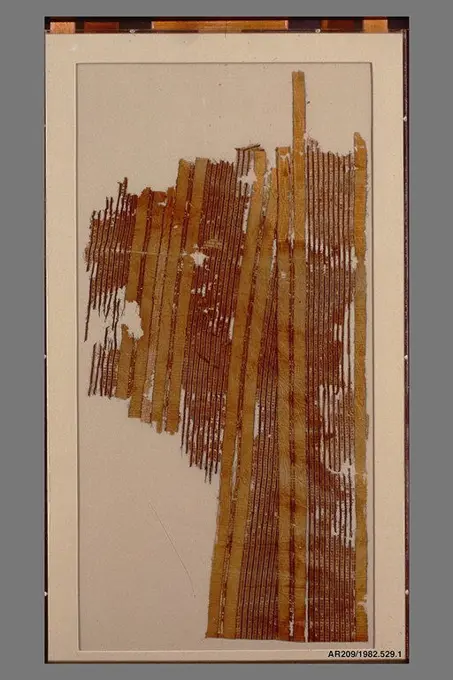
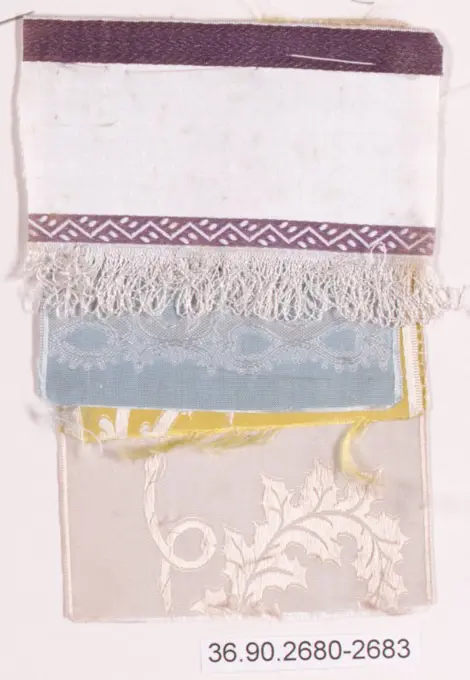
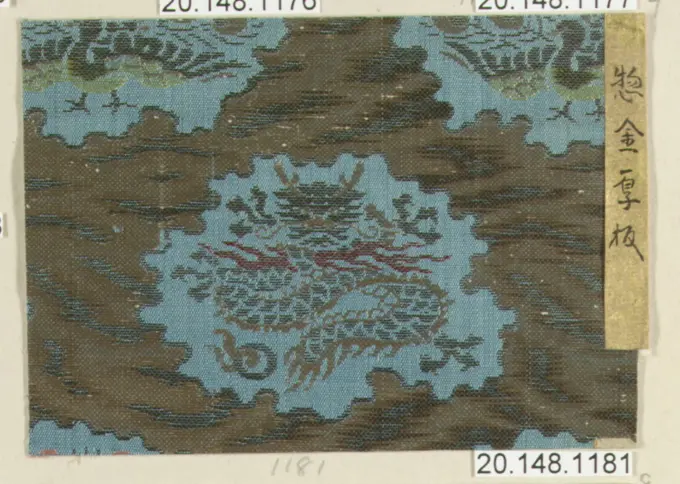
Fragment, Medium: silk Technique: supplementary warp forming cut and uncut pile (velvet), Continuous ogives enclosing plant forms. Deep plum color., 17th century, woven textiles, Fragment
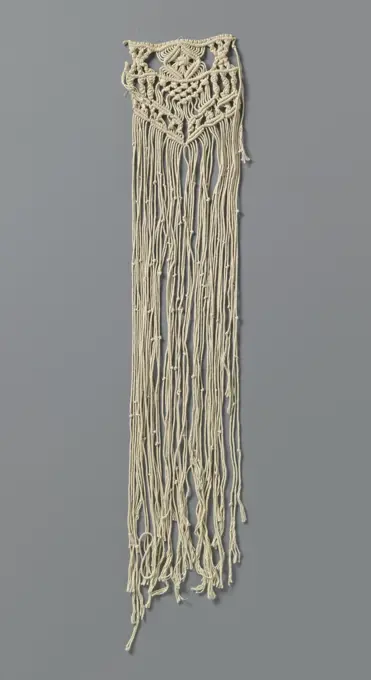
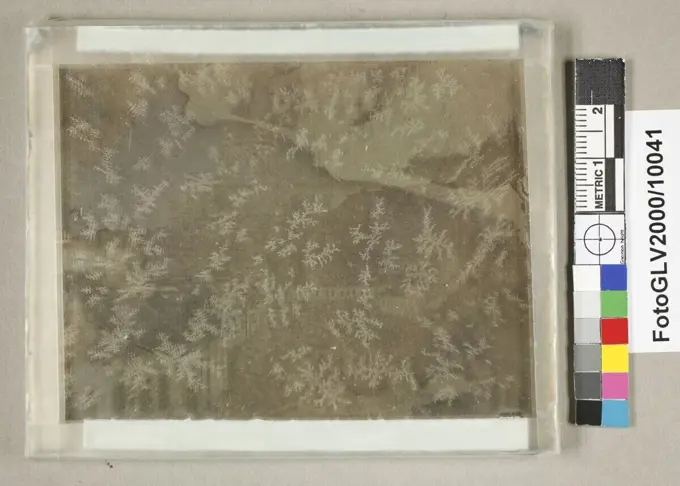
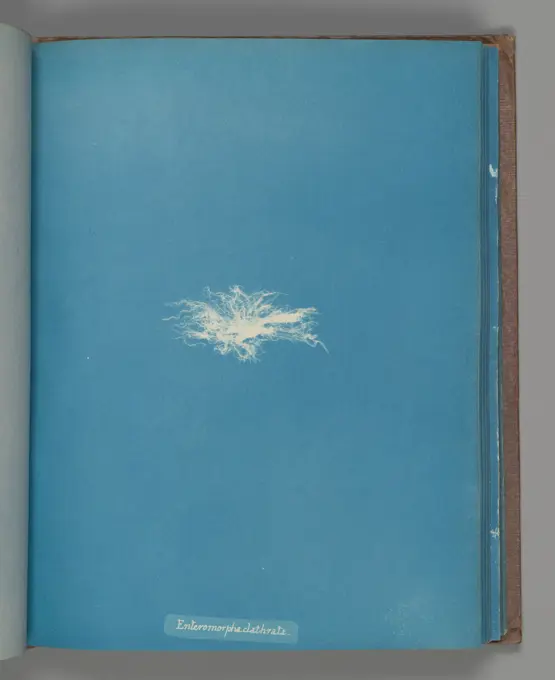
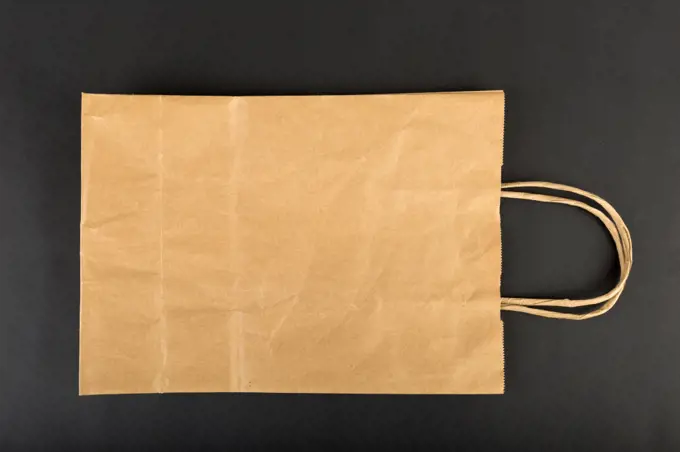
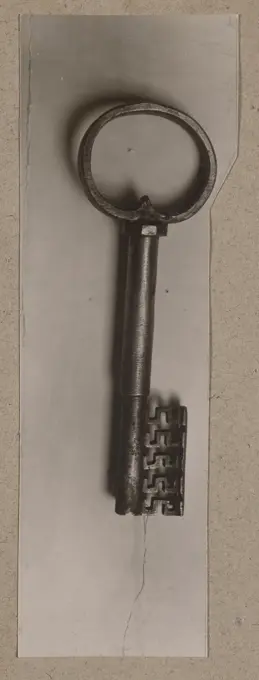
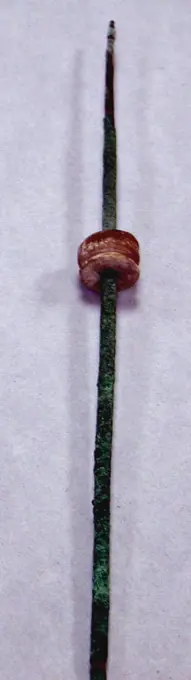
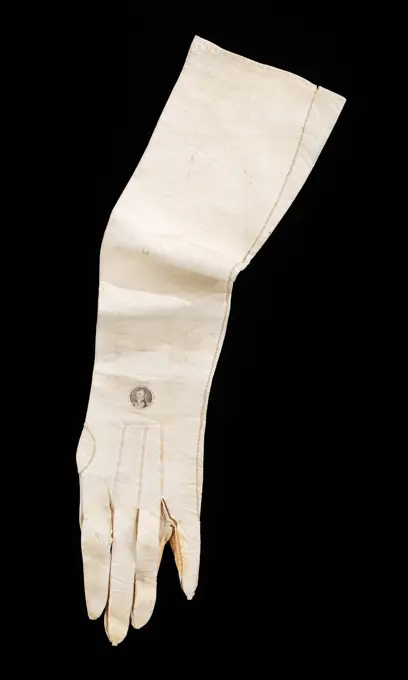
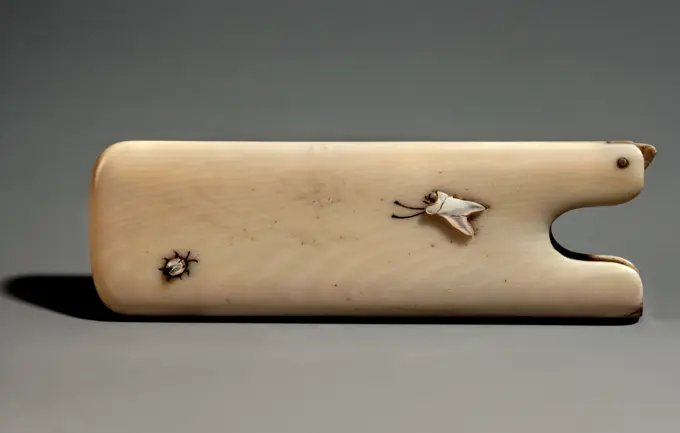
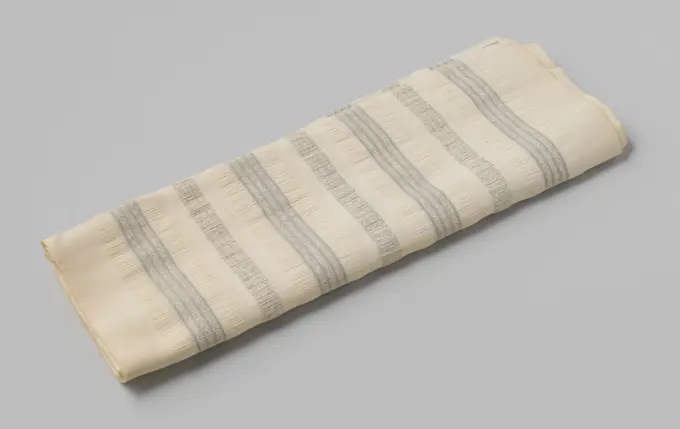
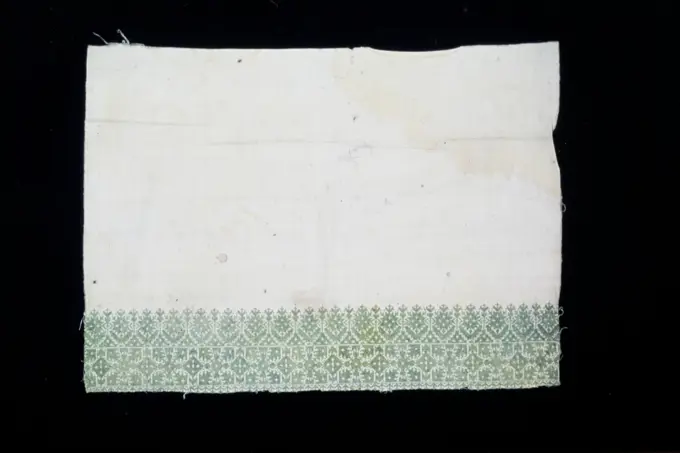
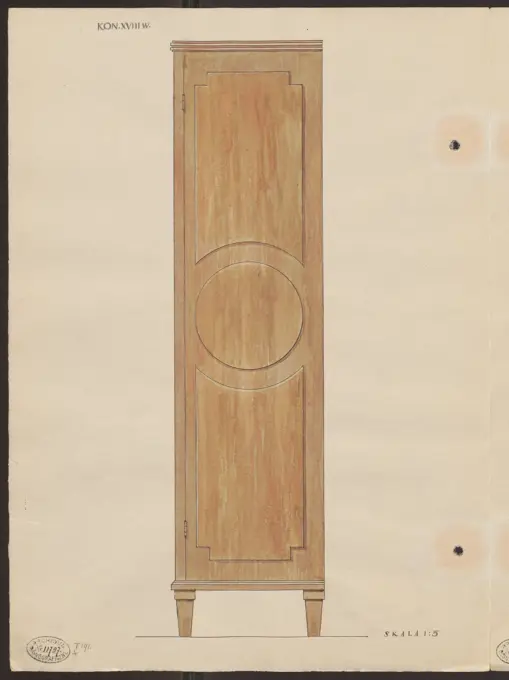
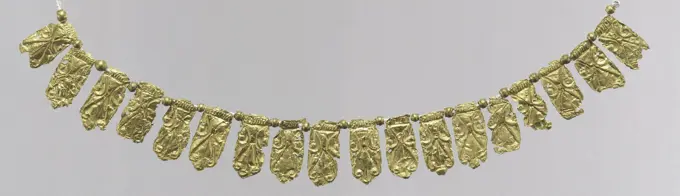
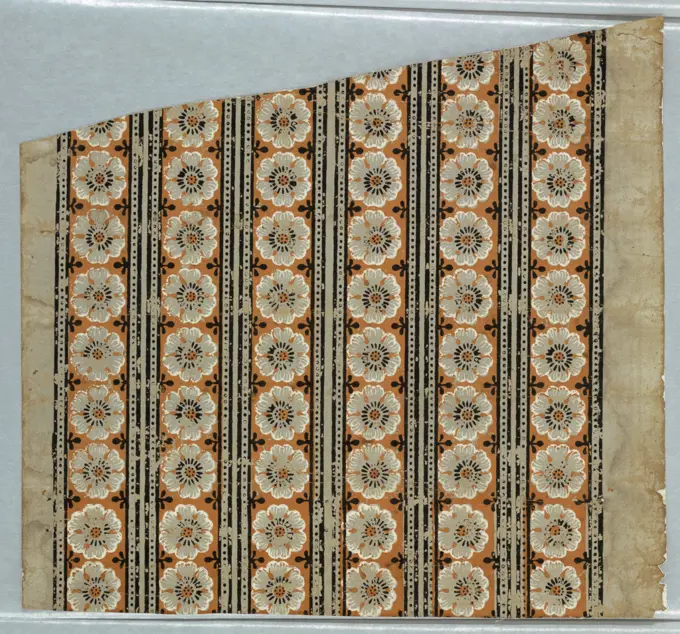
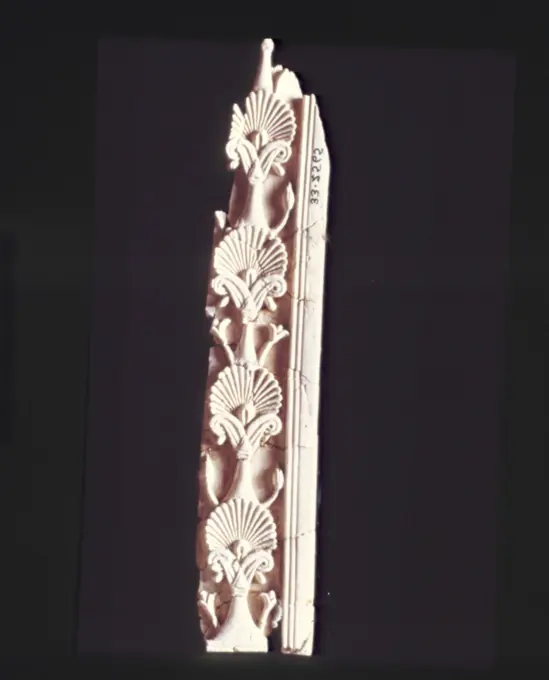
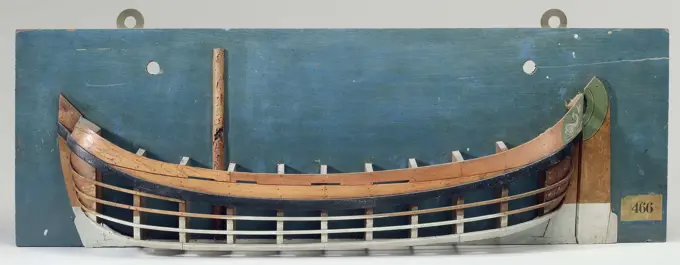
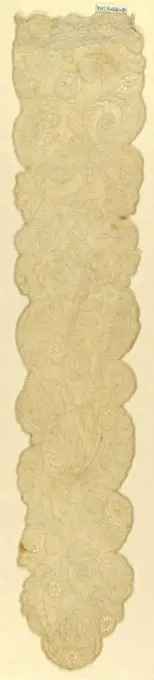
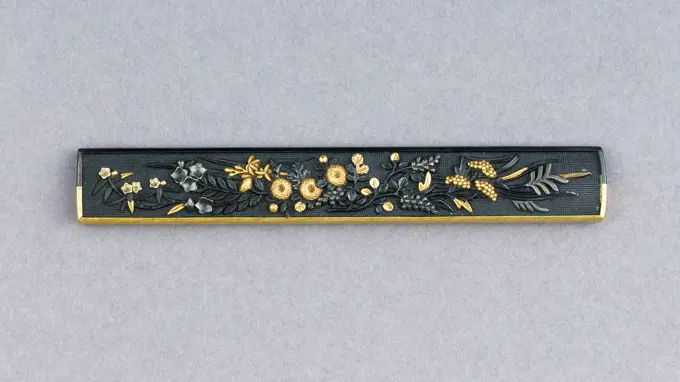
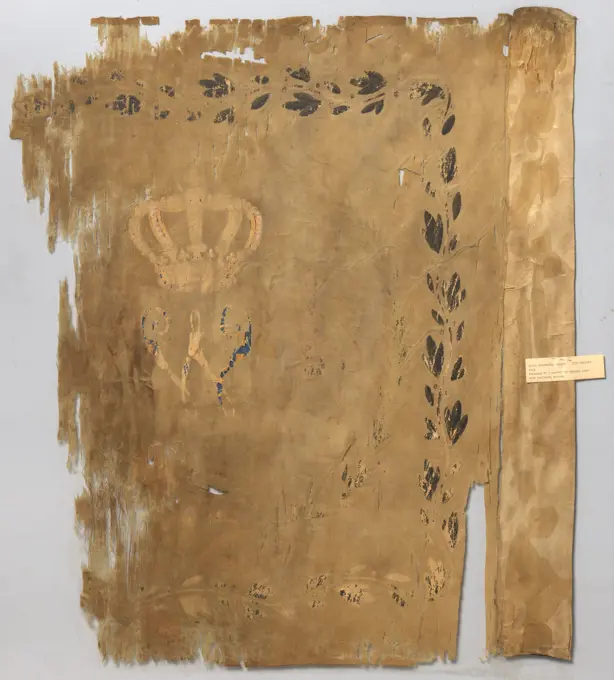
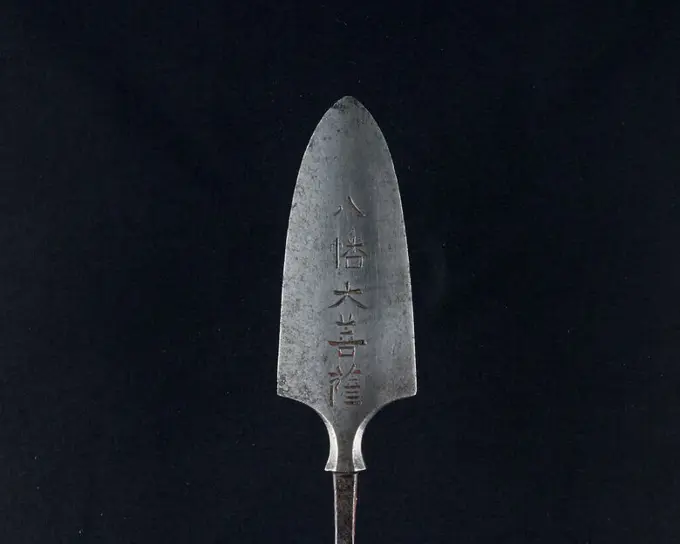
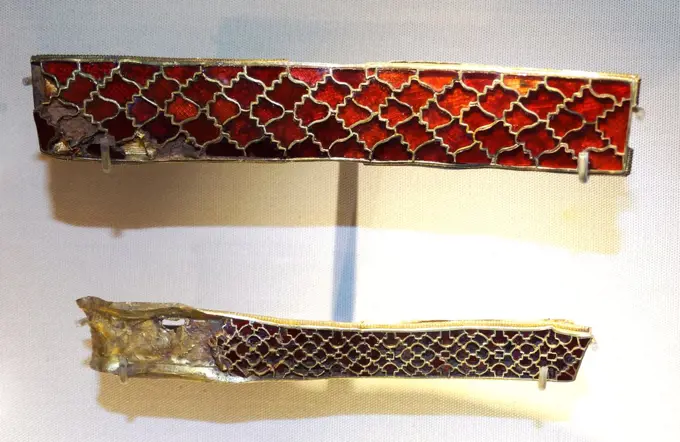
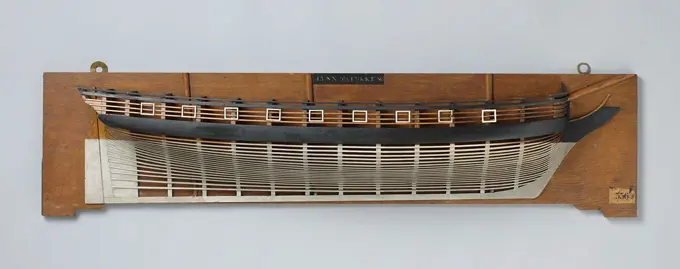
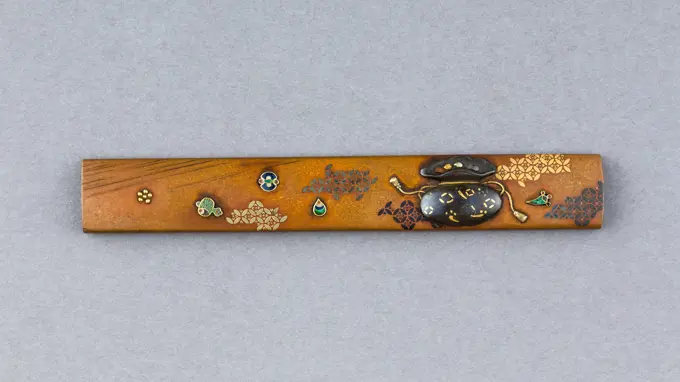
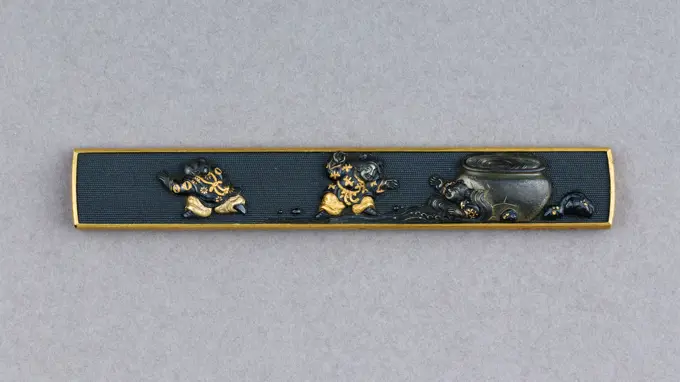
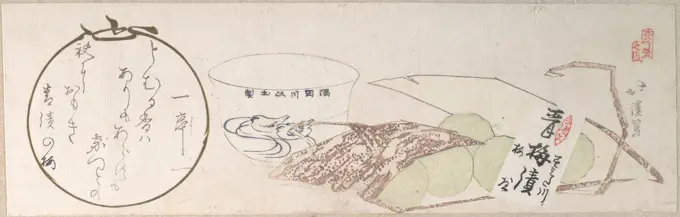
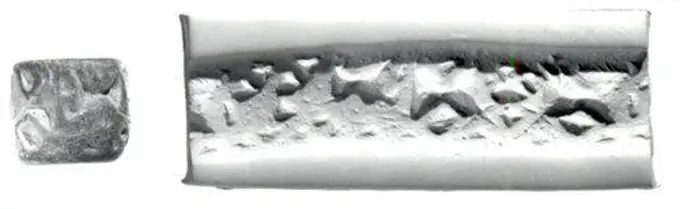
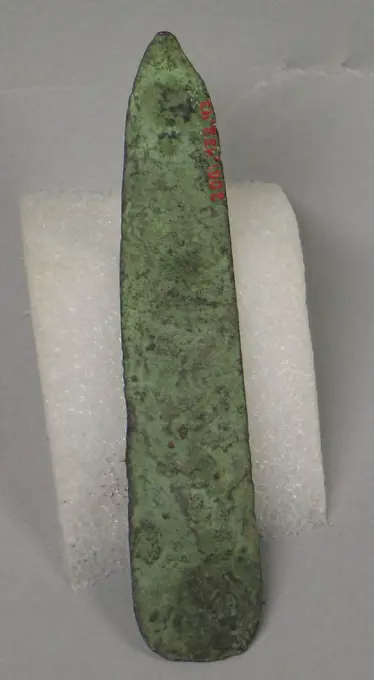
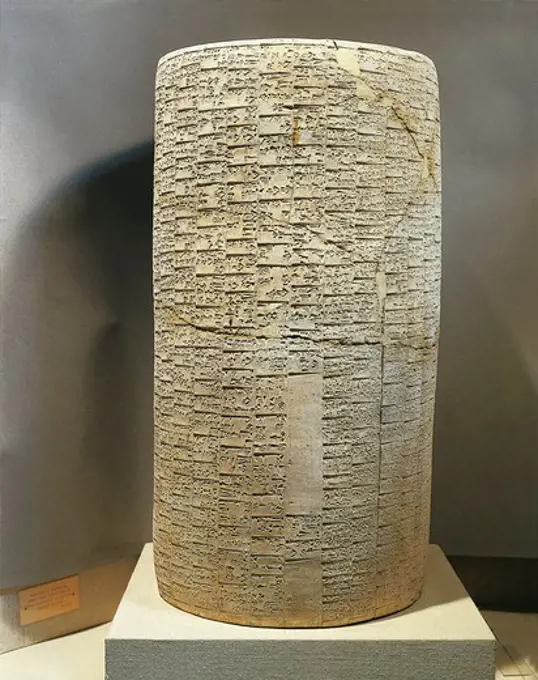
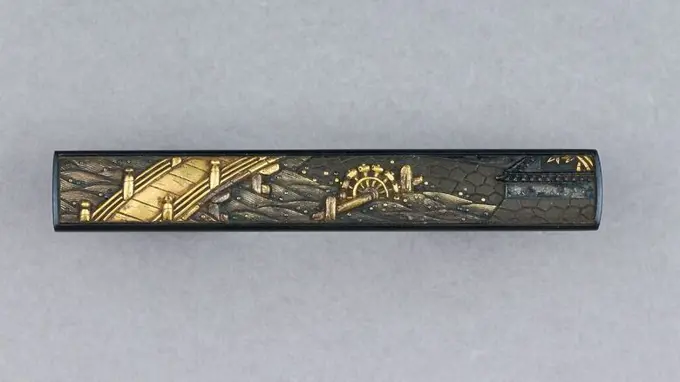
Knife Handle (Kozuka). Culture: Japanese. Dimensions: L. 3 7/8 in. (9.8 cm); W. 9/16 in. (1.4 cm); thickness 1/4 in. (0.6 cm); Wt. 1.3 oz. (36.9 g). Date: 17th century. Museum: Metropolitan Museum of Art, New York, USA.Steelbook with lace manufactured at the Kantschool in Sluis, Royal Lace Working School 'Queen Sophie of the Netherlands', c. 1850 - c. 1899 sample Steel book with 58 pages of which 10 pages are loose and 23 (not completely) filled with steel. It mainly concerns bobbin samples. There are also a few steel mixed side in which bobbin side is combined with needle lace pier stitches and a special kind of ribbon side that is filled in with needle lace stitches. And there are some motifs or applications made entirely of needle side. The white sides are stuck on blue paper and the black lace on pink paper. On the brown cover is with gold -colored letters "album". On the first page, "Steel map of sides is manufactured on the lace-school school located in Sluis, under the meaning spell" does and does not see "under the patroness of Hare Majesty the Queen of the Netherlands". A loose incentive on blue cardboard shows a lace nobble motif with the crowned weapon of the United Kingdom of Great BritaiCarving knife last quarter 18th century Dutch. Carving knife. Dutch. last quarter 18th century. Steel, ivory, silver. Metalwork-SteelTab Ornament 1st century B.C.-A.D. 2nd century Salinar (). Tab Ornament 312996"Arid" (Band to Decorate Edge of Mattress), 1600s-1700s. Morocco, Chechauen, 17th-18th century. Embroidery: silk on linen tabby ground; average: 181 x 31.8 cm (71 1/4 x 12 1/2 in.).One of twenty-one seals, 800 BCE - 400 CE, various, Various semi-precious stones, Mesopotamia, 8th century BCE - 5th century CEMETAMORFOSIS - 1959 - 100X73 CM - TELA METALICA/BASTIDOR MADERA. Author: MANUEL RIVERA HERNANDEZ (1927-1995). Location: PRIVATE COLLECTION. MADRID. SPAIN.Strip macramé with a few buttons in long fringes, anonymous, c. 1925 - Before 1932  Strip of natural macramé. The strip is rectangular with a dot at the bottom. Along the underside of the button work, the threads hang down like long fringes. A few buttons have been made here and there in the Franjedraden. NaplesDaguerreotype photograph capturing a city landscape between 1840 and 1845, showing streets, buildings, urban layout, and architectural details.Textile Swatches Onondaga Silk Company, Inc. (1925-1981). , 1948-1959. Silk, a-e: 40 x 3 1/2 in. (101.6 x 8.9 cm).    1948-1959Handschoen van wit zeemleer.Right glove from white corner leather. Three radiating cords on the back. A split with three mother-of-pearl knots on the inside. Extra long model.Enteromorpha clathrata ca. 1853 Anna Atkins British. Enteromorpha clathrata. Anna Atkins (British, 1799-1871). ca. 1853. Cyanotype. PhotographsBrown paper bag  on a black backgroundThe key from the 17th century on a cylindrical stem, from the collection of Roman Szewczykowski, in the collections of the National Museum in Warsaw from 1918;  Not after 16.05.1922 (1914-00-00-1922-00-00);Shell Spindle and Copper Spindle Whorl 1st-mid-16th century Peruvian; north coast (). Shell Spindle and Copper Spindle Whorl 308877Clothing label inside of shirtDesign for a Stage Set at the Opéra, Paris: Balustrade 1830-90 Eugène Cicéri French. Design for a Stage Set at the Opéra, Paris: Balustrade. Eugène Cicéri (French, Paris 1813-1890 Fontainebleau). 1830-90. Graphite. DrawingsGloves 1824 American This glove commemorates General Lafayette's historic Grand Tour of the United States in 1824 to celebrate the nation's 50th anniversary. It was probably worn to the welcoming reception held in New York City on August 24, 1824This object is part of a collection of historic garments and textiles purchased from Mrs. Edward Lamson Henry, wife of Edward Lamson Henry (1841-1919), an American painter from Charleston, South Carolina. Henry assembled the collection and used the items as props in his paintings. According to a September 1, 1919 letter from Mrs. Henry to William Henry Fox, director of the Brooklyn Museum, "The Costumes are valuable and all original... Mr. Henry was many years collecting them, & used them in his paintings constantly.". Gloves 156401Collar of mixed side with large composition flowers and feathered leaves growing on stems with C-volutes and smaller flowers, anonymous, c. 1870 - c. 1890 Collar of a natural -colored mixed side: Brussels Duchesse. V-shaped model with beveled ends and twice a widening in the middle. Symmetrical pattern with large composition flows and feathered leaves, growing on stems with C-volutes and smaller flowers. The motifs are fiddled in linen battle with openwork edges, recesses and Aldan not burst relief contours. A few parts of motifs have been held in netslag. Needle -lace -up stitches have been used in some larger flowers, including rings of rings. Brussels linen (material) mixed lace / mixed Brussels Collar of a natural -colored mixed side: Brussels Duchesse. V-shaped model with beveled ends and twice a widening in the middle. Symmetrical pattern with large composition flows and feathered leaves, growing on stems with C-volutes and smaller flowers. The motifs are fiddled in linen battle Knife with Porcelain Handle Knife; possibly Germany; steel, silver, porcelain; L x W: 25 x 2.3 cm (9 13/16 x 7/8 in.); The Robert L. Metzenberg Collection, gift of Eleanor L. Metzenberg; 1985-103-215Dąbek, Teresa, Dąbek, Teresa and Wacław - collection, Dąbek, Wacław, Dar (provenance), Japanese art, VariaCoupon of white cotton with crepe stripes and smooth satin stripes in different colors, c. 1910 - c. 1940 Coupon of white cotton with crepe stripes and smooth satin stripes in different colors. Nijmegen cotton (textile). satin Coupon of white cotton with crepe stripes and smooth satin stripes in different colors. Nijmegen cotton (textile). satinYeah one hundred;  19th century (1800-00-00-1810-00-00);Design from China Closet. Dated: 1935/1942. Dimensions: overall: 27 x 18.9 cm (10 5/8 x 7 7/16 in.) Original IAD Object: none given. Medium: watercolor, colored pencil, graphite on paperboard. Museum: National Gallery of Art, Washington DC. Author: Ferdinand Cartier.Valise-shaped matchsafe Matchsafe; England; silver; Overall: 4.1 x 2.9 x 1.2 cm (1 5/8 x 1 1/8 x 1/2 in.)Towel, 19th century, 3 7/8 x 20 1/2in. (9.8 x 52.1cm), Embroidered silk on canvas, Morocco, 19th centuryThe wardrobe from the end of the 18th century, from the collection of Karol Malczewski from Warsaw in 1918 - a side view on a 1: 5 scale; Sztolcman, W Adys Aw Roman (1873-1950); 1918 (1918-00-00-1918-00-00);Gold necklace ca. 1400-1200 B.C. Cypriot or Aegean The general shape and allocation of the decoration may be compared with glass pendants of the Mycenaean period, examples of which (25.78.14-.21) can be seen downstairs on the west side of the Museum's Robert and Renée Belfer Court.. Gold necklace 242438Length of trim, cotton, silk, wool, wood, Woven looped trim in blue and white cord., England, mid-19th century, trimmings, Trimming, TrimmingSidewall, Block-printed on handmade paper, Vertical rectangle, six parallel bands, set with six-petalled fleurons., USA, 1815-25, Wallcoverings, SidewallYeah; Rosteler; XIXW. (1801-00-00-1900-00-00);Dessert knife, F. Nicoud, French, active 1890, Silver, steel, mother-of-pearl, gilding, One of twelve steel-bladed dessert knives with mother-of-pearl handles and gilt bolsters., ca. 1890, cutlery, Decorative Arts, Dessert knifeSamples (3) first half 19th century French. Samples (3) 219225Half Model of a 28-Gun Sloop of War, anonymous, c. 1819 ship model. half model. builder's model Polychromed mold model (starboard) of a three -mast. The skin above the barkwood is closed. Ten gun gates on one deck, half cover indicated by a Gilling. Get mirror, Hol Wulf, closed gate with two lights, no side gallery; Straight with square stirring king. Seeping behind, one barkwood and one reehout. Peaked around. Scale 1:48 (derived). Rotterdam (possibly) wood (plant material)Comb Dish (Austria); Designed by Josef Hoffmann (Austrian, b. Moravia, 1870-1956); Manufactured by J. & L. Lobmeyr GmbH (Austria); glassInscribed Textile (Tiraz) Fragment. Iraq, Islamic, 10th century. Textiles; tiraz. Cotton plain weave with silk embroideryWeapon rack in two parts, decorated with animal heads, anonymous, c. 1400 - c. 1950 Weapon rack, consisting of two parts (A and B), each decorated with four animal heads.  pine (wood). paint (coating) gilding Weapon rack, consisting of two parts (A and B), each decorated with four animal heads.  pine (wood). paint (coating) gildingYeah one hundred; Tauron-Parisot (couples; Factory; 1839-); after 1880 (1901-00-00-2000-00-00);Fragment; silkCardboard tube from a Ship's Medicine Chest, From An Aberdeen Trawler Wrecked On Hoy,  early 20th centuryVechtende man en vrouw.Two glasses in wooden mount with handle. Two other glasses are missing. Extremely left: a woman beats her husband with a shoe. To the right: Man gives a woman a beating. The plates are missing right.Ivory plaque from Samaria, 9th-8th cen. BC. Israel.Half model or a dutch smack. Polychromed mold model (port) of a one-mast flat bottom. The skin above the bark wood is closed and has four long spuigeen; The railing runs behind very high and forms a triangular hennegat, decorated with a dolphin. Round stern, broad stir with large curl as roers head. The seam runs to both ends, bark wood continuously over front and stern, and a kimgang.price tag label at paper textureBelt Caucasian 18th-19th century View more. Belt. Caucasian. 18th-19th century. Silver and niello. Metalwork-SilverCap streamer, Medium: linen Technique: bobbin lace, Brussels style, Belgium, 18th century, lace, Cap streamerBracelet probably 14th-15th century The earliest known examples of this type of seamless mosaic glass bracelet are from the late thirteenth century; it continued to be produced well into the nineteenth century at Hebron, in Palestine. This bracelet, together with thirty-three others in the collection, comes from UpperEgypt and was probably made during the Mamluk period.. Bracelet. probably 14th-15th century. Glass. Attributed to Egypt or Syria. GlassButton, Copper face over bone back, On card 47, Round button with thin copper face over bone back. Crossed strands of gut for sewing. Herringbone design, raised., France, 18th century, costume & accessories, Decorative Arts, ButtonLeather shoe sole with iron nails, Roman, sandal shoe footwear clothing soil find leather iron metal, w 9.5 tanned cut nailed Sole of shoe from Roman times. Leather sole with iron nails Pointed nose piece and straight back archeology Poortugaal Albrandswaard walking shoe cover Soil discovery: Poortugaal at last palisade (N).Knife Handle (Kozuka) ca. 1615-1868 Japanese A kozuka is a handle of a by-knife that is part of a sword mounting. It is kept in a slot on the reverse of a katana scabbard, often with a matching kōgai (hairdressing tool).. Knife Handle (Kozuka) 34527A Fragment of Lace. Date/Period: Ca. 1840. Print. Salt, from a photogenic drawing negative. Height: 183 mm (7.20 in); Width: 208 mm (8.18 in). Author: William Henry Fox Talbot.Fragment, 1100s - 1300s. India, 12th-14th century. Plain cloth, resist dyed; cotton; overall: 25.8 x 21.6 cm (10 3/16 x 8 1/2 in.).RVD / Royal House photo collection. Tray. Receive a gift from the state visit to the Antilles. zd}Textile Fragment 14th-15th century. Textile Fragment 453230Aerial view of Southwold pier in the East of England.Mount; 1906-3-2Fragment of a banner of the eighteenth Infantry department, Anonymous, 1829  Yellow cream-colored bannering cloth fell off with gold frills. at the front a crowned graceful W under which the inscription: 18th division infantry; Along the silk green branches with orange berries. On the parade side the crowned weapon of the Kingdom, with banderol on which the weapon spell: your Maintiendrai, held by two crowned lions; This whole is surrounded by two bent laurel branches, which are held together at the bottom by a rose bow; Along the silk green branches with orange berries. Netherlands silk. metal thread painting  NetherlandsAntique Swiss lock.Knit structure with colorful colors.. Knit structure with colorful colorsMeat fork wooden handle on gray stone slate backgroundArrowhead (Yanone). Culture: Japanese. Dimensions: L. 8 1/2 in. (21.6 cm); L. of head 3 7/8 in. (9.8 cm); W. 1 3/8 in. (3.5 cm); Wt. 2 oz. (56.7 g). Date: 18th century. Museum: Metropolitan Museum of Art, New York, USA.Cloisonné and garnet, decorative gold strip from the Staffordshire Hoard of Anglo-Saxon gold and silver metalwork. Discovered in a field near the village of Hammerwich, near Lichfield, in Staffordshire, England, on 5 July 2009, it consists of over 3,500 items from the Anglo-Saxon kingdom of Mercia.Terracotta fragment of a bell-krater (deep bowl) late 5th century B.C. Greek, South Italian, Lucanian Below the rim, a band of laurel. Terracotta fragment of a bell-krater (deep bowl). Greek, South Italian, Lucanian. late 5th century B.C.. Terracotta; red-figure. Classical. VasesHalf Model of an 18-Gun Sloop of War.Polychromed mold model (starboard) of a three-master. Nine guns on one deck. Wrecked mirror, hollow wulf, no details of the fence, no side gallery; Stir straight with square roofing. Side ahead of something ascending, one Barkhout and one Reehout. Peaked round trip. Scale approx. 1:40 (derived).Knife Handle (Kozuka) 19th century Japanese A kozuka is a handle of a by-knife that is part of a sword mounting. It is kept in a slot on the reverse of a katana scabbard, often with a matching kōgai (hairdressing tool).. Knife Handle (Kozuka) 34611Ribbon French 19th century View more. Ribbon. French. 19th century. Textiles-TrimmingsBerry of King August III and Queen Maria Józefa from the collections of the National Museum in Warsaw - general view;  1925-OK. 1945 (1925-00-00-1950-00-00);Knife Handle (Kozuka) ca. 1830 Japanese A kozuka is a handle of a by-knife that is part of a sword mounting. It is kept in a slot on the reverse of a katana scabbard, often with a matching kōgai (hairdressing tool).. Knife Handle (Kozuka) 33370Mourning ring 1840 British. Mourning ring 104525Photograph by Ludwig Angerer depicting the unveiling ceremony of the Archduke Carl monument on May 22, 1860, showing monument, attendees, and ceremonial arrangement.Bowl late 9th-early 10th century. Bowl. late 9th-early 10th century. Earthenware; slip covered with monochrome slip decoration under clear yellow glaze. Excavated in Iran, Nishapur. CeramicsAnonymous, brooch (main title), 1925. Ink and gouache on gray carton B. Petit Palais, Museum of Fine Arts of the City of Paris.blurred in iran wall and shadow of a metal fence for the home  security like symbolSculptural and Architectural fragments from wall and column adornments in the Castel Sant'Angelo, Rome, Italy. Roman, Circa 2nd century AD.Green Plums Wrapped in Bamboo Leaf; A Teabowl 19th century Totoya Hokkei Japanese. Green Plums Wrapped in Bamboo Leaf; A Teabowl 53967Piece 17th century Japan. Piece 72167Gift, offered to H.M. Koningin Juliana on April 25, 1969 on the occasion of the centenary of the medical troops. The gifts include a watercolor with the portrait of Prince Willem-Alexander, as well as a silver makeup box, in which a reproduction of the watercolor was applied. On the photo the makeup box.Cylinder seal ca. early 3rd millennium B.C.. Cylinder seal. ca. early 3rd millennium B.C.. Siliceous sandstone. Early Bronze Age. SyriaLinen Mark on the Corner of a Sheet ca. 2030-1640 B.C. Middle Kingdom. Linen Mark on the Corner of a Sheet 572167Ancient Egyptian wooden palette belonging to a scribe. 1550-1070 BCPlume holder 1796-1875 China. Plume holder. China. 1796-1875. Nephrite, milky-white. Qing dynasty (1644-1911). JadeEmpty wanted poster wild west style with nails, torn edges and bullet holes. Empty wanted poster Textile Swatch Textile Swatch, 1950s to 1960s. Silk, 22 x 10 1/2 in. (55.9 x 26.7 cm).    1950s to 1960sAx 1500-500 B.C. India. Ax 50636Cippus nagrobny. unknown, authorTerracotta cylinder with the triumphal anthem of King Gudea (circa 2140- 2124 B.C.), ruler of Lagash from TellohBelt, 1800s. Siam, 19th century. Brass; overall: 64.8 cm (25 1/2 in.).Boa 1890-1900 probably American. Boa 102303Flatiron. Dated: c. 1938. Dimensions: overall: 34.3 x 24.4 cm (13 1/2 x 9 5/8 in.). Medium: watercolor, gouache, and pen and ink on paper. Museum: National Gallery of Art, Washington DC. Author: William Spiecker.Astronomical Quadrant, 18th cent. Persian.CARRETA PARA TRANSPORTAR PIEDRAS. Location: MUSEO DE HISTORIA DE LA CIUDAD. GERONA. SPAIN.Studio shot of a metal pieceSketchbook with 17 magazines, George Hendrik Breitner, 1887 - 1891  Sketchbook consisting of 17 magazines with faces in Amsterdam. Amsterdam paper. boekband: marbled paper. boekband: cardboard. rug: linen (material). chalk. pencil  street. park OosterparkFuse NH 00 200AFacing brick with inscription anno. ,, c. 1663  Lying rectangle with shaded edge and surface on which the inscription Anno. Two facing bricks belong to the stone: KOG-ALS-147-1 with a horizontal, crowned lion and KOG-ALS-147-3 with the year 1663. Netherlands (possibly) .Half model or a 4-gun schooner. Polychromed mold model (starboard) of a tweemaster. The skin above the bark wood is closed, the ship has a railing. Low around fore ship, the prigence emerging to vertically. Wrinkled mirror, hollow wulf, closed fence, no side gallery, falling stern; Straight stir with square steward, keel with heeling. Side to both ends ascending, very high stern, one bark wood and one Reehout. Peaked round trip; Curved keel with emerging ends. The large mast lets back, the breeding is almost vertical.Undergarment from a set of robe and undergarment, 19th century, Unknown Japanese, 57 1/4 × 50 3/8 in. (145.42 × 127.95 cm), Cloth: silk, Japan, 19th centuryUntitled (Yellow Sand Fountain). Joseph Cornell; American, 1903-1972. Date: 1950-1955. Dimensions: 14 3/4 × 8 5/8 × 4 in. Box construction. Origin: United States. Museum: The Chicago Art Institute, Chicago, USA.Naszyjnik. unknown, authorRoman combs. Ivory, horn and bone. Crypta Balbi. National Roman Museum. Rome. Italy.