Japanese Decorative Artifacts

An assortment of traditional Japanese items including a floral fan case, silk ribbons, knife handles, and ornate tablecloth fragments.
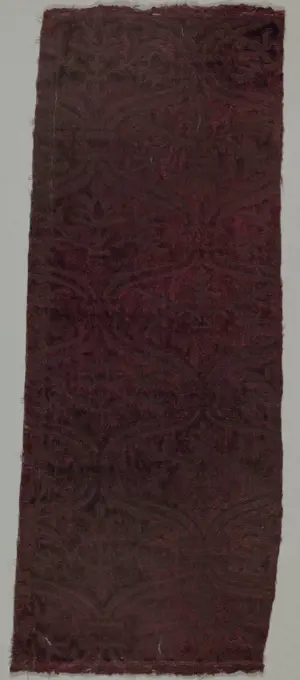
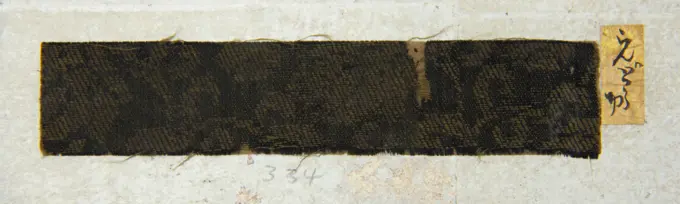
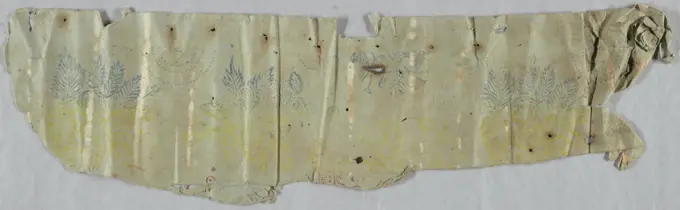
Fragment, Medium: silk Technique: supplementary warp forming cut and uncut pile (velvet), Continuous ogives enclosing plant forms. Deep plum color., 17th century, woven textiles, Fragment
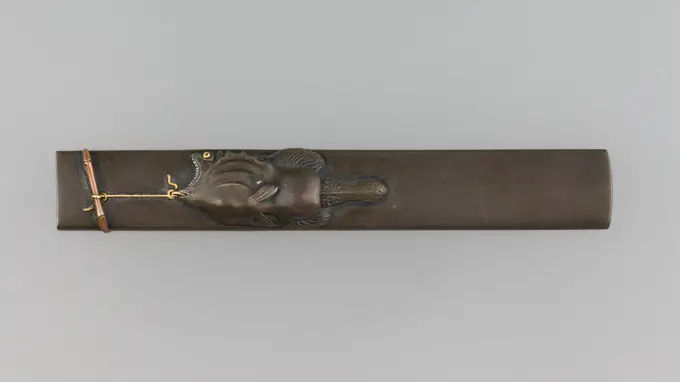
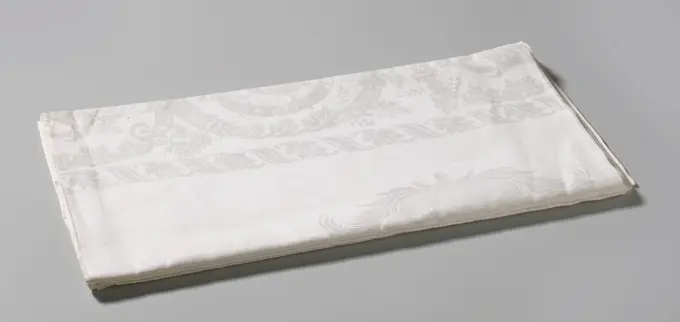
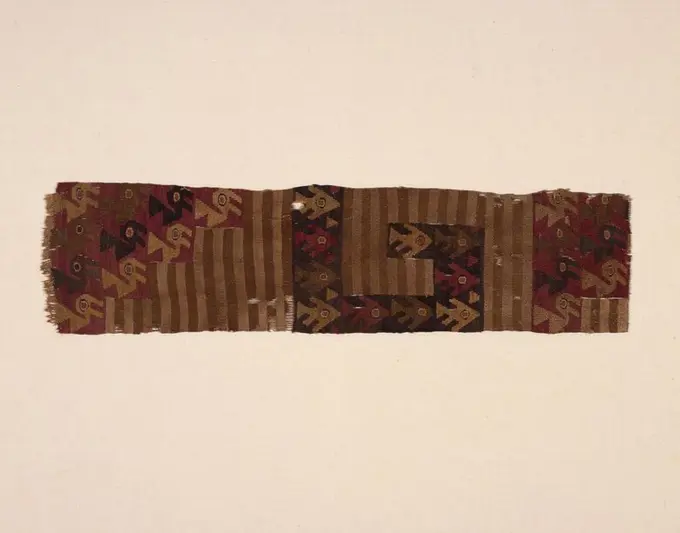
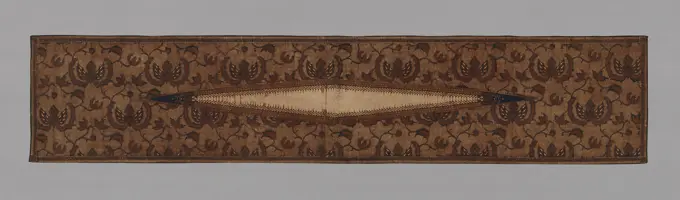
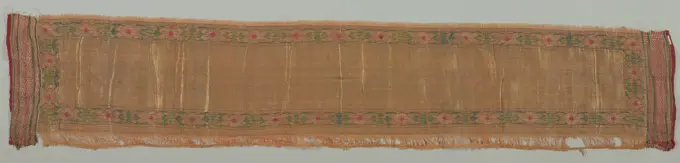
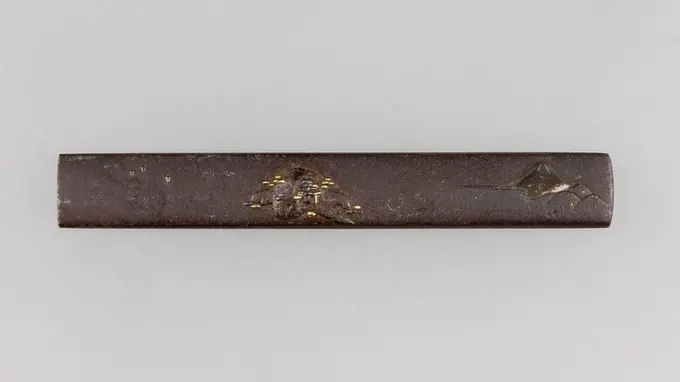
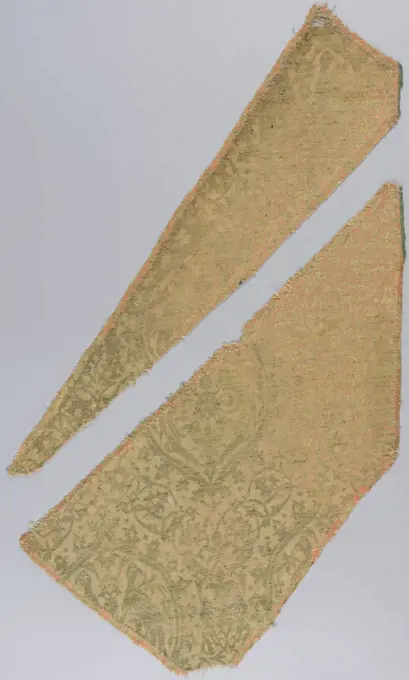
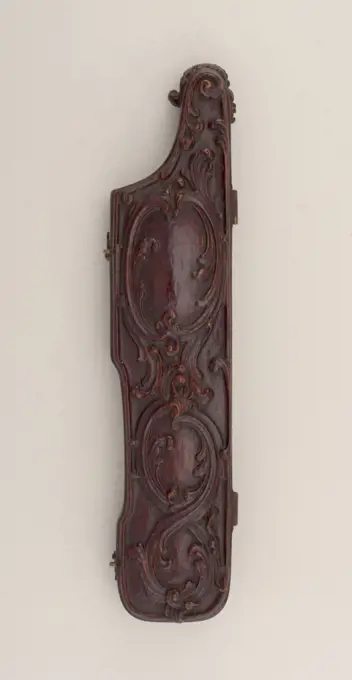
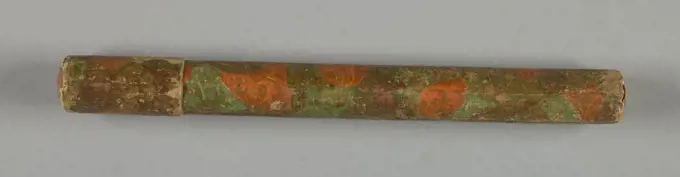
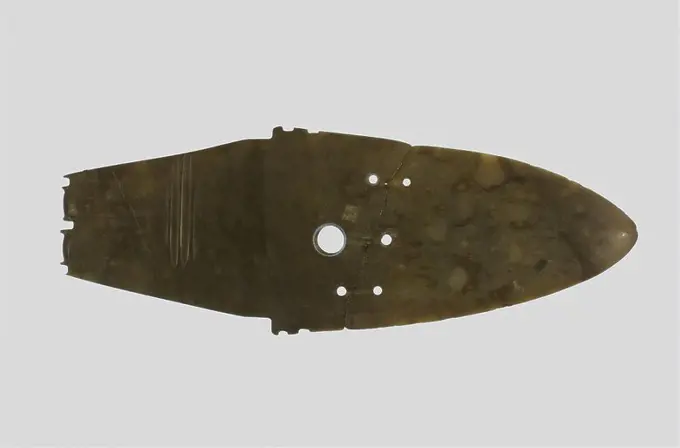
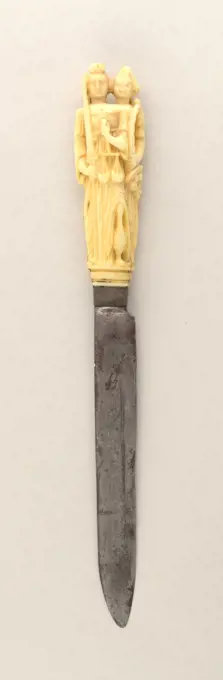
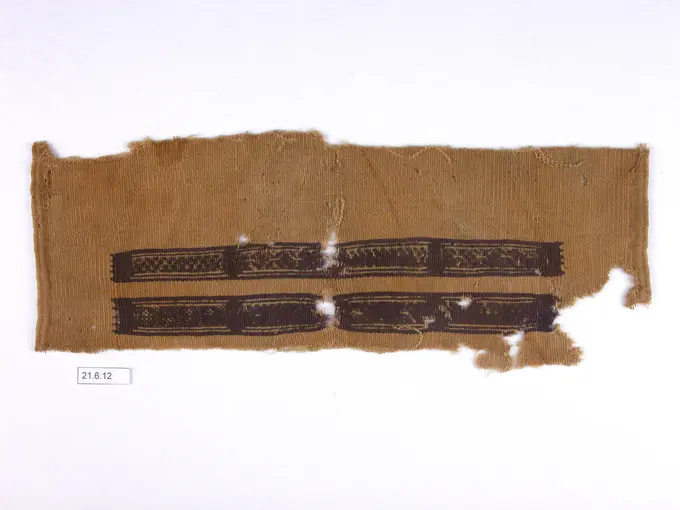
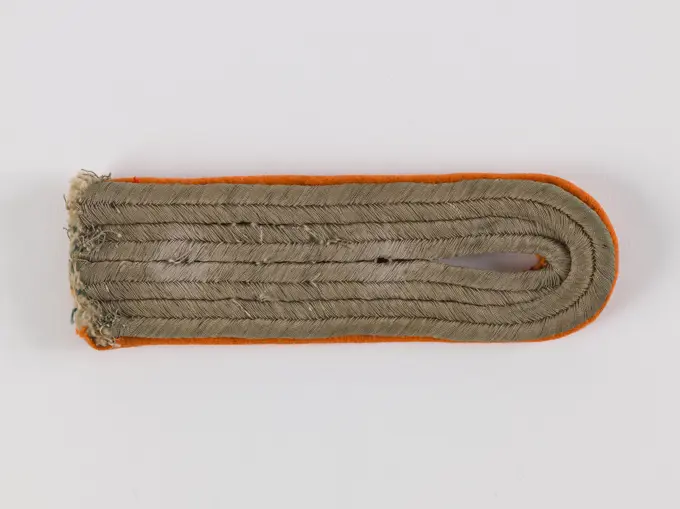
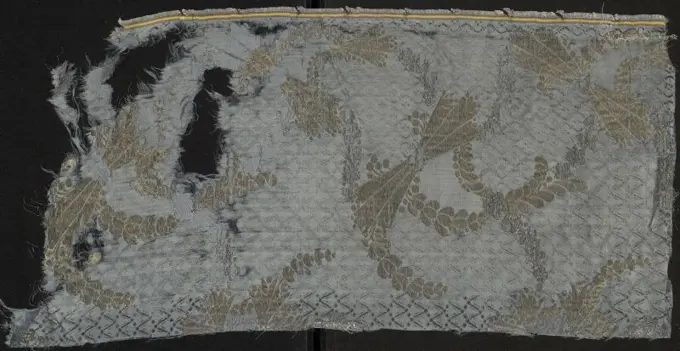
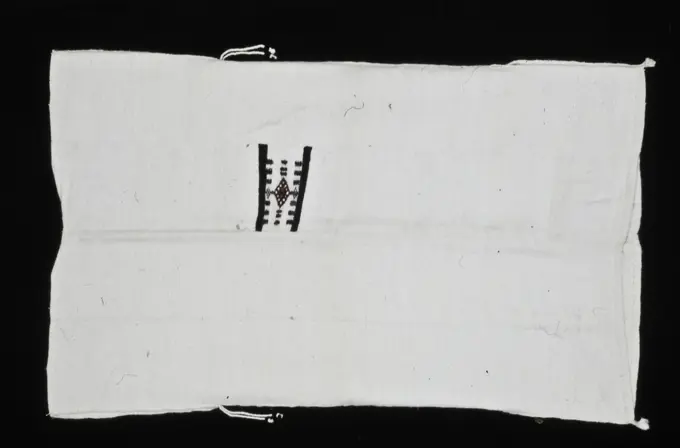
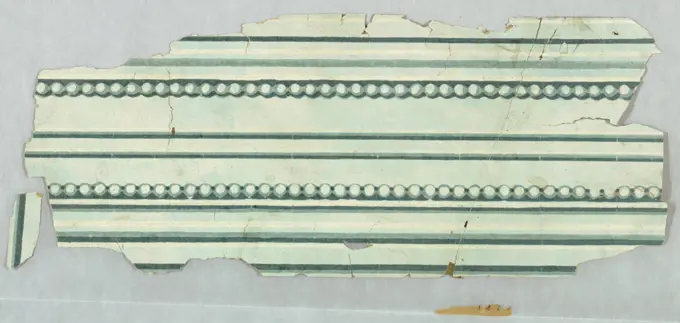
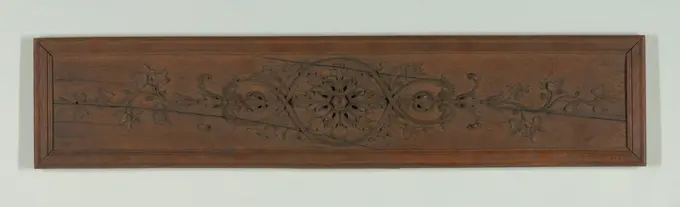
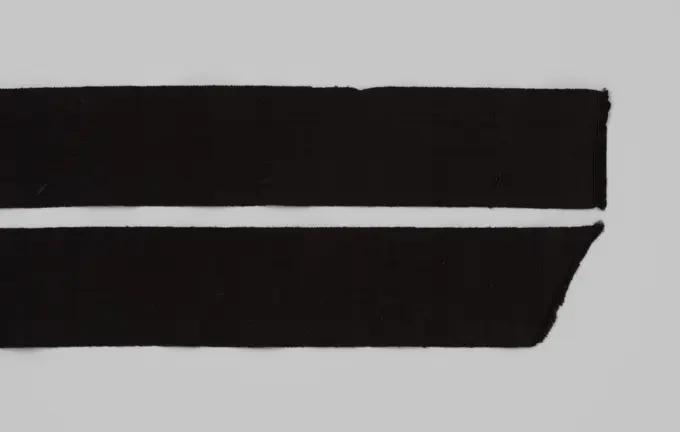
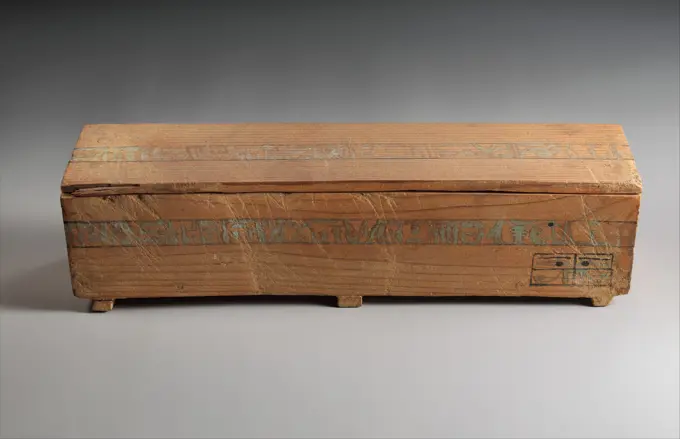
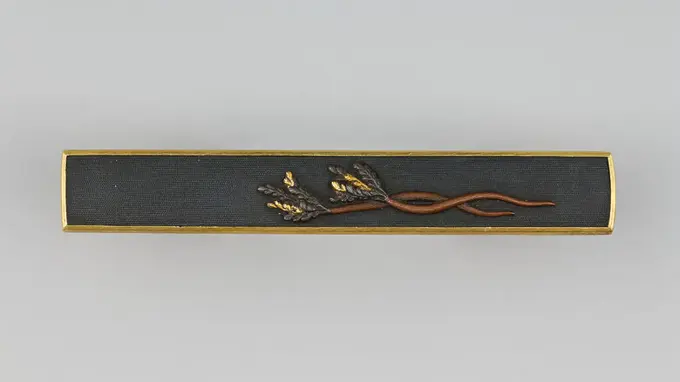
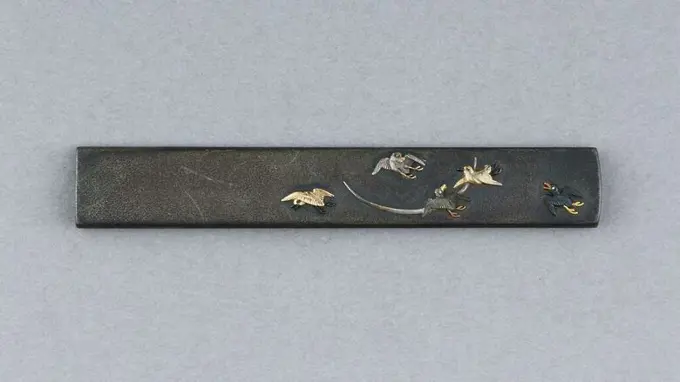
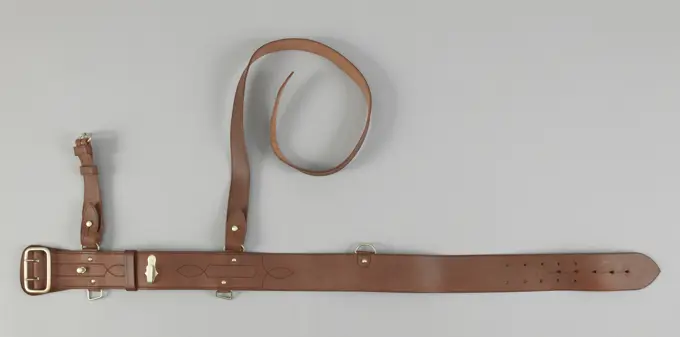
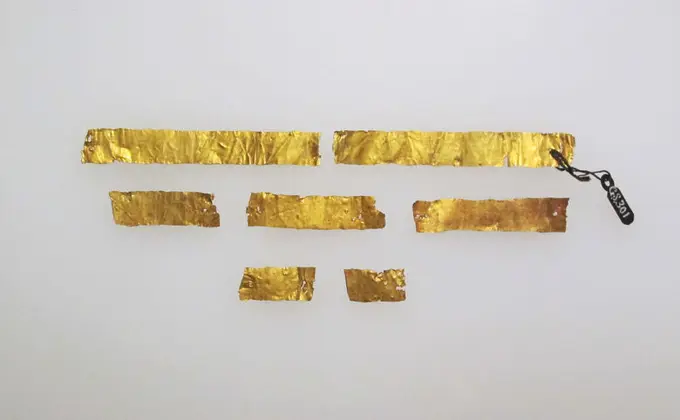
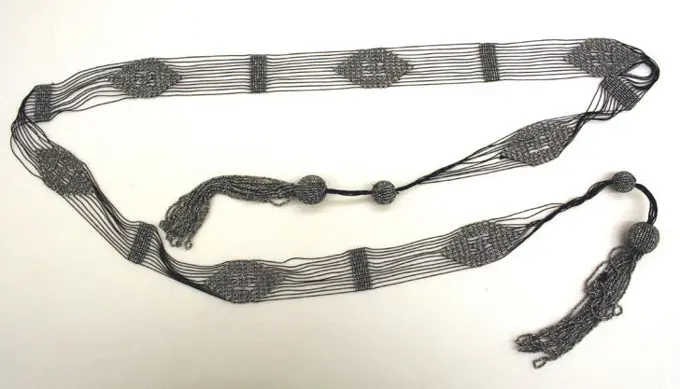
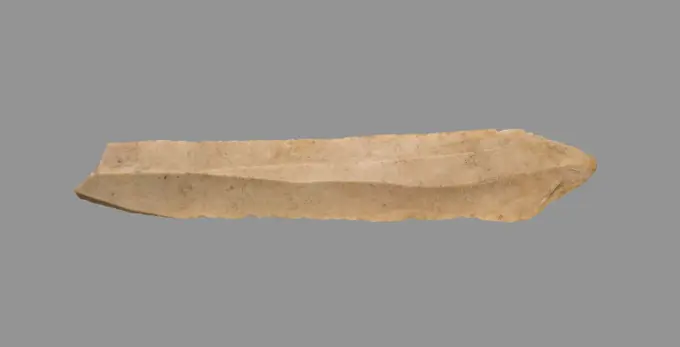
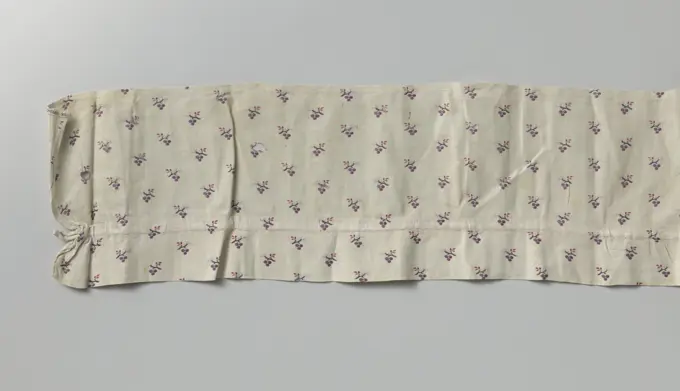
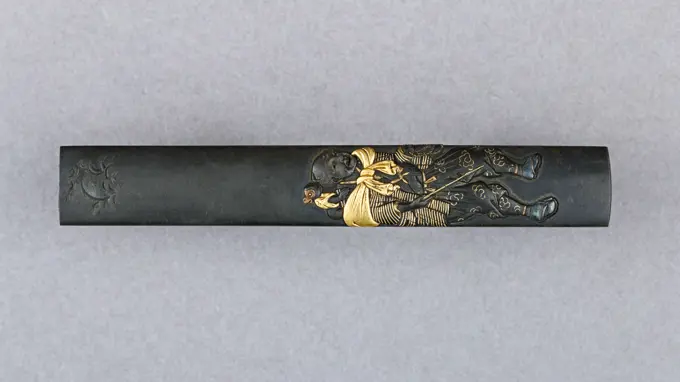
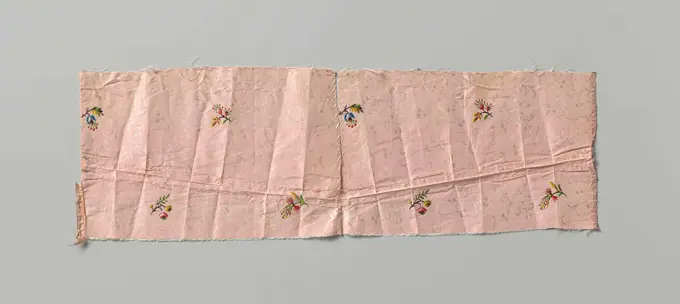
Fan case, Medium: carved wood, Fan case is a rectangular wooden box with floral pattern and Japanese inscription on one end., Japan, 19th century, costume & accessories, Fan casePiece 18th-19th century Japan. Piece 65964Metrage ribbon of plain black silk mesh, Gustav Schnitzler, c. 1900 Metrage ribbon of plain black silk mesh. NijmegenFrance (possibly) whole: Silk Metrage ribbon of plain black silk mesh. NijmegenFrance (possibly) whole: SilkKnife Handle (Kozuka) mid-18th-early 19th century Ichijosai Hironaga (Hirotoshi) Japanese A kozuka is a handle of a by-knife that is part of a sword mounting. It is kept in a slot on the reverse of a katana scabbard, often with a matching kgai (hairdressing tool).. Knife Handle (Kozuka). Japanese. mid-18th-early 19th century. Copper-silver alloy (shibuichi), gold, copper. Sword Furniture-KozukaFragment of a tablecloth with the weapon of Boelens van der Haer ,, 1874 Fragment of a white linen dams of tablecloth with volutes and the weapon of Boelens van der Haer. North Brabant (Possibly) linen (material) damask Fragment of a white linen dams of tablecloth with volutes and the weapon of Boelens van der Haer. North Brabant (Possibly) linen (material) damaskFragment. Probably central or south coast, Peru. Date: 1000-1476. Dimensions: 59.7 x 15.9 cm (23 1/2 x 6 1/4 in.). Cotton and wool (camelid), slit and dovetailed tapestry weave with eccentric and wrapped outlining wefts. Origin: Peru. Museum: The Chicago Art Institute, Chicago, USA.Fragment red Zijdamast, Anonymous, c. 1615 - c. 1630 Fragment red Zijdendamast with a pattern of flowers and leaves. Italy silk damask Fragment red Zijdendamast with a pattern of flowers and leaves. Italy silk damaskTextile FragmentFragment, Medium: silk Technique: supplementary warp forming cut and uncut pile (velvet), Continuous ogives enclosing plant forms. Deep plum color., 17th century, woven textiles, FragmentCeremonial Undergarment (Kampuh) Java. Cotton, plain weave; wax resist dyed (batik) .Leather envelope bag with silver decoration, 1930, fashion accessories, Italy, 20th century.Textile Swatch , 1950s to 1960s. Cotton, 24 1/2 x 7 1/4 in. (62.2 x 18.4 cm).    1950s to 1960sFragment green silk brocade. Fragment of 2 pieces sewed together with pattern of pomegranates in rows alternately facing up and down.Needle sheath 18th century possibly German. Needle sheath. possibly German. 18th century. Silver. Textiles-Methods and MaterialsPanel (India); cotton, silk, metallic threadsPiece 18th-19th century Japan. Piece 67548Knife Handle (Kozuka). Culture: Japanese. Dimensions: L. 3 3/4 in. (9.5 cm); W. 9/16 in. (1.4 cm); thickness 1/4 in. (0.6 cm); Wt. 0.9 oz. (25.5 g). Date: late 18th-early 19th century. Museum: Metropolitan Museum of Art, New York, USA.Piece 18th-19th century Japan. Piece 67379Fragment of Border 14th century. Fragment of Border 451036Textile Fragment 16th-17th century. Textile Fragment 454579Fragments, Medium: silk, metallic technique: 4&1 satin patterned with plain weave, Affronted phoenixes within a cartouche in gold on coral., Italy, 14th-15th century, woven textiles, FragmentsSample first half 19th century French. Sample 219176Half Model of an Oared Gunboat, anonymous, c. 1780 - c. 1820 ship model. half model. builder's model Polychromed mold model (starboard). The skin above the barkhout is closed at the bow and in the stern. Flat mirror, wide rudder. The Zeeg runs forward slightly, one barkhout. It is a rowing wash with peaked around. Scale approx. 1:22 (derived). Netherlands wood (plant material)Samples, Orinoka Mills, (Philadelphia, Pennsylvania, USA), a. green ground with orange floral motifs, b. gold color ground with lighter color floral motifs, c. green ground with yellow floral motifs, USA, ca. 1910, woven textiles, SamplesStove Board 1820-40 American. Stove Board 7923Knife Handle (Kozuka) late 18th century Japanese A kozuka is a handle of a by-knife that is part of a sword mounting. It is kept in a slot on the reverse of a katana scabbard, often with a matching kōgai (hairdressing tool).. Knife Handle (Kozuka) 29741Tape, Medium: silk Technique: plain weave, White tape or seam binding on a flat wooden spool., USA, mid-19th century, woven textiles, TapeWaistcoat panel, Medium: silk, metallic thread, metal sequins, colored foil, glass beads Technique: embroidered on satin weave, Front panel of a gentleman's waistcoat embroidered in a delicate foral design on white satin., France, late 18th century, costume & accessories, Waistcoat panelFred Hassebrock, Hacking Axe, c 1938 Hacking AxeTextile Swatches Onondaga Silk Company, Inc. (1925-1981). , 1948-1959. Silk, 24 x 8 1/2 in. (61 x 21.6 cm).    1948-1959Sword-Hilt Collar (Fuchi). Culture: Japanese. Dimensions: H. 1 1/2 in. (3.8 cm); Wt. 0.9 oz. (25.5 g). Date: ca. 1615-1868. Museum: Metropolitan Museum of Art, New York, USA.Case, mahogany, silk, brass, Mahogany case for three implements, irregular rectangular shape. Lid attached to bottom with two brass hinges and small hooks. Top of lid carved with scrolled acanthus leaves, in the shape of three 'cartouches'. Inside of case covered with silk, S-shaped scroll on the inside of case to hold the knife in place., probably France, ca. 1750, cutlery, Decorative Arts, CaseRoller painting, Anonymous, 1600 - 1800 A cart with figures, an episode from the life of Genji. The paper is in Suhama shape. In wooden box. Japan paper. ink A cart with figures, an episode from the life of Genji. The paper is in Suhama shape. In wooden box. Japan paper. inkFragment, Medium: silk Technique: 5-harness satin damask, Narrow green damask in a medium-scale pattern of rising ogives fitted together. All interspaces are filled with a diaper pattern and scrolling leaves. One selvage present., Italy, 17th century, woven textiles, FragmentFragment (India); silk; Warp x Weft: 38.4 x 11.4 cm (15 1/8 x 4 1/2 in.); 1952-58-2Half Model of a Gunboat, anonymous, c. 1792 ship model. half model. builder's model Polychromed mold model (starboard) of a flat bottom. Pointed stern, wide rudder with tiller over deck. The Zeeg is almost flat, one barkhout. This gaffel canon boat had one piece in front. Amsterdam (possibly) wood (plant material)   AmsterdamFragment; woven silk velvetSword-Hilt Collar (Fuchi) ca. 1615-1868 Japanese A fuchi is a collar that is mounted at the base of the grip of a sword hilt, usually made as part of a set with a matching kashira (pommel cap).. Sword-Hilt Collar (Fuchi). Japanese. ca. 1615-1868. Iron, gold, copper-silver alloy (shibuichi). Sword Furniture-Fuchi-KashiraTowel Made 1801-1900 Turkey. embroidered .Key, c. 1400 - c. 1500 Key whose handle is formed by a French lily. A clover -shaped incision in the beard. The shaft is square and decorated with dots and stripes. Probably symbolic key. France iron (metal) Key whose handle is formed by a French lily. A clover -shaped incision in the beard. The shaft is square and decorated with dots and stripes. Probably symbolic key. France iron (metal)Fan case, printed paper, Paper fan case with removable lid, made from bookbinder's paper with floral decoration in red and green., 1725-40, costume & accessories, Fan casePiece 17th century China. Piece. China. 17th century. Silk / Compound weave. Textiles-WovenDagger-Blade (ge). China. Date: 1300 BC-1050 BC. Dimensions: 18.1 × 6.5 × 0.6 cm (7 1/8 × 2 9/16 × 1/4 in.). Jade. Origin: China. Museum: The Chicago Art Institute, Chicago, USA.Schjerfbeck, Helene, work, Sketch book, 1876, drawing, 9.2 cm x 13.7 cm, Helena Sofia Helene Schjerfbeck 1862 - 1946, Finnish modernist painter, known for her realist works, self-portraits, landscapes and still lifes, finland.Knife, ivory, steel, silver, Blade straight-sided, upper edge curved towards the point. Plain ferrule, oval in section. Carved ivory handle: two women in costume standing in front of each other, one holding a sword and a scale (Justice), and showing one of her booted legs beneath her dress. The other woman is holding a cornucopia in one hand and a sheaf of corn () in the other, attributions of Abundance., Netherlands, ca. 1680-1700, cutlery, Decorative Arts, KnifeFragment of a Sleeve 4th century. Fragment of a Sleeve 447331Photo album of a trip through Switzerland, Austria and Germany through the Dutch Derkinderen family, c. 1864 - c. 1865 photograph Photo album in velvet cover with two metal gold -colored locks. The front and back are equipped with panels with wood carving with leaf motifs. Bracts of changes paper with geometric pattern. The album contains 24 insert sheets with gold on cut. In it 86 photos and 3 prints, each in the size of a carte-de-visiting. Each page has two passe-partouts, each decorated with a gold-colored frame. It concerns photos and prints of paintings and of cities and landscapes in Germany, Austria and Switzerland. Attached in the album a list of descriptions of the images. The album was compiled during a trip through the Amsterdam family Derkinderen. EuropeAmsterdam wood (plant material). metal. velvet (fabric weave). cardboard. paper. photographic support albumen print travelling; tourism Germany. Austria. SwitzerlandKnife Handle (Kozuka) 19th century Japanese A kozuka is a handle of a by-knife that is part of a sword mounting. It is kept in a slot on the reverse of a katana scabbard, often with a matching kōgai (hairdressing tool).. Knife Handle (Kozuka) 35036. Waongoos of thick paper, in which preformed impeller form, placed with fantasy paper and lined with red paper. Paper with orange fond on which various colored hexagons interspersed with stars, sometimes dotted. Inside deep range form that completely encloses impeller. Elongated white label in the middle of the lid.Anonymous. "Hauptmann feldgendarmerie shoulder leg". Weaving. 1935-1945. General Leclerc Museum of Hauteclocque and the Liberation of Paris, Jean Moulin Museum. 158808-5Piece of fabric. unknown, authorTunic, 20th century, 57 x 36 1/2 in. (144.78 x 92.7 cm) (uneven; with fringe), Wool, Mali, 20th centuryFragment late 16th century Italian. Fragment. Italian. late 16th century. Silk. Textiles-VelvetsBorder, Borders, polished colors. All with beading, some marbleized., France, 1860-1900, Wallcoverings, BorderFan case, Silk-covered paper, Fan case covered with white satin. Curved, removable lid., France, late 19th century, costume & accessories, Fan casePanel; wood, carvedDoor plate with fish, G. Dikkers & Co, c. 1910 The driven plate shows a driven stylized ornament of two antithetically placed fish at the top and bottom. The surface of this decoration has been processed nuanced with different punch stamps. Hengelo copper (metal) The driven plate shows a driven stylized ornament of two antithetically placed fish at the top and bottom. The surface of this decoration has been processed nuanced with different punch stamps. Hengelo copper (metal)Fragment green Zijdda mast with pomegranate masks, anonymous, c. 1400 - c. 1499 Fragment of green silk dam mast with pattern of flowering pomegranates within accolade -shaped frame. Italy silk damask Fragment of green silk dam mast with pattern of flowering pomegranates within accolade -shaped frame. Italy silk damaskTowel or Napkin Made 1801-1900 Turkey. Embroidered .Arc-shaped Pendant. China. Date: 510 BC-490 BC. Dimensions: Diam. 3 in.; 1/2 × 3/32 in. Jade. Origin: China. Museum: The Chicago Art Institute, Chicago, USA.RECIPIENTE DE CERAMICA CON TAPA PROCEDENTE DE LA NECROPOLIS DE LAS ESPERILLAS (SANTA CRUZ DE LA ZARZA, TOLEDO). EN EL MUSEO DE SANTA CRUZ.Lluís Masriera / Centro de mesa de plata, 1906. Colección privada. Author: LLUÍS MASRIERA I ROSÉS.Copper Plaque ca. 1479-1458 B.C. New Kingdom. Copper Plaque. ca. 1479-1458 B.C.. Copper. New Kingdom. From Egypt, Upper Egypt, Thebes, Deir el-Bahri, Temple of Hatshepsut, Foundation Deposit 3 (C), MMA excavations, 1923-24. Dynasty 18Red side fragment, c. 1620 - c. 1640 Red side fragment with repeating pattern of stylized flowers on curved branches with leaves. Germany Ketting an element: Silk Red side fragment with repeating pattern of stylized flowers on curved branches with leaves. Germany Ketting an element: SilkTrimming, Medium: silk Technique: woven, White trimming with scallops and knotted floss ornaments., USA, ca. 1902, trimmings, TrimmingASTIL DE FLECHA: CON DECORACION DE PINTURA EN BANDAS. DETALLE. PALEOLITICO. (DEPOSITO: MUSEO ARQUEOLOGICO NACIONAL).Jewelry Mold with Figures in a Temple ca. 1st century India (Deccan Plateau). Jewelry Mold with Figures in a Temple 73258Doshalla, 19th century, L.53 x W.10-½ in., wool, India, 19th centuryKnife Handle (Kozuka). Culture: Japanese. Dimensions: L. 3 13/16 in. (9.7 cm); W. 9/16 in. (1.4 cm); thickness 3/16 in. (0.5 cm); Wt. 0.9 oz. (25.5 g). Date: ca. 1615-1868. Museum: Metropolitan Museum of Art, New York, USA.Brush pen and scrollComb 7th-8th century. Comb 454691Fragment of the Bordic;  early xxw (1900-00-00-1910-00-00);Two pieces of ribbon of black rips side, anonymous, c. 1400 - c. 1950 Two pieces of ribbon of black rips side. West-Europa silk Two pieces of ribbon of black rips side. West-Europa silkMiniature coffin of Saiah ca. 2051-1981 B.C. Middle Kingdom. Miniature coffin of Saiah 545283Sketchbook: earlystudies.  Artist: John La Farge, American, 1835-1910, M.A. (HON.) 1896Knife Handle (Kozuka). Culture: Japanese. Dimensions: L. 3 13/16 in. (9.7 cm); W. 9/16 in. (1.4 cm); thickness 1/4 in. (0.6 cm); Wt. 1.4 oz. (39.7 g). Maker: Goto Jujo (Japanese). Date: 18th century. Museum: Metropolitan Museum of Art, New York, USA.Piece 16th century Italian. Piece 213059Sidewall, Machine printed on continuous paper, Irisé or rainbow paper. Motifs include bouquets in baskets, or perhaps potted plants, stylized floral sprigs and dotted bullseye pattern. Printed in red, yellow and blue on ungrounded blue-green paper., 1820-40, Wallcoverings, SidewallMiter Band early 20th century (original dated late 14th century) British. Miter Band 463506Textile with Floral Pattern. Culture: Central Asia. Dimensions: 4 3/4 x 11 in. (12.1 x 27.9 cm). Date: late 13th-mid-14th century.Central Asian silks with small dense patterns in gold were part of the international trade that flourished under the Mongols, and most known examples survive in European church treasuries. This piece was part of a liturgical vestment long associated with Pope Benedict XI (d. 1304). Textiles such as these were also depicted in Italian--particularly Sienese--paintings, for example Simone Martini's Annunciation of 1333 (see ill.). Museum: Metropolitan Museum of Art, New York, USA.valimba (xylophone) 19th century Sena peoples. valimba (xylophone). Sena peoples. 19th century. Wood, string, leather. Mozambique; Zimbabwe; Malawi. Idiophone-Struck-bar-woodKnife Handle (Kozuka). Culture: Japanese. Dimensions: L. 3 13/16 in. (9.7 cm); W. 9/16 in. (1.4 cm); thickness 3/16 in. (0.5 cm); Wt. 1.2 oz. (34 g). Date: 1843. Museum: Metropolitan Museum of Art, New York, USA.Textile (Spain); raw silk; Warp x Weft: 7.5 x 37 cm (2 15/16 x 14 9/16 in.); 1951-182-1Belt, 33 1/16 x 4 3/4 in. (84 x 12.1 cm) (excluding ties), Shells, cord, Solomon IslandsAnonymous belt-drill type Sam Browne Belt having belonged to Daniel Cordier, companion of the Liberation (attributed title), 1944-05-23, leather. White metal, ink. Museum of the Liberation of Paris - General Leclerc Museum - Jean Moulin Museum.Wreath fillet, funerary. Culture: Greek or Roman. Dimensions: Other (A, 1st 1/2): 5/16 × 2 1/8 in. (0.8 × 5.3 cm)Other (A, 2nd 1/2): 1/4 × 2 1/8 in. (0.7 × 5.4 cm)Other (B): 5/16 × 1 1/8 in. (0.8 × 2.8 cm)Other (C): 5/16 × 13/16 in. (0.7 × 2.1 cm)Other (D): 5/16 × 1 1/2 in. (0.7 × 3.8 cm)Other (E, 1st 1/2): 5/16 × 5/8 in. (0.7 × 1.6 cm)Other (E, 2nd 1/2): 5/16 × 1/2 in. (0.8 × 1.3 cm). Museum: Metropolitan Museum of Art, New York, USA.Belt ca. 1900 American or European. Belt 121699Officer welt, so called little dog unknown labelHalf Model of a 6-Gun Brig, anonymous, c. 1780 - c. 1825 ship model. half model. builder's model Polychromed mold model (starboard) of a two -mast. The boosting is quite striker. Get mirror, Hol Wulf, no details of fence or side gallery; Straight with square stirring king. Seeping back slightly rising, one barkhout. Peaked around with sharply cut a stern. The big mast is missing, but its place is indicated by a line. Netherlands wood (plant material)Textile Fragment 18th century. Textile Fragment. 18th century. Silk and metallic thread; brocaded. Made in India. Textiles-BrocadesInscribed Pot Fragment ca. 1580-1479 B.C. Second Intermediate Period-Early New Kingdom. Inscribed Pot Fragment 555888Fragment 9th-10th century. Fragment. 9th-10th century. Stone; carved. Excavated in Iran, Nishapur. StoneBlack -refyed plate; Unknown attic workshop; IV-III century BC (-399-00-00--200-00-00);Sickle Blade, 1980-1801 BC. Egypt, Middle Kingdom, Dynasty 12. Flint; overall: 5 cm (1 15/16 in.).Fall of printed cotton, anonymous, 1785 - 1795 Fall of printed cotton. A spreading motif of a branch with berries and leaves is printed on white cotton. maker: NetherlandsEngland cotton (textile) printing Fall of printed cotton. A spreading motif of a branch with berries and leaves is printed on white cotton. maker: NetherlandsEngland cotton (textile) printingSIN TITULO - 1992 - CHAPA METALICA - 154x65. Author: JOSE MARIA GUIJARRO. Location: PRIVATE COLLECTION. Coruña. SPAIN.Knife Handle (Kozuka) ca. 1615-1868 Japanese A kozuka is a handle of a by-knife that is part of a sword mounting. It is kept in a slot on the reverse of a katana scabbard, often with a matching kōgai (hairdressing tool).. Knife Handle (Kozuka) 25783Staal gebrocheerde zijde, roze, met witte ranken en gekleurde bloemen.Steel silk. Pattern: Fond of pink with white tendrils with buds. Bordered spreading flowers, in four types: a. Of red and yellow leaf; b. pink / red jet flower made of blue with yellow / green leaf; c. Red and yellow button.Belgian family album with 130 photos, anonymous, various manufacturers, 1860 - 1900  Photo album with a total of 130 photos on 44 pages. Each page contains a passe-partout for a cabinet photo or 4 passe-partouts for Cartes-de Vision. The album contains 12 cabinet photos, 116 cartes-de-visiting, 1 not glued photo in a passe-partout for a carte-de-visiting and in the back of the album a loose photo of deviant format. Not all passe-partouts in the album are filled. Portraits of unknown men, women and children, presumably from one family are depicted. With some cartes-de-visiting a name is mentioned on Verso, presumably from the portrayed person. The album also contains a prayer card for the deceased Adèle Sohet-Cardron. The photos were taken by Belgian and French photographers, including Eugène Guérin (30), Géruzet Frères and Albert Delabarre. From 19 photos the photographer is anonymous. BelgiumBrusselsBelgium cardboard. paper. photographic support. metal. leather albumen print / carbon Blade of dagger with single blade, kidney dagger dagger knife stab weapon weapon fragment soil finding iron metal, forged blade The blade is single-edged and triangular in diameter. Kling is suitable for general carving archeology dagger decoration status symbol personal equipment defense clothing accessory militaria