My Boards
View Pictures
  • My Boards
← Artworks

Japanese Nature and Textile Art

This cluster features traditional Japanese paintings and textiles, showcasing themes of nature, including sparrows, cherry blossoms, and floral patterns in various artistic styles.

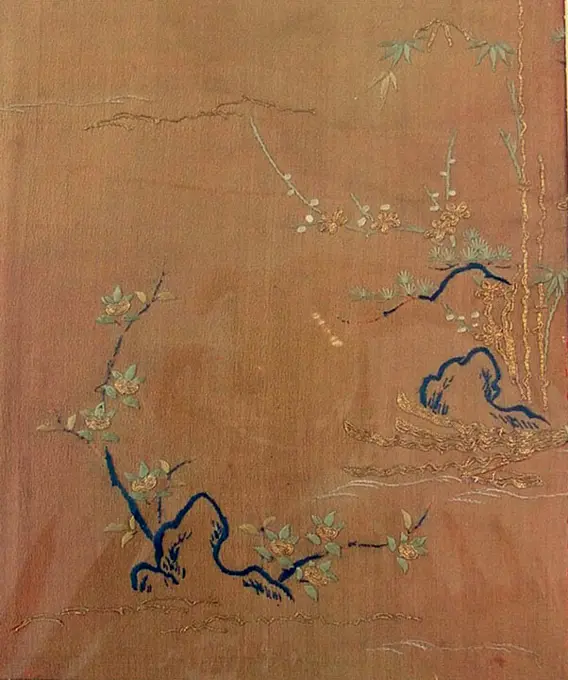
Textile fragment, embroidery on silk damask., anonymous, Japan, 1704 - 1711, Huy period, silk, height 29.3 cm × width 15.6 cm
176 assets in this story
4409-17468883
Crewel Embroidery. Dated: 1935/1942. Dimensions: overall: 54.5 x 38.9 cm (21 7/16 x 15 5/16 in.). Medium: watercolor and graphite on paper. Museum: National Gallery of Art, Washington DC. Author: Helen D. Bashian.
6145-29816324
Piece 18th century French. Piece 223999
6145-29711316
Piece 18th-19th century Japan. Piece 66009
6145-29234801
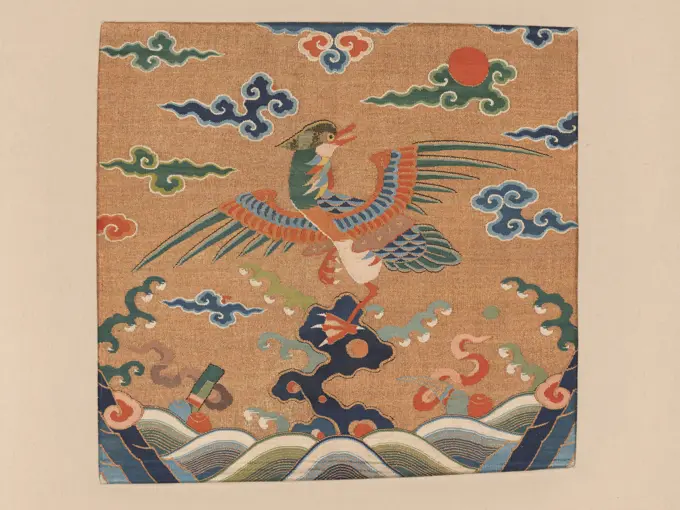
Rank Badge with Mandarin Duck late 17th-early 18th century China The mandarin duck corresponds to the seventh rank of civil officials.By the end of the seventeenth century, Qing dynasty norms had developed and taken hold in the iconography of rank badges. At that time the animals and birds on badges were depicted looking at a sun disk, said to represent the emperor. It is seen in the upper right of this badge.. Rank Badge with Mandarin Duck. China. late 17th-early 18th century. Silk and metallic thread tapestry (kesi). Qing dynasty (1644-1911). Textiles-Tapestries
4409-17499680
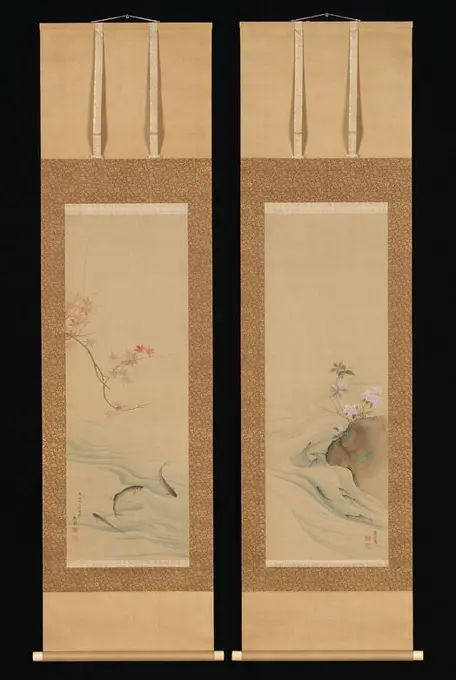
Sweetfish in Summer and Autumn. Artist: Maruyama Okyo (Japanese, 1733-1795). Culture: Japan. Dimensions: Image (a): 40 15/16 × 14 9/16 in. (104 × 37 cm)Overall with mounting (a): 75 3/8 × 20 1/4 in. (191.5 × 51.5 cm)Overall with knobs (a): 75 3/8 × 22 5/8 in. (191.5 × 57.4 cm)Image (b): 40 15/16 × 14 1/2 in. (104 × 36.8 cm)Overall with mounting (b): 75 3/16 × 20 1/4 in. (191 × 51.5 cm)Overall with knobs (b): 75 3/16 × 22 9/16 in. (191 × 57.3 cm). Date: 1785.Eight newly born sweetfish (ayu) swim upstream in the spring, past a mossy rock and pink azaleas, in the right scroll of this diptych by Maruyama Okyo. Spring and summer have come and gone in the left scroll, indicated by the crimson leaves of a maple tree. Here, three more sweetfish, fully grown, head back downstream toward the coast to begin the cycle anew. A wildly popular painter engaged in the study of both traditional Chinese and Japanese painting as well as Western realism, Okyo is said to have trained as many as one th
6145-45428649
Caveling in the Yamabushi Valley in the province of Mimasaka / Mimasaka. Yamabushidani, board 46. From the series: Views of famous places in sixty several provinces / year of Yoshu Meisho zue HIROSHIGE, UTAGAWA (1797 1858)
4409-28963047
Awaiting a ferry after clearing snow. Origin: China. Ink on silk. Period: Yuan or Ming dynasty. Date: 1279-1644. Museum: Freer Gallery of Art and Arthur M. Sackler Gallery.
6145-59268098
Kneeld writer, Anonymous, 1605 - 1615 Indian miniature. drawing  India paper brush
6145-30180253
Picture Made 1701-1900 China. Silk, satin weave; embroidered with silk and gold-leaf-over-lacquered-paper strip wrapped cotton in satin, single satin and stem stitches; laidwork and couching .
6145-30174668
Wisteria and Goldfish 1820-1901 China. Hanging scroll; ink and colors on paper . Xugu
6145-46583915
. .
4443-75458119
Sorimachi 409, 1746, Osaka
4443-75472820
Wine cup in box, 1818, Woodcuts, Surimono
6145-29194941
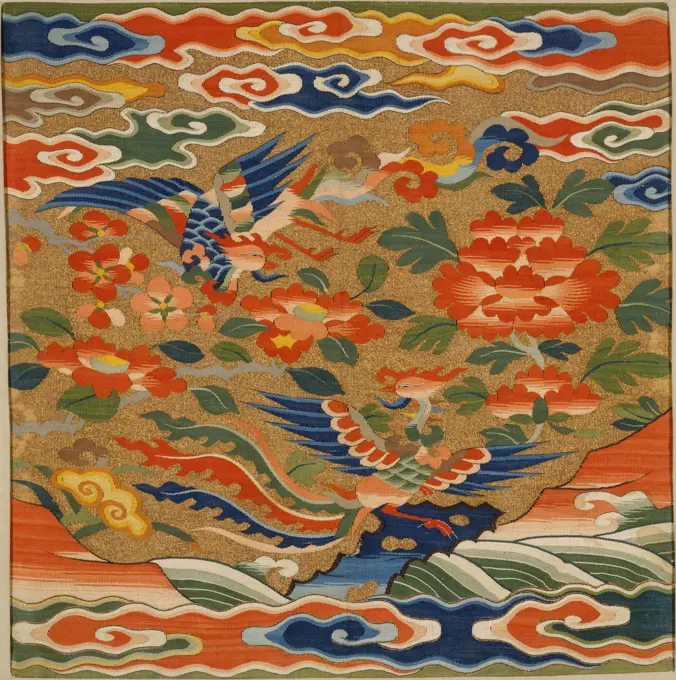
Rank badge with two phoenixes 16th century China The phoenixes appear in a symbolic landscape of clouds, waves, and a decorative rock surrounded by colorful flora: (clockwise from lower left) auspicious fungus, camellia, prunus, and (dominating the right) tree peonies. Unpatterned edges at the top and bottom of the textile (now hidden under the mat) suggest it was woven for a special purpose, probably as a decorative rank insignia for a female member of the imperial household.. Rank badge with two phoenixes. China. 16th century. Silk and metal thread tapestry (kesi). Ming dynasty (1368-1644). Textiles-Tapestries
6145-59066111
Studies of Ostów; Dressler, Adolf (1833-1881); 1880 (1880-00-00-1880-00-00);Schlesisches Museum der Bildenen Künste (Wrocław - 1880-1945) - collection, Osty (bot), German drawings, Plant Studies
6145-59567214
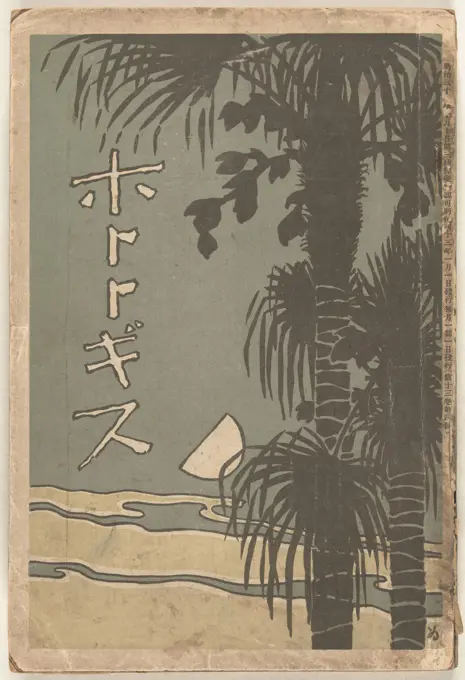
Kleine Koekoek, 1910 - 1914 book. magazine Nine editions from the 1910-1914 of the literary monthly HOTOTOGISU, where many different writers and artists have participated.  paper letterpress printing / color woodcut
4409-17375881
After a Long Summer Rain. Artist: Wen Zhengming (Chinese, 1470-1559). Culture: China. Dimensions: 6 3/8 x 19 1/2 in. (16.2 x 49.5 cm). Museum: Metropolitan Museum of Art, New York, USA.
6145-59567227
Tour over the Fuji, 1907 book One part (complete); Gray cover with image of travelers in pine trees and the mountain of Fuji; At the top left in a gold -colored cartouche the title; Schutblad; 67 magazines: Title page; Table of contents; 43 sheets with illustrations, unnumbered; 1-79, text; penultimate page, colophon; Last page, advertisement.  paper letterpress printing / color woodcut  Fuji
4409-17560818
Peacock and peonies. Utagawa Hiroshige  ; Japanese, 1797-1858. Date: 1840-1843. Dimensions: 71.1 x 24.4 cm. (28 3/8 x 9 5/8 in.). Color woodblock print; vertical oban diptych. Origin: Japan. Museum: The Chicago Art Institute, USA.
4409-28962559
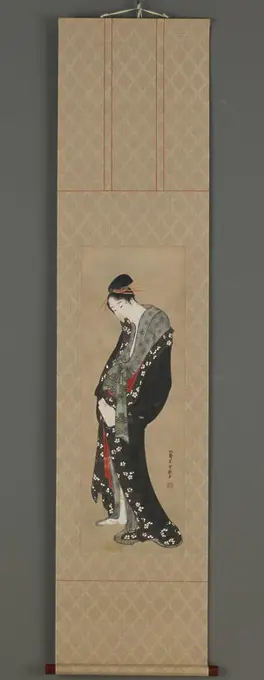
Courtesan. Origin: Japan. Period: Edo period. Ink and color on paper. Date: ca. 1796-1798. Museum: Freer Gallery of Art and Arthur M. Sackler Gallery.
6145-59468776
Illustrated Spiegel der Valken, Kawanabe Kyôsai, 1879 book Part two (of five); yellow cover; Title strip, top left; Ten magazines on which black and white illustrations of falcons and famous Valkeniers. Japan paper
6145-29141658
Piece from a Kosode with Pine, Bamboo, Blossoming Plum, and Mandarin Orange Tree Japan. Piece from a Kosode with Pine, Bamboo, Blossoming Plum, and Mandarin Orange Tree. Japan. Silk and metallic-thread embroidery on plain-weave silk crepe (chirimen). Edo period (1615-1868). Textiles-Embroidered
6145-29094369
Decorative Panel, 1800s. Japan, Edo period (1615-1868) to Meiji period (1868-1912). Lacquer, ivory, shell; overall: 2.9 x 30.5 cm (1 1/8 x 12 in.).
6145-29720781
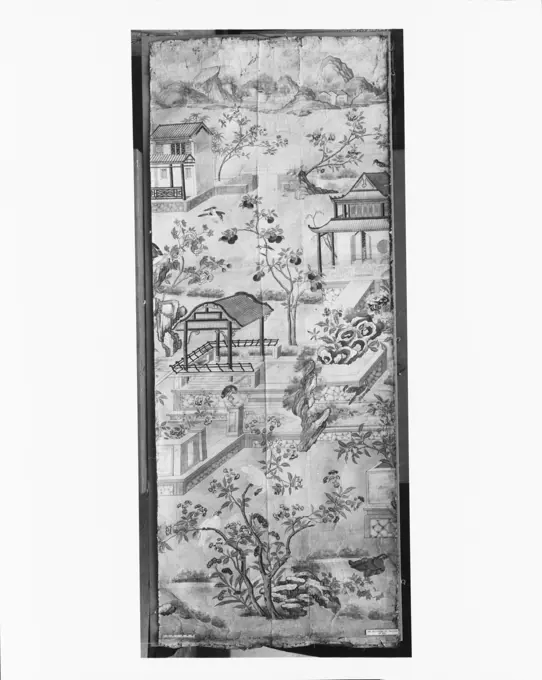
Wallpaper Panel 1700-1730 This wallpaper panel is part of a set originally consisting of seventeen pieces (see 14.106.1-.16 for set.). The panels depict mountain landscapes, scenes with houses, birds, and flowering shrubs. They were hand-painted in China during the early eighteenth century for export to England. There, as in America, such exotic wallpaper enjoyed a vogue among the fashionable gentry. Considered a great luxury, it added richness and colors to walls. This wallpaper hung in an English home for two hundred years. The panels are installed, in whole or in part, in the Powel Room in The American Wing.. Wallpaper Panel 9666
6145-29208227
Textile 18th century Japan. Textile. Japan. 18th century. Edo period (1615-1868). Textiles-Velvets
6145-29802905
Piece 18th century China. Piece. China. 18th century. Silk / Compound weave. Qing dynasty (1644-1911). Textiles-Woven
6145-59034803
Wen, Zhengming (n.1470-11-28-D.1559-03-28), solitary in a landscape (attributed title). Ink on gold background paper. Cernuschi Museum, Asia Museum of Asia in the city of Paris.
4409-18732163
PINTURA CON MARCO MODERNISTA, 1943, OLEO Y PASTEL SOBRE TELA, 40x30cm. Author: JOAN MIRO (1893-1983). Location: FUNDACION JOAN MIRO. Barcelona. SPAIN.
6145-54680789
Giraffe with Two Keepers Unidentified artist Qing dynasty (1644-1911) In 1414, a giraffea creature unknown in China at the timewas presented to the Yongle emperor (r. 1403-24) from the king of Bengal, which was a major trading center on the maritime route between the Arabian Peninsula and China. The Chinese immediately associated it with the qilin, an auspicious mythical creature. As a qilin only appears during the rule of a sagacious ruler, courtiers composed a number of sycophantic encomia celebrating the arrival of the giraffe as an omen that legitimized the reign of the Yongle emperor, who had usurped the throne. The many nearly identical paintings commemorating this event attest to the impact of this gift on the court. The giraffe also influenced the design of the qilin rank badge used for nobles.The giraffe's arrival in China was occasioned by the extraordinary naval expeditions of Admiral Zheng He (1371-1433). Between 1405 and 1433, he commanded seven expeditions, the largest co
6145-30181298
Sutra Cover Made 1590-1599 China. Silk and gold-leaf-over-lacquered-paper strip; gauze weave with supplementary patterning wefts; label paper; painted with ink .
6145-59050846
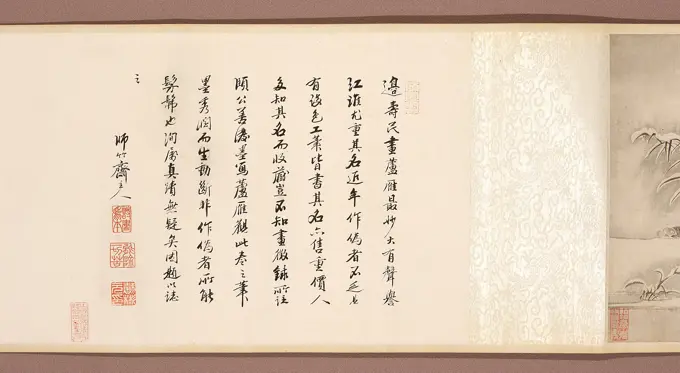
Wild in the waters of Xiao Xiang - landscape; Bian, Shouumin (1684-1752); 19th century (1801-00-00-1900-00-00);Knothe, Jerzy (1917 -2002), Knothe, Jerzy (1917 -2002)-collection, Chinese (culture), goose, coil painting, landscapes, Chinese art, purchase (provenance), scrolls, horizontal ganglings
6145-29236847
Empress Jing, Her Minister Takenochi no Sukune, and an Infant (the Future Emperor jin) 1898 Nagano Yasunosuke Japanese. Empress Jing, Her Minister Takenochi no Sukune, and an Infant (the Future Emperor jin). Nagano Yasunosuke. Japan. 1898. Ink and color on cryptomeria (sugi) wood. Meiji period (1868-1912). Paintings
6145-45599488
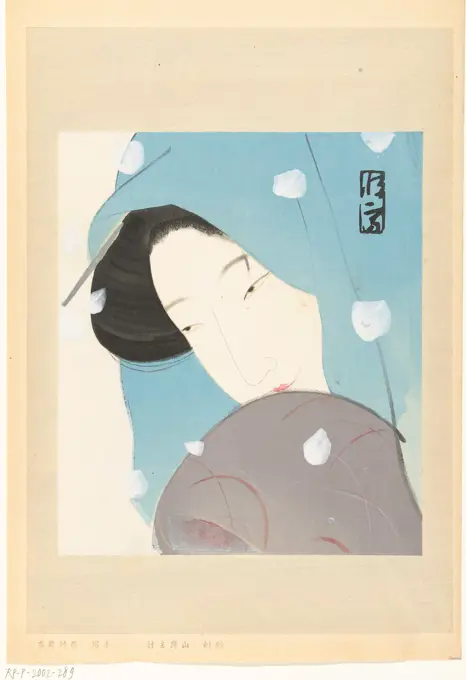
The heroine Umekawa in the snow. Portrait of a woman with blue headscarf, between snowflakes.
6145-29775784
Case (Inrō) with Design of Three Herons Seated in Maple Tree (obverse); Three Crows in Autumn Forest (reverse) 18th-19th century Japan. Case (Inrō) with Design of Three Herons Seated in Maple Tree (obverse); Three Crows in Autumn Forest (reverse) 58920
4443-28740316
Crows Flying at Sunset, c. 1888, Shibata Zeshin, Japanese, 1807 - 1891, 9 1/2 x 9 15/16 in. (24.13 x 25.24 cm) (sheet), Woodblock print; ink and color on paper, Japan, 19th century, As the artist's signature in the lower right indicates, Zeshin designed this print when he was eighty-one years old. Having begun his artistic career as an apprentice in a lacquerer's atelier at the age of eleven, Zeshin had a long and productive career up until his death at age 86. This print reveals that Zeshin's sense of artistry remained vital even in his later years.
6145-51832299
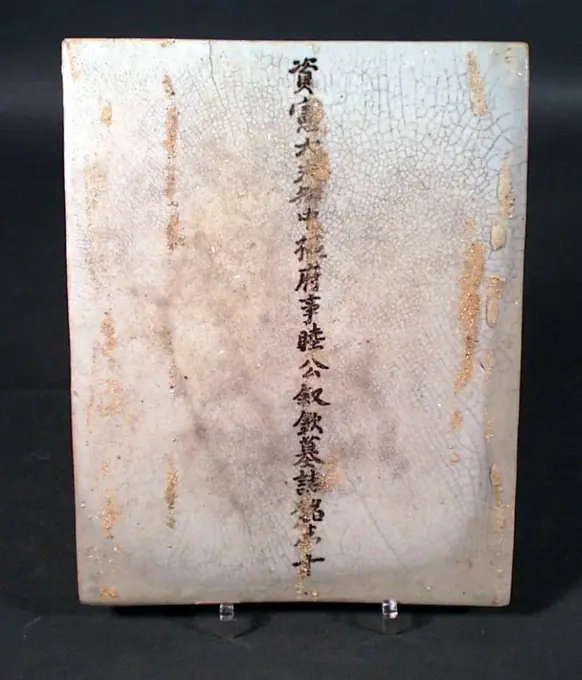
Epitaph Tablet for Mok Seoheum (1571-1652), from a Set of 11 Korean. Epitaph Tablet for Mok Seoheum (1571-1652), from a Set of 11, ca. 1652. Porcelain with underglaze, 10 1/16 × 7 1/2 in. (25.5 × 19 cm).   Asian Art ca. 1652
4409-17423645
Otsu-e of Falcon on a Pine Tree. Culture: Japan. Dimensions: Image: 23 3/8 x 8 7/16 in. (59.4 x 21.4 cm)Overall: 30 3/4 x 16 1/8 in. (78.1 x 41 cm). Date: 18th century. Museum: Metropolitan Museum of Art, New York, USA.
6145-30383761
Taishoadvertisement
6145-51842072
Unknown, Schubert, 1954, graphite, black chalk, and Conté crayon on paper.
6145-58878287
Wallpaper on linen, with Chinese interior, anonymous, 1750 - 1800 Roll wallpaper paper stuck on linen, which shows a Chinese interior. See also: BK-NM-9776-A/-C and -e/-f. France paper. linen (material) printing Roll wallpaper paper stuck on linen, which shows a Chinese interior. See also: BK-NM-9776-A/-C and -e/-f. France paper. linen (material) printing
4409-17382607
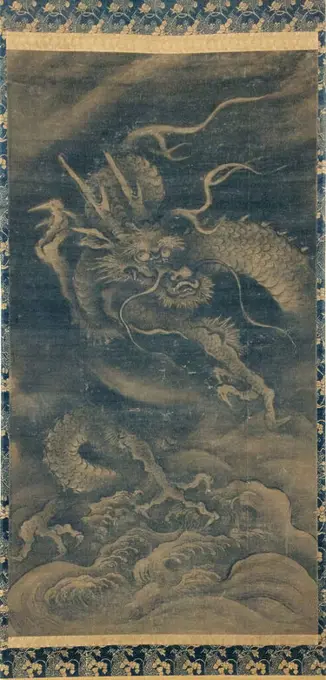
Dragon. Artist: In the style of Muqi (Chinese, active ca. 1250-80). Culture: China or Korea (). Dimensions: 51 1/2 x 27 1/2 in. (130.8 x 69.9 cm).This grouping of three paintings follows the Muromachi-period convention of flanking a religious image with a pair of natural images--landscapes, birds and flowers, or animals. Perhaps this reflects a notion that the enlightened mind is able to comprehend the essential unity of man and nature. Correlated in Chinese Daoist cosmology with the principles of yin and yang, the tiger and dragon together symbolize the creative symbiosis of nature as a whole. Here the dragon in churning motion embodies the active yang principle, while the tiger's posture reflects a yin, or potential force. They are further associated with the complementary opposites of male and female, east and west, and wind and water, respectively. The tiger-and-dragon pair was especially favored in Muromachi period painting. Three sets of the subject by Muqi, the Chinese painte
4409-28962967
Flowers, ducks, and quail. Date: 17th century. Origin: China. Period: Ming or Qing dynasty. Ink and color on silk. Museum: Freer Gallery of Art and Arthur M. Sackler Gallery.
6145-29179020
Stele for the "Spirit Road" (leading to the tomb of) Feng Su 20th century China. Stele for the "Spirit Road" (leading to the tomb of) Feng Su. China. 20th century. Ink on paper. Rubbing
4443-19524546
Design for the Embroidery of Wearing Apparel, No. 18, of the 'Fabrique de St. Ruf', Fabrique de Saint Ruf, Lyon, France, Graphite, brush and gouache, An ivy bough alternates with a bough with two lilac leaves in vertical and horizontal rows. The directions are different in alternate horizontal rows., France, 1780-1790, Drawing, Drawing
4443-73217824
Japan, Kawaguchiya Shozo, Hiroshige (I), Utagawa, Bird and Blue Morning Glory, Bird on Branch of Flowering Blue Morning Glory, with Haiku, Against Yellow Background, print, prints, Japan (collection), height 341 mm, width 112 mm, Japanese, 1797 - 1858, print maker, printmaker, 1833 - 1837, second quarter 19th century, paper, nishiki-e, colour woodcut, colour woodblock, Publication (Event), Publication, publisher
6145-51834458
Bamboo Lu Dezhi (Chinese, 1585-after 1660). Bamboo, 1637. Ink on paper, Handscroll, Overall: 11 1/2 x 324 1/2 in. (29.2 x 824.2 cm).   Asian Art 1637
4409-48153111
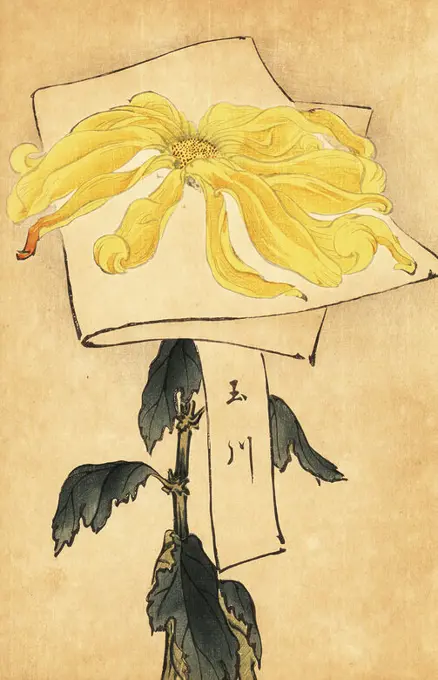
Hybrid yellow chrysanthemum with paper under the flower and label, Chrysanthemum indicum. Handcoloured woodblock print after Keika Hasegawa from Keika Hyakugiku, Keika's 100 Chrysanthemums, published by Naosaburo Yamada, Kyoto, Japan, 1893. Keika Hasegawa drew flowers and patterns for kimono in Kyoto in the final years of the 19th century.
4409-17378135
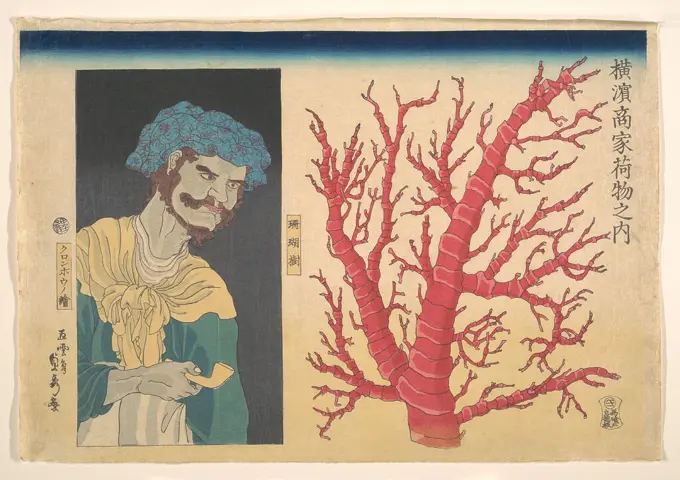
Stick of Coral and a Portrait of South Sea Islander. Artist: Utagawa (Gountei) Sadahide (Japanese, 1807-1878/79). Culture: Japan. Dimensions: Image: 10 1/4 x 14 3/4 in. (26 x 37.5 cm). Date: 3rd month,1860. Museum: Metropolitan Museum of Art, New York, USA.
6145-30214923
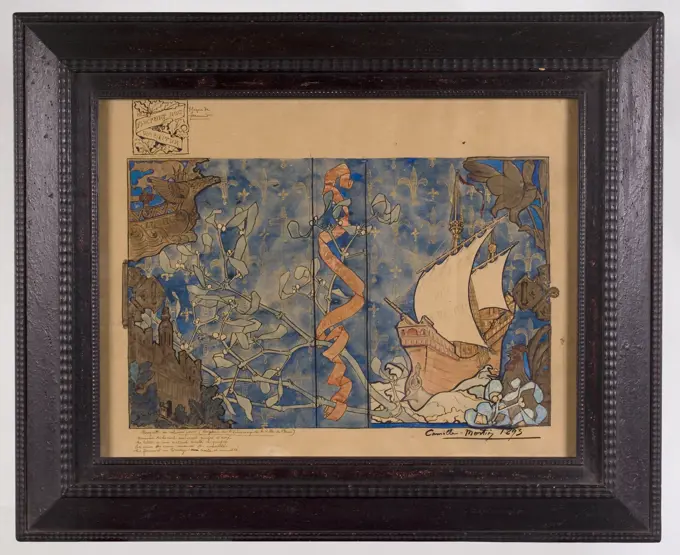
Study for the book binding "L'Echevinage tokens of the City of Paris Camille Martin. Study for the book binding Wake in the city of Paris . Feather, watercolor and gilding.
1746-21130721
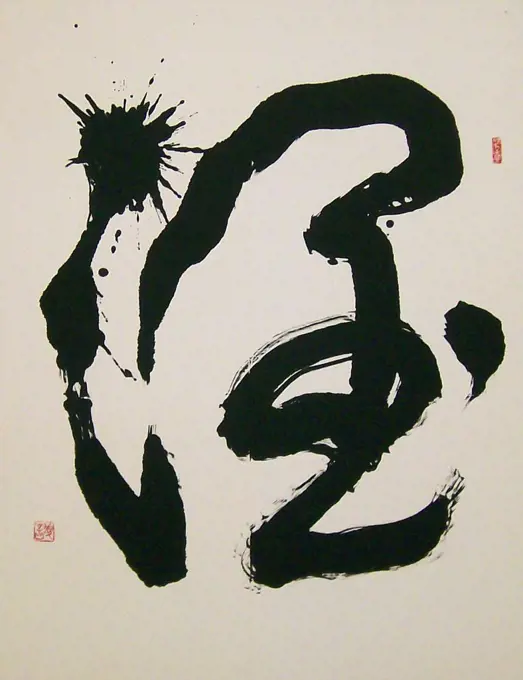
Modern Japanese calligraphy, Nagasaki Museum, Japan, 2009..
1899-19136552
Japan: Hikifuda advertising poster depicting a young woman and child. It has been left blank so that the printer can add the text required by the purchaser in the column on the left hand side. Late Meiji (1868-1912) or Early Taisho (1912-24) Era
6145-43492691
Scenic (China); hand painted on handmade paper
260-1083
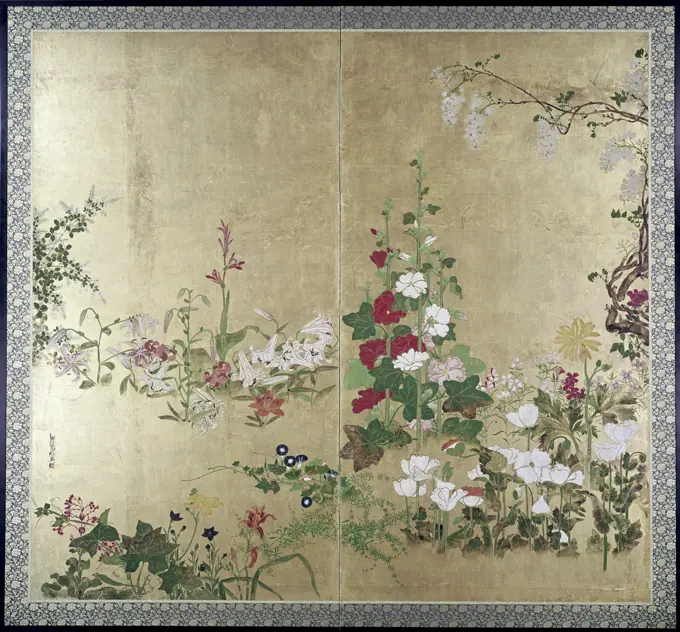
Folding Screen with Flowers Japanese Art
1899-18852627
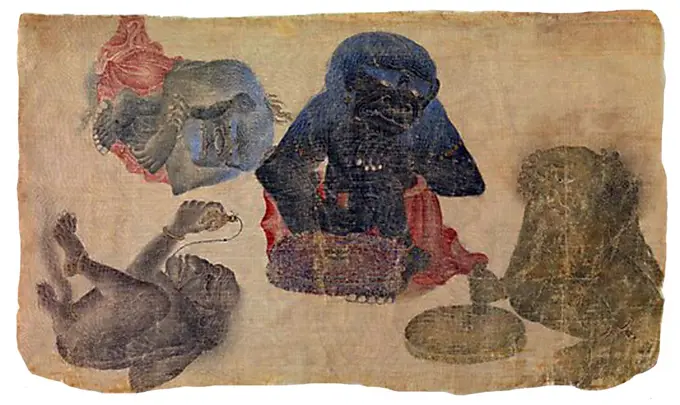
Siyah Kalem or 'Black Pen' is the name given to the 15th century school of painting attributed to Mehmed Siyah Kalem. Nothing is known of his life, but his work indicates that he was of Central Asian Turkic origin, and thoroughly familiar with camp and military life. The paintings appear in the 'Conquerors Albums', so named because two portraits of Sultan Mehmed II the Conqueror are present in one of them. The albums are made up of miniatures taken from manuscripts of the 14th, 15th, and early 16th centuries, and one series of paintings is inscribed 'work of Master Muḥammad Siyah Kalem'. Something of the style and techniques of Chinese paintings is apparent in these, and an acquaintance with Buddhist art, particularly in the depictions of grotesque demonic figures.
4409-17487104
Pine wind, plum moon ... Date/Period: Ca. 1850. Decorative Arts. Pair of six-panel screens ink on paper. Height: 173 mm (6.81 in); Width: 377 mm (14.84 in). Author: Ichikawa BEIAN.
6145-29063725
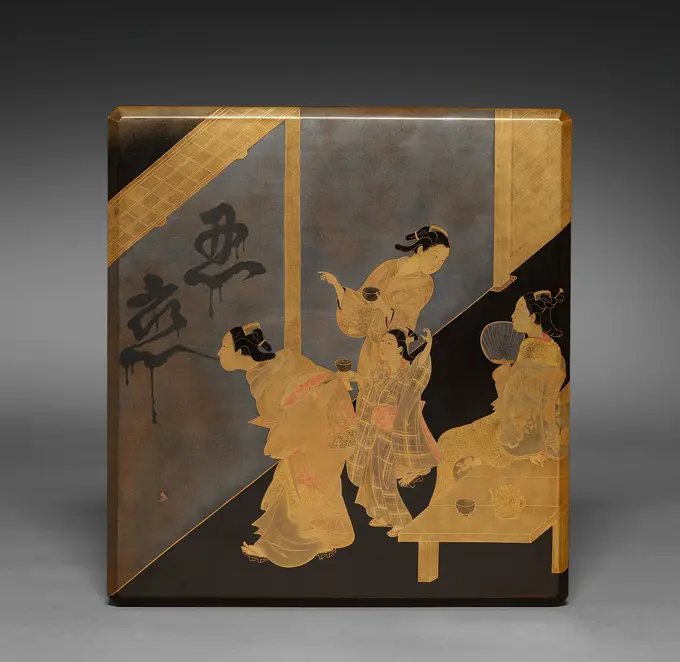
Writing Box (Suzuribako) with Spitting Courtesan (lid), early to mid-1800s. Japan, Edo period (1615-1868). Lacquer on wood with sprinkled gold (maki-e); box: 21.6 x 19.8 x 3.2 cm (8 1/2 x 7 13/16 x 1 1/4 in.); closed: 21 cm (8 1/4 in.); cover: 20.7 x 20.7 cm (8 1/8 x 8 1/8 in.). On the cover design of this writing box, a woman spits black tooth stain onto a wallas if using her mouth to write in calligraphyand forms the characters on the screen door. Decorated with gold, silver, and lacquer on wood, this container holds an ink stone, brush, and tiny water dropper.
6145-29175005
Ōyō Sketchbook 1903 Ogino Issui Japanese. Ōyō Sketchbook. Ogino Issui (Japanese, active 1900-10). Japan. 1903. Set of two woodblock printed books; ink and color on paper. Meiji period (1868-1912). Illustrated Books
4443-28727712
Foaming Waves, 17th - 19th century, Unknown Japanese, 56 3/4 × 63 3/16 in. (144.15 × 160.5 cm) (image)61 × 67 11/16 in. (154.94 × 171.93 cm) (mount), Colors on paper, Japan, 17th-19th century
6145-52954196
Bamboo Kuang Xü Chinese After a painting by Duo Yenshi Chinese printed 1922 View more. Bamboo. Kuang Xü (Chinese, 1874-1909). China. printed 1922. Hanging scroll of polychrome woodblock print; ink and color on paper. Modern period. Prints
1899-18859207
Shunga (画?) is a Japanese term for erotic art. Most shunga are a type of ukiyo-e, usually executed in woodblock print format. While rare, there are extant erotic painted handscrolls which predate the Ukiyo-e movement. Translated literally, the Japanese word shunga means picture of spring; 'spring' is a common euphemism for sex. The ukiyo-e movement as a whole sought to express an idealisation of contemporary urban life and appeal to the new chōnin class. Following the aesthetics of everyday life, Edo period shunga varied widely in its depictions of sexuality. As a subset of ukiyo-e it was enjoyed by all social groups in the Edo period, despite being out of favour with the shogunate. Almost all ukiyo-e artists made shunga at some point in their careers, and it did not detract from their prestige as artists. Classifying shunga as a kind of medieval pornography can be misleading in this respect.
4409-17517809
Strumaria tenella (Lf) Snijman. Draughtsman: Robert Jacob Gordon. Dating: Oct-1777 - Mar-1786. Measurements: h 660 mm × w 480 mm; h 315 mm × w 198 mm. Museum: Rijksmuseum, Amsterdam.
6145-29080499
Fragment of a Tiraz-Style Textile, 1130 - 1169. Egypt, Fatimid period, Caliphate of al-Hafiz or later, AH 524-565, 12th Century. Tabby ground with inwoven tapestry ornament; linen and silk; overall: 13.4 x 13.4 cm (5 1/4 x 5 1/4 in.).
1899-18856765
The Bakemono Zukushi handscroll, painted in the Edo period (18th-19th century) by an unknown artist, depicts 24 traditional monsters that traditionally haunt people and localities in Japan.
6145-50509822
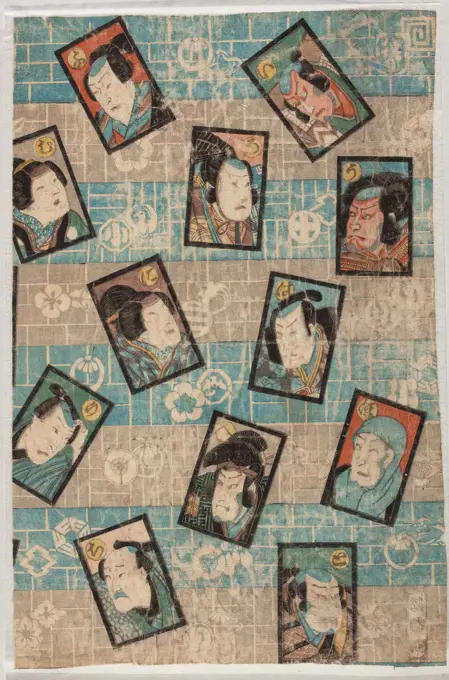
Portraits of 12 actors in frames imitating playing cards. Utagawa, Kunisada I (1786-1864), graphic artist
6145-29077802
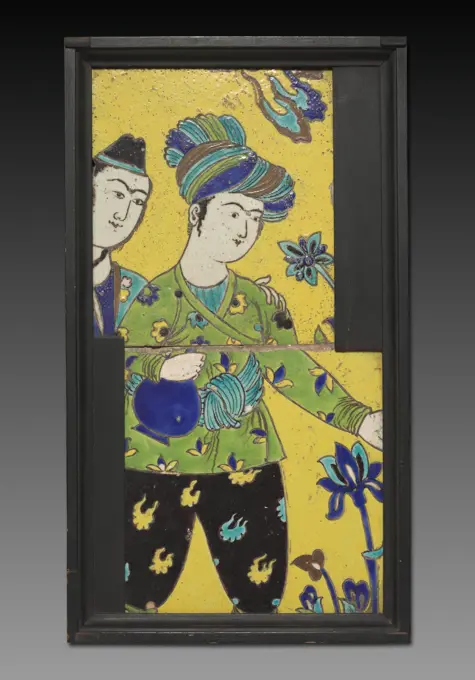
Wall Tile with a Man Carrying a Wine Bottle, 1600s. Iran, Isfahan, Safavid period (1501-1722). Faience, cuerda seca technique; overall: 44.5 x 23.5 cm (17 1/2 x 9 1/4 in.).
1397R-70869
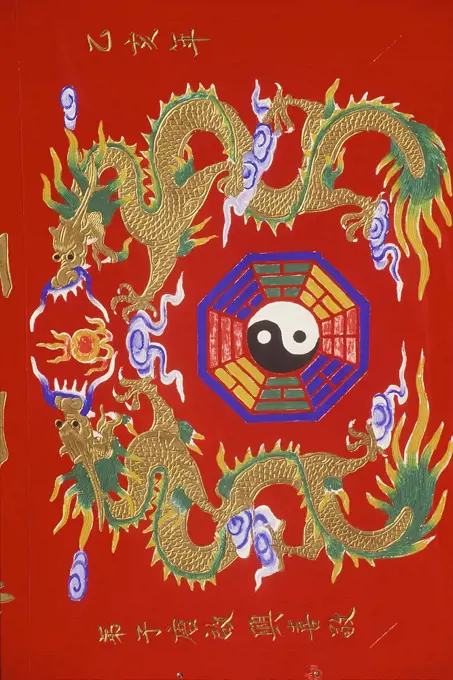
Traditional Chinese Painting, Lucky Patterns, surplus year after year
1525-22304280
Close-up of the ying yang symbol, Singapore
1746-30021117
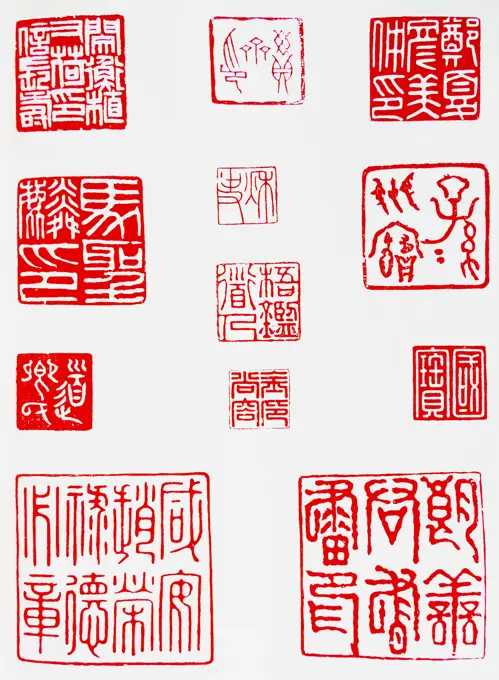
Series of Seals from Joseon Dynasty, Korea (1392 - 1910)
4266-21644082
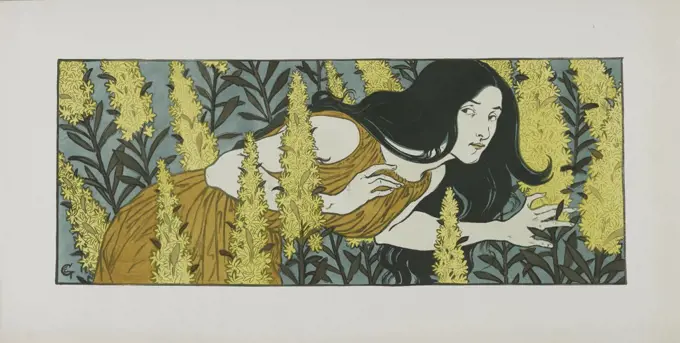
Anxiety (Inquiétude), Grasset, Eugène (1841-1917)
6145-58829192
Men Nagajuban with dragons in clouds, 1900 - 1920 Snollenkimono (Nagajuban) for a man with a decoration on the front and back properties of dragons in the midst of clouds. Gray and white crepe silk (Chirimen) hand -painted and stenciled Yuzen decorations. White silk lining. Japan silk painting Snollenkimono (Nagajuban) for a man with a decoration on the front and back properties of dragons in the midst of clouds. Gray and white crepe silk (Chirimen) hand -painted and stenciled Yuzen decorations. White silk lining. Japan silk painting
1848-54702579
Mural de la Prehistoria, prehistoric wall, painted in 1961 by the Mexican artist Leovigildo Gonzalez Morillo, size 120x180 metres, Vinales, UNESCO World Heritage Site, province of Pinar del Rio, Cuba, Greater Antilles, Central America, America, Central America
1376-548
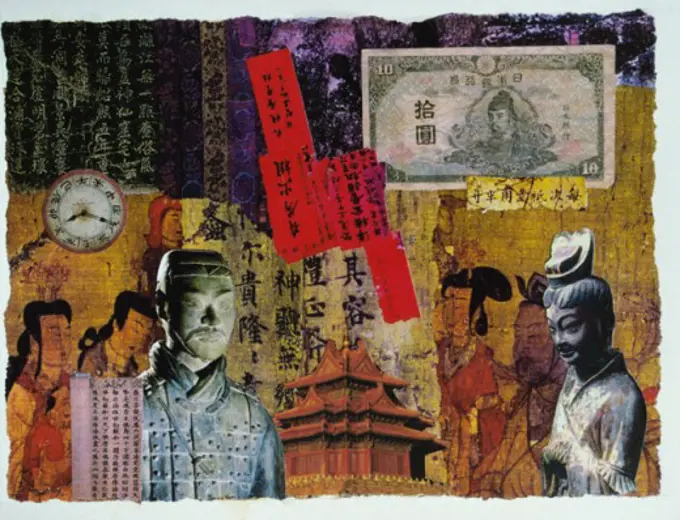
Civilizations Series: Ancient China 2003 Gerry Charm (20th C. American) Collage
4409-17532603
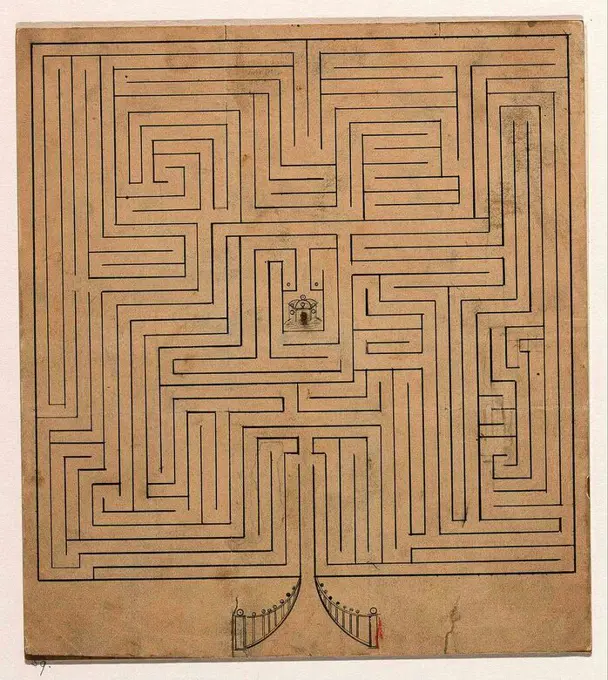
Labyrinth. Draughtsman: Jan Brandes. Dating: 1770 - 1808. Measurements: h 220 mm × w 196 mm. Museum: Rijksmuseum, Amsterdam.
4141-28746339
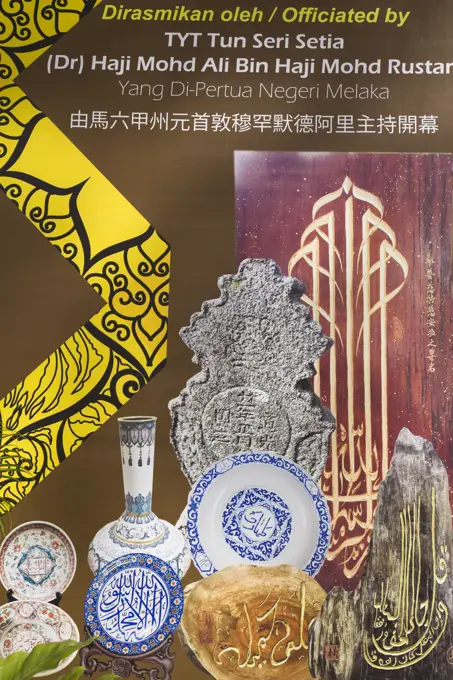
Malaysia, Melaka, Malacca,  Museum,  mural,
1899-18712665
The Bakemono Zukushi handscroll, painted in the Edo period (18th-19th century) by an unknown artist, depicts 24 traditional monsters that traditionally haunt people and localities in Japan.
6145-29255893
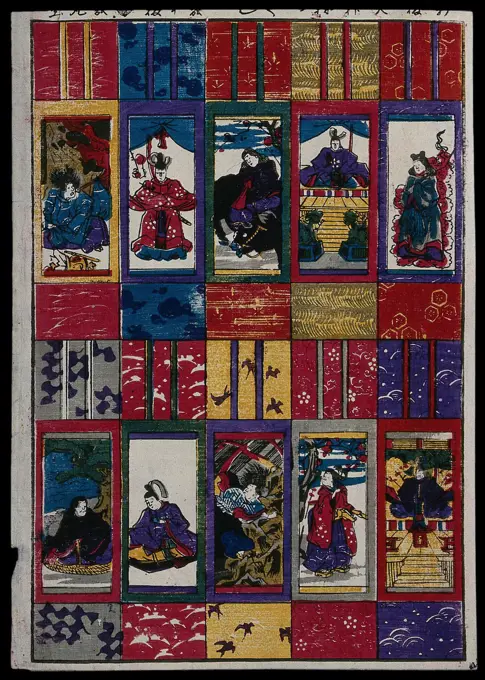
Kakejiku hanging scrolls depicting heroic figures. Colour woodcut, 1870s.
PREVIOUS
of 2
NEXT
2401 S. Ervay, Suite 206
Dallas, Texas 75215
United States
Get Started
Free ResearchMy BoardsMy Cart
For Creators
How To License Your ContentContributor PortalFrame of Mind
Resources
API accessPricing
Contact
+1 866 236 0087help@viewpictures.co.uk Contact form
©2026 View Pictures. All Rights Reserved. -B
This site is protected by reCAPTCHA and Google Privacy Policy and Terms of Service apply.