My Boards
View Pictures
  • My Boards
← Artworks

Japanese Theatre Art

Colorful woodblock prints depicting actors in traditional costumes, showcasing dramatic expressions and intricate details typical of Japanese theatrical art from the Edo period.

A woodcut illustration of a lady catching a ball., 1770., Page from book
269 assets in this story
1899-29973512
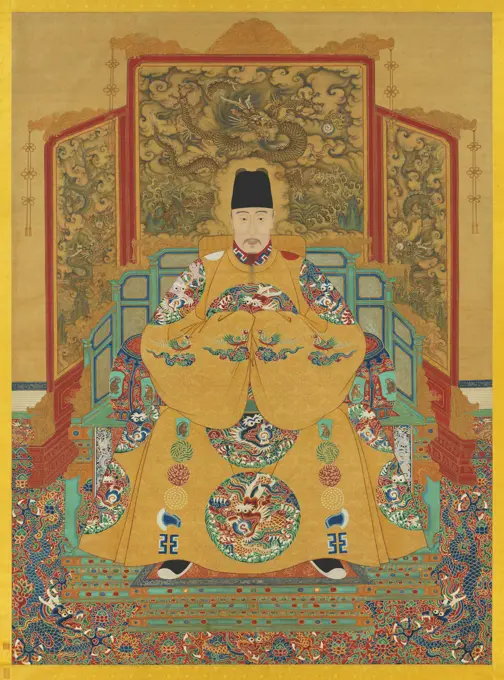
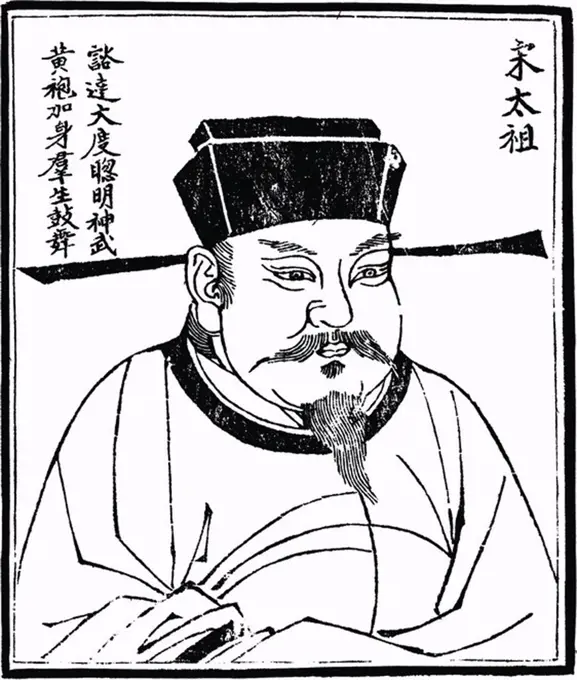
China: Emperor Jiajing (16 September 1507 - 23 January 1567), 12th ruler of the Ming Dynasty (r. 1521-1567). Hanging scroll painting, 16th-17th century.
1899-18711638
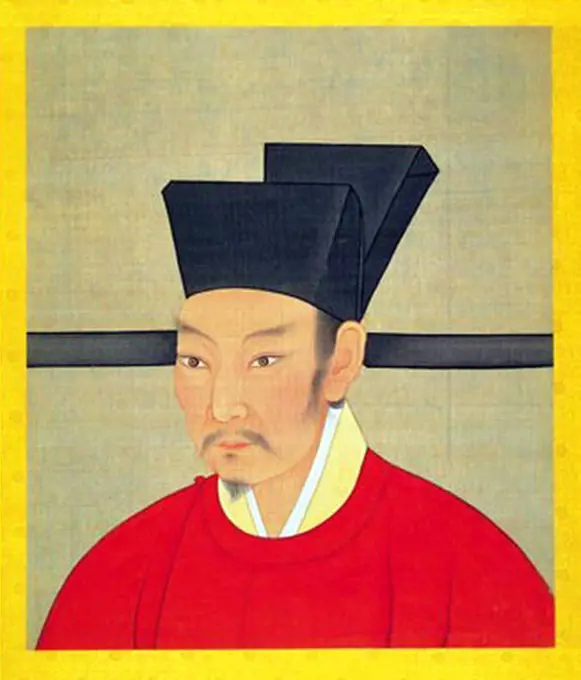
In 960, Song Taizu helped reunite most of China after the fragmentation and rebellion between the fall of the Tang dynasty in 907 and the establishment of the Song dynasty. He established the core Song Ancestor Rules and Policy for the future emperors. He was remembered for his expansion of the examination system such that most of the civil service were recruited through the exams. He also created academies that allowed a great deal of freedom of discussion and thought, which facilitated the growth of scientific advance, economic reforms as well as achievements in arts and literature.<br/><br>  The Song Dynasty (960-1279) was an imperial dynasty of China that succeeded the Five Dynasties and Ten Kingdoms Period (907-960) and preceded the Yuan Dynasty (1271-1368), which conquered the Song in 1279. Its conventional division into the Northern Song (960-1127) and Southern Song (1127-1279) periods marks the conquest of northern China by the Jin Dynasty (1115-1234) in 1127. It also distingui
6145-43639484
Portrait of a Ming official. unknown, painter
1899-18711660
Qinzong was the eldest son of Emperor Huizong. He ascended the throne in dramatic circumstances following his father's abdication. As the Song empire was faced with invasion by the Jurchen of the Jin Dynasty, Qinzong's father Emperor Huizong abdicated in Qinzong's favour. Uninterested in peace, the Jurchens invaded Kaifeng in January 1127 and captured 26 year old Qinzong, Grand-Emperor Huizong and the entire Song imperial family including dozens of government officials in the Jingkang Incident, thus ending the Northern Song dynasty.<br/><br>  The Song Dynasty (960-1279) was an imperial dynasty of China that succeeded the Five Dynasties and Ten Kingdoms Period (907-960) and preceded the Yuan Dynasty (1271-1368), which conquered the Song in 1279. Its conventional division into the Northern Song (960-1127) and Southern Song (1127-1279) periods marks the conquest of northern China by the Jin Dynasty (1115-1234) in 1127. It also distinguishes the subsequent shift of the Song's capital city
1899-19136400
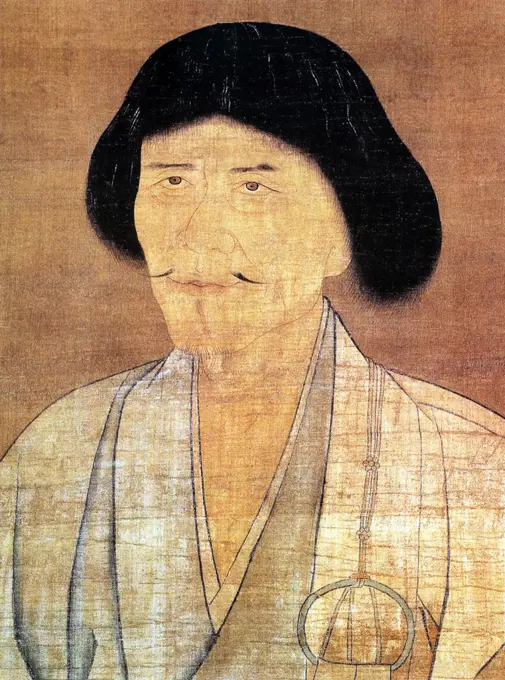
China: 'A Portrait of Zen Master Miao', Yuan Dynasty painter Zhao Yong (1289-1360)
1899-18711852
The Shang Dynasty was according to traditional sources the second Chinese dynasty, after the Xia Dynasty. They ruled in the northeastern regions of the area known as 'China proper' in the Yellow River valley. According to the chronology based upon calculations by Liu Xin, the Shang ruled between 1766 BCE and 1122 BCE, but according to the chronology based upon the Bamboo Annals, they ruled between 1556 BCE and 1046 BCE. Tang's reign is considered a good one by the Chinese. He lowered taxes and the conscription period of soldiers. His influence spread to the Yellow River, and many outlying tribes.
6145-43639248
Portrait of general Fu Youde from the Ming era. unknown, painter
6145-29161614
Portrait of Yongzheng Emperor (1723-1735) 19th century Unidentified artist. Portrait of Yongzheng Emperor (1723-1735). Unidentified artist Chinese, 19th century. China. 19th century. Hanging scroll; ink and color on silk. Qing dynasty (1644-1911). Paintings
6145-51818590
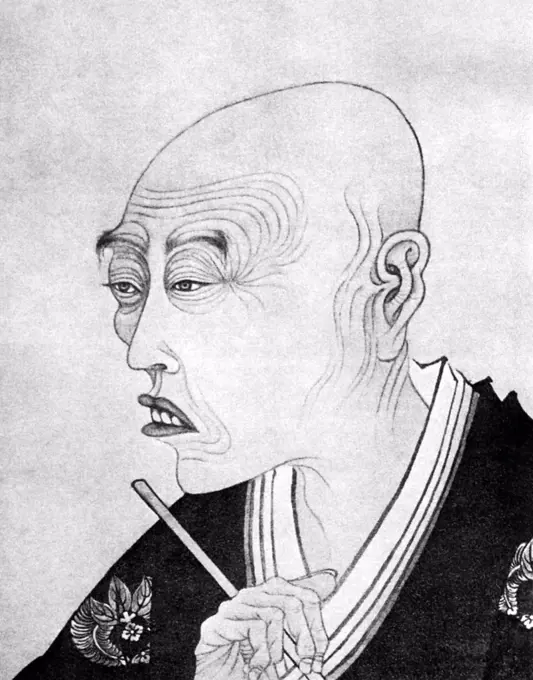
Sketch of Daruma Katsushika Hokusai (Japanese, 1760-1849). Sketch of Daruma, 1760-1849. Painting on paper, 12 7/8 x 9 1/2 in. (32.7 x 24.1 cm).   Asian Art 1760-1849
1899-18712287
Katsuie was the retainer of Oda Nobukatsu (Oda Nobuyuki). In 1575, after gaining control of Echizen, he took command of Kitanosho Castle (Hokujo) and was ordered to conquer the Hokuriku region. In a meeting in Kiyosu to determine the successor to Nobunaga, he supported Oda Nobutaka, the third son, for whom Katsuie had performed the genpuku ritual. He allied with Oda Nobutaka and Takigawa Kazumasu to battle Toyotomi Hideyoshi. However, his domain was sealed off in the winter by snowfalls and this limited his ability. He retreated to Kitanosho castle but with the army destroyed, Katsuie had no option but to surrender. Katsuie committed seppuku and set the fire to the castle. He implored his wife Oichi to take their daughters and leave, but she decided to follow his death, while letting her daughters escape.
1899-19136399
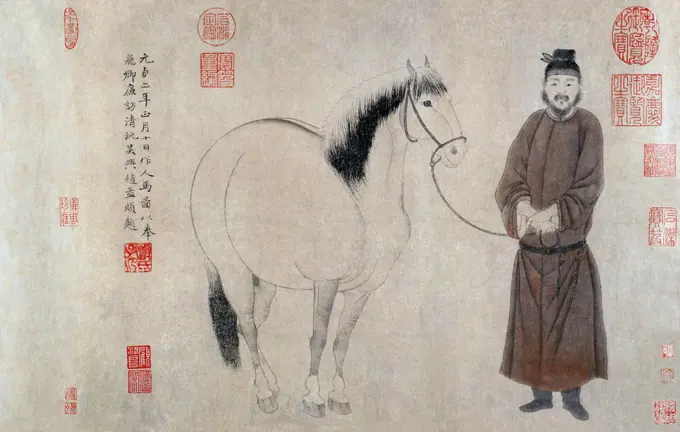
China: 'Horse and Groom', Zhao Mengfu (1254-1322), Yuan Dynasty (1271-1368) scholar and painter, 1296 (Metropolitan Museum of Art, New York)
6145-30189455
Portrait of Wen Zhengming 1600-1700 China. Album leaf; ink and light color on silk .
1899-18789529
Tani Bunchi (October 15, 1763 - January 6, 1841) was a Japanese literatus (bunjin) painter and poet. He was the son of the poet Tani Rokkoku (1729-1809). As his family were retainers of the Tayasu Family, descendents of the eighth Tokugawa shogun, Bunchi inherited samurai status and received a stipend to meet the responsibilities this entailed. In his youth he began studying the painting techniques of the Kani school under Kati Bunrei (1706-82). After Bunrei's death, Bunchi worked with masters of other schools, such as the literati painter Kitayama Kangen (1767-1801), and developed a wide stylistic range that included many Chinese, Japanese and European idioms. He rose to particular prominence as the retainer of Matsudaira Sadanobu (1759-1829), genetic son of the Tayasu who was adopted into the Matsudaira family before becoming chief senior councilor (ri ju shuza; èa¸­é¦-座) of the Tokugawa Shogunate in 1787. Bunchi is best known for his idealized landscapes in the literati style (Na
1899-19136386
China: Portrait of the scholar and bibliophile Ge Yilong (1547-1640) by the Ming Dynasty painter Zeng Jing (1564-1647) (Palace Museum, Beijing)
1746-21112871
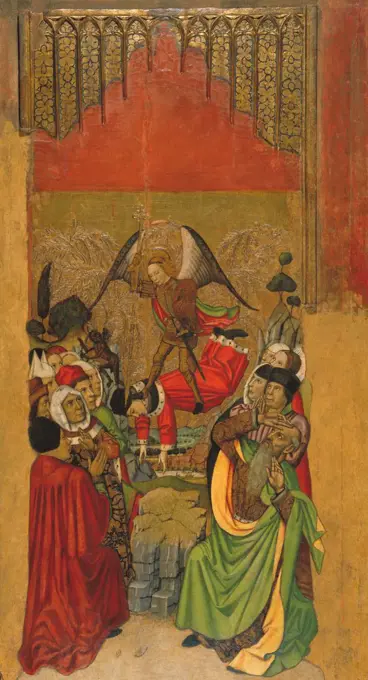
Jaume Huguet (1412ñ1492) Saint Michael Vanquishes the Antichrist. Tempera, stucco reliefs and gold leaf on wood Around 1455-1460
6145-51818937
Fragment of a Page from a Markandeya Purana Series Indian. Fragment of a Page from a Markandeya Purana Series, ca. 1625. Opaque watercolor and gold on paper, sheet: 4 7/8 x 4 11/16 in. (12.4 x 11.9 cm).   Asian Art ca. 1625
4409-17584209
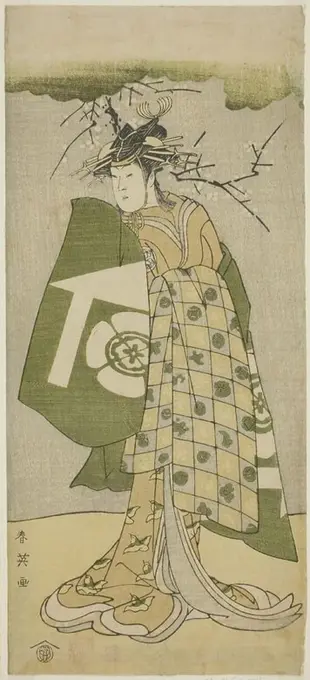
The Actor Osagawa Tsuneyo II as Oiso no Tora in the Play Gohiiki no Hana Aikyo Soga, Performed at the Kawarazaki Theater in the First Month, 1794. Katsukawa Shun'ei; Japanese, 1762-1819. Date: 1789-1799. Dimensions: 31 x 14 cm (12 3/16 x 5 1/2 in.). Color woodblock print; hosoban; right sheet of diptych (left: 1939.923). Origin: Japan. Museum: The Chicago Art Institute, Chicago, USA.
6145-29749695
1860 Utagawa Yoshiiku Japanese 55129
1899-18712911
Utagawa Yoshitora was a designer of ukiyo-e Japanese woodblock prints and an illustrator of books and newspapers who was active from about 1850 to about 1880. He was born in Edo (modern Tokyo), but neither his date of birth nor date of death is known. He was an important pupil of Utagawa Kuniyoshi who excelled in prints of warriors, kabuki actors, beautiful women, and foreigners (Yokohama-e).
4409-17575179
'Portrait of Official and His Wife'. China, 15th-16th century. Dimensions: 143x106 cm. Museum: State Hermitage, St. Petersburg.
4409-17418313
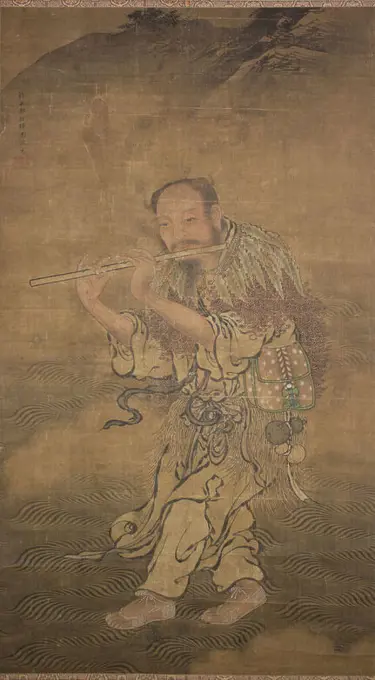
The Daoist Immortal Han Xiangzi. Artist: Liu Jun (Chinese, active ca. 1475-ca. 1505). Culture: China. Dimensions: Image: 48 in. × 26 3/4 in. (121.9 × 67.9 cm)Framed: 62 1/4 × 39 in. (158.1 × 99.1 cm). Date: undated, late 15th-early 16th century.This painting by the Ming court artist Liu Jun depicts the Daoist immortal Han Xiangzi miraculously treading the surface of a turbulent sea. Unperturbed by the roiling waves beneath his feet or the wind that pulls at his garments, Han casually puts a bamboo flute to his lips to play a tune. His eccentrically rustic clothes mark him as a transcendent being: he wears a rustic cape of sawtoothed leaves and curly vegetal tendrils. Over his pants hangs a skirt of reeds. Over his shoulder hangs a satchel lined with animal fur, and his belt holds two dried gourds--the traditional vessel of magical Daoist elixirs. The waves at the immortal's feet are described with a striking geometric pattern of modulated lines interspersed with corresponding sectio
6145-29074587
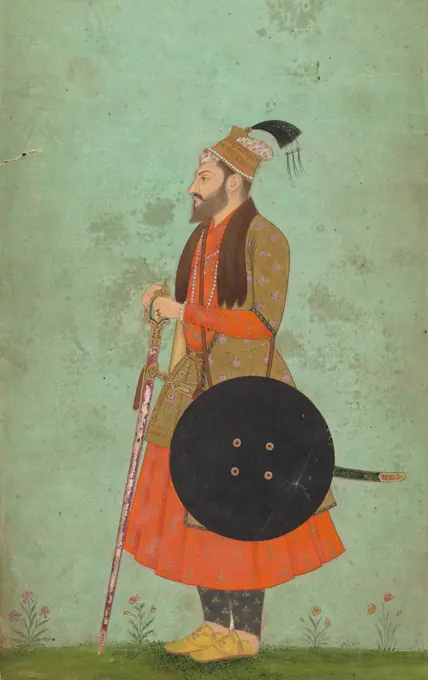
Portrait of Prince Murad Baksh, c. 1655. India, Mughal Dynasty (1526-1756). Color and gold on paper; overall: 20 x 12 cm (7 7/8 x 4 3/4 in.).
6145-29783985
Figure of a Seated Beauty ca. 1670-90 Japan. Figure of a Seated Beauty 50195
6145-30149155
Parody of act VII of the play Treasury of Loyal Retainers (Chushingura) 1777-1787 Japan. This print is another parody of the scene in Act VII where a young man reads a long letter on the veranda of a pleasure house. Above him, on a balcony, a courtesan of the house reads the coded letter by looking into a small mirror. Below, the matron of the house crawls out from under the veranda and calls out to the young man. This ìtallî episode from the play easily lent itself to the form of the pillar print, earning its name because it could be mounted on the narrow pillars in Edo homes.. Color woodblock print; hashira-e . Torii Kiyonaga
7003-69612302
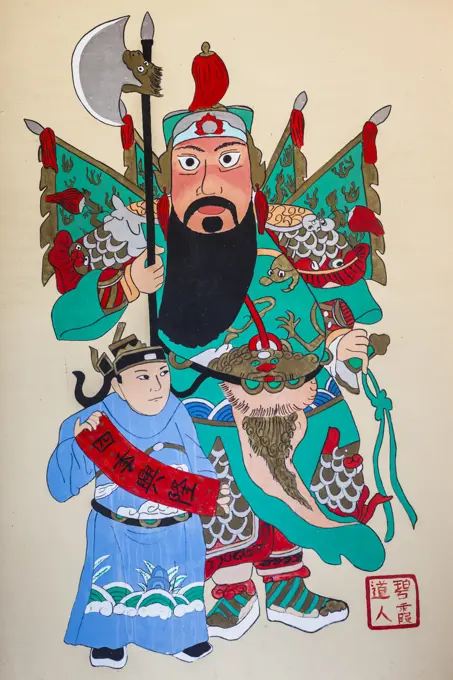
Australia, Victoria, Bendigo, Golden Dragon Museum and Gardens, museum of Chinese immigrant life, wall art
4409-17564580
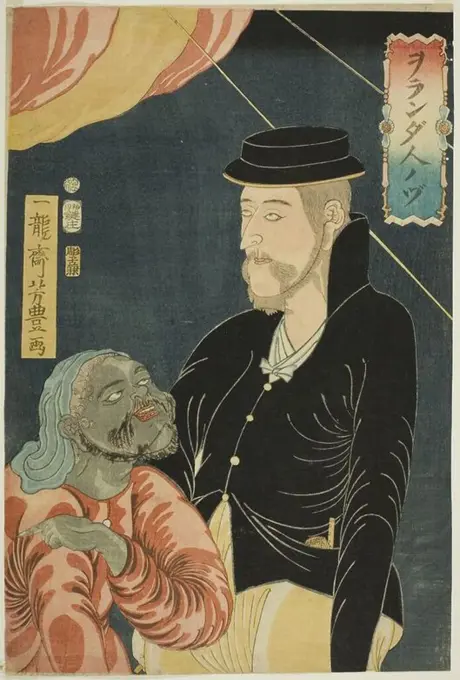
Illustration of a Dutchman (Orandajin no zu). Utagawa Yoshitoyo; Japanese, 1830-1866. Date: 1861. Dimensions: . Color woodblock print; oban. Origin: Japan. Museum: The Chicago Art Institute, Chicago, USA.
1899-18711654
During his reign, Shenzong became interested in Wang Anshi's policies and appointed Wang as Chancellor. Wang implemented his famous reforms aimed at improving the situation for the peasantry and unemployed, which some have seen as a forerunner of the modern welfare state. These acts became the hallmark reform of Shenzong's reign. Shenzong's other notable act as emperor was his attempt to weaken the formative nation of Xi Xia by invading and expelling the Xi Xia forces from Gansu. Shenzong's army was initially quite successful at these campaigns, but during the battle for the city of Yongle, in 1082, Shenzong's forces were defeated. As a result, Xi Xia grew more powerful and subsequently continued to be a thorn in the side of the Song dynasty over the ensuing decades.<br/><br>  The Song Dynasty (960-1279) was an imperial dynasty of China that succeeded the Five Dynasties and Ten Kingdoms Period (907-960) and preceded the Yuan Dynasty (1271-1368), which conquered the Song in 1279. Its co
1788-42169
Portrait of Cho Man-Yong (1776-1846), ink and colours on paper, 1845, signed by Yi-Han ch'ol. Korean civilization, Choson period, 19th century.
4443-28727594
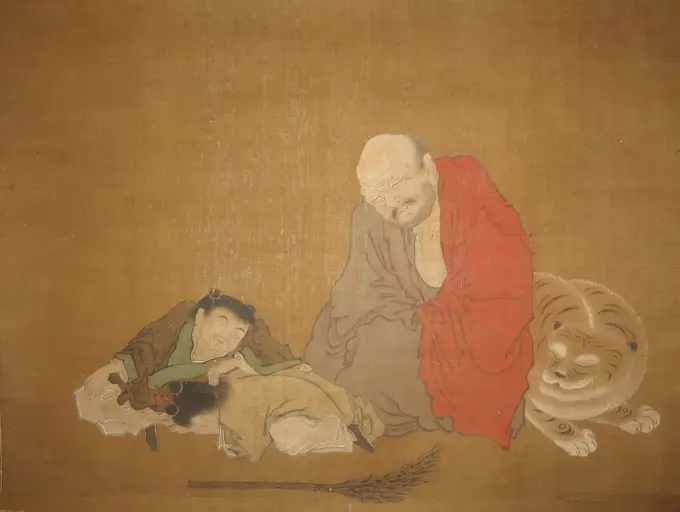
The Four Sleepers, 17th century, Unknown Japanese, 13 7/16 × 17 7/8 in. (34.13 × 45.4 cm) (image)45 3/4 × 20 7/8 in. (116.21 × 53.02 cm) (without roller), Ink and color on silk, Japan, 17th century
1899-18718768
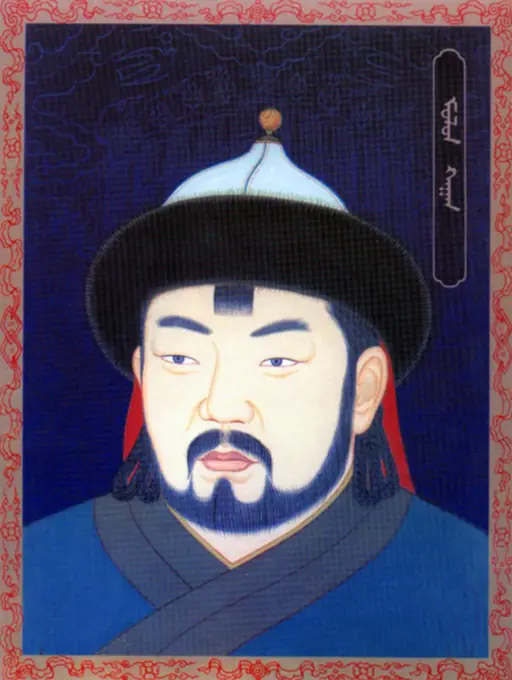
Mongke Khan (January 10, 1209 - August 11, 1259 ), was the fourth Great Khan of the Mongol Empire from July 1, 1251 - August 11, 1259. He was the first Great Khan from the Toluid line. Under Mongke, the Mongols conquered Iraq and Syria as well as the Tai kingdom of Nanzhao. He made significant reforms to improve the administration of the Empire. Mongke Khan,the eldest son of Genghis Khan's youngest son Tolui, was born in 1208, the yellow dragon year. In 1251, the white pig year,he assumed the throne. He was a great statesman who made the Mongolian State the biggest empire in the world and managed to maintain its integrity. Mongke Khan died in 1258, the yellow sheep year, during his invasion to conquer China.
1899-18711659
Huizong was famed for his promotion of Taoism. He was also a skilled poet, painter, calligrapher, and musician. He sponsored numerous artists at his court, and the catalogue of his imperial painting collection lists over 6,000 known paintings.<br/><br>  The Song Dynasty (960-1279) was an imperial dynasty of China that succeeded the Five Dynasties and Ten Kingdoms Period (907-960) and preceded the Yuan Dynasty (1271-1368), which conquered the Song in 1279. Its conventional division into the Northern Song (960-1127) and Southern Song (1127-1279) periods marks the conquest of northern China by the Jin Dynasty (1115-1234) in 1127. It also distinguishes the subsequent shift of the Song's capital city from Bianjing (modern Kaifeng) in the north to Lin'an (modern Hangzhou) in the south.
1746-21113924
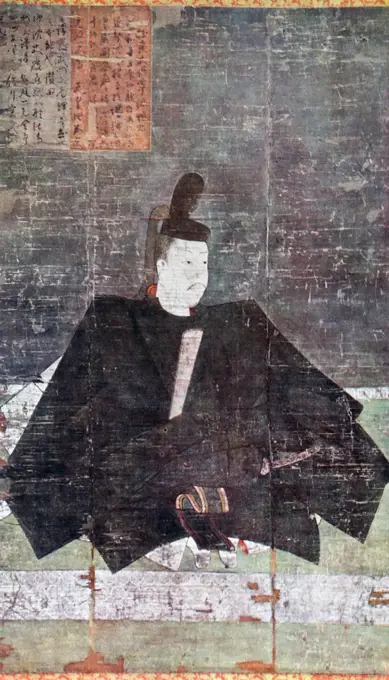
Portrait of Yoritomo by Takanobu. Yoritomo was the first commander-in-chief of Japan (1192-98).
4409-17580914
'White Old Man'. China, 19th century. Dimensions: 32,5x24 cm. Museum: State Hermitage, St. Petersburg.
1899-18309210
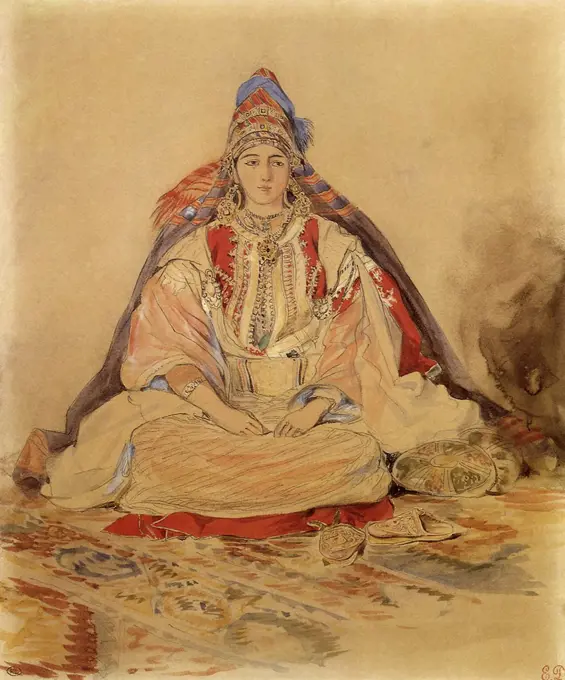
Jewish Bride of Tangier, Delacroix, Eugene
6145-29807589
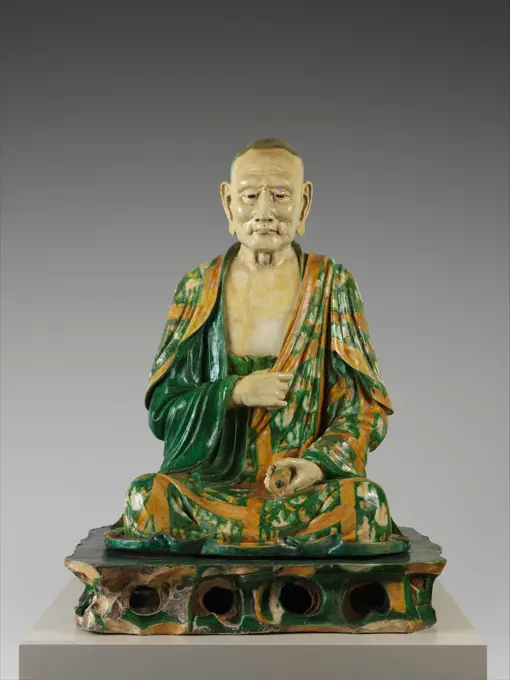
Arhat (Luohan) ca. 1000 China This life-size sculpture is part of a group of sixteen figures that have been known in the West since 1913. Thought to have come from a cave in Yixian, Hebei province, they represent arhats (or luohans, as they are known in China). Arhats were thought to have achieved an advanced state of spiritual development, and were revered as protectors of Buddhism. Regarded as masterpieces of ceramic sculpture, for their size, naturalistic modeling, and the quality of their three-toned (sancai) glaze, they can be dated securely to the late tenth or eleventh century based on material discovered in 1983 at an ancient kiln site near Beijing.. Arhat (Luohan). China. ca. 1000. Stoneware with three-color glaze. Liao dynasty (907-1125). Sculpture
4220-21898417
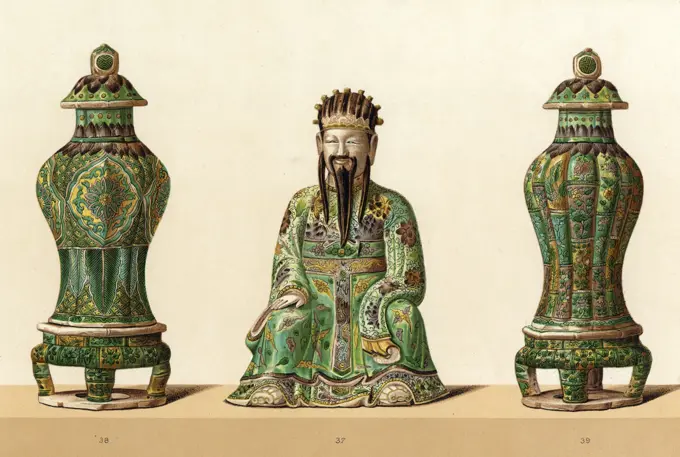
 Chinese porcelain : three  examples of old famille  verte of the 3rd epoch.       Date: 18th century
1899-18719026
Mulan Khan (d.1466), was the Mongol Khan of the Northern Yuan Dynasty in Mongolia and he was the eldest son of Tayisung Khan, Emperor Taizong of Northern Yuan. Mulan Khan succeeded his younger brother Markorgis Khan in 1465, but due to lack of real power, he was killed by warring Mongol nobles who fought each other for dominance. After his death, the position of great khan remained vacant for nearly a decade as warring Mongol clans fought each other for power, and it was not until finally in 1475, that Manduul Khan (Manduyul) was finally crowned as the next khan.
6145-45780443
Portrait of Edward VI of England. Edward VI of England, at the age of ten, some son and successor to Hendrik VIII. He is wearing a purple skirt and cloak, trimmed with gray-blue ermine, scarlet under-slewing, flat hat on the head. Knee piece, seen from the front, slightly to the left, for a recorded curtain, caught in edge line, inside the crowned English weapon with the order of the garter at the top right. Pendant of portrait of Hendrik VIII.
6145-58995462
Victor Hugo (1802-1885), French writer. Chinese lounge, decor from Juliette Drouet's house in Guernsey. South wall, pair of figurative panels (Chinese). Polychrome engraved wood. 1857-1864. Paris, house of Victor Hugo. 77436-19 Art craftsmanship, arts decoratives, serious wood, Chinese cabinet, chinoiserie, oriental influence, orientalism, wooden panel, character, Chinese living room, 19th 19th 19th 19th 19th 19th century, engraving
4409-17485818
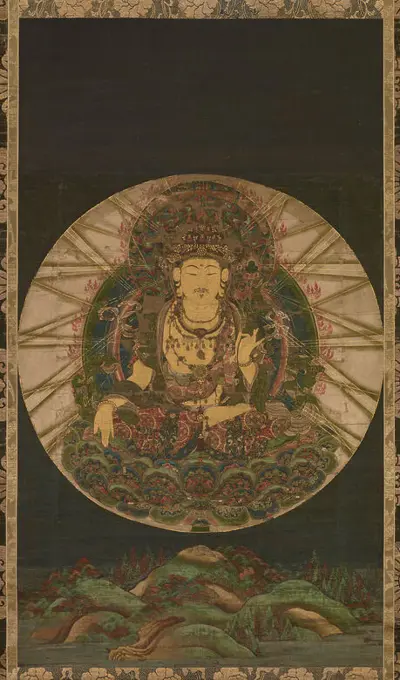
Kokuzo Bosatsu (Akasagarbha). Date/Period: Kamakura period, 13th century. Painting. Color on silk. Height: 1,080 mm (42.51 in); Width: 608 mm (23.93 in). Author: UNKNOWN ARTIST.
1746-19662546
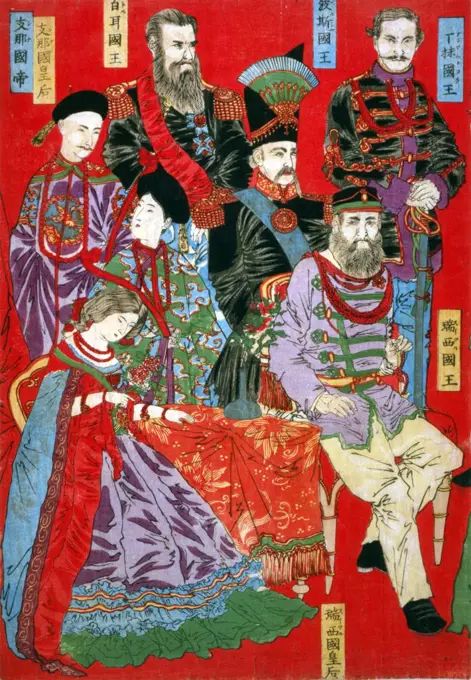
Japanese triptych print showing seated and standing world leaders gathered in a group. 1879.Painted by Chikanobu Hashimoto 1838-1912. Emperor of Italy, Emperor of Russia, Emperor of Austria, King Frois Luis Frois, missionary from Portugal, King of Madagarasu, Queen of Madagarasu, King of Turkey
6145-59013061
Wall painting: Buddha head, China Epoque Ming, between 1368 and 1644. Paris, Cernuschi museum. 34984-17 Buddha, Buddhism, China, Ming dynasty, portrait, head
4430-2936
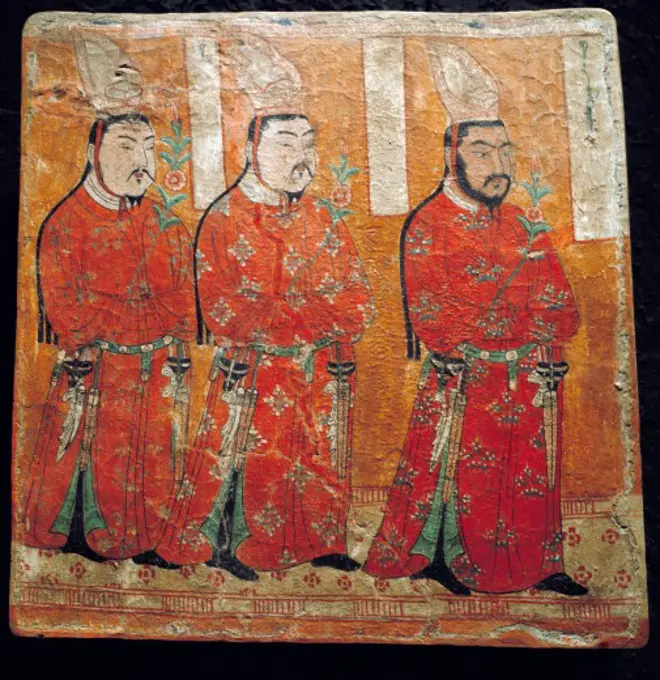
fine arts, China, Uyghur painting, Uyghur princes, fresco, Bezeklik Monastary, 8th/9th century, Museum for Asian Art, Berlin,
1746-111331394
Seijo kakkoku shaga teio kagami (Portrait of world sovereigns) by Chikanobu Hashimoto, 1838-1912, published, 1879. section of a Japanese triptych print showing seated and standing world leaders gathered in a group. Emperor of Russia, Emperor of Austria, King of Denmark, Emperor of China, King of Persia, Empress of China, Queen of Switzerland
4266-21637190
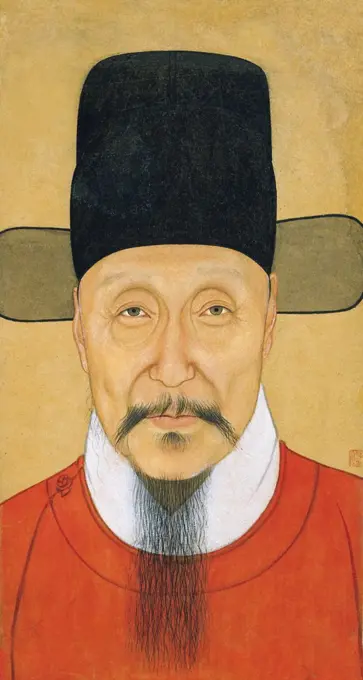
Portrait of He Bin, Anonymous
6145-48843114
Tateishi Onojirō-Noriyuki, Interpreter-in-Training, Member of the First Japanese Diplomatic Mission to the United States. Charles DeForest Fredricks (American, 1823 - 1894)
6188-64625176
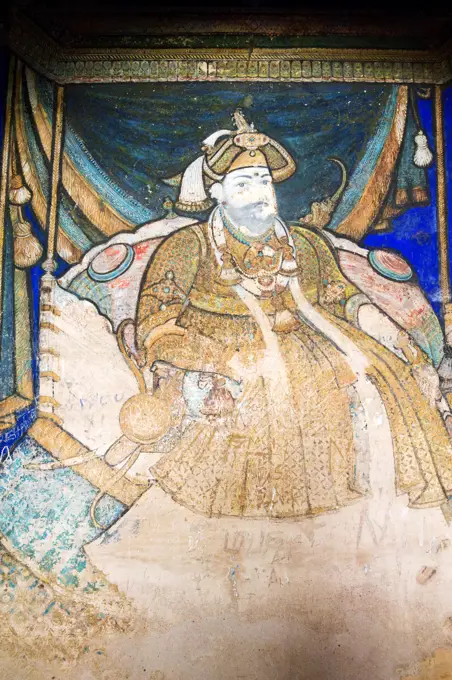
Wall painting of king at darbar hall thanjavur palace  Tamil Nadu  India Copyright: xSatishxParashar/DinodiaxPhotox
6145-59057461
God and the goddess of the Earth;  beginning of the 20th century (1901-00-00-1932-00-00);Jabłońska, Antonina (1901-1994), Jabłoński, Witold (1901-1957), Jabłoński, Witold (1901-1957)-collection, Chinese (culture), gift (provenance), Chinese art
4409-21383860
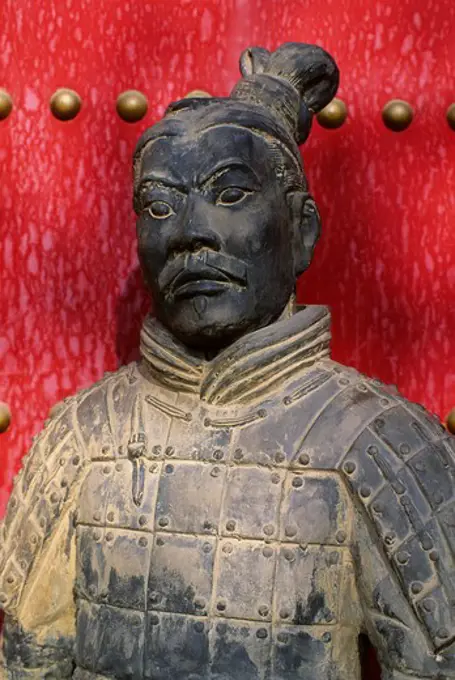
MUSEO-ESTATUA EN TIERRA COCIDA DE UN CABALLERO-DETALLE CABEZA-S III A J.C. Location: MUSEO DEL EJERCITO DE QIN SHIHUANG. China.
4435-3898
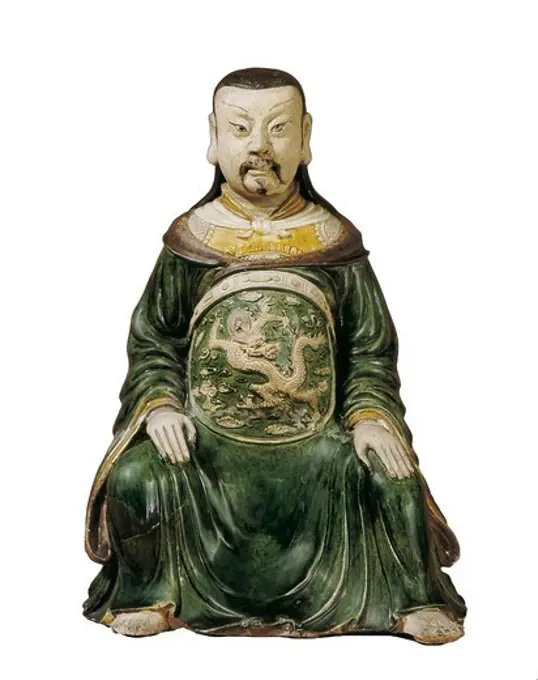
God of the North. Chinese art. Ming period. China / Porcelain. FRANCE. ëLE-DE-FRANCE. Paris. Guimet Museum.
6145-54593206
Half-length woodcut portrait by Melchior Lorch depicting a Turkish nobleman, possibly a soldier, created in the second half of the 16th century using the Clair-Obscur technique.
6176-66087953
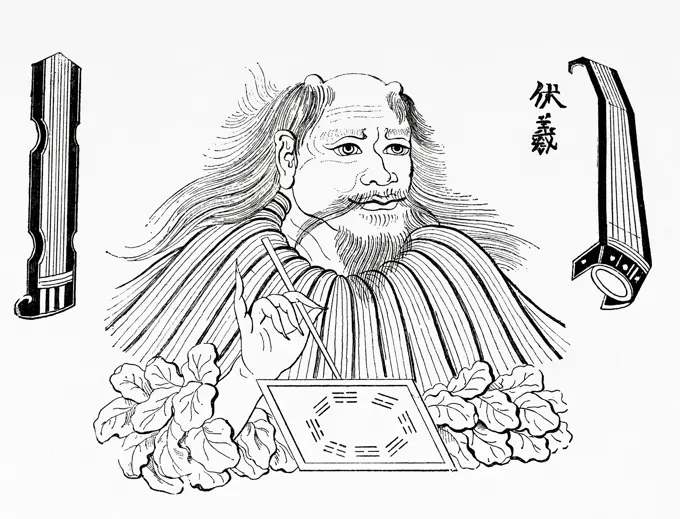
Chinese god of inventions. Fuxi and the musical instruments he invented. He was the first of the legendary San Huang. Ancient China History. Old 19th century engraved illustration from El Mundo Ilustrado 1879
6145-29230563
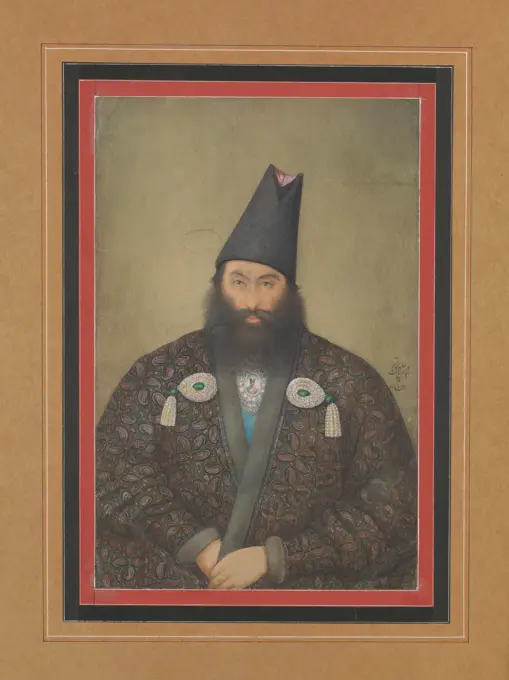
A Portrait of a Statesman dated A.H.1294/A.D. 1877 Yahya Ghaffari This watercolor portrait of a Qajar official, possibly Nasir al-Din Shah's first prime minister Amir Kabir, is typical of the Nasiri period. The sitter wears a conical astrakhan hat and a fur-trimmed brocaded paisley robe. His piercing gaze and his chiseled features are striking. As with many portraits of the period, his robe is embroidered with pearls and jewels, and around his neck he wears a diamond-studded medallion bearing the portrait of the ruling king, Nasir al-Din Shah. The painting is signed by Abu'l Hasan III Ghaffari (also known as Yahya Ghaffari), who was the the third son of the renowned court painter Abu'l Hasan Ghaffari (known as Sani al-Mulk) and is dated A.H. 1294/A.D. 1877.. A Portrait of a Statesman. Yahya Ghaffari (Iranian, active 1860s-1880s, d. 1895-1906). dated A.H.1294/A.D. 1877. Opaque watercolor and ink on paper. Made in Iran. Codices
1848-51747169
Museum of the Terracotta Warriors, Bust of a High-ranking Officer, Mausoleum of the first Qin Emperor, Xian, Shaanxi Province, China, Asia
4163-10292
CHINA, SHAANXI PROVINCE, XIAN, QIN SHI HUANG DI TOMB, TERRA COTTA SOLDIER
1848-54995224
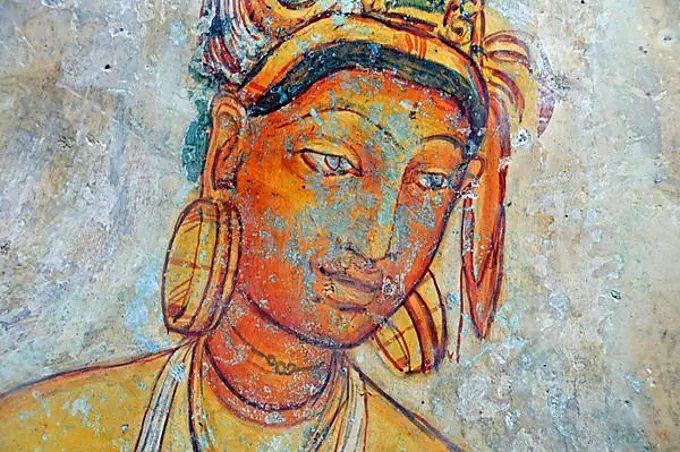
Cloud maiden, fresco on cave wall, 5th Century, Lion Rock, rock fortress, UNESCO World Heritage site, Sigiriya, Sri Lanka, Asia
6145-29831688
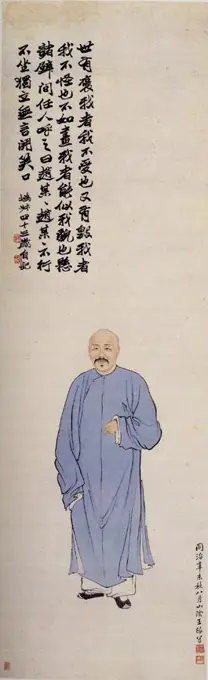
Portrait of Zhao Zhiqian dated 1871 Wang Yuan Chinese Zhao Zhiqian, one of the most influential calligraphers and painters of the late Qing period, inscribed his portrait: If the world praises me, I shall not accept such praise,Of those who try to destroy me, I shall not complain.Only the painter can capture my likeness. Hanging on the wall it will inspire people to call out, "It is Zhao, it is Zhao!" I neither walk nor sit but stand alone, and with a smile say nothing.(Wen Fong, trans., Between Two Cultures: Late-Nineteenth- and Early-Twentieth-Century Chinese Paintings from the Robert H. Ellsworth Collection in The Metropolitan Museum of Art New York: The Metropolitan Museum of Art, 2001, p. 40)Brush vitality, not optical fidelity, was the traditional criterion for lifelikeness in Chinese painting, except in portraiture. For this reason portrait painting was traditionally held in low regard in China. The praise that Zhao, a scholar-artist, voices for the lifelikeness of his portrai
4409-17579025
'Chandrakirti'. China, 19th century. Dimensions: 65x49 cm. Museum: State Hermitage, St. Petersburg.
6188-58173185
portrait of Ramon Llull portrait of Ramon Llull, 17th century, paintings of the corridor on the ground floor, gray techniqueSan Buenaventura Cloister, Llucmajor, Mallorca, Balearic Islands, Spain Copyright: xZoonar.com/BartomeuxBalaguerxRotgerx 21354551
4443-28737691
Seated man, Unknown Japanese, 7 x 5 3/4 x 5 in. (17.78 x 14.61 x 12.7 cm), Ceramic, Japan
1890-172954
Terracotta warrior on display in the Shaanxi History Museum, Xian, China
6145-45525282
Painting on glass  a man with a bow and a small warrior in armor unknown
1788-22043526
Scenes of everyday life in China, detail of the Chinese wallpaper, Chinese cabinet, Hunting residence (UNESCO World Heritage Site, 1997), by Filippo Juvarra (1678-1736), Stupinigi, Piedmont, Italy, 18th century.
4445R-12100
Close-up of terracotta Soldier
6145-30301740
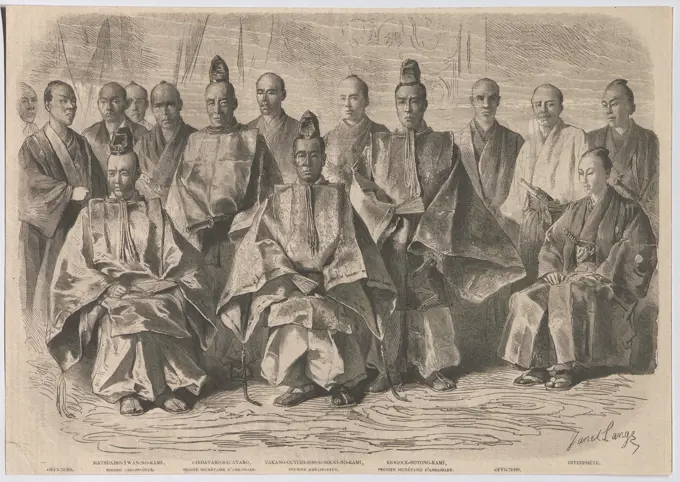
The Japanese ambassador and his delegation in Paris from L´Ichrustation, Ann-Louis Janet also Janet-Lange -, artist
6145-51834361
Portrait of an Emir Portrait of an Emir, 1855. Oil on canvas, 59 x 37 in. (149.9 x 94 cm).   Arts of the Islamic World 1855
6145-29871285
Jean Louis Forain, The Hats of the Allies (recto), c 1914 1919 The Hats of the Allies recto
1606-198636
England, London, British Museum. Lohan Statue.  Liao Dynasty
6145-51821945
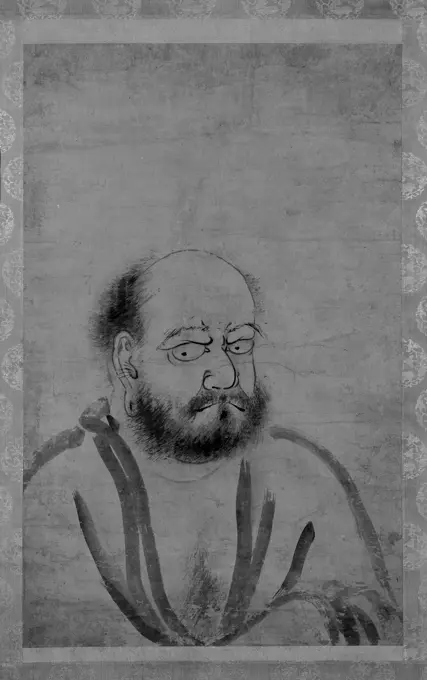
Daruma , 16th century. Hanging scroll, ink on paper, Overall: 65 x 23 1/2 in. (165.1 x 59.7 cm).   Asian Art 16th century
PREVIOUS
of 3
NEXT
2401 S. Ervay, Suite 206
Dallas, Texas 75215
United States
Get Started
Free ResearchMy BoardsMy Cart
For Creators
How To License Your ContentContributor PortalFrame of Mind
Resources
API accessPricing
Contact
+1 866 236 0087help@viewpictures.co.uk Contact form
©2026 View Pictures. All Rights Reserved. -A
This site is protected by reCAPTCHA and Google Privacy Policy and Terms of Service apply.