Japanese Tsuba Sword Guards

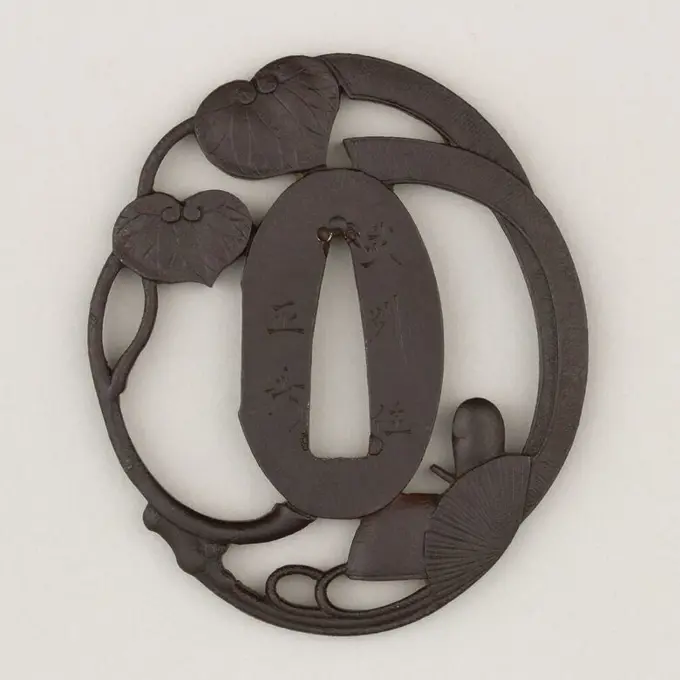
Artistic and intricately designed Japanese sword guards (tsuba) from the 18th and early 19th centuries, featuring detailed floral and wave motifs.
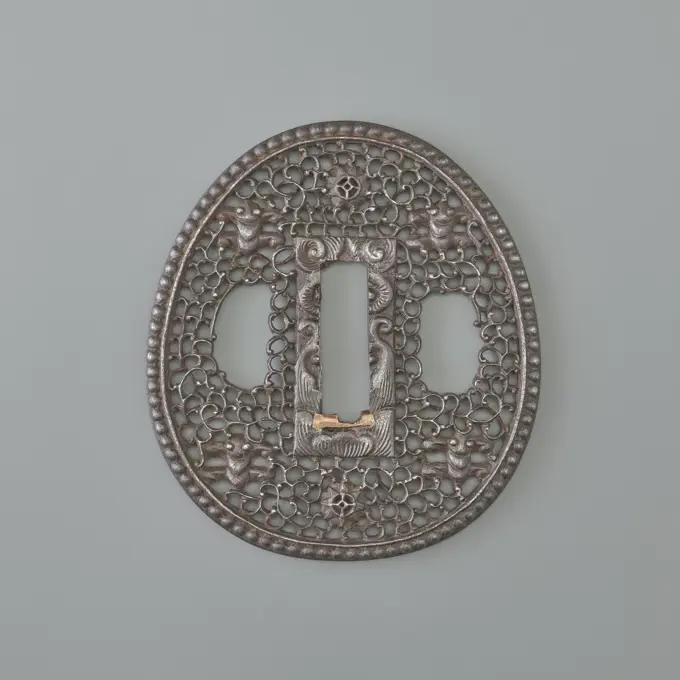
Jelec (Tsuba);  18th century (1701-00-00-1800-00-00);
Jelec (Tsuba); 18th century (1701-00-00-1800-00-00);
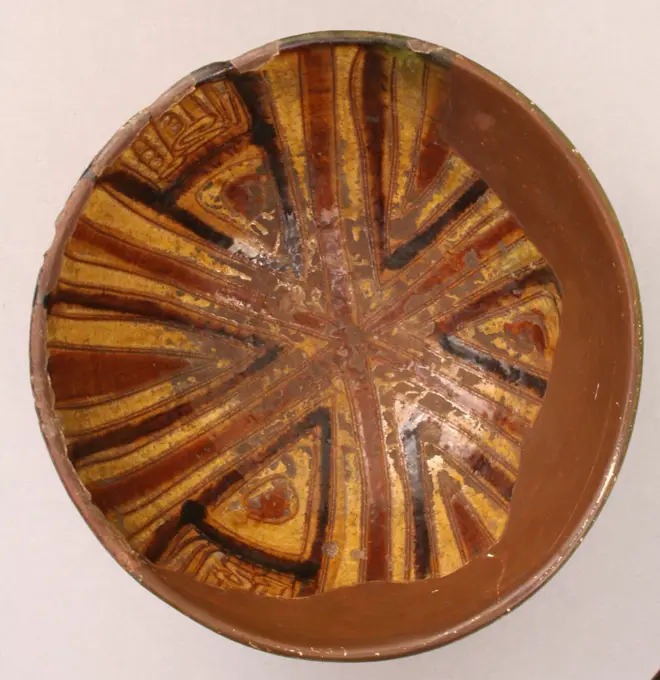
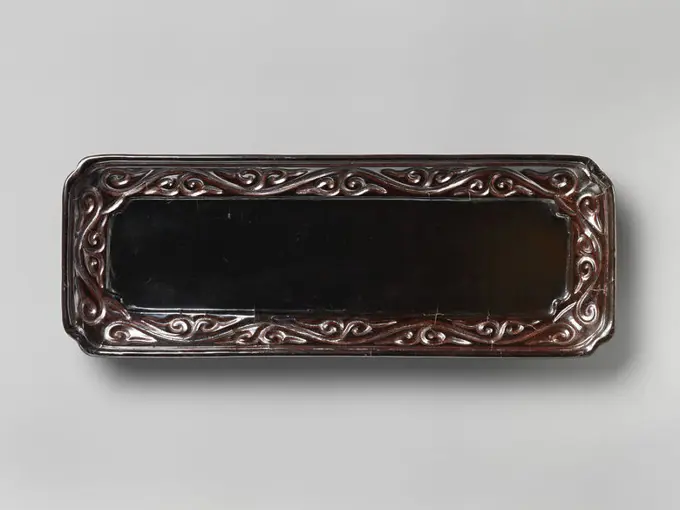
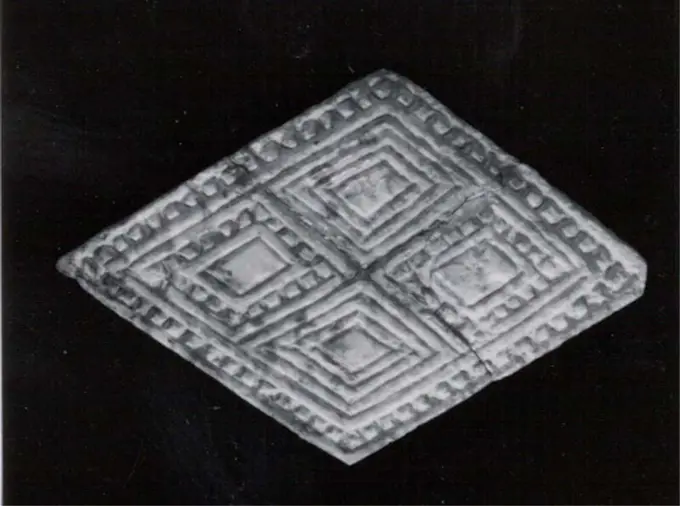
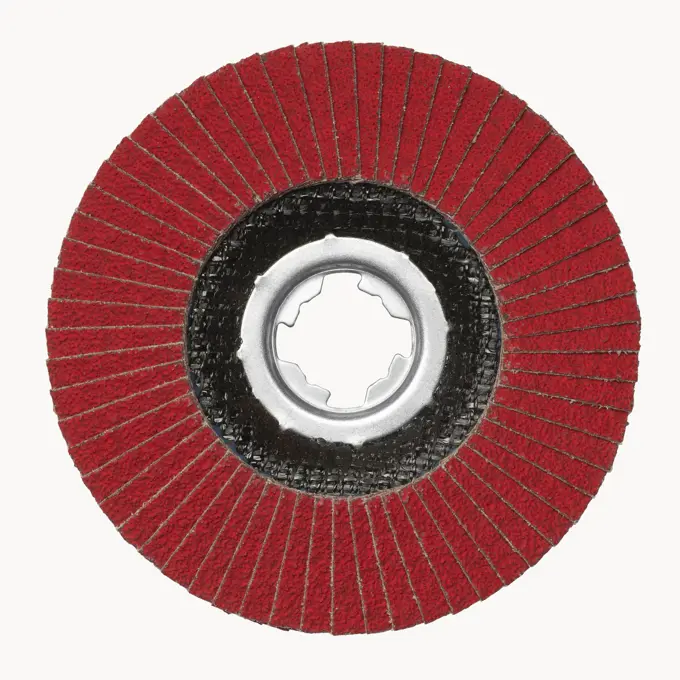
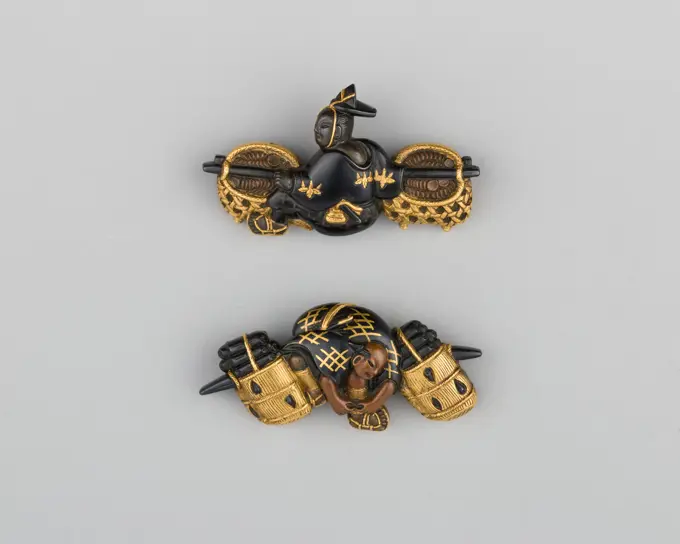
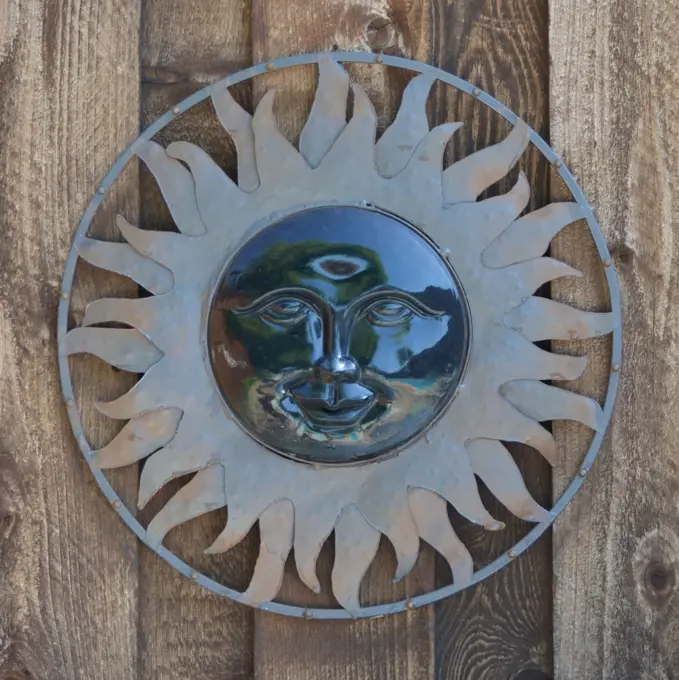
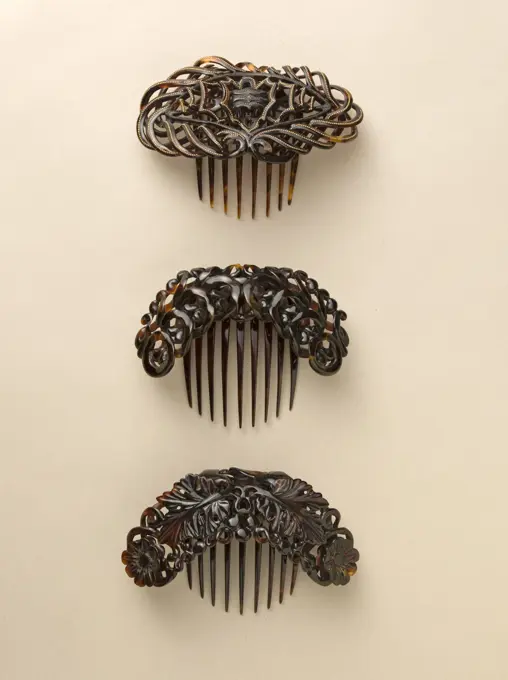
Plate with combed decor in red and yellow, anonymous, c. 1675 - c. 1750 Round plate of lead glaze pottery. The plate has a combed decor in red and yellow. The board is a bottom find. Netherlands earthenware. lead glaze Round plate of lead glaze pottery. The plate has a combed decor in red and yellow. The board is a bottom find. Netherlands earthenware. lead glazeHarness Trapping 5th century B.C. China. Harness Trapping 61133Loop .Holder. part of ship. On label 'Theodolite'. 'Useful as a sea astrolabium'.Deep Dish ca. 1430 Spanish With shimmering copper tones, often combined with cobalt blue, lusterware from Valencia depends on Islamic tradition, both in technique and in decoration. Here, the central motif is a palm tree surrounded by bands with a repeating al-afiya motifa stylized shorthand of the Arabic word for "health" and "happiness." Valencian ceramics with these designs have been excavated in Egypt and must have been shipped from Spain to Muslim clients there, but luxurious plates like this were also highly prized in European royal and noble households. This bowl, probably a remnant of a larger table service, was made for export to the Dazzi family of Florence, whose arms it bears on the reverse.. Deep Dish 471813Papier -sherry, with lead glaze on the underside and at the top white tinglaze with in blue flowers and a bird, damaged, anonymous, 1500 - 1799   earthenware. tin glaze. lead glaze   earthenware. tin glaze. lead glazeOrnaments; linen; 1943-17-3-a,bMountMountHand guard with chrysanthemums, anonymous, c. 1750 - 1850 Oval tsuba with chrysanthemums in positive silhouette and increased relief; The points of the leaves are gilded; Signed 'insshū-jū naomitsu'. Japan iron (metal). gold (metal) Oval tsuba with chrysanthemums in positive silhouette and increased relief; The points of the leaves are gilded; Signed 'insshū-jū naomitsu'. Japan iron (metal). gold (metal)Plaque. Western Inner Mongolia and southern Siberia, 4th-3rd century B.C.. Sculpture; plaques. Gilt bronze, castDecorative Horns, 20th century, Liu Lian Mei, 14 5/8 x 20 7/8in. (37.1 x 53cm), Silver, China, 20th centurySword Guard (Tsuba) ca. 1615-1868 Japanese A tsuba is a sword guard and part of a sword mounting. It is mounted between the swords blade and grip to protect the users hands.. Sword Guard (Tsuba) 33491Albert Levone, Patch Boxes of Kentucky Rifles, c 1937 Patch Boxes of Kentucky RiflesFragment of a Bowl 14th-15th century. Fragment of a Bowl 445164BracketSilver buckle, oval, unadorned, with two hinged teeth, anonymous, c. 1908 - c. 1909 Buckle of silver, oval, unadorned, with two hinged teeth, marked. Manchester whole: Silver (Metal) forging Buckle of silver, oval, unadorned, with two hinged teeth, marked. Manchester whole: Silver (Metal) forgingSword Guard (Tsuba) ca. 1615-1868 Japanese A tsuba is a sword guard and part of a sword mounting. It is mounted between the swords blade and grip to protect the users hands.. Sword Guard (Tsuba) 34417Comb 19th century probably German. Comb 99065Sword Guard (Tsuba) ca. 1615-1868 Japanese A tsuba is a sword guard and part of a sword mounting. It is mounted between the swords blade and grip to protect the users hands.. Sword Guard (Tsuba) 34398. A tinned double cut, with two plates.Egyptian Faience amulet from an 18th Dynasty Tomb, circa 1400 BCSundialelement of the frame  isolated on a white backgroundPorringer.   Maker: Thomas Savage, American, 1664-1749Pair of Palanquin Rings. Cambodia, 13th century. Tools and Equipment; hardware. Gilt copper alloyDecorative theme Mehoffer, Józef (1869 1946)Shoe buckles late 17th century European. Shoe buckles. European. late 17th century. copper ()Openwork basket. Ćmielów (fabryka fajansu i porcelany ; 1804-), factoryShoe buckles 1793-94 British. Shoe buckles 90148Bird Plaque, 2nd-3rd century, 4 13/16 x 9 1/16 in. (12.22 x 23.02 cm), Gilt bronze, China, 2nd-3rd centuryBrooch -Fritz Boehmer, Pottery Picture Frame, c 1939 Pottery Picture FramePlate 1816 Attributed to Solomon Grimm. Plate 5978Tile in the shape of a cross with phrases from the Quran and scrolls, anonymous, c. 1262 - c. 1263 Cross tile of earthenware (quartz-fritry), painted on the tinglaze with a brown lust decorative decorations with ranks saved. Korant texts along the edge; Sura 1 and Sura 65: 3, together with a text that has not yet been deciphered. is the earthenware. glaze. luster (textile) painting / vitrification Cross tile of earthenware (quartz-fritry), painted on the tinglaze with a brown lust decorative decorations with ranks saved. Korant texts along the edge; Sura 1 and Sura 65: 3, together with a text that has not yet been deciphered. is the earthenware. glaze. luster (textile) painting / vitrificationBuckle Plaque in the Form of Two Boys with Lotus (Lian) and Box (He). China, Chinese, late Ming or early Qing dynasty, about 1550-1700. Costumes; Accessories. Abraded jadeShoe buckle, buckle with profiled, decorated frame, buckle fastener component soil find tin copper metal, molded Shoe buckle with oval and profiled frame in which narrow curls pin and studs as decoration. The decoration is cast in archeology Rotterdam rail tunnel attaching dressing shoes adorning fastening shoe Soil discovery: trajectory Rotterdam rail tunnel.Black wooden frame intended for two portraits, c. 1500 - c. 1999 frame Black wooden frame, inside of the edge and the oval openings simple decoration in relief; Rusty iron eye in the middle of the back, including four holes (in two piece of metal); Each of the ovals with four copper sliders behind (right -wing most right); Horizontal cracks in indoor sides of sides and between ovals.  wood (plant material). copper (metal). iron (metal)Button (France); blackened, silvered, and gilt tin; Diameter: 4.8 cm (1 7/8 in.); Bequest of Julia Hutchins Wolcott; 1959-66-199Sidewall (USA); machine-printed paper; 9 x 10 cm (3 9/16 x 3 15/16 in.)Shoe buckles 18th century British. Shoe buckles 125071Badge for the school cap of the Chełm Philology SchoolPendant 15th-17th century European. Pendant. European. 15th-17th century. Bronze. Miscellaneous-Buckles & OrnamentPottery cock, place in center for wafer, in museum of St. Anne's, 1926, Jerusalem, Israel. Transfer printed and polychrome enamels on copper, brass and ironKruitfles, anonymous, c. 1600 - c. 1699  Circle -shaped powder bottle of ivory.  ivory. copper (metal)Fragment of the vessel;  Ptolemean period (-332-00-00--30-00-00);Terracotta fragments of a kylix (drinking cup) 470 B.C. Greek, Attic Interior, seated woman holding pomegranate; Obverse, youth leaning on stick, woman holding two fillets, kalathos, youth with stick; Reverse, youth leaning on stick, woman, youth leaning on stick. Terracotta fragments of a kylix (drinking cup). Greek, Attic. 470 B.C.. Terracotta; red-figure. Classical. VasesHat of black straw with hanging edge and black ribbon, anonymous, c. 1850 - c. 1900 Summer hat of black sprinkle with hanging edge and black ribbon. Europe . Summer hat of black sprinkle with hanging edge and black ribbon. Europe .Sword Guard (Tsuba) ca. 1650 Japanese A tsuba is a sword guard and part of a sword mounting. It is mounted between the swords blade and grip to protect the users hands.. Sword Guard (Tsuba) 26249Pair of Earflare Frontals 12th-15th century Chimú It was customary in Precolumbian America to bury the personal finery of an individual with him upon his death. In the earliest times such finery consisted of bone, shell, or stone ornaments. By Chimu times the personal jewelry of the nobility had become extremely lavish, and large amounts of flamboyant ornaments in gold were produced by full-time metalsmiths. The royal burials at Chan Chan, the Chimu capital, were so rich that after the conquest the Spaniards set up a commercial mining company to extract their treasures.. Pair of Earflare Frontals 312756Sword Guard (Tsuba). Culture: Japanese. Dimensions: H. 2 3/4 in. (7 cm); W. 2 1/8 in. (5.4 cm); thickness 3/16 in. (0.5 cm); Wt. 1.9 oz. (53.9 g). Date: 18th century. Museum: Metropolitan Museum of Art, New York, USA.Brush tray. Culture: China. Dimensions: H. 1 1/2 in. (3.8 cm); W. 5 1/4 in. (13.3 cm); L. 14 1/4 in. (36.2 cm). Date: 16th century or earlier. Museum: Metropolitan Museum of Art, New York, USA.Furniture;  18th century (1701-00-00-1800-00-00);Ornament 9th-10th century. Ornament. 9th-10th century. Bronze; cast, gilded. Probably from Iran, Nishapur. MetalButton; glass, rhinestone, copper, brass; 1931-59-752-aPlaque ca. 9th-7th century B.C. Assyrian This diamond-shaped plaque consists of four smaller diamonds, each in a beaded frame, surrounded by an outer beaded border. Carved ivory pieces such as this were widely used in the production of elite furniture during the early first millennium B.C. They were often inlaid into a wooden frame using joinery techniques and glue, and could be overlaid with gold foil or inlaid with colored glass or stone pieces to create a dazzling effect of gleaming surfaces and bright colors.Built by the Assyrian king Ashurnasirpal II, the palaces and storerooms of Nimrud housed thousands of pieces of carved ivory. Most of the ivories served as furniture inlays or small precious objects such as boxes. While some of them were carved in the same style as the large Assyrian reliefs lining the walls of the Northwest Palace, the majority of the ivories display images and styles related to the arts of North Syria and the Phoenician city-states. Phoenician style ivories aGrinding wheel, fan disc, shrimp ** Grinding, fan Wheel, Schruppe disc, fan Wheels N9A-P8GFragment sign from V.O.C. ship De 'Witte Leeuw', Anonymous, Before 1613 plate (dishes) Fragment sign from V.O.C. ship De 'Witte Leeuw', 80 present. Jingdezhen bone china (material)   Sint-HelenaPair of Sword-Grip Ornaments (Menuki) 18th century Japanese Menuki are a pair of ornamental sword fittings attached to either side of a sword hilt.. Pair of Sword-Grip Ornaments (Menuki). Japanese. 18th century. Copper-gold alloy (shakud), gold, copper. Sword Furniture-MenukiStained glass component isolated on white backgroundBreast Ornament (civa vonovono). Republic of the Fiji Islands, circa 1850. Jewelry and Adornments; masks. Whale ivory, pearl shell, and fiberPlate. India, Mughal empire, Late 18th century. Furnishings; Serviceware. Light green nephrite jadeSword Guard with Floral Design 1701-1800 India. Jade .. Hair comb of imitation turtle or horn with a back consisting of a concatenation of ovals, which increases to the middle. Eleven teeth that grow to the middle.Paperweight 1801-1900 France. Glass . Baccarat GlassworksCELOSIA PROCEDENTE DE SAN MIGUEL DE LILLO - SIGLO IX. Location: MUSEO ARQUEOLOGICO-COLECCION. Oviedo. ASTURIAS. SPAIN.Necklace, 10 1/2 x 12 3/16 x 1 1/2 in. (26.67 x 30.96 x 3.81 cm), Silver, ChinaDecorative Sun Face on a patio fencePlaque. Western Inner Mongolia and northern China, 5th-4th century B.C.. Sculpture; plaques. Bronze, castMountCampanian Black Bowl; Campania, South Italy, Europe; 323 - 31 B.C; Terracotta; 7.3 x 17.7 cm (2 7,8 x 6 15,16 in.)Fan 1860s American. Fan 107570A Rare Pair of Ivory Crab Boxes and Covers. 19th Century. 17cm wide.Roundel ca. 1360-77 British. Roundel. British. ca. 1360-77. Stained Glass. Glass-StainedHistorians' Congress Badge in Budapest 1899.Part of Buckle, 1800s-1900s. China, 19th-20th century. White jade; overall: 4.6 x 5.4 cm (1 13/16 x 2 1/8 in.).Buckle 18th century China. Buckle. China. 18th century. Jade, gilt bronze. JadePortfelikArcher's Ring. Culture: Turkish. Dimensions: L. 1 7/8 in. (4.8 cm); W. 1 5/8 in. (4.1 cm); Wt. 1.1 oz. (31.2 g). Date: 18th century. Museum: Metropolitan Museum of Art, New York, USA.Scandinavia. Pre-Viking times. Solar cross brooch, Ak, Rauma, More og Romsdal, 4th century. Relief brooch, 5th century, Eidsten, Larvik, Vestfold. Mount, 5th century. Skreros, Birkenes, Aust-Agder. Norway. Norway. Historical Museum. Oslo. Norway.Fragment (Egypt); warp; s-spun linen. wefts; s-spun linen, s-spun woolCocked with Lis and Knoop for Sjako from the Groningen student corps, Flankcompagnie, ca. 1830-1831, Anonymous, c. 1830 - c. 1831  Cocked orange silk with yellow metal lis and button, part of black leather loop and key. Netherlands silk. metal. leather   GroningenSealNose Ornament 1st-7th century Calima (Yotoco). Nose Ornament 313244Equipment 19th century Unknown Jessie Franklin Turner was said to have made many of her own textiles, both by printing and dyeing. She may have used these printing blocks to physically create her textiles or simply for design inspiration. When assembled, these eleven blocks form a Renaissance-inspired motif featuring a large pomegranate and vine element. One hallmark of Turner's designs is motifs, silhouettes, and decoration drawn from various world cultures. Many of her designs feature Eastern design elements, so it is interesting to see another locale and time period that inspired her designs. Turner retired from her fashion career in approximately 1942, and because she frequented the Brooklyn Museum's Study Room and Edward C. Blum Design Lab during her career its possible she could have been motivated to give these blocks to be used as inspiration by other designers who used the Lab.. Equipment 157594Cantle Plate. Culture: German, Augsburg. Dimensions: H. 8 3/4 in. (22.2 cm); W. 15 1/2 in. (39.4 cm); Wt. 2 lb. 7 oz. (1114 g). Date: 1563.This cantle plate was part of a large garniture made in Augsburg in 1563 for Wolfgang von Zweibrücken-Veldenz (1526-1569), Count Palatine of the Rhine. The remainder of the garniture, readily identifiable owing to its distinctive decoration, is today divided among museums in Saint Petersburg, Paris, and Brussels. The garniture comprises two armors for man; a complete bard, including two shaffrons; and two saddles. Museum: Metropolitan Museum of Art, New York, USA.Earring, One of a Pair 11th century These crescent-shaped (hilal) gold earrings have been fabricated with filigree openwork, beaded granulation, and several loops around the perimeter and interior which once attached gems. These characteristics, along with the bulbous hemispherical ornament, are typical of the opulent jewelry from the Fatimid Period (909-1171). The Fatimids ruled a kingdom that stretched across North Africa, the Levant and Hijaz, and as far south as Nubia, modern day Sudan, where it maintained control over the important gold mines which provided the raw materials required to make these sumptuous jewels.. Earring, One of a Pair 452849Fragment of Flower in Bowl, 1300s. China, 14th century. Embroidery, needlelooping; silk and gold thread, silvered and gilded paper; overall: 8.5 x 9.1 cm (3 3/8 x 3 9/16 in.).Pair of Ear Plugs, 1 1/4 x 1 1/4 x 1 1/4 in. (3.18 x 3.18 x 3.18 cm) (a)1 3/8 x 1 1/4 x 1 1/4 in. (3.49 x 3.18 x 3.18 cm) (b), Silver, ChinaEmpty wooden cutting board for preparing ingredients for preparing a delicious dish Empty wooden cutting board for preparing ingredients for preparing a delicious dish. Kitchen utensils Copyright: xZoonar.com/TetianaxChernykovax 21728375Key, c. 1400 - c. 1950 Flat, flat key with a silk decoration of hammered dots. The handle and stem form a T. The quadrangular beard ends after two changing inner corners, in teeth.  bronze (metal) Flat, flat key with a silk decoration of hammered dots. The handle and stem form a T. The quadrangular beard ends after two changing inner corners, in teeth.  bronze (metal)3d made - wood medal Badge or Harness Pendant 14th century possibly Spanish Heraldry, or coat-of-arms, were vitally important in Europe throughout the Middle Ages and the Renaissance. Heraldic emblems were used to identify noble families, cities, regions, and even countries. In addition to being displayed on shields and flags, heraldry was incorporated into architectural decoration on the interior and the exterior of buildings, on furniture, works of art, clothing, and horse equipment. Harness pendants, like this example, would have been attached to a headstall, bridle, or other straps making up the tack of a horse ridden by a nobleman or noblewoman, or a member of their household. Many harness pendants also have decoration that is simply ornamental, or have symbols that are not specifically heraldic in nature.. Badge or Harness Pendant. possibly Spanish. 14th century. Copper, gold. Miscellaneous-BadgesGold tubular bracelet with bull heads decoration, from Thessaly, GreeceStandard combing of interlacing or plant patterns. Cut and sculpted cherry scales, golden and silver points. Cut and sculpted brown squail. Brown scales cut and carved with patterns of vine leaves, garlands of leaves and flowers. Around 1860. Galliera, fashion museum of the city of Paris. Patterns of intertwined scrolls and loops on 2 levels. Accessory, silver, brunette, cherry decoupee, chopping, feminine, vine leaf, flower, garland, comb, dore, sculptCommemorative plaque of the participant in the shooting competitionOrder of the oak crown, miniature on button, worn by Nicolaas Pieneman. ,, 1840 - 1860 history medal Golden (gilded) Miniature cross with white enamelled legs and round green enamelled heart plate on which a crowned letter W, the heart plate on the downside is missing, with an eye and carrier, on a bow of dark green ribbon with two white stripes, with yarn attached to one Black glass button, under cotton wool in an oval cardboard box, covered on the side with light green paper and on top of a label on which the origin is described with ink.  Decoration: Silver (Metal). Lint: Textile Materials. Button: Glass. Box: Cardboard.Schneeflockenobsidian auf Filz Schneeflockenobsidian auf Filz Copyright: xZoonar.com/lantapixx 1109597The Chi Rho is one of the earliest forms of the Christogram, formed by superimposing the first two letterschi and rho () of the Greek word . Surabaya. Indonesia.