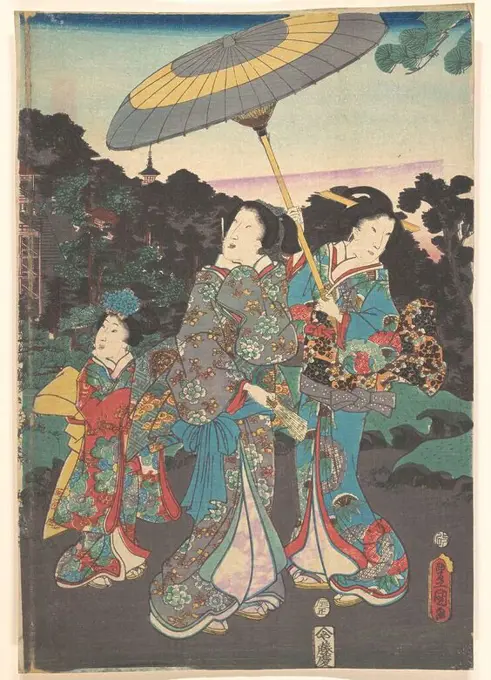
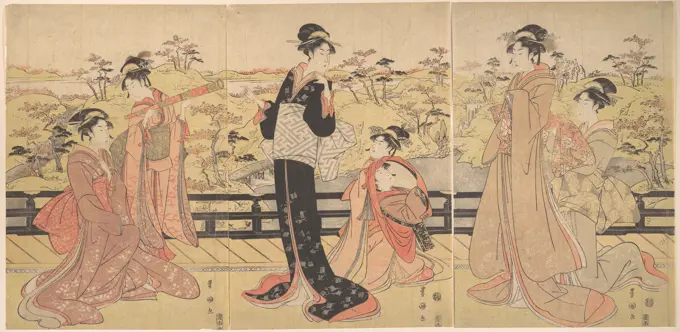
Japanese Women in Traditional Art

Color woodblock prints depicting elegant women in traditional clothing, often interacting in serene natural settings or theatrical contexts, emphasizing cultural beauty.
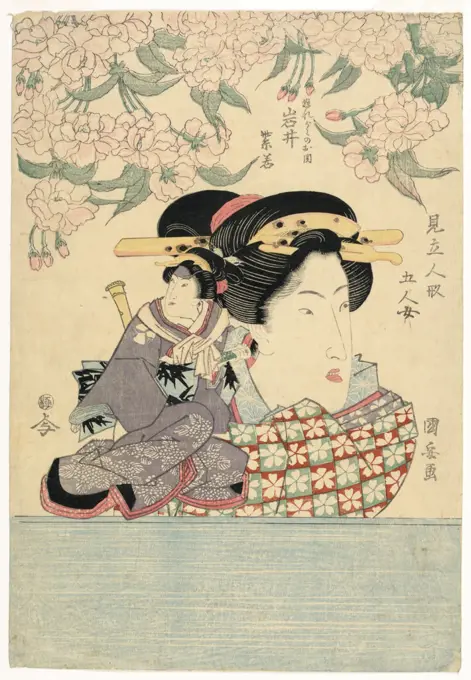
Pentaptych: Five girls with theater puppets, Utagawa Kuniyasu, Japanese, 1794 - 1832, Woodblock print (ukiyo-e) on mulberry paper (washi), ink with color, Japan, 1805-20, theater, Print, Print
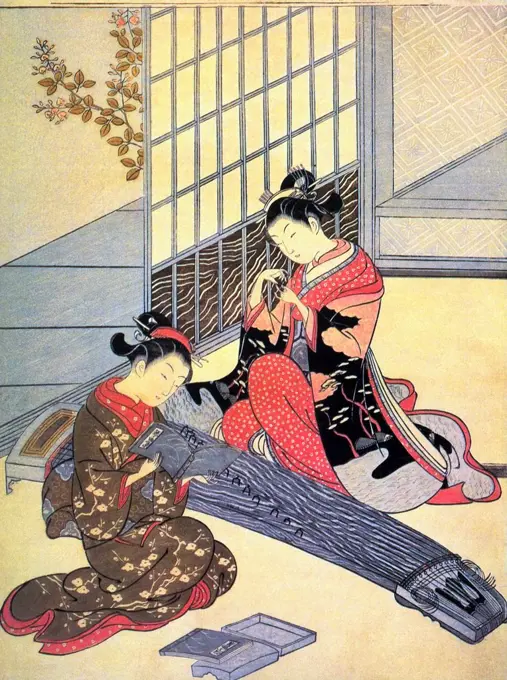
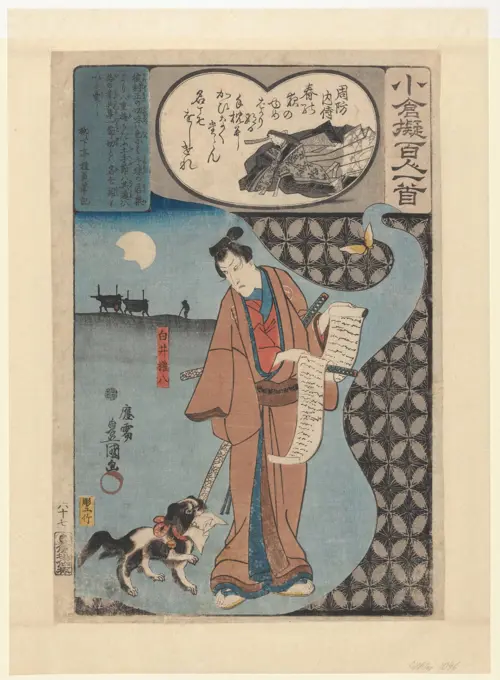
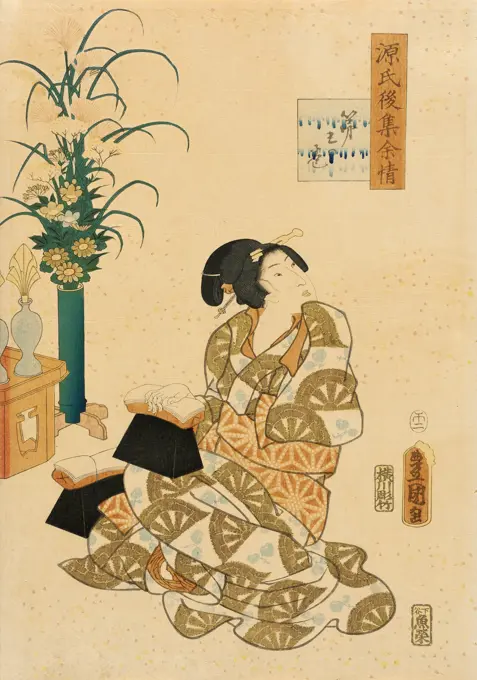
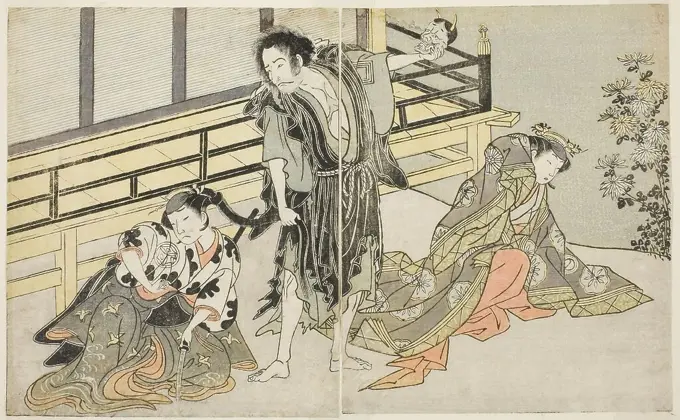
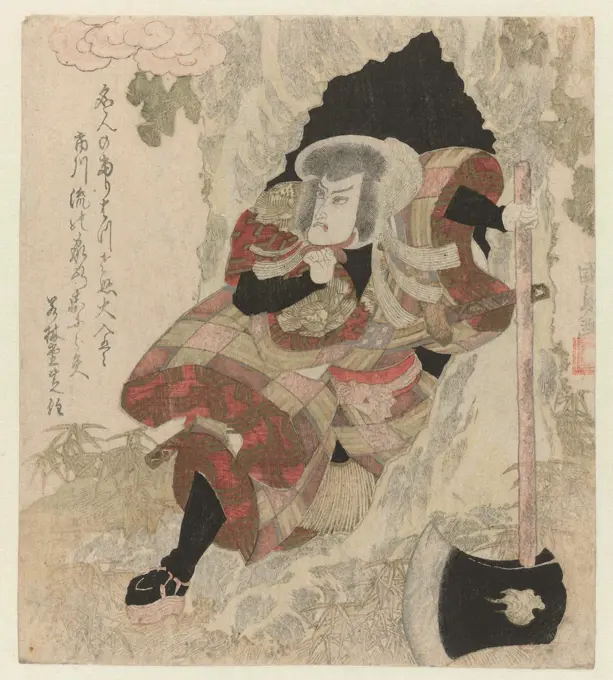
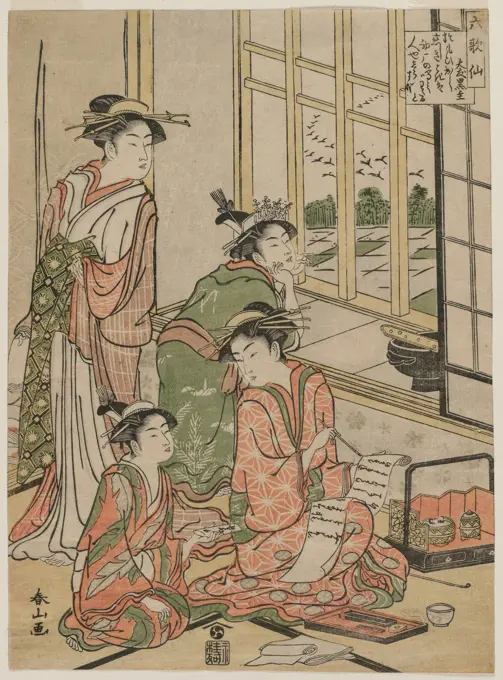
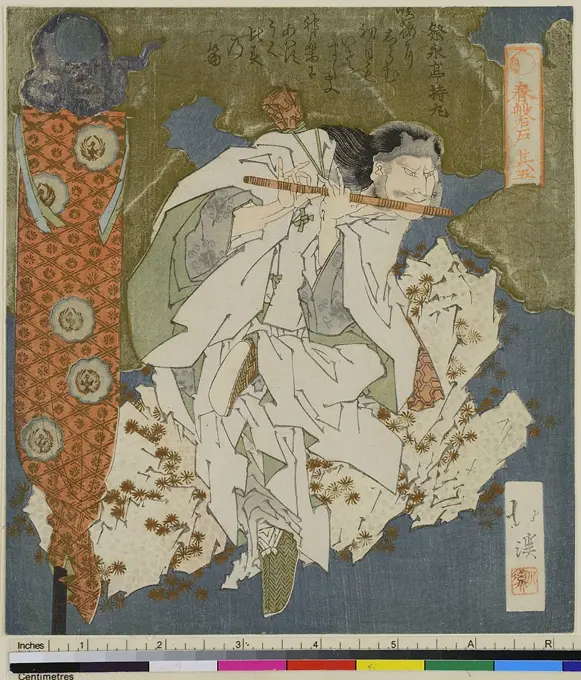
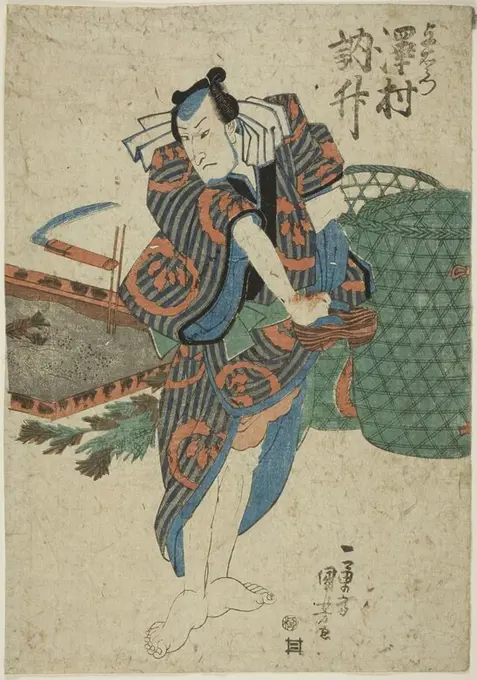
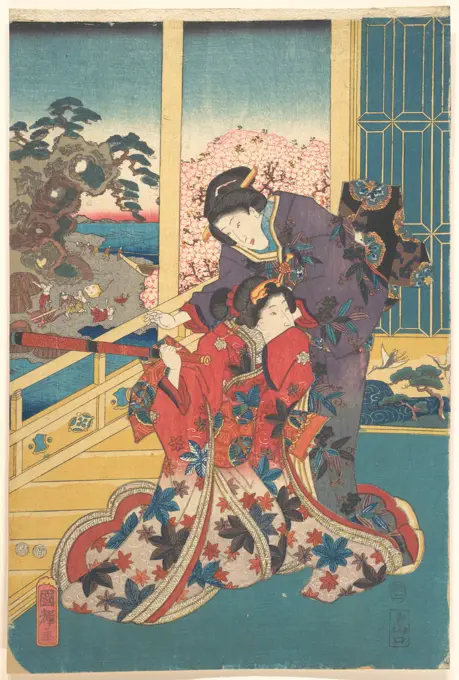
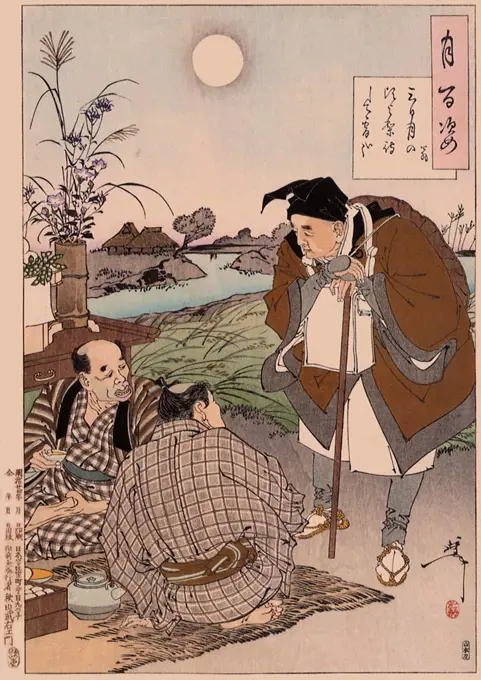
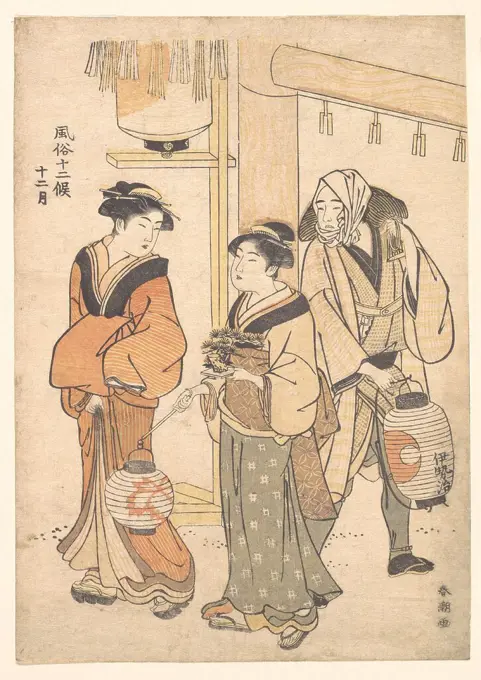
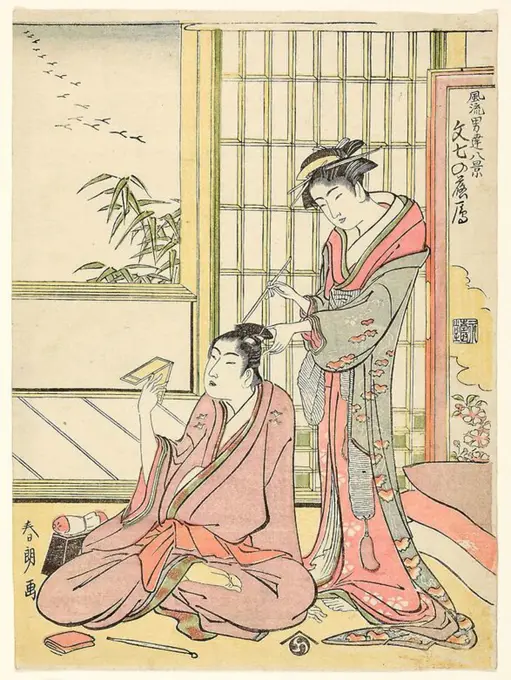
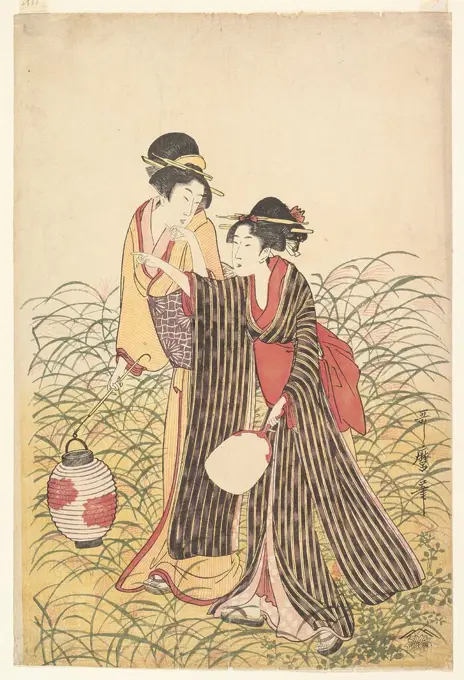
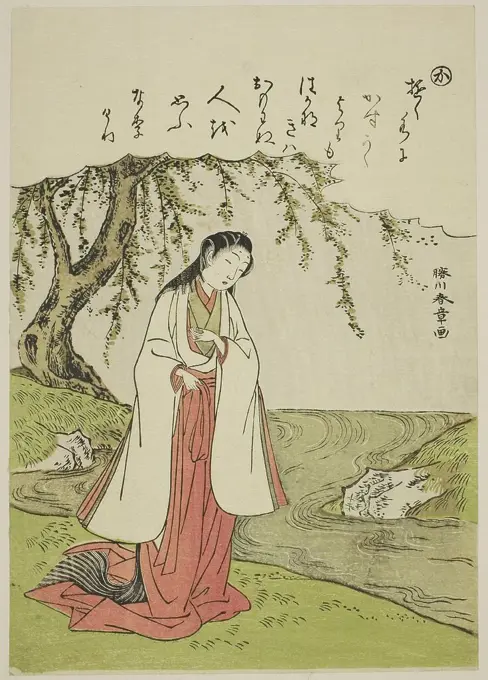
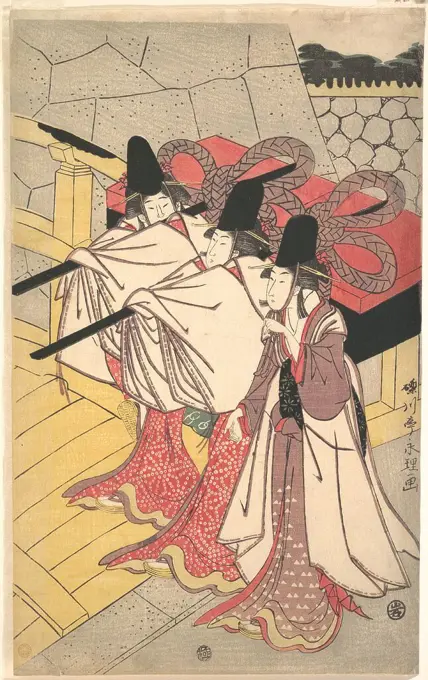
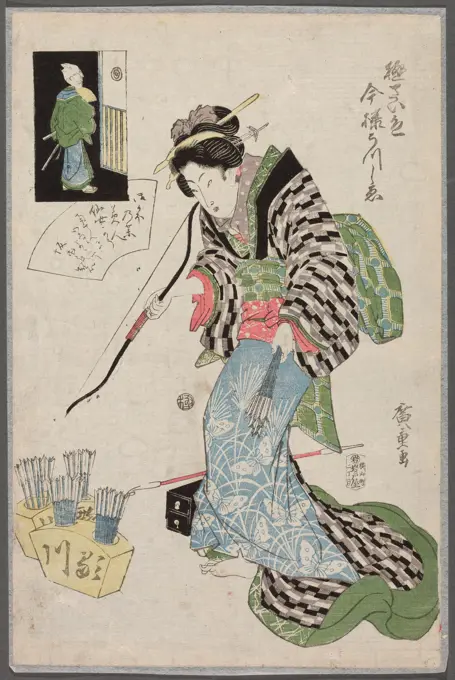
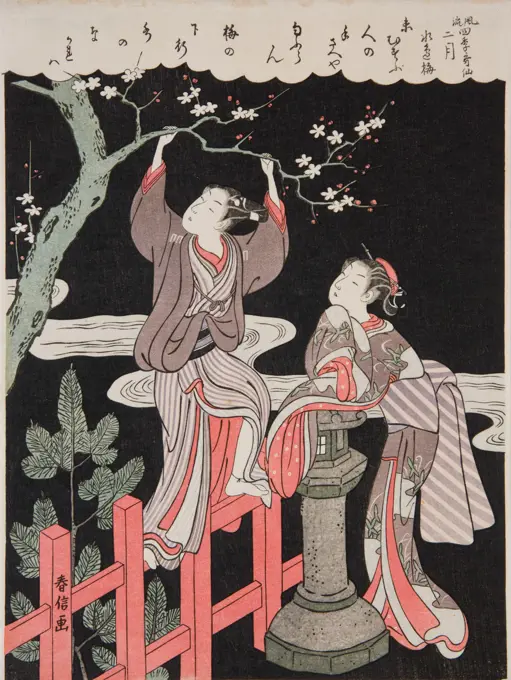
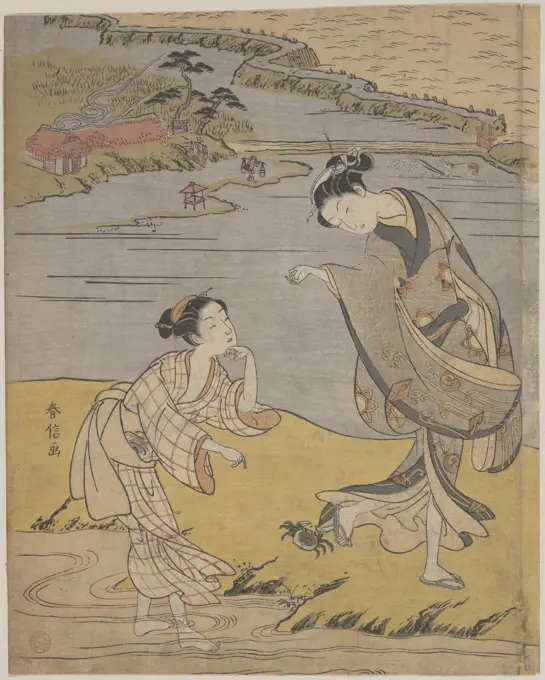
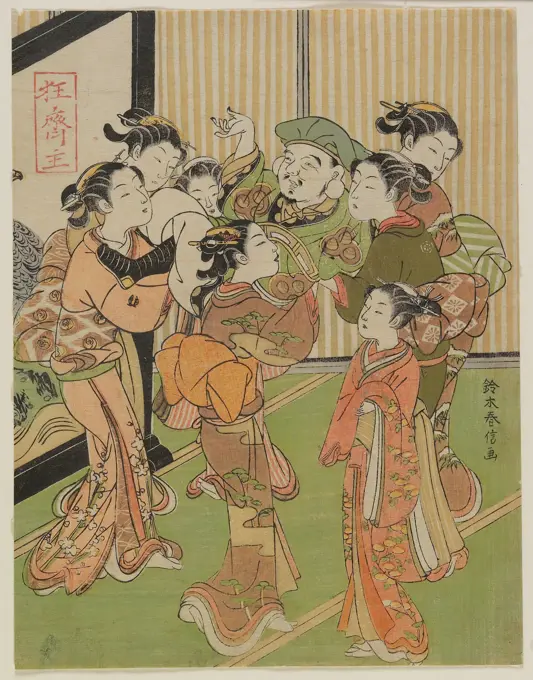
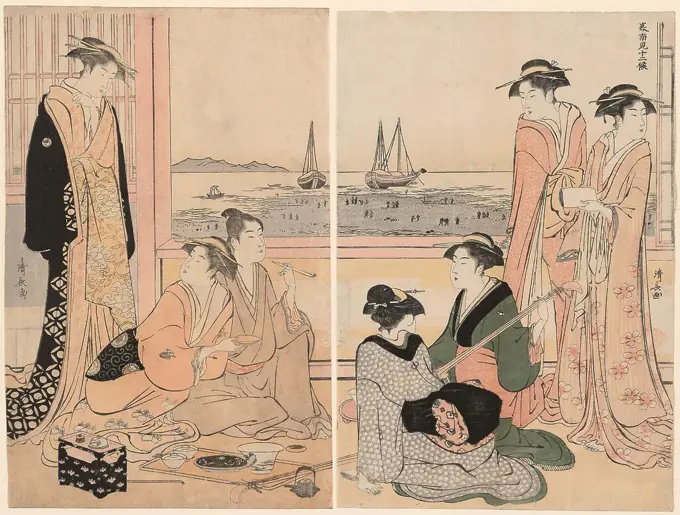
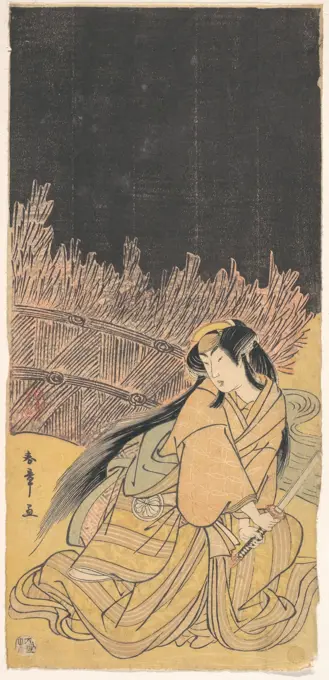
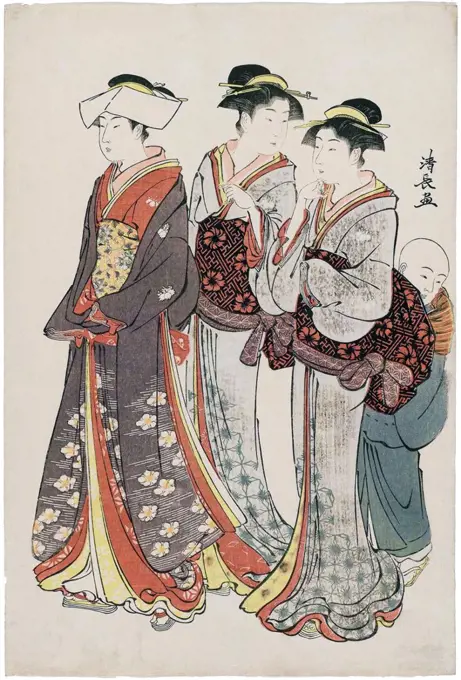
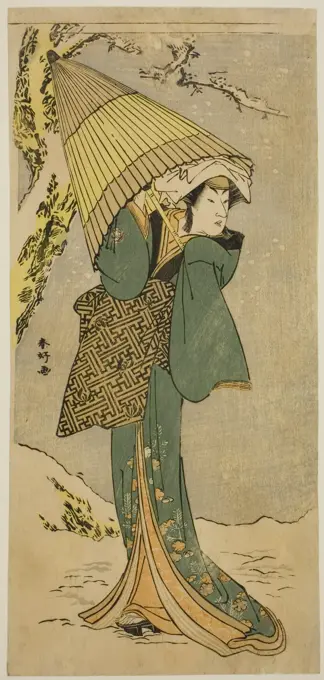
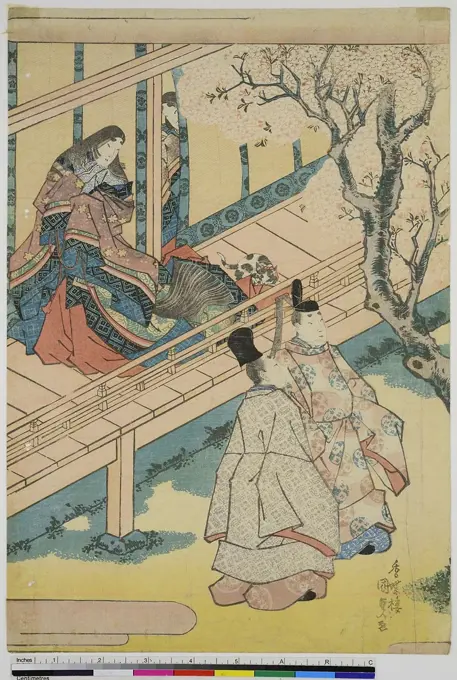
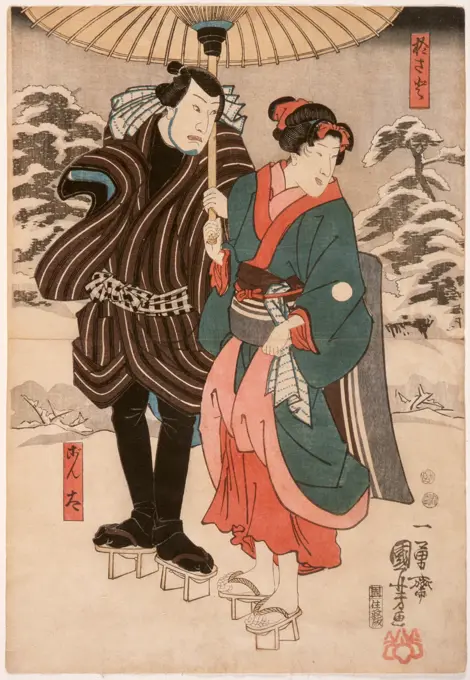
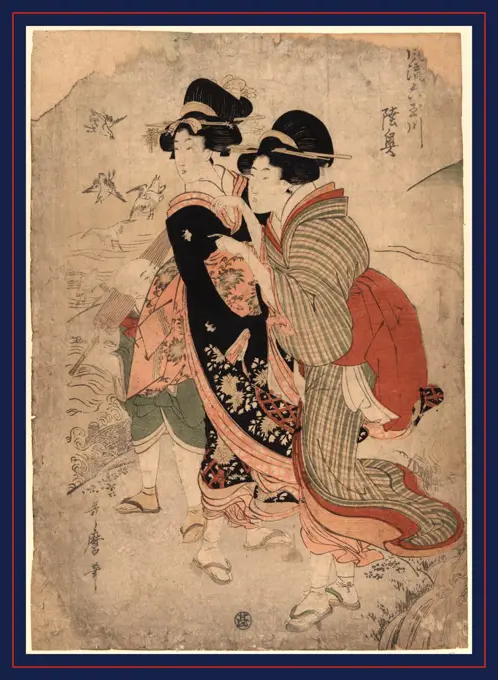
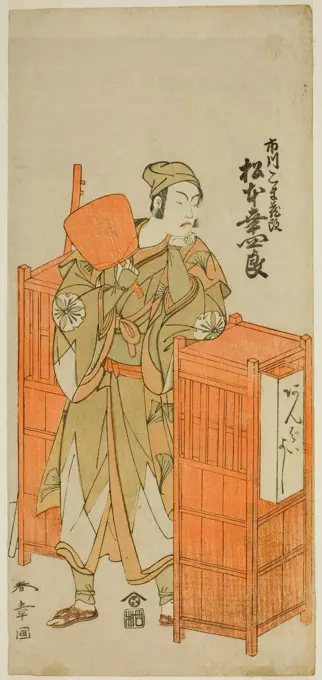
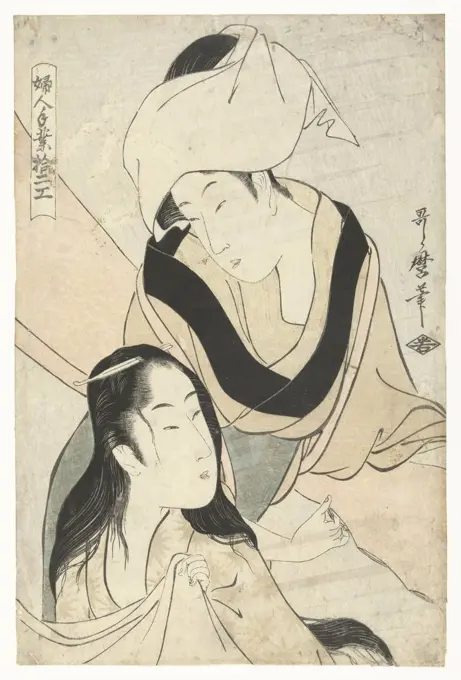
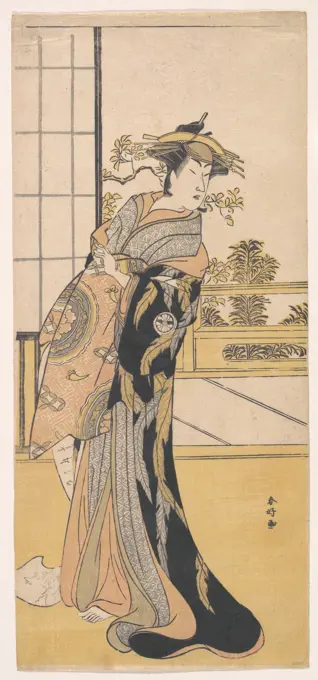
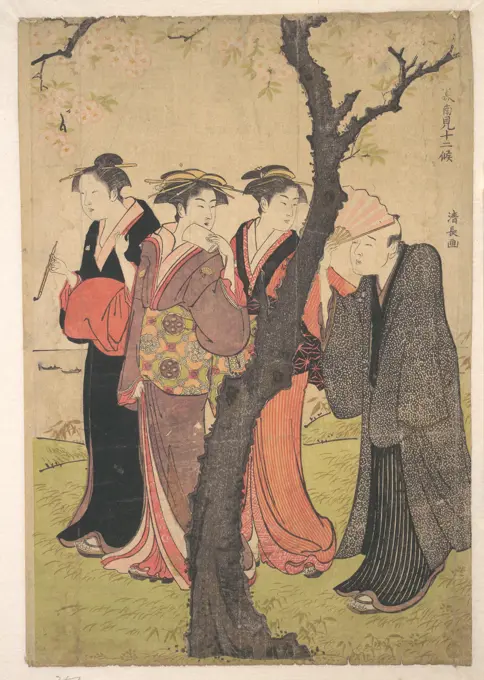
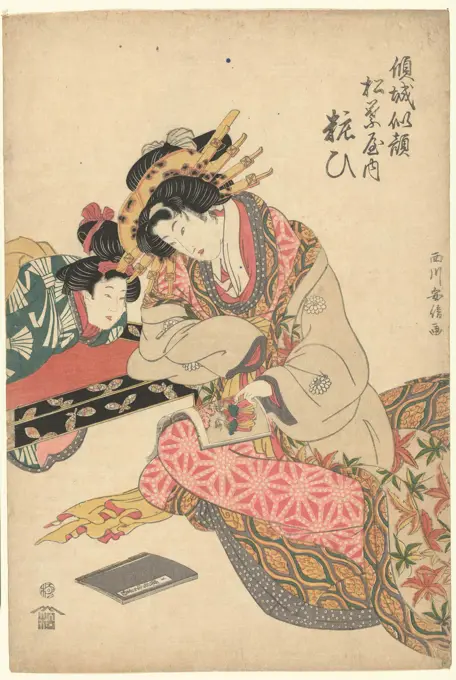
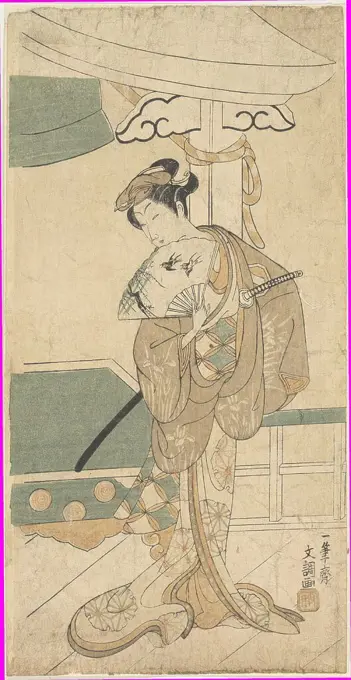
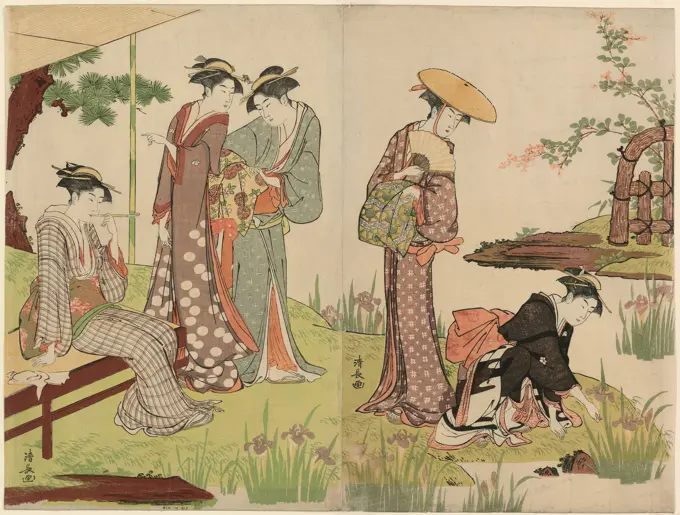
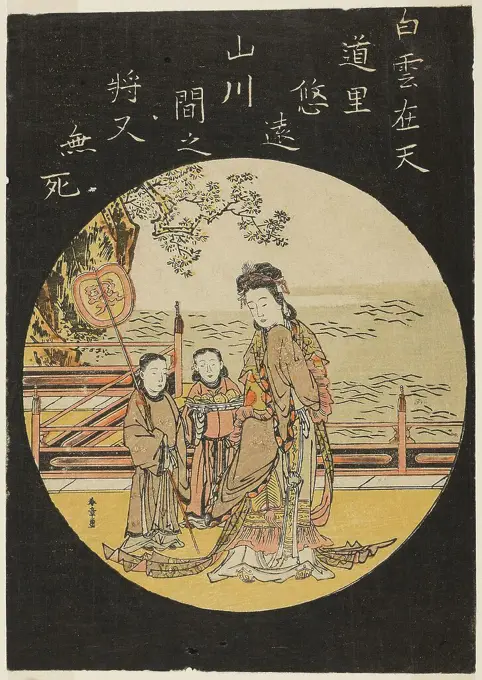
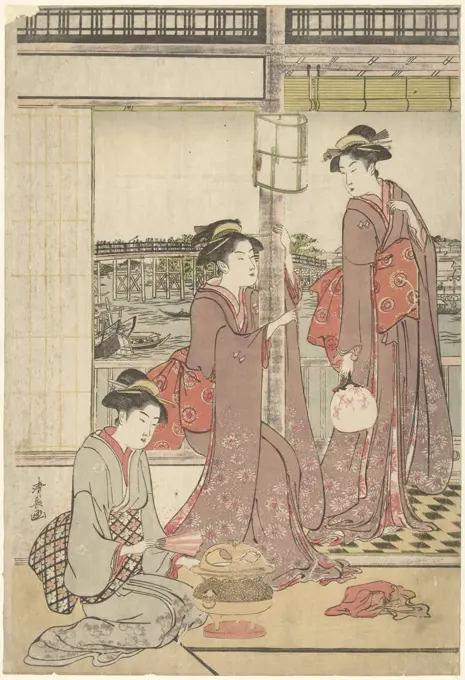
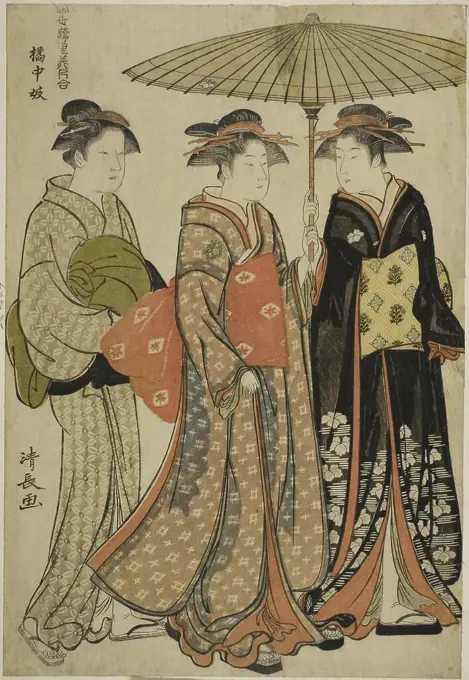
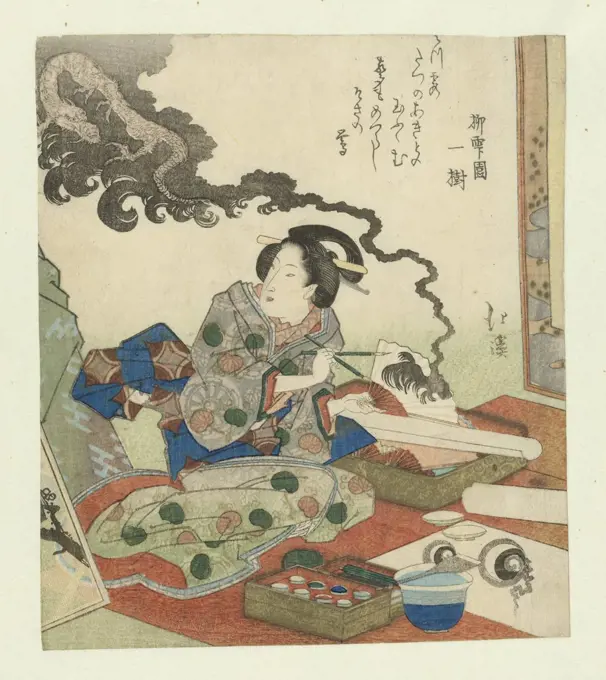
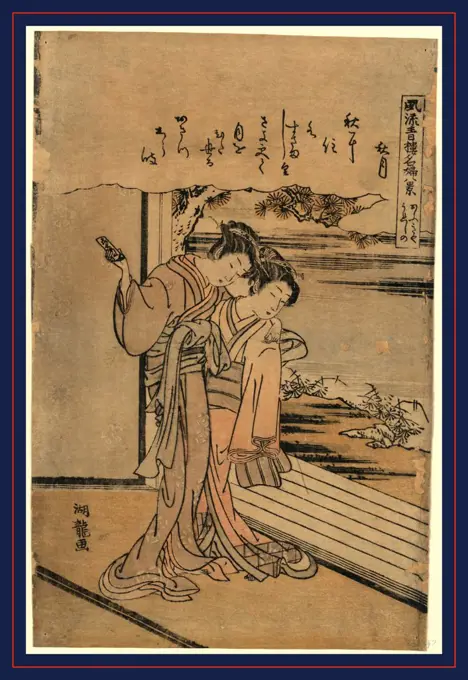
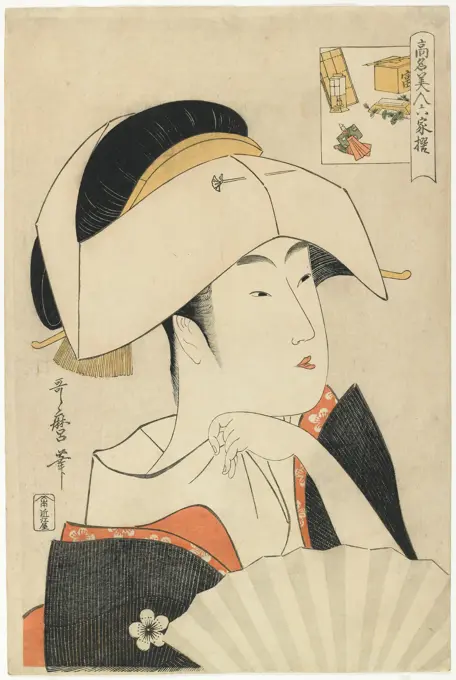
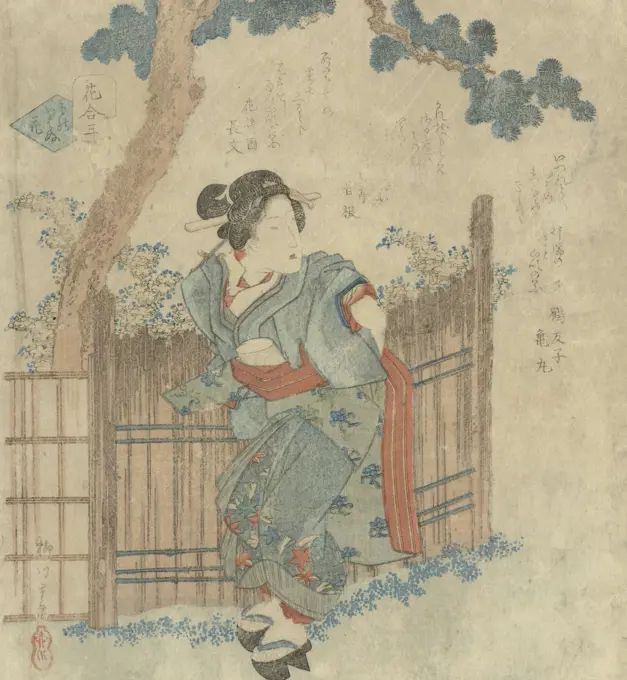
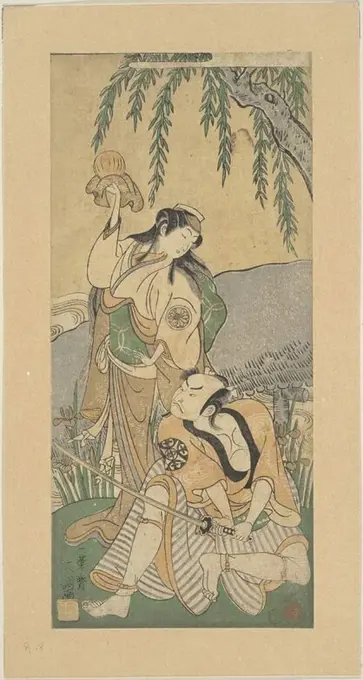
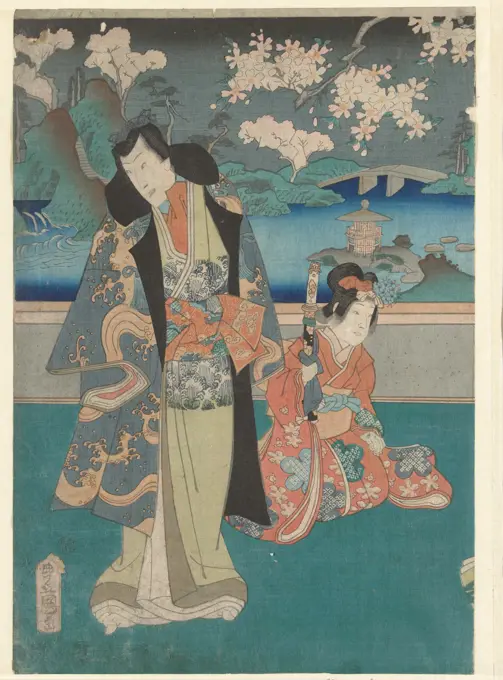
The third month; Yayoi; Modern Genji stories during the twelve months; Imayo Genji Junikagetsu No Uchi. Prince Genji and girl with sword in right hand, in room overlooking a garden with pond and blossoming trees.Suzuki Harunobu (1724 July 7, 1770) was a Japanese woodblock print artist, one of the most famous in the Ukiyo-e style. He was an innovator, the first to produce full-color prints (nishiki-e) in 1765, rendering obsolete the former modes of two- and three-color prints. Harunobu used many special techniques, and depicted a wide variety of subjects, from classical poems to contemporary beauties (bijin, bijin-ga). Like many artists of his day, Harunobu also produced a number of shunga, or erotic images. During his lifetime and shortly afterwards, many artists imitated his style. A few, such as Harushige, even boasted of their ability to forge the work of the great master. Much about Harunobu's life is unknown.The actors Ichikawa Omezo I (R) as Tomita Hyotaro and Otani Oniji III (L) as Kawashima Jibugoro 1794 Japan. Color woodblock print; oban . Tôshûsai SharakuShirai Gonpachi with a poem Suô no Naishi, No. 67 from the series "IMACTIVE of the collection from Ogura - one poem from a hundred poets" (Żegura Nazorae Hyakunin Isshu)Dembiński, Stanisław (1891-1940)-collection, decorative boards according to the anthology of a hundred poets, cycle, gift (provenance), woodcuts, Japanese (culture), Japanese art, ukiyo-eLingering Sentiments of a Late Collection of GenjiThe Actors Nakamura Noshio I as Nyosan no Miya (right), Ichikawa Danjuro V as the Renegade Monk Yochin (center), and Yamashita Kinsaku II as the Maid Mutsuhana (left), in the Play Fuki Kaete Tsuki mo Yoshiwara, Performed at the Morita Theater in the Eleventh Month, 1771. Katsukawa Shunsho  ; Japanese, 1726-1792. Date: 1767-1777. Dimensions: 16.8 x 27.3 cm (6 5/8 x 10 3/4 in.). Color woodblock print; from the illustrated book Yakusha Kuni no Hana (Prominent Actors of Japan). Origin: Japan. Museum: The Chicago Art Institute, USA.Man with ax gets out of a tree. From a large hole in the trunk of a tree, a man with a large ax steps into his hand (actor Ichikaiwa Danjûrô vii (1791-1859)). The straw hat can indicate that the role that is from a robber. With one poem.Florist in the harbor, 1840 print Play player Kataoka Gadô II in the role of florist Tokubei, in the piece "Keisei Setsugekka", staged in the Naka Theater in the first month of 1840.  paper color woodcut portrait of actor, actress. flowers. harbourThree women on the background of a garden Kunisada, UTAGAWA (1786 1864)Courtesans at Leisure from the series The Six Immortal Poets, early 1780s. Katsukawa Shunzan (Japanese). Color woodblock print; sheet: 25.4 x 18.8 cm (10 x 7 3/8 in.).Flute-playing musician, sheet 5 of the series: The rock door of spring. .A Man Standing Next to a Lady, c. 1825 - c. 1830 print A man with a sacrificial table in his hands and dressed in court clothing with a butterfly emblem, stands next to a sitting woman in a kimono with a crane motif. The clothing and makeup makes it clear that it is about actors in the role of Soga No Gorô Tokimune and his mistress MAIZURU. With three poems.  paper color woodcut adult man. adult woman. portrait of actor, actressThe actor Sawamura Tossho as Yoemon. Utagawa Kuniyoshi; Japanese, 1797-1861. Date: 1825-1845. Dimensions: 35.4 x 24.7 cm (13 15/16 x 9 11/16 in.). Color woodblock print; oban. Origin: Japan. Museum: The Chicago Art Institute, Chicago, USA.The Actors Otani Hiroemon III as Shinagawa Okaminosuke (right), and Ichikawa Danjuro V as Arashishi Otokonosuke (left), in the Play Fuki Kaete Tsuki mo Yoshiwara (Rethatched Roof The Moon also Shines Over the Yoshiwara Pleasure District), Performed at the Morita Theater in the Eleventh Month, 1771 1766-1777 Japan. Color woodblock print; from the illustrated book Yakusha Kuni no Hana (Prominent Actors of Japan) . Katsukawa ShunshoNishi no Kawara, Between Odawara and Hakone: Tsukisayo, from the series The Fifty-three Stations of the Tokaido, here titled Tokaido. Date: fourth month 1852, Edo. Museum: Musée national des arts asiatiques-Guimet, Paris. Author: UTAGAWA KUNISADA.Flower of Akashi (Akashi no hana) 1853 Utagawa Kuniteru Japanese. Flower of Akashi (Akashi no hana) 58261Concubine Mekame in snow with umbrella, Utagawa Kunisada (I), 1830 print Kabuki actor Segawa Kikunojô V in the role of Concubine Otame, under an umbrella, in the snow.  paper color woodcut concubine. umbrella. snowSince the Crescent Moon I Have Been Waiting, Yoshitoshi, TsukiokaPrint Utagawa Kunisada Japanese. Print 58231JunigatsuThe Twelfth Month: December. Artist: Katsukawa Shuncho (Japanese, active ca. 1783-95). Culture: Japan. Dimensions: 9 3/4 x 6 7/8 in. (24.8 x 17.5 cm). Date: 1780-1795. Museum: Metropolitan Museum of Art, New York, USA.MADRE E HIJO - SIGLO XVIII - 39x55. Author: KITAGAWA UTAMARO (1753-1806). Location: PRIVATE COLLECTION. MADRID. SPAIN.Descending Geese for Bunshichi (Bunshichi no rakugan), from the series "Eight Views of Elegant Gallants (Furyu otokodate hakkei)". Katsushika Hokusai  ; Japanese, 1760-1849. Date: 1776-1794. Dimensions: 22.0 x 16.2 cm (8 5/8 x 6 3/8 in.). Color woodblock print; chuban. Origin: Japan. Museum: The Chicago Art Institute, Chicago, USA.Elopers in Musashino. Artist: Kitagawa Utamaro (Japanese, ca. 1754-1806). Culture: Japan. Dimensions: Image (oban triptych): 15 1/8 x 10 1/8 in. (38.4 x 25.7 cm). Date: early 19th century.In this episode of The Tales of Ise, the indefatigable young hero of the amorous saga abducts another young girl. He takes her to Musashi Province, far east of the capital, and, pursued by the local authorities for his crime, he hides the girl in a field of tall flowering grass and escapes. In order to force him out of hiding, his pursuers begin to set fire to the field; then they hear the voice of the girl:Field of Musashi--Do not burn it down today!Like the young grasseshere my lover crouching hidesand I too lie in hiding.Although she believes her abductor to be in the field with her, according to the text he has already fled and left her behind. The cute, rounded, childlike faces, which are typical of Harunobu's figures, further contribute to the strong sense of pathos in the couple threatened by t"Ka": A Court Lady Thinks Disconsolately of Her Lover, from the series "Tales of Ise in Fashionable Brocade Pictures (Furyu nishiki-e Ise monogatari)". Katsukawa Shunsho  ; Japanese, 1726-1792. Date: 1767-1778. Dimensions: 22.8 x 15.9 cm (8 15/16 x 6 1/4 in.). Color woodblock print; koban. Origin: Japan. Museum: The Chicago Art Institute, USA.Prince Genji Returning to His Palace where His Wife Awaits Him. Artist: Rekisentei (Chokyosai) Eiri (Japanese, active ca. 1789-1801). Culture: Japan. Dimensions: 15 5/8 x 9 5/8 in. (39.7 x 24.46 cm). Date: ca. 1797. Museum: Metropolitan Museum of Art, New York, USA.Mishima no zu  | Library of CongressTwo Women, one cutting paper and the otherwatching. Artist: Isoda Kory?sai, Japanese, active ca. 1764-88Andon  | Library of CongressWoman with bow and arrows; print from the series: Gokusai shiki imayo utsushi-e. Utagawa, Hiroshige I (1797-1858), graphic artistBeauties Parodying the Seven Sages - A Selection of Younger Courtesans (Shichi kenjin yatsushi bijin shinzo zoroe): Miyagawa of the Matsubaya. Chobunsai Eishi; Japanese, 1756-1829; Publisher: Iwato-Ya; Japanese, Unknown. Date: 1788-1798. Dimensions: 38.1 x 25.4 cm (15 x 10 in.). Color woodblock print; oban. Origin: Japan. Museum: The Chicago Art Institute, Chicago, USA. Author: Chobunsai Eishi.Act Five: Yamazaki Highway from the play Kanadehon Chushingura. Katsukawa Shun'ei; Japanese, 1762-1819; Publisher: Ise-Ya Magobei; Japanese, unknown; Sadakuro; Japanese, Unknown. Date: 1807. Dimensions: 39 x 26 cm (15 3/8 x 10 1/4 in.). Color woodblock print; oban. Origin: Japan. Museum: The Chicago Art Institute, Chicago, USA.Koto from the series The Six Arts in Fashionable Guise, c. 1793-96. Chōbunsai Eishi (Japanese, 1756-1829). Color woodblock print; ink and color on paper; sheet: 36.6 x 25 cm (14 7/16 x 9 13/16 in.). Chinese classical education consisted of the Six Arts: performing rites, music, archery, charioteering, calligraphy, and mathematics. The Chinese qin, a stringed musical instrument in the zither family, customarily symbolizes the art of music. In this print a similar Japanese instrument, the koto, replaces the qin. The fashionable Japanese entertainer playing it stands in for an accomplished Chinese scholar."Ro": Seaweed, from the series "Tales of Ise in Fashionable Brocade Pictures (Furyu nishiki-e Ise monogatari)". Katsukawa Shunsho  ; Japanese, 1726-1792. Date: 1767-1778. Dimensions: 22.8 x 15.8 cm (8 15/16 x 6 3/16 in.). Color woodblock print; koban. Origin: Japan. Museum: The Chicago Art Institute, USA.Young Man (Wakashu) with a Miniature Flower Cart ca. 1750-60s Ishikawa Toyonobu Japanese. Young Man (Wakashu) with a Miniature Flower Cart 55776Ichikawa Danjūrō VII Admiring Ichikawa Danjūrō I in a Portrait ca. 1820 Utagawa Kunisada Japanese This print shows the actor Ichikawa Danjūrō VII gazing at a portrait of his ancestor Danjūrō I. Seemingly in confrontation, the men adopt exaggerated poses (mie) and lance each other with piercing gazes. The famous family crest of three nested squares (mimasu) is incorporated into the design of the actors' costumes and into the frame of the portrait of Danjūrō I. The print also includes two kyōka (literally, "crazy poems"), the artist's signature "Gototei Kunisada ga," and the mimasu seal.. Ichikawa Danjūrō VII Admiring Ichikawa Danjūrō I in a Portrait 63357Ono no Komachi at Seki Temple, from the series The Seven Fashionable Komachi (Furyu nana Komachi) 1765-1777 Japan. Color woodblock print; chuban . Isoda KoryusaiSpring (February). The young man breaking the branch of the flourishing plum for his beloved, from the series: sophisticated poems of the four seasons / Furyu Shiki Kasen Harunobu, Suzuki (1724 1770)Lovers Parting at Dawn 1762-1770 Japan. Color woodblock print; chuban . Suzuki HarunobuBeauties of the Pleasure Quarters (Seiro bijin awase) the Hostess of the Izumiya Teahouse 1790-1800 Japan. Color woodblock print; oban . Rekisentei EiriThe Clinging Crab 1770 Suzuki Harunobu Japanese. The Clinging Crab 55143Window Opening Toward the Sea. Artist: Suzuki Harunobu (Japanese, 1725-1770). Culture: Japan. Dimensions: 11 x 8 in. (27.9 x 20.3 cm). Museum: Metropolitan Museum of Art, New York, USA.Kōbai, sheet 43 from the series: Genji clouds together with Ukiyo-e. Donation Gerhard SchackTorii Kiyonaga ( , 1752 - June 28, 1815) was a Japanese ukiyo-e printmaker and painter of the Torii school. Originally Sekiguchi Shinsuke, the son of an Edo bookseller, he took on Torii Kiyonaga as an art-name (go). Although not biologically related to the Torii family, he became head of the group after the death of his adoptive father and teacher Torii Kiyomitsu. The master Kiyomitsu died in 1785; since his son died young, and Kiyotsune, Kiyonaga's senior, was a less promising artist, Kiyonaga was the obvious choice to succeed Kiyomitsu to leadership of the Torii school. However, he delayed this for two years, likely devoting time to his bijinga and realizing the immense responsibility that would fall on his shoulders once he took over the school. Thus, in 1787, he began organizing the production of kabuki signboards and the like, which the school held a near monopoly on. He also began to train Kiyomitsu's grandson, Torii Kiyomine, who was to succeed him. Kiyonaga is considered oSeven Women Tossing Daikoku in the Air at New Year, c. 1767-1768, Suzuki Harunobu, Japanese, 1725 - 1770, 9 3/4 × 7 1/2 in. (24.8 × 19.1 cm) (image, sheet, vertical chūban), Woodblock print (nishiki-e); ink and color on paper, Japan, 18th centuryThe Fourth Month, from the series "Twelve Months in the South (Minami juni ko)". Torii Kiyonaga; Japanese, 1752-1815. Date: 1779-1789. Dimensions: 38.4 x 50.6 cm (overall), 38.2 x 25.6 cm (right sheet), 38.4 x 24.9 cm (left sheet). Color woodblock prints; oban diptych. Origin: Japan. Museum: The Chicago Art Institute, USA.The Actor Yamashita Kinsaku II as Osaku ( ) in the Play Onna Aruji Hatsuyuki no Sekai, Performed at the Morita Theater in the Eleventh Month, 1773 1768-1778 Japan. Color woodblock print; hosoban . Katsukawa ShunshoThe Third Segawa Kikunojo as a Woman in a Crouching Position 1778 Katsukawa Shunshō 川春章 Japanese. The Third Segawa Kikunojo as a Woman in a Crouching Position 36823Nyūdōsaki no Daijōdaijin; Fuwa Banzaemon. Utagawa Hiroshige (Japan, Edo, 1797-1858). circa 1845-1849. Prints; woodblocks. Color woodblock printAn Actor in the Role of Ojo Kichisa, right sheet of a triptych. Date: first month 1860. Dimensions: 37 cm x 26 cm. Museum: Van Gogh Museum, Amsterdam. Author: UTAGAWA KUNISADA.Torii Kiyonaga ( , 1752 - June 28, 1815) was a Japanese ukiyo-e printmaker and painter of the Torii school. Originally Sekiguchi Shinsuke, the son of an Edo bookseller, he took on Torii Kiyonaga as an art-name (go). Although not biologically related to the Torii family, he became head of the group after the death of his adoptive father and teacher Torii Kiyomitsu. The master Kiyomitsu died in 1785; since his son died young, and Kiyotsune, Kiyonaga's senior, was a less promising artist, Kiyonaga was the obvious choice to succeed Kiyomitsu to leadership of the Torii school. However, he delayed this for two years, likely devoting time to his bijinga (portraits of beautiful women) and realizing the immense responsibility that would fall on his shoulders once he took over the school. Thus, in 1787, he began organizing the production of kabuki signboards and the like, which the school held a near monopoly on. He also began to train Kiyomitsu's grandson, Torii Kiyomine, who was to succeedA Parcel of Three Diverse Prints Japan. A Parcel of Three Diverse Prints 55032Abalone Divers Kitagawa Utamaro (Japanese, 1753-1806). Abalone Divers, ca. 1797-1798. Color woodblock print on paper, 14 1/2 x 9 3/4 in. (36.8 x 24.8 cm).   Asian Art ca. 1797-1798A spring banet for the eastern Genji; Azuma Genji Hana No Yuen. Woman and two girls on bridge over pond.. Color woodblock print; hosoban; left sheet of diptych . Katsukawa Shunko IErotic Print Kitagawa Utamaro Japanese. Erotic Print 56714Enemy waves are approaching the modern Prince Genji. Woman with irises in right hand, sitting in boat; Night landscape in the background.Writing on a Fan 1765 Japan. Color woodblock print; koban . Ishikawa ToyonobuKemari (football match). Donation Gerhard SchackOsayo and Genta. Utagawa Kuniyoshi (Japan, 1797-1861). Japan, c. 1850. Prints; woodblocks. Color woodblock printThe Niwaka Performers ca. 1795 Kitagawa Utamaro Japanese. The Niwaka Performers 55193Courtesan and Two Kamuro. Komatsuya Hyakki; Japanese, 1720-1793 (). Date: 1761-1771. Dimensions: 10 1/8 x 7 7/8 in. Color woodblock print; chuban trimmed to an oval shape. Origin: Japan. Museum: The Chicago Art Institute, Chicago, USA.Supernatural Beings at Shirazunoyabu in Yawata 1881 Japan. Color woodblock print . Tsukioka YoshitoshiThe Actor Matsumoto Koshiro IV as Sagami Jiro Disguised as Ambaiyoshi Gorohachi in the Play Oyoroi Ebido Shinozuka, Performed at the Nakamura Theater in the Eleventh Month, 1772 1767-1777 Japan. Color woodblock print; hosoban . Katsukawa ShunshoMichinoku, Kitagawa, Utamaro, 1753-1806, artist, [1793 or 1794, printed later, 1 print : woodcut, color ; 37.3 x 26.2 cm., Print shows the courtesan Michinoku with a female attendant and a boy carrying an umbrella over his shoulder.Bust portrait of young woman with impeller. Bust portrait of young woman with landscaped range in hands and in kimono on which pattern of flying geese; At the top left a circular cartouche in which face on reflecting sailing ships at sunset, which is an elongated cartouche with poem. (Bijinga)Yagenbori, from the series Fashionable Sands of Edo (Fuzoku Edo sunago) 1775-1806 Japan. Color woodblock print; chuban . Katsukawa ShunchôThe Actor Matsumoto Koshiro IV as Sagami Jiro Disguised as Ambaiyoshi Gorohachi in the Play Oyoroi Ebido Shinozuka, Performed at the Nakamura Theater in the Eleventh Month, 1772 1767-1777 Japan. Color woodblock print; hosoban . Katsukawa ShunshoTensioning cloths Twelve female skills (series title) Fujin tewaza juniko (series title on object), Two women, one with a white headscarf, the other with her hair hanging loose, strips of cloth exciting to dry., Kitagawa Utamaro (mentioned on object), Japan, 1795 - 1800, paper, colour woodcut, h 376 mm w 249 mmThe Actor Kataoka Nizaemon in Ceremonial Robes of Green and Pink, Drawing His Sword. Artist: Utagawa Toyokuni I (Japanese, 1769-1825). Culture: Japan. Dimensions: 14 11/16 x 10 in. (37.3 x 25.4 cm). Date: 1769-1825. Museum: Metropolitan Museum of Art, New York, USA.Woman and servant with temple gift, Keisai demands, c. 1820 - c. 1825  A woman and her servant walk along the Sumida river with a temple gift; An EMA or votive print, with the image of a camelia and an anchor. With two poems. Japan paper color woodcut adult woman. house personnel, servantsThe Actor Segawa Kikunojo 3rd in a Female Role ca. 1780 Katsukawa Shunkō Japanese. The Actor Segawa Kikunojo 3rd in a Female Role 55707Cherry Blosson Viewing at Gotenyama ca. 1784 Torii Kiyonaga Japanese. Cherry Blosson Viewing at Gotenyama. Torii Kiyonaga (Japanese, 1752-1815). Japan. ca. 1784. Woodblock print; ink and color on paper. Edo period (1615-1868). Printsfine arts, Koryusai, Isoda, (active 1766 - 1788), graphics, ""courtesan Michinoku reading book ""One hundred poets"", while servants playing poem cards, 1780, colour woodcut, private collection, Washington, historic, historical, Asia, Japan, 18th century, woman, women, full length, clothing, fashion, prostitute, prostitution, servant, three, 3,Geisha and Kamuro. Sitting Geisha, an illustrated book on her shot opened, while her kamuro, leaning over a low table, watched.The Actor Ichikawa Uzayemon IX 1724-1785 in a Female Role. Artist: Ippitsusai Buncho (Japanese, active 1760-1794). Culture: Japan. Dimensions: H. 5 7/8 in. (14.9 cm); W. 11 1/2 in. (29.2 cm). Museum: Metropolitan Museum of Art, New York, USA.Woman Stepping Out with a Lantern. Suzuki Harunobu  ; Japanese, 1725 ()-1770. Date: 1762-1770. Dimensions: 10 7/8 x 8 in. Color woodblock print; chuban. Origin: Japan. Museum: The Chicago Art Institute, USA.Settsu Province from the series Fashionable Six Jewel Rivers (Furyu Mu Tamagawa), c. 1804. Kitagawa Utamaro (Japanese, 1753-1806). Polychrome woodblock print; ink and color on paper; sheet: 37.6 x 24.5 cm (14 13/16 x 9 5/8 in.).Throwing the Shuttle 1761-1772 Japan. Color woodblock print; chuban . Suzuki HarunobuBy an Iris Pond 1780-1790 Japan. Color woodblock print; oban diptych . Torii KiyonagaThe Chinese Immortal Seiobo (C: Xi Wang Mu, Queen of the West). Katsukawa Shunsho  ; Japanese, 1726-1792. Date: 1765-1784. Dimensions: 25.4 x 17.7 cm (10 x 6 15/16 in.). Color woodblock print; chuban. Origin: Japan. Museum: The Chicago Art Institute, USA.Moon Party, Three women in a room overlooking the Sumida River and Rogoku Bridge, woman with fan standing on porch, talking with woman in the same dress sitting in windowsill, a third woman with fan sitting at brazier. Left sheet of triptych., Torii Kiyonaga (mentioned on object), Japan, 1785 - 1789, paper, colour woodcut, h 386 mm × w 262 mmA young woman holding a cage containing a canary is seated on the floor, while a young man is slipping a love letter under the cage. In the background, a branch of an uma tree in bloom is visible through the black arch of an open window., 1767, Woodcuts, 10 x 7 3/8 in. (25.4 x 18.7 cm)Fuchu, from an untitled series of the fifty-three stations of the Tokaido 1799-1809 Japan. Color woodblock print; kokonotsugiri-ban . Katsushika HokusaiEntertainers of Tachibana (Kitchugi), from the series "A Collection of Contemporary Beauties of the Pleasure Quarters (Tosei yuri bijin awase)". Torii Kiyonaga; Japanese, 1752-1815. Date: 1776-1786. Dimensions: 37.3 x 25.5 cm. Color woodblock print; oban. Origin: Japan. Museum: The Chicago Art Institute, USA.Dragon rises from a fan, A woman paints a dragon on a fan that then seems to fly away. Or is it also a dragon on the folding screen next to it, pictured On the floor a color box, paper and brushes. On the left a box with unpainted fans. With one poem, fan, Totoya Hokkei (mentioned on object), Japan, 1832, paper, colour woodcut, h 184 mm × w 162 mmDuring the Edo period (1603 - 1868), the Japanese clock was divided into twelve units of time, or hours, with each one named after one of the zodiacal symbols of the lunar calendar, and with the day being divided up into six daytime hours and six night-time hours. This woodblock print is taken from Kitagawa Utamaro's 1794-1795 ukiyo-e series 'Twelve Hours of the Green Rooms', sometimes styled 'Twelve Hours of the Yoshiwara', featuring everyday events in the lives of courtesans in Edo's Yoshiwara pleasure district. The Hour of the Tiger is around four oclock in the morning. Feeling hungry, a courtesan cooks a light snack on a brazier. She warms her shoulders with the coat of her client. Another courtesan also awake, joins her in moment of intimacy and friendly conversation.Ogiya ureshino shugetsu, Ureshino of the house of Ogiya: autumn month., Isoda, Koryusai, active 1764-1788, artist, between 1770 and 1773, 1 print : woodcut, color ; 22.9 x 14.7 cm., Print shows two women in an embrace, standing next to opening in a brothel.The actor Arashi Rikan II as Yoshikawa Kageto. Donation Gerhard SchackPortrait of Tomimoto Toyohina, 1795-1796, Kitagawa Utamaro; Publisher: Ōmiya Gonkurō, Japanese, 1753 - 1806, 15 3/8 × 10 3/16 in. (39 × 25.8 cm) (image, sheet, vertical ōban)23 × 19 × 1 1/2 in. (58.42 × 48.26 × 3.81 cm), Woodblock print (nishiki-e); ink and color on paper, Japan, 18th century, Tomimoto Toyohina was a much sought-after geisha (entertainer) who performed narrative ballads accompanied by the shamisen. She was one of several non-prostitute beauties, including teahouse waitresses, whom Utamaro depicted repeatedly in the early to mid 1790s. Here she wears a headdress called agebōshi, used by fashionable women to protect their oiled coiffures from dust and wind when they went out. For this image, the printer rendered the agebōshi in pale pink mica to suggest the texture of silk.Japan, Nagafumi, Kayûen, Kamemaru, Kakuyûshi, Shigenobu (II), Yanagawa, Hana awase, A Comparison of Flowers, Sono san - mono iwanu hana, Number three: the silent flower, A woman shelters from a rain shower under a large pine tree. The rain is indicated in blind stamping. With three poems., print, prent, surimono, prints, prenten, Japan (collection), height 206 mm, width 183 mm, Japanese, print maker, printmaker, 1820 - 1830, second quarter 19th century, paper, colour woodcut, blind printing, poetA Wife of the Lower Rank (Gebon no nyobo), from the series A Guide to Women's Contemporary Styles (Tosei onna fuzoku tsu) 1796-1807 Japan. Color woodblock print; oban . Kitagawa UtamaroReturning Sail of the Hanging Scroll: Eight ParlorViews. Artist: Kitao Masanobu, Japanese, 1761-1816. Artist: Kitagawa Utamaro (Japanese, ca. 1754-1806). Culture: Japan. Dimensions: H. 13 in. (33 cm); W. 8 7/8 in. (22.5 cm); Diam. of circle 8 3/8 in. (21.3 cm). Date: ca. 1798. Museum: Metropolitan Museum of Art, New York, USA.Scene from a Drama. Artist: Ippitsusai Buncho (Japanese, active 1760-1794). Culture: Japan. Dimensions: H. 12 1/4 in. (31.1 cm); W. 5 5/8 in. (14.3 cm). Date: 1769. Museum: Metropolitan Museum of Art, New York, USA.The Actors Nakamura Nakazo I as Matsukaze (right), and Ichikawa Komazo I as Yukihira (left), in the Play Kuni no Hana Ono no Itsumoji, Performed at the Nakamura Theater in the Eleventh Month, 1771 1767-1777 Japan. Color woodblock print; hosoban . Katsukawa ShunchôTwo Court Ladies Admire the Cherry Trees ca. 1820 Yashima Gakutei Japanese As the audience for surimono was a sophisticated and educated one, the artists had more latitude in choosing subject matter and style than in the arena of commercial "ukiyo-e." Consequently, in addition to developing new print themes, such as still life and nature studies, surimono designers were also able to turn back to more classical painting traditions, as exemplified by these court beauties of a style centuries old.Vertical diptychs are an unusual format. If separated, each composition would be successful in its own right and, as both are signed, it would be difficult to recognize that either one was merely half of a diptych.. Two Court Ladies Admire the Cherry Trees. Yashima Gakutei (Japanese, 1786-1868). Japan. ca. 1820. Diptych of Woodblock print (surimono); ink and color on paper. Edo period (1615-1868). PrintsThe actor Nakamura Utaemon in the role of Amagoi Komachi (Komachi praying for rain) Kunisada, UTAGAWA (1786 1864)Print. Artist: Utagawa Kunisada (Japanese, 1786-1865). Culture: Japan. Dimensions: Image: 14 3/8 × 9 7/8 in. (36.5 × 25.1 cm). Museum: Metropolitan Museum of Art, New York, USA.Warm: An Urban Widow of the Kansei Period (1789-1800). Tsukioka Yoshitoshi (Japan, 1839-1892). Japan, 1888, July. Prints; woodblocks. Color woodblock printWomen on a Veranda ca. 1797 Utagawa Toyokuni I Japanese. Women on a Veranda 55747