Japanese Women in Traditional Art

Color woodblock prints depicting elegant women in traditional clothing, often interacting in serene natural settings or theatrical contexts, emphasizing cultural beauty.
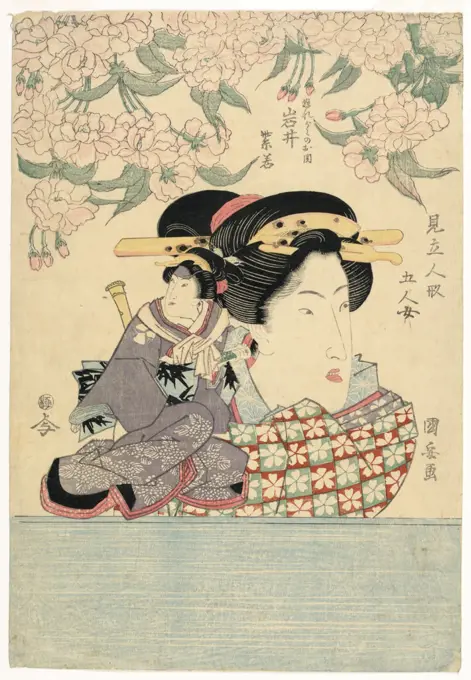
Pentaptych: Five girls with theater puppets, Utagawa Kuniyasu, Japanese, 1794 - 1832, Woodblock print (ukiyo-e) on mulberry paper (washi), ink with color, Japan, 1805-20, theater, Print, Print
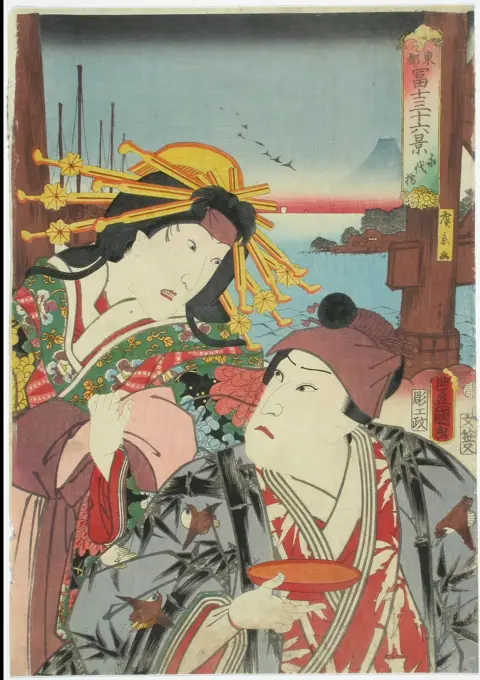
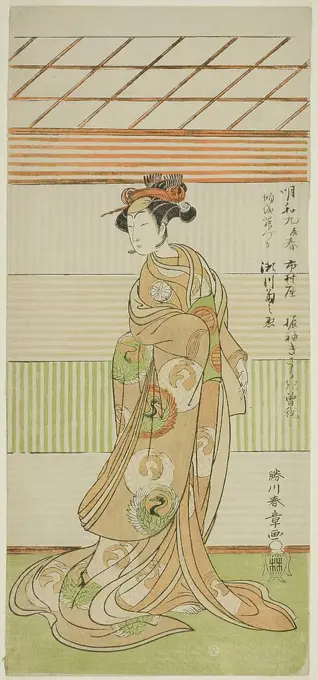
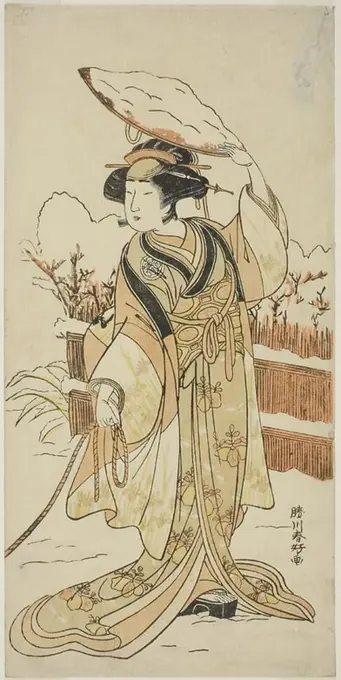
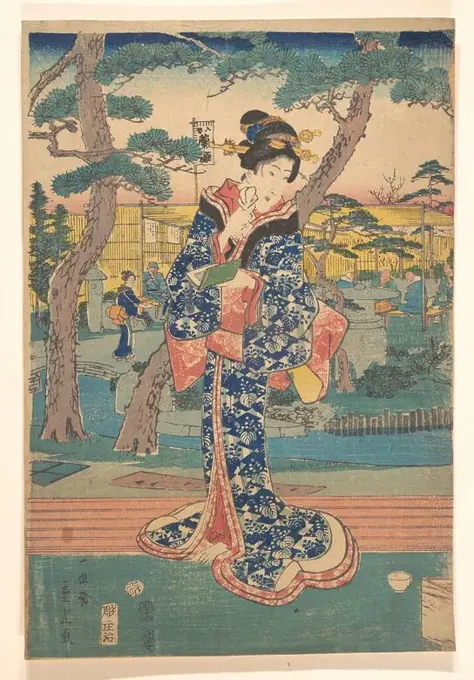
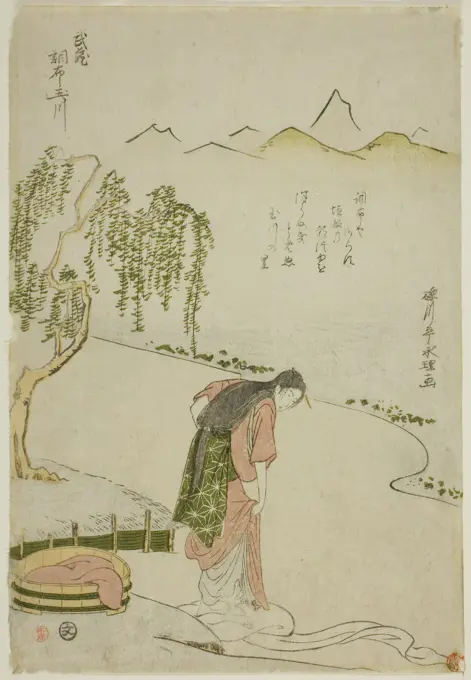
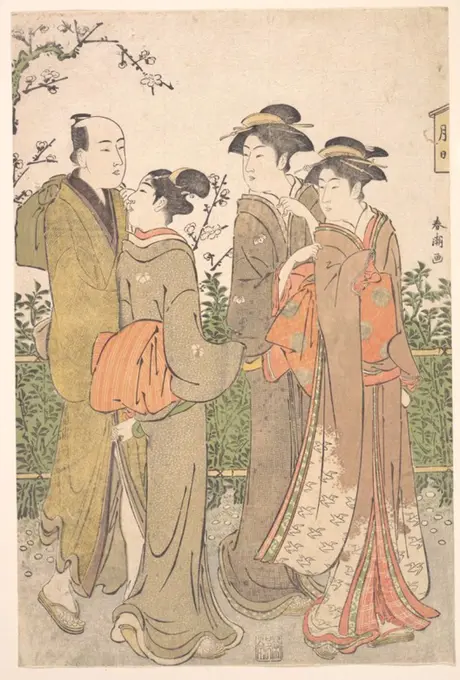
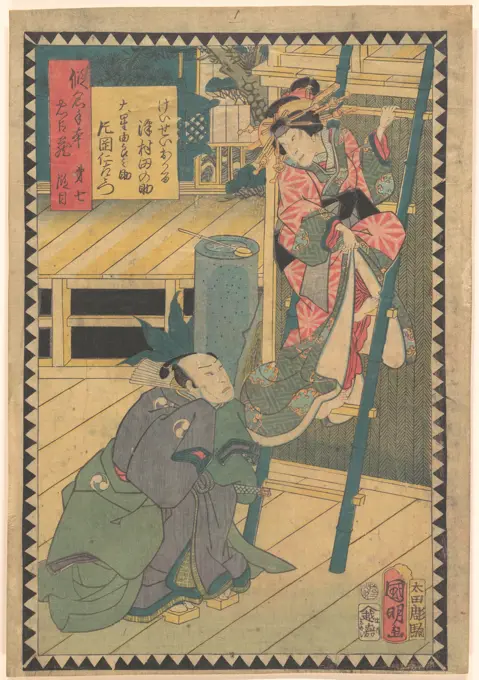
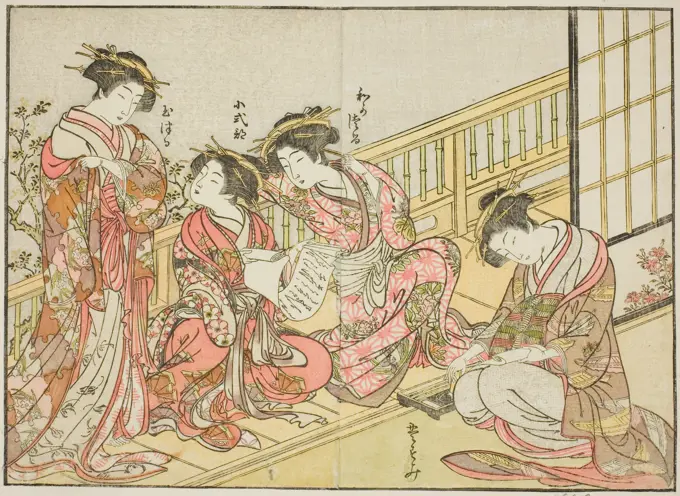
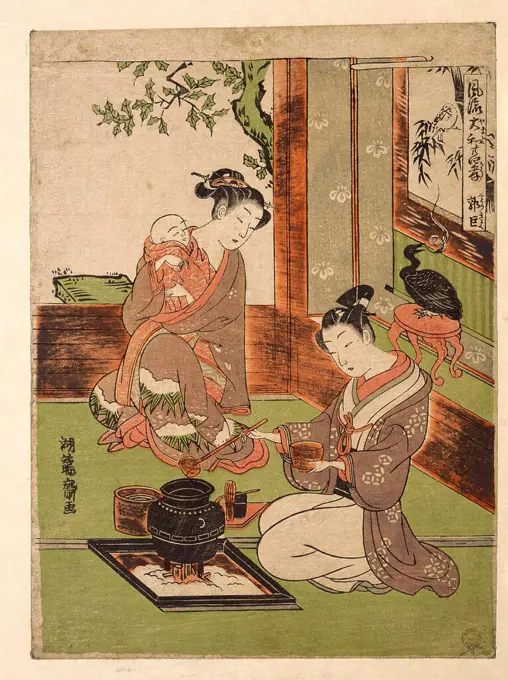
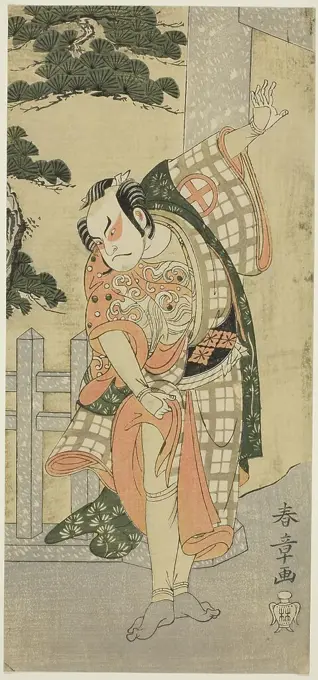
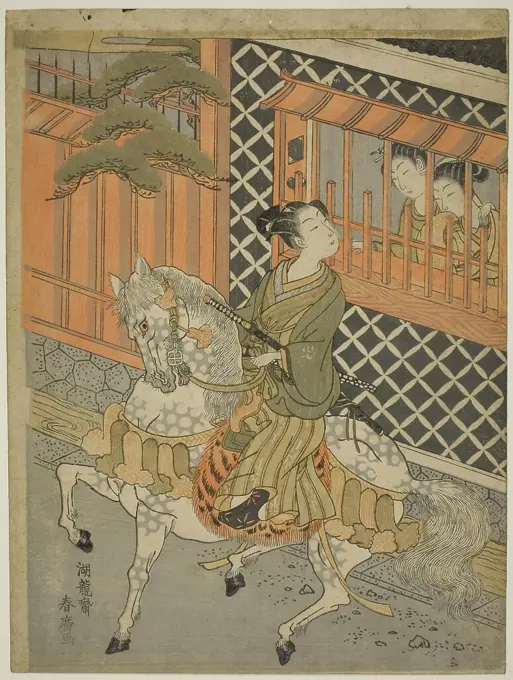
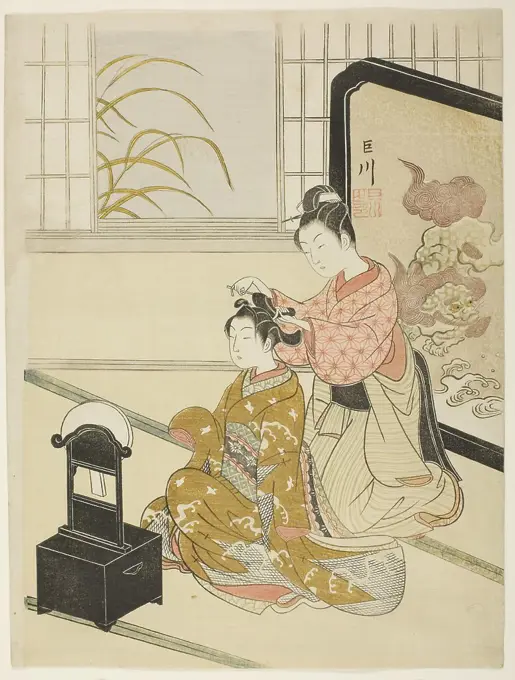
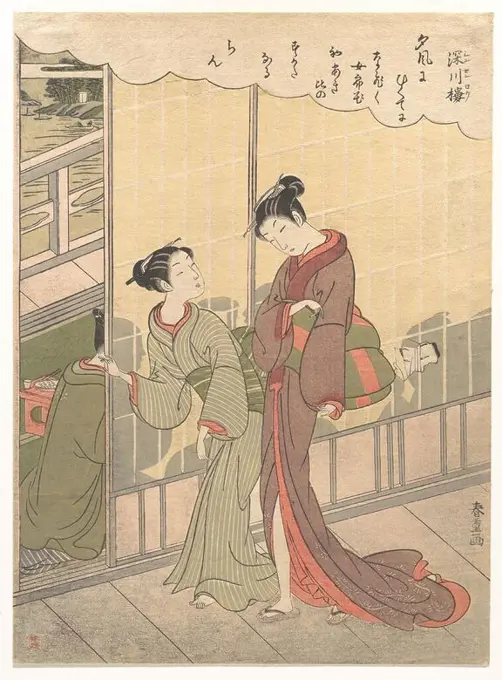
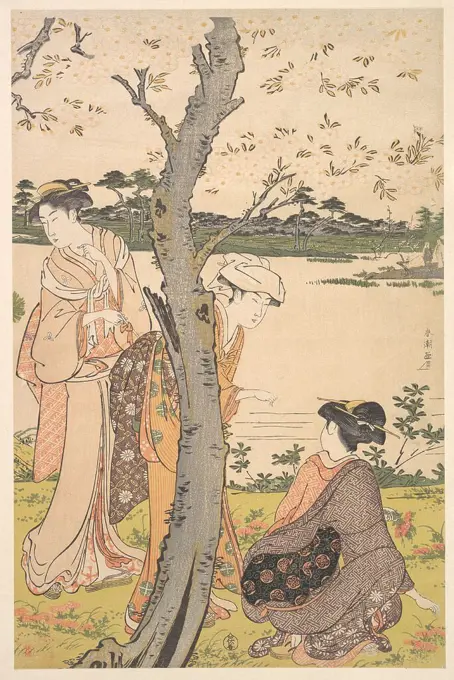
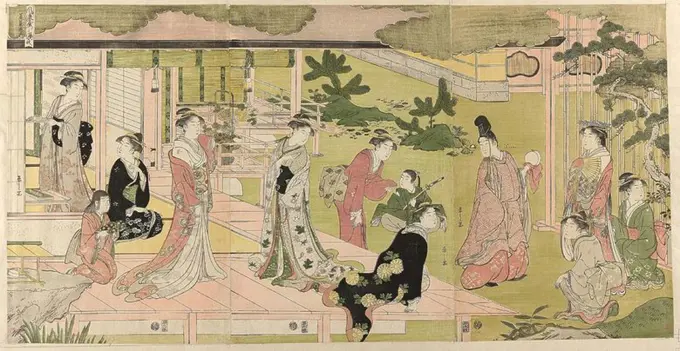
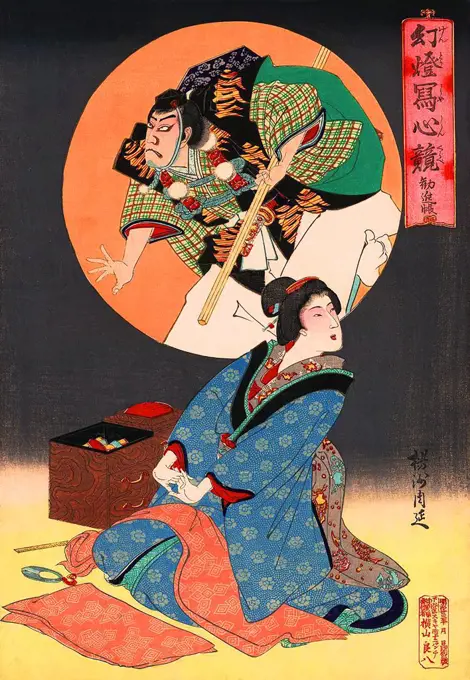
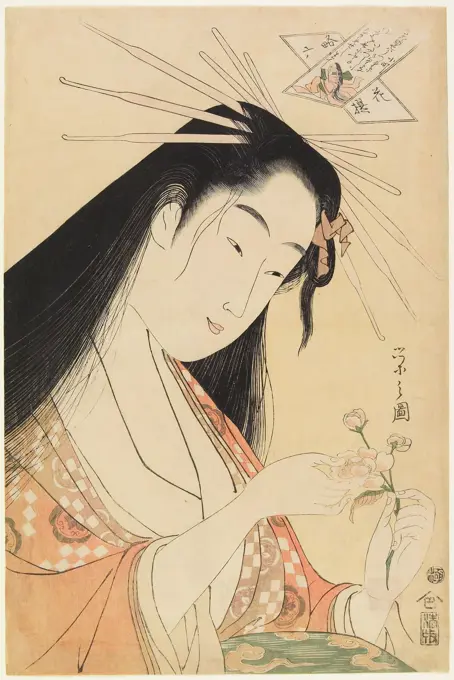
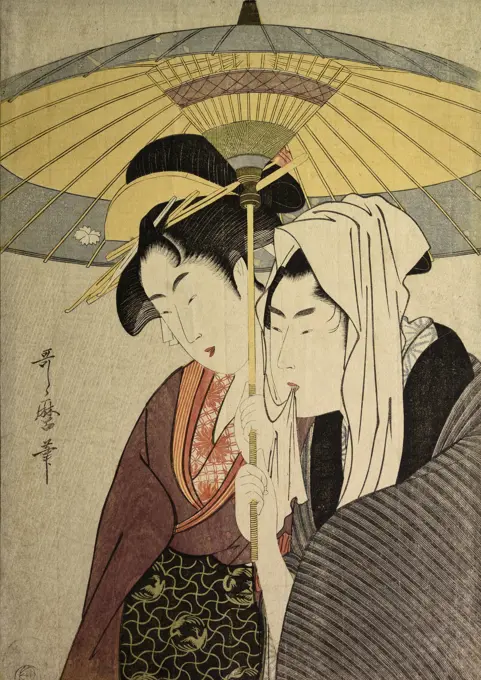
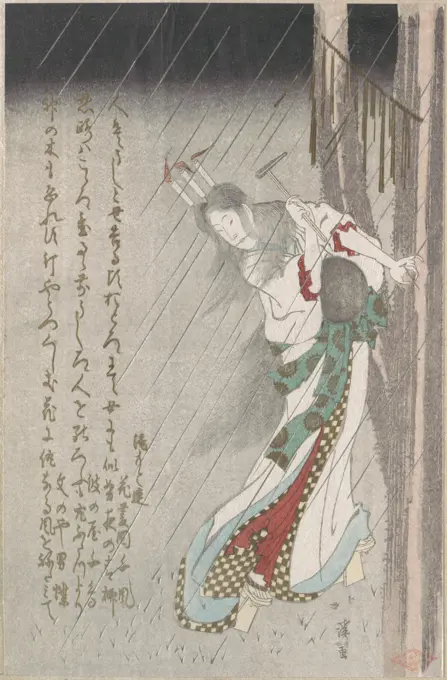
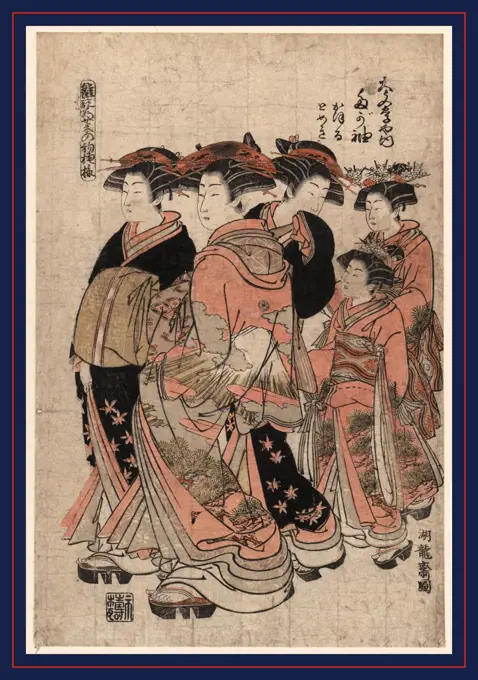
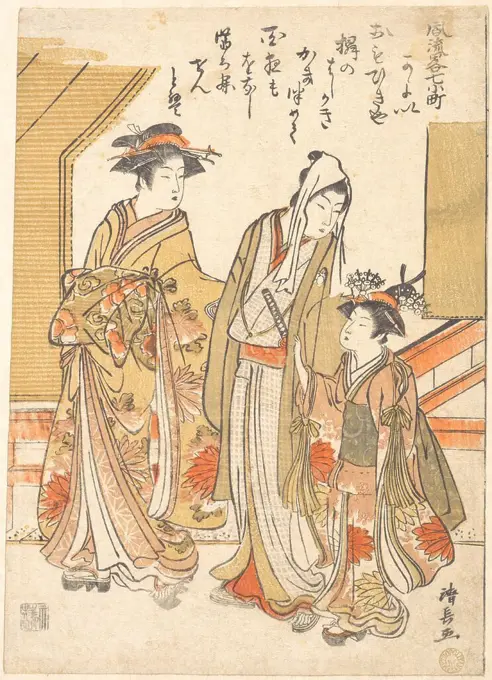
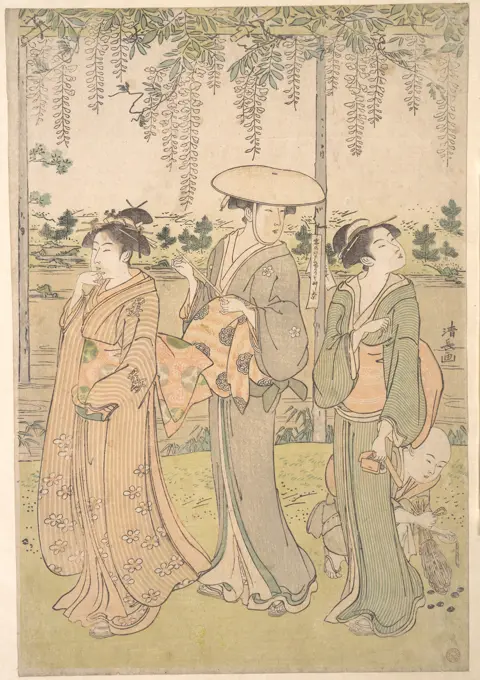
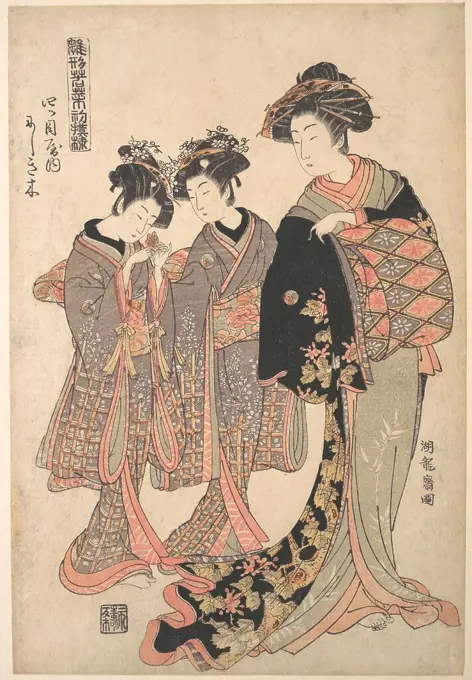
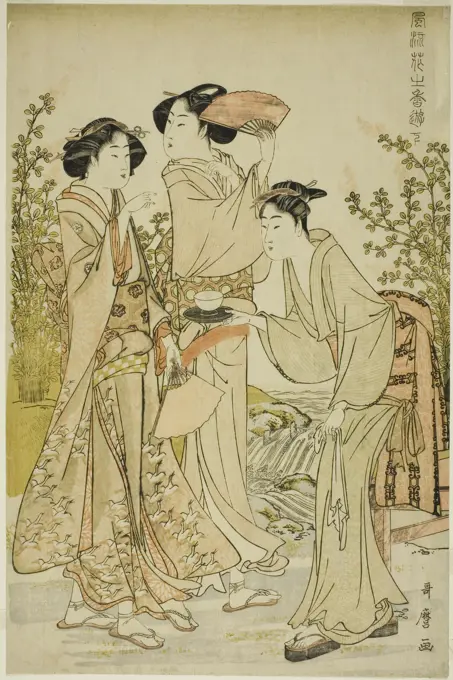
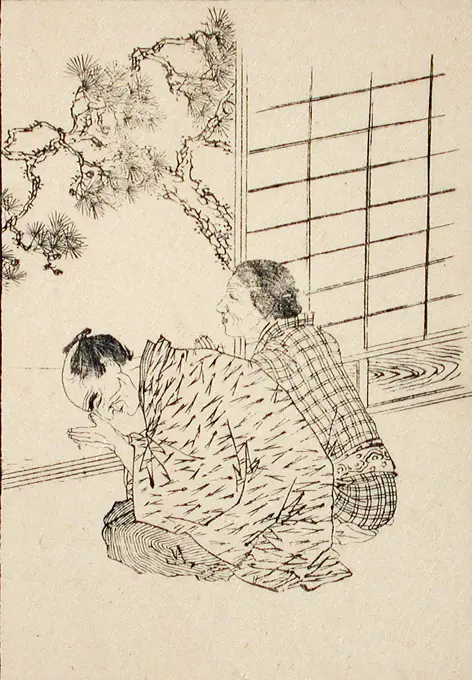
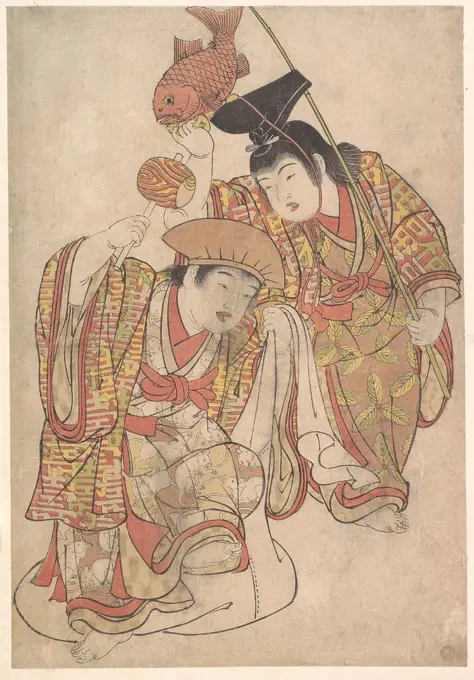
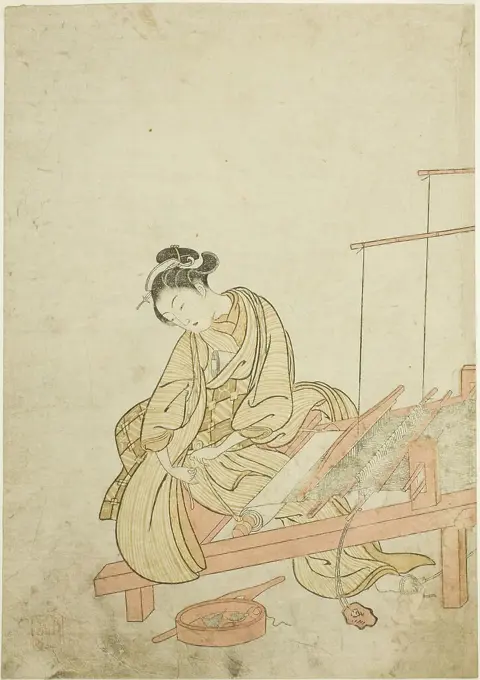
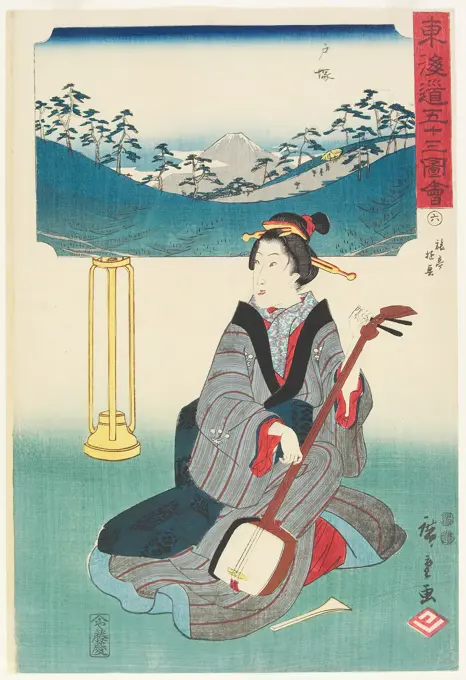
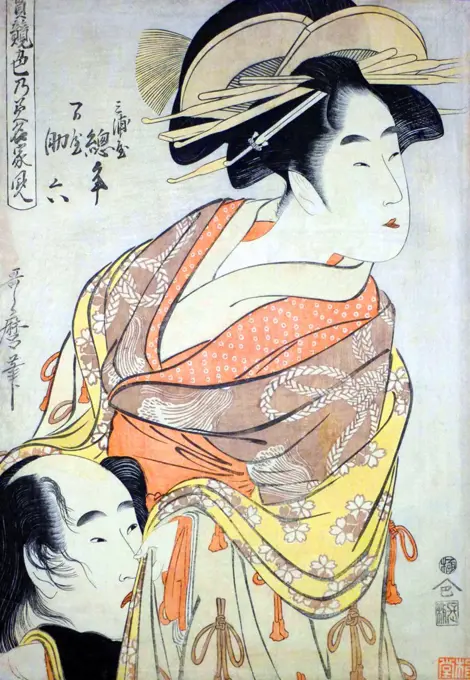
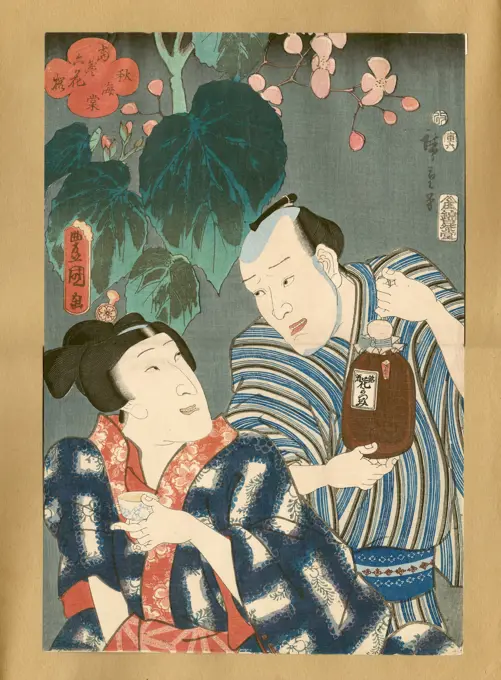
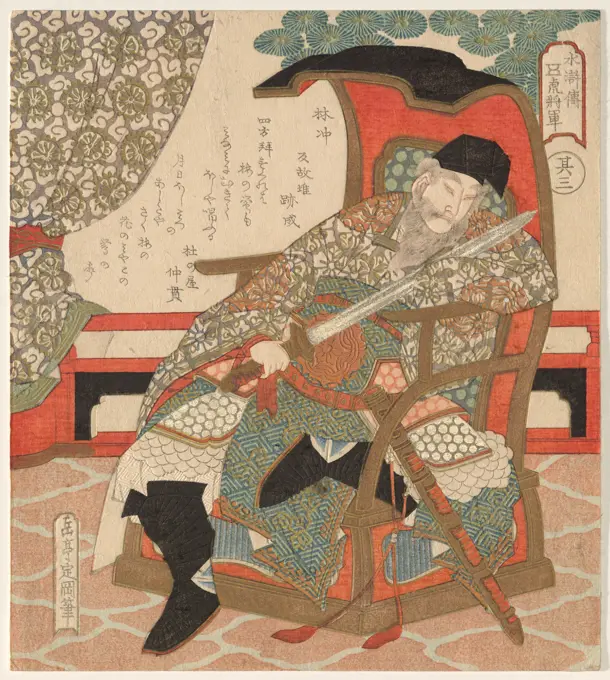
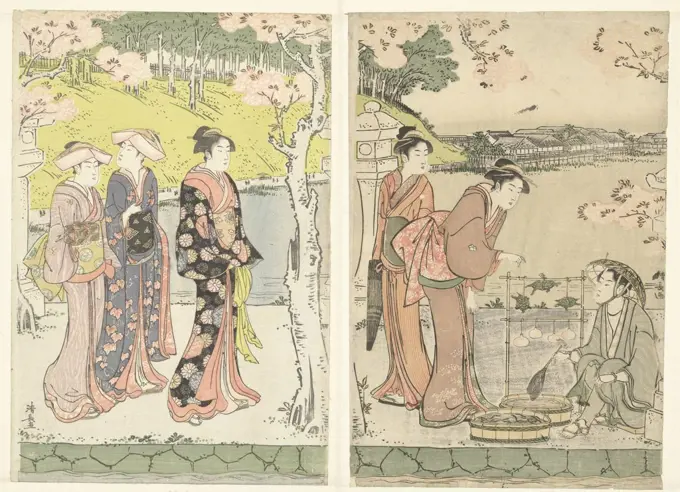
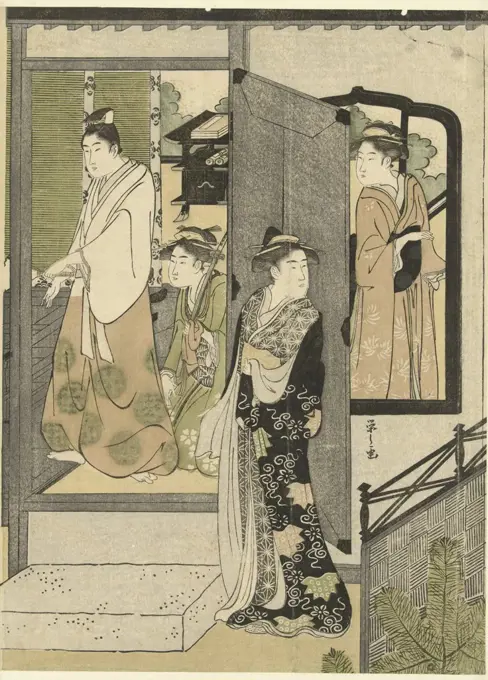
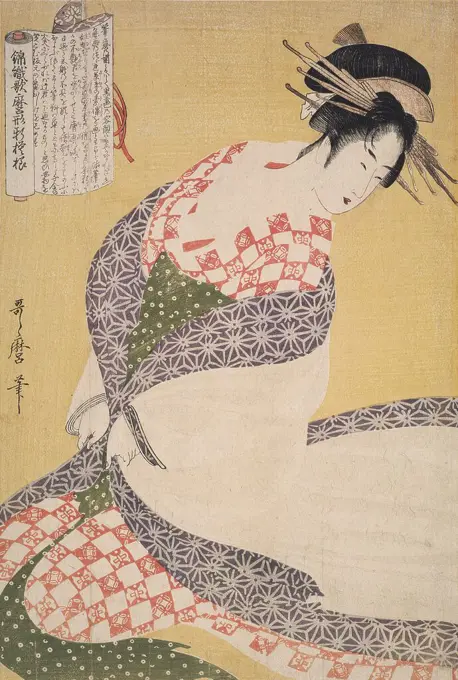
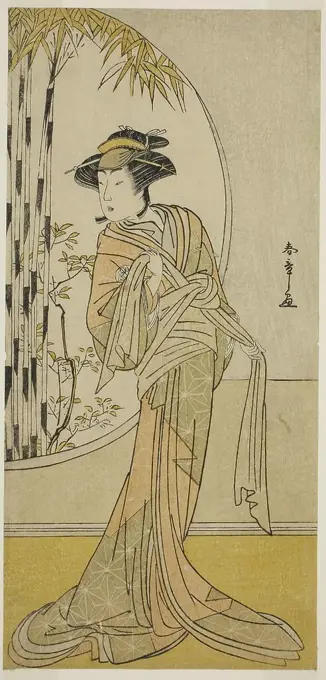
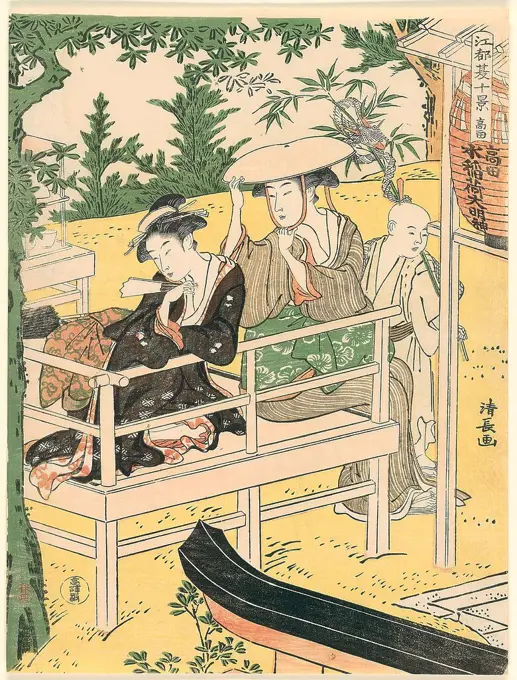
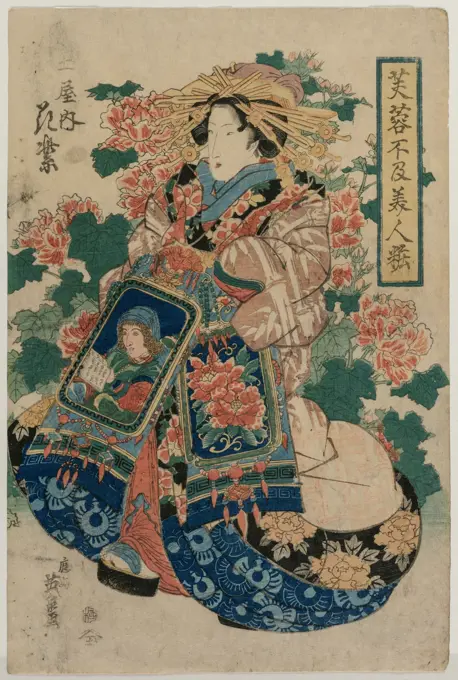
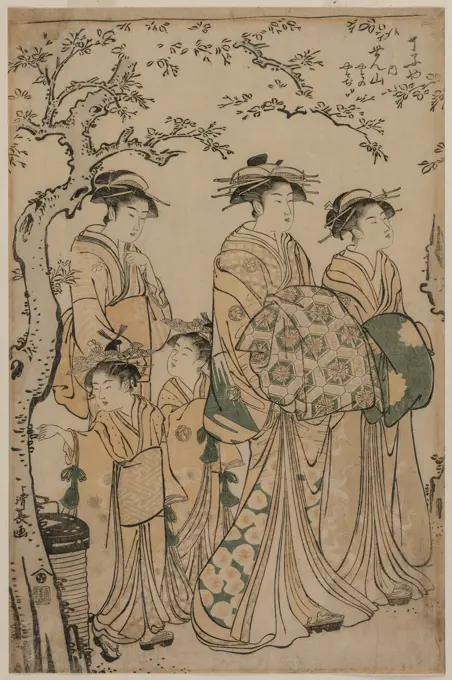
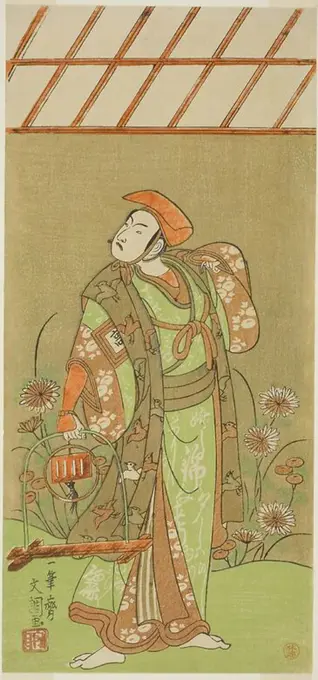
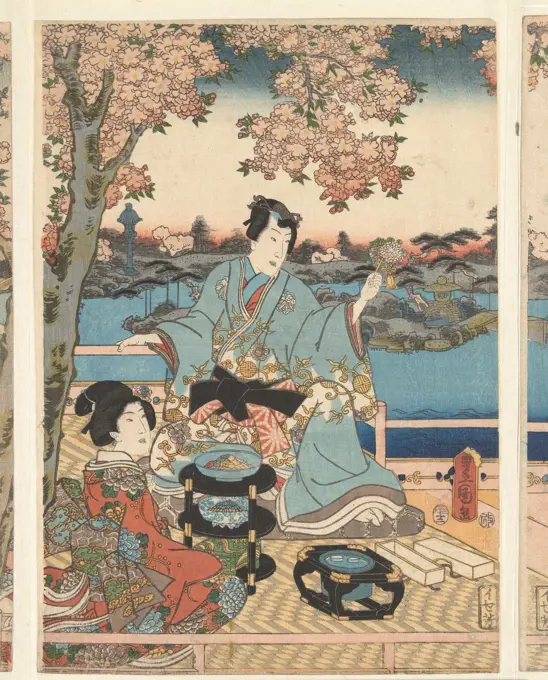
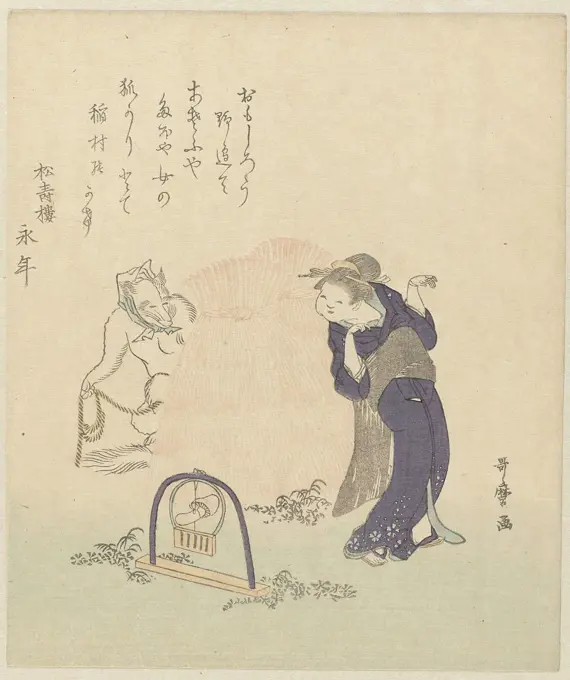
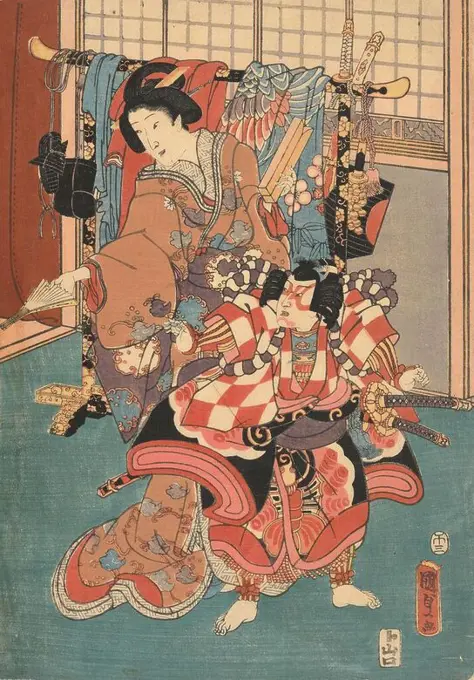
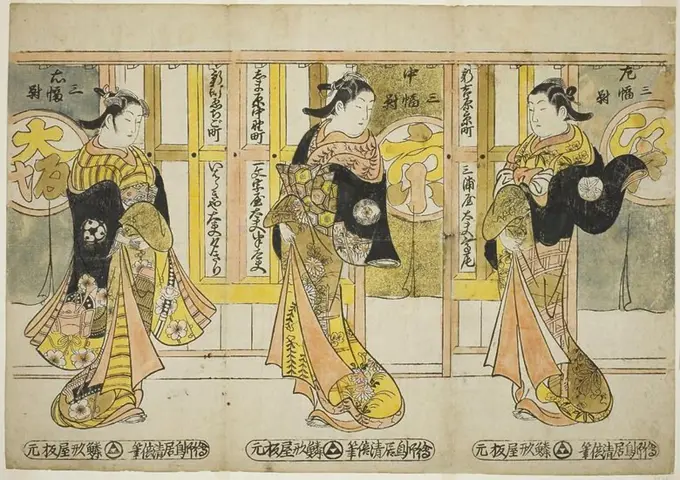
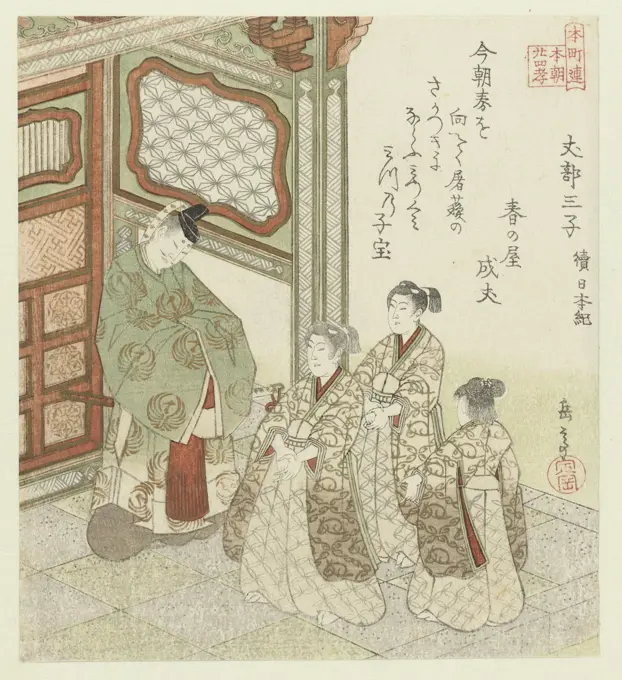
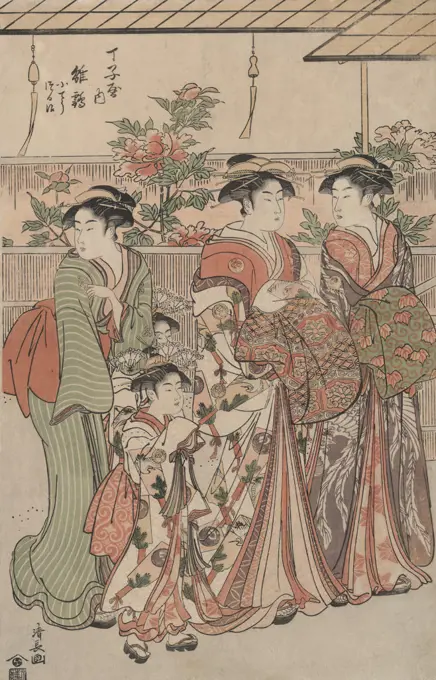
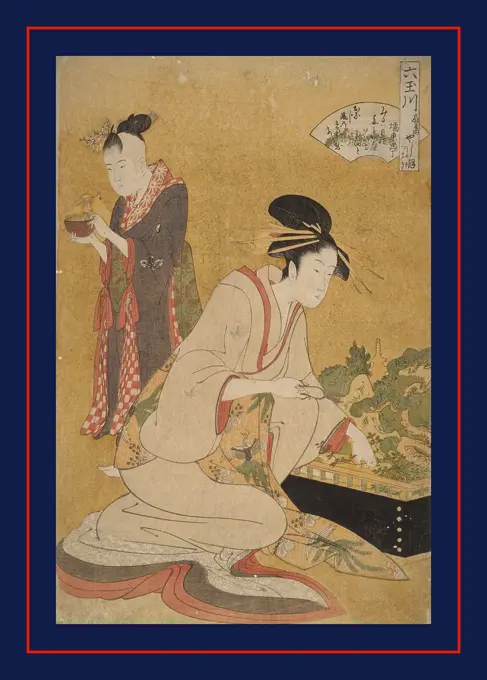
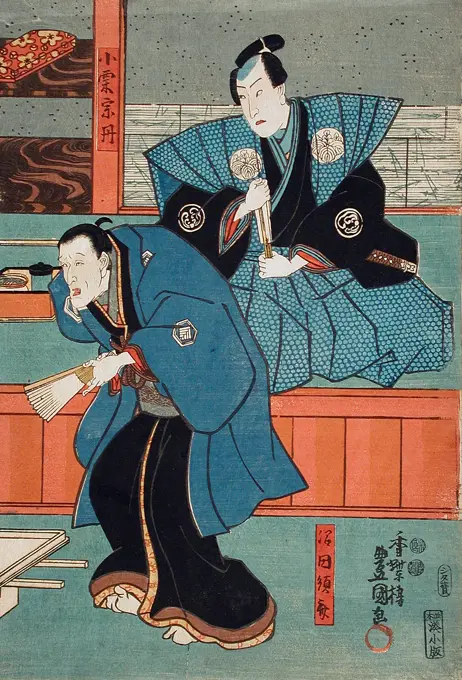
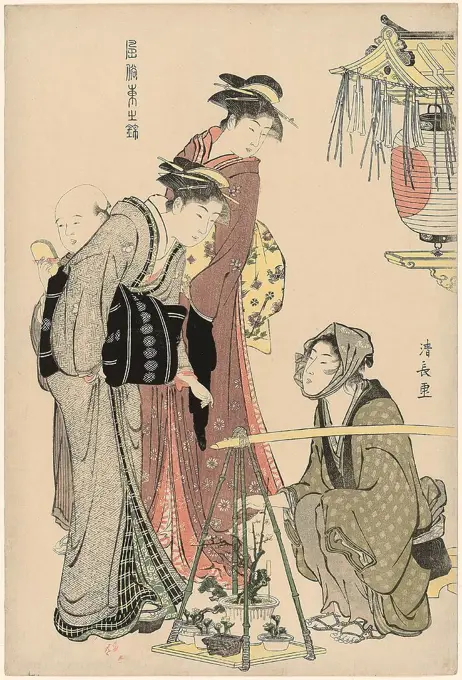
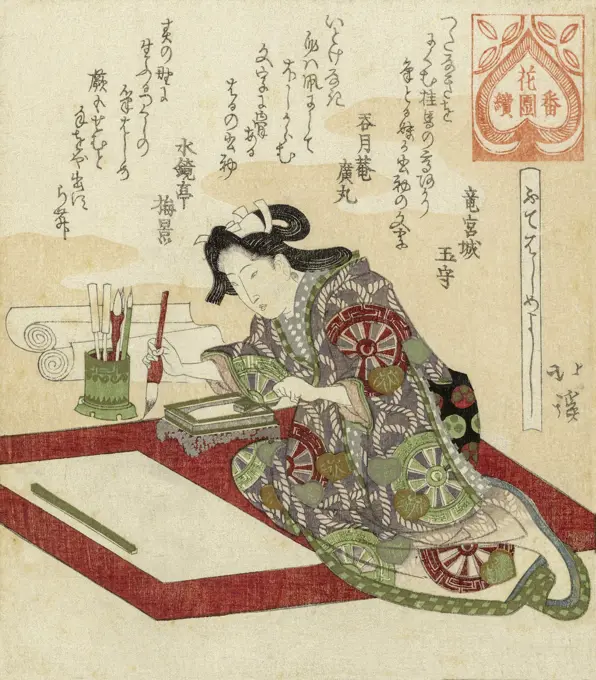
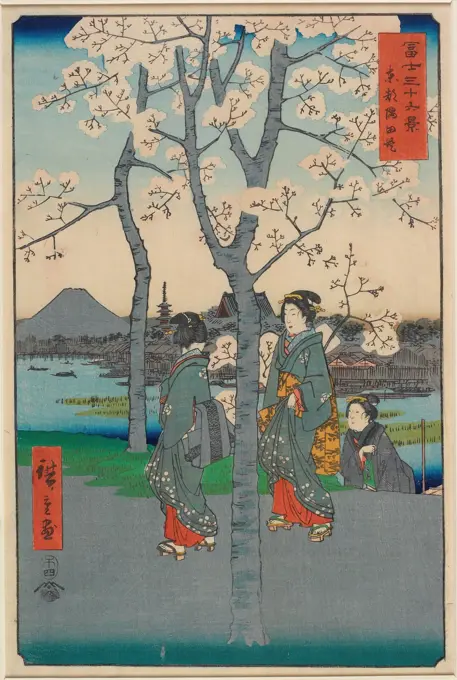
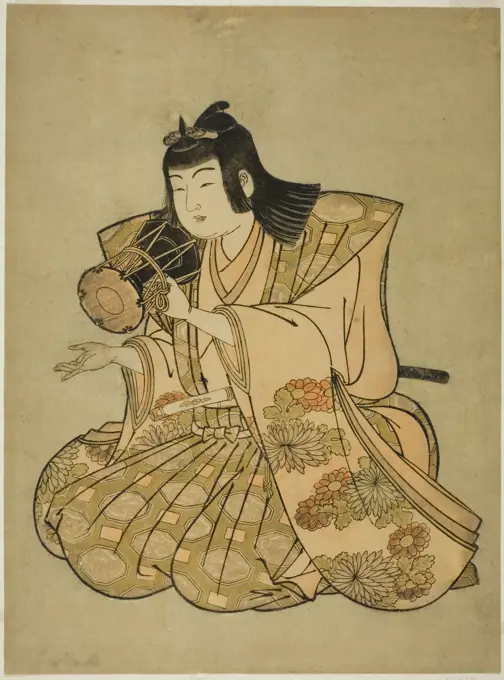
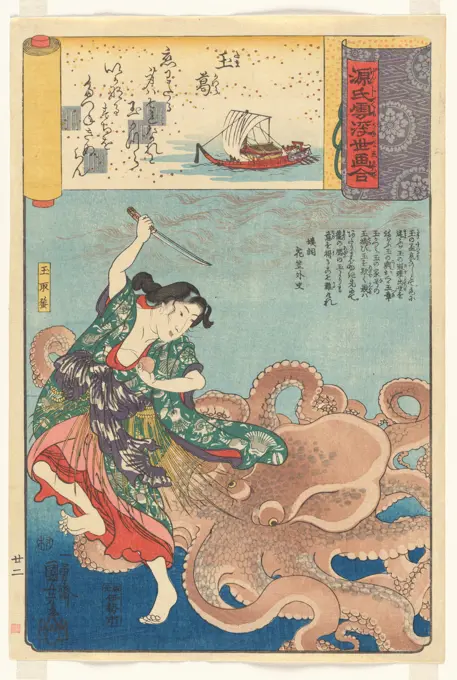
Courtesans of the Kadotsutaya, from the book "Mirror of Beautiful Women of the Pleasure Quarters (Seiro bijin awase sugata kagami)," vol. 1. Katsukawa Shunsho; Japanese, 1726-1792; Kitao Shigemasa; Japanese, 1739-1820. Date: 1776. Dimensions: 21.8 x 30.2 cm (8 7/8 x 11 7/8 in.). Color woodblock print; double-page illustration cut from a book. Origin: Japan. Museum: The Chicago Art Institute, USA.Kunisada, Actors Kataoka Nizaemon VIII() and Onoe Kikugoro IV. Eitaibashi from the series Thirty-six Views of Mount Fuji, 1860, Color Woodcut, Major Category: PrintmakingFox woman Kuzunoha; Kuzunoha Kitsune; Contemporaine references to the 36 poets.; Tosei Mitate Sanjurugasen .. bust portrait of the actor Nakamura Shikan IV in the Kuzunoha woman role in purple and red kimono with floral pattern and black headdress; Against purple, white and blue background.The Actor Segawa Kikunojo II as the Courtesan Maizuru in the Play Furisode Kisaragi Soga, Performed at the Ichimura Theater in the Second Month, 1772. Katsukawa Shunsho  ; Japanese, 1726-1792. Date: 1767-1777. Dimensions: 32 x 14.4 cm (12 5/8 x 5 11/16 in.). Color woodblock print; hosoban. Origin: Japan. Museum: The Chicago Art Institute, USA.The Actor Yoshizawa Ayame IV as Yadorigi, the Sister of Nikaido Shinanosuke, Disguised as Orie, the Wife of Aoto Magosaburo, in Part Two of the Play Motomishi Yuki Sakae Hachi no Ki (Looking up at Falling Snow: Thriving Potted Trees), Performed at the Nakamura Theater from the First Day of the Eleventh Month, 1778. Katsukawa Shunko I; Japanese, 1743-1812. Date: 1773-1783. Dimensions: 30.5 x 15 cm (12 x 5 7/8 in.). Color woodblock print; hosoban; probably right sheet of diptych. Origin: Japan. Museum: The Chicago Art Institute, Chicago, USA.Young girl at tea house in Iriya. Artist: Utagawa Hiroshige II (Japanese, 1829-1869). Culture: Japan. Dimensions: Image: 14 3/4 × 9 7/8 in. (37.5 × 25.1 cm). Date: mid-19th century. Museum: Metropolitan Museum of Art, New York, USA.The Chofu Jewel River in Musashi Province (Musashi Chofu no Tamagawa), from an untitled series of Six Jewel Rivers 1780-1790 Japan. Color woodblock print; aiban . Rekisentei EiriA Group of Three Women Accompanied by a Manservant. Artist: Katsukawa Shuncho (Japanese, active ca. 1783-95). Culture: Japan. Dimensions: 14 3/4 x 9 7/8 in. (37.5 x 25.1 cm). Date: 1780-1795. Museum: Metropolitan Museum of Art, New York, USA.Page-girl Offering Clothes to a Lady, Yashima Gakutei, c. 1830 print A maid is in a kneeling attitude for a court lady and offers a folded kimono on a lacquered tray. The lady holds a book, next to her is a book cart. With two poems.  paper color woodcut maid ~ house personnel. sitting figure - AA - female human figure. bookThe Eighth Month (Nanryo), from the series a Calendar of Elegance (Furyu junikagetsu) 1783-1793 Japan. Color woodblock print; chuban . Chôbunsai EishiThe Actor Arashi Hinaji I as Hananoi in the Play Gosho-zakura Horikawa Youchi, Performed at the Ichimura Theater in the Fourth Month, 1773. Katsukawa Shunsho  ; Japanese, 1726-1792. Date: 1768-1778. Dimensions: 30.5 x 14.3 cm (12 x 5 5/8 in.). Color woodblock print; hosoban; left sheet of diptych (). Origin: Japan. Museum: The Chicago Art Institute, USA.Act III (Dai sandanme): Actors Band Hikosabur V as Hayano Kanpei and Sawamura Tanosuke III as Koshimoto Okaru, from the series The Storehouse of Loyal Retainers, a Primer (Kanadehon chshingura) 1862 (Bunky 2), 6th month Utagawa Kuniaki II Japanese. Act III (Dai sandanme): Actors Band Hikosabur V as Hayano Kanpei and Sawamura Tanosuke III as Koshimoto Okaru, from the series The Storehouse of Loyal Retainers, a Primer (Kanadehon chshingura). Utagawa Kuniaki II (Japanese, 1835-1888). Japan. 1862 (Bunky 2), 6th month. Woodblock print; ink and color on paper. Edo period (1615-1868). PrintsLove couple in close hug, 1835 - 1845 print   paper color woodcut coitus, cohabiting, sexual intercourseEnjoying the Evening Cool on the Riverbed at Shijo in Kyoto (Kyo Shijogawara yusuzumi), section of sheet no 14 from the series Cutouts for the Fifty-three Stations (Gojusan tsugi harimaze) 1852 Japan. Color woodblock print; section of harimaze sheet . Utagawa HiroshigeCourtesans of the Takeya, from the book Mirror of Beautiful Women of the Pleasure Quarters (Seiro bijin awase sugata kagami), vol 1 1776 Japan. Color woodblock print; double-page illustration cut from a book . Katsukawa ShunshoBeauty of Ibarakiya Pulling at a Man's Umbrella - a Parody of the Legend of Watanabe no Tsuna and the Ibaraki Demon 1754-1764 Japan. Color woodblock print; oban, benizuri-e . Torii KiyohiroThe Sakuragawa Teahouse. Attributed to Kitao Shigemasa; Japanese, 1739-1820. Date: 1772-1782. Dimensions: 38.1 x 26.0 cm. Color woodblock print; oban. Origin: Japan. Museum: The Chicago Art Institute, Chicago, USA. Author: Kitao Shigemasa.Modern Versions of the twenty-four Paragons of Filial Piety: Guo Zhu. Artist: Isoda Koryusai (Japanese, 1735-ca. 1790). Culture: Japan. Dimensions: 10 3/8 x 7 5/8 in. (26.4 x 19.4 cm). Date: ca. 1770.As his young wife watches raptly, a young man is taking boiling water with a bamboo ladle from an iron tea cauldron in a square hearth set into the tatami mat floor. Behind him a Chinese-style painting of a bird in bamboo is hung before a bird-shaped incense burner in the tokonoma alcove. This scene of domestic tranquility focused on the cauldron and other utensils of the formal tea ceremony (chanoyu) is in fact a witty parody of one of the moralizing tales propagated in Confucianism, the official ideology of the Tokugawa shogunate. Guo Zhu, said to have lived in the second century A.D. in China, was so devoted to his aged mother that, finding himself unable to support his entire family, he persuaded his wife that they should bury their infant son to be able to feed her. As he was digging The Actor Otani Hiroji III in a Stage Pose (Mie) before a Shrine Gateway. Katsukawa Shunsho  ; Japanese, 1726-1792. Date: 1764-1775. Dimensions: 31.1 x 14.4 cm (12 1/4 x 5 5/8 in.). Color woodblock print; hosoban. Origin: Japan. Museum: The Chicago Art Institute, USA.Three Beauties, left sheet of a triptych. Date: 1844-1845. Dimensions: 38 cm x 26 cm. Museum: Van Gogh Museum, Amsterdam. Author: UTAGAWA KUNISADA.Young Samurai on Horseback. Isoda Koryusai; Japanese, 1735-1790. Date: 1764-1775. Dimensions: 11 3/8 x 8 1/4 in. Color woodblock print; chuban. Origin: Japan. Museum: The Chicago Art Institute, USA.Three actors at a temple gate, Utagawa Kunisada (I), 1820 print A snow scene for a temple with a large Buddha statue inside, visible through the open window on the first floor. On the balcony, a woman (actor Iwai Hanshirô V (1776-1847) holds a long letter in her hands that rolls down down and is tackled by a man under an umbrella (actor Ichikawa Danjûrô (1791-1859) In the role of Konoshita Tôkichi). Under the gate is a woman (actor Nakamura Daikichi (1773-1823) in the women's role of Tôkichi's wife Oshizu) with a travel hat and a framed image in her hands. With one poem. Japan paper color woodcut temple, shrine ~ Hinduism, Buddhism, Jainism. scroll. Human Being, Man in GeneralAround the Kotatsu 1784-1794 Japan. Color woodblock print; oban triptych . Katsukawa ShunchôThe Autumn Moon in the Mirror (Kyodai no shugetsu), from the series "Eight Views of the Parlor (Zashiki hakkei)". Suzuki Harunobu  ; Japanese, 1725 ()-1770. Date: 1761-1771. Dimensions: 28.8 x 21.8 cm (11 1/4 x 8 3/8 in.). Color woodblock print; chuban. Origin: Japan. Museum: The Chicago Art Institute, USA.Scene of the Pleasure Quarter at Fukagawa. Artist: Suzuki Harushige (1747-1818). Culture: Japan. Dimensions: H. 11 1/4 in. (28.6 cm); 8 1/4 in. (21 cm). Date: late 18th century. Museum: Metropolitan Museum of Art, New York, USA. Author: Suzuki Harushige.Bust portrait of Nakayama Tomisaburo. The actor Nakayama Tomisaburo in woman role, as rich city center, in brown kimono with bamboo pattern, bamboo flute between Obi; Against dark gray mica background.Gathering Young Flowers. Artist: Katsukawa Shuncho (Japanese, active ca. 1783-95). Culture: Japan. Dimensions: 15 1/8 × 9 7/8 in. (38.4 × 25.1 cm). Museum: Metropolitan Museum of Art, New York, USA.Sei Shonagon and Her Companion, from an untitled series of court ladies 1779-1789 Japan. Color woodblock print; oban . Torii KiyonagaWakana, Part 1 (Wakana, jo), from the series "A Fashionable Parody of the Tale of Genji (Furyu yatsushi Genji)". Chobunsai Eishi; Japanese, 1756-1829. Date: 1784-1799. Dimensions: 37.9 × 74.4 cm (overall). Color woodblock prints; oban triptych. Origin: Japan. Museum: The Chicago Art Institute, Chicago, USA. Author: Chobunsai Eishi.Meshitsukai ohatsu  | Library of CongressJapan: A Meiji Period woodblock print depicting a woman dreaming of watching the Kabuki play 'The Subscription List (Kanjincho)' while sewing at home. Painted by Toyohara Chikanobu (1838-1912), 1890Ofuji of the Yanagi Shop 1764-1774 Japan. Color woodblock print; hosoban . Ippitsusai BunchoProstitute as Komachi', c. 1796, Hosoda Eishi; Publisher: Nishimuraya Yohachi, Japanese, 1756 - 1829, 15 1/16 x 9 15/16 in. (38.3 x 25.3 cm) (image, sheet)22 1/16 x 18 in. (56 x 45.7 cm) (mat), Woodblock print (nishiki-e); ink and color on paper, Japan, 18th-19th centuryHalf-length figures of two lovers walking together under an umbrella in a shower. Created by Tsuruya (Japanese, active 18th century) in 1794. Woodcuts, Image 15 x 10 in. (38.1 x 25.4 cm)Woman in the Rain at Midnight Driving a Nail into a Tree to Invoke Evil on Her Unfaithful Lover 19th century Totoya Hokkei Japanese. Woman in the Rain at Midnight Driving a Nail into a Tree to Invoke Evil on Her Unfaithful Lover 54003The caption for this illustration reads: Utamaro: Midorigi of Wakamatsu-ya on parade. Kitagawa Utamaro was a Japanese artist. He was considered a master at making ukiyo-e woodblock prints and paintings. He was especially regarded for his depiction of graceful women and also his bijin okubi-e. The latter were pictures of beautiful women that he drew with large heads. He lived 1754-1806. Here the courtesan Midorigi promenades under a flowering sakura (cherry tree) with her two kamuro (young girls who would become courtesans) and two shinzo (girls who had just become courtesans). Four shinzo are mentioned at top corner in inscription. The two kamuro and Midorigi wear the same kimono, decorated with herons. The two shinzo wear the same kimono. The three elder courtesans have the mark of the green house (green flower) on their shoulders and sleeves.Daimonjiya uchi tagasode, Whose sleeves at Daimonji-ya., Isoda, Koryusai, active 1764-1788, artist, [ca. 1776, 1 print : woodcut, color ; 38.6 x 25.9 cm., Print shows three women, courtesans, with two young attendants, wearing kimonos and geta.Vrouw in WinterTuin, Utagawa Kunisada (I), 1830 - 1840 print Woman in Kimono on which pattern of large carp, walking on veranda near snowy garden. Part of Meerluik. print maker: Japanpublisher: Tokyo paper nishiki-e / color woodcut adult woman. garden. snowVisiting Komachi. Artist: Torii Kiyonaga (Japanese, 1752-1815). Culture: Japan. Dimensions: H. 8 1/16 in. (20.5 cm); W. 8 1/16 in. (20.5 cm). Date: ca. 1779. Museum: Metropolitan Museum of Art, New York, USA.The Actors Nakamura Shichisaburo III (right), and Ichikawa Junzo I (left), in the Play Nue no Mori Ichiyo no Mato, Performed at the Nakamura Theater in the Eleventh Month, 1770. Katsukawa Shunsho  ; Japanese, 1726-1792. Date: 1767-1777. Dimensions: 16.9 x 13.8 cm (6 11/16 x 5 7/16 in.). Color woodblock print; from the illustrated book Yakusha Kuni no Hana (Prominent Actors of Japan). Origin: Japan. Museum: The Chicago Art Institute, USA.Three Women and a Small Boy beneath a Wisteria Arbor on the Bank of a Stream ca. 1790 Torii Kiyonaga Japanese. Three Women and a Small Boy beneath a Wisteria Arbor on the Bank of a Stream. Torii Kiyonaga (Japanese, 1752-1815). Japan. ca. 1790. One sheet of a triptych of woodblock prints; ink and color on paper. Edo period (1615-1868). PrintsBeauty Grinding Ink for Writing Poetry, First Flower Viewing Color woodblock print on paper, 8 1/8 x 7 3/16 in. (20.6 x 18.3 cm).   Asian ArtMemorial Portrait of the Actor Bando Shuka I 1855 Japan. Color woodblock print; left sheet of oban diptych . Utagawa SchoolThe Courtesan Nishikigi of the Yotsumeya Brothel, from the series "A Pattern Book of the Year's First Designs, Fresh as Spring Herbs" ("Hinagata wakana hatsu moyo"). Artist: Isoda Koryusai (Japanese, 1735-ca. 1790). Culture: Japan. Dimensions: 14 7/8 x 10 1/8 in. (37.8 x 25.7 cm). Date: 1776.Koryusai, who came from an impoverished samurai family, renounced his rank to settle as an artist in Edo. His early work reflected Harunobu's wistful and romantically idealized figures. Later in his career he made a bold series of prints depicting the lavish spring fashions of the demimonde.Nishikigi wears a striking black outer robe decorated with flowering paulownia. Her kosode is patterned with a subtle, resist-dyed bamboo and is tied with a large geometric brocade sash, or obi. Her attendants, or kamuro, in the same costume and pose, wear faded purple robes decorated with hagi, or bush clover, on trellises. The motif of flowers growing on a trellis was a visual reference to the women of the YosElegant Pleasures The Scent of Flowers, left (Furyu hana no ka asobi, ge) 1778-1788 Japan. Color woodblock print; left sheet of oban diptych . Kitagawa UtamaroShunga. Donation Gerhard SchackJapan, Maruya Jinpachi, Kunisada (I), Utagawa, Imayo Genji junikagetsu no uchi, Modern Genji Stories During the Twelve Months, Yayoi, The Third Month, Prince Genji and a Girl with a Sword in Her Right Hand, in a Room Overlooking a Garden with a Pond and Blossoming Trees., print, prints, Japan (collection), height 362 mm, width 253 mm, Japanese, 1786 - 1865, print maker, printmaker, 1861 - 1861, third quarter 19th century, paper, nishiki-e, colour woodcut, colour woodblock, Publication (Event), Publication, publisherRyū ko niban  | Library of CongressQin Ming, Sheet 2 from the series: The five tiger generas of the suicides. .Elderly Couple Worshipping the Rising Sun. Kawanabe Kyōsai (Japan, 1831-1889). Japan, circa 1850. Prints; woodblocks. Page from a woodblock printed bookBoys Maquerading as Daikoku and Ebisu. Artist: Kitao Shigemasa (Japanese, 1739-1820). Culture: Japan. Dimensions: H. 14 9/16 in. (37 cm); W. 9 13 /16 in. (24.9 cm). Date: ca. 1780. Museum: Metropolitan Museum of Art, New York, USA.A colored woodcut by Kitagawa Utamaro titled 'Sailing Mother,' showing a mother on a boat with flowing garments, characteristic of ukiyo-e style.Young Woman at a Loom. Suzuki Harunobu  ; Japanese, 1725 ()-1770. Date: 1765. Dimensions: 10 5/8 x 7 1/2 in. Color woodblock print; chuban. Origin: Japan. Museum: The Chicago Art Institute, USA.Totsuka, 1847-1852, Utagawa Hiroshige; Publisher: Fujiokaya Keijirō, Japanese, 1797 - 1858, 14 5/16 x 9 7/16 in. (36.3 x 24 cm) (image), Woodblock print (nishiki-e); ink and color on paper, Japan, 19th centuryScene from Omagasaki. Date/Period: 1853/1863. Woodblock print. Width: 22.5 cm. Height: 26.4 cm (image). Author: Utagawa Kunisada (Toyokuni III).Kitagawa Utamaro (ca. 1753 - October 31, 1806) was a Japanese printmaker and painter, who is considered one of the greatest artists of woodblock prints (ukiyo-e). He is known especially for his masterfully composed studies of women, known as bijinga. He also produced nature studies, particularly illustrated books of insects.Begonia (The Actors Nakayama Ichizō and Bandō Shuka), 1854, 6th month, Utagawa Kunisada; Artist: Utagawa Hiroshige; Publisher: Ebisuya Shōshichi, Japanese, 1797 - 1858, 14 1/4 × 9 5/8 in. (36.2 × 24.45 cm) (vertical ōban), Woodblock print (nishiki-e); ink and color on paper, Japan, 19th century, Figures by Kunisada, Background flower by Hiroshige.The Courtesan Michinoku from the green house, with a sumptuous New Year's dress, 1775-1779, by Isoda Koryusai (active ca 1765-1785), woodcut, Japan. Japanese Civilisation, Meiji period, 18th century.Lin Chong (Rin Ch), from a series of The Five Tiger Generals of “Heroes of the Water Margin, No. 3”.  Artist: Yashima Gakutei, Japanese, ca. 1786-1868Women Preparing Tea Around the Fire-Holder. Artist: Katsushika Hokusai (Japanese, Tokyo (Edo) 1760-1849 Tokyo (Edo)). Culture: Japan. Dimensions: 8 7/16 x 7 1/2 in. (21.4 x 19.1 cm). Date: 1816. Museum: Metropolitan Museum of Art, New York, USA.Turtle seller, Five women, under flower trees, with young man with landing net sitting by two water troughs and bamboo rack with turtles and fish bowls with goldfish, in the background the Shinobazu pond. Left and middle sheet of a triptych., Torii Kiyonaga (mentioned on object), Japan, 1783 - 1793, paper, colour woodcut, h 387 mm × w 260 mm × h 390 mm × w 256 mmWoman playing on the Koto; Elegant women like the heroes of the Suikoden - from a series of one hundred and eight; Fûzoku Onna Suikoden - Hyakuhachiban No Uchi. A woman plays on a one-string Koto (Ichigonkin) and looks at a painting of the goddess bents. This goddess is one of the seven luck gods. With two poems.The visit, Woman standing with the door open, behind which second woman looking at nobleman and kneeling maid with sword., Hosoda Eishi (mentioned on object), 1788 - 1792, paper, colour woodcut, h 347 mm × w 258 mmLovers Playing the Same Shamisen (parody of Xuanzong and Yang Guifei) 1762-1770 Japan. Color woodblock print; chuban . Suzuki HarunobuShira-uchikake = The white surcoat, Kitagawa, Utamaro (1753?-1806), (Artist), Date Created: ca. 1793-ca.1804.The Actor Tsuneyo II as Okaru in the Play Kanadehon Chushingura, Performed at the Morita Theater in the Eighth Month, 1779. Katsukawa Shunsho  ; Japanese, 1726-1792. Date: 1774-1784. Dimensions: 30.3 x 14.4 cm (11 15/16 x 5 11/16 in.). Color woodblock print; hosoban; right sheet of diptych. Origin: Japan. Museum: The Chicago Art Institute, USA.Goldfish Vendor, 1800s, Katsushika Hokusai, Japanese, 1760 - 1849, 7 5/16 × 20 1/16 in. (18.5 × 51 cm) (image, sheet, ebangire), Woodblock print (surimono); ink and color on paper, Japan, 19th century, In addition to his commercial woodblock designs for mass consumption, Hokusai made a large number of surimono, or deluxe prints for private clients. This print was once part of an announcement, program, or poetry compilation, but the accompanying information that might have identified the purpose has been trimmed away. The scene shows a goldfish vendor by her tank under the trees. The Japanese first imported goldfish from China in the 16th century, fascinated by their novelty and shimmering colors. By the early 19th century, goldfish had become affordable pets for ordinary citizens. Every summer, they were a popular commodity because, psychologically at least, viewing fish swimming in delicate glass bowls tempered the heat. In this print, a little boy excitedly holds up a glass containerThe Noh play, "Takasago". Artist: Totoya Hokkei (Japanese, 1780-1850). Culture: Japan. Dimensions: 8 1/2 x 7 1/4 in. (21.6 x 18.4 cm). Date: ca. 1825. Museum: Metropolitan Museum of Art, New York, USA.Woman by Keisai Eisen, Colour woodcut, Early 19th century, 1790-1848, Russia, St. Petersburg, State Hermitage, 26x38The Courtesan Izayoi of the Ogi House and the Haikai Poet Hakuren. Date: second month 1859. Dimensions: 37 cm x 26 cm. Museum: Van Gogh Museum, Amsterdam. Author: UTAGAWA KUNISADA.Takata, from the series "Ten Summer Scenes in Edo (Edo natsu jikkei)". Torii Kiyonaga; Japanese, 1752-1815. Date: 1782-1792. Dimensions: 25.8 x 19.1 cm. Color woodblock print; chuban. Origin: Japan. Museum: The Chicago Art Institute, USA.The Courtesan Hanamurasaki of the Tsuchiya (from the series Beauties in their Finery amid Mallow Flowers), early or mid 1830s. Keisai Eisen (Japanese, 1790-1848). Color woodblock print; sheet: 37.6 x 25.1 cm (14 13/16 x 9 7/8 in.).The Courtesan Senzan of Chojiya Strolling with her Kamuro Yasono and Yasoji and Two Shinzo, 1786. Torii Kiyonaga (Japanese, 1752-1815). Color woodblock print; sheet: 38.2 x 25.2 cm (15 1/16 x 9 15/16 in.).The Actor Ichikawa Komazo II as Soga no Juro Sukenari Disguised as a Fox Trapper in the Play Kagami-ga-ike Omokage Soga, Performed at the Nakamura Theater in the First Month, 1770. Ippitsusai Buncho; Japanese, active c. 1755-90. Date: 1765-1775. Dimensions: 31 x 14.4 cm (12 3/16 x 5 11/16 in.). Color woodblock print; hosoban; right sheet of diptych. Origin: Japan. Museum: The Chicago Art Institute, Chicago, USA.A spring banet for the eastern Genji; Azuma Genji Hana No Yuen. Prince Genji and young woman sitting at stellage with different dishes, on terrace over pond; A large blossoming tree in the foreground.Poem by Nakatsukasa, from an untitled series of Thirty-Six Immortal Poets 1762-1770 Japan. Color woodblock print; chuban . Suzuki HarunobuDrie Paraderende Courtisanes, c. 1820 - C. 1830 print Courtisane in Kimono with bamboo pattern and OBI on which a cartouche with a reading woman and a cartouche with peonies; Against a background of exuberantly flowering peonies.  paper color woodcut courtesan, hetaeraYoung woman with bird cage, Okumura Toshinobu (attributed to), 1720 - 1730 print Woman with hat and in Kimono with pattern of large plum blossom, looking around to a bird cage hanging on a stick which she wears over her right shoulder; A fan in her left hand. Japan paper. copper powder  bird in a cage. A woman stands alongside a fox clamp with a mushroom as a bait. Behind the woman a white cunning fox that has dressed as a man and wants to pack the bait with a rope. With one poem. The print is a B-copy from the late Meiji period (1868-1912).Boy Dressed as Soga no Goro, central sheet of the triptych Children's Dances: the Joys of the First Month from the series Baicho's Genji: Five Festivals in the Colour Purple. Date: third month 1858. Dimensions: 37 cm x 26 cm. Museum: Van Gogh Museum, Amsterdam. Author: Utagawa Kunisada II.Young Woman at a Loom 1765 Japan. Color woodblock print; chuban . Suzuki HarunobuThe Actor Iwai Hanshiro IV as Umegae Disguised as the Female Fortune-teller Omatsu in the Play Mukashi Otoko Yuki no Hinagata, Performed at the Ichimura Theater in the Eleventh Month, 1781 1776-1786 Japan. Color woodblock print; hosoban . Katsukawa Shunko IHigh-Ranking Courtesans of the Three Capitals - A Set of Three (Santo tayu sanpukutsui). Torii Kiyomasu II; Japanese, 1706 ()-1763 (). Date: 1735-1745. Dimensions: 33.7 x 48.1 cm (13 1/4 x 19 in.). Hand-colored woodblock print; uncut hosoban triptych, urushi-e. Origin: Japan. Museum: The Chicago Art Institute, Chicago, USA.The three sons of Hasetsukabe, an example from the continuation of the chronicles of Japan, Yashima Gakutei, c. 1821  The father Hasetsukabe taught his sons that they can achieve everything if they work together. The continuation of the Chronicles of Japan (Shoku Nihongi) has been compiled by, among others, Fujiwara No Tsugutada (727-796) and Sugano No Mamichi (741-814) in 797. With one poem by Harunoya Naritake: this morning starts spring and spring starts spring and spring starts and spring starts spring and spring the spring To spiced rice wine - Three cups are stacked on top of each other for three beloved children. Japan paper color woodcutMonkey (Saru), from the series Fashionable Twelve Signs of the Zodiac (Furyu juni shi) 1768-1780 Japan. Color woodblock print; chuban . Isoda Koryusaide acteur namura utaemon in de Rol Osono., print Portrait on fan of the actor Nakamura Utaemon III in the women's role Osono, with green head cover; Print in honor of the last performance of the actor in this role.  paper color woodcut portrait of actor, actressArtist: Torii Kiyonaga, Japanese, 1752-1815, The BotanShow, Polychrome woodblock print, sheet: 15 1/8 × 9 3/4 in. (38.4 × 24.8cm), Japan, Japanese, Edo period(1615-1868), Works on Paper -Printsígiya uchi Yashio, Someki, Tsumaki = [Yashio of the ígiya, [kamuro: Someki, Tsumaki, Kitagawa, Utamaro (1753?-1806), (Artist), Date Created: ca. 1793-ca.1804.Actors Bandō Sajūrō I as Mumata Junsai, Bandō Takesaburō I as Oguri Sōtan. Utagawa Kunisada (Toyokuni III) (Japan, Edo, 1786-1865). Japan, 1851, 4th month. Prints; woodblocks. Color woodblock printBuying Potted Plants, from the series "A Brocade of Eastern Manners (Fuzoku Azuma no nishiki)". Torii Kiyonaga; Japanese, 1752-1815. Date: 1778-1789. Dimensions: 39.6 x 26.6 cm. Color woodblock print; oban. Origin: Japan. Museum: The Chicago Art Institute, USA.A Japanese surimono woodcut by Totoya Hokkei dating from the mid 19th century.  A surimono is a print with a picture and poem combined.  In this one a woman sets out to write her first poem in the NewCourtisane Hitomoto UIT HET DAIMONJIYA HUIS, KITAGAWA UTAMARO, C. 1795-c. 1800 print Boste portrait of Courtisane Hitomoto in green and red Kimono, holding her sleeve by the mouth. At the top left, next to the title, the names of her two assistants (Kamuro) Senkaku and Banki. Japan paper color woodcut historical persons - BB - woman. courtesan, hetaeraThe Sumida River Embankment in the Eastern Capital, 1858, 4th month, Utagawa Hiroshige; Publisher: Tsutaya Kichizō, Japanese, 1797 - 1858, 13 5/16 × 8 11/16 in. (33.8 × 22 cm) (image, vertical ōban), Woodblock print (nishiki-e); ink and color on paper, Japan, 19th centuryKataoka Dadô II as Chôgoro; Chûkô Sekitori Kagami; Mirror of loyal and respectful wrestlers. Kataoka Dadô II as Chôgoro, with his right arm as a silhouette behind a shoji.The Actor Sawamura Sojuro II as an Outlaw 1764-1774 Japan. Color woodblock print; hosoban; from a multisheet composition ( ) . Katsukawa ShunshoWoman After a Bath, from Comparison of Alluring Beauties (Irokurabe enpu sugata) 1776-1786 Japan. Color woodblock print; chuban . Torii KiyonagaWoman on the bridge watching the moon 1831 Japan. Color woodblock print; shikishiban, surimono . Katsushika Taito IIThe Hand-Drum Player, from an untitled series of five musicians 1780-1789 Japan. Color woodblock print; oban . Kitao Shigemasa‘A Lovely Garland’ (Tamakazura): Tamatori-ama,” from the series Scenes amid Genji Clouds Matched with Ukiyo-e Pictures (Genji-gumo ukiyo e-awase) 1845-46 Utagawa Kuniyoshi Kuniyoshi’s dramatic image derives from the medieval tale Taishokkan, The Great Woven Cap,” which recounts legendary events from the life of the courtier Fujiwara Kamatari (614-669). Here, his humbly born lover, the beautiful diver Tamatori, recovers a precious jewel stolen from Kamatari by the dragon king of the sea. She battles one of the dragon’s minions, a fearsome octopus, clutching the jewel in one hand while brandishing a dagger in the other. The connection to Chapter 22 of Genji is the jewel (tama) in the chapter title, Tamakazura,” which is the name of Genji’s beautiful ward.. ‘A Lovely Garland’ (Tamakazura): Tamatori-ama,” from the series Scenes amid Genji Clouds Matched with Ukiyo-e Pictures (Genji-gumo ukiyo e-awase). Utagawa Kuniyoshi (Japanese, 1797-1861). Japan. 1845-46. Woodblock ?ban print (nishiLandscapes and Beauties: Feeling Like Reading the Next Volume. Date/Period: Edo period, 19th century. Painting. Author: UTAGAWA KUNIYOSHI.