My Boards
View Pictures
  • My Boards
← Artworks

Japanese Woodblock Prints

A collection of colorful Japanese woodblock prints featuring historical Kabuki actors in traditional attire and dynamic poses, capturing the essence of Edo-period theatre.
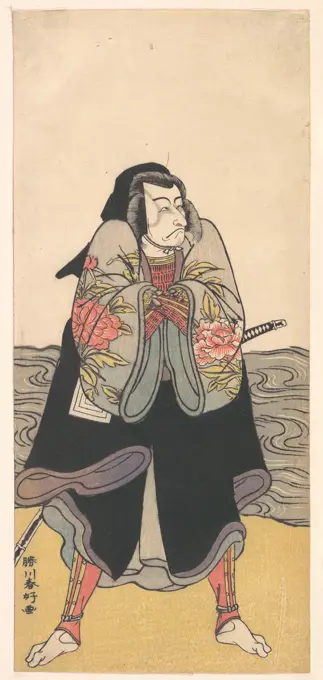
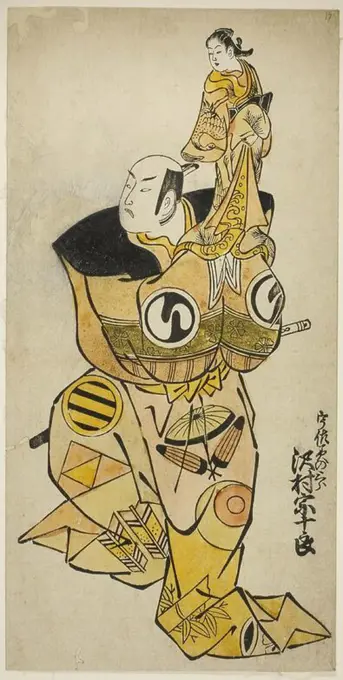
Ichikawa Danjuro V ca. 1780 Katsukawa Shunkō Japanese. Ichikawa Danjuro V 56853
281 assets in this story
6145-59561592
Young Boy Reading a Scroll Held by an Old Man, Yanagawa Shigenobu (II), 1829 print Sôjôbô, the king of the mythical mountain states, holds a roll of paper. He examines the writing USHIWAKAMARU, the children's name of the legendary warrior Minamoto No Yoshitsune (1159-1189). At night, with a silver moon in the background. With six poems on the roll  paper color woodcut scroll. reading. human beings (legendary or not) of abnormal proportions, size, strength, etc.
6145-30174639
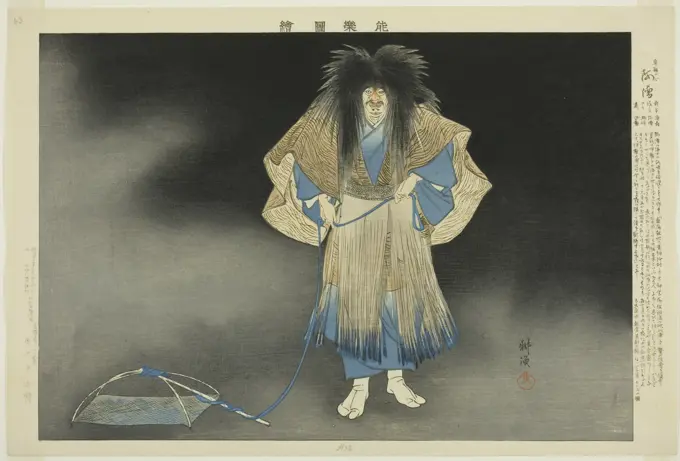
Akogi, from the series Pictures of No Performances (Nogaku Zue) 1893-1903 Japan. Color woodblock print . Tsukioka Kôgyo
6145-48835583
A Painting of the Nara Epoch, Eighth Century. Kokkwa Publishing Company (Japanese, active 1890s - 1900s)
6145-30150105
The Actor Nakajima Mihoemon II as Bomon no Saisho Kiyotada in the Play Oyafune Taiheiki, Performed at the Ichimura Theater in the Eleventh Month, 1775 1779-1780 Japan. Color woodblock print; hosoban . Katsukawa Shunsho
1899-18713961
The Utagawa school was a group of Japanese woodblock print artists, founded by Toyoharu. His pupil, Toyokuni I, took over after Toyoharu's death and raised the group to become the most famous and powerful woodblock print school for the remainder of the 19th century. Hiroshige, Kunisada, Kuniyoshi and Yoshitoshi were Utagawa students. The school became so successful and well-known that today more than half of all surviving ukiyo-e prints are from it. Founder Toyoharu adopted Western-style deep perspective, an innovation in Japanese art. His immediate followers, Utagawa Toyohiro and Utagawa Toyokuni adopted bolder, more sensuous styles than Toyoharu and specialized in different genres  Toyohiro in landscapes and Toyokuni in kabuki actor prints. Later artists in the school specialized in other genres, such as warrior prints and mythic parodies.
6145-48530229
Kaosho Rochishin; poem by Ariwara-no Narihira; print 17 from the series: Ogura nazorae hyakunin isshu (Imitations of one hundred poems by one hundred poets). Utagawa, Kuniyoshi (1798-1861), graphic artist
6145-29128543
Gongsun Sheng, the Dragon in the Clouds. Tsukioka Yoshitoshi (Japan, 1839-1892). Japan, 1865, 9th month. Prints; woodblocks. Color woodblock print
6145-51820075
Seven Gods of Good Luck Shibata Zeshin (Japanese, 1807-1891). , ca. 1885. Woodblock color print, 9 1/2 x 9 7/8 in. (24.1 x 25.1 cm).   Asian Art ca. 1885
6145-30188097
Miidera, from the series Pictures of No Performances (Nogaku Zue) 1893-1903 Japan. Color woodblock print . Tsukioka Kôgyo
1899-18789388
The revenge of the Forty-seven Ronin (Shi-ju-shichi-shi), also known as the Forty-seven Samurai, the Aki vendetta, or the Genroku Aki incident (Genroku aki jiken) took place in Japan at the start of the 18th century. One noted Japanese scholar described the tale as the country's 'national legend'. It recounts the most famous case involving the samurai code of honor, bushidi. The story tells of a group of samurai who were left leaderless (becoming ronin) after their daimyo (feudal lord) Asano Naganori was forced to commit seppuku (ritual suicide) for assaulting a court official named Kira Yoshinaka, whose title was Ki zuke no suke. The ronin avenged their master's honor after patiently waiting and planning for two years to kill Kira. In turn, the ronin were themselves ordered to commit seppuku for committing the crime of murder. With much embellishment, this true story was popularized in Japanese culture as emblematic of the loyalty, sacrifice, persistence, and honor that all good peopl
6145-29199552
New Year Picture of Returning with Loads of Goodies (paired with CP483, right) early 20th century Unidentified artist(s). New Year Picture of Returning with Loads of Goodies (paired with CP483, right). Unidentified artist(s) , early 20th century. China. early 20th century. Polychrome woodblock print; ink and color on paper. Republic period (191249). Prints
6145-29744136
Fifty-Three Stations of the Tōkaidō: Inspired by Famous Pictures 1864 Utagawa Kunisada Japanese. Fifty-Three Stations of the Tōkaidō: Inspired by Famous Pictures 73611
6145-30172743
Teasing the Daruma 1905 United States. Color woodcut on ivory Japanese paper . Helen Hyde
6145-45744872
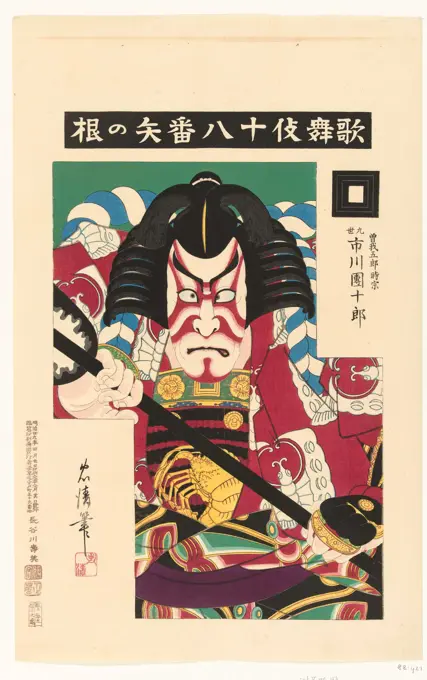
Ichikawa Danjuro IX as Soga No Goro Tokimune; Eighteen Kabuki play; Kabuki Juhachiban. The actor Ichikawa Danjuro IX in the role of Soga No Goro Tokimune, with both hands on stick; White stylized butterfly motif on its red sleeves is the emblem of Soga No Goro Tokimune; The squares symbol and the langoustine on its harness are emblems of the Ichikawa family.
6145-59467520
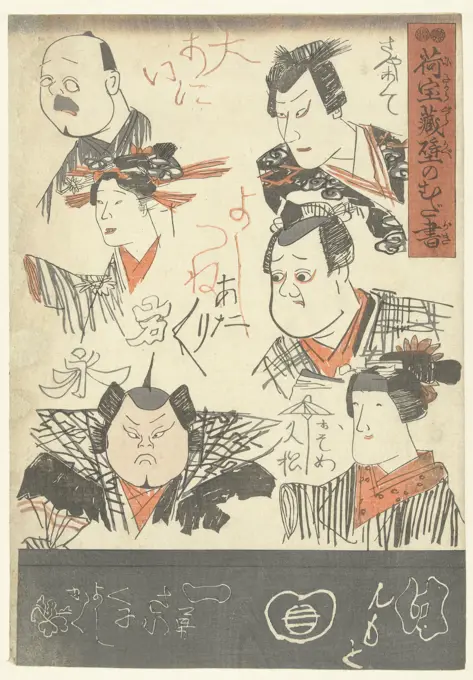
Zes ActEursportRetten, Utagawa Kuniyoshi, 1847 print Wall on which graffiti representing six actor portraits and an umbrella; Black edge at the bottom. Japan paper nishiki-e / color woodcut portrait of actor, actress. drawing, sketch
4409-17548992
The Actor Ichikawa Danjuro V as Chichibu no Shigetada. Katsukawa Shunsho  ; Japanese, 1726-1792. Date: 1768-1778. Dimensions: 28.7 x 13.8 cm (11 5/16 x 5 7/16 in.). Color woodblock print; hosoban; from a multisheet composition (). Origin: Japan. Museum: The Chicago Art Institute, USA.
4409-17410292
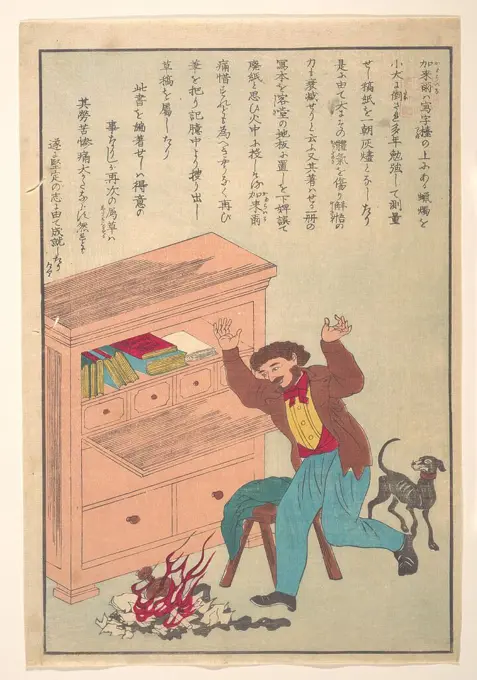
Lives of Great People of the Occident (Taisei ijin den): Thomas Carlyle (1795-1881). Culture: Japan. Dimensions: Image: 13 1/2 x 9 1/8 in. (34.3 x 23.2 cm). Date: ca. 1870. Museum: Metropolitan Museum of Art, New York, USA.
6145-29781591
Yokohama Sumo Wrestler Defeating a Foreigner 2nd month, 1861 Ippōsai Yoshifuji Japanese. Yokohama Sumo Wrestler Defeating a Foreigner 73544
6145-45666617
Actor Nakamura Tomijuro I in the role of Yaoya Oshichi; Yaoya Oshichi, Nakamura Tomijuro. Actor in woman role, a document in hand holding, standing next to charcoal array; Room screen in the background.
6145-50635899
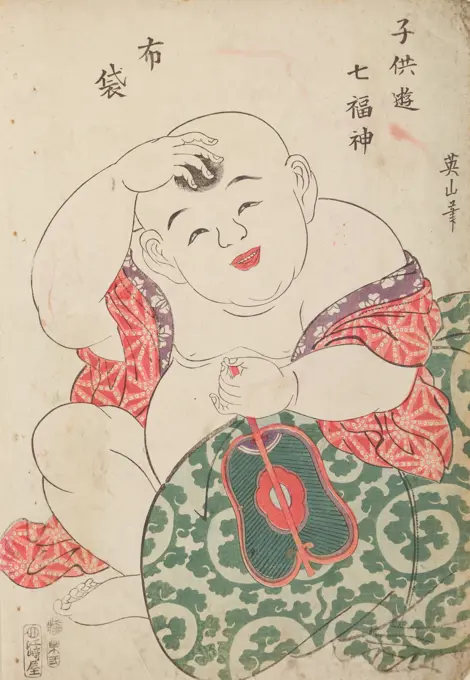
Child sitting with a fan in his hand, from the series: The seven gods of fortune presented by boys /Kodomo asobi shichi fukujin Eizan, Kikugawa (1787 1867)
1899-19137163
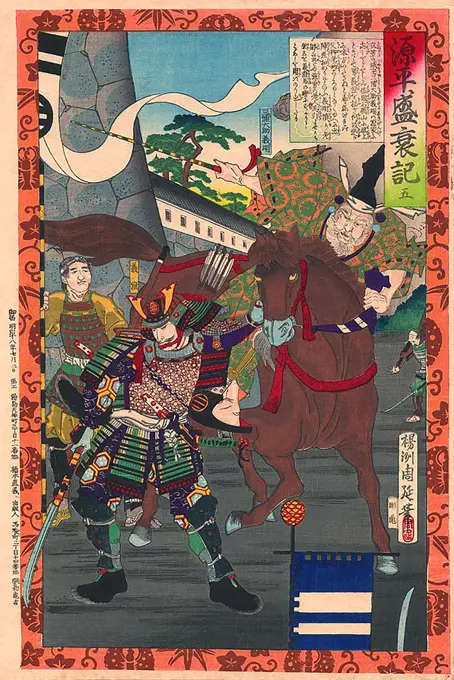
Japan: 'Gempei Seisuiki - Chronicles of the Genji and the Heike', part of a series of paintings depicting Miura Daisuke Yoshiaki (1093-1181) on horseback outside Kinusaga Castle, by Toyohara Chikanobu (1838-1912), 1885
6145-30156579
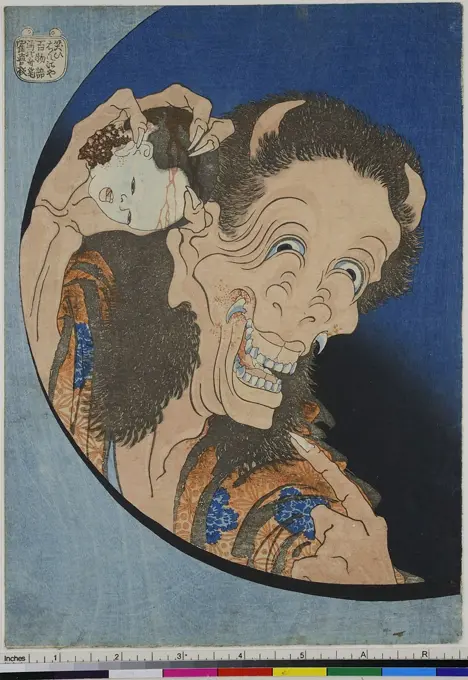
The Laughing Demoness (Warai Hannya), from the series One Hundred Ghost Tales (Hyaku monogatari) 1831-1832 Japan. Color woodblock print; chuban . Katsushika Hokusai
4443-75477346
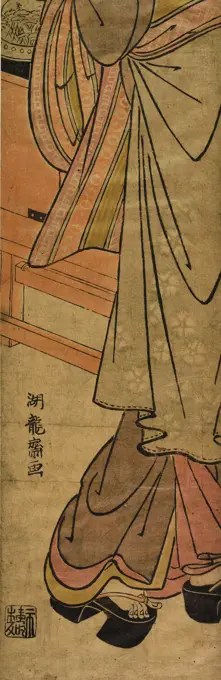
A woodcut of a waitress at the Ise-ya tea house by Eijudo, Japanese, active 18th century, created around 1775. The pillar print measures 25 3/4 x 4 3/8 inches (65.4 x 11.1 cm)
1899-18789402
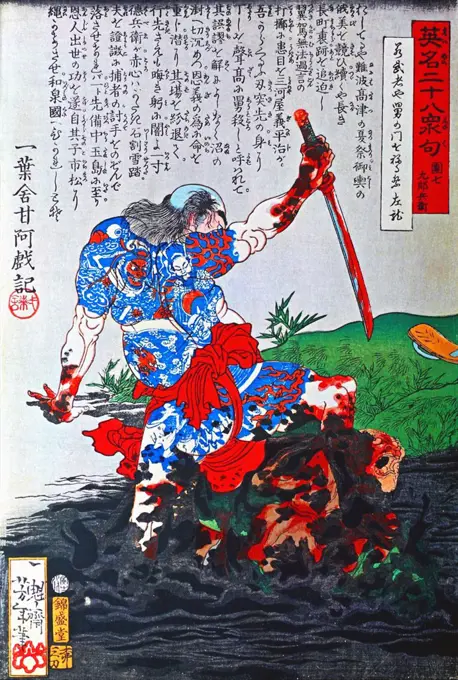
Tsukioka Yoshitoshi (30 April 1839 9 June 1892, also named Taiso Yoshitoshi) was a Japanese artist. He is widely recognized as the last great master of Ukiyo-e, a type of Japanese woodblock printing. He is additionally regarded as one of the form's greatest innovators. His career spanned two eras the last years of Edo period Japan, and the first years of modern Japan following the Meiji Restoration. Like many Japanese, Yoshitoshi was interested in new things from the rest of the world, but over time he became increasingly concerned with the loss of many aspects of traditional Japanese culture, among them traditional woodblock printing. Eimei nijuhasshuku (28 Famous Murders with Verse), also known as the 'Bloody Prints', is a collection of Japanese ukiyo-e from the 1860s, which depicted gruesome acts of murder or torture based on historical events or scenes in Kabuki plays. Although most of the works are solely violent by nature, it is perhaps the first known example of ero guro or the
6145-30159636
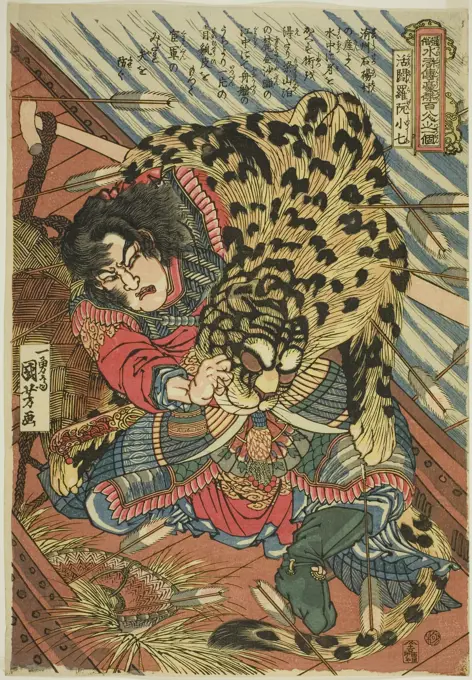
Rua Xiaoqi (Katsuenra Genshoshichi), from the series One Hundred and Eight Heroes of the Popular Water Margin (Tsuzoku Suikoden goketsu hyakuhachinin no hitori) 1822-1835 Japan. Color woodblock print; oban . Utagawa Kuniyoshi
6145-44325013
The laughing demon, from the series: 100 stories. .
4430-3102
fine arts, Korea, graphic, month In (""tiger""), coloured woodcut, circa 17th - 19th century, private collection,
4409-17584172
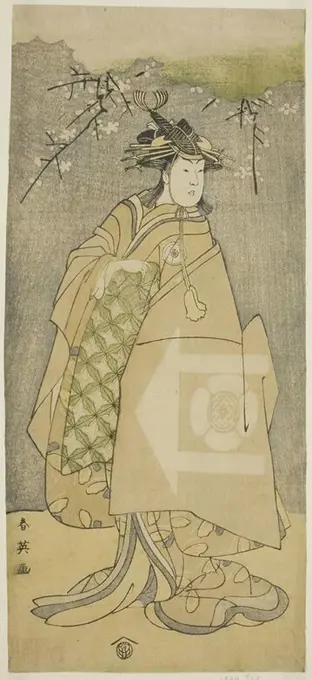
The Actor Iwai Kiyotaro as Kewaizaka no Shosho in the Play Gohiiki no Hana Aikyo Soga, Performed at the Kawarazaki Theater in the First Month, 1794. Katsukawa Shun'ei; Japanese, 1762-1819. Date: 1789-1799. Dimensions: 30.8 x 13.7 cm (12 1/8 x 5 3/8 in.). Color woodblock print; hosoban; left sheet of diptych (right: 1925.2506). Origin: Japan. Museum: The Chicago Art Institute, Chicago, USA.
6145-59465532
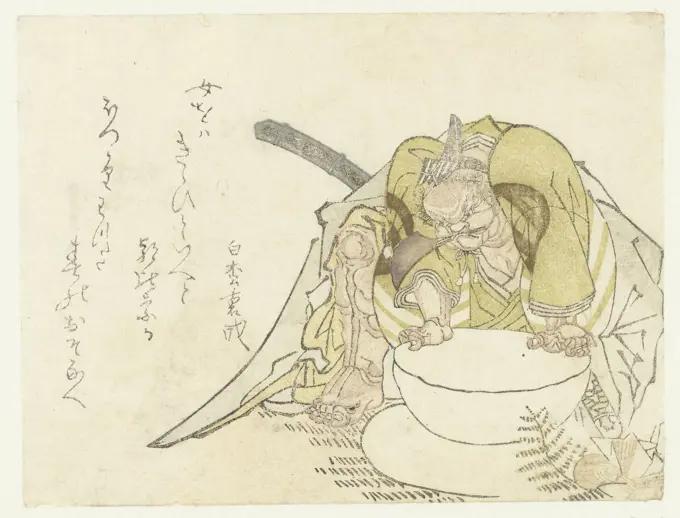
Asashina Saburô tries to break a rice cake, anonymous, c. 1790 - c. 1800  Asashina Saburô is employed by Kudô Suketsune, the villain from the story of the Soga Broeders. Large round rice cakes (kagamimochi) are made for the new year and broken as a test on the tenth day of the new year. With one poem. Japan paper color woodcut
6145-59570026
HANASAKI JIJI, 1880-1890 book Number four from the series: the Japanese fairy tale Hanasaki Jiji, in English; Cover with title and image of man in Boom; Inside cover, colophon; Eight magazines, English text with illustrations.  paper color woodcut
1899-67416997
The caption for this image reads: Toyokuni, The actors Ichikawa Omezo and Onoye Matsu-suke in character.  Toyokuni was recognized as a master of ukiyo-e and he was especially known for his kabuki actor prints. The ukiyo-e style was popular between the 17th and 19th centuries.  The term translates as "pictures of the floating world." There were wood prints, as well as paintings of female beauties actors, sumo wrestlers, historical scenes, folk tales, travel, landscape, flowers.
6145-44312448
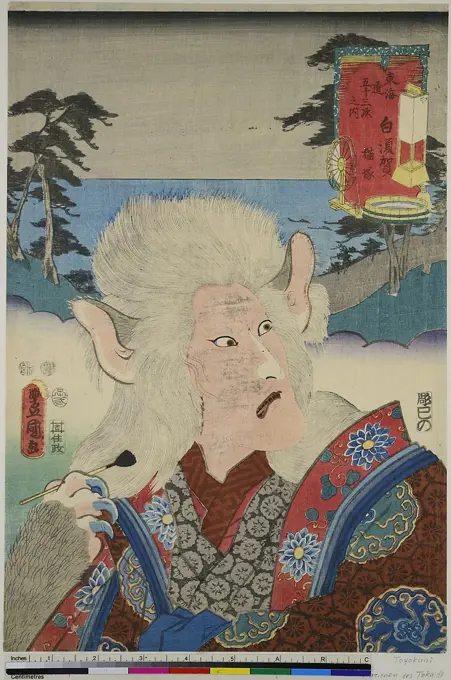
Shirasuka: The actor Onoe Kikugoro III as a cat moster (Nekozuka), leaf 30 from the series: The 53 stations of the Tōkaido. .
4443-28742854
Standing Beauty with Sleeve to Her Mouth, c. 1650-1660, Attributed to Iwasa Katsushige, Japanese, 1613 - 1673, 14 13/16 x 10 5/16 in. (37.7 x 26.2 cm) (image)64 9/16 x 14 15/16 in. (164 x 38 cm) (mount) 42.7 cm W w/rollers, Ink, color, gold, and shell white on paper, Japan, Nikuhitsu ukiyo-e
6145-29199147
New Year Picture of Door God with Knife-mounted Pole (left one of a pair) early 20th century Unidentified. New Year Picture of Door God with Knife-mounted Pole (left one of a pair). Unidentified artist(s) (early 20th century). China. early 20th century. Woodblock print; ink and color on paper. Republic period (1912-49). Prints
1788-42181
Stage actor in a warrior costume, by Utagawa Toyokuni (1769-1825), woodcut, Japan. Japanese Civilisation, 19th century.
6145-29733982
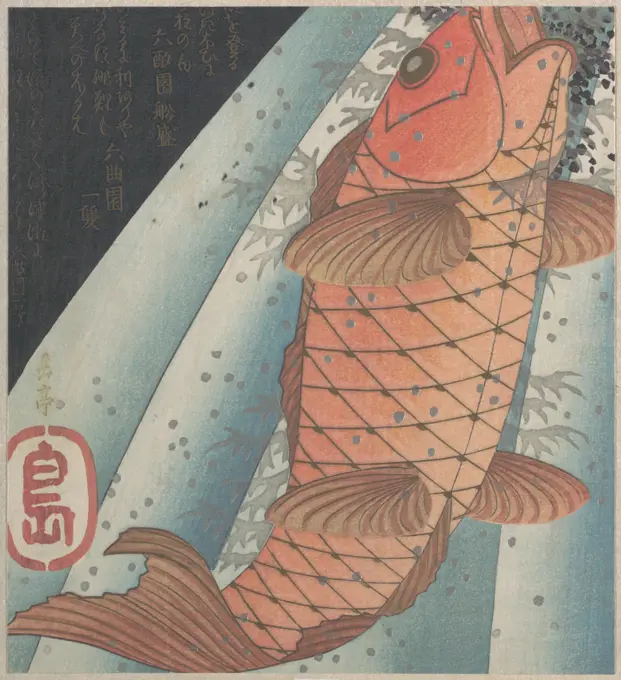
Red Carp Ascending a Waterfall late 1820s Yashima Gakutei Japanese. Red Carp Ascending a Waterfall 54158
4409-17584984
Thunder Gate (Kaminarimon), section of a sheet from the series "Cutout Pictures of Famous Places in Edo (Edo meisho harimaze zue)". Utagawa Hiroshige  ; Japanese, 1797-1858. Date: 1857. Dimensions: 10.4 x 7 cm (4 1/8 x 2 3/4 in.). Color woodblock print; section of harimaze sheet. Origin: Japan. Museum: The Chicago Art Institute, USA.
6145-30174804
Fishing beneath a Bridge 1795-1805 Japan. Color woodblock print; naga-oban . Kitagawa Utamaro
6145-29120443
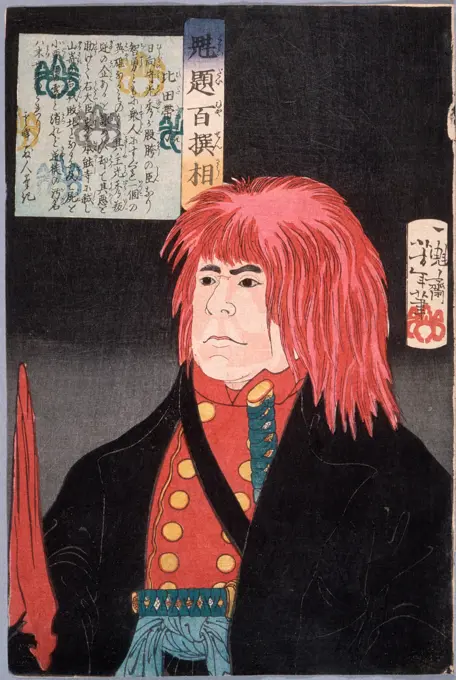
Hida no Tatewaki Wearing a Red Wig. Tsukioka Yoshitoshi (Japan, 1839-1892). Japan, 1868. Prints; woodblocks. Color woodblock print
1899-19188865
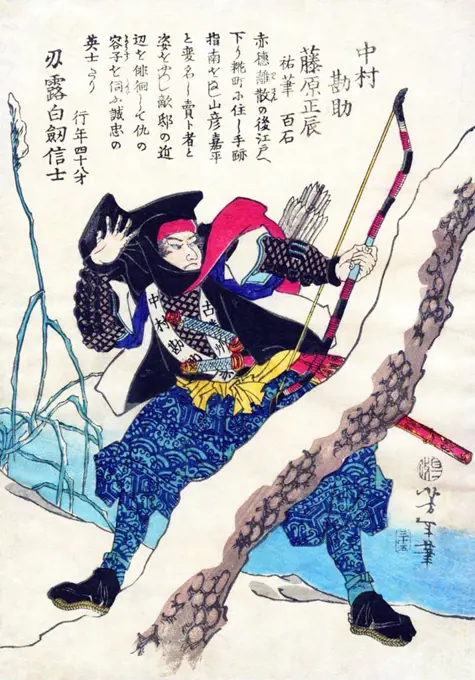
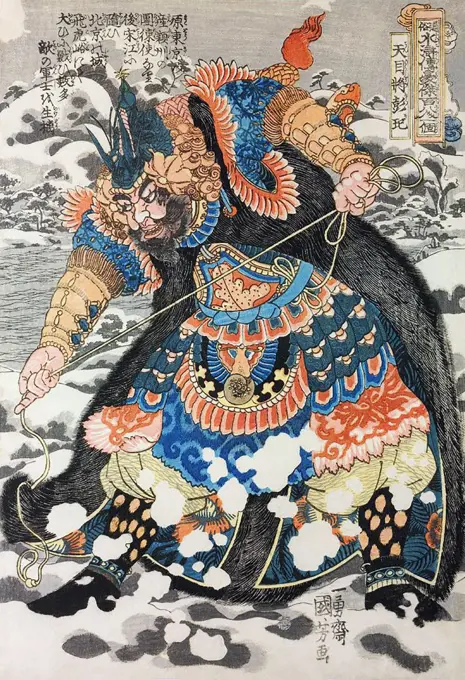
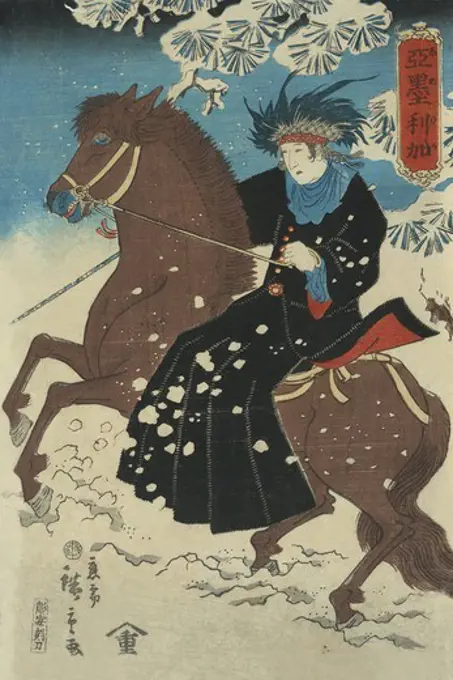
Japan: Peng Qi or Tenmokusho Hoki, one of the 'One Hundred and Eight Heroes of the Water Margin', standing in the snow in a black bearskin cloak stands ready with a rope. Woodblock print by Utagawa Kuniyoshi (1797-1863), 1827-1830. The Water Margin (known in Chinese as Shuihu Zhuan, sometimes abbreviated to Shuihu, known as Suikoden in Japanese, as well as Outlaws of the Marsh, Tale of the Marshes, All Men Are Brothers, Men of the Marshes, or The Marshes of Mount Liang in English, is a 14th century novel and one of the Four Great Classical Novels of Chinese literature. Attributed to Shi Nai'an and written in vernacular Chinese.
6145-45668774
HIDA NO TATEWAKI; One hundred warriors selected by Yoshitoshi; Kaidai Hyaku Senso. Bust portrait of the sixteenth century warrior Hida No Tatewaki, depicted in nineteenth century western costume, with red wig.
1899-18789313
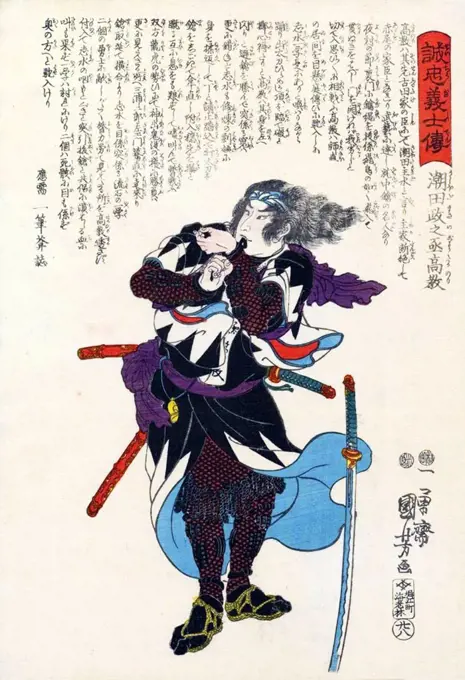
The revenge of the Forty-seven Ronin (Shi-ju-shichi-shi), also known as the Forty-seven Samurai, the Aki vendetta, or the Genroku Aki incident (Genroku aki jiken) took place in Japan at the start of the 18th century. One noted Japanese scholar described the tale as the country's 'national legend'. It recounts the most famous case involving the samurai code of honor, bushidi. The story tells of a group of samurai who were left leaderless (becoming ronin) after their daimyo (feudal lord) Asano Naganori was forced to commit seppuku (ritual suicide) for assaulting a court official named Kira Yoshinaka, whose title was Ki zuke no suke. The ronin avenged their master's honor after patiently waiting and planning for two years to kill Kira. In turn, the ronin were themselves ordered to commit seppuku for committing the crime of murder. With much embellishment, this true story was popularized in Japanese culture as emblematic of the loyalty, sacrifice, persistence, and honor that all good peopl
6145-59054682
Guard of Menshen gates;  beginning of the 20th century (1901-00-00-1932-00-00);Jabłoński, Witold (1901-1957) - collection, gate guard, gift (provenance), Chinese art
4409-17548395
The actor Otani Tokuji I as manservant Sodesuke. Toshusai Sharaku  ; Japanese, active 1794-95. Date: 1794. Dimensions: 37.8 x 24.8 cm. Color woodblock print; oban. Origin: Japan. Museum: The Chicago Art Institute, Chicago, USA.
4409-17419557
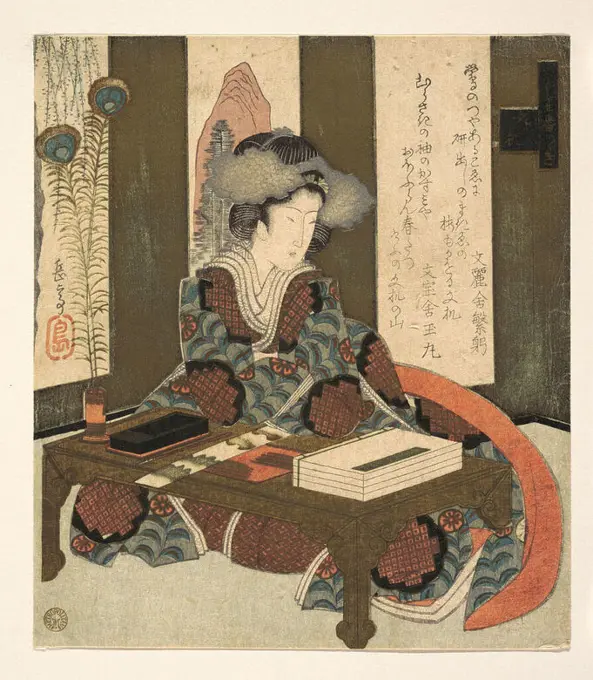
A Lady About to Write a Poem. Artist: Yashima Gakutei (Japanese, 1786-1868). Culture: Japan. Dimensions: 8 5/16 x 7 5/16 in. (21.1 x 18.6 cm). Date: ca. 1820. Museum: Metropolitan Museum of Art, New York, USA.
6145-59563465
Ikezuki Geitazaemon In addition to a print of his hand, Utagawa Kunisada (I), 1844 print Sumo wrestler Ikezuki Geitazaemon, with bare torso, depicted next to a print of his hand in full size. The text below mentions that he came from Hirado, in Hizen and that he was 18 years old here, weighed more than two meters long and around 140 kilos.  paper color woodcut hand-print. wrestling (sport)
6145-29255099
A wrestler in a ring facing left and wearing a formal apron. Colour woodcut by Kuniteru II, 1864.
6145-46583120
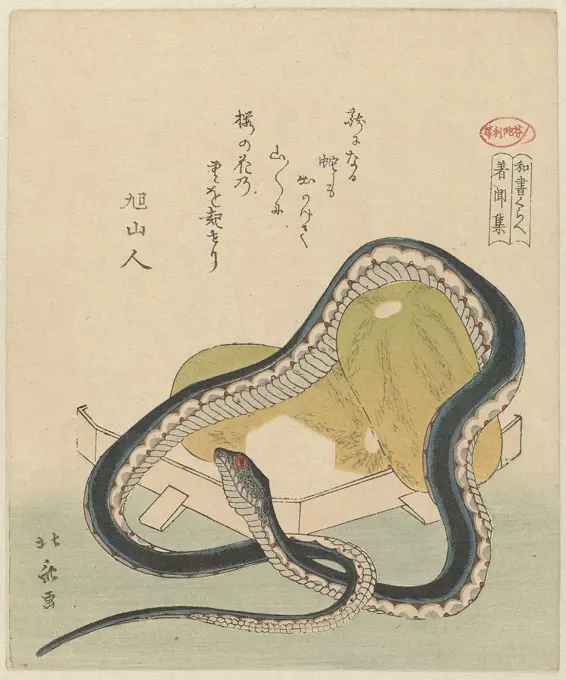
. Snake, two melons and a wooden box. The Chomonjû is a 30-share bookwork written by Tachibana No Narisue in 1254. One of the stories is about a melon that is given to Fujiwara No Michinaga (921-1005). There appears to be a hose in the melon, where you will find out on time. With one poem. The print is a B copy.
4408-13526
America, Japanese Prints - Hiroshige
6145-45427595
Portrait Rapprochement Women from the Series: TOSEI Onna FUZOKU TSU KITAGAWA, UTAMARO (1753 1806)
4409-17584183
The Actor Nakajima Mihoemon II as Bomon no Saisho Kiyotada in the Play Oyafune Taiheiki, Performed at the Ichimura Theater in the Eleventh Month, 1775. Katsukawa Shunsho  ; Japanese, 1726-1792. Date: 1779-1780. Dimensions: 29.8 x 14.3 cm (11 3/4 x 5 5/8 in.). Color woodblock print; hosoban. Origin: Japan. Museum: The Chicago Art Institute, USA.
6145-51817427
Actor Seki Sanjūrō III, from the series Portraits as True Likenesses in the Moonlight Utagawa Yoshiiku (Japanese, 1833-1904). Actor Seki Sanjūrō III, from the series Portraits as True Likenesses in the Moonlight, 1867, 3rd month. Color woodblock print on paper, 13 13/16 x 9 1/16 in. (35.1 x 23.0 cm).   Asian Art 1867, 3rd month
4409-28961771
Lon Chaney. Date: 1923. India ink, pencil and gouache on paper. Museum: NATIONAL PORTRAIT GALLERY.
6145-29120468
Maebara Ikkaku Holding a Sword. Tsukioka Yoshitoshi (Japan, 1839-1892). Japan, 1878, August. Prints; woodblocks. Color woodblock print
6145-44323716
Beautiful woman at desk, woodcuts looking at. Donation Gerhard Schack
1746-21117508
Colour woodcut of a print of The Sumo wrestler Asashio Taro. It shows a full-length portrait, standing, facing slightly left, wearing waist wrap with birds and bamboo motif.
4443-20307310
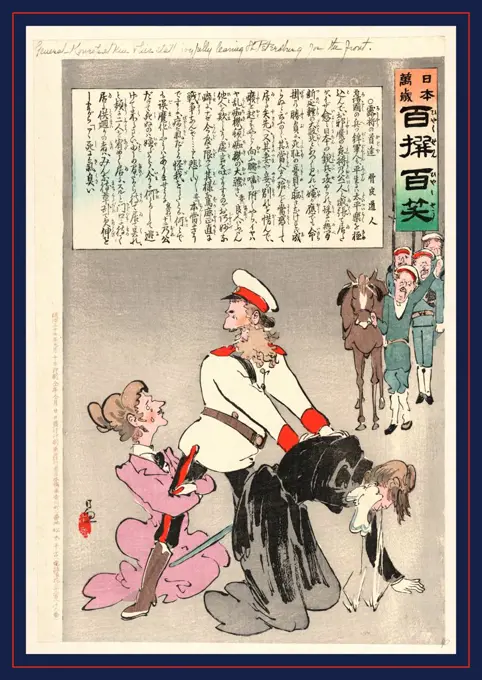
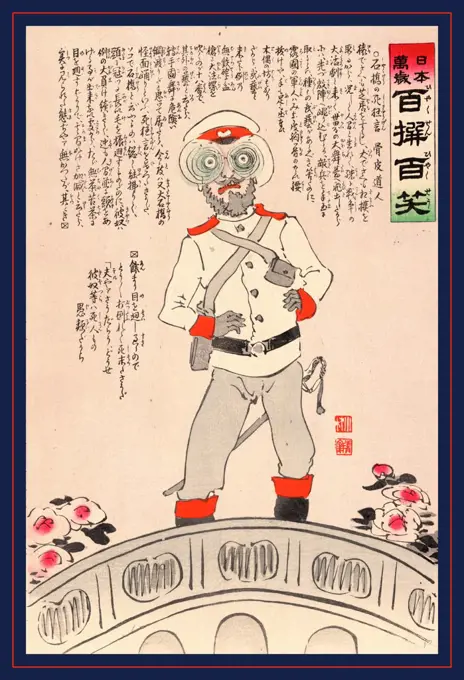
General Kuropatkin & his staff joyfully leaving St. Petersburg for the front, Kobayashi, Kiyochika, 1847-1915, artist, 1904 or 1905, 1 print : woodcut, color., Print shows the Russian general A.N. Kuropatkin parting with difficulty from two grief-stricken women while his staff waits in the background.
6145-46048992
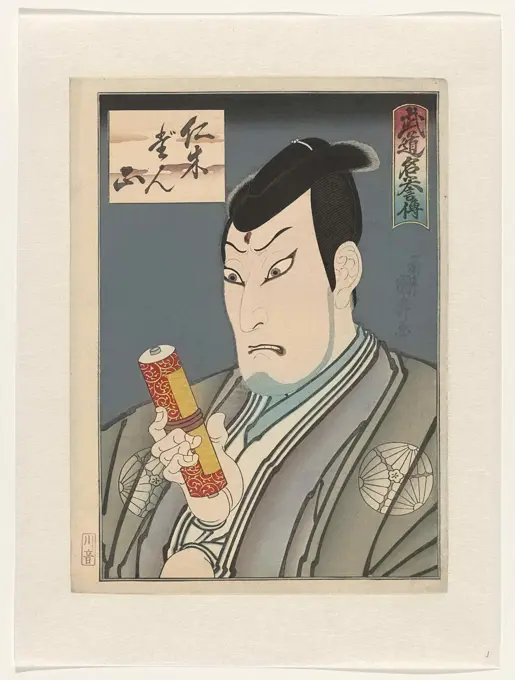
Budo Meiyoden; Stories about masters in combat stresses. Ôkawa Hashizô I like Nikki Danjô in the play 'Azuma Miyage Date No Hinagata', Naka Theater, August 1848.
6145-29128477
Chinzei Hachirō Tametomo with Two Islanders on the Beach at Ashijima. Tsukioka Yoshitoshi (Japan, 1839-1892). Japan, 1886, October. Prints; woodblocks. Color woodblock print
6145-44313246
The actor Ichikawa Kodanji as Tennichibō. Donation Gerhard Schack
6145-30187840
Shono, section of sheet no 10 from the series Cutout Pictures of the Tokaido (Tokaido harimaze zue) 1842-1857 Japan. Color woodblock print; section of harimaze sheet . Utagawa Hiroshige
6145-59583739
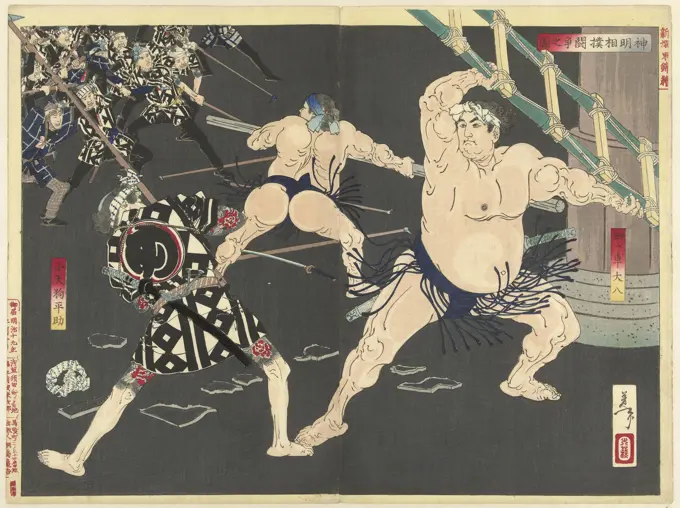
Fighting between firefighters and Sumo Wresters at the Shinmei Temple, Tsukioka Yoshitoshi, 1886 print The leader of the Sumo Wresters Yotsuguruma Daihachi, fighting with Ladder against the captain of the firemen Kotengu Heisuke, during a riot in 1805.  paper color woodcut / polishing fighting. weapons
1746-21133858
Eradicate pests and diseases and build happiness for ten thousand generations'. Chinese Public Health Poster issued by the Red Cross and the Health Propaganda Office of the Health Department of Fujian Province, 1960.
6145-30174079
Child Attendant and Bald Tengu of Mt Kurama (Kaburo Kurama Tengu), no 7 from a series of 12 prints depicting parodies of plays 1711-1740 Japan. Hand-colored woodblock print; oban, sumizuri-e . Okumura Masanobu
4409-17561837
The Actor Sawamura Sojuro I as Usami no Saburo in the play "Yukun Yoroi Soga," performed at the Nakamura Theater in the first month, 1736. Attributed to Torii Kiyomasu II; Japanese, 1706 ()-1763 (). Date: 1736. Dimensions: 28.8 x 14.6 cm (11 5/16 x 5 3/4 in.). Hand-colored woodblock print; hosoban, urushi-e. Origin: Japan. Museum: The Chicago Art Institute, Chicago, USA.
4409-21519216
German poster for the magazine Pan. German artistic review, 1895, Sattler, Joseph (1867-1931), Artist.
6145-51828870
Moonlight View of Tsukuda with Lady on a Balcony, from the series Fashionable Genji Utagawa Hiroshige (Ando) (Japanese, 1797-1858). Moonlight View of Tsukuda with Lady on a Balcony, from the series Fashionable Genji, 1853, 11th month. Woodblock color print, Sheet of a: 14 1/2 x 10 1/8 in. (37.0 x 25.8 cm).   Asian Art 1853, 11th month
1746-111904191
Japanese hand coloured woodcut. A scene from the drama 'The Storehouse of the Loyalties'. The two actors shown are Horibe Yatsubei and Horibe Yajibe. Created between 1818 and 1830.
1899-19189008
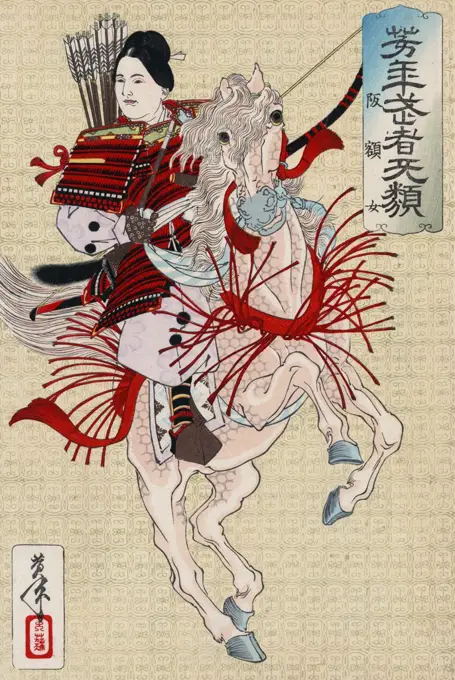
Japan: Lady Hangaku (Hangaku Gozen). Ukiyo-e woodblock print by Tsukioka Yoshitoshi (1839-1892), c. 1885. Hangaku Gozen was a female warrior samurai, or onna-bugeisha, one of the relatively few Japanese warrior women commonly known in history or classical literature. She lived at the end of the Heian and the beginning of the Kamakura periods. Daughter of a warrior named Jo Sukekuni, she was sister of Sukenaga and Sukemoto. The Jo were warriors, allies of the Taira clan, in Echigo Province (present-day Niigata Prefecture). They were defeated in the Genpei Wars, losing much of their power.
4409-17562547
The Actor Ichikawa Danzaburo II as Usui no Sadamitsu () in the Play Edo Katagi Hikeya Tsunasaka (), Performed at the Ichimura Theater () in the Eleventh Month, 1772 (). Katsukawa Shunsho  ; Japanese, 1726-1792. Date: 1767-1777. Dimensions: 32.8 x 15.1 cm (12 15/16 x 5 15/16 in.). Color woodblock print; hosoban. Origin: Japan. Museum: The Chicago Art Institute, USA.
4409-17565616
Mother and Child. Helen Hyde; American, 1868-1919. Date: 1901. Dimensions: 434 x 99 mm (image/block); 505 x 153 mm (sheet). Color woodcut on paper. Origin: United States. Museum: The Chicago Art Institute, Chicago, USA.
6145-29199570
New Year Picture of paired images of Zhong Kui Guarding the Residence early 20th century Unidentified artist(s). New Year Picture of paired images of Zhong Kui Guarding the Residence. Unidentified artist(s) , early 20th century. China. early 20th century. Polychrome woodblock print; ink and color on paper. Republic period (191249). Prints
6145-50635186
Shops in Odemmacho /Otemma cho, Momen  dana, board 7 from the series: One hundred famous views of Edo /Meisho Edo hyakkei
4443-75470613
Splendid story of the brave soldier Shirakami, 1895, Woodcuts, Color, Paper / Sheet 14 9/16 x 9 13/16 in. (37 x 25 cm)
1899-18853369
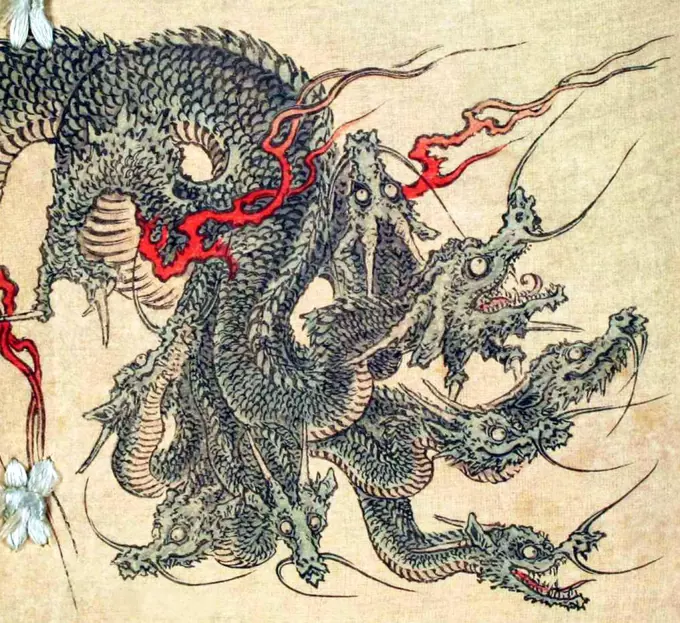
Yamata no Orochi (岐の大蛇) or Orochi, translated as  Eight-Forked Serpent in English, is a legendary 8-headed and 8-tailed Japanese dragon that was slain by the Shinto storm-god Susanoo.
1899-18856780
Utagawa Kuniyoshi (January 1, 1798 - April 14, 1861) was one of the last great masters of the Japanese ukiyo-e style of woodblock prints and painting. He is associated with the Utagawa school. The range of Kuniyoshi's preferred subjects included many genres: landscapes, beautiful women, Kabuki actors, cats, and mythical animals. He is known for depictions of the battles of samurai and legendary heroes. His artwork was affected by Western influences in landscape painting and caricature.
1899-18712627
The Kaikidan Ekotoba is a mid-19th century handscroll that profiles 33 legendary monsters and human oddities, mostly from the Kyushu region of Japan, but with several from other countries, including China, Russia and Korea. The document, whose author is unknown, is in the possession of the Fukuoka City Museum.
4443-20307962
Shakkyo no shinikyogen, Farce of the lions at stone bridge., Kobayashi, Kiyochika, 1847-1915, artist, 1904., 1 print : woodcut, color ; 37 x 24.8 cm.
6145-51817271
The Actor Otani Hiroemon III Katsukawa Shunko (Japanese, 1743-1812). The Actor Otani Hiroemon III, 1780. Color woodblock print on paper, 12 3/8 x 6 3/4 in. (31.4 x 14.5 cm).   Asian Art 1780
1899-19188894
Japan: Saginoike Heikuro, one of the 'One Hundred and Eight Heroes of the Water Margin', fights the giant snake at the lake of Sayama. Utagawa Kuniyoshi (1797-1863), 1827-1830. The Water Margin (known in Chinese as Shuihu Zhuan, sometimes abbreviated to Shuihu, known as Suikoden in Japanese, as well as Outlaws of the Marsh, Tale of the Marshes, All Men Are Brothers, Men of the Marshes, or The Marshes of Mount Liang in English, is a 14th century novel and one of the Four Great Classical Novels of Chinese literature. Attributed to Shi Nai'an and written in vernacular Chinese.
6145-29806250
A New Year's Scene Torii Kiyonaga Japanese. A New Year's Scene 56042
PREVIOUS
of 3
NEXT
2401 S. Ervay, Suite 206
Dallas, Texas 75215
United States
Get Started
Free ResearchMy BoardsMy Cart
For Creators
How To License Your ContentContributor PortalFrame of Mind
Resources
API accessPricing
Contact
+1 866 236 0087help@viewpictures.co.uk Contact form
©2026 View Pictures. All Rights Reserved. -B
This site is protected by reCAPTCHA and Google Privacy Policy and Terms of Service apply.