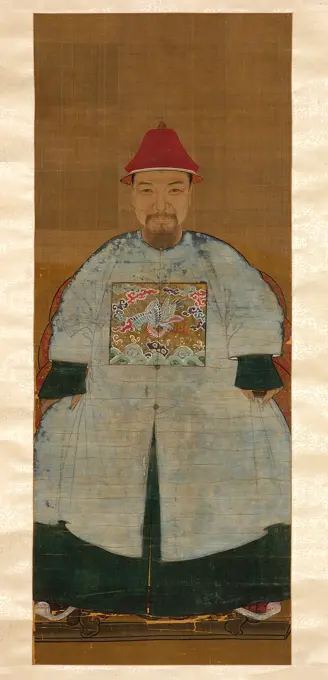
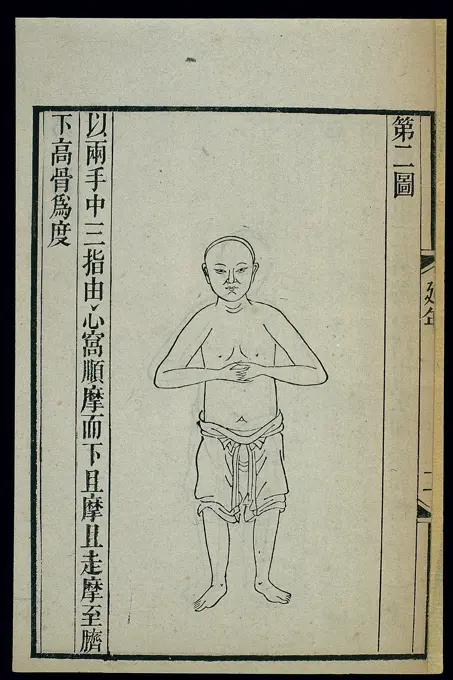
Japanese Woodblock Prints

Colorful woodblock prints depicting actors and scenes from traditional Japanese theater, characterized by intricate designs and historical themes.
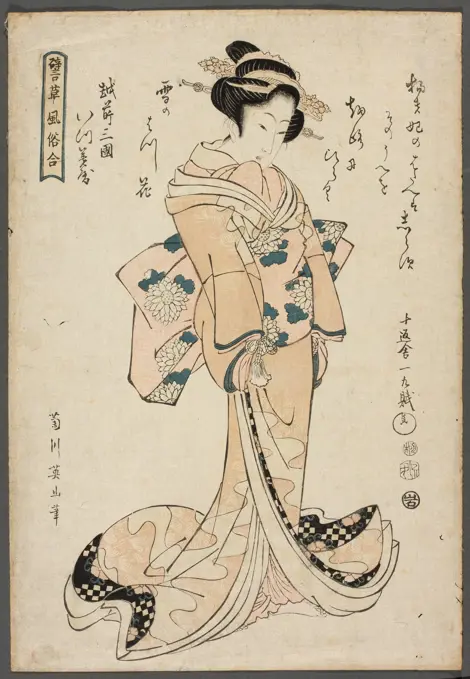
Curtain née Izumiy's pleasure in Mikunia, the province of Echizen (Echizen Mikuni, Izumiya), from the series "Comparison of the villains and customs" (Tattoegusa fûzoku Awase)Minc, Bronisław and Elżbieta - collection, bijing, gift (provenance), woodcuts, Japanese art
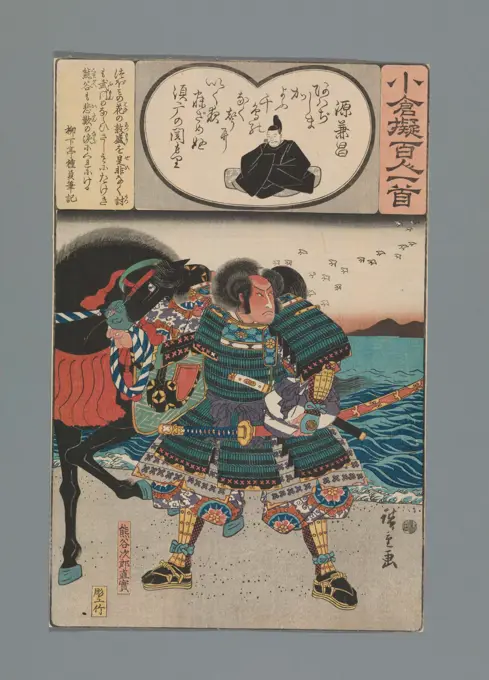
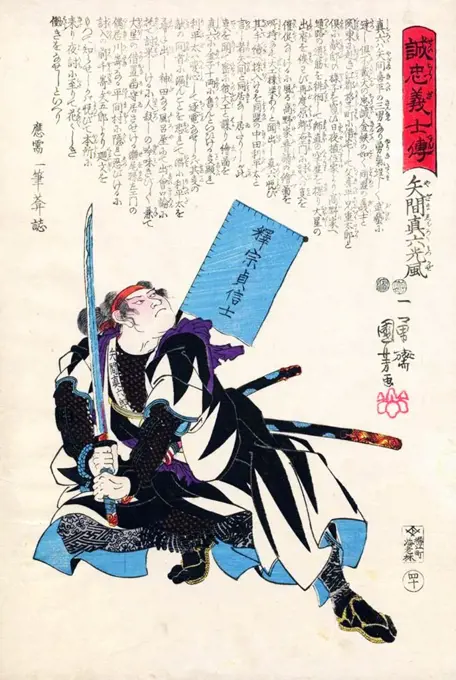
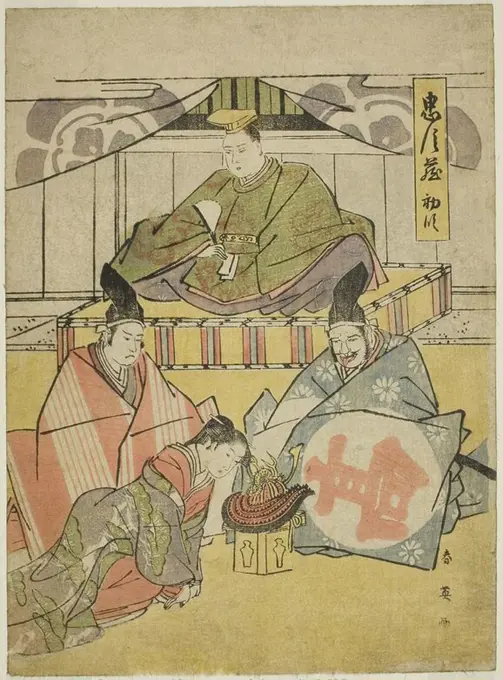
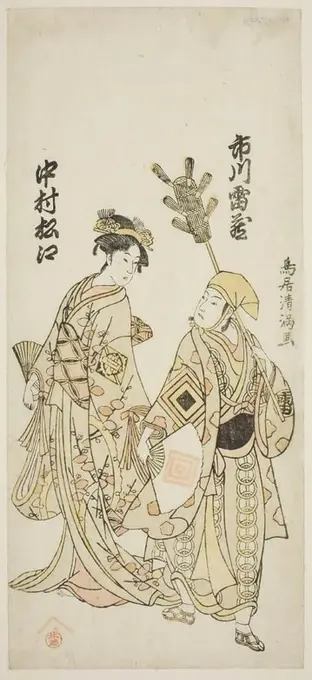
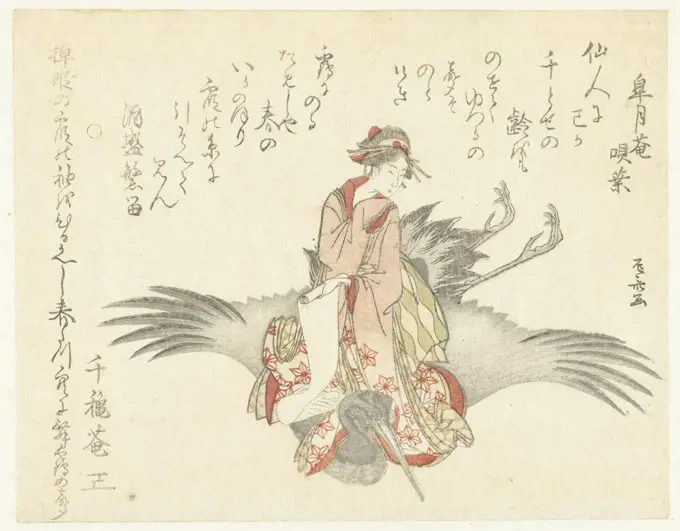
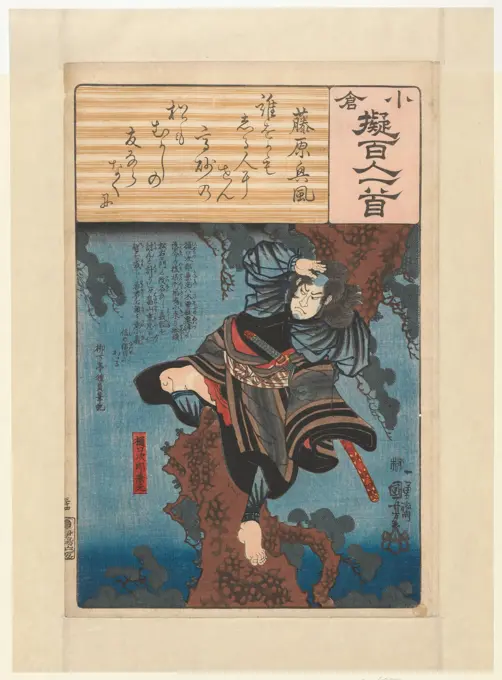
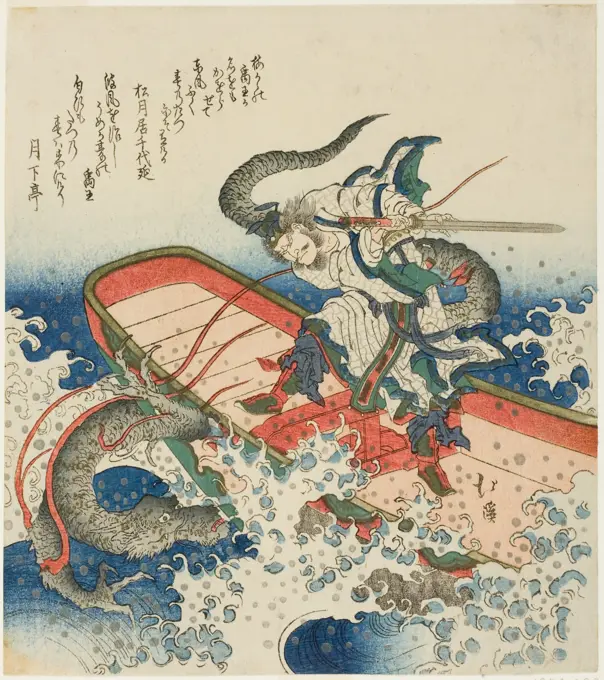
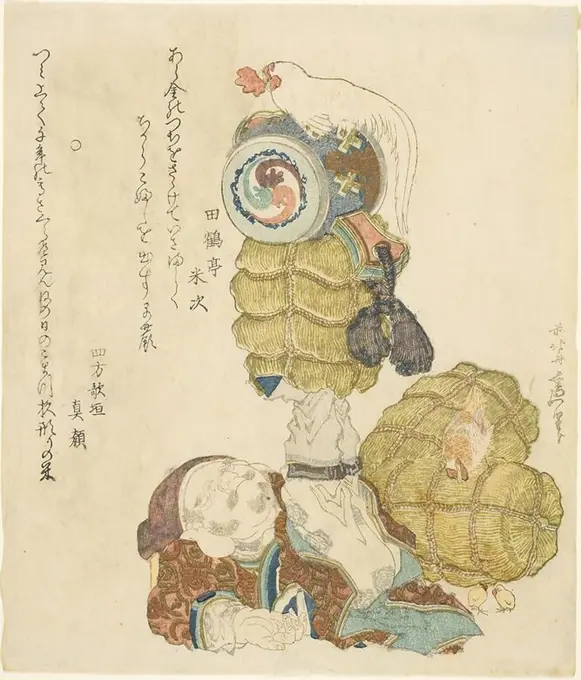
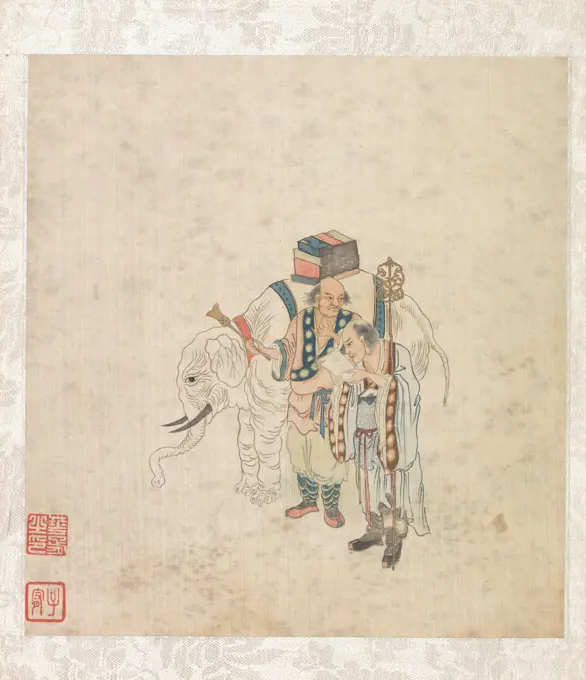
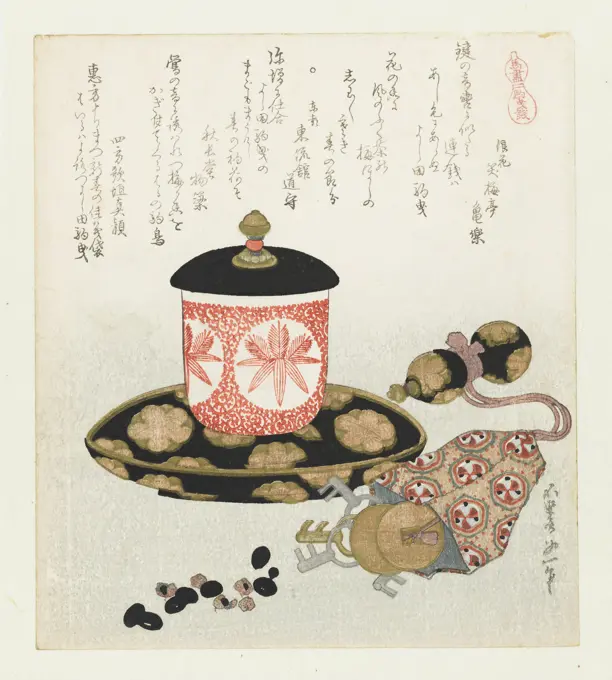
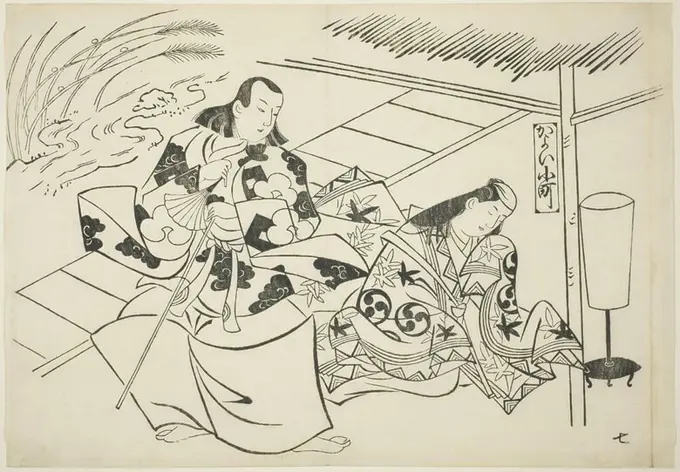
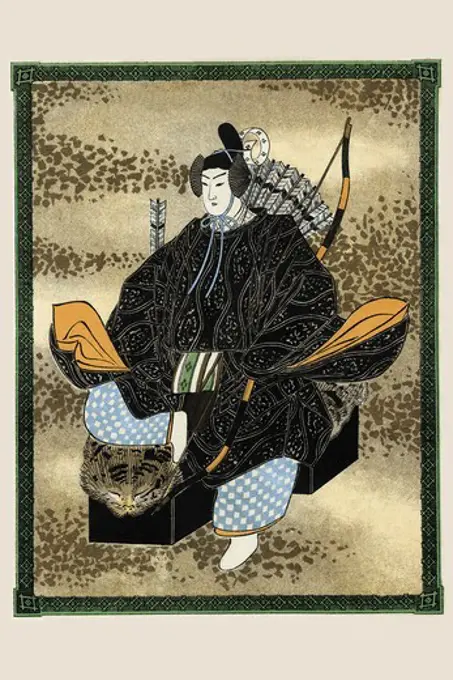
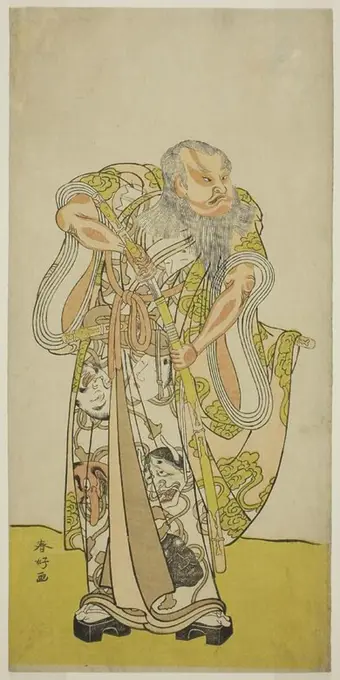
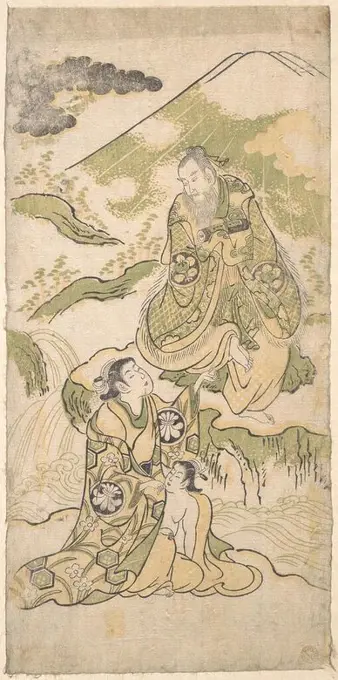
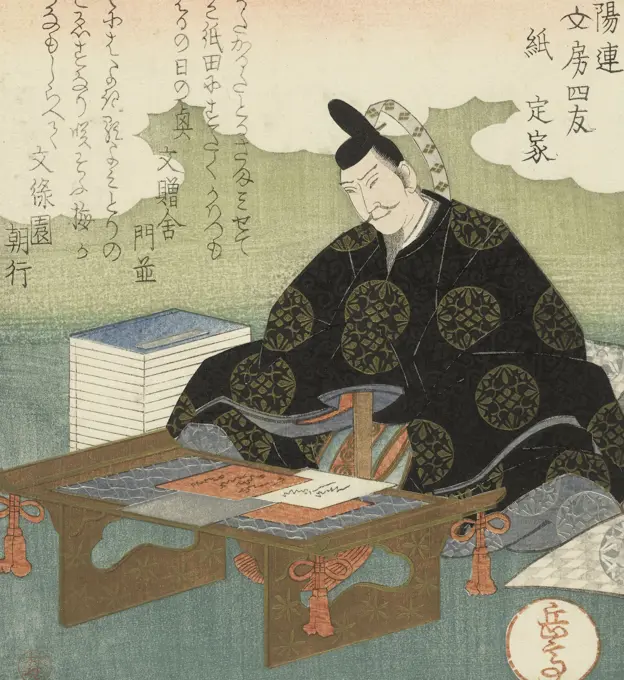
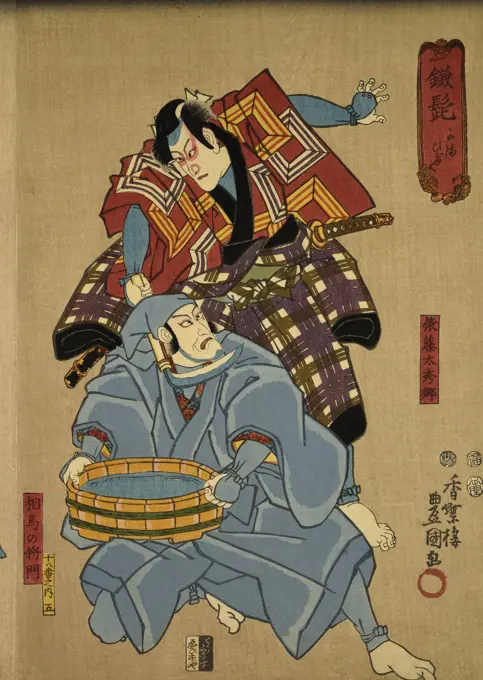
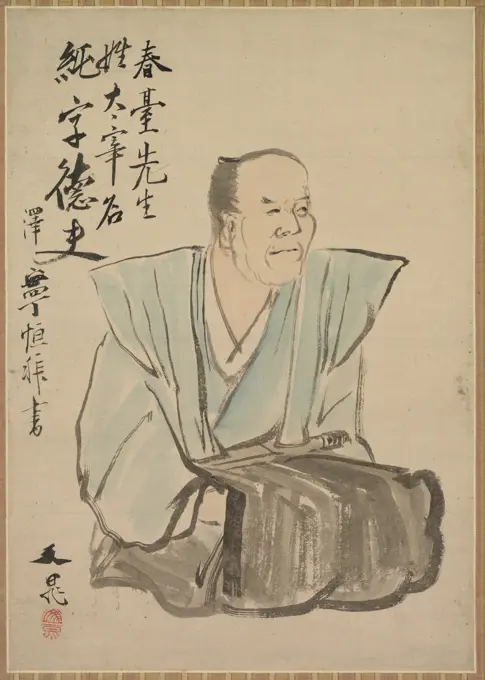
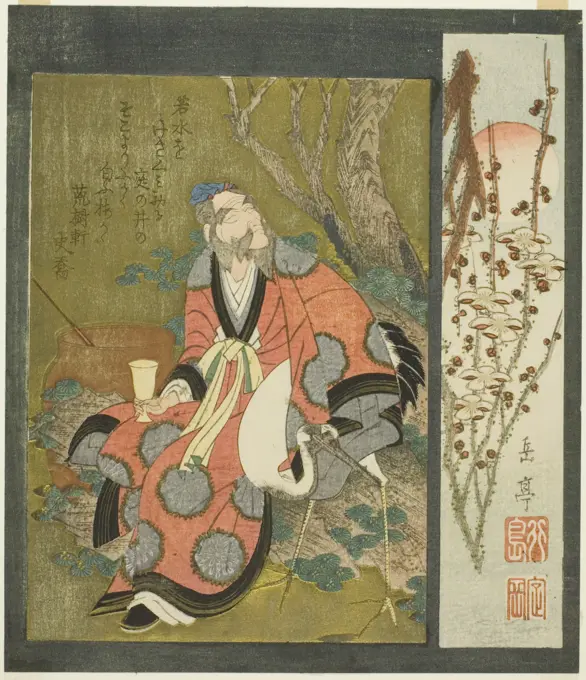
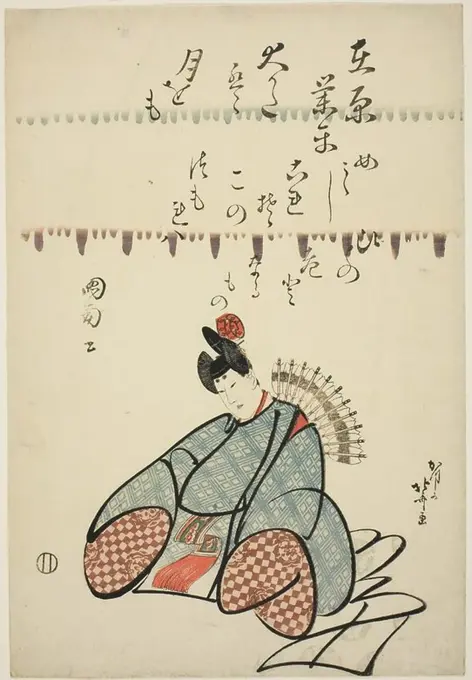
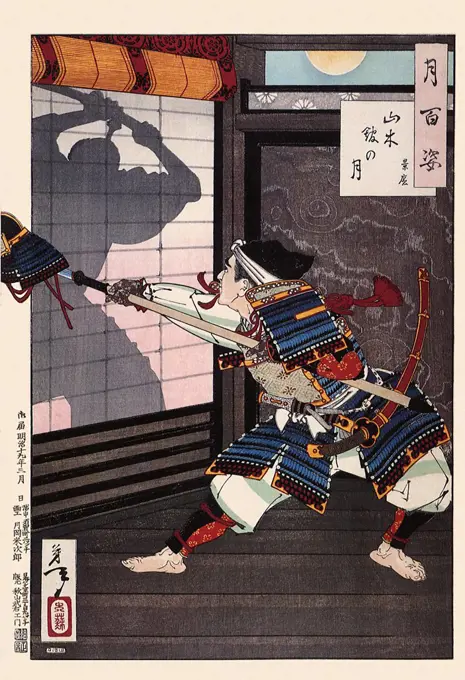
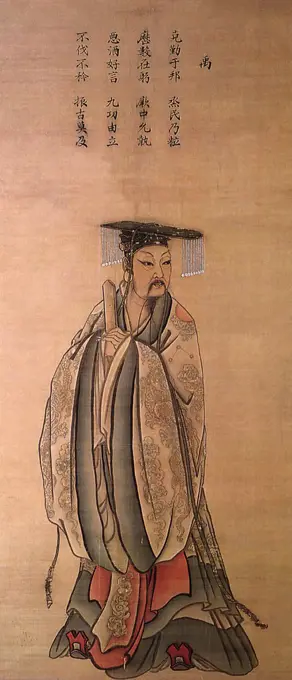
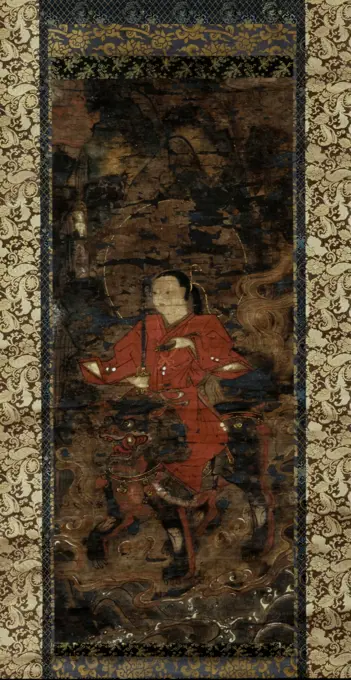
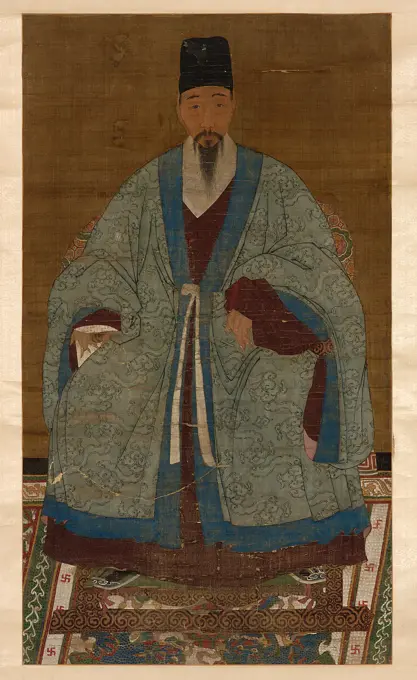
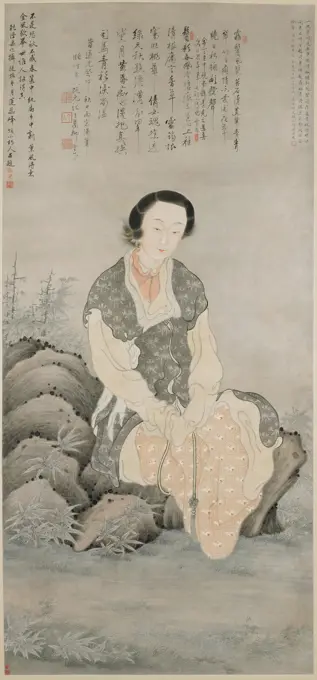
Hair-Primper, Japanese PrintsOgura imitation of the one hundred poems. Kumagai Jirô Naozane with his horse on the beach. Under his arm wrapped headed his son in a cloth. Scene from a Kabukite team. Poem by Minamoto No Kanemasa.Sumo Wrestlers of the Eastern Group: Kurateyama Yadayu (right), and Izumigawa Rin-'emon (left). Katsukawa Shunsho  ; Japanese, 1726-1792. Date: 1775-1785. Dimensions: 38 x 25.3 cm (15 x 9 15/16 in.). Color woodblock print; oban. Origin: Japan. Museum: The Chicago Art Institute, USA.The revenge of the Forty-seven Ronin (Shi-ju-shichi-shi), also known as the Forty-seven Samurai, the Aki vendetta, or the Genroku Aki incident (Genroku aki jiken) took place in Japan at the start of the 18th century. One noted Japanese scholar described the tale as the country's 'national legend'. It recounts the most famous case involving the samurai code of honor, bushidi. The story tells of a group of samurai who were left leaderless (becoming ronin) after their daimyo (feudal lord) Asano Naganori was forced to commit seppuku (ritual suicide) for assaulting a court official named Kira Yoshinaka, whose title was Ki zuke no suke. The ronin avenged their master's honor after patiently waiting and planning for two years to kill Kira. In turn, the ronin were themselves ordered to commit seppuku for committing the crime of murder. With much embellishment, this true story was popularized in Japanese culture as emblematic of the loyalty, sacrifice, persistence, and honor that all good peoplKomagine Hachibyoe, a gun to the viewer pointing; Komagine Hachibyoe; One hundred warriors selected by Yoshitoshi; Kaidai Hyaku Senso. Komagine Hachibyoe, in white and blue robe, focuses his gun on the viewer.Tsukioka Yoshitoshi (1839 - 9 June 1892) one of the last great masters of the classical Japanese colour woodcut, here the work Mount Otowa MoonAct One: Tsurugaoka Hachiman Shrine from the play Chushingura (Treasury of the Forty-seven Loyal Retainers). Katsukawa Shun'ei; Japanese, 1762-1819. Date: 1790-1800. Dimensions: 23.8 x 17.5 cm (9 3/8 x 6 7/8 in.). Color woodblock print; koban. Origin: Japan. Museum: The Chicago Art Institute, Chicago, USA.The Actors Ichikawa Raizo I as a peddler of tea whisks and Nakamura Matsue I as Yuya Gozen in the play "Daijobu Takadate Jikki," performed at the Nakamura Theater in the eleventh month, 1763. Torii Kiyomitsu I; Japanese, 1735-1785. Date: 1763. Dimensions: 12 1/2 x 5 1/2 in. Color woodblock print; hosoban, benizuri-e. Origin: Japan. Museum: The Chicago Art Institute, Chicago, USA.Courtesan on a crane, Courtesan with a long letter on a flying crane. She represents the Chinese immortal Kung Ho, who is usually depicted on a crane with a book. With three poems, shore birds and wading birds: crane, Ryûryûkyo Shinsai (mentioned on object), Japan, 1800 - 1805, paper, colour woodcut, h 132 mm × w 169 mmPortrait of Sawamura Tosho in the Role of Karukaya Doshin. Date: c. 1834. Dimensions: 39 cm x 26 cm. Museum: Van Gogh Museum, Amsterdam. Author: UTAGAWA KUNISADA.Higuchi Jirô Kanimitsu with a poem Fujiwary no okikaze, No. 34 from the series "Imacja of the collection from Ogura - one poem from a hundred poets" (Ogura nazorae hyakunin iSshu)Dembiński, Stanisław (1891-1940) - collection, decorative boards according to the anthology of a hundred poets, cycle, gift (provenance), Japanese (culture), oban, poetry, Japanese artYu the Great battling a dragon 1826-1829 Japan. Color woodblock print; shikishiban, surimono . Totoya HokkeiFollowing woman; The Tôi river in Settsu, number three; Tôi - Sono San; The six jewelry rivers; Mutamagawa no uchi. A young woman sitting at a perfroller (used to waste dust), looks up while striking the fabric, to a man at a pine. With one poem.Daikoku balancing rice bales, mallet, and rooster on his feet. Katsushika Hokusai  ; Japanese, 1760-1849. Date: 1825. Dimensions: 20.9 x 18.0 cm. Color woodblock print; shikishiban, surimono. Origin: Japan. Museum: The Chicago Art Institute, Chicago, USA.Guard of Menshen gates bringing children;  beginning of the 20th century (1901-00-00-1932-00-00);Jabłoński, Witold (1901-1957) - collection, menshen, gift (provenance), Chinese artPilgrimage to Enoshima 1816-1826 Japan. Color woodblock print; chuban, surimono . Katsushika HokusaiFujikawa mizuemon in kameyama, utagawa kunisada (i), 1852 Actor Matsumoto Koshiro in the role of the villain Fujikawa Mizuemon in Black Kimono and pulled sword against the right shoulder; In the background at the top right the Kameyama castle. Japan paper color woodcut / nishiki-e Actor Matsumoto Koshiro in the role of the villain Fujikawa Mizuemon in Black Kimono and pulled sword against the right shoulder; In the background at the top right the Kameyama castle. Japan paper color woodcut / nishiki-eSu Liupeng (1796-1862). "Eight album sheets". Ink and colors on paper. Paris, Cernuschi museum. Sitting, album, color on paper, color on paper, draw, draw, write, ink, print, leaf, man, ink, sheet, sitting, teapot, theiere, write, color, engraving, manThe actor Onoe Matsusuke I as Matsushita Mikinoshin 1794 Japan. Color woodblock print; oban . Tôshûsai SharakuKamigashi-Hime, from the series: Mirror of warriors of our country. Donation Gerhard SchackPortrait of Rikyū () ca. 1875 Shibata Zeshin Japanese. Portrait of Rikyū () 57015Yamato-e is a style of Japanese painting inspired by Tang Dynasty paintings and developed in the late Heian period. It is considered the classical Japanese style. From the Muromachi period (15th century), the term Yamato-e has been used to distinguish work from contemporary Chinese style paintings (kara-e), which were inspired by Song and Yuan Dynasty Zen Buddhism paintings. The Yamato-e often tell narrative themes with text along with them, show the beauty of nature, e.g. famous places (meisho-e), and the four seasons (shiki-e). The pictures are non-symbolic and have the objective of depicting the beauty in nature. The pictures are often on scrolls that can be hung on a wall (kakemono) or handscrolls (emakimono) that could be read from right to left with the accompanying story or on a folding screen (byoubu) or panel (shouji). Although they received their name from the Yamato period (250-710 CE), Yamato-e pictures rather stand for a style and are not restricted to a particular period.The Actor Sawamura Sojuro III as Kongara Doji in the Play Kitekaeru Nishiki no Wakayaka, Performed at the Nakamura Theater in the Eleventh Month, 1780. Katsukawa Shunsho  ; Japanese, 1726-1792. Date: 1775-1785. Dimensions: 31 x 14 cm (12 3/16 x 5 1/2 in.). Color woodblock print; hosoban; right sheet of diptych. Origin: Japan. Museum: The Chicago Art Institute, USA.Oguri SHINUI, Resembling Fukashichi, Utagawa toyokuni (I), 1818 print   paper color woodcut actor (on the stage)Chinese C18 woodcut: External medicine - 'Lame ox'Two men next to an elephant with a pile of books on his back, print maker: anonymous, Straat van Taiwan, 1800 - 1950, silk, brush, h 318 mm × w 276 mmPaarden-Geld, Katsushika Hokusai, 1822  Red-white porcelain pot on a paint dish, in addition a bunch of keys. The beans in the foreground refer to the Setsubon party, on which beans are thrown to ward off evil. This print is a calendar print for the year of the horse in 1822; The black beans indicate the long and white beans in the short months of that year. Komahaikizeni are coins with an image of a horse on it. With five poems. Japan paper color woodcut / polishing coinLibrary of a Chinese Residence (Tokan shobo no zu) 1795-1805 Japan. Color woodblock print; oban .Courting Komachi (Kayoi Komachi), from the series Famous Scenes from Japanese Puppet Plays (Yamato irotake). Okumura Masanobu; Japanese, 1686-1764. Date: 1700-1711. Dimensions: 27.3 x 39.1 cm. Woodblock print; oban. Origin: Japan. Museum: The Chicago Art Institute, Chicago, USA.CKS M Peton Mochi C T to CKS Boaten is easy-to-do it.Samauri After Bow Hunt, Silk Labels - JapaneseShintokumaru Dancing before Oto Hime, from the illustrated book "Collection of Pictures of Beauties (Bijin e-zukushi)". Hishikawa Moronobu; Japanese, ()-1694. Date: 1678-1688. Dimensions: 24.1 x 33.3 cm (9 1/2 x 13 1/8 in.). Hand-colored woodblock print; double-page illustration cut from a book. Origin: Japan. Museum: The Chicago Art Institute, Chicago, USA.Ogura imitation of the one hundred poems. Otawa does her husband's hair, Sumoworstelaar Inagawa Jirôkichi. Scene from a Kabukite team. Poem by the mother of Gidôsanshi.Cao Zheng (Sotoki Sosei), from the series "One Hundred and Eight Heroes of the Popular Water Margin (Tsuzoku Suikoden goketsu hyakuhachinin no hitori)". Utagawa Kuniyoshi; Japanese, 1797-1861. Date: 1822-1835. Dimensions: 36.6 x 25.4 cm (14 7/16 x 10 in.). Color woodblock print; oban, keyblock proof impression with light color. Origin: Japan. Museum: The Chicago Art Institute, Chicago, USA.Flying plum; Tobium; A series for the Hanazono poets association; Hanazono bantsuzuki. A carp in a fishing net and a wooden statue of a bird. Especially plum blossom against a silver-red background. The title of the print refers the plum tree in the garden of Sugawara No Michizane (845-903), which he looked so well that the tree would have come after him when Michizane was banned. With one poem.The Last Three Months of the Year. Artist: Workshop of Ding Liangxian (active first half of the 18th century). Culture: China. Dimensions: Image: 13 1/4 × 10 7/8 in. (33.7 × 27.6 cm). Museum: Metropolitan Museum of Art, New York, USA.Sawamura sojuro no honda, Sawamura Sojuro in the role of Honda., Katuskawa, Shunko, 1743-1812, artist, 178-, 1 print : woodcut, color ; 31.2 x 14.6 cm., Print shows the actor Sawamura Sojuro, full-length portrait, standing, front view with head turned to the right, holding sword, in the role of Honda.The Actor Sakata Hangoro II as Hige no Ikyu in the Play Shida Yakata Yotsugi no Hikibune, Performed at the Ichimura Theater in the Fifth Month, 1782. Katsukawa Shunko I; Japanese, 1743-1812. Date: 1777-1787. Dimensions: 31 x 15.1 cm (12 3/16 x 5 5/16 in.). Color woodblock print; hosoban; from a multisheet composition. Origin: Japan. Museum: The Chicago Art Institute, Chicago, USA.Kabuki Actor Ichikawa Komazō III as Shiga Daishichi in the Play A Medley of Tales of Revenge (Katakiuchi noriaibanashi) 5th month, 1794 Tōshūsai Sharaku Japanese. Kabuki Actor Ichikawa Komazō III as Shiga Daishichi in the Play A Medley of Tales of Revenge (Katakiuchi noriaibanashi) 37352Scene from a Drama. Artist: Torii Kiyonobu (Japanese, 1664-1729); Made by Estate of Samuel Isham. Culture: Japan. Dimensions: H. 12 3/8 in. (31.4 cm); W. 5 7/8 in. (14.9 cm). Date: ca. 1749. Museum: Metropolitan Museum of Art, New York, USA.Japan, Asayuki, Bunrokuen, Kadonami, Bunzôsha, Gakutei, Yashima, Ichiyôren bunbô shiyû, The four comrades at the Ichiyôren's writing desk, Kami-Sadaie, Paper: Fujiwara no Sadaie, passe-partout, lower left - printed, The poet Fujiwara no Sadaie (1162-1241) at a writing desk with a number of poetry notes (shikishi) in front of themselves. With two poems, surimono, prints, Japan (collection), verso - stamped, height 209 mm, width 184 mm, Japanese, 1786 - 1868, print maker, printmaker, 1827 - 1827, second quarter 19th century, paper, colour woodcut, polishing, poetUtagawa Kuniyoshi (January 1, 1798 - April 14, 1861) was one of the last great masters of the Japanese ukiyo-e style of woodblock prints and painting. He is associated with the Utagawa school.Beard and Sickle (Kamahige) Actors Ichikawa Danjûrô VIII as Tawara Tôda Hidesato and Ichikawa Ebizô V as Sôma no Masakado., 1852, Woodcuts, Tissue backing; two prints mounted together, Paper / Sheet 14 1/8 x 9 15/16 in. (35.8 x 25.2 cm)A lacquered bowl, A black lacquered bowl filled with custard soup (chawan mushi), on a tray with chopsticks. With one poem, bowl, Kubota Shunman (mentioned on object), Japan, c. 1810 - c. 1820, paper, polishing, h 197 mm × w 167 mmA Chinese figure, seated on a bamboo chair, wearing green coloured silk robes with a brown border; pictured with a flywhisk. Painting by a Chinese artist, ca. 1850.New Year's dancers on a screen, Yashima Gakutei, c. 1822  Two manzai dancers, one with a drum, the other with a fan. With two poems. Japan paper color woodcut group of men (folk dancing)New Year Picture of Door God of Emolument (right one of a pair) early 20th century Unidentified artist(s). New Year Picture of Door God of Emolument (right one of a pair). Unidentified artist(s) , Chinese, early 20th century. China. early 20th century. Polychrome woodblock print; ink and color on paper. Republic period (191249). PrintsOne of the Sanjurokkasen, Album Leaf Painting One of the Sanjurokkasen, Album Leaf Painting, 19th century. Album leaf, ink and color on paper, 11 3/8 x 14 1/8 in. (28.9 x 35.9 cm).   Asian Art 19th centuryThe Trembling General, 1895, Woodcuts, Color, 14 3/4 x 9 13/16 in. (37.5 x 25 cm)Bladder channel of leg taiyang, C17/18 Chinese book artFujiwara Clan: The pearls of EB and flood and the Fujiwara Zeis; Fujiwara - Kanju Manju Fuji No Makikama; The four considerable clans from Japan; Shisei No Uchi. EB pearls and flood with Fujiwara clan scythe on a silk cloth decorated with plum blossom, draped over a three-legged table. With two poems.Zoku ni yu Bakuren (The girl commonly called uncontrollable), Tsuruya (Japanese, active 18th century), 1797, Woodcuts, 15 x 10 in. (38.1 x 25.4 cm)The Actor Bandō Hikosaburō III as Inamura Magoemon and the Station Inamura between Yoshida and Goyu. Utagawa Kunisada (Toyokuni III) (Japan, Edo, 1786-1865). Japan, 9th month, 1852. Prints; woodblocks. Color woodblock printThree actors, three poem surfaces. Donation Gerhard SchackThe Admonitions Scroll is a Chinese narrative painting on silk that is traditionally ascribed to Gu Kaizhi (c.345-c.406 CE), but which modern scholarship regards as a 5th to 8th century work that may be a copy of an original Jin Dynasty (265-420 CE) court painting by Gu Kaizhi. The full title of the painting is Admonitions of the Court Instructress (Chinese: Nushi Zhentu). It was painted to illustrate a poetic text written in 292 by the poet-official Zhang Hua (232-300). The text itself was composed to reprimand Empress Jia (257-300) and to provide advice to imperial wives and concubines on how to behave. The painting illustrates this text with scenes depicting anecdotes about exemplary behaviour of historical palace ladies, as well as with more general scenes showing aspects of life as a palace lady. The painting is reputed to be the earliest extant example of a Chinese handscroll painting.Chinese C18 woodcut: The nose - 'lung-wind acne'A Chinese seated figure with white beard, wearing an elaborate head-dress. Painting by a Chinese artist, ca. 1850.Imaginary Portrait of Shundai Dazai, late 1700s-1800s. Tani Bunchō (Japanese, 1763-1841). Hanging scroll; ink and color on paper; overall: 130.8 x 38.1 cm (51 1/2 x 15 in.); painting only: 38 x 26.8 cm (14 15/16 x 10 9/16 in.). Shundai (1680-1747) was a noted Confucian scholar and writer. Brought up with a strongly Confucian family background, Bunch.s veneration for Shundai is understandable. The inscription is by Nozawa Hikoroku, a scholar and poet contemporary with Buncho.Lin Hejing (Rin Nasei) with Crane 1820-1868 Japan. Color woodblock print; shikishiban, surimono . Yashima GakuteiHighwayman Sadakuro kilIIng slaying Yoichibei  the scene from the drama Treasury of fideIIty /Chushingura Shun'ei, katsukawa (1762 1819)The Poet Ariwara no Narihira, from the series Six Immortal Poets (Rokkasen). Katsushika Hokusai  ; Japanese, 1760-1849. Date: 1805-1815. Dimensions: Approx. 38 x 26 cm. Color woodblock print; oban. Origin: Japan. Museum: The Chicago Art Institute, Chicago, USA.Japan The Prince Shotoku Taishi 573-621 AcTwo Chinese tunics and matching scarves embroidered with dragons and clouds. Gouache painting.The Moon of Yamaki Mansion, Yoshitoshi, TsukiokaPortrait of King Yü 1200, Lin, Ma, 1200Japan: Traditional crafts and trades of the 18th century from a hand-painted album by an anonymous artist. Folio 29Shotoku Riding a Lion, 16th century, Traditionally attributed to Ashikaga Yoshitane, 1466 - 1523, 54 1/2 x 20 1/2 in. (138.43 x 52.07 cm), Ink and color on paper, Japan, 16th centuryPortrait of the Ming's official;  XVII-18th century () (1368-00-00-1644-00-00);Chinese (culture), painting, men, portraits, Chinese art, officials, scrolls, vertical gangliaParade of three men and a woman, Matsukawa Hanzan, 1805 - 1882 print Three men with bamboo sticks and large scale bearing, preceded by wife in Kimono. Left part poem.  paper color woodcut carrying something. adult woman. adult man (+ three persons) JapanBin Xie (1601-1681). "Album". Ink and colors on silk. 1661. Paris, Cernuschi museum. Ane, album, silk color, drawing, ink, carrySeven actor portraits; Doodles on the wall of a department store; Nitakaragura Kabe No Mudagaki. Wall on which graffiti representing seven actor portraits, a range, string instrument, pagoda and an elephant.The Singer Su Xiaoxiao, 1746, Kang Tao, 65 1/4 × 29 15/16 in. (165.7 × 76 cm) (image)101 3/16 × 39 in. (257 × 99.1 cm) (overall, without roller)105 × 43 1/4 in. (266.7 × 109.9 cm) (mount, with roller), Ink and light color on paper, China, 18th century, The Hangzhou artist Kang Tao (active 1700s) rarely painted actual individuals; he more often produced images of Daoist immortals and earthly beauties. In this case, however, he rose above the norm and produced a beautiful, technically refined, sympathetic depiction of Su Xiaoxiao, a famous singer who lived around 400-500 CE. She is shown sitting pensively in a garden, on a large rock amid low clusters of frozen bamboo. The painting bears a 1746 poem by the painter, a colophon by the poet-painter, Qian Du (1763-1844) dated 1813, and two colophons by the great literatus Ruan Yuan (1764-1849), written on consecutive days in 1843. All four poetic colophons carry literary allusions and draw from ancient poetry. Kangs short poem readsChina: Portrait of the painter Wang Shimin (1592-1680) as a young man, by the Ming Dynasty painter Zeng Jing (1564-1647), 1616 (Tianjin Art Museum, Tianjian)Chinese woodcut, Famous medical figures: Portrait of Ge HongChinese C18 woodcut: External medicine - DermatitisKing Wu of Zhou or King Wu of Chou was the first of the Chinese Zhou Dynasty. The dates of his reign are 1046-1043 BCE or 1049/45-1043 (Cambridge History of Ancient China). Various sources quoted that he died at the age of 93, 54 or 43. He was considered a just and able leader. Zhou Gong Dan was one of his brothers. In 1048 BCE, Wu marched down the Yellow River to the Mengjin ford and met with more than 800 dukes. In 1046 BCE, seeing that the Shang government was in a shambles, King Wu launched an attack along with many neighboring dukes. In the Battle of Muye, Shang forces were destroyed, and King Zhou of Shang set his palace on fire and burned himself to death. Following the victory, King Wu established many smaller feudal states under the rule of his brothers and generals. He died three years later in 1043 BCE.Sketch Model for Portraits of Minamoto Tametomo, 1615-1868. Japan, Edo period (1615-1868). Ink and color on paper; overall: 38.8 x 55 cm (15 1/4 x 21 5/8 in.).Caricatures of Laughing Actors Scribbled on a Wall (Hakumensho kabe no mudagaki) 1843-1856 Japan. Color woodblock print; center sheet of oban triptych (right 1975.474, left 1975.475) . Utagawa KuniyoshiThe Actor Nakamura Sukegoro II as Aso no Matsuwaka, a Ninja (Shadow Warrior), in the Play Ima o Sakari Suehiro Genji (The Genji Clan Now at Its Zenith), Performed at the Nakamura Theater from the First Day of the Eleventh Month, 1768 1763-1773 Japan. Color woodblock print; hosoban . Katsukawa ShunshoThe Admonitions Scroll is a Chinese narrative painting on silk that is traditionally ascribed to Gu Kaizhi (c.345-c.406 CE), but which modern scholarship regards as a 5th to 8th century work that may be a copy of an original Jin Dynasty (265-420 CE) court painting by Gu Kaizhi. The full title of the painting is Admonitions of the Court Instructress (Chinese: Nushi Zhentu). It was painted to illustrate a poetic text written in 292 by the poet-official Zhang Hua (232-300). The text itself was composed to reprimand Empress Jia (257-300) and to provide advice to imperial wives and concubines on how to behave. The painting illustrates this text with scenes depicting anecdotes about exemplary behaviour of historical palace ladies, as well as with more general scenes showing aspects of life as a palace lady. The painting is reputed to be the earliest extant example of a Chinese handscroll painting.A Japanese Kuge. Shinichi Suzuki (Japanese, 1835 - 1919)Fragments of a painted shroud Ptolemaic or Roman Period 1st century BC-1st century AD View more. Fragments of a painted shroud. 1st century BC-1st century AD. Linen, gesso, paint. Ptolemaic or Roman Period. From EgyptArt of War, Book CoverOne of the Sanjurokkasen, Album Leaf Painting One of the Sanjurokkasen, Album Leaf Painting, 17th century. Album leaf, ink and color on paper, 12 x 9 in. (30.5 x 22.9 cm).   Asian Art 17th centuryMemorial Portrait of the Artist Utagawa Kunisada (Toyokuni III) Toyohara Kunichika (Japanese, 1835-1900). Memorial Portrait of the Artist Utagawa Kunisada (Toyokuni III), December, 1864. Woodblock print, 14 5/16 x 19 1/2 in. (36.4 x 49.5 cm).  In this print made immediately after Kunisadas death, Kunichika depicted his teacher as a pensive scholar. Immediately above the portrait are poems by Kunichika and two of Kunisadas other prominent students, Kunisada II and Kunihisa II, as well as a poem that Kunisada composed about his own impending death. The right sheet of this diptych contains an obituary for the artist, written by a well-known author of the period who describes Kunisada as a student of Toyokuni. With three generations present in the text, the portrait becomes a celebration of both the artist and the Utagawa lineage. Asian Art December, 1864Watercolor of musician playing bowed qin() late 18th century Chinese. Watercolor of musician playing bowed qin() 506090Luohan, after a set attributed to Guanxiu stone carved in 1757; rubbing 18th or 19th century Unidentified Of the many luohan painters throughout Chinese history, none was more influential than the Buddhist monk Guanxiu (832-912), whose wild caricatures inspired generations of artists to depict luohans as exotic, superhuman beings. Guanxiu’s paintings were already considered rare in 1757, when the Qianlong emperor encountered what he believed to be an authentic set in a monastery in Hangzhou. To preserve their appearance, the emperor commissioned copies and had them carved in stone so that rubbings like these could be made. The original paintings are now lost, making these copies some of the most important surviving evidence of Guanxiu’s style.. Luohan, after a set attributed to Guanxiu. Unidentified artist, possibly Ding Guanpeng (active 1726-71). China. stone carved in 1757; rubbing 18th or 19th century. Ink on paper. Qing dynasty (1644-1911). RubbingPortrait Study of Seigen, 1300s. Japan, Kamakura period (1185-1333). Hanging scroll; ink and slight color on paper; image: 25.5 x 40.9 cm (10 1/16 x 16 1/8 in.); overall: 107.8 x 53.4 cm (42 7/16 x 21 in.); with knobs: 107.8 x 58.2 cm (42 7/16 x 22 15/16 in.). This is a portrait study of the monk Seigen (1162-1231). The inscription identifies him and notes that the study is after a portrait in the subtemple Jiz’in at Daigoji. The artist included scars from an illness, and made notations about the colors the clothing should be. Seigen was abbot of Daigoji, one of the most influential Esoteric Buddhist temples in Japanese history.'Nagarjuna'. China, 19th century. Dimensions: 64x47,5 cm. Museum: State Hermitage, St. Petersburg.Watercolor of musician playing bo. Culture: Chinese. Dimensions: Overall: 43.2 x 35.6 x 1.3cm (17 x 14 x 1/2in.). Date: late 18th century. Museum: Metropolitan Museum of Art, New York, USA.From the five countries: De Hollander, Utagawa Kunihisa, 1861 print Dutchman in uniform, followed by a servant, with black umbrella. The text on the yellow background (in Japanese) provides the Dutch for various words that have to do with family, such as 'mother' and 'man' and natural phenomena, such as 'snow' and 'wind'. (Yokohama-e) print maker: Japanpublisher: Tokyo paper color woodcut house personnel, servants. adult man (+ two persons). umbrellaShigeru Aoki (1882-1911) was a Japanese painter famed for his combining of Japanese mythology and legends with the Western-style art movement that could be found in some late 19th and early 20th century Japanese paintings. Aoki was born into an ex-samurai household in northern Kyushu. He left his home in 1899 to pursue artistic studies in Tokyo, and soon began to accumulate critical acclaim for his artwork and its use of Pre-Raphaelite Brotherhood techniques mixed with Kojiki themes. He died in March 1911 from tuberculosis, aged only 28.Portrait of the first degree dignitary in the black cover;  19th/20th century (1601-00-00-1644-00-00);Chinese (culture), coil painting, men, portraits, Chinese art, officials, scrolls, vertical gangliaJapan: Bodhidharma (Daruma), founder of Zen Buddhism, as represented in an ukiyo-e woodblock print by Utagawa Kuniyoshi (1798-1861), 1848Chinese woodcut: Life-prolonging nine revolutions, 1Portrait of a civil device;  19th/20th century (1800-00-00-1900-00-00);Chinese (culture), coil painting, men, portraits, Chinese art, officials, scrolls, vertical gangliaChinese woodcut: Life-prolonging nine revolutions, 2Koto Playing. Kazumasa Ogawa (Japanese, 1860 - 1929)Cho Jae-ho from Punhyang Cho Family, 1800s. Korea, Joseon dynasty (1392-1910). Album painting, ink and color on silk; image: 35.6 x 27.3 cm (14 x 10 3/4 in.); mounted: 44.4 x 33.2 cm (17 1/2 x 13 1/16 in.).Postage stamp of the Republic of Korea