My Boards
View Pictures
  • My Boards
← Artworks

Japanese Woodblock Prints

Elegant woodblock prints portraying Geisha and Kabuki actors, rich in color and traditional Japanese aesthetics, capturing cultural themes.

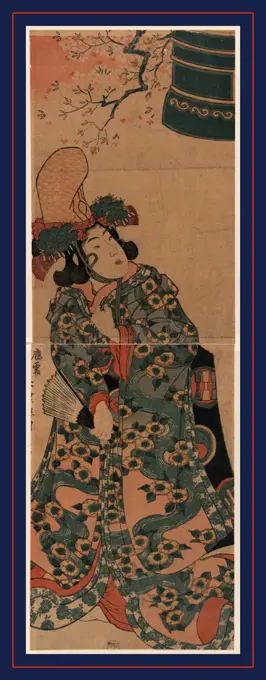
Gotenyama no hanami hidari | Library of Congress
355 assets in this story
6145-52835255
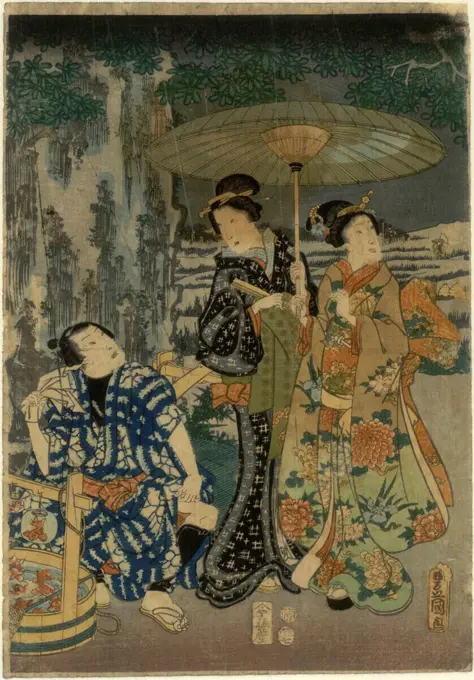
Colored woodcut by Utagawa Kunisada depicting two women at a goldfish dealer's stall, showing traditional Japanese clothing and marketplace scene.
4409-17414798
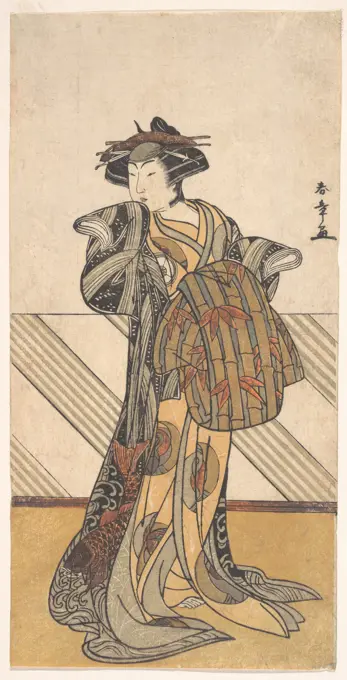
The Actor Ichikawa Monosuke () or Ichikawa Omezo in Female Role. Artist: Katsukawa Shunsho (Japanese, 1726-1792). Culture: Japan. Dimensions: 14 5/8 x 6 5/8 in. (37.1 x 16.8 cm). Date: 1726-1792. Museum: Metropolitan Museum of Art, New York, USA.
6145-29733995
Ichikawa Danjr V in the Role of Shiromasu-baba 12th month, 1786 Katsukawa Shunsh Japanese Ichikawa Danjr V, in the role of the old woman Shiromasu-baba, wears a straw raincoat and a very wide straw hat slung across his back. He leans upon a staff and carries a bamboo basket of young fronds of bracken. Following this scene, the actor made a quick costume change and reappeared, dressed in a gaudy robe, as Hj Tokimasa bearing the head of Shiromasu, whom he has just killed.. Ichikawa Danjr V in the Role of Shiromasu-baba. Katsukawa Shunsh (Japanese, 1726-1792). Japan. 12th month, 1786. Woodblock print (nishiki-e); ink and color on paper. Edo period (1615-1868). Prints
4409-17376643
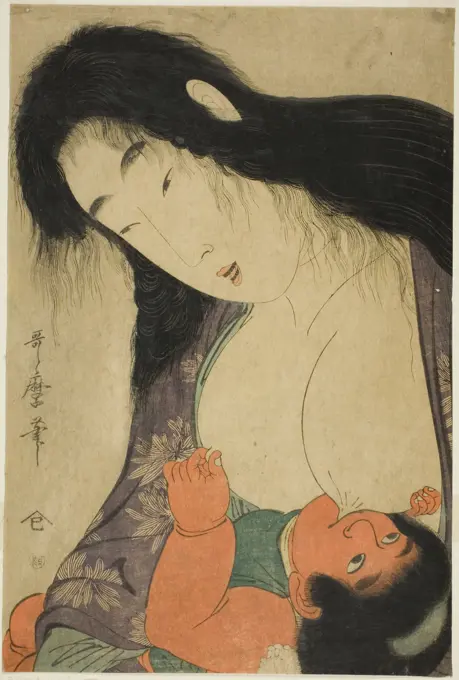
Yamauba Playing with the Young Kintoki. Artist: Kitagawa Utamaro (Japanese, ca. 1754-1806). Culture: Japan. Dimensions: H. 14 1/4 in. (36.2 cm); W. 9 in. (22.9 cm). Date: ca. 1795. Museum: Metropolitan Museum of Art, New York, USA.
6145-44321001
Entertaining love game. .
6145-29712262
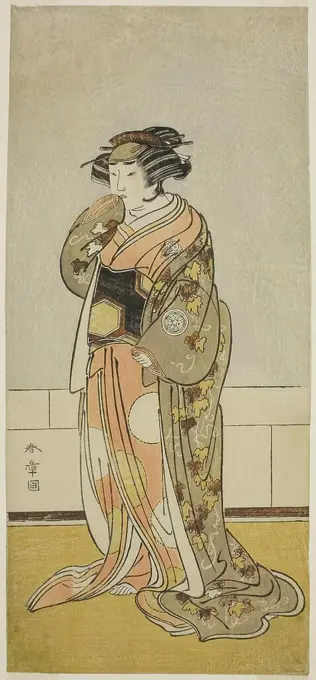
The Fourth Iwai Hanshiro as a Courtesan Dressed in a Pink Kimono ca. 1778 Katsukawa Shunshō 川春章 Japanese. The Fourth Iwai Hanshiro as a Courtesan Dressed in a Pink Kimono 36821
4409-17562214
The Actor Yamashita Kinsaku II as Lady Kikusui (Kikusui Gozen) () in the Play Kaeribana Eiyu Taiheiki (), Performed at the Nakamura Theater () in the Eleventh Month, 1779 (). Katsukawa Shunsho  ; Japanese, 1726-1792. Date: 1774-1784. Dimensions: 32.7 x 14.6 cm (12 7/8 x 5 /4 in.). Color woodblock print; hosoban; from a multisheet composition. Origin: Japan. Museum: The Chicago Art Institute, USA.
6145-48537720
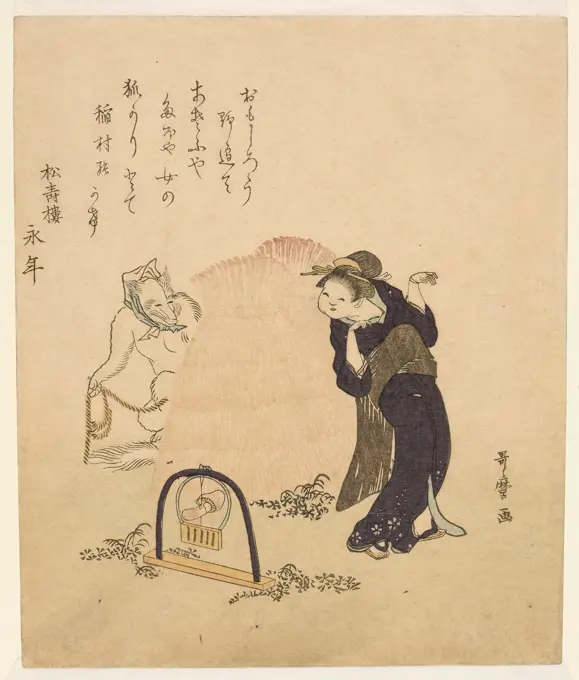
Fox preparing to seize a woman; surimono. Utamaro, Kitagawa (1753-1806), graphic artist
6145-59567660
Young civilian daughter with lover at a Shamisen, 1799 print Woman in colorful clothing, kissing with her lover, while making love. In the background a shamisen (string instrument). Last of thirteen prints from the album Negai No Itoguchi (also translated with: The Prelude to Desire).  paper color woodcut coitus, cohabiting, sexual intercourse
6145-46582879
. The man lifts the woman's leg while both see how the member penetrates inside.
6145-30150324
The Actor Matsumoto Koshiro IV and a geisha, from an untitled series of prints showing Actors in private life 1778-1788 Japan. Color woodblock print; hosoban . Torii Kiyonaga
6145-44322356
Die Schauspieler Sawamura Tanosuke III ALS Yaegaki-Hime, Nakamura Shikan IV.
6145-29120166
Four Actors in the Roles of Natsume Shirosaburō, Ishidō Unemenosuke, Katsuragi, and Kijin Omatsu. Utagawa Kunisada (Toyokuni III) (Japan, Edo, 1786-1865). Japan, 1851. Prints; woodblocks. Color woodblock print
6145-58825648
DanSende Courtisane, RyûryûKyo Shinsai, 1807 Dancing Courtisane on the music of a Shamisen (Japanese string instrument), which is played by a sitting woman. On the right a young man. Through the open window a face on the garden. With one poem. Japan Japanese paper (handmade paper) color woodcut Dancing Courtisane on the music of a Shamisen (Japanese string instrument), which is played by a sitting woman. On the right a young man. Through the open window a face on the garden. With one poem. Japan Japanese paper (handmade paper) color woodcut
4409-17564685
Illustration of English People (Igirisujin no zu). Utagawa Yoshitoyo; Japanese, 1830-1866. Date: 1861. Dimensions: . Color woodblock print; oban. Origin: Japan. Museum: The Chicago Art Institute, Chicago, USA.
6145-29125932
Enjoying Plum Blossoms in the Evening. Utagawa Kunisada (Toyokuni III) (Japan, Edo, 1786-1865). Japan, circa 1850. Prints; woodblocks. Color woodblock prints. center and right panels of a triptych
6145-54679752
Group before the Echigo-ya Dry-goods Shop on New Year's Day Torii Kiyonaga Japanese ca. 1789 View more. Group before the Echigo-ya Dry-goods Shop on New Year's Day. Torii Kiyonaga (Japanese, 1752-1815). Japan. ca. 1789. One of a triptych of woodblock prints (nishiki-e); ink and color on paper. Edo period (1615-1868). Prints
1746-111904182
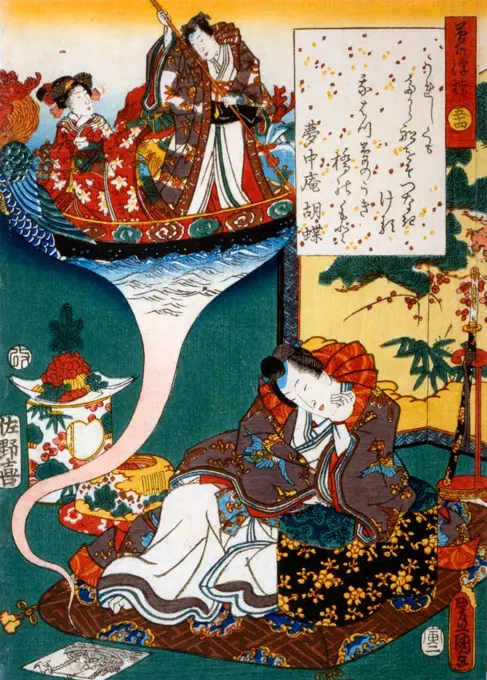
Japanese hand coloured woodcut. The floating bridge of dreams, the Japanese writing is a poem that relates the the last chapter of Genji. Dates in 1854.
4443-19375504
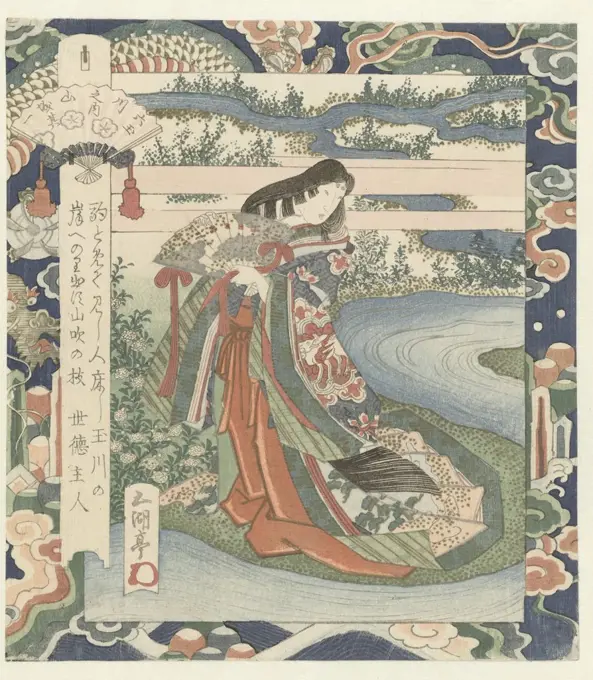
Court lady at riverside The Ide river in Yamashiro, number one Yamashiro - sono ichi (title on object) The six jeweled rivers (series title) Mutamagawa no uchi (series title on object), A woman in Court dress, with a fan in her hand and very long hair, stands beside a river. With one poem. The theme of the six jewels of rivers (Mutamagawa) is a classical theme in Japanese poetry and was also adopted in the visual arts., Utagawa Sadakage (mentioned on object), Japan, 1832, paper, colour woodcut, h 220 mm × w 179 mm
6145-45697126
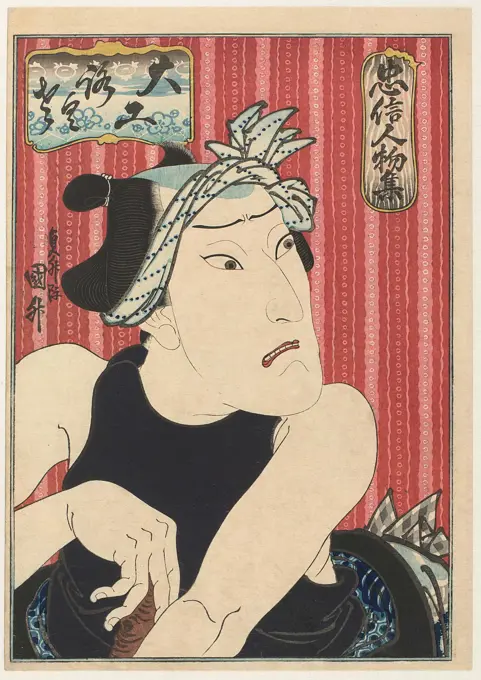
Een Serie GetRouwwe Mannen; Chûshin Jimbutsu-shû. Ôkawa Hashizô I ALS Daiku (Timmerman) Rokusa, In Het Stuk 'Azuma Miyage Date No Hinagata', Naka Theater.
6145-30189760
After a little music, from an untitled series of 12 erotic prints 1668-1686 Japan. Woodblock print; oban, sumizuri-e . Hishikawa Moronobu
6145-29750990
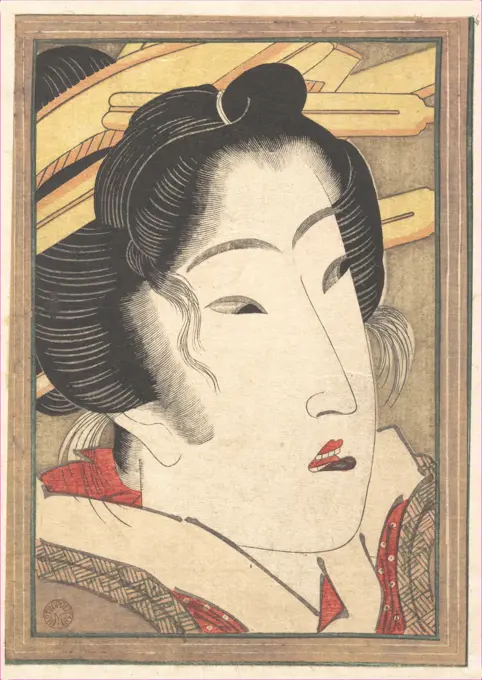
Rejected Geisha from Passions Cooled by Springtime Snow ca. 1825 Keisai Eisen Japanese One of the most eccentric ukiyo-e artists, Eisen was frequently found drunk in brothels, and in his later years actually became the owner of one himself. His coquette is a far cry from the lovely aristocratic beauty portrayed some three decades earlier by Utamaro. Her angular features, long slanting eyes, half-open pouting lips with a touch of iridescent green, little red ribbon and suggestive crook of a finger betrays her coy and slightly wanton nature.. Rejected Geisha from Passions Cooled by Springtime Snow 55015
4443-20307084
Musume Dojoji, Young maiden of Dojoji (Musume Dojoji)., Utagawa, Kunisada, 1823-1880, artist, between 1830 and 1844, 1 print : woodcut, color ; 34.8 x 22.9 cm (top), 33.8 x 22.4 cm (bottom)
6145-30158993
Inue Shinbyoe Masashi, from the series Eight Hundred Heroes of the Japanese Water Margin (Honcho Suikoden goyu happyakunin no hitori) 1831-1841 Japan. Color woodblock print; oban . Utagawa Kuniyoshi
4409-17562507
Outing to View Maples in Autumn, from the illustrated book "Picture Book: Flowers of the Four Seasons (Ehon shiki no hana)," vol. 2. Kitagawa Utamaro  ; Japanese, 1753 ()-1806. Date: 1801. Dimensions: . Color woodblock print; double-page illustration from book. Origin: Japan. Museum: The Chicago Art Institute, Chicago, USA.
4409-17549435
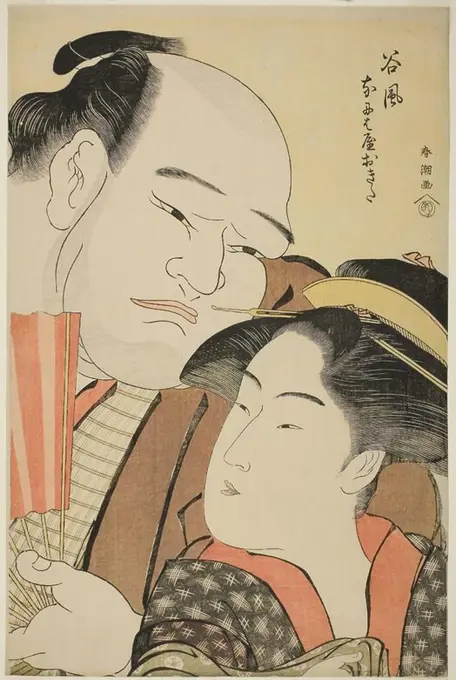
The Sumo Wrestler Tanikaze and the Waitress Okita of the Naniwaya. Katsukawa Shuncho; Japanese, active c. 1780-1801. Date: 1789-1799. Dimensions: 15 3/8 x 10 1/16 in. Color woodblock print; oban. Origin: Japan. Museum: The Chicago Art Institute, Chicago, USA.
6145-45622069
The Kusatsu stopping place; Kusatsu; The erotic road to the capital. Man and woman love driving in room overlooking traveler in litter.
1899-18789045
Suzuki Harunobu (1724 July 7, 1770) was a Japanese woodblock print artist, one of the most famous in the Ukiyo-e style. He was an innovator, the first to produce full-color prints (nishiki-e) in 1765, rendering obsolete the former modes of two- and three-color prints. Harunobu used many special techniques, and depicted a wide variety of subjects, from classical poems to contemporary beauties (bijin, bijin-ga). Like many artists of his day, Harunobu also produced a number of shunga, or erotic images. During his lifetime and shortly afterwards, many artists imitated his style. A few, such as Harushige, even boasted of their ability to forge the work of the great master. Much about Harunobu's life is unknown.
4409-21518397
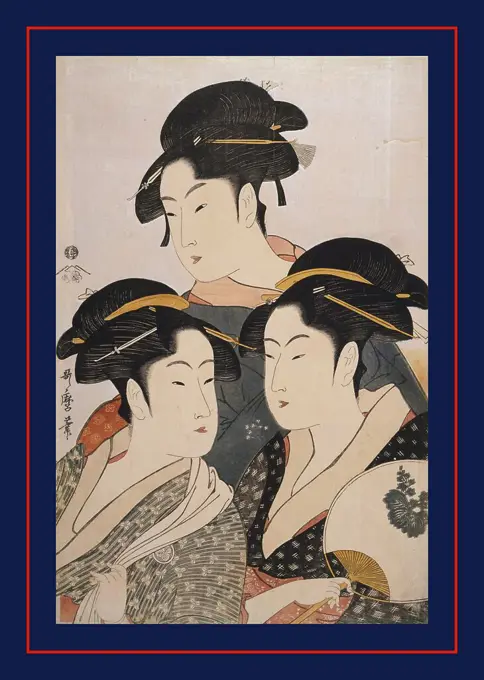
Tí´ji san bijin = Three beauties of the present day, Kitagawa, Utamaro (1753?-1806), (Artist), Date Created: 1793.
6145-29778847
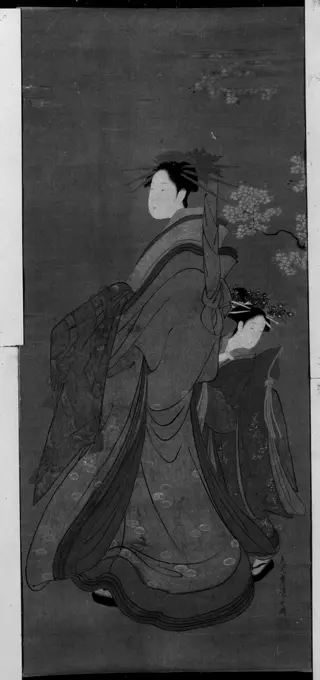
Courtesan and Attendant 18th-19th century Attributed to Chōbunsai Eishi Japanese. Courtesan and Attendant 57247
4409-17534368
Landscape with a woman with a branch of flowers in hand. Draughtsman: Hishikawa Moronobu. Dating: 1628 - 1694. Measurements: h 264 mm × w 188 mm. Museum: Rijksmuseum, Amsterdam.
4443-20307271
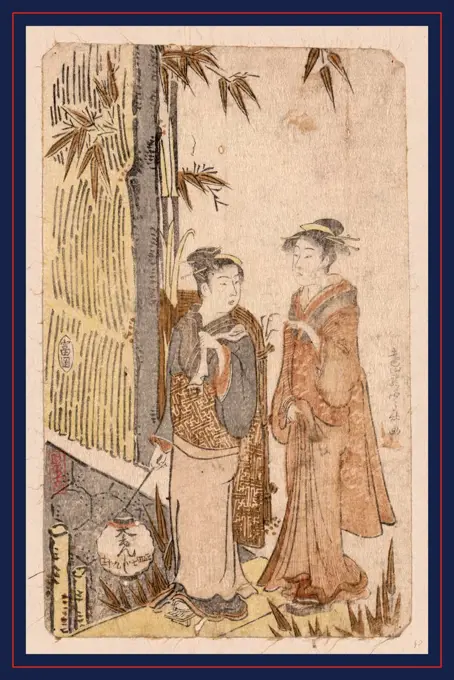
Fukagawa geijya, Geisha from Fukagawa., 1787., 1 print : woodcut, color ; 14.8 x 9.3 cm., Print shows two women walking outside a building, one carrying a paper lantern.
4443-73244004
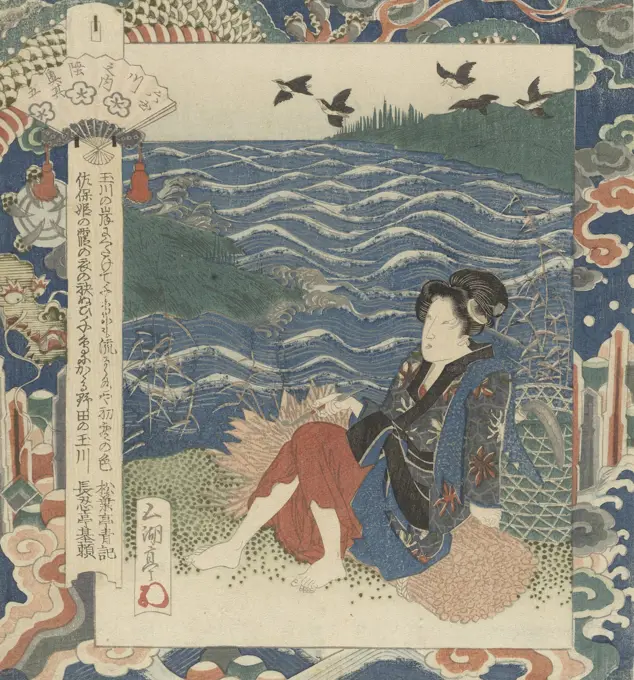
Japan, Motoyori, Chônintei, Aoki, Shôyôtei, Sadakage, Utagawa, Mutamagawa no uchi, The Six Jewel Rivers, Mutsu - sono go, The Noda River at Mutsu, number five, Woman sitting on a bundle of wood, verso - stamped, Young woman with pipe sitting on a bundle of firewood by the Noda River north of Kyoto. In the distance fly the plovers (chidori) associated with this river. With two poems., surimono, prints, pictures, Japan (collection), passe-partout, bottom left - printed, height 199 mm, width 183 mm, Japanese, print maker, printmaker, 1832 - 1832, second quarter 19th century, paper, colour woodcut, blind printing, poet
4408-10205
On the Banks, Japanese Prints
1899-18793081
A boy is dressed like the Buddhist Guardian King Bishamonten, holding a trident and wooden pagoda (that represents the relics of the historical Buddha). The boy's mother holds a calico cat (a 'tiger' symbol) while the family servant giggles and points at her young master. The inset shows a temple hall dedicated to Bishamonten, whose name appears on the red paper lantern inside the door. The gateway has modern wrought iron panels affixed to a traditional stone gatepost, and a rickshaw is being pulled down the street - all indications of the modern Meiji era. However, the stores seem to be traditional buildings, and the merchants have contributed the red paper lanterns that flank the gate, reading 'mid-merchants' (shonai chu) association (1893). Toyohara Chikanobu () (1838-1912), better known to his contemporaries as Yoshu Chikanobu (), was a prolific woodblock artist of Japan's Meiji period. His works capture the transition from the age of the samurai to Meiji modernity. In 1875
6145-59589515
Calligraphy Woman, Anonymous, 1800 - 1899 print   paper color woodcut calligraphy
1899-19136828
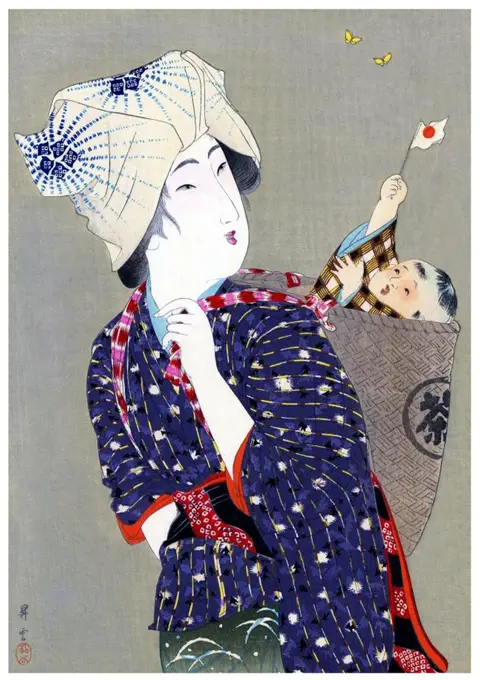
Japan: 'Mother and Child', Yamamoto Shoun (1870-1965), 1910
6145-30174220
Yamauba Breast Feeding Kintaro 1796-1811 Japan. Color woodblock print; oban . Kitagawa Utamaro
6145-51818358
Portrait of the French Utagawa Yoshikazu (Japanese, active c. 1850-1870). , 1861. Color woodblock print on paper, 14 1/4 x 9 1/4 in. (36.2 x 23.5 cm).   Asian Art 1861
4409-17584086
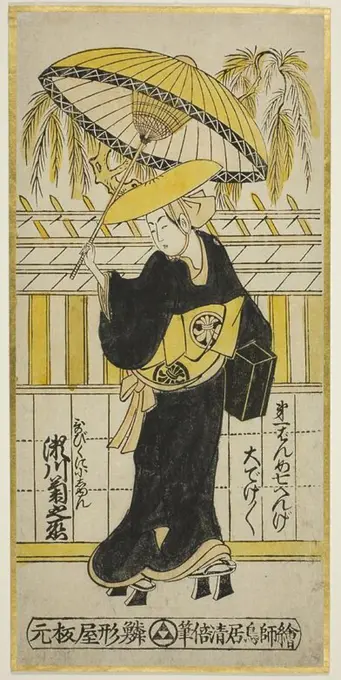
The Actor Segawa Kikunojo I as Utabikuni in the play "Fuji Miru Sato Sakae Soga" (), performed at the Ichimura Theater in the first month, 1742. Torii Kiyomasu II; Japanese, 1706 ()-1763 (). Date: 1742. Dimensions: 30.9 x 14.6 cm (12 3/16 x 5 11/16 in.). Hand-colored woodblock print; hosoban, urushi-e. Origin: Japan. Museum: The Chicago Art Institute, Chicago, USA.
6145-59464899
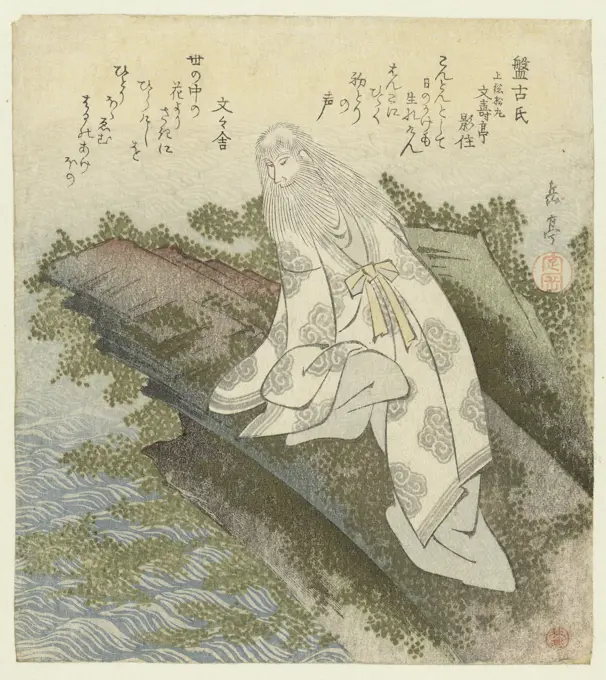
HEER HANKO, YASHIMA GAKUTEI, C. 1828  An old man with long white beard and long hair, sits, dressed in white, on a rock and overlooks the sea. This man introduces Hanko, according to a Chinese legend this was the first man on earth after he was created. With two poems. Japan paper color woodcut
6145-51817581
The Actor Iwai Hanshiro IV as Ohatsu Katsukawa Shunko (Japanese, 1743-1812). The Actor Iwai Hanshiro IV as Ohatsu, ca. 1783. Color woodblock print on paper, 12 13/16 x 5 3/4 in. (32.3 x 14.5 cm).   Asian Art ca. 1783
1899-19136418
China: Section from the scroll painting 'Beauties in History', attributed to the Ming Dynasty artist Qiu Ying (1494-1552) (National Museum of China, Beijing)
6145-29062041
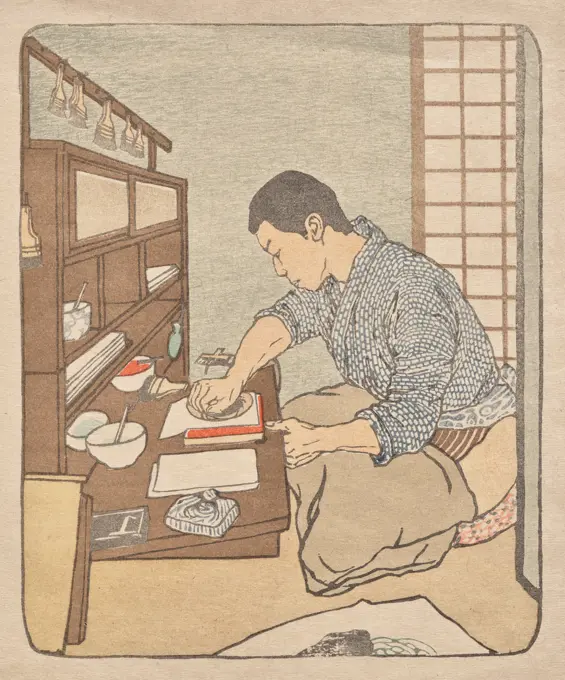
The Japanese Printer, 1900-1901. Emil Orlik (Czech, 1870-1932). Offset lithograph; image: 19.3 x 15.6 cm (7 5/8 x 6 1/8 in.).
6145-30189652
Yoshitsune (Ushiwaka) and Princess Joruri, from the series Famous Scenes from Japanese Puppet Plays (Yamato irotake) 1700-1711 Japan. Woodblock print; oban, sumizuri-e . Okumura Masanobu
6145-59569569
De Love couple Company, 1815 - 1823 print Married man and wife, the love companying on a green blanket.  paper color woodcut man and woman cohabiting
6145-30165939
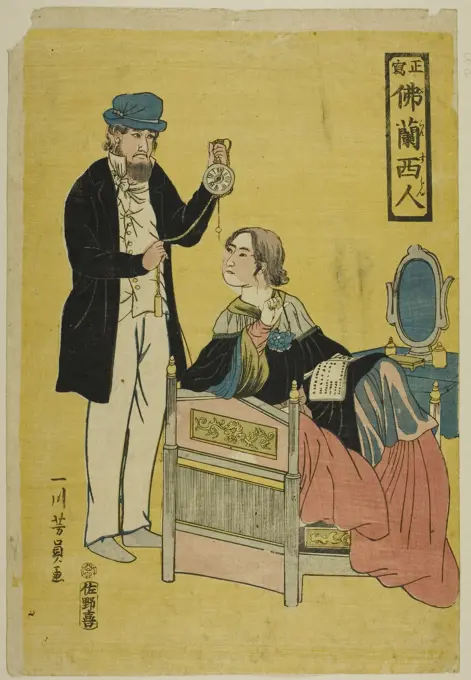
True Picture of the French (Shosha Furansujin) 1861 Japan. Color woodblock print; oban . Utagawa Yoshikazu
4409-17560596
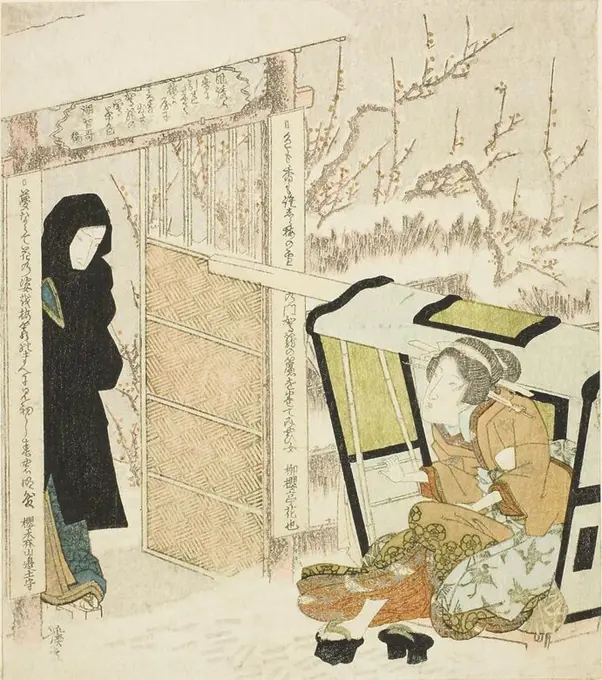
Courtesan Stepping out of a Palanquin. Keisai Eisen; Japanese, 1790-1848. Date: 1820-1824. Dimensions: 20.4 x 18.0 cm. Color woodblock print with metallic pigments; shikishiban, surimono. Origin: Japan. Museum: The Chicago Art Institute, Chicago, USA. Author: KEISAI EISEN.
6145-30165971
French in Miyozakimachi (Furansujin, Miyozakimachi), from the series Famous Places in Yokohama (Yokohama meisho) 1861 Japan. Color woodblock print; oban . Utagawa Yoshikazu
1899-18857127
Torii Kotondo is known to have made only 21 prints - all of them images of bijin or beautiful women. They belong to the finest works of art of the Shin Hanga movement. Shin hanga ('new prints') was an art movement in early 20th-century Japan, during the Taisho and Showa periods, that revitalized traditional ukiyo-e art rooted in the Edo and Meiji periods (17th-19th century). The movement flourished from around 1915 to 1942, though it resumed briefly from 1946 through the 1950s. Inspired by European Impressionism, the artists incorporated Western elements such as the effects of light and the expression of individual moods, but focused on strictly traditional themes of landscapes (fukeiga), famous places (meisho), beautiful women (bijinga), kabuki actors (yakusha-e), and birds and flowers (kachoga).
4409-17562327
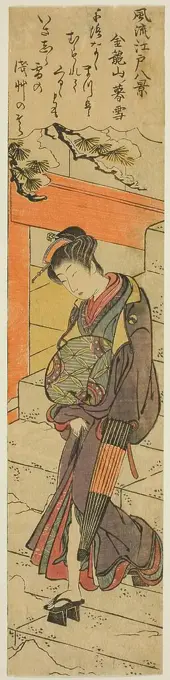
Evening Snow at Kinryuzan Temple (Kinryuzan no bosetsu), from the series "Eight Fashionable Views of Edo (Furyu Edo hakkei)". Torii Kiyonaga; Japanese, 1752-1815. Date: 1773-1783. Dimensions: 31.0 x 7.3 cm. Color woodblock print; half hosoban (right side). Origin: Japan. Museum: The Chicago Art Institute, USA.
4443-28726845
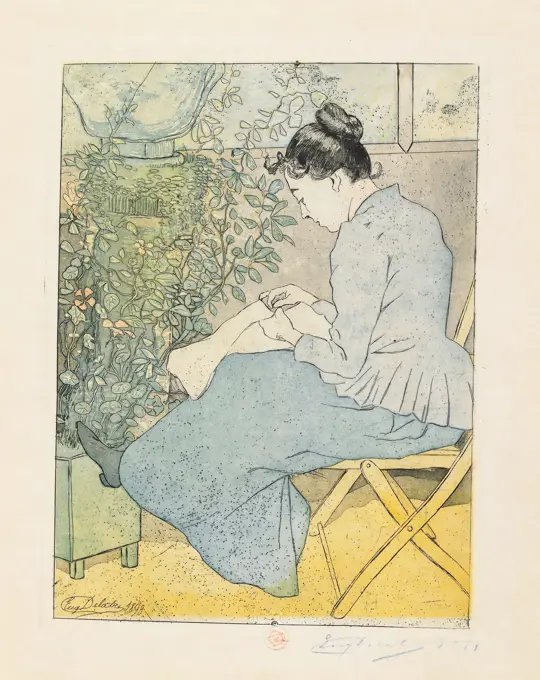
In a Garden, 1893, Eugène Deltre, French, Paris 1864-Paris 1938, 9 3/4 x 7 7/16 in. (24.77 x 18.89 cm) (plate)13 5/8 x 10 13/16 in. (34.61 x 27.46 cm) (sheet)14 1/2 x 11 1/2 in. (36.83 x 29.21 cm) (mount), Color etching and aquatint on simili-japon paper, France, 19th century, Eugène Deltre (1854-1938) played a fundamental role in the establishment of color etching at the end of the nineteenth century in France. He was trained by his father Auguste Deltre, the premier printer of the Etching Renaissance. While Eugène began working in the black and white tradition, he created his first color plate in 1891 and In a Garden (1893) was the first color print he exhibited at the Salon. Similar to the color aquatints of American Mary Cassatt, In a Garden incorporates numerous artistic devices learned from Japanese prints, such as the emphasis on outline and silhouette and the choice of a pale color scheme. 'In a Garden' was printed 'au repérage,' or with one plate for each color.
1848-49414738
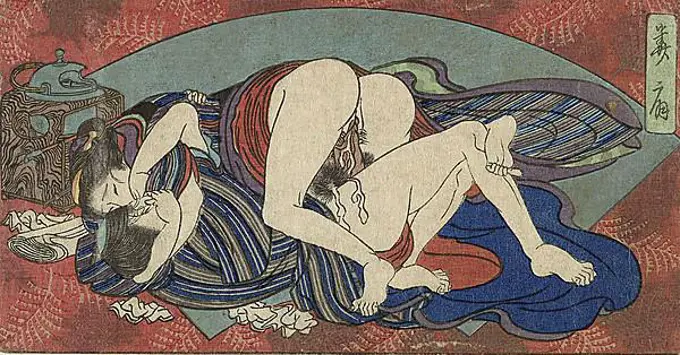
Occasions, the cute fan, Kama Sutra, eroticism, sex, erotic depiction from 1850, Japan, Historical, digitally restored reproduction from a 19th century original, Asia
6145-45646039
The stopping place Shimada; Shimada; The erotic road to the capital. Man and woman love to drive in room overlooking river in which swimming porters; Tissues crumpled in the foreground.
4408-7243
Products of Skilled Hands, Chinese Communist Propaganda
PREVIOUS
of 4
NEXT
2401 S. Ervay, Suite 206
Dallas, Texas 75215
United States
Get Started
Free ResearchMy BoardsMy Cart
For Creators
How To License Your ContentContributor PortalFrame of Mind
Resources
API accessPricing
Contact
+1 866 236 0087help@viewpictures.co.uk Contact form
©2026 View Pictures. All Rights Reserved. -A
This site is protected by reCAPTCHA and Google Privacy Policy and Terms of Service apply.