My Boards
View Pictures
  • My Boards
← Artworks

Japanese Woodblock Prints

A collection of Japanese woodblock prints featuring courtesans, actors, and traditional themes, characterized by vibrant colors and intricate details.
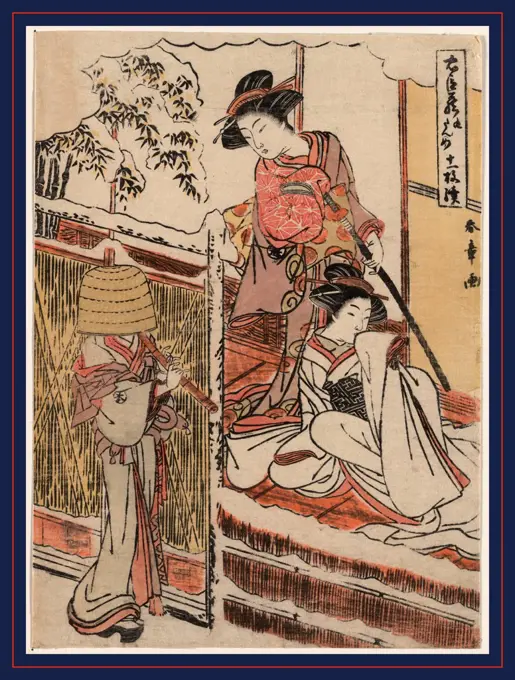
Kudanme, Act nine of the Chushingura., Katsukawa, Shunsho, 1726-1793, artist, 1775 or 1776, 1 print : woodcut, color ; 25.4 x 18.4 cm., Print shows Tonase holding a sword, standing behind her step-daughter Konami on a veranda as Honzo walks by, disguised as a traveling monk, wearing a beehive-shaped basket over his head and playing a recorder.
265 assets in this story
4409-17556221
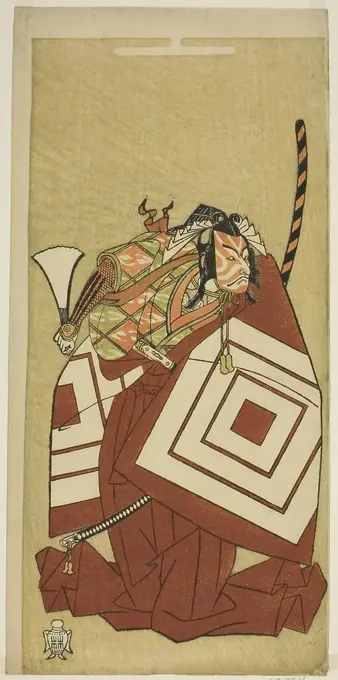
The Actor Ichikawa Danjuro II as Soga no Goro. Okumura Masanobu; Japanese, 1686-1764. Date: 1723-1733. Dimensions: 29.9 x 15.6 cm. Hand-colored woodblock print; hosoban, urushi-e. Origin: Japan. Museum: The Chicago Art Institute, Chicago, USA.
6145-45598952
Okyo`s painting comes to life; Okyo no garei; Sesshu brings a drawing to life; Sesshu katsuga; Sketches of Yoshitoshi. Sheet on which two prints are printed in the chuban format. Above: the painter Maruyama okyo scicky of the ghost painted by him, which suddenly comes to life. Below: the painter Sesshu, as a child, tied to a tree after cat's hydrochlor, looking at the mice came to life that he signed with his toe in the sand.
1899-18309675
Moon of Pure Snow at Asano River, Unknown artist.
1899-18309684
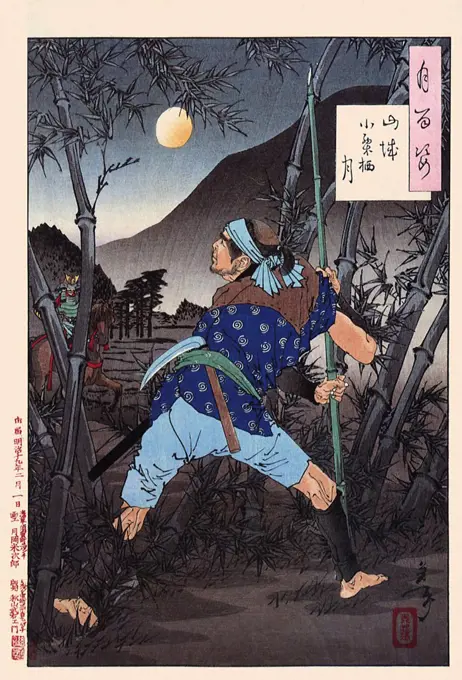
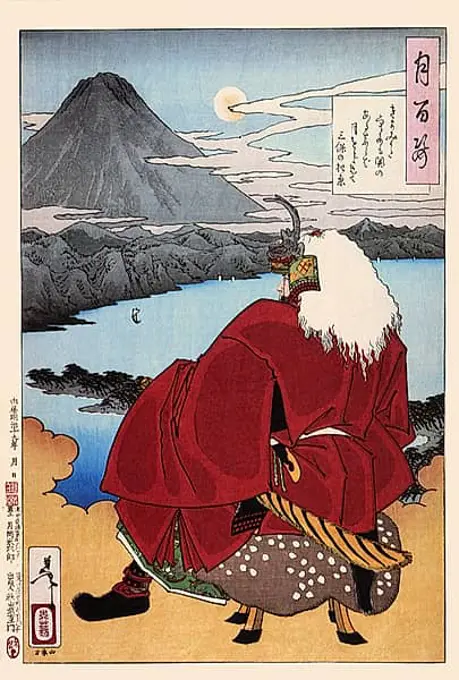
Moon of Ogurusu in Yamashiro, Yoshitoshi, Tsukioka
6145-29120327
The Suicide of Two Foreign Clerks. Tsukioka Yoshitoshi (Japan, 1839-1892). Japan, 1875, April. Prints; woodblocks. Color woodblock print
6145-29199680
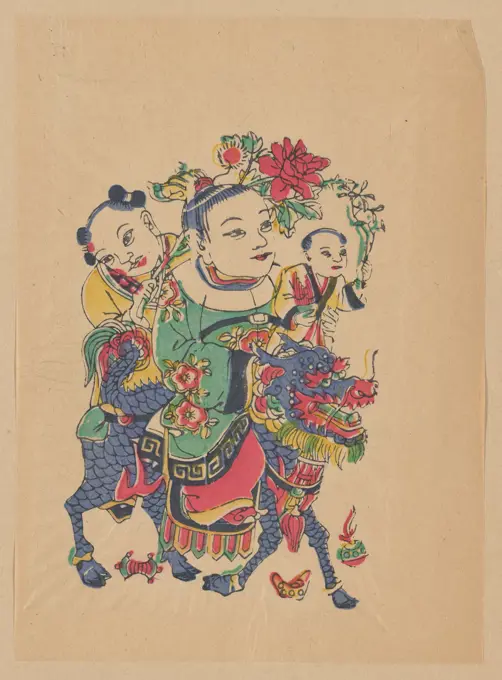
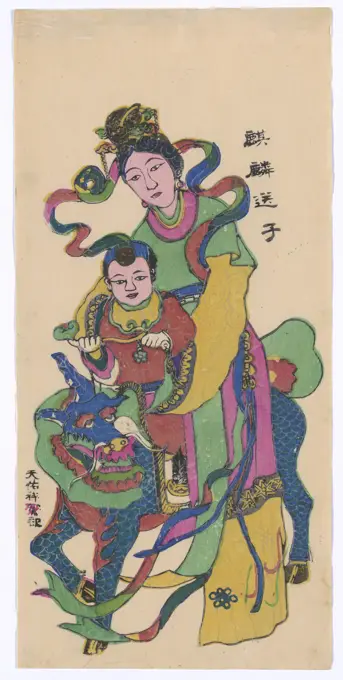
New Year Picture of Mythical Qilin Delivering a Son (left one of a pair) early 20th century Unidentified artist(s). New Year Picture of Mythical Qilin Delivering a Son (left one of a pair). Unidentified artist(s) , early 20th century. China. early 20th century. Polychrome woodblock print; ink and color on paper. Republic period (191249). Prints
6145-59584364
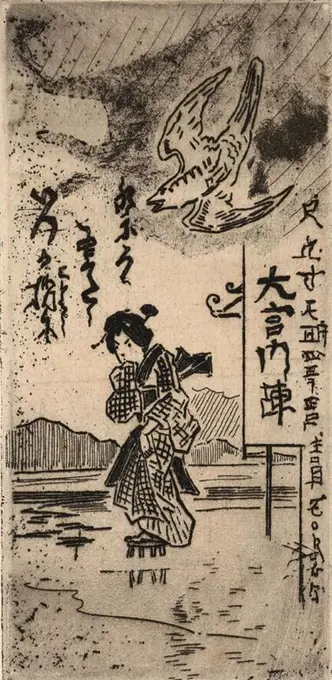
Traveling Japanese printer, c. 1850 - c. 1900 print A traveling Japanese printer with a stick with prints in his left hand, a storage box on his back with a model of a house on top.  Japanese paper (handmade paper)  book. print, e.g.: engraving, etching, lithograph. Japanese
6145-29199469
New Year Picture of Door God with Knife-mounted Pole (paired with CP398, right) early 20th century Unidentified artist(s). New Year Picture of Door God with Knife-mounted Pole (paired with CP398, right). Unidentified artist(s) , Chinese, early 20th century. China. early 20th century. Polychrome woodblock print; ink and color on paper. Republic period (191249). Prints
4409-107414
Utagawa Kunisada; Wakasaya Yoichi / 'Ilustración para la novela de Tamegawa Shunsui Jidai kagami (La era del espejo', 1860, Japanese School, Paper, 176 mm x 117 mm, G05692. Museum: MUSEO DEL PRADO, MADRID, SPAIN.
6145-50636444
God of Ebis with fish, fishing rod and a basket
6145-29116596
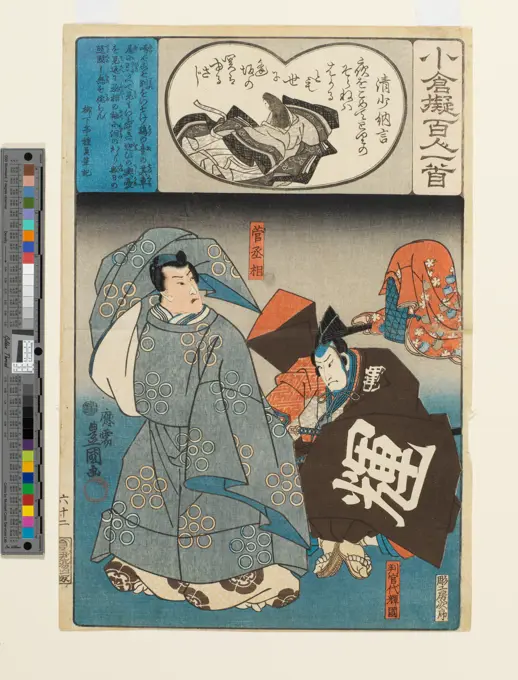
Poem by Sei Shōnagon; Hangandai Terukuni and Kanshōjō (Sugawara Michizane). Utagawa Kunisada (Toyokuni III) (Japan, Edo, 1786-1865)Ibaya Sensaburō (Japan). circa 1847. Prints; woodblocks. Woodblock print executed in multiple colors
6145-29785655
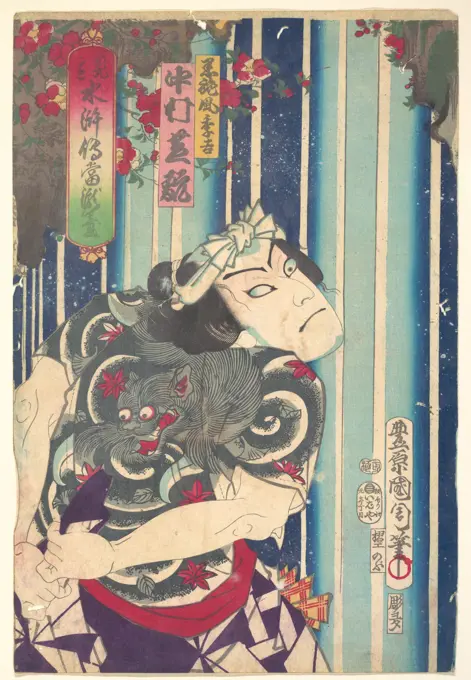
Imaginary portrait, Shuihuzhuan of Stage: Tōryūdai (Mitate Suikoden Tōrōdai) - Actor Nakamura Shikan plays Suekichi 1875 Toyohara Kunichika Japanese. Imaginary portrait, Shuihuzhuan of Stage: Tōryūdai (Mitate Suikoden Tōrōdai) - Actor Nakamura Shikan plays Suekichi 55523
4266-2506
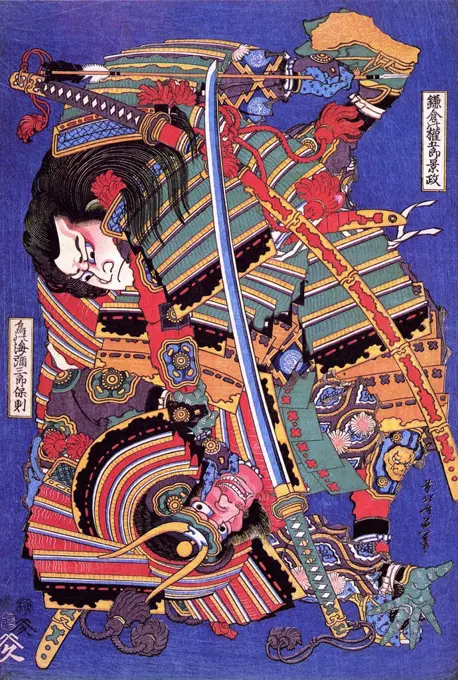
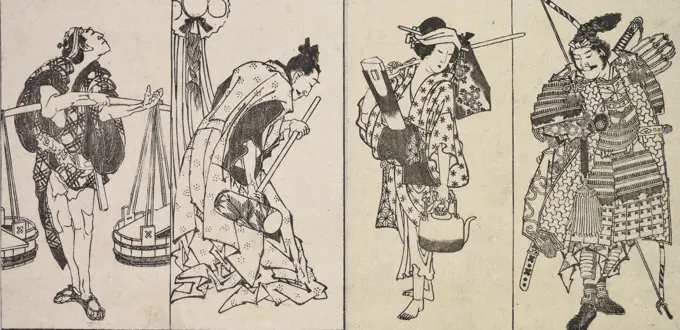
Samurai by Katsushika Hokusai, color woodcut, 1760-1849, 19th century, Private Collection
6145-58825662
De komachi kersenbloesem, yashima gakutei, c. 1868 -C. 1912 Komachi looking at the flowering cherry blossoms from a veranda. Ono No Komachi (c. 825-900) was a Japanese Waka poet who was very well known for her beauty. With two poems. Facsimile from the Meiji period (1868-1912). Japan paper color woodcut Komachi looking at the flowering cherry blossoms from a veranda. Ono No Komachi (c. 825-900) was a Japanese Waka poet who was very well known for her beauty. With two poems. Facsimile from the Meiji period (1868-1912). Japan paper color woodcut
4409-17417868
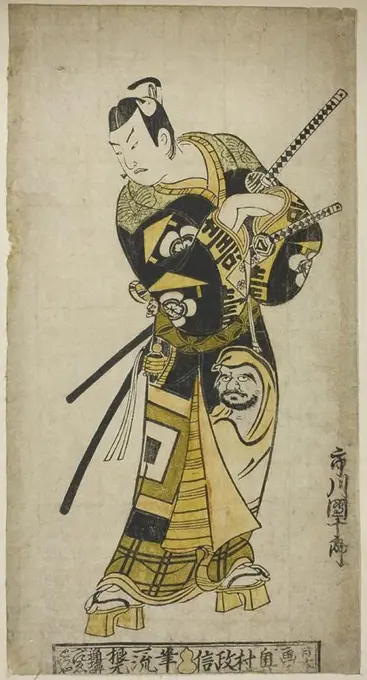
An Actor Beside Water. Artist: Woodblock for a print designed by Utagawa Toyokuni I (Japanese, 1769-1825). Culture: Japan. Dimensions: 14 x 8 7/8 in. (35.6 x 22.5 cm). Museum: Metropolitan Museum of Art, New York, USA.
4409-17553847
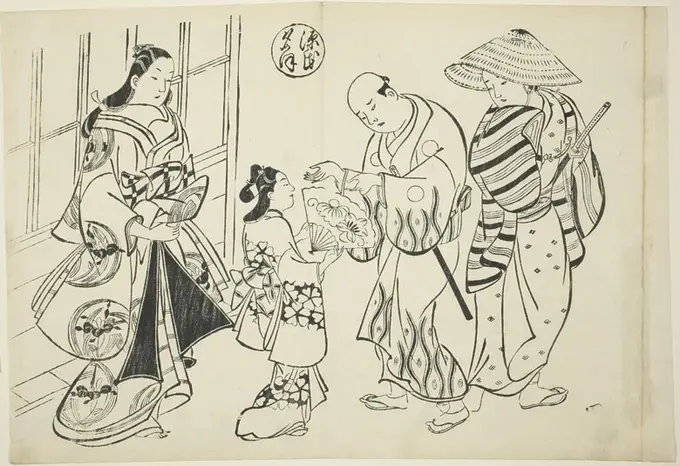
The Yugao Chapter from "The Tale of Genji" (Genji Yugao), from a series of Genji parodies. Okumura Masanobu; Japanese, 1686-1764. Date: 1705-1715. Dimensions: 27.3 x 39.6 cm. Woodblock print; oban, sumizuri-e. Origin: Japan. Museum: The Chicago Art Institute, Chicago, USA.
4443-73241827
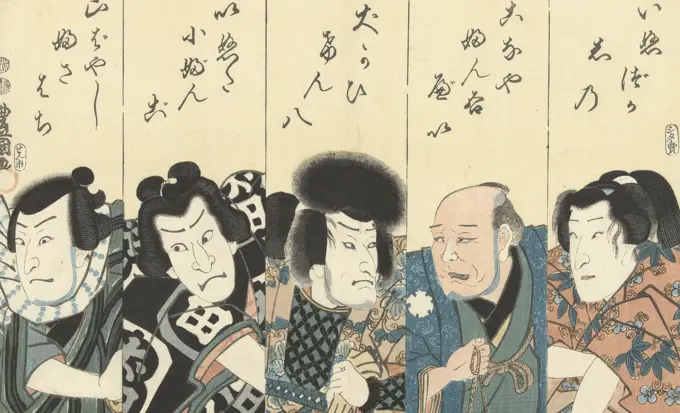
Tokyo, Izumiya Ichibei (Kansendo), Japan, Kunisada (I), Utagawa, Actors from the play Satomi hakenden., verso - stamped, Five actors from the play Satomi hakenden; depicted side by side, half-length. from left to right Sawamura Chojuro V in the role of Yamabayashi Fusahachi, Arashi Kichisaburo III as Inuda Kobungo, Seki Sanjuro III as Inugai Kempachi, Otani Tomoemon III as Konaya Fungobei and Bando Shuka as Inuzuka Shino., print, prints, Japan (collection), height 252 mm, width 360 mm, Japanese, 1786 - 1865, print maker, printmaker, 1851 - 1853, third quarter 19th century century, paper, color woodcut, Publication (Event), Publication, publisher
6145-30157900
Dragon in the clouds 1832 Japan. Color woodblock print; shikishiban, surimono . Totoya Hokkei
6145-30187693
Goro Tokimune and Goromaru, from the series Illustrated Tale of the Soga Brothers (Soga monogatari zue) 1838-1852 Japan. Color woodblock print; oban . Utagawa Hiroshige
6145-30148169
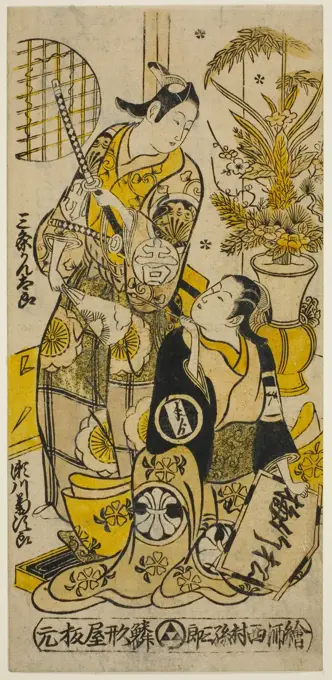
The Actors Segawa Kikujiro I as Oshichi and Sanjo Kantaro II as Kichisaburo in the play Shochikubai Kongen Soga, performed at the Ichimura Theater in the third month, 1732 1732 Japan. Hand-colored woodblock print; hosoban, urushi-e . Nishimura Shigenobu
4409-17523087
The Flying Fish (Le poisson volant). Dimensions: 31.2 cm x 23.2 cm, 14 cm x 6.7 cm, 14 cm x 6.7 cm. Museum: Van Gogh Museum, Amsterdam. Author: Félix Hilaire Buhot.
4443-21722646
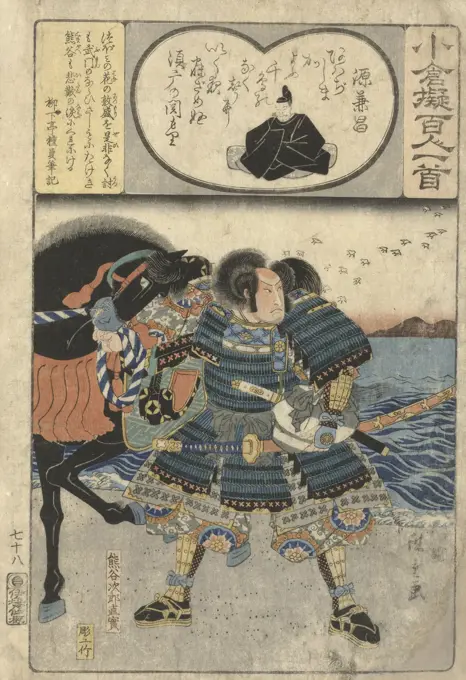
Man, Kumagae Jiro Naozane, in combat dress, standing next to horse, near the sea. Poem in heart-shaped cartouche with image of the poet Minamoto no Kanemasa, in yellow cartouche above left a commentary on the representation, Kumagae Jiro Naozane by the sea Minamoto no Kanemasa, Decorative paper described according to the hundred poets (series title) Ogura nazorae Hyakunin isshu (series title on object)., print maker: Hiroshige (I), Utagawa, (mentioned on object), Minamoto no Kanemasa, (mentioned on object), Ryukatei Tanekazu, (mentioned on object), Japan, 1846, paper, colour woodcut, h 360 mm × w 249 mm
6145-46049068
Honchô gishindes; Stories about honor and loyalty, from our own country. Jitsukawa Enzaburô I like Komazawa Jirôzaemon (Alias Asojirô) in the play 'Shonutsushi Asagao Banashi', Wakadayû Theater, 5/1848.
6145-51834417
History of Saigō Takamori at Kagoshima , c. 1877 (Meiji 10). Color woodblock print on paper, 9 13/16 x 7 1/2 in. (24.9 x 19.1 cm).   Asian Art c. 1877 (Meiji 10)
4409-17560824
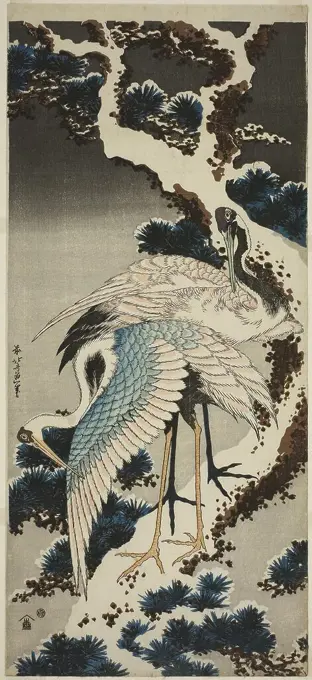
Cranes on snow-covered pine. Katsushika Hokusai  ; Japanese, 1760-1849. Date: 1829-1839. Dimensions: 20 5/8 x 9 1/4 in. Color woodblock print; vertical nagaban. Origin: Japan. Museum: The Chicago Art Institute, USA.
6145-29811779
The Actor Ōtani Tomoemon in the Role of Ono Sadakurō, from the series Image of Actors on Stage ca. 1795 Utagawa Toyokuni I Japanese. The Actor Ōtani Tomoemon in the Role of Ono Sadakurō, from the series Image of Actors on Stage 44997
4409-17561953
The Actor Ichikawa Danjuro V as Watanabe Kiou Takiguchi in the Play Nue no Mori Ichiyo no Mato, Performed at the Nakamura Theater in the Eleventh Month, 1770. Attributed to Katsukawa Shunsho  ; Japanese, 1726-1792. Date: 1765-1775. Dimensions: 32.5 x 15.3 cm (12 13/16 x 6 in.). Color woodblock print; hosoban. Origin: Japan. Museum: The Chicago Art Institute, USA.
6145-59576078
Two women, Anonymous, c. 1815 - c. 1825 print A woman is sitting next to a half -opened box. Next to her is a woman with a rolled cloth in her hand to set up the dolls in front of the doll festival.  paper color woodcut puppet and marionette show
6145-44327177
Oiwa-san, from the series: 100 stories. .
6145-50486730
Print, The Sumo Wrestler, Koyanagi Tsunekichi; Print Maker: Utagawa Kunisada; Japan; colored woodcut in yellow, blue, red, and black ink on mulberry paper; 37.5 × 25.5 cm (14 3/4 × 10 1/16 in.); 1957-148-65
1899-18789322
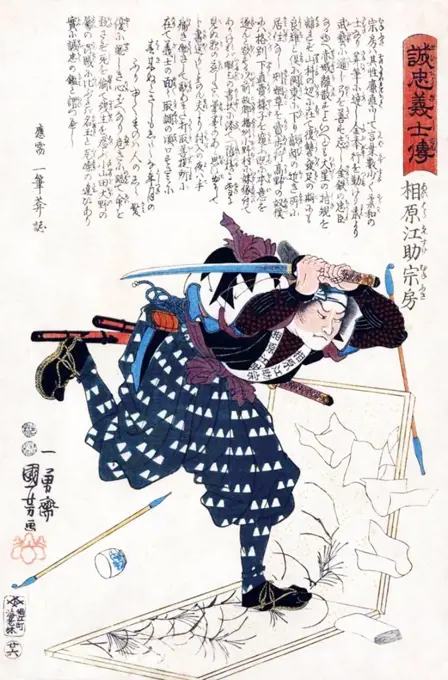
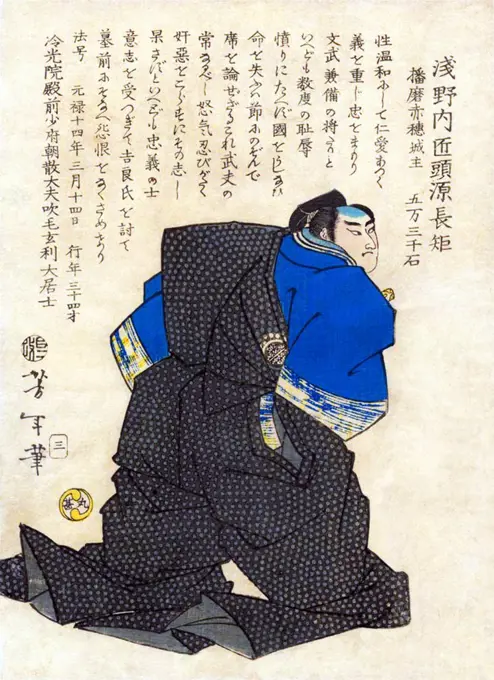
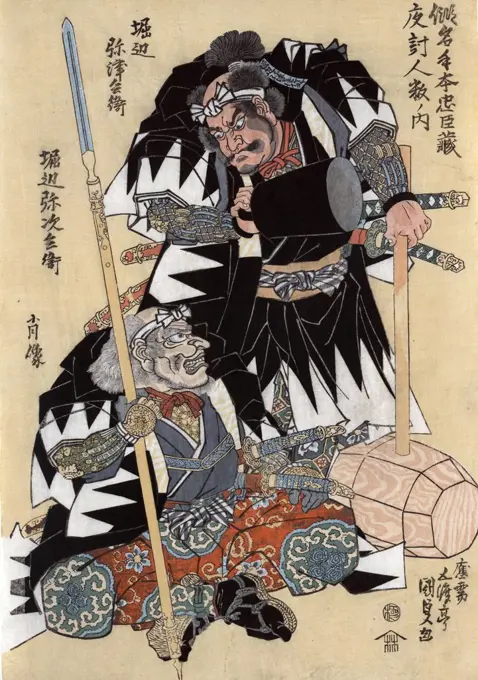
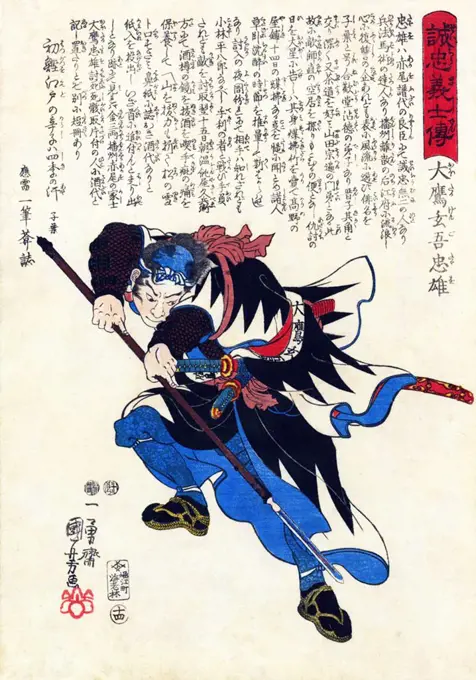
The revenge of the Forty-seven Ronin (Shi-ju-shichi-shi), also known as the Forty-seven Samurai, the Aki vendetta, or the Genroku Aki incident (Genroku aki jiken) took place in Japan at the start of the 18th century. One noted Japanese scholar described the tale as the country's 'national legend'. It recounts the most famous case involving the samurai code of honor, bushidi. The story tells of a group of samurai who were left leaderless (becoming ronin) after their daimyo (feudal lord) Asano Naganori was forced to commit seppuku (ritual suicide) for assaulting a court official named Kira Yoshinaka, whose title was Ki zuke no suke. The ronin avenged their master's honor after patiently waiting and planning for two years to kill Kira. In turn, the ronin were themselves ordered to commit seppuku for committing the crime of murder. With much embellishment, this true story was popularized in Japanese culture as emblematic of the loyalty, sacrifice, persistence, and honor that all good peopl
6145-29120347
An Official; a Mother-in-Law. Tsukioka Yoshitoshi (Japan, 1839-1892). Japan, 1885, May. Prints; woodblocks. Color woodblock print
4443-73243493
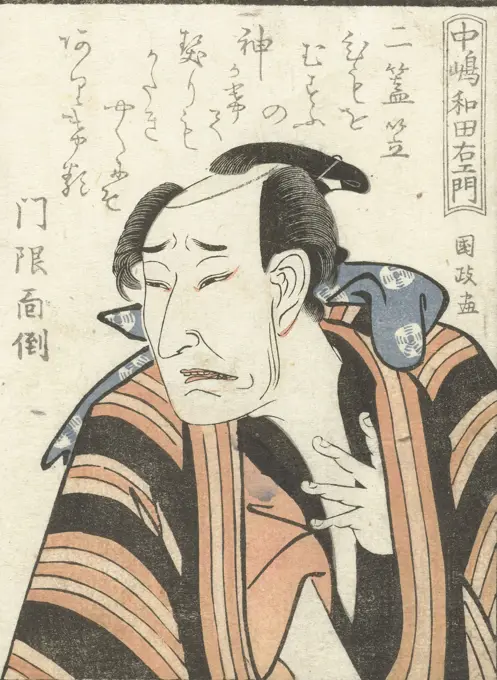
Edo, Chusuke, Kazusaya, Kunimasa, Utagawa, Yakusha gakuya tsu, A look behind the scenes with the actors, Nakajima Wadaemon, Love poem for Nakajima Wadaemon, Bust portrait of the actor Nakajima Wadaemon, wearing an orange and black striped kimono and a blue cloth around his neck, depicted below a love poem addressed to him; in the left margin the page number fourteen. Page from the Japanese book Yakusha gakuya tsu., print, prints, Japan (collection), height 184 mm, width 128 mm, 1773 - 1810, print maker, printmaker, 1799 - 1799, fourth quarter 18th century, paper, colour woodcut, Publication (Event), Publication, publisher
4409-17431824
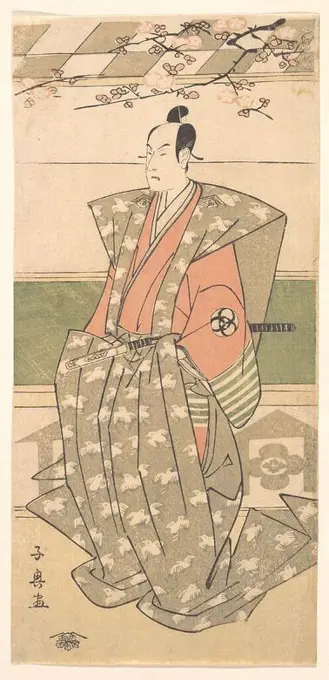
The Actor Bando Mitsugoro II in Ceremonial Robes with Kamishimo. Artist: Eishosai Choki (Japanese, active late 18th-early 19th century). Culture: Japan. Dimensions: 12 1/8 x 5 7/8 in. (30.8 x 14.9 cm). Date: 1751-1788. Museum: Metropolitan Museum of Art, New York, USA.
6145-51817440
Actors Nakamura Utaemon IV as Matabei the Stutterer and Iwai Hanshirō VII as His Wife Otoku, from the series Matches for Thirty-six Selected Poems Utagawa Toyokuni II (Japanese, 1777-1835). Actors Nakamura Utaemon IV as Matabei the Stutterer and Iwai Hanshirō VII as His Wife Otoku, from the series Matches for Thirty-six Selected Poems, 12th month, 1856. Color woodblock print on paper, 14 1/8 x 9 7/8 in. (35.9 x 25.1 cm).   Asian Art 12th month, 1856
4409-17584353
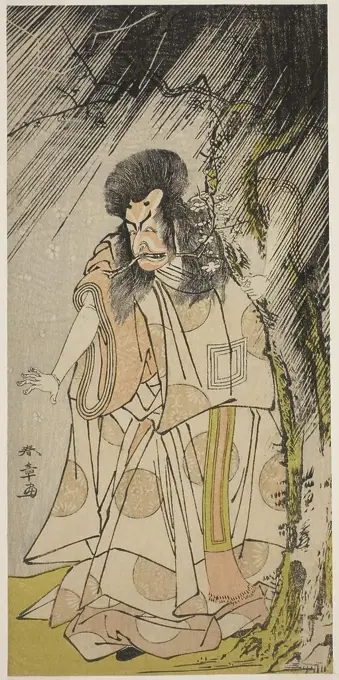
The Actor Ichikawa Ebizo III as the Thunder God, an Incarnation of Sugawara Michizane, in the Play Sugawara Denju Tenarai Kagami, Performed at the Ichimura Theater in the Eighth Month, 1776. Katsukawa Shunsho  ; Japanese, 1726-1792. Date: 1771-1781. Dimensions: 28.8 x 13.8 cm (11 5/16 x 5 7/16 in.). Color woodblock print; hosoban. Origin: Japan. Museum: The Chicago Art Institute, USA.
6145-29199156
New Year Picture of Mythical Qilin Delivering a Son early 20th century Unidentified artist(s). New Year Picture of Mythical Qilin Delivering a Son. Unidentified artist(s) , Chinese, early 20th century. China. early 20th century. Woodblock print; ink and color on paper. Republic period (1912-49). Prints
4409-17350341
Furansu-jin Yukyo. French Pastimes. Artist: Ichiryusai Yoshitoyo (Japanese, 1830-1866). Culture: Japan. Dimensions: 14 1/2 x 10 in. (36.8 x 25.4 cm). Date: 1860 (Man-en, 1st year). Museum: Metropolitan Museum of Art, New York, USA.
1848-54961772
Tsukioka Yoshitoshi (1839 - 9 June 1892) one of the last great masters of the classical Japanese colour woodcut, here the work On the Coast at Kiyomi
1899-18789623
The revenge of the Forty-seven Ronin (Shi-ju-shichi-shi), also known as the Forty-seven Samurai, the Aki vendetta, or the Genroku Aki incident (Genroku aki jiken) took place in Japan at the start of the 18th century. One noted Japanese scholar described the tale as the country's 'national legend'. It recounts the most famous case involving the samurai code of honor, bushidi. The story tells of a group of samurai who were left leaderless (becoming ronin) after their daimyo (feudal lord) Asano Naganori was forced to commit seppuku (ritual suicide) for assaulting a court official named Kira Yoshinaka, whose title was Ki zuke no suke. The ronin avenged their master's honor after patiently waiting and planning for two years to kill Kira. In turn, the ronin were themselves ordered to commit seppuku for committing the crime of murder. With much embellishment, this true story was popularized in Japanese culture as emblematic of the loyalty, sacrifice, persistence, and honor that all good peopl
1746-19660393
Samurai warriors Ichijo-Jiro-Tadanori and and Notonokami Noritsune fighting. Print c1820.   Shuntei Katsukawa (1770-c1833) Japanese artist. Warlike Fierce Threatening Weapon Pike Sword
1899-18789501
Water Margin (known in Chinese as Shuihu Zhuan, sometimes abbreviated to Shuihu), also known as Suikoden in Japanese, as well as Outlaws of the Marsh, Tale of the Marshes, All Men Are Brothers, Men of the Marshes, or The Marshes of Mount Liang, is a 14th century novel and one of the Four Great Classical Novels of Chinese literature. Attributed to Shi Nai'an and written in vernacular Chinese, the story, set in the Song Dynasty, tells of how a group of 108 outlaws gathered at Mount Liang (or Liangshan Marsh) to form a sizable army before they are eventually granted amnesty by the government and sent on campaigns to resist foreign invaders and suppress rebel forces. In 1827, Japanese publisher Kagaya Kichibei commissioned Utagawa Kuniyoshi to produce a series of woodblock prints illustrating the 108 heroes of the Suikoden. The 1827-1830 series, called '108 Heroes of the Water Margin' or 'Tsuzoku Suikoden goketsu hyakuhachinin no hitori', made Utagawa Kuniyoshi's famous.
1899-18857107
Yashima Gakutei was a Japanese artist and poet who was a pupil of both Totoya Hokkei and Hokusai. Gakutei is best known for his kyoka poetry and surimono woodblock works.
4443-75471767
Selected images from Teikin Orai and Onna Inagawa, 1828, 1834, Woodcuts
1848-54961744
Tsukioka Yoshitoshi (1839 - 9 June 1892) one of the last great masters of the classical Japanese woodblock print, here the work The Cry of the Fox
1899-18309695
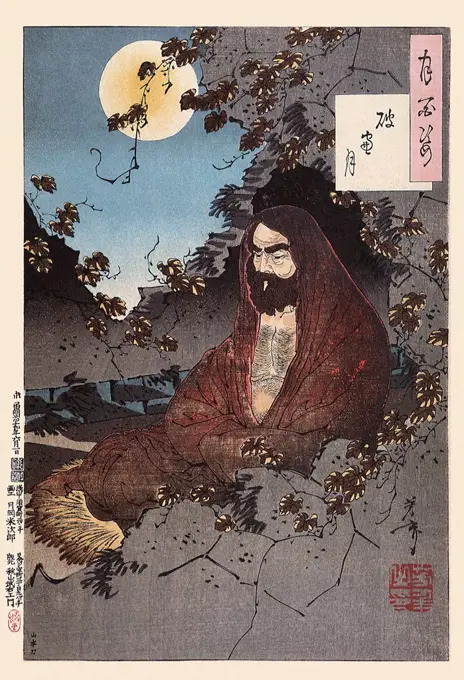
Moon through a Crumbling Window, Yoshitoshi, Tsukioka
6145-59596475
Shirai Gonpachi commits suicide on a boat, Utagawa Kunisada (I), 1856 print Shirai Gonpachi, a notorious Edo Balling, put his sword in his own belly, not to fall alive in the hands of the police. Scene from a Kabuki play.  paper color woodcut violent death by sword. suicide out of despair. river
6145-30187796
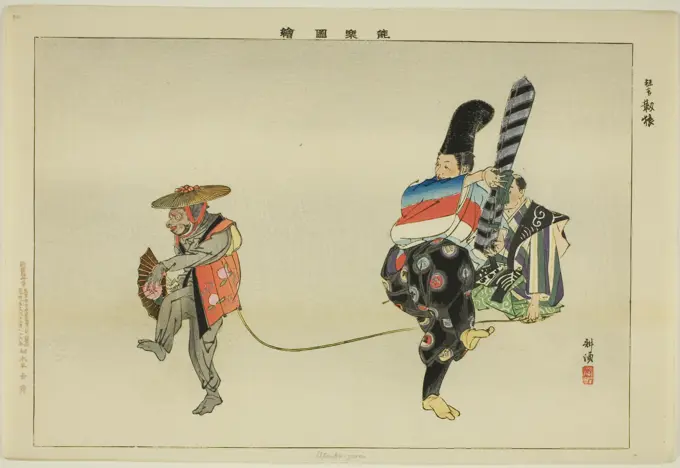
Tama-no-i, from the series Pictures of No Performances (Nogaku Zue) 1893-1903 Japan. Color woodblock print . Tsukioka Kôgyo
4409-17351509
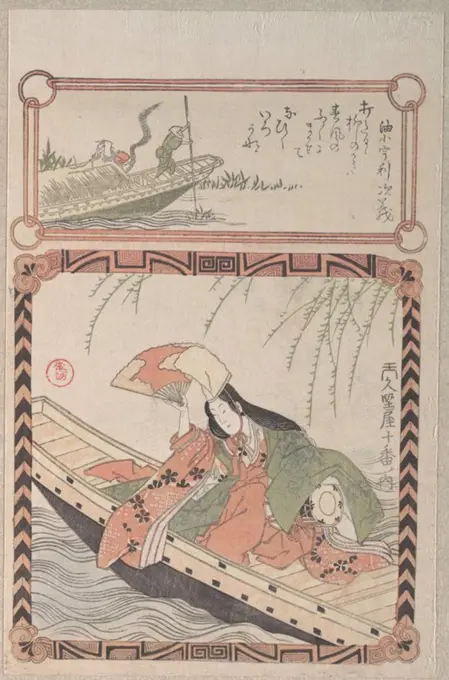
Asazuma-buneCourtesan in Ancient Costume Seated in a Boat. Artist: Kubo Shunman (Japanese, 1757-1820) (). Culture: Japan. Dimensions: 8 3/16 x 5 5/16 in. (20.8 x 13.5 cm). Date: 19th century. Museum: Metropolitan Museum of Art, New York, USA.
6145-30187372
The Actor Ichimura Uzaemon IX as Asahina no Sabura in the Play Tsukisenu Haru Hagoromo Soga, Performed at the Ichimura Theater in the First Month, 1777 1772-1782 Japan. Color woodblock print; hosoban . Katsukawa Shunsho
1899-18855962
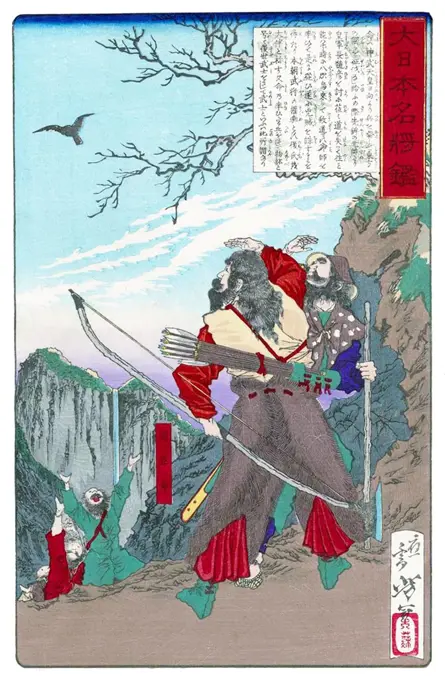
Emperor Jimmu was the first emperor of Japan, according to legend. His accession is traditionally dated as 660 BCE. He is a descendant of the sun goddess Amaterasu through her grandson Ninigi, as well as a descendant of the storm god Susanoo. He launched a military expedition from Hyuga near the Inland Sea, captured Yamato, and established this as his center of power. Jimmu's reign notionally spanned the years  660-585 BCE.
4409-17551752
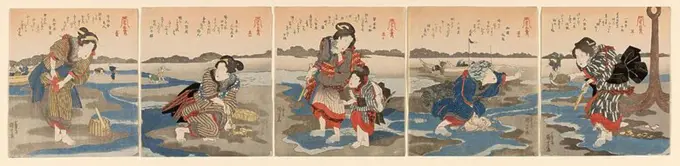
Low Tide at Susaki - A Set of Five (Shiohi goban no uchi). Utagawa Kuniyoshi; Japanese, 1797-1861. Date: 1823-1835. Dimensions: 21.2 x 91.8 cm (8 5/16 x 36 1/8 in.). Color woodblock prints; shikishiban pentaptych, surimono. Origin: Japan. Museum: The Chicago Art Institute, Chicago, USA.
4443-20307821
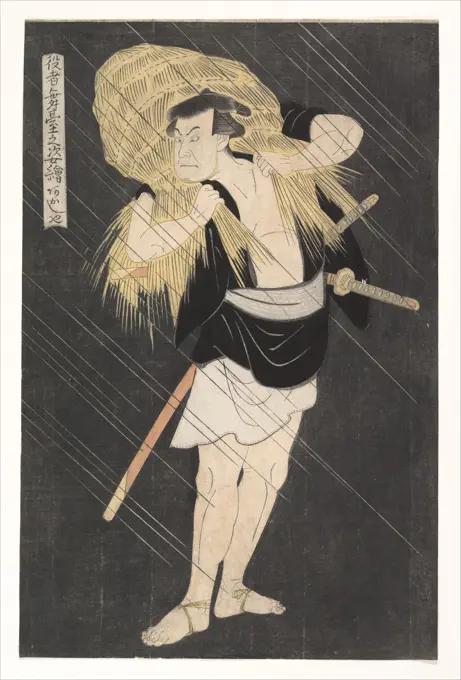
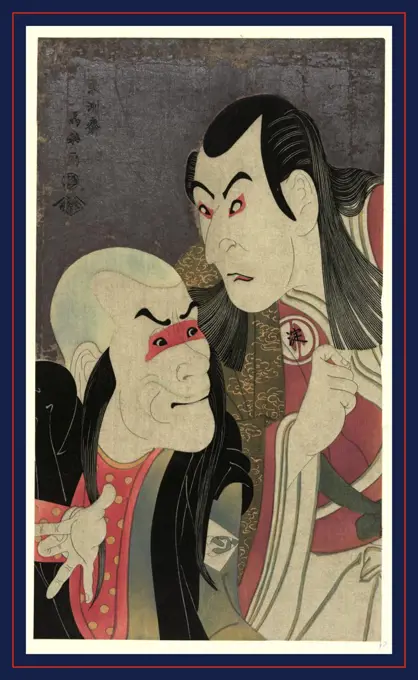
Nidaime sawamura yodogoro (no kawatsura hogen to) bando zenji (no oni sadobo), Sawamura Yodogoro II in the role of Kawatsura Hogen and Bando Zenji in the role of Oni Sadobo., Toshusai Sharaku, active 1794, artist, ca. 1795, 1 print : woodcut, color.
6145-29189968
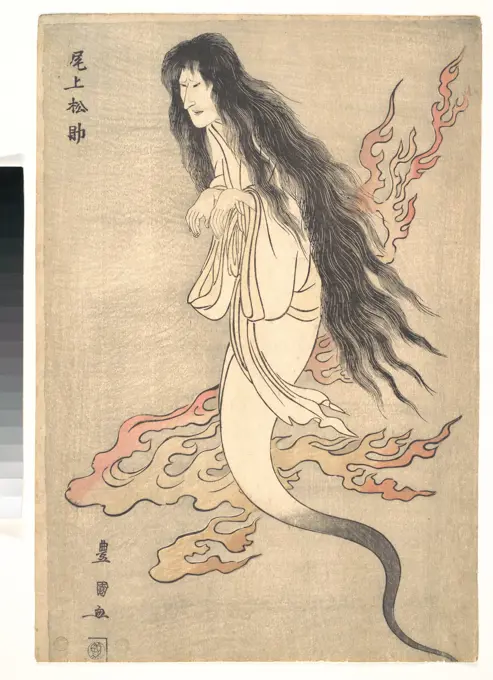
Onoe Matsusuke as the Ghost of the Murdered Wife Oiwa, in "A Tale of Horror from the Yotsuya Station on the Tokaido Road" 1812 Utagawa Toyokuni I Japanese. Onoe Matsusuke as the Ghost of the Murdered Wife Oiwa, in "A Tale of Horror from the Yotsuya Station on the Tokaido Road" 45290
6145-59455352
Two Breton women and a man on a boat, Émile Bernard, 1889 print Three boats sail on the river.  paper  rowing-boat, canoe, etc.. river. fashion, clothing Brittany
1899-18855985
Empress Jitō (統天皇 Jitō-tennō, 645 - 13 January 703) was the 41st monarch of Japan, according to the traditional order of succession. Jitō's reign spanned the years from 686 through 697. In the history of Japan, Jitō was the third of eight women to take on the role of empress regnant. The two female monarchs before Jitō were (1) Suiko and (2) Kōgyoku/Saimei. The five women sovereigns reigning after Jitō were (3) Gemmei, (4) Genshō, (5) Kōken/Shōtoku, (6) Meishō, and (7) Go-Sakuramachi. Jitō took responsibility for court administration after the death of her husband, Emperor Temmu, who was also her uncle. She acceded to the throne in 687 in order to ensure the eventual succession of her son, Kusakabe-shinnō. Throughout this period, Empress Jitō ruled from the Fujiwara Palace in Yamato. Prince Kusabake was named as crown prince to succeed Jitō, but he died at a young age. Kusabake's son, Karu-no-o, was then named as Jitō's successor. He eventually would become known as Emperor Mommu. In
6145-30187392
Utsubo-saru, from the series Pictures of No Performances (Nogaku Zue) 1893-1903 Japan. Color woodblock print . Tsukioka Kôgyo
4443-20307296
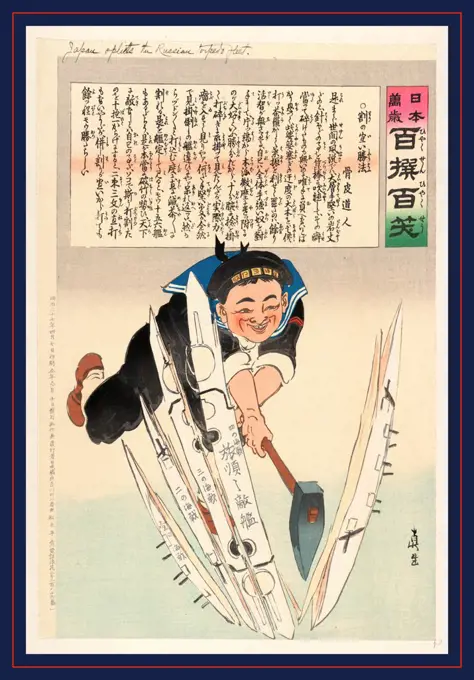
Japan splits the Russian torpedo fleet, Kobayashi, Kiyochika, 1847-1915, artist, 1904 or 1905, 1 print : woodcut, color., Print shows a Japanese sailor splitting a Russian torpedo boat.
1899-18789297
The revenge of the Forty-seven Ronin (Shi-ju-shichi-shi), also known as the Forty-seven Samurai, the Aki vendetta, or the Genroku Aki incident (Genroku aki jiken) took place in Japan at the start of the 18th century. One noted Japanese scholar described the tale as the country's 'national legend'. It recounts the most famous case involving the samurai code of honor, bushidi. The story tells of a group of samurai who were left leaderless (becoming ronin) after their daimyo (feudal lord) Asano Naganori was forced to commit seppuku (ritual suicide) for assaulting a court official named Kira Yoshinaka, whose title was Ki zuke no suke. The ronin avenged their master's honor after patiently waiting and planning for two years to kill Kira. In turn, the ronin were themselves ordered to commit seppuku for committing the crime of murder. With much embellishment, this true story was popularized in Japanese culture as emblematic of the loyalty, sacrifice, persistence, and honor that all good peopl
6145-51817956
The Kabuki Actor Kawaharazaki Gonjuro as Kagekiyo Utagawa Kunisada (Toyokuni III) (Japanese, 1786-1865). The Kabuki Actor Kawaharazaki Gonjuro as Kagekiyo, 1861. Color woodblock print on paper, 14 1/4 x 9 3/4 in. (36.2 x 24.8 cm).   Asian Art 1861
4443-20306476
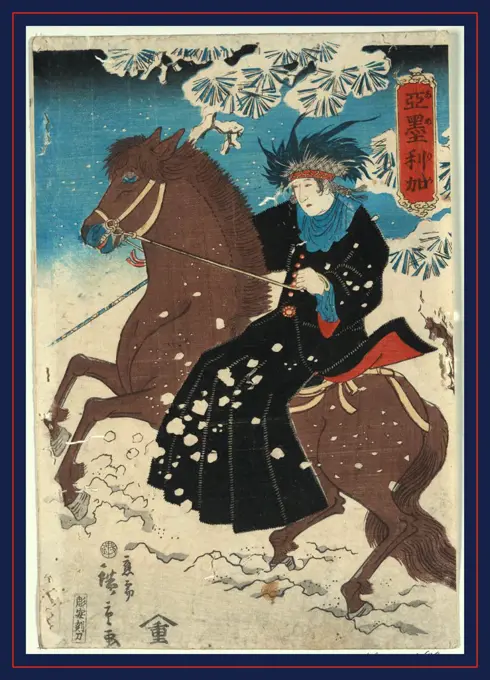
Amerika, America., Utagawa, Hiroshige, 1826-1869, artist, 1860., 1 print : woodcut, color ; 35.5 x 24.2 cm., Print shows a woman, representating America, riding sidesaddle on a horse in a snowy landscape.
6145-29120672
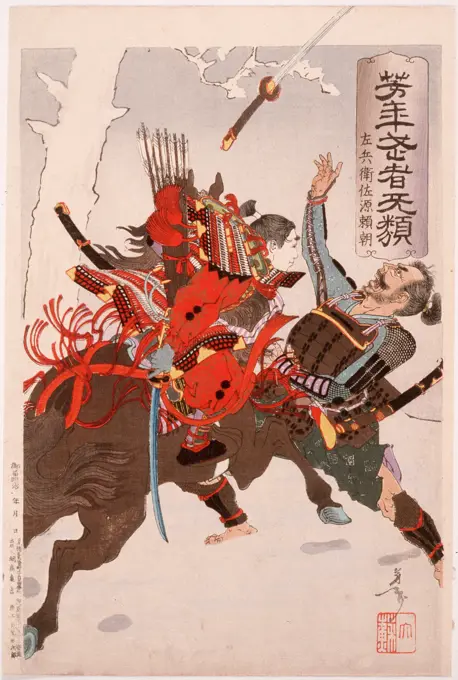
Sahyōenosuke Minamoto no Yoritomo Attacking an Enemy on Horseback. Tsukioka Yoshitoshi (Japan, 1839-1892). Japan, 1886, October. Prints; woodblocks. Color woodblock print
6145-51817577
The Actor Ichikawa Danzo in a Shibaraku Role Torii Kiyotsune (Japanese, active 1760-1779). The Actor Ichikawa Danzo in a Shibaraku Role, ca. 1777. Color woodblock print on paper, 11 9/16 x 5 3/16 in. (29.3 x 13.2 cm).   Asian Art ca. 1777
6145-30187678
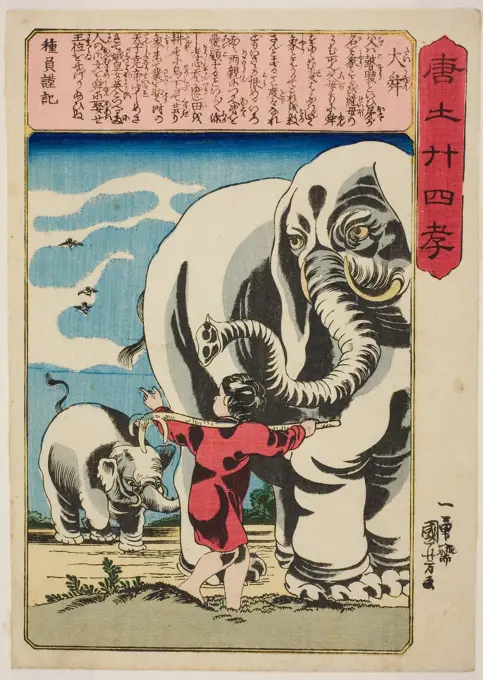
Shun the Great (Tai Shun), from the series Twenty-four Paragons of Filial Piety in China (Morokoshi nijushiko) 1843-1855 Japan. Color woodblock print; chuban . Utagawa Kuniyoshi
1899-18711825
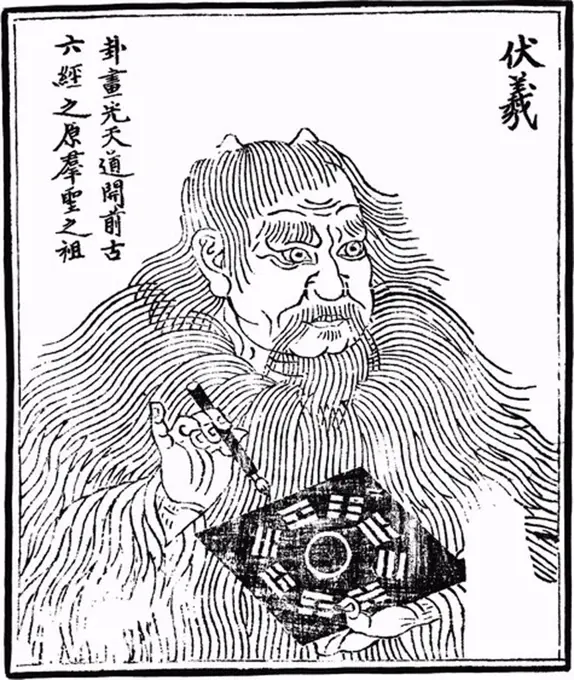
Fu Xi or Fu Hsi (mid 29th century BCE) was the first of the Three Sovereigns (sanhuang) of ancient China. He is a cultural hero reputed to be the inventor of writing, fishing, and trapping. Note, however, that Cangjie is also said to have invented writing. The Three Sovereigns and Five Emperors (Sanhuang wudi; Wade-Giles: San-huang wu-ti) are a blend of mythological rulers and cultural heroes from ancient China dating loosely from the period from c.3500-2000 BCE. This represents the earliest period of recorded Chinese history and is regarded as largely mythological. In chronological terms it precedes the Xia Dynasty (c.2070-1600 BCE). There are several variations as to who constitute the various Three Sovereigns and Seven Emperors. According to the Diwang Xishi or Record of Imperial Lineages, also called the 'Sovereign Series' in English, the Three Sovereigns were, in chronological sequence: Fuxi, Shennong and Huangdi. The same source lists the Five Emperors, again chronologically, as:
PREVIOUS
of 3
NEXT
2401 S. Ervay, Suite 206
Dallas, Texas 75215
United States
Get Started
Free ResearchMy BoardsMy Cart
For Creators
How To License Your ContentContributor PortalFrame of Mind
Resources
API accessPricing
Contact
+1 866 236 0087help@viewpictures.co.uk Contact form
©2026 View Pictures. All Rights Reserved. -B
This site is protected by reCAPTCHA and Google Privacy Policy and Terms of Service apply.