My Boards
View Pictures
  • My Boards
← Artworks

Japanese Woodblock Prints

Stunning landscapes from Japan showcasing serene natural scenes and cultural landmarks, characterized by vibrant colors and intricate details.
Kanagawa, Japanese Prints - Nature
284 assets in this story
4409-17584572
Yoro Waterfall in Mino Province (Mino no kuni Yoro no taki), from the series Tour of the Waterfalls in Various Provinces (Shokoku Takimeguri). Katsushika Hokusai  ; Japanese, 1760-1849. Date: 1827-1838. Dimensions: Approx. 38.2 x 25.4 cm (15 x 10 in.). Color woodblock print; oban. Origin: Japan. Museum: The Chicago Art Institute, Chicago, USA.
4443-28740522
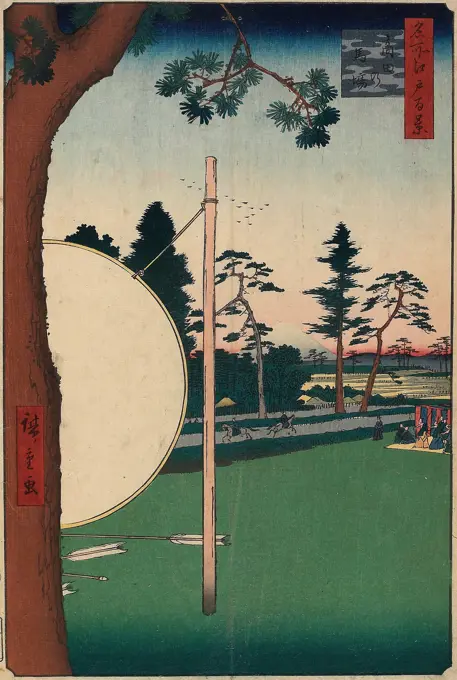
Takata Riding Grounds, 1858, 2nd month, Utagawa Hiroshige; Publisher: Sakanaya Eikichi, Japanese, 1797 - 1858, 13 3/8 x 8 13/16 in. (34 x 22.4 cm) (image)14 3/16 × 9 1/2 in. (36 × 24.2 cm) (sheet, vertical ōban)17 15/16 x 14 in. (45.5 x 35.5 cm) (mat), Woodblock print (nishiki-e); ink and color on paper, Japan, 19th century
6145-30163241
Harima Province Maiko Beach (Harima, Maiko no hama), from the series Famous Places in the Sixty-odd Provinces (Rokujuyoshu meisho zue) 1853 Japan. Color woodblock print; oban . Utagawa Hiroshige
6145-29794952
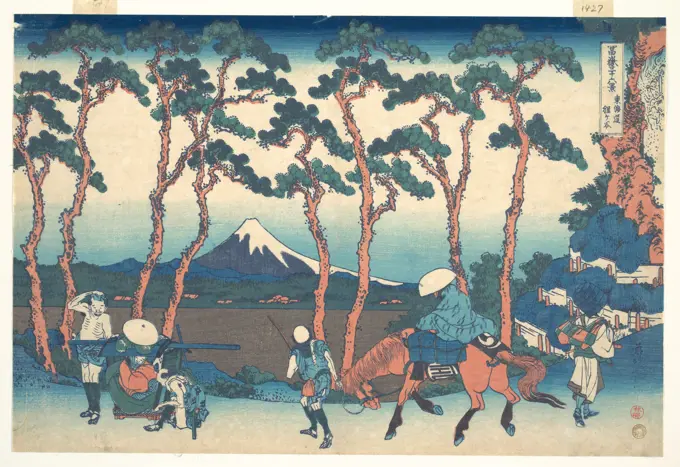
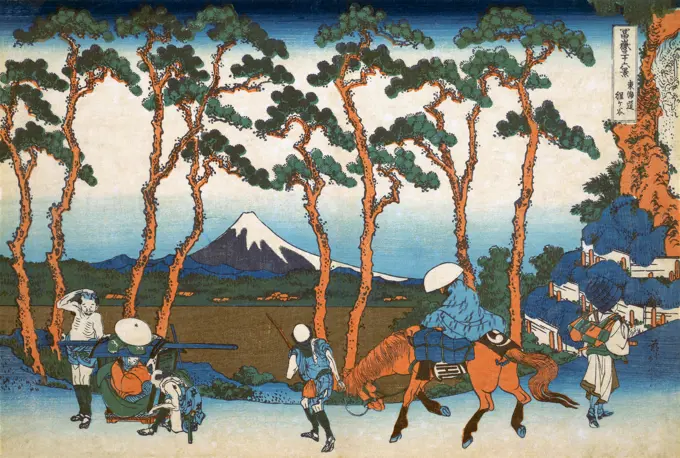
Hodogaya on the Tōkaidō (Tōkaidō Hodogaya), from the series Thirty-six Views of Mount Fuji (Fugaku sanjūrokkei) ca. 1830-32 Katsushika Hokusai Japanese Hodogaya, one of the well-known fifty-three stations of the Tōkaidō road, is located between Musashi, the province in which Edo was located, and Sagami Province to the west. At this point, westbound travelers were said to have finally felt the sensation of having put the metropolis of Edo behind them, for at Hodogaya the road stretches into a beautiful avenue lined with pine trees on both sides. When one travels on foot along a course near a big mountain, one has the feeling that progress is slowed by the overwhelming immobility of the mountain that seems to be eternally watching. This sensation is lyrically expressed in this print. Fuji's immobility is emphasized in contrast to the gentle rhythm of the row of pine trees and the crawling pace of the travelers.The Metropolitan Museum version of this print, which is differently colored fr
6145-29740053
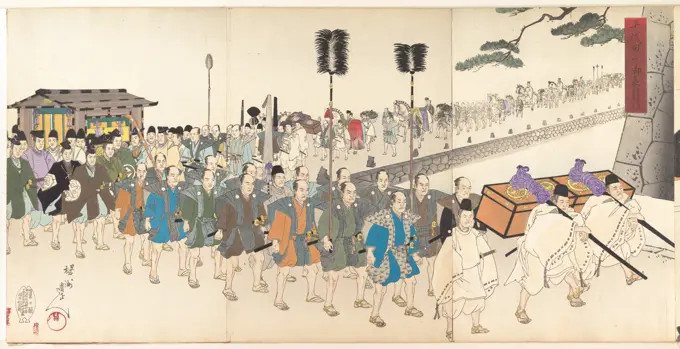
Chiyoda Castle (Album of Men) 1897 Ysh (Hashimoto) Chikanobu Japanese. Chiyoda Castle (Album of Men). Ysh (Hashimoto) Chikanobu (Japanese, 1838-1912). Japan. 1897. Triptych of woodblock prints; ink and color on paper. Meiji period (1868-1912). Prints
6145-51817865
Itsukushima Shrine Ryosai (Japanese). Itsukushima Shrine, ca. 1850. Color woodblock print on paper, 7 1/8 x 9 5/8 in. (18.1 x 24.4 cm).   Asian Art ca. 1850
4443-20307197
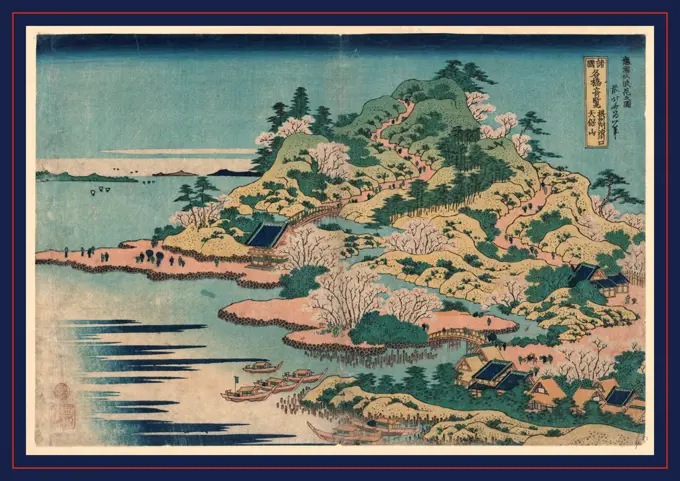
Sesshu ajigawaguchi tenposan, Mount Tempo at Setchu from the mouth of the River Aji., Katsushika, Hokusai, 1760-1849, artist, 1833 or 1834, 1 print : woodcut, color ; 25 x 36.7 cm., Print shows a coastal community with shrine, bridges over inlets, seawalls, and many pilgrims or travelers on the roadways, also boats moored offshore among pilings.
6145-50635228
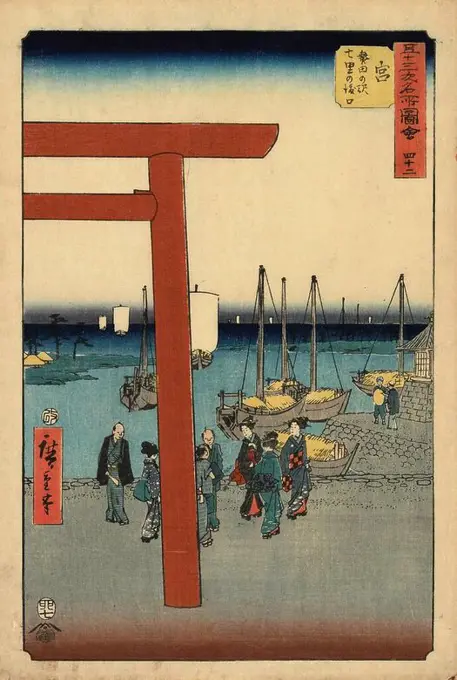
Kuwana /Kuwana, Shichi Ri Watashi Guchi, Board 43 from the Series: Fifty Tree Stages of the Tokyo Stages of the Tokyo Stages of the TOKAIDO ROADO ROADO ROADO ROADO ROADO ROADO GOJUSAN TSUGI NOUGHI
6145-30156167
Hara, from the series Fifty-three Stations of the Tokaido (Tokaido gojusan tsugi), also known as the Tokaido with Poem (Kyoka iri Tokaido) 1832-1847 Japan. Color woodblock print; chuban . Utagawa Hiroshige
4443-28740516
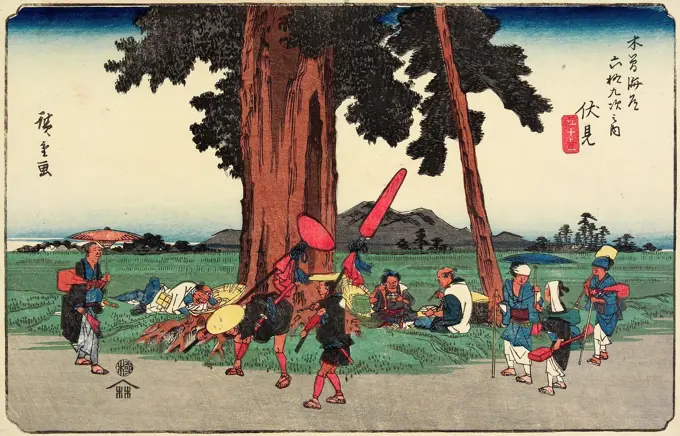
No. 51, Fushimi, c. 1835-1838, Utagawa Hiroshige; Publisher: Iseya Rihei, Japanese, 1797 - 1858, 8 3/4 × 13 11/16 in. (22.2 × 34.8 cm) (image, horizontal ōban), Woodblock print (nishiki-e); ink and color on paper, Japan, 19th century
4409-17513876
Miya: Atsuta Station, the Shichiri Ferry Landing, no. 42 from the series Collection of Illustrations of Famous Places near the Fifty-Three Stations Along the Tokaido. Date: seventh month 1855. Dimensions: 36 cm x 23 cm. Museum: Van Gogh Museum, Amsterdam. Author: UTAGAWA HIROSHIGE.
6145-29136139
Surugachō. Utagawa Hiroshige (Japan, Edo, 1797-1858). 1856, 9th month. Prints; woodblocks. Color woodblock print
1899-18789235
Hiroshige's One Hundred Famous Views of Edo, actually composed of 118 woodblock landscape and genre scenes of mid-19th century Tokyo, is one of the greatest achievements of Japanese art. The series includes many of Hiroshige's most famous prints. It represents a celebration of the style and world of Japan's finest cultural flowering at the end of the Tokugawa Shogunate. The winter group, numbers 99 through 118, begins with a scene of Kinryuzan Temple at Akasaka, with a red-on-white color scheme that is reserved for propitious occasions. Snow immediately signals the season and is depicted with particular skill: individual snowflakes drift through the gray sky, while below, on the roof of a distant temple, dots of snow are embossed for visual effect. Utagawa Hiroshige (1797 October 12, 1858) was a Japanese ukiyo-e artist, and one of the last great artists in that tradition. He was also referred to as Andi Hiroshige (an irregular combination of family name and art name) and by the art nam
1899-18853678
This image is attributed to Hiroshige II after Utagawa's death and is not always included in the series. Hiroshige's One Hundred Famous Views of Edo (所江戸百景), actually composed of 118 woodblock landscape and genre scenes of mid-19th century Tokyo, is one of the greatest achievements of Japanese art. The series includes many of Hiroshige's most famous prints. It represents a celebration of the style and world of Japan's finest cultural flowering at the end of the Tokugawa Shogunate. The winter group, numbers 99 through 118, begins with a scene of Kinryūzan Temple at Akasaka, with a red-on-white color scheme that is reserved for propitious occasions. Snow immediately signals the season and is depicted with particular skill: individual snowflakes drift through the gray sky, while below, on the roof of a distant temple, dots of snow are embossed for visual effect. Utagawa Hiroshige (歌川 広重, 1797 - October 12, 1858) was a Japanese ukiyo-e artist, and one of the last great artists in that tra
6145-46834916
White Shells, from the series Genroku Poem-Shell MatchingGame.  Artist: Katsushika Hokusai, Japanese, 1760-1849
6145-50635712
Three scenes on one board from the series: Collection of famous views of Edo /Edo meisho harimaze ru zu kai
6145-50505412
Empress Kenrei Monin; poem by Chunagon Atsutada; print 43 from the series: Ogura nazorae hyakunin isshu (Imitations of one hundred poems by one hundred poets). Utagawa, Kuniyoshi (1798-1861), graphic artist
6145-51828140
Komakata Hall and Azuma Bridge, No. 62 from One Hundred Famous Views of Edo Utagawa Hiroshige (Ando) (Japanese, 1797-1858). , 1st month of 1857. Woodblock print, Sheet: 14 1/4 x 9 3/16 in. (36.2 x 23.3 cm).  It is the rainy season of the Fifth Month (June to early July), a time of overcast skies and persistent light rain. Against the subtle suggestion of rain, which is very difficult to achieve, two balanced images stand out against the sky: the red flag, a symbol of rouge (for this is the sign of a cosmetics dealer) and a small cuckoo known for its sharp cry, associated in poetry with dawn and with loneliness. The placement of the cuckoo above Komakata Hall (seen here at the lower left) is no accident but a reference to a famous love poem by a Yoshiwara courtesan awaiting the return of her lover. Asian Art 1st month of 1857
6145-30158477
Poem by Fujiwara no Toshiyuki Ason, from the series One Hundred Poems Explained by the Nurse (Hyakunin isshu uba ga etoki) 1830-1841 Japan. Color woodblock print; oban . Katsushika Hokusai
6145-30164952
The Sumiyoshi Shrine on Tsukuda Island (Tsukuda Sumiyoshi no yashiro), from the series Famous Places in Edo (Edo meisho) 1853 Japan. Color woodblock print; oban . Utagawa Hiroshige
6145-30174469
SekiNo 48, from the series Fifty-three Stations of the Tokaido (Tokaido gojusan tsugi), also known as the Reisho Tokaido 1842-1857 Japan. Color woodblcok print; oban . Utagawa Hiroshige
6145-30165011
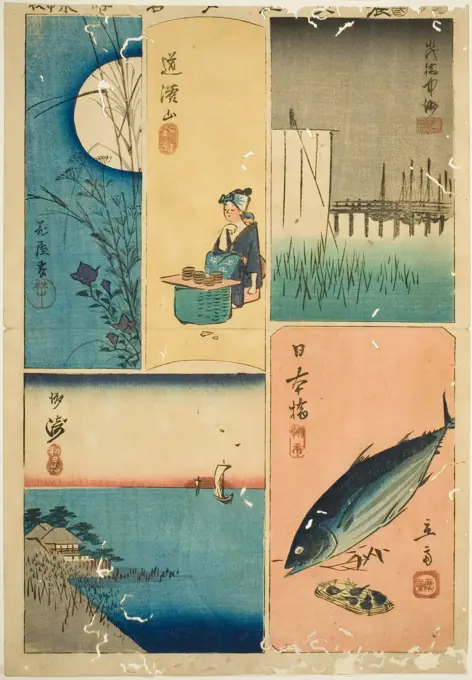
Eitai Bridge, Nihon Bridge, Susaki, Flower Garden, and Dokan Hill (Eitaibashi, Nihonbashi, Susaki, Hanayashiki, Dokanyama), from the series Cutouts of Famous Places in Edo (Harimaze Koto meisho) 1852 Japan. Color woodblock print; oban, harimaze . Utagawa Hiroshige
4443-19522020
Scene of Flying Kites, Ando Hiroshige, Japanese, 1797-1858, Woodblock print in colored ink on paper, A gathering of people admiring kites soring in the air decorates the lower half of this print. However, upon further inspection, the center group of men is looking downward. The geometric composition of this playful print highlights the horizon in a brilliant red ombre effect., Japan, 1797-1858, landscapes, Print, Print
6145-29087575
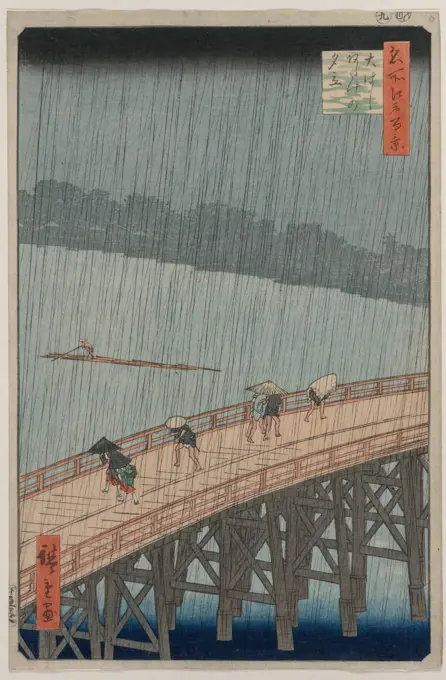
Sudden Shower over Shin-Ōhashi Bridge and Atake, from the series One Hundred Famous Views of Edo, 1857. Utagawa Hiroshige (Japanese, 1797-1858). Color woodblock print; sheet: 35.3 x 23.2 cm (13 7/8 x 9 1/8 in.). Running through Edo, the Ohashi Bridge was one of 300 bridges that crossed the Sumida River. Published about a year before Hiroshiges death, this print design illustrates the artists mastery of capturing atmospheric conditions. Figures scurry across the bridge amid slanting sheets of rain.
4409-17584715
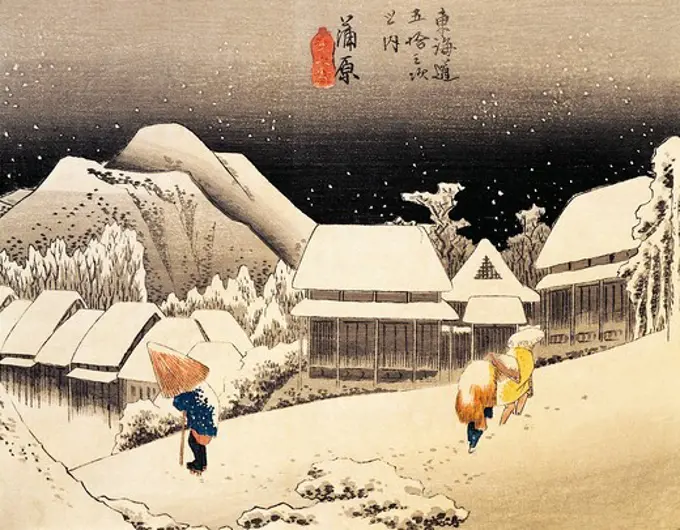
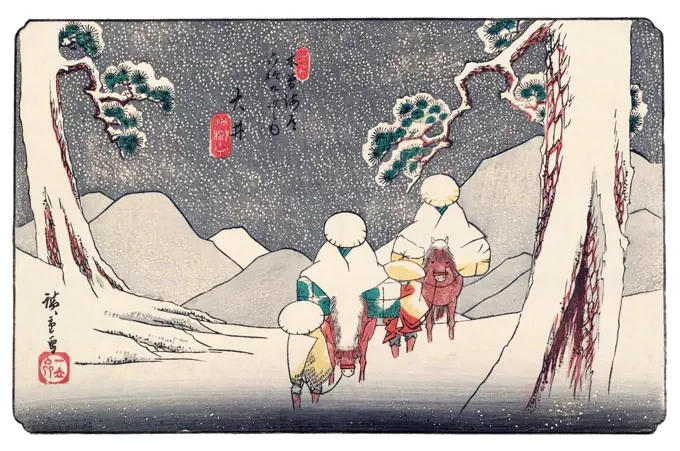
Kanbara: Evening Snow (Kanbara, yoru no yuki), from the series "Fifty-three Stations of the Tokaido (Tokaido gojusan tsugi no uchi)," also known as the Hoeido Tokaido. Utagawa Hiroshige  ; Japanese, 1797-1858. Date: 1828-1839. Dimensions: 24.8 x 35.4 cm (9 3/4 x 13 15/16 in.). Color woodblock print; oban. Origin: Japan. Museum: The Chicago Art Institute, USA.
6145-30164044
Fudo Falls at Oji (Oji Fudo no taki), from the series One Hundred Famous Views of Edo (Meisho Edo hyakkei) 1857 Japan. Color woodblock print; oban . Utagawa Hiroshige
1899-18853473
Tsuchiya Koitsu was an artist of the Shin Hanga movement. Shin hanga ('new prints') was an art movement in early 20th-century Japan, during the Taishō and Shōwa periods, that revitalized traditional ukiyo-e art rooted in the Edo and Meiji periods (17th-19th century). The movement flourished from around 1915 to 1942, though it resumed briefly from 1946 through the 1950s. Inspired by European Impressionism, the artists incorporated Western elements such as the effects of light and the expression of individual moods, but focused on strictly traditional themes of landscapes (fukeiga), famous places (meishō), beautiful women (bijinga), kabuki actors (yakusha-e), and birds and flowers (kachōga).
6145-29179958
Minowa, Kanasugi at Mikawashima,” from the series One Hundred Famous Views of Edo (Meisho Edo hyakkei, Minowa Kanasugi, Mikawashima) snake year 1857 Utagawa Hiroshige Japanese. Minowa, Kanasugi at Mikawashima,” from the series One Hundred Famous Views of Edo (Meisho Edo hyakkei, Minowa Kanasugi, Mikawashima). Utagawa Hiroshige (Japanese, Tokyo (Edo) 1797-1858 Tokyo (Edo)). Japan. snake year 1857. Woodblock print; ink and color on paper. Edo period (1615-1868). Prints
4409-17563159
Kanaya, from the series "Fifty-three Stations of the Tokaido (Tokaido gojusan tsugi)," also known as the Tokaido with Poem (Kyoka iri Tokaido). Utagawa Hiroshige  ; Japanese, 1797-1858. Date: 1832-1847. Dimensions: 17 × 22.9 cm (6 11/16 × 9 in.). Color woodblock print; chuban. Origin: Japan. Museum: The Chicago Art Institute, USA.
1788-22201
Japan, Snowfall at night, woodcut
6145-30165123
Curio Shop (Karamono ten no zu), from the series Pictures of Goods for Sale at Yokohama (Yokohama urimono zue) 1860 Japan. Color woodblock print; right sheet of oban triptych . Utagawa Sadahide
6145-30148500
Poem by Kisen Hoshi, from the series Six Famous Poets (Rokkasen) 1759-1770 Japan. Color woodblock print; hosoban, mizu-e . Suzuki Harunobu
6145-30163441
Sudden Shower over Shin Ohashi Bridge and Atake (Ohashi Atake no yudachi), from the series One Hundred Famous Views of Edo (Meisho Edo hyakkei) 1857 Japan. Color woodblock print; oban . Utagawa Hiroshige
4443-19533014
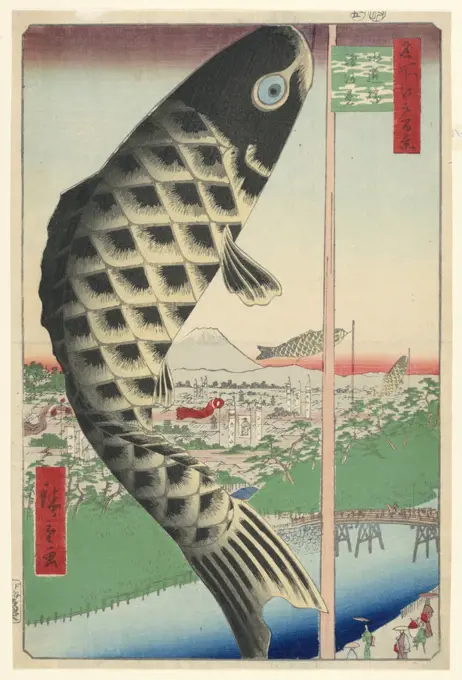
Suido Bridge at Surugadai (Suido-bashi, Surugadai) No. 48 From the Series One Hundred Famous views of Edo, Ando Hiroshige, Japanese, 1797-1858, Woodblock print in colored ink on paper, The brilliant black carp (Magoi) windsock (Koinobori) represents sails in the wind to celebrate Boys Day, also known as Feast of Banners. This festival takes place May Fifth. It is a national holiday, celebrated during Golden Week. It supports childrens personalities and rejoices in their happiness. Below is a procession of samurai passing over the Suido Bridge on the lower right corner. Other carp, military streamers, (fukinagashi) and vertical banners (nobori) flap in the wind. This vibrant and highly suggestive liveliness frames Mt. Fuji in the background., Japan, 1857, animals, Print, Print
4408-12465
The Crane, Japanese Prints
4443-28742167
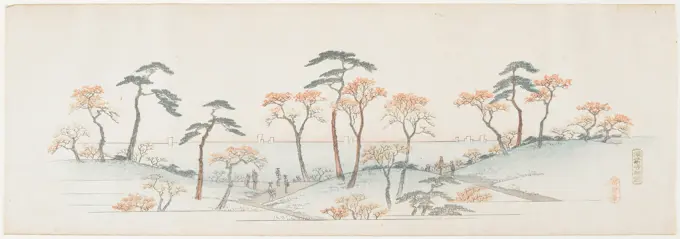
Colored Leaves at Kaianji Temple', 1837-1844, Utagawa Hiroshige; Publisher: Wakasaya Yoichi, Japanese, 1797 - 1858, 7 x 20 1/4 in. (17.8 x 51.5 cm) (image, sheet), Woodblock print (nishiki-e); ink and color on paper, Japan, 19th century
1899-29973507
Japan: Hodogaya on the Tokaido Road’. Ukiyo-e woodblock print from the series Thirty-Six Views of Mount Fuji’ by Katsushika Hokusai (31 October 1760 - 10 May 1849), 1830.
4409-17563272
Sketch of a Copperplate Print of the City of Washington (Amerika shu no uchi washintonfu no kei doban no utsushi). Utagawa Yoshikazu; Japanese, active c. 1850-70. Date: 1861. Dimensions: 36.0 x 73.6 cm. Color woodblock print; oban triptych. Origin: Japan. Museum: The Chicago Art Institute, USA.
6145-50635595
The Benkeibori Ditch in The Sotosakurada District /Soto Sakurada Benkeibori, from the Series: Famous Views of Edo /Edo Meisho
6145-29733545
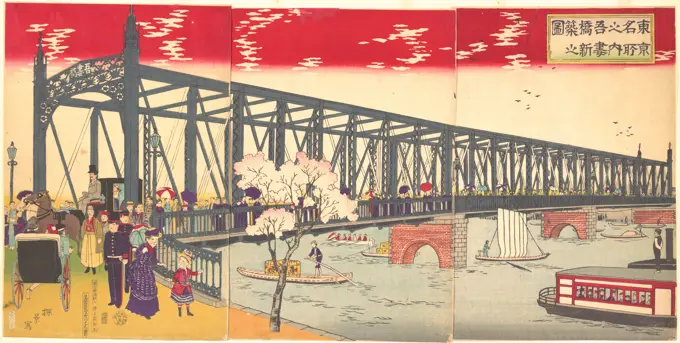
Illustration of the Opening of Azuma Bridge in Tokyo (Tokyo meisho no uchi azuma bashi shinchiku no zu) 1887 Inoue Yasuji Japanese. Illustration of the Opening of Azuma Bridge in Tokyo (Tokyo meisho no uchi azuma bashi shinchiku no zu). Inoue Yasuji (Japanese, 1864-1889). Japan. 1887. Triptych of woodblock prints; ink and color on paper. Meiji period (1868-1912). Prints
6145-29801080
Kameyama ca. 1842 Utagawa Hiroshige Japanese. Kameyama 37022
4409-17562834
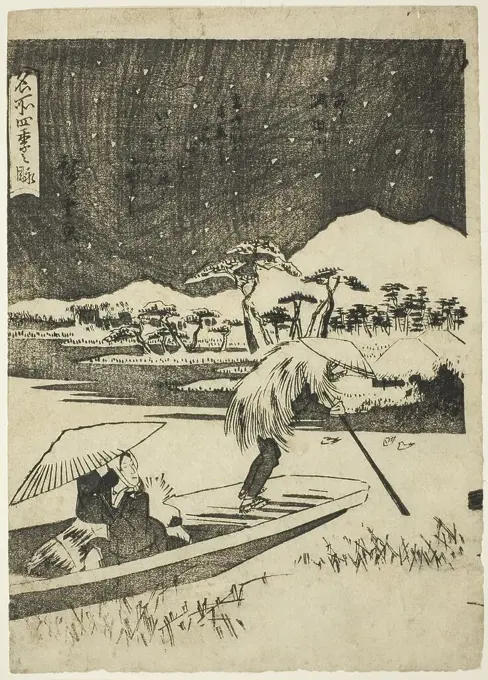
The Sumida River in Winter (Fuyu, Sumidagawa), from the series "Views of the Four Seasons in Famous Places (Meisho shiki no nagame)". Utagawa Hiroshige  ; Japanese, 1797-1858. Date: 1840-1843. Dimensions: 23.3 x 16.6 cm (9 3/16 x 6 1/2 in.). Woodblock print; chuban. Origin: Japan. Museum: The Chicago Art Institute, USA.
4409-17562983
Rain at Nihonbashi Bridge (Nihonbashi no hakuu), from the series "Famous Places in the Eastern Capital (Toto meisho)". Utagawa Hiroshige  ; Japanese, 1797-1858. Date: 1827-1843. Dimensions: 21.3 x 34.3 cm (8 7/8 x 13 1/2 in.). Color woodblock print; oban. Origin: Japan. Museum: The Chicago Art Institute, USA.
4266-14579
Japanese illustration with people in garden by Utagawa Hiroshige, color woodcut, 1856-1858, 1797-1858, Russia, St. Petersburg, State Hermitage, 39x26
6145-29753907
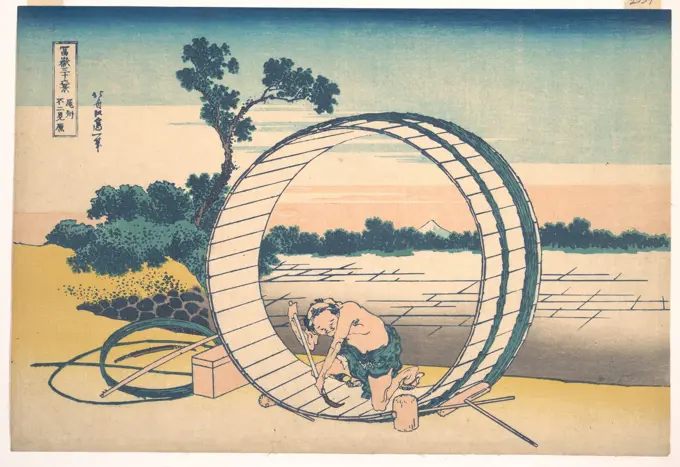
Fujimigahara in Owari Province (Bish Fujimigahara), from the series Thirty-six Views of Mount Fuji (Fugaku sanjrokkei) ca. 1830-32 Katsushika Hokusai Japanese Hokusai searched the environment for subjects that would produce an unusual effect when combined with the image of Mount Fuji. In this print, he takes us to Owari (present-day Aichi Prefecture), which is one of the western most locations from which Mount Fuji is visible. Having come all this way, Hokusai puts the mountain, now greatly diminished in size by distance, in the center of a great circular frame formed by the walls of a huge barrel being constructed by a cooper. Thus, the great symbol of eternity is amusingly reduced to a tiny triangle set within a large bottomless barrel.. Fujimigahara in Owari Province (Bish Fujimigahara), from the series Thirty-six Views of Mount Fuji (Fugaku sanjrokkei). Katsushika Hokusai (Japanese, Tokyo (Edo) 1760-1849 Tokyo (Edo)). Japan. ca. 1830-32. Woodblock print; ink and color on paper.
1899-18855474
The Sixty-nine Stations of the Kiso Kaid ( Kiso Kaid Rokujky-tsugi) or Sixty-nine Stations of the Kiso Road, is a series of ukiyo-e works created by Utagawa Hiroshige (1797-1858) and Keisai Eisen (1790-1848). There are 71 total prints in the series (one for each of the 69 post stations and Nihonbashi; Nakatsugawa-juku has two prints). The common name for the Kiso Kaid is 'Nakasend' or 'Central Mountain Highway', so this series is salso commonly referred to as the Sixty-nine Stations of the Nakasend. The Nakasend was one of the Five Routes constructed under Tokugawa Ieyasu, a series of roads linking the historical capitol of Edo with the rest of Japan. The Nakasend connected Edo with the then-capital of Kyoto. It was an alternate route to the Tkaid and travelled through the central part of Honsh, thus giving rise to its name, which means 'Central Mountain Road'. Along this road, there were sixty-nine different post stations (-shuku or -juku), which prov
4266-2430
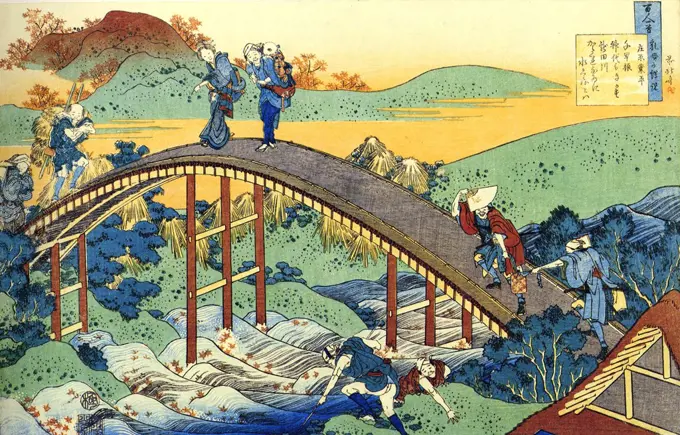
People on bridge by Katsushika Hokusai, color woodcut, circa 1830, 1760-1849, Russia, St. Petersburg, State Hermitage
6145-29724093
View of Shibaura, from the series Eastern Capital (Tōto, Shibaura no fūkei) 6th month, 1863 Utagawa Yoshitora Japanese. View of Shibaura, from the series Eastern Capital (Tōto, Shibaura no fūkei) 55256
4443-19375378
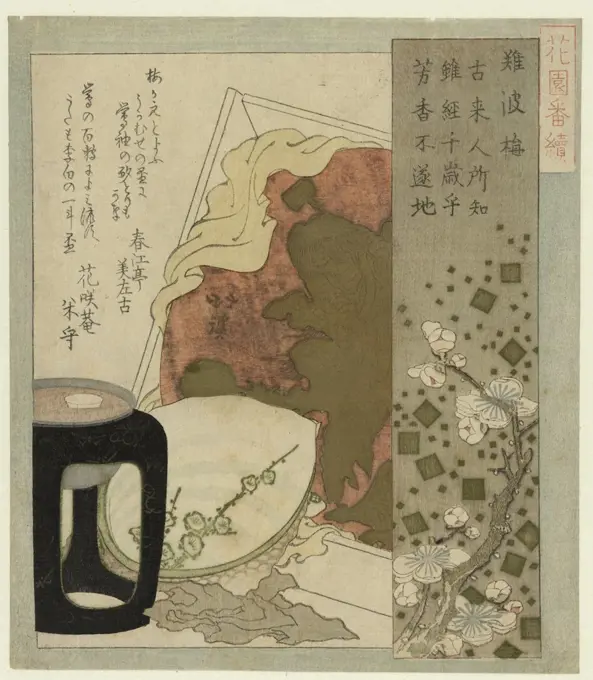
Plum blossom from Osaka Naniwa ume A series for the Hanazono poets association (series title) Hanazono bantsuzuki, A still life of various sake (rice wine) cups. On the left a small cup of thin porcelain, floating in water in a silver bowl in a holder of black lacquerware. Next to it a cup made of a white shell, decorated inside with plum blossom. On the right a large, partly wrapped in cloth, sake cup of red lacquerware, decorated with the image of a shôjô, a mythological creature who would live on the coast and spend his days drinking sake. To the right plum blossom under a poem. Naniwa is the traditional name of the city of Osaka, known for the plum blossoms and sake. With two poems, plants, vegetation (flowers, blossom, blossoming), Totoya Hokkei (mentioned on object), Japan, 1823, paper, colour woodcut, h 200 mm × w 175 mm
1899-18789076
Kambara: A mountain village at nightfall under deep snow, through which three people are toiling, one with his head buried in a half open umbrella. Utagawa Hiroshige (1797 October 12, 1858) was a Japanese ukiyo-e artist, and one of the last great artists in that tradition. He was also referred to as Andi Hiroshige (an irregular combination of family name and art name) and by the art name of Ichiyusai Hiroshige. The Ti kaidi (East Sea Road) was the most important of the Five Routes of the Edo period, connecting Edo (modern-day Tokyo) to Kyoto in Japan. Unlike the inland and less heavily travelled Nakasendi, the Ti kaidi travelled along the sea coast of eastern Honshu, hence the route's name.
1746-3865
Sudden Shower over Oshashi Bridge and Atake ', 1857. Utagawa Hiroshige (1797-1858) Japanese Ukiyo-e artist  'One Hundred Famous View of Edo' (Tokyo). Pedestrians caught in heavy rain on wooden bridge. Civil Engineering Weather
4409-17586038
England (Igirisu koku). Utagawa Yoshitora; Japanese, active c. 1836-87. Date: 1865. Dimensions: . Color woodblock print; oban triptych. Origin: Japan. Museum: The Chicago Art Institute, Chicago, USA.
4443-20306746
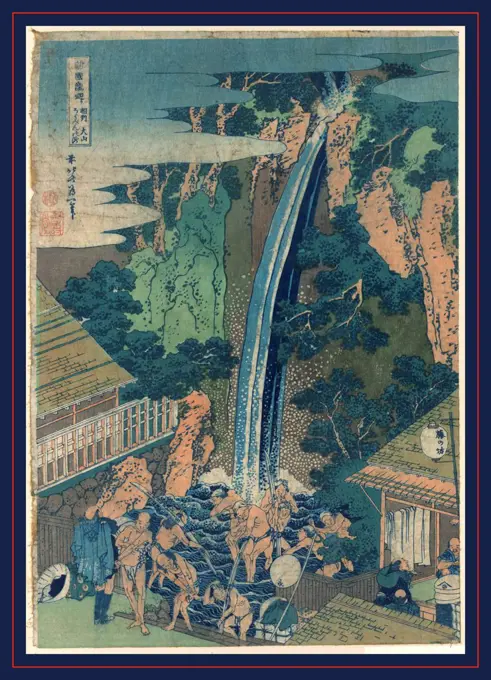
So¯shu oyama roben no taki, Roben waterfall at Oyama in Soshu., Katsushika, Hokusai, 1760-1849, artist, 1832 or 1833, printed later, 1 print : woodcut, color ; 37.7 x 26 cm., Print shows male bathers standing beneath mountain waterfall, with bathhouse on the right.
6145-59582584
Sawmill in the bend of a river, Katsushika Hokusai, 1833 - 1837 print Two men sagging a huge block of wood, a third grinding a sawing, a fourth at the river in which autumn leaves; Woman with child on bridge.  paper nishiki-e / color woodcut sawing (industrial process). industries ~ wood. tools, aids, implements ~ crafts and industries: saw
6145-45644670
B    ほ ほ ほ ほ ほ; .
4409-17550878
A Cuckoo against the Moon. Utagawa Hiroshige  ; Japanese, 1797-1858. Date: 1838-1841. Dimensions: 24 x 30.7 cm (9 1/8 x 11 5/8 in.). Color woodblock print; uchiwa-e. Origin: Japan. Museum: The Chicago Art Institute, USA.
4409-17567210
The Naval Battle of Pungdo in Korea (Chosen Hoto kaisen no zu). Kobayashi Kiyochika; Japanese, 1847-1915. Date: 1894. Dimensions: . Color woodblock print; two sheets from oban triptych. Origin: Japan. Museum: The Chicago Art Institute, Chicago, USA.
6145-29269874
Four reductions of designs from Hokusai's thirty-six views of Mount Fuji. Woodcut, 185- ().
4409-17559395
Goyu, from the series "Fifty-three Stations of the Tokaido (Tokaido gojusan tsugi)". Katsushika Hokusai  ; Japanese, 1760-1849. Date: 1801-1811. Dimensions: Approx. 24 × 18.3 cm. Color woodblock print; chuban. Origin: Japan. Museum: The Chicago Art Institute, Chicago, USA.
6145-50634846
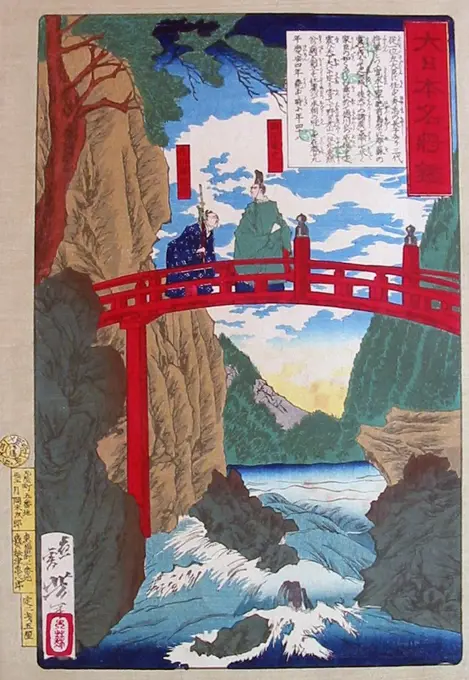
Ronins crossing the bridge before the attack on Moronao Castle, 1st episode from the 11th act of the drama: Treasury of fideIIty /Chishingura
6145-59570463
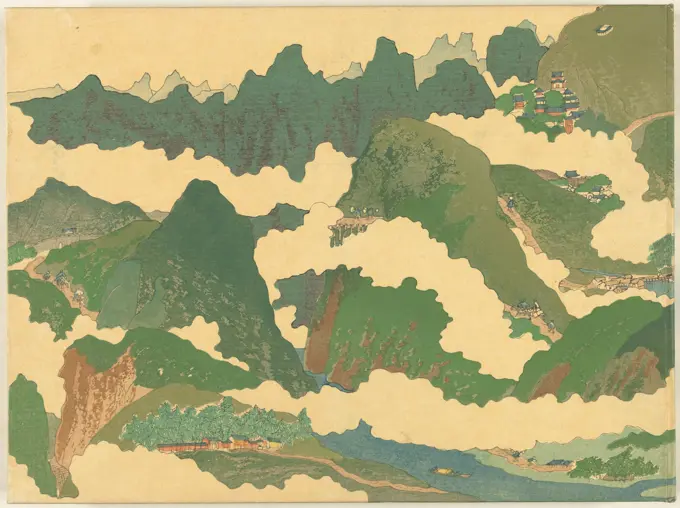
The Yellow River Part, 1916 book Part two (of two); paper cover; Cover with image of river in mountain landscape, title in gold on the back; cover and bract on which face in a nutshell of the area traveled by the artist; one magazine, title page; 2 magazines, numbered: 1-3, table of contents; 89 Images of people and landscapes in China, with text on opposite pages, numbered: 112-200; 40 sheets, text; Last sheet, Colophon.  paper letterpress printing / color woodcut
6145-30148773
Ku, from the series Tales of Ise in Fashionable Brocade Pictures (Furyu nishiki-e Ise monogatari) 1767-1778 Japan. Color woodblock print; koban . Katsukawa Shunsho
1899-18712313
Tokugawa Iemitsu (August 12, 1604  June 8, 1651) was the third shogun of the Tokugawa dynasty. He was the eldest son of Tokugawa Hidetada, and the grandson of Tokugawa Ieyasu. Iemitsu ruled from 1623 to 1651.
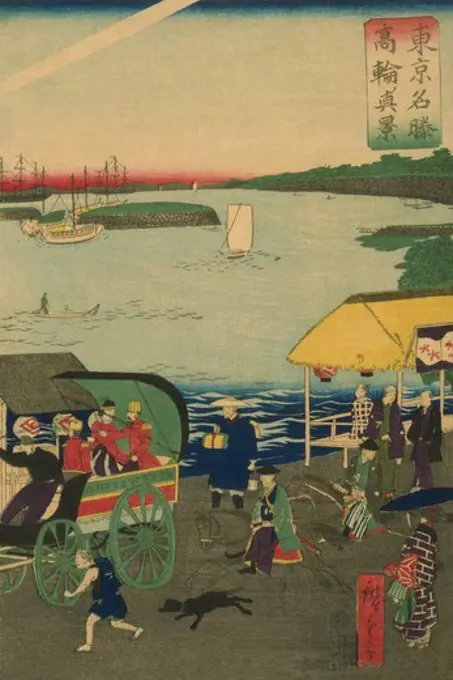
4408-13512
Famous places in Tokyo: real view of Takanawa (To_kyo_ meisho_ Takanawa no shinkei) #3, Japanese Prints - Hiroshige
6145-51827142
Hatsune Riding Grounds, Bakuro-cho, No. 6 in One Hundred Famous Views of Edo Utagawa Hiroshige (Ando) (Japanese, 1797-1858). Hatsune Riding Grounds, Bakuro-cho, No. 6 in One Hundred Famous Views of Edo, 9th month of 1857. Woodblock print, Image: 13 1/4 x 8 5/8 in. (33.7 x 21.9 cm).  The three colorful strips of cloth in the foreground of this print are not celebratory banners but bolts of cloth that dyers have hung out to dry. Hiroshige emphasizes the cloth's materiality by embossing a textured weave pattern on the surface of the white bolt. In the distance stands one of the many fire-watch towers scattered throughout the city. The buildings below were largely devoted to lodging visitors to Edo, maintaining the long-established function of this site as a point of entry and departure for travelers from the north. Asian Art 9th month of 1857
6145-59466021
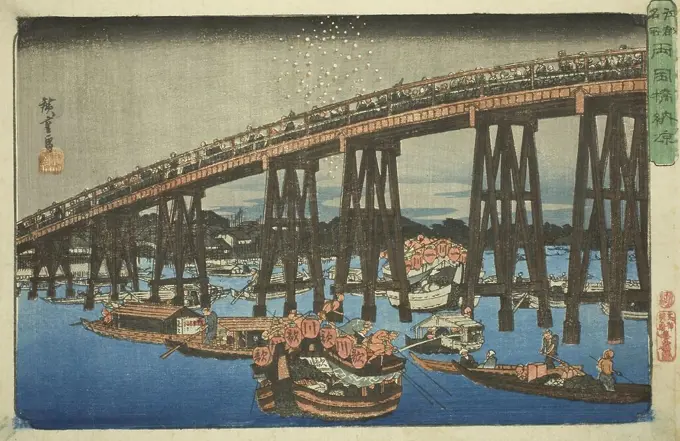
VUURWERK BIJ DE RYOGOKU BRUG, HIROSHIGE (I), Utagawa, 1835-1840 print People on the Ryogoku bridge and at stalls on the banks of the printed river Sumida, looking at fireworks; At night. print maker: Japanpublisher: Tokyo paper nishiki-e / color woodcut bonfire, fire-works
1899-18853476
Tsuchiya Koitsu was an artist of the Shin Hanga movement. Shin hanga ('new prints') was an art movement in early 20th-century Japan, during the Taishō and Shōwa periods, that revitalized traditional ukiyo-e art rooted in the Edo and Meiji periods (17th-19th century). The movement flourished from around 1915 to 1942, though it resumed briefly from 1946 through the 1950s. Inspired by European Impressionism, the artists incorporated Western elements such as the effects of light and the expression of individual moods, but focused on strictly traditional themes of landscapes (fukeiga), famous places (meishō), beautiful women (bijinga), kabuki actors (yakusha-e), and birds and flowers (kachōga).
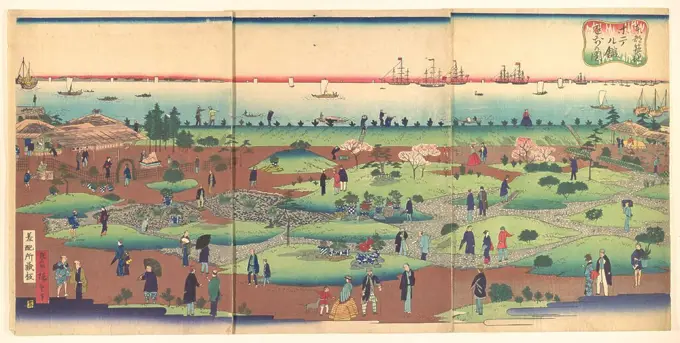
4409-17424794
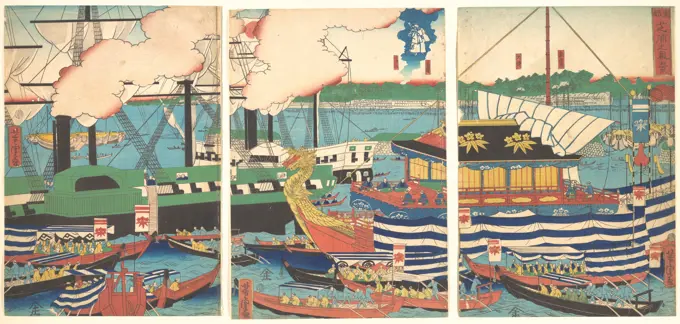
Illustration of the Front Garden of the Tsukiji Hotel in the Eastern Capital (Toto Tsukiji hoteru kan niwa mae no zu). Artist: Utagawa Hiroshige III (Japanese, 1843-1894). Culture: Japan. Dimensions: Image (a): 14 3/8 x 10 in. (36.5 x 25.4 cm)Image (b): 14 1/2 x 10 in. (36.8 x 25.4 cm)Image (c): 14 1/2 x 10 in. (36.8 x 25.4 cm). Date: ca. 1868-72. Museum: Metropolitan Museum of Art, New York, USA.
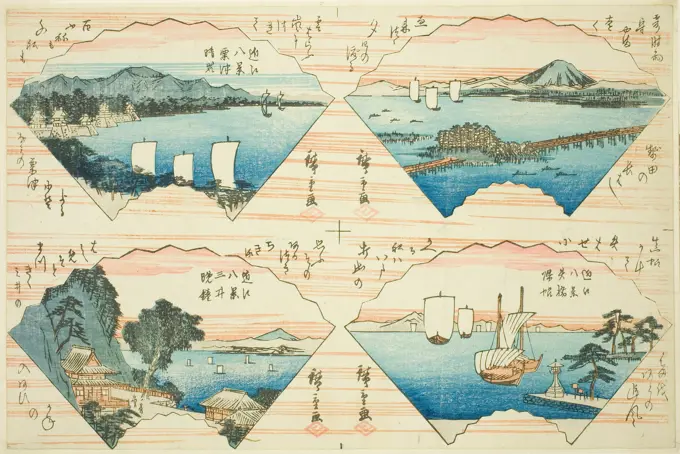
6145-30157824
Four Views from the series Eight Views of Omi (Omi Hakkei) 1825-1835 Japan. Color woodblock print . Utagawa Hiroshige
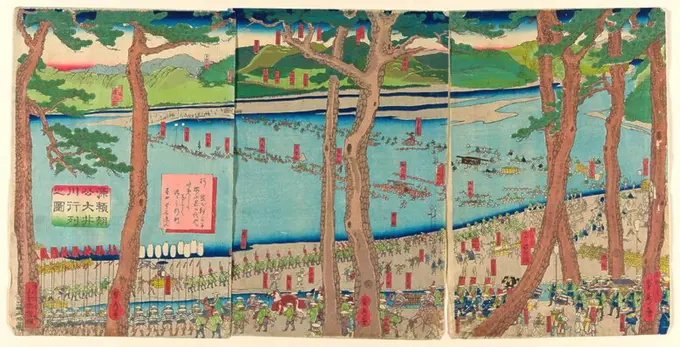
4409-17585143
Procession of Minamoto no Yoritomo across the Oi River (Minamoto Yoritomo ko Oikawa gyoretsu zu). Utagawa Sadahide; Japanese, 1807-1873. Date: 1863. Dimensions: . Color woodblock print; oban triptych. Origin: Japan. Museum: The Chicago Art Institute, Chicago, USA.
1899-18305231
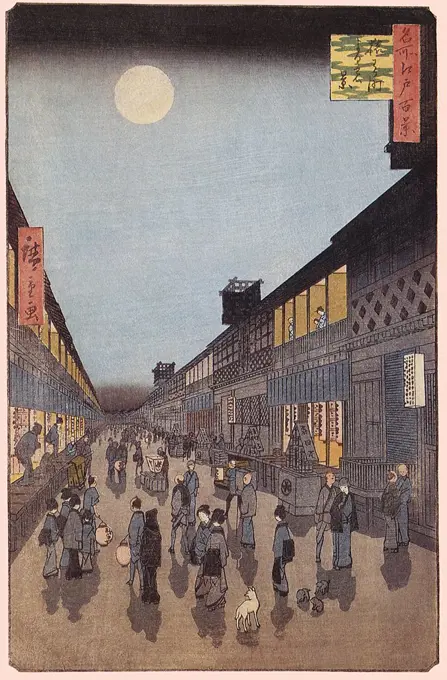
A Night View, Hiroshige, 1856
4409-17562841
Cooling off at Ryogoku Bridge (Ryogokubashi noryo), from the series "Famous Places in Edo (Koto meisho)". Utagawa Hiroshige  ; Japanese, 1797-1858. Date: 1834-1847. Dimensions: 25.1 x 37.8 cm (9 7/8 x 14 7/8 in.). Color woodblock print; oban. Origin: Japan. Museum: The Chicago Art Institute, USA.
4409-17560810
Four Views from the series Eight Views of Omi (Omi Hakkei). Utagawa Hiroshige  ; Japanese, 1797-1858. Date: 1825-1835. Dimensions: 23.4 x 35 cm. Color woodblock print. Origin: Japan. Museum: The Chicago Art Institute, USA.
6145-51817226
Sudden Shower over Shin Ohashi Bridge and Atake, (Ohashi Atake no yudachi) from the series, One Hundred Famous Views of Edo Utagawa Hiroshige (Ando) (Japanese, 1797-1858). Sudden Shower over Shin Ohashi Bridge and Atake, (Ohashi Atake no yudachi) from the series, One Hundred Famous Views of Edo, September 1857. Woodblock color print on paper, sheet: 13 1/8 x 9 7/16 in. (33.3 x 24.0 cm);.   Asian Art September 1857
6145-50635555
Fireworks over the Ryogoku Bridge, from the series: Famous views of Edo /Toto meisho
6145-52373107
Scene 4b. handscrolls. 1660. Spencer Collection. Manuscripts, Japanese
4443-20306233
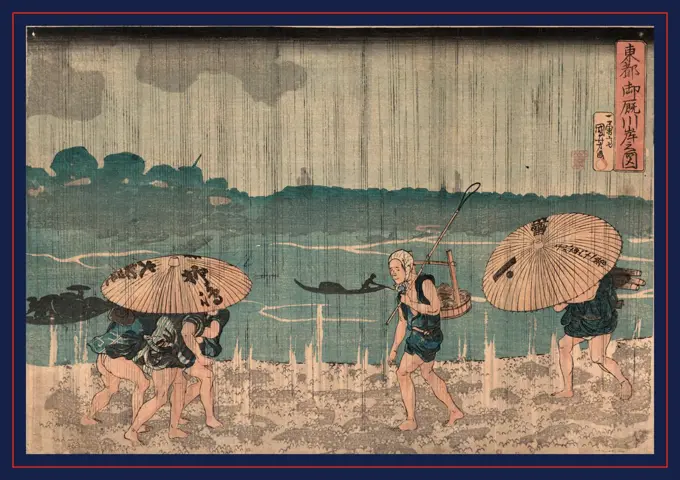
Oumayagashi no zu, Utagawa, Kuniyoshi, 1798-1861, artist, ca. 1834, 1 print : woodcut, color ; 25.6 x 37.3 cm., Print shows people walking along the shoreline of a river during a rain storm.
6145-29136531
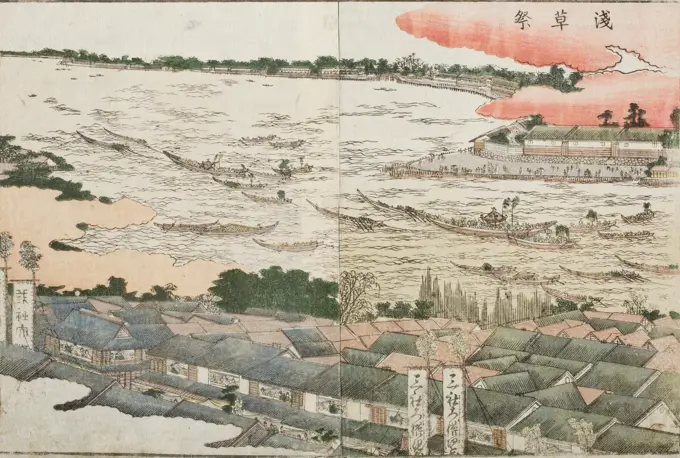
Asakusa Festival. Katsushika Hokusai (Japan, 1760-1849). circa 1802. Books. Double-page book illustration; color woodblock print
4409-17380747
Shinyoshiwara Emonzaka Nihonzutsumi (Harimaya)The Harimaya at Shinyoshiwara Emonzaka Nihonzutsumi. Artist: Utagawa Hiroshige (Japanese, Tokyo (Edo) 1797-1858 Tokyo (Edo)). Culture: Japan. Dimensions: H. 9 5/8 in. (24.4 cm); W. 14 3/4 in. (37.5 cm). Date: ca. 1835-42. Museum: Metropolitan Museum of Art, New York, USA.
6145-29134131
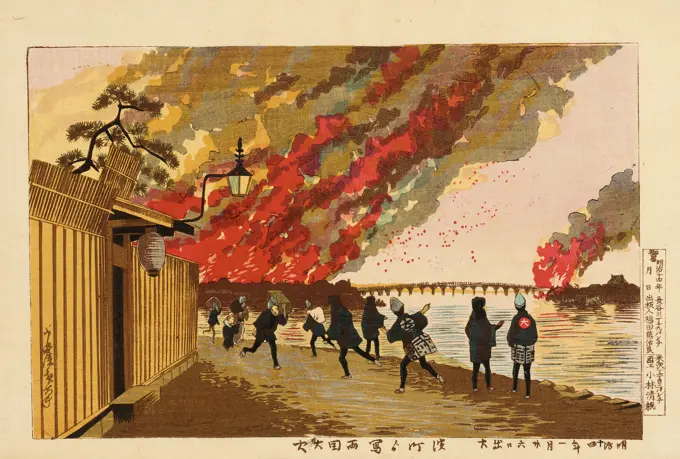
Great Fire at Ryōgoku Sketched from Hamachō, January 26, 1881. Kobayashi Kiyochika (Japan, 1847-1915). Japan, 1881. Prints; woodblocks. Color woodblock print
1899-19136835
China: Qingming Shang Tu or 'Along the River During the Qingming Festival' (detail), from a 1737 Qing Dynasty version based on the Zhang Zeduan (1085-1145) original scroll painting dating from the Northern Song Dynasty (960-1127)
6145-29125821
Fireflies at Ochanomizu. Kobayashi Kiyochika (Japan, 1847-1915). Japan, circa 1880. Prints; woodblocks. Color woodblock print
4443-73244373
Tokyo, Sanoya Kihei, Japan, Hiroshige (I), Utagawa, Toto meisho, Famous places in the Eastern Capital, Ryogokubashi no hanabi no zu, Fireworks at Ryogoku Bridge, People on Ryogoku Bridge and at stalls on the bank of the busy Sumida River, watching fireworks; at night., print, prent, prints, Japan (collection), height 230 mm, width 360 mm, Japanese, 1797 - 1858, print maker, printmaker, 1835 - 1840, second quarter 19th century, paper, nishiki-e, colour woodcut, Publication (Event), Publication, publisher
1899-18713819
Thirty-six Views of Mount Fuji’ is an ukiyo-e’ series of large, color woodblock prints by the Japanese artist Katsushika Hokusai (1760-1849). The series depicts Mount Fuji in differing seasons and weather conditions from a variety of places and distances. It actually consists of 46 prints created between 1826 and 1833. The first 36 were included in the original publication and, due to their popularity, 10 more were added after the original publication. Mount Fuji is the highest mountain in Japan at 3,776.24 m (12,389 ft). An active stratovolcano that last erupted in 1707-08, Mount Fuji lies about 100 km southwest of Tokyo. Mount Fuji's exceptionally symmetrical cone is a well-known symbol and icon of Japan and is frequently depicted in art and photographs. It is one of Japan's Three Holy Mountains’ along with Mount Tate and Mount Haku. Fuji is nowadays frequently visited by sightseers and climbers. It is thought that the first ascent was in 663 CE by an anonymous monk. The summit ha
PREVIOUS
of 3
NEXT
2401 S. Ervay, Suite 206
Dallas, Texas 75215
United States
Get Started
Free ResearchMy BoardsMy Cart
For Creators
How To License Your ContentContributor PortalFrame of Mind
Resources
API accessPricing
Contact
+1 866 236 0087help@viewpictures.co.uk Contact form
©2026 View Pictures. All Rights Reserved. -A
This site is protected by reCAPTCHA and Google Privacy Policy and Terms of Service apply.