My Boards
View Pictures
  • My Boards
← Artworks

Japanese Woodblock Prints

This cluster features traditional Japanese woodblock prints from the 19th century, showcasing various themes like nature, culture, and crafts with intricate details and vivid colors.

Twenty-four Japanese examples of filial piety for the Honors (series title), A young woman dances in front of a folding screen, with an open fan in her hand. The Azuma kagami (Spie, Yashima Gakutei (mentioned on object), Japan, 1820 - 1825, paper, colour woodcut, h 203 mm × w 182 mm
169 assets in this story
6145-29190714
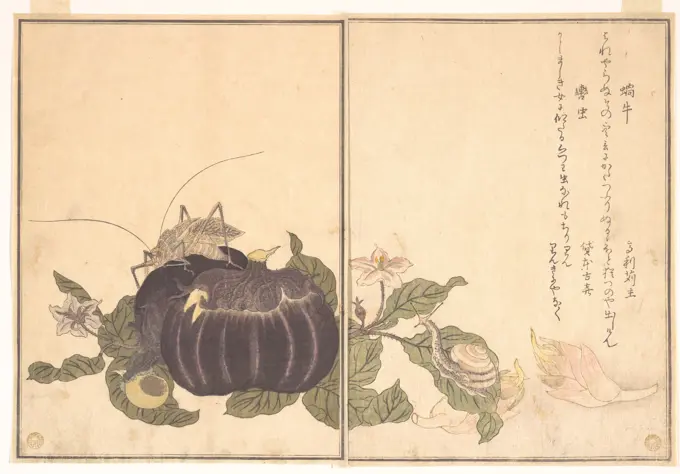
Land Snail (Katatsumuri); Giant Katydid (Kutsuwamushi), from the Picture Book of Crawling Creatures (Ehon mushi erami) 1788 Kitagawa Utamaro Japanese Ehon mushi erami (Picture Book of Crawling Creatures) is illustrated with fifteen designs of insects and other garden creatures by Utamaro. Published by Tsutaya Jūzaburō , the poems were selected and introduced by a preface written by the poet and scholar Yadoya no Meshimori (Rokujuen; 1753-1830), who later became head of the influential Go-gawa poetry group. Several of the top kyōka poets of the day were invited to contribute.. Land Snail (Katatsumuri); Giant Katydid (Kutsuwamushi), from the Picture Book of Crawling Creatures (Ehon mushi erami) 37294
4409-17353914
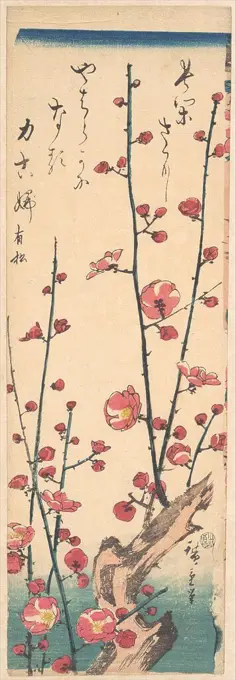
Red Blossom Plum. Artist: Utagawa Hiroshige (Japanese, Tokyo (Edo) 1797-1858 Tokyo (Edo)). Culture: Japan. Dimensions: 13 5/8 x 4 1/2 in. (34.6 x 11.4 cm). Date: ca. 1847. Museum: Metropolitan Museum of Art, New York, USA.
6145-29082616
Album of Landscape Paintings Illustrating Old Poems: Children Play in a Rocky Grove, 1700s. Hua Yan (Chinese, 1682-about 1765). Album leaf, ink and light color on paper; image: 11.2 x 13.1 cm (4 7/16 x 5 3/16 in.); album, closed: 15 x 18.5 cm (5 7/8 x 7 5/16 in.).
6145-45689961
Four harimaze of famous places. Leaf on which four harimaze prints. Arai, fisherman in water at net; Kawasaki, plum blossom with lunch trays; Ishiyama, full moon above rocks; Ogawa, river between high rock walls.
6145-59570230
January 1909, 1909 book. magazine Number 21 (1909) of the magazine Toyo Fujin Gaho: cover on which chicken and crowing rooster; Inside: fold -out frontispies on which painting woman.  paper letterpress printing
4409-17349292
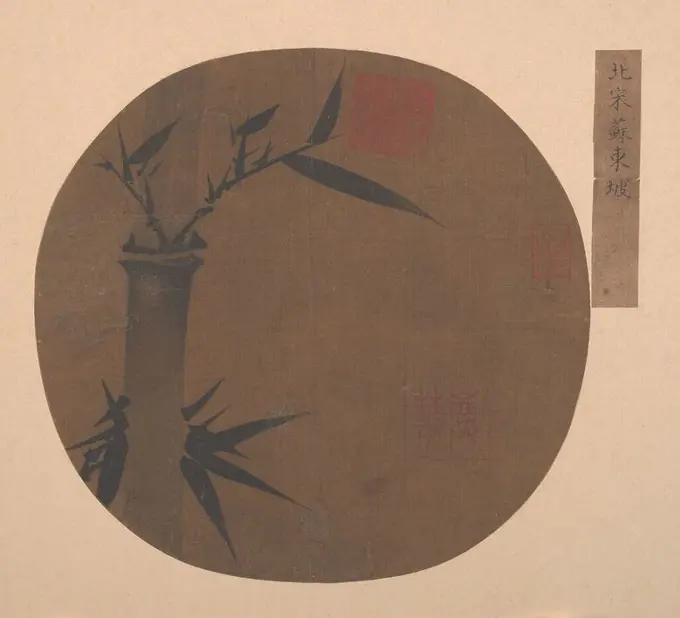
Bamboo. Artist: Unidentified Artist; Formerly Attributed to Su Shi (Chinese, 1037-1101). Culture: China. Dimensions: 8 x 8 3/8 in. (20.3 x 21.3 cm). Museum: Metropolitan Museum of Art, New York, USA.
6145-30100970
Flowers and rider.page 29 from a sketchbook with 26 sheets.
4409-163930
Sazanka or Christmas camellia, Camellia sasanqua. Handcoloured woodblock print by Kono Bairei from Senshu no Hana (One Thousand Varieties of Flowers), Bunkyudo, Kyoto, 1900.
4443-73255764
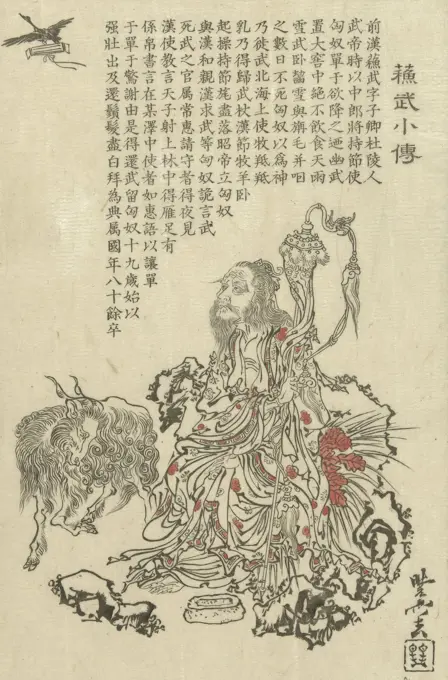
Japan, Kyôsai, Kawanabe, Suwu the shepherd, The Chinese courtier Suwu, abducted to the far north, sitting as a shepherd on a rock with a ram next to it; top left a bird flying away with a note written by Suwu on its leg in which he lets the emperor know that he is still alive. Page from a Japanese book., print, prent, prints, Japan (collection), height 191 mm, width 123 mm, Japanese, 1831 - 1889, print maker, printmaker, 1850 - 1890, second quarter 19th century, third quarter 19th century, paper, woodcut, hand-coloured
4409-17584860
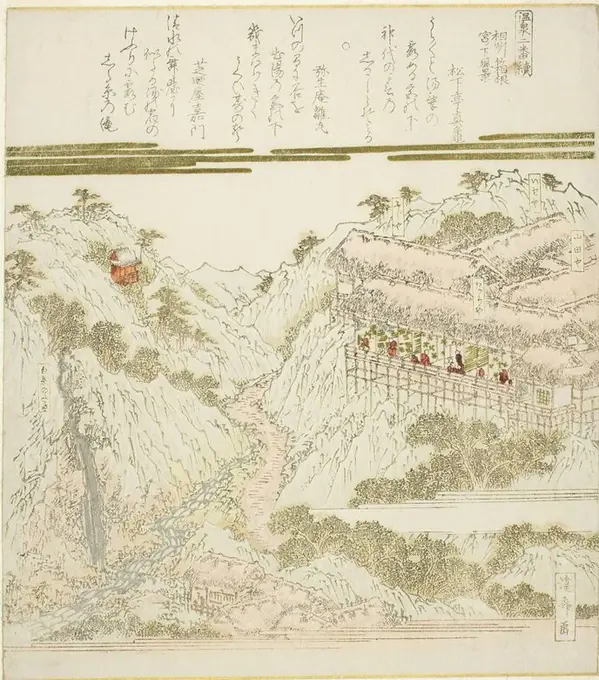
View of Miyanoshita Hot Springs in Hakone, Soshu, from the series "Hot Springs - A Diptych (Onsen niban tsuzuki)". Keisai Eisen; Japanese, 1790-1848. Date: 1820-1829. Dimensions: 21.2 x 18.7 cm. Color woodblock print with metallic pigments; shikishiban, surimono. Origin: Japan. Museum: The Chicago Art Institute, Chicago, USA. Author: KEISAI EISEN.
4409-17503750
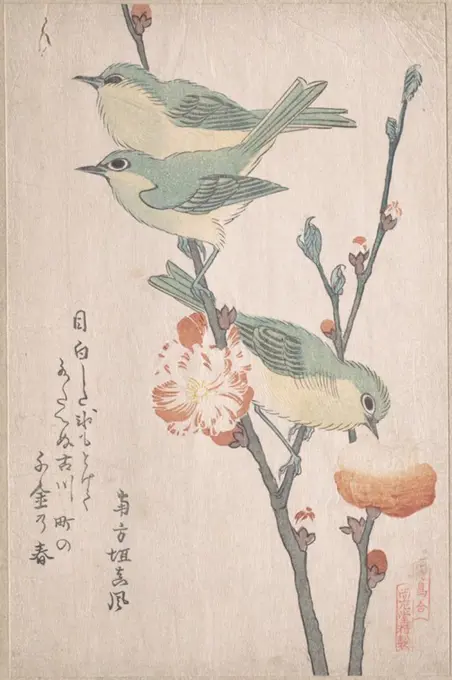
Japanese White-eyes on a Branch of Peach Tree," from the Series An Array of Birds (Tori awase), from Spring Rain Surimono Album (Harusame surimono-jo, vol. 3). Artist: Kubo Shunman (Japanese, 1757-1820). Culture: Japan. Dimensions: 8 3/16 x 5 3/8 in. (20.8 x 13.7 cm). Date: ca. 1805-10.Surimono are privately published woodblock prints, usually commissioned by poets or poetry groups as a form of New Year's greeting card. The poems, most commonly kyoka (witty thirty-one syllable verse), inscribed on the prints usually include felicitous imagery connected with spring, which in the lunar calendar begins on the first day of the first month. Themes of surimono are often erudite, frequently alluding to Japanese literary classics in both texts and images.This album belongs to a set of three compiled by Hayashi Tadamasa, the great Parisian dealer of Japanese art. Hayashi arranged the more than four hundred prints in the set on facing leaves according to themes, or in a way that created an att
6145-30157486
The Poet Sojo Henjo, from the series Six Immortal Poets (Rokkasen) 1805-1815 Japan. Color woodblock print; oban . Katsushika Hokusai
6145-30159718
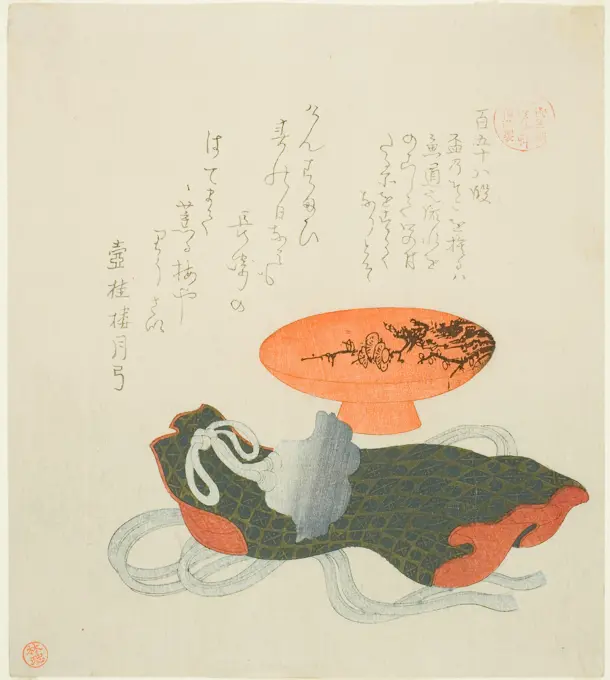
Passage 158 (Hyaku gojuhachi dan), from the series Essays in Idleness for the Asakusa Group (Asakusagawa Tsurezuregusa) 1800-1850 Japan. Color woodblock print; shikishiban, surimono . Kubo Shunman
6145-29216497
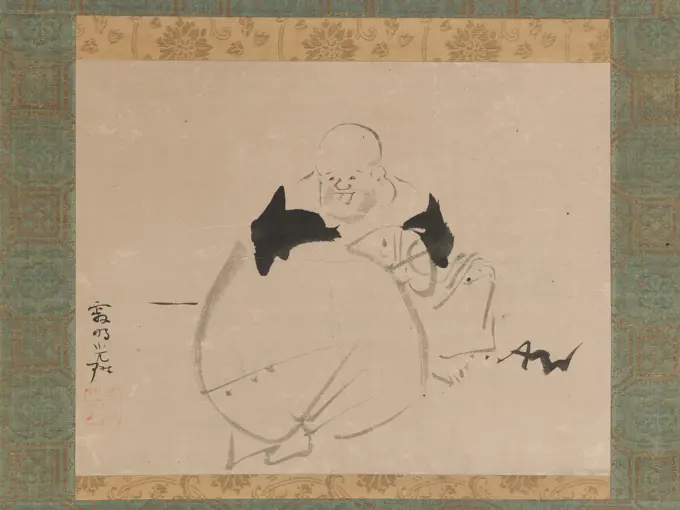
Hotei after 1704 Ogata Krin Hotei (Chinese: Budai) is one of the most beloved characters of Zen Buddhism and is believed to be an avatar of Maitreya, the Buddha of the Future. Potbellied with a shaven head, this cheerful, blissful monk is said to have roamed the countryside in the late ninth to early tenth century in the area of Mount Siming, in southern China, carrying his few belongings in a patched cloth bag. Hotei was probably first portrayed in painting soon after his death and later entered the folklore of China and Japan as one of the Seven Gods of Good Fortune (Shichi fukujin). In his ink paintings of august East Asian mythological and historical personages, Ogata Krin often portrayed the seven gods in a more playful aspect, as seen here.. Hotei. Ogata Krin (Japanese, 1658-1716). Japan. after 1704. Hanging scroll; ink on paper. Edo period (1615-1868). Paintings
4409-17398918
Mirror with Cover, Bowl and Brush for Rouge. Artist: Yukeisha (Japanese, 18th-19th century). Culture: Japan. Dimensions: 5 3/8 x 7 1/16 in. (13.7 x 17.9 cm). Museum: Metropolitan Museum of Art, New York, USA.
6145-59569825
Shunga album. Spring songs - part three, 1780 - 1850 book Part three (of three); cover with cloud pattern and white flowers; At the top left red title strip with pattern of plum blossom, bamboo and pine branches; 12 sheets: first page, image of plum blossom; 6 performances with Love Business Couple; 12 pages, text.  paper. color woodcut
4409-17543496
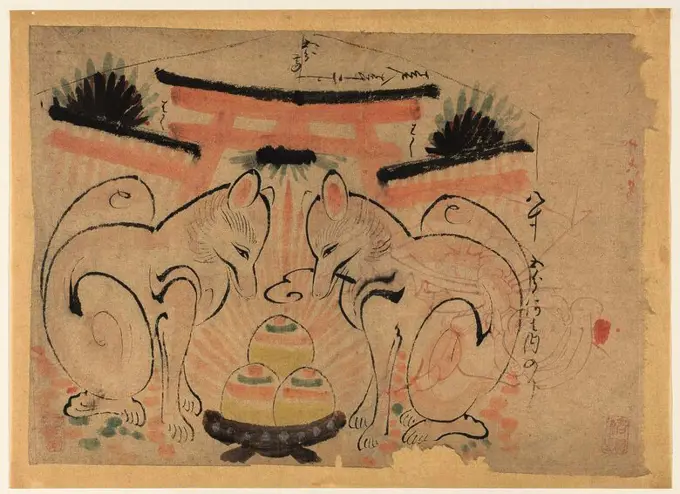
Two foxes for the torri of the Inari Jinja. Draughtsman: anonymous. Dating: 1800 - 1900. Place: Japan. Measurements: h 300 mm × w 415 mm. Museum: Rijksmuseum, Amsterdam.
4409-17353614
Calligraphy. Artist: Li Qiao (Chinese, active Ming dynasty). Culture: China. Dimensions: 6 x 20 1/4 in. (16.5 x 51.4 cm). Museum: Metropolitan Museum of Art, New York, USA.
4266-21641583
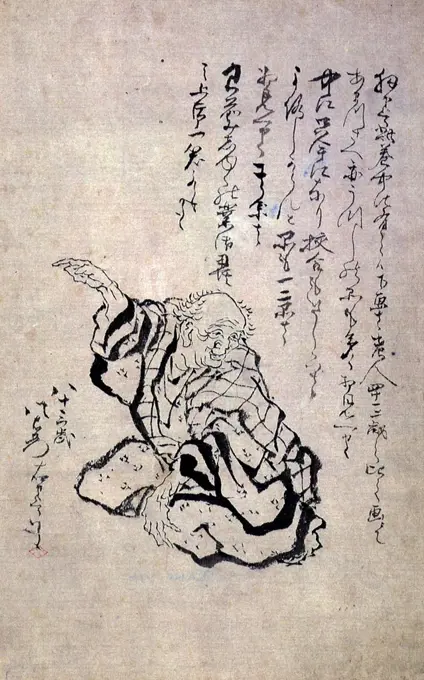
Self-portrait at the age of eighty three, Hokusai, Katsushika (1760-1849)
6145-51818588
Sketch of Daruma Katsushika Hokusai (Japanese, 1760-1849). Sketch of Daruma, 1760-1849. Painting on paper, 12 7/8 x 9 1/2 in. (32.7 x 24.1 cm).   Asian Art 1760-1849
6145-29288926
Ming herbal (painting): Kucao (bitter herb)
4409-17417893
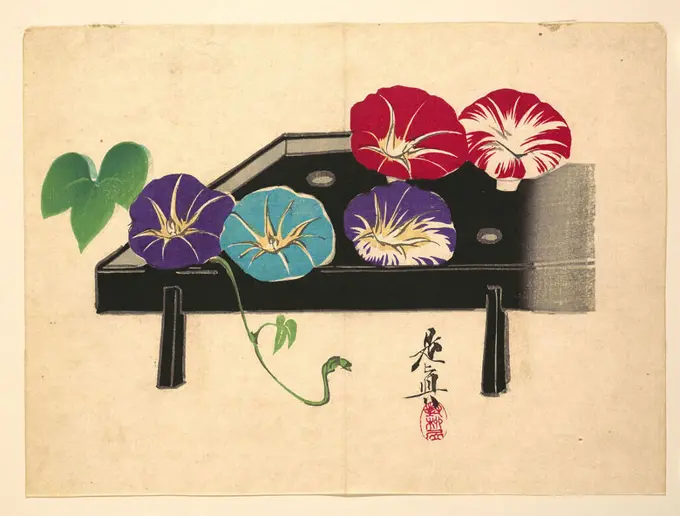
Morning Glories. Artist: Shibata Zeshin (Japanese, 1807-1891). Culture: Japan. Dimensions: Image: 8 1/2 × 11 5/8 in. (21.6 × 29.5 cm)Mat: 15 1/4 × 22 3/4 in. (38.7 × 57.8 cm). Date: ca. 1860. Museum: Metropolitan Museum of Art, New York, USA.
6145-29163438
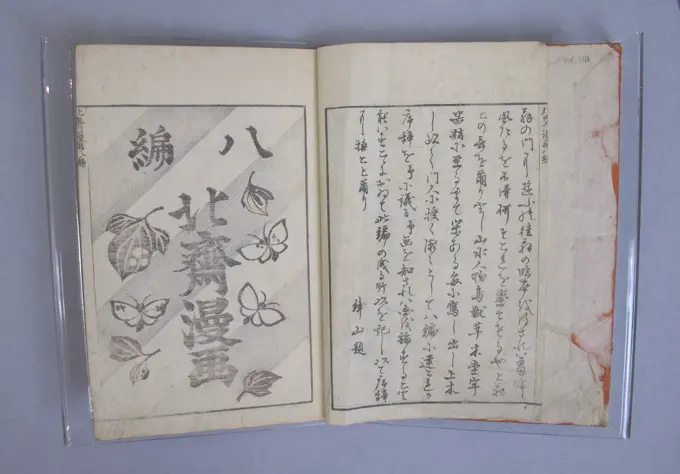
Transmitting the Spirit, Revealing the Form of Things: Hokusai Sketchbooks, volume 8 (Denshin kaishu: Hokusai manga, hachihen) 1817 Katsushika Hokusai Japanese. Transmitting the Spirit, Revealing the Form of Things: Hokusai Sketchbooks, volume 8 (Denshin kaishu: Hokusai manga, hachihen) 57685
4409-17379950
Wine Bottle, Cup and Cherry Blossoms. Artist: Yashima Gakutei (Japanese, 1786-1868). Culture: Japan. Dimensions: 8 1/16 x 7 1/8 in. (20.5 x 18.1 cm). Date: probably 1817. Museum: Metropolitan Museum of Art, New York, USA.
4443-20307783
Sakura ni tsunagizaru, Monkey on a leash and cherry blossoms., Ando, Hiroshige, 1797-1858, artist, between 1830 and 1858, printed later, 1 print : woodcut, color., Print shows a monkey sitting on a post with cherry blossoms falling around it.
4443-73242331
Japan, Shunei shochikabai - jo, Shunga album. Spring Songs - part one, Part one (of three); cover with cloud pattern and white flowers; top left red title strip with pattern of plum blossom, bamboo and pine branches; cover page, title page; 14 leaves: first page, image of a pine tree; two pages of text; 7 scenes with a loving couple; 12 pages, text., book, shunga, prints, pictures, Japan (collection), height 115 mm, width 80 mm, print maker, printmaker, 1780 - 1850, paper, gold powder, silver powder, colour woodcut, blind printing, polishing
6145-59576096
Still life for the New Year, Tanaka Shûtei, c. 1850 - c. 1855 print On the right in the foreground is a tobacco bag or HakoSeko, and seven bound sticks behind it. The bag is decorated with fabric strips in different colors and on the transshipment are flying cranes and pine branches (New Year's symbols).  paper color woodcut container of textile material: bag, sack
6145-29256199
Acupuncture chart with a series of points indicated on the figure of a standing Chinese man. Watercolour, China, 17--.
4409-17510905
Important Cultural Property Portrait of Minamoto no Shitago from the Satake version of the Thirty-six Master Poets. Date/Period: Kamakura period (13th century). Painting. Height: 366 mm (14.40 in); Width: 605 mm (23.81 in). Author: Attributed to Fujiwara-no-Nobuzane (Calligraphy attributed to Gokyogoku Yoshitsune).
6145-52954756
Two-Line Calligraphy Soejima Taneomi Japanese Edo period (1615-1868)-Meiji period (1868-1912) Two columns of Chinese characters, boldly brushed in dark ink on satin, convey a sense of all the writers vigor, strength of purpose, and dynamic personality. The odd proportions, and intentional distortion of some of the characters reflect the artists departure from long-established rules of brush writing. In some instances the order and direction of brushstrokes depart from the norm, shattering the expectation of regularity and symmetry and giving the characters an entirely new appearance. The dynamism of these forms may reflect the character of the calligrapher, a career politician, who served at different times as foreign minister, councilor of state, advisor in the Imperial Household Ministry, and home minister during the Meiji period.Soejima Taneomi, born into a samurai family, was well educated in Western studies but also had a broad knowledge of Chinese literature and culture. This k
6145-51834887
Mustard Seed Garden, a Chinese Painter's Manual Mustard Seed Garden, a Chinese Painter's Manual, 1782. Woodblock printed book, ink and color on paper, Each: 11 3/4 x 6 13/16 x 3/16 in. (29.8 x 17.3 x 0.5 cm).   Asian Art 1782
6145-30180050
Fukusa (Gift Cover) Made 1801-1900 Japan. Mon side silk, warp-faced, weft ribbed plain weave (shioze); dye extracted through stenciled chemical dye stripper (bassen); patterned side cotton, silk and gold-leaf-over-lacquered-paper strip wrapped silk, slit tapestry weave with wrapped outlining wefts (tsuzure); paper interlining; Sewn with front and lining matched in size (Tachikiri awase); corners silk, gold-leaf-over-lacquered-paper strip wrapped silk, tubular 1 1 oblique interlacing over cotton core, knotted; silk-wrapped cotton ball and re-plied silk, gold-leaf-over-lacquered-paper strip wrapped silk fringe tassels .
4409-163434
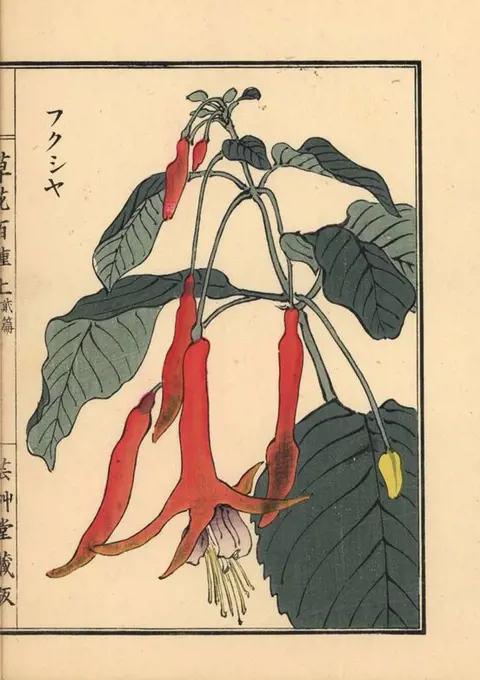
Fukusha or fuchsia, Fuchsia species. Handcoloured woodblock print by Kono Bairei from Kusa Bana Hyakushu (One Hundred Varieties of Flowers), Tokyo, Yamada, 1901.
4409-17585061
Suruga, Kai, and Izu, no. 5 from the series "Cutout Pictures of the Provinces (Kunizukushi harimaze zue)". Utagawa Hiroshige  ; Japanese, 1797-1858. Date: 1852. Dimensions: 36.6 x 25.1 cm (14 1/2 x 10 in.). Color woodblock print; oban, harimaze. Origin: Japan. Museum: The Chicago Art Institute, USA.
6145-44323149
Beautiful woman at desk, woodcuts looking at. Donation Gerhard Schack
6145-52337953
Man shooting while falling.. Nagasawa, Shigetsuna. 1612. Spencer Collection
6145-52803759
A pencil drawing book by Josef von Führich for Joseph Führich in Cratzau, containing studies and sketches begun on February 2, 1806, illustrating figures, forms, and objects.
4443-28740507
Various Types of Torii Arch, 1816, Katsushika Hokusai, Japanese, 1760 - 1849, 7 5/8 x 10 11/16 in. (19.3 x 27.2 cm) (sheet), From a woodblock printed book; ink and color on paper, Japan, 19th century
6145-29090562
Symbols of Longevity: Deer under Peach and Pine (Pine) (right), 1801. Toda Tadanaka (Japanese, 1761-1823). Pair of hanging scrolls; ink and color on silk (ivory roller ends); overall: 197.8 x 68.7 cm (77 7/8 x 27 1/16 in.); painting only: 135.1 x 54 cm (53 3/16 x 21 1/4 in.); scroll: 197.8 x 74.6 cm (77 7/8 x 29 3/8 in.).
4409-48146166
Hybrid white chrysanthemum with drooping petals, Chrysanthemum indicum. Handcoloured woodblock print after Keika Hasegawa from Keika Hyakugiku, Keika's 100 Chrysanthemums, published by Naosaburo Yamada, Kyoto, Japan, 1893. Keika Hasegawa drew flowers and patterns for kimono in Kyoto in the final years of the 19th century.
4443-73217799
Japan, Geisodo, Nihon - go, Japan - part five, back cover - stamped, Part five of a series of pattern books; blue cover with image of a pink stylized kimono; 50 leaves with various fabric patterns, kimono designs and some flowers and plants., book, prints, Japan (collection), Rijksschool voor kunstnijverheid, height 240 mm, width 163 mm, print maker, prentmaker, 1868 - 1912, third quarter 19th century, fourth quarter 19th century, first quarter 20st century, first quarter 20th century, paper, colour woodcut, Publication (Event), Publication, publisher
4443-19518577
Fragment, Medium: silk, metallic thread Technique: satin stitches, couching stitches and knots on crepe foundation, Orange crepe silk fragment, probably from a kimono sleeve, embroidered in silk and gold thread. Pattern of white flower heads with colored foliage., Japan, 17th-18th century, embroidery & stitching, Fragment
4443-19375410
Reflection shell, ivory shell and triton shell Utsusegai baishi hora (title on object) A series of shells (series title) Kaitsukushi (series title on object), A large triton shell with smaller shells. With three poems, molluscs (shell, snail shell etc.), Totoya Hokkei (mentioned on object), Japan, 1821, paper, colour woodcut, h 206 mm × w 182 mm
6145-58825319
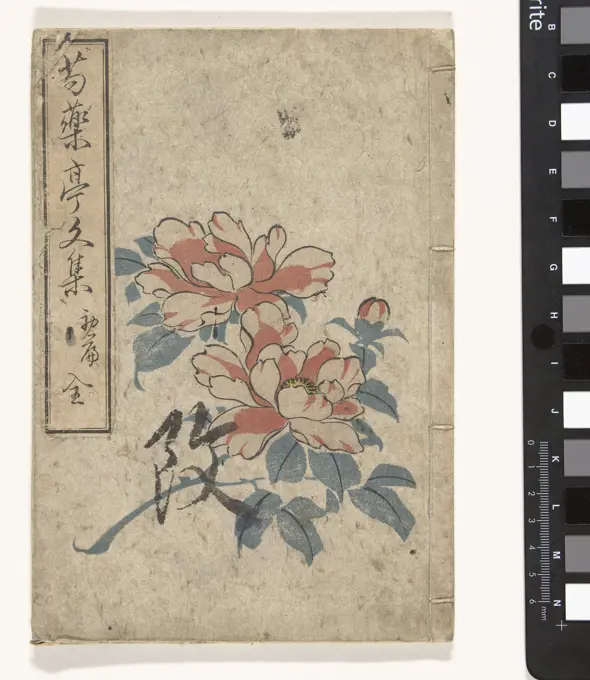
Anthology of peonies, utagawa (school of), 1830 - 1840 Part One; Cover on which image of flowering peonies; Title strip at the top left; 9 magazines, numbered (some missing pages): 1-17, text and images of mythological topics. Japan paper color woodcut Part One; Cover on which image of flowering peonies; Title strip at the top left; 9 magazines, numbered (some missing pages): 1-17, text and images of mythological topics. Japan paper color woodcut
6145-29126356
Picture Book of Selected Insects, vol. II. Kitagawa Utamaro (Japan, 1753-1806). Japan, 1788. Books. Color woodblock printed book
6145-59584294
Two musicians run in the rain, Ogata Gekkô, 1900 - 1910 print   paper color woodcut running. umbrella
6145-43534956
Drawing, Trophy; France; pen and ink, brush and watercolor, black chalk on paper; 9.5 × 8.9 cm (3 3/4 × 3 1/2 in.)
6145-29116512
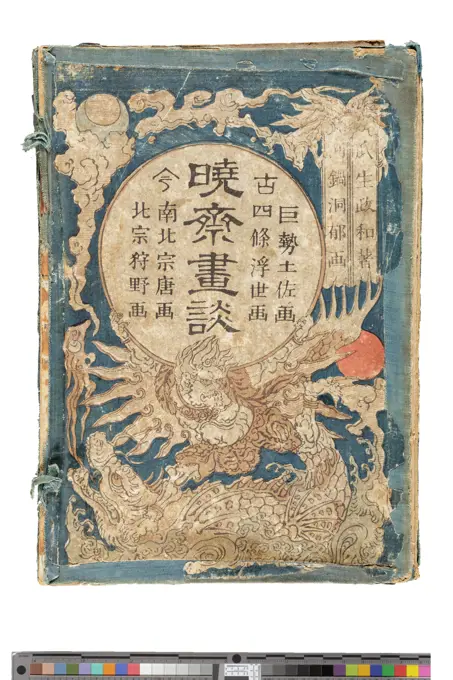
Kyōsai's Treatise on Painting (Cover). Kawanabe Kyōsai (Japan, 1831-1889). Japan, 1887. Books. Slip cover having woodblock printed illustration adhered to cloth over paperboard
6145-30158262
Narcissus and lacquer box 1820-1839 Japan. Color woodblock print; nagaban surimono . Mori Shunkei
6145-29187069
Zhe gu 1789 Kuwagata Keisai Japanese. Zhe gu. Kuwagata Keisai (Japanese, 1764-1824). Japan. 1789. Woodblock print; ink and color on paper. Edo period (1615-1868). Prints
4409-17557913
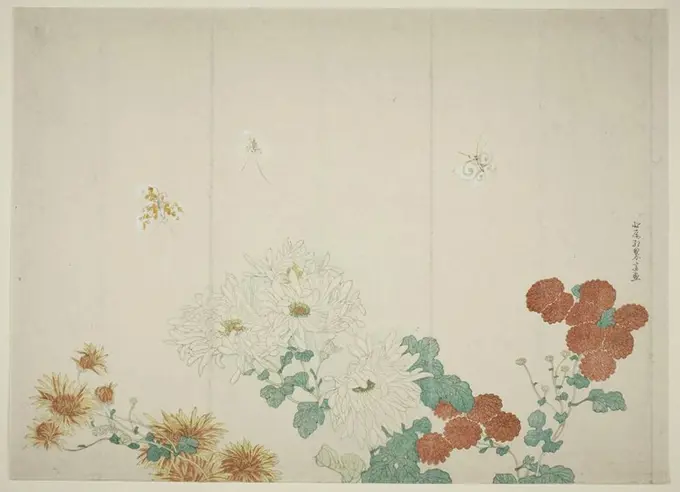
Three Types of Chrysanthemums. Kitao Shigemasa; Japanese, 1739-1820. Date: 1785-1795. Dimensions: 33.5 x 46.4 cm (13 3/16 x 18 1/4 in.). Color woodblock print; surimono. Origin: Japan. Museum: The Chicago Art Institute, Chicago, USA.
6145-51835352
Album of Genre Paintings Album of Genre Paintings, ca. 1871. Ink and color on paper, Each leaf, approx.: 8 1/8 x 7 7/8 in. (20.6 x 20 cm).   Asian Art ca. 1871
6145-51380201
Drawing, Design for a Chinese Pavilion; Designed by Frederick Crace (English, 1779-1859); England; brush and watercolor, pen and ink on paper
4443-21772825
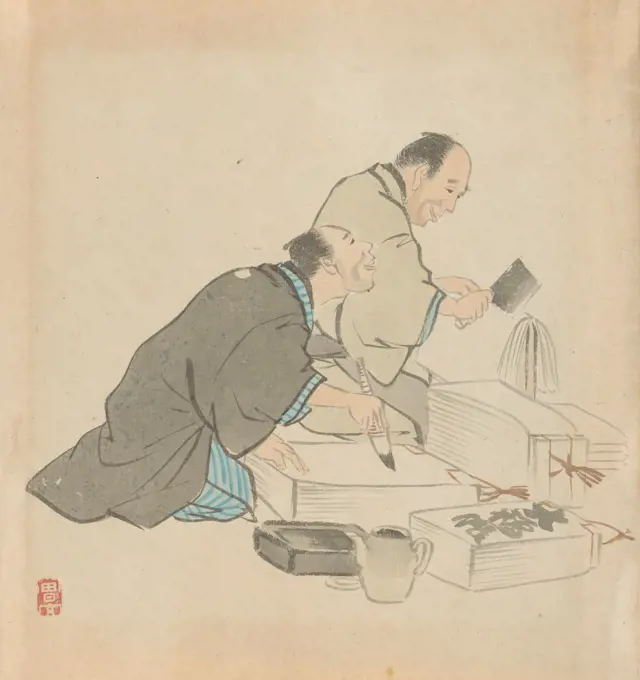
Japanese calligrapher and a Japanese bookbinder, draughtsman: anonymous, c. 1900, paper, brush, h 235 mm × w 220 mm
4409-17371735
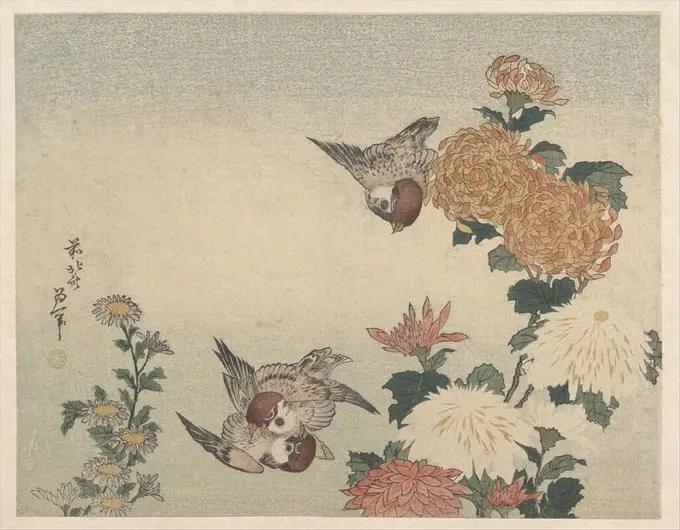
Sparrows and Chrysanthemums. Artist: Katsushika Hokusai (Japanese, Tokyo (Edo) 1760-1849 Tokyo (Edo)). Culture: Japan. Dimensions: H. 8 1/2 in. (21.6 cm); W. 10 13/16 in. (27.5 cm). Date: ca. 1825. Museum: Metropolitan Museum of Art, New York, USA.
4443-28727857
Sound of Rain as the Storm Clears, mid 19th century, Yoshida Shūran, Japanese, 1797 - 1866, 49 1/4 × 19 5/8 in. (125.1 × 49.85 cm) (image)76 3/16 × 25 3/8 in. (193.52 × 64.45 cm) (mount, without roller), Ink on paper, Japan, 19th century
4409-17437651
Standard Banner (Sashimono). Culture: Japanese. Dimensions: 37 x 24 1/4 in. (94.0 x 61.6 cm). Date: probably late 18th-early 19th century. Museum: Metropolitan Museum of Art, New York, USA.
4443-28740217
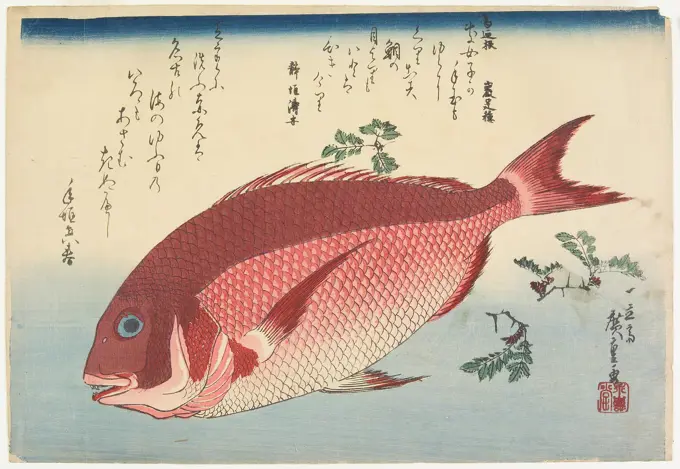
Sea Bream and Sansho Pepper, c. 1832-1833, Utagawa Hiroshige; Publisher: Nishimuraya Yohachi, Japanese, 1797 - 1858, 9 13/16 × 14 3/16 in. (25 × 36 cm) (image, horizontal ōban), Woodblock print (nishiki-e); ink and color on paper, Japan, 19th century
6145-29267340
Smallpox, textured illustration, Japanese manuscript, c. 1720
4443-28728966
Peony in basket, 20th century, Shōzan, 19 3/8 × 22 1/8 in. (49.21 × 56.2 cm) (image)64 13/16 × 27 3/4 in. (164.62 × 70.49 cm) (mount, without roller), Ink and color on silk, Japan, 20th century
6145-30181302
Sutra Cover Made 1590-1599 China. Silk and gold-leaf-over-lacquered-paper strips, warp-float faced 4 1 satin weave with supplementary patterning wefts bound in weft-float faced 1 4 satin interlacings; label silk, warp-float faced 3 1 'Z' twill weave; painted with ink; over paper; .
4409-28962616
Sparklers, crab and bulb. Origin: Japan. Period: Edo period. Date: 1760-1849. Ink and color on paper. Museum: Freer Gallery of Art and Arthur M. Sackler Gallery.
4409-17425036
Shimadai and Ainame Fish, from the series Uozukushi (Every Variety of Fish). Artist: Utagawa Hiroshige (Japanese, Tokyo (Edo) 1797-1858 Tokyo (Edo)). Culture: Japan. Dimensions: 10 1/8 x 14 9/16 in. (25.7 x 37 cm). Date: 1840s. Museum: Metropolitan Museum of Art, New York, USA.
6145-29189987
Illustrated book 1893 Japan. Illustrated book. Japan. 1893. Ink on paper. Meiji period (1868-1912). Illustrated Books
4409-17551372
Carp. Katsushika Taito II; Japanese, active c. 1810-53. Date: 1825-1849. Dimensions: . Color woodblock print; section of harimaze sheet. Origin: Japan. Museum: The Chicago Art Institute, Chicago, USA.
6145-29294561
C18 Chinese woodcut: Tinea-like throat disease
6145-29257104
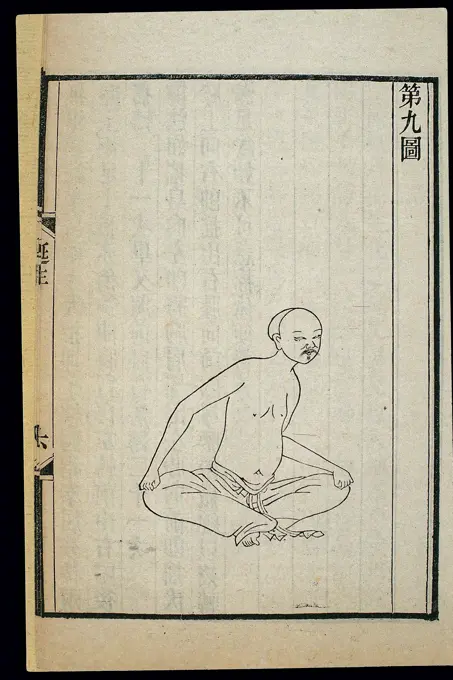
Chinese woodcut: Life-prolonging nine revolutions, 9
4443-28728977
Ibaraki left of a pair, 1882, Shibata Zeshin, Japanese, 1807 - 1891, 65 3/4 × 66 1/2 in. (167.01 × 168.91 cm) (image)67 × 68 × 3/4 in. (170.18 × 172.72 × 1.91 cm), Ink, color, and gold on paper, Japan, 19th century, Ibaraki-dōji was a demon who became a follower of Shuten-dōji, the leader of a gang of demons terrorizing Kyoto in the 10th century. Ibaraki was able to escape when the other demons were destroyed and he went on to Rashōmon gate. There, he encountered the warrior Watanabe no Tsuna who cut one of his arms off. Appearing as an old woman, Ibaraki is granted access to see the arm that is kept in a purified box. He manages to steal his arm and, reverting back into a demon, disappears into the sky.
1899-18789399
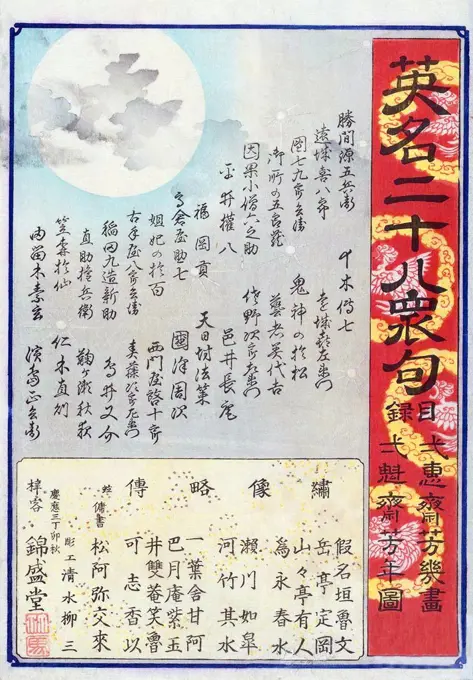
Tsukioka Yoshitoshi (30 April 1839 9 June 1892, also named Taiso Yoshitoshi) was a Japanese artist. Utagawa Yoshiiku (1833 - February 6, 1904, also known as or Ochiai Yoshiiku), was a Japanese printmaker and newspaper illustrator. Eimei nijuhasshuku (28 Famous Murders with Verse), also known as the 'Bloody Prints', is a collection of Japanese ukiyo-e from the 1860s, which depicted gruesome acts of murder or torture based on historical events or scenes in Kabuki plays. Although most of the works are solely violent by nature, it is perhaps the first known example of ero guro or the erotic grotesque in Japanese culture, an art sub-genre which depicts either erotic or extreme images of violence and mutilation.
PREVIOUS
of 2
NEXT
2401 S. Ervay, Suite 206
Dallas, Texas 75215
United States
Get Started
Free ResearchMy BoardsMy Cart
For Creators
How To License Your ContentContributor PortalFrame of Mind
Resources
API accessPricing
Contact
+1 866 236 0087help@viewpictures.co.uk Contact form
©2026 View Pictures. All Rights Reserved. -A
This site is protected by reCAPTCHA and Google Privacy Policy and Terms of Service apply.