Japanese Woodblock Prints of Actors

Colorful woodblock prints depicting actors and scenes from Japanese culture, showcasing clothing and traditional settings, rich in detail.
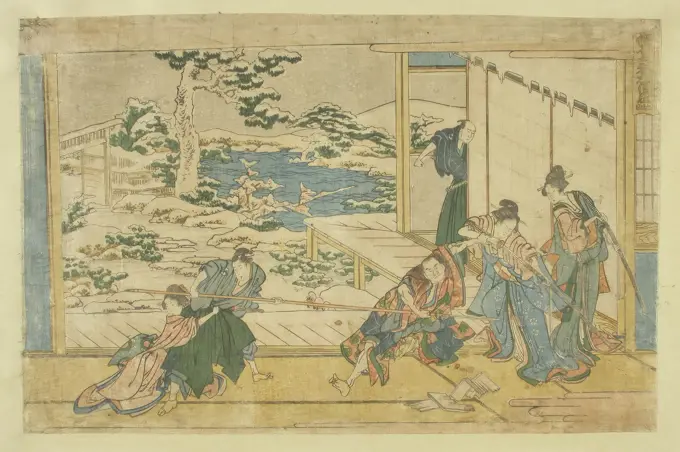
Hokusai, Katsushika, work, Attack of the bandits, (1000 - 2000), colored woodcut, graphics, image and leaf width 37.3 cm, image and leaf height 24.7 cm
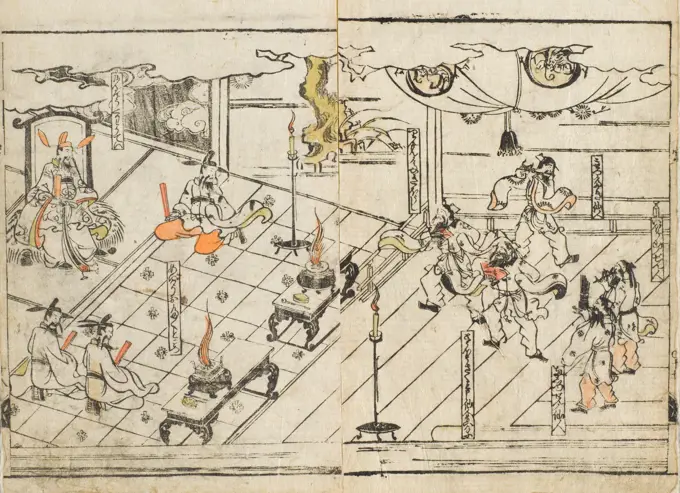
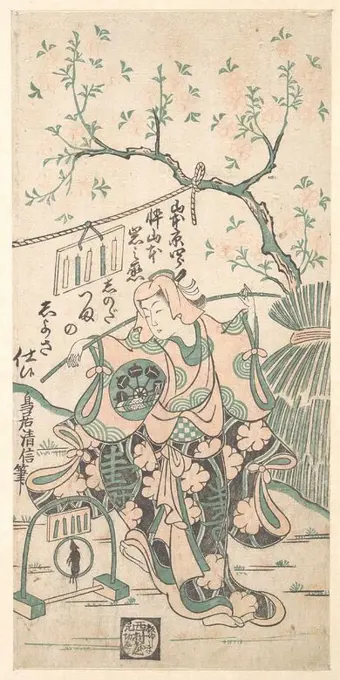
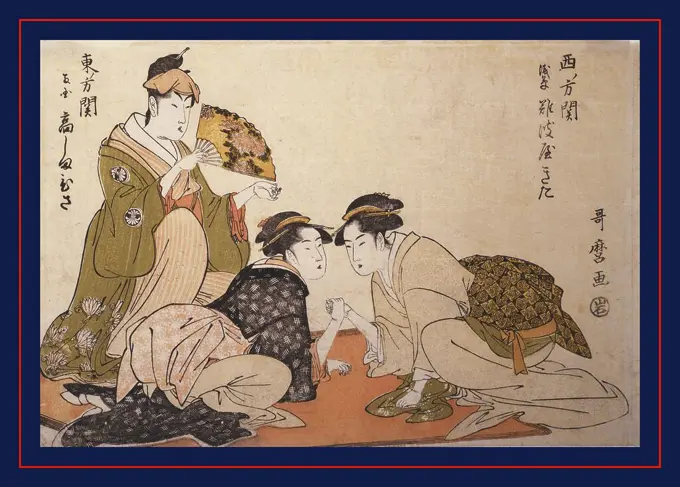
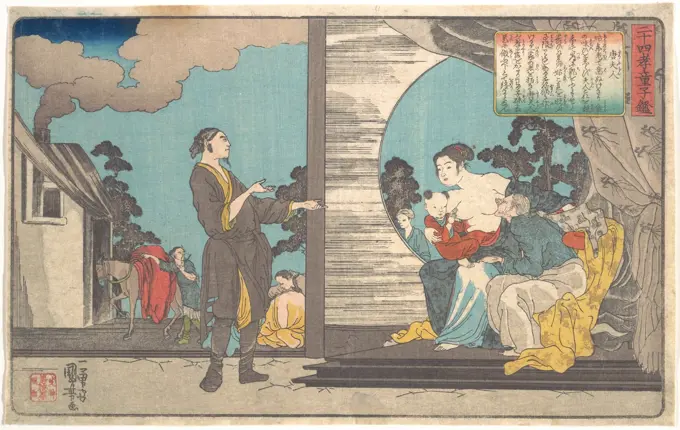
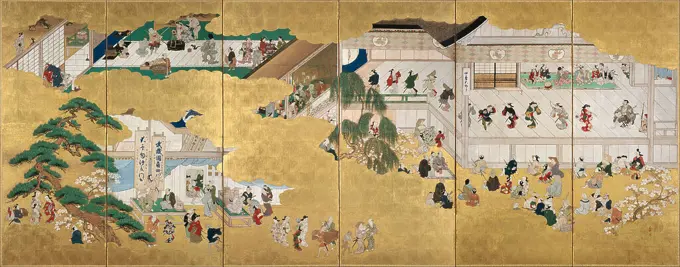
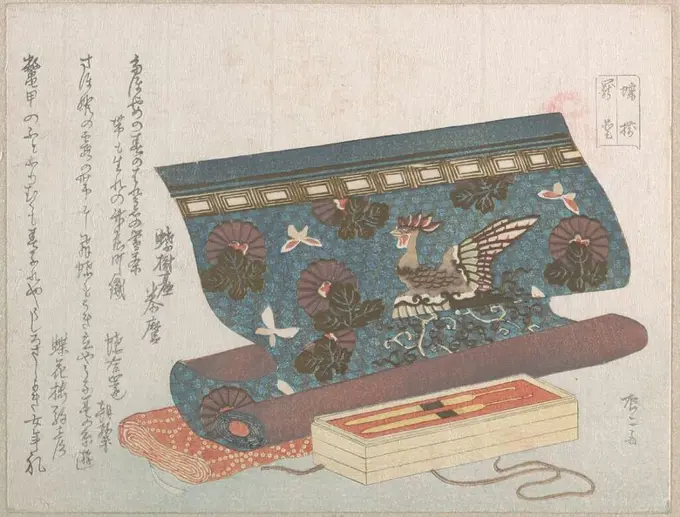
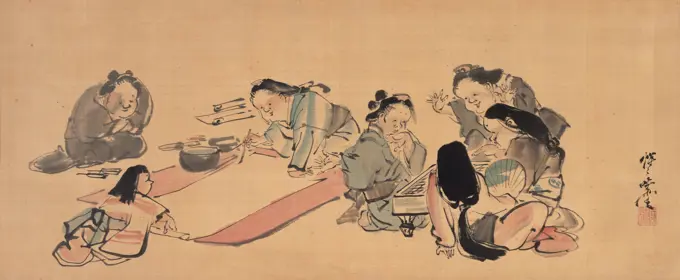
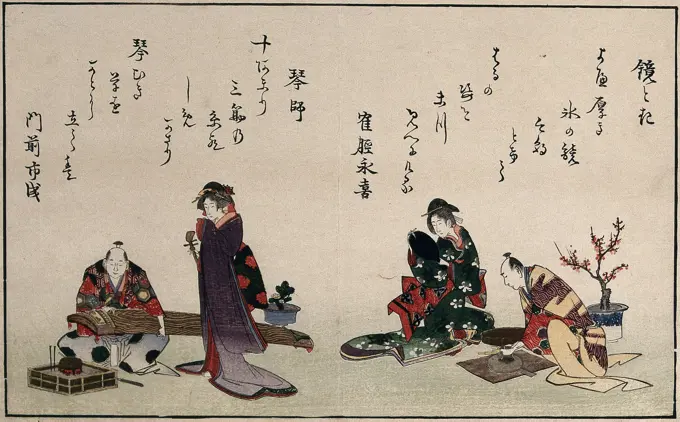
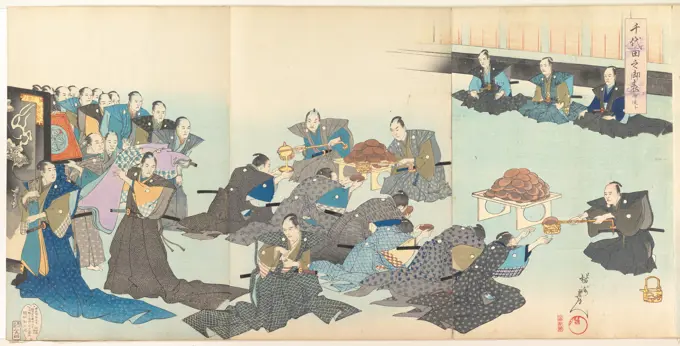
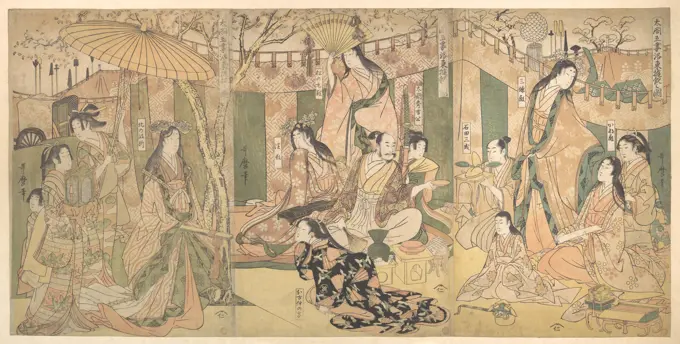
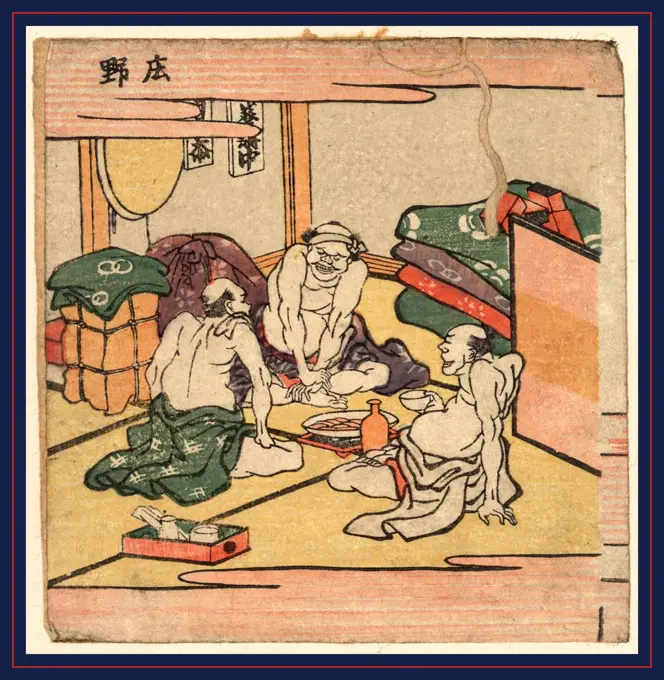
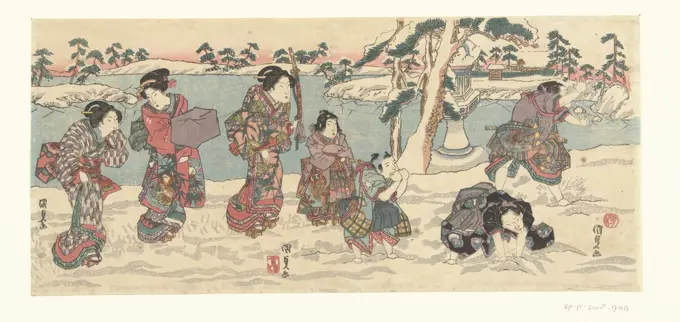
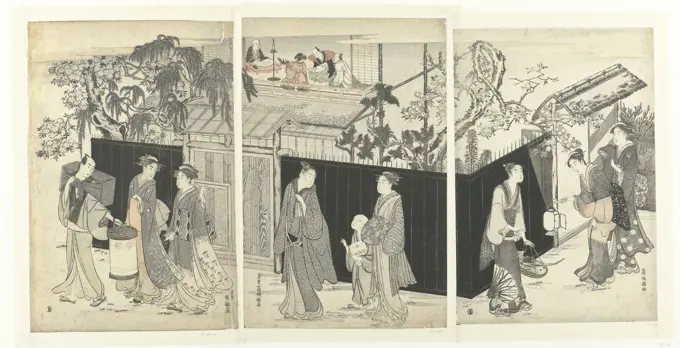
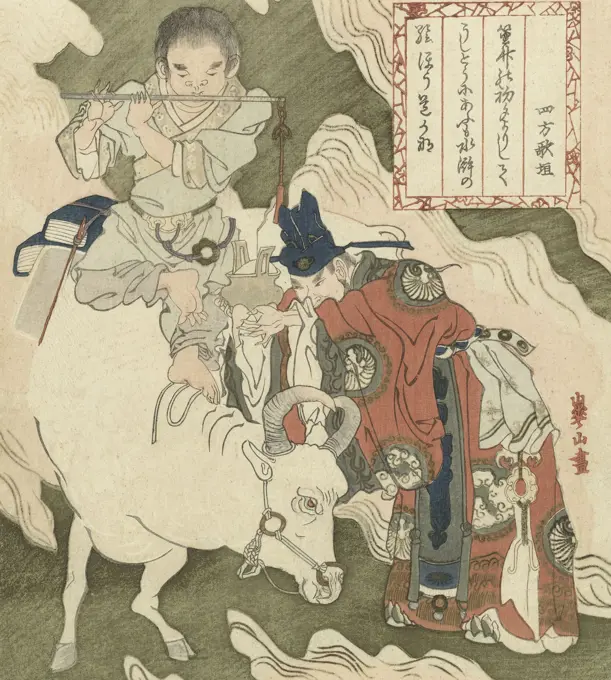
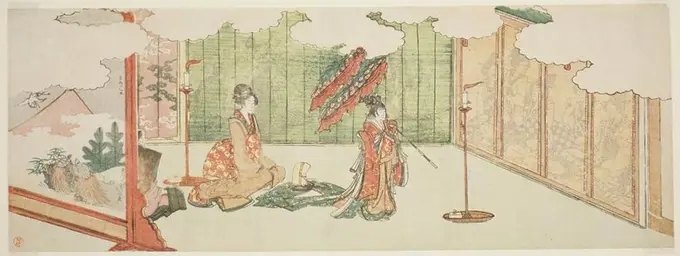
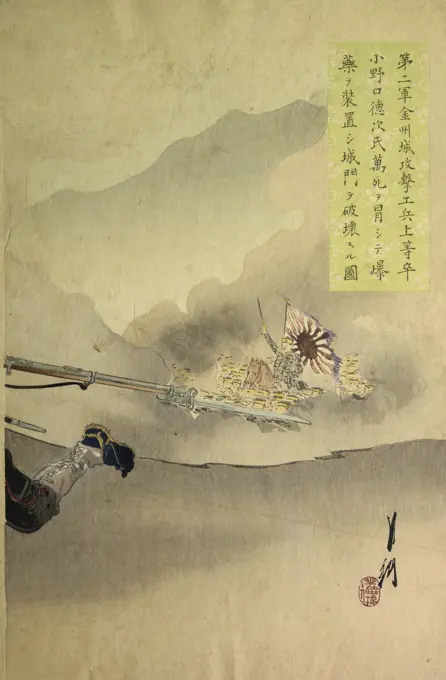
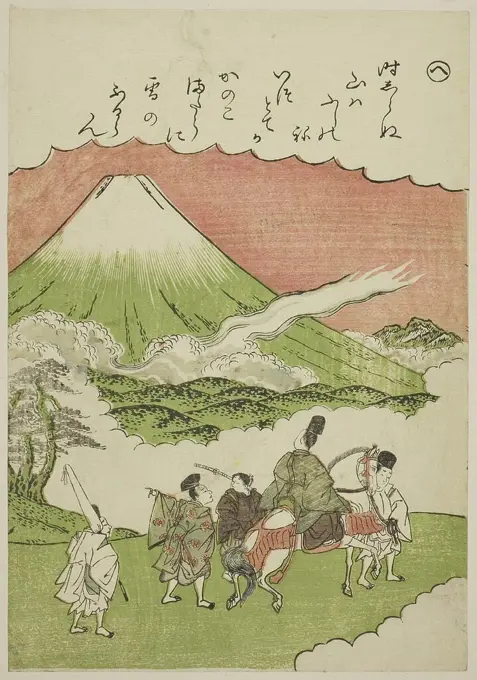
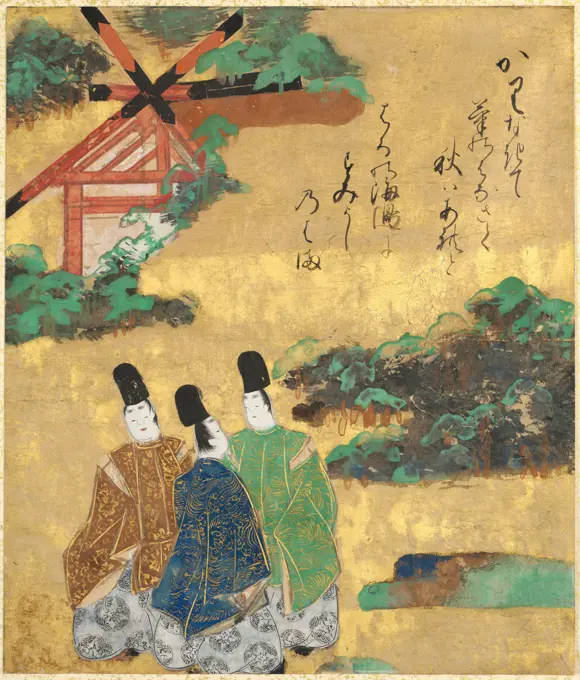
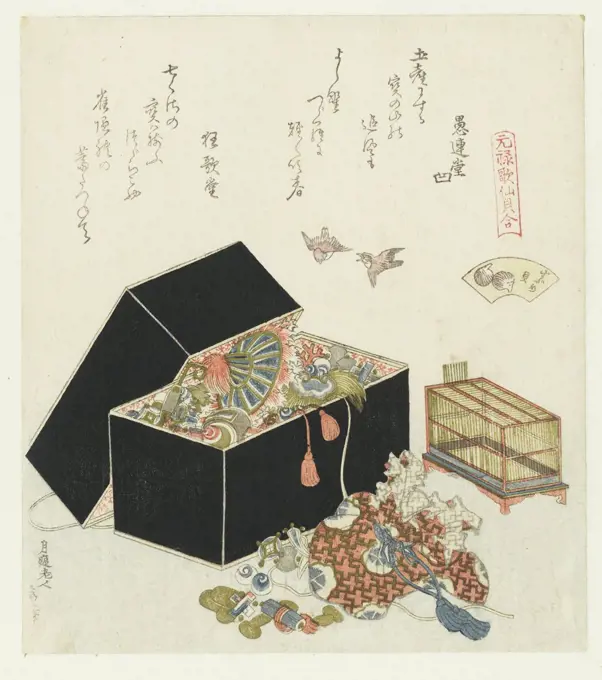
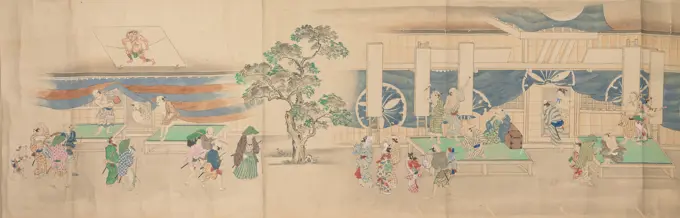
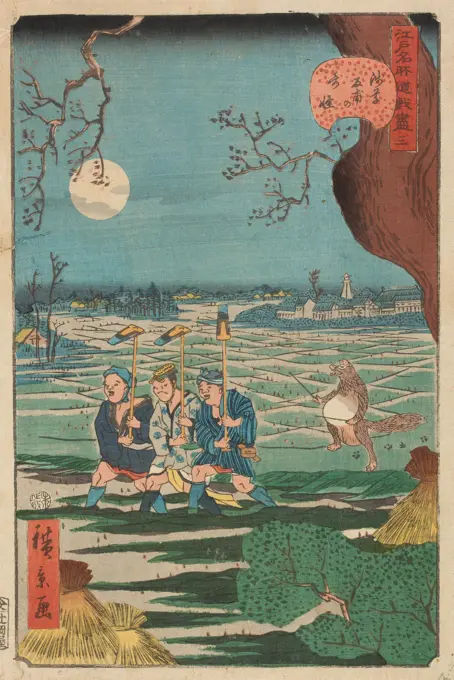
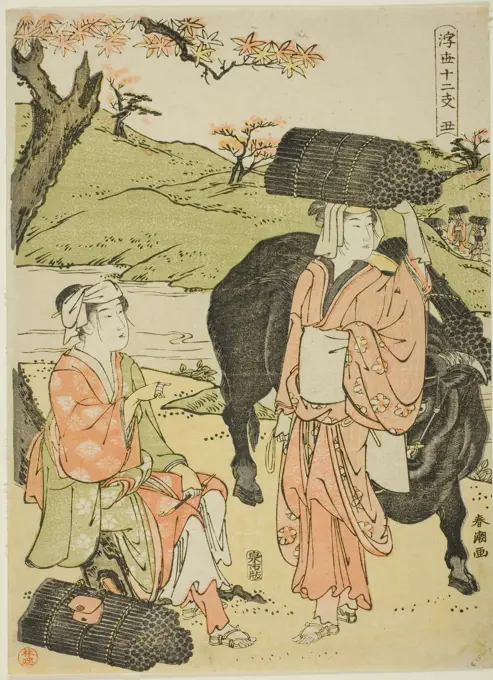
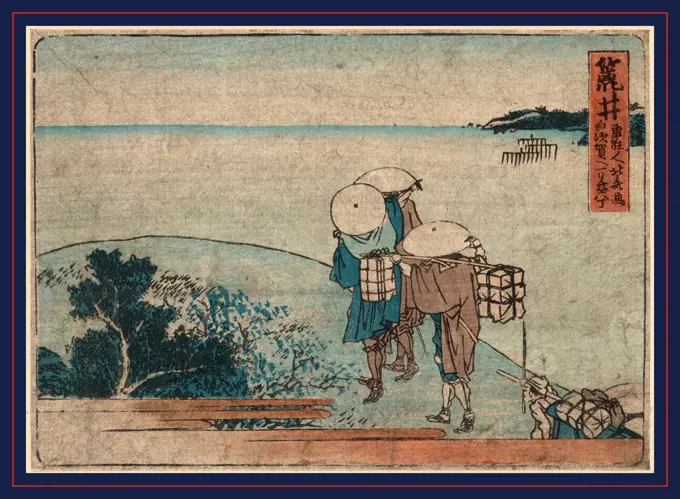
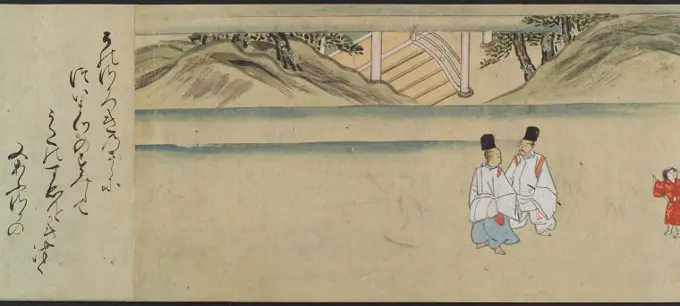
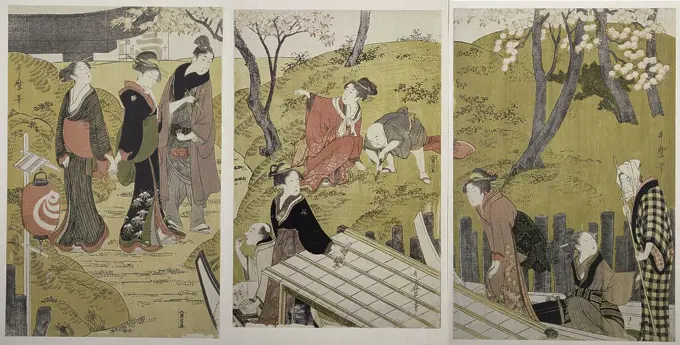
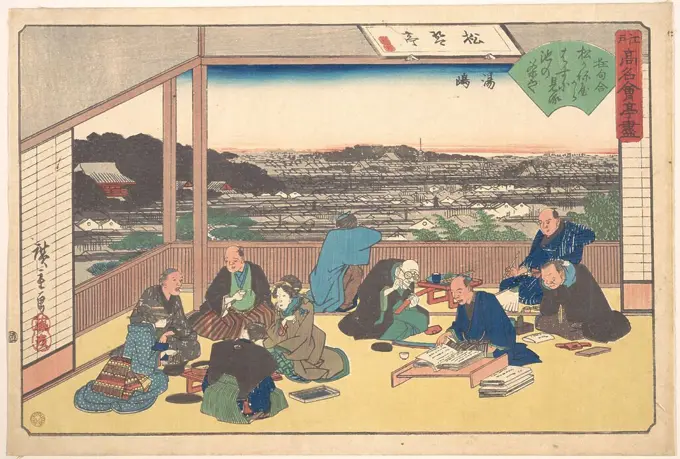
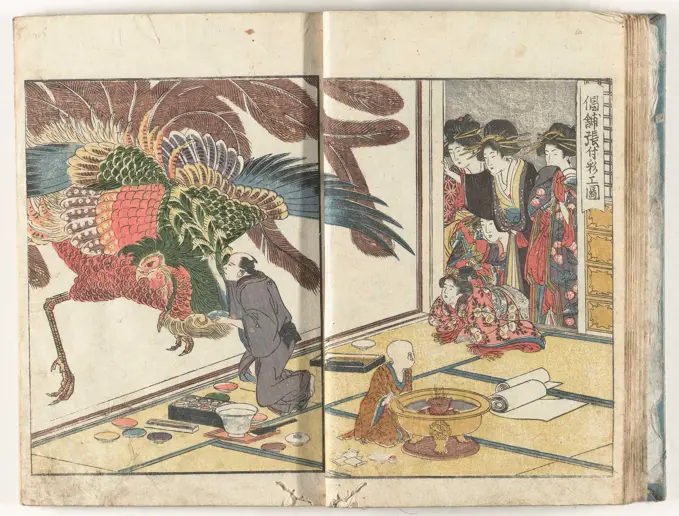
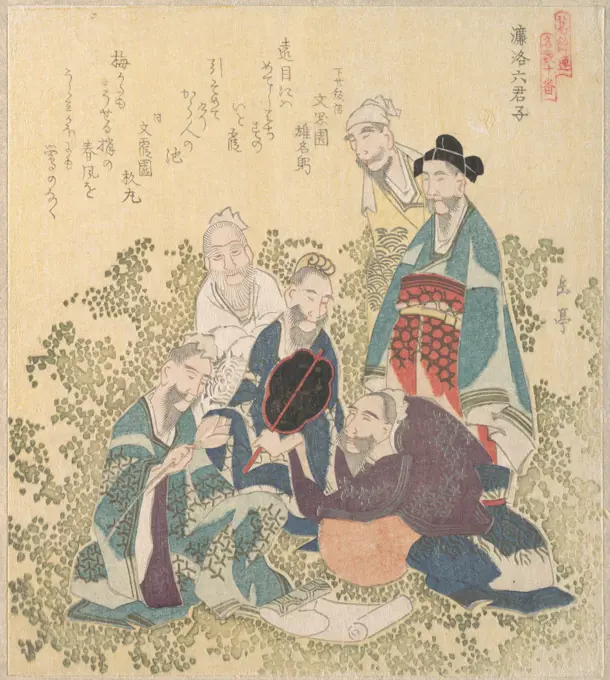
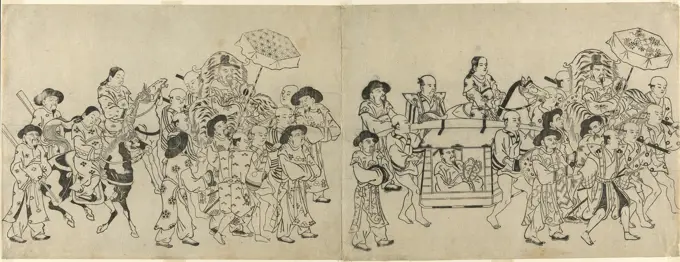
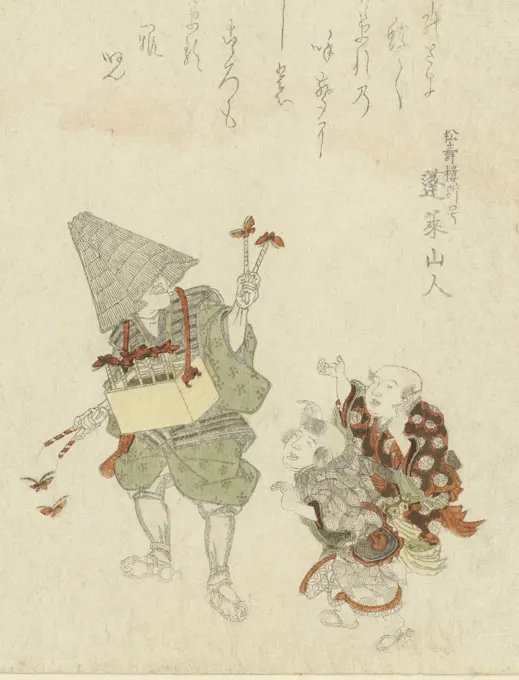
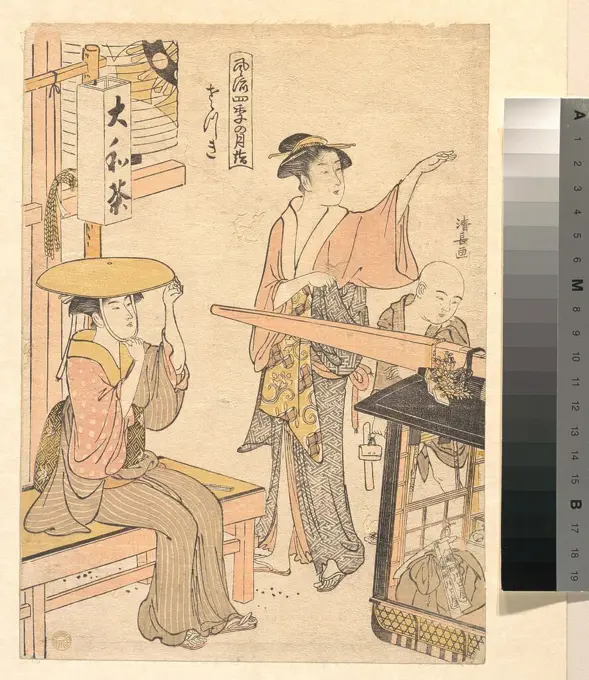
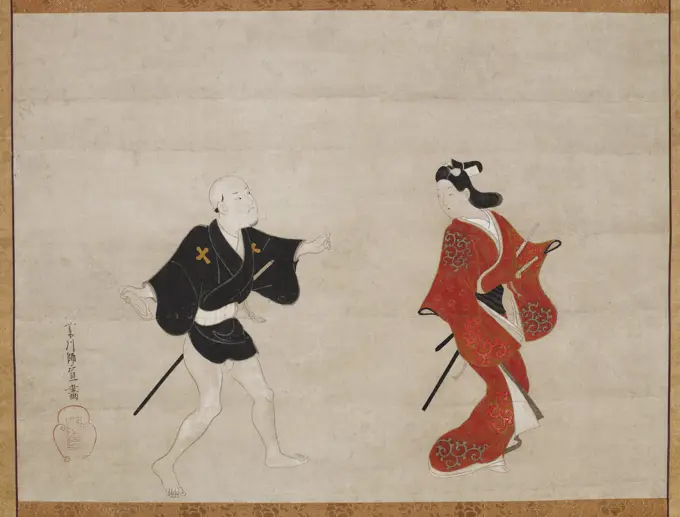
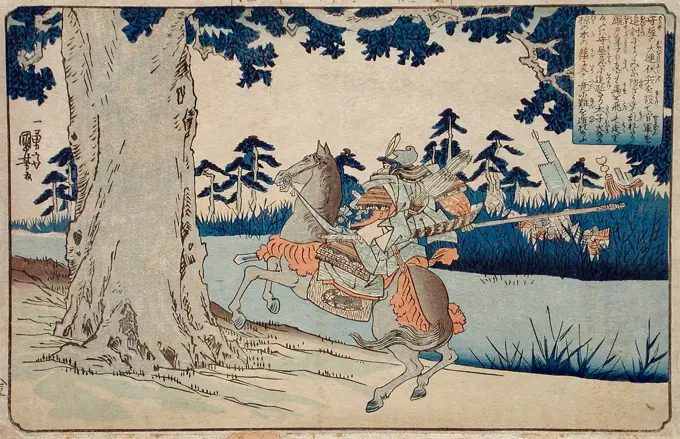
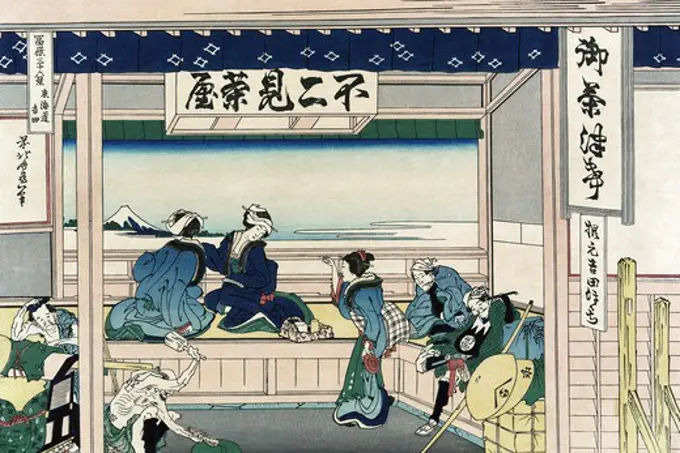
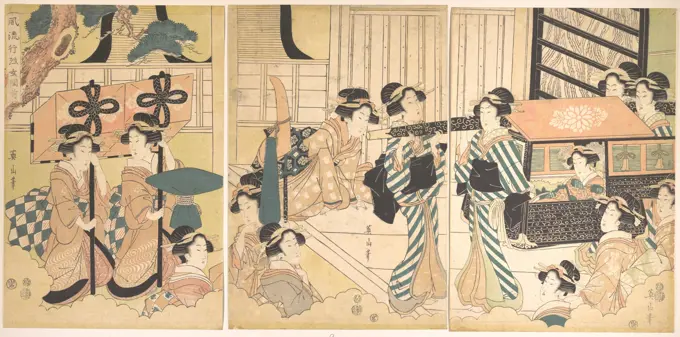
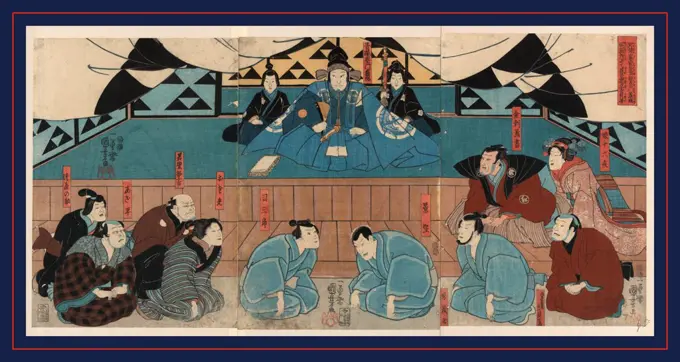
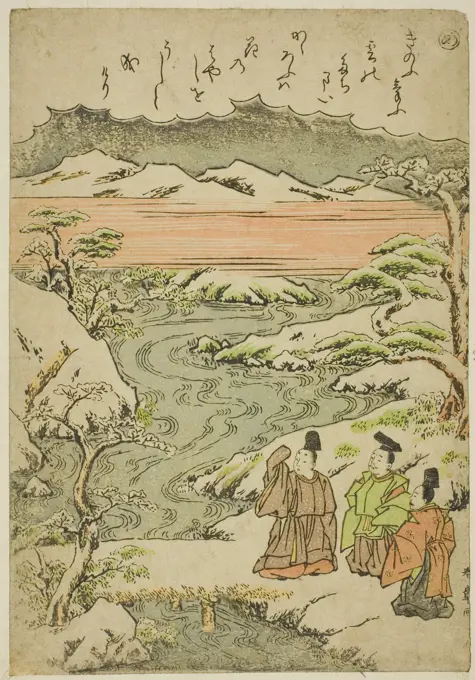
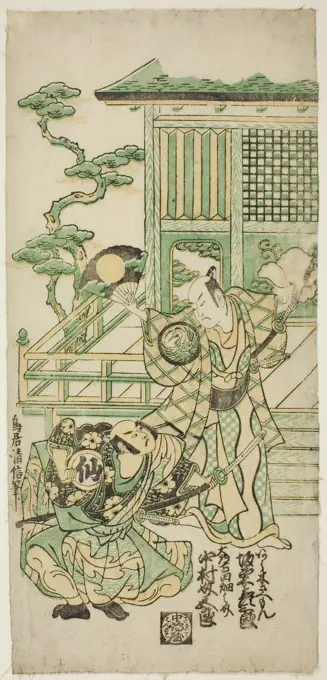
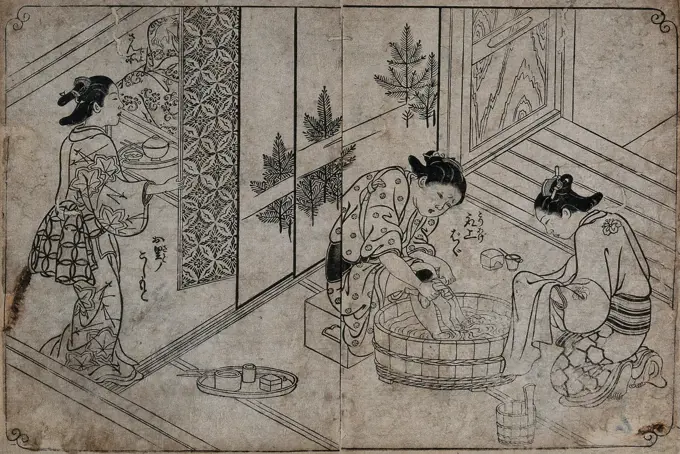
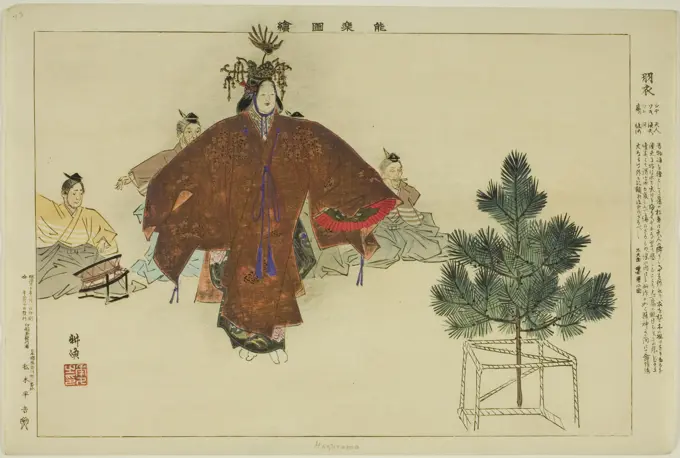
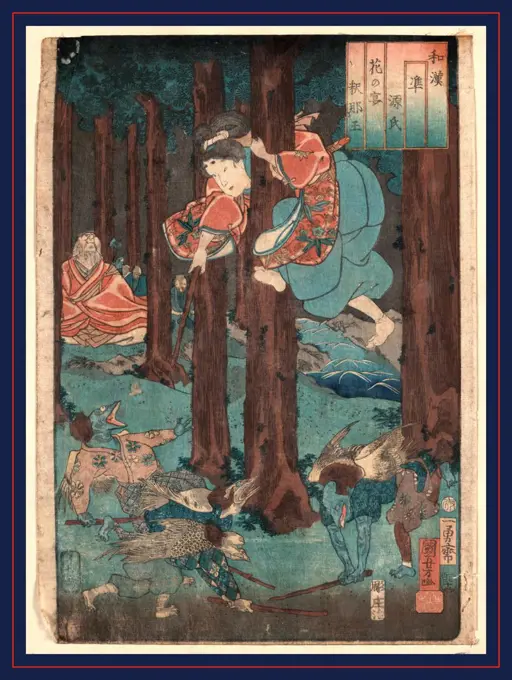
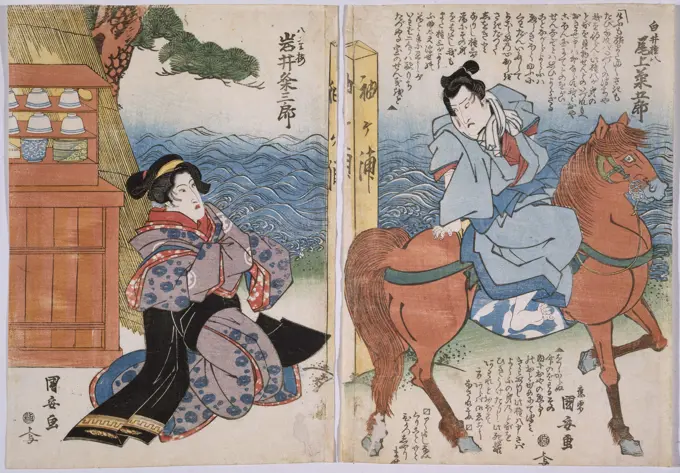
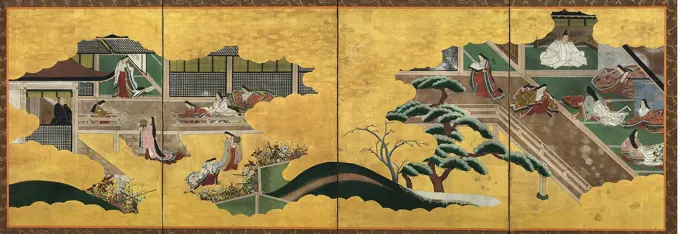
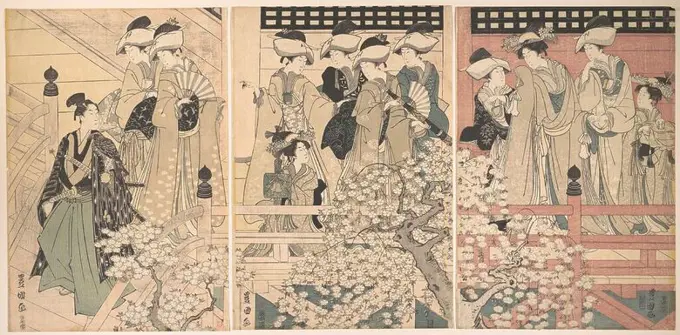
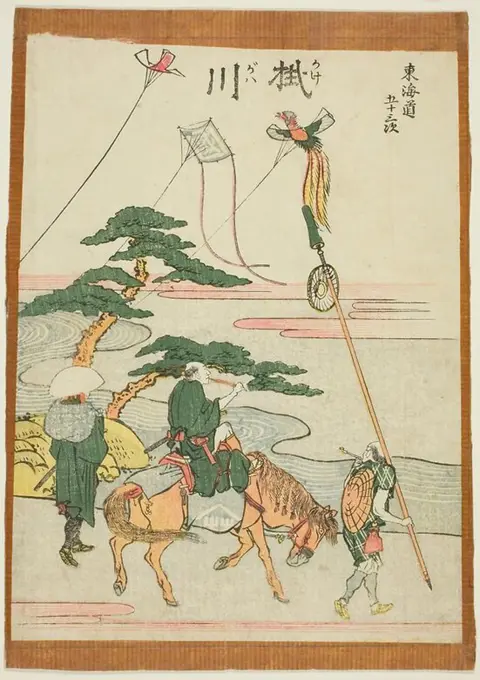
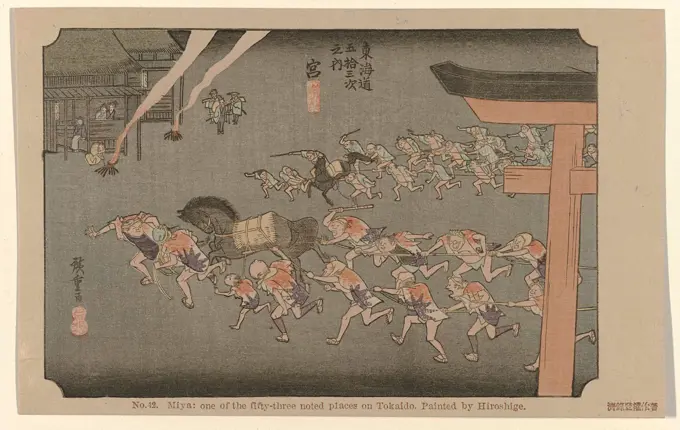
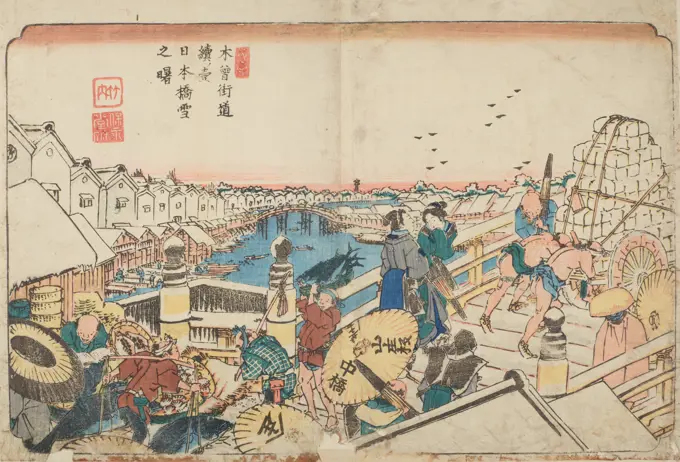
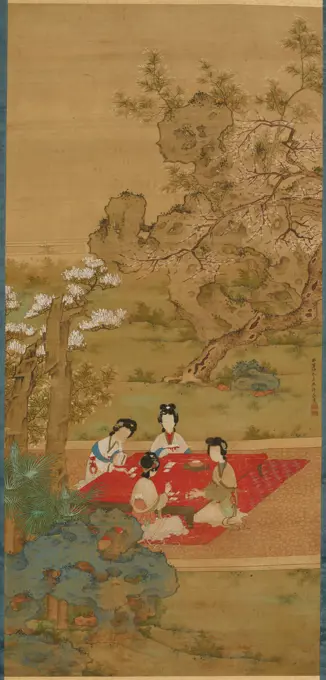
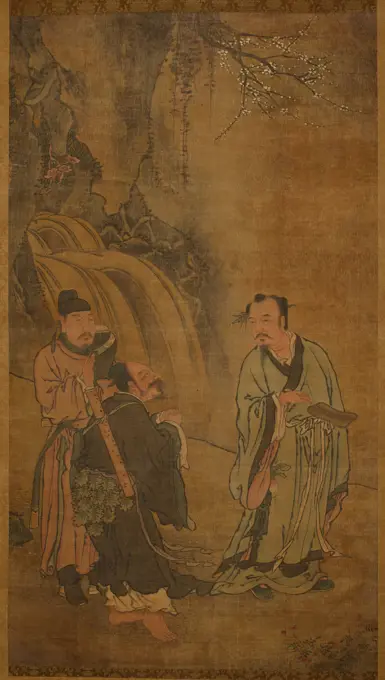
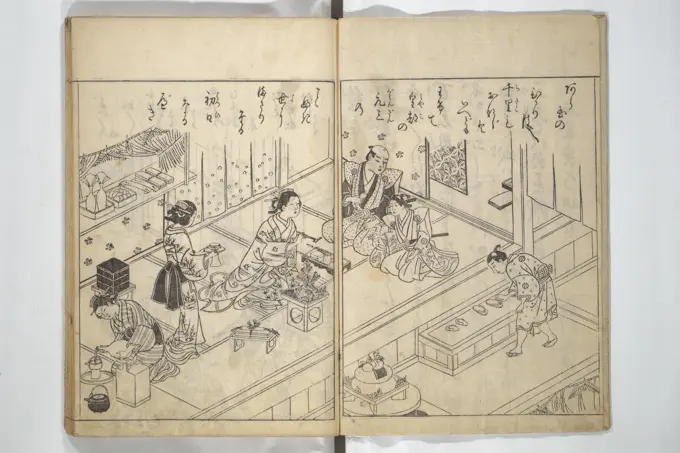
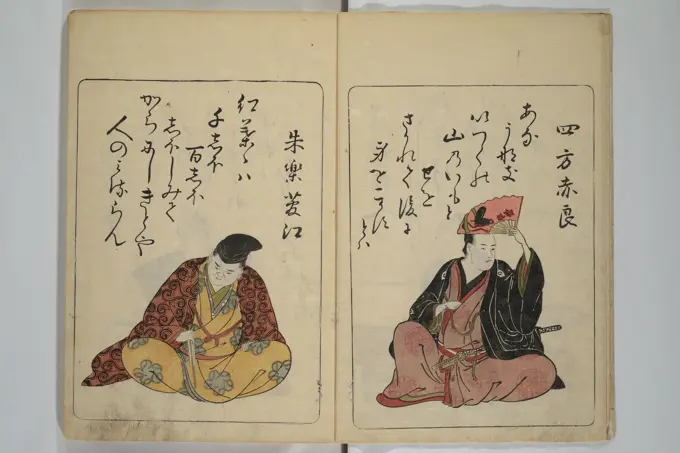
Zhuge Liang and Zhang Fei debate on the capture of the city of Luo - scene from the historical novel Romance of the Three Kingdoms" (Sanguo zhi yanyi). unknown, painterEdo street scene, 18th century. A dance teacher and pupil on the left, a nori (glue) seller is beckoned by workers in a small family business. Handcoloured ukiyo-e woodblock print by Toyokuni Utagawa from Shikitei Sanbas Ehon Imayo Sugata (Picture Book of the Modern Forms and Figures, Tokyo, 1916. Reprint of the original from 1802.Kameido Tenjin Shrine, from vol 1 of the illustrated book Fine Views of the Eastern Capital at a Glance (Toto shokei ichiran) 1800 Japan. Color woodblock print; double-page illustration from book . Katsushika HokusaiCourt Performance. Japan, mid-17th century. Prints; woodblocks. Pair of hand-colored woodblock print pages from a book (tanrokubon)Tsuchiyama Suzuka Mountains in the Rain (Tsuchiyama, Suzukayama uchu no zu), from the series Fifty-three Stations of the Tokaido (Tokaido gojusan tsugi no uchi), also known as the Gyosho Tokaido 1836-1849 Japan. Color woodblock print; aiban . Utagawa HiroshigePainting Painting, 14th century. Hanging scroll, ink on paper, 11 x 18 1/2 in. (28 x 47 cm).   Asian Art 14th centuryYamamoto Iwanojo, Son of Yamamoto Kyoshiro, as Shinoda Zuma in a Shosa Act. Artist: Torii Kiyonobu II (Japanese, ca. 1702-1752). Culture: Japan. Dimensions: 11 1/2 x 5 9/16 in. (29.2 x 14.1 cm). Date: 1747. Museum: Metropolitan Museum of Art, New York, USA.The Jewel Taker (Tamatori), from the series The Palace of the Dragon King (Ryugu) 1820 Japan. Color woodblock print; shikishiban, surimono . Ryuryukyo ShinsaiGenji Drawn in Different Styles: View of Akashi Bay (Kakiwake Genji, Akashi ura no kei). Toyohara Kunichika; Japanese, 1835-1900. Date: 1869. Dimensions: . Color woodblock print; oban triptych. Origin: Japan. Museum: The Chicago Art Institute, USA.Viewed on Mount Fuji seen from Fukiage at Kōnosu, Keisai Requirements, 1838 - 1842 print Travelers on a zigzagging road over a plain with the snowy mountain Fuji in the background. print maker: Japanpublisher: Tokyo paper nishiki-e / color woodcut 'en route', traveller under way. landscapes (+ landscape with figures, staffage) FujiNibijin ude-zumí´ = Arm-wrestling between two beauties, Kitagawa, Utamaro (1753?-1806), (Artist), Date Created: 1793.Tang Furen, from the series Twenty-four Paragons of Filial Piety ca. 1840 Utagawa Kuniyoshi Japanese Filial devotion is shown by Tang Furen (J.: Tō Fujin) breast-feeding her mother, who would otherwise have starved due to her lack of teeth.. Tang Furen, from the series Twenty-four Paragons of Filial Piety 55480New Year's Day at the Ogiya Brothel, Yoshiwara Katsushika Hokusai (Japanese, 1760-1849). New Year's Day at the Ogiya Brothel, Yoshiwara, ca. 1810. Polyptych of polychrome woodblock prints; ink and color on paper, Each sheet 14 x 10 in. (35.6 x 25.4 cm).   Asian Art ca. 1810Scenes from the Nakamura Kabuki Theater. Date/Period: 1684 - 1704. Painting. One from a pair of six-panel folding screens; ink and color on gold-leafed paper. Height: 1,580 mm (62.20 in); Width: 3,840 mm (12.59 ft). Author: HISHIKAWA MORONOBU.Roll of Cloth for an Obi and Tortoise-shell Hair Ornaments ("Presents for One's Beloved"), from the Butterfly Series, from Spring Rain Surimono Album (Harusame surimono-jo, vol. 3). Artist: Ryuryukyo Shinsai (Japanese, active ca. 1799-1823). Culture: Japan. Dimensions: 5 7/8 x 7 9/16 in. (14.9 x 19.2 cm). Date: ca. 1805-10.Surimono are privately published woodblock prints, usually commissioned by poets or poetry groups as a form of New Year's greeting card. The poems, most commonly kyoka (witty thirty-one syllable verse), inscribed on the prints usually include felicitous imagery connected with spring, which in the lunar calendar begins on the first day of the first month. Themes of surimono are often erudite, frequently alluding to Japanese literary classics in both texts and images.This album belongs to a set of three compiled by Hayashi Tadamasa, the great Parisian dealer of Japanese art. Hayashi arranged the more than four hundred prints in the set on facing leaves according to tKusatsu ca. 1838 Utagawa Hiroshige Japanese. Kusatsu 36586The Meeting Together (Miai), from The Marriage Ceremonies Suzuki Harunobu (Japanese, 1724-1770). The Meeting Together (Miai), from The Marriage Ceremonies, ca. 1768. Color woodblock print on paper, 8 1/4 x 11 in. (21.0 x 28.0 cm).   Asian Art ca. 1768Seven Otafukus, 1870s-1880s, Kawanabe Kyōsai, Japanese, 1831 - 1889, 13 7/16 × 32 1/2 in. (34.13 × 82.55 cm) (image)56 7/16 × 38 1/16 in. (143.35 × 96.68 cm) (mount, without roller), Ink and color on silk, Japan, 19th century, Kawanabe Kyōsai was one of the most versatile and talented artists in the late nineteenth century. Born in 1831 in Koga, Kyōsai first became a pupil of the ukiyo-e artist Utagawa Kuniyoshi (1796-1861) at the age of six. After ten years with Kuniyoshi, he moved on to study the orthodox style of the Kanō school. In 1852, he left the Kanō school and spent the rest of his life as an independent artist. Living in the age of upheaval from the Tokugawa shogunate to the Meiji government, he worked beyond the boundaries of the established schools of painting. Kyōsai exhibited his genius in the wide range of subjects and style of painting as well as printmaking. With his technical refinement, Kyōsai particularly showed tremendous talent in satirical parodies of fantasic anLeft, a seated craftsman examines a koto, watched by a standing woman holding a shamisen (); right, a mirror maker works while a woman looks at her reflection in a mirror. Colour woodcut by Sori III, 1800.Chiyoda Castle (Album of Men) 1897 Ysh (Hashimoto) Chikanobu Japanese. Chiyoda Castle (Album of Men). Ysh (Hashimoto) Chikanobu (Japanese, 1838-1912). Japan. 1897. Triptych of woodblock prints; ink and color on paper. Meiji period (1868-1912). PrintsThe Eastern Journey of the Celebrated Poet Ariwara no Narihira 1801-1811 Japan. This picture is based on the ninth scene in Tales of Ise. Finding life uncomfortable in the capital, Kyoto, the poet traveled east with some friends. They took a river ferry near Mount Fuji and saw a flock of strange birds. In answer to their questions, the ferryman replied, ìIt is a capital bird, of course.î Stopping on the bank, the poet made this request If you are in truthWhat your name seems to make you,I will put it to you,Capital-bird, this question Do things go well with my love (Translated by Steven Carter). Color woodblock print; nagaban surimono . Katsushika HokusaiA View of the Pleasures of the Taiko and His Five Wives at Rakutō 1804 Kitagawa Utamaro Japanese This triptych, published in 1804, portrays the famous cherry-blossom viewing party that Hideyoshi held in 1598. Ostensibly an innocent historical scene, its subject, the shogun whose heirs were overthrown by the ancestors of the ruling Yokugawa family was full of significance to the townsmen of Edo, who chafed under the restrictive and corrupt government. For his defiance of the official of ineffectual ban on this theme, Utamaro was jailed and spent fifty days in hand chains. This, combined with the extreme loss of inspiration and support he suffered with the death in 1797 of his friend and publisher Tatsuya, seems to have broken his spirit. Utamaro's final years are not represented by prints of the quality that marks the dazzling designs of the 1780's and 90's.. A View of the Pleasures of the Taiko and His Five Wives at Rakutō 37278Shono, Katsushika, Hokusai, 1760-1849, artist, between 1804 and 1818, 1 print : woodcut, color ; 11.8 x 11.4 cm., Print shows three travelers sitting in a room at a rest stop, eating and drinking.The Marsh Where the Snipe Takes Flight (Shigi tatsu sawa), from the series Three Evening Poems (Sanseki no uchi) 1760-1849 Japan. Color woodblock print; kokonotsugiri-ban, surimono . Katsushika HokusaiThrowing snowballs, c. 1825 print Snow landscape with three women and two children looking at two men, one of whom is stooped with his hands in the snow, while the other has just thrown a snowball. In the background a frozen lake, in the snow in the foreground various prints of footsteps.  paper color woodcut throwing snowballsKyoka's house closer to night., Kubota Shunman, 1788 print Six women, a boy and two men at fenced garden, behind which a view of illuminated first floor of home with a meeting of poet, student, listener and female servant; at night. Japan paper color woodcut writer, poet, author. villa. gardenPicknicking and enjoying tea i nthe hills at Ueno, Edo, 1790  Fifth and sixth page from the book Fugenzo by Utamaro. Or paper. color woodcutGirl at the loom YANAGAWA, SHIGENOBU (1787 1832)Japan, Kazan, Watanabe, Boy playing the flute on an ox, passe-partout, lower left - printed, Boy playing the flute on a white ox, to whom a man is making an offering. A scene from the Waterside Chronicles (Suikoden). With one poem. This print is a copy., print, prent, surimono, prints, Japan (collection), verso - stamped, height 199 mm, width 179 mm, Work conception, after a print by, 1890 - 1900, paper, colour woodcut, blind printingYoung girl dancing at nobleman's mansion. Katsushika Hokusai  ; Japanese, 1760-1849. Date: 1805. Dimensions: . Color woodblock print; nagaban, surimono. Origin: Japan. Museum: The Chicago Art Institute, Chicago, USA.Shimada, from the series "Fifty-three Stations of the Tokaido (Tokaido gojusan tsugi)". Katsushika Hokusai  ; Japanese, 1760-1849. Date: 1801-1811. Dimensions: Approx. 24 × 18.3 cm. Color woodblock print; chuban. Origin: Japan. Museum: The Chicago Art Institute, Chicago, USA.In the Second Army's Assault on Jinzhoucheng, Engineer Superior Private Onoguchi Tokuji, Defying Death, Places Explosives and Blasts the Gate of the Enemy Fort,' created in 1894, is a color woodcut print on paper. The dimensions of the piece are 14 9/16 x 10 1/16 inches (37 x 25.5 cm)Hakone, from the series Fifty-three Stations of the Tokaido (Tokaido gojusan tsugi) 1801-1811 Japan. Color woodblock print; chuban . Katsushika Hokusai"He": Mt. Fuji, Suruga Province, from the series "Tales of Ise in Fashionable Brocade Pictures (Furyu nishiki-e Ise monogatari)". Katsukawa Shunsho  ; Japanese, 1726-1792. Date: 1767-1778. Dimensions: 22.8 x 16 cm (8 15/16 x 6 5/16 in.). Color woodblock print; koban. Origin: Japan. Museum: The Chicago Art Institute, USA.Courtesan Dreaming of Procession 1814 Japan. Color woodblock print; shikishiban, surimono . Kubo ShunmanKomachi Washing the Poem-Papers. Date/Period: 18th century. Print. Woodblock print hand-painted on paper. Height: 310 mm (12.20 in); Width: 150 mm (5.90 in). Author: Nishimura Shigenaga.The Beach at Sumiyoshi from the Tales of Ise, c. 1634. Tawaraya Sōtatsu (Japanese, c. 1570-c. 1640). Poetry sheet mounted as an album leaf; ink, color, and gold on paper; image: 24.5 x 20.9 cm (9 5/8 x 8 1/4 in.); overall: 40.6 x 33.2 x 1.6 cm (16 x 13 1/16 x 5/8 in.).The sparrow shell Suzumegai (title on object) A comparison of Genroku poems and shells (series title) Genroku kasen kaiawase (series title on object), Box of black lacquered woven straw filled with lucky symbols. Next to it an opened bird cage with two sparrows flying away. The image refers to a fairy tale about an old man who is rewarded with a treasure by a sparrow. The hat in the treasury could make the person wearing it invisible. The shell to which the title refers is depicted in the fan-shaped cartouche. With two poems, bird in a cage, Katsushika Hokusai (mentioned on object), Japan, 1821, paper, polishing, h 199 mm × w 178 mmKabuki Theater 1822 Nonoyama Kōzan. Kabuki Theater 670939Three prints. Octogonal print in album with 39 prints.Richly dressed man in a chair near a set table Newly drawn Sinees with large moeyte signed and in 't Ligt given by P. Schenk Jun (...), second part (series title), Richly dressed Chinese man in a chair by a set table. Two figures on the right. In the background blossom branches. Print is part of an album, Chinese (costume), trees (flowers, blossom, blossoming), Pieter Schenk (II), Amsterdam, 1727 - 1775, paper, etching, h 168 mm × w 265 mmA strange event in Tomonou's fields in Asakus (Asakus Tomonura-No Kikai), a figure from the series "Edo Meisho dock Zukushi" (funny views of the famous places in Edo); Utagawa, Hirokage (Fl. Ca 1855-1865); 1859 (1851-00-00-1869-00-00);Edo, Japan, woodcuts, fukeiga, ukiyo-e, purchase (provenance)Ox (Ushi), from the series Twelve Hours of the Floating World (Ukiyo juni shi) 1775-1806 Japan. Color woodblock print; oban . Katsukawa ShunchôStarting guests, 1804  Twelfth and thirteenth page of part two of Utamaro's book: Events in the pleasure houses during the year. Or paper color woodcutArai, Katsushika, Hokusai, 1760-1849, artist, 1804., 1 print : woodcut, color ; 12 x 16.9 cm., Print shows pilgrims and a porter with shoulder pole on the Tokaido Road.Daytime in the Gay Quarters Okumura Masanobu (Japanese, 1686-1764). Daytime in the Gay Quarters, ca. 1739. Color woodblock print on paper, 10 3/4 x 15 1/4 in. (27.3 x 38.8 cm).   Asian Art ca. 1739Gathering Lotus Flowers 1765 Japan. Color woodblock print; chuban, surimono . Suzuki HarunobuA fierce samurai holding a spear fighting an effeminate samurai on a bridge. Watercolour, 18--.Scroll III.. 1501 - 1599. Illustrations, Manuscripts. Spencer CollectionSuruga Street ca. 1836 Utagawa Hiroshige Japanese. Suruga Street. Utagawa Hiroshige (Japanese, Tokyo (Edo) 1797-1858 Tokyo (Edo)). Japan. ca. 1836. Woodblock print; ink and color on paper. Edo period (1615-1868). PrintsMimeguri no dote = The embankment at Mimeguri, Kitagawa, Utamaro (1753?-1806), (Artist), Date Created: 1799.Sima Guang and Shibata Katsuie, from the series "Five Sibling Pictures of China and Japan for the Zakurogaki Group (Zakurogaki-ren goban no uchi wakan e-kyodai)". Katsushika Hokusai  ; Japanese, 1760-1849. Date: 1821. Dimensions: 20.9 x 18.5 cm. Color woodblock print; shikishiban, surimono. Origin: Japan. Museum: The Chicago Art Institute, Chicago, USA.Yashima Gakutei was a Japanese artist and poet who was a pupil of both Totoya Hokkei and Hokusai. Gakutei is best known for his kyoka poetry and surimono woodblock works.Yushima (Matsu Kane-ya). Artist: Utagawa Hiroshige (Japanese, Tokyo (Edo) 1797-1858 Tokyo (Edo)). Culture: Japan. Dimensions: H. 9 15/16 in. (25.2 cm); W. 14 7/16 in. (36.7 cm). Date: ca. 1840. Museum: Metropolitan Museum of Art, New York, USA.Make mural. Eighteenth and nineteenth page of part two from Utamaro`s book: Events in the Lusthuizen during the year.NARUMI TOT CHIRIYU, UTAGAWA KUNIYOSHI, 1833-1837 print A lake with waxing men in the foreground cloths, a watching woman with child, and battery cloths drying on a rack; In the background a mountain landscape with in red cartouches the names of various stations along the Tokaido road. print maker: Japanpublisher: Tokyopublisher: Tokyo paper nishiki-e / color woodcut water course (+ landscape with figures, staffage). coast. carrying something with yokeSix Superior Men of Reiraka 19th century Yashima Gakutei Japanese. Six Superior Men of Reiraka 54947Arrival of the Korean Embassy in Edo 1704-1714 Japan. Woodblock print; oban sumizuri-e, 1 of 6 sheets from a 12-sheet composition (see 1925.2334a-f) . Torii Kiyonobu ISmiling Courtisanes. Fourteenth and fifteenth page of part two from Utamaro`s book: Events in the Lusthuizen during the year.Monkey Trainer with a Monkey at the New Year 1775-1794 Japan. Color woodblock print; hosoban . Kishi BunshôJapan, Toy seller and two children, A merchant with a straw hat carries a box around his neck containing butterflies on sticks, so-called butterflies of Mount Yoshino (Yoshinoyama chôchô). Two children stand in front of him. With one poem., print, prent, surimono, prints, Japan (collection), height 197 mm, width 173 mm, print maker, printmaker, 1826 - 1826, first quarter 19th century, paper, colour woodcutThe Fifth Month. Artist: Torii Kiyonaga (Japanese, 1752-1815). Culture: Japan. Dimensions: H. 10 3/8 in. (26.4 cm); W. 7 1/2 in. (19.1 cm). Date: ca. 1791. Museum: Metropolitan Museum of Art, New York, USA.Scene in A Tea House, Teisai Hokuba, 1805 print Three waitresses in a tea house. In the background an empty sword rack with a man's painting above it on an ox. On the lanterns hanging above the veranda is the name of the tea house: Sôkaya. The print seems to advertise for the Sôkaya Yasubei tea house on the Yagobori Fudô-Mae, in Edo. With two poems.  Japanese paper (handmade paper) color woodcut adult woman (+ three persons). kitchen-personnelSeki: The Inn. Utagawa Hiroshige (Japan, Edo, 1797-1858). circa 1841-1844. Prints; woodblocks. Color woodblock printYoung Samurai and a Manservant as Mitate of Huanshigong and Zhang Lian, c. 1690, Hishikawa Moronobu, Japanese, c. 1618 - 1694, 14 9/16 x 20 1/16 in. (37 x 51 cm) (image)49 7/16 x 24 5/8 in. (125.5 x 62.5 cm) (mount) 68cm W (w/rollers), Hanging scroll; ink and color on paper, Japan, Nikuhitsu ukiyo-eWoman dancing with a sword and a fan /Kanya Saidai Kagen, Kitsukatsuro ( 1849)Moriya Pursuing Prince Shōtoku who Disappears into a Tree. Utagawa Kuniyoshi (Japan, 1797-1861). Japan, circa 1840. Prints; woodblocks. Color woodblock printAct 5 (Godanme), from the series The Revenge of the Loyal Retainers (Chushingura) 1829-1844 Japan. Color woodblock print; oban . Utagawa HiroshigeYoshida at Tokaido, Japanese Prints - HokusaiEjiri, from the series Fifty-three Stations of the Tokaido (Tokaido gojusan tsugi) 1801-1811 Japan. Color woodblock print; chuban . Katsushika HokusaiA Chinese philosopher and landscape with willows, Yashima Gakutei, c. 1822  In a fan-shaped cartouche, a Chinese philosopher is depicted, drinking wine from a large barrel, against a background of chrysanthemums on a mountain. The square cartouche shows a landscape with willows and a pavilion. With one poem. Japan paper color woodcut trees: willowPromenade of Famous Beauty Escorted by Many Female Attendants Kikugawa Eizan Japanese. Promenade of Famous Beauty Escorted by Many Female Attendants. Kikugawa Eizan (Japanese, 1787-1867). Japan. Triptych of woodblock prints; ink and color on paper. Edo period (1615-1868). PrintsVorsterman, Lucas, inventor: Anton van Dyck, work, Carolus de Mallery, (1000 - 2000), copper engraving, graphics, 24 cm x 15.6 cmAoto fujitsuna, The Kamakura period warrior Aoto Fujitsuna., Utagawa, Kuniyoshi, 1798-1861, artist, between 1845 and 1854, 1 print (3 sheets) : woodcut, color., Print shows Aoto Fujitsuna sitting on a raised platform with two attendants, and several men and women sitting in the foreground.. Hofdame with impeller in the left hand, standing on a platform. The eyebrows painted high on the forehead, indicate that a courtly shot out of the Heian period (794-1185). A clock hangs behind her. This print is a calendar sheet (egoyomi) for the year 1799. The long months before that year are indicated on the clock. With one poem.Me, from the series Tales of Ise in Fashionable Brocade Pictures (Furyu nishiki-e Ise monogatari) 1767-1778 Japan. Color woodblock print; koban . Katsukawa ShunshoHokusai, Scene from the story Kanadeho's chusingura (Faithful vassals), 1801-03, woodcut: woodcut, major category: graphic, obanThe Actors Bando Hikosaburo I as Araki Shozaemon and Nakamura Sukegoro I as Daidoji Tahatanosuke in the play Chigozakura Futabajikki, performed at the Ichimura Theater in the tenth month, 1746 1746 Japan. Color woodblock print; hosoban, benizuri-e . Torii Kiyonobu IIA midwife washes a newborn baby while a kneeling attendant proffers a robe with which to wrap it; left, an attendant brings food to the mother whose hand can be glimpsed behind a screen. Woodcut by Nishikawa Sukenobu, 1716/1736.Sagittarius; Ehon Kojidan. Sagittarius, his arrow pointing on a bird of prey with fish in the claws; On a veranda on the edge of a more three watching men. Two pages, stuck to each other, from the Japanese book of the Kodanji.Hagoromo, from the series Pictures of No Performances (Nogaku Zue) 1893-1903 Japan. Color woodblock print . Tsukioka KôgyoHana noen shanao, Hana no en: Ushiwakamaru., Utagawa, Kuniyoshi, 1798-1861, artist, 1855., 1 print : woodcut, color ; 35.8 x 25.8 cm., Print shows a person, possibly the warrior Ushiwakamaru as a young man, climbing a tree and using a stick to taunt anthropomorphic creatures who are picking up sticks to defend themselves; an old man is asleep against a tree in the background.SIXTY NINE STAGES OF THE KISO ROAD /KISOKUJUKYU TSUGI NO UCHI Eisen, Keisai (1790 1848), HIROSHIGE, Ichiryusai (1797 1858)Dong Yong (Toei), from the series Twenty-four Paragons of Filial Piety as a Mirror for Children (Nijushiko doji kagami) 1838-1848 Japan. Color woodblock print; oban . Utagawa KuniyoshiKuwana, from the series "Fifty-three Stations of the Tokaido (Tokaido gojusan tsugi)". Katsushika Hokusai  ; Japanese, 1760-1849. Date: 1801-1811. Dimensions: Approx. 24 × 18.3 cm. Color woodblock print; chuban. Origin: Japan. Museum: The Chicago Art Institute, Chicago, USA.American Balloon; American Playing Cello; Bamboo 10th month, 1861 Utagawa Yoshiiku Japanese. American Balloon; American Playing Cello; Bamboo. Utagawa Yoshiiku (Japanese, 1833-1904). Japan. 10th month, 1861. Woodblock print; ink and color on paper. Edo period (1615-1868). PrintsUtamaro and Others, book undated. Japanese printSeries of twelve Koban Shunga with prostitutes in the role of acrobatic firefighters, c. 1830 - c. 1835 print Series of twelve Koban prints with twelve half -naked women who do acrobatic tours on a ladder. The twelve numbered magazines placed in one six of them form a parody of similar representations of firefighters who do neck -breaking stunts. The inscriptions on the buckets on the second lower print left refer to the Nakanocho street in the Yoshiwara District - the prostitution district of Edo. This includes the large water barrel that stood at the gate of the Yoshiwara; The gate is on the right. The twelve prints may be a calendar with references to the short and long months.  paperA woodcut representing a lady opening a cage., 1770., Page from a bookThe 'Jeweled Chaplet' and 'Typhoon' Chapters from the Tale of Genji, late 18th-early 19th century, Unknown Japanese, 30 5/8 × 91 5/8 in. (77.79 × 232.73 cm) (image)37 1/2 × 98 5/8 × 5/8 in. (95.25 × 250.51 × 1.59 cm), Ink, color, and gold on paper, Japan, 18th century, Genjis palace had four quadrants, each with its own seasonal garden and living quarters for a specific woman. Each quadrant, and thus each woman, was associated with a season: Murasaki, Genjis favorite consort, was in the quadrant associated with spring; Akikonomu, an empress and Genjis adopted daughter, with autumn; one of his lovers, the Akashi Lady, winter; and another of Genjis lovers, the Lady of the Orange Blossoms, summer. This small screen shows two scenes, both of which take place at Genjis palace and feature one of these women. In the right-hand scene, Genji and Murasaki gather in spring to examine robes laid out on lacquer trays to determine which ones to send to the other women of Genjis mansion. At lefBeauties on a Veranda among Cherry Blossoms from which a Samurai is Departing. Artist: Utagawa Toyokuni I (Japanese, 1769-1825). Culture: Japan. Dimensions: A: H. 14 13/16 in. (37.6 cm); W. 10 1/16 in. (25.6 cm)B: H. 14 3/4 in. (37.5 cm); W. 10 in. (25.4 cm)C: H. 14 3/16 in. (36 cm); W. 9 15/16 in. (25.2 cm). Date: ca. 1800. Museum: Metropolitan Museum of Art, New York, USA.Kakegawa, from the series "Fifty-three Stations of the Tokaido (Tokaido gojusan tsugi)". Katsushika Hokusai  ; Japanese, 1760-1849. Date: 1801-1811. Dimensions: Approx. 24 × 18.3 cm. Color woodblock print; chuban. Origin: Japan. Museum: The Chicago Art Institute, Chicago, USA.Garden of Cursive Drawings (Ryakuga-en). Artist: Kuwagata Keisai (Japanese, 1764-1824). Culture: Japan. Dimensions: 10 11/16 × 7 3/16 in. (27.2 × 18.3 cm). Date: 1823. Museum: Metropolitan Museum of Art, New York, USA.Men sitting in a room, 1804  Sixth and seventh page of part two of Utamaro`s book: Events in the Lusthuizen during the year. Or paper color woodcutMiya; No. 42. Miya: one of the fifty-three noted places on Tokaido, painted by Hiroshige; De Tôkaidô van Hiroshige; Hiroshige no fude Tôkaidô.Two groups of men pull to ropes of festival cars, right is still the gateway of the Miya shrine.SIXTY NINE STAGES OF THE KISO ROAD /KISOKUJUKYU TSUGI NO UCHI Eisen, Keisai (1790 1848), HIROSHIGE, Ichiryusai (1797 1858)Court Ladies at Play, 1683, Xu Zhuang, Chinese, active late 17th century, 40 1/2 × 19 1/16 in. (102.9 × 48.4 cm) (image)78 1/8 × 27 3/4 in. (198.4 × 70.5 cm) (overall, including roller), Ink and color on silk, China, 17th century, Four ladies sit around a low table, playing cards in a garden surrounded by rocks and bamboo, cherry and magnolia trees. The imperial red table covering and the womens elegant clothing and postures identify them as ladies of the imperial court, just as their bored expressions indicate an obvious lack of interest in the game itself. They are merely passing time as they await an imperial summons. The subject and style are intended to evoke the courtly art of the Tang dynasty (618-906), when court ladies played complex roles in art, literature, and politics. During the Tang dynasty, women had more opportunities for education and the attainment of high-status positions than in previous eras. The women are surrounded by flowers, which are often equated with femalDaoist Figures, late 15th-early 16th century, Attributed to Liu Jun, Chinese, active c. 1475- c. 1505, 52 13/16 × 29 3/4 in. (134.14 × 75.57 cm) (image)79 9/16 × 34 3/4 in. (202.09 × 88.27 cm) (mount, without roller), Ink and color on silk, China, 15th-16th century, Three figures stand in a mountainous landscape and bid farewell to each other. Their attributes identify them as three of the Eight Immortals from the Daoist tradition. The Eight Immortals are legendary beings, each representing a different condition of life: poverty, wealth, aristocracy, low social rank, age, youth, masculinity, and femininity. Zhong Liquan is on the right and holds a large fan that can resurrect the dead and transform stones into silver or gold. Zhang Guolao, who characterizes old age, is in the center, with a tube-shaped bamboo drum strapped to his back. Cao Guojiu is on the left, dressed in official robes and holding a wine jar; he is regarded as the patron deity of acting and theater. The painting is lPicture Book of Life in the Capital 1746 Nishikawa Sukenobu 川祐信 Japanese. Picture Book of Life in the Capital. Nishikawa Sukenobu 川祐信 (Japanese, 1671-1750). Japan. 1746. Woodblock printed book; ink on paper. Edo period (1615-1868). Illustrated BooksNewly Selected Fifty Poets of the Tenmei Era, One Poem Each 1786 Kitao Masanobu (Santō Kyōden). Newly Selected Fifty Poets of the Tenmei Era, One Poem Each. Kitao Masanobu (Santō Kyōden) (Japanese, 1761-1816). Japan. 1786. Woodblock printed book; ink and color on paper. Edo period (1615-1868). Illustrated Books