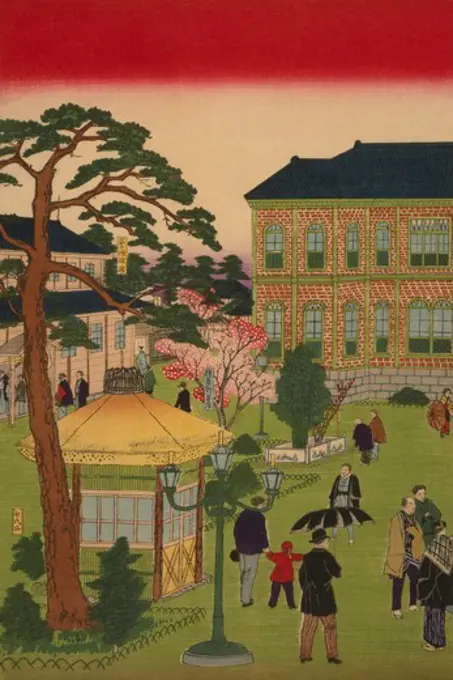
Japanese Woodblock Prints of Actors

Colorful woodblock prints depicting actors and scenes from Japanese culture, showcasing clothing and traditional settings, rich in detail.
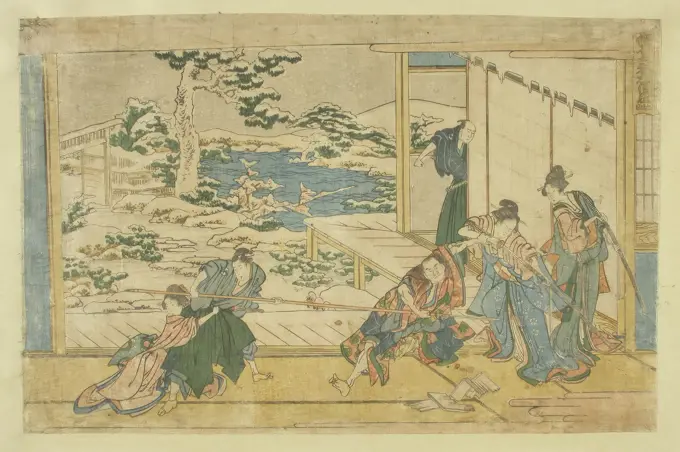
Hokusai, Katsushika, work, Attack of the bandits, (1000 - 2000), colored woodcut, graphics, image and leaf width 37.3 cm, image and leaf height 24.7 cm
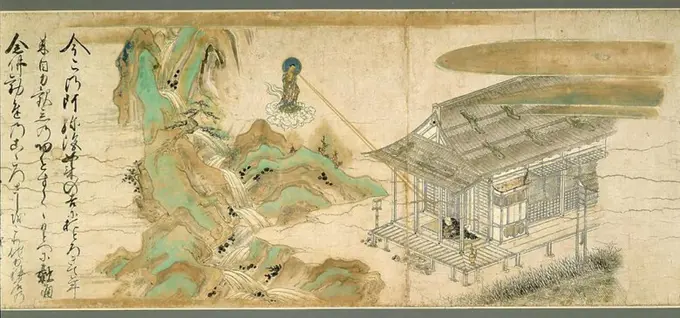
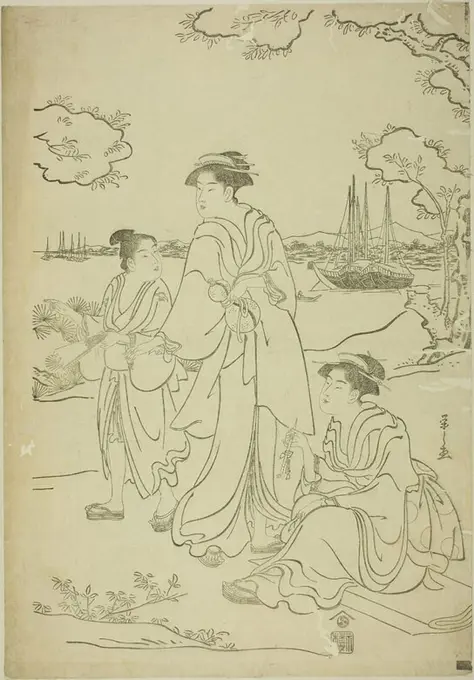
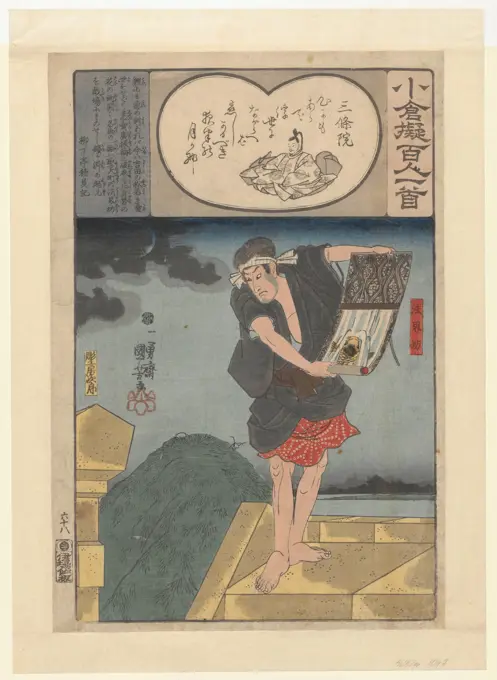
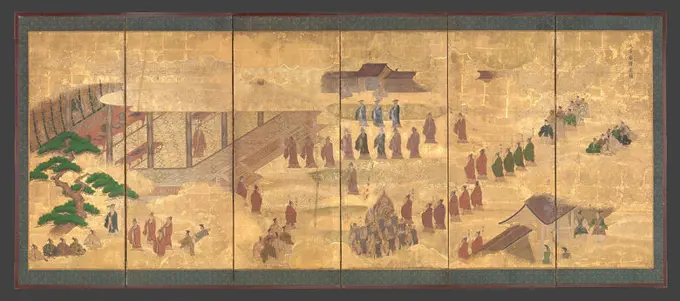
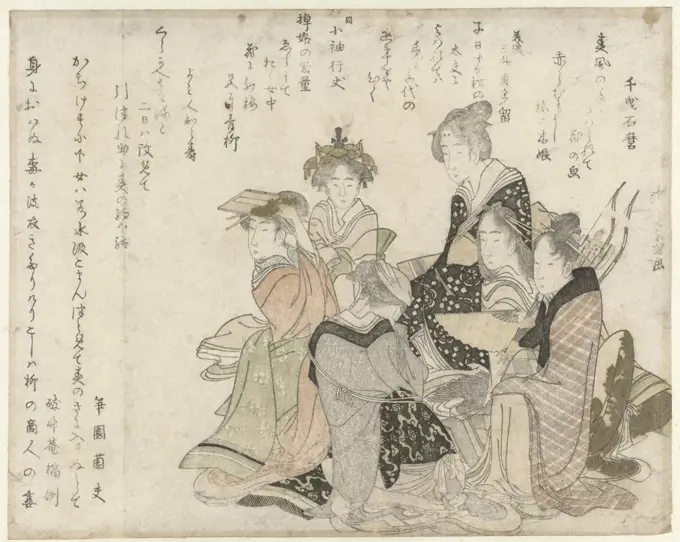
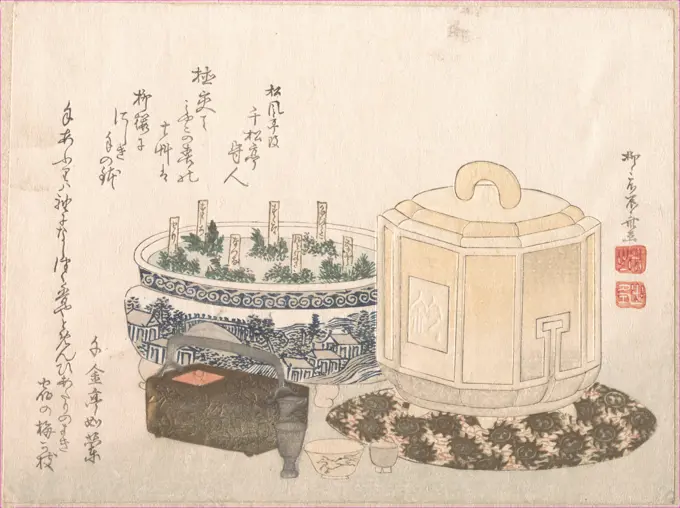
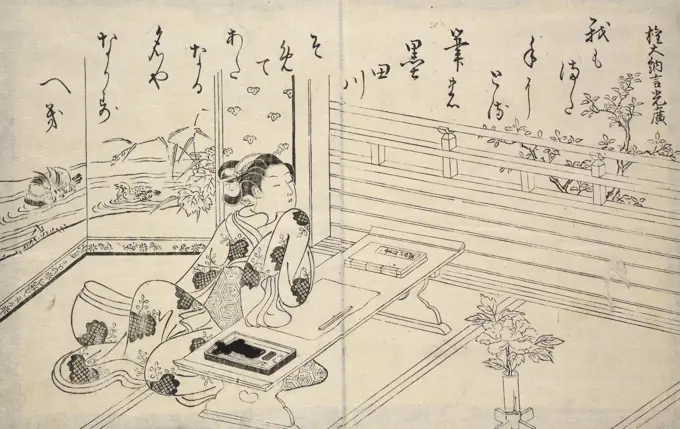
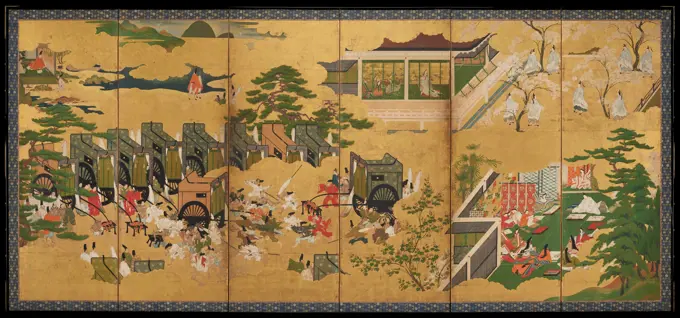
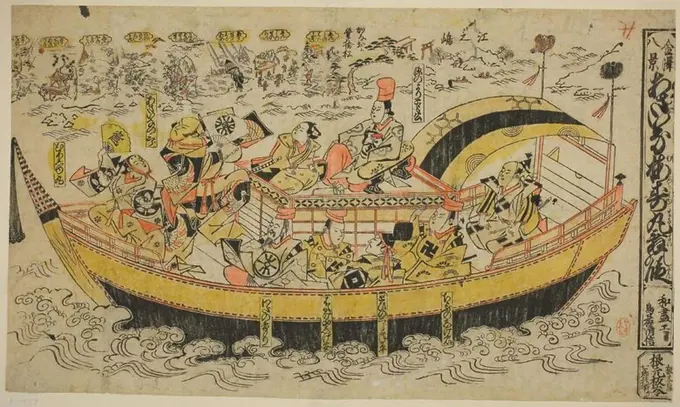
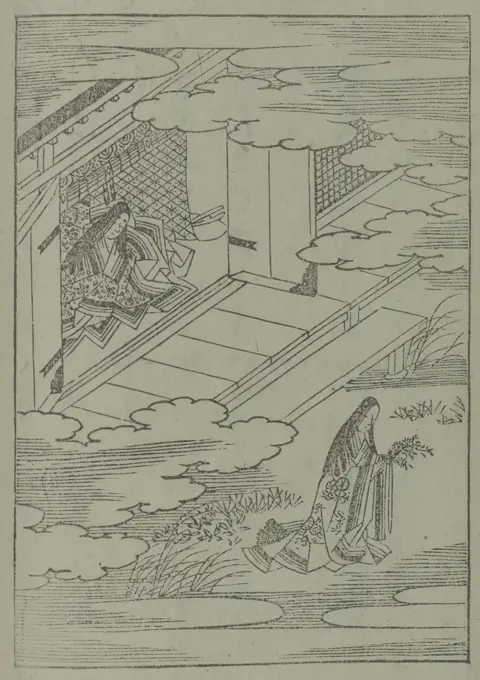
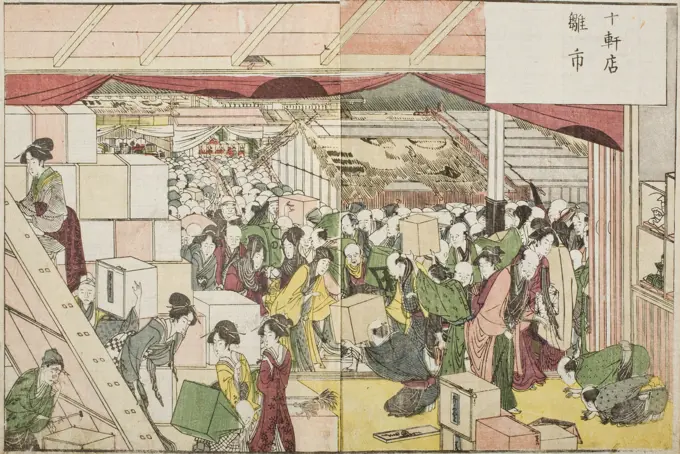
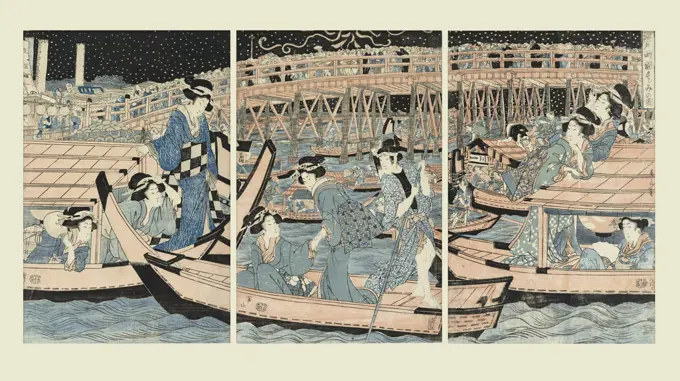
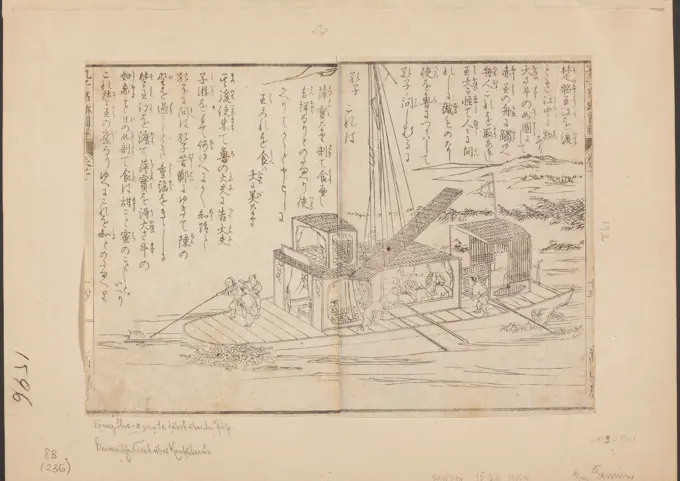
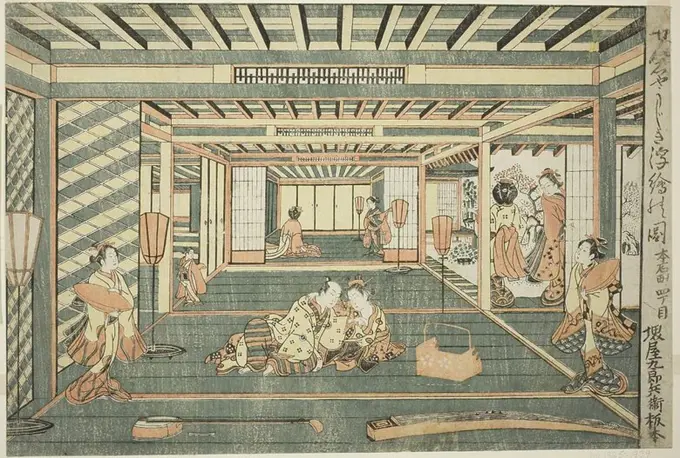
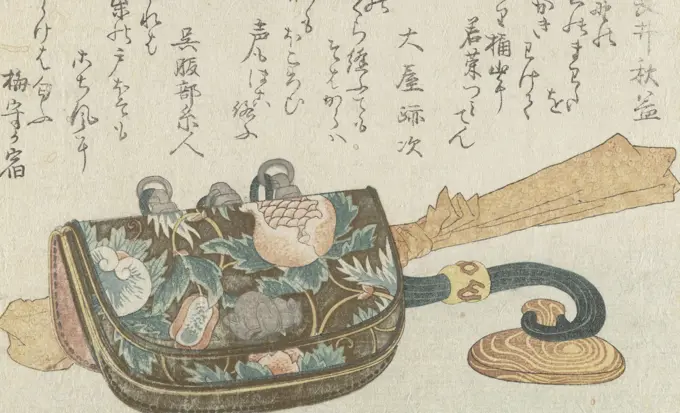
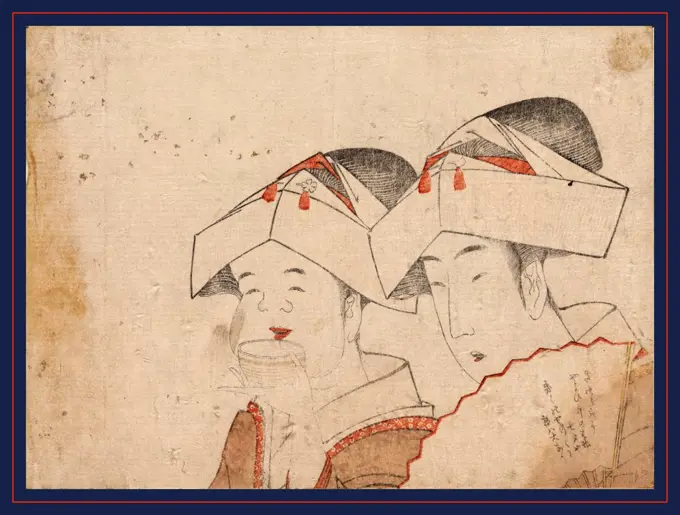
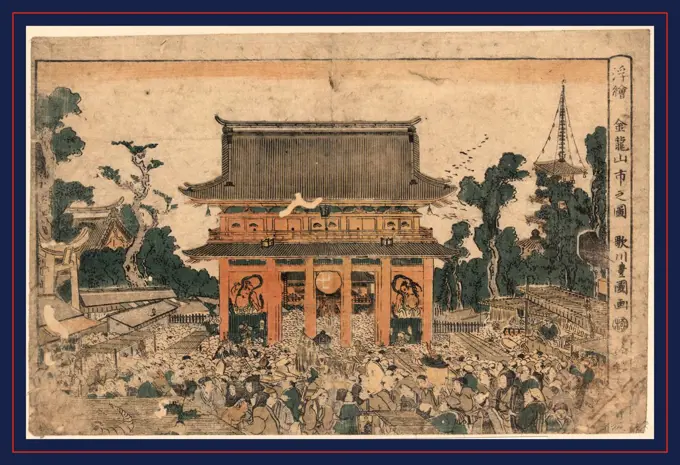
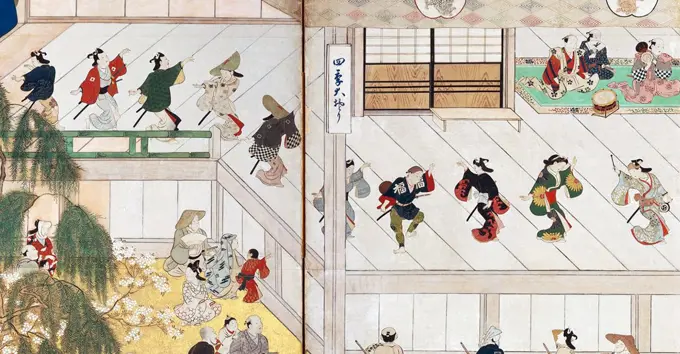
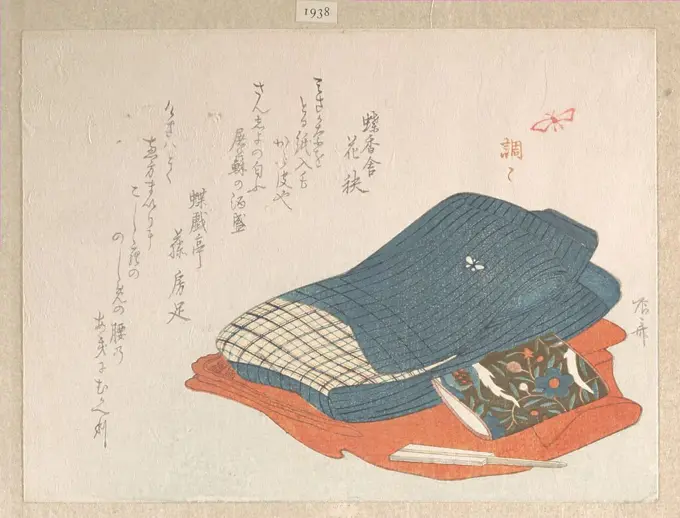
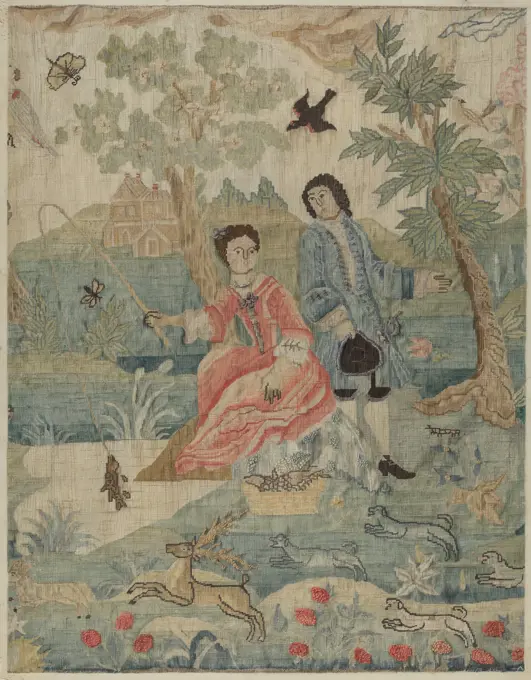
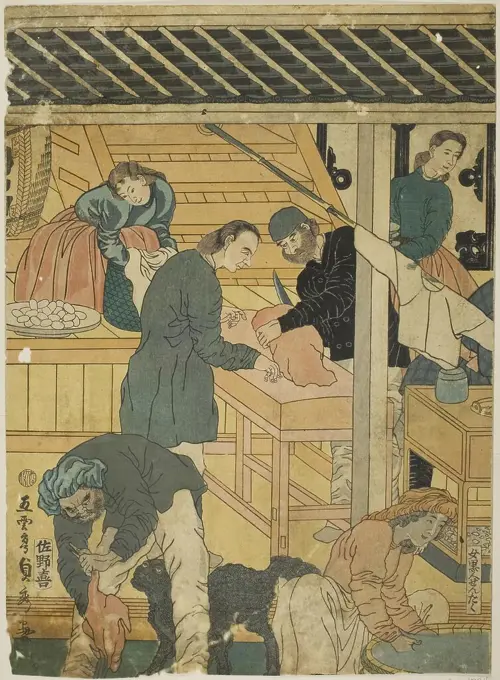
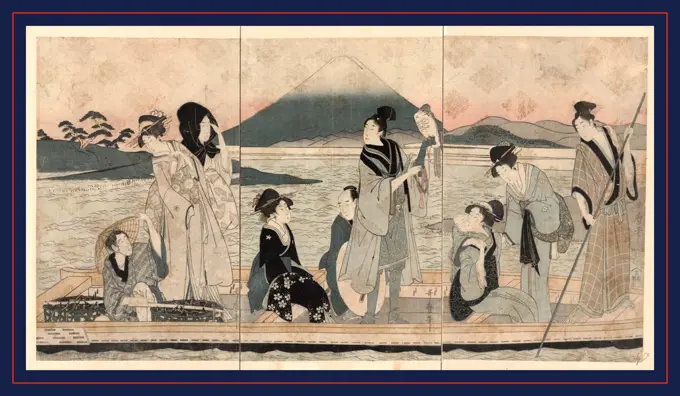
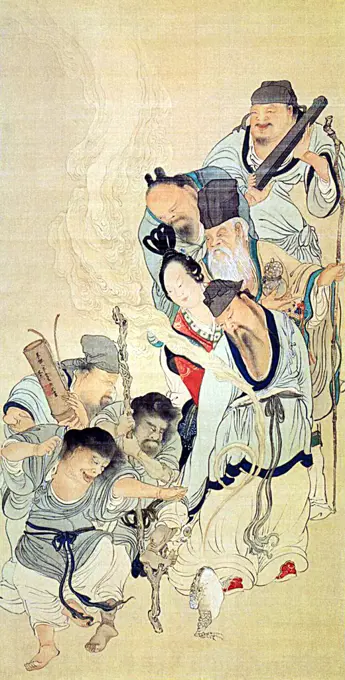
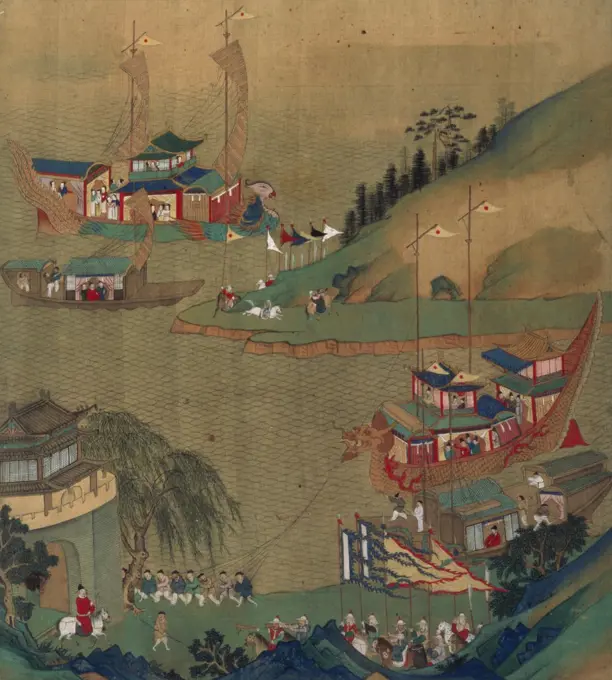
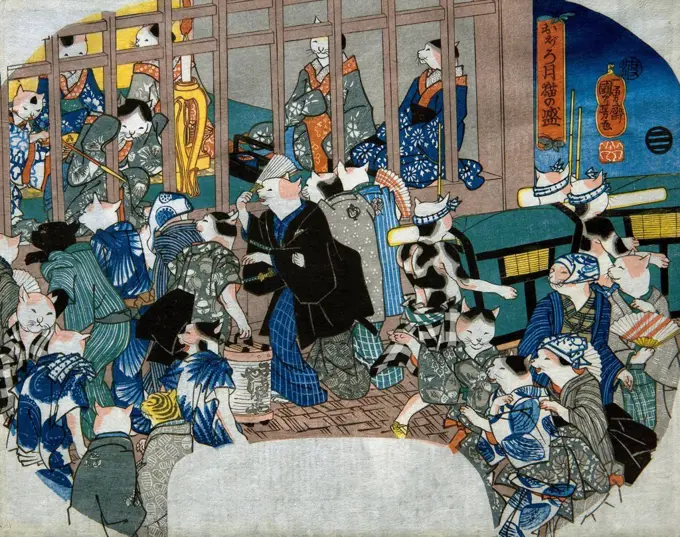
Wada (Yoshimoris) Drinking Bout (An episode from Soga monogatari) ca. 1624 Unidentified artist. Wada (Yoshimoris) Drinking Bout (An episode from Soga monogatari). Unidentified artist Japanese. Japan. ca. 1624. Woodblock printed book; ink with hand-coloring (tanroku bon). Illustrated BooksDrawing, One of Sixteen Scenes of the Death and Burial of a Man; japan watercolor on silk or paper; 1908-17-4Miya, 1906  Two groups of men pull on ropes of festival cars, on the right you can still see the gateway of the Miya Schrijn.  cardboard color woodcutThe Plum Garden at Komeido (Kameido ume yashiki no zu), from the series Famous Places in the Eastern Capital (Toto meisho) 1827-1843 Japan. Color woodblock print; oban . Utagawa HiroshigeMokuboji Temple on the Sumida River, from an untitled series of Famous Places in Edo Kitao Shigemasa (Japanese, 1739-1820). Mokuboji Temple on the Sumida River, from an untitled series of Famous Places in Edo, ca. 1770. Color woodblock print on paper, 8 1/2 x 6 1/8 in. (21.6 x 15.5 cm).   Asian Art ca. 1770Legends of the Yuzu Nembutsu Sect. Artist Unknown; Japanese, active 14th century. Date: 1301-1400. Dimensions: 30.5 × 1176.9 cm (12 × 460 in.). Handscroll; ink, colors, and gold on paper. Origin: Japan. Museum: The Chicago Art Institute, Chicago, USA.Fifty-three Stations on the Tōkaidō Road, Fuchū ca. 1845 Katsushika Hokusai Japanese. Fifty-three Stations on the Tōkaidō Road, Fuchū. Katsushika Hokusai (Japanese, Tokyo (Edo) 1760-1849 Tokyo (Edo)). Japan. ca. 1845. Polychrome woodblock printed book; ink and color on paper. Edo period (1615-1868). Illustrated BooksViewing Cherry Blossoms at Goten Hill. Chobunsai Eishi; Japanese, 1756-1829. Date: 1782-1792. Dimensions: 38.4 x 26.7 cm (15 1/8 x 10 1/2 in.). Woodblock print; right sheet of oban triptych, keyblock proof impression (color sheet: 1925.3091, left sheet: 1939.2195). Origin: Japan. Museum: The Chicago Art Institute, Chicago, USA. Author: Chobunsai Eishi.Hôkaibô with a poem Sanjô-Ini, No. 68 from the series "Imitation of the collection from Ogura-one poem from one hundred poets" (Ogura Nazorae Hyakunin Isshu)Dembiński, Stanisław (1891-1940)-collection, decorative boards according to the anthology of a hundred poets, cycle, gift (provenance), woodcuts, Japanese (culture), Japanese art, ukiyo-eA high-ranking official and his wife. Gouache painting.Akasaka ca. 1840 Japan. Akasaka 37231Scenes at the University with Images of the Ancient Sages; Debate and Banquet at the Administration Offices. Culture: Japan. Dimensions: Image (each): 10 ft. 5/16 in. × 10 ft. 3 1/16 in. (305.6 × 312.6 cm). Date: 17th century. Museum: Metropolitan Museum of Art, New York, USA.Im bathing, from the series: conflict with those because of love. .Chinese Materia Dietetica, Ming: HailstonesSparrows on Millstones with Hagi Bushes 1792-1802 Japan. Color woodblock print; large surimono . Katsushika HokusaiSix women as the six classical poets, A group of six women, all from a different class, representing the six classical poets (Rokkasen), chosen in the preface of the book An anthology of the poets from the past and present (Kokuwakashû). This group consists of poets from the Heian period (794-1185): Ariwara no Narihira (825-80) (with bow and arrow), Sôjô Henjô (as maiko, rear left), Priest (hôshi) Kisen (seen from behind), Omotomo no Kuronushi (rear right), Bunya no Yasuhide (with book) and Ono no Komachi (with fan). A calendar sheet (egoyomi) for the year 1798, the long and short months are shown in the range. With six poems., Katsushika Hokusai (mentioned on object), Japan, 1798, paper, colour woodcut, h 184 mm × w 232 mmFire-Holder and Flower-Pot 19th century Ryūryūkyo Shinsai Japanese. Fire-Holder and Flower-Pot 54722 Artist: Ryuryukyo Shinsai, Japanese, active ca. 17991823, Fire-Holder and Flower-Pot, 19th century, Polychrome woodblock print (surimono); ink and color on paper, 5 5/8 x 7 1/2 in. (14.3 x 19.1 cm). The Metropolitan Museum of Art, New York. H. O. Havemeyer Collection, Bequest of Mrs. H. O. Havemeyer, 1929 (JP2002)Goyu, board 36 Ser from the series: Fifty three stages of the Tokaido road/Tokaido gojusan tsugi no uchi, second version so called GyoshoEvening tranquiIIty in the valley of the river at Shijo Street in Kyoto /Kyo Shijo gawara yusuzumi, from the series: Three representative evenings of three main streets /Santo mitate sansekiGenre scene - three old people and two small thoughts;  the beginning of the 20th century (1900-00-00-1910-00-00);A woman at a desk, gazing at an outside view., 1768, WoodcutsSpring and Summer right of the pair Scenes from the Tale of Genji in the Four Seasons, mid 17th century, Unknown Japanese, 61 5/8 × 140 in. (156.53 × 355.6 cm) (image), ink, color, and gold on paper, Japan, 17th century, This pair of screens depicts 11 scenes from The Tale of Genji. Rather than presenting the scenes in the order in which they appear in the story, however, the artist presents them in seasonal order from right to left, as Japanese viewers would read them. The artist begins with mid-spring in the upper right corner, where a group of young men play kemari (a game similar to hacky sack) in a grove of cherry trees in full bloom, a scene from chapter 34. Five additional scenes in the right screen take place in late spring and early summer. In the far right panels of the left screen, autumn grasses and maple leaves announce the arrival of fall. Wintry scenes from chapters 6 and 51 are depicted at far left, where trees and rooftops are blanketed in snow.Scene 6b. handscrolls. 1660. Spencer Collection. Manuscripts, JapaneseA Japanese prisoner, bound hand and foot by metal cuffs. Gouache painting by a Japanese artist, ca. 1850.Yuan Dynasty, XIII-XIV Centuries AD, showing rice culture: harvesting.Illustration to the story of Qing Shi Shan. unknown, graphic artistPicture Book: Selected Insects (Ehon mushi erabi). Kitagawa Utamaro  ; Japanese, 1753 ()-1806. Date: 1788. Dimensions: . Color woodblock printed books, two volumes. Origin: Japan. Museum: The Chicago Art Institute, Chicago, USA.Scene from the Tale of Genji (Hana No En, Festival of the Cherry Blossoms”) After Iwasa Matabei (17th century). Scene from the Tale of Genji (Hana No En, Festival of the Cherry Blossoms”), 17th century. Hanging scroll, ink color and gold leaf on paper, 49 3/16 x 18 1/8 in. (125 x 46 cm).  The eleventh-century novel The Tale of Genji was a favorite subject for many Japanese artists, offering a chance to depict emotional stories in an idealized, antique setting. This painting illustrates an episode that takes place during cherry blossom season, as indicated by white flowers on some of the surrounding trees. The protagonist, Prince Genji, accosts a woman late at night, assuming that she will gladly have sex with him. He later discovers that she is the daughter of a rival. He is shown placing his hand on her shoulder—a gesture that would have been read as blatantly sexual and aggressive during this period, when men and women were rarely depicted touching. Asian Art 17th centuryGathering Spring Herbs, from the illustrated book "Picture Book: Flowers of the Four Seasons (Ehon shiki no hana)," vol. 1. Kitagawa Utamaro  ; Japanese, 1753 ()-1806. Date: 1801. Dimensions: . Color woodblock print; double-page illustration from book. Origin: Japan. Museum: The Chicago Art Institute, Chicago, USA.Returning from a Poetry Gathering 1780-1794 Japan. Color woodblock print; oban triptych . Kubo ShunmanWashing Woman and Child, 1814, Woodcuts, SurimonoGathering Spring Herbs, from the illustrated book Picture Book Flowers of the Four Seasons (Ehon shiki no hana), vol 1 1801 Japan. Color woodblock print; double-page illustration from book . Kitagawa UtamaroEntrance to Ageyacho, from the series "The Appearance of Yoshiwara (Yoshiwara no tei)". Hishikawa Moronobu; Japanese, ()-1694. Date: 1676-1689. Dimensions: 25.6 x 40.8 cm (10 1/8 x 16 1/16 in.). Woodblock print; sumizuri-e, oban. Origin: Japan. Museum: The Chicago Art Institute, Chicago, USA.Eight Scenes of Kanazawa (Kanazawa hakkei): The Dance of Asahina and Umejumaru (Asaina Umejumaru mai no dan). Torii Kiyonobu I; Japanese, 1664-1729. Date: 1702-1712. Dimensions: 31.8 x 54.1 cm. Hand-colored woodblock print; o-oban yoko-e, tan-e. Origin: Japan. Museum: The Chicago Art Institute, Chicago, USA.Ise monogatari = The Tales of Ise, 1608, Yoshida, Soan, -1632, KyotoTraditional silk making in China. Old 19th century engraved illustration from La Nature 1888Kakegawa, from the series Fifty-three Stations of the Tokaido (Tokaido gojusan tsugi) 1801-1811 Japan. Color woodblock print; chuban . Katsushika HokusaiJikkenten Doll Market. Katsushika Hokusai (Japan, 1760-1849). circa 1802. Books. Double-page book illustration; color woodblock printKuwana En Yokkaichi, Utagawa Yoshiiku, 1860 print Two images in Chuban format, printed on top of one leaf. Upstairs: the Kuwana station, the fortyest resting place along the Tokaido; Two men at stall with shells baking woman. Below: the Yokkaichi station, the two -ferrous resting place along the Tokaido; Woman and three men in candlelight looking at half -naked man at fallen Buddha statue. Japan paper nishiki-e / color woodcut preparation of food - CC - in the open air. postures of the human figureLongevity Wo Quan (Ju, Akusen), from an untitled series of happiness, prosperity, and longevity 1819-1829 Japan. Color woodblock print; shikishiban, surimono . Yashima GakuteiArtist: Kikugawa Eizan, Japanese, 1787-1867, Cooling off by the RyogokuBridge, 19thcentury, Triptych; polychrome woodblock print, image: 14 3/4 × 10 1/16 in. (37.465 × 25.559 cm), Japan, Japanese, Edo period(1615-1868), Works on Paper -PrintsHarada Jukichi opens the Genbu Gate of the Fort at Pyongyang (Japanese: Heijo ), Scene from the First Sino-Japanese War (1894-1895); Nisshin kosen sugoroku (album). Toshiaki, Yusai (1864-1921), graphic artistShip ofKing Zhao from Chu (China); card from the album Koshi-no kotoato zukai" (Illustrations of the activity of Confucius). Shibutsu,Temmin (1766-1837), painterNarrative Panel Narrative Panel, late 19th century. Silk satin with embroidery, Length: 153 in. - Width: 33 in.   Asian Art late 19th centuryUtagawa Hirokage (active 1855-1865), also known as Ichiyusai Hirokage, was a Japanese woodblock printer living and working in the mid-19th century. He was a pupil of Utagawa Hiroshige I, and his main noteworthy work is the series Edo meisho doke zukushi (Joyful Events in Famous Places in Edo).Shiragikumaru; poem by Oshikochi-no Mitsune; print 29 from the series: Ogura nazorae hyakunin isshu (Imitations of one hundred poems by one hundred poets). Utagawa, Kuniyoshi (1798-1861), graphic artistPortret van koretada, tachibana morikuni, 1700-1750 print Two pages from a Japanese book; Left, a goddess with bow and arrows; Right, portrait of Fujiwara Koretada, back, on either side text. Japan paper  historical persons. representations ~ goddesses, demi-goddesses, heroines, etc. (non-Christian religions). archer's weapons: bow and arrowNarrative Panel Narrative Panel, late 19th century. Silk satin with embroidery, Length: 153 in. - Width: 33 in.   Asian Art late 19th century360 professions ";  early 20th century () (1901-00-00-1910-00-00); was downloaded from the Muse of the National Museum in Warsaw; printing / print / color printing; products from W Paper; height 36.7 cm, width 52.0 cm; Skazvr 91 MNW; all rights reservation.Perspective Picture of a Large Room (Senjojiki uki-e no zu). Attributed to Ishikawa Toyonobu; Japanese, 1711-1785. Date: 1765. Dimensions: 11 1/2 x 16 3/4 in. Color woodblock print; oban yoko-e, benizuri-e. Origin: Japan. Museum: The Chicago Art Institute, Chicago, USA.Beauties working at sericulture., 1875 - 1900. Woodcuts. Color. Paper / Sheet 14 9/16 x 9 3/4 in. (37 x 24.8 cm)Japan, Itondo, Gofukube, Atotsugi, Ôya, Akimasu, Nagai, Shunman, Kubota, Tobacco pouch and pipe, Tobacco pouch and a pipe wrapped in a cloth . The tobacco pouch, with a pattern of various types of fruit, has a silver clasp in the shape of two rats, referring to the year of the rat. With three poems., print, prent, surimono, prints, Japan (collection), height 137 mm, width 182 mm, Japanese, 1757 - 1820, print maker, printmaker, 1804 - 1804, first quarter 19th century, paper, colour woodcut, poetBijin to otafuku, Beauty and Otafuku., between 1801 and 1804, 1 print : woodcut, color ; 12.8 x 17.4 cm., Print shows two actors, one wearing an otafuku mask and drinking from a cup, head-and-shoulders portrait.Three tobacco bags. Three leather tobacco bags with a cuckoo, Adonis flower and blooming plum blossom. With one poem.Fujisawa, board from an album: Fifty three stages of the road Tokaido road /Tokaido gojusan zugi Katsushika, hokusai (1760 1849)The Admonitions Scroll is a Chinese narrative painting on silk that is traditionally ascribed to Gu Kaizhi (c.345-c.406 CE), but which modern scholarship regards as a 5th to 8th century work that may be a copy of an original Jin Dynasty (265-420 CE) court painting by Gu Kaizhi. The full title of the painting is Admonitions of the Court Instructress (Chinese: Nushi Zhentu). It was painted to illustrate a poetic text written in 292 by the poet-official Zhang Hua (232-300). The text itself was composed to reprimand Empress Jia (257-300) and to provide advice to imperial wives and concubines on how to behave. The painting illustrates this text with scenes depicting anecdotes about exemplary behaviour of historical palace ladies, as well as with more general scenes showing aspects of life as a palace lady. The painting is reputed to be the earliest extant example of a Chinese handscroll painting.Ukie Kinryuzan ichi no zu, Perspective print of the market at Kinryuzan., Utagawa, Toyokuni, 1769-1825, artist, between 1791 and 1793, 1 print : woodcut, color ; 24.7 x 37.9 cm., Print shows a large throng of people at the open-air marketplace at Kinryuzan.Shono; No 46. Shono: One of the Fifty-Three Noted Places on Tokaido, Painted by Hiroshige; Hiroshige's Tôkeidô; Hiroshige No Fude Tôkaidô. Servants with carrying basket defy the rain in the mountains.53 Stations: Hokusai's Album of Travel Pictures, vol. 1, 1830, Katsushika Hokusai, Japanese, 1760 - 1849, 9 x 6 1/4 x 5/16 in. (22.9 x 15.8 x 0.8 cm), Woodblock printed book; ink and color on paper, Japan, 19th centuryParody of the Seven Sages of the Bamboo Grove 1775-1806 Japan. Woodblock print; right sheet of oban diptych, keyblock proof impression . Katsukawa ShunchôJapan: Scenes from the Nakamura Kabuki Theatre (detail), one from a pair of six-panel byobu folding screens; ink and color on gold-leafed paper, Moronobu Hishikawa (1618-1694), c. 1670-1680Noon, 1906  Servants with carrying basket defy the rain in the mountains.  cardboard color woodcutFigures at a carriage, Cornelis Springer, 1852  There are different figures next to a carriage, including a beggar. The coachman is sitting on the goat. Page 16 from a sketchbook with 91 sheets. Netherlands paper. watercolor (paint). pencil  adult man. adult woman. child. clothes, costume (+ men's clothes). clothes, costume (+ women's clothes). beggar. four-wheeled vehicle drawn by one animalThe Loyal Wife Koto Recognizes Her Long-Lost Husband as a Rickshaw Driver. Tsukioka Yoshitoshi (Japan, 1839-1892). Japan, 1875, April. Prints; woodblocks. Color woodblock printJapan: Traditional crafts and trades of the 18th century from a hand-painted album by an anonymous artist. Folio 34. Hand-coloured illustration from a Japanese miscellany on traditional trades, crafts and customs in mid-18th century Japan, dated Meiwa Era (1764-1772) Year 6 (c. 1770 CE).Boys' Festival (Tango no Sekku) procession across the Nihonbashi Bridge colour woodcutsThe battle of pines on the shores of water YOSHITORA, UTAGAWA (FL. C.1850 1880)Four musicians and a noh dancer, Nakamura Hôchû, 1826 print  Or paper color woodcut small group of musicians, chamber orchestra, jazz band. man dancing alone. fanScenes from the Tale of Ise. Date/Period: 1600. Painting. Height: 252 mm (9.92 in); Width: 215 mm (8.46 in). Author: Attributed to Tawaraya Sotatsu (Calligraphy by Konoe Hisatsugu).Picture Book of the Evergreens 1731 Nishikawa Sukenobu Japanese. Picture Book of the Evergreens. Nishikawa Sukenobu (Japanese, 1671-1750). Japan. 1731. Woodblock-printed book; ink and hand-coloring on paper. Edo period (1615-1868). Illustrated BooksBed-clothing. Artist: Ryuryukyo Shinsai (Japanese, active ca. 1799-1823). Culture: Japan. Dimensions: 5 11/16 x 7 1/2 in. (14.4 x 19.1 cm). Museum: Metropolitan Museum of Art, New York, USA.Two Chinese officials meet in an office to discuss the a landscape painting on a desk. Gouache painting by a Chinese artist, ca. 1850.Phyllis Dorr, Petit Point Embroidery, c 1937 Petit Point EmbroideryConstruction of a house, painting on silk, artist from the Kano school, ukiyo-e style painting, Japan. Japanese Civilisation, Azuchi-Momoyama period, 16th-17th century.Drawings Katsushika Hokusai (Japanese, 1760-1849). Drawings, 1615-1867. Ink with reddish wash on cream colored paper, 8 1/8 x 11 7/16 in. (20.7 x 29 cm).   Asian Art 1615-1867Panel, one of a set of four, 20th century, H.66-1/2 x W.17-1/8 in, silk, China, 20th centuryColophon. text. Illustrations. 1608. Spencer CollectionSales Room at a Foreign Merchant Shop in Yokohama (Yokohama ijin shokan uriba no zu). Utagawa Sadahide; Japanese, 1807-1873. Date: 1861. Dimensions: . Color woodblock print; right sheet of oban triptych. Origin: Japan. Museum: The Chicago Art Institute, Chicago, USA.'Outstanding, Unmatched (Man). Merit, Wealth and Nobility'. China, City of Yanlyutsin, late 19th - early 20th century. Dimensions: 100x60 cm. Museum: State Hermitage, St. Petersburg.At night in front of the house of the armorer Gihei, scene from the 10th act of the drama: Treasury of fideIIty /ChishinguraA Chinese sage overlooks an exchange between two old men. Painting by a Chinese artist.Ichi fuji ni taka san nasubi, First dream: Fuji, hawks, and eggplants., Kitagawa, Utamaro, 1753-1806, artist, [between 1798 and 1801, 1 print (3 sheets) : woodcut, color ; 37.2 x 23.3 cm (left panel), 37.1 x 23 cm (center panel), 37.3 x 22.9 cm (right panel), Print shows five women, four men, and a child in a ferry; one man is poling the boat and one man is a porter seated at the back of the boat with baskets of eggplants, the women, child, and a man holding a falcon on his left forearm, and tChinese paintings in Schwetzingen Castle, Baden-Wurttemberg, Germany.Japan: Hanging scroll painting of the Eight Immortals, by Tani Buncho (1763-1840), 1803, Seikado Bunko Art Museum, TokyoAlbum Leaf Painting: Three Laughing Figures Album Leaf Painting: Three Laughing Figures, 18th century. Album leaf, ink on silk, Image: 10 1/2 x 12 1/8 in. (26.7 x 30.8 cm).   Asian Art 18th centuryEmperor Yangdi (Sui Dynasty) with his Fleet Artist Unknown Bibliotheque Nationale, Paris, France Winter landscape with horses and grooms. Date: 17th century. Origin: China. Period: Ming or Qing dynasty. Ink and color on silk. Museum: Freer Gallery of Art and Arthur M. Sackler Gallery.A Japanese Samurai warrior in his armour. Watercolour.Design for a Poster for Brandsma's Tea.Anonymous watercolor showing workers shaping shells, depicting craft and manual production activity.Utagawa Kuniyoshi 1798-1861. Pale Moon. Cats in Season (Oborozuki neko no sakari). about 1846. Aiban (uchiwae). 22.4 x 28.8. Perspective views of famous place of Japan: Nakanocho in Shin-Yoshiwaro, c1775. Utagawa Toyoharu (1735-1814) Japanese Ukiyo-e artist. Teahouses and shops lining busy boulevard at night by gate of the pleasure district of Tokyo.Scroll 2, scene 21. 1650 - 1699. Illustrations, Manuscripts. Spencer CollectionThe Admonitions Scroll is a Chinese narrative painting on silk that is traditionally ascribed to Gu Kaizhi (c.345-c.406 CE), but which modern scholarship regards as a 5th to 8th century work that may be a copy of an original Jin Dynasty (265-420 CE) court painting by Gu Kaizhi. The full title of the painting is Admonitions of the Court Instructress (Chinese: Nushi Zhentu). It was painted to illustrate a poetic text written in 292 by the poet-official Zhang Hua (232-300). The text itself was composed to reprimand Empress Jia (257-300) and to provide advice to imperial wives and concubines on how to behave. The painting illustrates this text with scenes depicting anecdotes about exemplary behaviour of historical palace ladies, as well as with more general scenes showing aspects of life as a palace lady. The painting is reputed to be the earliest extant example of a Chinese handscroll painting.Turning round-shaped vases, vintage engraving. Turning round-shaped vases, vintage engraved illustration. Magasin Pittoresque 1857. Copyright: xZoonar.com/PatrickxGuenettex 10673919Anonymous watercolor depicts silk yarn being colored in a vat (Bottich), showing material, container, process, and texture.Second national industrial exhibition at Ueno Park (Ueno ko_en naikoku kangyo_ daini hakurankai bijitsukan narabini shojo funsuiki no zu) #1, Japanese Prints - HiroshigeOne of Sixteen Scenes of the Death and Burial of a Man, Japan watercolor on silk or paper, From a series of sixteen scenes of the death and burial of a man in Japan., Japan, 19th century, Drawing, DrawingChildren's Games, newly published. Date: c. 1884. Dimensions: 36.5 cm x 25 cm. Museum: Van Gogh Museum, Amsterdam. Author: Kobayashi Ikuhide.