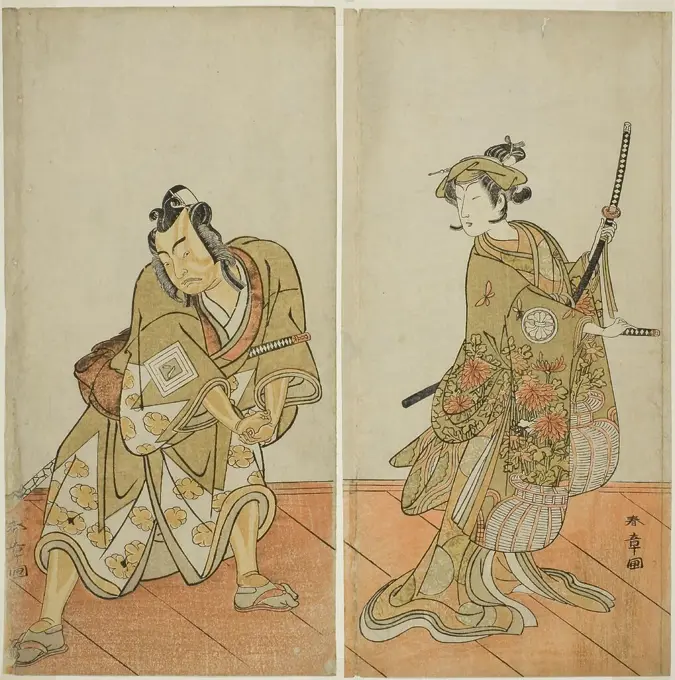
Japanese Woodblock Prints of Actors

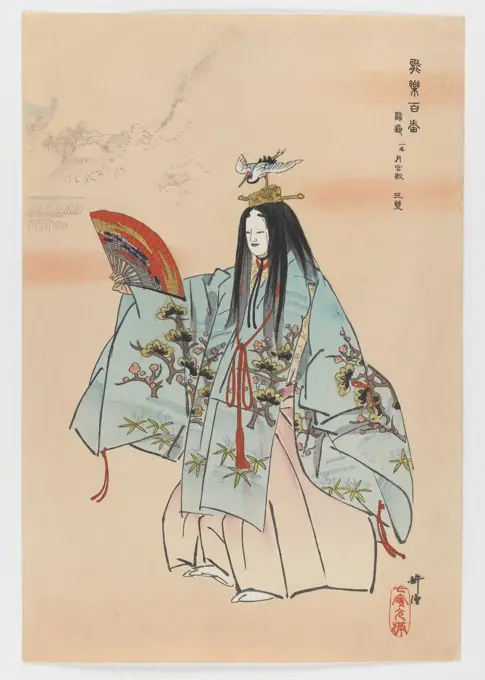
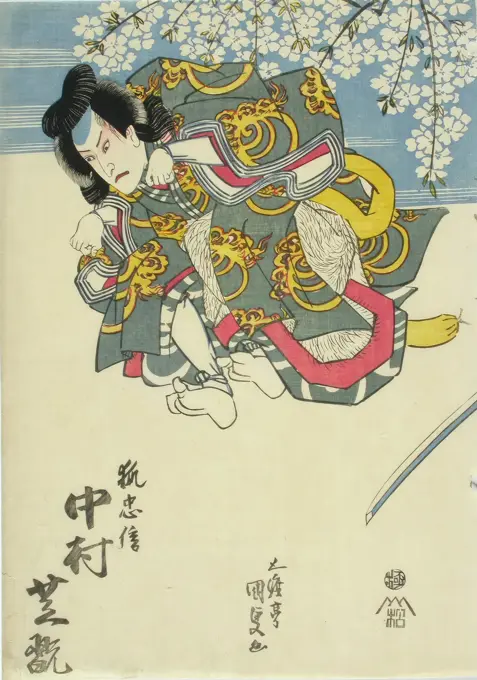
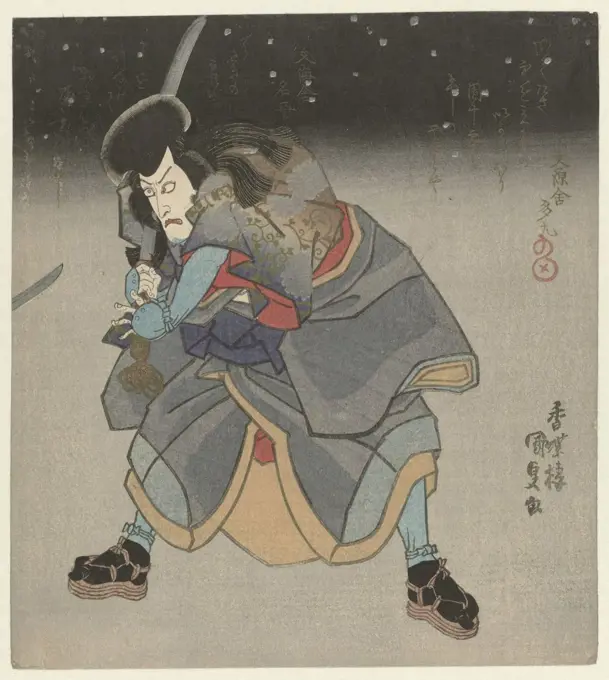
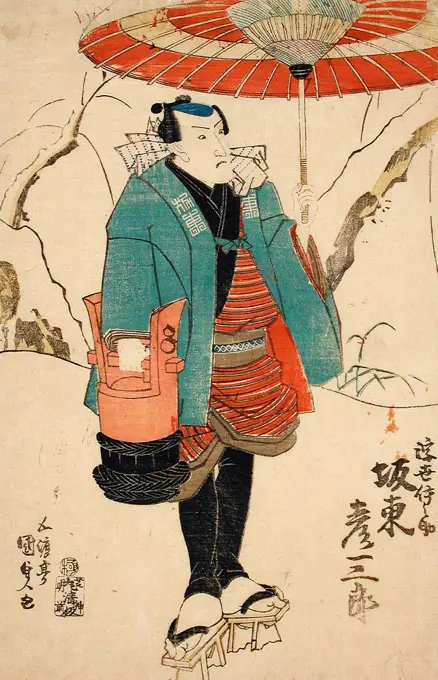
A collection of vibrant Japanese woodblock prints depicting actors in traditional costumes, showcasing expressive poses and intricate designs, with various historical roles.

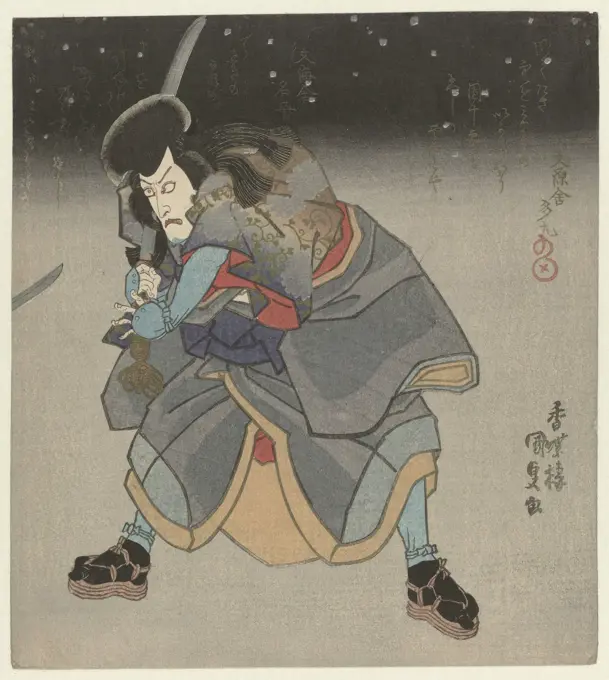
Nakamura Shikan II as Sukune Taro Sukune Taro Nakamura Shikan (title on object), The actor Nakamura Shikan II in the role of Sukune Taro, in blue robe, clouds in the background, Nakamura Utaemon IV, Utagawa Kuniyoshi (mentioned on object), Japan, 1830 - 1834, paper, colour woodcut, h 372 mm × w 249 mm
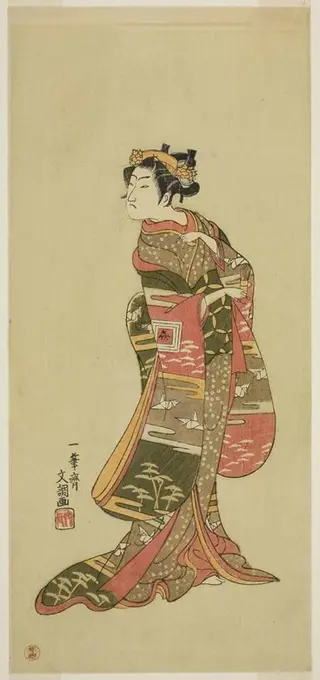
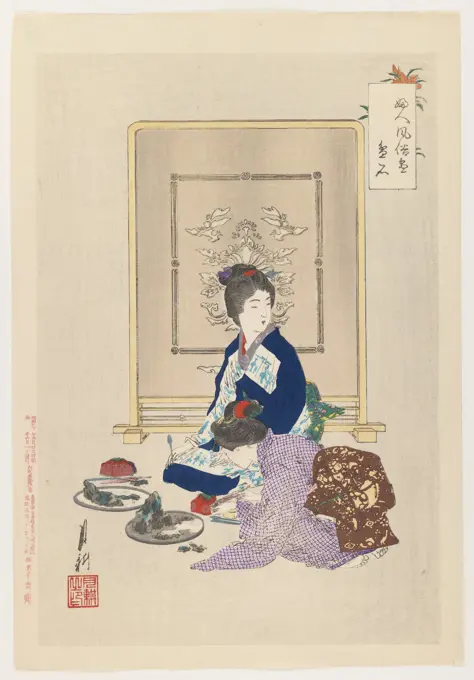
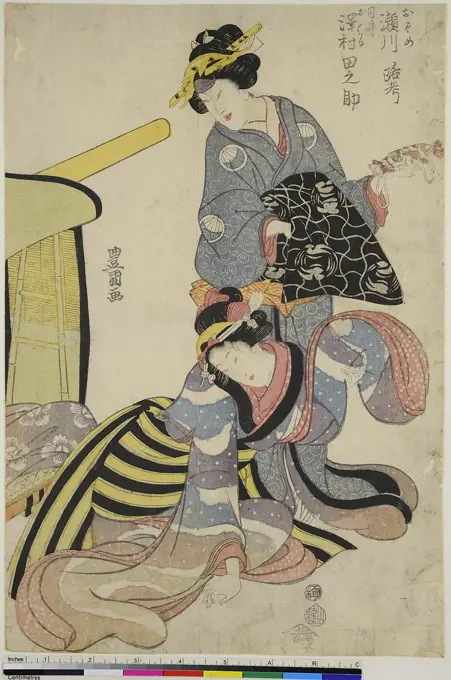
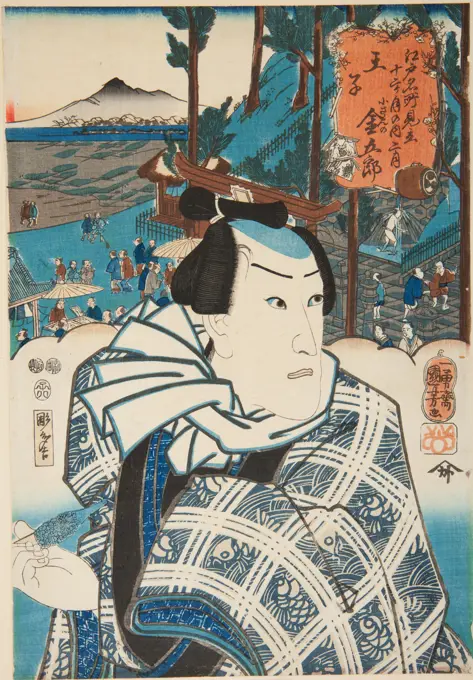
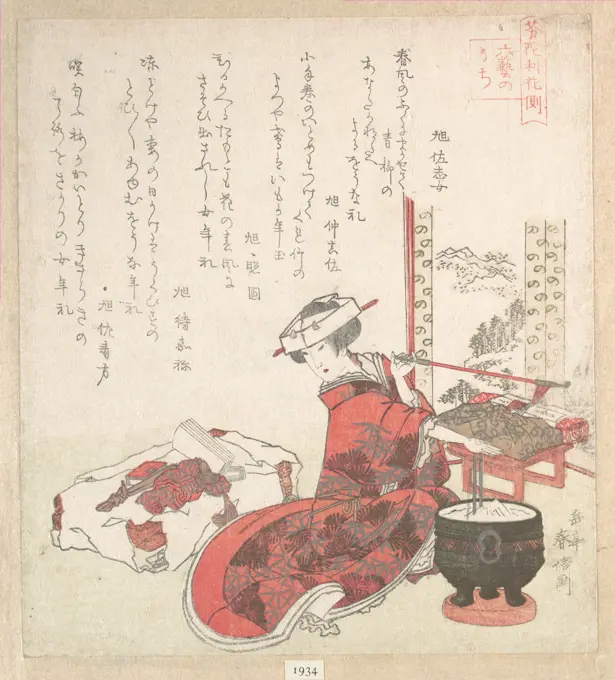
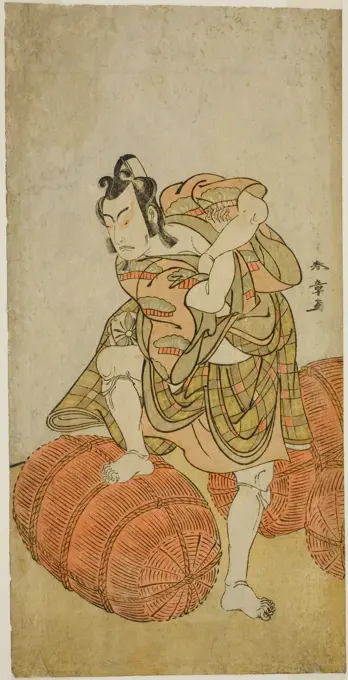
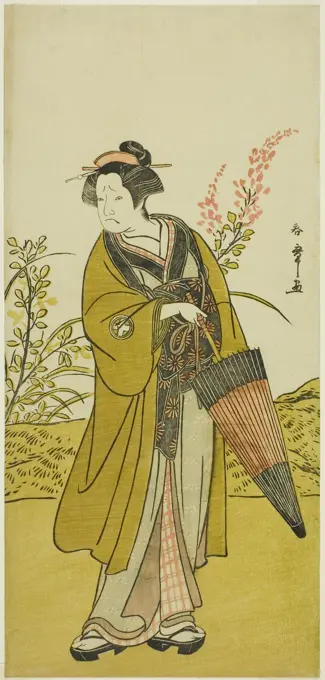
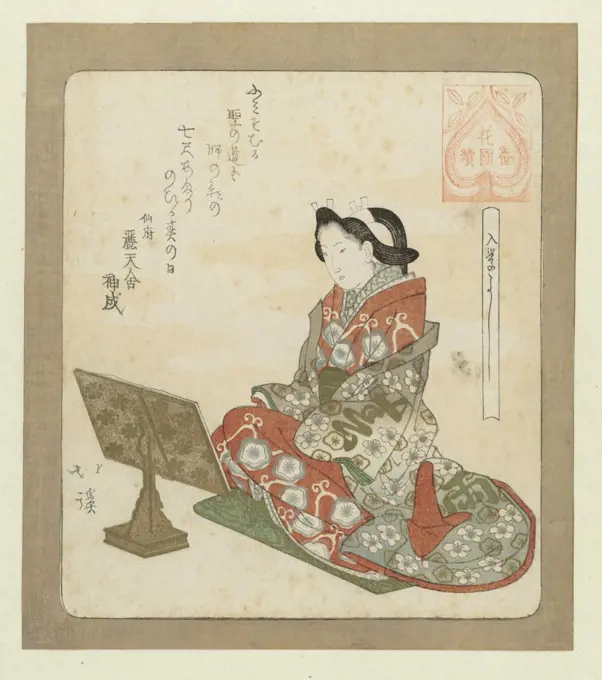
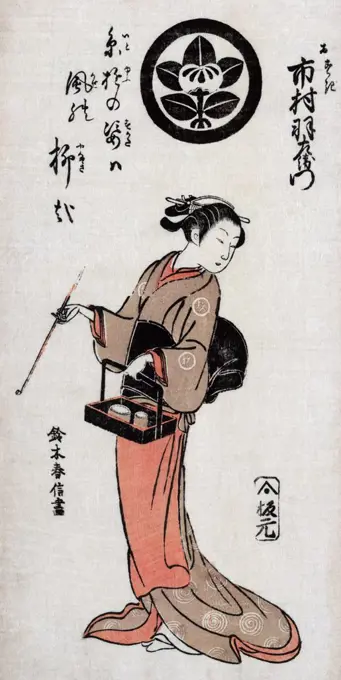
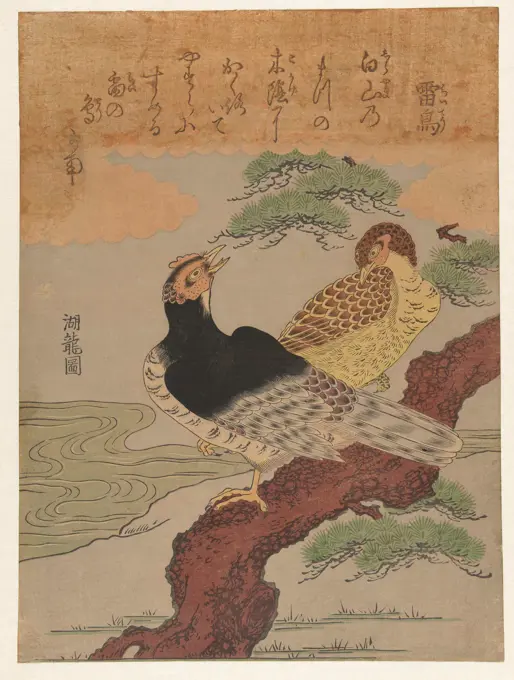
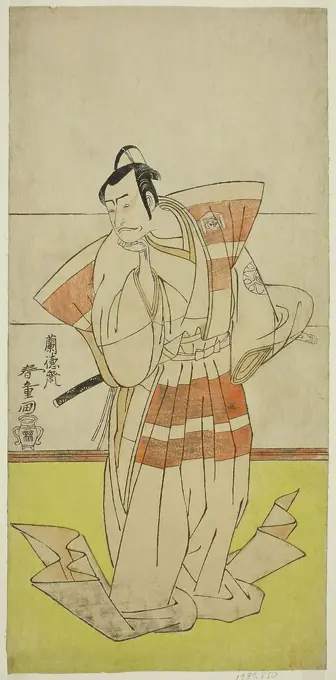
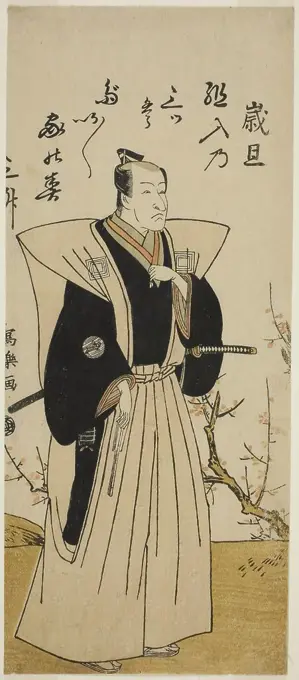
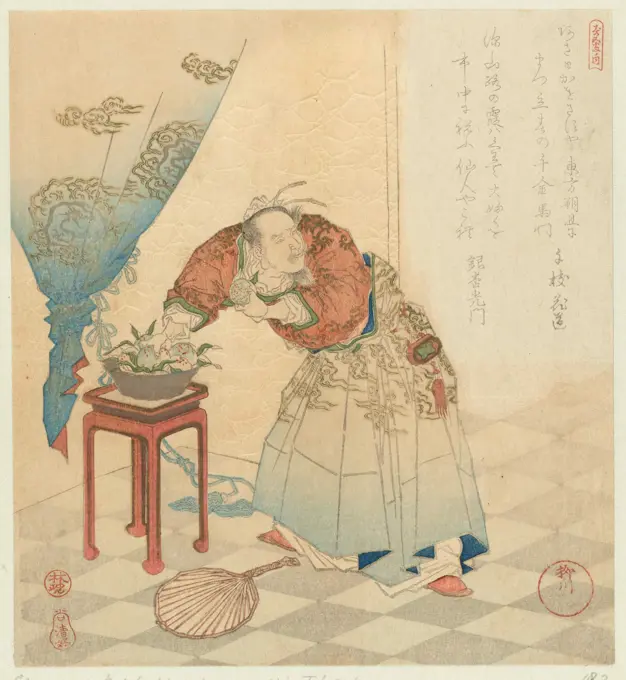
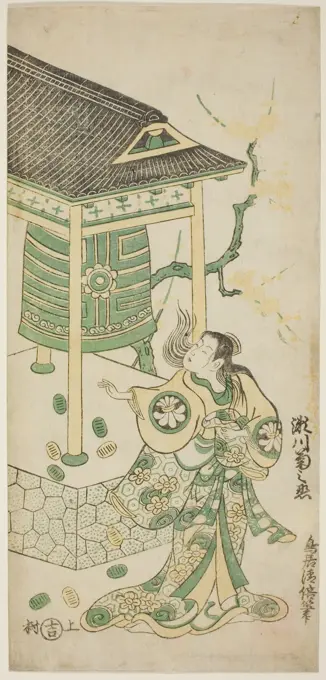
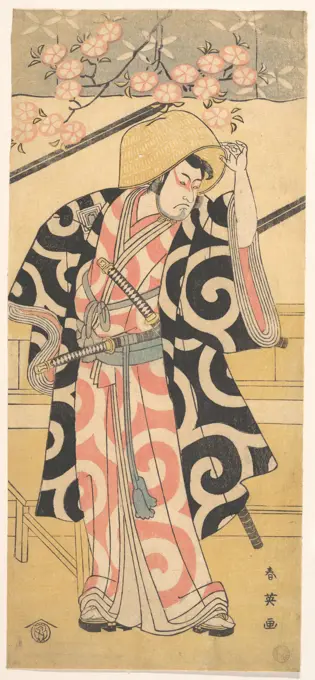
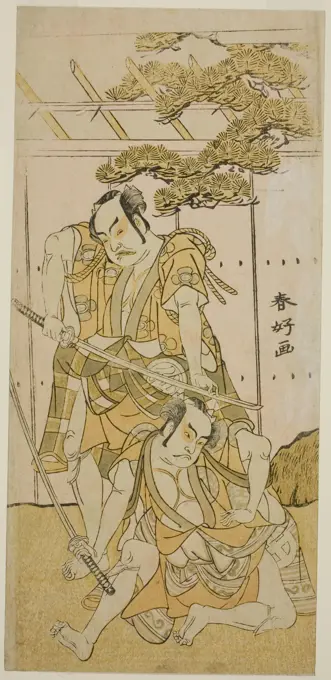
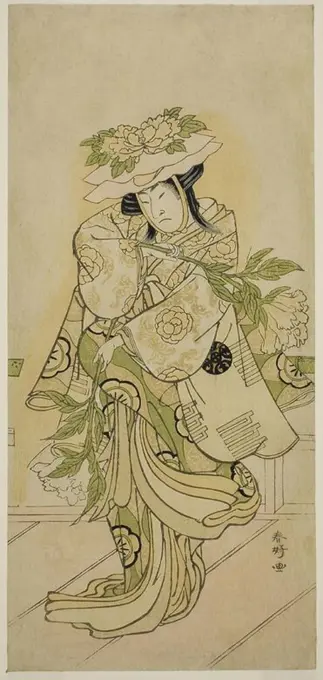
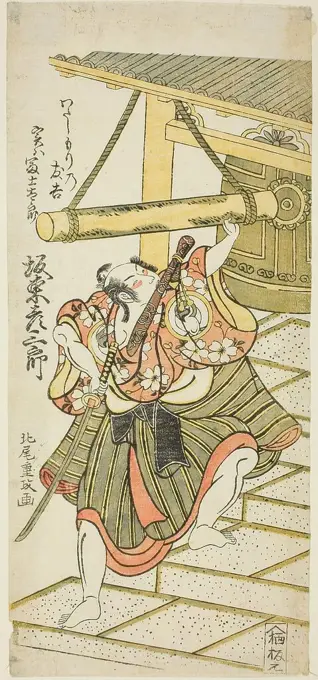
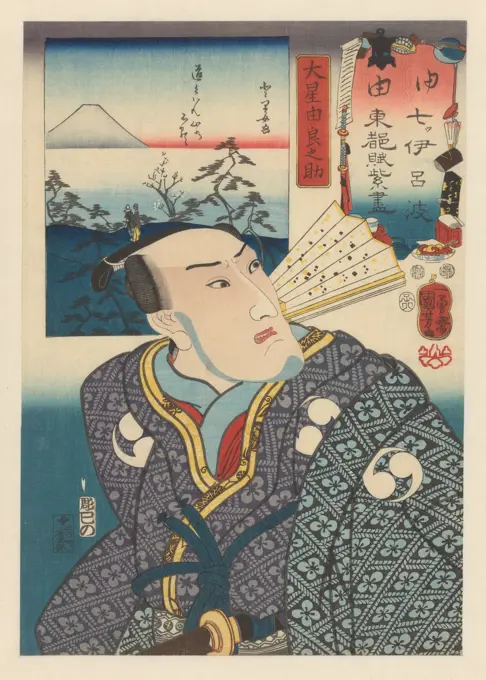
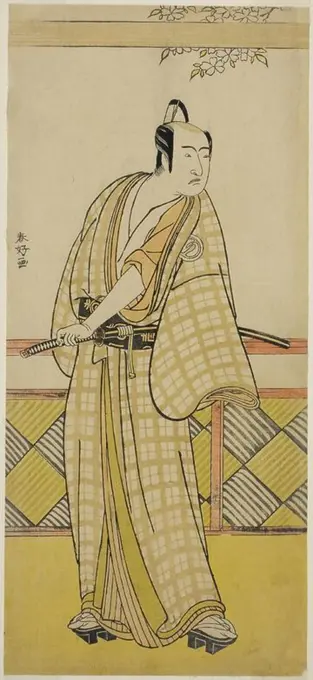
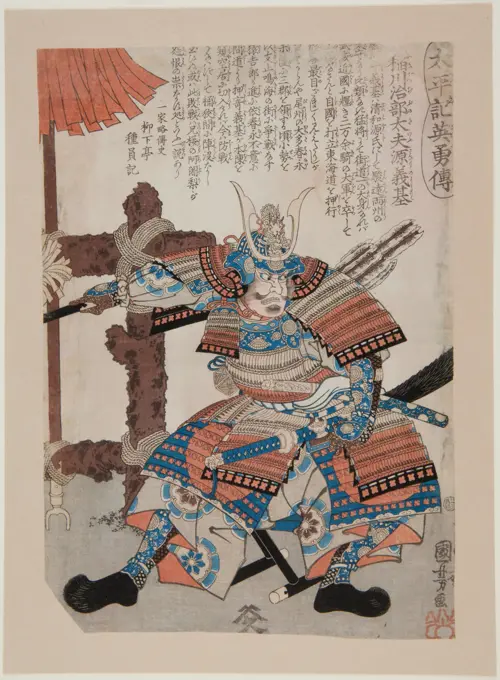
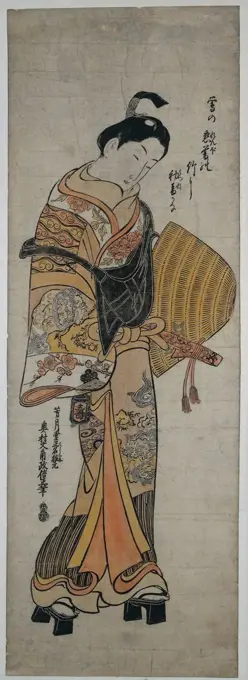
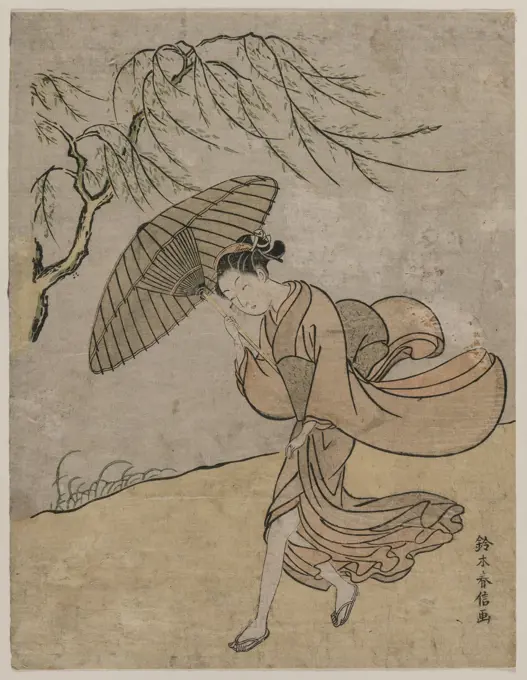
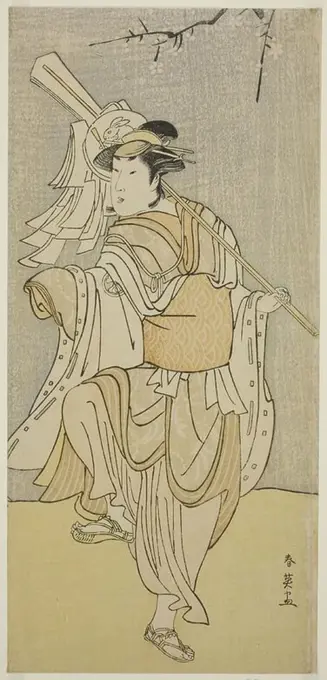
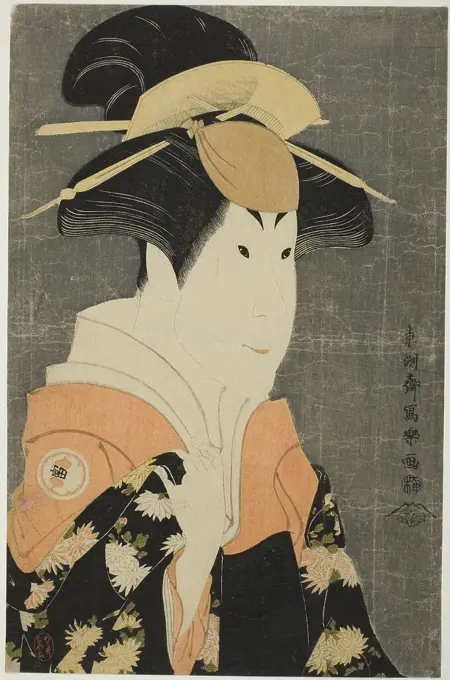
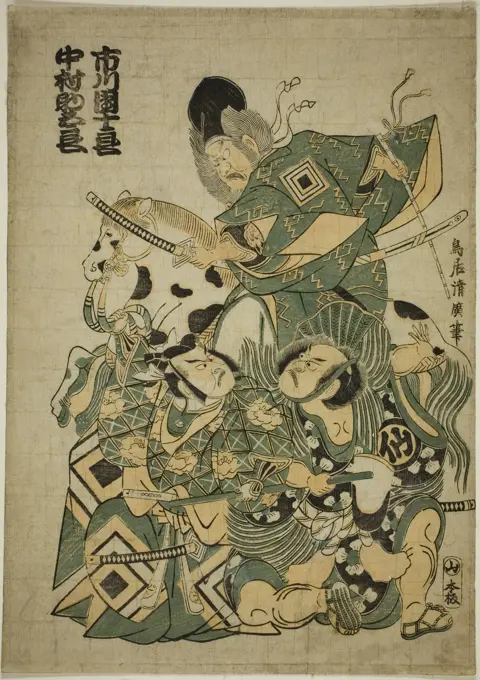
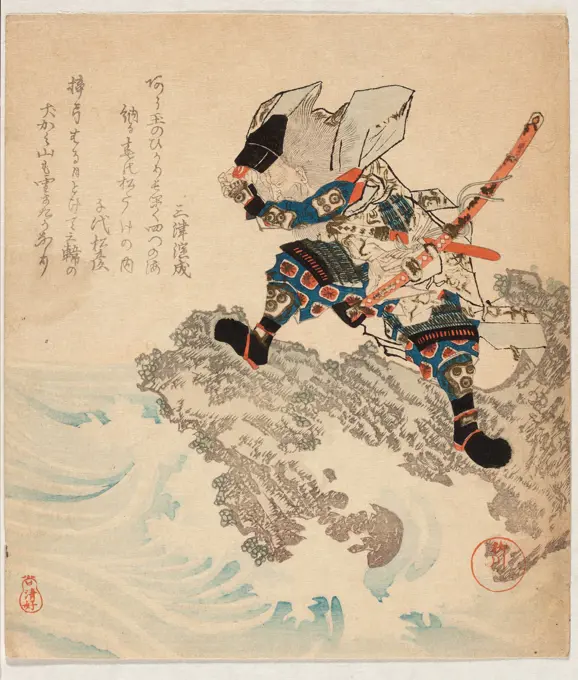
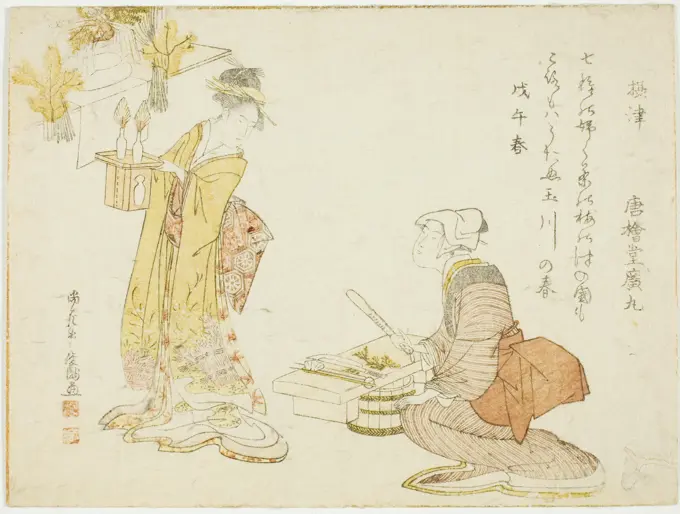
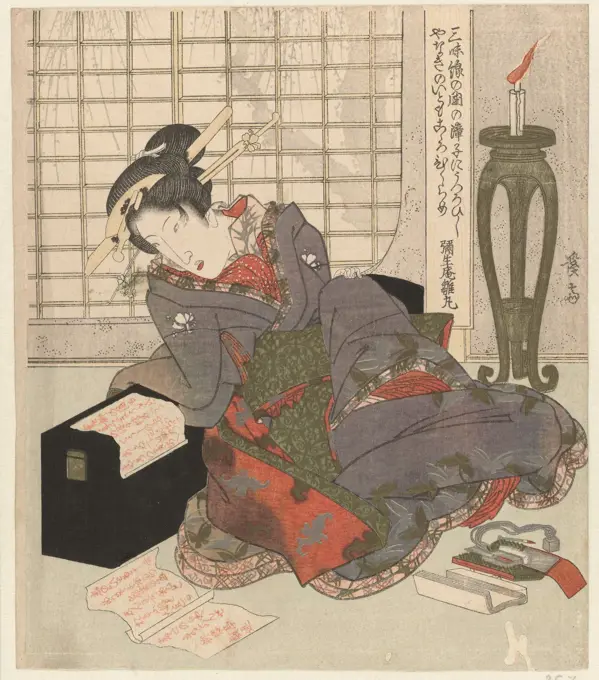
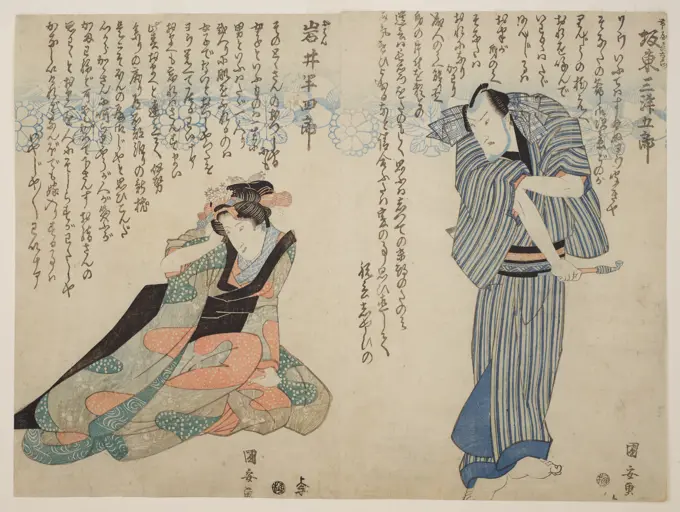
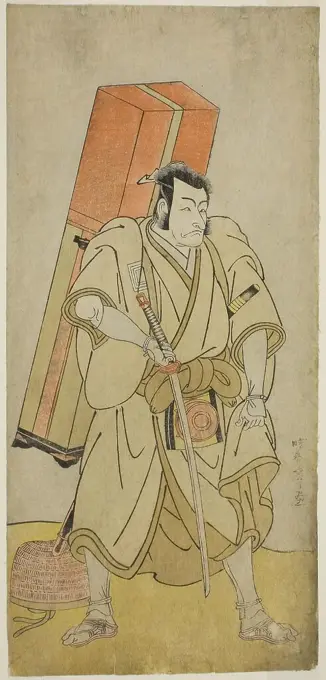
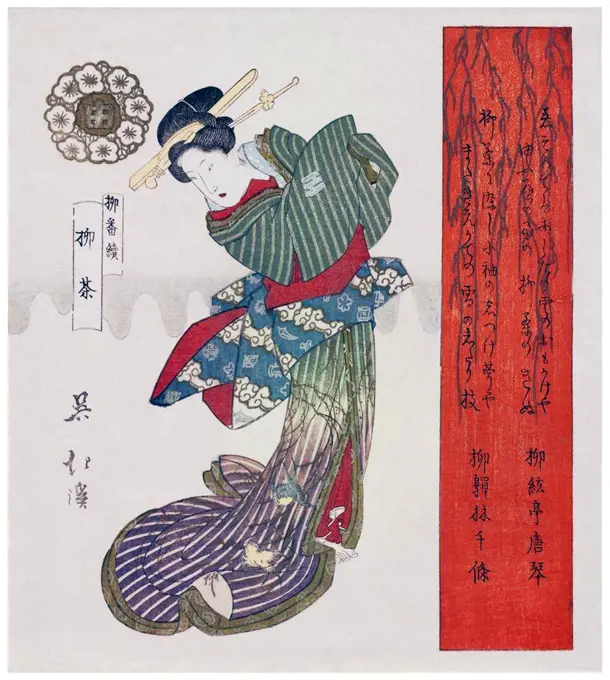
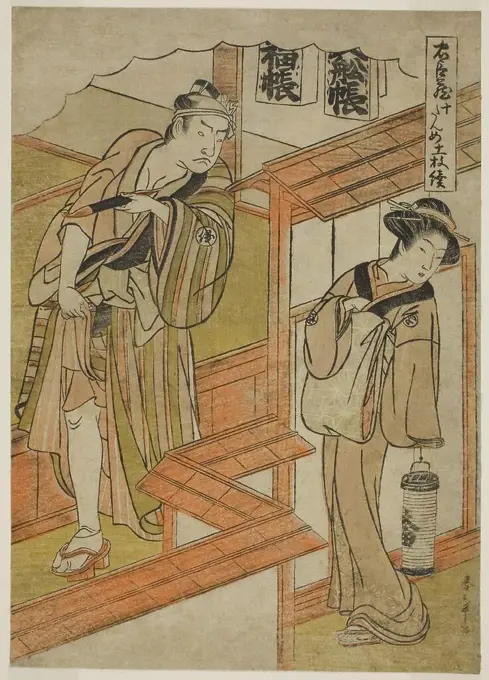
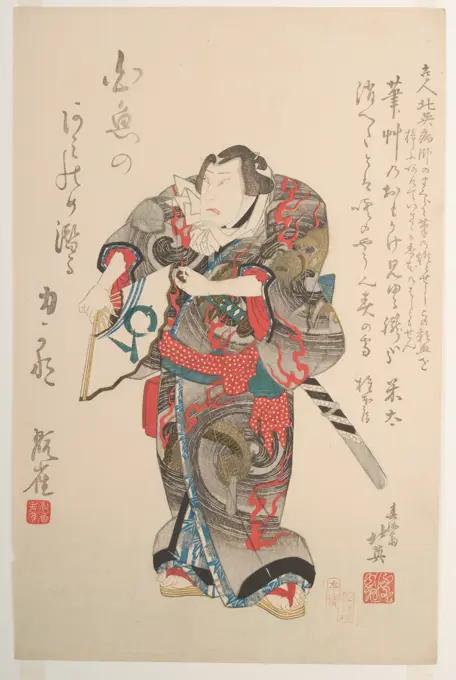
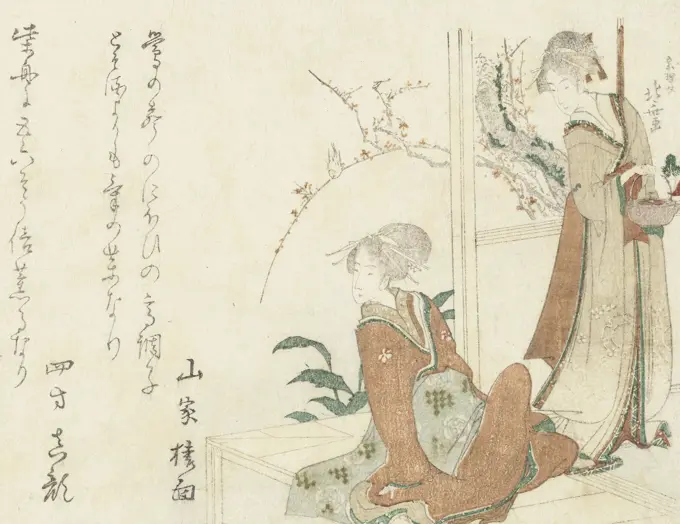
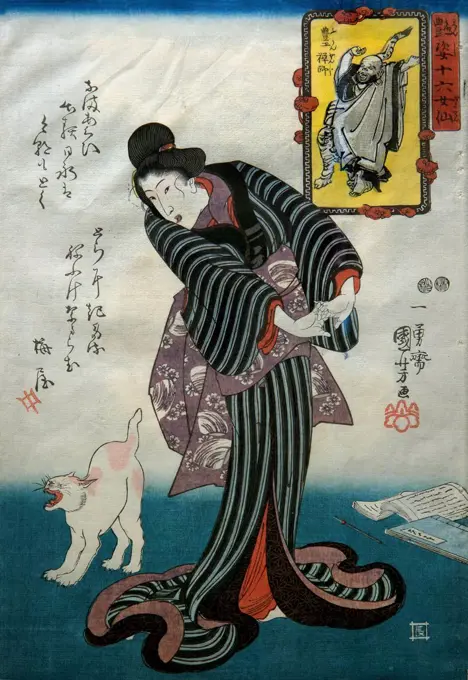
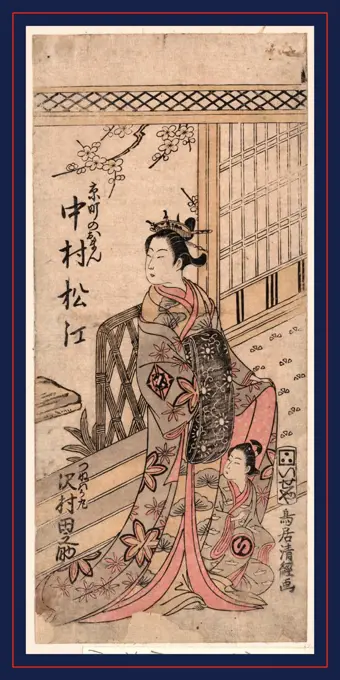
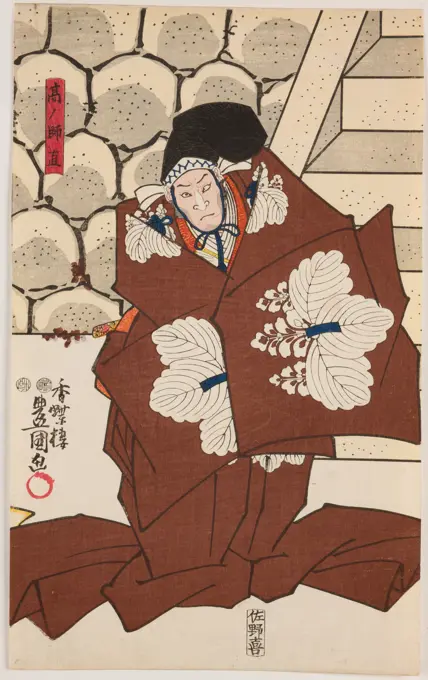
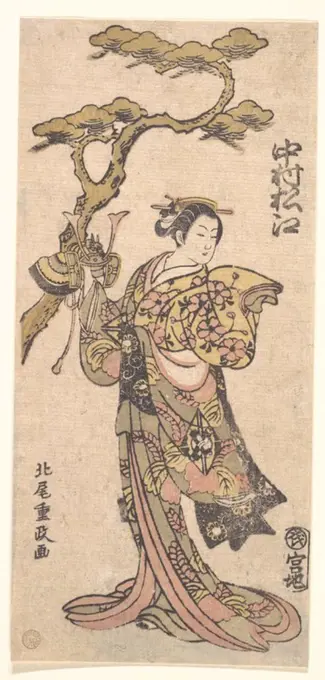
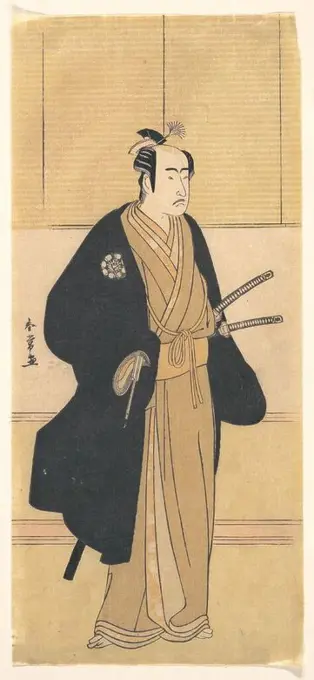
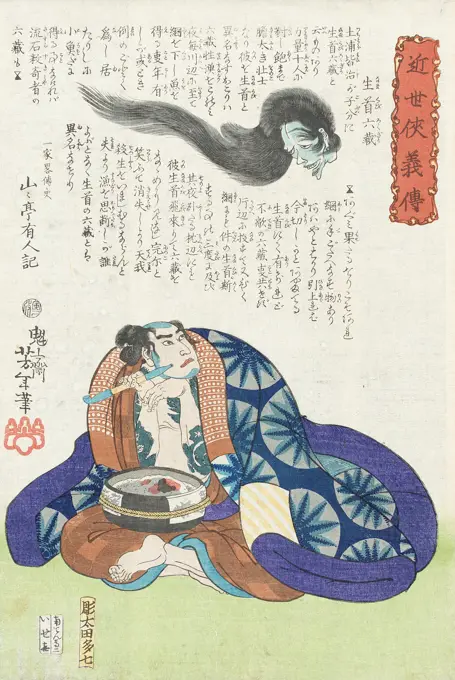
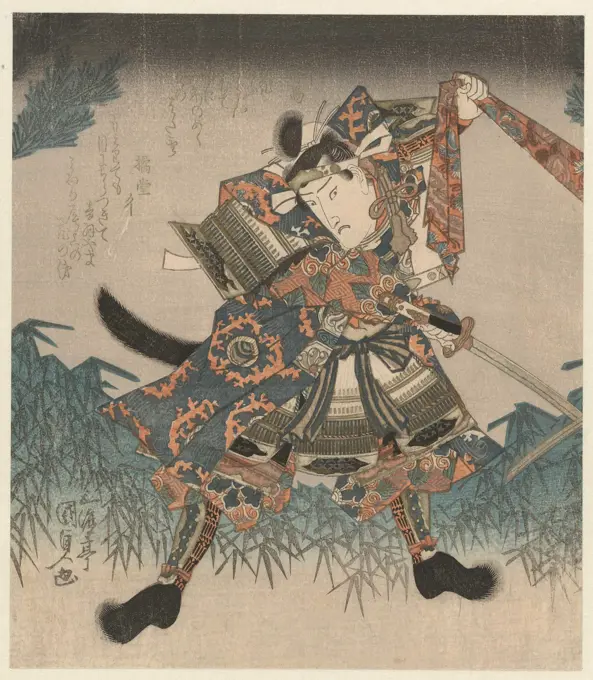
Seaweed, portable writing case, and plum branch, no 5 from the series The Rabbit's Boastful Exploits (Usagi tegarabanashi) 1819 Japan. Color woodblock print; shikishiban, surimono . Ryuryukyo ShinsaiThe Actor Ichikawa Benzo in an Unidentified Role. Ippitsusai Buncho; Japanese, active c. 1755-90. Date: 1763-1773. Dimensions: 31.5 x 14.5 cm (12 3/8 x 5 3/4 in.). Color woodblock print; hosoban. Origin: Japan. Museum: The Chicago Art Institute, Chicago, USA.Tray Landscapes, from the series An Assortment of Women's Customs Ogata Gekko (Japanese, 1859-1920). , 1897. Color woodblock print on paper, 14 1/4 x 9 1/4 in. (36.2 x 23.5 cm).   Asian Art 1897The actor Segawa Rokō IV as Osome and Sawamura Tanosuke II as Oharu. Donation Gerhard SchackIt is good to take the first boat trip, Totoya Hokkei, c. 1822  Woman with travel hat in hand, is against a rolled up mat. With three poems. The prints from this series are in line with the belief that the first activities of the new year were extra special. The red cartouche on the prints refers to almanacs in which it was indicated which activities could or should not be undertaken on certain days by people born in a certain year. Japan paper color woodcutIt is good to start learning; Nyûgakuyoshi; A series for the Hanazono poets association; Hanazono bantsuzuki. A lady reads a book on a standard. With one poem. The prints from this series are in line with the belief that the first activities of the new year were extra special. The red cartouche on the prints refers to almanacs that indicated which activities did not or better not to be taken on certain days by people born in a given year.Tsuchiko Kingoro portrait against the background of fog and landscape, from the series: Edo Meisho Utagawa, kuniyoshi (1797 1861)Woman wood-gatherer pauses to smoke apipe.  Artist: Aoigaoka Keisei, Japanese, active ca. 1818-35The actors Ichikawa Danjuro VII as Soga Goro and Bando Mitsugoro III as Kobayashi no Asahina 1827 Japan. Color woodblock print; shikishiban, surimono . Utagawa Kunisada I (Toyokuni III)Courtesan 19th century Yashima Gakutei Japanese. Courtesan 54474The Actor Matsumoto Koshiro IV as Matsuo-maru in the Play Sugawara Denju Tenarai Kagami, Performed at the Nakamura Theater in the Fourth Month, 1779 1774-1784 Japan. Color woodblock print; hosoban; right sheet of diptych . Katsukawa ShunshoKasane, from the series One Hundred Legends of Famous Women of Our Country, Ancient and Modern. Date: 1843. Dimensions: 36 cm x 26 cm. Museum: Van Gogh Museum, Amsterdam. Author: UTAGAWA KUNIYOSHI.The Actor Otani Tomoemon I as Otsuma in the Play Kabuki no Hana Bandai Soga, Performed at the Ichimura Theater in the Fourth Month, 1781 1776-1786 Japan. Color woodblock print; hosoban; right sheet of diptych . Katsukawa ShunshoIt is good to start learning Nyûgakuyoshi (title on object) A series for the Hanazono poetry association (series title) Hanazono bantsuzuki (series title on object), A lady is reading a book on a standard. With one poem. The prints from this series are in line with the belief that the first activities of the new year were extra special. The red cartouche on the prints refers to almanacs in which it was indicated which activities could or could not be undertaken on certain days by people born in a certain year., Totoya Hokkei (mentioned on object), Japan, c. 1822, paper, colour woodcut, h 202 mm × w 179 mmSuzuki Harunobu (1724 July 7, 1770) was a Japanese woodblock print artist, one of the most famous in the Ukiyo-e style. He was an innovator, the first to produce full-color prints (nishiki-e) in 1765, rendering obsolete the former modes of two- and three-color prints. Harunobu used many special techniques, and depicted a wide variety of subjects, from classical poems to contemporary beauties (bijin, bijin-ga). Like many artists of his day, Harunobu also produced a number of shunga, or erotic images. During his lifetime and shortly afterwards, many artists imitated his style. A few, such as Harushige, even boasted of their ability to forge the work of the great master. Much about Harunobu's life is unknown.Nakamura Shikan I after his last performance, Utagawa Kunisada (I), 1815 print The actor Nakamura Shikan I, sitting in dressing room, in front of a dressing table with mirror, next to wig, with the back to a sitting operated servant a sword; Above the show a farewell message for the actor. Japan paper nishiki-e / color woodcut portrait of actor, actress. making toilet. wigThin birds; Raicho. Two mythological thunderbirds on a pine branch; A river in the background; A poem in the cloud pattern at the top of the print.The Actor Nakamura Nakazo I as Kudo Suketsune in the Play Edo no Fuji Wakayagi Soga, Performed at the Nakamura Theater in the First Month, 1789. Rantokusai Shundo; Japanese, active c. 1770-1790. Date: 1784-1794. Dimensions: 31.2 x 15 cm (12 5/16 x 5 7/8 in.). Color woodblock print; hosoban. Origin: Japan. Museum: The Chicago Art Institute, USA.Standing lady looking over her right shoulder., 1770, Woodcuts, Page from bookThe Actor Ichikawa Danjuro V in Formal Attire. Katsukawa Shunsho  ; Japanese, 1726-1792. Date: 1774-1784. Dimensions: 31.2 x 13.4 cm (12 5/16 x 5 1/4 in.). Color woodblock print; hosoban. Origin: Japan. Museum: The Chicago Art Institute, USA.Man with big ax; A series of three prints; Sanbantsuzuki. A man, actor Ichikaiwa Danjûrô VII (1791-1859), waves a huge ax above his head. The role he plays here is probably that of Lumberjack Nekko No Yokizô. With one poem.Memorial Portrait of the Actor Bando Shuka I 1855 Japan. Color woodblock print; oban . Utagawa SchoolCourtesan on Parade, one sheet of the pentaptych A Set of Beauties in Full Bloom. Date: fourth month 1859. Dimensions: 35 cm x 24 cm. Museum: Van Gogh Museum, Amsterdam. Author: TOYOHARA KUNICHIKA.Tôbôbôsaku steals immortality treasures; Five prints over long life; Kotobuki Goban No Uchi. A chinese man looks fast around him, while he takes two pzings from a container. The man, Tôbôsaku, is advisor to the Chinese Han Emperor Wu T'i. He is depicted while growing immortality tracks who got the emperor of a goddess. The one who ate such a peach would become immortal. With two poems.Smoking on a Bench 1765 Japan. As she sits on a bench smoking, a young woman is shocked to see a vision of a courtesan appear in the smoke.This work is also a calendar print for the year 1765; the long months appear in the curly-cue pattern on her robe. The print bears no signature, though it has been attributed to Harunobu, as have many unsigned egoyomi of the period.. Color woodblock print; chuban . Suzuki HarunobuTasogare, from the series The Imitation Murasaki and the Rustic Genji. Date: 1830-1839. Dimensions: 38 cm x 26 cm. Museum: Van Gogh Museum, Amsterdam. Author: UTAGAWA KUNISADA.The Actor Segawa Kikunojo I as Katakai in the play Mugen no Kane Omoi no Akatsuki, performed at the Nakamura Theater in the third month, 1746 1746 Japan. Color woodblock print; hosoban, benizuri-e . Torii Kiyomasu IIThe Second Ichikawa Monnosuke as a Samurai Standing by a Wooden Bench ca. 1794 Katsukawa Shun'ei 勝川春英 Japanese. The Second Ichikawa Monnosuke as a Samurai Standing by a Wooden Bench 36780A member of the Thirty-six Medieval Poetry Immortals, Izumi Shikibu served at the court of Empress Shoshi (988-1074). She is best known for the Izumi Shikibu Collection (泉式部集 Izumi Shikibu-shū) and the Imperial anthologies. Her life of love and passion earned her the nickname of 'The Floating Lady' from Michinaga. Her poetry is characterized by passion and sentimental appeal. Her style was the direct opposite of that of Akazome Emon, even though both served in the same court and were close friends. At the court she also nursed a growing rivalry with Murasaki Shikibu, who had a similar poetic style, though this rivalry pales in comparison with Murasaki Shikibu's spirited competition with Sei Shōnagon. Izumi Shikibu's emotional poetry won her the praise of many at the court, including Fujiwara no Kinto.The courtesan Yugiri reading a book MATORA, OISHI (1794 1833)The First Nakamura Nakazo as an Unarmed Man Standing in a Dramatic Pose. Artist: Katsukawa Shunsho (Japanese, 1726-1792). Culture: Japan. Dimensions: 12 1/32 x 5 3/4 in. (30.6 x 14.6 cm). Date: ca. 1777. Museum: Metropolitan Museum of Art, New York, USA.. .The Actors Otani Hiroji III as Onio Shinzaemon (right), and Nakamura Sukegoro II as Wappa no Kikuo (left) in the Play Iro Moyo Aoyagi Soga, Performed at the Nakamura Theater in the First Month, 1775 1770-1780 Japan. Color woodblock print; hosoban . Katsukawa Shunko IThe Actor Nakamura Nakazo I in a Shak-kyo Dance in the Play Aioi Jishi, Performed at the Ichimura Theater in the Fourth Month, 1784. Katsukawa Shunko I; Japanese, 1743-1812. Date: 1779-1789. Dimensions: 32.1 x 14.8 cm (12 5/8 x 5 13/16 in.). Color woodblock print; hosoban. Origin: Japan. Museum: The Chicago Art Institute, Chicago, USA.Memorial Portrait of the Actor Arashi Kichisaburo III 1864 Japan. Color woodblock print; oban . Toyohara KunichikaARASHI RIKAN ALS MIYAMOTO MUSASHI, SHUNPUSAI HOKUMYO, 1832 print The actor Arashi Rikan II in the role of the strong man Miyamoto Musashi, wide -legged a wooden beam above his head. Osaka paper color woodcut portrait of actor, actress. carrying somethingThe Actor Bando Hikosaburo II as Fujitaro, disguised as the ferryman Tomokichi, in the play "Shomei Mugen no Kane," performed at the Nakamura Theater in the ninth month, 1767. Kitao Shigemasa; Japanese, 1739-1820. Date: 1767. Dimensions: 12 x 5 3/8 in. Color woodblock print; hosoban, benizuri-e. Origin: Japan. Museum: The Chicago Art Institute, USA.OBOSHI YURANOSUKE WITH WHITE FAN AT NECK OF KIMONO, UTAGAWA KUNIYOSHI, 1852 print Ôboshi Yuranosuke with white fan stabbed behind his head in his kimono. At the top left a landscape with Mount Fuji in the background.  paper color woodcut adult man. fan. landscapesThe Actor Sawamura Sojuro III in an Unidentified Role. Katsukawa Shunko I; Japanese, 1743-1812. Date: 1785-1789. Dimensions: 30.8 x 13.9 cm (12 1/8 x 5 1/2 in.). Color woodblock print; hosoban. Origin: Japan. Museum: The Chicago Art Institute, Chicago, USA.Reproduction: Yamauba, No. 2 (Sono Ni) from the series "Góra Za Gór" (Yama Mata Yama)Mokrzycki, Ryszard - collection, woodcuts, Japanese art, ukiyo -e, purchase (provenance)Shikamatsu Kanroku Yukishige, Sheet 5 from the series: History of Loyal Fools. Gift by Justus BrinckmannQueen Mother of the West, from the series One Hundred Nō Plays Kogyo Terazaki (Japanese, 1866-1919). , 1924-1926. Color woodblock print on paper, 14 7/8 x 10 1/16 in. (37.8 x 25.6 cm).   Asian Art 1924-1926Yamatoya Bando Mitsugoro II as Ishii Genzo, from the series Portraits of Actors on Stage (Yakusha butai no sugata-e) 1794 Japan. Color woodblock print; oban . Utagawa Toyokuni IThe Seventh Month. Utagawa Kunisada (Toyokuni III) (Japan, Edo, 1786-1865). Japan, 1830s. Prints; woodblocks. Color woodblock print (left print of a triptych)Kunisada, Actor Nakamura Shika in the play Yoshitsune sembonzakura (A Thousand Cherry Trees), 1829, colored woodblock print, graphicsLiefdesgedicht VOOR NAKAYAMA TOMISABURO, UTAGAWA KUNIMASA, 1799 print BostePortret of the actor Nakayama Tomisaburo I, in women's role with red and blue Kimono and Groene Obi, depicted under a love poem addressed to him. Leaf from the Japanese book Yakusha Gakuya TSU. Or paper color woodcut portrait of actor, actressTwee kabuki actors, c. 1800 print De Acteurs Bando Minosuke in de Rolo Kitsune En Iwai Kumesaburo II Als Shizuka Gozen, In Het Kabuki Stuk Yoshitsune Senbon Zakura.  paper color woodcut portrait of actor, actress. hacking and thrusting weapons: swordMan with sword during the night, Pilgrim Banryû, played by actor Ichikawa Ebizô V (1791-1859), at night, with a sword in his hands to ward off an attack from Oyana (left sheet). A scene from the play Tanomiaru gohiiki no Tsuna, performed at the Kawarazaki theater in 1832. Right sheet of a diptych. With two poems., Kunisada (I), Utagawa (mentioned on object), Japan, 1833, paper, polishing, h 205 mm × w 185 mmThe Actor Bandō Hikosaburō as Ukiyo Inosuke in Sekai ha Taira ume no kaomise”. Utagawa Kunisada (Toyokuni III) (Japan, Edo, 1786-1865). Japan, circa 1832. Prints; woodblocks. Color woodblock printThe Six Immortal Poets (Rokkasen), from the series "Collection of Comic Performances from the Niwaka Festival in the Pleasure Quarters (Seiro niwaka kyogen zukushi)". Isoda Koryusai; Japanese, 1735-1790. Date: 1771-1786. Dimensions: 9 3/4 x 7 1/2 in. Color woodblock print; chuban. Origin: Japan. Museum: The Chicago Art Institute, USA.Chief Inagawa Jibu No Tayū Minamoto No Yoshimoto sitting in full armor, board 2. From the series: from the life of Taiheiki heroes a novel about the Great Peace / Taiheiki Eiyuden Utagawa, kuniyoshi (1797 1861)Sun Erniang, Japanese name Boyasha Sonjiro, the Amazon, binding an opponent whom she has overthrown together with his horse in the snow; she was the wife of Saiyenshi Chosei. The Water Margin (known in Chinese as Shuihu Zhuan, sometimes abbreviated to Shuihu), known as Suikoden in Japanese, as well as Outlaws of the Marsh, Tale of the Marshes, All Men Are Brothers, Men of the Marshes, or The Marshes of Mount Liang in English, is a 14th century novel and one of the Four Great Classical Novels of Chinese literature. Attributed to Shi Nai'an and written in vernacular Chinese, the story, set in the Song Dynasty, tells of how a group of 108 outlaws gathered at Mount Liang (or Liangshan Marsh) to form a sizable army before they are eventually granted amnesty by the government and sent on campaigns to resist foreign invaders and suppress rebel forces. In 1827, Japanese publisher Kagaya Kichibei commissioned Utagawa Kuniyoshi to produce a series of woodblock prints illustrating the 108 heroes The actors Ichikawa Enzo as Chobei's Son Nagamatsu (R), Ichikawa Ebizo V as Banzui Chobei (C), and Ichikawa Komazo VI as Hanaregoma Shirobei (L) 1842-1857 Japan. Color woodblock print; right sheet of oban triptych . Utagawa Kunisada I (Toyokuni III)Chiryū. Utagawa Kunisada (Toyokuni III) (Japan, Edo, 1786-1865)Utagawa Hiroshige (Japan, Edo, 1797-1858). Japan, 1855, 4th month. Prints; woodblocks. Color woodblock printTwo men under a curtain; A triptych; Sanbantsuzuki. Two men, the one kneeling with the upper top of a combat suspension (ery oroi) under his arm, the other sitting behind him, under a rolled curtain. This is an actor Nakamura Utaemon IV (1796-1852) in the role of Oniô and actor Bandô Mitsugoro III (1775-1832) as Asashina Saburô, recognizable by the great crane logos on his clothing. Scene from the play Kadorisha Soga No Toshidama, which was raised in 1824 in the Nakamura Theater in Edo. Middleblad of a triptych. With two poems.Young man dressed as a komuso (begging monk), Portrait, full-length portrait, of a man dressed in a richly decorated kimono and black shoulder bag, in his left hand two komuso attributes: a wicker hat and, in a brocade cover, a shakuhachi (flute)., Okumura Masanobu (mentioned on object), Japan, 1740 - 1745, paper, colour woodcut, h 678 mm × w 244 mmBird; Tori; Flowers, birds, wind and moon; Kachôfûgetsu. A man plays a mouth oral, while a phoenix overflows. Shôshi, a well-known flute player from the Chinese Chin Dynasty (255-209 BC), would have been able to play so beautiful, that there were f farming from heaven to listen to him. With two poems.The actor Onoe Matsusuke, in the role of an elderly man struggIIng with three attackers Utagawa, toyokuni (1769 1825)Woman Running Past a Willow Tree in a Breeze, 1766 or 1767. Suzuki Harunobu (Japanese, 1724-1770). Color woodblock print; sheet: 26.4 x 20.4 cm (10 3/8 x 8 1/16 in.).The Actor Segawa Kikunojo III as Osaku in the Play Sayo no Nakayama Hiiki no Tsurigane, Performed at the Nakamura Theater in the Eleventh Month, 1790. Katsukawa Shun'ei; Japanese, 1762-1819. Date: 1785-1795. Dimensions: 29.4 x 13.8 cm (11 9/16 x 5 7/16 in.). Color woodblock print; hosoban. Origin: Japan. Museum: The Chicago Art Institute, Chicago, USA.The actor Segawa Tomisaburo II as Yadorigi, wife of Ogishi Kurando. Toshusai Sharaku  ; Japanese, active 1794-95. Date: 1794. Dimensions: 36.6 x 23.8 cm. Color woodblock print; oban. Origin: Japan. Museum: The Chicago Art Institute, USA.Ogura imitation of the one hundred poems. Princess Usuyuki at a ferry. Despite her travel suit (the white cloak, wide black hat and walking stick), the featherman of her beauty is shocked. Scene from a Kabukite team. Poem by sone no yoshitada.The Actor Asao Tamejuro I as Drunken Gotobei in the Play Yoshitsune Koshigoe Jo, Performed at the Ichimura Theater in the Ninth Month, 1790. Katsukawa Shun'ei; Japanese, 1762-1819. Date: 1785-1795. Dimensions: 30.6 x 14 cm (12 1/16 x 5 1/2 in.). Color woodblock print; hosoban. Origin: Japan. Museum: The Chicago Art Institute, USA.Roof shell; Itayagai; A comparison of Genroku poems and shells; Genroku Kasen Kaiawase. Two women; The one cuts pieces of rice cake, the other reads a book at the light of a lantern. In the background two New Year's decoration pieces, consisting of bottleneck, rice cake and pine branches. The shell to which the title refers is depicted in the fan shower. With two poems.Number two: Chinese woman with dragon; Ni Ban; Dragon and tiger; Ryûko. A woman plays the Koto under a pine, where a dragon has turned around. The woman could be the goddess bents or the Chinese goddess of the West, Hsi Wang Mu. Number two from a series with two poems. Later copy.The Actors Ichikawa Ebizo I as Miura Osuke, Ichikawa Danjuro lV as Okazaki Akushiro, and Nakamura Sukegoro I as Kato Arajiro in the play Miura no Osuke Bumon no Kotobuki, performed at the Nakamura Theater in the eleventh month, 1754 1754 Japan. Color woodblock print; oban, benizuri-e . Torii KiyohiroTakenouchi-no, from the Kotobuki Goban-No Uchi cycle (Pi Examples of the statement); Surimono; Yanagawa, Shigenobu I (1787-1832); around 1890 (1891-00-00-1910-00-00);Mokrzycki, Ryszard - collection, woodcuts, Japanese (culture), samurai, Japanese art, ukiyo -e, purchase (provenance)Preparing Seven Herbs on the Seventh Day of the New Year 1798 Japan. Color woodblock print; surimono . Kubo ShunmanA geisha leans on the box of her shamisen. A geisha reads a letter by candlelight, leaning against the coffin where her shamisen (string instrument) is in. Due to the papers (shoji) windows, a willow can be seen in the garden. The poem on the wall compares the strings of the shamisen with the 'wires' of the willow. Two texts written by two different authors in the letters.Hôjô Yasutoki, an example from the mirror of the East, Yashima Gakutei, c. 1821  Three men are sitting on the floor in front of a gentleman on a pillow. A servant holds a tray with a letter on it. Hôjô Yasutoki (1183-1242) was a consultant for the Kamakura government (Bakufu). Here he receives an honorable certificate from Minamoto No Sanetomo (on the pillow) for his obedience to his parents. The book The Spiegel van het Oosten (Azama Kagami) is compiled in the Late Kamakura period (1249-1382). With two poems. Japan paper color woodcutUtagawa Kuniyoshi (January 1, 1798 - April 14, 1861) was one of the last great masters of the Japanese ukiyo-e style of woodblock prints and painting. He is associated with the Utagawa school. The range of Kuniyoshi's preferred subjects included many genres: landscapes, beautiful women, Kabuki actors, cats, and mythical animals. He is known for depictions of the battles of samurai and legendary heroes. His artwork was affected by Western influences in landscape painting and caricature.The Actors Iwai Haushiro and Bando Mitsugoro Kuniyasu, utagawa (1794 1832)The Actor Ichikawa Danjuro V as Godai Saburo Masazumi Disguised as Rokuju-rokubu in the Play Sugata no Hana Yuki no Kuronushi, Performed at the Ichimura Theater in the Eleventh Month, 1776. Katsukawa Shunsho  ; Japanese, 1726-1792. Date: 1771-1781. Dimensions: 31.2 x 14.7 cm (12 5/16 x 5 13/16 in.). Color woodblock print; hosoban; left sheet of diptych (). Origin: Japan. Museum: The Chicago Art Institute, USA.Japan: The courtesan 'Willow Tea' (Yanagicha), from the series 'A Set of Willows' (Yanagi ban tsuzuki), Totoya Hokkei (1780 - 1850), c. 1828Act Ten: The Amakawaya from the play Chushingura (Treasury of Loyal Retainers). Katsukawa Shunsho  ; Japanese, 1726-1792. Date: 1774-1785. Dimensions: 25.7 x 18.3 cm (10 1/8 x 7 3/16 in.). Color woodblock print; chuban. Origin: Japan. Museum: The Chicago Art Institute, USA.The Actor Nakamura Utaemon IV as the Wrestler Iwakawa Jirokichi 1837 Shunbaisai Hokuei  Japanese The flamboyantly garbed sumo wrestler, played by the famous Utaemon IV, is drawn from a scene of the Kabuki play The Rise of the One Thousand Ry Wrestler (Sekitori senry nobori). Yet the character was not competing in a normal sumo match, but rather one held by patrons of two rival wrestlers, each of whom hoped to raise enough money to ransom a courtesan from an Osaka brothel.. The Actor Nakamura Utaemon IV as the Wrestler Iwakawa Jirokichi. Shunbaisai Hokuei  (Japanese, active 1829-1837, died 1837). Japan. 1837. Woodblock print; ink and color on paper; vertical ban. Edo period (1615-1868). PrintsMemorial Portrait of the Actor Ichikawa Ebizo II (Danjuro II) as a Peddler of the Medicine Uiro. Katsukawa Shunsho  ; Japanese, 1726-1792. Date: 1763-1775. Dimensions: 31.2 x 14.2 cm (12 5/16 x 5 5/8 in.). Color woodblock print; hosoban. Origin: Japan. Museum: The Chicago Art Institute, USA.Creating surimono for the New Year. Katsushika Hokusai  ; Japanese, 1760-1849. Date: 1825. Dimensions: 21.1 x 18.5 cm. Color woodblock print; shikishiban, surimono. Origin: Japan. Museum: The Chicago Art Institute, USA.Japan, Sarumen, Yamaga, Utagaki Magao, Yomo no, Hokusai, Katsushika, Two women on a veranda, A seated and a standing woman on a veranda. The teapot contains spiced sake, which was traditionally drunk during New Year. In the background a branch of plum blossom with a nightingale on it as a New Year's symbol. With two poems., print, prent, surimono, prints, Japan (collection), height 131 mm, width 181 mm, 1760-10-12 - 1849-05-10, print maker, prentmaker, 1799 - 1799, fourth quarter 18th century, paper, colour woodcut, Japanese, 1753 - 1829, poetUtagawa Kuniyoshi 1798-1861. Bukan. a Zen Buddhist (Bukan zenji) Series Beautiful Figures of Women Linked to the Sixteen Taoist Immortals (Enshi juroku josen). about 1847-48.  vertical Oban. Scene in a Joroya. Artist: Furuyama Moroshige (Japanese, active second half of the 17th century). Culture: Japan. Dimensions: 10 1/2 x 13 1/2 in. (26.7 x 34.3 cm). Date: ca. 1690. Museum: Metropolitan Museum of Art, New York, USA.Nakamura matsue no kyomachi no oman to sawamura tanosuke no tsunewakamaru, The actors Nakamura Matsue in the Role of Kyomachi no Oman and Sawamura Tanosuke in the role of Tsune Wakamaru., Torii, Kiyotsune, artist, between 1764 and 1772, 1 print : woodcut, color ; 30.9 x 13.8 cm.A Miming Game in Modern Manners. Date: first month 1859. Dimensions: 37 cm x 25 cm. Museum: Van Gogh Museum, Amsterdam. Author: UTAGAWA KUNISADA.Actor in the role of Moronao on the background of temple stairs Kunisada, UTAGAWA (1786 1864)A Famous Actor of Women's Roles. Artist: Kitao Shigemasa (Japanese, 1739-1820). Culture: Japan. Dimensions: H. 11 1/8 in. (28.3 cm); W. 5 1/8 in. (13 cm). Date: ca. 1764. Museum: Metropolitan Museum of Art, New York, USA.The Actor Onoe Tamizo I as Kureha () in the Play Shusse Taiheiki (), Performed at the Nakamura Theater () in the Eighth Month, 1775 (). Katsukawa Shunsho  ; Japanese, 1726-1792. Date: 1770-1780. Dimensions: 30 x 13.8 cm (11 13/16 x 5 7/16 in.). Color woodblock print; hosoban. Origin: Japan. Museum: The Chicago Art Institute, USA.The Actor Sawamura Kamesaburo as Nagoya Kosanza in the play Keisei Fukubiki Nagoya, performed at the Nakamura Theater in the first month, 1731 1731 Japan. Hand-colored woodblock print; hosoban, urushi-e . Okumura ToshinobuMan with sword during the night, Utagawa Kunisada (I), 1833  Pelgrim Banryû, played by actor Ichikawa Ebizô V (1791-1859), at night, with a sword in his hands to ward off an attack from Oyana (left sheet). A scene from the play Tanomiaru Gohiiki No Tsuna, staged in the Kawarazaki Theater in 1832. Right magazine of a diptych. With two poems. Japan paper color woodcut / polishingThe Actor Ichikawa Danjuro II as Ike no Shoji in the play "Oguri Choseiden," performed at the Nakamura Theater in the eleventh month, 1725. Okumura Masanobu; Japanese, 1686-1764. Date: 1725. Dimensions: 32.0 x 15.9 cm. Hand-colored woodblock print; hosoban, urushi-e. Origin: Japan. Museum: The Chicago Art Institute, Chicago, USA.An Unidentified Actor in the Role of a Samurai. Artist: Katsukawa Shunjo (Japanese, died 1787). Culture: Japan. Dimensions: 12 1/8 x 5 1/2 in. (30.8 x 14 cm). Date: 1700-1787. Museum: Metropolitan Museum of Art, New York, USA.The Poetess Ono no Komachi, from the series Six Immortal Poets (Rokkasen) 1805-1815 Japan. Color woodblock print; oban . Katsushika HokusaiMemorial Portrait of the Actor Onoe Kikugoro III. Attributed to Utagawa Kunisada I (Toyokuni III); Japanese, 1786-1864. Date: 1849. Dimensions: . Color woodblock print; oban. Origin: Japan. Museum: The Chicago Art Institute, Chicago, USA.Namakubi Rokuzō Watching a Head Fly through the Air. Tsukioka Yoshitoshi (Japan, 1839-1892). Japan, 1866, 2nd month. Prints; woodblocks. Color woodblock printThe actors Iwai Hanshiro IV (R) as Ohan of the Shinanoya and Bando Hikosaburo III (L) as Obiya Choemon 1794 Japan. Color woodblock print; oban . Tôshûsai SharakuDoll and box, A doll is located next to a box of lacquerware with four drawers and a large space for storing the doll. On top is a handle to carry the box. The two poems refer to the Poppenfestival, a party for girls held on the third day of the third month., Shozo Ittei, Japan, 1820 - 1830, paper, bronze powder, colour woodcut, h 192 mm × w 183 mmActor as a warrior; A series of five prints; Gobantsuzuki No Uchi. A night scene with the Kabuki actor One Kikugoro III (1784-1849) in the role of Samurai, while he is in a fight. In his right hand he has a sword while holding a sash with his left hand. With two poems. Middleblad of a five hatch.The Actors Nakamura Utaemon I as Seigen (right), and Ichikawa Komazo II as Shimizu Tonoinosuke Kiyoharu (left), in the Play Soga Moyo Aigo no Wakamatsu, Performed at the Nakamura Theater in the Third Month, 1769 1764-1774 Japan. Color woodblock print; hosoban . Ippitsusai BunchoEmperor Kôkô, 1845 - 1846 print Tomoe, fighting against the enemy, let her horse gallop in the snow. Scene from a kabukitis piece. Poem by Emperor Kôkô.  paper color woodcut snow. galloping horse. riding a horse, ass, or mule; rider, horsemanMemorial Portrait of the Actor Sawamura Sojuro IV. Utagawa Toyokuni I   ; Japanese, 1769-1825. Date: 1812. Dimensions: . Color woodblock print; oban. Origin: Japan. Museum: The Chicago Art Institute, Chicago, USA.The Actors Segawa Kikunojo III as Aigo no Waka (right), and Ichikawa Yaozo II as Hachio-maru Aratora (left), in the Play Chigo Sakura Jusan Kane, Performed at the Ichimura Theater in the Eleventh Month, 1774. Katsukawa Shunsho  ; Japanese, 1726-1792. Date: 1769-1779. Dimensions: 29.8 x 14.7 cm (11 3/4 x 5 13/16 in.) (right); 29.8 x 15 cm (11 3/4 x 5 7/8 in.) (left). Color woodblock print; hosoban; diptych. Origin: Japan. Museum: The Chicago Art Institute, USA.