Lace and Textile Fragments

Delicate lace and fabric fragments with intricate designs, showcasing historical textile techniques and aesthetic details from past centuries.

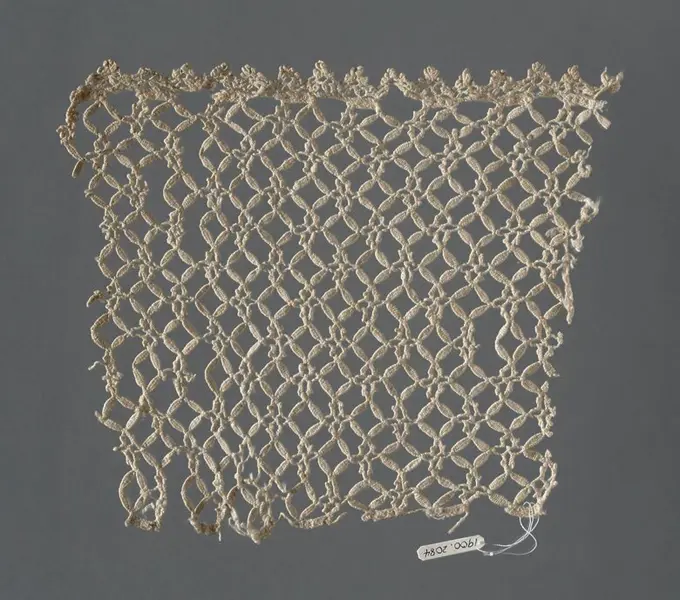
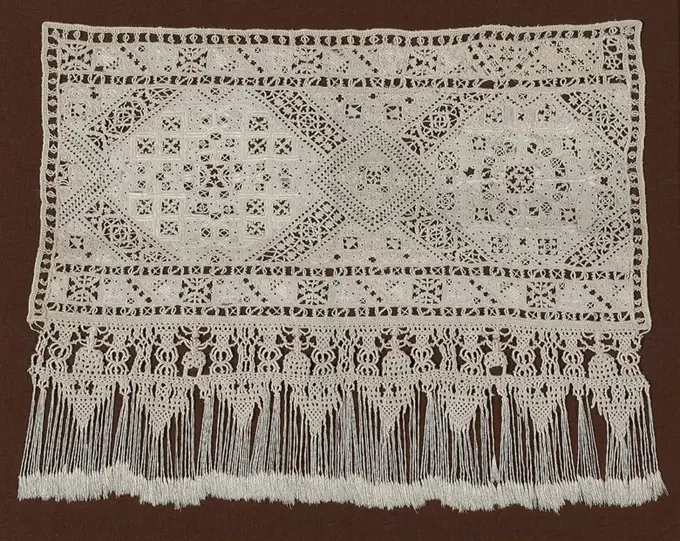
Workpiece in the making of three next to each other placed squares of reticella (lace border) in a strip of cotton, anonymous, c. 1920 Test workpiece of natural -colored lace -up work - Reticella in sliced work technique - consisting of three sides placed next to each other with a pattern of double star flowers in a strip of cotton. Each flower consists of four points around the square center and the outer points consists of eight points. Netherlands cotton (textile). linen (material) Test workpiece of natural -colored lace -up work - Reticella in sliced work technique - consisting of three sides placed next to each other with a pattern of double star flowers in a strip of cotton. Each flower consists of four points around the square center and the outer points consists of eight points. Netherlands cotton (textile). linen (material)
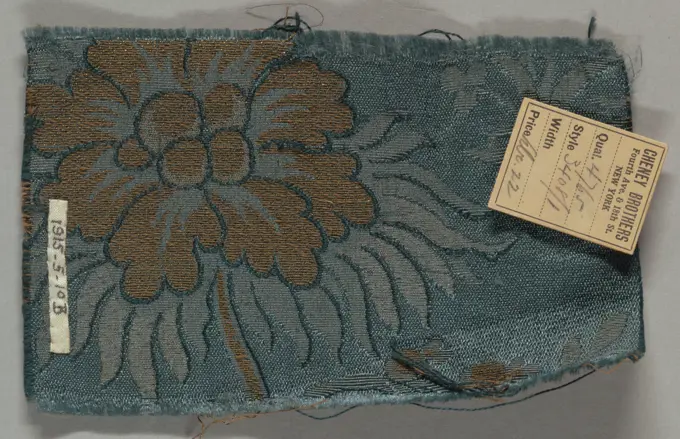
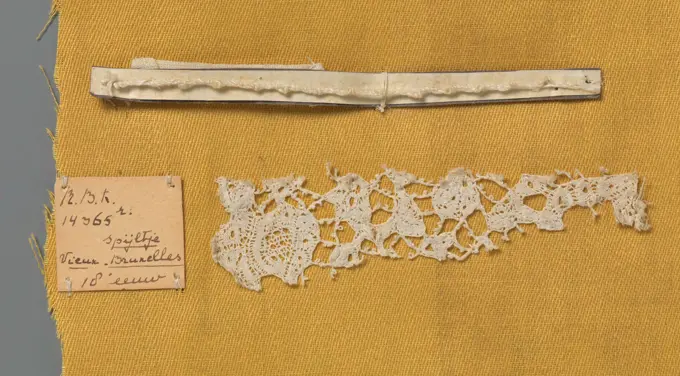
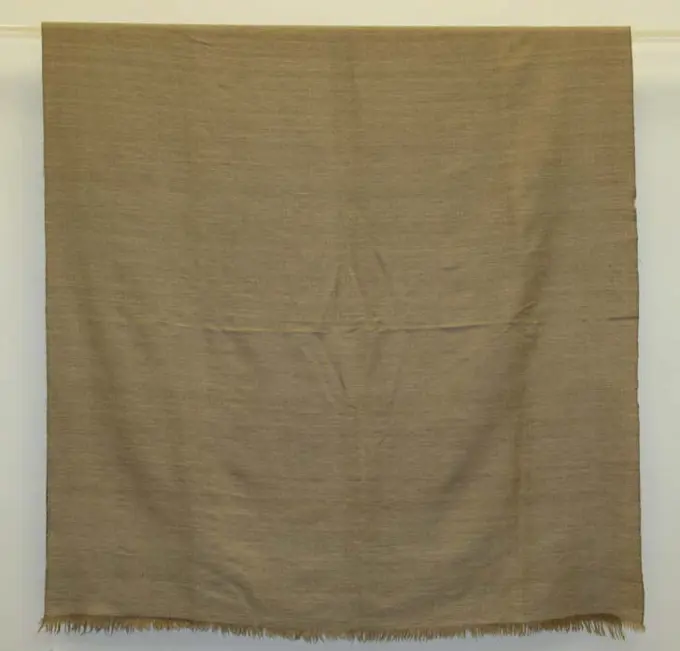
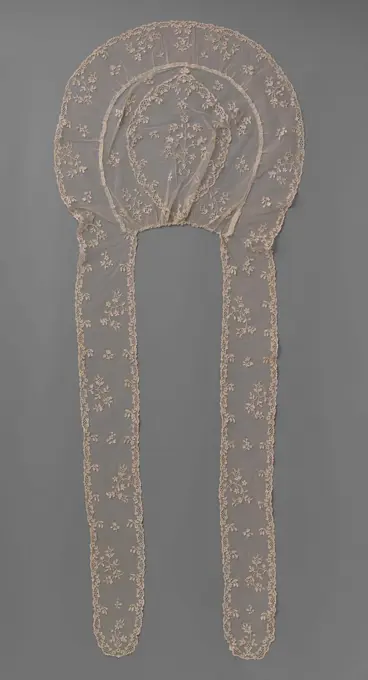
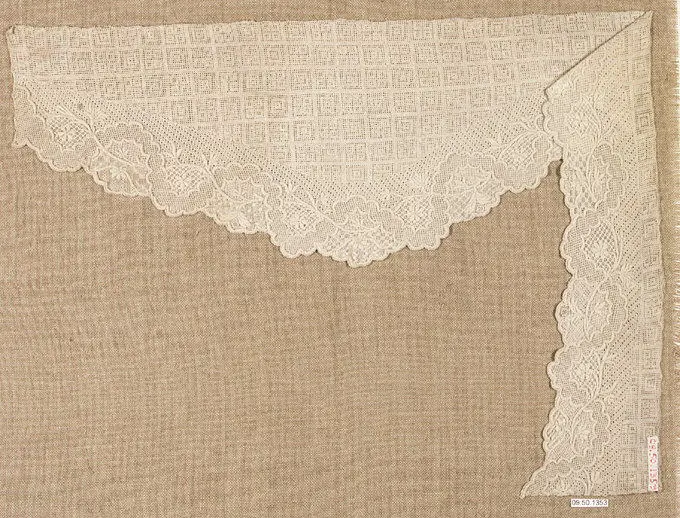
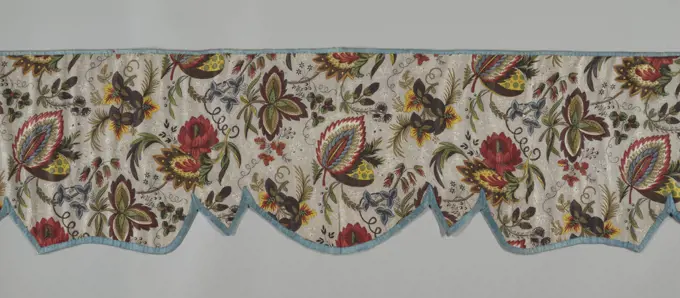
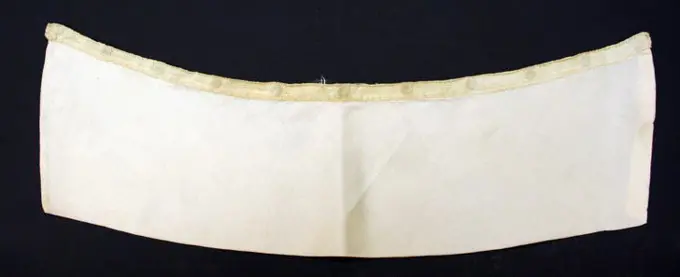
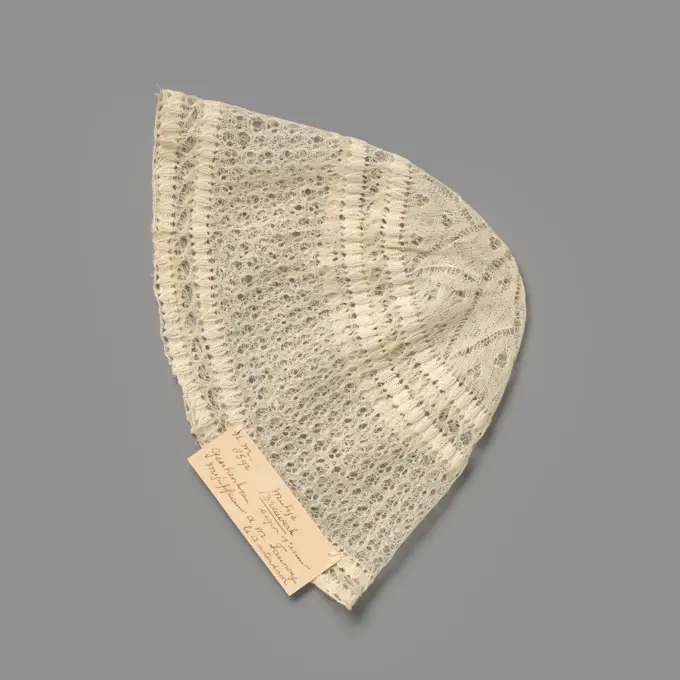
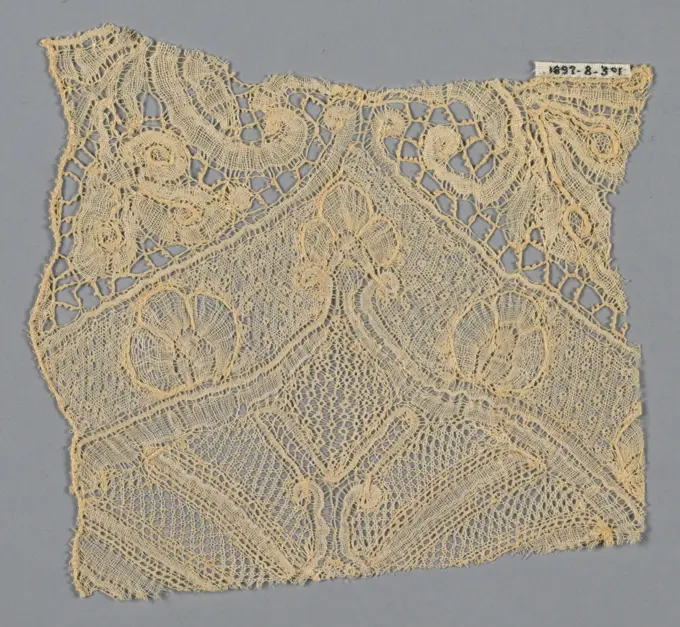
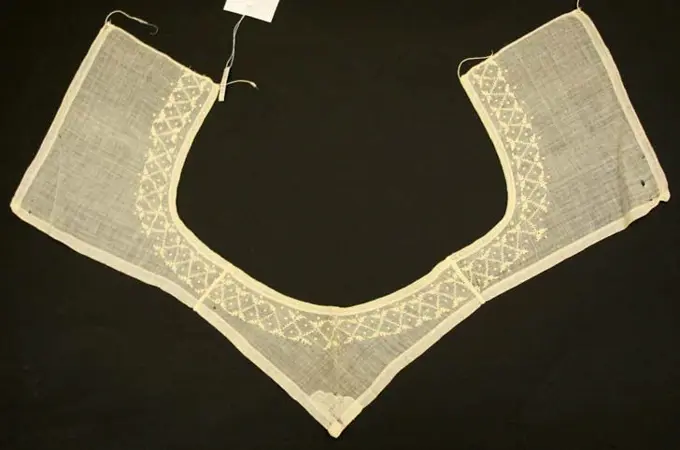
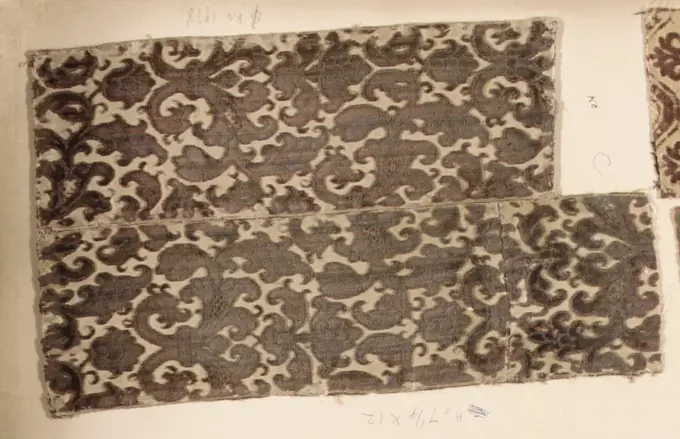
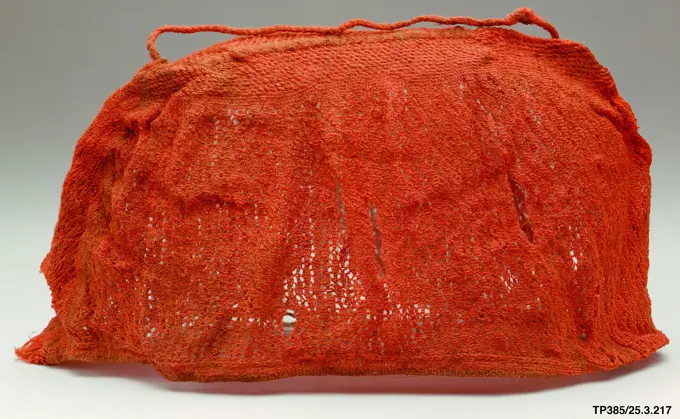
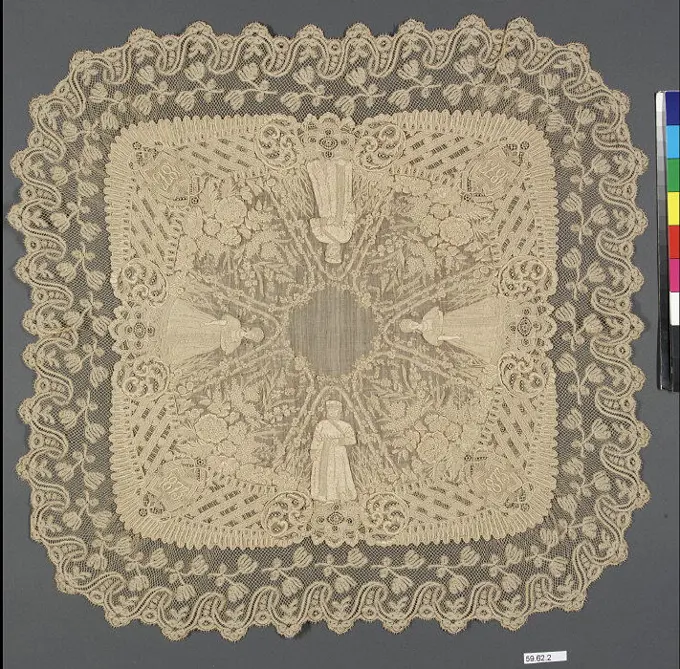
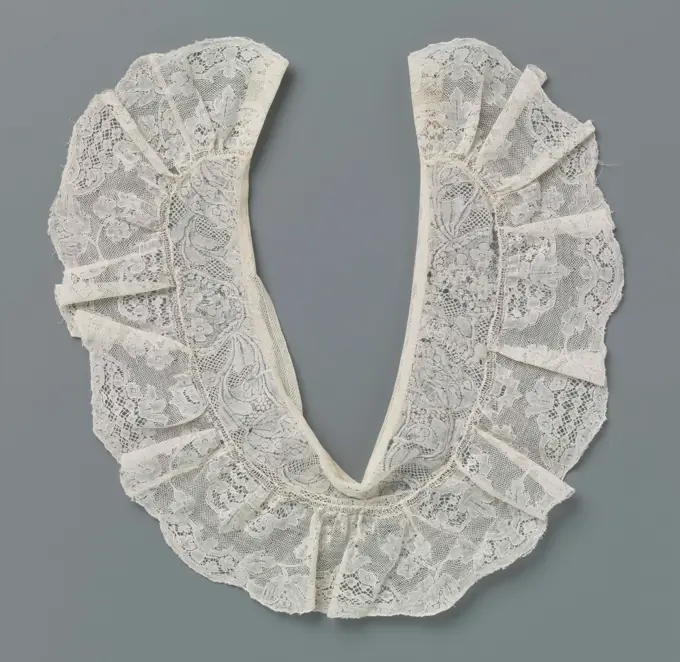
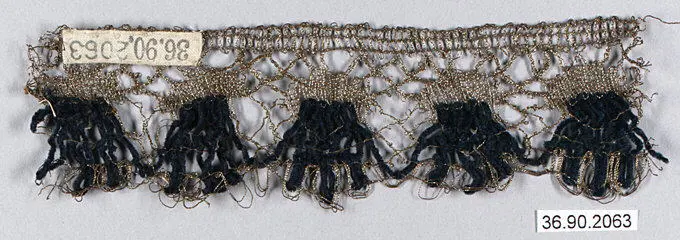
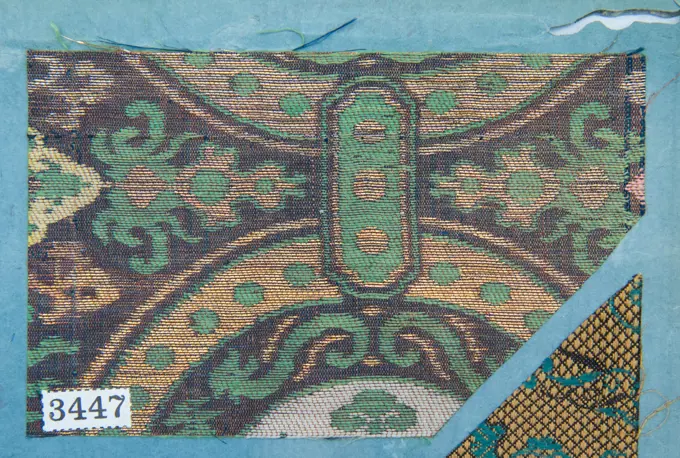
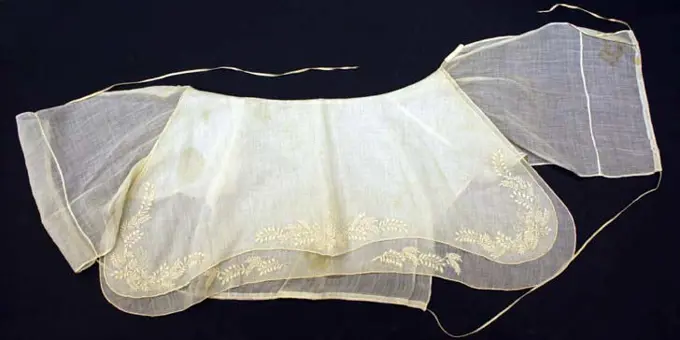
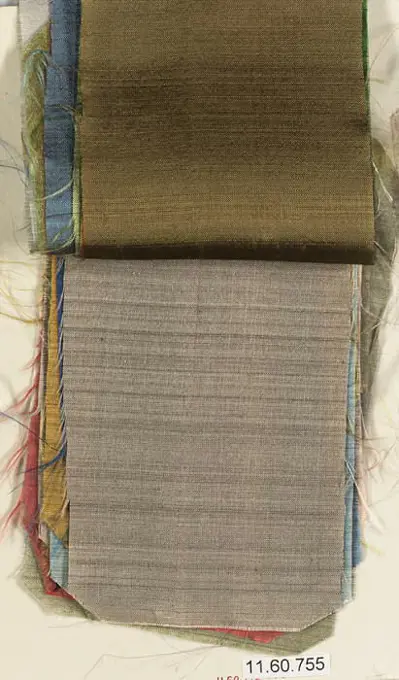
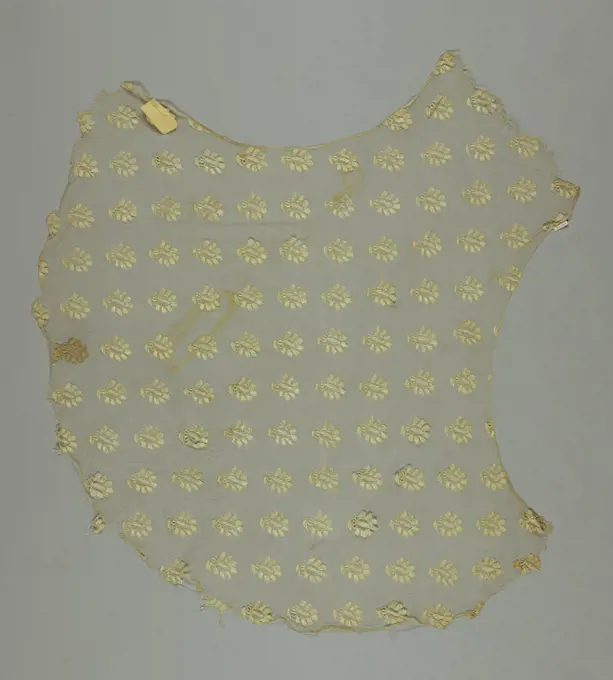
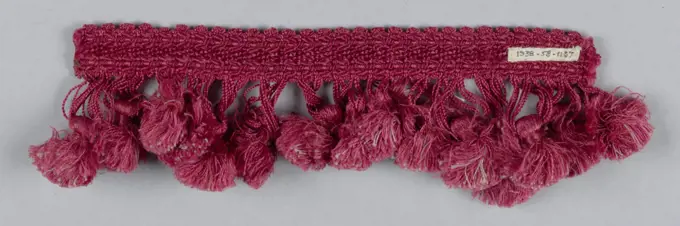
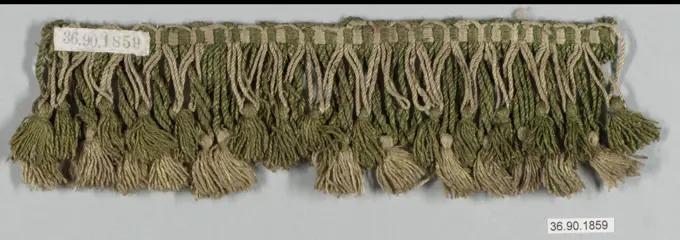
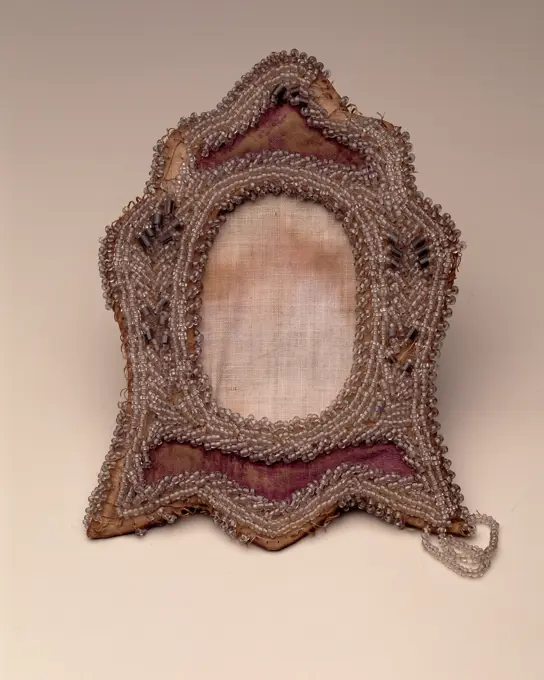
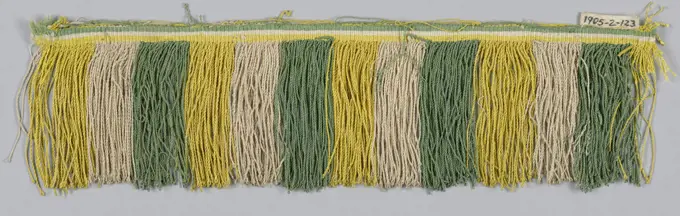
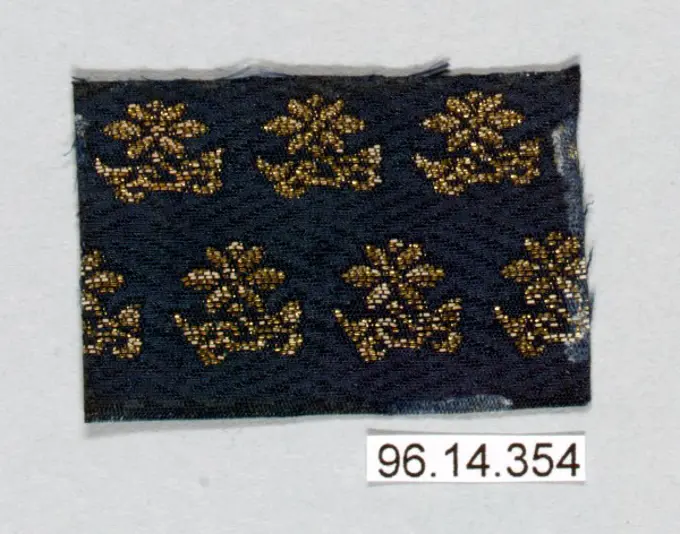
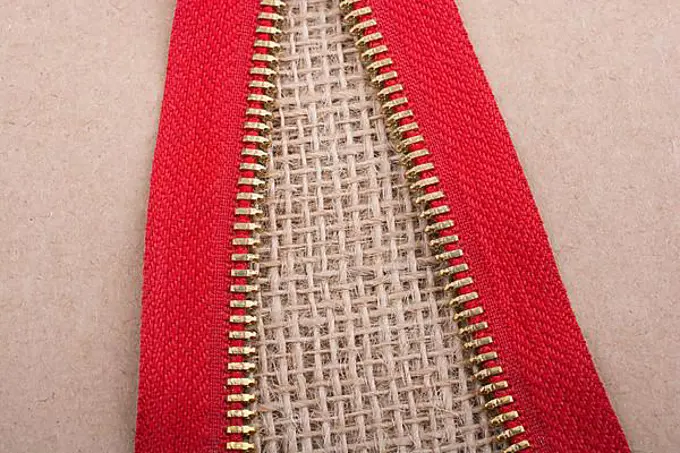
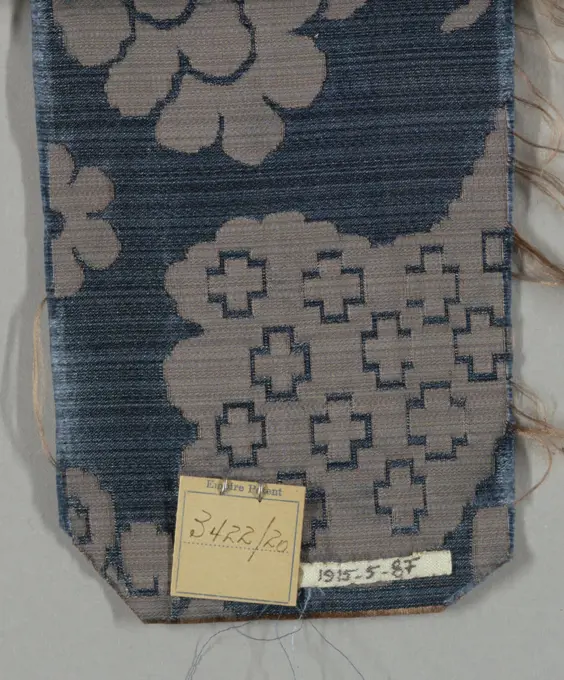
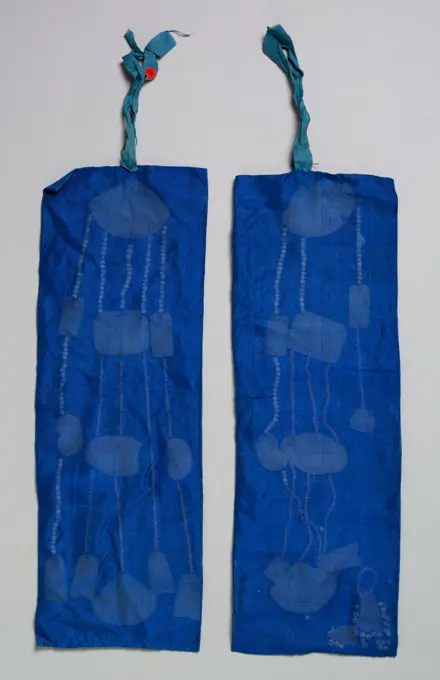
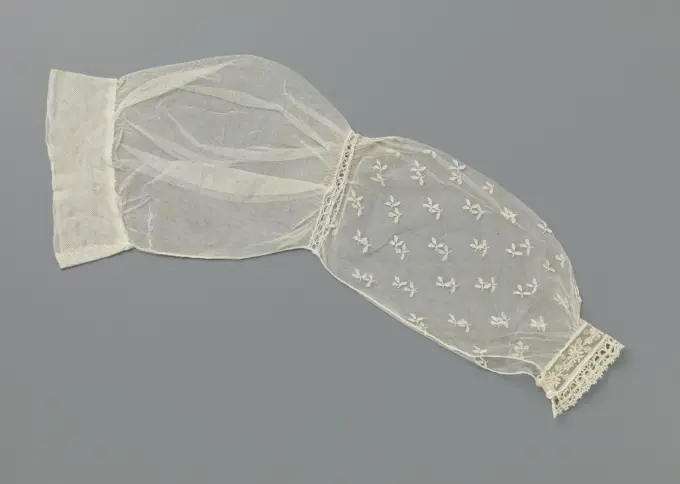
Fragments of embroidery on tulle unknownUndersleeves 1850-69 American. Undersleeves 120045Sample (USA); Manufactured by Cheney Brothers (United States); silk, metallic threadStole 1790-1810 French. Stole 157632Handkerchief 1840-80 French or Swiss. Handkerchief 236971Sub -sleek of application side with curling flower branches under a wavy flower garland, anonymous, c. 1850 - c. 1899 Underemen of natural-colored application side: Carrickmacross side. Balloon -shaped model. The sleeve is wrinkled on the close -fitting cuff. Both the cuff and the lower part of the lower sleeve are decorated with applicationboarding in the form of a regular wavy flower garland, including loose curling flower branches. The pendulum and branches are designed in the same way with a thin 'handle' with drip -shaped small leaves on either side, occasionally a large flower and further smaller simple round flowers with open heart. In the flower hearts of the largest flowers, a decorative land has been realized with stitches through the tulle. The cuff is trimmed with a scallop of flowers and C-volutes, and can be closed by means of two knots. Ireland cotton (textile). batiste embroidering Underemen of natural-colored application side: Carrickmacross side. Balloon -shaped modelCloth to headdress. Date/Period: 900/1470. Width: 46 cm. Height: 42 cm. Author: UNKNOWN.Mixed side scarf with spirals, anonymous, c. 1880 - c. 1890 Three -sorated scarf of natural -colored bobbin, Brussels Duchesse. A closed pattern is connected by a braid ground. In the wide back piece there is a large to the left desired spiral branch with preserved leaves and three large composite flowers. Symmetrical, Klener becoming spirites are placed on the left and right. Lnags The straight top runs a narrow edge of Spirlaen. Along the tip are wingerd leaves and bunches berries of the Gelderse Roos. Belgium (possibly) linen (material). bobbin lace Three -sorated scarf of natural -colored bobbin, Brussels Duchesse. A closed pattern is connected by a braid ground. In the wide back piece there is a large to the left desired spiral branch with preserved leaves and three large composite flowers. Symmetrical, Klener becoming spirites are placed on the left and right. Lnags The straight top runs a narrow edge of Spirlaen. Along the tip are wingerd leaves and bunches berries of the GelderFragment 16th century Italian. Fragment 220828Handkerchief French late 19th centuryFragment 16th century Italian. Fragment 230308Steel climbing side with coarse thread as an example of a picoted braid that is applied to Brussels kloskant.Steel Natural Colosside With Coarse Wire As An Example of A Picotted Braid with A Fragment of Brussels Climbing Side in Which The Braid Soil is Formed by Such Braids . The Date Concerns The Steel.Shawl early 19th century Indian. Shawl 123098Muts met mutsenslippen van naaldkant met spitsovaal medaillon.Hat with hats lips from natural needle side: alençon side. The pattern has a spiral medallion on the Mutsenbol formed by two flower garlands, which turn around each other and from which flower branches shown. In the medallion, a symmetrical flower branch is surrounded by some spreader flowers. The slips have the same dual flower garland and spreader flowers along the edge. Fine hexagonal maas soil.Printing Block (France); woodFragment. United States. Date: 1801-1825. Dimensions: 18.7 x 14.3 cm (7 3/8 x 5 5/8 in.). Sample of stripe and check patterns of blue, white and tan. Origin: United States. Museum: The Chicago Art Institute, Chicago, USA.Fabric Piece, 20th century, 49 3/8 x 25 in. (125.4 x 63.5 cm), Wool and cotton, Mexico, 20th centuryStrip bobbin with flour under bent leaf, anonymous, c. 1900 - c. 1924  Strip of natural -colored bobbin, Lille side. The repeating pattern consists of a branch with a curved leaf under which a flower hangs. The flower consists of five circles made with a decorative soil, a rose ground, and a border with whimsical lobes. Along the underside of the strip is always one circle between the successive flowers with a few lobes. The motifs are connected by a mesh soil, a tuler floor, strewn with square mosies. The very sparse fullwork is made in linen battle, with the thicker and shiny contour threads dominating. The Mosjes are made in form. The top and bottom of the strip are straight finished, with the bottom with picots. Belgium linen (material) bobbin lace / Lille laceBorder 18th century German. Border 216475Sidewall, Block-printed, Small oval shapes formed with two demiloon shapes. Printed in rows, separated by four-petaled flower motifs and dots. Printed in dark gray and white on medium gray ground., possibly USA, 1800-1850, Wallcoverings, SidewallValance, Medium: cotton, linen, silk Technique: block-printed on plain weave, lined with plain weave linen and bound with blue silk tape, Valence with scalloped border in floral printed cotton with the edges bound in blue tape. The pattern has natural-size flowers and leaves in violet, blue, green, yellow, red, and brown on a picotage ground in brown on white., Augsburg, Germany, late 18th-early 19th century, printed, dyed & painted textiles, ValanceFragment (Border). Italy. Date: 1601-1625. Dimensions: 15.7 x 18.3 cm (6 1/4 x 7 1/4 in.)Repeat: 2.5 x 2-2.2 cm (1 x 3/4-7/8 in.)Bottom edging repeat: 1.1-1.2 cm (3/8 -1/2 in.). Linen, bobbin straight lace (made in straight strips). Origin: Italy. Museum: The Chicago Art Institute, Chicago, USA.Kontusz sash/belt. unknown, authorSjerp worn by a Belgian officer, 'deprived' of him in the war of 1830/32, Anonymous, c. 1800 - c. 1830  Outdoor model sash of green silk, faded. Belgium silkBand (Italy); linenFragment; silkCollar 1700-1943 American. Collar 119234Knitted children's hat with a central flower pattern, ajour work and edges in the bastard, Before 1888 Knitted children's hat with a central flower pattern, ajour work and edges in the rib. Europe  knitting Knitted children's hat with a central flower pattern, ajour work and edges in the rib. Europe  knittingTextile Swatch; Manufactured by Deerfield Society of Blue and White Needlework (American, 1896-1926) (United States)Cushion Made 1875-1900 China. Silk, warp-float faced 5 1 satin weave with weft-float faced 1 2 'S' twill interlacings of secondary binding warps and supplementary patterning and self-patterning ground wefts .Border 16th century Italian. Border 215017Peel, pattern 'Fine Molenwiek', Anonymous, 1600 - 1699 Tablecloth made of white linen with a peel pattern so -called 'Fine Molenwiek'. Northern Netherlands (Possible) linen (material) Tablecloth made of white linen with a peel pattern so -called 'Fine Molenwiek'. Northern Netherlands (Possible) linen (material)Lower Edge Of Hat Veil; straw, cotton; Warp x Weft: 84 x 41 cm (33 1/16 x 16 1/8 in.); 1978-152-3Piece 18th-19th century Japan. Piece 66858American Flag American Flag, 1863-1865. Wool, linen, metal rings, 108 3/4 x 69 1/2 in. (276.2 x 176.5 cm).    1863-1865Fragment 16th century Italian. Fragment 230141Textile Swatch Textile Swatch, 1950s to 1960s. Silk, 21 1/2 x 10 3/4 in. (54.6 x 27.3 cm).    1950s to 1960sFragment; linen; 1897-8-301Girl hat made of fine cotton knitwear, with open worked diamond motifs around which knitted decorative edges; Knitted bow band, anonymous, c. 1780 - c. 1790 A baby hat of fine cotton and knitwear with continuous horseshoe ball and knitted side buildings (girl), with open -worked diamond pattern. Louis XVI. Zaanstreek (Possibly) cotton (textile) knitting A baby hat of fine cotton and knitwear with continuous horseshoe ball and knitted side buildings (girl), with open -worked diamond pattern. Louis XVI. Zaanstreek (Possibly) cotton (textile) knittingSleeve of white pleated linen, c. 1700 - c. 1800 Sleeve of white pleated linen, the folds are stitched with a zigzag pattern. West-Europa linen (material) sewing Sleeve of white pleated linen, the folds are stitched with a zigzag pattern. West-Europa linen (material) sewingRibbon. 1730-1790. Galliera, fashion museum of the city of Paris. Detail, edofe, fabricFringe; 1909-12-7Neckpiece 19th century American. Neckpiece 98046Fragment late 16th century Italian. Fragment 230135Belt (Yeemy Mambolmashet) 1801-1900 Democratic Republic of the Congo. In the Kuba Kingdom, ceremonial occasions require ostentatious displays of wealth and status through dress and other attributes. Specialized male artists excel in the making of beaded regalia like the belt displayed here. They sew both beads and shells onto a woven raffia foundation to create geometric designs. The interlaced pattern on this belt, called imbol, is a favorite Kuba motif that can also be seen on the raffia skirts worn with such beaded ornaments.. Jute, raffia, cowrie shells, and beads . KubaStopplap of multicolored silk on cotton., Burgerweeshuis Amsterdam (Possible), 1843 Stop patch with multi -colored embroidery. The embroidery consists of the initials PCT under a crown in Doorstop, HF, HIS, MS, PCTF in Stersteek, CvDH in Cross STEK, ICN in Kastjessteek and Anno 1843 in Kastjessteek. Amsterdam cotton (textile). silk embroidering Stop patch with multi -colored embroidery. The embroidery consists of the initials PCT under a crown in Doorstop, HF, HIS, MS, PCTF in Stersteek, CvDH in Cross STEK, ICN in Kastjessteek and Anno 1843 in Kastjessteek. Amsterdam cotton (textile). silk embroideringCap 2nd-early 4th century Roman Period Found one on top of the next on the head of a woman in a Roman Period burial excavated and recorded by the Museum's Egyptian Expedition, the red cap (25.3.217a) and two brown caps (25.3.217b and c) are rare datable examples of headwear. Draw strings served to tighten the red cap over two layers of cloth, one of which is 25.3.218, wrapped about the head of the mummy.. Cap 548290Binder 1874 American. Binder 104383Fragment Crusader 13th centuryBorder. Italy. Date: 1601-1625. Dimensions: 41.8 x 52.6 cm (16 1/2 x 20 3/4 in.). Linen, plain weave; cut and drawn work in buttonholed, darned, and overcast bars with buttonholed picots; embroidered in buttonhole, double running, hem, interlocking lace, overcast, and satin stitches; buttonholed couching; macramé edge with knotted fringe. Origin: Italy. Museum: The Chicago Art Institute, Chicago, USA.Fragment, 1800s. India, 19th century. Brocade; silk ground with silk and gold thread; overall: 8.9 x 19.1 cm (3 1/2 x 7 1/2 in.).Fragment van een veelkleurig zijde satijn.A fragment of a silk tissue. Branches with salmon-colored flowers, partially green framed on a brown, satin ground. Note: Self side; 0.5 cm Solid bond, satin.Belt -Handkerchief 1873 Belgian. Handkerchief 228761Collar of climbing side with three grid work medallions. At a nice ground ground, a mechelen soil (also known as ice soil), are awarded inner and outwardly symmetrical, triangular medallions with leaf rosette and filled with grid work. Below and above are smaller reserves, including with two fanning branches with large hanging flour and ascending flour. This is the outside strip of the collar. The inner strip of Binche-Kant is equal to BK-BR-J-139: strip of a climbing side with large tulip.Passementerie late 18th century French. Passementerie. French. late 18th century. Chenille and metal thread. Textiles-TrimmingsSteel bobbin with coarse wire as an example of a spider with eight legs with a fragment slace in which this technique is used, anonymous, c. 1900 - c. 1930 sample Steel natural -colored bobbin side with coarse wire as an example of a spider with eight legs (the SpitsOdale motif) with a fragment slace in which this technique is used. A tie grid has been used in both examples. The date concerns the steel. West-Europa cotton (textile) bobbin laceFragments (France); silkCollar early 19th century American. Collar 168301Mitaine of blue-pink silk with silver-colored metal wire and lace strip, c. 1800 - c. 1850 Mitaine of blue pink silk in jacquard pattern, sales with silver -colored metal wire and silver -colored metal bond strip. West-Europa whole: Silk. Sales ribbon: metal thread. Sales side: Metal thread. Mitaine of blue pink silk in jacquard pattern, sales with silver -colored metal wire and silver -colored metal bond strip. West-Europa whole: Silk. Sales ribbon: metal thread. Sales side: Metal thread.Textile Sample from Sample Book 19th century Japan. Textile Sample from Sample Book. Japan. 19th century. Silk. Textiles-WovenFragment, Medium: silk, metallic Technique: Supplementary warp forming pile on a plain weave foundation (velvet) with supplementary wefts, Trefoils in red on yellow ground., 17th century, woven textiles, FragmentSilk Damask Textiles, 1450-1599. Italy, second half of the 15th century. Damask, silk; average: 51.1 x 60 cm (20 1/8 x 23 5/8 in.).Mitaine from white knitted cotton, c. 1730 - c. 1765 Mitaine of white knitted cotton. Elbow, with one seam. Triangular ridge with triangular scallops. Increased pattern of a grid work of triple ridges. Cross with a standing and a hanging flower. Netherlands whole: Cotton (textile) knitting / embroidering Mitaine of white knitted cotton. Elbow, with one seam. Triangular ridge with triangular scallops. Increased pattern of a grid work of triple ridges. Cross with a standing and a hanging flower. Netherlands whole: Cotton (textile) knitting / embroideringChemisette 18th century-19th century French. Chemisette 98258Sample early 19th century French. Sample 219330Fragment, Medium: silk Technique: bobbin lace, blonde style, Blonde lace border with a detached leaf motif in a field of mesh., France or Spain, 19th century, lace, FragmentKerchief 1830s French. Kerchief 102724Trimming, Medium: silk, Red woven heading finished with loops and tassels., USA, 19th century, trimmings, TrimmingFringe late 18th century Italian. Fringe 224940Textile Fragment, undetermined Chimú. Textile Fragment, undetermined, 1000-1532. Cotton, 11 1/4 × 4 1/4 in. (28.6 × 10.8 cm).   Arts of the Americas 1000-1532Bag, Strap, Fragments or Belt, Fragments Inca (Arica or Provincial). , 1400-1532. Camelid fiber, a: 2 × 1 1/2 in. (5.1 × 3.8 cm).   Arts of the Americas 1400-1532Conciliate belt;  18th century (1701-00-00-1800-00-00);Turkish needle work embroidery Ornamental with lace patterns, details, flowersCollar 1858-60 American. Collar 119138Fan leaf, Medium: silk Technique: bobbin lace, Chantilly style, Black Chantilly style bobbin lace leaf with design of flowering sprays and scrolls., France or Belgium, 19th century, lace, Fan leafComb, anonymous, 1750 - 1850 A comb with round top of black paintwork with a decoration in gold makie by Susuki Grassen and inlaid silver balls as a imagination of dew drops. Japan wood (plant material). silver (metal). lacquer (coating) A comb with round top of black paintwork with a decoration in gold makie by Susuki Grassen and inlaid silver balls as a imagination of dew drops. Japan wood (plant material). silver (metal). lacquer (coating)Piece 18th-19th century Japan. Piece. Japan. 18th-19th century. Silk. Textiles-WovenPiece 17th century Japan. Piece 71765Scarf first quarter 19th century French. Scarf 102678Wax seal on sackcloth material Picture frame -Fragment, Medium: linen Technique: needle lace, Fragment of raised lace in a pattern of trefoil blossom with a diamond diaper center and picot edge., Venice, Italy, 17th century, lace, FragmentTextile Swatches Onondaga Silk Company, Inc. (1925-1981). , 1948-1959. 95 silk; 5 metal, 50 x 20 in. (127 x 50.8 cm).    1948-1959Piece 16th-17th century Italian. Piece 216962Embroidery sample, Medium: silk, glass, paper Technique: embroidered on cut voided supplementary warp pile in a compound foundation (velvet), Floral pattern embroidered with white silk and clear glass on ground of purple velvet with wavy purple and yellow lines., France, ca. 1775-1805, embroidery & stitching, Embroidery sampleFringe, Medium: silk Technique: woven, Fringe with a yellow, green and white striped heading. Skirt threads, looped and twisted, are in yellow, green, and white stripes., Spain, 17th century, trimmings, FringeTextile Swatch Textile Swatch, 1950s to 1960s. Silk, 58 1/2 x 21 1/2 in. (148.6 x 54.6 cm).    1950s to 1960sPiece 18th-19th century Japan. Piece. Japan. 18th-19th century. Silk. Edo (1615-1868). Textiles-WovenCloseup of a colorful zipper on linen canvasSamples, Cheney Brothers, (South Manchester, Connecticut, USA), Medium: silk Technique: compound satin weave, Reproduction fabric inspired by a sixteenth century design in the Cooper Union Museum collection has a pattern of flower-filled urns and pairs of peacocks., USA, ca. 1915, woven textiles, SamplesJade String Pendant (right) for the Royal Ceremonial Costume, late 1800s-early 1900s. Korea, Joseon dynasty (1392-1910). Blue silk, gauze weave and plain weave; jade and beads (2 sizes); This is a set of royal ceremonial robe and accessories worn by a high-ranking court official for attending special state ceremonies. The set consists of an inner coat, an outer coat, a skirt, a back apron, a crown, a pair of jade tassels, a tablet, and a belt.Wax seal on sackcloth materialKosode (Kimono) Fragment with Paper Fans and Chyrsanthemums. Japan, Edo period (1615-1868), late 17th century. Textiles. Silk satin with tie-resist dye (kanoko shibori) and silk and gilt-papper wrapped silk embroiderySewing Instruction Book Samples (USA); 1945-20-15-a/cFragment of a Cup 50 BCE-100 CE Roman Empire. In ancient Rome, there was a high demand for colorful glass that could dazzle banquet guests alongside the expensive silver and gold serving wares meant to impress. Fragments like this one would have once been a part of larger mosaic dishes. The mosaic pattern was made by sagging molten glass into bowl-shaped molds, a technique used on many of these fragments is similar to millefiori, ìthousand flowersî in Italian, a modern glass-making method in which tiny rods of colored glass are bundled together, wrapped in a sheet of glass, fused, and then thinly sliced to reveal swirls of a flower-like patterns. They were arranged side by side, sometimes together with bits of colored glass, and fused together with heat.. Glass, mosaic glass technique . Ancient RomanFragment, Medium: linen Technique: needle lace, Fragment of Argentan lace with a flower and leaves. Small piece of ground remains., France, 18th century, lace, FragmentFringe (Italy); silkSleeve of application side with thrown three -part leaves, anonymous, c. 1875 - c. 1899 Sleeve of a natural application side: needle side applied on mechanical tulle. Balloon -shaped upper part that turns into the tube -shaped part that has been wrinkled and wrinkled around the wrist. The upper part of the sleeve is unadorned, part has a spray pattern of twigs with three pointed soils. The cuff is also made of machine tulle, decorated with a connected row of flowers. The cuff is finished with an edge machine side, with a succession of openwork ovals, without soil. Two small mother -of -pearl knots on the cuff. West-Europa cotton (textile). knoop: mother of pearl Sleeve of a natural application side: needle side applied on mechanical tulle. Balloon -shaped upper part that turns into the tube -shaped part that has been wrinkled and wrinkled around the wrist. The upper part of the sleeve is unadorned, part has a spray pattern of twigs with three pointed soils. The cuff is also made of macShawl. Dimensions: 108 in. high 35.50 in. wide (274.3 cm high 90.2 cm wide). Date: early 19th century. Museum: Metropolitan Museum of Art, New York, USA.