Maritime Models and Artifacts

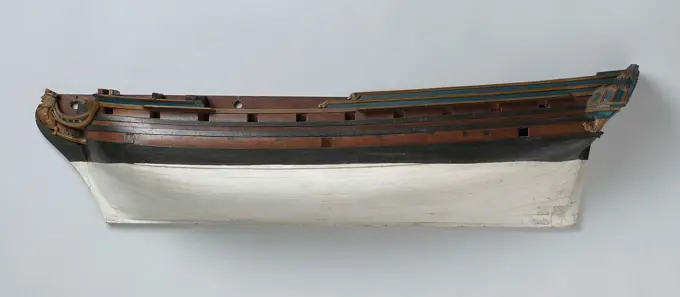
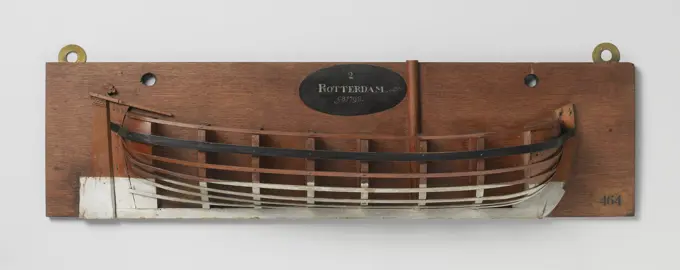
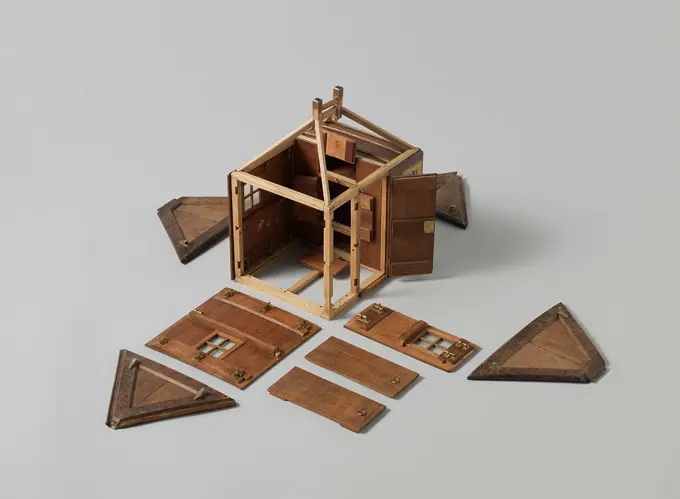
Half models of historical ships and a detailed model of a powder magazine, showcasing craftsmanship in maritime history.
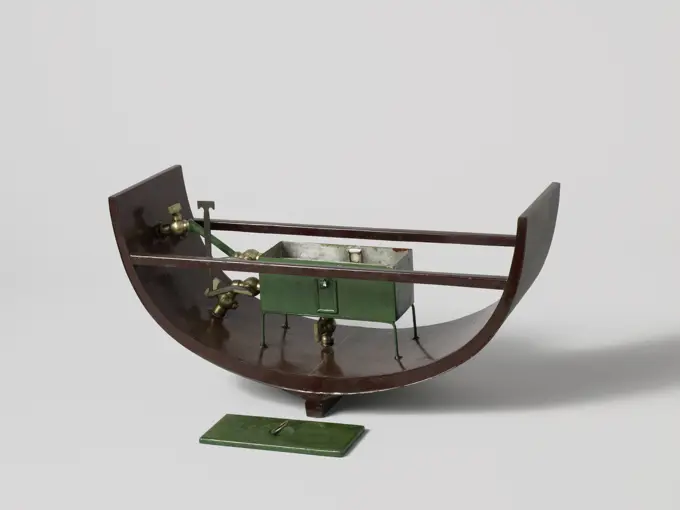
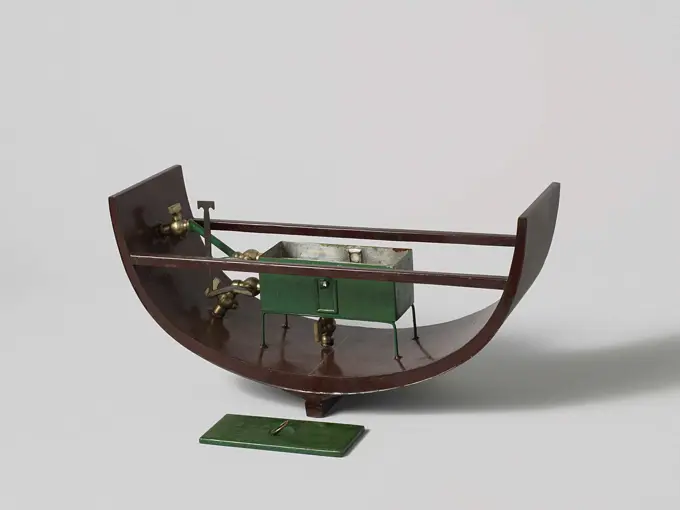
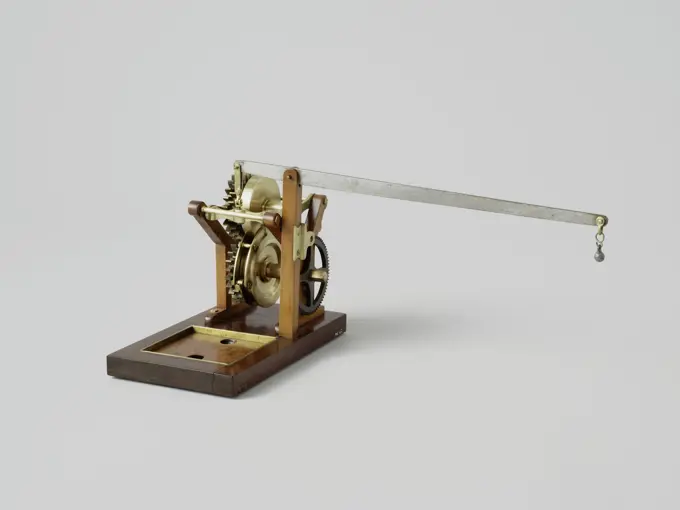
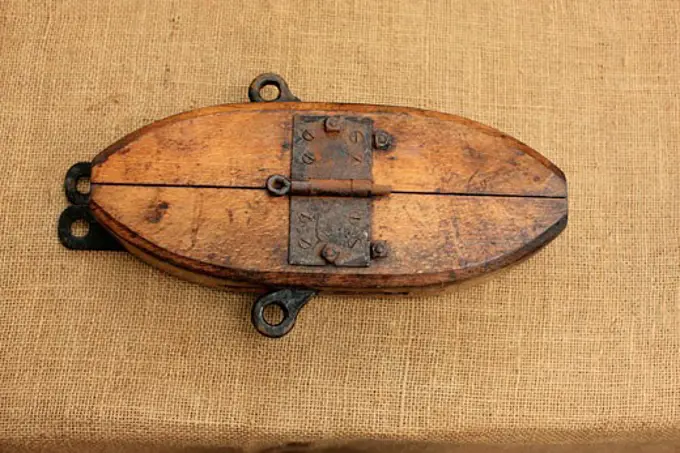
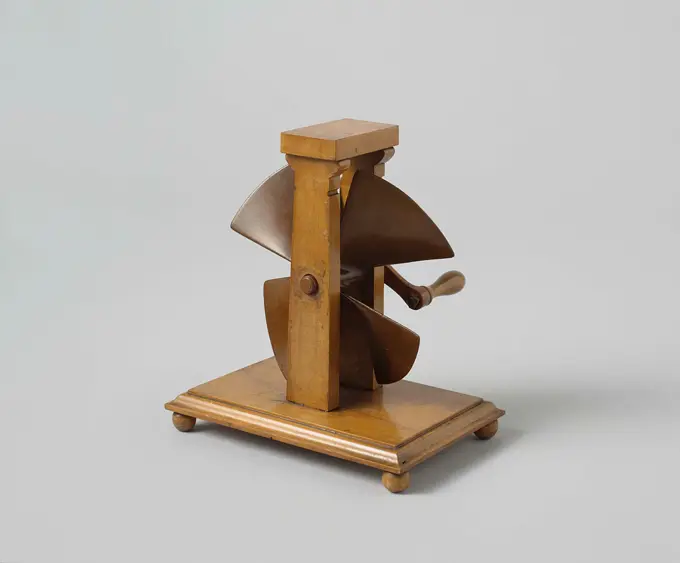
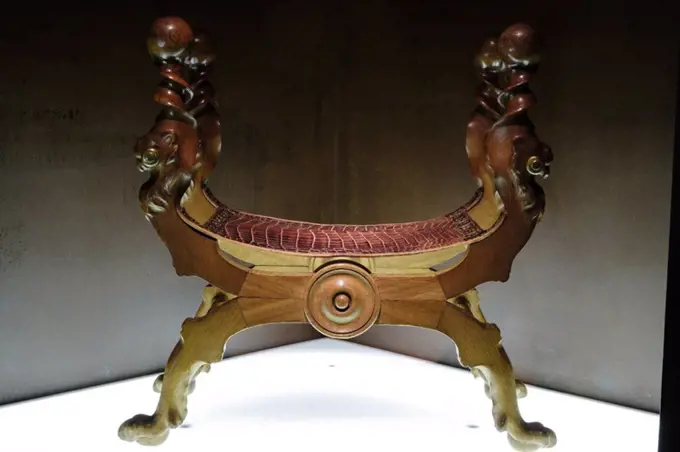
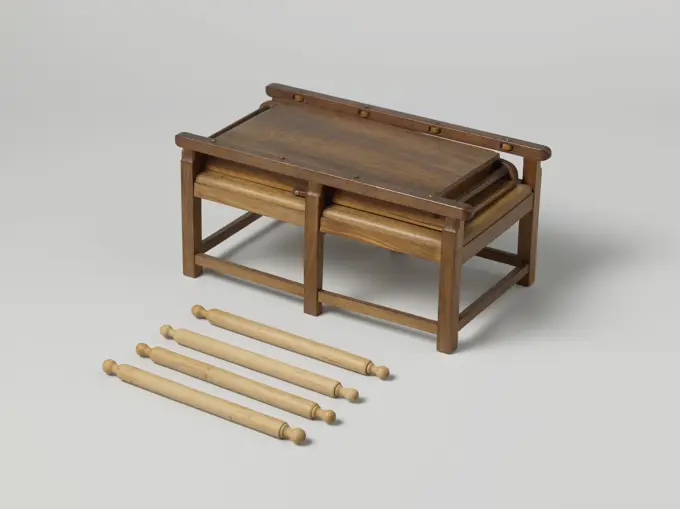
Model of a Powder Magazine, anonymous, 1849 demonstration model Model of the cross -section of a ship with powder room, brown and green painted. The powder chamber is set up, the top can be taken off, making four rods placed in the longitudinal direction to support the Kruitkists; On one side is a glass porthole, on the other an entrance hatch. Two above -placed pipes with two faucets Each connect the powder room with the outside of the ship's skin; The outer cranes function independently of each other, the inner two are connected and function at the same time. A final tap is applied to the underside of the powder room and comes out in the spacious. United States of America tin plate. brass (alloy). glass
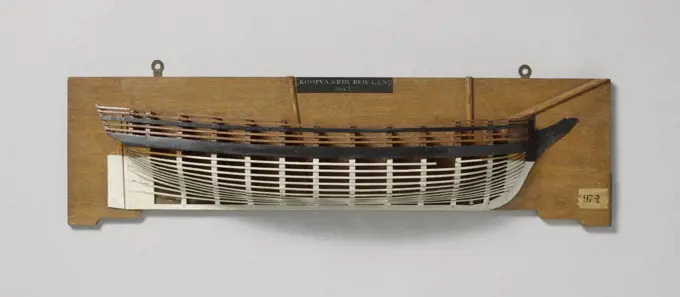
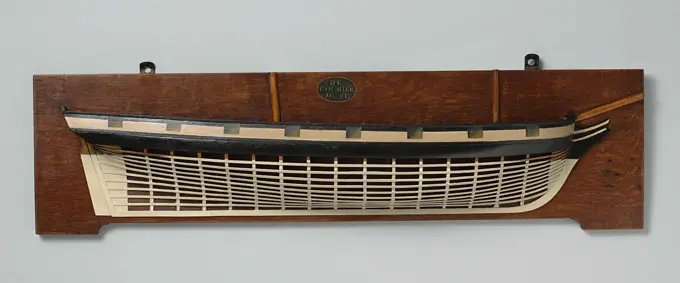
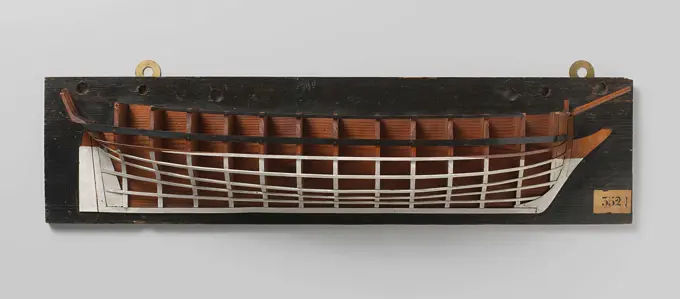
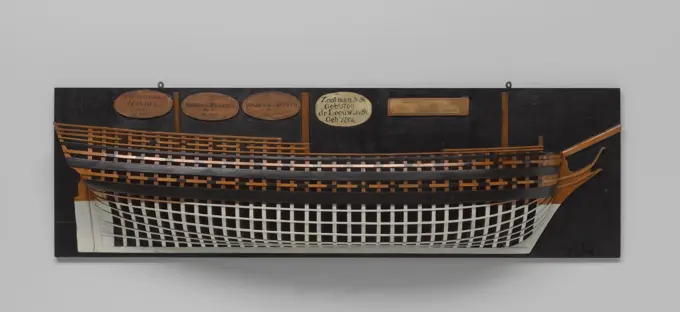
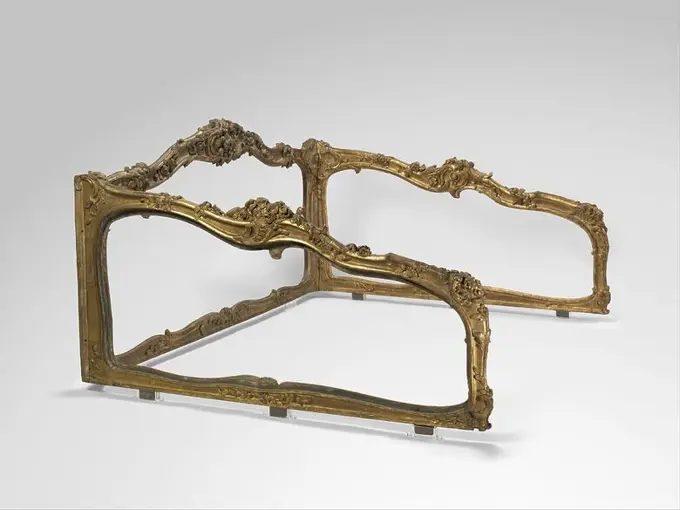
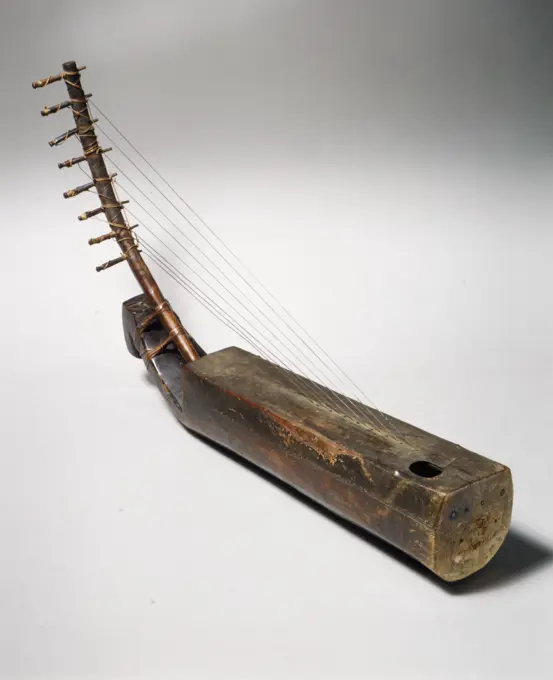
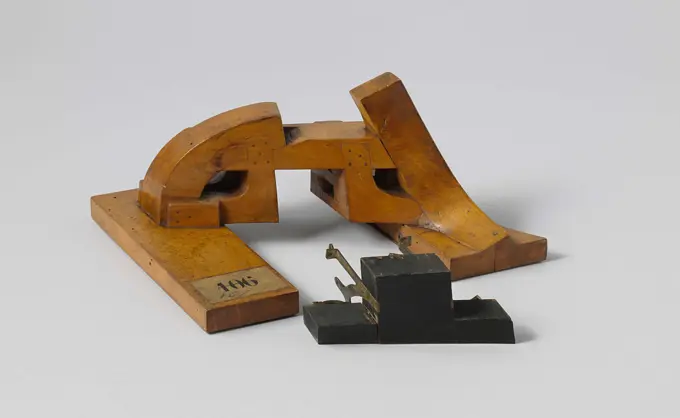
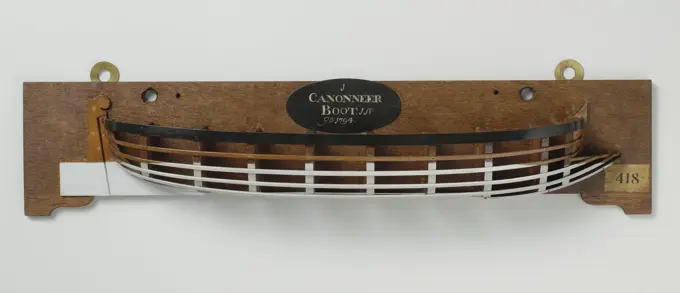
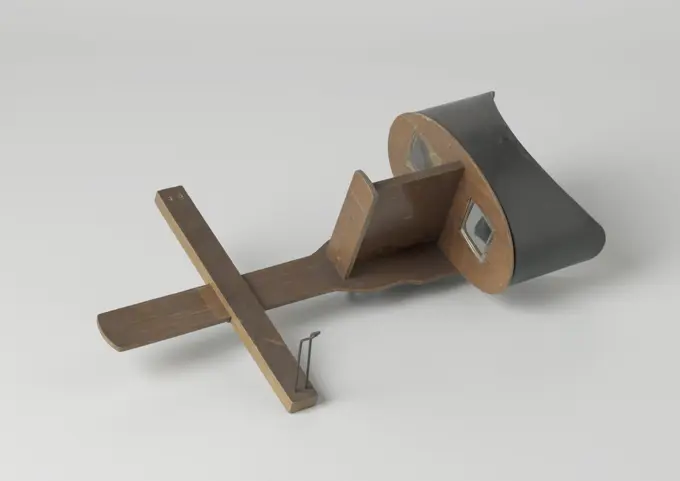
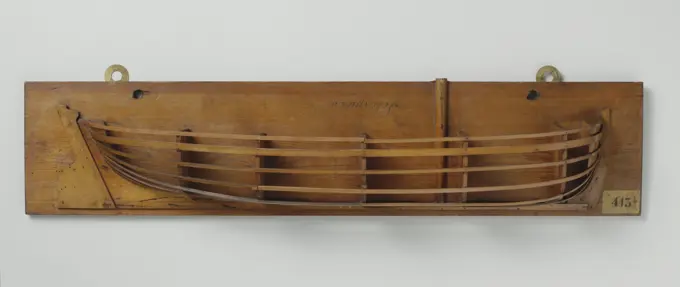
Half Model of a Gunboat, anonymous, c. 1796 ship model. half model. builder's model Mallen model (starboard) of a single -master. Round stern, sloping stern; Wide rudder. Flat -bottomed. The Zeeg is almost flat. Netherlands wood (plant material)Half Model of a merchant ship, Anonymous, c. 1780 - c. 1820Model of A Powder Magazine. Model of the cross section of a ship with powder room, brown and green painted. The powder room has been put on legs, the top can be decreased, so that four in the longitudinal rods placed to support the powder boxes are visible; On one side is a glass porthole, on the other an access hatch. Two above-placed pipes with two cranes each connect the powder chamber with the outside of the ship's skin; The outer faucets function independently of each other, the inner two are connected and operate at the same time. A final crane is applied to the underside of the powder room and comes out in the spacious.Half Model of a Launch.Molds model (starboard) of a sloop. Flat mirror. The seam runs to both ends. Running. Scale approx. 1:22 (Scale by model). According to the scale, this Jol is 30 Amsterdam feet long.Model or a fan. Model of a fan, working as a double bellows. In the large rectangular compartment, a shelf, which is attached to the short front with hinges at a half-front, is moved to a lever up and down; The two halves in which the compartment are distributed by the shelf are hereby reduced and enlarged. Air is interpreted by two square valves on the front, consisting of simple valves with sea leather coated, an upstairs and a downstairs hinges of the shelf. Due to similar valves, the air is drained to a small compartment for, where the air flow is led to a single output.Model of a Powder Magazine, anonymous, 1849 demonstration model Model of the cross -section of a ship with powder room, brown and green painted. The powder chamber is set up, the top can be taken off, making four rods placed in the longitudinal direction to support the Kruitkists; On one side is a glass porthole, on the other an entrance hatch. Two above -placed pipes with two faucets Each connect the powder room with the outside of the ship's skin; The outer cranes function independently of each other, the inner two are connected and function at the same time. A final tap is applied to the underside of the powder room and comes out in the spacious. United States of America tin plate. brass (alloy). glassBuddhist copy;  19th century () (1801-00-00-1900-00-00);Zaleski, Władysław - collection, gift (provenance), Pali languageModel of the Stern of a Ship in frames. Splitting model with sents of a stern. Wrecked mirror with three throws and horizontal spacers in between. Hollow Wulf, Framework of the fence, side galleries not indicated. The model shows four trusses of creation (the rear two are stitch tens) and the ration wood; Nin-part trusses. The seam goes back to the back.Buddhist copy;  19th century () (1801-00-00-1900-00-00);Zaleski, Władysław - collection, gift (provenance), Pali language, sutraHalf Model of an 80-Gun Ship of the Line.Molds model (port) of a ship, small back plate. No guns, closed main cover, baking cover and semi-deck indicated by gillings. Wrinkled mirror, hollow wulf, no details of fence or side gallery; No stir. Side to both ends ascending, one mountain wood. Running.Half Model of a 26-Gun Sloop of War, anonymous, c. 1843 ship model. half model. builder's model Polychromed planks Mallen model (starboard) of a three -mast. Sixteen gun gates spread over two decks. The Scheg ends in a curl, which serves as a shod. Elliptical fence and side gallery of one floor, decorated with carving; Stir with round stirring king, the rudder blade rounded. Flat Zeeg, one barkwood and two reehouts. Peaked around, sharp underwater ship. Scale 1:40 (Obreen). Rotterdam (possibly) wood (plant material)Model of the Mortar bed or a bomb demolition. Model of the cross section of a ship on which the construction of the support of a mortar set is indicated. The ship has two decks; Five cat traces are arranged in the spacious under the mortar setting. In between, two walls are arranged in the longitudinal direction of stacked beams, connected by swallow tails, which support the upper deck. The construction is fully built with beams and struts, in the spacious with three rows of heavy struts. The whole is finished with a large number of added metals and art knees. On the upper deck, the Pivot is applied under a rectangular wooden hood and parts of the deck, which can be removed. A hatch with gratings is also applied in the deck. On the upper deck three gunpaints for carres are arranged on each side. Scale 1:20 (according to Obeenen).Half model or an 18-gun brig.polychromed half model of a two-bridge of 18 pieces. The guns are shown as trompe l'oeil.Model of an Optical Telegraph. Model of an optical telegraph on base board, incomplete. It consists of a pounded mast short gallows at the top. Sports are made between two of the four crowds to climb in the mast. With hoists through disks in the bell struts, two wooden wings are moved halfway through the mast; Two other signals that are currently missing, probably balls, are lifted up and down with hoists over drives in the gallows. The wings are mottled on a metal ring, which can rotate freely to the mast: by means of a rod can rotate with wings, so that they will be in a different communication line. Traces of a missing part, possibly the flagpole, can be observed at the top of the gallows. Scale 1:45 (Scale on model).Half Model of an 80-Gun Ship of the Line, anonymous, c. 1797 ship model. half model. builder's model Polychromed mold model (starboard) of a three -mast. No gun ports, no decks indicated; The half -deck can be distinguished by the Gillingen. No lice pile. Willed mirror, Hol Wulf, no fence or side gallery; Straight with square stirring king. Fairly flat siege, two mountain wood and one reehout. Round underwater ship. Scale approx. 1:55 (derived). Netherlands wood (plant material)Half Model of a 6-Gun Brig.Polychromed mold model (starboard). Wrinkled mirror, hollow wulf, no details of fence or side gallery; Stir straight with square roofing. Sea back slightly ascending, one bark wood. Peaked round trip. In addition to the bowsprit, no scenery has been indicated.Model of a Wind-Driven Pump, anonymous, 1827 demonstration model Model of a pump driven by Molenwieken, in two-storey frames, almost identical to NG-MC-648-2. The bottom floor is a container in which the pump tube stands, which has a drain tube at the top floor. The pump buckets are simple metal valves, as well as the pumping pendants that are connected to a crutch with a pump rod; With one model, the top of the pump tube is closed with a wooden plug, which ensures the vertical movement of the pump rod. The crankshaft is powered by a four mill wicks; Crankshaft and blades are mounted on a wooden cylinder with a metal ring, so that the whole can be turned in the wind direction. model maker: Netherlands (possibly)after design by: Netherlandsafter design by: United States of America wood (plant material). brass (alloy). textile materials. paperModel of a trunk engine, Petrus van der Loo, 1855 scale model. technical model. demonstration model Placed a model of a 150 hp trunk machine or tube machine in a cross -section of a ship. No boiler; The propeller shaft is shortened and equipped with a two -blade parabolic screw; The machine can be rotated with a crank. The model shows: two horizontal cylinders with tubes; condenser cupboard with four air pumps; Two steam sliders with double eccentric on the crankshaft and regulator on top of the condenser; Steam supply controller on extra eccentric. With this directly working machine to a design by John Penn, the piston was equipped with a round pipe, called the trunk, which protrudes and moves in it: the trunk replaces the piston rod and closes the cylinder. The stool is immediately stuck in the trunk on the piston with a pin and can move up and down with the crankshaft, while moving back and forth together with the trunk. The whole made the transmission much more compact, so that thePhra Yamak - a valid Buddhist text (in the Paliian language, in Pi Mie Khom) belonging to the group of texts entitled in the Paliian language: Abhidammapitaka;  XVIII-XIX century (1701-00-00-1900-00-00);Zaleski, Władysław (1852-1925) - collection, gift (provenance), South Asian (culture), Thai artModel of a Vessel with paddle wheels amidhips. Sketch model of a ship with paddling wheels. The model is a nest model on starboard, only two large tins are applied to port. The ship has two decks. In the length, the ship is divided into two halves with under a trench from preceding the stern, in which two roller wheels placed above each other are placed. The mechanism is powered by a crankshaft, which is applied to port between the trusses. The paddling wheels, which are adjustable in height, have spoon-shaped scoop wheels and a flat gear on either side; The crankshaft drives two parallel gears, which in turn drives the gear wheels of the wheel wheels. The rudder has explored and has two parallel stirrer blades that leave an opening between itself to the water stream. An ironable mast with lead counterweight has been applied against the advance of the radio cupboard in between.Model of a Spoon Dredger, anonymous, c. 1800 ship model. demonstration model Model of a spoon drum on a ground board, in very poor condition and incomplete. The central nave has six winches on a raised deck, all of which are operated by hand and the cables are attached to each end to a spoon, so that one spoon drops when the other is picked up. Netherlands wood (plant material). brass (alloy)Close up of a mousetrap on a black surfaceModel of an Armed Longboat. Hollowed block model on a standard. Glad-coring double germs Barkas, round trip with a little seam and flat mirror; A prior to five docks and an open cabin with silk ears, no stir. Two brass sleeves are applied under the middle doft, which lead heavy ropes through the hull; These ropes are operated with two frying pills that are applied to the same doft. Against the bottom of the BARKAS, two cannon lovers were hung on these ropes; They are also worn by heavy ropes along the front and stern and light ropes over the sides. Scale 1:20 (Obenen).Half Model of a Launch, anonymous, c. 1780 - c. 1820 ship model. half model. builder's model Polychromed mold model (port) of a sloop. The bowel above the barkhout is closed. Flat mirror with a heckboard. De Zeeg rises to both ends. Peaked around. Netherlands wood (plant material)Half model or A 4-Gun Schooner-Brig, Rijkswerf Vlissingen, c. 1842 - c. 1844 ship model. half model. builder's model Polychromed planks Mallen model (starboard) of a two -master. The deck is closed and surrounded by a railing with two guns; On the front and aft deck, the locking with Valpoorten can be lowered. Sharp ceiling. Elliptical fence, surrounded by continuous railing, no side gallery, strong stern; Stir with round stirring king (Soetermeer's version) and rounded Roerblad. Zeeg almost flat with emerging bow, one sunken barkhout. Peaked around, sharp underwater ship. Both masts hell back. Scale 1:40 (scale on model). Flushing wood (plant material)Half model or a lightship.block model (starboard) of a tweemaster. In the bow it has two jobs above each other, the crane bar is far back. Round stink with a safe hole; Straight stir standing on a heeling, rounded stir sheet. The seam is flat, a barque. The bottom is flat and equipped with two kimkeys. A mast in the middle, a rear, and a bowsprit. Scale 1:40 (Scale by model).Tray. Culture: Japan. Dimensions: W. 4 1/2 in. (11.4 cm); L. 7 3/8 in (18.7 cm). Date: 18th century. Museum: Metropolitan Museum of Art, New York, USA.Half Model of a 36-Gun Frigate, anonymous, c. 1780 ship model. half model Polychromed and fully plants Mallen model (port) on a small back plate. Thirteen guns on two decks, of which only three on the lower deck; Baking deck with shield and half cover. The Schegbeeld is a crowned lion. Gewrolded mirror, Hol Wulf, Hek and side gallery of two floors, decorated with gilded cutting. In the middle at the top of the fence a cut coat of arms, on which vague waves can be distinguished. No rudder. Seeping backwards, two mountain wood and one reehout. Breeding and continuous main and possession rest. Peaked around. Netherlands wood (plant material)Half Model of an 80-Gun Ship of the Line, anonymous, c. 1798 ship model. half model. builder's model Polychromed mold model (starboard) of a three -mast. Striking is the large number of clamps. No guns; Baking deck and half cover can be distinguished by Gillingen. Two slooiknies on the bow. Willed mirror, Hol Wulf, no fence or side gallery; Straight with square stirring king. The Zeeg rises on both ends, two mountain wood and one reehout. Quite flat underwater ship. Scale 1:55 (scale on model). Amsterdam (possibly) wood (plant material)Model of an Installation for Tarring Rope Yarn, anonymous, 1800 - 1825 demonstration model Model of a device for the reasons of cable yarns on ground board. The operation of the model remains unclear. On one side, a tar reservoir is suggested with two holes so that a rope can run. A framework with needlework was set up in the other half: it looks like a press, but this remains uncertain. Two heavy wheels rotate on top of each other: the flat surface of the upper rotates in the slit of the bottom. A set of cheeks that follows the circumference of the lower wheel is on top of this and conducts the upper wheel. The movement of both wheels is synchronized by a set of double gears next to the wheels. The upper wheel with gears is mounted in a frame that can be moved up and down with the help of a lever with weight on one side, probably to control the pressure. The lower wheel is driven by a crank, which is missing, and has a gear on the side of the frame that, probably with a round that is Half Model of a 12-Gun Brig.Polychromed blanket mold model (starboard) of a tweemaster. Eight gunpaints plus two in the fence, all on one deck; The deck is closed. Forethak worked out with galleon and sheek image of a gold-plated curl, the tap beam is missing. Elliptical fence surrounded by oval cord list, with two gunpaints and half government arms, no side gallery; Stir with round roaring (American rudder) and rounded stir sheet. Side flat, the bark wood is sunk into the skin, one Reehout. Peaked round trip. Scale 1:40 (Scale by model).Belt Cup, c. 1830, 2 3/8 x 6 3/4 x 3 1/8 in. (6.03 x 17.15 x 7.94 cm), Wood, United States, 19th centuryErnest Renoux painter equipment: Tabouret-Trépied with leather seat ". Museum of Fine Arts in the city of Paris, Petit Palais. 26987-6 Material, tool, painter, leather seat, taboo-Panel 1296. Panel 445058Half Model of a Jolly Boat, anonymous, c. 1780 - c. 1820 ship model. half model. builder's model Polychromed mold model (starboard) of a rowing boat; Round front and stern. De Zeeg rises to both ends. Stretch around. Netherlands wood (plant material)Standard for the Rembrandt portfolio with Liervogel motif, Carel Adolph Lion Cachet, 1903 Standard for the Rembrandt portfolio consisting of a slanting framework of Coromandelhout. The framework rests on two curved legs attached to the rear at the height of the Middambrepel. At the bottom, the framework and the legs are interconnected with intermediate rules. These intermediate rules are connected by a panel. The framework consists of two sections, separated from each other by a middle sill. The lower part has a lower sill and is divided into two areas by a middle style. These are filled with four panels with a sliced stylized Liervogel inlaid with walnut. The upper part is divided in the middle by a wide panel on which a sliced stylized Liervogel whose feathers are partly inlaid with copper. The panel is connected to the framework by means of openwork panels contained in two intermediate rules on the top and bottom. designer: Netherlandsmaker: Amsterdam teak (wood). rosewood (wood). bHalf Model of a 36-Gun Frigate.Polychromed and completely covered molds model (port) on a small back plate. Thirteen gunposes on two decks, of which only three on the lower deck; Baking deck with shield and semi-deck. The sheek image is a crowned lion. Wrecked mirror, hollow wulf, fence and side gallery of two floors, decorated with gold-plated carving. In the middle at the top of the gate, a sliced coat of arms, on which vaguely distinguish three waves. No stir. Side backwards, two mountain wooden and one Reehout. Foker coast and continuous head and lean rest. Peaked round trip.Coffin. Culture: Coptic. Dimensions: Overall: 16 1/2 x 70 1/4 x 20 3/4 in. (41.9 x 178.4 x 52.7 cm)Base: 8 x 72 x 21 1/2 in. (20.3 x 182.9 x 54.6 cm). Date: 4th century. Museum: Metropolitan Museum of Art, New York, USA.Model of A Gig, Rijkswerf Vlissingen, 1836 ship model. fully rigged model. instruction model Test model on a standard. Overnaadse Ankle Riems boom, around with a flat mirror; A foreclock, four dids and railway sticks, open cabin with side rods and a hennegat. Easy stir with a curled brass tile stick. The model has one mast with bucket sails, a flag stuck on the forecourt. Only the running corridor has been preserved. Scale 1:20 (scale on model). Flushing wood (plant material). brass (alloy). rope. textile materialsModel of the Upper Carriage of a 1-Pounder Gun, Rijkswerf Amsterdam, 1864 demonstration model Model of an upper off -exit for a 1 pound cannon, to be used on the sled of a sloopafluit. The rectangular body is rounded on the short sides and has eye bolts on the four corners. The cheeks have been replaced by two metal supports that are connected by a bolt; The taps are closed by pens. The vertebral leg is applied between the supports, an Eleveers screw has been applied behind. Scale 1: 2 (according to archives). Amsterdam wood (plant material). iron (metal). brass (alloy)Model of A VLET, J.L. Koens, 1892 ship model. fully rigged model. show model Witnessed model of a djatihout vlet, with six belts, a boat hook, a water barrel and a copper anchor on rope. In 19th-century display cases. Scale 1:10. Surabaya wood (plant material). rope. textile materials. copper (metal)Settee back frame (Lit de repos). Culture: French. Dimensions: Overall: 36 3/4 x 77in. (93.3 x 195.6cm);Overall, depth approximated ("B" confirmed): 30 3/8 x 59 7/8 x 3 in. (77.2 x 152.1 x 7.6 cm). Date: mid-18th century. Museum: Metropolitan Museum of Art, New York, USA.Ngombo Tsogo People 19th century Also known as ngombi or ngombo, this arched-harp, made by the Tsogo people of Gabon, utilizes palm-fiber strings that are held taut by small studs under its skin belly. It is played in an upright position, with the face of the decorated extension positioned close to the performer's face. This suggests that the sound of the harp is an extension of the performer's face. This suggests that the sound of the harp is an extension of the performer's voice. Harps like this are used by women's groups during healing rituals. Among the Fang people, they are symbolic of Nyingwan Mebege, the sister of their god and the giver of life.Model of the Closing of A Well Of A Screw. Model of a part of a stink stress (starboard): elliptical fence, portions of stern, stirring stage, wulf construction. In the screw light installation hole, a black-dyed closure is provided, which is secured with brass pins; Two hooks with eyes serve to light this valve. Scale 1:10 (derived).Folding Armchair, early 1500s. Italy, early 16th century. Walnut; overall: 95 cm (37 3/8 in.).Stand, anonymous, c. 1100 - c. 1300 Basement on four legs with an open -up Frisian with lions and the typical Khmer Boog ornament. Cambodia bronze (metal) Basement on four legs with an open -up Frisian with lions and the typical Khmer Boog ornament. Cambodia bronze (metal)Koran stands A Koran stand made of wood in front of white background copyright: xzoonar.com/simonevoigtx 6561495Half Model of a Poon, anonymous, c. 1798 ship model. half model. builder's model Polychromed mold model (starboard) of a single -master. Round stern, wide rudder with decorated stirring head and ticker over deck. De Zeeg runs up to both ends, barkhout continuously on front and stern. Stretch around. Rotterdam wood (plant material)PickerModel of a Disengaging Gear for Paddle Wheels. Model of the crankshaft decoupling of a scoop wheel, on a base board. Crankshaft and Rader axis are connected by a connecting piece, a so-called pile or drawer, which permits some impurity in the alignment of the axes. The tile can be taken apart and the piece rotated to the Rover-axis a quarter turn, so that the crankline is released and the stool can rotate with the crankpen unhindered. Scale 1:10 (derived).Model of a Cabin for Telegraph Personnel. Model of a signaling house for the staff of an optical telegraph. It is a larger version of model NG-MC-820. It is a hut with a hipped roof and is fully composed of loose panels and beams, which are connected to each other with sliding locks. One of the short sides is equipped with a bedside with a cupboards above it and below.Invention horn (orchestral horn), Halary, c. 1830 - c. 1850 An Invention horn made by the company Halary in Paris around 1830 in the original wooden box and with 10 brackets (BES, A, AS, G, F, E, Es, D, C, BES). This instrument was part of the instrument collection of Willem Mengelberg (1871-1951), who was chief conductor of the Concertgebouw Orchestra from 1895 to 1945. Paris brass (alloy) An Invention horn made by the company Halary in Paris around 1830 in the original wooden box and with 10 brackets (BES, A, AS, G, F, E, Es, D, C, BES). This instrument was part of the instrument collection of Willem Mengelberg (1871-1951), who was chief conductor of the Concertgebouw Orchestra from 1895 to 1945. Paris brass (alloy)Wooden grain size .. wooden round object with flat bottom. The object has a metal top edge. From under this metal upper edge 4 vertical metal strips run over the outside of the object below the bottom. A metal strip runs centrally over the top of the object, over the outside, through to the bottom. The metal strip over the top has a round pin in the bottom in the object. All strips are mounted with metal nails. In the object, under the metal strip and against the outer wall, is a wooden block with the brand (standing lion) stamped. On the inside, the same brand is stamped on the bottom.To samples or shot. Collection of ten solid iron bullets, in decreasing size numbered 1 to 10, on a wooden board. Number 9 is missing.Half Model of a 40-Gun Frigate.Polychromed mold model (starboard) of a three-master. No gunposts and no decks indicated. Wrinkled mirror, hollow wulf, no details of fence or side gallery; Stir straight with square roofing. Side forward and back ascending, one bark wood and one Reehout. Sharp peaked round trip. Scale approx. 1:58 (Scale by model).Silversmith's Art, Italy beginning of 20th century. Crystal hors d'oeuvre dish with silver stand.Artefact from Shipwreck, Slangkp Lighthouse, Kommetjie, South AfricaROCKCompacting machine.Model or a chain stopper. Model of a cable clamp of oak with palm wood screw.Half Model of A Screw Steamer, Rijkswerf Vlissingen, 1859 ship model. half model. builder's model Polychromed, fully plank mold model (starboard) of a three -mast screw steam ship. Eight gun gates on the upper deck. The Schegbeeld is a gilded curl. Elliptical fence with national weapon; Stir with round stirring king (American rudder) and rounded Roerblad; The model has a screw cooker for a screw light device. Zeeg almost flat, one reehout. V-shaped underwater ship with round kimmen. Scale 1:40 (scale on model). Flushing wood (plant material). brass (alloy)Model or a four-blade propeller. Model of a normal four-leaf screw in a frame on a base board; Four-leaf version of NG-MC-555. The sheets are flat. The screw can be turned around with a swell. The model has an urgency of 216 mm, a diameter of 173 mm, the hub is 40 mm long and has a diameter of 25 mm. Scale 1:10 (derived).Half Model of a 68-Gun Ship of the Line, anonymous, c. 1798 ship model. half model. builder's model Polychromed mold model (starboard) of a three -mast. Thirty gun gates spread over three decks; No baking deck indicated, but the Bovenkampanje. Willed mirror, Hol Wulf, no fence or side gallery; Straight with square stirring king. Fairly flat siege, two mountain wood and one reehout. Round underwater ship. Scale 1:50 (derived). Netherlands wood (plant material)Game of senet, including the game board and twenty playing pieces. From the 15th-13th century BC.Model of a Capstan with a winch. Model of a winch. Model of a capstan on a wooden floor. It is a pivot for eight wind trees with a winch in the head and four palls in the heel against falling. To use the winch, the head with the small brass cover plate is locked onto the uncomfortable king, which is placed in the reinforced floor with a square heel. The drum is equipped with a dedicated wheel under the head, which is driven by two booms with pinions in the head; The drum therefore runs under the head. The booms can be disconnected with wedges. To use the spindle with wind trees, the cover plate is removed and the head is attached to the drum with two keggen, so that head and drum turn the king together. The drum has six cleats. Scale 1:10 (estimation). This model is almost identical to NG-MC-199.Model of Gun Ports on a Floating Battery, Rijkswerf Willemsoord, 1861 demonstration model Model of a part of the ship's wall with two gun gates, on a Gronplank. The gate hatches are made of metal and divided into an upper and lower half, which open to the outside and leave a round opening for the guns in a closed position. The shutters of one gate have the hinges on the outside, for the other they are on the inside. Hooks keep the shutters in the open position. Scale 1:25 (derived). model maker: Den Helderafter design by: Netherlands wood (plant material). brass (alloy)Half Model of a 20-Gun Sloop of War, anonymous, c. 1780 - c. 1820 ship model. half model. builder's model Polychromed mold model (starboard) of a three -mast. The skin above the barkwood closed. Ten gun ports indicated on one deck that is closed. Get mirror, closed hollow wulf, no details of the fence, no side gallery; Straight with square stirring king. Seeping a little rising and behind, one barkhout. Peaked around. Netherlands wood (plant material)Museo diocesano de Mallorca, Palma,Mallorca, balearic islands, Spain.Mini size little colorful model boat in viewWooden plane Wooden plane, boards and a shaving on a white background Copyright: xZoonar.com/AlexanderxStrelax 3921701Scientific instrument - Case for Culpepper Compound Microscope, 18th Century. Tapered oak case, containing assorted slides (1965T5099.2 to .12)... Holds Culpepper Microscope 1965T5099.1.. Purchased from Edward H Pinto, 1965. .Tsuzumi Drum, 1800s. Japan, Edo period (1615-1868) to Meiji period (1868-1912). Wood with lacquer and sprinkled gold powder (maki-e), hide, iron, and cord; diameter: 20.4 cm (8 1/16 in.); overall: 25.4 cm (10 in.). Tsuzumi hand drums were used as musical accompaniment for formal theatrical productions such as Noh, but also in traditional folk music. Small tsuzumi like this one are set against one shoulder, and held in place with one hand, while the other hand beats the heads. The sound is adjusted by regulating the humidity of the hide with ones breath or spittle.Parasol 1870s American. Parasol 122319Snuff Bottle (stopper), 1644-1911. China, Qing dynasty (1644-1911). Glass; overall: 7.7 cm (3 1/16 in.).AR Tolman, Oregon Boot Satchel, 1935 1942 Oregon Boot SatchelCanoe Prow (tauihu)Lute-guitar, anonymous, c. 1880 - c. 1920 Luit guitar with embroidered carrying tape. Karlberg Palace (possibly) wood (plant material) Luit guitar with embroidered carrying tape. Karlberg Palace (possibly) wood (plant material)Spittoon. unknown, joinerPapyrus burnisher ca. 1800-1500 B.C. or later Middle Kingdom-Early New Kingdom Ancient Egyptian scribes used burnishers to smooth the uneven surfaces of fresh sheets of papyrus. The sheets became shinier and absorbed less ink, which allowed the text to stand out more legibly.. Papyrus burnisher 556699Portable Charcoal Stove. Dated: c. 1940. Dimensions: overall: 26.6 x 35.8 cm (10 1/2 x 14 1/8 in.). Medium: watercolor, graphite, and gouache on paper. Museum: National Gallery of Art, Washington DC. Author: Jr. Ernest A. Towers.Wood boxWooden stool. Cameroon.Barrel, Jenevervat with tap, tap and separate screw cap, six yellow gray bands with appliques between which purple and blue zigzag decor, sides with star motif, juniper barrel tableware holder earth discovery ceramics stoneware glaze salt glaze copper tin metal wood, tap 47.5 hand turned glazed fried stoneware keg so-called gin refinery gray shard with salt glaze with -and-to profile bands. Tin screw cap. Copper tap On separate twentieth century wooden standard archeology import pottery store tapping serving drinkOld brass weights vintage retro box on a white backgroundModel of an Artillery Crane on Tracks, c. 1800 - c. 1857 demonstration model Model of a heavy crane on eight wheels, a sled and a loading platform that run in tracks, and a cart. The hoist has two winches, with cracks on either side; By moving the drums with gears, the winches can be combined, but the mechanism is now defective. The arm of the tap revolves around his axis; The rope runs over a disc through the king to the back, between two vertical rollers and over a disc back to the front and over a disc at the end of the arm. A ring and double hook are attached to the end. There are three tracks, one of which is a turntable with ball bearing. One sledge is a window with eight wheels such as the tap; The other is a loading platform with traces, which must be placed upside down on the other tracks with bullets in the tracks, which function as ball bearings. The tracks and the loading platform have rings on the sides for dragging and fixing with rope. One track can be attached to the caUSA, Louisiana, Atchafalaya Basin, Breaux Bridge, Lagniappe Antiques, wheelbarrow.Trekmaangel with four Mangel Rollers, Anonymous, c. 1750 - c. 1800 Trekzangel of beech and mahogany with a loose tensile trough with extendable lid rolling between wheels; on six legs, interconnected with rules; Copper nails in the top edge. Four separate mangle rollers turned from Esdoornhout. Amsterdam (possibly) beech (wood). mahogany (wood). mangelrollen: maple (wood). brass (alloy) Trekzangel of beech and mahogany with a loose tensile trough with extendable lid rolling between wheels; on six legs, interconnected with rules; Copper nails in the top edge. Four separate mangle rollers turned from Esdoornhout. Amsterdam (possibly) beech (wood). mahogany (wood). mangelrollen: maple (wood). brass (alloy)Nocturnal (instrument) of 1650. Location: MUSEO NAVAL / MINISTERIO DE MARINA. MADRID. SPAIN.Reconstruction of a Cavetto Cornice ca. 1390-1353 B.C. New Kingdom This is a reconstruction of a small section of cavetto cornice, an architectural feature usually found above temple doors and around the upper edges of shrines. A large section of the original cornice was found lying on the floor in storage rooms at the southwest corner of the Temple of Amun at the site of Malqata during the Museum's excavations in 1917. The original was made of faience tiles and gilded plaster attached to wood that was badly decayed and could not be preserved. In this small reconstruction, the ancient faience tiles have been set into modern plaster that is painted to imitate the gold leaf used on the original.For other examples of tile decoration found at Malqata, see a reconstructed panel of geometric patterns, and a cartouche enclosing the throne name of Amenhotep III, Nebmaatre, who built the temple as part of a festival city that was used to celebrate his three rejuvination festivals.. ReconstructiVintage spinning wheel against the shabby white wall backgroundModel of a 60-Gun Ship of the Line, anonymous, c. 1715 - c. 1720 ship model. hull model. show model Polychromed, eroded block model of the hull of a line of line of 60 pieces with loose round wood. Four and sixty gates are spread over three decks; The model has four levels: lower deck, intermediate deck and lice pile, baking deck and half -deck, upper campain. Two half towers on the lice pile. The Schegbeeld is a crowned lion, the gilded crane beams have lion masks. Get mirror, Hol Wulf with painted pilasters and two gates, fence with two Westergangers that run around the side galleries; The side galleries have two floors and shell -shaped roofs. The stern is strongly falling. Straight with square stirring king, steering wheel on the half cover. The model has a double anchor, two spindles and a pump house for chain pump on the lower deck; The remaining deck equipment is loose and contains the galley, among other things. The model is equipped with all the rest and lady blocks. The Zeeg Terracotta sculpture of the legendry artist  Himmat Shah  Indian Art  Master piece  Clay  for editorial use only  Jaipur  Rajasthan  India Copyright: xRavixShekhar/DinodiaxPhotoxHalf Model of a Screw Steamer, anonymous, c. 1887 ship model. half model. builder's model For ship with pre -stem bent. Scheg s-shaped. Galjoen indicated, two Slooikniesen and Closed Calculation. Kluigat in line with Kamhout. Swan stern with curl and bicons. Round a stave. Flat wulf and slanting. Stern bent and sloping backwards. Screw shaft protrudes far in screw window. Kingdom weapon on the fence. Model has a straight helm with oval leaf. The underwater ship has a fairly flat bottom. Round kimming to feeding and becoming backwards. Little seam. Two decks are indicated by Patrijpoorten. A chimney on the construction Midscheeps. Various shutters and a roef on the stern. The skin is smooth and closed. Eight round gates in the fore ship on the lower deck. Six round gates with a diameter of 7 mm on the half -deck on board. On the half -deck a railing with thirteen scepters. The rig consists of two masts and a bowsprit. Under the model three pictures with inscription in gold -colored painHalf Model of an Admiralty Yacht, anonymous, 1725 - 1790 ship model. half model. builder's model Extensive decorated, detailed and polychromed block model (starboard) of a flat -bottomed one -mast yacht. The model has a deck with a cabin behind, whose floor floats to let the telly stick sail under it, and a campanjedek on the cabin. Six small round gun gates in the side, on the bowded fittings for a sword and five putting irons. On the deck from front to back a roasting spindle, a chimney, a servant behind the mast, a round roef, a rise, a large oval roef and a small round. Galjoen with a sconing of crowned lion with coat of arms with crossed anchors, a mermaid and sea horse under the crane bar, otherwise allegorical figures and dolphins. Flat mirror with a gate; flat Wulf decorated with praise, dolphins, a putto blowing on a shell and a coat of arms with a climbing lion with sword and arrow bundle; Hekkbord with three decorated windows, corner figure, putto, praise and draperies and aHalf Model of a Gunboat, anonymous, c. 1794 ship model. half model. builder's model Polychromed mold model (starboard) of a flat bottom. The lower part of the fore ship has been extended in a point, on which a small triangular plenty has been applied. Pointed stern, wide rudder. The Zeeg runs forward and back, one barkhout. This gaffel canon boat had one piece. Rotterdam (possibly) wood (plant material)Sac. 1820. GAL1995.40.XInstrument of distance measurement of a sailboatWomen's non -circle;  beginning of the 20th century (1901-00-00-1910-00-00);gift (provenance), collarStereokijker (type Holmes), c. 1400 - c. 1950 photograph. object. stereoscope   wood (plant material). glass. metalModel or a 30-pounder gun. Model of a canon of 30 pounds, on a mik on a pedestal for instruction purposes. The wooden loop, long 80 cm and with a 52 mm caliber, has been cut lengthwise so that it can be opened to study the soul inside. The two halves are held together by brass tires. The cannon has a lock hardener and a visor at the front tap band; Rear is a pairing ring with set up and the grape is flat. A mouthpiece in the mouth. The mik is equipped with a soleplate with a stelewig. Scale 1: 3 (estimation).