Medieval Armor and Helmets

Historical metal armor pieces, including helmets and shaffrons, showcasing intricate designs and craftsmanship from various periods of medieval history.

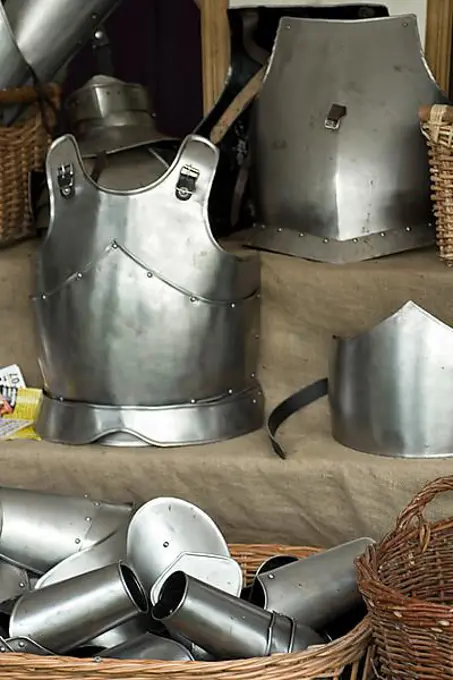
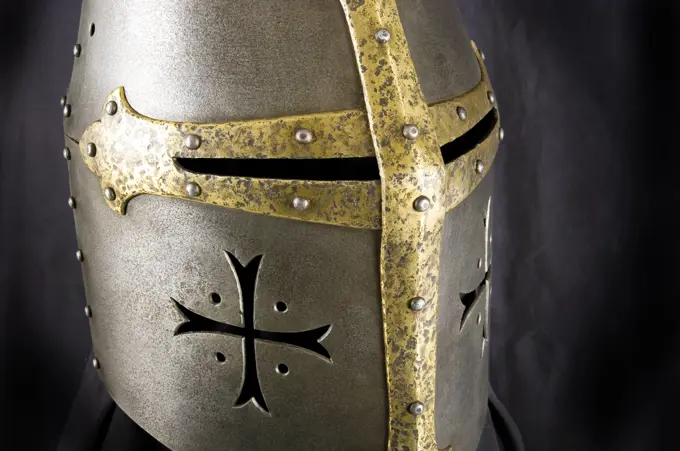
Armour Armour of the medieval knight. Metal protection of the soldier against the weapon of the opponent Copyright: xZoonar.com/ValeryxxSibrikovx 2479209
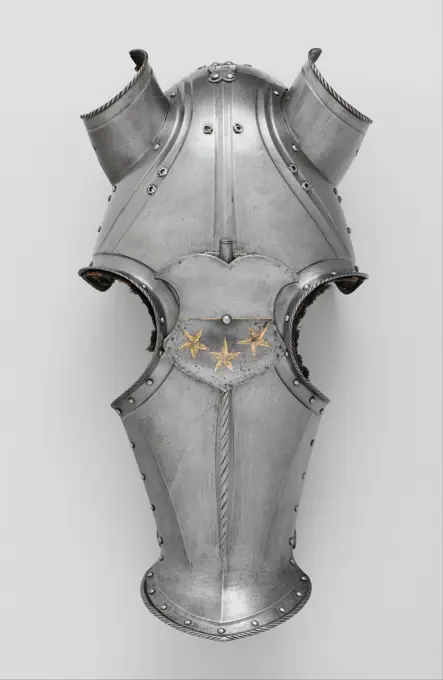
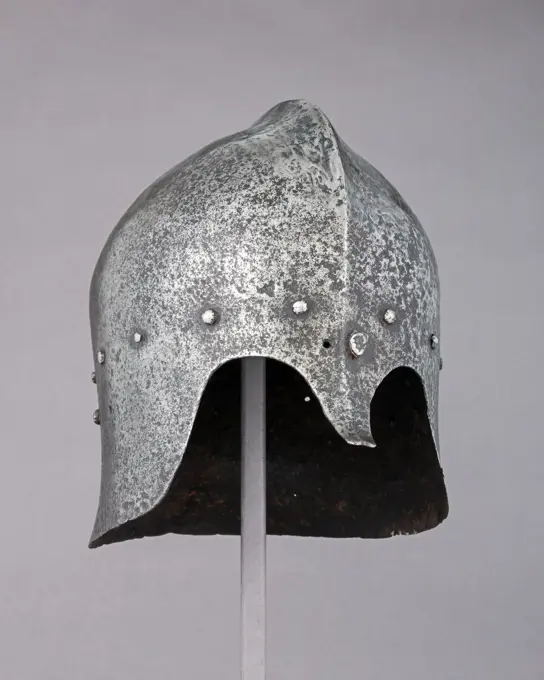
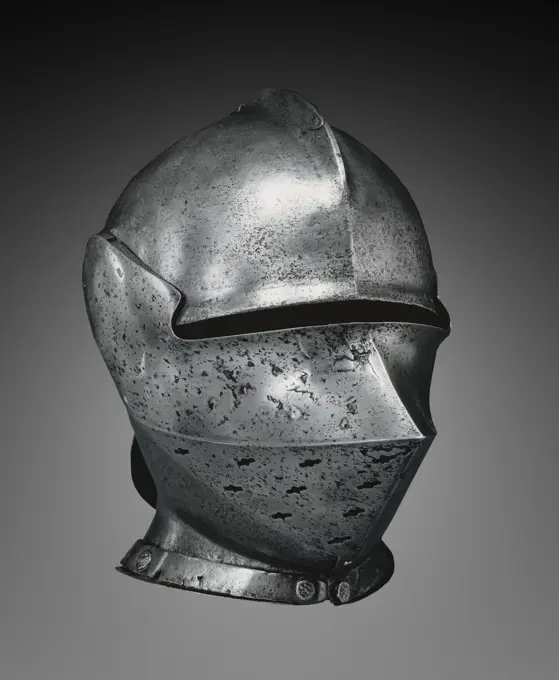
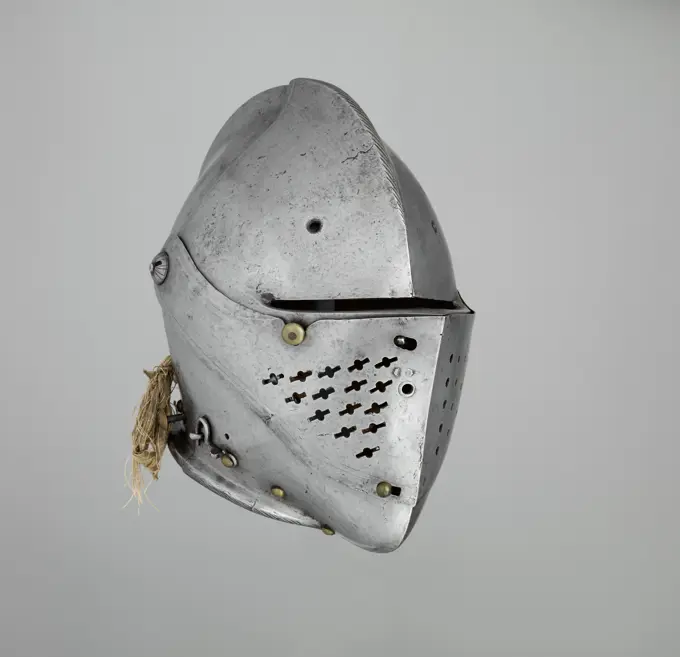
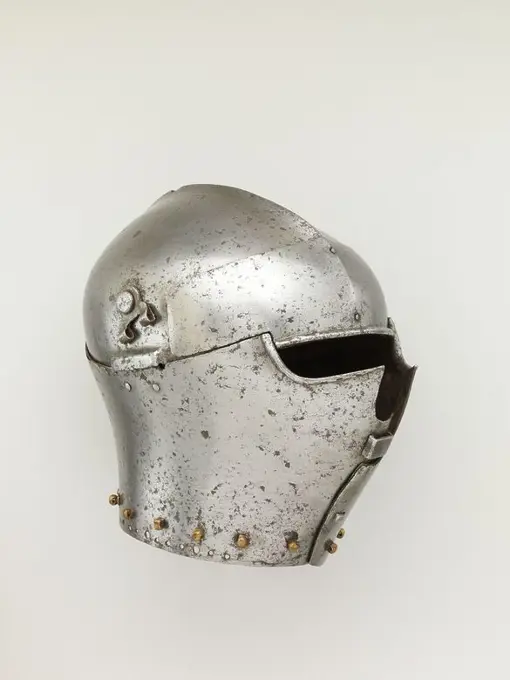
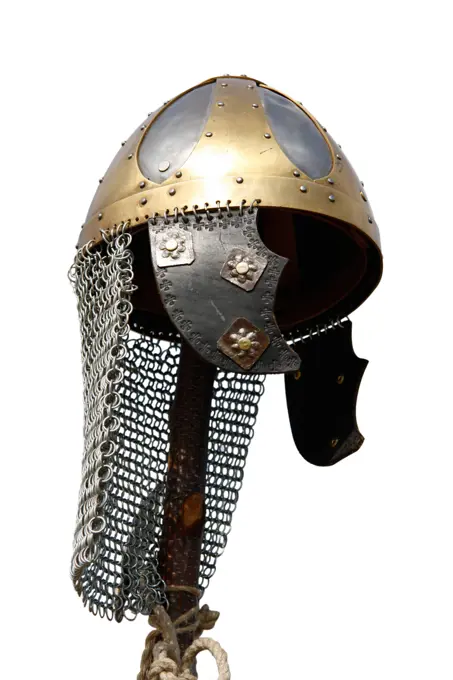
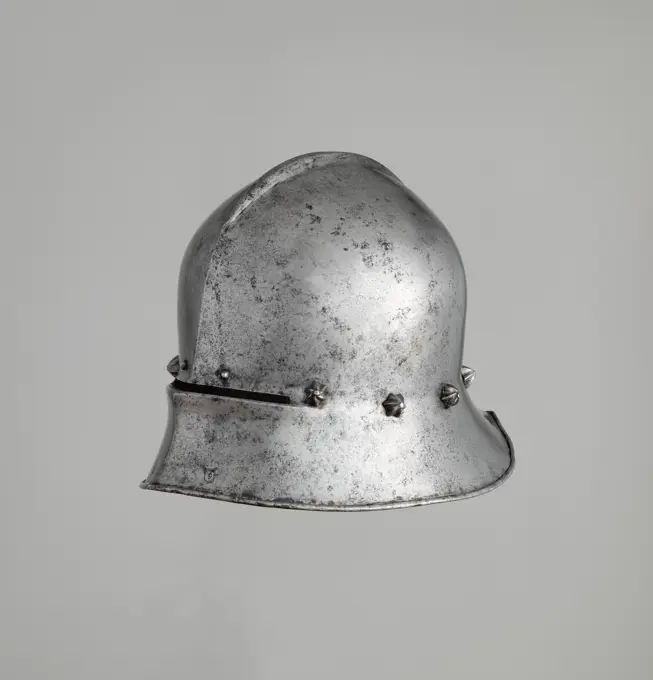
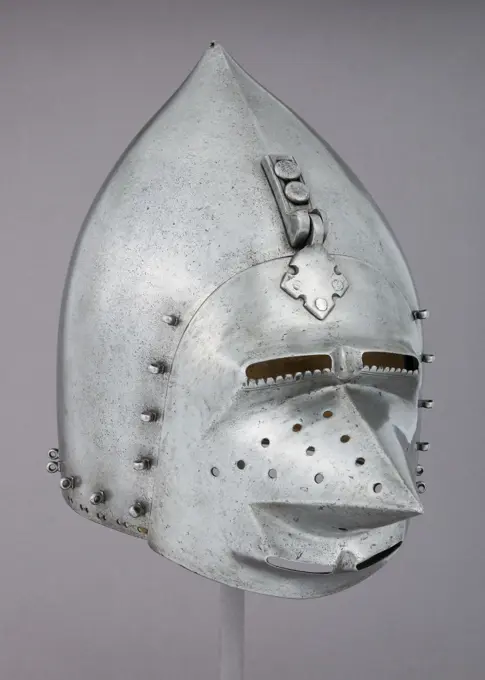
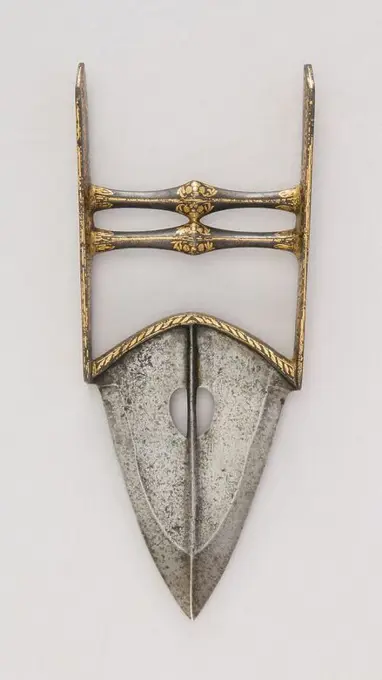
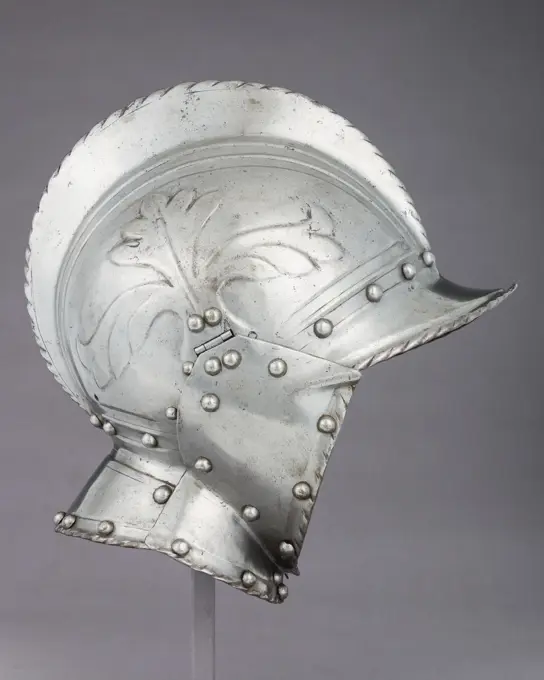
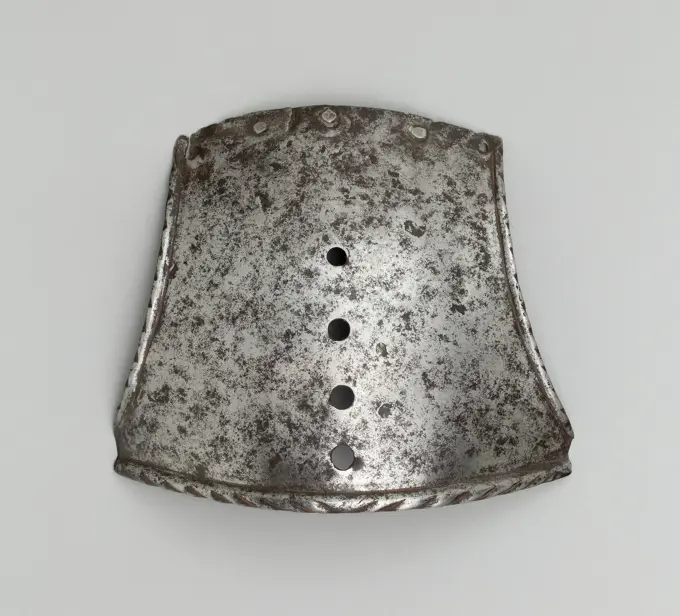
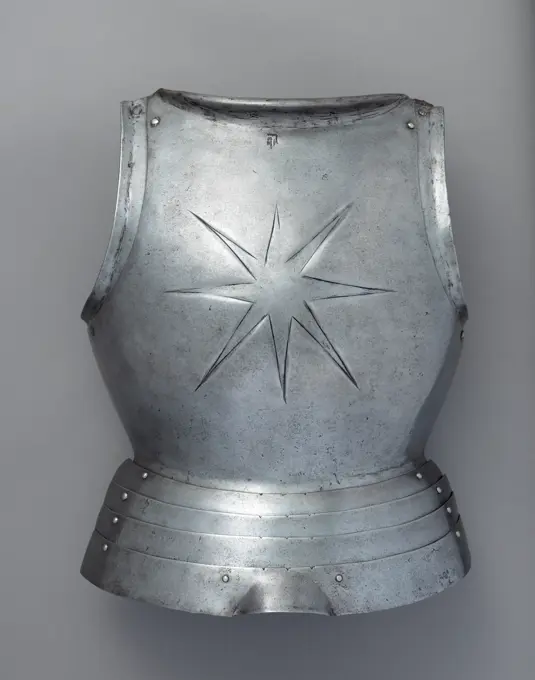
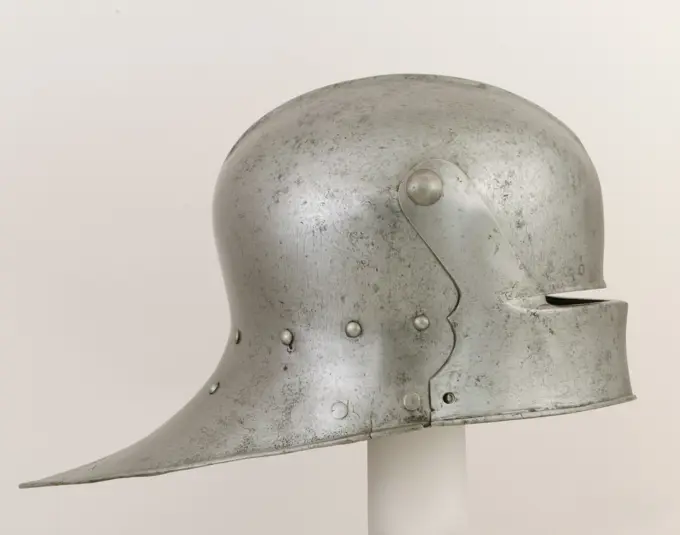
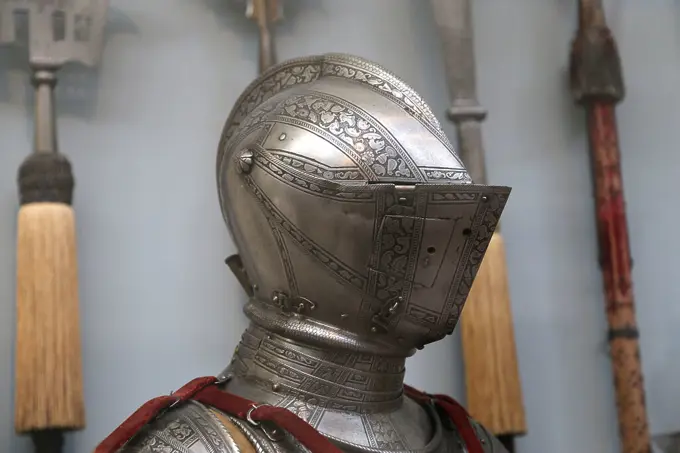
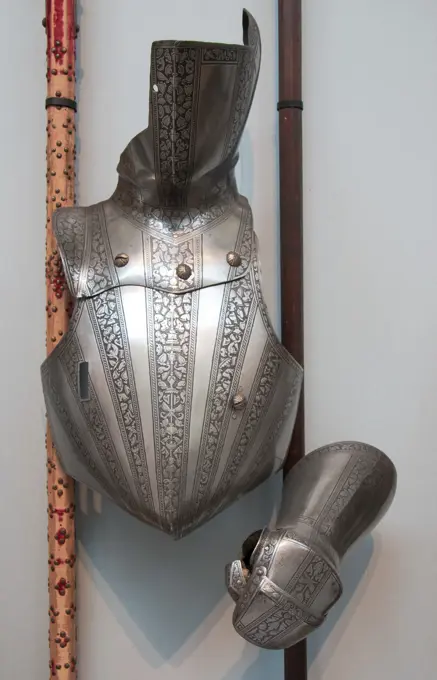
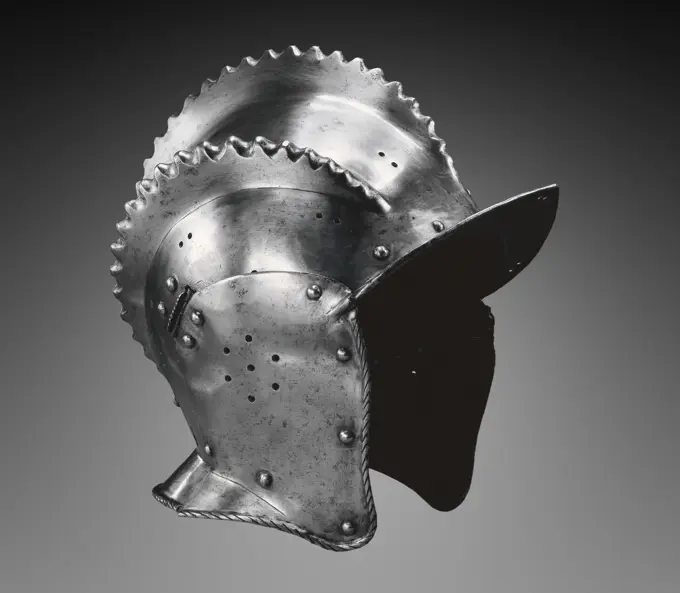
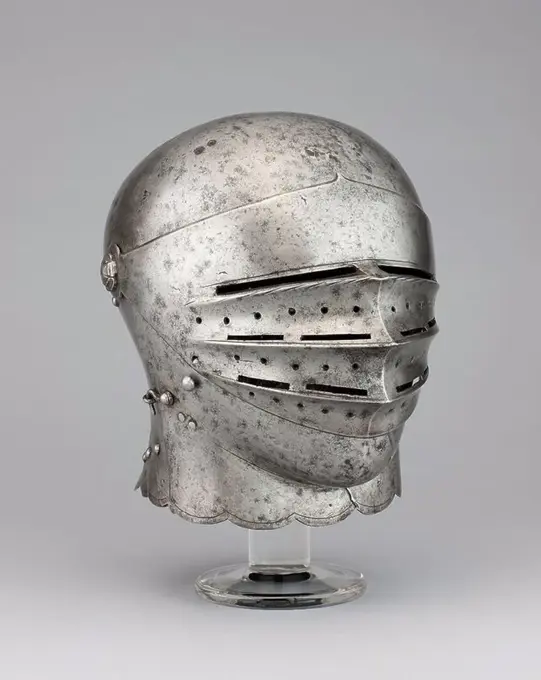
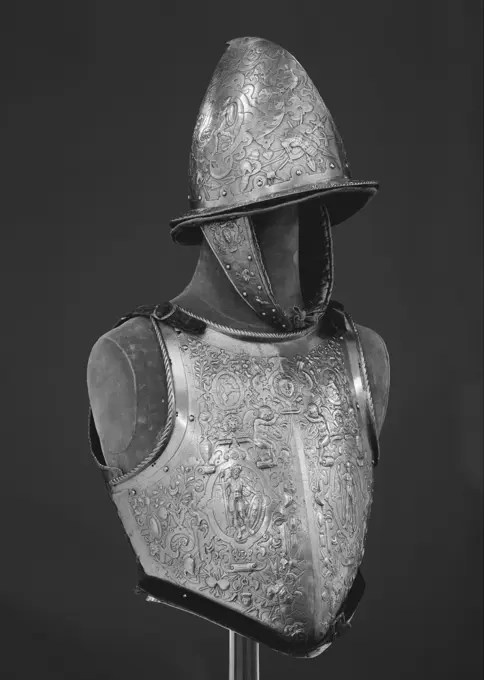
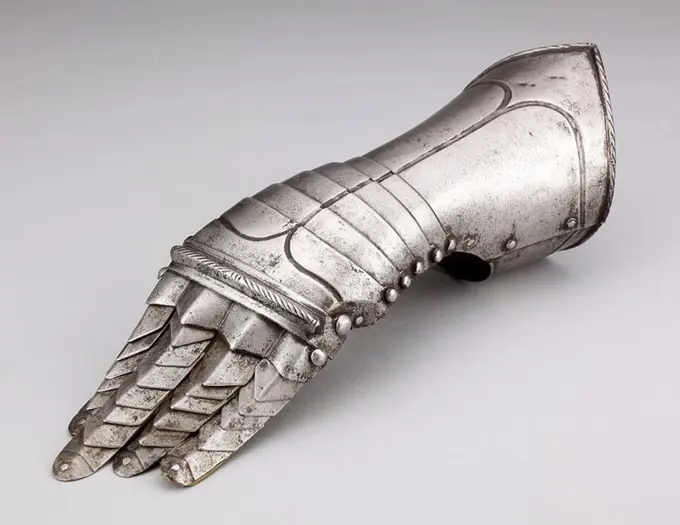
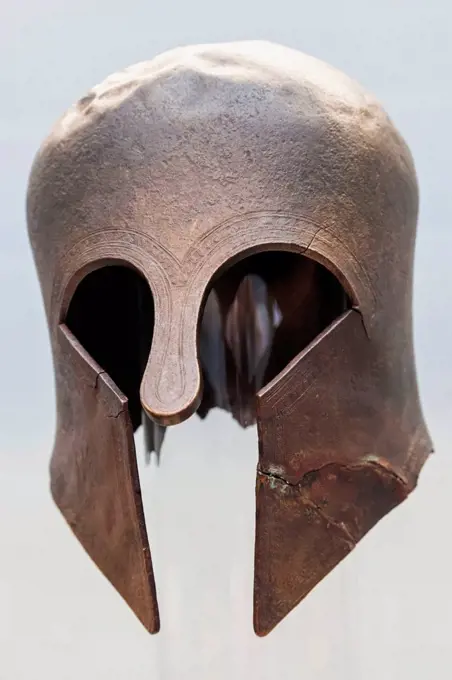
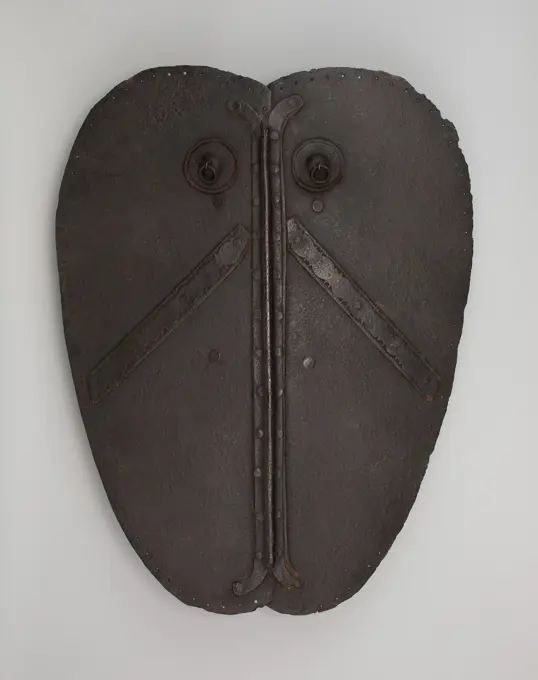
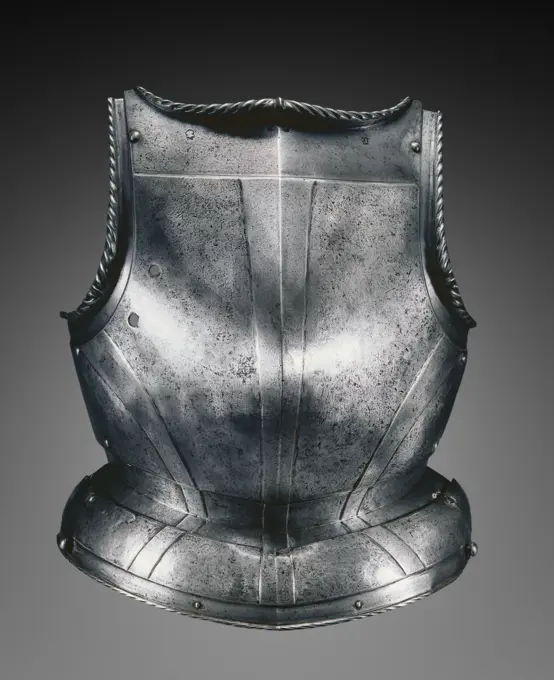
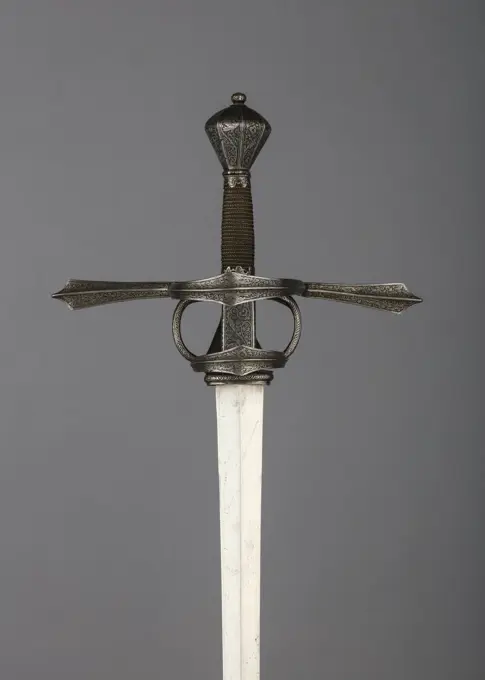
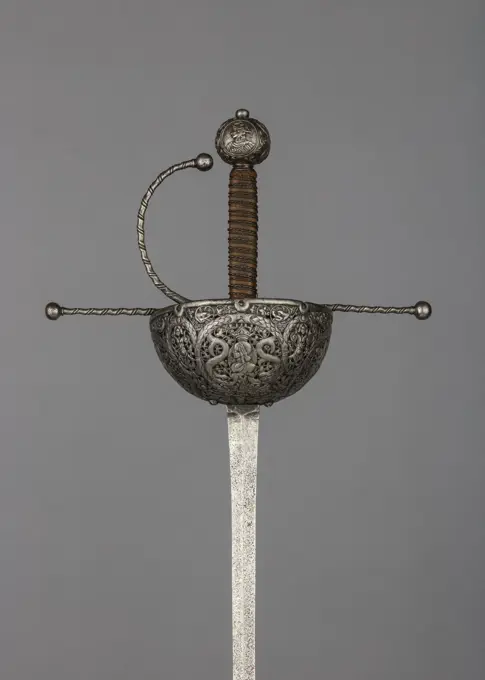
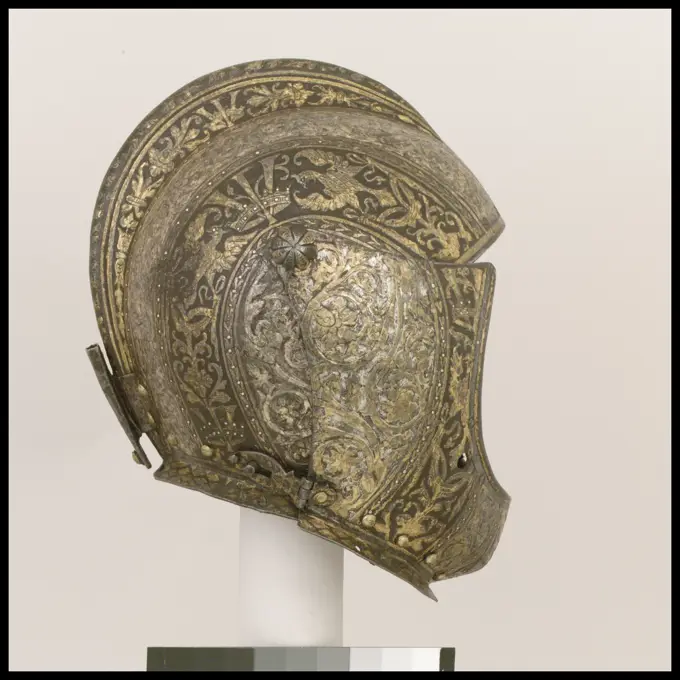
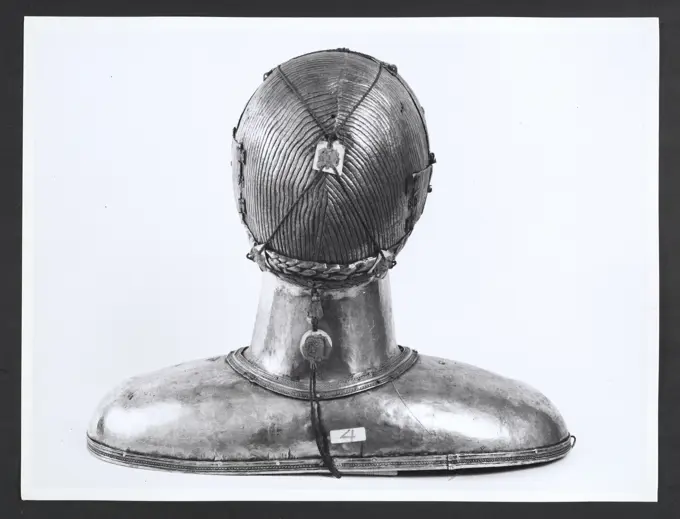
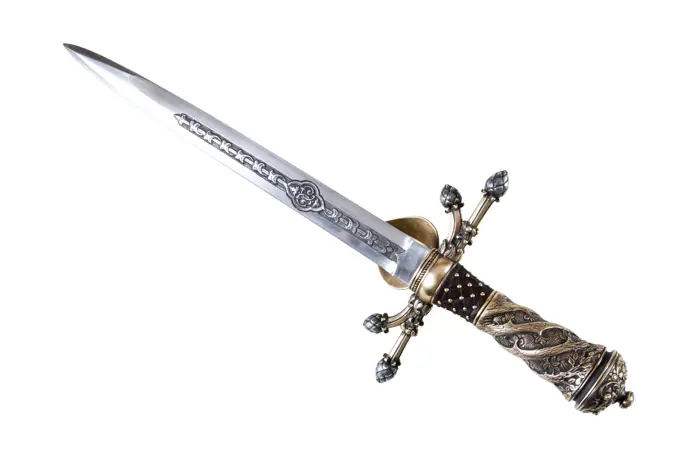
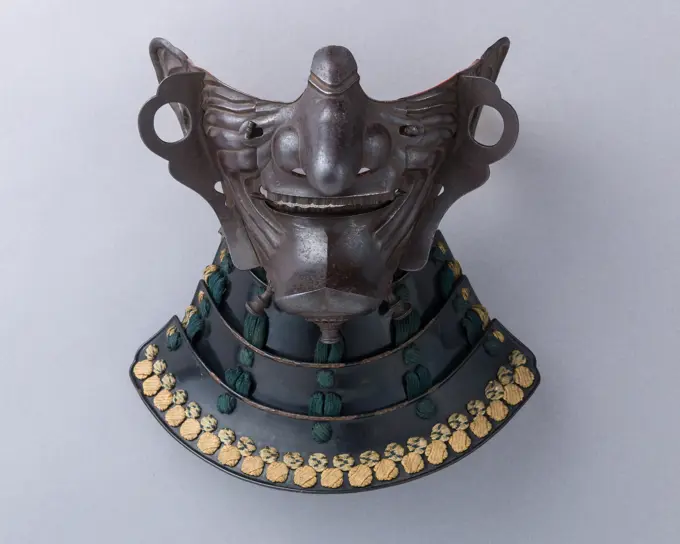
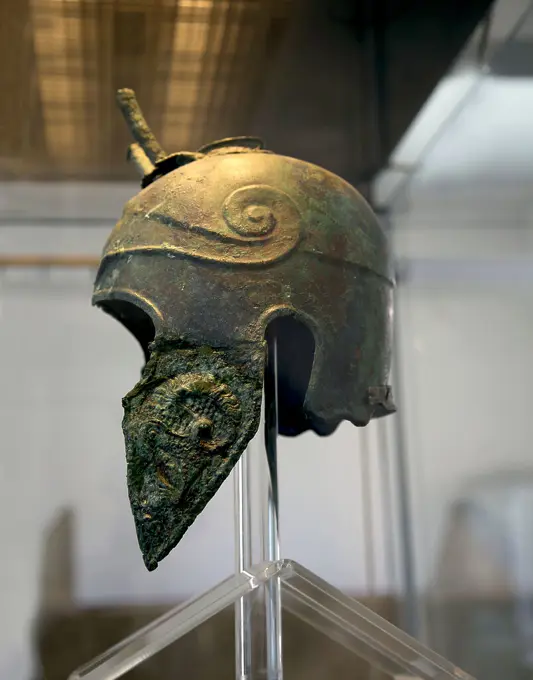
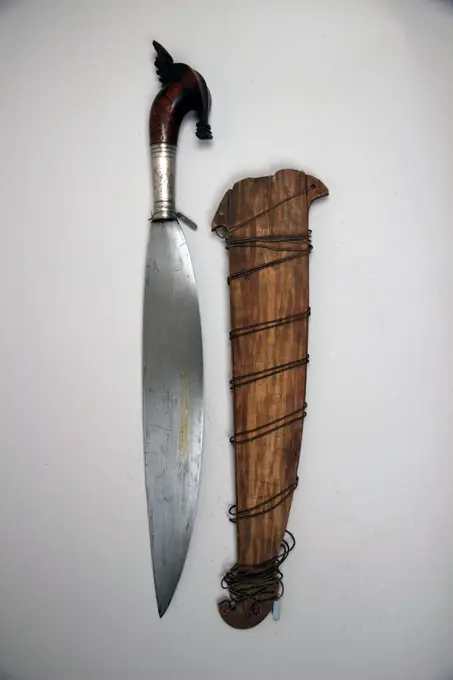
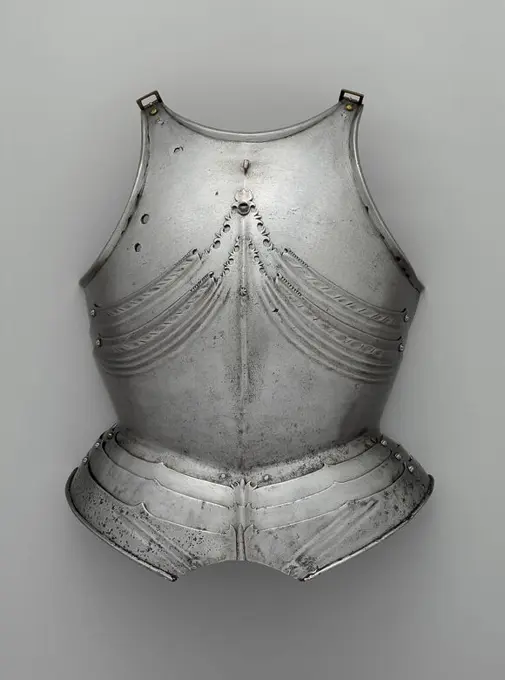
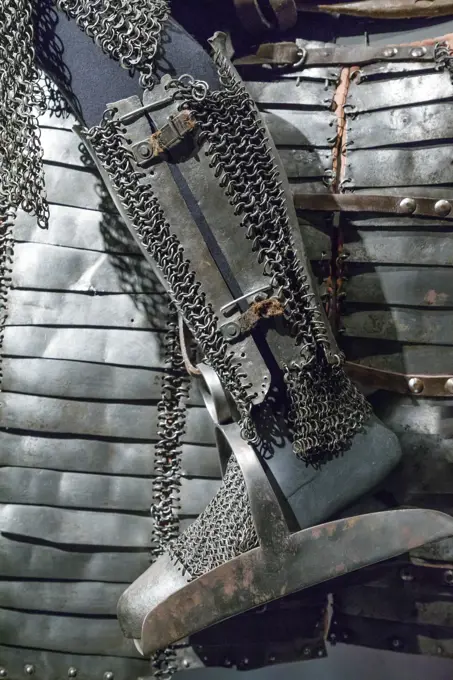
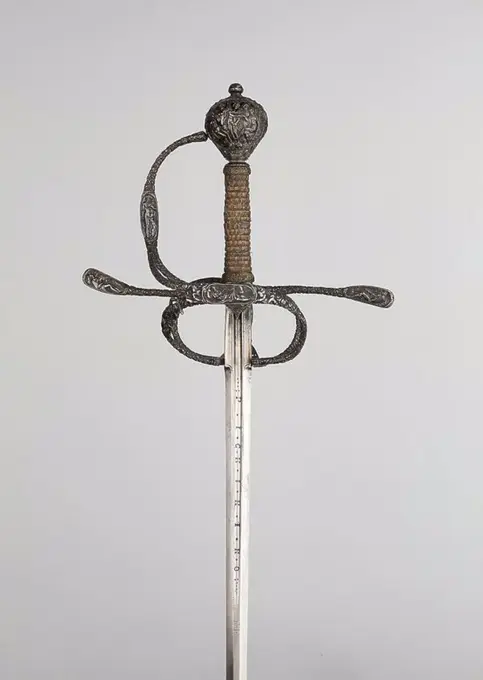
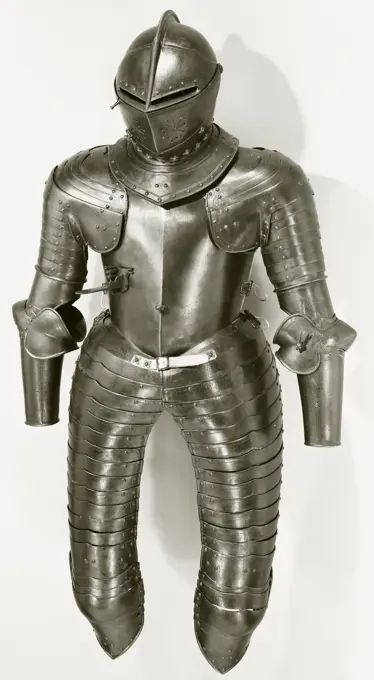
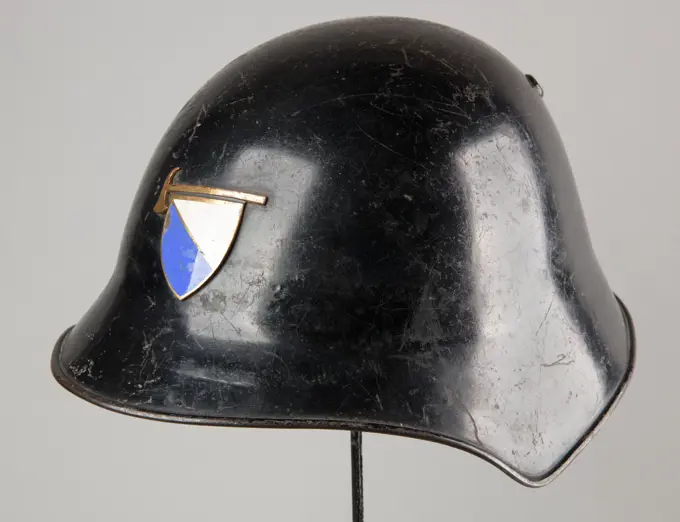
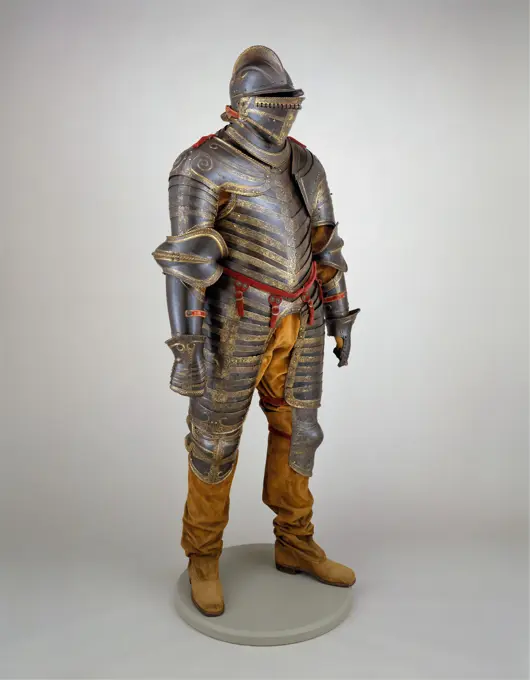
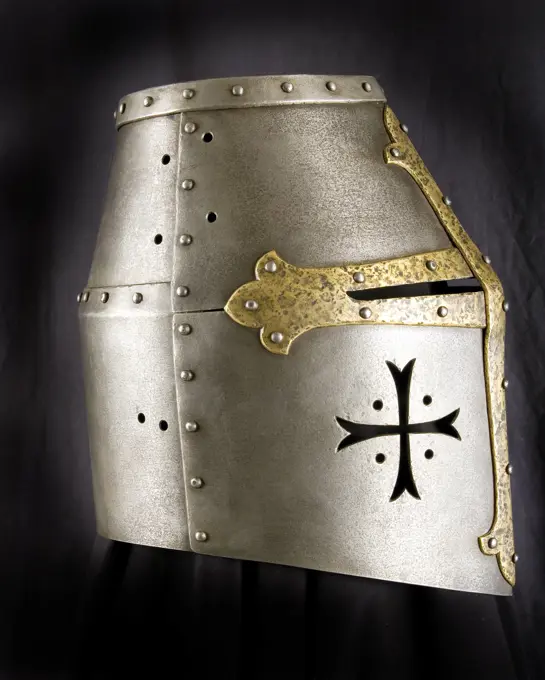
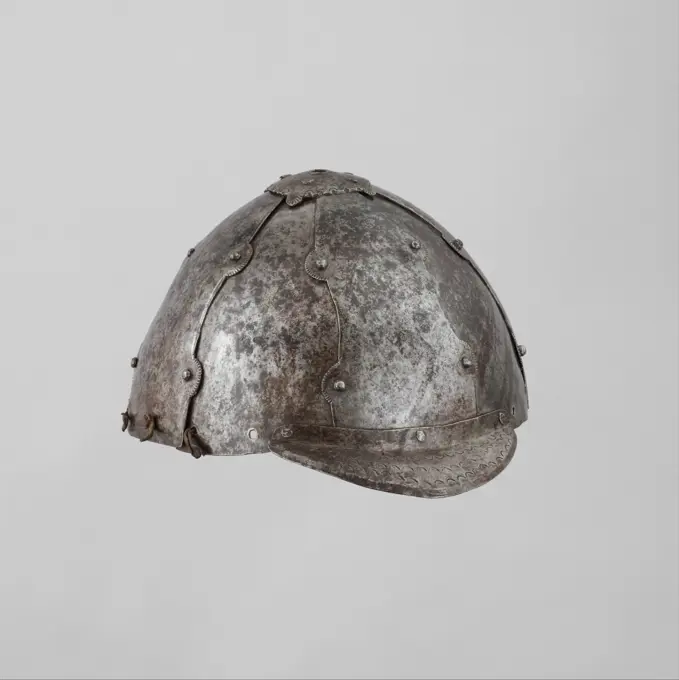
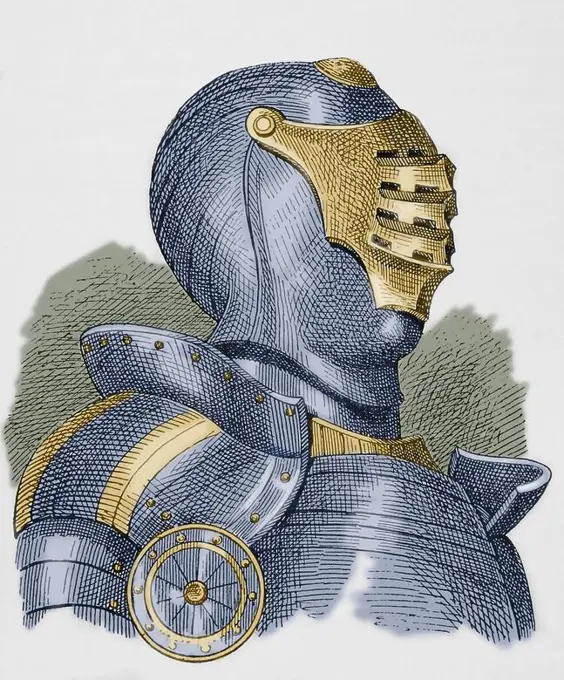
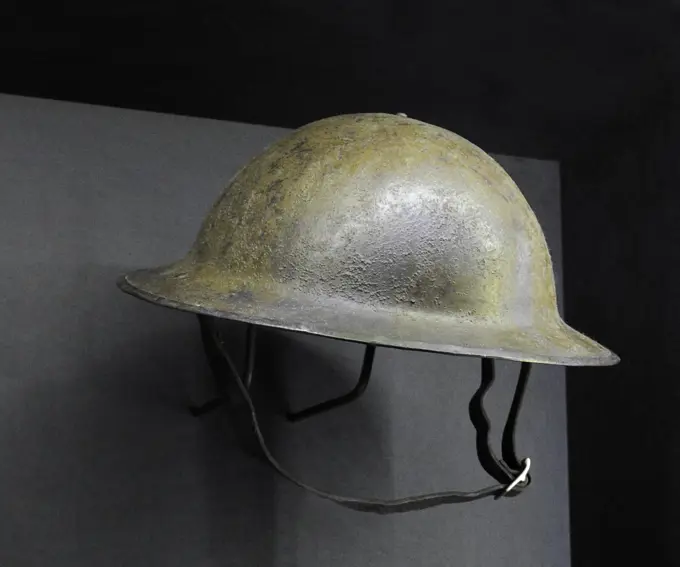
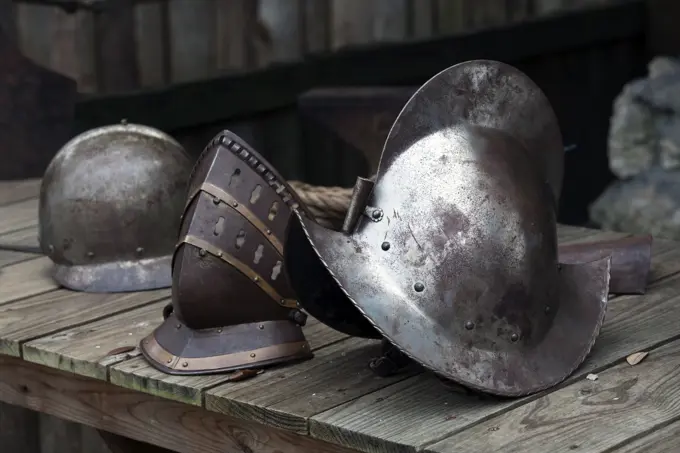
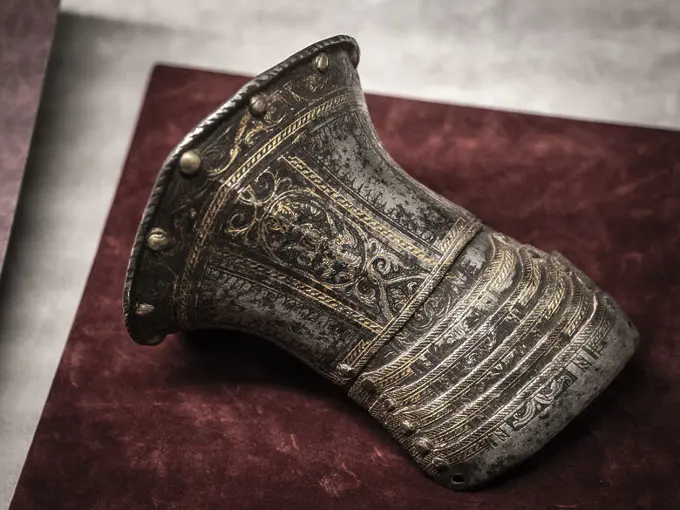
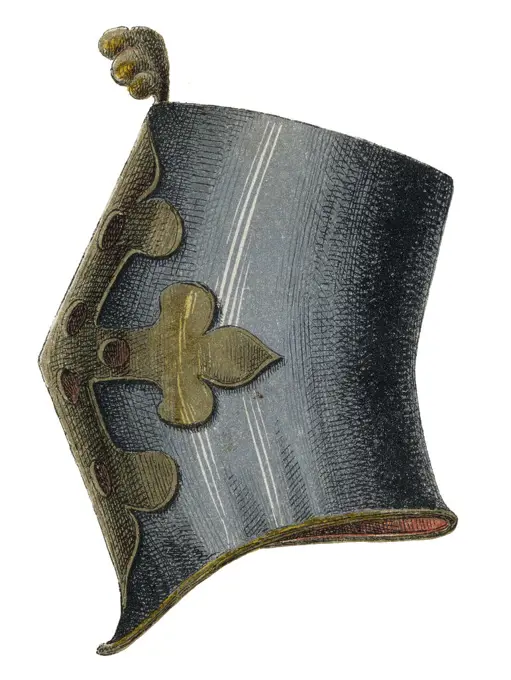
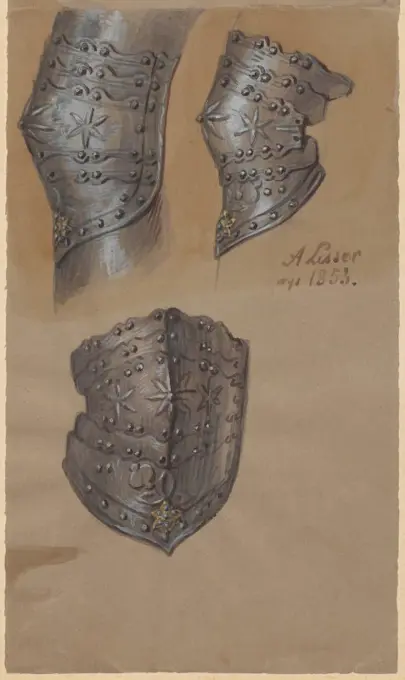
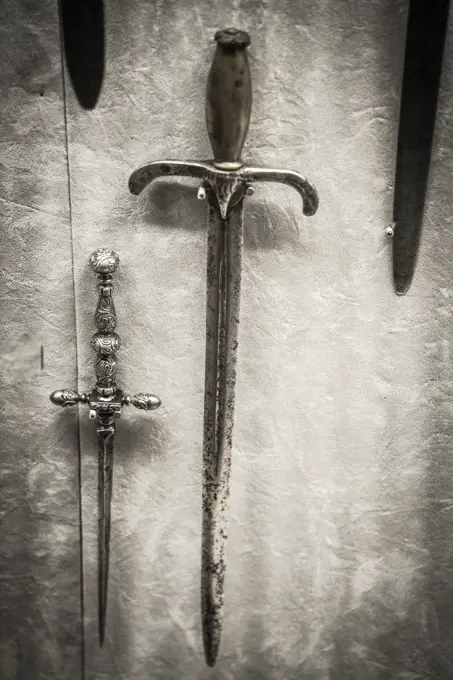
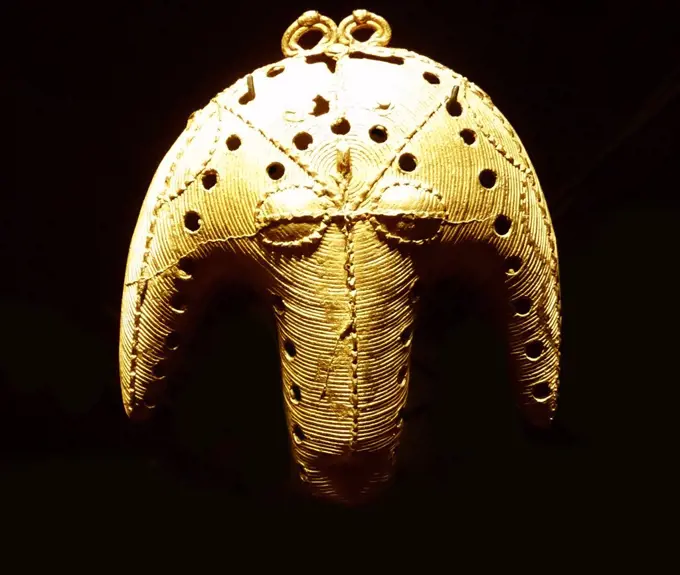
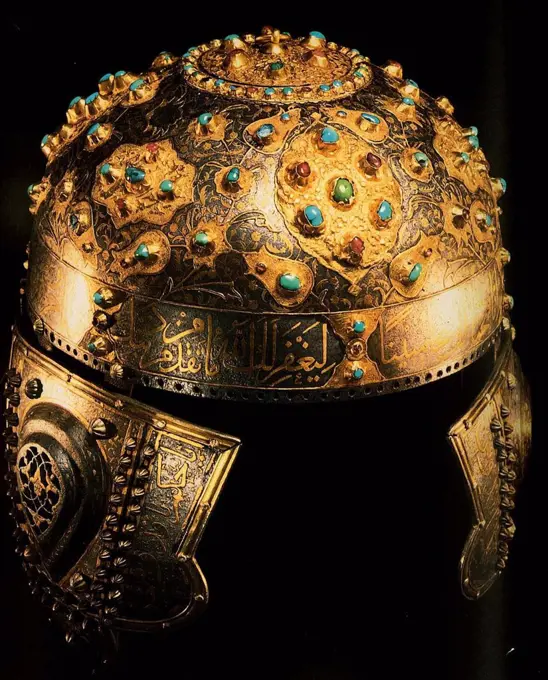
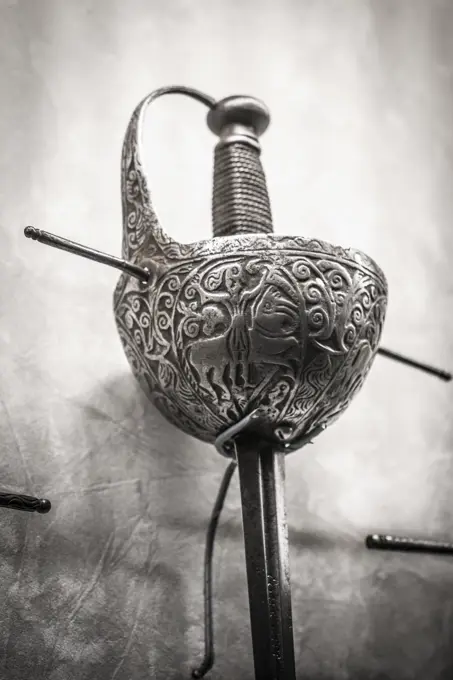
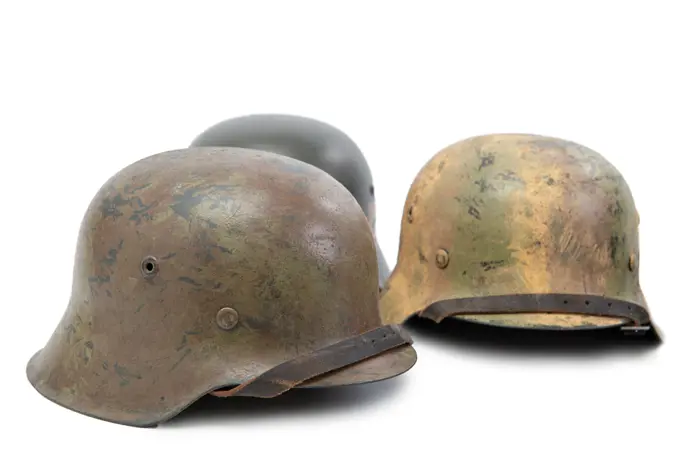
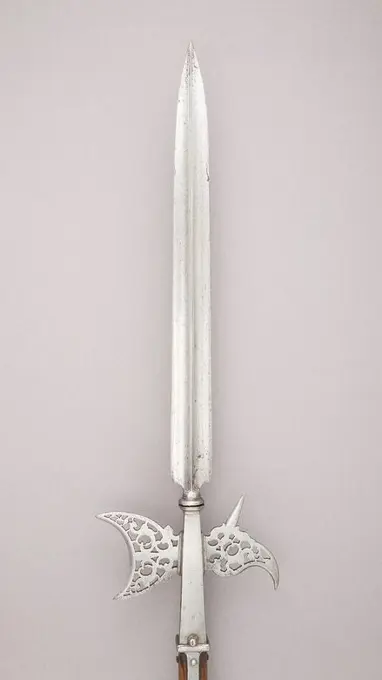
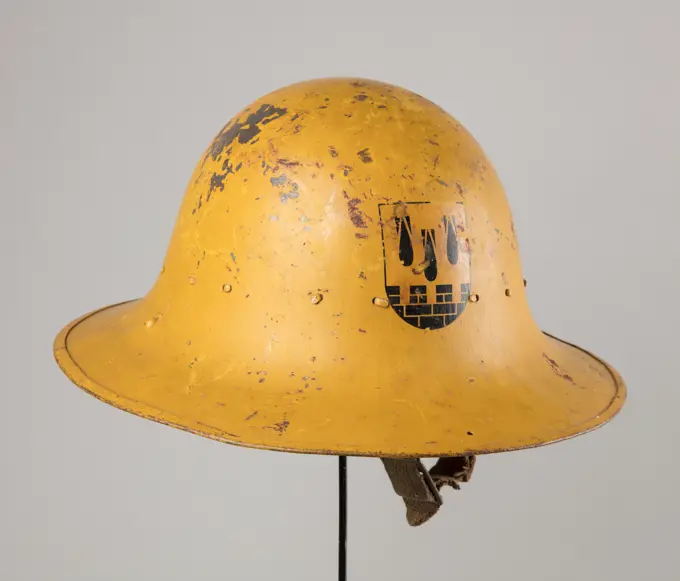
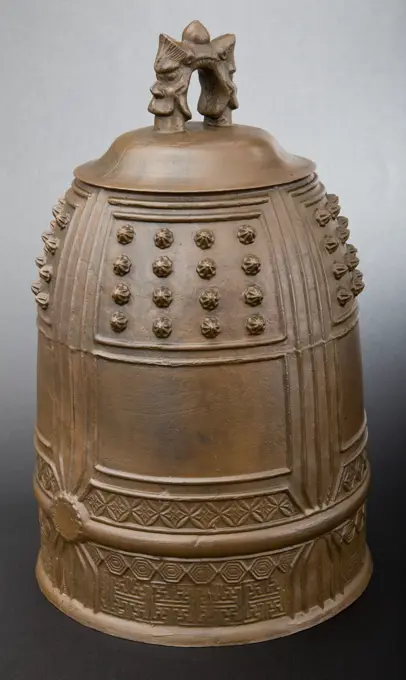
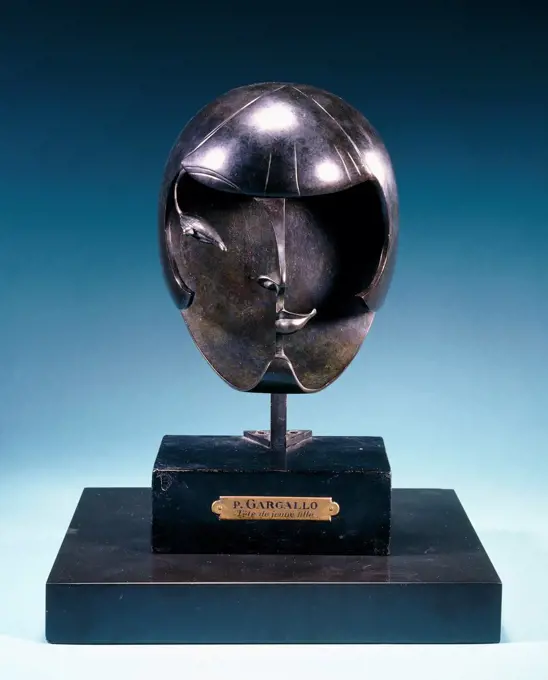
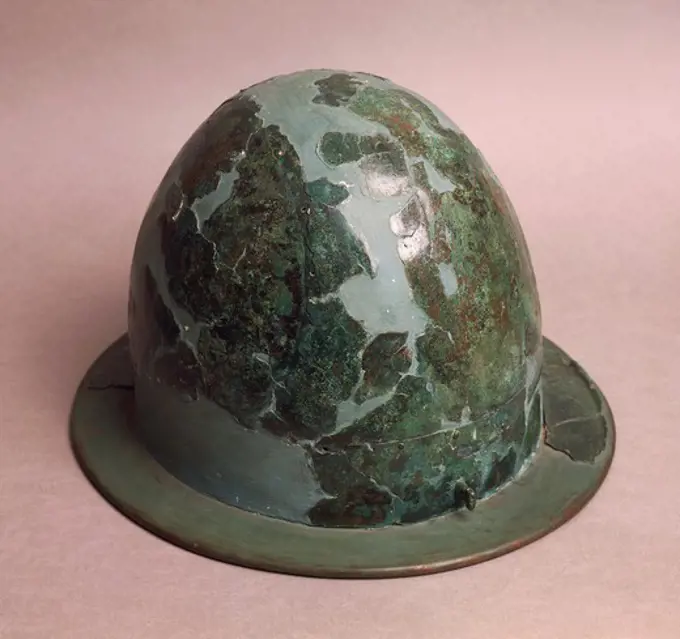
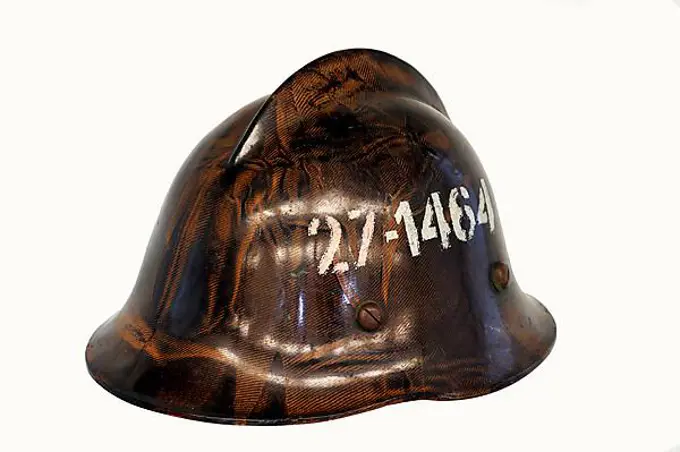
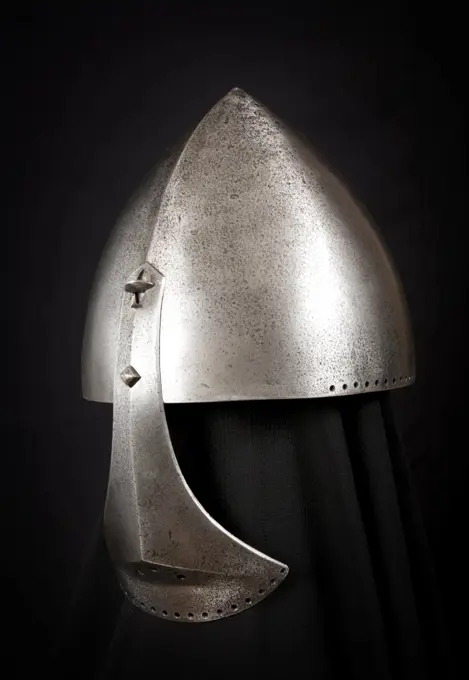
Iron helmet Iron helmet of the medieval knight. Very heavy headdress. Copyright: xZoonar.com/ValeryxxSibrikovx 6496760Shaffron (Horse's Head Defense) with arms of the Freyberg family ca. 1540 German, probably Landshut This shaffron is fitted with an escutcheon plate bearing the arms of the barons of Freyberg. It comes from the armory at Hohenaschau Castle in Bavaria, the seat of that noble family, and probably belonged to Pancraz von Freyberg (1508-1565), a courtier in the service of the dukes of Bavaria in nearby Munich. Although unmarked, the shaffron is comparable in form to documented examples made in Landshut, a famous Bavarian armor-making center.. Shaffron (Horse's Head Defense) with arms of the Freyberg family 27174Barbute with Nasal ca. 1450 Italian This is part of a large find of medieval armor discovered in 1840 in the ruins of the fortress of Chalcis, on the Greek island of Euboea (then a Venetian colony called Negroponte). The fortress had been captured and destroyed by the Turks in 1470. Now divided largely between the Ethnological Museum, Athens, and The Metropolitan Museum of Art, the Chalcis hoard contains many rare and unusual elements of fourteenth- and fifteenth-century armor. Of particular importance are the variety of headpieces and the many fragments of brigandines (armor for the torso constructed of small plates riveted to layers of fabric), some of which retain portions of their original velvet covering. The Chalcis armor provides a unique picture of the armament used in the Aegean, one of the easternmost military outposts of the Venetian empire.. Barbute with Nasal 23236Armour Armour of the medieval knight. Metal protection of the soldier against the weapon of the opponent Copyright: xZoonar.com/ValeryxxSibrikovx 2479209Armet à Rondelle, c. 1460-75. Italy, Milan, 15th century. Steel; overall: 28.6 x 32.4 x 20.3 cm (11 1/4 x 12 3/4 x 8 in.). The armet is a visored helmet with cheekpieces that fasten at the chin. The "rondelle" is the disc at the back of the neck. Its purpose was to protect the point where the two cheekpieces join at the back. This style of helmet was the typical headpiece of the fully armored equestrian knight throughout most of the 1400s.Visored Bascinet German ca. 1400Close Helmet for the Tourney late 16th century German, Augsburg The tourney was a mock combat fought in an open field between two groups of mounted contestants armed with blunted lances and swords. Armor for the tourny usually was similar to that used in battle, with the addition of specialized reinforcing plates. This helmet retains its original silk-covered padded lining and canvas straps for adjusting the lining to the head.. Close Helmet for the Tourney. German, Augsburg. late 16th century. Steel, brass, canvas, silk. Augsburg. HelmetsArmet. Culture: Italian. Dimensions: H. 10 in. (25.4 cm); W. 8 in. (20.3 cm); D. 10 15/16 in. (27.8 cm); Wt. 9 lb. 7 oz. (4288 g). Date: ca. 1430-40.In Italy from 1410 to 1510, the armet was the standard helmet for cavalry. This rare early example has flanges to protect the hinges of the cheekpieces and a staple at the front where a visor was secured. Museum: Metropolitan Museum of Art, New York, USA.Burgonet Made 1560-1590 Northern Italy. Steel .Breastplate. Spanish. Date: 1480-1520. Dimensions: Wt. 5 lb. 15 oz. Steel and leather. Origin: Italy. Museum: The Chicago Art Institute, Chicago, USA.Celtic helmet replica of a Celtic helmet - released on white background copyright: xzoonar.com/heikexbrauerx 1268218Iron helmet Iron helmet of the medieval knight. Very heavy headdress Copyright: xZoonar.com/ValeryxxSibrikovx 5718622Sallet ca. 1480 Attributed to Adrian Treytz the Elder Austrian The high-domed helmet bowl has a sharp central ridge; in front the eye slit is cut into the recess above the protruding rim; in back this rim is swept into a sharp point. Nine large star-shaped rivets and two small ones secure the lining of the helmet. An armorer's mark (shield with a horseshoe and a crescent) is stamped at the front of the helmet to the left and right of the central ridge.Sallets were one of the two basic types of helmets in use during the fifteenth century. They were less confining than the other type, the armet (see acc. no. 49.163.4), which enclosed the head completely, and for this reason they were preferred by light cavalrymen and even foot soldiers. When the man-at-arms was not in action, he wore his sallet pushed back, which left his face entirely free and allowed him better ventilation and easier breathing. The sallet worn in fighting position was pulled down over the face, with the fighter peeringBascinet German probably 19th century View more. Bascinet. German. probably 19th century. Steel, textile. ForgeriesCASCO CORINTIO HALLADO EN HUELVA EN 1930 - S VI AC ARTE GRIEGO-FENICIO. Location: ACADEMIA DE LA HISTORIA-COLECCION. MADRID. SPANIEN.CASCO DE LA ARMADURA A49 - SIGLO XVI. Location: PALACIO REAL-REAL ARMERIA DE MADRID. MADRID. SPAIN.Dagger (Katar). Culture: Indian. Dimensions: L. 7 3/4 in. (19.7 cm); W. 3 1/4 in. (8.3 cm); Wt. 7.7 oz. (218.3 g). Date: 18th century. Museum: Metropolitan Museum of Art, New York, USA.Iron helmet of the medieval knight. Very heavy headdressArmour Armour of the medieval knight. Metal protection of the soldier against the weapon of the opponent Copyright: xZoonar.com/ValeryxxSibrikovx 2494280Iron helmet Iron helmet of the medieval knight. Very heavy headdress Copyright: xZoonar.com/ValeryxxSibrikovx 2454181Burgonet mid-16th century Italian. Burgonet 26544Poll Plate of a Shaffron 1540-1560 Italy. Steel .Fingered Gauntlet for the Left Hand. Northern Italian. Date: 1550-1570. Dimensions: L. 29.9 cm (11 3/4 in.). Steel, leather, and brass. Origin: Northern Italy. Museum: The Chicago Art Institute, Chicago, USA.Shaffron (Horse's Head Defense) 16th century German. Shaffron (Horse's Head Defense) 34860Breastplate ca. 1500-10 German This simple but well-made breastplate for infantry use is remarkable for the technique of its ornamentation, the main plate being recessed, or sunken, rather than embossed with a design, and for the nature of the ornament, a large star that may be a pious reference to the star of Bethlehem, or perhaps a heraldic reference to the coat of arms of a family or city. The contours of the star are emphasized by engraved lines. No breastplate with a comparable decoration is known.The breastplate comprises a thick main plate, a moveable gusset plate at each armhole, and a fauld of four lames. Beneath the neck opening the upper plate is struck with a much abraded and now indistinct mark, which may have originally represented the letter "p" in Gothic script. The main plate is flanged outward and turned inward along the upper edge, to guard the neck. It flares outward along the lower edge to accommodate the fauld. The gusset plates are each flanged outward and turnedSallet ca. 1490 German, Nuremberg The wide, flat comb suggests that this sallet is a late example dating to the end of the fifteenth century. The visor has been modified or may be associated. The tail is unusually long and spatulate and is struck with two marks: that of the city of Nuremberg and an armorer's mark in the shape of a horseshoe enclosing a letter, possibly that of Hans Grünewalt (ca. 1440-1503).. Sallet. German, Nuremberg. ca. 1490. Steel, leather. Nuremberg. HelmetsArmour. Modern Age. Europe. 16th century. Detail. Helmet. Museum Metropolitan of Art. New York. USA.Reinforcing Breastplate, Shoulder Defense, and Buffe (Chin Defense) ca. 1550 to 1575 Italian These reinforcing pieces are part of an unusually large armor garniture (acc. no. 27.159.1) from the armory of the Dos Aguas family in Valencia, Spain. The garniture contains pieces for use in battle and for the tilt in both the Italian and German fashions. The tilt was a tournament fought on horseback between two opponents armed with lances and separated by a lengthwise barrier.The armor as mounted is equipped with a helmet and vambraces (arm defenses) for the tournament. The buffe (chin defense), second breastplate (27.159.2), and manifer (reinforced left gauntlet) (27.159.6) would have been added to make the armor ready for exchange pieces for different forms of the tournament. For the German tilt, the trellised targe (shield) (27.159.7), small elbow defense (27.159.5), and small stomach defense (27.159.3) were added. For the Italian tilt, these elements were replaced by the form-fitting reiTriple-Crested Burgonet, c. 1560-70. Germany, Augsburg (), 16th century. Steel, leather bands; overall: 28 x 30.2 x 21.3 cm (11 x 11 7/8 x 8 3/8 in.). Popular throughout the 1500s and 1600s, the burgonet was a light, open headpiece favored by cavalry and infantry alike. Its main features are a peak over the eyes and hinged cheekpieces that fasten with a strap or lace under the chin. The basic helmet lent itself to variations of design or ornamentation. This version, with its triple crests, is known to have been produced in Augsburg. The style was worn by the bodyguard of Emperor Charles V (ruled 1519-56).Close Helmet. German. Date: 1500-1520. Dimensions: H. 24.1 cm (9 1/2 in.). Steel. Origin: Germany. Museum: The Chicago Art Institute, Chicago, USA.Helmet, Breastplate, and Backplate ca. 1575 Signed on the backplate by D. G. V. Lochorst Flemish Although inspired by French examples, the ornament of this armor is distinctly Flemish. This is the only recorded work by Lochorst, possibly a goldsmith rather than an armorer, whose signature is found on the backplate.. Helmet, Breastplate, and Backplate. Flemish, possibly Antwerp. ca. 1575. Steel, leather, textile (velvet, wool). Antwerp, Antwerpen. Armor for ManBoy's Fingered Gauntlet for the Left Hand. German, possibly Brunswick. Date: 1550-1590. Dimensions: L. 27.9 cm (11 in.). Steel. Origin: Brunswick. Museum: The Chicago Art Institute, Chicago, USA.Germany, Bavaria, Munich, Glyptothek and State Collections of Antiquities Museum, Exhibit of Bronze Helmet from CorinthAdarga (Shield) 1400-1500 Spain. Iron .Helmet. Culture: probably Caucasian or Russian. Dimensions: H. 9 3/4 in. (24.8 cm); Diam. 8 5/8 in. (21.9 cm); Wt. 39.7 oz. (1125.5 g). Date: 17th century. Museum: Metropolitan Museum of Art, New York, USA.Breastplate, mid-1500s. Germany, Landshut, mid-16th century. Steel; overall: 39.4 x 35.8 x 17.5 cm (15 1/2 x 14 1/8 x 6 7/8 in.).Morion pearKettle hat. Soldiers storming town walls and castles wore a kettle hat, a type of helmet that protected the head and the shoulders from projectiles and hot tar that the enemy used to thwart the attackers. The helmet is wrought from a single sheet of iron and lined inside with leather. It was found in the River Rhine in the Netherlands.Rapier German, Saxony ca. 1580-1600 The rapier was the principal civilian sidearm throughout the sixteenth and seventeenth centuries. Designed for cut-and-thrust fencing of progressively complex techniques, the rapier is characterized by a double-edged blade with an acute point and an elaborate guard for the hand. The guards, usually of iron or steel, were subject to a variety of embellishment. They were engraved, chiseled, gilded, damascened, and encrusted in gold and silver in keeping with fashionable styles. Unless otherwise noted, the materials, attributions, and dating given here refer to the hilts. Rapier blades, invariably of steel, bear a variety of makers marks denoting their origin in the two principal centers of blademaking, Toledo in Spain and Solingen in Germany. View more. Rapier. German, Saxony. ca. 1580-1600. Steel, copper wire, wood. Saxony. SwordsMorion-Cabasset ca. 1575 Italian. Morion-Cabasset 34265Electrotype Reproduction of a 16th Century Italian Helmet 19th century British. Electrotype Reproduction of a 16th Century Italian Helmet 24997Cup-Hilted Rapier French ca. 1643 The rapier was the principal civilian sidearm throughout the sixteenth and seventeenth centuries. Designed for cut-and-thrust fencing of progressively complex techniques, the rapier is characterized by a double-edged blade with an acute point and an elaborate guard for the hand. The guards, usually of iron or steel, were subject to a variety of embellishment. They were engraved, chiseled, gilded, damascened, and encrusted in gold and silver in keeping with fashionable styles. Unless otherwise noted, the materials, attributions, and dating given here refer to the hilts. Rapier blades, invariably of steel, bear a variety of makers marks denoting their origin in the two principal centers of blademaking, Toledo in Spain and Solingen in Germany. View more. Cup-Hilted Rapier. French. ca. 1643. Steel, brass. SwordsClose-Helmet of Vicenzo I Gonzaga (1562-1612), Duke of Mantua ca. 1587 Italian, Milan Although incomplete--the face defense and collar lames are missing--this helmet is nevertheless an outstanding example of late-sixteenth-century Milanese armor. Its rich decoration, which is chiseled, punched, and damascened in gold and silver, includes eagles, crowns, and a monogram comprising the letters V and F (or VFL). An armor with identical decoration appears in a portrait of Vincenzo I Gonzaga (1562-1612), duke of Mantua (Palazzo Ducale, Mantua), thought to have been painted about 1587, the year of his accession. Other portions of this armor, which appears to have been a large garniture intended for field, mounted tournament, and foot combat at the barriers, are preserved in the Musée de l'Armée, Paris, and the Armeria Reale, Turin.. Close-Helmet of Vicenzo I Gonzaga (1562-1612), Duke of Mantua 26435Lazio Frosinone Veroli S. Andrea Apostolo, Cathedral5. Hutzel, Max 1960-1990 Views of metalwork objects housed in Treasury of S. Andrea Apostolo, including busts, reliquaries, crosses, polittico, boxes. Antiquities: relief sculpture; busts General Notes: Museum, which contains Treasury, is located in the last chapel of the right nave. Thirteen views of (non-metalwork) sculpture from Museum have been assigned numbers at end of Treasury sequence, but there are no negatives corresponding to these prints, nor is there authoritative evidence that these objects are housed in the Cathedral Museum. German-born photographer and scholar Max Hutzel (1911-1988) photographed in Italy from the early 1960s until his death. The result of this project, referred to by Hutzel as Foto Arte Minore, is thorough documentation of art historical development in Italy up to the 18th century, including objects of the Etruscans and the Romans, as well as early Medieval, Romanesque, Gothic, Renaissance and Baroque Runka. Culture: Italian. Dimensions: L. 96 3/4 in. (245.7 cm); L. of head 25 1/8 in. (63.8 cm); W. 7 1/4 in. (18.4 cm); Wt. 4 lbs. 0.3 oz. (1822.9 g). Date: ca. 1530. Museum: Metropolitan Museum of Art, New York, USA.smart dagger smart dagger of the medieval soldier. It was used for hunting Copyright: xZoonar.com/ValeryxxSibrikovx 6670506Partisan 17th century French. Partisan 26686Half Mask (Ho-ate) with Neck Guard dated January 1730 Signed by Mychin Munetomo Japanese Masks have long played an important role in Japanese culture: in religious ceremonies, dance, Noh theater, and military costume. For samurai, masks served as a principal face defense and helped secure the helmet to the head more firmly.The majority of masks were half-length (mempo), covering the nose and the face below the eyes. Their iron surfaces are either lacquered or a dark russet finish; the interiors are usually lacquered red. In addition to half masks, the Metropolitan Museum's collection is unusual in possessing numerous full masks (somen). The majority date from the peaceful Edo period. During that time, armorers like the Mychin clan took pride in making ever more varied masks as a demonstration of their creativity and their famous metalworking skills.. Half Mask (Ho-ate) with Neck Guard. Japanese. dated January 1730. Iron, lacquer, textile (silk). Armor Parts-MasksBreastplate of iron kuras, anonymous, c. 1600 - c. 1699  Breastplate, iron, black painted, made of two plates, wandering the arm and neck cuts, two copper rotating hooks and copper buttons for the attachment of the shoulder straps at the height of the arm cuts. Two pins on either side of the neck cut. Straight middle bone, at the bottom with a small bulge. In the center of the breastplate a copper star surrounded by copper rivets. Parallel walking on the surrounding border copper rivets and double decorative lines. The stomach is sounded on the breastplate and has four pierced eyes to attach the thighing boards. Parallel walking on the upper edge of the abdominal copper rivets. Double decorative lines above and below the rivets. At the bottom of the abdominal demand four round holes. Inside of the breastplate is painted black. Netherlands Breastplate: Iron (metal). Klinknagels: Copper (Metal)Saber of sappers of the Young French Guard Klingenthal Coulaux Freers ManufactureBronze helmet of the Southern Italic Chalcidian type. Early 4th cent. BC. Gaudo tomb, 164. Archaeological Museum of Paestum, Italy.Knife (Barong) with Sheath 18th-19th century Philippine, Sulu. Knife (Barong) with Sheath 31674Breastplate. Culture: German or Austrian. Dimensions: H. 21 1/2 in. (54.6 cm); W. 18 in. (45.7 cm); D. 8 in. (20.3 cm). Date: ca. 1475-85. Museum: Metropolitan Museum of Art, New York, USA.Demi Shaffron Made 1590-1600 Milan. Steel and leather .State of Qatar, Doha. Museum of Islamic Art. Exhibit of knight on horse with full armor. Leg and stirrup view. (Editorial Use Only)Parrying Dagger Made 1580-1610 Dresden. Steel and wood .Rapier and Scabbard. Probably Flemish. Date: 1625-1645. Dimensions: Overall L. 120.5 cm (47 7/16 in.)Blade L. 103.5 cm (40 3/4 in.)Wt. 2 lb. 5 oz. Steel, iron, copper, textile, leather, and wood. Origin: Flanders. Museum: The Chicago Art Institute, Chicago, USA. Author: ANTONIO PICCININO.Back plate of half harness. Back plate, iron, blank, the arm and neck cuts as well as the bottom edge of the lumbar strip around. On both of the neck cutting two free wide designed leather belts that can be attached to the breastplate, at the bottom, directly above the lumbar collar shock and middle belt mocked. On the right under a crossed button, a crashed eye on the left side. Under the neck cutting is 8 109. Inside is black-dyed.Armour worn at the funeral of Michiel de Ruyter, anonymous, 1600 - 1625  Ruiter harnas, composed of parts that originally did not belong together. The various parts are connected to each other with leather straps. The entire armor is gushed. A: smooth breastpiece with lance holder B: smooth backpiece C + D: two full arm pieces E + F: Two articulated tassets G: Dersenic back piece H: Closed sight helmet GreenwichNetherlands iron (metal). leather forging / striking (metalworking)  AmsterdamStylized Figure Pendant 10th-16th century () Darien. Stylized Figure Pendant 309957Swiss helmet pattern 1918 unknown labelSwiss Saber (Schweizersäbel) early 16th century Swiss The Swiss saber is distinguished by a very long, curved, and relatively thin blade, and a hilt fitted with a grip that is long enough to allow the weapon to be wielded with one hand or two. It was used in Switzerland from about the 1520s until the early seventeenth century. Often, from about the mid-sixteenth century onward, the pommel has the form of a lions head.. Swiss Saber (Schweizersäbel). Swiss. early 16th century. Steel, wood, leather. SwordsField Armor of King Henry VIII of England (reigned 1509-47) ca. 1544 Italian, Milan or Brescia This impressive armor was made for Henry VIII (reigned 1509-47) toward the end of his life, when he was overweight and crippled with gout. Constructed for use both on horse and on foot, it was probably worn by the king during his last military campaign, the siege of Boulogne in 1544, which he commanded personally in spite of his infirmities. Originally, the harness was fitted with a detachable reinforcing breastplate, to which a lance-rest was attached, and a reinforce for the left pauldron (shoulder defense). A pair of exchange vambraces (arm defenses) remains in the Royal Collection at Windsor Castle.The armor is described in the postmortem inventory of the kings possessions, drawn up in 1547, as “of italion makinge.” Possibly, it was supplied by a Milanese merchant known in England as Francis Albert, who was licensed by Henry to import luxury goods, including armor, into England for sale.Iron helmet Iron helmet of the medieval knight. Very heavy headdress Copyright: xZoonar.com/ValeryxxSibrikovx 2460661Mitten Gauntlet for the Right Hand. Flemish. Date: 1510-1540. Dimensions: L. 29.2 cm (11 1/2 in.). Steel, textile, and leather. Origin: Flanders. Museum: The Chicago Art Institute, Chicago, USA.Siege Helmet. Probably Italian. Date: 1610-1620. Dimensions: H. 22.9 cm (9 in.). Steel. Origin: Italy. Museum: The Chicago Art Institute, Chicago, USA.Helmet of Eight Plates in the Korean Style possibly 14th-16th century Korean or Mongolian. Helmet of Eight Plates in the Korean Style 26606Armet-à-Rondelle 1850 Polish. Armet-à-Rondelle 34034CASCO DE ACERO DE ORIGEN PORTUGUES. Location: EXPOSICION DE LA GUERRA CIVIL ESPAÑOLA. MADRID. SPAIN.Medieval Knight's helmet with visor. Engraving. Museo Militar, 1883. Later colouration.Sale of armour, Spectaculum Hamburg GermanyViking helmet on whiteOne dagger and two axes isolated on whiteIron helmet Iron helmet of the medieval knight. Very heavy headdress Copyright: xZoonar.com/ValeryxxSibrikovx 2460635First World War (1914-1918). British army Brodie helmet, model 1915. Latvian War Museum. Riga. USA, Florida, Bradenton, Hernando DeSoto National Memorial, site of old Spanish settlement, Conquistador armorblued mitten, 16th century, Álava Armory Museum, Vitoria, Basque Country, Spain.Historia. Siglo XIII. Yelmo, elemento de la armadura que protege la cabeza y el rostro del guerrero.Armour fragments (`knee plate`) from the collection of the armoury of the Krasińscy count family in Warsaw. Lesser, Aleksander (1814-1884), draughtsman, cartoonistSpanish dagger and italian stiletto, 17th century,  , Álava Armory Museum, Vitoria, Basque Country, SpainKnight's armour in Gediminas Castle, Vilnius, Lithuania, Vilnius, Lithuania, EuropeBegging figure on two crutches, Simon Troger (School of), After 1693 - Before 1768 Beggar on two crutches.  ivory Beggar on two crutches.  ivoryKarura (Garuda); miniature of the mask for gigaku. unknown, craftsmanJewels and pendant from the Akan Culture. The Akan Culture includes the Asante and Fante people in Ghana or Baule, Agni and Lagoon in Ivory Coast.medieval swords medieval swords of copyright: xzoonar.com/antjexlinder- rottkex 4790650Ornate helmet by Turkish master, gold, enamel, gems, 6th century, Russia, Moscow, State Armory Chamber in the Kremlin, D 19Helemtsword with cup handle, Solingen-Germany, 17th century, Álava Armory Museum, Vitoria, Basque Country, SpainHelmets with visor, Pallavicino Castlethree German World War Two (Stahlhelm) military helmets isolated on white backgroundHalberd. Culture: Italian. Dimensions: L. 90 in. (228.6 cm); L. of head 25 3/16 in. (64 cm); W. 7 7/8 in. (20 cm); Wt. 5 lbs. 12.1 oz. (2611 g). Date: 16th century. Museum: Metropolitan Museum of Art, New York, USA.Norwegian helmet of civil defense unknown labelArmor for Man and Horse with Horse Trappings ca. 1515 and later German. Armor for Man and Horse with Horse Trappings. German. ca. 1515 and later. Steel, wood, leather, velvet, brass, feathers (peacock). Armor for Horse and ManRoman or Greek warrior helmet, isolated equipment for soldier or Spartan in Ancient times. Construction or sculpture, mask of steel or metal, protective covering for man. Vector in flat style. Ancient warrior helmet, Roman or Greek vectorBell with decorative tumors unknownClose-up of a tea strainer on dry tea leavesMask of Kiki de Montparnasse; Masque de Kiki de Montparnasse. Pablo Gargallo (1881-1934). Bronze with brown patina. Dated 1928. Height 20.5cm.Life-size figure of King Arthur, Knight of the Round Table, in front of the Merlin Gifts & Confectionery shop, Fore Street, Tintagel, Cornwall, England, United Kingdom, EuropePrehistory, Italy, Iron Age. Golasecca culture. Helmet from the tomb of the warrior at Sesto Calende, province of Varese.Polish firefighter's helmet made of the synthetic resin bonded paper Pertinax, in use from 1960-1975, "Feuer und Flamme - Die Feuerwehr von 1850 bis heute", an exhibition of 150 years of Lauf Fire Department, Lauf Industrial Museum, Lauf an der Pegnitz, Middle Franconia, Bavaria, Germany, Europe