Medieval Church Frescoes

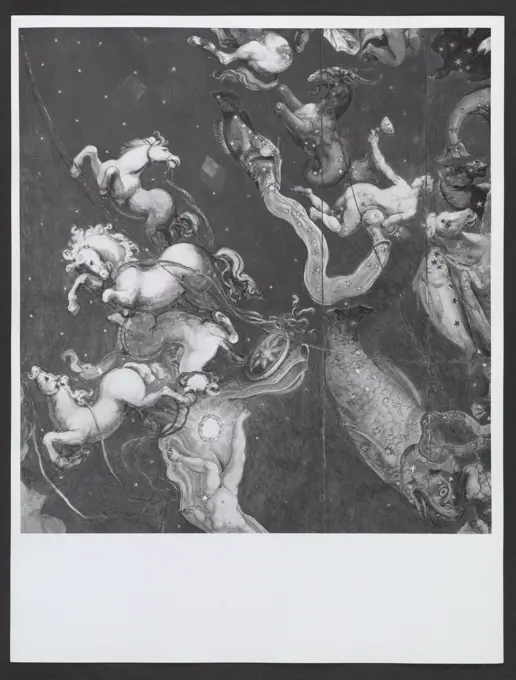
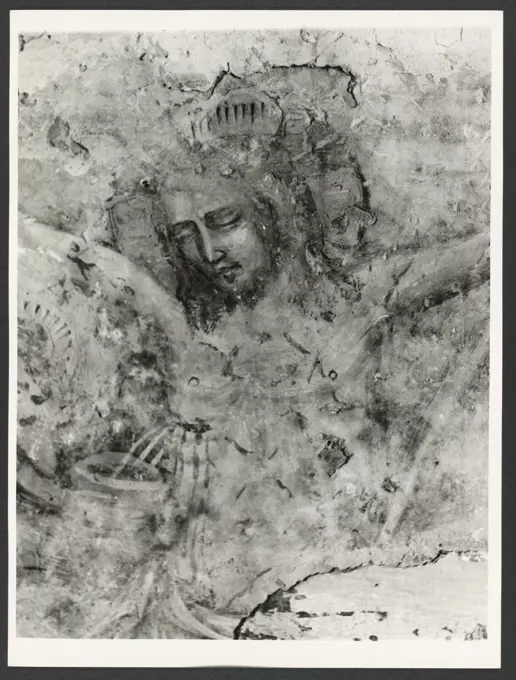
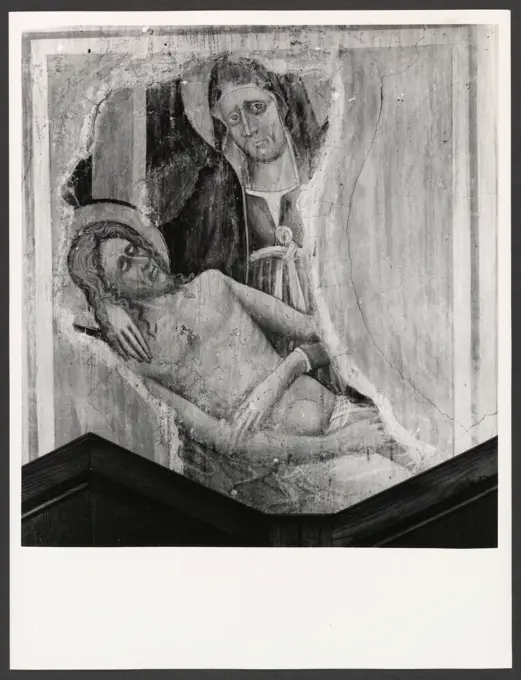
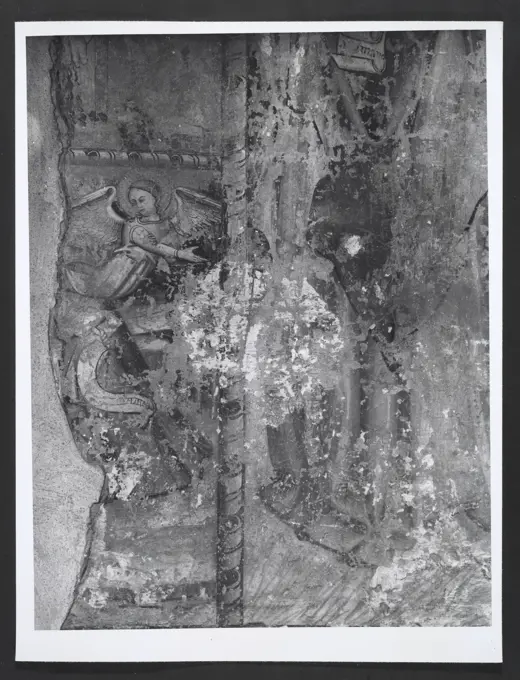
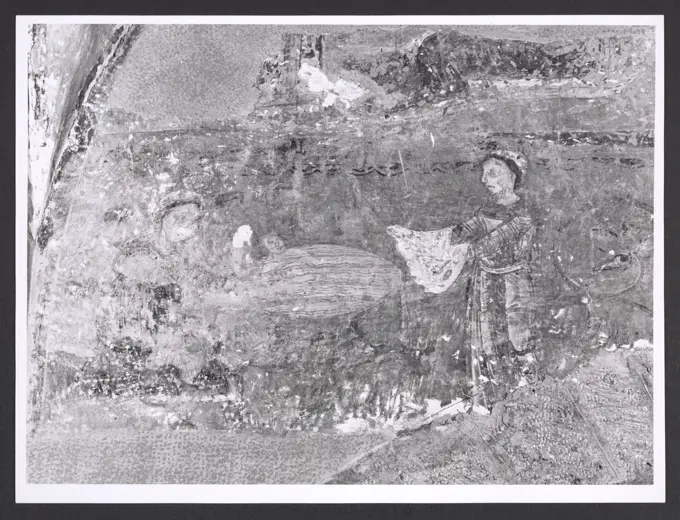
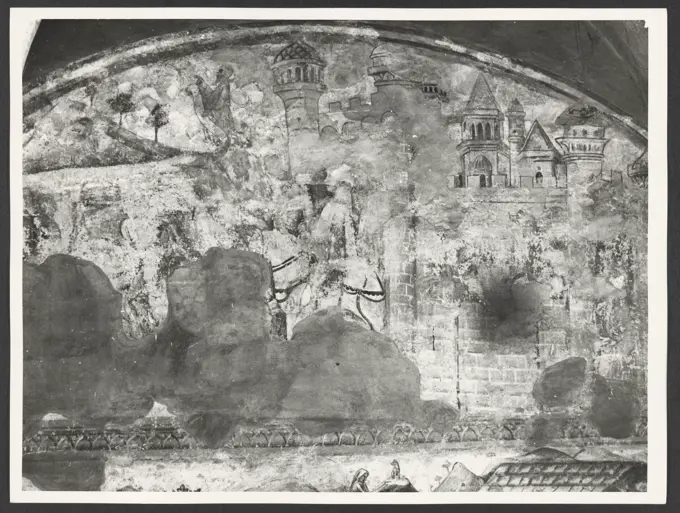
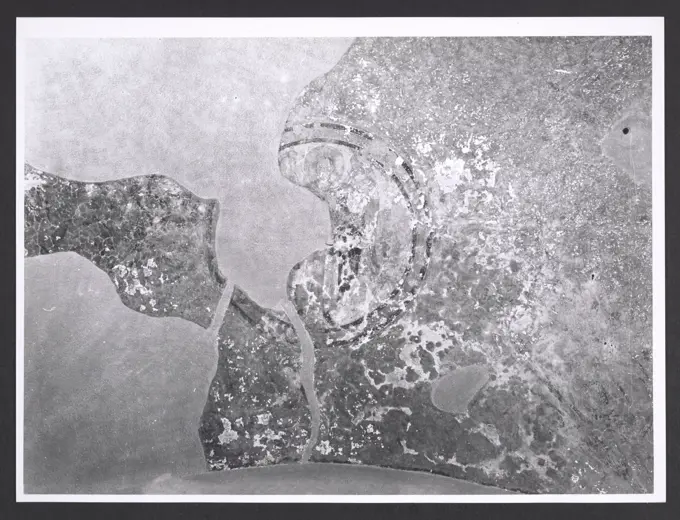
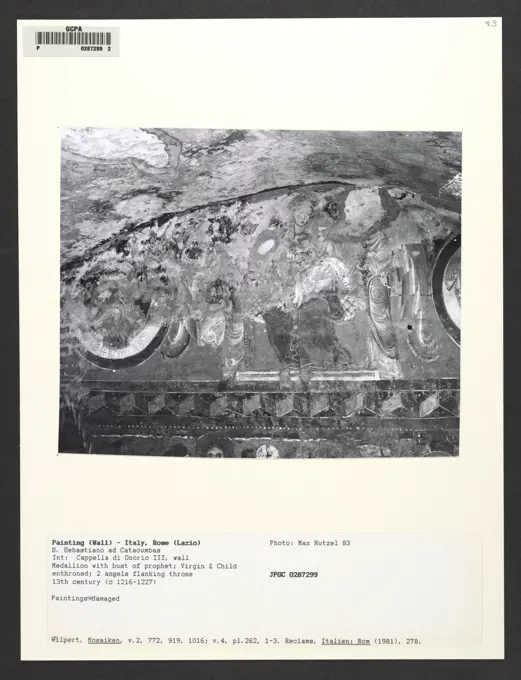
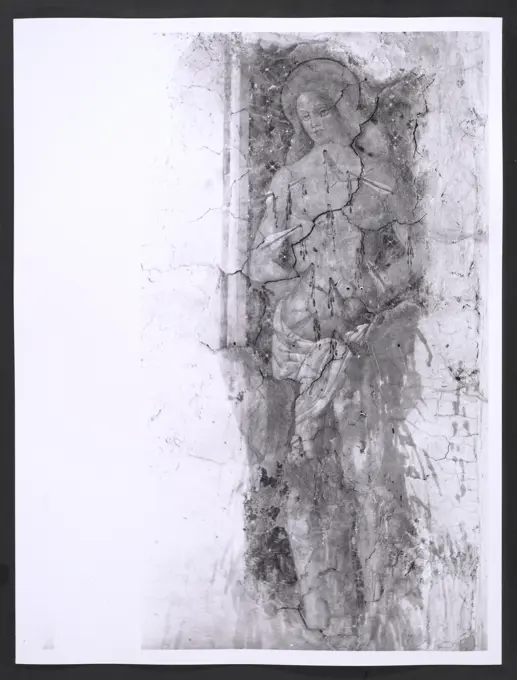
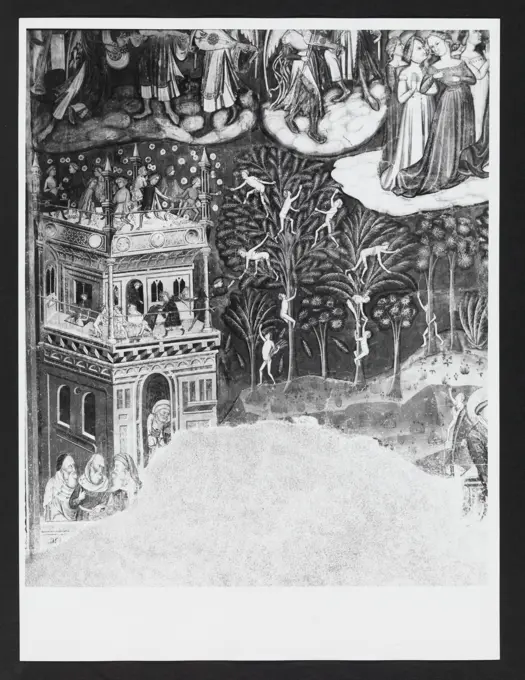
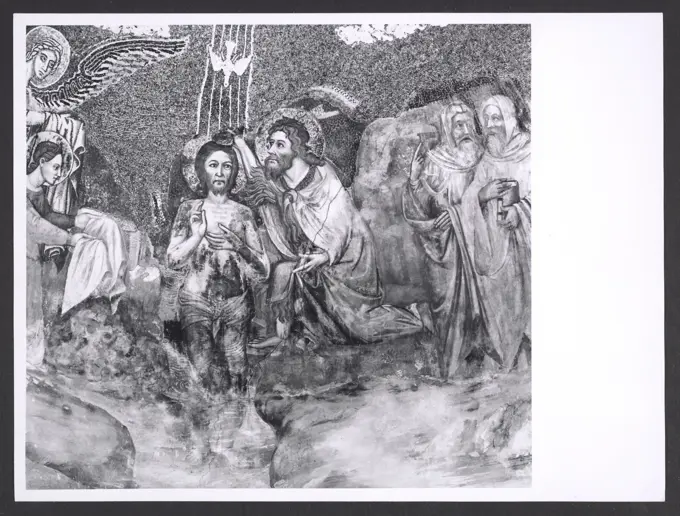
Historical monochrome photographs capturing fragments of medieval frescoes in various churches, showcasing a blend of architectural elements and religious themes.

Lazio Viterbo Montefiascone S. Flaviano5. Hutzel, Max 1960-1990 Exterior views of the 13th century romanesque church built on top of an older structure: the three gothic arches of the facade are surmounted by a loggia (c. 1500), and a small bell-tower on the left. General views of the two-story interior show the three naves, main altar, frescoes and an architectural structure--vaulting and columns--that date from different periods. Included in the Medieval core collection are details of capitals (11th century), the tombstone of Giovanni Fugger (Defuk or Johannes De Fuk), and 14th century frescoes. All prints in the Hutzel collection are details of frescoes (14th and 15th centuries), including: the Saint Nicholas cycle; various Crucifixions; the Madonna Enthroned; the Annunciation; the Nativity; Pope Urbanus IV; Saints Catherine of Alexandria, Scholastica, Paul, Peter, Bernard, Lucy, Flaviano and others; and the archangel Michael. Antiquities: In the Medieval core collection are views o
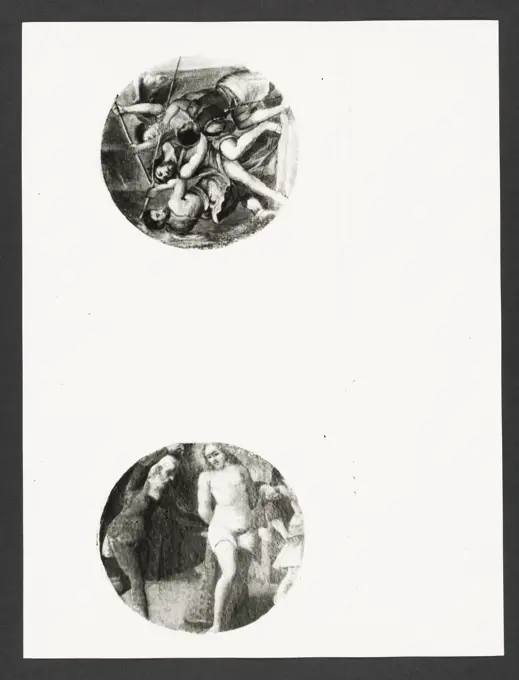
Lazio Rieti Borgo Velino S. Maria extra moenia5. Hutzel, Max 1960-1990 Medieval: Architecture and architectural sculpture (5th-12th centuries). Post-medieval: Frescos (15th century) Antiquities: Pavement with Roman inscription German-born photographer and scholar Max Hutzel (1911-1988) photographed in Italy from the early 1960s until his death. The result of this project, referred to by Hutzel as Foto Arte Minore, is thorough documentation of art historical development in Italy up to the 18th century, including objects of the Etruscans and the Romans, as well as early Medieval, Romanesque, Gothic, Renaissance and Baroque monuments. Images are organized by geographic region in Italy, then by province, city, site complex and monument.Lazio Viterbo Caprarola Palazzo Farnese79. Hutzel, Max 1960-1990 German-born photographer and scholar Max Hutzel (1911-1988) photographed in Italy from the early 1960s until his death. The result of this project, referred to by Hutzel as Foto Arte Minore, is thorough documentation of art historical development in Italy up to the 18th century, including objects of the Etruscans and the Romans, as well as early Medieval, Romanesque, Gothic, Renaissance and Baroque monuments. Images are organized by geographic region in Italy, then by province, city, site complex and monument.Umbria Perugia Limigiano S. Michele. Hutzel, Max 1960-1990 Exterior views of romanesque church and cloister, with details of west facade reliefs and double-window. Interior views of the kitchen and refectory. Interior views of the church focus on frescoes: the Martyrdom of St. Sebastian, Madonna and Child, Crucifixion, Saint Michael. Also, a view of a 15th century bapitsmal font and painting of the Madonna and Child with Saint John the Baptist. German-born photographer and scholar Max Hutzel (1911-1988) photographed in Italy from the early 1960s until his death. The result of this project, referred to by Hutzel as Foto Arte Minore, is thorough documentation of art historical development in Italy up to the 18th century, including objects of the Etruscans and the Romans, as well as early Medieval, Romanesque, Gothic, Renaissance and Baroque monuments. Images are organized by geographic region in Italy, then by province, city, site complex and monument.Tuscany Siena Montalcino (environs) Abbey of S. Antimo Abbey church15. Hutzel, Max 1960-1990 Medieval: Architecture, architectural sculpture (9th century, 1118, c. 1250), wooden crucifix, painting, frescoes. Post-medieval: Fresco depicting the Resurrection Object Notes: Two photocampaigns were made of this site, one of which occurred in 1983. Hutzel's notes document only the 1983 campaign; these prints are all found in the Medieval core collection. General Notes: When these photos were sent, mislabelling of prints and negatives had occurred. Intermingling with prints and negatives of S. Agostino may have occurred. Please note that negative sleeves have been labeled Abbazia di S. Antimo. German-born photographer and scholar Max Hutzel (1911-1988) photographed in Italy from the early 1960s until his death. The result of this project, referred to by Hutzel as Foto Arte Minore, is thorough documentation of art historical development in Italy up to the 18th century, including objects of theLazio Viterbo Castel Sant'Elia S. Elia16. Hutzel, Max 1960-1990 Exterior photos of views, the facade, the portal and many architeectural details. Interior views of nave, with its carved pulpit with details and its ciborium/baldacchino with details. There are many photos of Byzantine, Romanesque and early Renaissance style paintings. Sculpturally, there are photos of capitals, architectural details and inscriptions. Object Notes: Hutzel photo campaign notes: September 9, 1983 German-born photographer and scholar Max Hutzel (1911-1988) photographed in Italy from the early 1960s until his death. The result of this project, referred to by Hutzel as Foto Arte Minore, is thorough documentation of art historical development in Italy up to the 18th century, including objects of the Etruscans and the Romans, as well as early Medieval, Romanesque, Gothic, Renaissance and Baroque monuments. Images are organized by geographic region in Italy, then by province, city, site complex and monument.Lazio Roma Subiaco S. Francesco4. Hutzel, Max 1960-1990 Exterior views of 14th c. church portals, facade and cloister. Interior views of simple francescan nave, altars, chapels, and refectory, with comprehensive coverage of panel paintings and frescoes. German-born photographer and scholar Max Hutzel (1911-1988) photographed in Italy from the early 1960s until his death. The result of this project, referred to by Hutzel as Foto Arte Minore, is thorough documentation of art historical development in Italy up to the 18th century, including objects of the Etruscans and the Romans, as well as early Medieval, Romanesque, Gothic, Renaissance and Baroque monuments. Images are organized by geographic region in Italy, then by province, city, site complex and monument.Lazio Roma Velletri S. Clemente, Cathedral9. Hutzel, Max 1960-1990 Medieval: Architecture (4th c., rebuilt c. 1300, reconstructed 1659-62); architectural sculpture and mosaic (13th century); Roman urn (1-2nd c. A.D.); wall painting; includes reused Roman and 8-11th century fragments). Post-medieval: Architecture, architectural sculpture, frescoes, sculpture Object Notes: Bibliographic material housed in Center library. Hutzel photo campaign date: October 30, 1982. There was another photo campaign previous to 1982, possibly 1962. There is one set of prints and a second "A" set with the same numbers and ideally the negatives would correspond to each set; however, they are commingled to a certain extent (particularly the later numbers of those in the Medieval core collection, whose print sequence fits into the "A" set, but whose negatives are filed under the other set). German-born photographer and scholar Max Hutzel (1911-1988) photographed in Italy from the early 1960s until his death. Seen on the back, 1881 - 1934    copper (metal) etchingUmbria Perugia Spoleto S. Domenico9. Hutzel, Max 1960-1990 Exterior views of 13th-14th century church restored in 1960: striped facade, bell tower, and portals. Interior views reveal a gothic structure with high ceilings, pointed arches, and an apse with stained glass windows. Fragments of preserved frescoes are visible in the white walls. Most views are of paintings and frescoes in the three chapels and crypt. In the chapel of St. Mary Magdalen are extensive fresco cycles (early 15th century), of the saint. The Callicola chapel and Chapel of the Sacrament are baroque chapels with stucco decoration and marble altars. In the crypt--formerly the Chiesa di S. Pietro Martire--are 14th century frescoes. German-born photographer and scholar Max Hutzel (1911-1988) photographed in Italy from the early 1960s until his death. The result of this project, referred to by Hutzel as Foto Arte Minore, is thorough documentation of art historical development in Italy up to the 18th century, including obLazio Viterbo Caprarola Palazzo Farnese416. Hutzel, Max 1960-1990 German-born photographer and scholar Max Hutzel (1911-1988) photographed in Italy from the early 1960s until his death. The result of this project, referred to by Hutzel as Foto Arte Minore, is thorough documentation of art historical development in Italy up to the 18th century, including objects of the Etruscans and the Romans, as well as early Medieval, Romanesque, Gothic, Renaissance and Baroque monuments. Images are organized by geographic region in Italy, then by province, city, site complex and monument.Lazio Viterbo Viterbo S. Maria della Verita, Cloister7. Hutzel, Max 1960-1990 Extensive coverage of 12th c. church, renovated between 14th and 15th c. Exterior views of facade, flank and portal. Interior views of altar, gothic transept, ciborium. Views of Cappella Mazzatosta, its ceramic floor and frescoes by Lorenzo da Viterbo. Comprehensive coverage of gothic structure, including views of garden, well, and portico where antiquities are stored. Single print stored in Hutzel a duplicate of one in Medieval. Antiquities: Sarcophagi; sculpture; architectural fragments General Notes: Two sets of prints fused into single numerical sequence. Cloister has separate numerical sequence and record. German-born photographer and scholar Max Hutzel (1911-1988) photographed in Italy from the early 1960s until his death. The result of this project, referred to by Hutzel as Foto Arte Minore, is thorough documentation of art historical development in Italy up to the 18th century, including objects of thUmbria Terni Narni S. Giovenale, Cathedral48. Hutzel, Max 1960-1990 Medieval: Architectural sculpture, cosmati pavement, wall painting, mosaic (12th century). Post-medieval: 1982 & 1986 photos Architecture, architectural sculpture (17th century); painting, frescoes (17-18th century); sculpture, tombstones (16-18th century); metalwork, processional cross, candlestick, reliquary, chalice (16-17th century) General Notes: Site comprises two separate photo campaigns. Bibliographic material sent, now in Center Library German-born photographer and scholar Max Hutzel (1911-1988) photographed in Italy from the early 1960s until his death. The result of this project, referred to by Hutzel as Foto Arte Minore, is thorough documentation of art historical development in Italy up to the 18th century, including objects of the Etruscans and the Romans, as well as early Medieval, Romanesque, Gothic, Renaissance and Baroque monuments. Images are organized by geographic region in Italy, then by province,Abruzzo L'Aquila Bominaco S. Pellegrino, Oratory84. Hutzel, Max 1960-1990 Medieval: Architecture, sculpture (12-13th century) Post-medieval: Fresco cycle (13th century) (Count: 252) German-born photographer and scholar Max Hutzel (1911-1988) photographed in Italy from the early 1960s until his death. The result of this project, referred to by Hutzel as Foto Arte Minore, is thorough documentation of art historical development in Italy up to the 18th century, including objects of the Etruscans and the Romans, as well as early Medieval, Romanesque, Gothic, Renaissance and Baroque monuments. Images are organized by geographic region in Italy, then by province, city, site complex and monument.Lazio Rieti Casperia S. Maria di Legarano1. Hutzel, Max 1960-1990 Medieval: Wooden crucifix dating from the 1400's or (14th century). Post-medieval: Painting, sculpture. In the lunette above the portal is a fresco of the Annunciation by Bartolomeo Torresani. A fresco of the Last Judgment, by Bartolomeo Torresani, on walls of a chapel to the left of the atrium. Painting of S. Sebastian and S. John the Baptist of the school of Antoniazzo Romano. In a niche, representation of the Wedding of the Virgin, fresco attributed to Alessandro Torresani. Nativity scene in polychromed terracotta by an Abruzzi artist from the 15th century. Behind the main altar, a polychromed wood statue of the Virgin and Child signed by Carlo dell'Aquila (1489). Antiquities: Architecture and sculpture. Remains of "opus reticulatum" walls (church built on the site of a roman villa), a "colossal god" sculpture from 1 B.C. German-born photographer and scholar Max Hutzel (1911-1988) photographed in Italy from the early Emilia-Romagna Ferrara Ferrara Museo Civico di Schifanoia70. Hutzel, Max 1960-1990 General Notes: INCOMPLETE RECORD--NEGATIVES PROCESSED, PRINTS FILED German-born photographer and scholar Max Hutzel (1911-1988) photographed in Italy from the early 1960s until his death. The result of this project, referred to by Hutzel as Foto Arte Minore, is thorough documentation of art historical development in Italy up to the 18th century, including objects of the Etruscans and the Romans, as well as early Medieval, Romanesque, Gothic, Renaissance and Baroque monuments. Images are organized by geographic region in Italy, then by province, city, site complex and monument.Campania Caserta Ventaroli S. Maria in Foro Claudio00. Hutzel, Max 1960-1990 German-born photographer and scholar Max Hutzel (1911-1988) photographed in Italy from the early 1960s until his death. The result of this project, referred to by Hutzel as Foto Arte Minore, is thorough documentation of art historical development in Italy up to the 18th century, including objects of the Etruscans and the Romans, as well as early Medieval, Romanesque, Gothic, Renaissance and Baroque monuments. Images are organized by geographic region in Italy, then by province, city, site complex and monument.Umbria Terni Otricoli S. Maria9. Hutzel, Max 1960-1990 German-born photographer and scholar Max Hutzel (1911-1988) photographed in Italy from the early 1960s until his death. The result of this project, referred to by Hutzel as Foto Arte Minore, is thorough documentation of art historical development in Italy up to the 18th century, including objects of the Etruscans and the Romans, as well as early Medieval, Romanesque, Gothic, Renaissance and Baroque monuments. Images are organized by geographic region in Italy, then by province, city, site complex and monument.Abruzzo L'Aquila Fossa S. Maria delle Grotte2. Hutzel, Max 1960-1990 Medieval: Architecture, architectural sculpture, sculpture Post-medieval: Fresco cycles German-born photographer and scholar Max Hutzel (1911-1988) photographed in Italy from the early 1960s until his death. The result of this project, referred to by Hutzel as Foto Arte Minore, is thorough documentation of art historical development in Italy up to the 18th century, including objects of the Etruscans and the Romans, as well as early Medieval, Romanesque, Gothic, Renaissance and Baroque monuments. Images are organized by geographic region in Italy, then by province, city, site complex and monument.Abruzzo L'Aquila Sulmona S. Panfilo, Cathedral5. Hutzel, Max 1960-1990 Exterior views of the facade, various portals and apses. Details of the main gothic portal include statues of Saints Panfilo and Pelino, and a lunette fresco of the Pieta and mourners. Interior views include: ceiling frescoes, cupola paintings of music-making angels (19th-20th centuries), low-relief sculptures of the Four Evangelists in the pendentives, sarcophagi, a baroque marble high altar, choirstalls, a baptismal font, a wooden crucifix (13th-14th centuries), a gilt bust of St. Panfilo, 13th century frescoes by the Sulmona School, altar paintings of St. Joseph and St. Carlo Borromeo. In the 11th century crypt are capitals of various styles (including one figural in an orans gesture), a 12th century relief sculpture of the Madonna and Child, a throne, frescoes and sarcophagi. German-born photographer and scholar Max Hutzel (1911-1988) photographed in Italy from the early 1960s until his death. The result of thisLazio Roma Anticoli Corrado S. Rocco. Hutzel, Max 1960-1990 Post-medieval: Architecture, sculpture, fresco wall decoration. German-born photographer and scholar Max Hutzel (1911-1988) photographed in Italy from the early 1960s until his death. The result of this project, referred to by Hutzel as Foto Arte Minore, is thorough documentation of art historical development in Italy up to the 18th century, including objects of the Etruscans and the Romans, as well as early Medieval, Romanesque, Gothic, Renaissance and Baroque monuments. Images are organized by geographic region in Italy, then by province, city, site complex and monument.Lazio Roma Capena S. Leone6. Hutzel, Max 1960-1990 Extensive coverage of frescoes and chancel. A few views of exterior and central nave. German-born photographer and scholar Max Hutzel (1911-1988) photographed in Italy from the early 1960s until his death. The result of this project, referred to by Hutzel as Foto Arte Minore, is thorough documentation of art historical development in Italy up to the 18th century, including objects of the Etruscans and the Romans, as well as early Medieval, Romanesque, Gothic, Renaissance and Baroque monuments. Images are organized by geographic region in Italy, then by province, city, site complex and monument.Umbria Terni Terni Palazzo Manassei2. Hutzel, Max 1960-1990 Exterior views: facade of the Palazzo Manassei, the stairwell and loggia, along which are niched Roman statues and busts. Interior views: room with a coffered ceiling and marble busts inset in oval recesses along the walls; room displaying paintings, statues, archaeological artifacts in glass cases, and a lunette fresco by Pier Matteo da Amelia; room with ceiling fresco by Luca de la Haye. Most views are of individual paintings and altarpieces found within these rooms, with the exception of one wooden crucifixion. Owner: Pinacoteca Antiquities: Bas-reliefs of Roman emperors in profile from Hutzel's photo campaign of 1982 have been renumbered (views 42 to 78 are now H-142 to H-178). Though they most likely are part of the Museo preistorico, also in the Palazzo Manassei, they have been filed under Pinacoteca following the sequence of Hutzel's 1982 notes. (Negative count: 55) Object Notes: Hutzel made two photo campaigns of the PUmbria Terni Amelia S. Agostino1. Hutzel, Max 1960-1990 Medieval: Romanesque-Gothic church, 14th century, facade renovated 1477. Architecture. Cloister, 13-15th centuries. Wall paintings in sacristy, 13th century. Post-medieval: Interior renovated 1747. Architecture, architectural sculpture, with views of interior, including frescoes, wall paintings, altars, organ German-born photographer and scholar Max Hutzel (1911-1988) photographed in Italy from the early 1960s until his death. The result of this project, referred to by Hutzel as Foto Arte Minore, is thorough documentation of art historical development in Italy up to the 18th century, including objects of the Etruscans and the Romans, as well as early Medieval, Romanesque, Gothic, Renaissance and Baroque monuments. Images are organized by geographic region in Italy, then by province, city, site complex and monument.Lazio Viterbo Bolsena Palazzo del Drago8. Hutzel, Max 1960-1990 Post-medieval: frescoes, tapestries, paintings on canvas. Extensive coverage of exterior, including views of portals and portal details, terrace, and collection of antiquities displayed on terrace. Detailed coverage of palazzo interior, including views of frescoes, statuary, paintings, and architectural details. Antiquities: cippi, inscriptions, portraits (Trajan), architectural fragments German-born photographer and scholar Max Hutzel (1911-1988) photographed in Italy from the early 1960s until his death. The result of this project, referred to by Hutzel as Foto Arte Minore, is thorough documentation of art historical development in Italy up to the 18th century, including objects of the Etruscans and the Romans, as well as early Medieval, Romanesque, Gothic, Renaissance and Baroque monuments. Images are organized by geographic region in Italy, then by province, city, site complex and monument.Tuscany Siena Montalcino S. Francesco2. Hutzel, Max 1960-1990 Post-medieval: Architecture, architectural sculpture, frescoes German-born photographer and scholar Max Hutzel (1911-1988) photographed in Italy from the early 1960s until his death. The result of this project, referred to by Hutzel as Foto Arte Minore, is thorough documentation of art historical development in Italy up to the 18th century, including objects of the Etruscans and the Romans, as well as early Medieval, Romanesque, Gothic, Renaissance and Baroque monuments. Images are organized by geographic region in Italy, then by province, city, site complex and monument.Lazio Rieti Rieti S. Domenico7. Hutzel, Max 1960-1990 Medieval: 13th century architecture. Post-medieval: 16th century archiecture, frescos (16th century) of the Last Judgement German-born photographer and scholar Max Hutzel (1911-1988) photographed in Italy from the early 1960s until his death. The result of this project, referred to by Hutzel as Foto Arte Minore, is thorough documentation of art historical development in Italy up to the 18th century, including objects of the Etruscans and the Romans, as well as early Medieval, Romanesque, Gothic, Renaissance and Baroque monuments. Images are organized by geographic region in Italy, then by province, city, site complex and monument.Umbria Perugia Spello S. Lorenzo0. Hutzel, Max 1960-1990 S. Lorenzo (1120) stands on the site of the former S. Ercolano. Exterior views of the portal (13th century) and facade (remodelled in 1540). Interior views focus on the painting and sculpture (15th-18th centuries): marble intarsia baptismal font (1607); main altar baldachin (an imitation of the one in St. Peter's, Rome); wood intarsia choirstalls; wooden wardrobe and chest in the Sacristy with the intarsiaed figured of Moses, Noah and Zaccariah; wooden pulpit with bas-reliefs of the Martyrdom of S. Lorenzo; frescoes in the neoclassical Cappella dell'Incoronata; marble tabernacle in the Cappella del Sacramento; baroque altar of St. Catherine; frescoes of the Madonna and Child (by Gozzoli), S. Lorenzo, and S. Bernardino da Siena; altar painting of the Glorification of Souls in Purgatory; gilt statue of S. Nicola; and various other paintings, frescoes and statues. Antiquities: Roman spolia: funerary inscriptions and plutei around thEmilia-Romagna Ferrara Argenta S. Domenico8. Hutzel, Max 1960-1990 Post-medieval: Architecture, architectural sculpture, painting, frescoes. Works in museum include 15th century terracotta statues and painting, sculpture Owner: Pinacoteca Comunale Object Notes: Two sets of prints and negatives General Notes: Successivamente alla realizzazione di questo servizio, risalente al l'anno 1978, al Pinacoteca e stato aggiunto. Per questo motivo e in prepazione da parte un servizio aggiornato sulla Pinacoteca di Argenta. German-born photographer and scholar Max Hutzel (1911-1988) photographed in Italy from the early 1960s until his death. The result of this project, referred to by Hutzel as Foto Arte Minore, is thorough documentation of art historical development in Italy up to the 18th century, including objects of the Etruscans and the Romans, as well as early Medieval, Romanesque, Gothic, Renaissance and Baroque monuments. Images are organized by geographic region in Italy, then by province,Lazio Roma Rome Episcopal Complex (S. Giovanni in Laterano, Baptistery, Cathedral, Cloister)07. Hutzel, Max 1960-1990 Exterior views of 5th c. baptistery, restored in the 17th c. Interior views of baptismal urn (16th c.), carved walls, ceiling and wall painting; of mosaics and bronze doors in Cappella del Battista; of altar and mosaics in Cappella di S. Venanzio; of mosaic and statue in Cappella di S. Giovanni Evangelista. Architecture, architectural sculpture, sculpture, sculptural fragments, fresco painting, painting, coffering, tiling, stucco. Views 756-886 are of the cathedral. Medieval: Architecture, architectural sculpture, sculptural fragments, architectural fragments, tombstones, mosaics, sculpture, fresco painting, sculptural relief. Object Notes: Hutzel includes guidebook in German on the site. prints matched to negs General Notes: Views 756 thru 886 are of the Baptistery. German-born photographer and scholar Max Hutzel (1911-1988) photographed in Italy from the early 1960s uLazio Roma Rome Palazzo Corsetti4. Hutzel, Max 1960-1990 Views of 17th c. simple facade and courtyard withdetail views of mounted architectural and sculptural fragments. Interior views of coffers, painting, fresco painting, silver icon. Antiquities: Sculptural fragments General Notes: Views 111-152 are extracted from via di Monserrato sequence. German-born photographer and scholar Max Hutzel (1911-1988) photographed in Italy from the early 1960s until his death. The result of this project, referred to by Hutzel as Foto Arte Minore, is thorough documentation of art historical development in Italy up to the 18th century, including objects of the Etruscans and the Romans, as well as early Medieval, Romanesque, Gothic, Renaissance and Baroque monuments. Images are organized by geographic region in Italy, then by province, city, site complex and monument.Emilia-Romagna Ferrara Pomposa Abbazia di Pomposa, Museo26. Hutzel, Max 1960-1990 Medieval: Fragments: capitals (Byzantine, 6th century), also capitals carved with human faces; marble friezes (10th century, later inscriptions); cornices, (with spolia) 11-12th centuries; ciborium; frescos. Post-medieval: Terracotta statuary, "neo-classical" (Hutzel); frescos: Bolognese, 14th century Antiquities: Amphora; grave monuments German-born photographer and scholar Max Hutzel (1911-1988) photographed in Italy from the early 1960s until his death. The result of this project, referred to by Hutzel as Foto Arte Minore, is thorough documentation of art historical development in Italy up to the 18th century, including objects of the Etruscans and the Romans, as well as early Medieval, Romanesque, Gothic, Renaissance and Baroque monuments. Images are organized by geographic region in Italy, then by province, city, site complex and monument.Umbria Terni Montefranco S. Bernardino. Hutzel, Max 1960-1990 Post-medieval: Architecture, fresco fragments, fresco paintings, architectural sculpture, painting, sculpture, tomb sculpture Object Notes: Some of the architecture exterior and interior derive from ancient/medieval structure, but are here filed with Post-Medieval for sake of unity of collection. Hutzel provides text which describes the location as "Monzano" German-born photographer and scholar Max Hutzel (1911-1988) photographed in Italy from the early 1960s until his death. The result of this project, referred to by Hutzel as Foto Arte Minore, is thorough documentation of art historical development in Italy up to the 18th century, including objects of the Etruscans and the Romans, as well as early Medieval, Romanesque, Gothic, Renaissance and Baroque monuments. Images are organized by geographic region in Italy, then by province, city, site complex and monument.Emilia-Romagna Ferrara Pomposa Abbazia di Pomposa, Museo04. Hutzel, Max 1960-1990 Medieval: Fragments: capitals (Byzantine, 6th century), also capitals carved with human faces; marble friezes (10th century, later inscriptions); cornices, (with spolia) 11-12th centuries; ciborium; frescos. Post-medieval: Terracotta statuary, "neo-classical" (Hutzel); frescos: Bolognese, 14th century Antiquities: Amphora; grave monuments German-born photographer and scholar Max Hutzel (1911-1988) photographed in Italy from the early 1960s until his death. The result of this project, referred to by Hutzel as Foto Arte Minore, is thorough documentation of art historical development in Italy up to the 18th century, including objects of the Etruscans and the Romans, as well as early Medieval, Romanesque, Gothic, Renaissance and Baroque monuments. Images are organized by geographic region in Italy, then by province, city, site complex and monument.Campania Caserta Santa Maria Capua Vetere Mitreo8. Hutzel, Max 1960-1990 Antiquities: Plan, sculptural reliefs, architecture, fresco painting, architectural fragments Object Notes: Discovered in September 1922, one of the best preserved monuments of the habitations for the cult of the Persian god Mithras, dating from the 2nd-3rd centuries A.D. The building consists of a rectangular subterranean hallway of 23 x 3 meters, with painted ceiling. Frescoes and sculptural fragments abound. No information provided by Hutzel. See TCI, Campania, p.184 German-born photographer and scholar Max Hutzel (1911-1988) photographed in Italy from the early 1960s until his death. The result of this project, referred to by Hutzel as Foto Arte Minore, is thorough documentation of art historical development in Italy up to the 18th century, including objects of the Etruscans and the Romans, as well as early Medieval, Romanesque, Gothic, Renaissance and Baroque monuments. Images are organized by geographic regiLazio Viterbo Orte S. Silvestro Museo Diocesano d'Arte Sacra9. Hutzel, Max 1960-1990 Medieval: Romanesque architecture (12th century), architectural sculpture, 8th century mosaic, paintings on canvas and panel, including 13th century panel with scenes from the life of St. Francis, sculpture, carved wooden coffin, church furnishings. Post-medieval: Paintings on canvas and panel Antiquities: Fragments of sculpture German-born photographer and scholar Max Hutzel (1911-1988) photographed in Italy from the early 1960s until his death. The result of this project, referred to by Hutzel as Foto Arte Minore, is thorough documentation of art historical development in Italy up to the 18th century, including objects of the Etruscans and the Romans, as well as early Medieval, Romanesque, Gothic, Renaissance and Baroque monuments. Images are organized by geographic region in Italy, then by province, city, site complex and monument.Emilia-Romagna Ferrara Ferrara Palazzina di Marfisa35. Hutzel, Max 1960-1990 Post-medieval: Extensive coverage of both interior and exterior, including views of well with Este coat of arms; decorative frescos; wooden armoire, late 16th century Venetian; paintings on canvas; fireplace with carved mantlepiece, Lombard school, 16th century; sculpture, 16th century Venetian () and Lombard; carved wooden cassone, Northern Italian, 15th century; ceiling and wall paintings: and one panel painting German-born photographer and scholar Max Hutzel (1911-1988) photographed in Italy from the early 1960s until his death. The result of this project, referred to by Hutzel as Foto Arte Minore, is thorough documentation of art historical development in Italy up to the 18th century, including objects of the Etruscans and the Romans, as well as early Medieval, Romanesque, Gothic, Renaissance and Baroque monuments. Images are organized by geographic region in Italy, then by province, city, site complex andUmbria Perugia Norcia Madonna della Neve0. Hutzel, Max 1960-1990 Views of surrounding countryside; exterior views with details capitals; interior views of octagonal cupola, altars, and details frescoes by the Angelucci brothers. General Notes: There are no negatives for this monument sequence. German-born photographer and scholar Max Hutzel (1911-1988) photographed in Italy from the early 1960s until his death. The result of this project, referred to by Hutzel as Foto Arte Minore, is thorough documentation of art historical development in Italy up to the 18th century, including objects of the Etruscans and the Romans, as well as early Medieval, Romanesque, Gothic, Renaissance and Baroque monuments. Images are organized by geographic region in Italy, then by province, city, site complex and monument.Lazio Viterbo Caprarola Palazzo Farnese382. Hutzel, Max 1960-1990 German-born photographer and scholar Max Hutzel (1911-1988) photographed in Italy from the early 1960s until his death. The result of this project, referred to by Hutzel as Foto Arte Minore, is thorough documentation of art historical development in Italy up to the 18th century, including objects of the Etruscans and the Romans, as well as early Medieval, Romanesque, Gothic, Renaissance and Baroque monuments. Images are organized by geographic region in Italy, then by province, city, site complex and monument.Abruzzo Alanno Madonna delle  Grazie. Hutzel, Max 1960-1990 Post-medieval: Architecture, sculpture, frescos (16-17th century) German-born photographer and scholar Max Hutzel (1911-1988) photographed in Italy from the early 1960s until his death. The result of this project, referred to by Hutzel as Foto Arte Minore, is thorough documentation of art historical development in Italy up to the 18th century, including objects of the Etruscans and the Romans, as well as early Medieval, Romanesque, Gothic, Renaissance and Baroque monuments. Images are organized by geographic region in Italy, then by province, city, site complex and monument.Lazio Frosinone Anagni Chiesa8. Hutzel, Max 1960-1990 Medieval: Architecture, architectural sculpture, cosmati pavement, fresco fragments. Views of the exterior and interior, especially of the (damaged) frescoes and mosaic floors. Owner: chiesa dei cappuccini German-born photographer and scholar Max Hutzel (1911-1988) photographed in Italy from the early 1960s until his death. The result of this project, referred to by Hutzel as Foto Arte Minore, is thorough documentation of art historical development in Italy up to the 18th century, including objects of the Etruscans and the Romans, as well as early Medieval, Romanesque, Gothic, Renaissance and Baroque monuments. Images are organized by geographic region in Italy, then by province, city, site complex and monument.Abruzzo Pescara Penne Palazzo Vescovile, Museo14. Hutzel, Max 1960-1990 Medieval: Architecture; architectural sculpture (detatched); sculpture. Post-medieval: Sculpture, painting, architectural sculpture (detached), altar cloth: objects from Penne and Loreto Apruntino. German-born photographer and scholar Max Hutzel (1911-1988) photographed in Italy from the early 1960s until his death. The result of this project, referred to by Hutzel as Foto Arte Minore, is thorough documentation of art historical development in Italy up to the 18th century, including objects of the Etruscans and the Romans, as well as early Medieval, Romanesque, Gothic, Renaissance and Baroque monuments. Images are organized by geographic region in Italy, then by province, city, site complex and monument.Umbria Perugia Gubbio S. Domenico1. Hutzel, Max 1960-1990 Exterior views of the church in the Medieval core collection show a 14th-century facade. Most views are of the restored baroque interior (1765): the altar paintings which line the nave, chapel ceiling frescoes of the four Evangelists, wood intarsia choirstalls and a pulpit. Painting subjects include: the Last Supper, S. Domenico, S. Vincenzo Ferreri, S. Chiara, S. Martino, St. Peter Martyr, St. Francis, St. John the Baptist, the Annunciation, the Three Magi, the Flagellation, Mary Magdalene, and Christ Entombed. Object Notes: Hutzel photo campaign date: November 8, 1982 German-born photographer and scholar Max Hutzel (1911-1988) photographed in Italy from the early 1960s until his death. The result of this project, referred to by Hutzel as Foto Arte Minore, is thorough documentation of art historical development in Italy up to the 18th century, including objects of the Etruscans and the Romans, as well as early Medieval, RomanesLazio Viterbo Vasanello Cappella di S. Lanno. Hutzel, Max 1960-1990 Post-medieval: Architecture, painting. Fresco in church depicting the Madonna and Christ enthroned with Ss. Lanno, Francesco and a female saint by the school of Lorenzo da Viterbo (1493). German-born photographer and scholar Max Hutzel (1911-1988) photographed in Italy from the early 1960s until his death. The result of this project, referred to by Hutzel as Foto Arte Minore, is thorough documentation of art historical development in Italy up to the 18th century, including objects of the Etruscans and the Romans, as well as early Medieval, Romanesque, Gothic, Renaissance and Baroque monuments. Images are organized by geographic region in Italy, then by province, city, site complex and monument.Abruzzo Pescara Citta Sant'Angelo Collegiata di S. Michele0. Hutzel, Max 1960-1990 Medieval: Architecture, architectural sculpture (14-15th century) Post-medieval: Architecture, architectural sculpture, sculpture, painting German-born photographer and scholar Max Hutzel (1911-1988) photographed in Italy from the early 1960s until his death. The result of this project, referred to by Hutzel as Foto Arte Minore, is thorough documentation of art historical development in Italy up to the 18th century, including objects of the Etruscans and the Romans, as well as early Medieval, Romanesque, Gothic, Renaissance and Baroque monuments. Images are organized by geographic region in Italy, then by province, city, site complex and monument.Tuscany Siena Colle di Val d'Elsa S. Francesco7. Hutzel, Max 1960-1990 Medieval: Architecture and architectural sculpture; funerary monuments. Post-medieval: Architecture; fresco; architectural sculpture; paintings on canvas Object Notes: Hutzel photo campaign for this monument is undated. German-born photographer and scholar Max Hutzel (1911-1988) photographed in Italy from the early 1960s until his death. The result of this project, referred to by Hutzel as Foto Arte Minore, is thorough documentation of art historical development in Italy up to the 18th century, including objects of the Etruscans and the Romans, as well as early Medieval, Romanesque, Gothic, Renaissance and Baroque monuments. Images are organized by geographic region in Italy, then by province, city, site complex and monument.Marches Urbino Palazzo Ducale, Galleria Nazionale delle Marche98. Hutzel, Max 1960-1990 Post-medieval: First floor: Polyptychs, triptychs, crucifixes, panel paintings, sculpture, frescoes now housed in Museo; stucco decoration in private chapels Object Notes: See also Urbino, Museo Albani. With both sites the negs arrived separately from the prints, yet all negs were labelled as Urbino, Palazzo Ducale, making it difficult to match some negatives to their prints. German-born photographer and scholar Max Hutzel (1911-1988) photographed in Italy from the early 1960s until his death. The result of this project, referred to by Hutzel as Foto Arte Minore, is thorough documentation of art historical development in Italy up to the 18th century, including objects of the Etruscans and the Romans, as well as early Medieval, Romanesque, Gothic, Renaissance and Baroque monuments. Images are organized by geographic region in Italy, then by province, city, site complex and monument.Umbria Perugia Piedipaterno sul Nera Romitorio5. Hutzel, Max 1960-1990 Post-medieval: Architecture; fragments of votive frescoes by Umbria School artist (15th century, 17th century); pascal candle; pulpit German-born photographer and scholar Max Hutzel (1911-1988) photographed in Italy from the early 1960s until his death. The result of this project, referred to by Hutzel as Foto Arte Minore, is thorough documentation of art historical development in Italy up to the 18th century, including objects of the Etruscans and the Romans, as well as early Medieval, Romanesque, Gothic, Renaissance and Baroque monuments. Images are organized by geographic region in Italy, then by province, city, site complex and monument.Lazio Viterbo Caprarola Palazzo Farnese6. Hutzel, Max 1960-1990 German-born photographer and scholar Max Hutzel (1911-1988) photographed in Italy from the early 1960s until his death. The result of this project, referred to by Hutzel as Foto Arte Minore, is thorough documentation of art historical development in Italy up to the 18th century, including objects of the Etruscans and the Romans, as well as early Medieval, Romanesque, Gothic, Renaissance and Baroque monuments. Images are organized by geographic region in Italy, then by province, city, site complex and monument.Boxing female naked in an interior. She may get out of her clothes next to a bath. Page 29 From a sketchbook with 17 sheets.Lazio Frosinone Roccasecca Panoramic views. Hutzel, Max 1960-1990 Post-medieval: Architecture. Panoramic views of the city. German-born photographer and scholar Max Hutzel (1911-1988) photographed in Italy from the early 1960s until his death. The result of this project, referred to by Hutzel as Foto Arte Minore, is thorough documentation of art historical development in Italy up to the 18th century, including objects of the Etruscans and the Romans, as well as early Medieval, Romanesque, Gothic, Renaissance and Baroque monuments. Images are organized by geographic region in Italy, then by province, city, site complex and monument.Lazio Frosinone Anagni Chiesa5. Hutzel, Max 1960-1990 Medieval: Architecture, architectural sculpture, cosmati pavement, fresco fragments. Views of the exterior and interior, especially of the (damaged) frescoes and mosaic floors. Owner: chiesa dei cappuccini German-born photographer and scholar Max Hutzel (1911-1988) photographed in Italy from the early 1960s until his death. The result of this project, referred to by Hutzel as Foto Arte Minore, is thorough documentation of art historical development in Italy up to the 18th century, including objects of the Etruscans and the Romans, as well as early Medieval, Romanesque, Gothic, Renaissance and Baroque monuments. Images are organized by geographic region in Italy, then by province, city, site complex and monument.Lazio Viterbo Caprarola Palazzo Farnese99. Hutzel, Max 1960-1990 German-born photographer and scholar Max Hutzel (1911-1988) photographed in Italy from the early 1960s until his death. The result of this project, referred to by Hutzel as Foto Arte Minore, is thorough documentation of art historical development in Italy up to the 18th century, including objects of the Etruscans and the Romans, as well as early Medieval, Romanesque, Gothic, Renaissance and Baroque monuments. Images are organized by geographic region in Italy, then by province, city, site complex and monument.Emilia-Romagna Ferrara Pomposa Abbazia di Pomposa, Museo75. Hutzel, Max 1960-1990 Medieval: Fragments: capitals (Byzantine, 6th century), also capitals carved with human faces; marble friezes (10th century, later inscriptions); cornices, (with spolia) 11-12th centuries; ciborium; frescos. Post-medieval: Terracotta statuary, "neo-classical" (Hutzel); frescos: Bolognese, 14th century Antiquities: Amphora; grave monuments German-born photographer and scholar Max Hutzel (1911-1988) photographed in Italy from the early 1960s until his death. The result of this project, referred to by Hutzel as Foto Arte Minore, is thorough documentation of art historical development in Italy up to the 18th century, including objects of the Etruscans and the Romans, as well as early Medieval, Romanesque, Gothic, Renaissance and Baroque monuments. Images are organized by geographic region in Italy, then by province, city, site complex and monument.Lazio Roma Rome S. Sebastiano and Catacumbas0. Hutzel, Max 1960-1990 Medieval: Fresco paintings from chapel of Onorio III, "Sebastiano ad Catacumbas" (13th century, c. 1216-1227). Post-medieval: 17th century architecture (1609, architectural sculpture, sculpture, painting, fresco painting, stucco. On via Appia. General Notes: Missing 15-17, and 38-41. 94 prints total according to H. German-born photographer and scholar Max Hutzel (1911-1988) photographed in Italy from the early 1960s until his death. The result of this project, referred to by Hutzel as Foto Arte Minore, is thorough documentation of art historical development in Italy up to the 18th century, including objects of the Etruscans and the Romans, as well as early Medieval, Romanesque, Gothic, Renaissance and Baroque monuments. Images are organized by geographic region in Italy, then by province, city, site complex and monument.Lazio Rieti Roccantica S. Caterina6. Hutzel, Max 1960-1990 Exterior views of the church facade. All interior views of the late gothic frescoes by Pietro Coleberti da Priverno (1430). German-born photographer and scholar Max Hutzel (1911-1988) photographed in Italy from the early 1960s until his death. The result of this project, referred to by Hutzel as Foto Arte Minore, is thorough documentation of art historical development in Italy up to the 18th century, including objects of the Etruscans and the Romans, as well as early Medieval, Romanesque, Gothic, Renaissance and Baroque monuments. Images are organized by geographic region in Italy, then by province, city, site complex and monument.Abruzzo L'Aquila Vittorito S. Maria del Borgo7. Hutzel, Max 1960-1990 Post-medieval: 15th century architecture with exterior fresco of Madonna and Child enthroned, with saints, partially ruined. Interior has fresco and stucco work (1511), wooden sculpture, stoups, inscriptions, coat-of- arms, and paintings on canvas. German-born photographer and scholar Max Hutzel (1911-1988) photographed in Italy from the early 1960s until his death. The result of this project, referred to by Hutzel as Foto Arte Minore, is thorough documentation of art historical development in Italy up to the 18th century, including objects of the Etruscans and the Romans, as well as early Medieval, Romanesque, Gothic, Renaissance and Baroque monuments. Images are organized by geographic region in Italy, then by province, city, site complex and monument.Pre-study for the etching Two hands, shells and text of the poem 'Het Kind en ik' by Martinus Nijhoff. Draughtsman: Charles Donker (signed by artist). Dating: 1968 - 1969. Place: Utrecht. Measurements: h 215 mm × w 139 mm. Museum: Rijksmuseum, Amsterdam.Lazio Roma Rome S. Maria Antiqua1. Hutzel, Max 1960-1990 Medieval: 8th century fresco cycle of counter-iconoclasm propaganda, Antiquities: General architectural views; views of sacrophagi German-born photographer and scholar Max Hutzel (1911-1988) photographed in Italy from the early 1960s until his death. The result of this project, referred to by Hutzel as Foto Arte Minore, is thorough documentation of art historical development in Italy up to the 18th century, including objects of the Etruscans and the Romans, as well as early Medieval, Romanesque, Gothic, Renaissance and Baroque monuments. Images are organized by geographic region in Italy, then by province, city, site complex and monument.Lazio Sermoneta S. Michele Arcangelo8. Hutzel, Max 1960-1990 Post-medieval: Interior architecture (11th century) painting, frescoes, General Notes: No documentation provided for this site German-born photographer and scholar Max Hutzel (1911-1988) photographed in Italy from the early 1960s until his death. The result of this project, referred to by Hutzel as Foto Arte Minore, is thorough documentation of art historical development in Italy up to the 18th century, including objects of the Etruscans and the Romans, as well as early Medieval, Romanesque, Gothic, Renaissance and Baroque monuments. Images are organized by geographic region in Italy, then by province, city, site complex and monument.Totem pole. Frank and Frances Carpenter collection , Gift; Mrs. W. Chapin Huntington; 1951, Totem poles,Alaska,Hydaburg,1890-1940, United States,Alaska,HydaburgBliej Kultury unknownLazio Roma Ostia Antica Scavi di Ostia Antica2. Hutzel, Max 1960-1990 German-born photographer and scholar Max Hutzel (1911-1988) photographed in Italy from the early 1960s until his death. The result of this project, referred to by Hutzel as Foto Arte Minore, is thorough documentation of art historical development in Italy up to the 18th century, including objects of the Etruscans and the Romans, as well as early Medieval, Romanesque, Gothic, Renaissance and Baroque monuments. Images are organized by geographic region in Italy, then by province, city, site complex and monument.Lazio Rieti Casperia S. Maria di Legarano1. Hutzel, Max 1960-1990 Medieval: Wooden crucifix dating from the 1400's or (14th century). Post-medieval: Painting, sculpture. In the lunette above the portal is a fresco of the Annunciation by Bartolomeo Torresani. A fresco of the Last Judgment, by Bartolomeo Torresani, on walls of a chapel to the left of the atrium. Painting of S. Sebastian and S. John the Baptist of the school of Antoniazzo Romano. In a niche, representation of the Wedding of the Virgin, fresco attributed to Alessandro Torresani. Nativity scene in polychromed terracotta by an Abruzzi artist from the 15th century. Behind the main altar, a polychromed wood statue of the Virgin and Child signed by Carlo dell'Aquila (1489). Antiquities: Architecture and sculpture. Remains of "opus reticulatum" walls (church built on the site of a roman villa), a "colossal god" sculpture from 1 B.C. German-born photographer and scholar Max Hutzel (1911-1988) photographed in Italy from the early Abruzzo L'Aquila Tagliacozzo Palazzo Ducale0. Hutzel, Max 1960-1990 Exterior views of the renaissance palace built in the 14th and 15th centuries by the Orsini family, with much attention to windows. Interior views of a loggia (15th century) with poorly preserved frescoes by Lorenzo da Viterbo. More impressive is the Orsini chapel with its coffered ceilings and Viterbo's frescoes of the Redemption, Annunciation, Adoration of the Magi, Baptism and Crucifixion. (See view in H-29 for a possible self-portrait among the Magi) German-born photographer and scholar Max Hutzel (1911-1988) photographed in Italy from the early 1960s until his death. The result of this project, referred to by Hutzel as Foto Arte Minore, is thorough documentation of art historical development in Italy up to the 18th century, including objects of the Etruscans and the Romans, as well as early Medieval, Romanesque, Gothic, Renaissance and Baroque monuments. Images are organized by geographic region in Italy, then by King Bas-Relief Mourgab. Iran. Old steel engraved antique print. Published in L'Univers La Perse, in 1841. History of the ancient Persian empireAbruzzo L'Aquila Celano S. Maria Valleverde4. Hutzel, Max 1960-1990 Medieval: Sarcophagus (Early Christian); stoups (9-10th centuries) Post-medieval: Architecture; architectural sculpture; sculpture; frescoes; intarsia; miniatures German-born photographer and scholar Max Hutzel (1911-1988) photographed in Italy from the early 1960s until his death. The result of this project, referred to by Hutzel as Foto Arte Minore, is thorough documentation of art historical development in Italy up to the 18th century, including objects of the Etruscans and the Romans, as well as early Medieval, Romanesque, Gothic, Renaissance and Baroque monuments. Images are organized by geographic region in Italy, then by province, city, site complex and monument.Campania Caserta Sessa Aurunca S. Pietro (Duomo)35. Hutzel, Max 1960-1990 Medieval: Architecture (c. 1103), architectural sculpture, pavement (12th century), pascal candle, baptismal font with re-used Roman fragments. Post-medieval: Frescoes (13th century) Baroque interior (c. 1758), sculpture Object Notes: Site restored 1980 German-born photographer and scholar Max Hutzel (1911-1988) photographed in Italy from the early 1960s until his death. The result of this project, referred to by Hutzel as Foto Arte Minore, is thorough documentation of art historical development in Italy up to the 18th century, including objects of the Etruscans and the Romans, as well as early Medieval, Romanesque, Gothic, Renaissance and Baroque monuments. Images are organized by geographic region in Italy, then by province, city, site complex and monument.Umbria Terni Amelia Palazzo Venturelli0. Hutzel, Max 1960-1990 Post-medieval: Palazzo built by Cardinal Venturelli in 15th century by Antonio da Sangallo on remains of a roman palace from 1st century B.C. Roman mosaic floor. Frescoes, stucco decorations. A few exterior views, several views of cellar that focus on mosaic floor and many views of Salon of the Venturelli Cardinals, including furniture, floors, ceiling, and frescoes. General Notes: No entry for Palazzo Venturelli in TCI; information from Hutzel's notes and attributions. German-born photographer and scholar Max Hutzel (1911-1988) photographed in Italy from the early 1960s until his death. The result of this project, referred to by Hutzel as Foto Arte Minore, is thorough documentation of art historical development in Italy up to the 18th century, including objects of the Etruscans and the Romans, as well as early Medieval, Romanesque, Gothic, Renaissance and Baroque monuments. Images are organized by geographic region in ItalUmbria Perugia Schifanoia S. Michele Arcangelo4. Hutzel, Max 1960-1990 Medieval: Architecture (14th century); pavement. Post-medieval: Frescos (14th-16th centuries) Object Notes: Undocumented Hutzel name. According to his notes, Schifanoia is a part of Narni. German-born photographer and scholar Max Hutzel (1911-1988) photographed in Italy from the early 1960s until his death. The result of this project, referred to by Hutzel as Foto Arte Minore, is thorough documentation of art historical development in Italy up to the 18th century, including objects of the Etruscans and the Romans, as well as early Medieval, Romanesque, Gothic, Renaissance and Baroque monuments. Images are organized by geographic region in Italy, then by province, city, site complex and monument.Abruzzo L'Aquila Corcumello S. Nicola1. Hutzel, Max 1960-1990 Medieval: Pulpit with symbols of the evangelists and SS. Peter and Paul, c. 1267 Post-medieval: Architecture (16th century); paintings (3, unidentified) German-born photographer and scholar Max Hutzel (1911-1988) photographed in Italy from the early 1960s until his death. The result of this project, referred to by Hutzel as Foto Arte Minore, is thorough documentation of art historical development in Italy up to the 18th century, including objects of the Etruscans and the Romans, as well as early Medieval, Romanesque, Gothic, Renaissance and Baroque monuments. Images are organized by geographic region in Italy, then by province, city, site complex and monument.Lazio Latina Sezze S. Lucia1. Hutzel, Max 1960-1990 German-born photographer and scholar Max Hutzel (1911-1988) photographed in Italy from the early 1960s until his death. The result of this project, referred to by Hutzel as Foto Arte Minore, is thorough documentation of art historical development in Italy up to the 18th century, including objects of the Etruscans and the Romans, as well as early Medieval, Romanesque, Gothic, Renaissance and Baroque monuments. Images are organized by geographic region in Italy, then by province, city, site complex and monument.Abruzzo Pescara Loreto Aprutino S. Maria in Piano22. Hutzel, Max 1960-1990 Exterior views include: a portico with four arches, a tower, an ornately sculptured portal with a fresco of the Pieta in the lunette (1559). Views of the interior include: a stoup, 17th century wood pulpit, altar paintings, marble altar and baroque altarpiece with details of sculptures and paintings. Most views are of the 14th century frescoes. On the entrance wall is a curious scene of the Last Judgment: Christ in a mandorla sits enthroned among various saints, music-making angels, Virgins and Patriarchs; three saints kneel below him, one in bishops' robes and two in Capuchin habit; instruments of the Passion lay on a table. In the lower register, nude souls cross a bridge, are judged by St. Michael, and then climb up a palm tree to enter a house whereupon they are clothed and dance. Other frescoes include scenes of the life of St. Thomas (under which is much graffiti), and various saints such as St. Catherine Emilia-Romagna Forli Rimini S. Agostino6. Hutzel, Max 1960-1990 Medieval: Early Northern Italian frescos (Trecento) German-born photographer and scholar Max Hutzel (1911-1988) photographed in Italy from the early 1960s until his death. The result of this project, referred to by Hutzel as Foto Arte Minore, is thorough documentation of art historical development in Italy up to the 18th century, including objects of the Etruscans and the Romans, as well as early Medieval, Romanesque, Gothic, Renaissance and Baroque monuments. Images are organized by geographic region in Italy, then by province, city, site complex and monument.Lazio Roma Rome Palazzo Lante5. Hutzel, Max 1960-1990 Post-medieval: Architecture, courtyard views, architectural sculpture; painting (ceiling and wall frescoes), sculptural reliefs. Object Notes: Palace was commissioned by Pope Leone X of the Medici at beginning of 16th century. After World War II, palace was taken over by city of Rome and in 1955, restoration began, finishing in c. 1958. Located on Piazza S. Eustachio. German-born photographer and scholar Max Hutzel (1911-1988) photographed in Italy from the early 1960s until his death. The result of this project, referred to by Hutzel as Foto Arte Minore, is thorough documentation of art historical development in Italy up to the 18th century, including objects of the Etruscans and the Romans, as well as early Medieval, Romanesque, Gothic, Renaissance and Baroque monuments. Images are organized by geographic region in Italy, then by province, city, site complex and monument.Abruzzo L'Aquila Prata d'Ansidonia S. Nicola. Hutzel, Max 1960-1990 Medieval: Architectural sculpture, ambo (13th century) Post-medieval: Architecture, architectural sculpture, sculpture, painting, (of note: portal) German-born photographer and scholar Max Hutzel (1911-1988) photographed in Italy from the early 1960s until his death. The result of this project, referred to by Hutzel as Foto Arte Minore, is thorough documentation of art historical development in Italy up to the 18th century, including objects of the Etruscans and the Romans, as well as early Medieval, Romanesque, Gothic, Renaissance and Baroque monuments. Images are organized by geographic region in Italy, then by province, city, site complex and monument.Lazio Roma Rome S. Cecilia in Trastevere11. Hutzel, Max 1960-1990 Medieval: Architectural sculpture, architectural fragments, sculptural fragments, sculpture, mosaics, floor tiling. Post-medieval: Painting, frescoes, architectural sculpture, sculpture, architecture, stucco, marble, gilding Antiquities: Mosaics, architectural fragments Object Notes: Built over an already existing church of the 5th century by Pope S. Pasquale I in the 9th century. Suffered damaged and plundering; rebuilt in 1110. Completely redone in 15th century, 17th century and 18th century. Styles from 10th-present century are existent here. German-born photographer and scholar Max Hutzel (1911-1988) photographed in Italy from the early 1960s until his death. The result of this project, referred to by Hutzel as Foto Arte Minore, is thorough documentation of art historical development in Italy up to the 18th century, including objects of the Etruscans and the Romans, as well as early Medieval, Romanesque, Gothic, RenaAbruzzo L'Aquila L'Aquila Collegiate complex (S. Bernardino, Church. S. Bernardino, Cloister)55. Hutzel, Max 1960-1990 Post-medieval: Architecture, architectural sculpture, sculpture, paintings, frescoes. Views of the cloister from several vantage points and detailed views of the columns and capitals. Views of exterior and interior, with extensive coverage of mausoleum by Silvestro dell'Aquila. German-born photographer and scholar Max Hutzel (1911-1988) photographed in Italy from the early 1960s until his death. The result of this project, referred to by Hutzel as Foto Arte Minore, is thorough documentation of art historical development in Italy up to the 18th century, including objects of the Etruscans and the Romans, as well as early Medieval, Romanesque, Gothic, Renaissance and Baroque monuments. Images are organized by geographic region in Italy, then by province, city, site complex and monument.Lazio Roma Rome Palazzo Venezia8. Hutzel, Max 1960-1990 Medieval: Architectural sculpture, sculptural fragments, sculpture. Post-medieval: Architectural sculpture, sculpture, stucco, gilding, architecture, tapestries Antiquities: Sculptural fragment Object Notes: Cortile, above all interesting for Roman, early medieval and Renaissance monuments, sarcophagi, fountain settings, statues, portrait busts, etc. German-born photographer and scholar Max Hutzel (1911-1988) photographed in Italy from the early 1960s until his death. The result of this project, referred to by Hutzel as Foto Arte Minore, is thorough documentation of art historical development in Italy up to the 18th century, including objects of the Etruscans and the Romans, as well as early Medieval, Romanesque, Gothic, Renaissance and Baroque monuments. Images are organized by geographic region in Italy, then by province, city, site complex and monument.Umbria Terni Narni S. Domenico05. Hutzel, Max 1960-1990 Medieval: 1965 photos, 29 Architecture, architectural sculpture (12th century); Wall painting (13-16th century); Mosaic, cosmati style pavement (c. 1200) 1986 photos, 44 Architecture, architectural sculpture, cosmati pavement, sculpture. Post-medieval: 1965 photos, 56 Frescoes, painting (13-16th century); sculpture (14-16th century) 1986 photos 167 Frescoes, painting, sculpture, metalwork Antiquities: 1986 Weaponry Object Notes: Church deconsecrated and modified for use as museum, 1970 General Notes: Bibliographic material sent, Getty Center library () German-born photographer and scholar Max Hutzel (1911-1988) photographed in Italy from the early 1960s until his death. The result of this project, referred to by Hutzel as Foto Arte Minore, is thorough documentation of art historical development in Italy up to the 18th century, including objects of the Etruscans and the Romans, as well as early Medieval, Romanesque, Gothic, RenaissFranco I, plate nine from Oda a Lorca. Antonio Frasconi (Uruguayan, born Argentina, 1919-2013); printed by Bohuslav Horák; published by Tamarind Lithography Workshop (American, founded 1960). Date: 1962. Dimensions: 768 x 572 mm (sight). Lithograph on white nacre Japanese paper. Origin: Uruguay. Museum: The Chicago Art Institute, Chicago, USA.Umbria Terni Terni Palazzo Carrara0. Hutzel, Max 1960-1990 Post-medieval: Architecture (17th century); Frescoes (17th century); coffered wooden ceiling Antiquities: Roman sarcophagi, cinerary urn, gravestones, lions, and an inscribed plaque from Terni's amphitheater. (All located on the ground floor of the Palazzo Carrara). Object Notes: Unable to locate any negatives for these prints. German-born photographer and scholar Max Hutzel (1911-1988) photographed in Italy from the early 1960s until his death. The result of this project, referred to by Hutzel as Foto Arte Minore, is thorough documentation of art historical development in Italy up to the 18th century, including objects of the Etruscans and the Romans, as well as early Medieval, Romanesque, Gothic, Renaissance and Baroque monuments. Images are organized by geographic region in Italy, then by province, city, site complex and monument.Lazio Roma Rignano Flaminio SS. Vincenzo e Anastasio7. Hutzel, Max 1960-1990 Medieval: Architecture. Post-medieval: 16th century architecture and architectural sculpture, including stucco decoration; 16th century wooden crucifix; sculpted marble altars and tombs; frescos; paintings on canvas; stoup (1578) Antiquities: Fragments of architectural sculpture German-born photographer and scholar Max Hutzel (1911-1988) photographed in Italy from the early 1960s until his death. The result of this project, referred to by Hutzel as Foto Arte Minore, is thorough documentation of art historical development in Italy up to the 18th century, including objects of the Etruscans and the Romans, as well as early Medieval, Romanesque, Gothic, Renaissance and Baroque monuments. Images are organized by geographic region in Italy, then by province, city, site complex and monument.Lazio Viterbo Caprarola Palazzo Farnese346. Hutzel, Max 1960-1990 German-born photographer and scholar Max Hutzel (1911-1988) photographed in Italy from the early 1960s until his death. The result of this project, referred to by Hutzel as Foto Arte Minore, is thorough documentation of art historical development in Italy up to the 18th century, including objects of the Etruscans and the Romans, as well as early Medieval, Romanesque, Gothic, Renaissance and Baroque monuments. Images are organized by geographic region in Italy, then by province, city, site complex and monument.Emilia-Romagna Modena Nonantola Abbazia di Nonantola7. Hutzel, Max 1960-1990 German-born photographer and scholar Max Hutzel (1911-1988) photographed in Italy from the early 1960s until his death. The result of this project, referred to by Hutzel as Foto Arte Minore, is thorough documentation of art historical development in Italy up to the 18th century, including objects of the Etruscans and the Romans, as well as early Medieval, Romanesque, Gothic, Renaissance and Baroque monuments. Images are organized by geographic region in Italy, then by province, city, site complex and monument.Puglia Bari Monopoli S. Domenico3. Hutzel, Max 1960-1990 Medieval: Sculpture. Post-medieval: Renaissance architecture and architectural sculpture; ceiling paintings; paintings on canvas; grave monuments and other sculptural fragments; stoup German-born photographer and scholar Max Hutzel (1911-1988) photographed in Italy from the early 1960s until his death. The result of this project, referred to by Hutzel as Foto Arte Minore, is thorough documentation of art historical development in Italy up to the 18th century, including objects of the Etruscans and the Romans, as well as early Medieval, Romanesque, Gothic, Renaissance and Baroque monuments. Images are organized by geographic region in Italy, then by province, city, site complex and monument.Marches Macerata Serravalle di Chienti S. Martino6. Hutzel, Max 1960-1990 Post-medieval: Architecture; frescos (15th century) German-born photographer and scholar Max Hutzel (1911-1988) photographed in Italy from the early 1960s until his death. The result of this project, referred to by Hutzel as Foto Arte Minore, is thorough documentation of art historical development in Italy up to the 18th century, including objects of the Etruscans and the Romans, as well as early Medieval, Romanesque, Gothic, Renaissance and Baroque monuments. Images are organized by geographic region in Italy, then by province, city, site complex and monument.Woodcut by Albrecht Altdorfer illustrating the armytross in Emperor Maximilian I's triumphal procession, created on wooden stick from 1516 to 1518, showing military logistics and support elements.Campania Benevento Sant'Agata de' Goti Cathedral0. Hutzel, Max 1960-1990 Medieval: Architecture and architectural sculpture (10th-12th centuries); frescos (14th century); stoup. Post-medieval: Baroque additions to exterior and complete remodel of interior, including extensive stucco work; elaborately carved wooden choir stalls (17th century); paintings on canvas; tessellated pavement; sculpture; inscription; crucifix Antiquities: Corinthian columns reused in portico and crypt German-born photographer and scholar Max Hutzel (1911-1988) photographed in Italy from the early 1960s until his death. The result of this project, referred to by Hutzel as Foto Arte Minore, is thorough documentation of art historical development in Italy up to the 18th century, including objects of the Etruscans and the Romans, as well as early Medieval, Romanesque, Gothic, Renaissance and Baroque monuments. Images are organized by geographic region in Italy, then by province, city, site complex and monument.'Unknown Saint'. Russia, Pskov, Late 14th century. Dimensions: 215,0x121,0 cm. Museum: State Hermitage, St. Petersburg.Emilia-Romagna Ferrara Ferrara Museo Civico di Schifanoia73. Hutzel, Max 1960-1990 General Notes: INCOMPLETE RECORD--NEGATIVES PROCESSED, PRINTS FILED German-born photographer and scholar Max Hutzel (1911-1988) photographed in Italy from the early 1960s until his death. The result of this project, referred to by Hutzel as Foto Arte Minore, is thorough documentation of art historical development in Italy up to the 18th century, including objects of the Etruscans and the Romans, as well as early Medieval, Romanesque, Gothic, Renaissance and Baroque monuments. Images are organized by geographic region in Italy, then by province, city, site complex and monument.Lazio Sermoneta S. Michele Arcangelo0. Hutzel, Max 1960-1990 Post-medieval: Interior architecture (11th century) painting, frescoes, General Notes: No documentation provided for this site German-born photographer and scholar Max Hutzel (1911-1988) photographed in Italy from the early 1960s until his death. The result of this project, referred to by Hutzel as Foto Arte Minore, is thorough documentation of art historical development in Italy up to the 18th century, including objects of the Etruscans and the Romans, as well as early Medieval, Romanesque, Gothic, Renaissance and Baroque monuments. Images are organized by geographic region in Italy, then by province, city, site complex and monument.Abruzzo, L'Aquila, L'Aquila, Palazzo Franchi-Cappelli, Italy, 20th century, photo, photography, EuropeLazio Latina Sezze Antiquarium Comunale7. Hutzel, Max 1960-1990 German-born photographer and scholar Max Hutzel (1911-1988) photographed in Italy from the early 1960s until his death. The result of this project, referred to by Hutzel as Foto Arte Minore, is thorough documentation of art historical development in Italy up to the 18th century, including objects of the Etruscans and the Romans, as well as early Medieval, Romanesque, Gothic, Renaissance and Baroque monuments. Images are organized by geographic region in Italy, then by province, city, site complex and monument.Umbria Terni Collescipoli S. Maria Maggiore8. Hutzel, Max 1960-1990 Post-medieval: Architecture, architectural sculpture (15th century); Baroque interior (c. 1688); frescoes (c. 1690). In sacristy treasury: metalwork (13-16th century) Object Notes: Hutzel photo campaign date: February 6, 1986. General Notes: Re material in treasury, Hutzel refers reader to Terni-Narni Catalogue Should treasury be noted in location field German-born photographer and scholar Max Hutzel (1911-1988) photographed in Italy from the early 1960s until his death. The result of this project, referred to by Hutzel as Foto Arte Minore, is thorough documentation of art historical development in Italy up to the 18th century, including objects of the Etruscans and the Romans, as well as early Medieval, Romanesque, Gothic, Renaissance and Baroque monuments. Images are organized by geographic region in Italy, then by province, city, site complex and monument.Campania Salerno Teggiano S. Angelo. Hutzel, Max 1960-1990 Medieval: 11th century architecture and architectural sculpture, including column capitals carved with animal figures. Post-medieval: 14-15th century frescoes Object Notes: Hutzel photo campaign date: January 7, 1983 General Notes: See Teggiano, S. Michele. S. Angelo and S. Michele both have crypts with frescoes, and prints may have been interchanged. German-born photographer and scholar Max Hutzel (1911-1988) photographed in Italy from the early 1960s until his death. The result of this project, referred to by Hutzel as Foto Arte Minore, is thorough documentation of art historical development in Italy up to the 18th century, including objects of the Etruscans and the Romans, as well as early Medieval, Romanesque, Gothic, Renaissance and Baroque monuments. Images are organized by geographic region in Italy, then by province, city, site complex and monument.Campania Salerno Salerno-S. Matteo, Cathedral33. Hutzel, Max 1960-1990 German-born photographer and scholar Max Hutzel (1911-1988) photographed in Italy from the early 1960s until his death. The result of this project, referred to by Hutzel as Foto Arte Minore, is thorough documentation of art historical development in Italy up to the 18th century, including objects of the Etruscans and the Romans, as well as early Medieval, Romanesque, Gothic, Renaissance and Baroque monuments. Images are organized by geographic region in Italy, then by province, city, site complex and monument.Emilia-Romagna Ferrara Ferrara Museo Civico di Schifanoia01. Hutzel, Max 1960-1990 General Notes: INCOMPLETE RECORD--NEGATIVES PROCESSED, PRINTS FILED German-born photographer and scholar Max Hutzel (1911-1988) photographed in Italy from the early 1960s until his death. The result of this project, referred to by Hutzel as Foto Arte Minore, is thorough documentation of art historical development in Italy up to the 18th century, including objects of the Etruscans and the Romans, as well as early Medieval, Romanesque, Gothic, Renaissance and Baroque monuments. Images are organized by geographic region in Italy, then by province, city, site complex and monument., Peter Plaring - Peters carthers - Innances - Kaspenfresh, Bruno Raising Strategy -, PhotographsEmilia-Romagna Forli Rimini S. Agostino4. Hutzel, Max 1960-1990 Medieval: Early Northern Italian frescos (Trecento) German-born photographer and scholar Max Hutzel (1911-1988) photographed in Italy from the early 1960s until his death. The result of this project, referred to by Hutzel as Foto Arte Minore, is thorough documentation of art historical development in Italy up to the 18th century, including objects of the Etruscans and the Romans, as well as early Medieval, Romanesque, Gothic, Renaissance and Baroque monuments. Images are organized by geographic region in Italy, then by province, city, site complex and monument.Lazio Latina Bassiano S. Nicola2. Hutzel, Max 1960-1990 German-born photographer and scholar Max Hutzel (1911-1988) photographed in Italy from the early 1960s until his death. The result of this project, referred to by Hutzel as Foto Arte Minore, is thorough documentation of art historical development in Italy up to the 18th century, including objects of the Etruscans and the Romans, as well as early Medieval, Romanesque, Gothic, Renaissance and Baroque monuments. Images are organized by geographic region in Italy, then by province, city, site complex and monument.