Medieval Church Frescoes

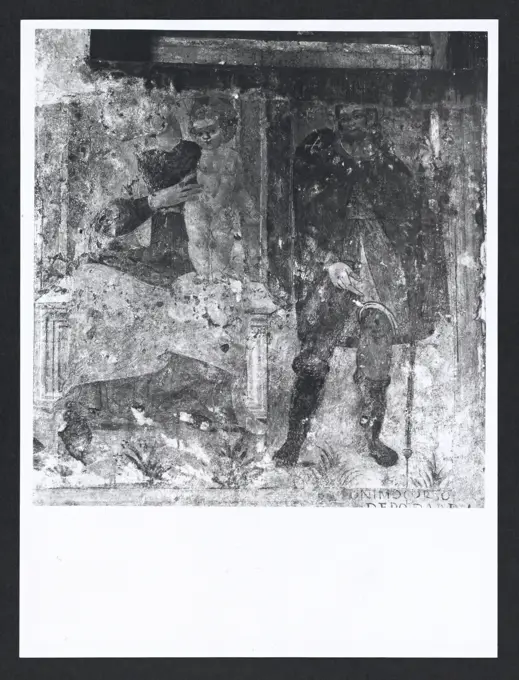
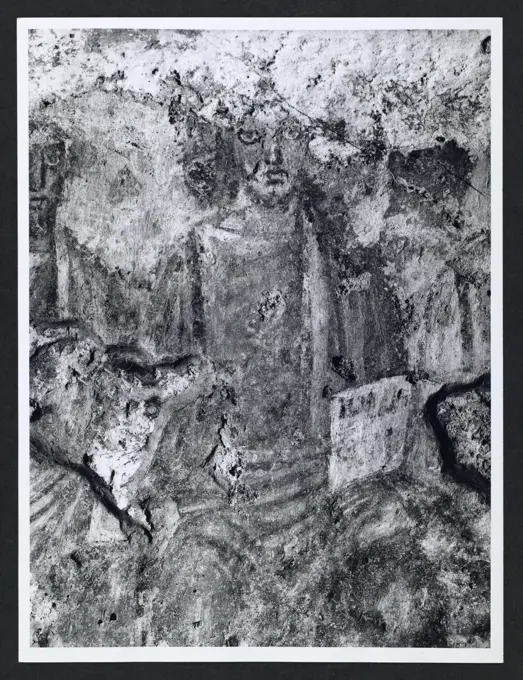
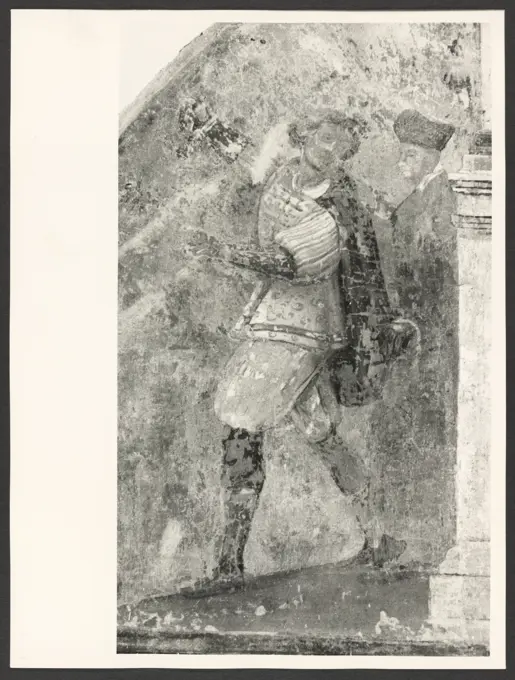
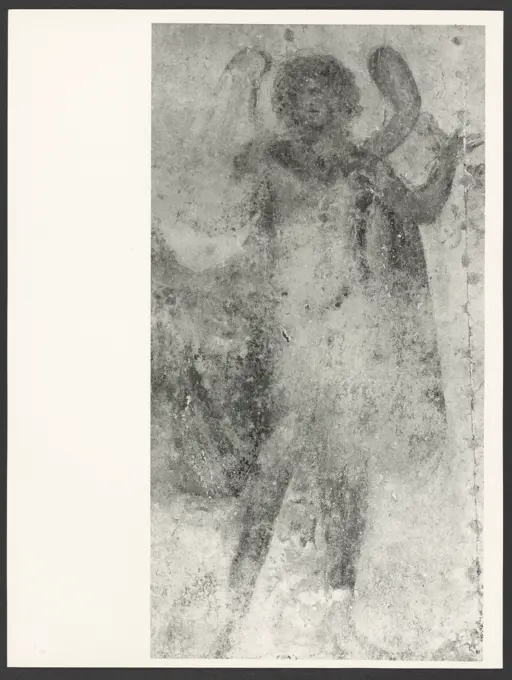
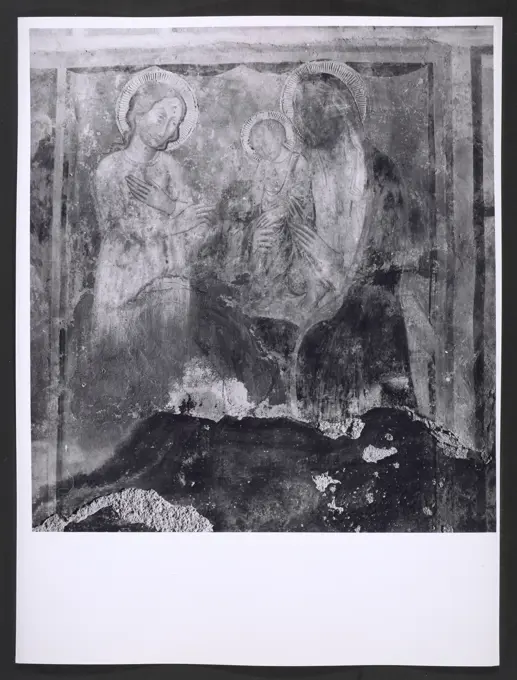
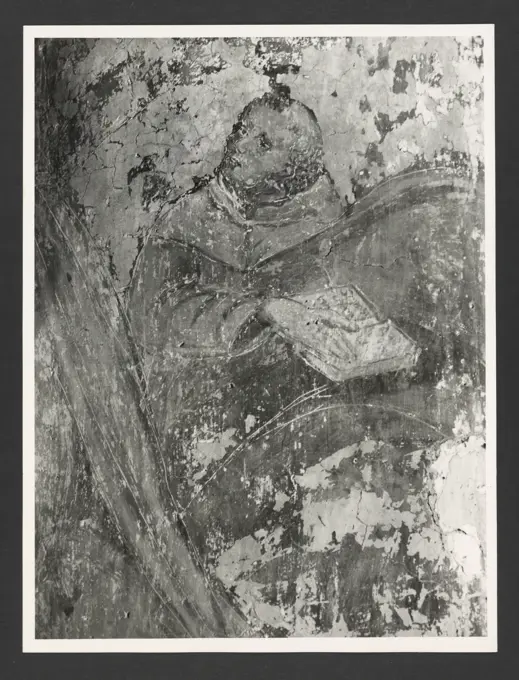
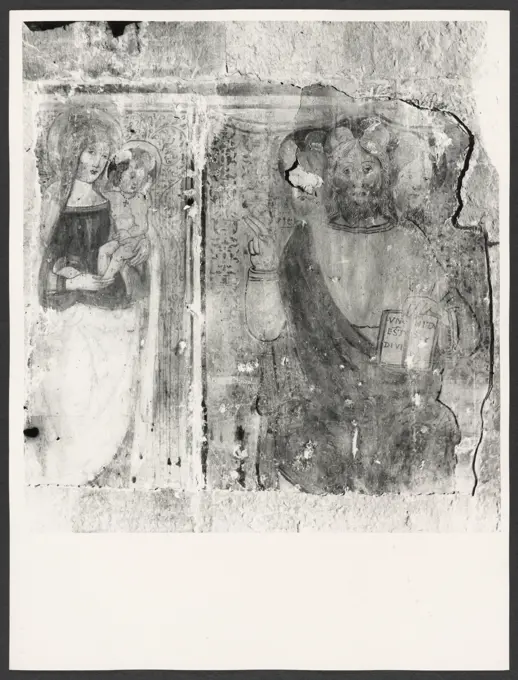
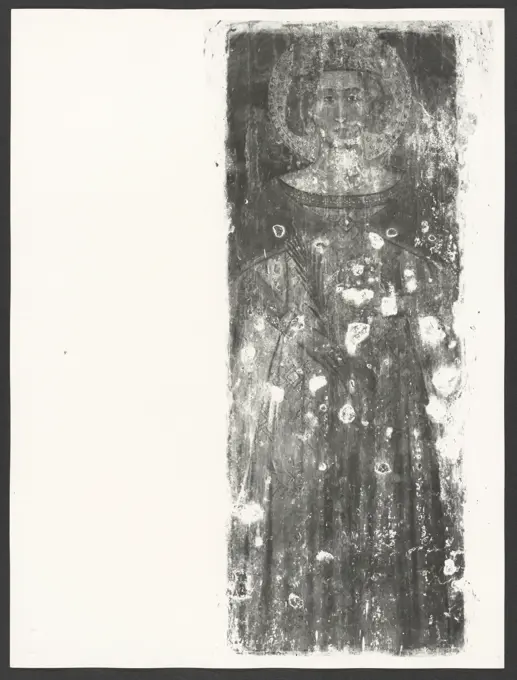
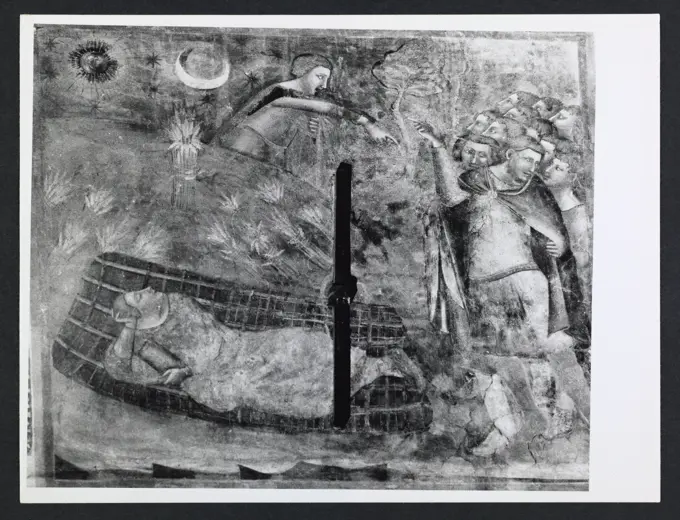
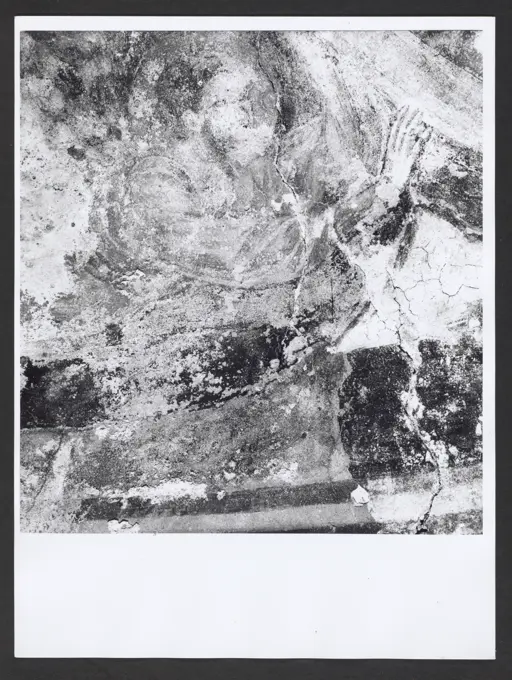
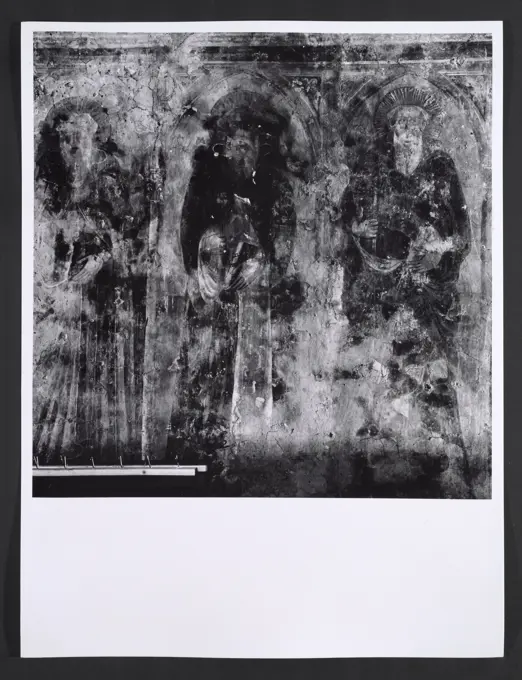
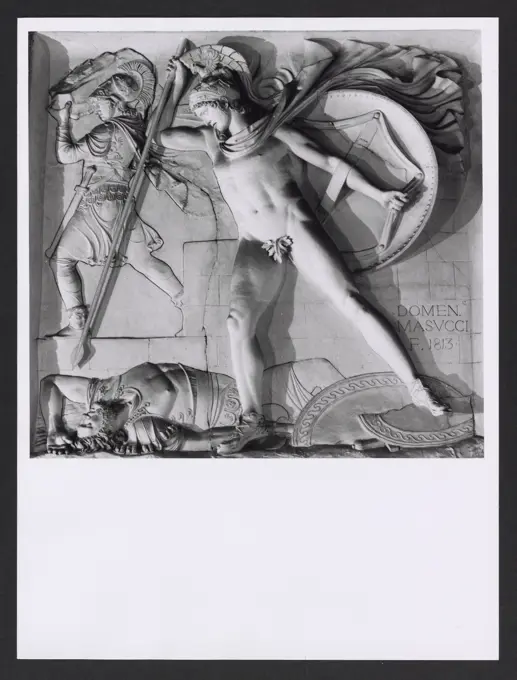
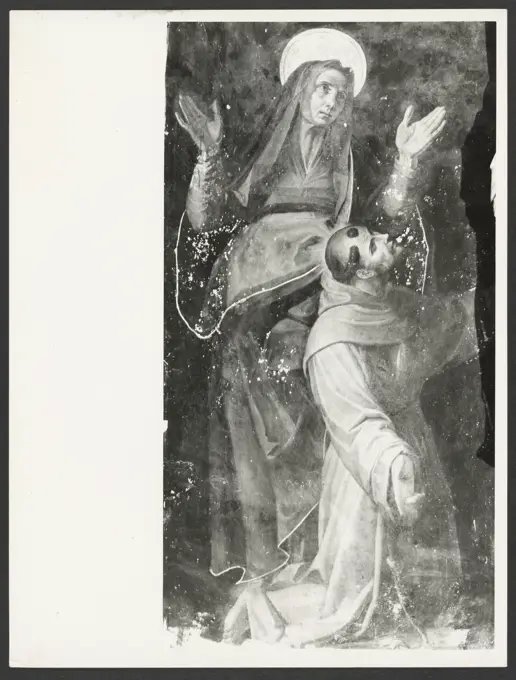
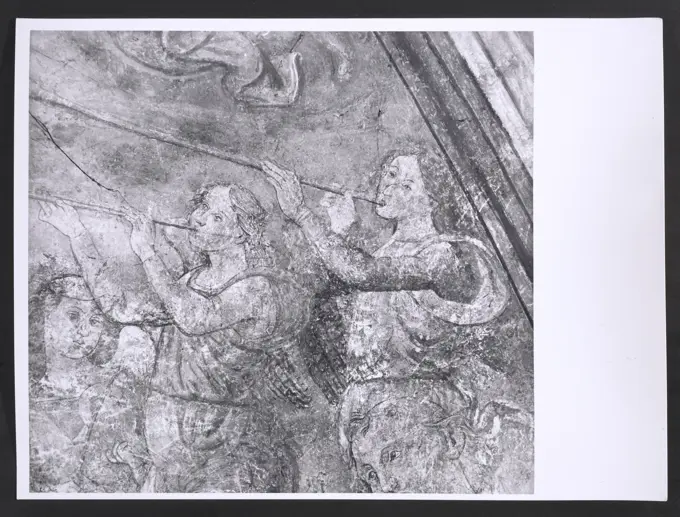
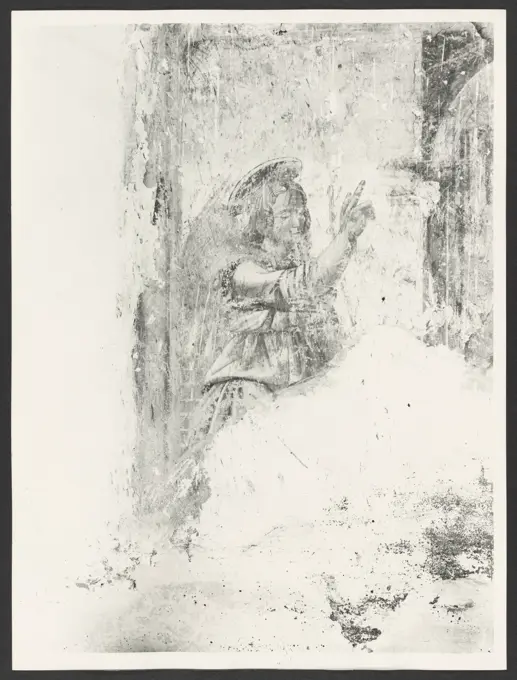
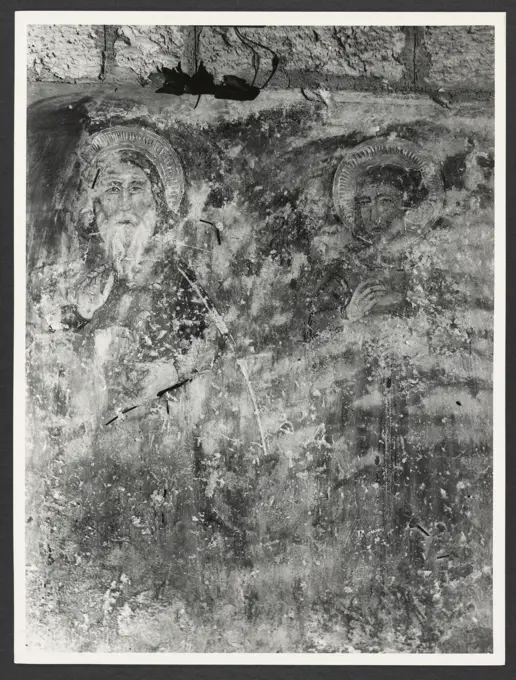
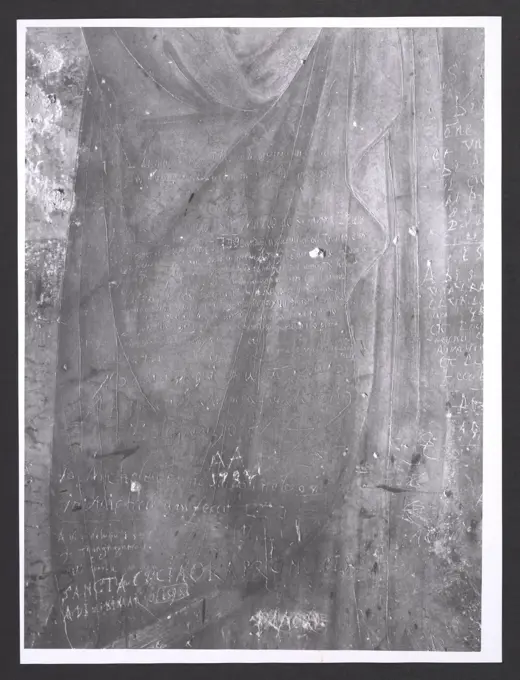
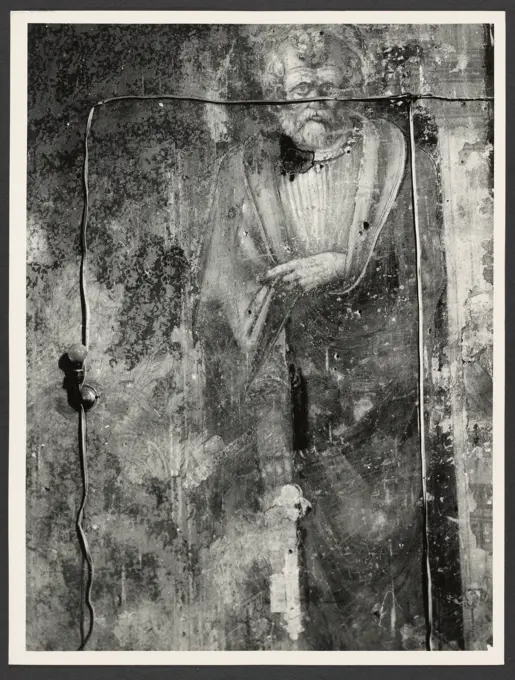
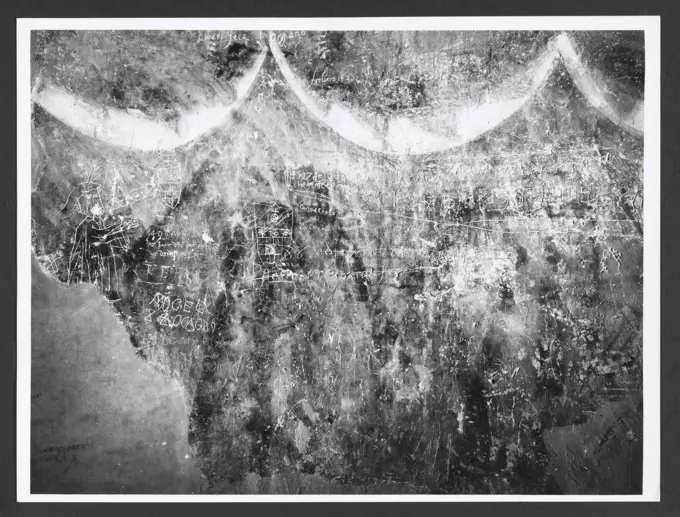
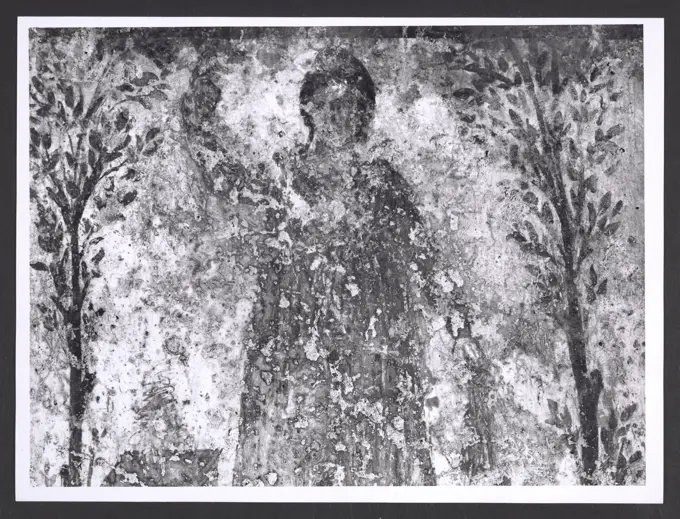
Historical monochrome photographs capturing fragments of medieval frescoes in various churches, showcasing a blend of architectural elements and religious themes.

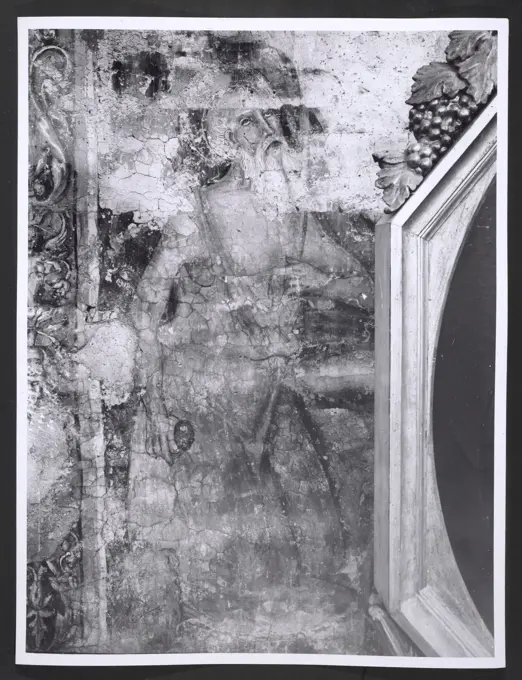
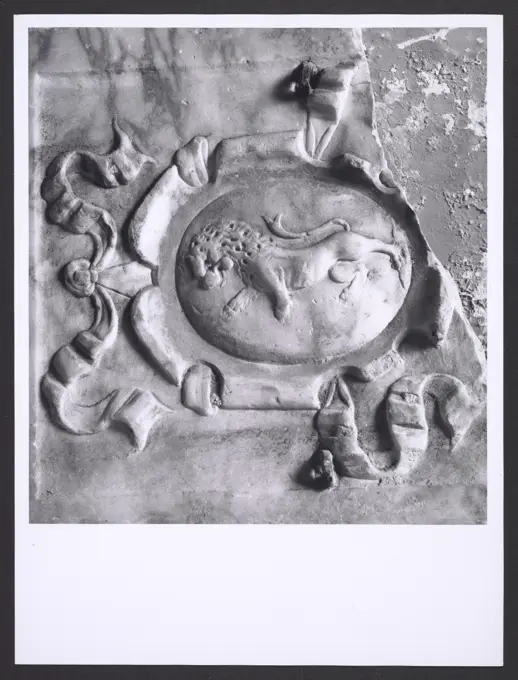
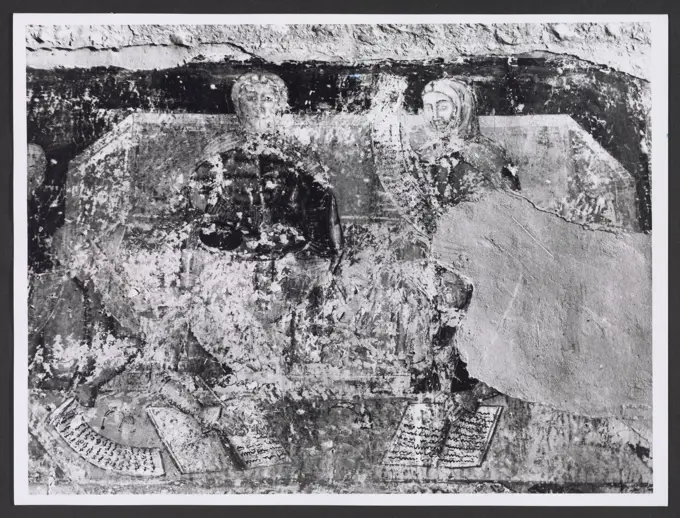
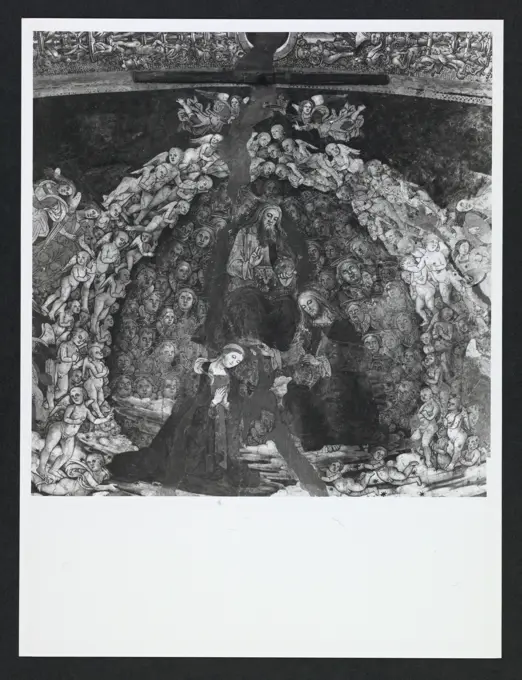
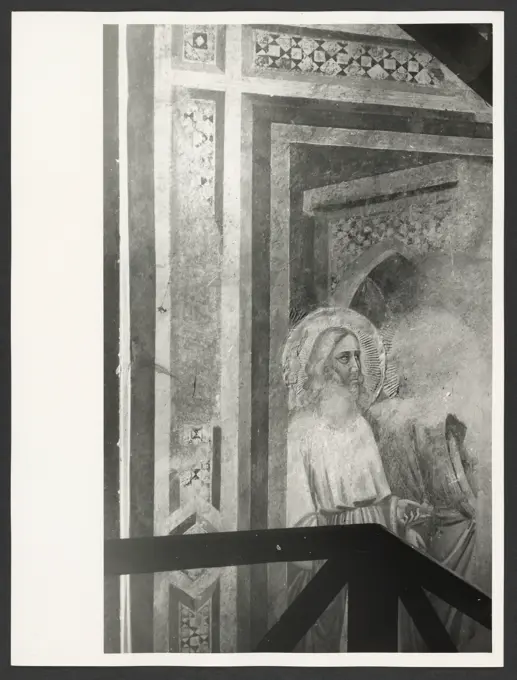
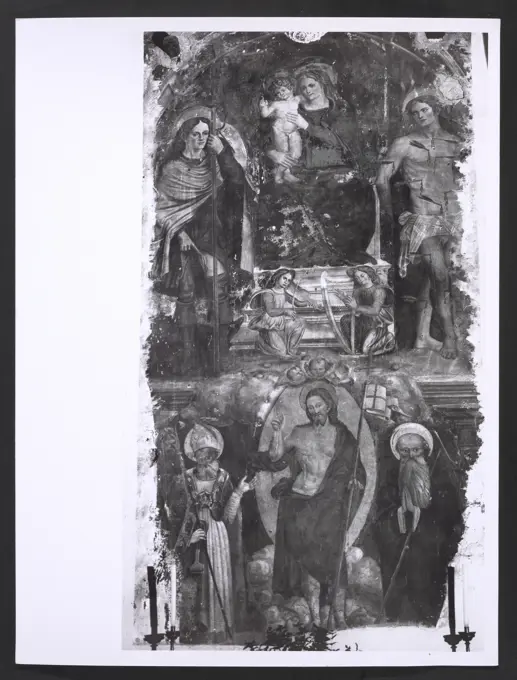
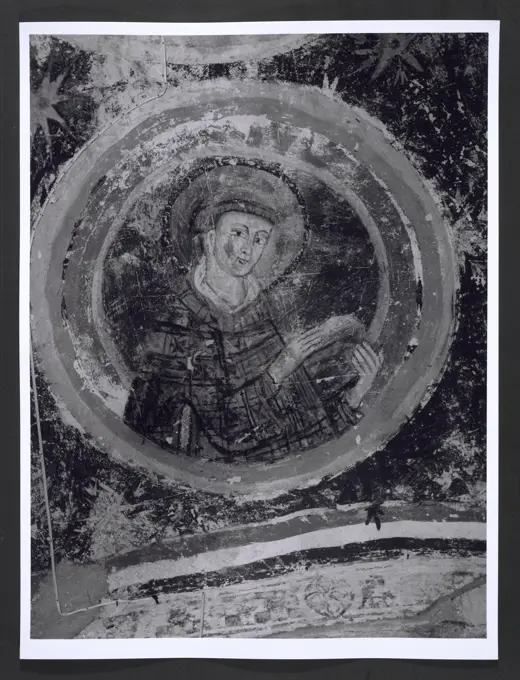
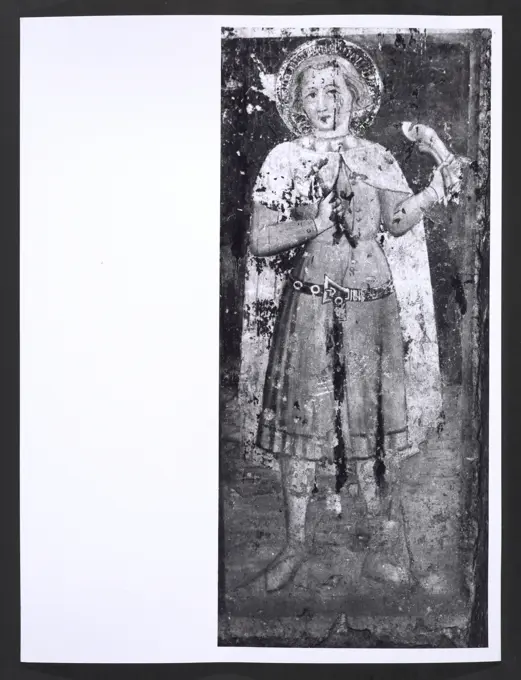
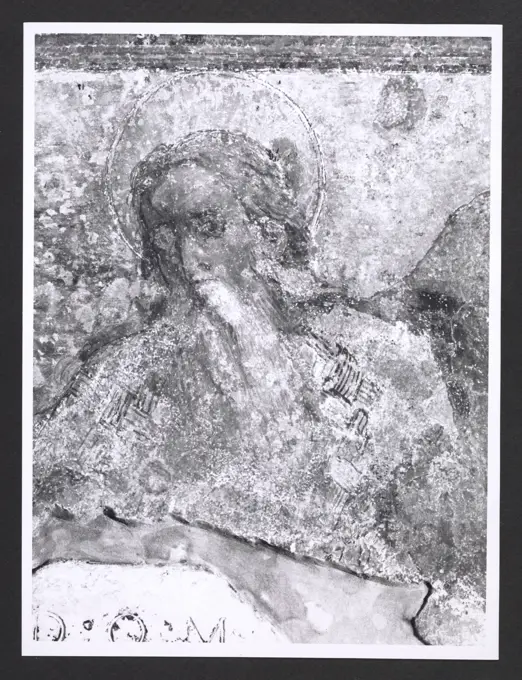
Lazio Viterbo Montefiascone S. Flaviano5. Hutzel, Max 1960-1990 Exterior views of the 13th century romanesque church built on top of an older structure: the three gothic arches of the facade are surmounted by a loggia (c. 1500), and a small bell-tower on the left. General views of the two-story interior show the three naves, main altar, frescoes and an architectural structure--vaulting and columns--that date from different periods. Included in the Medieval core collection are details of capitals (11th century), the tombstone of Giovanni Fugger (Defuk or Johannes De Fuk), and 14th century frescoes. All prints in the Hutzel collection are details of frescoes (14th and 15th centuries), including: the Saint Nicholas cycle; various Crucifixions; the Madonna Enthroned; the Annunciation; the Nativity; Pope Urbanus IV; Saints Catherine of Alexandria, Scholastica, Paul, Peter, Bernard, Lucy, Flaviano and others; and the archangel Michael. Antiquities: In the Medieval core collection are views o
Umbria Perugia Todi S. Fortunato0. Hutzel, Max 1960-1990 Exterior views of this church focus on the facade portals (1430-1436). Flanking the center portal are aediculae with statues of the Archangel Gabriel and the Virgin of the Annunciation. The portal sculpture is comprised of elaborately carved colonettes; the subjects include nude men in foliage, prophets, saints, martyrs, patriarchs, inhabited vinescroll, grapevines, fig leaves, Abraham and Isaac, and a scene of the stigmatization of St. Francis.. Views of this 13th-15th century gothic interior include details of vaulted ceilings, sacristy portals, the polygonal apse, a crucifix in olive wood, choirstalls, the marble high altar with bishops painted in the trefoil arches, choirstalls, a holy water basin, fresco fragments of the Giotto school, a painting of the Coronation of the Virgin over Todi by Polinori, and various altar paintings. In the crypt are sepulchral monuments of Jacopone da Todi and the family Tudertini, a tomb reliquLazio Roma Ardea S. Marina. Hutzel, Max 1960-1990 Medieval: architecture, architectural sculpture, painting.This church dates to the end of the 12th century, with its portal dating to 1191. It was built by Cencio Savelli, who subsequently became Pope Honorius III. German-born photographer and scholar Max Hutzel (1911-1988) photographed in Italy from the early 1960s until his death. The result of this project, referred to by Hutzel as Foto Arte Minore, is thorough documentation of art historical development in Italy up to the 18th century, including objects of the Etruscans and the Romans, as well as early Medieval, Romanesque, Gothic, Renaissance and Baroque monuments. Images are organized by geographic region in Italy, then by province, city, site complex and monument.Lazio Viterbo Montefiascone S. Flaviano5. Hutzel, Max 1960-1990 Exterior views of the 13th century romanesque church built on top of an older structure: the three gothic arches of the facade are surmounted by a loggia (c. 1500), and a small bell-tower on the left. General views of the two-story interior show the three naves, main altar, frescoes and an architectural structure--vaulting and columns--that date from different periods. Included in the Medieval core collection are details of capitals (11th century), the tombstone of Giovanni Fugger (Defuk or Johannes De Fuk), and 14th century frescoes. All prints in the Hutzel collection are details of frescoes (14th and 15th centuries), including: the Saint Nicholas cycle; various Crucifixions; the Madonna Enthroned; the Annunciation; the Nativity; Pope Urbanus IV; Saints Catherine of Alexandria, Scholastica, Paul, Peter, Bernard, Lucy, Flaviano and others; and the archangel Michael. Antiquities: In the Medieval core collection are views oLazio Viterbo Viterbo S. Maria della Verita, Cloister2. Hutzel, Max 1960-1990 Extensive coverage of 12th c. church, renovated between 14th and 15th c. Exterior views of facade, flank and portal. Interior views of altar, gothic transept, ciborium. Views of Cappella Mazzatosta, its ceramic floor and frescoes by Lorenzo da Viterbo. Comprehensive coverage of gothic structure, including views of garden, well, and portico where antiquities are stored. Single print stored in Hutzel a duplicate of one in Medieval. Antiquities: Sarcophagi; sculpture; architectural fragments General Notes: Two sets of prints fused into single numerical sequence. Cloister has separate numerical sequence and record. German-born photographer and scholar Max Hutzel (1911-1988) photographed in Italy from the early 1960s until his death. The result of this project, referred to by Hutzel as Foto Arte Minore, is thorough documentation of art historical development in Italy up to the 18th century, including objects of thLazio Frosinone Anagni Chiesa5. Hutzel, Max 1960-1990 Medieval: Architecture, architectural sculpture, cosmati pavement, fresco fragments. Views of the exterior and interior, especially of the (damaged) frescoes and mosaic floors. Owner: chiesa dei cappuccini German-born photographer and scholar Max Hutzel (1911-1988) photographed in Italy from the early 1960s until his death. The result of this project, referred to by Hutzel as Foto Arte Minore, is thorough documentation of art historical development in Italy up to the 18th century, including objects of the Etruscans and the Romans, as well as early Medieval, Romanesque, Gothic, Renaissance and Baroque monuments. Images are organized by geographic region in Italy, then by province, city, site complex and monument.Lazio Latina Valvisciolo SS. Pietro e Paolo09. Hutzel, Max 1960-1990 German-born photographer and scholar Max Hutzel (1911-1988) photographed in Italy from the early 1960s until his death. The result of this project, referred to by Hutzel as Foto Arte Minore, is thorough documentation of art historical development in Italy up to the 18th century, including objects of the Etruscans and the Romans, as well as early Medieval, Romanesque, Gothic, Renaissance and Baroque monuments. Images are organized by geographic region in Italy, then by province, city, site complex and monument.Lazio Roma Albano Laziale Catacombe di S. Senatore3. Hutzel, Max 1960-1990 Antiquities: Interior views: fragments of architectural sculpture, some with inscriptions; wall painting (4-9th century) Object Notes: Catacombs beneath church church of S. Maria della Stella German-born photographer and scholar Max Hutzel (1911-1988) photographed in Italy from the early 1960s until his death. The result of this project, referred to by Hutzel as Foto Arte Minore, is thorough documentation of art historical development in Italy up to the 18th century, including objects of the Etruscans and the Romans, as well as early Medieval, Romanesque, Gothic, Renaissance and Baroque monuments. Images are organized by geographic region in Italy, then by province, city, site complex and monument.Tuscany Siena Poggibonsi S. Lucchese5. Hutzel, Max 1960-1990 German-born photographer and scholar Max Hutzel (1911-1988) photographed in Italy from the early 1960s until his death. The result of this project, referred to by Hutzel as Foto Arte Minore, is thorough documentation of art historical development in Italy up to the 18th century, including objects of the Etruscans and the Romans, as well as early Medieval, Romanesque, Gothic, Renaissance and Baroque monuments. Images are organized by geographic region in Italy, then by province, city, site complex and monument.Lazio Roma Rome SS. Giovanni e Paolo0. Hutzel, Max 1960-1990 Views of basement level christian tomb (confessio) with frescoes and of oratory with altar. Views of apse frescoes in current, ground level basilica, paintings from cappella di S. Paolo alla Croce, and collection of papal portraits from the octagonal vestibule preceding sacristy. Views of sculpture in cloister garden. Antiquities: Views of basement level remains of roman palazzo with second and third century frescoes decorating former triclinium, tablinium, ninfeo, and oratorium. Sarcophagus and fragments in cloister garden. Object Notes: Church museum has separate file and record. German-born photographer and scholar Max Hutzel (1911-1988) photographed in Italy from the early 1960s until his death. The result of this project, referred to by Hutzel as Foto Arte Minore, is thorough documentation of art historical development in Italy up to the 18th century, including objects of the Etruscans and the Romans, as well as early MeAbruzzo L'Aquila Tornimparte S. Panfilo, Parish church9. Hutzel, Max 1960-1990 Exterior views of the restored church: grey piers, bell tower, romanesque portal and damaged frescoes on the porch (14th-15th centuries). Views of the Renaissance-baroque interior: organ-loft (17th century), ceiling frescoes, apse frescoes, altar frescoes, altarpieces, and statues. Fresco and painting subjects include: St. Cecilia, St. Francis with Brother Leo, Paradise, Christ Arrested, the Flagellation, the Deposition, the Resurrection, the Annunciation, Madonna and Child, and God the Father surrounded by music-making angels (in the apse). Two views of the side portal are found in the Medieval core collection. Roman gravestone in the front yard. German-born photographer and scholar Max Hutzel (1911-1988) photographed in Italy from the early 1960s until his death. The result of this project, referred to by Hutzel as Foto Arte Minore, is thorough documentation of art historical development in Italy up to theLazio Frosinone Alatri S. Francesco6. Hutzel, Max 1960-1990 Medieval: late 13th c. architecture. 13th century with a facade articulated by a gothic-arched doorway and a rose window. Post-medieval: Sculpture, fresco, painting, stucco decoration, redecorated in the 18th century, 14th, 15th c. frescoes German-born photographer and scholar Max Hutzel (1911-1988) photographed in Italy from the early 1960s until his death. The result of this project, referred to by Hutzel as Foto Arte Minore, is thorough documentation of art historical development in Italy up to the 18th century, including objects of the Etruscans and the Romans, as well as early Medieval, Romanesque, Gothic, Renaissance and Baroque monuments. Images are organized by geographic region in Italy, then by province, city, site complex and monument.Lazio Roma Rome S. Maria Antiqua2. Hutzel, Max 1960-1990 Medieval: 8th century fresco cycle of counter-iconoclasm propaganda, Antiquities: General architectural views; views of sacrophagi German-born photographer and scholar Max Hutzel (1911-1988) photographed in Italy from the early 1960s until his death. The result of this project, referred to by Hutzel as Foto Arte Minore, is thorough documentation of art historical development in Italy up to the 18th century, including objects of the Etruscans and the Romans, as well as early Medieval, Romanesque, Gothic, Renaissance and Baroque monuments. Images are organized by geographic region in Italy, then by province, city, site complex and monument.Marches Macerata Visso S. Maria, Collegiate Church4. Hutzel, Max 1960-1990 Detailed views of the 14th century exterior architecture of the church, including portals, and details of columns and capitals. There are general interior views, with detailed photos showing the paintings, both on the screen behind the main altar and behind side altars. There are also many photos of painting fragments from the late Medieval and early Renaissance periods. Sculptural photos include a wooden crucifix and basins or altars (perhaps antique) with human face motifs. Object Notes: Hutzel photo campaign date: June 30, 1984. German-born photographer and scholar Max Hutzel (1911-1988) photographed in Italy from the early 1960s until his death. The result of this project, referred to by Hutzel as Foto Arte Minore, is thorough documentation of art historical development in Italy up to the 18th century, including objects of the Etruscans and the Romans, as well as early Medieval, Romanesque, Gothic, RenaissanLazio Frosinone Ausonia Santuario di S. Maria del Piano13. Hutzel, Max 1960-1990 General Notes: INCOMPLETE RECORD--NEGATIVES PROCESSED, PRINTS FILED German-born photographer and scholar Max Hutzel (1911-1988) photographed in Italy from the early 1960s until his death. The result of this project, referred to by Hutzel as Foto Arte Minore, is thorough documentation of art historical development in Italy up to the 18th century, including objects of the Etruscans and the Romans, as well as early Medieval, Romanesque, Gothic, Renaissance and Baroque monuments. Images are organized by geographic region in Italy, then by province, city, site complex and monument.Lazio Sermoneta S. Michele Arcangelo4. Hutzel, Max 1960-1990 Post-medieval: Interior architecture (11th century) painting, frescoes, General Notes: No documentation provided for this site German-born photographer and scholar Max Hutzel (1911-1988) photographed in Italy from the early 1960s until his death. The result of this project, referred to by Hutzel as Foto Arte Minore, is thorough documentation of art historical development in Italy up to the 18th century, including objects of the Etruscans and the Romans, as well as early Medieval, Romanesque, Gothic, Renaissance and Baroque monuments. Images are organized by geographic region in Italy, then by province, city, site complex and monument.Umbria Perugia Trevi S. Maria di Pietrarossa4. Hutzel, Max 1960-1990 German-born photographer and scholar Max Hutzel (1911-1988) photographed in Italy from the early 1960s until his death. The result of this project, referred to by Hutzel as Foto Arte Minore, is thorough documentation of art historical development in Italy up to the 18th century, including objects of the Etruscans and the Romans, as well as early Medieval, Romanesque, Gothic, Renaissance and Baroque monuments. Images are organized by geographic region in Italy, then by province, city, site complex and monument.Lazio Roma Rignano Flaminio SS. Vincenzo e Anastasio8. Hutzel, Max 1960-1990 Medieval: Architecture. Post-medieval: 16th century architecture and architectural sculpture, including stucco decoration; 16th century wooden crucifix; sculpted marble altars and tombs; frescos; paintings on canvas; stoup (1578) Antiquities: Fragments of architectural sculpture German-born photographer and scholar Max Hutzel (1911-1988) photographed in Italy from the early 1960s until his death. The result of this project, referred to by Hutzel as Foto Arte Minore, is thorough documentation of art historical development in Italy up to the 18th century, including objects of the Etruscans and the Romans, as well as early Medieval, Romanesque, Gothic, Renaissance and Baroque monuments. Images are organized by geographic region in Italy, then by province, city, site complex and monument.Lazio Rieti Casperia S. Maria di Legarano7. Hutzel, Max 1960-1990 Medieval: Wooden crucifix dating from the 1400's or (14th century). Post-medieval: Painting, sculpture. In the lunette above the portal is a fresco of the Annunciation by Bartolomeo Torresani. A fresco of the Last Judgment, by Bartolomeo Torresani, on walls of a chapel to the left of the atrium. Painting of S. Sebastian and S. John the Baptist of the school of Antoniazzo Romano. In a niche, representation of the Wedding of the Virgin, fresco attributed to Alessandro Torresani. Nativity scene in polychromed terracotta by an Abruzzi artist from the 15th century. Behind the main altar, a polychromed wood statue of the Virgin and Child signed by Carlo dell'Aquila (1489). Antiquities: Architecture and sculpture. Remains of "opus reticulatum" walls (church built on the site of a roman villa), a "colossal god" sculpture from 1 B.C. German-born photographer and scholar Max Hutzel (1911-1988) photographed in Italy from the early Lazio Viterbo Capranica S. Francesco7. Hutzel, Max 1960-1990 Medieval: Architecture, architectural sculpture, sculpture, fresco fragments Object Notes: Romanesque facade, Gothic structure. Restored by Antonio Munoz in 1927. Interior houses sepulchre of Brothers Francesco and Nicola Anguillara. Frescoes of the 14th-16th centuries are on the walls. German-born photographer and scholar Max Hutzel (1911-1988) photographed in Italy from the early 1960s until his death. The result of this project, referred to by Hutzel as Foto Arte Minore, is thorough documentation of art historical development in Italy up to the 18th century, including objects of the Etruscans and the Romans, as well as early Medieval, Romanesque, Gothic, Renaissance and Baroque monuments. Images are organized by geographic region in Italy, then by province, city, site complex and monument.Emilia-Romagna Ferrara Argenta S. Domenico1. Hutzel, Max 1960-1990 Post-medieval: Architecture, architectural sculpture, painting, frescoes. Works in museum include 15th century terracotta statues and painting, sculpture Owner: Pinacoteca Comunale Object Notes: Two sets of prints and negatives General Notes: Successivamente alla realizzazione di questo servizio, risalente al l'anno 1978, al Pinacoteca e stato aggiunto. Per questo motivo e in prepazione da parte un servizio aggiornato sulla Pinacoteca di Argenta. German-born photographer and scholar Max Hutzel (1911-1988) photographed in Italy from the early 1960s until his death. The result of this project, referred to by Hutzel as Foto Arte Minore, is thorough documentation of art historical development in Italy up to the 18th century, including objects of the Etruscans and the Romans, as well as early Medieval, Romanesque, Gothic, Renaissance and Baroque monuments. Images are organized by geographic region in Italy, then by province,Lazio Viterbo Vitorchiano Madonna di S. Nicola6. Hutzel, Max 1960-1990 Three exterior views of 16th c. church; comprehensive coverage of church interior, including altars, nave and numerous frescoes of the viterbese school. General Notes: Two sets of prints integrated into single numerical sequence that comprises all views of Vitorchiano. German-born photographer and scholar Max Hutzel (1911-1988) photographed in Italy from the early 1960s until his death. The result of this project, referred to by Hutzel as Foto Arte Minore, is thorough documentation of art historical development in Italy up to the 18th century, including objects of the Etruscans and the Romans, as well as early Medieval, Romanesque, Gothic, Renaissance and Baroque monuments. Images are organized by geographic region in Italy, then by province, city, site complex and monument.Lazio Roma Rome S. Caterina dei Funari4. Hutzel, Max 1960-1990 Post-medieval: Architecture, painting, fresco, sculpture. In the vicinity of Palazzo Mattei in Jewish quarter German-born photographer and scholar Max Hutzel (1911-1988) photographed in Italy from the early 1960s until his death. The result of this project, referred to by Hutzel as Foto Arte Minore, is thorough documentation of art historical development in Italy up to the 18th century, including objects of the Etruscans and the Romans, as well as early Medieval, Romanesque, Gothic, Renaissance and Baroque monuments. Images are organized by geographic region in Italy, then by province, city, site complex and monument.Lazio Frosinone Anagni Chiesa6. Hutzel, Max 1960-1990 Medieval: Architecture, architectural sculpture, cosmati pavement, fresco fragments. Views of the exterior and interior, especially of the (damaged) frescoes and mosaic floors. Owner: chiesa dei cappuccini German-born photographer and scholar Max Hutzel (1911-1988) photographed in Italy from the early 1960s until his death. The result of this project, referred to by Hutzel as Foto Arte Minore, is thorough documentation of art historical development in Italy up to the 18th century, including objects of the Etruscans and the Romans, as well as early Medieval, Romanesque, Gothic, Renaissance and Baroque monuments. Images are organized by geographic region in Italy, then by province, city, site complex and monument.Lazio Viterbo Viterbo S. Maria della Verita, Cloister26. Hutzel, Max 1960-1990 Extensive coverage of 12th c. church, renovated between 14th and 15th c. Exterior views of facade, flank and portal. Interior views of altar, gothic transept, ciborium. Views of Cappella Mazzatosta, its ceramic floor and frescoes by Lorenzo da Viterbo. Comprehensive coverage of gothic structure, including views of garden, well, and portico where antiquities are stored. Single print stored in Hutzel a duplicate of one in Medieval. Antiquities: Sarcophagi; sculpture; architectural fragments General Notes: Two sets of prints fused into single numerical sequence. Cloister has separate numerical sequence and record. German-born photographer and scholar Max Hutzel (1911-1988) photographed in Italy from the early 1960s until his death. The result of this project, referred to by Hutzel as Foto Arte Minore, is thorough documentation of art historical development in Italy up to the 18th century, including objects of tAbruzzo L'Aquila Bominaco S. Pellegrino, Oratory5. Hutzel, Max 1960-1990 Medieval: Architecture, sculpture (12-13th century) Post-medieval: Fresco cycle (13th century) (Count: 252) German-born photographer and scholar Max Hutzel (1911-1988) photographed in Italy from the early 1960s until his death. The result of this project, referred to by Hutzel as Foto Arte Minore, is thorough documentation of art historical development in Italy up to the 18th century, including objects of the Etruscans and the Romans, as well as early Medieval, Romanesque, Gothic, Renaissance and Baroque monuments. Images are organized by geographic region in Italy, then by province, city, site complex and monument.Lazio Roma Rome S. Agnese fuori le Mura46. Hutzel, Max 1960-1990 Medieval: Architecture, architectural fragments, sculptural fragments, sculpture. Post-medieval: Architectural sculpture, fresco painting Object Notes: Erected in 342 by Costanza, daughter or niece of Constantine on the site of the catacombs holding the remains of S. Agnese. Marble staircase dates from 1590. German-born photographer and scholar Max Hutzel (1911-1988) photographed in Italy from the early 1960s until his death. The result of this project, referred to by Hutzel as Foto Arte Minore, is thorough documentation of art historical development in Italy up to the 18th century, including objects of the Etruscans and the Romans, as well as early Medieval, Romanesque, Gothic, Renaissance and Baroque monuments. Images are organized by geographic region in Italy, then by province, city, site complex and monument.Marches Pesaro e Urbino Urbino Oratorio di S. Giovanni Battista0. Hutzel, Max 1960-1990 Post-medieval: 14th century architecture with a modern, neo-Gothic facade; frescos. German-born photographer and scholar Max Hutzel (1911-1988) photographed in Italy from the early 1960s until his death. The result of this project, referred to by Hutzel as Foto Arte Minore, is thorough documentation of art historical development in Italy up to the 18th century, including objects of the Etruscans and the Romans, as well as early Medieval, Romanesque, Gothic, Renaissance and Baroque monuments. Images are organized by geographic region in Italy, then by province, city, site complex and monument.Umbria Perugia Ponte S. Maria. Hutzel, Max 1960-1990 Exterior views of church and apse end. Interior views of nave and paintings in the vaults, including the four Evangelists. Object Notes: Hutzel photo campaign dated: February 19, 1983. Notes are filed under Borgo Cerreto. German-born photographer and scholar Max Hutzel (1911-1988) photographed in Italy from the early 1960s until his death. The result of this project, referred to by Hutzel as Foto Arte Minore, is thorough documentation of art historical development in Italy up to the 18th century, including objects of the Etruscans and the Romans, as well as early Medieval, Romanesque, Gothic, Renaissance and Baroque monuments. Images are organized by geographic region in Italy, then by province, city, site complex and monument.Lazio Frosinone Vico nel Lazio S. Maria6. Hutzel, Max 1960-1990 Medieval: Architecture, painting, sculpture. The church possesses a late-Romanesque portal and a small campanile. The interior of the church consists of one nave, with a marble main altar and fresco decoration in the church and in the crypt. German-born photographer and scholar Max Hutzel (1911-1988) photographed in Italy from the early 1960s until his death. The result of this project, referred to by Hutzel as Foto Arte Minore, is thorough documentation of art historical development in Italy up to the 18th century, including objects of the Etruscans and the Romans, as well as early Medieval, Romanesque, Gothic, Renaissance and Baroque monuments. Images are organized by geographic region in Italy, then by province, city, site complex and monument.Lazio Roma Rome S. Balbina6. Hutzel, Max 1960-1990 Medieval: Architectural plans, architecture, cosmati tiling, sculpture, fresco painting, sculptural fragments. Post-medieval: Sculptural relief, architectural sculpture, architecture, painting, fresco painting, sculpture. On viale Baccelli. General Notes: Hutzel accounts for 65 prints; however, #9, #10, #39, #59, #61 and #62 are not included in the group of photos. (Perhaps they are with wall painting or mosaics). There is also a note (from Emily) that unmatched negatives are in mylar sleeves at the front of the group - but these are also not located. German-born photographer and scholar Max Hutzel (1911-1988) photographed in Italy from the early 1960s until his death. The result of this project, referred to by Hutzel as Foto Arte Minore, is thorough documentation of art historical development in Italy up to the 18th century, including objects of the Etruscans and the Romans, as well as early Medieval, Romanesque, Gothic, Renaissance aEmilia-Romagna Ferrara Pomposa Abbazia di Pomposa, Museo80. Hutzel, Max 1960-1990 Medieval: Fragments: capitals (Byzantine, 6th century), also capitals carved with human faces; marble friezes (10th century, later inscriptions); cornices, (with spolia) 11-12th centuries; ciborium; frescos. Post-medieval: Terracotta statuary, "neo-classical" (Hutzel); frescos: Bolognese, 14th century Antiquities: Amphora; grave monuments German-born photographer and scholar Max Hutzel (1911-1988) photographed in Italy from the early 1960s until his death. The result of this project, referred to by Hutzel as Foto Arte Minore, is thorough documentation of art historical development in Italy up to the 18th century, including objects of the Etruscans and the Romans, as well as early Medieval, Romanesque, Gothic, Renaissance and Baroque monuments. Images are organized by geographic region in Italy, then by province, city, site complex and monument.Abruzzo Ioanella S. Pietro d'Azzano7. Hutzel, Max 1960-1990 Medieval: Architecture, architectural sculpture, baptismal font, stoup Post-medieval: Fresco, painting (Pietro di Azzano with Saints) German-born photographer and scholar Max Hutzel (1911-1988) photographed in Italy from the early 1960s until his death. The result of this project, referred to by Hutzel as Foto Arte Minore, is thorough documentation of art historical development in Italy up to the 18th century, including objects of the Etruscans and the Romans, as well as early Medieval, Romanesque, Gothic, Renaissance and Baroque monuments. Images are organized by geographic region in Italy, then by province, city, site complex and monument.Campania Caserta Capua S. Salvatore Piccolo0. Hutzel, Max 1960-1990 Photos of exterior facade and of interior fresco fragments. Object Notes: Hutzel photo campaign notes are undated, but notes on the back of some photos indicate they were taken in 1956. German-born photographer and scholar Max Hutzel (1911-1988) photographed in Italy from the early 1960s until his death. The result of this project, referred to by Hutzel as Foto Arte Minore, is thorough documentation of art historical development in Italy up to the 18th century, including objects of the Etruscans and the Romans, as well as early Medieval, Romanesque, Gothic, Renaissance and Baroque monuments. Images are organized by geographic region in Italy, then by province, city, site complex and monument.Abruzzo L'Aquila Paganica Santuario della Madonna d'Appari7. Hutzel, Max 1960-1990 Post-medieval: Architecture (13-15th century); exterior views of facade, with details of portal and window; interior details of 16th century frescoes. German-born photographer and scholar Max Hutzel (1911-1988) photographed in Italy from the early 1960s until his death. The result of this project, referred to by Hutzel as Foto Arte Minore, is thorough documentation of art historical development in Italy up to the 18th century, including objects of the Etruscans and the Romans, as well as early Medieval, Romanesque, Gothic, Renaissance and Baroque monuments. Images are organized by geographic region in Italy, then by province, city, site complex and monument.Umbria Perugia Norcia S. Benedetto. Hutzel, Max 1960-1990 Coverage is of the crypt and crypt paintings, the church exterior, and the nave and altars, but most of the views are of paintings. German-born photographer and scholar Max Hutzel (1911-1988) photographed in Italy from the early 1960s until his death. The result of this project, referred to by Hutzel as Foto Arte Minore, is thorough documentation of art historical development in Italy up to the 18th century, including objects of the Etruscans and the Romans, as well as early Medieval, Romanesque, Gothic, Renaissance and Baroque monuments. Images are organized by geographic region in Italy, then by province, city, site complex and monument.Lazio Latina Priverno S. Antonio Abate3. Hutzel, Max 1960-1990 Medieval: Architectual sculpture (14th century) sculpture. Post-medieval: Architecture; fresco cycles (13-15th century) German-born photographer and scholar Max Hutzel (1911-1988) photographed in Italy from the early 1960s until his death. The result of this project, referred to by Hutzel as Foto Arte Minore, is thorough documentation of art historical development in Italy up to the 18th century, including objects of the Etruscans and the Romans, as well as early Medieval, Romanesque, Gothic, Renaissance and Baroque monuments. Images are organized by geographic region in Italy, then by province, city, site complex and monument.Lazio Latina Bassiano Santuario del SS. Crocifisso1. Hutzel, Max 1960-1990 Medieval: Architecture, frescoes German-born photographer and scholar Max Hutzel (1911-1988) photographed in Italy from the early 1960s until his death. The result of this project, referred to by Hutzel as Foto Arte Minore, is thorough documentation of art historical development in Italy up to the 18th century, including objects of the Etruscans and the Romans, as well as early Medieval, Romanesque, Gothic, Renaissance and Baroque monuments. Images are organized by geographic region in Italy, then by province, city, site complex and monument.Campania Benevento Sant'Agata de' Goti Chiesa dell'Annunziata15. Hutzel, Max 1960-1990 Medieval: Architecture (13-14th centuries). Post-medieval: Marble portal (1563), with bas-relief in lunette; paintings on panel and canvas; frescos (14-15th centuries) German-born photographer and scholar Max Hutzel (1911-1988) photographed in Italy from the early 1960s until his death. The result of this project, referred to by Hutzel as Foto Arte Minore, is thorough documentation of art historical development in Italy up to the 18th century, including objects of the Etruscans and the Romans, as well as early Medieval, Romanesque, Gothic, Renaissance and Baroque monuments. Images are organized by geographic region in Italy, then by province, city, site complex and monument.Lazio Roma Rome S. Agnese fuori le Mura34. Hutzel, Max 1960-1990 Medieval: Architecture, architectural fragments, sculptural fragments, sculpture. Post-medieval: Architectural sculpture, fresco painting Object Notes: Erected in 342 by Costanza, daughter or niece of Constantine on the site of the catacombs holding the remains of S. Agnese. Marble staircase dates from 1590. German-born photographer and scholar Max Hutzel (1911-1988) photographed in Italy from the early 1960s until his death. The result of this project, referred to by Hutzel as Foto Arte Minore, is thorough documentation of art historical development in Italy up to the 18th century, including objects of the Etruscans and the Romans, as well as early Medieval, Romanesque, Gothic, Renaissance and Baroque monuments. Images are organized by geographic region in Italy, then by province, city, site complex and monument.Umbria Perugia Nocera Umbra S. Francesco4. Hutzel, Max 1960-1990 Post-medieval: Exterior views of architecture and architectural sculpture of S. Francesco Pinacoteca: fresco fragments, panel painting, polyptych, painting, miscelaneous architectural fragments Owner: Pinacoteca Comunale German-born photographer and scholar Max Hutzel (1911-1988) photographed in Italy from the early 1960s until his death. The result of this project, referred to by Hutzel as Foto Arte Minore, is thorough documentation of art historical development in Italy up to the 18th century, including objects of the Etruscans and the Romans, as well as early Medieval, Romanesque, Gothic, Renaissance and Baroque monuments. Images are organized by geographic region in Italy, then by province, city, site complex and monument.Abruzzo Civitaretenga S. Egidio2. Hutzel, Max 1960-1990 Post-medieval: Architecture, architectural sculpture (ruins), frescoes German-born photographer and scholar Max Hutzel (1911-1988) photographed in Italy from the early 1960s until his death. The result of this project, referred to by Hutzel as Foto Arte Minore, is thorough documentation of art historical development in Italy up to the 18th century, including objects of the Etruscans and the Romans, as well as early Medieval, Romanesque, Gothic, Renaissance and Baroque monuments. Images are organized by geographic region in Italy, then by province, city, site complex and monument.Campania Caserta Caserta Palazzo Reale06. Hutzel, Max 1960-1990 Post-medieval: Architecture & architectural sculpture, sculpture, statues, paintings, frescoes, stuccoes, furnishings & decorative art General Notes: Discrepancy in number of prints & negatives. Hutzel notes 824 prints & negatives. Negatives for 1-62 of one batch seem to be missing (would make a total of 824) German-born photographer and scholar Max Hutzel (1911-1988) photographed in Italy from the early 1960s until his death. The result of this project, referred to by Hutzel as Foto Arte Minore, is thorough documentation of art historical development in Italy up to the 18th century, including objects of the Etruscans and the Romans, as well as early Medieval, Romanesque, Gothic, Renaissance and Baroque monuments. Images are organized by geographic region in Italy, then by province, city, site complex and monument.Abruzzo L'Aquila San Stefano di Sessanio Parrocchiale7. Hutzel, Max 1960-1990 Post-medieval: 15th century architecture with partially destroyed campanile; architectural sculpture; sculpture in wood and in terracotta; 16th century fresco of local school. German-born photographer and scholar Max Hutzel (1911-1988) photographed in Italy from the early 1960s until his death. The result of this project, referred to by Hutzel as Foto Arte Minore, is thorough documentation of art historical development in Italy up to the 18th century, including objects of the Etruscans and the Romans, as well as early Medieval, Romanesque, Gothic, Renaissance and Baroque monuments. Images are organized by geographic region in Italy, then by province, city, site complex and monument.Emilia-Romagna Ferrara Ferrara Palazzina di Marfisa28. Hutzel, Max 1960-1990 Post-medieval: Extensive coverage of both interior and exterior, including views of well with Este coat of arms; decorative frescos; wooden armoire, late 16th century Venetian; paintings on canvas; fireplace with carved mantlepiece, Lombard school, 16th century; sculpture, 16th century Venetian () and Lombard; carved wooden cassone, Northern Italian, 15th century; ceiling and wall paintings: and one panel painting German-born photographer and scholar Max Hutzel (1911-1988) photographed in Italy from the early 1960s until his death. The result of this project, referred to by Hutzel as Foto Arte Minore, is thorough documentation of art historical development in Italy up to the 18th century, including objects of the Etruscans and the Romans, as well as early Medieval, Romanesque, Gothic, Renaissance and Baroque monuments. Images are organized by geographic region in Italy, then by province, city, site complex andLazio Viterbo Castel Sant'Elia S. Elia63. Hutzel, Max 1960-1990 Exterior photos of views, the facade, the portal and many architeectural details. Interior views of nave, with its carved pulpit with details and its ciborium/baldacchino with details. There are many photos of Byzantine, Romanesque and early Renaissance style paintings. Sculpturally, there are photos of capitals, architectural details and inscriptions. Object Notes: Hutzel photo campaign notes: September 9, 1983 German-born photographer and scholar Max Hutzel (1911-1988) photographed in Italy from the early 1960s until his death. The result of this project, referred to by Hutzel as Foto Arte Minore, is thorough documentation of art historical development in Italy up to the 18th century, including objects of the Etruscans and the Romans, as well as early Medieval, Romanesque, Gothic, Renaissance and Baroque monuments. Images are organized by geographic region in Italy, then by province, city, site complex and monument.Campania Napoli Naples S. Lorenzo Maggiore69. Hutzel, Max 1960-1990 Medieval: Sculpture, architecture, architectural sculpture (including Roman spolia) 13-14th century Chapter house; sarcophagi, gravestones; wall painting. Fragment of mosaic; sculptural fragments in the Sala Capitolare. Post-medieval: Architecture, architectural sculpture, ceiling painting fresco cycle; prints depicting Venice c. 1845 (4), sculpture; life-size creche figures dressed in original Neapolitan costume Church restored in 1882, 1926, 1944; excavations under the transept undertaken between 1958-1962, and in the cloister in 1976, have revealed remains of a Roman macellum (market), street, and the paleochristian basilica of the 6th c. AD. Antiquities: Pottery: black-glazed, archaic banded, domestic wares, bucchero; architectural terracottas, statuettes, lamps, sculpture fragments Object Notes: 3 color negatives with no prints at the end. General Notes: Most objects/paintings/frescoes unidentified. Three batches Umbria Perugia Spoleto SS. Giovanni e Paolo1. Hutzel, Max 1960-1990 Interior views of 12th century church all focus on frescoes (late 12th-14th centuries). Fresco subjects include: one of the first documented representations of St. Francis; the martyrdom of St. Thomas Becket of Canterbury; Herod's banquet; St. John and St. Paul beheaded; doors to Paradise; Crucifixion; St. John the Baptist; Madonna and Child Enthroned; St. Gregory as Pope and Saint; St. Joseph; St. Antony of Padua; St. Alo; St. Catherine; St. Jerome; St. Lawrence; St. Ansano; St. Michael slaying dragon; St. Margaret; St. Taddeus; St. Anthony Abbot; St. Clare. Object Notes: Hutzel photo campaign date: 1/21/83 German-born photographer and scholar Max Hutzel (1911-1988) photographed in Italy from the early 1960s until his death. The result of this project, referred to by Hutzel as Foto Arte Minore, is thorough documentation of art historical development in Italy up to the 18th century, including objects of the Etruscans aLazio Roma Albano Laziale Catacombe di S. Senatore0. Hutzel, Max 1960-1990 Antiquities: Interior views: fragments of architectural sculpture, some with inscriptions; wall painting (4-9th century) Object Notes: Catacombs beneath church church of S. Maria della Stella German-born photographer and scholar Max Hutzel (1911-1988) photographed in Italy from the early 1960s until his death. The result of this project, referred to by Hutzel as Foto Arte Minore, is thorough documentation of art historical development in Italy up to the 18th century, including objects of the Etruscans and the Romans, as well as early Medieval, Romanesque, Gothic, Renaissance and Baroque monuments. Images are organized by geographic region in Italy, then by province, city, site complex and monument.Campania Napoli Naples S. Lorenzo Maggiore59. Hutzel, Max 1960-1990 Medieval: Sculpture, architecture, architectural sculpture (including Roman spolia) 13-14th century Chapter house; sarcophagi, gravestones; wall painting. Fragment of mosaic; sculptural fragments in the Sala Capitolare. Post-medieval: Architecture, architectural sculpture, ceiling painting fresco cycle; prints depicting Venice c. 1845 (4), sculpture; life-size creche figures dressed in original Neapolitan costume Church restored in 1882, 1926, 1944; excavations under the transept undertaken between 1958-1962, and in the cloister in 1976, have revealed remains of a Roman macellum (market), street, and the paleochristian basilica of the 6th c. AD. Antiquities: Pottery: black-glazed, archaic banded, domestic wares, bucchero; architectural terracottas, statuettes, lamps, sculpture fragments Object Notes: 3 color negatives with no prints at the end. General Notes: Most objects/paintings/frescoes unidentified. Three batches Umbria Terni Narni S. Giovenale, Cathedral21. Hutzel, Max 1960-1990 Medieval: Architectural sculpture, cosmati pavement, wall painting, mosaic (12th century). Post-medieval: 1982 & 1986 photos Architecture, architectural sculpture (17th century); painting, frescoes (17-18th century); sculpture, tombstones (16-18th century); metalwork, processional cross, candlestick, reliquary, chalice (16-17th century) General Notes: Site comprises two separate photo campaigns. Bibliographic material sent, now in Center Library German-born photographer and scholar Max Hutzel (1911-1988) photographed in Italy from the early 1960s until his death. The result of this project, referred to by Hutzel as Foto Arte Minore, is thorough documentation of art historical development in Italy up to the 18th century, including objects of the Etruscans and the Romans, as well as early Medieval, Romanesque, Gothic, Renaissance and Baroque monuments. Images are organized by geographic region in Italy, then by province,Lazio Latina Cori S. Oliva82. Hutzel, Max 1960-1990 Extensive coverage of exterior and interior including many views of Roman columns; many views of the renaissance frescoes and of the Renaissance cloister. General Notes: There were two sets of prints for this location; they have now been integrated into a single numerical sequence. There German-born photographer and scholar Max Hutzel (1911-1988) photographed in Italy from the early 1960s until his death. The result of this project, referred to by Hutzel as Foto Arte Minore, is thorough documentation of art historical development in Italy up to the 18th century, including objects of the Etruscans and the Romans, as well as early Medieval, Romanesque, Gothic, Renaissance and Baroque monuments. Images are organized by geographic region in Italy, then by province, city, site complex and monument.Marches Ancona Fabriano S. Agostino9. Hutzel, Max 1960-1990 Medieval: Architecture (begun early 13th century): restored in 1768, 1938, and recently. Exterior: sculpted portal (early 14th century) and traces of ogival arches; 14th century frescos: Fabriano-Riminese school (restored 1933); late gothic frescos. Post-medieval: Richly decorated late baroque nave; 14th century frescos of the Fabriano-Riminese school (restored 1933); stucco work; works on canvas by Cades (18th century) Object Notes: Church was formerly known as S. Maria Nova TCI/Marches German-born photographer and scholar Max Hutzel (1911-1988) photographed in Italy from the early 1960s until his death. The result of this project, referred to by Hutzel as Foto Arte Minore, is thorough documentation of art historical development in Italy up to the 18th century, including objects of the Etruscans and the Romans, as well as early Medieval, Romanesque, Gothic, Renaissance and Baroque monuments. Images are organized by geographicLazio Viterbo Tarquinia S. Margherita, Cathedral6. Hutzel, Max 1960-1990 Old church destroyed in a fire in 1643. It was rebuilt in 1646, restored in the late 19th century, with the facade and campanile restored in 1933. Exterior views include the facade and portal. Interior photos, aside from a few of the nave and altar, focus on the set of frescoes by Pastura with their painted friezes. Prints (no negs.) of the Tree of Jesse and ecclesiastical portraits in the Sala Consigliare. Pastura's paintings include scenes from the Life of the Virgin as well as paintings of saints and sibyls. Object Notes: Hutzel photo campaign date: December 13, 1982. No negs for the "Sala Consigliare." Prints include a Tree of Jesse and portraits of ecclesiastics. General Notes: Hutzel notes nos. 1-29 can in part be found under "General Views" of Tarquinia. German-born photographer and scholar Max Hutzel (1911-1988) photographed in Italy from the early 1960s until his death. The result of this project, referreAbruzzo L'Aquila Tornimparte S. Panfilo, Parish church2. Hutzel, Max 1960-1990 Exterior views of the restored church: grey piers, bell tower, romanesque portal and damaged frescoes on the porch (14th-15th centuries). Views of the Renaissance-baroque interior: organ-loft (17th century), ceiling frescoes, apse frescoes, altar frescoes, altarpieces, and statues. Fresco and painting subjects include: St. Cecilia, St. Francis with Brother Leo, Paradise, Christ Arrested, the Flagellation, the Deposition, the Resurrection, the Annunciation, Madonna and Child, and God the Father surrounded by music-making angels (in the apse). Two views of the side portal are found in the Medieval core collection. Roman gravestone in the front yard. German-born photographer and scholar Max Hutzel (1911-1988) photographed in Italy from the early 1960s until his death. The result of this project, referred to by Hutzel as Foto Arte Minore, is thorough documentation of art historical development in Italy up to theCampania Napoli Nola Chiara. Hutzel, Max 1960-1990 German-born photographer and scholar Max Hutzel (1911-1988) photographed in Italy from the early 1960s until his death. The result of this project, referred to by Hutzel as Foto Arte Minore, is thorough documentation of art historical development in Italy up to the 18th century, including objects of the Etruscans and the Romans, as well as early Medieval, Romanesque, Gothic, Renaissance and Baroque monuments. Images are organized by geographic region in Italy, then by province, city, site complex and monument.Umbria Perugia Bevagna Convento dell'Annunziata7. Hutzel, Max 1960-1990 German-born photographer and scholar Max Hutzel (1911-1988) photographed in Italy from the early 1960s until his death. The result of this project, referred to by Hutzel as Foto Arte Minore, is thorough documentation of art historical development in Italy up to the 18th century, including objects of the Etruscans and the Romans, as well as early Medieval, Romanesque, Gothic, Renaissance and Baroque monuments. Images are organized by geographic region in Italy, then by province, city, site complex and monument.Lazio Latina Sermoneta Castello Caetani06. Hutzel, Max 1960-1990 Post-medieval: Views of other architectural structures in proximity; architecture, architectural sculpture (17th century) interiors include furniture, wall paintings (16th century), sculpture German-born photographer and scholar Max Hutzel (1911-1988) photographed in Italy from the early 1960s until his death. The result of this project, referred to by Hutzel as Foto Arte Minore, is thorough documentation of art historical development in Italy up to the 18th century, including objects of the Etruscans and the Romans, as well as early Medieval, Romanesque, Gothic, Renaissance and Baroque monuments. Images are organized by geographic region in Italy, then by province, city, site complex and monument.Abruzzo Aquila San Sebastiano S. Sebastiano. Hutzel, Max 1960-1990 Medieval: Architecture (12th-13th centuries): very primitive--probably built by local inhabitants; early Romanesque interior; frescos (13th-15th century) ; fragments of architectural sculpture German-born photographer and scholar Max Hutzel (1911-1988) photographed in Italy from the early 1960s until his death. The result of this project, referred to by Hutzel as Foto Arte Minore, is thorough documentation of art historical development in Italy up to the 18th century, including objects of the Etruscans and the Romans, as well as early Medieval, Romanesque, Gothic, Renaissance and Baroque monuments. Images are organized by geographic region in Italy, then by province, city, site complex and monument.Basilicata Matera Matera S. Lucia alle Malve1. Hutzel, Max 1960-1990 Medieval: Architecture, rock-cut church (9-10th century); frescoes (1250) German-born photographer and scholar Max Hutzel (1911-1988) photographed in Italy from the early 1960s until his death. The result of this project, referred to by Hutzel as Foto Arte Minore, is thorough documentation of art historical development in Italy up to the 18th century, including objects of the Etruscans and the Romans, as well as early Medieval, Romanesque, Gothic, Renaissance and Baroque monuments. Images are organized by geographic region in Italy, then by province, city, site complex and monument.Umbria Perugia Scheggino S. Nicolo2. Hutzel, Max 1960-1990 Post-medieval: Built 13th century, remodelled 16th century. Architecture; frescoes by Spagna, with Giovanni di Girolamo and Piermarino di Giacomo; in cappella del Rosario painting by Pierino Cesarei da Perugia (1595), and painting by Guidobaldo Abbatini German-born photographer and scholar Max Hutzel (1911-1988) photographed in Italy from the early 1960s until his death. The result of this project, referred to by Hutzel as Foto Arte Minore, is thorough documentation of art historical development in Italy up to the 18th century, including objects of the Etruscans and the Romans, as well as early Medieval, Romanesque, Gothic, Renaissance and Baroque monuments. Images are organized by geographic region in Italy, then by province, city, site complex and monument.Campania Napoli Castellammare di Stabia Grotta di S. Biagio2. Hutzel, Max 1960-1990 Medieval: Possibly an ancient crypt, later transformed into a small Christian church. Contains early Medieval frescoes. German-born photographer and scholar Max Hutzel (1911-1988) photographed in Italy from the early 1960s until his death. The result of this project, referred to by Hutzel as Foto Arte Minore, is thorough documentation of art historical development in Italy up to the 18th century, including objects of the Etruscans and the Romans, as well as early Medieval, Romanesque, Gothic, Renaissance and Baroque monuments. Images are organized by geographic region in Italy, then by province, city, site complex and monument.Umbria Terni Giove Palazzo Ducale0. Hutzel, Max 1960-1990 Views of the exterior 17th century architecture of the palazzo. Object Notes: Hutzel shot this campaign in 1985. German-born photographer and scholar Max Hutzel (1911-1988) photographed in Italy from the early 1960s until his death. The result of this project, referred to by Hutzel as Foto Arte Minore, is thorough documentation of art historical development in Italy up to the 18th century, including objects of the Etruscans and the Romans, as well as early Medieval, Romanesque, Gothic, Renaissance and Baroque monuments. Images are organized by geographic region in Italy, then by province, city, site complex and monument.Umbria Terni Terni S. Cristoforo. Hutzel, Max 1960-1990 One exterior view and two general interior views. Most views are of the frescoes. Near the entrance are fresco fragments (14th century) of the Crucifixion in the manner of Alunno, and frescoes (15th century) of St. Sebastian, St. Cristopher and St. Roch. In the apse are more frescoes (15th century) and a statue of the Virgin. Object Notes: Hutzel photo campaign date: October 5, 1982 General Notes: Hutzel discusses the 14th century fresco fragments by the entrance in his notes on S. Lorenzo in Terni. He attributes them to the Foligno School. Some negatives of S. Cristoforo may be incorrectly filed under Terni, S. Lorenzo--NNP. German-born photographer and scholar Max Hutzel (1911-1988) photographed in Italy from the early 1960s until his death. The result of this project, referred to by Hutzel as Foto Arte Minore, is thorough documentation of art historical development in Italy up to the 18th century, including objects of the EtrusLazio Roma Rome S. Maria Antiqua4. Hutzel, Max 1960-1990 Medieval: 8th century fresco cycle of counter-iconoclasm propaganda, Antiquities: General architectural views; views of sacrophagi German-born photographer and scholar Max Hutzel (1911-1988) photographed in Italy from the early 1960s until his death. The result of this project, referred to by Hutzel as Foto Arte Minore, is thorough documentation of art historical development in Italy up to the 18th century, including objects of the Etruscans and the Romans, as well as early Medieval, Romanesque, Gothic, Renaissance and Baroque monuments. Images are organized by geographic region in Italy, then by province, city, site complex and monument.Umbria Perugia Schifanoia Parish church. Hutzel, Max 1960-1990 German-born photographer and scholar Max Hutzel (1911-1988) photographed in Italy from the early 1960s until his death. The result of this project, referred to by Hutzel as Foto Arte Minore, is thorough documentation of art historical development in Italy up to the 18th century, including objects of the Etruscans and the Romans, as well as early Medieval, Romanesque, Gothic, Renaissance and Baroque monuments. Images are organized by geographic region in Italy, then by province, city, site complex and monument.Umbria Perugia Vallo di Nera S. Maria02. Hutzel, Max 1960-1990 Medieval: Exterior, architecture and architectural sculpture (12th-13th centuries). Post-medieval: Fresco painting, partially destroyed after 1973 earthquake (12th-17th centuries) General Notes: Hutzel sent sheet from earlier photo campaign of same site, comprising 92 prints. Sheet indicates mainly painting material. Able to locate only 3 prints. German-born photographer and scholar Max Hutzel (1911-1988) photographed in Italy from the early 1960s until his death. The result of this project, referred to by Hutzel as Foto Arte Minore, is thorough documentation of art historical development in Italy up to the 18th century, including objects of the Etruscans and the Romans, as well as early Medieval, Romanesque, Gothic, Renaissance and Baroque monuments. Images are organized by geographic region in Italy, then by province, city, site complex and monument.Abruzzo Civitaretenga S. Egidio7. Hutzel, Max 1960-1990 Post-medieval: Architecture, architectural sculpture (ruins), frescoes German-born photographer and scholar Max Hutzel (1911-1988) photographed in Italy from the early 1960s until his death. The result of this project, referred to by Hutzel as Foto Arte Minore, is thorough documentation of art historical development in Italy up to the 18th century, including objects of the Etruscans and the Romans, as well as early Medieval, Romanesque, Gothic, Renaissance and Baroque monuments. Images are organized by geographic region in Italy, then by province, city, site complex and monument.Marches Macerata San Severino Marche S. Lorenzo in Doliolo5. Hutzel, Max 1960-1990 Exterior views of the 11th-century church with 14th-century cloister and bell tower. In the crypt (9th-13th centuries) are ceiling and wall paintings of angels, the Evangelists, and various other saints in medallions; votive frescoes of Saints Dominic, Augustine, and Anthony Abbot; and the tomb of S. Domenico. In the fourth and fifth crypt chapels is a fresco cycle by the Salimbeni brothers of the martyrdom of St. Andrew. The church interior is heavily restored, with modern nave piers and capitals. Displayed in the sacristy are salvaged fresco remains, a wooden statue of Christ (17th century), and paintings. Also views of a holy water font and a marble ciborium. Object Notes: Hutzel photo campaign date: April 5, 1983 German-born photographer and scholar Max Hutzel (1911-1988) photographed in Italy from the early 1960s until his death. The result of this project, referred to by Hutzel as Foto Arte Minore,Campania Napoli Nola Chiara5. Hutzel, Max 1960-1990 German-born photographer and scholar Max Hutzel (1911-1988) photographed in Italy from the early 1960s until his death. The result of this project, referred to by Hutzel as Foto Arte Minore, is thorough documentation of art historical development in Italy up to the 18th century, including objects of the Etruscans and the Romans, as well as early Medieval, Romanesque, Gothic, Renaissance and Baroque monuments. Images are organized by geographic region in Italy, then by province, city, site complex and monument.Lazio Roma Rome SS. Ambrogio e Carlo al Corso2. Hutzel, Max 1960-1990 Medieval: Frescoes. Post-medieval: Architecture, architectural sculpture, sculpture, mosaics, coffers, painting, frescoes Antiquities: Archaeological fragments Object Notes: The church of the Lombard residents in Rome, dedicated to S. Ambrogio, following dedication of S. Carlo Borromeo. Ambulatory, based on Duomo in Milan, is only one left remaining in Rome today. German-born photographer and scholar Max Hutzel (1911-1988) photographed in Italy from the early 1960s until his death. The result of this project, referred to by Hutzel as Foto Arte Minore, is thorough documentation of art historical development in Italy up to the 18th century, including objects of the Etruscans and the Romans, as well as early Medieval, Romanesque, Gothic, Renaissance and Baroque monuments. Images are organized by geographic region in Italy, then by province, city, site complex and monument.Umbria Perugia Limigiano S. Michele9. Hutzel, Max 1960-1990 Exterior views of romanesque church and cloister, with details of west facade reliefs and double-window. Interior views of the kitchen and refectory. Interior views of the church focus on frescoes: the Martyrdom of St. Sebastian, Madonna and Child, Crucifixion, Saint Michael. Also, a view of a 15th century bapitsmal font and painting of the Madonna and Child with Saint John the Baptist. German-born photographer and scholar Max Hutzel (1911-1988) photographed in Italy from the early 1960s until his death. The result of this project, referred to by Hutzel as Foto Arte Minore, is thorough documentation of art historical development in Italy up to the 18th century, including objects of the Etruscans and the Romans, as well as early Medieval, Romanesque, Gothic, Renaissance and Baroque monuments. Images are organized by geographic region in Italy, then by province, city, site complex and monument.Umbria Perugia Norcia S. Agostino9. Hutzel, Max 1960-1990 Three prints of the exterior; the rest of the coverage is of the interior nave, altar, choir, crucifix, paintings, frescoes, and sacristy. Other prints form part of the numerical sequence for S. Agostino, even though the two monuments have never been part of the same complex. Coverage is primarily of the carved wood ceiling and the sculpture embedded in it. German-born photographer and scholar Max Hutzel (1911-1988) photographed in Italy from the early 1960s until his death. The result of this project, referred to by Hutzel as Foto Arte Minore, is thorough documentation of art historical development in Italy up to the 18th century, including objects of the Etruscans and the Romans, as well as early Medieval, Romanesque, Gothic, Renaissance and Baroque monuments. Images are organized by geographic region in Italy, then by province, city, site complex and monument.Umbria Terni Narni S. Giovenale, Cathedral35. Hutzel, Max 1960-1990 Medieval: Architectural sculpture, cosmati pavement, wall painting, mosaic (12th century). Post-medieval: 1982 & 1986 photos Architecture, architectural sculpture (17th century); painting, frescoes (17-18th century); sculpture, tombstones (16-18th century); metalwork, processional cross, candlestick, reliquary, chalice (16-17th century) General Notes: Site comprises two separate photo campaigns. Bibliographic material sent, now in Center Library German-born photographer and scholar Max Hutzel (1911-1988) photographed in Italy from the early 1960s until his death. The result of this project, referred to by Hutzel as Foto Arte Minore, is thorough documentation of art historical development in Italy up to the 18th century, including objects of the Etruscans and the Romans, as well as early Medieval, Romanesque, Gothic, Renaissance and Baroque monuments. Images are organized by geographic region in Italy, then by province,Lazio Viterbo Orte Chiesa della Trinita1. Hutzel, Max 1960-1990 Post-medieval: Architecture; fresco: 15th century and later (recently restored) German-born photographer and scholar Max Hutzel (1911-1988) photographed in Italy from the early 1960s until his death. The result of this project, referred to by Hutzel as Foto Arte Minore, is thorough documentation of art historical development in Italy up to the 18th century, including objects of the Etruscans and the Romans, as well as early Medieval, Romanesque, Gothic, Renaissance and Baroque monuments. Images are organized by geographic region in Italy, then by province, city, site complex and monument.Lazio Roma Arsoli S. Rocco2. Hutzel, Max 1960-1990 Post-medieval: Architecture, sculpture, fresco paintings. Views of the frescoes damaged by grafitti. German-born photographer and scholar Max Hutzel (1911-1988) photographed in Italy from the early 1960s until his death. The result of this project, referred to by Hutzel as Foto Arte Minore, is thorough documentation of art historical development in Italy up to the 18th century, including objects of the Etruscans and the Romans, as well as early Medieval, Romanesque, Gothic, Renaissance and Baroque monuments. Images are organized by geographic region in Italy, then by province, city, site complex and monument.Abruzzo Teramo Tossicia S. Antonio Abate5. Hutzel, Max 1960-1990 Exterior views of church and portal dated 1471 with its symbols of the Evangelists, the Archangel Gabriel, an Annunciation and S. Antonio Abbate. Additionally there are exterior photos of other architectural details. There are no photos of the interior. German-born photographer and scholar Max Hutzel (1911-1988) photographed in Italy from the early 1960s until his death. The result of this project, referred to by Hutzel as Foto Arte Minore, is thorough documentation of art historical development in Italy up to the 18th century, including objects of the Etruscans and the Romans, as well as early Medieval, Romanesque, Gothic, Renaissance and Baroque monuments. Images are organized by geographic region in Italy, then by province, city, site complex and monument.Campania Caserta Caserta Palazzo Reale. Hutzel, Max 1960-1990 Post-medieval: Architecture & architectural sculpture, sculpture, statues, paintings, frescoes, stuccoes, furnishings & decorative art General Notes: Discrepancy in number of prints & negatives. Hutzel notes 824 prints & negatives. Negatives for 1-62 of one batch seem to be missing (would make a total of 824) German-born photographer and scholar Max Hutzel (1911-1988) photographed in Italy from the early 1960s until his death. The result of this project, referred to by Hutzel as Foto Arte Minore, is thorough documentation of art historical development in Italy up to the 18th century, including objects of the Etruscans and the Romans, as well as early Medieval, Romanesque, Gothic, Renaissance and Baroque monuments. Images are organized by geographic region in Italy, then by province, city, site complex and monument.Abruzzo L'Aquila L'Aquila Museo Nazionale d'Abruzzo02. Hutzel, Max 1960-1990 Tabernacle from S. Maria delle Grotte in Fossa with scenes of the Presentation at the Temple, the Flagellation, the Annunciation, and the Betrayal by Judas. Museo Nazionale housed in Castle: several exterior views (The Archeological Museum is one gallery (Sala IV) of the Museo). Remaining views of museum collection, including paintings, processional crosses, reliquaries, chalices, ceramics, textiles, manuscripts, and a number of eighth century Abruzzan Madonna sculptures. Works from the church Madonna del Soccorso also stored in Museo. Museo Nazionale d'Abruzzo Roman inscriptions, sculpture and relief German-born photographer and scholar Max Hutzel (1911-1988) photographed in Italy from the early 1960s until his death. The result of this project, referred to by Hutzel as Foto Arte Minore, is thorough documentation of art historical development in Italy up to the 18th century, including objects of the EtruscansLazio Viterbo Acquapendente S. Sepolcro, Cathedral8. Hutzel, Max 1960-1990 Exterior and interior views. Marble reliefs by Agostino di Duccio, altarpiece by Beneventano, wooden choir by Mario Tedescho; statues, friezes, views of crypt's columns and capitals. German-born photographer and scholar Max Hutzel (1911-1988) photographed in Italy from the early 1960s until his death. The result of this project, referred to by Hutzel as Foto Arte Minore, is thorough documentation of art historical development in Italy up to the 18th century, including objects of the Etruscans and the Romans, as well as early Medieval, Romanesque, Gothic, Renaissance and Baroque monuments. Images are organized by geographic region in Italy, then by province, city, site complex and monument.Spot. Robert Rauschenberg (American, 1925-2008); published by Universal Limited Art Editions (American, founded 1955). Date: 1963-1964. Dimensions: 1007 x 755 mm (image); 1048 x 755 mm (sheet). Lithograph in black on white wove paper. Origin: United States. Museum: The Chicago Art Institute, Chicago, USA.Lazio Latina Bassiano S. Erasmo4. Hutzel, Max 1960-1990 Exterior photos of facade and courtyard. Interior photos show views and details. The major artifact is a horizontal wooden crucifix in front of the altar. Additional photos of paintings and baptismal font. Object Notes: Hutzel photo campaign is undated. German-born photographer and scholar Max Hutzel (1911-1988) photographed in Italy from the early 1960s until his death. The result of this project, referred to by Hutzel as Foto Arte Minore, is thorough documentation of art historical development in Italy up to the 18th century, including objects of the Etruscans and the Romans, as well as early Medieval, Romanesque, Gothic, Renaissance and Baroque monuments. Images are organized by geographic region in Italy, then by province, city, site complex and monument.Umbria Terni Acquasparta Palazzo Cesi8. Hutzel, Max 1960-1990 German-born photographer and scholar Max Hutzel (1911-1988) photographed in Italy from the early 1960s until his death. The result of this project, referred to by Hutzel as Foto Arte Minore, is thorough documentation of art historical development in Italy up to the 18th century, including objects of the Etruscans and the Romans, as well as early Medieval, Romanesque, Gothic, Renaissance and Baroque monuments. Images are organized by geographic region in Italy, then by province, city, site complex and monument.Marches Macerata Tolentino S. Maria in Rambona3. Hutzel, Max 1960-1990 One exterior and several interior views of this early Romanesque chuch (9th-10th centuries): pier capitals; frescoes by the Salimbeni brothers of the Madonna and Child, and the Trinity; a wooden crucifix (10th-11th century). Object Notes: Hutzel photo campaign date: November 28, 1984 German-born photographer and scholar Max Hutzel (1911-1988) photographed in Italy from the early 1960s until his death. The result of this project, referred to by Hutzel as Foto Arte Minore, is thorough documentation of art historical development in Italy up to the 18th century, including objects of the Etruscans and the Romans, as well as early Medieval, Romanesque, Gothic, Renaissance and Baroque monuments. Images are organized by geographic region in Italy, then by province, city, site complex and monument.Campania Napoli Nola Convento of S. Angelo6. Hutzel, Max 1960-1990 German-born photographer and scholar Max Hutzel (1911-1988) photographed in Italy from the early 1960s until his death. The result of this project, referred to by Hutzel as Foto Arte Minore, is thorough documentation of art historical development in Italy up to the 18th century, including objects of the Etruscans and the Romans, as well as early Medieval, Romanesque, Gothic, Renaissance and Baroque monuments. Images are organized by geographic region in Italy, then by province, city, site complex and monument.Lazio Rieti Ponticelli S. Maria del Colle4. Hutzel, Max 1960-1990 Medieval: 13th century architecture (much restored) with small campanile; frescos. Post-medieval: Frescos; funerary sculpture Object Notes: Location of negatives is unknown. German-born photographer and scholar Max Hutzel (1911-1988) photographed in Italy from the early 1960s until his death. The result of this project, referred to by Hutzel as Foto Arte Minore, is thorough documentation of art historical development in Italy up to the 18th century, including objects of the Etruscans and the Romans, as well as early Medieval, Romanesque, Gothic, Renaissance and Baroque monuments. Images are organized by geographic region in Italy, then by province, city, site complex and monument.Cambodia Angkor Angkor Wat Unpublished image 7. Swaan, Wim. 1966 or earlier Photographic production materials for Lost Cities of Asia: Ceylon, Pagan, Angkor Photographs of architecture were selected and digitized from these materials. Portraits, ethnographic images, and images of museum objects were excluded. Digital images are arranged geographically, first by country, then by city, then by site complex or monument, with all names in alphabetical order. Location names are derived from the Getty Thesaurus of Geographic Names (TGN)®, Library of Congress subject headings, and scholarly publications. Published images are followed by unpublished images. Versos of prints and slide mounts were not digitized. The information in any handwritten identifications found on these surfaces was incorporated into the metadata for individual images. All digital images are cropped to the edge of the frame and are not color-corrected. Photographic production materials for Lost Cities of Asia: Ceylon, PagReproduction of an engraved portrait of Emperor Matthias in allegorical frame, Anonymous, After Aegidius Sadeler (II), c. 1892 - in or before 1897 photomechanical print   paper collotype historical persons. allegory, personification of good government. Fama as Roman personification. Pegasus, the winged horseAbruzzo L'Aquila Corcumello S. Nicola. Hutzel, Max 1960-1990 Medieval: Pulpit with symbols of the evangelists and SS. Peter and Paul, c. 1267 Post-medieval: Architecture (16th century); paintings (3, unidentified) German-born photographer and scholar Max Hutzel (1911-1988) photographed in Italy from the early 1960s until his death. The result of this project, referred to by Hutzel as Foto Arte Minore, is thorough documentation of art historical development in Italy up to the 18th century, including objects of the Etruscans and the Romans, as well as early Medieval, Romanesque, Gothic, Renaissance and Baroque monuments. Images are organized by geographic region in Italy, then by province, city, site complex and monument.Lazio Viterbo Oriolo Romano S. Anna7. Hutzel, Max 1960-1990 Post-medieval: Architecture, architectural sculpture, painting. German-born photographer and scholar Max Hutzel (1911-1988) photographed in Italy from the early 1960s until his death. The result of this project, referred to by Hutzel as Foto Arte Minore, is thorough documentation of art historical development in Italy up to the 18th century, including objects of the Etruscans and the Romans, as well as early Medieval, Romanesque, Gothic, Renaissance and Baroque monuments. Images are organized by geographic region in Italy, then by province, city, site complex and monument.Umbria Terni Narni S. Agostino1. Hutzel, Max 1960-1990 Medieval: Architecture (13-14th century). Post-medieval: Sculpture, painting, frescoes (15-17th century) General Notes: Conservation: pressure-sensitive tape German-born photographer and scholar Max Hutzel (1911-1988) photographed in Italy from the early 1960s until his death. The result of this project, referred to by Hutzel as Foto Arte Minore, is thorough documentation of art historical development in Italy up to the 18th century, including objects of the Etruscans and the Romans, as well as early Medieval, Romanesque, Gothic, Renaissance and Baroque monuments. Images are organized by geographic region in Italy, then by province, city, site complex and monument.Umbria Terni Narni S. Agostino5. Hutzel, Max 1960-1990 Medieval: Architecture (13-14th century). Post-medieval: Sculpture, painting, frescoes (15-17th century) General Notes: Conservation: pressure-sensitive tape German-born photographer and scholar Max Hutzel (1911-1988) photographed in Italy from the early 1960s until his death. The result of this project, referred to by Hutzel as Foto Arte Minore, is thorough documentation of art historical development in Italy up to the 18th century, including objects of the Etruscans and the Romans, as well as early Medieval, Romanesque, Gothic, Renaissance and Baroque monuments. Images are organized by geographic region in Italy, then by province, city, site complex and monument.Emilia-Romagna Forli Rimini S. Agostino5. Hutzel, Max 1960-1990 Medieval: Early Northern Italian frescos (Trecento) German-born photographer and scholar Max Hutzel (1911-1988) photographed in Italy from the early 1960s until his death. The result of this project, referred to by Hutzel as Foto Arte Minore, is thorough documentation of art historical development in Italy up to the 18th century, including objects of the Etruscans and the Romans, as well as early Medieval, Romanesque, Gothic, Renaissance and Baroque monuments. Images are organized by geographic region in Italy, then by province, city, site complex and monument.Umbria Perugia Vallo di Nera S. Maria55. Hutzel, Max 1960-1990 Medieval: Exterior, architecture and architectural sculpture (12th-13th centuries). Post-medieval: Fresco painting, partially destroyed after 1973 earthquake (12th-17th centuries) General Notes: Hutzel sent sheet from earlier photo campaign of same site, comprising 92 prints. Sheet indicates mainly painting material. Able to locate only 3 prints. German-born photographer and scholar Max Hutzel (1911-1988) photographed in Italy from the early 1960s until his death. The result of this project, referred to by Hutzel as Foto Arte Minore, is thorough documentation of art historical development in Italy up to the 18th century, including objects of the Etruscans and the Romans, as well as early Medieval, Romanesque, Gothic, Renaissance and Baroque monuments. Images are organized by geographic region in Italy, then by province, city, site complex and monument.Umbria Terni Orvieto S. Giovenale9. Hutzel, Max 1960-1990 Medieval: Architecture (15th century), architectural sculpture Object Notes: Original church ancient German-born photographer and scholar Max Hutzel (1911-1988) photographed in Italy from the early 1960s until his death. The result of this project, referred to by Hutzel as Foto Arte Minore, is thorough documentation of art historical development in Italy up to the 18th century, including objects of the Etruscans and the Romans, as well as early Medieval, Romanesque, Gothic, Renaissance and Baroque monuments. Images are organized by geographic region in Italy, then by province, city, site complex and monument.Lazio Roma Grottaferrata Museo7. Hutzel, Max 1960-1990 German-born photographer and scholar Max Hutzel (1911-1988) photographed in Italy from the early 1960s until his death. The result of this project, referred to by Hutzel as Foto Arte Minore, is thorough documentation of art historical development in Italy up to the 18th century, including objects of the Etruscans and the Romans, as well as early Medieval, Romanesque, Gothic, Renaissance and Baroque monuments. Images are organized by geographic region in Italy, then by province, city, site complex and monument.Abruzzo Aquila San Vittorino S. Michele. Hutzel, Max 1960-1990 Two prints of the 16th-century restored interior. Prints of frescoes from the 13th century show Christ in a mandorla, various saints, angels, a Crucifixion and graffiti. German-born photographer and scholar Max Hutzel (1911-1988) photographed in Italy from the early 1960s until his death. The result of this project, referred to by Hutzel as Foto Arte Minore, is thorough documentation of art historical development in Italy up to the 18th century, including objects of the Etruscans and the Romans, as well as early Medieval, Romanesque, Gothic, Renaissance and Baroque monuments. Images are organized by geographic region in Italy, then by province, city, site complex and monument.Lazio Viterbo Caprarola Palazzo Farnese64. Hutzel, Max 1960-1990 German-born photographer and scholar Max Hutzel (1911-1988) photographed in Italy from the early 1960s until his death. The result of this project, referred to by Hutzel as Foto Arte Minore, is thorough documentation of art historical development in Italy up to the 18th century, including objects of the Etruscans and the Romans, as well as early Medieval, Romanesque, Gothic, Renaissance and Baroque monuments. Images are organized by geographic region in Italy, then by province, city, site complex and monument.Campania Caserta Santa Maria Capua Vetere Mitreo. Hutzel, Max 1960-1990 Antiquities: Plan, sculptural reliefs, architecture, fresco painting, architectural fragments Object Notes: Discovered in September 1922, one of the best preserved monuments of the habitations for the cult of the Persian god Mithras, dating from the 2nd-3rd centuries A.D. The building consists of a rectangular subterranean hallway of 23 x 3 meters, with painted ceiling. Frescoes and sculptural fragments abound. No information provided by Hutzel. See TCI, Campania, p.184 German-born photographer and scholar Max Hutzel (1911-1988) photographed in Italy from the early 1960s until his death. The result of this project, referred to by Hutzel as Foto Arte Minore, is thorough documentation of art historical development in Italy up to the 18th century, including objects of the Etruscans and the Romans, as well as early Medieval, Romanesque, Gothic, Renaissance and Baroque monuments. Images are organized by geographic regioEmilia-Romagna Ferrara Argenta S. Domenico42. Hutzel, Max 1960-1990 Post-medieval: Architecture, architectural sculpture, painting, frescoes. Works in museum include 15th century terracotta statues and painting, sculpture Owner: Pinacoteca Comunale Object Notes: Two sets of prints and negatives General Notes: Successivamente alla realizzazione di questo servizio, risalente al l'anno 1978, al Pinacoteca e stato aggiunto. Per questo motivo e in prepazione da parte un servizio aggiornato sulla Pinacoteca di Argenta. German-born photographer and scholar Max Hutzel (1911-1988) photographed in Italy from the early 1960s until his death. The result of this project, referred to by Hutzel as Foto Arte Minore, is thorough documentation of art historical development in Italy up to the 18th century, including objects of the Etruscans and the Romans, as well as early Medieval, Romanesque, Gothic, Renaissance and Baroque monuments. Images are organized by geographic region in Italy, then by provinceAbruzzo Aquila Rocca di Botte S. Maria del Pianto. Hutzel, Max 1960-1990 Two exterior views, one of facade and one of apse. One interior view of altar. Remaining views of 15th c. frescoes. German-born photographer and scholar Max Hutzel (1911-1988) photographed in Italy from the early 1960s until his death. The result of this project, referred to by Hutzel as Foto Arte Minore, is thorough documentation of art historical development in Italy up to the 18th century, including objects of the Etruscans and the Romans, as well as early Medieval, Romanesque, Gothic, Renaissance and Baroque monuments. Images are organized by geographic region in Italy, then by province, city, site complex and monument.