Medieval Helmets

Diverse collection of ornate helmets from the 15th and 16th centuries, highlighting craftsmanship and design for combat and tournaments.
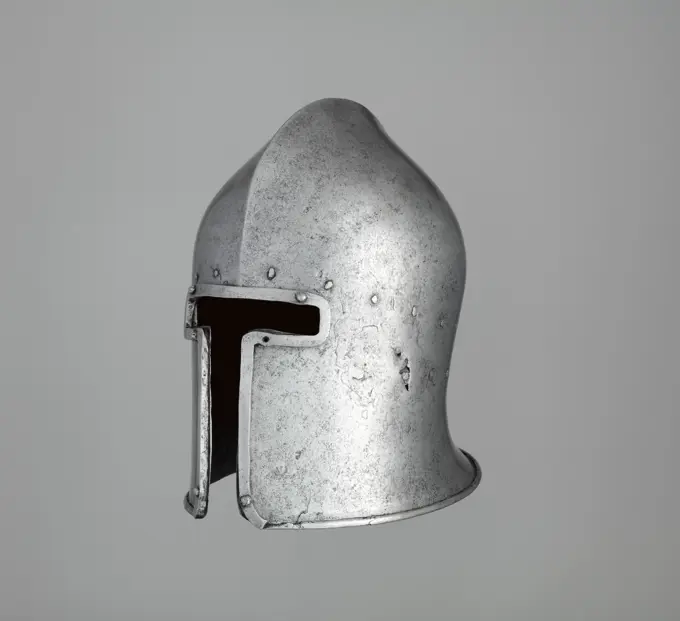
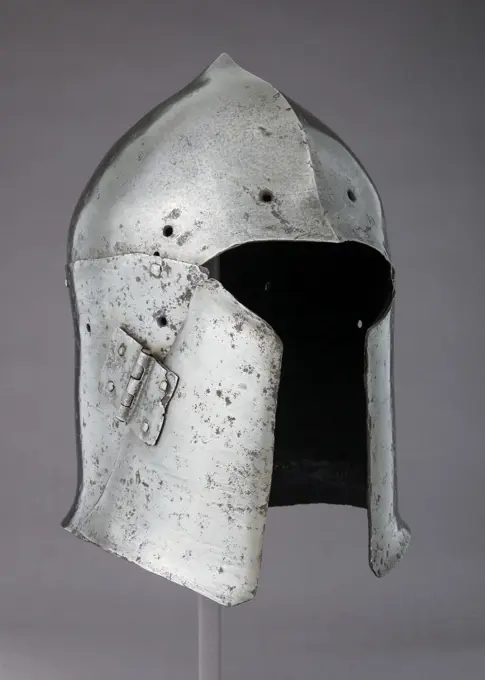
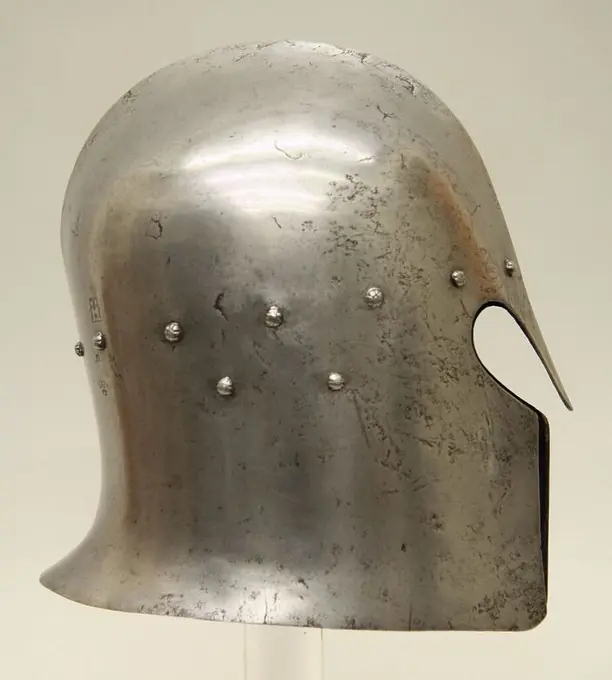
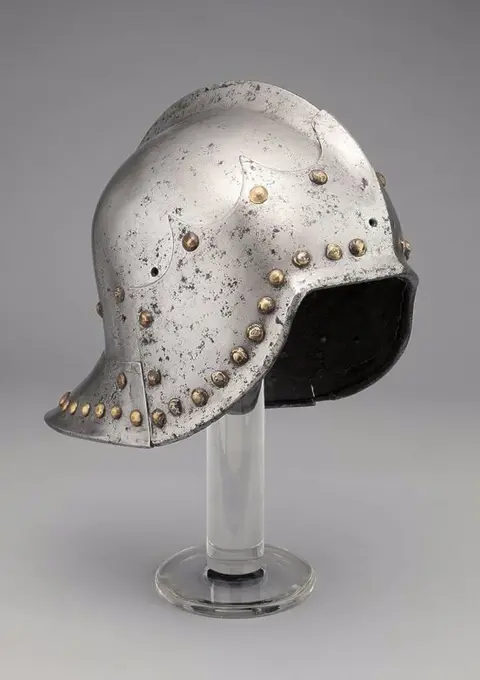
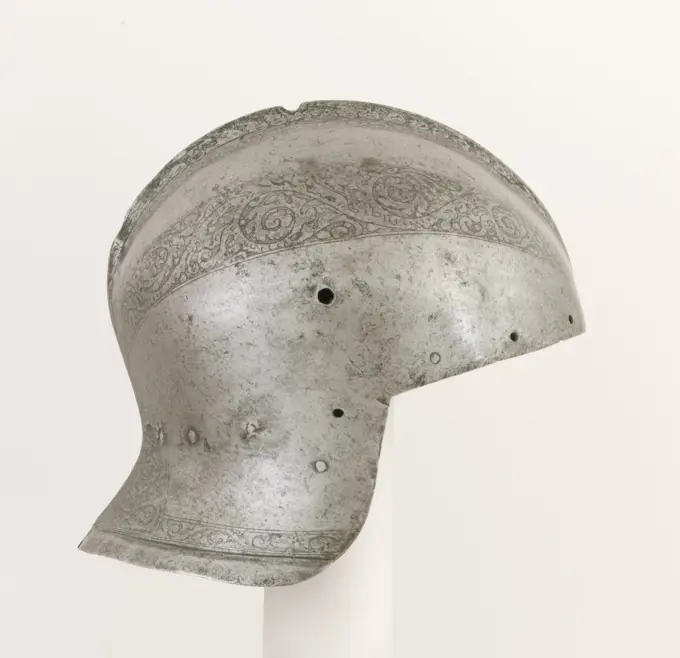
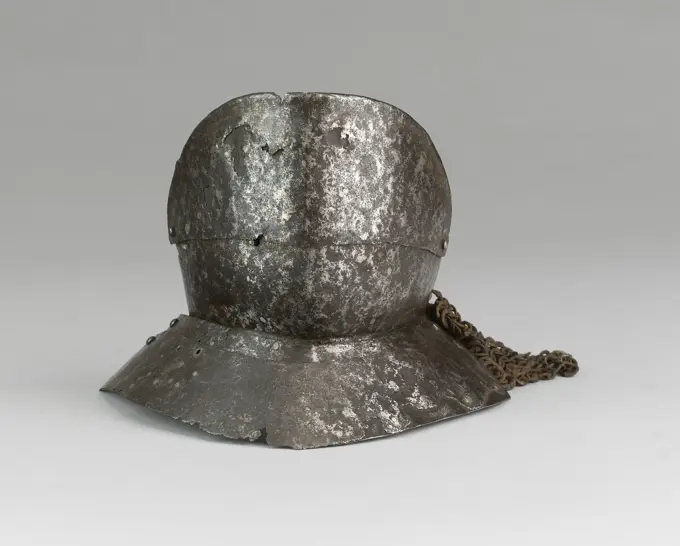
Barbute ca. 1460 Italian, Milan The english term barbut (from the italian, barbuta) denotes a characteristically tall form of visorless helmet with narrow T- or Y-shaped face opening that was worn almost exclusively in Italy in the third quarter of the fifteenth century. This barbut is forged from a single plate of steel, its hemispherical skull rising to a sharp comb at the top and descending at the sides and back almost to the tops of the shoulders; the back of the helmet has an elegant profile that curves inward to follow the nape of the neck, then turns outward to form a short tail. The face opening is T-shaped and is reinfored by an applied band of iron held by decorative rosette rivets. The series of rivets encicling the middle of the bowl formerly secured a strap on the inside, to which was sewn a padded lining; below this, on either side, is a pair of rivets to secure the chin straps, now also lost.This elegantly proportioned and gracefully shaped barbut demonstrates the virtuo
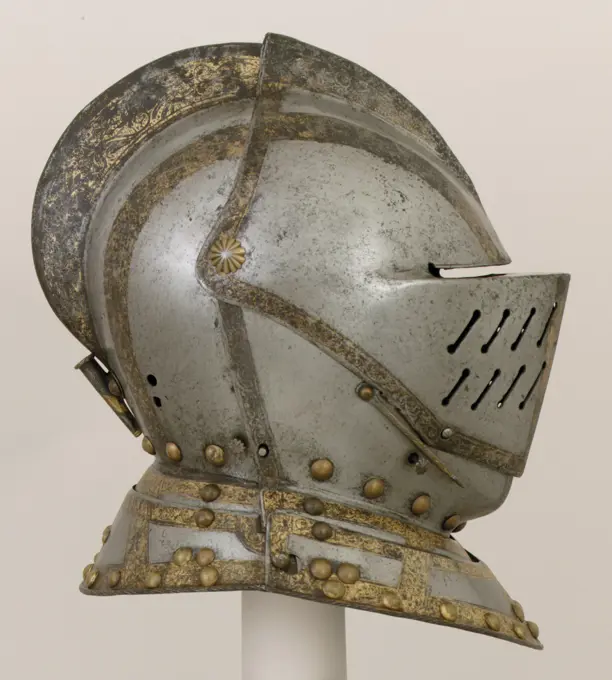
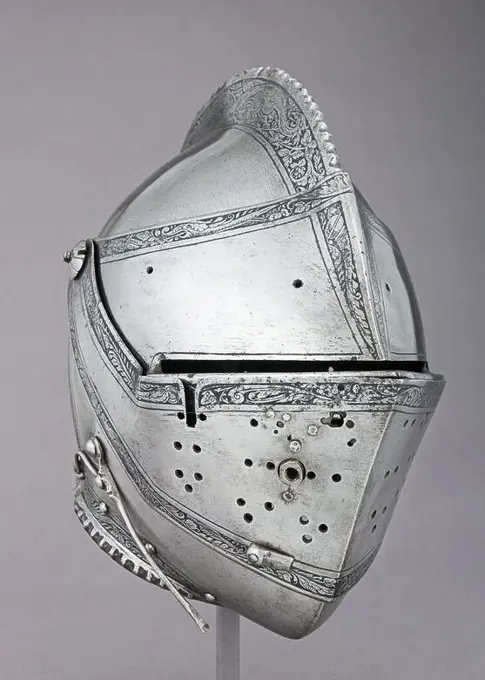
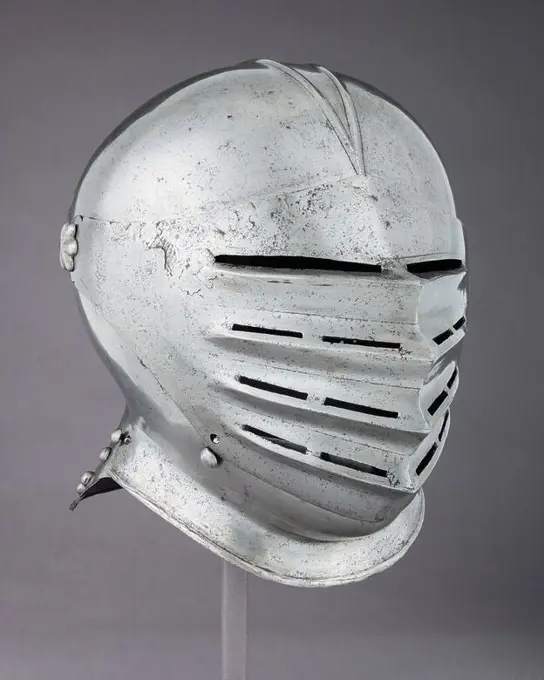
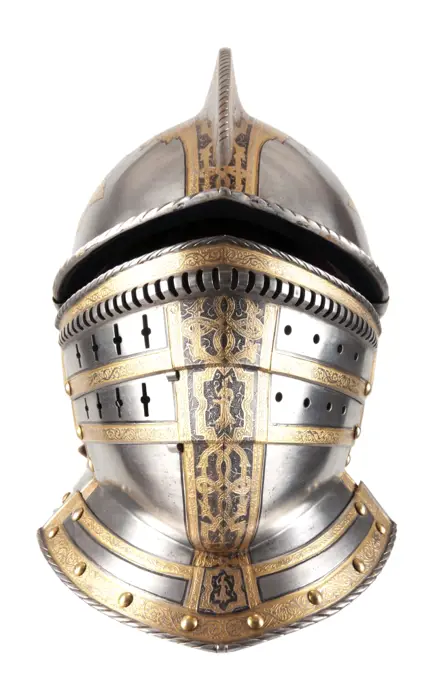
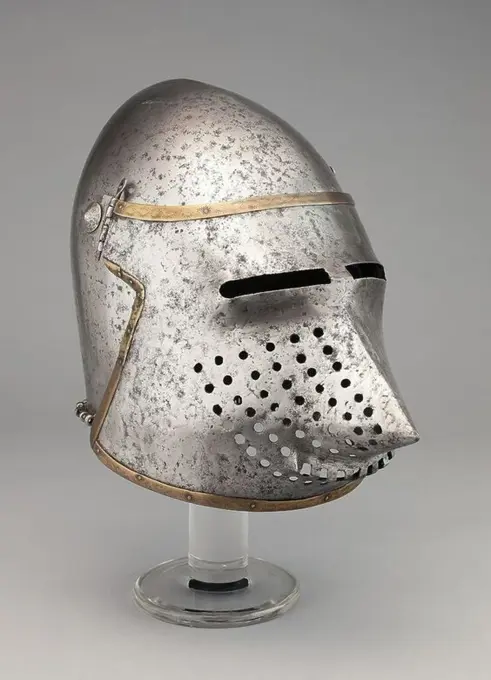
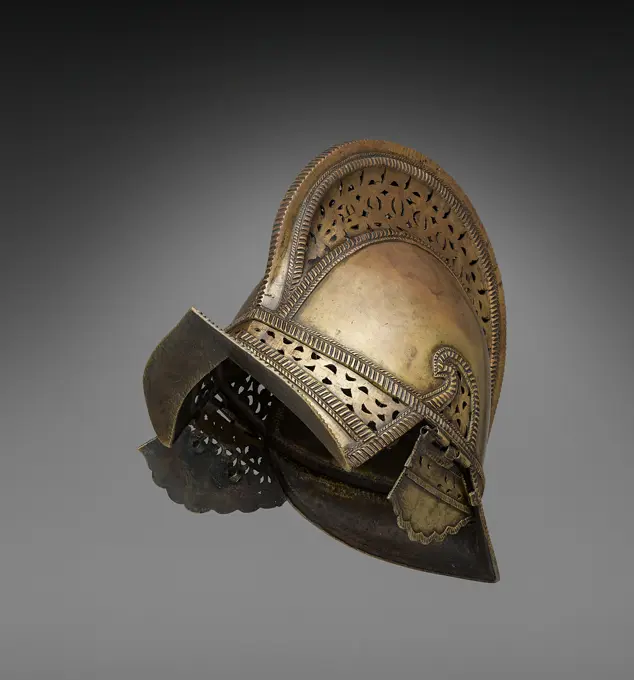
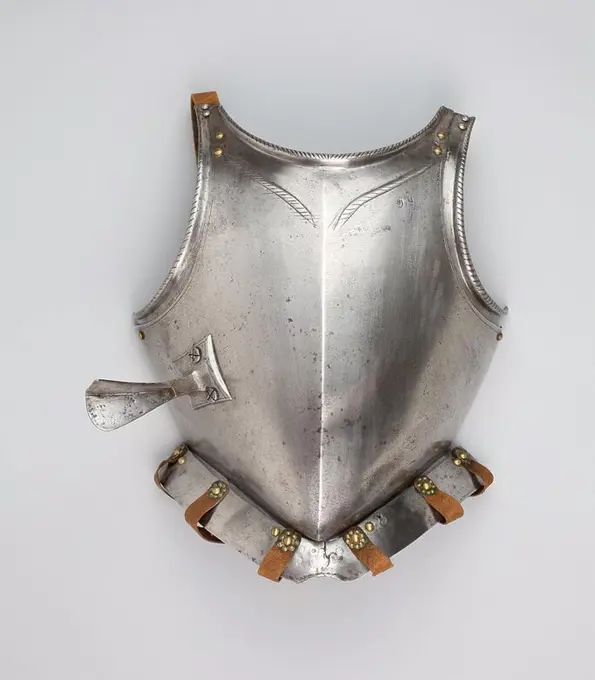
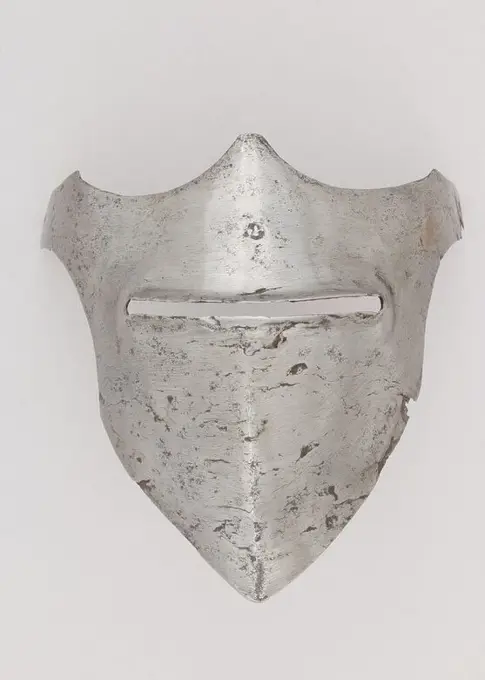
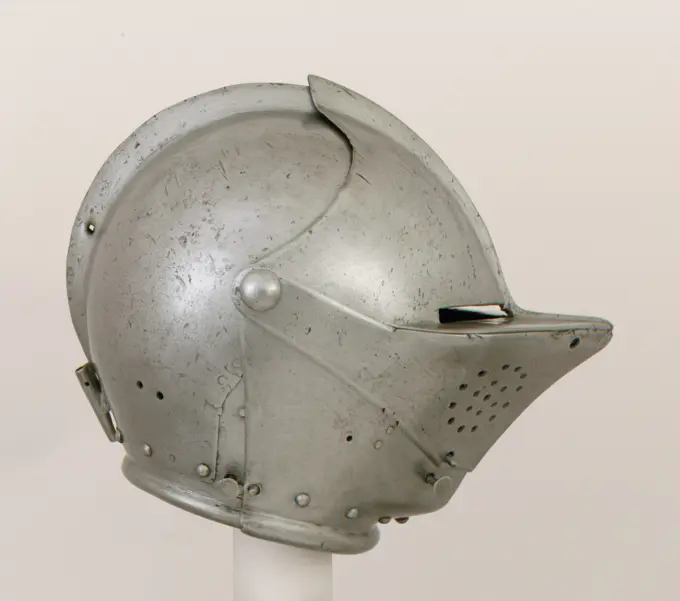
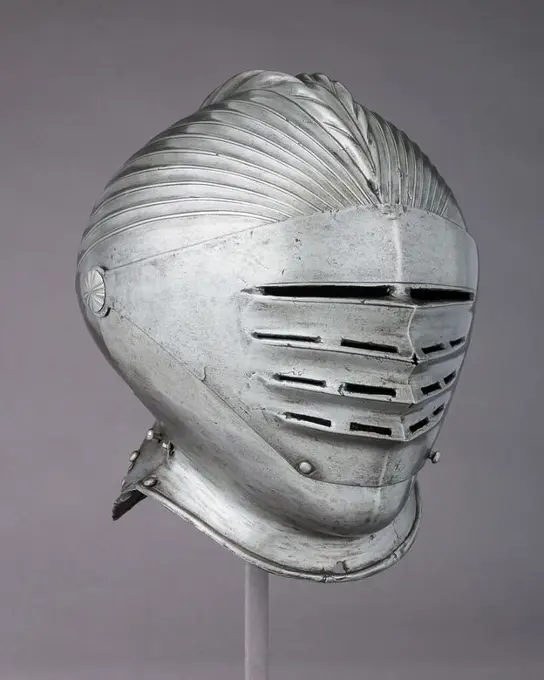
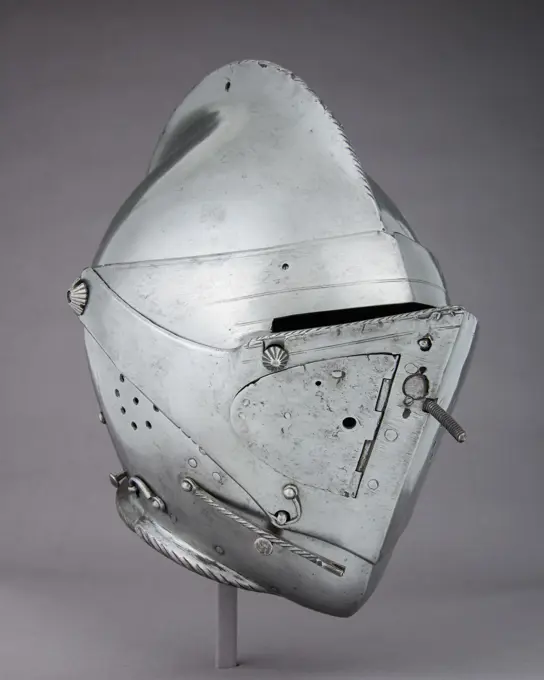
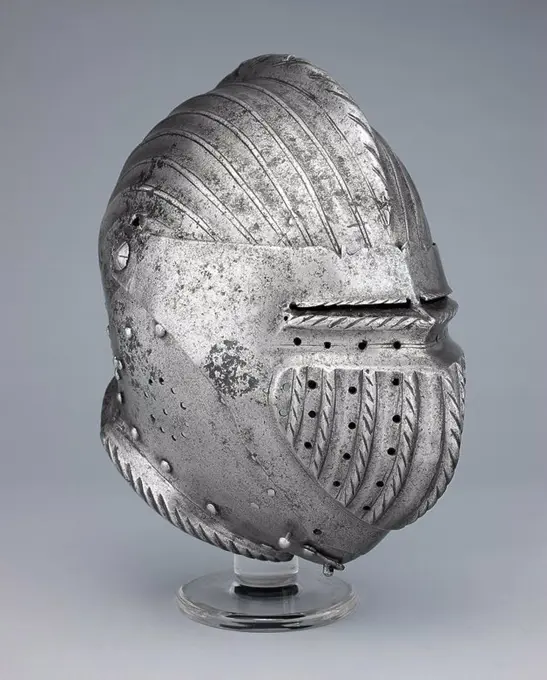
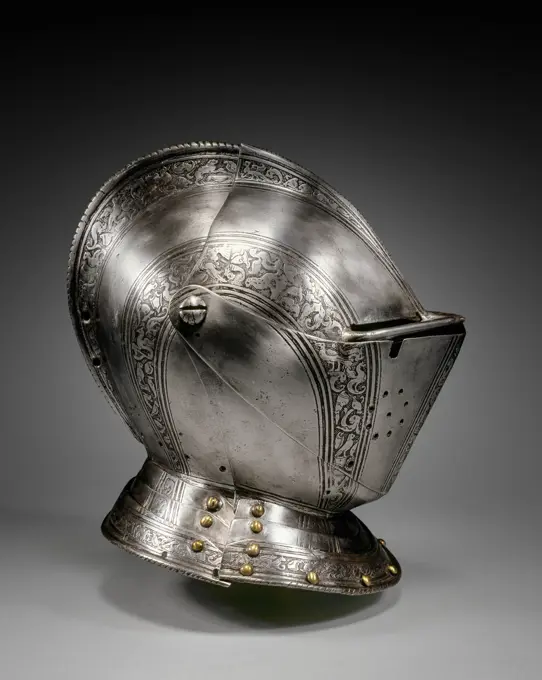
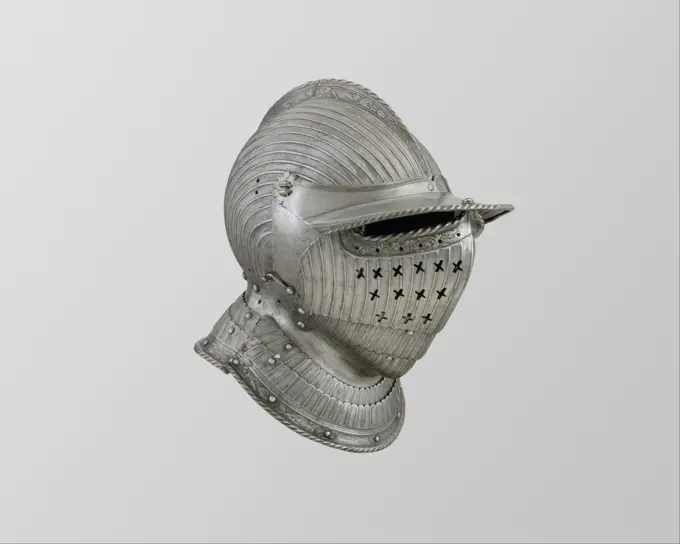
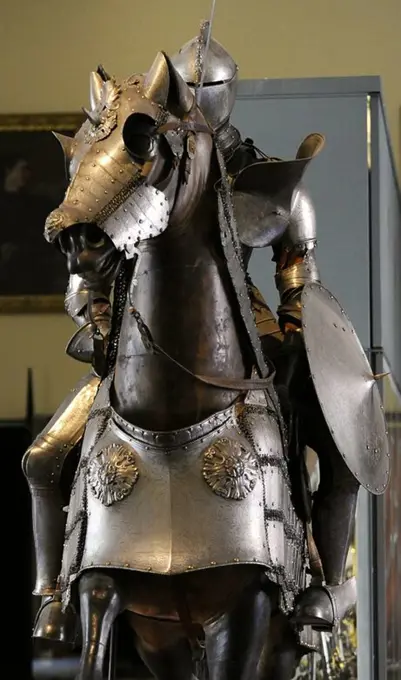
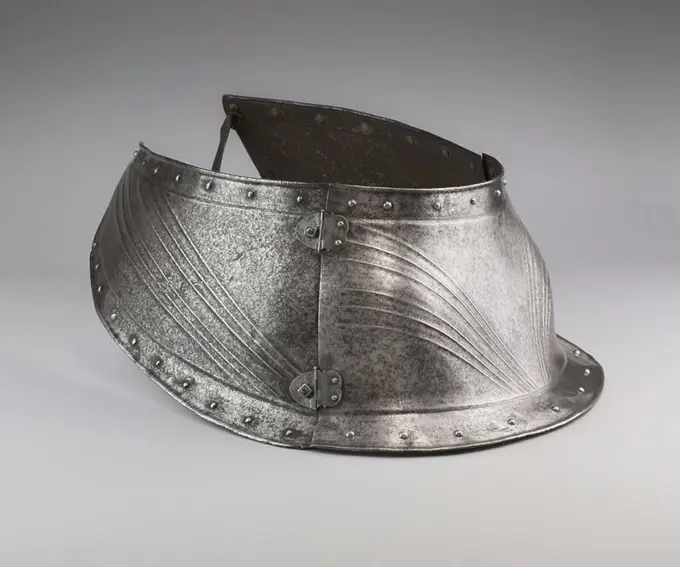
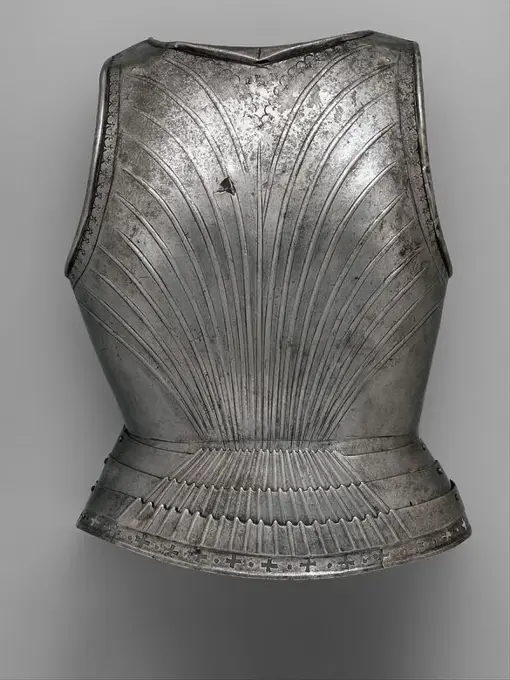
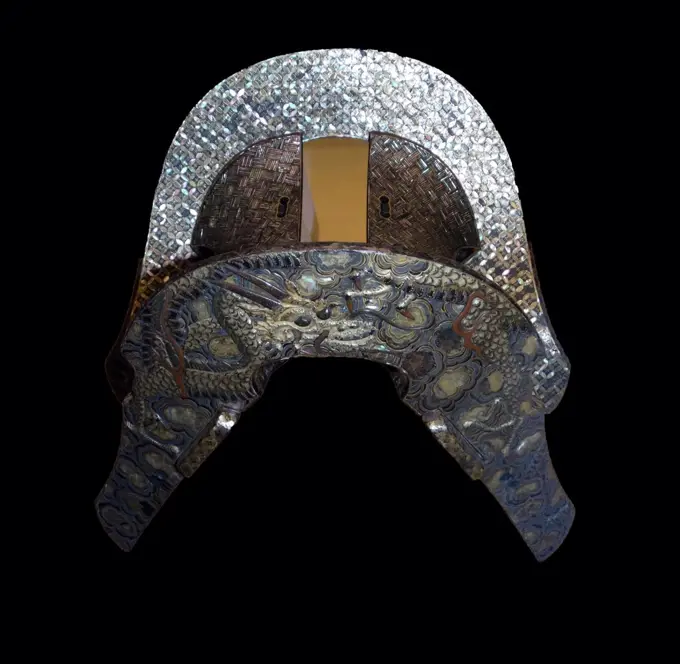
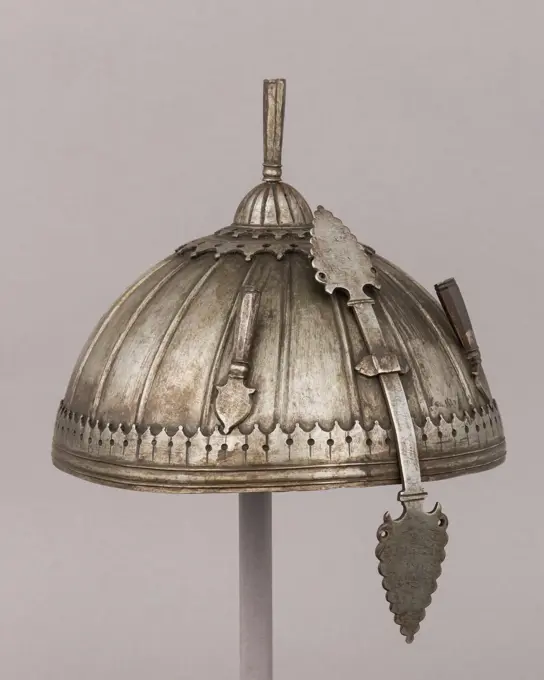
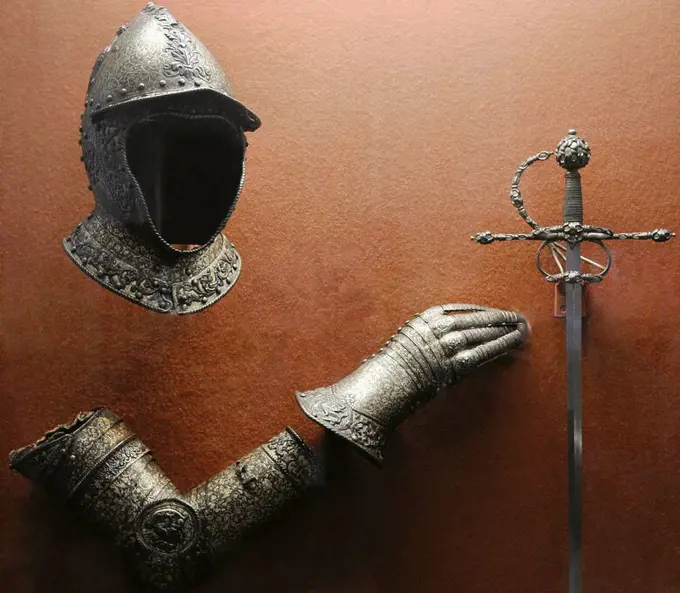
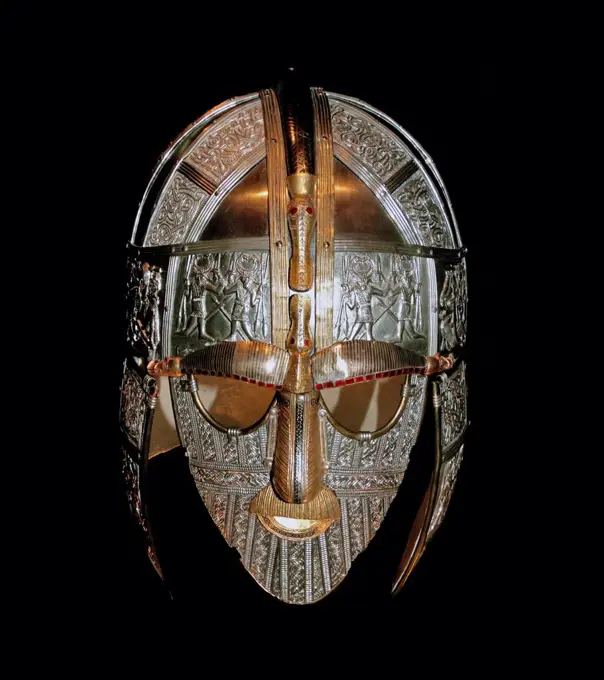
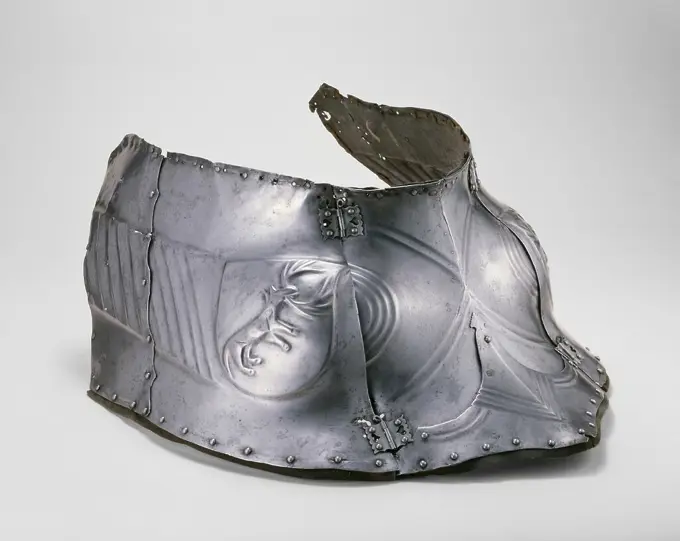
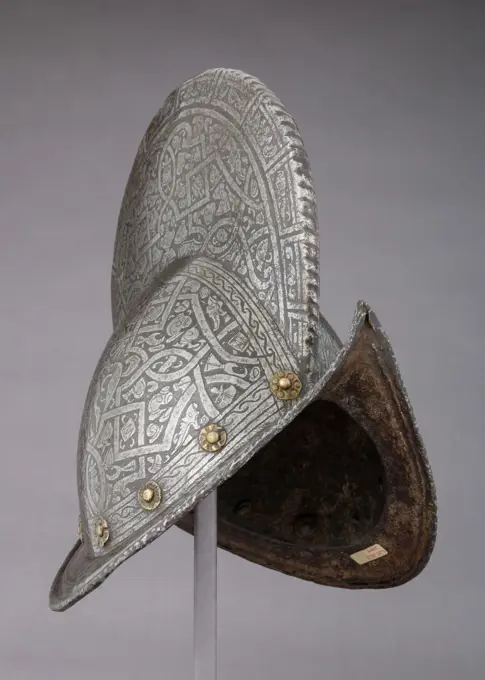
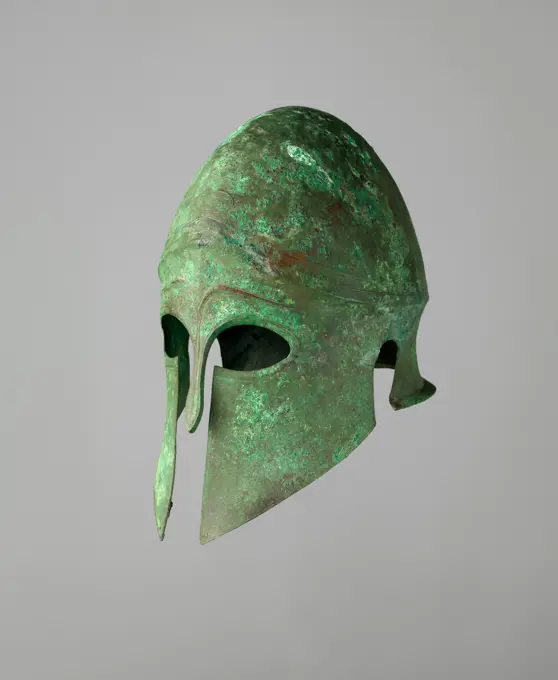
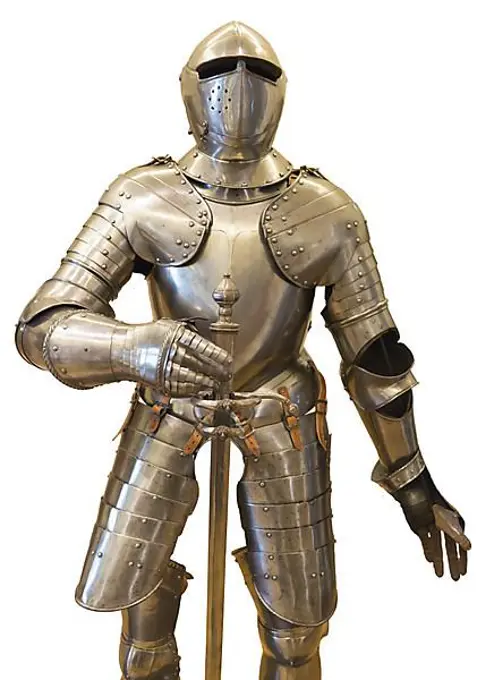
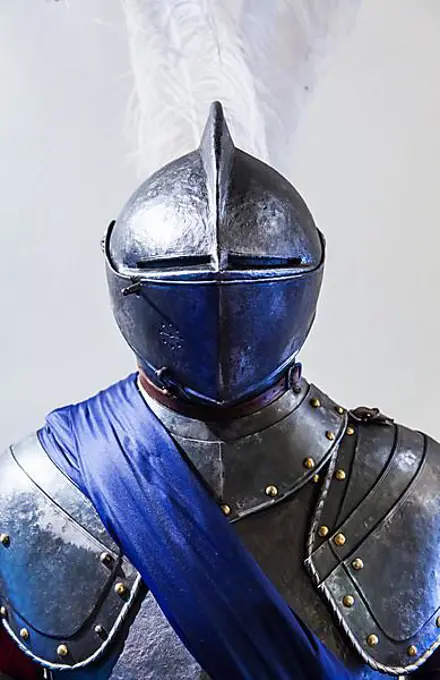
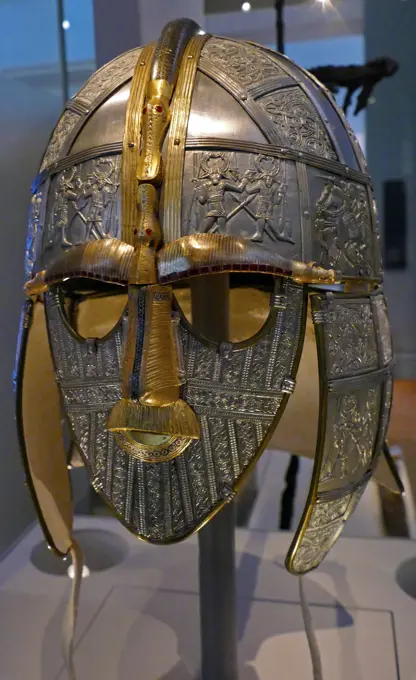
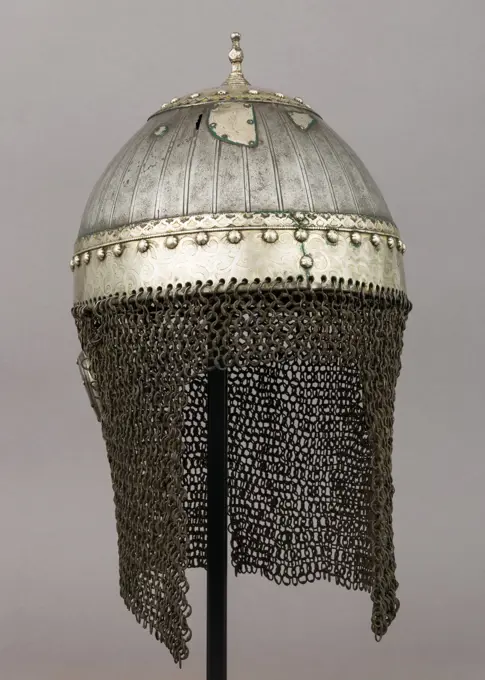
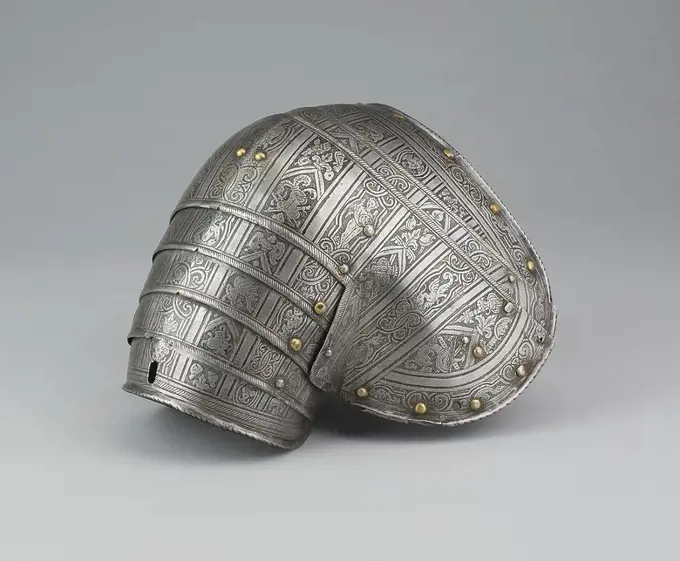
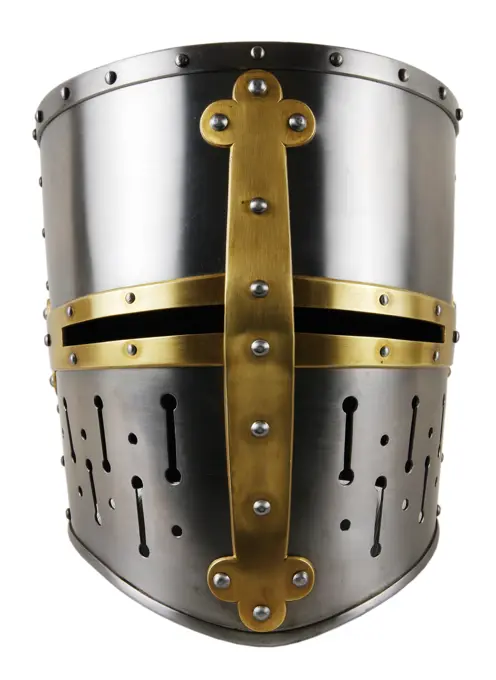
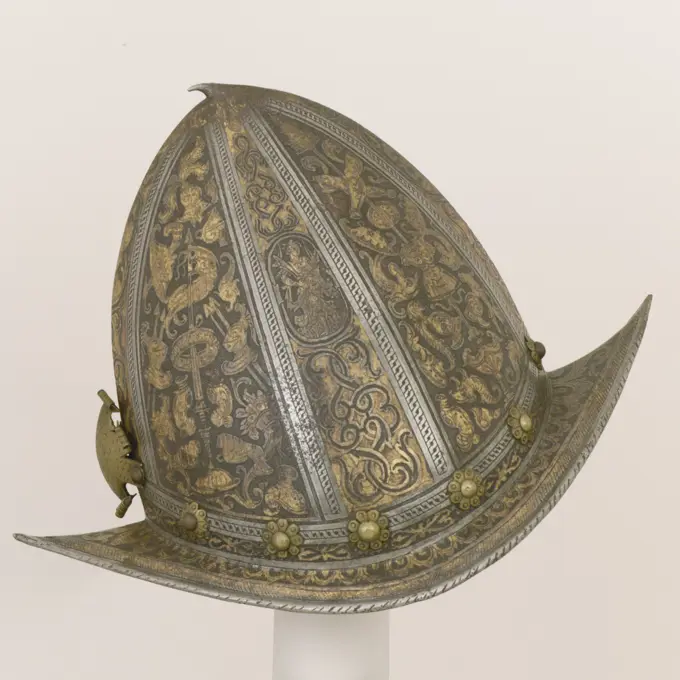
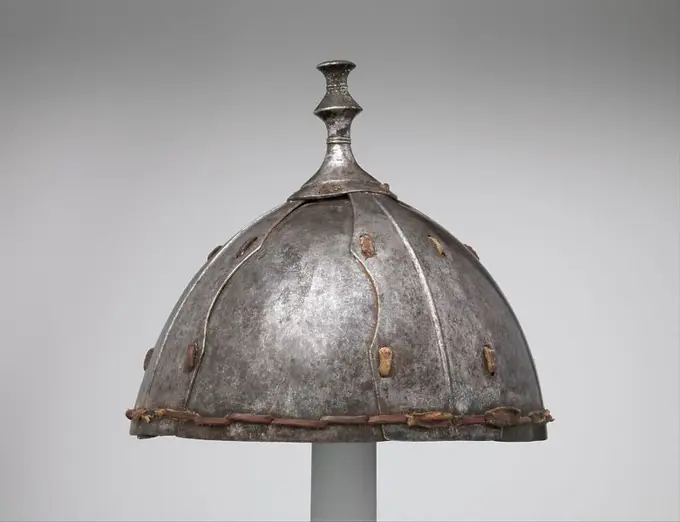
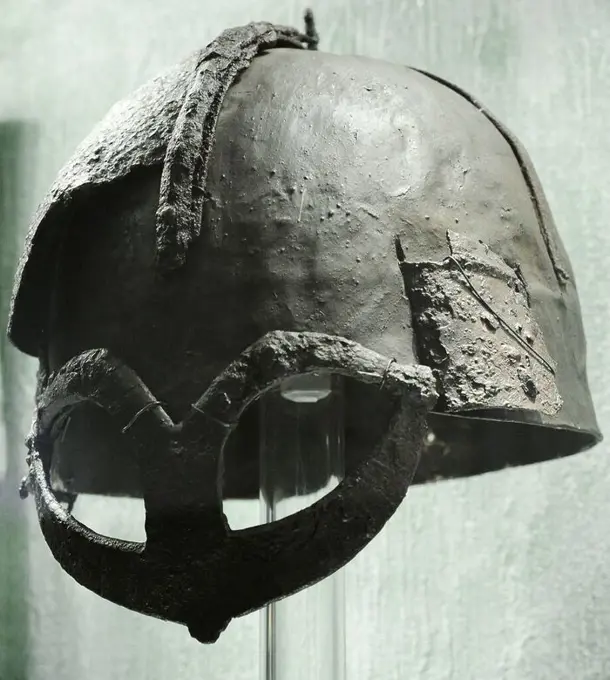
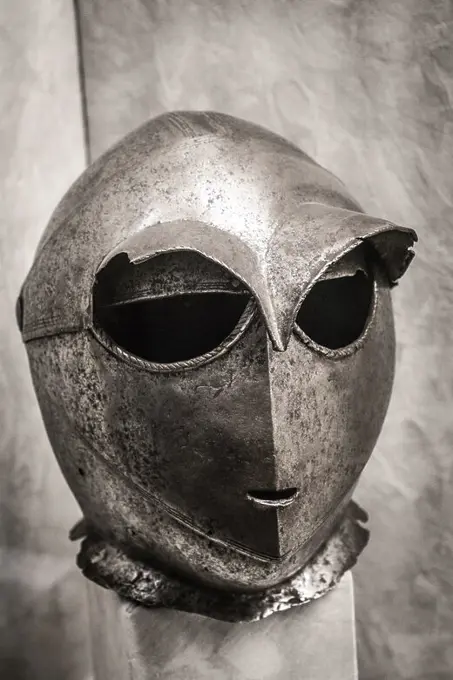
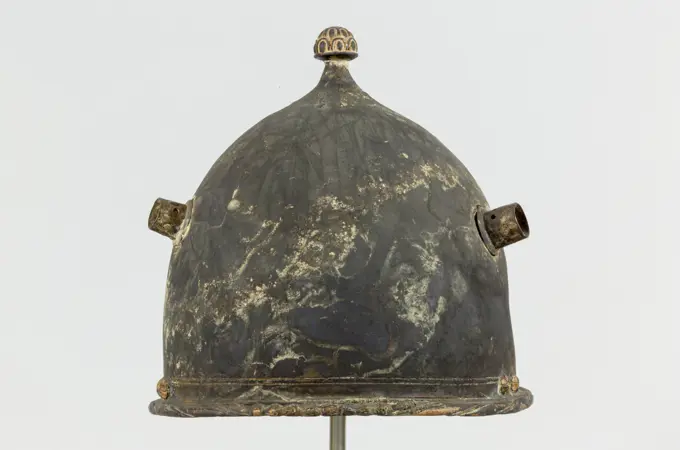
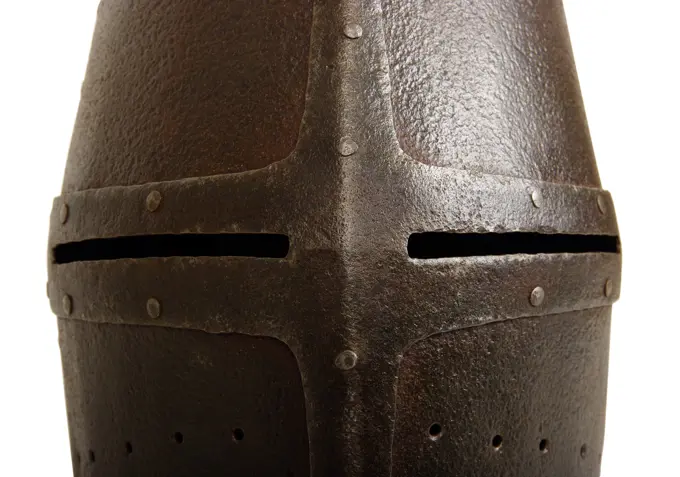
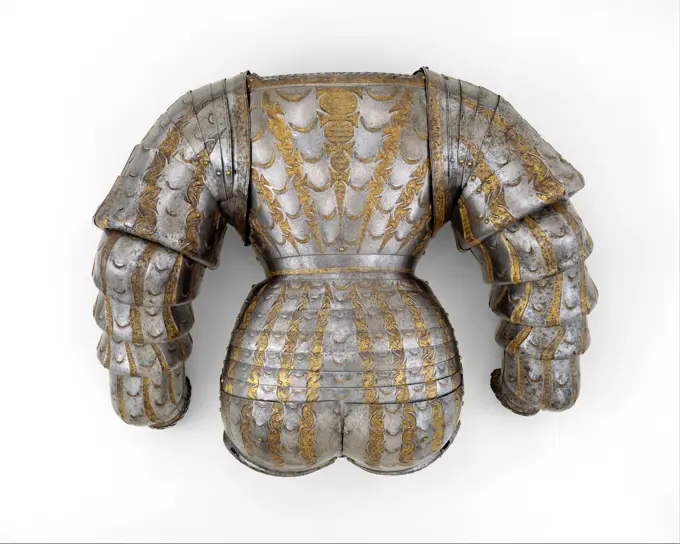
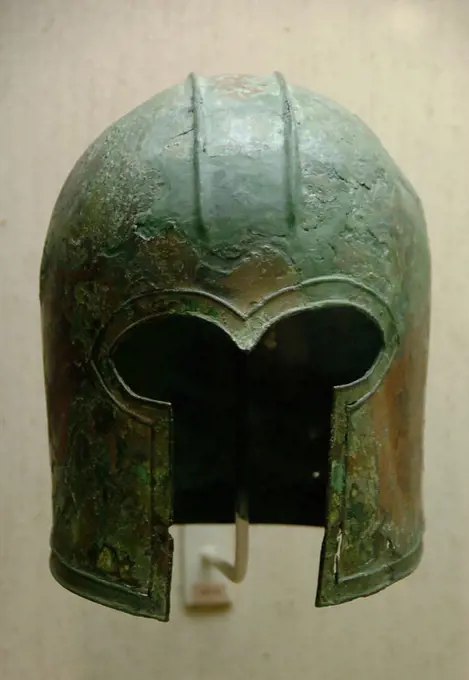
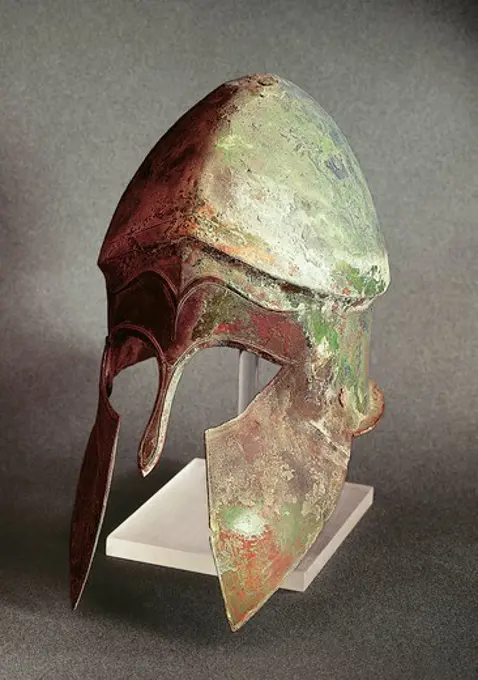
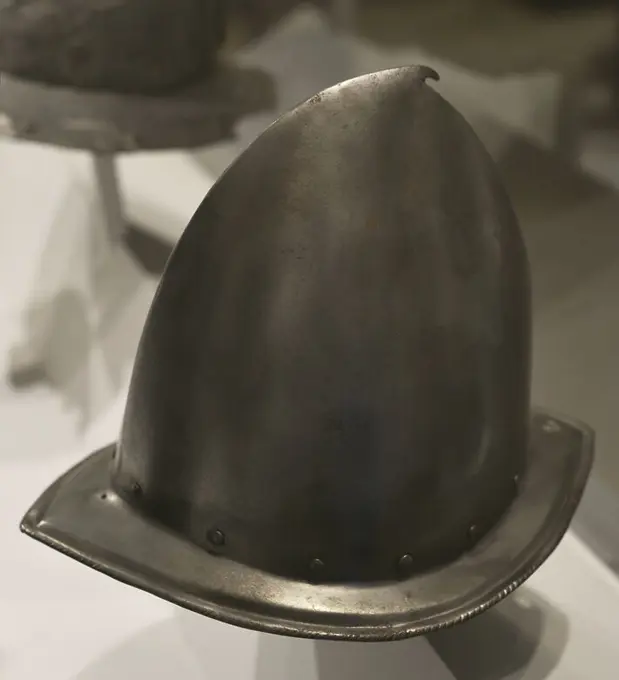
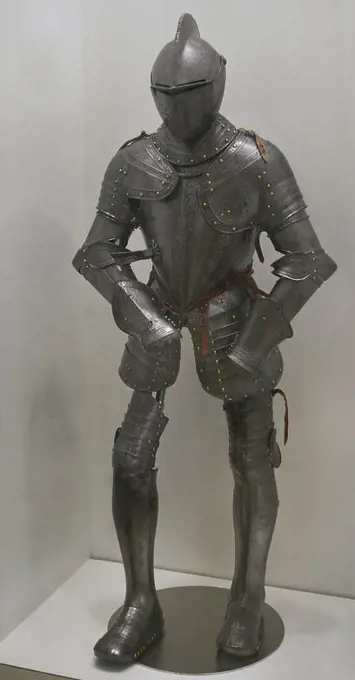
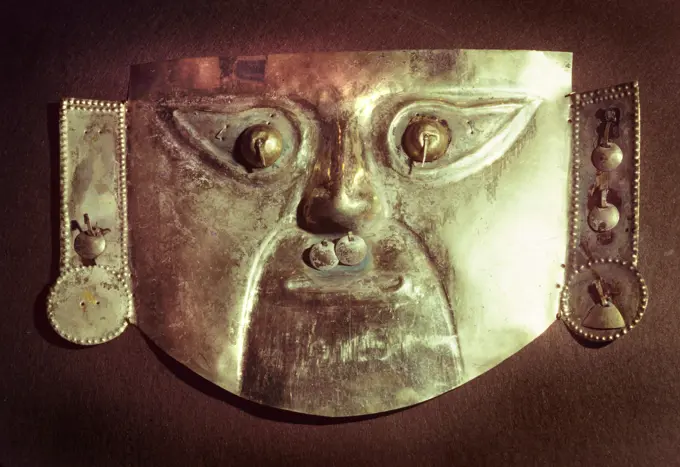
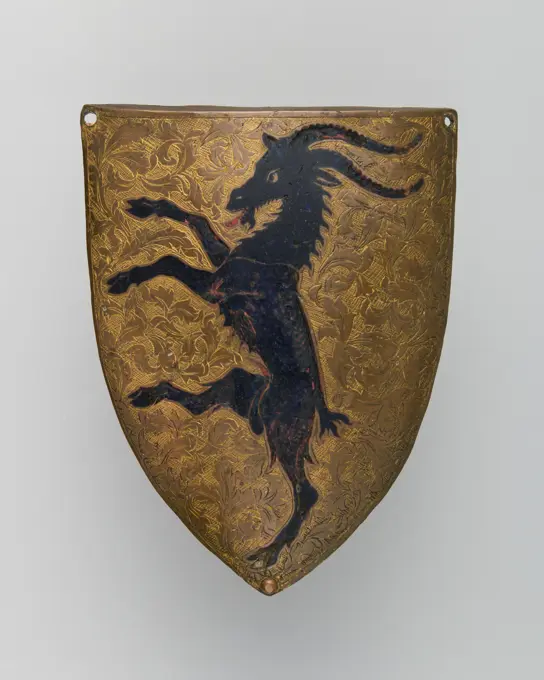
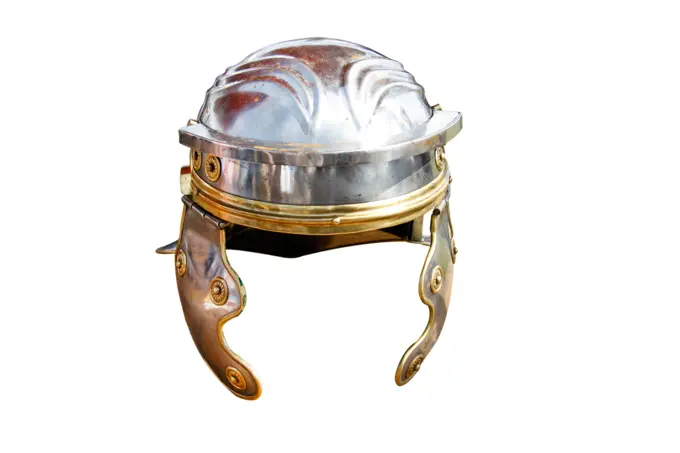
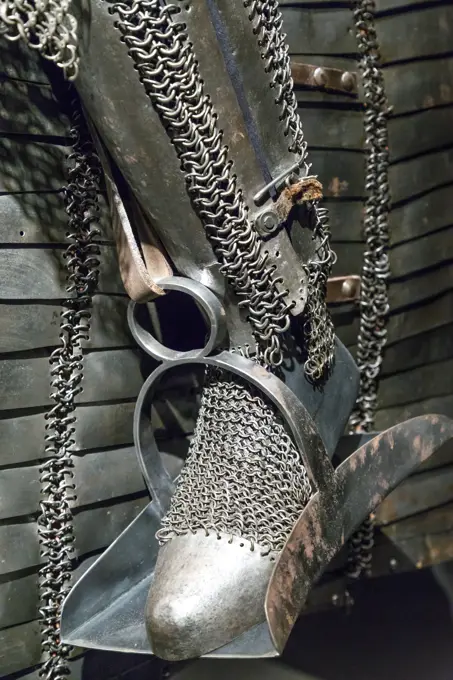
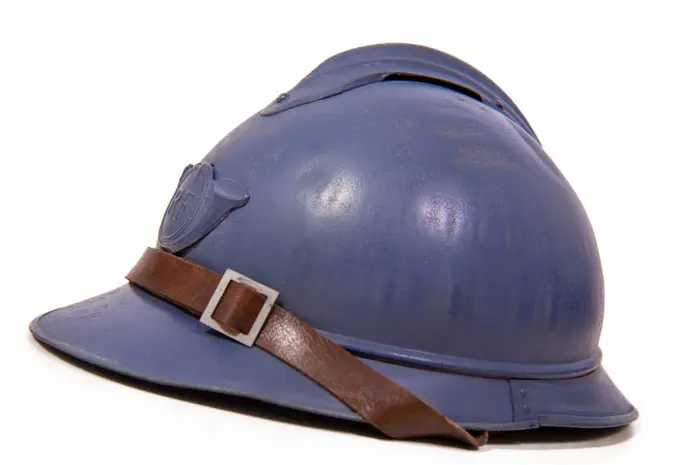
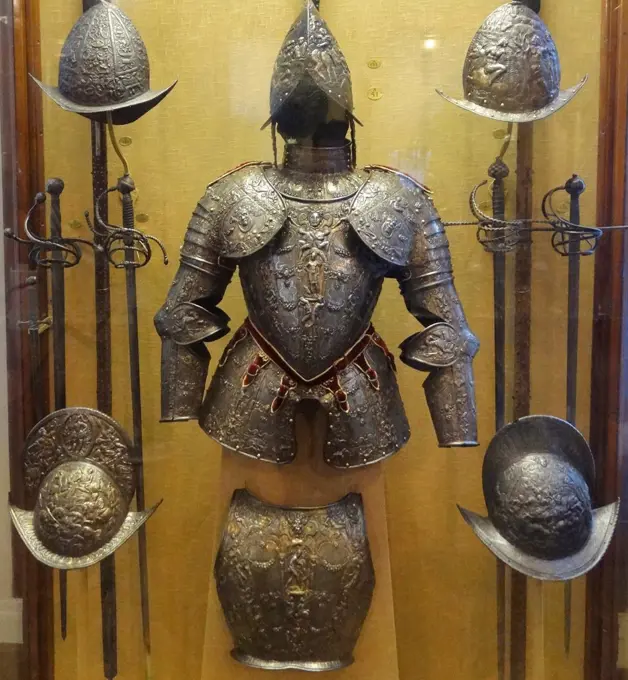
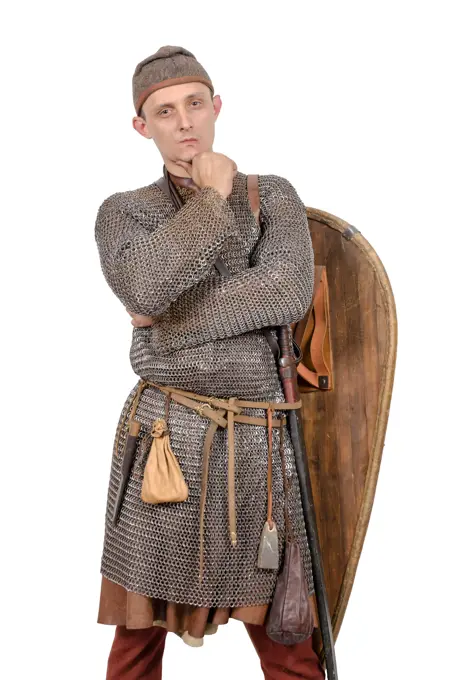
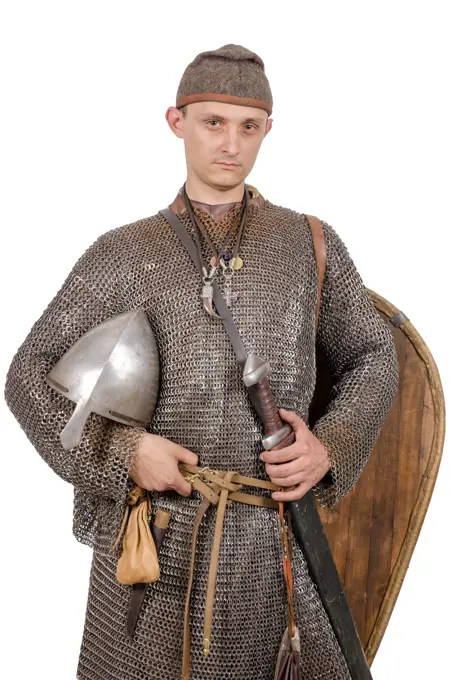
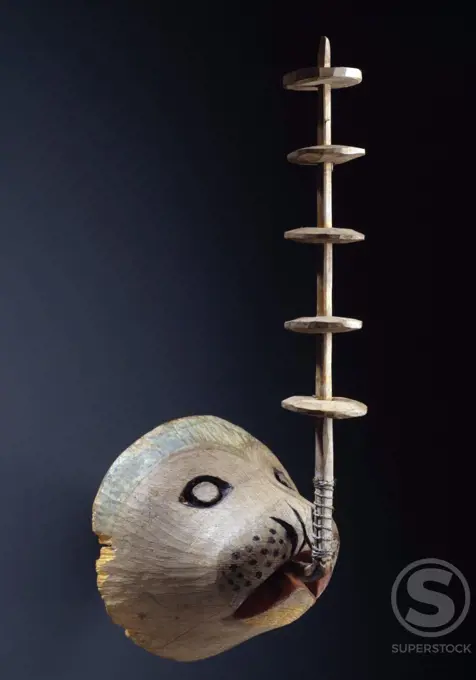
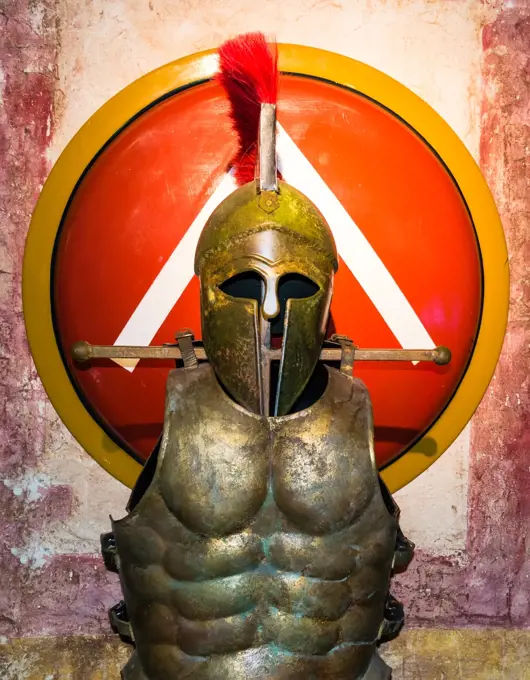
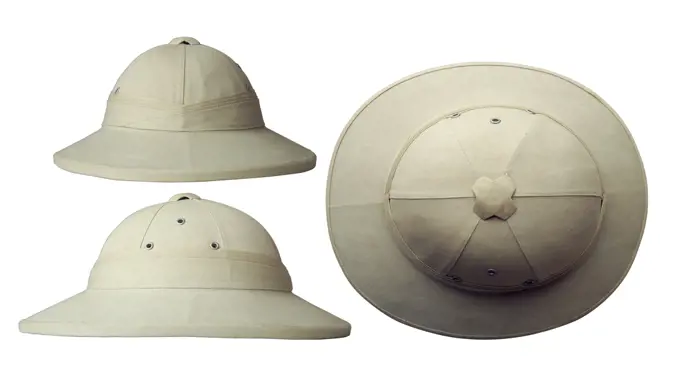
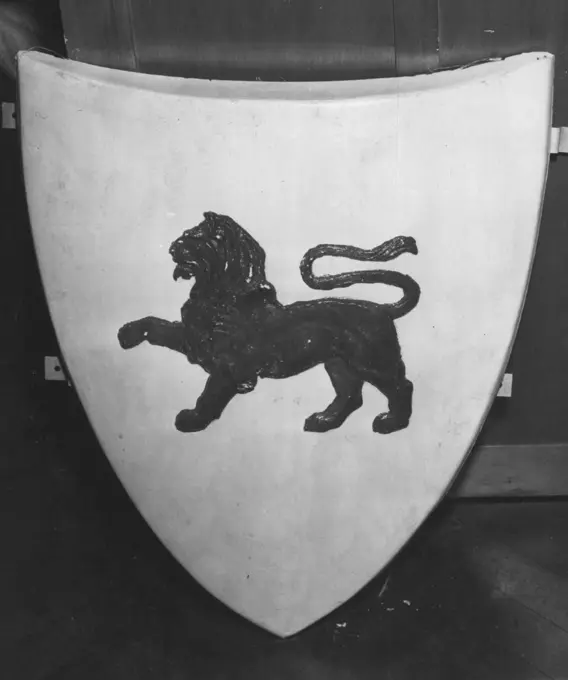
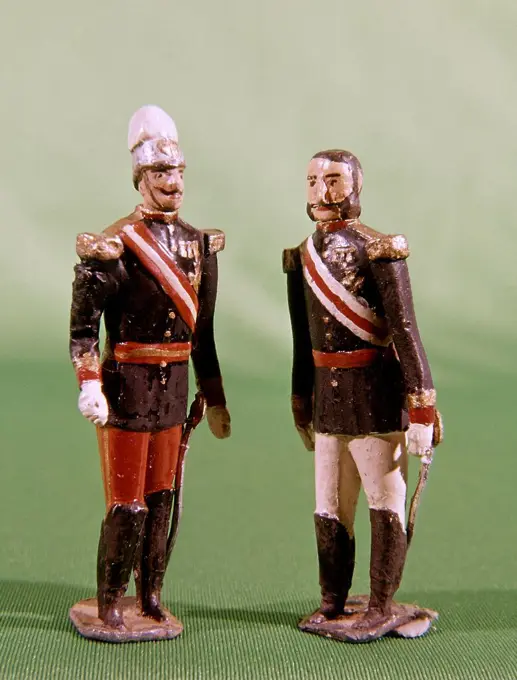
Foot-Combat Helm ca. 1490 possibly British or Flemish For the tournament fought on foot in an enclosed field. Said to have come from Saint Mary's Church at Aylesbury, Buckinghamshire, where it may have hung over the tomb of its owner.. Foot-Combat Helm. possibly British or Flemish. ca. 1490. Steel, leather, textile, copper alloy. HelmetsClose-Helmet for the Field dated 1594, with later restorations Martin Schmidt Although now marred by corrosion, the etched and gilt decoration on this helmet is of high quality. It is exceptional in that the etcher inscribed his name at the base of the bowl, Martin Schmidt, and added the date, 1594, twice on the bottom rear collar lame. Few etcher's signatures are known, and this dated example by Schmidt, who is otherwise unrecorded, appears to be unique.. Close-Helmet for the Field 26517Close Helmet for the Tourney. Culture: Austrian, Innsbruck. Designer: Ornament copied from a design by Daniel Hopfer (German, Kaufbeuren 1471-1536 Augsburg). Dimensions: H. 10 1/2 in. (26.7 cm); W. 8 5/16 in. (21.1 cm); D. 12 1/4 in. (31.1 cm); Wt. 6 lb. 3 oz. (2803 g). Date: dated 1552.The ornament on the comb is copied from a design by the Augsburg printmaker and armor etcher Daniel Hopfer (ca. 1470-1536), whose published prints were very influential in the development of a recognizably Augsburg style of armor decoration, which was emulated in Innsbruck and elsewhere in Austria and South Germany. Museum: Metropolitan Museum of Art, New York, USA.Barbute ca. 1460 Italian, Milan The english term barbut (from the italian, barbuta) denotes a characteristically tall form of visorless helmet with narrow T- or Y-shaped face opening that was worn almost exclusively in Italy in the third quarter of the fifteenth century. This barbut is forged from a single plate of steel, its hemispherical skull rising to a sharp comb at the top and descending at the sides and back almost to the tops of the shoulders; the back of the helmet has an elegant profile that curves inward to follow the nape of the neck, then turns outward to form a short tail. The face opening is T-shaped and is reinfored by an applied band of iron held by decorative rosette rivets. The series of rivets encicling the middle of the bowl formerly secured a strap on the inside, to which was sewn a padded lining; below this, on either side, is a pair of rivets to secure the chin straps, now also lost.This elegantly proportioned and gracefully shaped barbut demonstrates the virtuoBascinet 1425-50 Italian This is part of a large find of medieval armor discovered in 1840 in the ruins of the fortress of Chalcis, on the Greek island of Euboea (then a Venetian colony called Negroponte). The fortress had been captured and destroyed by the Turks in 1470. Now divided largely between the Ethnological Museum, Athens, and The Metropolitan Museum of Art, the Chalcis hoard contains many rare and unusual elements of fourteenth- and fifteenth-century armor. Of particular importance are the variety of headpieces and the many fragments of brigandines (armor for the torso constructed of small plates riveted to layers of fabric), some of which retain portions of their original velvet covering. The Chalcis armor provides a unique picture of the armament used in the Aegean, one of the easternmost military outposts of the Venetian empire.. Bascinet 34277Helmet. Culture: German. Dimensions: H. 10 1/2 in. (26.7 cm); W. 9 1/8 in. (23.2 cm); D. 11 3/4 in. (29.8 cm); Wt. 4 lb. 4.4 oz. (1939.1 g). Date: ca. 1510. Museum: Metropolitan Museum of Art, New York, USA.Iron helmet of the medieval knight. Very heavy headdressVisored Bascinet. Western European. Date: 1390-1410. Dimensions: H. 24.1 cm (9 1/2 in.). Steel and brass. Origin: Italy. Museum: The Chicago Art Institute, Chicago, USA.Helmet, 19th century. Philippines, Mindanao. average: 25.4 cm (10 in.).Breastplate with Lance Rest and Fauld. Northern Italian, Milan. Date: 1500-1600. Dimensions: . Steel. Origin: Italy. Museum: The Chicago Art Institute, Chicago, USA.Visor. Culture: Italian. Dimensions: H. 7 1/2 in. (19.1 cm); W. 7 3/4 in. (19.7 cm); D. 6 1/8 in. (15.6 cm); Wt. 12.5 oz. (354.4 g). Date: ca. 1400-1450.Helmets fitted with this type of visor appear to have been worn exclusively in the Mediterranean region. This example has an unidentified maker's mark near the center. Museum: Metropolitan Museum of Art, New York, USA.Close-Helmet for the Tournament on Foot ca. 1640-50 Possibly German, Dresden; or Swedish, Stockholm This helmet belongs to a series of foot-combat armors made for the Saxon court at Dresden during the reign of Prince-Elector Johann Georg I (1611-56). Numerous cuts on the left side give evidence of its active service in knightly contests. The helmet bowl retains portions of its original lining straps and cross-straps and the bevor has its chin pad of canvas stuffed with cotton.. Close-Helmet for the Tournament on Foot. Possibly German, Dresden; or Swedish, Stockholm. ca. 1640-50. Steel, leather, textile. possibly Dresden. HelmetsBarbute. Armorer: Pietro da Castello (Italian, Brescia, documented 1469-86, died before 1498). Culture: Italian, Brescia. Dimensions: H. 10 1/4 in. (26 cm); W. 7 1/2 in. (19.1 cm); D. 10 in. (25.4 cm); Wt. 4 lb. 14 oz. (2211 g). Date: ca. 1470-80.Most Italian barbutes have a T-shaped face opening. The rounded eye openings and pointed nasal of this helmet are very unusual. It is stamped with two marks, a castle and the letter P beneath a split cross, identified as the armorer Pietro da Castello (documented in Brescia from 1469 to 1486, died before 1498). Museum: Metropolitan Museum of Art, New York, USA.Double-Crested Maximilian Helmet. Culture: German. Dimensions: H. 11 in. (27.9 cm); W. 9 1/4 in. (23.5 cm); D. 11 1/2 in. (29.2 cm); Wt. 4 lb. 13.5 oz. (2197.1 g). Date: 1520. Museum: Metropolitan Museum of Art, New York, USA.Close-Helmet for the Tilt ca. 1580-90 Austrian, Innsbruck Close-helmets for the tilt were typically fitted with a large ventilation door on the right side of the upper bevor, whereas the left side, which was more exposed to an opponent's lance, was covered by a reinforce (grandguard) bolted to the breastplate. This example retains its original leather lining straps and adjustable shock-absorbing cross-straps arranged as an X inside the bowl. To the ends of these straps were attached thin laces that passed through holes at the back of the bowl and allowed the wearer to adjust the tension on the straps. The leather-covered lining at the chin is preserved. The graceful lines of the bowl and the pairs of lightly engraved lines around the edges of the plates recall helmets made in the imperial workshops at Innsbruck. (The brow reinforce is missing; the long threaded bolt at the front, intended to affix the grandguard, is a later modification.). Close-Helmet for the Tilt 26448Armet. Southern German. Date: 1510-1540. Dimensions: H. 19.7 cm (7 3/4 in.). Steel. Origin: Southern Germany. Museum: The Chicago Art Institute, Chicago, USA.Backplate 1500-1600 Italy. Steel .Iron helmet Iron helmet of the medieval knight. Very heavy headdress Copyright: xZoonar.com/ValeryxxSibrikovx 2449842Iron helmet of the medieval knight. Very heavy headdressSallet. Northern Italian; probably Milan. Date: 1480-1510. Dimensions: H. 17.8 cm (7 in.). Steel and brass. Origin: Milan. Museum: The Chicago Art Institute, Chicago, USA.Close Helmet, c. 1575. North Italy, Brescia (), 16th century. Steel with etched decorative bands and roundels; overall: 29.5 x 28.5 x 23 cm (11 5/8 x 11 1/4 x 9 1/16 in.). Decoration was critical to fine armor, and etching was the most commonly used technique. Here, the bands along the borders are etched. On the breastplate, pauldrons (shoulder guards), and tassets (hip and upper leg guards), etched medallions enclose profile busts reminiscent of ancient Roman portraits. The lance rest on the breastplate indicates that this half-suit was once part of a complete field armor for man and horse. The etching technique used for armor was developed in the late 1400s. The metal surface was first coated with an acid-resistant substance, such as wax or varnish. An etching needle was then used to scratch a design into the surface. The exposed areas were then treated with an acid that would "bite" or etch the lines into the metal. When the coating was removed, the etched design was blackened forIron helmet Iron helmet of the medieval knight. Very heavy headdress Copyright: xZoonar.com/ValeryxxSibrikovx 2449871Breastplate 1550-1580 Italy, northern. Steel, etched .Half Armor. Italian. Date: 1540-1580. Dimensions: H. cuirass with tassets: 94 cm (37 in.). Steel. Origin: Italy. Museum: The Chicago Art Institute, Chicago, USA.Bevor ( Falling Buff ) with Two Gorget Pieces 1490-1510 Europe. Steel .Bowl of a Sallet ca. 1510-15 Italian, probably Milan Etching with acid is known to have been used for the embellishment of weapons since at least the thirteenth century, but the technique seems to have been applied to armor beginning in the late fifteenth century, several decades before it was adopted as a printmaking technique. Formerly gilt, the etched decoration on this example includes bands of foliage set against a diagonally hatched background. Similar ornament is found in contemporary Italian prints. The sallet was probably fitted with a large bellows visor pivoting at the sides and was intended for use by a light cavalryman.. Bowl of a Sallet. Italian, probably Milan. ca. 1510-15. Steel, gold. probably Milan. HelmetsClosed Burgonet ca. 1525-30 Attributed to Kolman Helmschmid German This helmet combines features common to burgonets, notably the projecting peak and falling buffe, with close-helmet construction, in which all elements of the face defense pivot together at the sides of the bowl. Closed burgonets in the fluted style are particularly rare. This finely made example is etched in the manner of Daniel Hopfer (1471-1536) of Augsburg and may have been made by Kolman Helmschmid, the leading armorer of his generation, with whom Hopfer seems to have been associated.. Closed Burgonet. German, Augsburg. ca. 1525-30. Steel, leather. Augsburg. HelmetsTournament armour for horse and knight. 16th century. Brescian manufacturing. Royal Armory. National Museum of Capodimonte. Naples. Italy.Peytral of a Horse Armor. German. Date: 1500-1530. Dimensions: . Steel. Origin: Germany. Museum: The Chicago Art Institute, Chicago, USA.Backplate. Armorer: Probably by Francesco Negroli (Italian, Milan, died before December 1519). Culture: Italian, Milan. Dimensions: H. 19 3/8 in. (49.3 cm); W. 15 1/4 in. (39 cm); D. 6 3/4 in. (17.3 cm); Wt. 5 lb. 6 oz. (2461 g). Date: ca. 1505-10.Judging by the maker's marks stamped on it, this backplate appears to be the only surviving identifiable work by Francesco Negroli, a member of a leading family of Milanese armorers, which, in the next generation, became internationally renowned for their sculpturally embossed armors all'antica (in the antique style). The backplate is in a style known as alla tedesca (in the Germanic fashion), suggesting that it was made for a client north of the Alps. Museum: Metropolitan Museum of Art, New York, USA.Wood, lacquer and shell inlay saddle with dragons and clouds. Dated 17th CenturyMorion-Cabasset. Culture: Italian. Dimensions: H. 11 1/4 in. (28.6 cm); W. 9 1/4 in. (23.5 cm); D. 14 3/16 in. (36 cm); Wt. 2 lb. 14 oz. (1297 g). Date: 16th century. Museum: Metropolitan Museum of Art, New York, USA.Helmet 18th century Indian. Helmet 32050A nasty of the Rajtar unknown labelParts of armor: helmet, vambrace or forearm guards and gauntlet. Ca. 1550-1560. Italy. Knights' Hall. The State Hermitage Museum. Saint Petersburg. Russia.A replica of the Sutton Hoo helmet Anglo-Saxon, early 7th century AD. Only four complete helmets are known from Anglo-Saxon England: at Sutton Hoo, Benty Grange, Wollaston and York.Peytral. Christian Spor (Austrian, died 1485); Austrian, Mühlau. Date: 1475-1480. Dimensions: L. 66 cm (26 in.) Weight: 8 lbs. Steel and leather. Origin: Mühlau. Museum: The Chicago Art Institute, USA.Iron helmet Iron helmet of the medieval knight. Very heavy headdress Copyright: xZoonar.com/VALERY-SIBRIKOVx 7538297Morion ca. 1575 Italian, Pisan. Morion. Italian, Pisan. ca. 1575. Steel, brass. Pisa. HelmetsHelmet of the Corinthian Type and Pair of Greaves early 5th century B.C. Greek This helmet and the pair of greaves (shin guard), or cnemids, complementing it belong to the key elements of a panoply, the set of offensive and defensive arms that a Greek warrior would have used in combat. The complete panoply would have typically also included a spear, a shield, and a sword.The helmet dates from the late Archaic period (ca. 700-480 B.C.) and is a late example of a type now generally known as Corinthian, which was popular in Greece and in territories colonized by or in regular contact with the Greeks. It is distinctive among the many Corinthian-type specimens known to survive for the elliptical form of the openings for the eyes, and the presence of cut outs for the ears. These features may have been inspired by the design of a contemporaneous type of helmet, which is generally known today as Chalcidian. The decoration of the brow with affronted serpents is similar in character to that of tIron helmet of the medieval knight. Very heavy headdressSuit of Armor on White BackgroundTuscany, Italy. Detail of an original Medieval armourBevor ( Falling Buff ) 1490-1510 Spain. Steel .reconstruction of the Sutton Hoo helmet, a decorated Anglo-Saxon helmet discovered during the 1939 excavation of the Sutton Hoo ship-burial. Buried around 625 AD. it is believed to have been the helmet of King Raedwald; for whom its elaborate decoration may have given it a secondary function almost akin to a crown.Helmet 18th-19th century Caucasian. Helmet 32069In hat (I) - Hatter's sign At hat (I); Hatter's sign. Sheet metal, polychromy, green, gilding, late 18th century, Directoire era.Right Pauldron. Italian. Date: 1580. Dimensions: . Steel. Origin: Italy. Museum: The Chicago Art Institute, Chicago, USA.Iron helmet Iron helmet of the medieval knight. Very heavy headdress. Copyright: xZoonar.com/ValeryxxSibrikovx 2454256Pointed Morion ca. 1590 Italian, Milan The etched and gilt ornament on this morion is typical of Milanese armor of 1570-90. The decoration, which covers virtuallly the entire surface, consists of vertical bands of interlaced strapwork forming knots and cartouches enclosing human or allegorical figures alternating with bands of trophies. The etching is deep and precise, allowing the gilt ornament to stand in relief against the darkened pebble ground.. Pointed Morion. Italian, Milan. ca. 1590. Steel, gold, brass, leather. Milan. HelmetsEight-Plate Helmet. Culture: Tibetan. Dimensions: H. 8 1/4 in. (21 cm); Diam. 9 in. (22.9 cm); Wt. 2 lbs. 4.8 oz. (1043.3 g). Date: 16th-17th century. Museum: Metropolitan Museum of Art, New York, USA.French helmet pattern 1926 in the police version unknown labelScandinavia. Viking Age. helmet from chieftain's grave. Iron. Gjermundbu in Ringerike, Eastern Norway. 10th century. Historical Musesum. Oslo. Norway."Secrete" or Skull Cap (Hat Lining), c. 1630-50. England (), 17th century. Steel ; overall: 20.3 x 16.5 x 10.2 cm (8 x 6 1/2 x 4 in.). Metal skullcaps, for wear under a hat, allowed the owner invisible protection against edged weapons. They were worn by both soldiers and civilians.lace headpiece, 17th century, Álava Armory Museum, Vitoria, Basque Country, Spain.Helmet of Galatian type. Helmet of Galatian type. Bronze. BronzesIron winged helmet of the armoured riders of Johann Sobiesky, 1673, Armour, Historic, digitally restored reproduction of a 19th century original, exac...Iron helmet Iron helmet of the medieval knight. Very heavy headdress Copyright: xZoonar.com/ValeryxxSibrikovx 2449759Backplate and Hoguine (Rump Defense) from a Costume Armor ca. 1525 Kolman Helmschmid German This armor reproduces in steel the extravagant puffed and slashed costume of the German Landsknechte (mercenary infantry troops). The matching pieces are preserved in the Musée de l'Armée, Paris. Coming from the Radziwill armory in Nesvizh in present-day Belarus, this armor may have been made for Jerzy Herkules Radziwill (1480-1541), a powerful Polish nobleman. Listen to experts illuminate this artwork's story Listen Play or pause #4431. Backplate and Hoguine (Rump Defense) Play or pause #2209. Backplate and Hoguine (Rump Defense) Play or pause #2228. Backplate and Hoguine (Rump Defense) Supported by Bloomberg Philanthropies We're sorry, the transcript for this audio track is not available at this time. We are working to make it available as soon as possible.. Backplate and Hoguine (Rump Defense) from a Costume Armor. German, Augsburg. ca. 1525. Steel, gold. Augsburg. Armor PartsGREEK ART. Archaic bronze helmet of Corinthian type. Dated to 700-675 b.C. Museum of Cycladic and Ancient Greek Art. Athens. Greece.Helmet wz. 1917Armour Armour of the medieval knight. Metal protection of the soldier against the weapon of the opponent Copyright: xZoonar.com/ValeryxxSibrikovx 5722311Bronze Corinthian helmet, from the Peloponnesus, GreecePair of Mitten Gauntlets Made 1510-1530 Flanders. Steel and leather .Pointed helmet. 16th century. Maritime Museum. Lisbon, Portugal.Horse armour. Milan. Pompeo della Chiesa, 16th century. Army Museum. Toledo, Spain. Collection of Duke of El Infantado. Author: Pompeo della Chiesa. Italian master gunsmith from 1571 to 1591.Historical steel helmet of a warrior of historical steel helmet of a warrior copyright: xzoonar.com/DR.XNORBERBERTXLANGEX 14536224Viking helmet with nose guard, ScandinaviaSavoyard-style close helmets or Totenkopf. Complete the armour of the cuirassiers or the heavy cavalry. North Italy. Ca.1600-1630. Armoury. Grandmaster Palace. Valletta. Malta.Gold Chimu funerary mask, 1000-1500 AD, Peru.Bronze male head representing Oba 16th Century. BeninHelmet ca. 1550 and ca. 1875 German The helmet is composite and was restored sometime in the nineteenth century, probably between 1850 and 1875. As part of the nineteenth century restoration, the helmet was regilded and the visor, originally from a different helmet, was altered to fit this one.. Helmet 34339Messenger Badge badge, 1400-1450; shield, ca. 1800 possibly Italian Before the introduction of regular mail service by governments, letters and messages had to be transported by heralds and trusted messengers employed by feudal lords or city magistrates. These men were identified on their official missions by shield-shaped badges worn on their clothing and displaying the heraldic arms of their employers. In some early examples, these badges were constructed as boxes with lids, probably to store credentials or even small messages on parchment. Many of the badges were made of silver and were often decorated with enamel.. Messenger Badge. possibly Italian. badge, 1400-1450; shield, ca. 1800. Iron, copper, bronze, gold, enamel. Miscellaneous-BadgesRoman Festival, Biriciana, fort area, Weissenburg, GermanyRoman helmet replica of a Roman fighting helmet - released on white background copyright: xzoonar.com/heikexbrauerx 1212675Helmet pierced by a stone on white background. Safety and road accidentsQatar, Doha. Museum of Islamic Art. Exhibit of Knight on Horse with Full Armor. Leg and stirrup view. (Editorial Use Only)a french military helmet of the First World War on white backgroundEngland, London, Tower of London, The White Tower, Suit of Armour made for Henry Prince of Wales dated 1607Half suit of armour from a group of parade armours. The surface of this armour is richly embossed with mythological figures including Mars, Hercules and the Nemean Lion. From Milan, made from iron, gold, silver and brass.Gilded metal weather vane in the shape of herring pipe from Ooster Oudehoofdpoort, Rotterdam, weathervane building component model iron metal gold, hammered beaten gilded Weather vane in the shape of herring tube The sail is shot through rifle ball Rotterdam City Triangle Ooster Oudehoofdpoort Belgian Revolt 1831 Schutterij Zeegerecht Bakkersgilde Schippersgilde measuring militaria From the Ooster Oudehoofdpoort. Demolished in 1856.Norman knight dressed warrior 2nd half of the 11th century. Isolated on white Norman knight dressed warrior 2nd half of the 11th century. Isolated on white ,model released, Symbolfoto Copyright: xZoonar.com/PavelxSytilinxxxxxVolgograd,xRussia.x 22031182 ,model released, Symbolfoto ,property releasedNorman knight dressed warrior 2nd half of the 11th century. Isolated on white Norman knight dressed warrior 2nd half of the 11th century. Isolated on white ,model released, Symbolfoto Copyright: xZoonar.com/PavelxSytilinxxxxxVolgograd,xRussia.x 22031130 ,model released, Symbolfoto ,property releasedAn Aufidus bronze embossed helmet, which was once decorated with horsehair. Dated 6th Century BCBubbles Mask, Eskimo Art, USA, Washington DC, Smithsonian Institution (National Museum of Natural History)armor gauntlet wielding a sword, 16th century, Álava Armory Museum, Vitoria, Basque Country, Spain.Detail of a Middle age knight armour - 15th Century. Concept for security, safety and protectionBegging figure with staff, Simon Troger (School of), After 1693 - Before 1768 Beggar with staff  ivory Beggar with staff  ivoryKnight's armour as an eye-catcher for an antique shop in Ghent, Flanders, Belgium, EuropeSpartan helmet, armor and a red shieldclassic cork tropical colonial helmet in three projections isolated on white background. old cork helmet. old cork helmetvintage old army bottle on the wood floorMan Italian, Naples 19th century View more. Man. Italian, Naples. 19th century. Polychromed wood and terracotta; various fabrics. CrècheNice little boy Nice little boy posing in red musketeer suit with sword. Isolated on white ,model released, Symbolfoto Copyright: xZoonar.com/SergeyxSukhorukovx 10984595 ,model released, Symbolfoto ,property releasedCoat of Arms Crest. June 28, 1954.Gladiator holding sword isolated on whiteMedieval knight in armor with a shield and a spear isolated on white backgroundThe gladiator isolated on white background. Gladiator isolated on white backgroundFIGURITAS DE ALFONSO XII Y ALFONSO XIII. Location: PRIVATE COLLECTION. MADRID. SPAIN. ALFONSO XII (1857-1885). ALFONSO XIII (1886-1941).Gladiator holding sword isolated on white