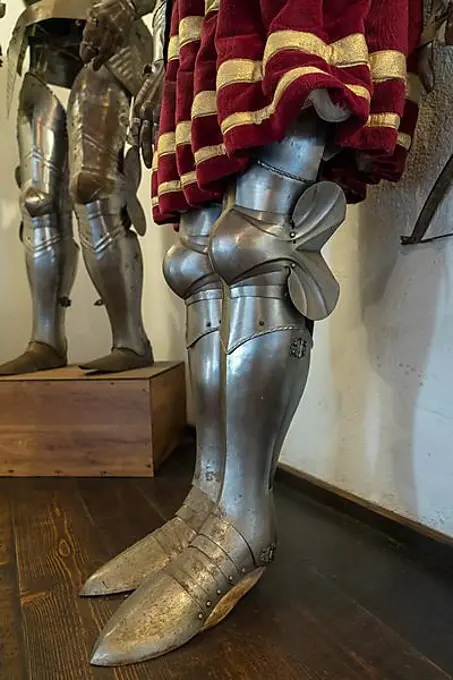
Medieval Knight Helmets

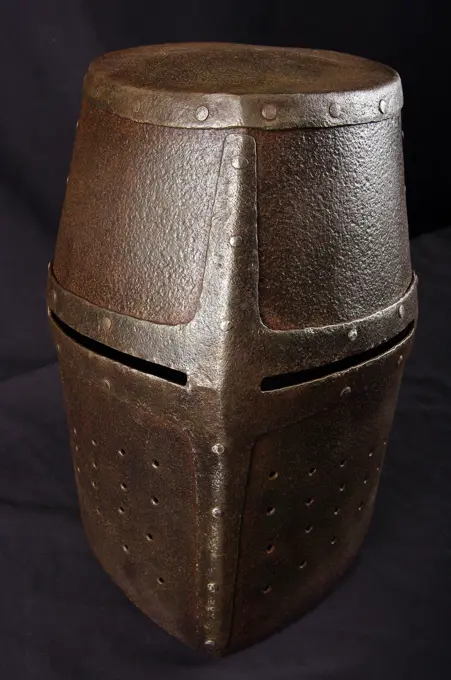
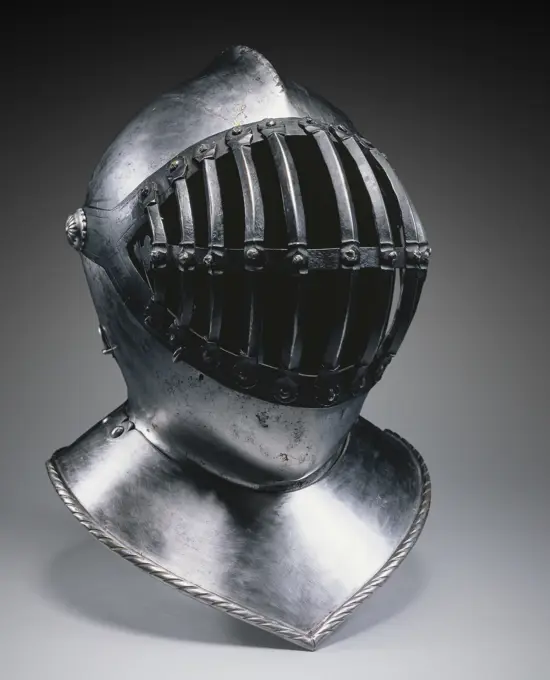
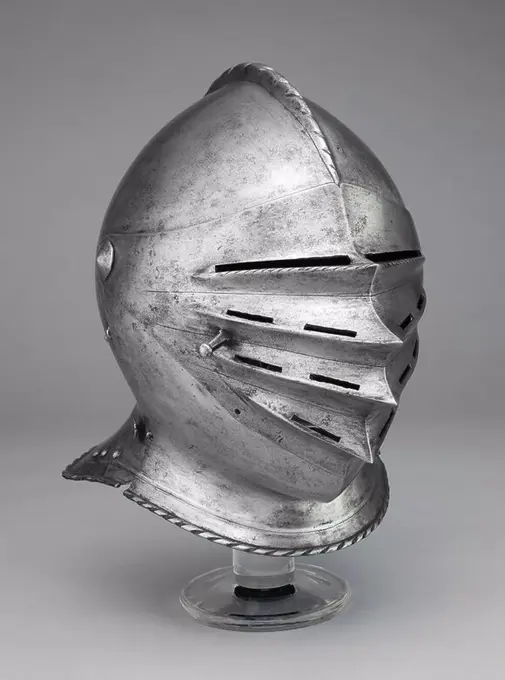
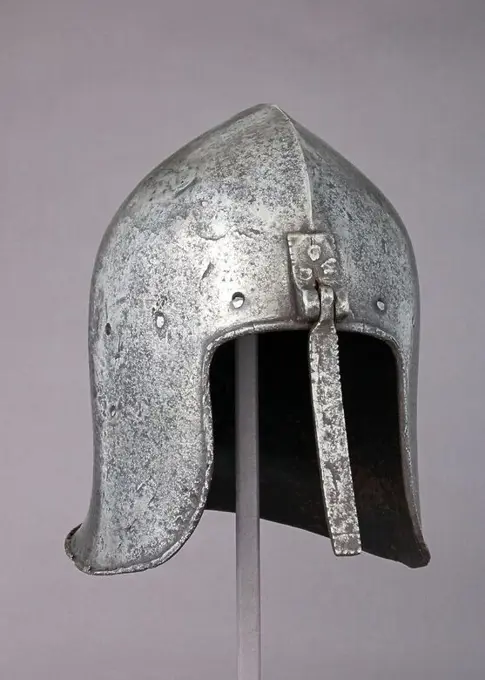
A collection of various medieval knight helmets showcasing intricate metalwork and historical design, reflecting the protection worn by soldiers in battle.

Armour Armour of the medieval knight. Metal protection of the soldier against the weapon of the opponent Copyright: xZoonar.com/ValeryxxSibrikovx 5722332
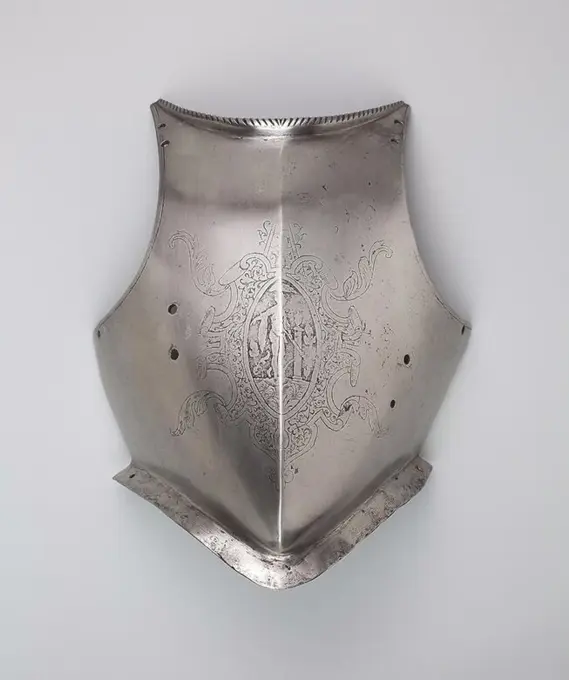
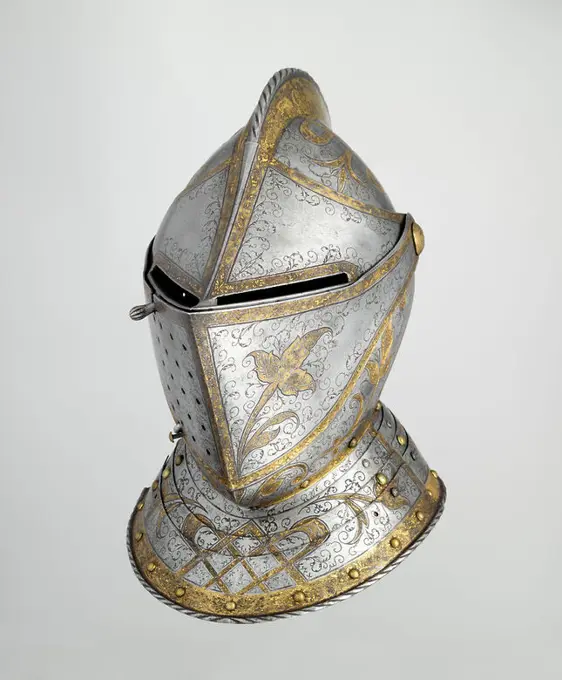
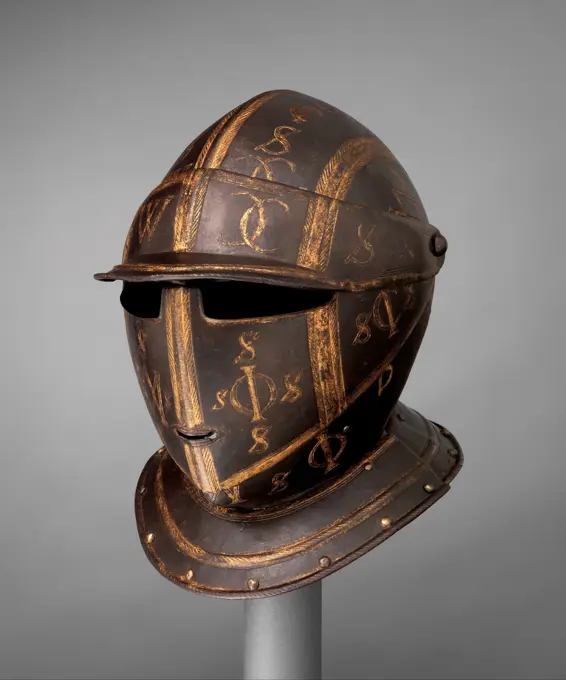
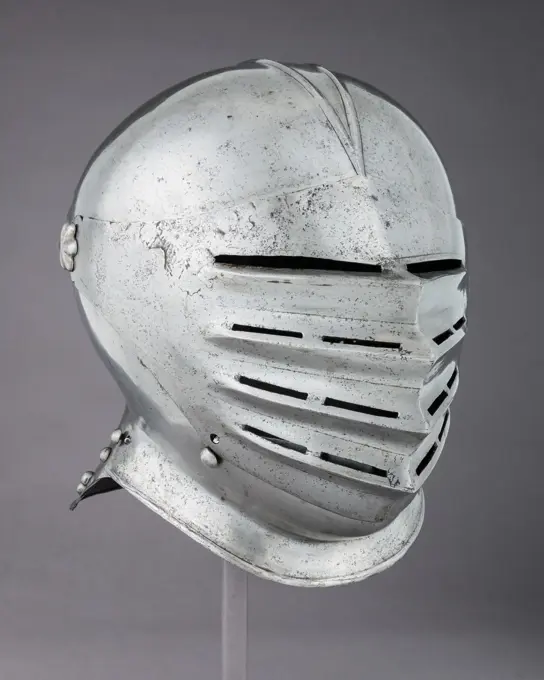
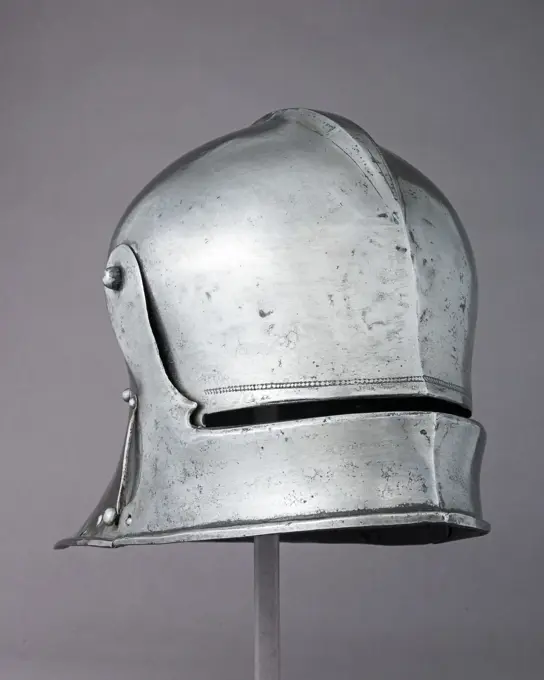
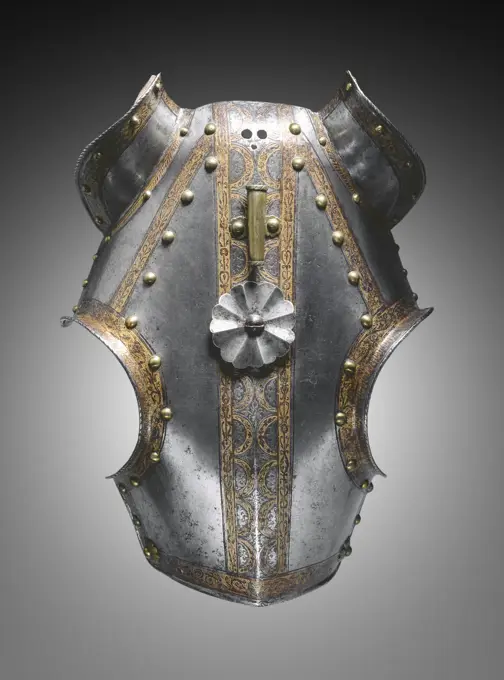
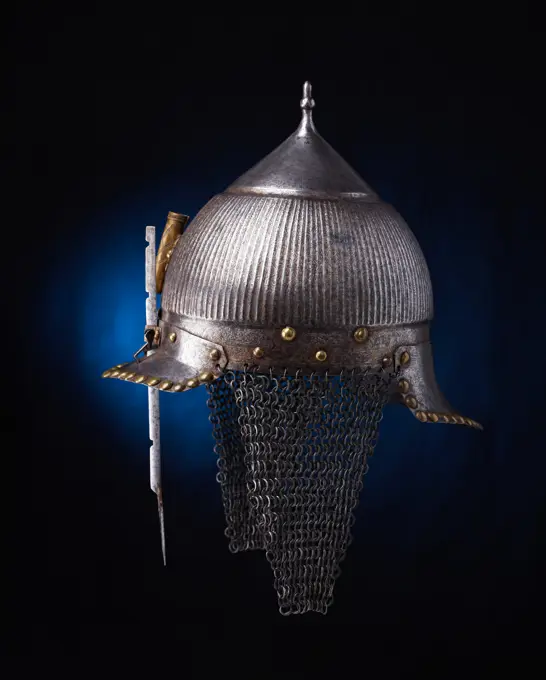
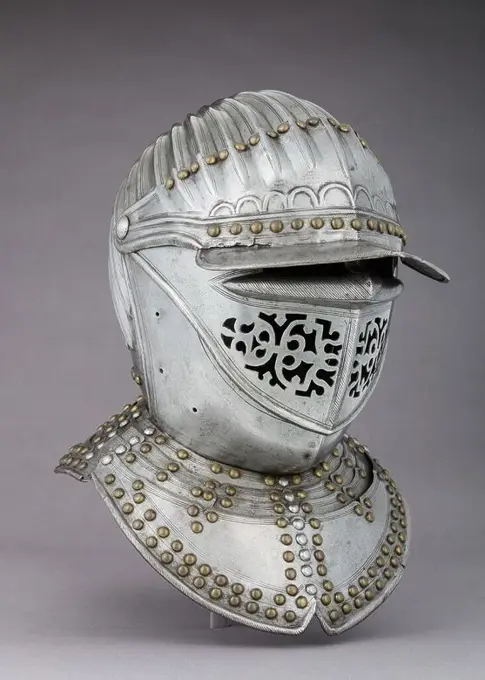
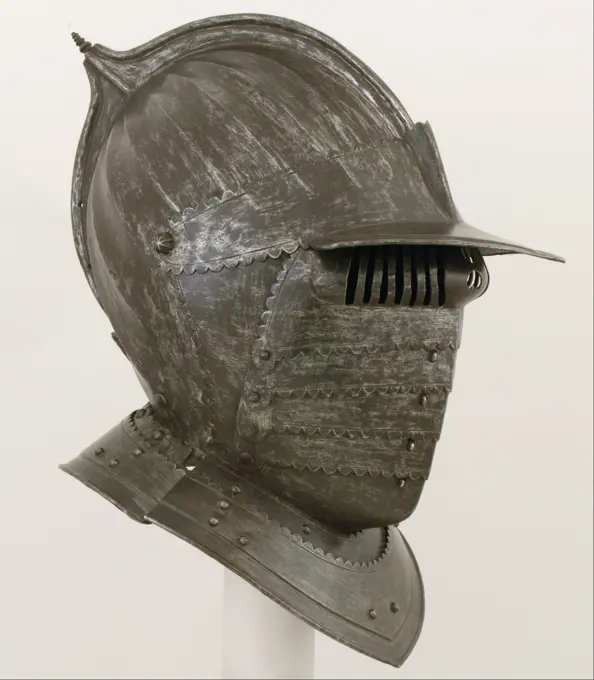
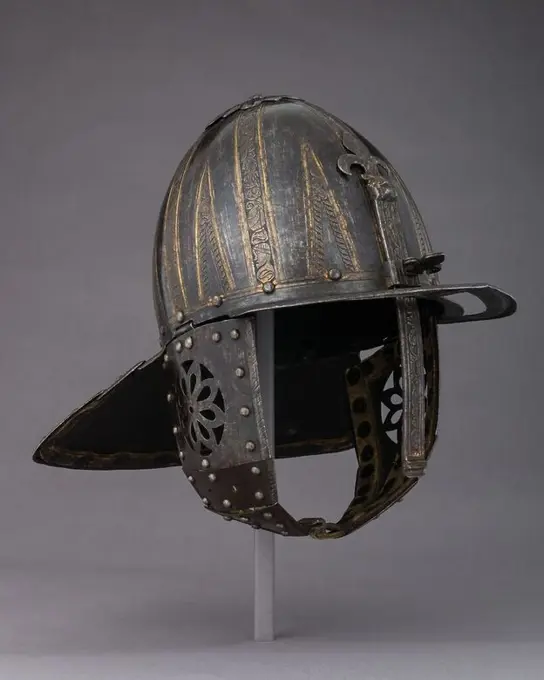
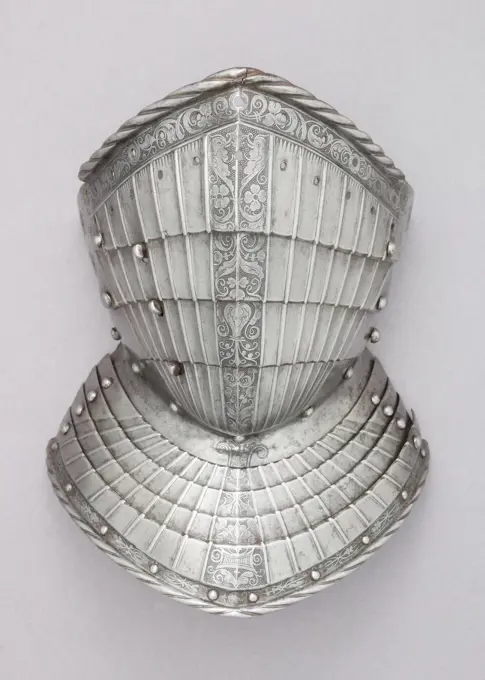
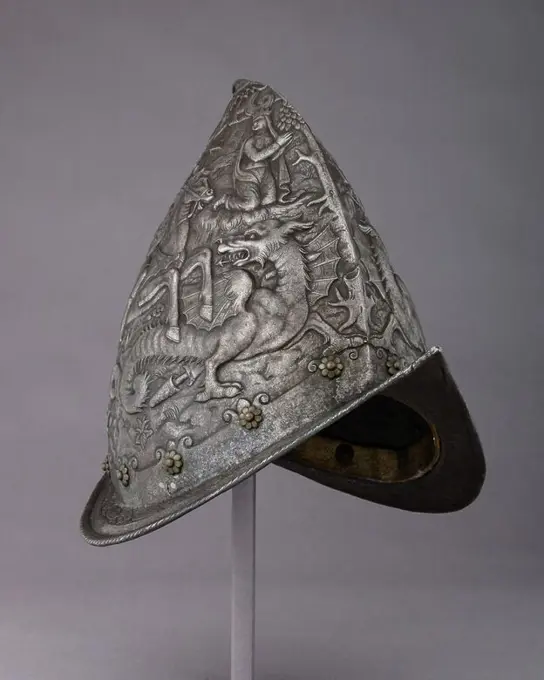
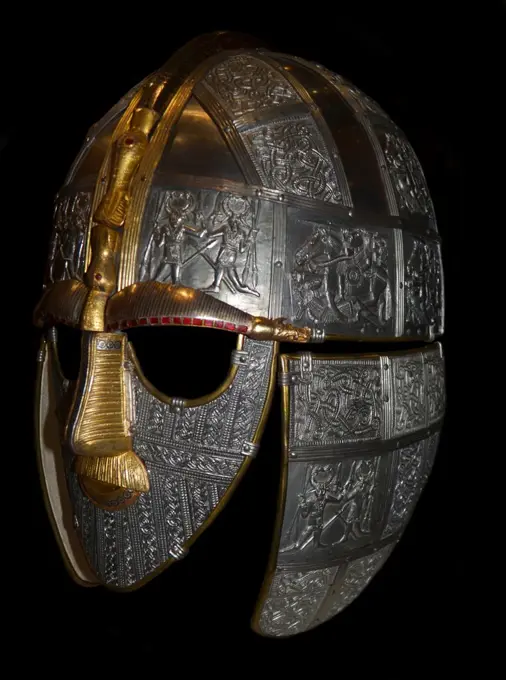
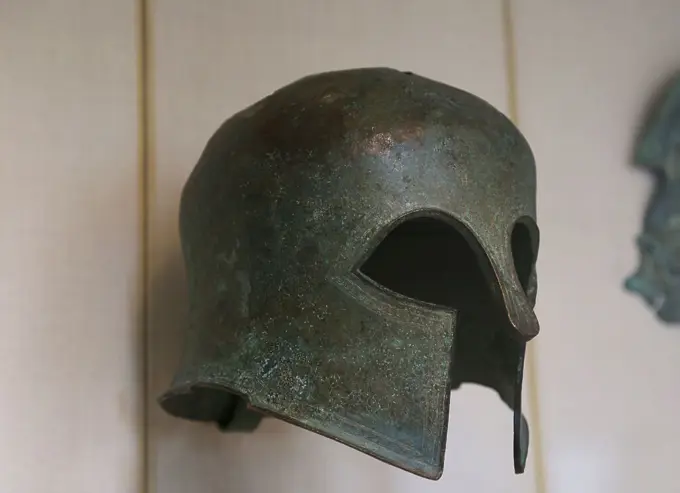
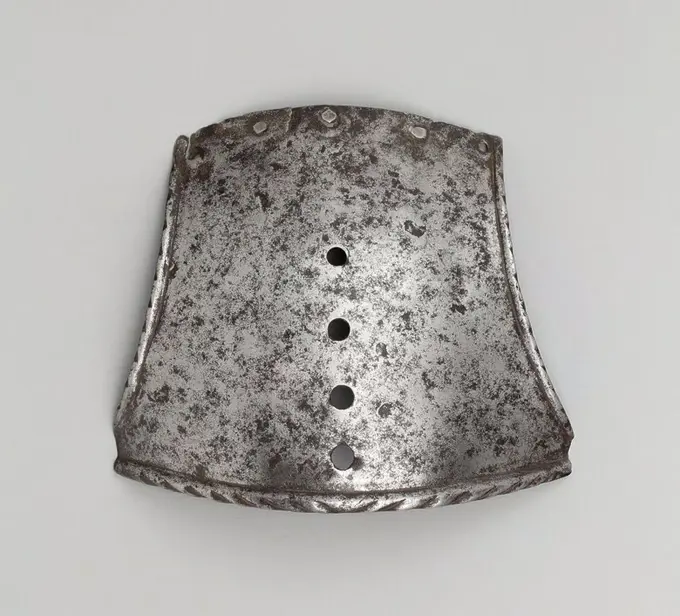
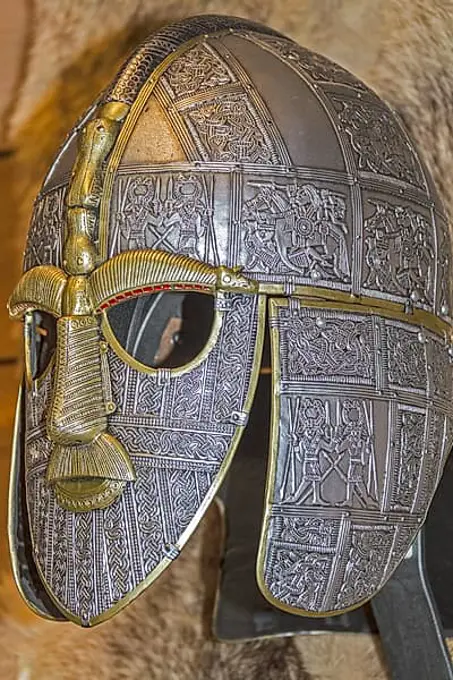
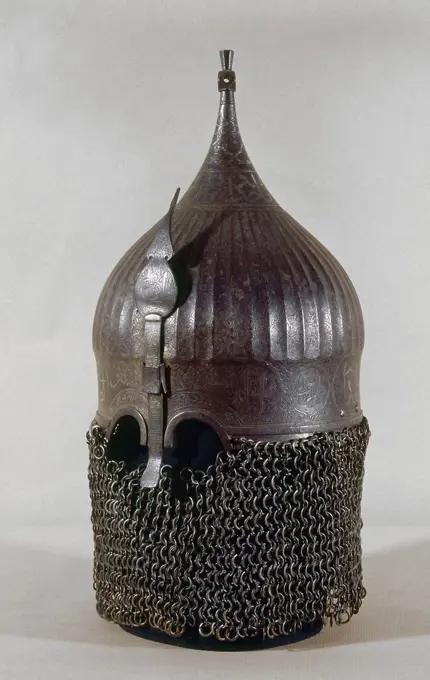
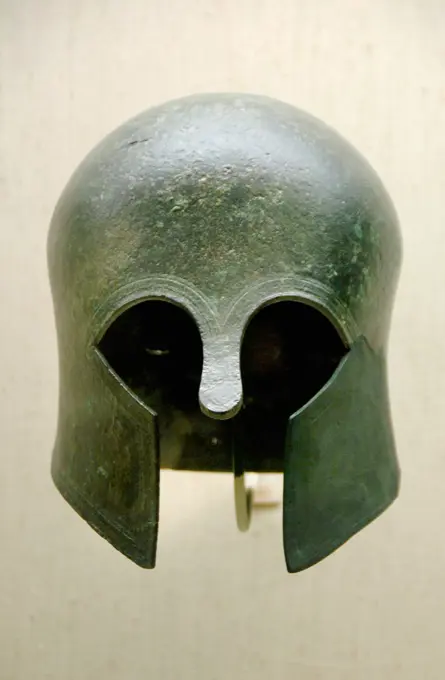
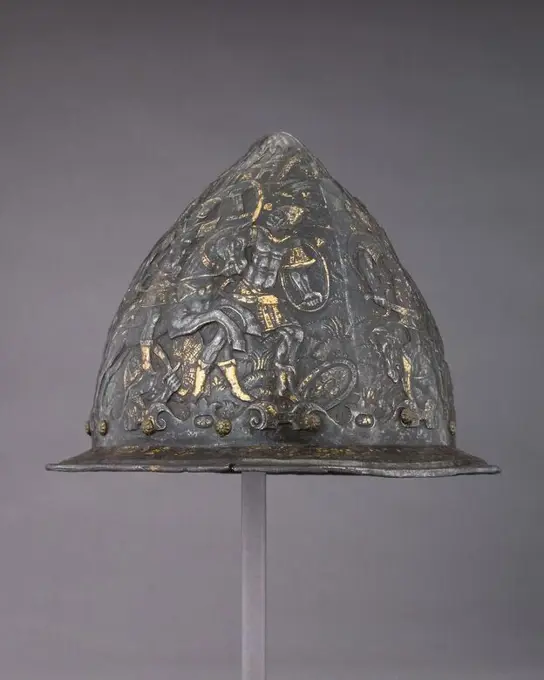
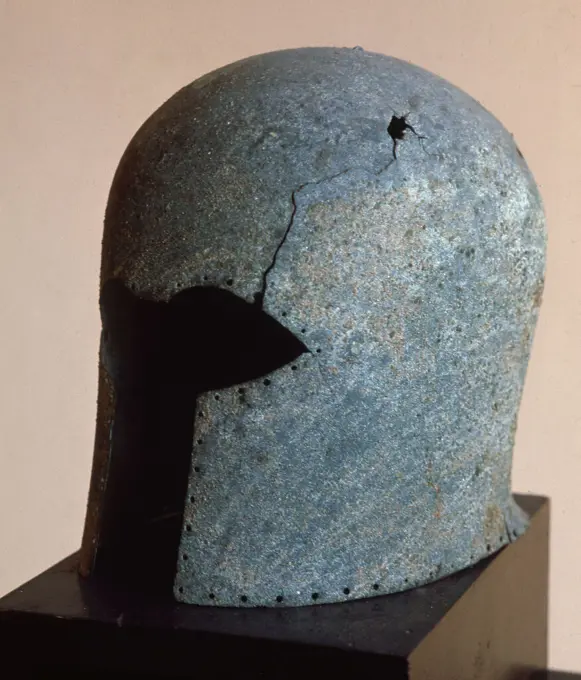
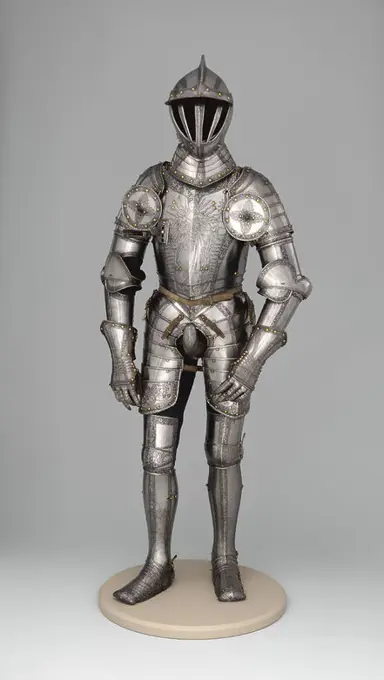
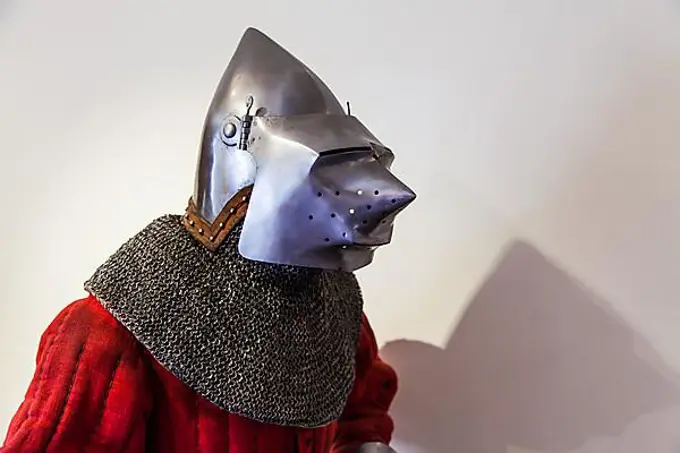
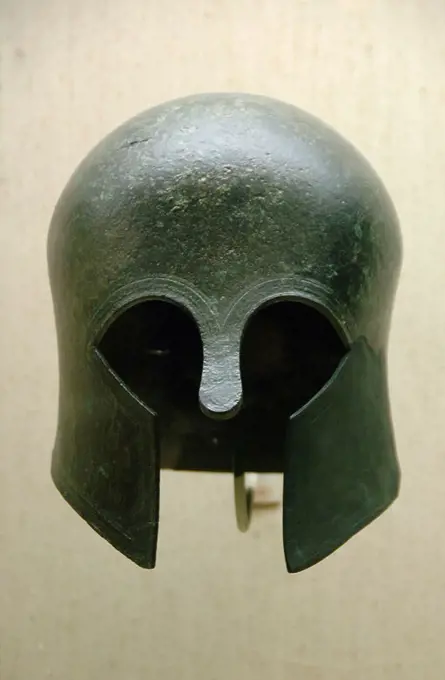
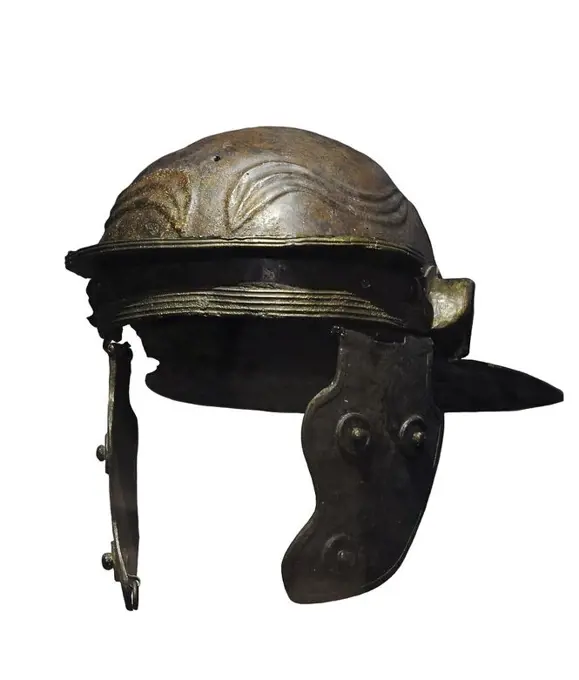
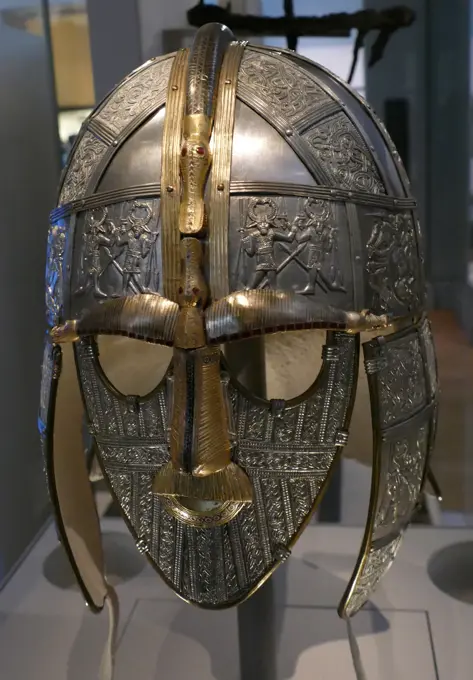
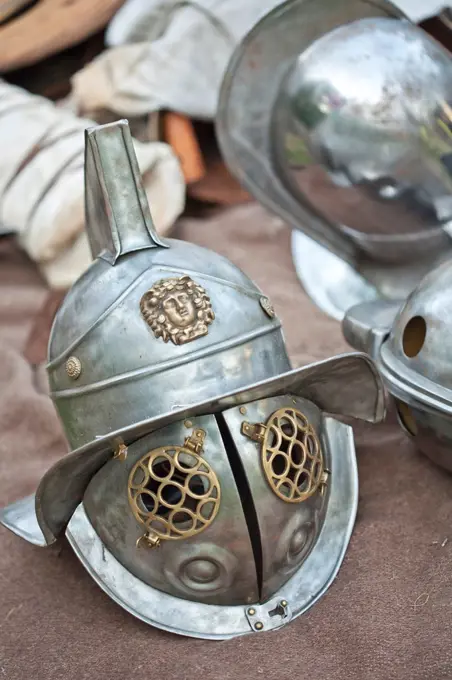
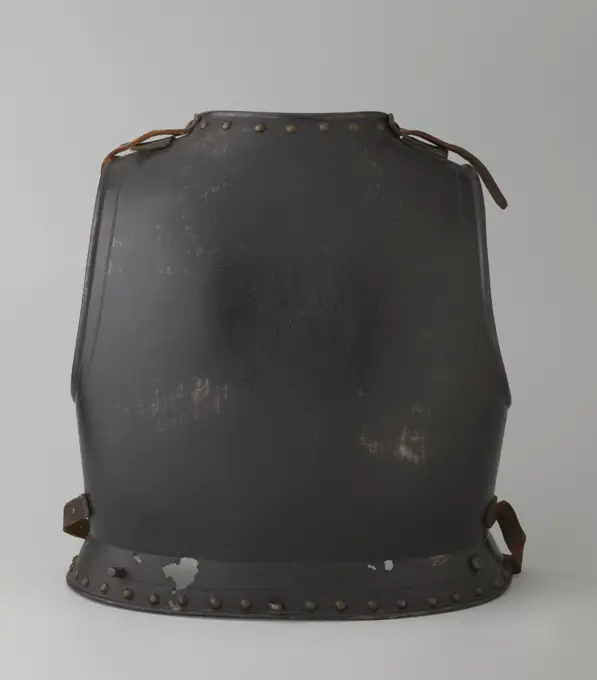
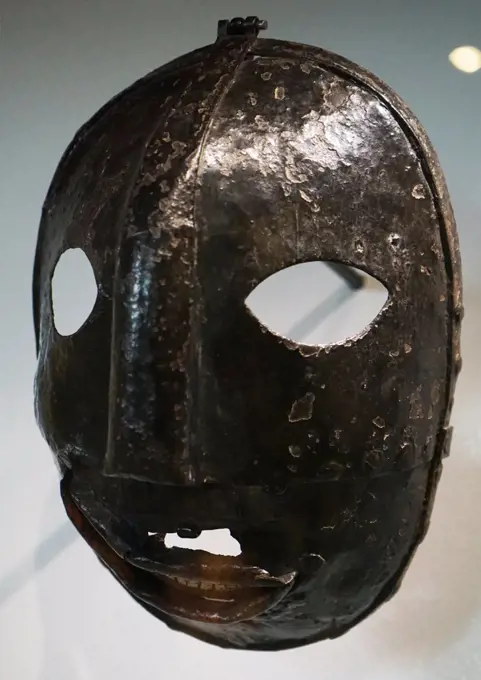
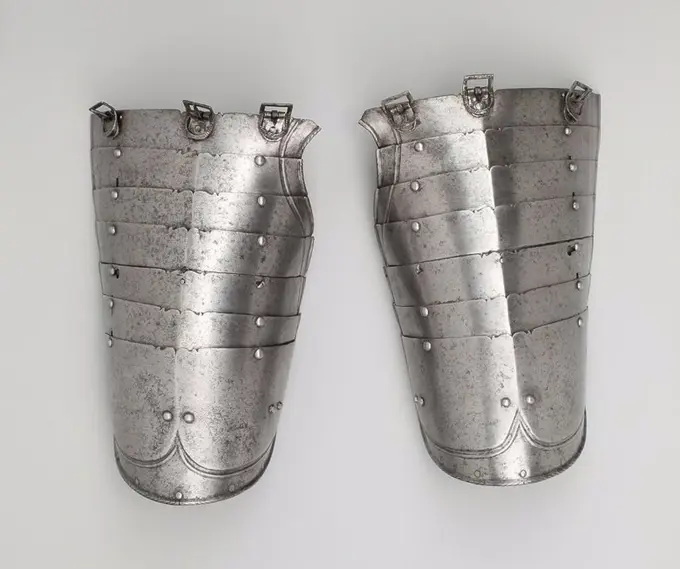
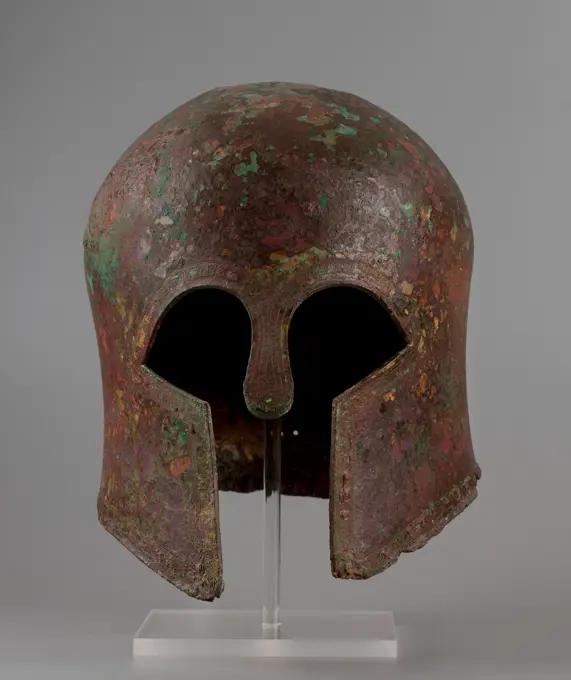
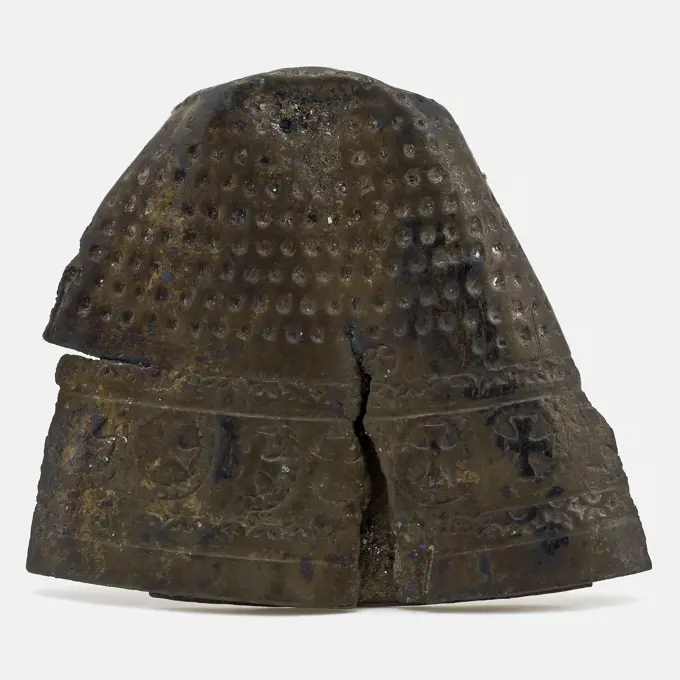
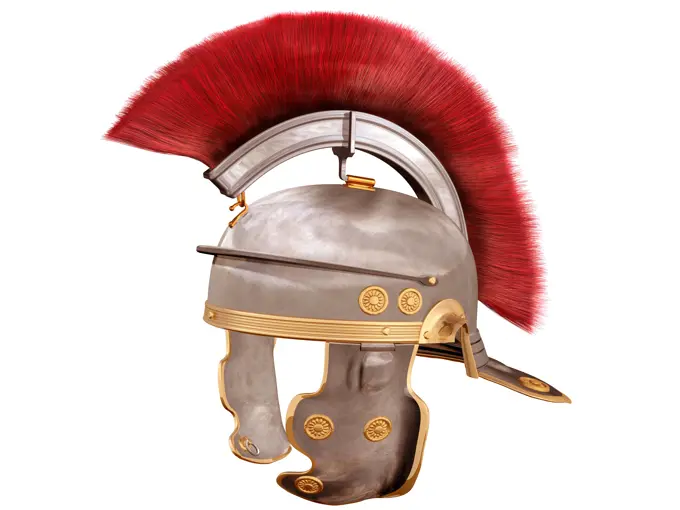
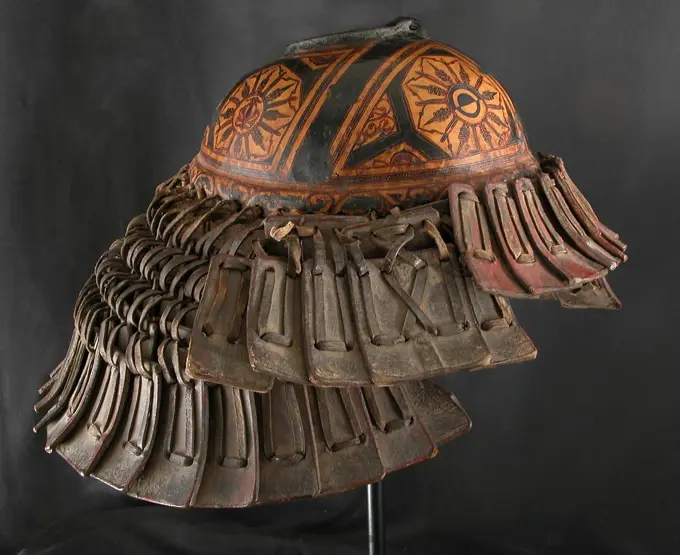
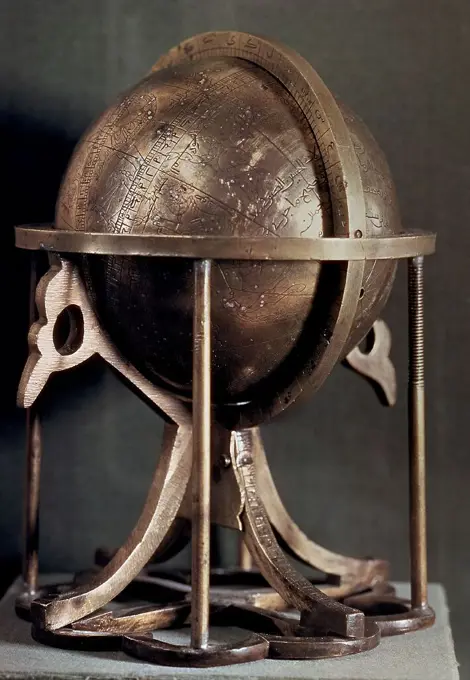
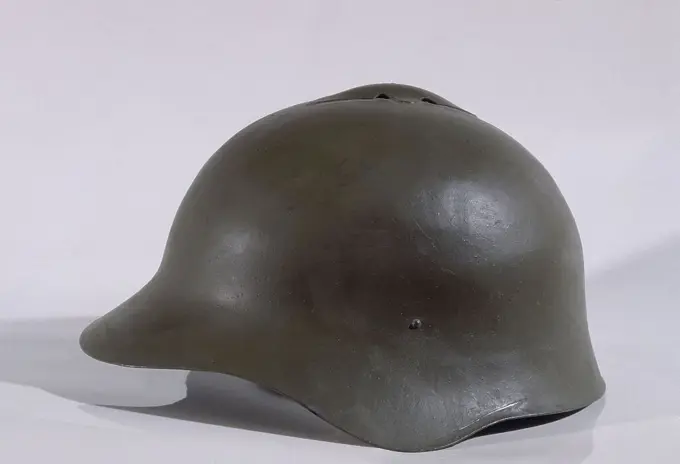
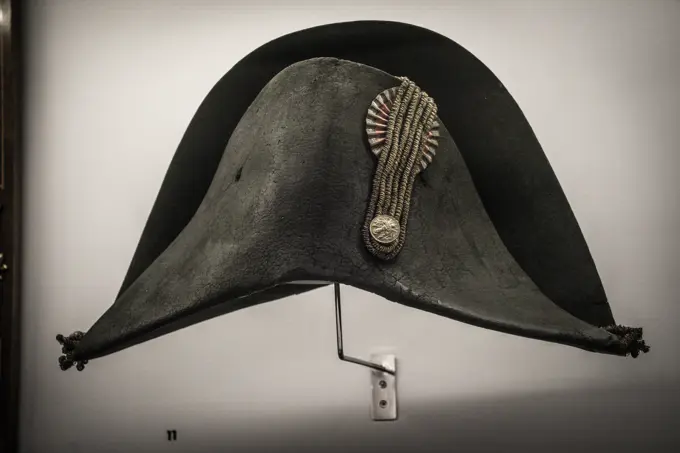
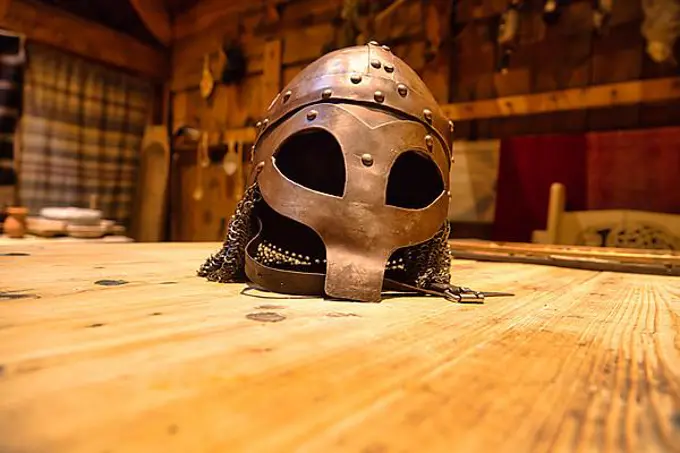
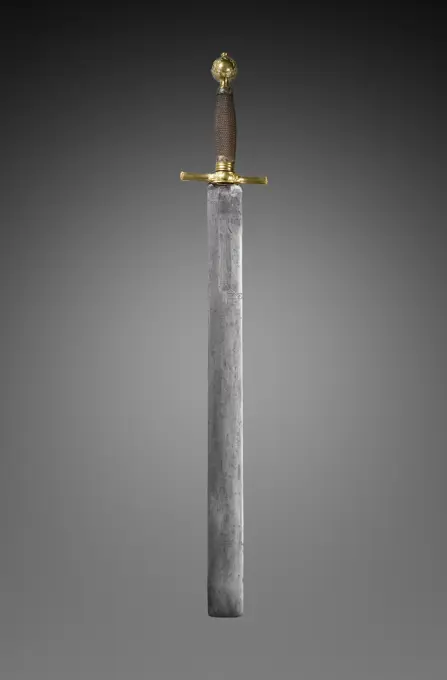
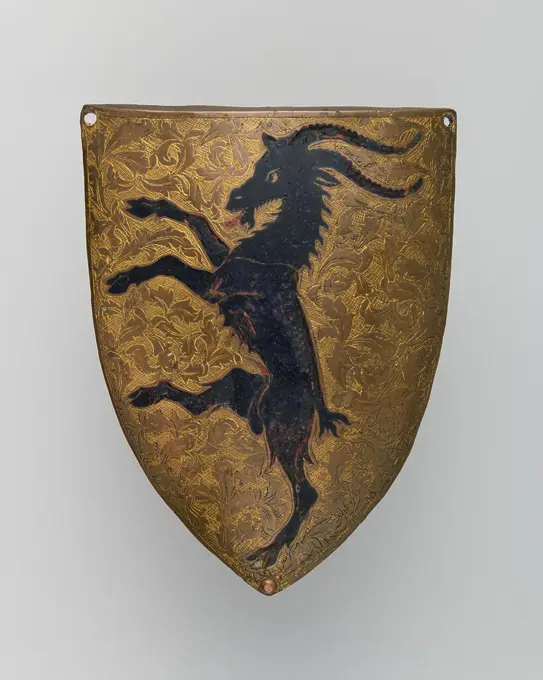
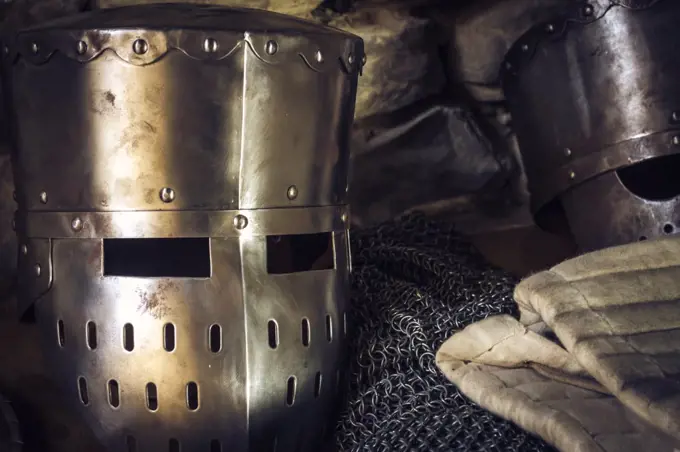
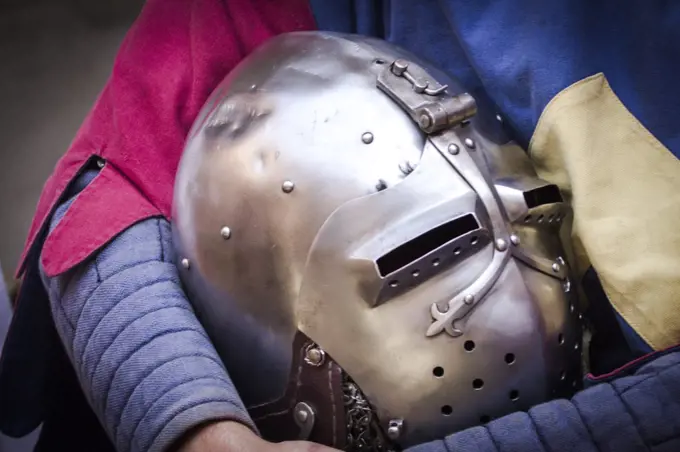
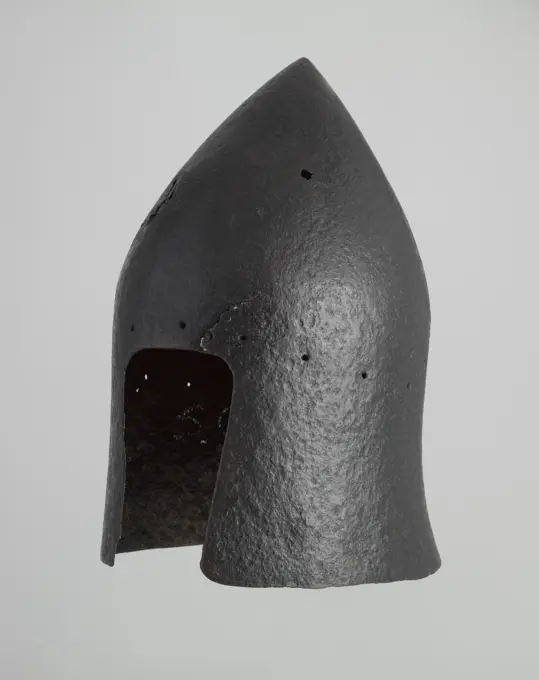
Armour Armour of the medieval knight. Metal protection of the soldier against the weapon of the opponent Copyright: xZoonar.com/ValeryxxSibrikovx 2470284Iron helmet Iron helmet of the medieval knight. Very heavy headdress Copyright: xZoonar.com/ValeryxxSibrikovx 2454131Iron helmet of the medieval knight. Very heavy headdressIron helmet Iron helmet of the medieval knight. Very heavy headdress Copyright: xZoonar.com/ValeryxxSibrikovx 2460616Helmet with Barred Visor, 1500s. England (), 16th century (visor and neck lames modern, by S.J. Whawell). Steel; overall: 31.1 x 31.4 x 25.1 cm (12 1/4 x 12 3/8 x 9 7/8 in.).Close Helmet. South German; Nuremberg. Date: 1510-1540. Dimensions: H. 21.6 cm (8 1/2 in.). Steel. Origin: Nuremberg. Museum: The Chicago Art Institute, Chicago, USA.Barbute with Hinged Nasal. Culture: Italian, probably Milan. Dimensions: H. 11 in. (27.9 cm); W. 8 in. (20.3 cm); D. 10 3/4 in. (27.3 cm); Wt. 5 lb. 5 oz. (2410 g). Date: ca. 1450.Barbutes with hinged nasals are recorded in Italian paintings and miniatures, but only two helmets with surviving nasals are known, both from Chalcis. Museum: Metropolitan Museum of Art, New York, USA.Armour Armour of the medieval knight. Metal protection of the soldier against the weapon of the opponent Copyright: xZoonar.com/ValeryxxSibrikovx 5722332Armour Armour of the medieval knight. Metal protection of the soldier against the weapon of the opponent Copyright: xZoonar.com/ValeryxxSibrikovx 2479214Breastplate. Italian. Date: 1570-1590. Dimensions: Wt. 8 lb. 10 oz. Steel. Origin: Italy. Museum: The Chicago Art Institute, Chicago, USA.Close Helmet from a Garniture Made for a Member of the d'Avalos Family. Culture: German, Augsburg. Dimensions: H. 13 1/4 in. (33.7 cm); W. 10 in. (25.4 cm); D. 14 1/4 in. (36.2 cm); Wt. 9 lb. (4082 g). Date: ca. 1560-70.This helmet was originally part of a complete field armor made for a member of the d'Avalos family, probably Ferrante Francesco d'Avalos (1531-1571), marquis of Vasto, who served the king of Spain as governor of Milan (1560-63), viceroy of Sicily (1568-71), and commander-in-chief of Spanish forces in northern Italy. The only other surviving parts of the armor, in addition to the helmet, are a shoulder and arm defense in the Bavarian National Museum, Munich. The distinctive and finely executed decoration ranks among the best examples of Augsburg armor ornament from this period. Museum: Metropolitan Museum of Art, New York, USA.Close Helmet for a Cuirassier ca. 1615-20 Italian The form and construction of this helmet are typical for an Italian heavy cavalry helmet of good quality from the early seventeenth century. Highly unusual, however, are the engraved and gilded letters and monograms that decorate its russet surface. These probably represent the name or motto of an Italian or French nobleman, but their meaning, perhaps the key to the owner's identity, remain to be discovered.. Close Helmet for a Cuirassier 35695clos de joute helmet, XVI century, castle of Foix, 10th century, Foix, department of Ariège, Occitanie, Pyrenean mountain range, France.Helmet ca. 1510 German. Helmet 26538Sallet ca. 1485-95 Jörg Wagner Austrian This sallet is by Jörg Wagner (recorded 1485-92). The armorers of Innsbruck, capital of the Austrian Tirol, thrived under the patronage of the Habsburg court and produced armor that was internationally renowned for the strength of its steel and the beauty of its form. Located near the border between Austria and Italy, this center produced armor that reflected the influence of north and south, combining the elongated and spiky German Gothic style with that of the rounded and more robust forms preferred in Renaissance Italy.. Sallet 35789Demi-Chanfron, c. 1550. Germany, Augsburg, 16th century. Steel, etched and gilded; leather; overall: 6.8 x 24.5 cm (2 11/16 x 9 5/8 in.). The chanfron, head defense for a horse, was introduced in the 1300s. It included two side pieces to protect the cheeks. In the 16th and 17th centuries, when armor failed to protect against firearms, it assumed greater importance as ornament. For this reason the demi (or half) chanfron covered the forehead of the horse but extended, like this one, only halfway down the nose. The Hapsburg Spanish Court was served by the armorers of Augsburg in the 16th century. This impressively decorated piece, by tradition, is said to have once belonged to Philip II of Spain (1527-1598).Tournament zischägge in Hungarian typeClose Hemet. Culture: probably Flemish. Dimensions: H. 14 3/8 in. (36.5 cm); W. 10 in (25.4 cm); D. 13 1/8 in. (33.3 cm); Wt. 6 lb. 4 oz. (1928 g). Date: ca. 1630. Museum: Metropolitan Museum of Art, New York, USA.Breastplate from Kuras. Breast plate, iron, blank, the arm and neck cuts as well as lower and rear edge of the phenomenon high-stage-stacked flange edge. At the front of the breastplate an etched weapon in which a helmet with a plume is surrounded by a weapent probe. The middle bone of the breastplate ends in a bulge. The breastplate is a sturdy riveted which consists of two parts. On the top parallel on the edge a double decoration line. The inside of the breastplate is painted black.CASCO GRIEGO DEL S VII-VISTA LATERAL-RESTAURADO. Location: MUSEO DE CADIZ-ARQUEOLOGIA. Cadiz. SPANIEN.Dagger (Katar) 18th century Indian. Dagger (Katar) 31470Closed Burgonet ca. 1630; bottom front and back collar lames, later restorations French Helmets with a faceted bowl surmounted by a pointed comb are characteristic of French examples worn during the reign of Louis XIII (1610-43). The somber dark steel surfaces are relieved by traces of original gilding on the plume-holder at the back, the baluster-shaped finial at the apex, and the unusual baluster rivet heads on the buffe and collar. The helmet's large size and unusual type of falling buffe with slotted sights are noteworthy. (The bottom collar lame at the front and back is a modern restoration.). Closed Burgonet 26525Lobster-Tail Burgonet. Culture: North Italian. Dimensions: H. 12 1/2 in. (31.8 cm); W. 11 in. (27.9 cm); D. 13 15/16 in. (35.4 cm); Wt. 3 lb. 12 oz. (1701 g). Date: ca. 1610. Museum: Metropolitan Museum of Art, New York, USA.Ritter Armour of the medieval knight. Metal protection of the soldier against the weapon of the opponent Copyright: xZoonar.com/ValeryxxSibrikovx 3119543Falling Buffe ca. 1525 Attributed to Kolman Helmschmid This type of face defense is called a falling buffe because its segments can be collapsed downward to allow for easier breathing and greater visability, or locked in an upright position to fully protect the face. It was probably made by the celebrated Augsburg armorer Kolman Helmschmid in about 1525 and is very similar in form and decoration to another helmet in the Metropolitan Museum of Art, also attributed to Helmschmid, which is a type known as a closed burgonet (accession number 27.159.18). Both that helmet and this buffe came from the armory of the Dos Aguas family in Valencia, Spain.. Falling Buffe 22984Cabasset. Culture: French or Italian. Dimensions: H. 11 1/4 in. (28.6 cm); W. 9 in. (22.9 cm); D. 13 1/4 in. (33.7 cm); Wt. 2 lb. 13.3 oz. (1284.2 g). Date: 16th century; embossed decoration, probably 18th-19th century. Museum: Metropolitan Museum of Art, New York, USA.Breastplate of Kuras, 1499 - 1699  Breastplate, iron, blank, the arm and neck cuts as well as lower and rear edge of the abdominal demand high-racing edge. At the front of the breastplate an etched weapon in which a helmet with a plume is surrounded by a weapon trophy. The middle bone of the breastplate ends in a bulge. There is an abyss on the breast slab that consists of two parts. At the top parallel to the edge a double decorative line. The inside of the breastplate is painted black. Europe whole: Iron (metal) etching Replica of Sutton Hoo; ship-burial helmet 7th Century. The panels are decorated with interlacing Germanic Style II animal ornament and heroic scenes and motifs. CASCO GRIEGO DEL S VII-VISTA LATERAL(ANTES DE LA RESTAURACION). Location: ARCHAEOLOGICAL MUSEUM. JEREZ DE LA FRONTERA. Cadiz. SPANIEN.Bronze helmet of Corinthian type. Greek, late 7th-early 6th century B.C. Border with wave pattern. Metropolian Museum of Art. Ny. USA.Poll Plate of a Shaffron. Italian. Date: 1540-1560. Dimensions: . Steel. Origin: Italy. Museum: The Chicago Art Institute, Chicago, USA.Close Helmet for the Field, c.1550-70. Germany, 16th century. Iron, steel, leather and brass rivets; overall: 34.5 x 20 x 31.2 cm (13 9/16 x 7 7/8 x 12 5/16 in.).Helmet 18th century Indian, Mughal. Helmet. Indian, Mughal. 18th century. Steel, brass, gold, textile, metallic thread. HelmetsHussar's Armor. Polish. Date: 1675-1700. Dimensions: H. 94 cm (37 in.). Steel, brass, and leather. Origin: Poland. Museum: The Chicago Art Institute, USA.Macedonian helmet, 3rd century BC. Artist: AnonRitter Iron helmet of the medieval knight. Very heavy headdress Copyright: xZoonar.com/ValeryxxSibrikovx 3841484Helmet. Culture: Indian. Dimensions: H. including mail 20 3/4 in. (52.7 cm); H. excluding mail 5 1/2 in. (14 cm); W. 7 1/4 in. (18.4 cm); D. 8 1/2 in. (21.6 cm); Wt. 3 lb. 6.3 oz. (1539.4 g). Date: 18th-19th century. Museum: Metropolitan Museum of Art, New York, USA.Armour Armour of the medieval knight. Metal protection of the soldier against the weapon of the opponent Copyright: xZoonar.com/ValeryxxSibrikovx 2479255Bascinet ca. 1375-1400 Italian This is part of a large find of medieval armor discovered in 1840 in the ruins of the fortress of Chalcis, on the Greek island of Euboea (then a Venetian colony called Negroponte). The fortress had been captured and destroyed by the Turks in 1470. Now divided largely between the Ethnological Museum, Athens, and The Metropolitan Museum of Art, the Chalcis hoard contains many rare and unusual elements of fourteenth- and fifteenth-century armor. Of particular importance are the variety of headpieces and the many fragments of brigandines (armor for the torso constructed of small plates riveted to layers of fabric), some of which retain portions of their original velvet covering. The Chalcis armor provides a unique picture of the armament used in the Aegean, one of the easternmost military outposts of the Venetian empire.. Bascinet. Italian. ca. 1375-1400. Steel. Helmetsmedieval metal armor and helmet knight close detailCopy Of Anglo Saxon Helmet Suffolk UKCASCO CON MALLA PROTECTORA-PERIODO TURCO OSMANLI-1444/1481-49CM-DIAMETRO 23CM. Author: IBN QA LUMED ALI. Location: INSTITUTO VALENCIA DE DON JUAN-COLECCION. MADRID. SPAIN.Copy Of Anglo Saxon Helmet Suffolk UKGreek Art. Archaic bronze helmet of Corinthian type. Dated to 700-675 BC Museum of Cycladic and Ancient Greek Art. Athens, Greece.Italian high crested burgundy, 16th century, Álava Armory Museum, Vitoria, Basque Country, Spain.Silver and Metallic Knight Helmet on Wooden Table, Medieval ThemeCabasset. Culture: Italian, Milan. Dimensions: H. 7 9/16 in. (19.2 cm); W. 9 5/8 in. (24.4 cm); D. 11 1/8 in. (28.3 cm); Wt. 2 lb. 9 oz. (1174 g). Date: ca. 1570. Museum: Metropolitan Museum of Art, New York, USA.CASCO GRIEGO S VII-VISTA LATERAL-. Location: MUSEO DE CADIZ-ARQUEOLOGIA. Cadiz. SPANIEN.Armor of Emperor Ferdinand I (1503-1564). Armorer: Kunz Lochner (German, Nuremberg, 1510-1567). Culture: German, Nuremberg. Dimensions: H. 67 in. (170.2 cm); Wt. 52 lb. 14 oz. (24 kg). Date: dated 1549.The ownership of this armor by Ferdinand I (1503-1564) is indicated by the heraldic emblems on the toe caps: the imperial double-headed eagle surmounted by a royal crown, which signifies Ferdinand's honorific status as king of the Romans and designated successor to his brother, Emperor Charles V. The image of the Virgin and Child on the breastplate was also used by Charles V on his own armors. The backplate is decorated with crossed staves and firesteels, the insignia of the Order of the Golden Fleece, an elite chivalric society of which Ferdinand was a member.Kunz Lochner, Nuremberg's most celebrated armorer of the period, made several armors for both Ferdinand and his son Archduke Maximilian (1527-1576), including two matching armors produced about 1546 that are very similar to the oHelmet 18th century; bowl, 17th century Indian; bowl, probably Turkish. Helmet. Indian; bowl, probably Turkish. 18th century; bowl, 17th century. Steel, gold, brass. HelmetsTuscany, Italy. Detail of an original Medieval armourGREEK ART. Archaic bronze helmet of Corinthian type. Dated to 700-675 b.C. Museum of Cycladic and Ancient Greek Art. Athens. Greece.Galea. Military helmet worn by Roman legionaries in the Imperial Era. Iron. 1st century BC-1st century. From Italy. National Archaeological Museum. Madrid. Spain.reconstruction of the Sutton Hoo helmet, a decorated Anglo-Saxon helmet discovered during the 1939 excavation of the Sutton Hoo ship-burial. Buried around 625 AD. it is believed to have been the helmet of King Raedwald; for whom its elaborate decoration may have given it a secondary function almost akin to a crown.Bronze helmet, Asso (Turkey). Greek Civilization, 7th Century BC.Iron helmet of the medieval knight. Very heavy headdressHelmet of the Greek general Timoleon, Greek helmet from antiquity, on display in a museum, Archaeological Museum, Archea Korinthos, Corinth, Peloponnese, Greece, EuropeItaly, Umbria, Terni District, Otricoli. Historical reenactment of the ancient Roman Colony in Ocriculum.Helmet. Culture: Indian; bowl, probably Turkish. Dimensions: H. including mail 23 1/2 in. (59.7 cm); H. including nasal 16 in. (40.6 cm); H. excluding mail and nasal 9 in. (22.9 cm); W. 8 3/4 in. (22.2 cm); D. 9 in. (22.9 cm); Wt. 4 lb. 4.5 oz. (1941.9 g). Date: 18th century; bowl, 17th century. Museum: Metropolitan Museum of Art, New York, USA.Harness back plate, 1599 - 1699  Harness back plate, iron, black. Around the neck cut two black leather tires that can be attached to the breastplate with a smaller leather belt that must be attached to the shoulder plate above each tire. Black rivet around the main opening. A double decorative line parallel to the arm cuts. On the underside of the back plate a narrow lumbar strip which are fogged with rivets. A double decorative line above the fluent edge. There are two small holes and a larger hole in the lumbar strip. On Weerijzden van Lorrow strip two fixed belts with iron buckle. The inside of the back plate is black, under the neck cut is the city stitches of the city of Amsterdam. Europe whole: Iron (metal). Belts: Leather forging / striking (metalworking)Viking warrior's helmet. 9th- 10th cent.Scold's bridle, used as a form of torture and public humiliation, primarily for women. Dated 18th CenturyPair of Tassets for Light Field Use. Northern German. Date: 1550-1600. Dimensions: . Steel. Origin: Northern Germany. Museum: The Chicago Art Institute, Chicago, USA.ARNES DE CARLOS V SOBRE CABALLO PARA JUSTA CUANDO ERA DUQUE SOBERANO DE BORGOÑA - INV. A 37. Author: KOLMAN HELMSCHMIED (1471-1532) ATRIBUIDO. Location: PALACIO REAL-REAL ARMERIA DE MADRID. MADRID. SPAIN. Charles I (V of the Holly Roman Empire). CARLOS V ALEMANIA-CARLOS I DE ESPAÑA (1500-1558).Hencki type hence;  600 BC (-600-00-00--600-00-00);Greece, secured collectionsCopper pressed thimble with decoration of crosses, thimble sewing kit soil found brass metal, pressed Copper pressed thimble with right rotating spiral at the top, without groove in the shaft with decorated border with two grooves between rounds with Greek crosses archeology Rotterdam railway tunnel seamstress tailor sewing textile processing clothing needle and thread repair Soil discovery: trajectory rail tunnel Rotterdam.Isolated Roman Helmet Isolated illustration of a Roman Helmet with a scarlet plume Copyright: xZoonar.com/PaulxFleetx 2697507War Hat probably 17th century Western European. War Hat 27126Helmet possibly 17th century Yi or Nuosu people (Lolo) The Nuosu (also formerly known as Lolo) are part of the Yi peoples and have lived in mountainous sections of southwestern China, covering parts of Sichuan, eastern Yunnan, and Guizhou provinces, for approximately the past one thousand years. Arts and crafts flourished in traditional Nuosu culture, including weaving, embroidery, silversmithing, and lacquerwork. Notable among the lacquerwork is Nuosu armor, which is made of lacquered leather in a style that is unique to the region and can be recognized by its form, construction, and decoration. Examples of Nuosu armor, while not common, do exist in several museums, and almost invariably consist of one distinctive form of body armor, covering the torso and hips, such as an example in the Metropolitan Museum of Art (acc. no. 20.142). Nuosu helmets, however, are extremely rare in either public or private collections. The majority of surviving Nuosu armor is decorated with relatively simESFERA CELESTE MUSULMANA EN COBRE.Armour of the medieval knight. Metal protection of the soldier against the weapon of the opponentArmour Armour of the medieval knight. Metal protection of the soldier against the weapon of the opponent Copyright: xZoonar.com/ValeryxxSibrikovx 2425268Avar warrior helmetCASCO DEL EJERCITO SOVIETICO. Location: EXPOSICION DE LA GUERRA CIVIL ESPAÑOLA. MADRID. SPAIN.Reconstructed Sutton Hoo Helmet, which was part of the Staffordshire Hoard is the largest hoard of Anglo-Saxon gold and silver metalwork. Dated 5th CenturyMarshal Jourdan's bicorne, Álava Armory Museum, Vitoria, Basque Country, SpainViking helmet, Viking museum, Viking longhouse, near Borge, Borge, Vestvagoy, Lofoten, Nordland, Norway, EuropeMetal middle age armour set. Steel knight helmet, shield, sword, blade. Vector graphic illustration. Isolated white backgroundExecutioner's Sword, blade dated 1634. Germany, 17th century. Steel; overall: 98.1 cm (38 5/8 in.); blade: 75.3 cm (29 5/8 in.); quillions: 15.5 cm (6 1/8 in.); grip: 22.5 cm (8 7/8 in.).Shield with Messenger's Badge. Culture: possibly Italian. Dimensions: Badge (a); L. 4 3/4 in. (12.1 cm); W. 3 3/4 in. (9.5 cm); Wt. 3 oz. (85 g); shield (b); L. 15 in. (38.1 cm); W. 12 1/8 in. (30.8 cm). Date: badge, 1400-1450; shield, ca. 1800. Museum: Metropolitan Museum of Art, New York, USA.Horrible mask BDSM with leather straps. Protective helmet for sports. Vector illustration muzzle
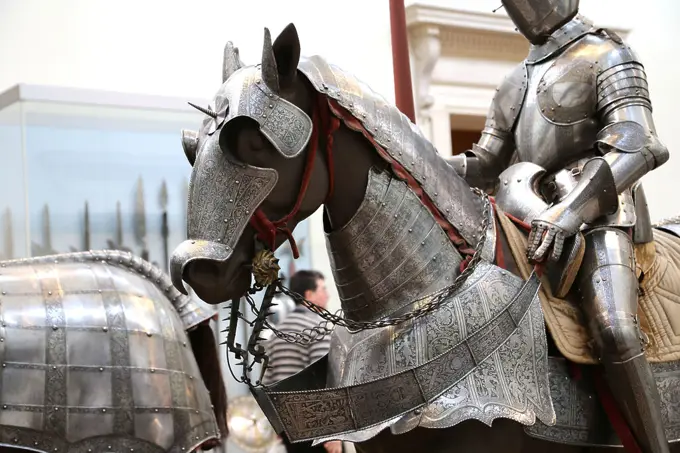
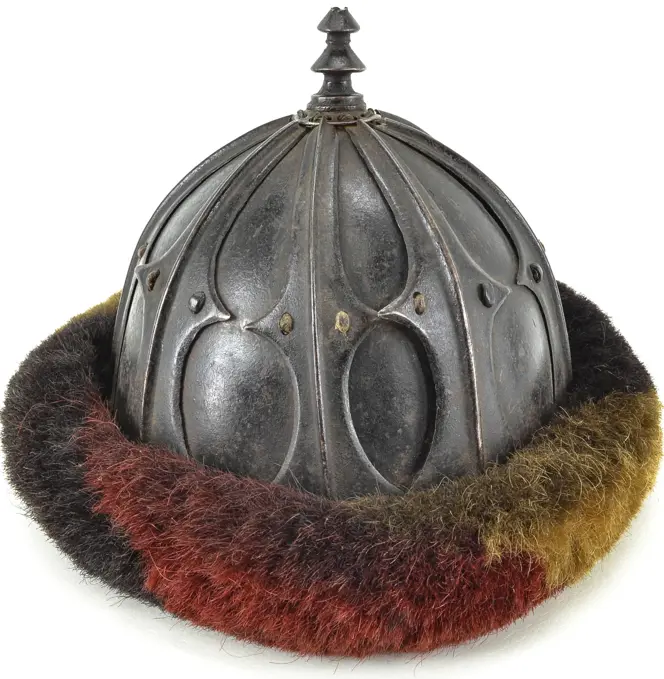
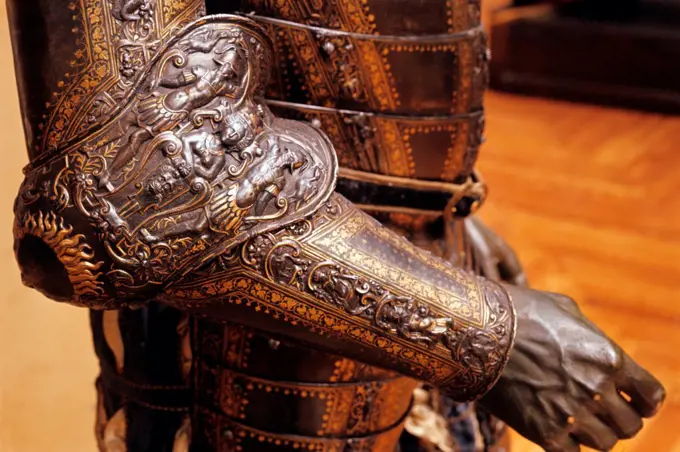
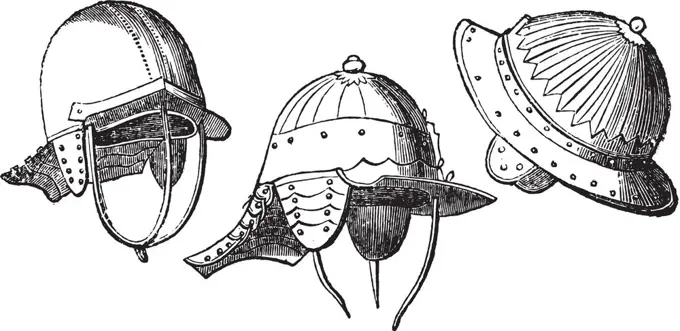
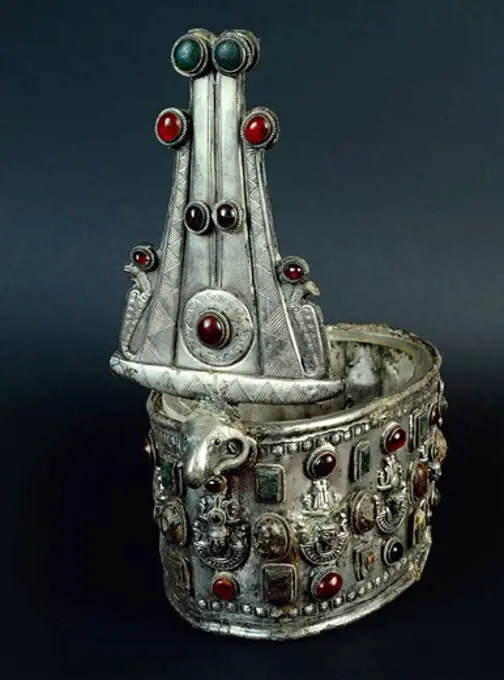
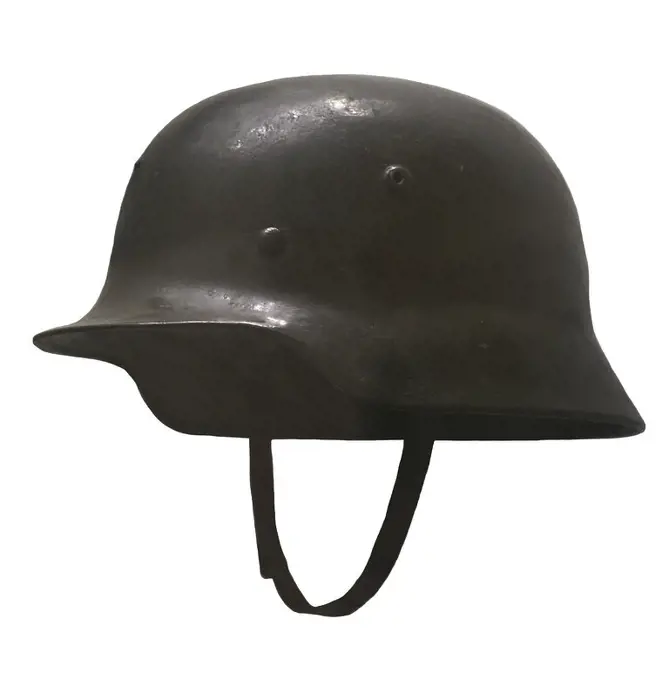
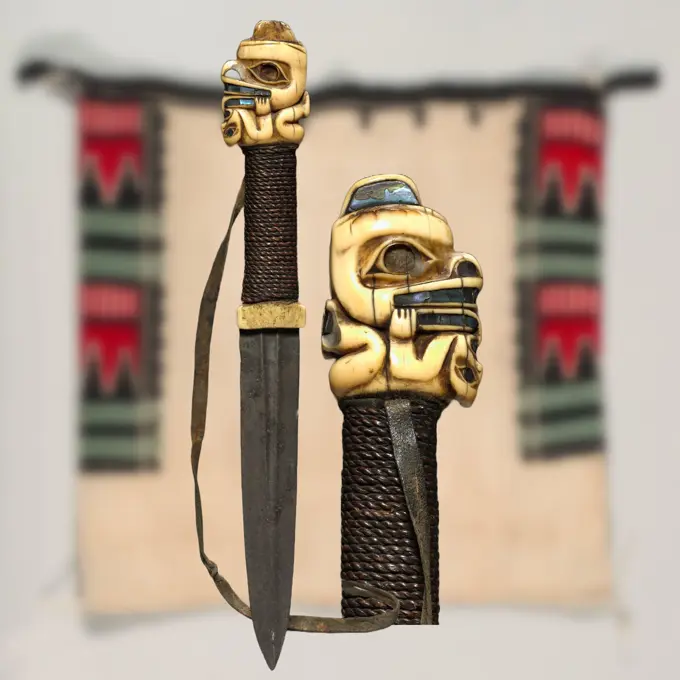
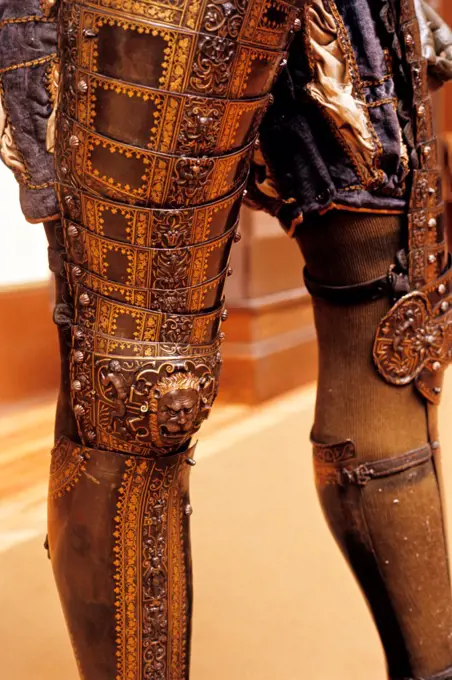
Close-up of the details of the magnificent couter and brassard of the armour of Philip II, first King of Spain from 1556 to 1598. Madrid (Spain), 1966.Anglo-Saxon bird ornament from the Sutton-Hoo ship burial. Artist: UnknownHelmets of Cromwell's time, vintage engraved illustration. Colorful History of England, 1837.Great helms, Pallavicino CastleRomania, Sinaia. Neo-Renaissance Peles Castle c. 1873. Summer residence of King Carol I (Charles) of Romania. The Great Armory collection.Close-up of a medieval helmet in a museum, Royal Armouries Museum, Leeds, West Yorkshire, EnglandArmour Armour of the medieval knight. Metal protection of the soldier against the weapon of the opponent Copyright: xZoonar.com/ValeryxxSibrikovx 2466744Helmet with face guardNubia, tomb, royal crown from Ballana made of silver with inlaid jewelsweapons arms helmets Middle Ages medieval helmet German circa 1450 side,England, Kent, Canterbury. Canterbury Cathedral. The Black Prince's (Edward Plantagenet) tomb, copper effigy of Edward III's son who died in 1376.Metal helmet, German model, 1935. Iron, leather and pigments. Army Museum. Toledo, Spain.Native American Art - Dagger (Gwálaa) finely worked in ivory, fiber, leather, metal (steel)Helmet 18th century Japanese. Helmet 24043wooden combat shield with the emblem of a bloody palm centered and with two crossed halberdsClose-up of a detail of the magnificent, lavishly decorated jamb of the armour of Philip II, first King of Spain from 1556 to 1598. Madrid (Spain), 1966.Armor for combat. Plate armour for man and horse. Europe. Metropolian Museum of Art. New York. USA.Sixteen-Plate Helmet 15th-17th century Tibetan The classic and most recognizable type of Tibetan helmet consists of eight overlapping plates joined by leather laces. This helmet is a much rarer form made up of sixteen plates, of which the outer plates have cusped edges drawn to steep points. It is very similar to a helmet belonging to a Tibetan armor in the British Museum, on deposit from the Royal Collections, which was among several items presented to King George V by the Thirteenth Dalai Lama in 1912.. Sixteen-Plate Helmet. Tibetan. 15th-17th century. Iron, hair (yak), leather. HelmetsBRAN, TRANSYLVANIA/ROMANIA - SEPTEMBER 20 : View of a knight's armour in Dracula's Castle in Bran Transylvania Romania on September 20, 2018