My Boards
View Pictures
  • My Boards

Moons of the Solar System

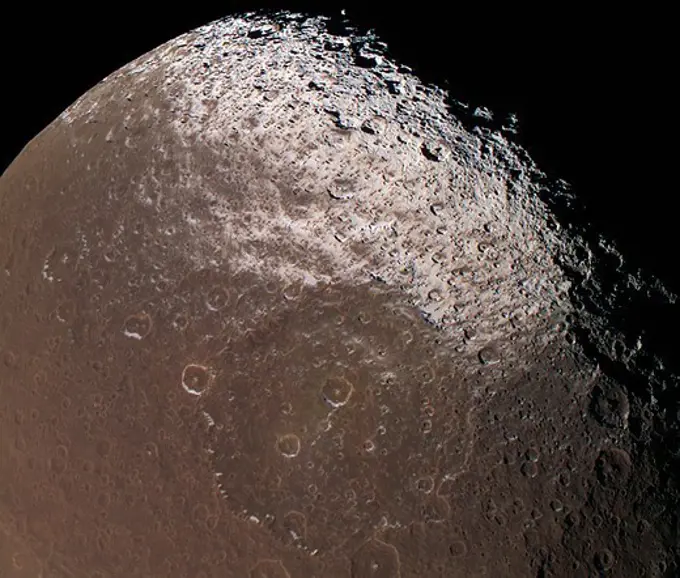
These images depict celestial bodies Iapetus and Ceres, showcasing their unique surfaces and terrains, highlighting craters and mysterious dark regions.

The south pole of Saturn's moon Tethys, September 24, 2005
154 assets in this story
6145-44806861
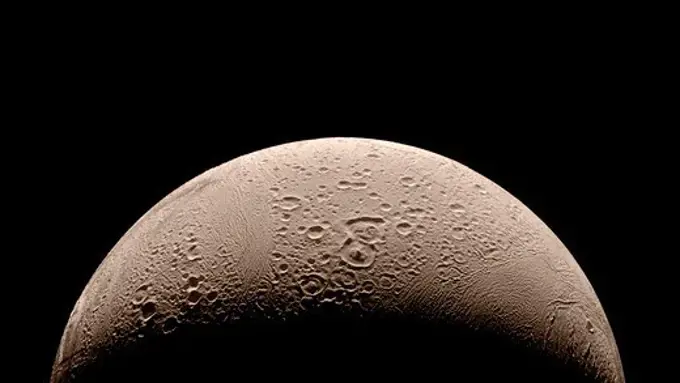
NASA's Cassini spacecraft captured this wide-angle image showing the south polar region of Saturn's moon Enceladus. The outlined area focuses on Baghdad Sulcus, a fracture in the south polar region.
4389-224
Cassini Encounters Iapetus
6145-44636165
This stunning false-color view of Saturn's moon Hyperion reveals crisp details across the strange, tumbling moon's surface. The view was obtained during NASA's Cassini close flyby on Sept. 26, 2005.
6145-44548690
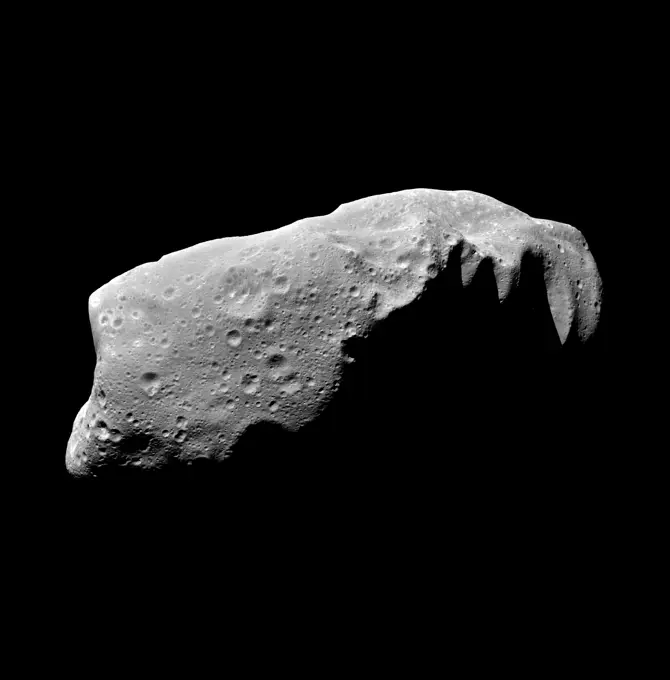
This view of the asteroid 243 Ida is a mosaic of five image frames acquired by NASA's Galileo spacecraft's solid-state imaging system at ranges of 3,057 to 3,821 kilometers (1,900 to 2,375 miles) on August 28, 1993.
6145-58966414
This image from the framing camera aboard NASA's Dawn spacecraft shows surface details beginning to resolve as the spacecraft closes in on the giant asteroid Vesta on June 1, 2011, from a distance of about 300,000 miles (483,000 kilometers).
6177-V53550870
6145-44546662
These pictures of the Moon were taken by NASA's Galileo spacecraft at (right photo) Dec.8, 1990 from a distance of almost 220,000 miles, and at (left photo) Dec. 9, 1990 at a range of more than 350,000 miles.
4389-613
Titan in Infrared Light
4389-2540
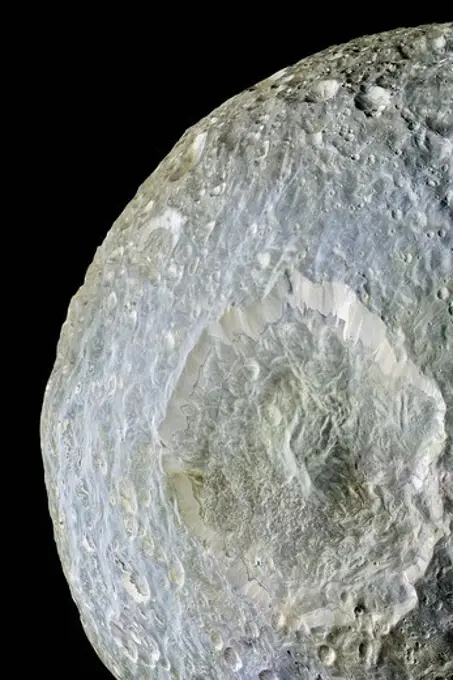
Herschel Crater on Mimas
6145-44856602
Rhea and Dione seem like dark and light fraternal twins in this image from NASA's Cassini spacecraft, with each of these two Saturnian moons displaying a large crater oriented similarly in the northern hemisphere.
6145-44494357
Clementine Observes the Moon, Solar Corona, and Venus
4197-62718877
Phobos, moon and universe for solar system, nebula or science with mock up space on black background. Galaxy, mars and innovation with research, milky way or astrology for exploration and discovery
6145-44918690
NASA's Cassini spacecraft spies Titan's south polar vortex from below the moon in this image. Imaging scientists are monitoring the vortex to study its seasonal development.
6145-45097474
Some parts of Dione's surface are covered by linear features, called chasmata, which provide dramatic contrast to the round impact craters that typically cover moons. This image was captured by NASA's Cassini spacecraft.
6145-44546902
This color image of the Moon was taken by NASA's Galileo spacecraft at 9:35 a.m. PST Dec. 9, 1990, at a range of about 350,000 miles. The concentric, circular Orientale basin, is near the center; the nearside is to the right, the far side to the left.
6145-44970613
This view of the two moons of Mars comes from a set of images taken by NASA's Mars rover Curiosity as the larger moon, Phobos, passed in front of the smaller one, Deimos, from Curiosity's perspective, on Aug. 1, 2013.
6145-45097618
Saturn's moon Dione hangs in front of Saturn's rings in this view taken by NASA's Cassini spacecraft during the inbound leg of its last close flyby of the icy moon.
4128-24796376
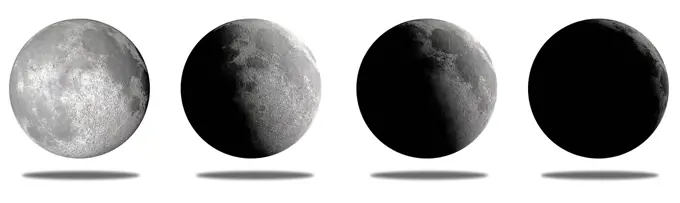
Moon phases, illustration
6145-44818358
A huge impact created Odysseus Crater, which covers a large part of Saturn's moon Tethys in this image from NASA's Cassini spacecraft.
6145-44643792
Dione steps in front of Tethys for a few minutes in an occultation, or mutual event. These events occur frequently for the Cassini spacecraft when it is orbiting close to the ringplane
6145-44675412
Pitted Hyperion
6145-45135717
This is one frame from a movie made of images taken by NASA's Dawn spacecraft, from a position exactly between the sun and Ceres' surface.
4389-1070
North Polar Region of Enceladus Seen by Cassini Probe
6145-44494622
This Voyager 2 image of Miranda was taken Jan. 23, 1986, as the spacecraft neared Uranus. Miranda is the innermost of the five Uranian satellites known from Earth-based observations.
6145-45260923
In July 2015, NASA's New Horizons spacecraft sent home the first close-up pictures of Pluto and its moons. Using actual New Horizons data and digital elevation models of Pluto and its largest moon, Charon, mission scientists created flyover movies that offer spectacular new perspectives of the many unusual features that were discovered and which have reshaped our views of the Pluto system -- from a vantage point even closer than a ride on New Horizons itself. The flight over Charon begins high over the hemisphere New Horizons saw on its closest approach, then descends over the deep, wide canyon of Serenity Chasma. The view moves north, passing over Dorothy Gale crater and the dark polar hood of Mordor Macula. The flight then turns back south, covering the northern terrain of Oz Terra before ending over the relatively flat equatorial plains of Vulcan Planum and the moated mountains of Clarke Montes. (Note that all feature names are informal.) The topographic relief is exaggerated by a f
6145-44823313
The surface of Saturn's moon Dione is rendered in crisp detail against a hazy, ghostly Titan. A portion of the wispy terrain of Dione's trailing hemisphere can be seen on the right in this captured by NASA's Cassini spacecraft.
6145-45040701
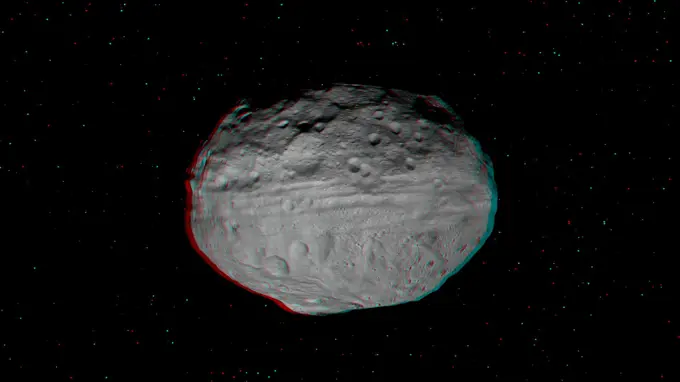
This anaglyph shows the topography of Vesta's eastern hemisphere; equatorial troughs are visible around asteroid Vesta's equator and north of these troughs there are a number of highly degraded, old, large craters. You need 3-D glasses to view this image.
6145-44675122
The Cassini spacecraft takes in the crater-strewn surface near Dione's south pole in this natural color view. Long fractures slice across the surface here, as on other parts of the moon
6145-44564634
Voyager 2 Color Image of Enceladus, Almost Full Disk
6145-44952036
NASA's Cassini spacecraft peers through Titan's thick clouds to spy on the region dubbed 'Senkyo' by scientists. The dark features include vast fields of dunes, composed of solid hydrocarbon particles precipitated out of Titan's atmosphere.
6145-45092079
This map-projected view of Ceres was created from images taken by NASA's Dawn spacecraft during its initial approach to the dwarf planet, prior to being captured into orbit in March 2015.
6145-44625619
Along Endurance Crater's Inner Wall (Polar)
6145-45078593
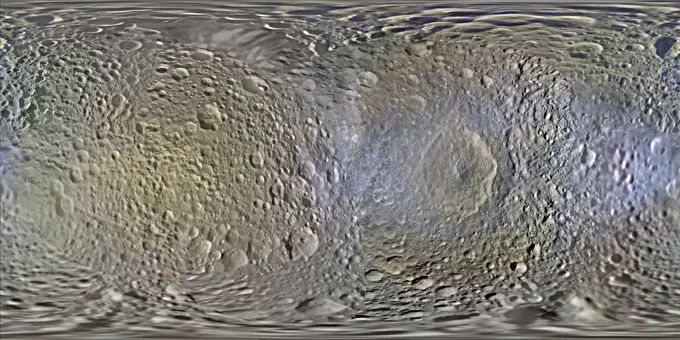
This set of global, color mosaics of Saturn's moon Mimas was produced from images taken by NASA's Cassini spacecraft during its first ten years exploring the Saturn system.
6145-44729253
What a Difference a Week Can Make
1525-22202257
Moon
6145-44695866
On January 14, 2008, NASA's MESSENGER became the first spacecraft to see the side of Mercury shown in this image -- the historic first look at the previously unseen side.
6145-45234206
AS13-62-8923 (11-17 April 1970) --- This oblique view of the lunar farside was photographed from the Apollo 13 spacecraft as it passed around the moon on its hazardous journey home. The large conspicuous mare area is Mare Moscoviense which is located at 146 degrees east longitude and 25 degrees north latitude. The large crater at the horizon is International Astronomical Union Crater No. 221. This view is looking northeast from the spacecraft.
6145-44796416
Full Global Mercury Mosaic
6145-44890664
The northern and southern hemispheres of Dione are seen in these polar stereographic maps, mosaicked from images from NASA's Cassini mission. Each map is centered on one of the poles and surface coverage extends to the equator.
6145-44953250
The northern and southern hemispheres of Enceladus are seen in these polar stereographic maps, mosaicked from the best-available NASA Cassini clear-filter images.
6145-44648969
Saturn's atmosphere produces beautiful and sometimes perplexing features. Is the bright feature below center a rare crossing of a feature from a zone to a belt, or is it an illusion created by different cloud layers at different levels
6145-45040124
Flying past Saturn's moon Dione, NASA's Cassini captured this view which includes two smaller moons, Epimetheus and Prometheus, near the planet's rings.
6145-44807650
Tethys Polar Maps - February 2010
6145-44992312
Saturn's moon Enceladus, covered in snow and ice, resembles a perfectly packed snowball in this image from NASA's Cassini spacecraft.
6145-45003065
After Fire
6145-44635612
This is a NASA Hubble Space Telescope color image of dwarf planet Ceres, the largest object in the asteroid belt. The contrast has been enhanced to reveal surface details.
6145-44528914
Bright scars on a darker surface testify to a long history of impacts on Jupiter's moon Callisto in this image of Callisto from NASA's Galileo spacecraft.
6145-44625661
Crisscrossing Streaks
6145-44907366
Titan's south polar vortex seems to float above the moon's south pole in this Cassini spacecraft view. The vortex, which is a mass of gas swirling around the south pole high in the moon's atmosphere, can be seen in the lower right of this view.
4389-1039
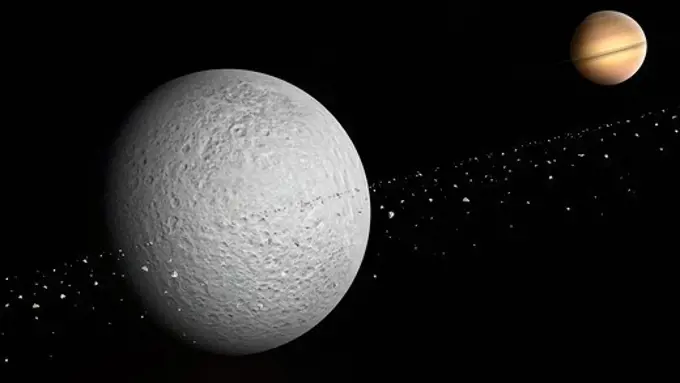
Artist's Conception of Rings of Rhea
6145-44684891
Stormy Spot
6145-45122781
This view from NASA's Cassini spacecraft was obtained about two days before its first close pass by the outer edges of Saturn's main rings during its penultimate mission phase.
6145-44672302
The high northern latitudes on Enceladus show little detail from Cassini's distant vantage point, nearly 50 degrees above the moon's equator
6145-44888353
This image mosaic from NASA's Dawn mission shows a slice of the surface of the giant asteroid Vesta. This mosaic, which covers one quarter of Vesta's surface, shows the pronounced difference between the northern and southern hemispheres.
PREVIOUS
of 2
NEXT
2401 S. Ervay, Suite 206
Dallas, Texas 75215
United States
Get Started
Free ResearchMy BoardsMy Cart
For Creators
How To License Your ContentContributor PortalFrame of Mind
Resources
API accessPricing
Contact
+1 866 236 0087help@viewpictures.co.uk Contact form
©2026 View Pictures. All Rights Reserved. -B
This site is protected by reCAPTCHA and Google Privacy Policy and Terms of Service apply.