My Boards
View Pictures
  • My Boards

NASA Research and Technology

Scientists working on advanced technology for space exploration, including waste conversion and electrostatic experiments in laboratory settings.

Indian scientist working in laboratory
187 assets in this story
6145-44686975
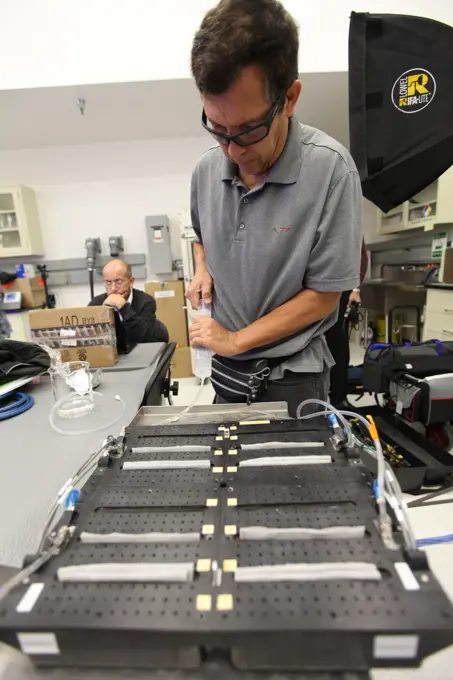
LCROSS in Ames clean room N-240 - Jerry Wang (L) and Glen Sasaki securing all parts
6145-45073019
RAYMOND G. (CORKY) CLINTON WITH A WORKING MODEL OF THE FIRST 3-D PRINTER TO BE SENT TO THE ISS, ALONG WITH OTHER PRODUCTS FROM THE ADDITIVE MANUFACTURING LAB IN BUILDING 4707.
6145-44516419
KENNEDY SPACE CENTER, FLA. -- United Space Alliance SRB technician Jim Glass conducts a Flex test on a cable on the solid rocket booster at left. The SRB is part of Space Shuttle Atlantis, rolled back from Launch Pad 39A in order to conduct tests on the cables. A prior extensive evaluation of NASAs SRB cable inventory on the shelf revealed conductor damage in four (of about 200) cables. Shuttle managers decided to prove the integrity of the system tunnel cables already on Atlantis before launching. Workers are conducting inspections, making continuity checks and conducting X-ray analysis on the cables. The launch has been rescheduled no earlier than Feb. 6. <br
6145-44862240
Advanced Stirling Converter
6145-44673512
Lunar CRater Observation and Sensing Satellite (LCROSS) and P.I. at NASA Ames Research Center - Total Luminance Photometer shake test in N-244 EEL Laboratory; Kim Ennico takes notes on test set up
6145-45287183
Ray Pitts, co-principal investigator for OSCAR, prepares the Orbital Syngas Commodity Augmentation Reactor (OSCAR) for thermal testing Jan. 26, 2021, at NASAs Kennedy Space Center in Florida. The tests are in preparation for a scheduled suborbital flight test later this year facilitated by NASAs Flight Opportunities program. The testing ensures the thermal environment of the payload wont create additional hazards during flight and that OSCAR can successfully operate within the temperature range it may encounter as it performs tests in microgravity.
6145-55186616
Space Communications and Navigation, SCaN Quantum Metrology Lab. Space Communications and Navigation, SCaN Quantum Metrology Lab
6145-44617326
KENNEDY SPACE CENTER, FLA.  -  In the KSC Space Life Sciences Labs Resource Recovery lab, bioengineer Tony Rector checks the clear plexiglass ARMS reactor vessel.  ARMS, or Aerobic Rotational Membrane System, is a wastewater processing project being tested for use on the International Space Station to collect, clean and reuse wastewater.  It could be adapted for use on the Moon and Mars.   The Lab is exploring various aspects of a bioregenerative life support system. Such research and technology development will be crucial to long-term habitation of space by humans.
1848-50827363
Laser laboratory of experimental physics at Heinrich Heine University Duesseldorf, North Rhine-Westphalia, Germany, Europe
6145-44584663
SIGNATONE HIGH-TEMPERATURE PROBE STATION
6145-44682997
LCROSS flight hardware in clean room at Ames N-240. EEL personnel fabricating testing components with Jerry Wang of Ames, Engineering Evaluation labLCROSS flight hardware in clean room at Ames N-240. EEL personnel fabricating testing components with Jerry Wang of Ames, Engineering Evaluation lab
1848-50968618
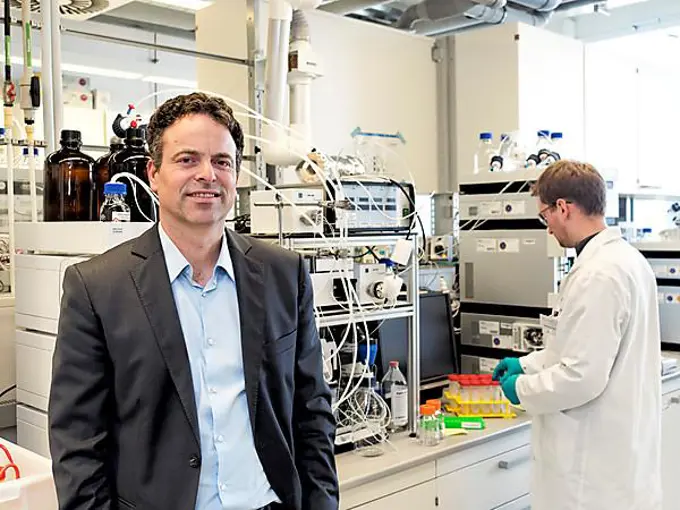
Managing Director Dr. Ingmar Hoerr, CureVac GmbH in the Tuebingen-Reutlingen Technology Park, Biotechnology Start-up Centre, develops vaccine against coronavirus, COVID-19 pandemic, Stuttgart, Germany, Europe
1525-23117872
Students watching experiment involving the Eiffel tower
1848-49509593
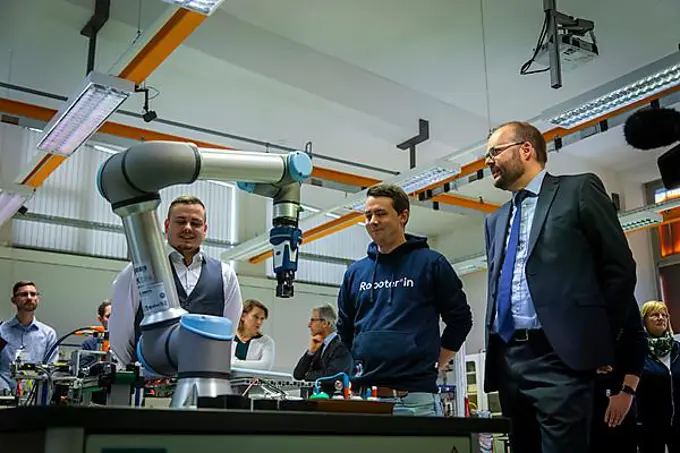
Wandelbots Unterricht
6145-54499328
Straight on shot from a high angle down at the Army Research Laboratory's (ARL) unique high-speed imaging facility which is enabling process characterization and optimization electrospinning, an advanced technology for developing nanofiber-based individual protective clothing (e.g., chemical/biological protective wear), vehicle filtration systems and other protective systems. Base: Aberdeen Proving Grounds State: Maryland (MD) Country: United States Of America (USA)
6145-45182565
X-RAY MIRROR REPLICATION AND SHELL SEPARATION PROCESS: CHET SPEEGLE, JOHN HOOD, KEITH BOWEN, CARL WIDRIG, RATANA MEEKHAM, AMY MEEKHAM
6145-44795894
Common Test Bed, Fuel Cell Laboratory
6145-45128984
Martha Williams, who leads the team inventing the Flexible Damage Detection System, stands in a laboratory with a prototype at NASA's Kennedy Space Center in Florida. The system uses circuits printed on thin thermal film and specialized software. The system is designed to show where damage to a surface occurs and how severe it may be. It could offer astronauts a real-time update on their spacecraft's condition during a mission without requiring a spacewalk.
1589R-184599
Indian scientist working in laboratory
6145-45105231
JOHNNIE CLARK, BRIAN WEST, AND ZACK JONES OF MSFCS ADVANCED MANUFACTURING TEAM, WITH MSFCS XLINE SELECTIVE LASER MELTING SYSTEM.  CURRENTLY ONE OF THE LARGEST METAL 3D PRINTERS, THE XLINE AT MARSHALL IS BEING USED TO DEVELOP AND CERTIFY NICKEL ALLOY 718 MATERIAL PROPERTIES AND LARGE MANUFACTURING TECH DEMOS FOR THE RS25 ENGINE AND THE COMMERCIAL CREWED VEHICLE PROJECTS.
6145-44994737
DATE: 1-7-14LOCATION: Bldg. 9NW - POGO StandSUBJECT: Expedition 44 astronaut Kjell Lindgren during ISS EVA POGO 1 training.
6145-44967784
NASA's Langley Research Center in Hampton, Va., recently conducted hypersonic testing of Dream Chaser models for SNC as part of the agency's Commercial Crew Program in order to obtain necessary data for the material selection and design of the TPS
4286-34766
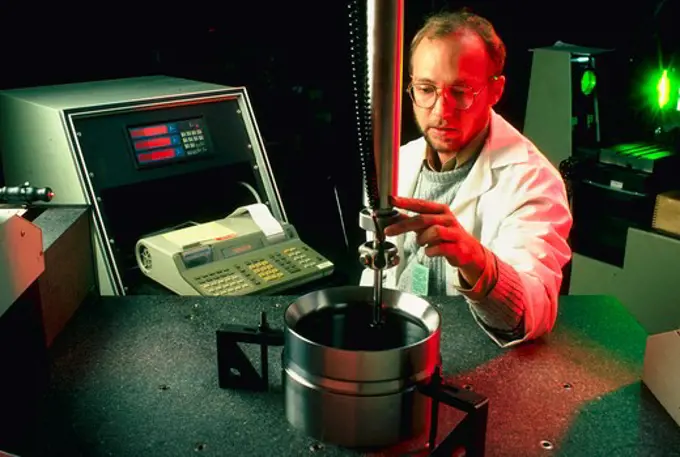
Machine tests precise dimensions of part at ARC Corporation in Arkansas.  (model released)
1848-50827501
Heinrich-Heine-University, Theoretical Pharmacy Group Prof. Gohlke, PhD student at 3D monitor with 3D mouse, Duesseldorf, Germany, Europe
1848-49416514
Professorship for Flight Mechanics and Flight Control at the Technical University (TU) Dresden
6145-44970441
ARTHUR BROWN (AST, AEROSPACE METALLIC MATERIALS) LOADS A CERAMIC COATED SILICON WAFER INTO A KRATOS (ELECTRON SPECTROSCOPY FOR CHEMICAL ANALYSIS) TO PERFORM X-RAY PHOTOELECTRON SPECTROSCOPY (XPS). XPS IS A TECHNIQUE THAT ANALYZES THE SURFACE CHEMISTRY OF A SAMPLE BY IRRADIATING IT WITH X-RAYS AND MEASURING THE NUMBER AND KINETIC ENERGY OF ELECTRON THAT ESCAPE.
6145-45220981
Team members assemble the flight hardware for NASAs Orbital Syngas Commodity Augmentation Reactor, or OSCAR, on Oct. 10, 2019, in the Space Station Processing Facility at the agencys Kennedy Space Center in Florida. From left are Annie Meier, Gino Carro, Evan Bell and Jamie Toro. OSCAR is an Early Career Initiative project at the spaceport that studies technology to convert trash and human waste into useful gasses such as methane, hydrogen and carbon dioxide. By processing small pieces of trash in a high-temperature reactor, OSCAR is advancing new and innovative technology for managing waste in space. A prototype has been developed, and the team is in the process of constructing a new rig for a suborbital flight test.
6145-44879722
Bill Nye and Dr. Jim Garvin at the Science on a Sphere during a tour of Goddard Space Flight Center on September 8, 2011
6145-44861519
Advanced Stirling Converter
6145-45121749
A test unit, or prototype, of NASA's Advanced Plant Habitat (APH) was delivered to the Space Station Processing Facility at the agency's Kennedy Space Center in Florida. The APH is the largest plant chamber built for the agency. Oscar Monje, a scientist on the Engineering Services Contract, prepares the base of the APH for engineering development tests to see how the science will integrate with the various systems of the plant habitat. The APH will have about 180 sensors and fourt times the light output of Veggie. The APH will be delivered to the International Space Station in March 2017.
6145-44473957
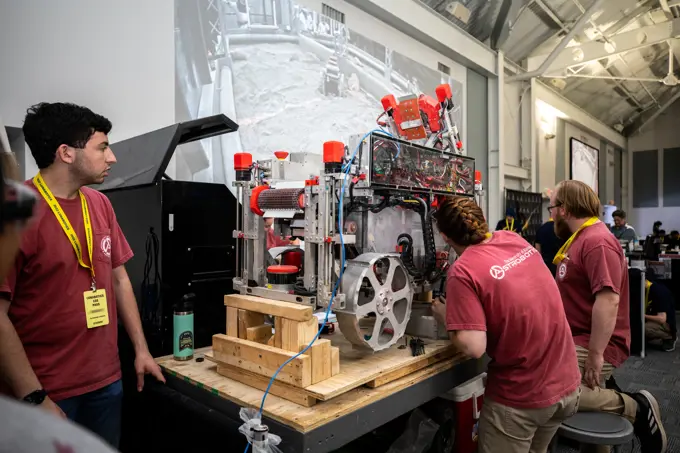
Students from the University of Alabama prepare their robotic miner for its turn to dig in the mining arena during NASAs LUNABOTICS competition on May 24, 2022, at the Center for Space Education near the Kennedy Space Center Visitor Complex in Florida. More than 35 teams from around the U.S. have designed and built remote-controlled robots for the mining competition. Teams use their autonomous or remote-controlled robots to maneuver and dig in a supersized sandbox filled with rocks and simulated lunar soil, or regolith. The objective of the challenge is to see which teams robot can collect and deposit the most rocky regolith within a specified amount of time.
6145-45282443
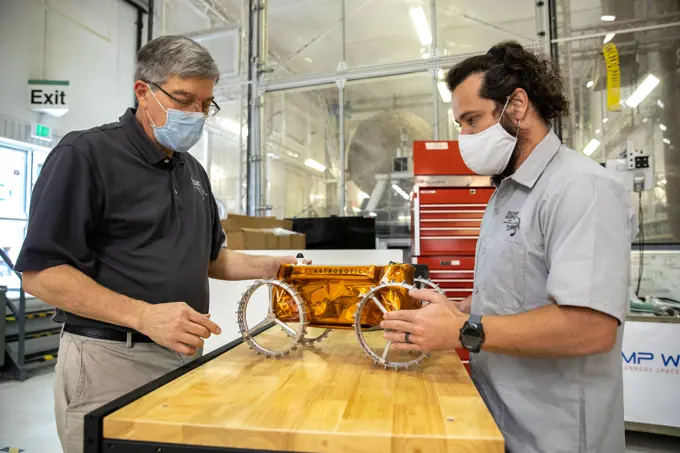
Jim Mantovani, left, and A.J. Nick, with Kennedy Space Centers Exploration and Research and Technology programs, unbox a CubeRover at the Florida spaceport on Oct. 9, 2020. The rover was delivered by Pittsburgh-based space robotics company Astrobotic, as part of a Small Business Innovative Research (SBIR) award from NASA. Nick will lead CubeRover testing in the coming months in the Granular Mechanics and Regolith Operations (GMRO) Laboratorys regolith bin, which holds approximately 120 tons of lunar regolith simulant at Kennedys Swamp Works. In 2019, NASA announced a $2 million Tipping Point award to develop more mature CubeRovers payload interfaces and increase its capabilities.
6145-45230298
The first NASA Dropping In a Microgravity Environment (DIME) student competition pilot project came to a conclusion at the Glenn Research Center in April 2001. The competition involved high-school student teams who developed the concept for a microgravity experiment and prepared an experiment proposal. The two student teams - COSI Academy, sponsored by the Columbus Center of Science and Industry, and another team from Cincinnati, Ohio's Sycamore High School, designed a microgravity experiment, fabricated the experimental apparatus, and visited NASA Glenn to operate their experiment in the 2.2 Second Drop Tower. Here Carol Hodanbosi of the National Center for Microgravity Research and Jose Carrion, a lab mechanic with AKAC, prepare a student experiment package (inside the silver-colored frame) inside the orange-colored drag shield that encloses all experiment hardware. This image is from a digital still camera; higher resolution is not available.
6145-44588699
NASA researcher Dr. Donald Frazier uses a blue laser shining through a quartz window into a special mix of chemicals to generate a polymer film on the inside quartz surface. As the chemicals respond to the laser light, they adhere to the glass surface, forming optical films. Dr. Frazier and Dr. Mark S. Paley developed the process in the Space Sciences Laboratory at NASA's Marshall Space Flight Center in Huntsville, AL. Working aboard the Space Shuttle, a science team led by Dr. Frazier formed thin-films potentially useful in optical computers with fewer impurities than those formed on Earth. Patterns of these films can be traced onto the quartz surface. In the optical computers of the future, thee films could replace electronic circuits and wires, making the systems more efficient and cost-effective, as well as lighter and more compact.
6145-44974947
Advanced Exploration Systems (AES) Modular Power Systems for Space Exploration (AMPS); electrochemistry, AMPS, will infuse and demonstrate batteries, fuel cells, and other power modules for exploration ground system demonstrations
6145-45269861
NASA Evolutionary Xenon Thruster - Commercial, NEXT-C Flight Power Processing Unit, PPU
6188-60955784
San Carlos de Bariloche . province of Río Negro San Carlos de Bariloche . province of Río Negro, republica Argentina,Patagonia, cono sur, South America Copyright: xZoonar.com/BartomeuxBalaguerxRotgerx 21818365
6145-55970604
Astronaut Jessica Watkins at Howard University. Howard University Professor and Chair of the Department of Physics and Astronomy, Dr. Quinton Williams gives NASA astronaut Jessica Watkins a tour of the Renewable Energy/Battery Research Laboratory at Howard University, Friday, March 31, 2023, in Washington.
6145-44867915
PHOTO DATE:  06-23-11LOCATION:   Bld 9NWSUBJECT: Expedition 29 crew members, Dan Burbank, Don Pettit and Andre Kuiper during EVA Fluid QD Ops with instructor Sandra MooreWORK ORDER:  2011-1643
6145-45063583
PHOTO DATE:  7-1-14LOCATION:  Bldg. 4south, Room 1303SUBJECT: 43S/Expedition 44/45 crew member Oleg Kononenko during Nikon D4 EQ# training with instructor Paul Reichert.
6145-58913615
Naval Postgraduate School (NPS) Department of Mechanical and Aerospace Engineering Research Associate Forest Shaner operates an industrial cabinet X-ray imaging system at the NPS campus in Monterey. The system, recently installed by the school's Consortium for Advanced Manufacturing Research and Education, is providing NPS researchers and their partners with new capabilities that will advance research efforts in several areas.
6145-45251025
TRANSMISSION ELECTRON MICROSCOPE / TEM
6145-58962196
KENNEDY SPACE CENTER, FLA. - Lloyd Pierce, a NASA test engineer, checks electronic components related to the faulty sensor readings in the liquid hydrogen tank low-level fuel cut-off sensor. The sensor failed a routine prelaunch check during the launch July 13, causing mission managers to scrub Discovery's first launch attempt. The sensor protects the Shuttle's main engines by triggering their shutdown in the event fuel runs unexpectedly low. The sensor is one of four inside the liquid hydrogen section of the External Tank (ET).
6145-44840507
STS-133 DISCOVERY ET-137 X-RAY BACK SCATTER & SLIDE BASKET
6145-45075350
Members of the Cold Atom Laboratory team at NASA's Jet Propulsion Laboratory are seen here with their ground-based testbed, which can reliably create a Bose-Einstein condensate.
824-63182778
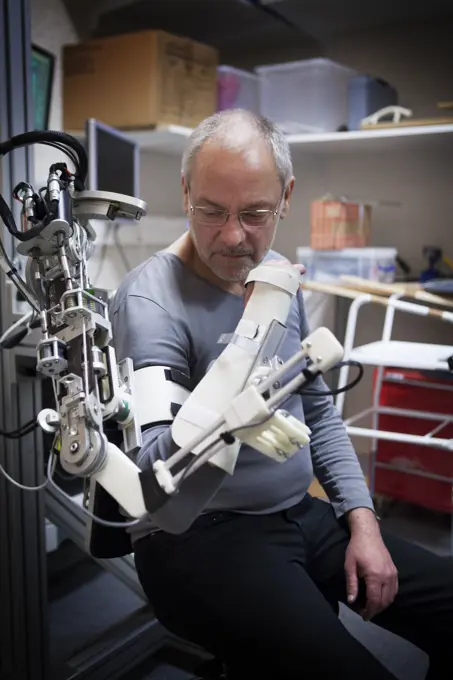
Reportage at ISIR (Institute of Robotics and Intelligent Systems) in Paris, France. Exoskeleton prototype used for neuro-motor rehabilitation and physical therapy. ABLE is an arm exoskeleton which is in contact with the human arm in multiple locations in order to control joint synergy during hemiplegia rehabilitation.
6239-70845761
Dr. Leo Esaki, IBM researcher at corporate headquarter/lab in Yorktown Heights, New York - digital file from original | Library of Congress
6145-45247423
Engineering bench system hardware for the Mechanics of Granular Materials (MGM) experiment is tested on a lab bench at the University of Colorado in Boulder. This is done in a horizontal arrangement to reduce pressure differences so the tests more closely resemble behavior in the microgravity of space. Sand and soil grains have faces that can cause friction as they roll and slide against each other, or even cause sticking and form small voids between grains. This complex behavior can cause soil to behave like a liquid under certain conditions such as earthquakes or when powders are handled in industrial processes. MGM experiments aboard the Space Shuttle use the microgravity of space to simulate this behavior under conditions that carnot be achieved in laboratory tests on Earth. MGM is shedding light on the behavior of fine-grain materials under low effective stresses. Applications include earthquake engineering, granular flow technologies (such as powder feed systems for pharmaceutica
6145-45074591
PHOTO DATE: 09-24-14 LOCATION:  Bldg. 4south, Room 1303 SUBJECT:  Expedition 43 crew members Terry Virts and Samantha Cristoforetti during camera review training with instructors Steve Berenzweig and Katrina Willougby.
1525-20837068
telescope shop
6145-45293405
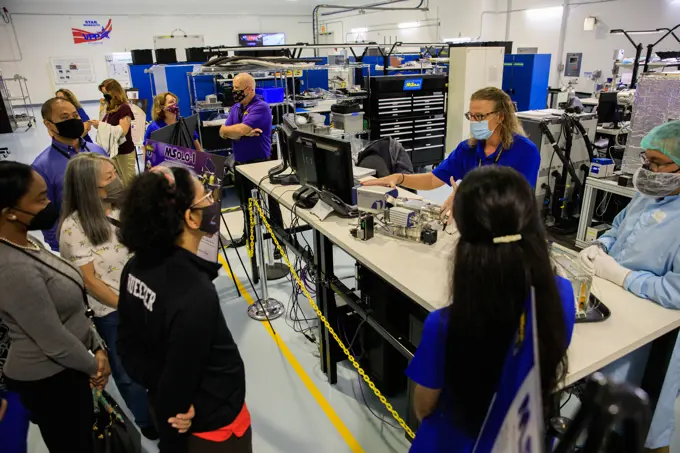
Senior leaders with Kennedy Space Center in Florida, familiarize newly appointed officials from NASA Headquarters with the centers facilities during a tour on April 19, 2021. The group views research and technology experiments in the Space Station Processing Facility. Janine Captain, the principal investigator for the Mass Spectrometer Observing Lunar Operations, or MSolo, briefs the team about the commercial off the-shelf- mass spectrometer the team at Kennedy has hardened for lunar operations. MSolo will be part of four missions for NASAs Commercial Lunar Payload Services initiative, including NASAs Polar Resources Ice Mining Experiment-1 (PRIME-1) and NASAs Volatiles Investigating Polar Exploration Rover or VIPER.
1812-111550903
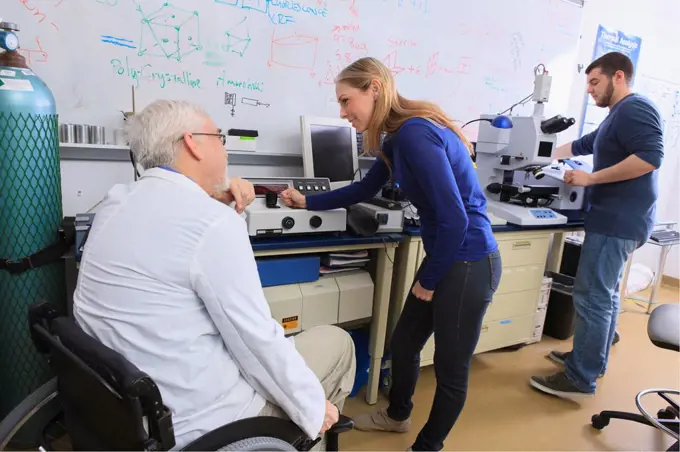
Professor with muscular dystrophy advising engineering students in chemistry laboratory working on x-ray fluorescence analyzers
1848-50829185
Prof. Dr. Ulrich Schreiber at the high-pressure machine for simulating conditions deep in the earth for research on the origin of life, Faculty of Biology, Department of Geology, Laboratory at the University of Duisburg-Essen, Essen, Germany, Europe
6145-45114744
Cutting Edge magazine - NavCube - Jennifer Donaldson, Monther Hasouneh, Dave Petrick.
6145-44974959
Advanced Exploration Systems (AES) Modular Power Systems for Space Exploration (AMPS); electrochemistry, AMPS, will infuse and demonstrate batteries, fuel cells, and other power modules for exploration ground system demonstrations
6145-45195566
Mark Velasco (left) and Jared Sass assemble a custom cold heat exchanger for freezing carbon dioxide from a simulated Martian environment in the Cryogenics Test Laboratory at NASA's Kennedy Space Center on Mar. 20, 2019.
6145-45223244
Visit by Dr. Harrison H. Schmitt, Apollo 17 Astronaut
6145-45287189
Chemical Engineer David Rinderknecht, left, and Ray Pitts, co-principal investigator for the Orbital Syngas Commodity Augmentation Reactor (OSCAR), prepare OSCAR for thermal testing Jan. 26, 2021, at NASAs Kennedy Space Center in Florida. The tests are in preparation for a scheduled suborbital flight test later this year facilitated by NASAs Flight Opportunities program. The testing ensures the thermal environment of the payload wont create additional hazards during flight and that OSCAR can successfully operate within the temperature range it may encounter as it performs tests in microgravity.
6145-44913979
FROM RIGHT, MARSHALL RESEARCHER DR. DAVID SMITH, U.S. ARMY RESEARCHER KRISHNA MYNENI AND ARMY CONTRACTOR HONGROK CHANG HAVE BEGUN A THREE-YEAR NASA PROJECT TO DEVELOP INNOVATIVE NEW GYROSCOPES THAT COULD DRAMATICALLY IMPROVE IN-FLIGHT NAVIGATION CAPABILITIES FOR SPACE VEHICLES, MILITARY AIR AND SEA ASSETS AND COMMERCIAL VEHICLES. THE FAST LIGHT OPTICAL GYROSCOPES FOR PRECISE INERTIAL NAVIGATION” PROJECT INCLUDES RESEARCHERS AT NASA’S MARSHALL SPACE FLIGHT CENTER IN HUNTSVILLE, ALA.; THE U.S. ARMY AVIATION AND MISSILE RESEARCH, DEVELOPMENT AND ENGINEERING CENTER (AMRDEC) AT REDSTONE ARSENAL IN HUNTSVILLE; AND NORTHWESTERN UNIVERSITY IN EVANSTON, ILL.
1848-50827360
Laser laboratory of experimental physics at Heinrich Heine University Duesseldorf, North Rhine-Westphalia, Germany, Europe
6145-54290643
Atmospheric Scientist
6145-45185281
NASA Earth & Space Air Prize Demonstration Event
6145-45056837
PHOTO DATE: 05/16/14LOCATION: JSC B4 ROOM 1303SUBJECT:  Soyuz 40 (Expedition 42) Russian cosmonauts Alexander Samokutyaye and Yelena Serova during EVA IR Camera EQ training with instructor Katrina Willoughby
1848-V61932507
6145-44917368
KSC-2012-6319 - CAPE CANAVERAL, Fla. - Paul Hintze is the researcher leading the trash-to-gas project at NASA's Kennedy Space Center in Florida. Hintze's group of six researchers at Kennedy and groups from NASA centers in Ohio, California and Texas wrote in a recent paper that the current methods of handling trash - either carrying it along on the round trip through space or gathering it into an expendable module and burning it up in Earth's atmosphere - are not suitable answers for missions that go beyond Earth orbit or even past the moon. Working in a laboratory at Kennedy, Hintze's team built an 80-pound device that looks like a three-foot-long metal pipe to test theories about incinerating a variety of trash ranging from used clothes to uneaten food. The reactor holds more than three quarts of material and burns at about 1,000 degrees F, about twice the maximum temperature of an average household oven. It's expected to take astronauts four hours to burn a day's worth of trash from
1848-50827361
Laser laboratory of experimental physics at Heinrich Heine University Duesseldorf, North Rhine-Westphalia, Germany, Europe
1525-20940548
Man and young lady looking at telescopes
4359-385
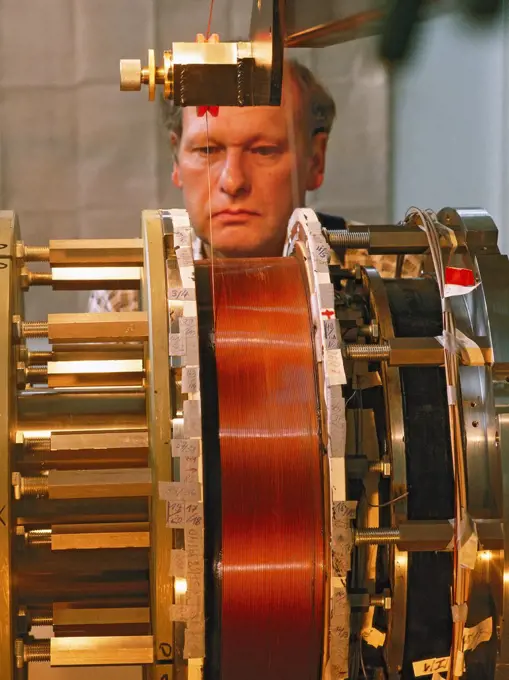
A technician winds a superconducting wire onto a coil for use as a magnet.
1525-57459440
Lady looking through lens of telescope
824-63208162
Reportage on the observatory accredited by the French Ecology, Sustainable Development and Energy Ministry to provide surveillance and information on air quality in the Auvergne-Rhône-Alpes area of France. Dioxin filters will be analysed in the lab. The grey filter was set up two days ago.
6145-45190351
Dr. Ye Zhang, project scientist for the ISS Research Office at NASAs Kennedy Space Center in Florida, demonstrates how biological samples are tested in a microgravity simulation device in the Microgravity Simulation Support Facility on Dec. 20, 2018.
1525-57386165
internal system
6145-48798743
Office of the Secretary - NIST Site Visit
6145-44402376
Senior Airman Timothy D. Burrows, a 157th Logistics Readiness Squadron fuels labs technician, performs a quality control test on jet aircraft fuel at Pease Air National Guard Base, N.H., April 21, 2016.
6145-44915303
JSC2012-E-237319 (5 Nov. 2012) --- NASA astronaut Michael Hopkins, Expedition 37/38 flight engineer, prepares to use virtual reality hardware in the Space Vehicle Mock-up Facility at NASA's Johnson Space Center to rehearse some of his duties on the upcoming mission to the International Space Station. This type of virtual reality training allows the astronauts to wear a helmet and special gloves while looking at computer displays simulating actual movements around the various locations on the station hardware with which they will be working. A crew instructor assisted Hopkins.
6145-45245376
Don Sirois, an Auburn University research associate, and Bruce Strom, a mechanical engineering Co-Op Student, are evaluating the dimensional characteristics of an aluminum automobile engine casting. More accurate metal casting processes may reduce the weight of some cast metal products used in automobiles, such as engines. Research in low gravity has taken an important first step toward making metal products used in homes, automobiles, and aircraft less expensive, safer, and more durable. Auburn University and industry are partnering with NASA to develop one of the first accurate computer model predictions of molten metals and molding materials used in a manufacturing process called casting. Ford Motor Company's casting plant in Cleveland, Ohio is using NASA-sponsored computer modeling information to improve the casting process of automobile and light-truck engine blocks.
6145-44634006
Rod Coil Co-polymer Technology
6145-30224616
Secretary of State Antony J. Blinken tours the Quantum Materials Lab at the University of Copenhagen, in Copenhagen, Denmark on May 17, 2021.
6145-45222479
The rock band X Ambassadors is photographed in front of NASAs Artemis II Orion crew module inside the Neil Armstrong Operations and Checkout (O&C) Building high bay at the agencys Kennedy Space Center in Florida. X Ambassadors visited Kennedy on Oct. 21, 2019, and had the opportunity to tour areas around the multi-user spaceport such as the O&C, Launch Complex 39B and Swamp Works. The title of the bands latest album, Orion, led them to an up-close look at the spacecraft that will take humans farther than theyve ever gone before.
1812-111550327
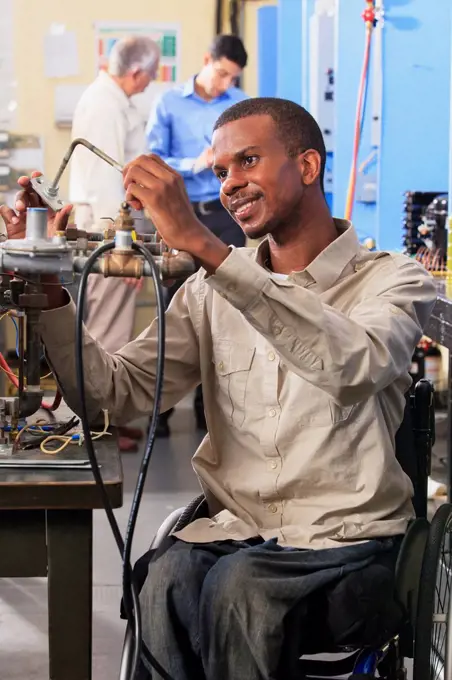
Student in wheelchair examining furnace ignitor in HVAC classroom
1525-25046059
Geometer with measure instrument
6145-45088552
ANDREW S. KEYS. MSFC CHIEF TECHNOLOGIST
6145-54157700
U.S. Air Force Staff Sgt. Alexander Peart, a 1 Special Operations Logistics Readiness Squadron fuels laboratory technician noncommissioned officer in charge, tests the temperature and conductivity of a fuel sample June 15, 2022, at Hurlburt Field, Florida. This test is performed to certify the static dissipating additive is within appropriate limits.
1525-21085230
retiree rambling through nature with compass
6145-45178240
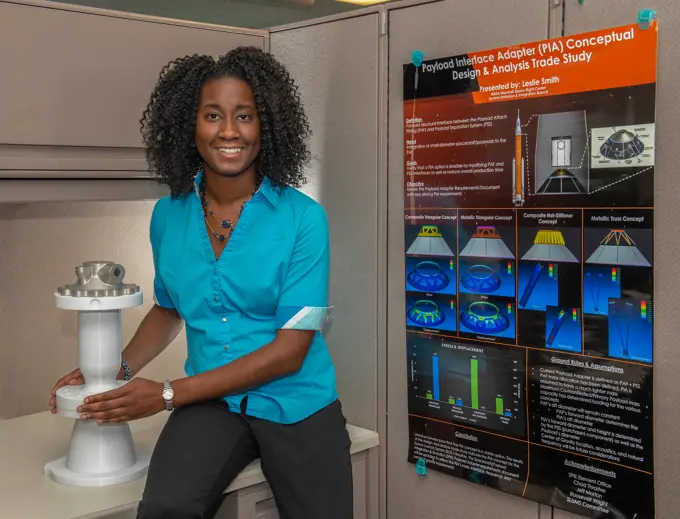
Leslie Smith, Systems Engineer, poses with an additive manufactured small combustion chamber, and poster she designed, of the Payload Interface Adapter (PIA) trade study that depicts four different concepts. The PIA is vital in helping transport various payloads to Beyond Earth Orbit.
6145-45269848
A multidisciplinary team of engineers, biologists, and horticulturalists working out of NASA's Kennedy Space Center in Florida supports the use of technology and automation in plant growth research that looks to supplement the diet of astronauts so they can undertake longer and more distant space exploration missions than ever before.
6145-44991069
NASA Administrator Charles Bolden issued the following statement regarding NASA's selection by the Partnership for Public Service as the Best Place to Work in Government &quot;NASAs selection as the Best Place to Work in Government for the second year in a row is a testament to the excellence of our workforce and their determination to maintain Americas leadership in space exploration.&quot; We are also pleased to announce that NASA Goddard was ranked 13th best agency subcomponent. Read more a href= http //1.usa.gov/1cTQHIC rel= nofollow 1.usa.gov/1cTQHIC /a b a href= http //www.nasa.gov/audience/formedia/features/MP_Photo_Guidelines.html rel= nofollow NASA image use policy. /a /b b a href= http //www.nasa.gov/centers/goddard/home/index.html rel= nofollow NASA Goddard Space Flight Center /a /b enables NASAs mission through four scientific endeavors Earth Science, Heliophysics, Solar System Exploration, and Astrophysics. Goddard plays a leading role in NASAs accomplishments by contr
PREVIOUS
of 2
NEXT
2401 S. Ervay, Suite 206
Dallas, Texas 75215
United States
Get Started
Free ResearchMy BoardsMy Cart
For Creators
How To License Your ContentContributor PortalFrame of Mind
Resources
API accessPricing
Contact
+1 866 236 0087help@viewpictures.co.uk Contact form
©2026 View Pictures. All Rights Reserved. -B
This site is protected by reCAPTCHA and Google Privacy Policy and Terms of Service apply.