My Boards
View Pictures
  • My Boards

Nebulas and Cosmic Structures

Vivid infrared images of stunning cosmic nebulae, showcasing star formation and intricate patterns in the depths of space.
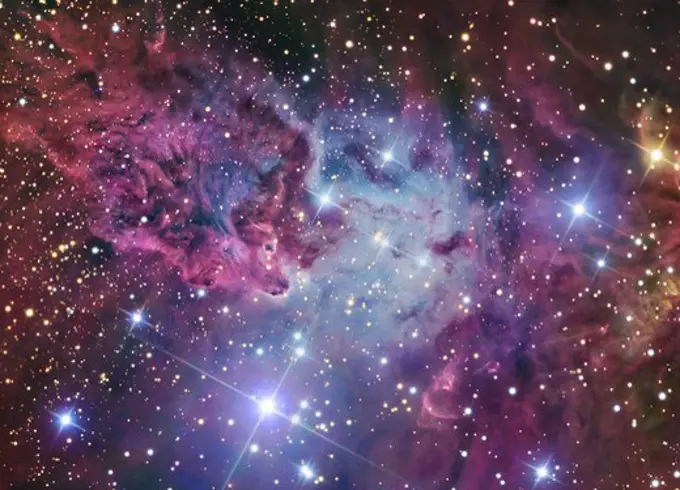
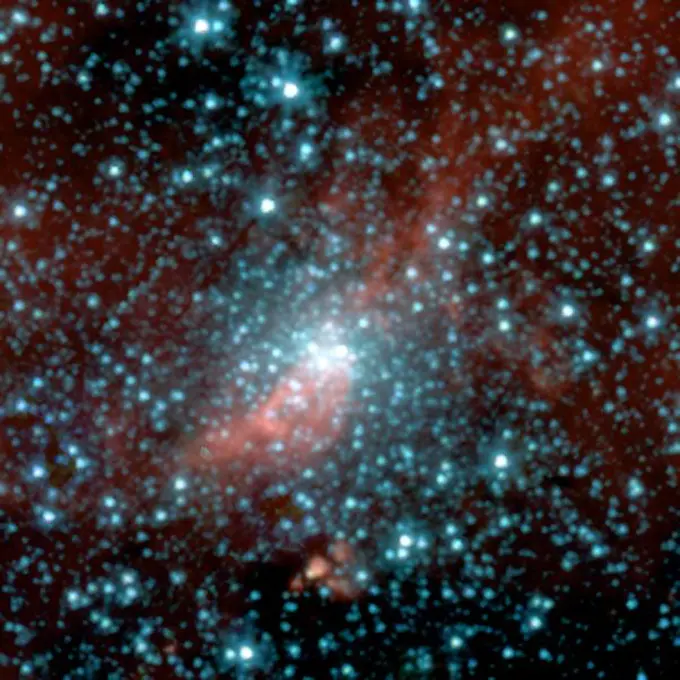
The Fox Fur Nebula, located towards the constellation of Monoceros, is an immense cloud of interstellar gas and cosmic dust interacting with the radiation and winds released by the surrounding hot, young stars
159 assets in this story
6145-44750202
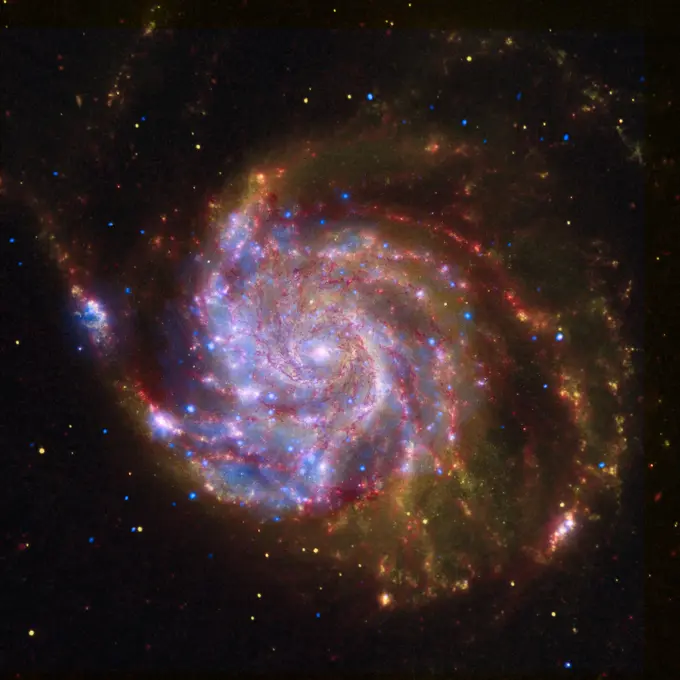
NASA's Great Observatories continue Galileo's legacy with stunning images and breakthrough science from the Hubble Space Telescope, the Spitzer Space Telescope, and the Chandra X-ray Observatory.
6145-44624558
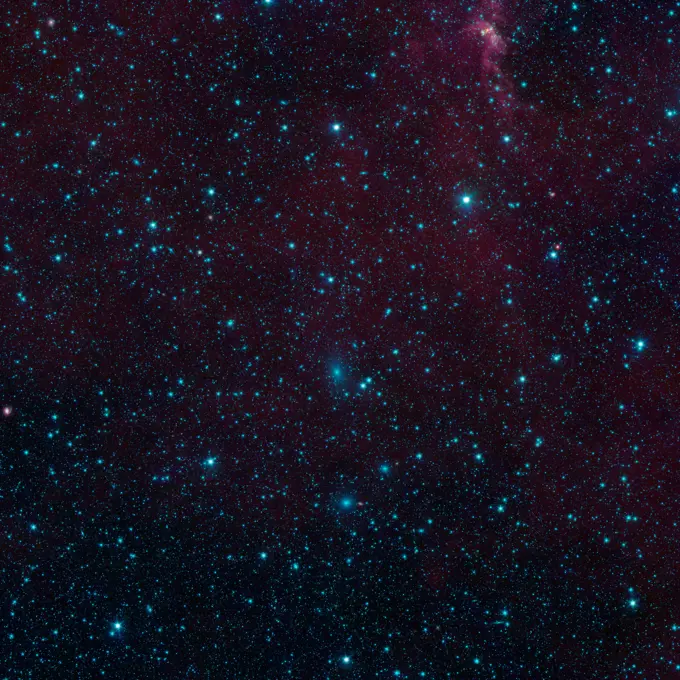
This false-color image taken by NASA's Spitzer Space Telescope shows a globular cluster previously hidden in the dusty plane of our Milky Way galaxy. Globular clusters are compact bundles of old stars that date back to the birth of our galaxy.
4239R-1365
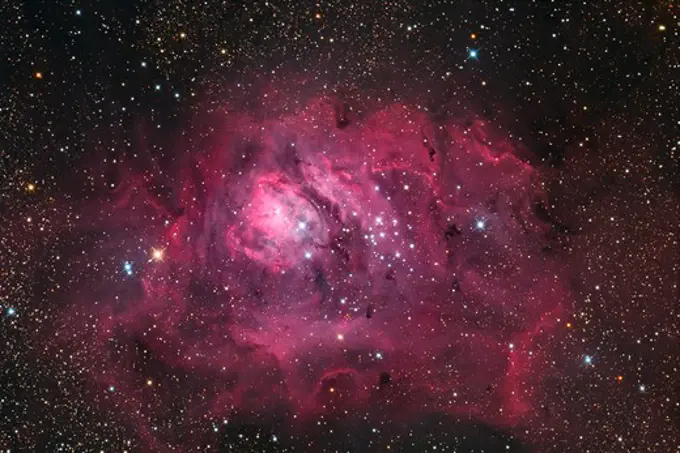
The Lagoon Nebula is a bright, diffuse nebula in the southern constellation Sagittarius; cataloged as M8 or NGC 6526
4239R-1331
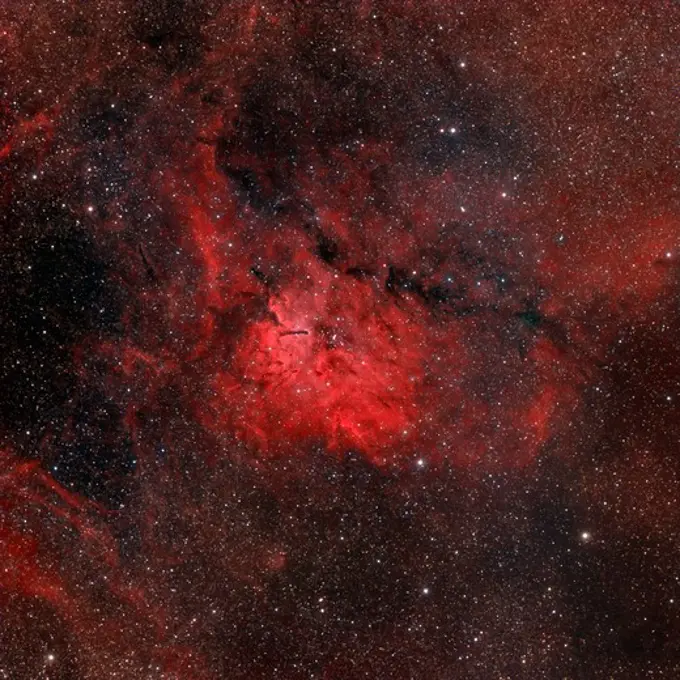
Emission nebula NGC 6820
6145-44795592
Image release August 16, 2012 Astronomers using data from NASA's Hubble Space Telescope have caught two clusters full of massive stars that may be in the early stages of merging. The 30 Doradus Nebula is 170,000 light-years from Earth. What at first was thought to be only one cluster in the core of the massive star-forming region 30 Doradus has been found to be a composite of two clusters that differ in age by about one million years. The entire 30 Doradus complex has been an active star-forming region for 25 million years, and it is currently unknown how much longer this region can continue creating new stars. Smaller systems that merge into larger ones could help to explain the origin of some of the largest known star clusters. The Hubble observations, made with the Wide Field Camera 3, were taken Oct. 20-27, 2009. The blue color is light from the hottest, most massive stars; the green from the glow of oxygen; and the red from fluorescing hydrogen. To read more about this image go to
1525-56327501
Outer Space Galaxy Stars Universe Cosmic Background
1746-19671294
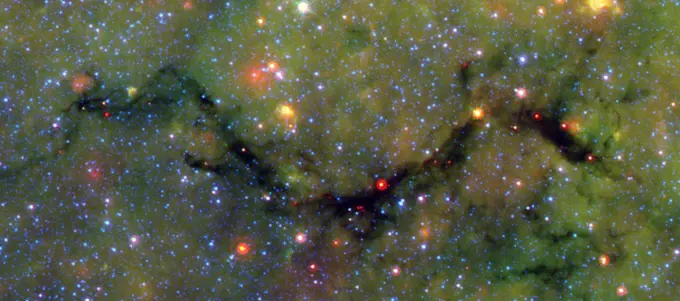
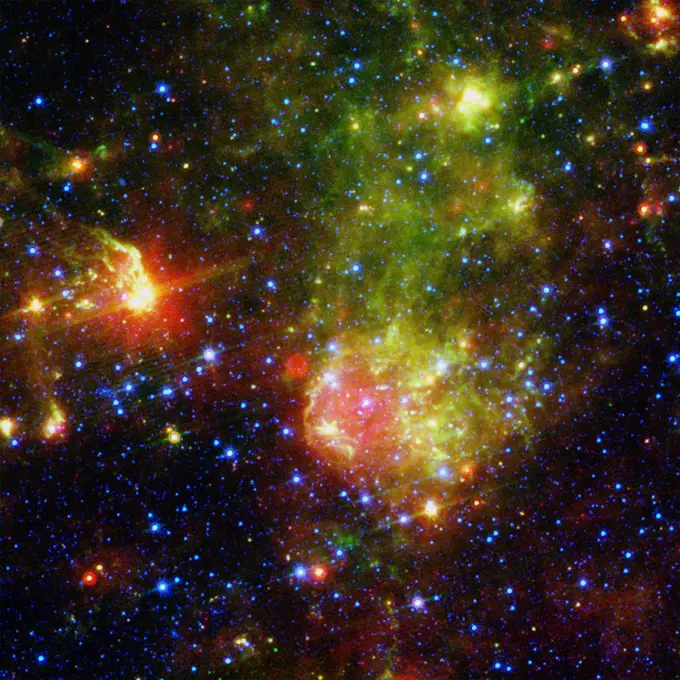
This infrared image showed a 'snake' (upper left) and its surrounding stormy environment. The object is actually the core of a thick, sooty cloud large enough to swallow dozens of solar systems. NASA's Spitzer Space Telescope.
4239R-7051
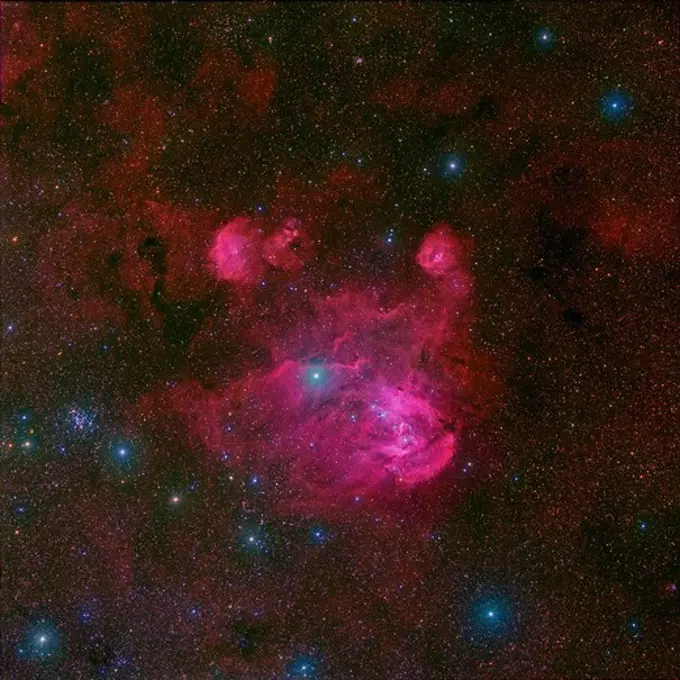
IC 2944, a large H II region (star forming cloud) in the southern constellation of Centaurus. The bright blue star near the center is Lambda Centauri. The cluster of hot blue stars in the center are illuminating the gases of IC2944 and causing it to glow in the red and magenta light of excited hydrogen. The compact cluster of blue stars on the left is NGC 3766 and the more subtle cluster near the top left is IC 2714.
6145-44857142
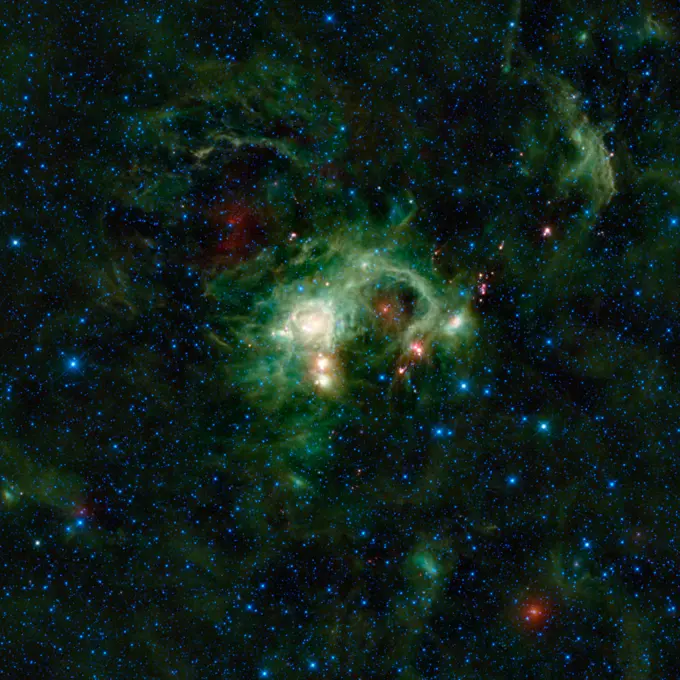
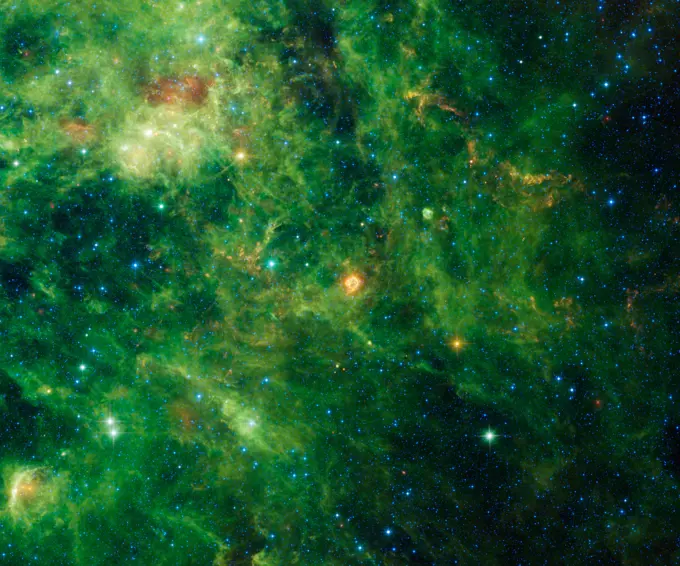
In the Perseus spiral arm of the Milky Way galaxy, opposite the galactic center, lies the nebula SH 2-235. As seen in infrared light, NASA's Wide-field Infrared Survey Explorer reveals SH 2-235 to be a huge star formation complex.
4239R-9633
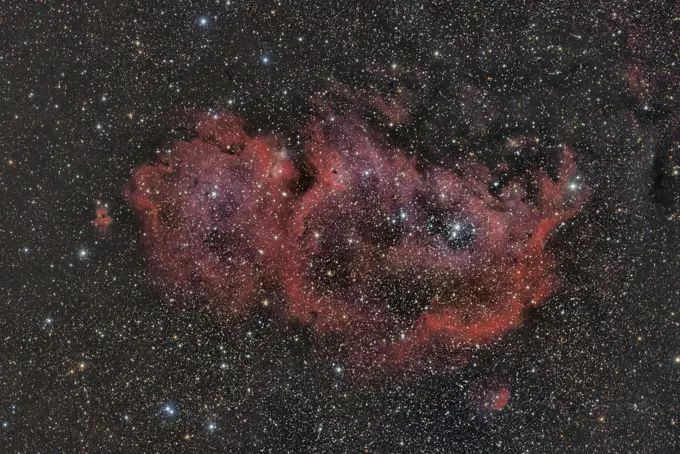
The Heart Nebula (IC 1805), and the Soul Nebula (IC 1848), with NGC 896 at upper right, in the constellation Cassiopeia.
4239-57495501
Supernova remnant NGC 2018 in the large magellanic cloud in the constellation Mensa.
1746-19671512
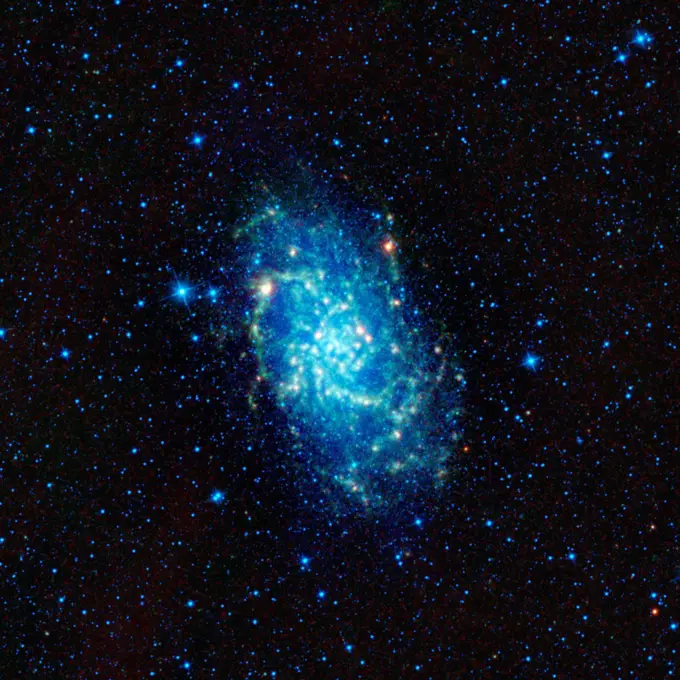
This image captured by NASA's WISE, shows of one of our closest neighboring galaxies, Messier 33. Also named the Triangulum galaxy, M33 is one of largest members in our small neighborhood of galaxies -- the Local Group.
4239R-1314
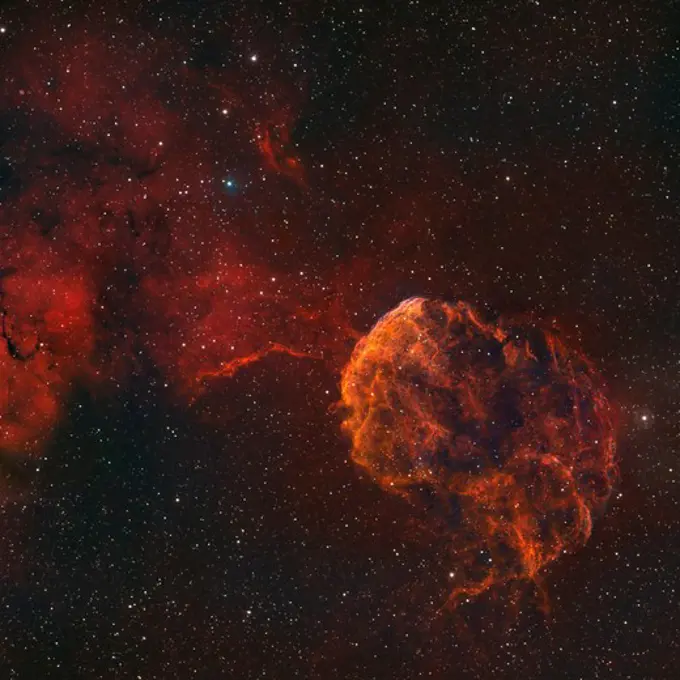
The Jellyfish Nebula, also known as IC 443 and Sharpless 248
6145-44632154
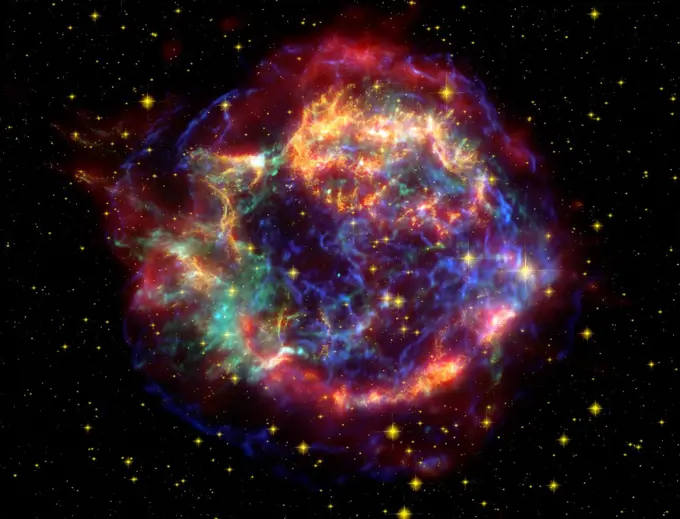
This false-color image from three of NASA's Great Observatories provides one example of a star that died in a fiery supernova blast. Called Cassiopeia A, this supernova remnant is located 10,000 light-years away in the constellation Cassiopeia.
1746-19671478
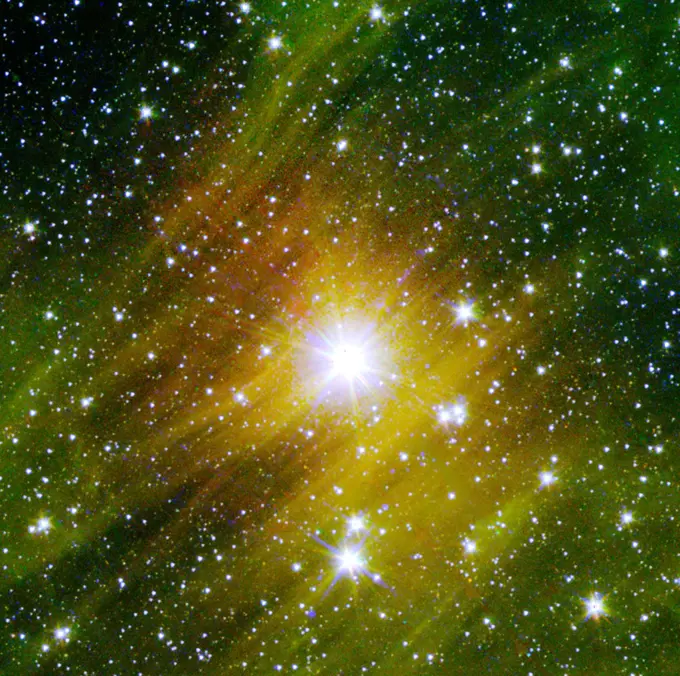
Two extremely bright stars illuminate a greenish mist in this image from the new 'GLIMPSE360' survey from NASA's Spitzer Space Telescope.
6145-44796894
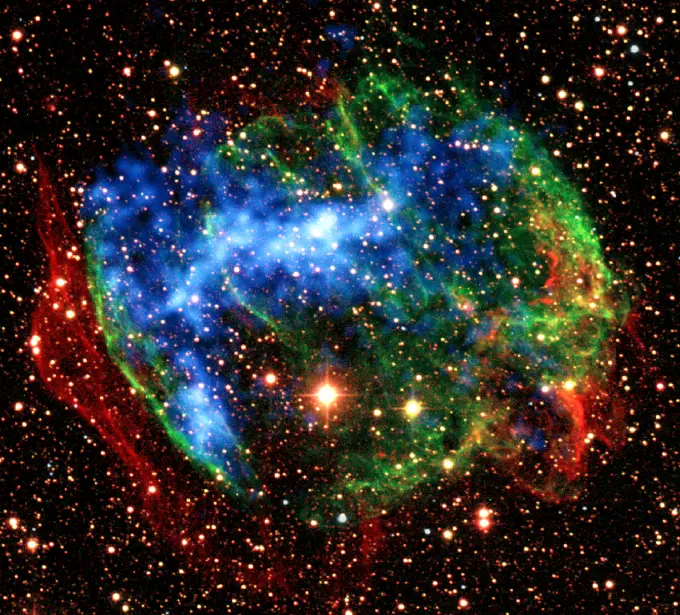
Release date Dec. 30, 2009In the supernova remnant W49B, Suzaku found another fossil fireball. It detected X-rays produced when heavily ionized iron atoms recapture an electron. This view combines infrared images from the ground (red, green) with X-ray data from NASA's Chandra X-Ray Observatory (blue).
1746-19661379
False-colour image of supernova remnant Cassiopeia A in constellation Cassiopeia, 10,000 light-years away. It is the remnant of a once massive star that died in a supernova explosion. Credit NASA. Science Astronomy
6145-44964474
There are nearly 200 galaxies within the marked circles in this image from NASA's Spitzer Space Telescope. These are part of the Perseus-Pisces supercluster of galaxies located 250 million light-years away.
4389-424
The Heart of a Nebula
1746-19671355
The supernova remnant 1E0102.2-7219 sits next to the nebula N76 in a bright, star-forming region of the Small Magellanic Cloud, a satellite galaxy to our Milky Way galaxy located about 200,000 light-years from Earth. Hubble Space Telescope,Spitzer Space Telescope,Chandra X-ray Telescope.
4239-57495789
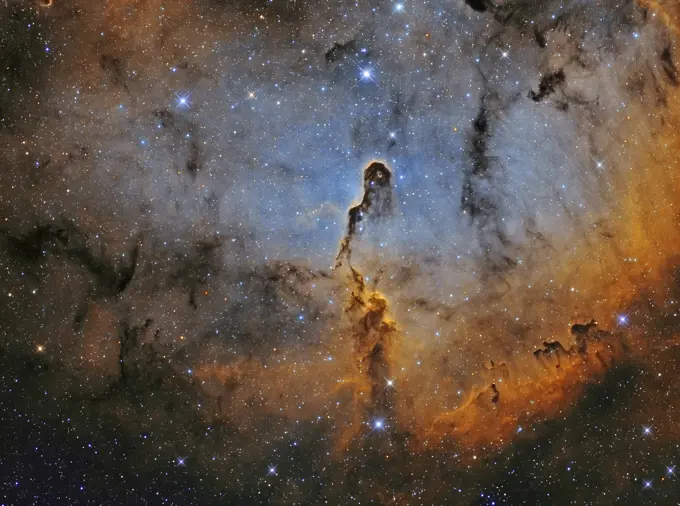
IC 1396, the Elephant Trunk Nebula.
6145-44660987
This image from NASA's Spitzer Space Telescope shows the scattered remains of an exploded star named Cassiopeia A. Spitzer's infrared detectors 'picked' through these remains and found that much of the star's original layering had been preserved.
4314-118
Crab Nebula
4239R-1055
IC 1805 and IC 1848 Nebula, also known as the Heart and Soul Nebula
1525-27544454
Small part of an infinite star field of space in the Universe. Elements of this image furnished by NASA .. Small part of an infinite star field.
4314-128
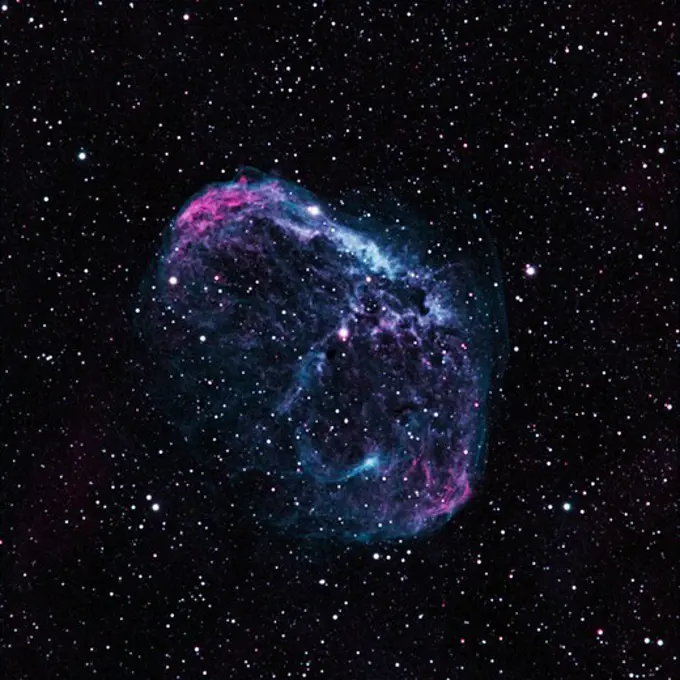
The Crescent Nebula, also known as NGC 6888, is an emission nebula in the constellation Cygnus. Here the S II plus the N II plus H alpha wavelengths are red, the  O III wavelength is green, and the OIII plus 0.3 H alpha is blue.
4239-57497742
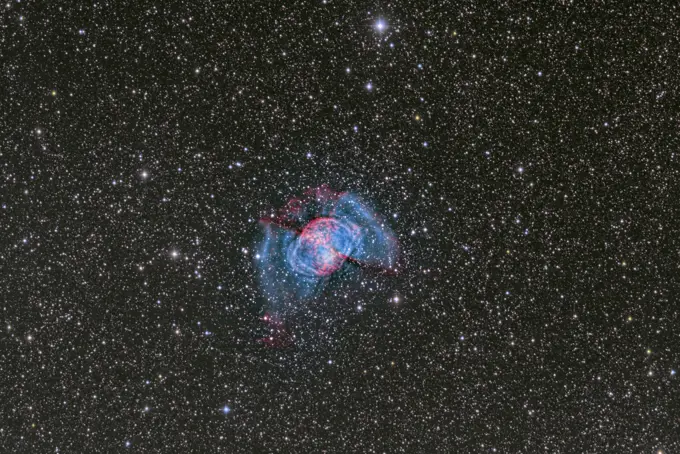
Dumbbell Nebula, Messier 27.
6145-44911289
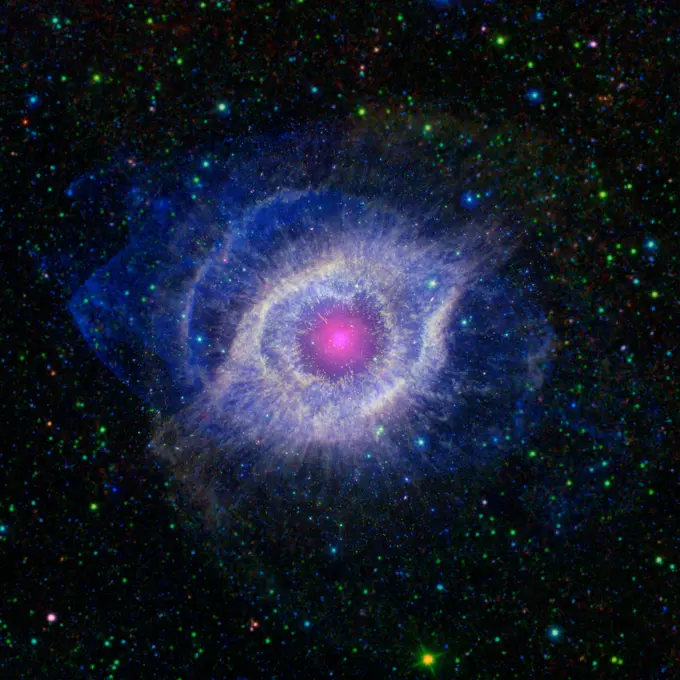
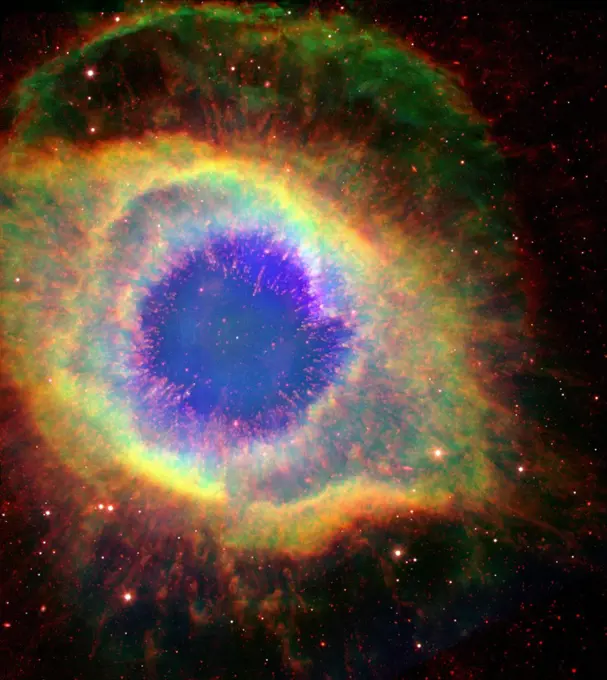
This image from NASA's Spitzer and GALEX shows the Helix nebula, a dying star throwing a cosmic tantrum. In death, the star's dusty outer layers are unraveling into space, glowing from the intense UV radiation being pumped out by the hot stellar core.
4239-57497701
Sh2-199, the Soul Nebula.
4239R-897
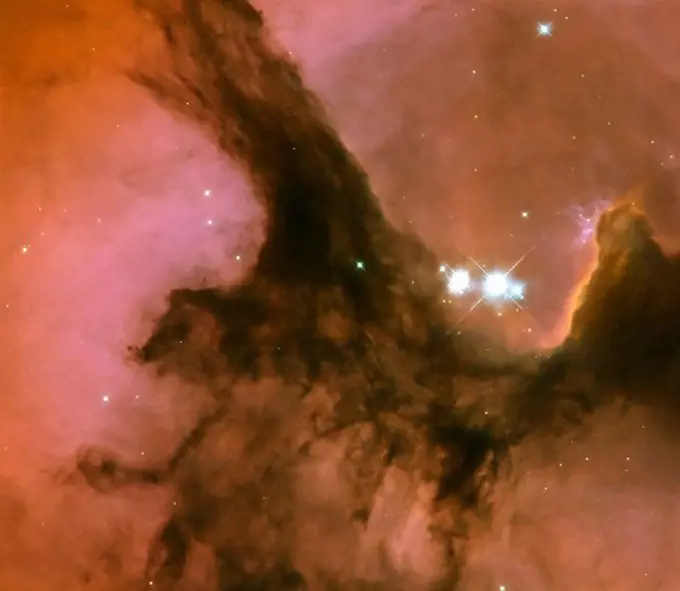
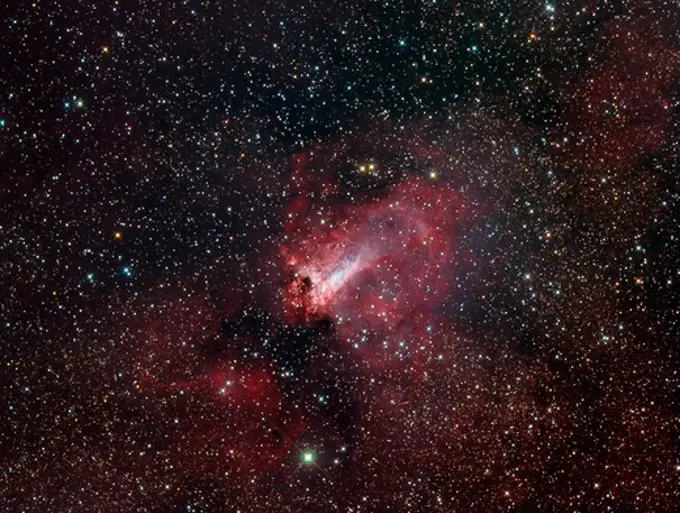
The Omega Nebula, also known as the Swan Nebula, Messier 17 or NGC 6618, is an H II region of glowing gas and plasma in the constellation Sagittarius
4239-57494211
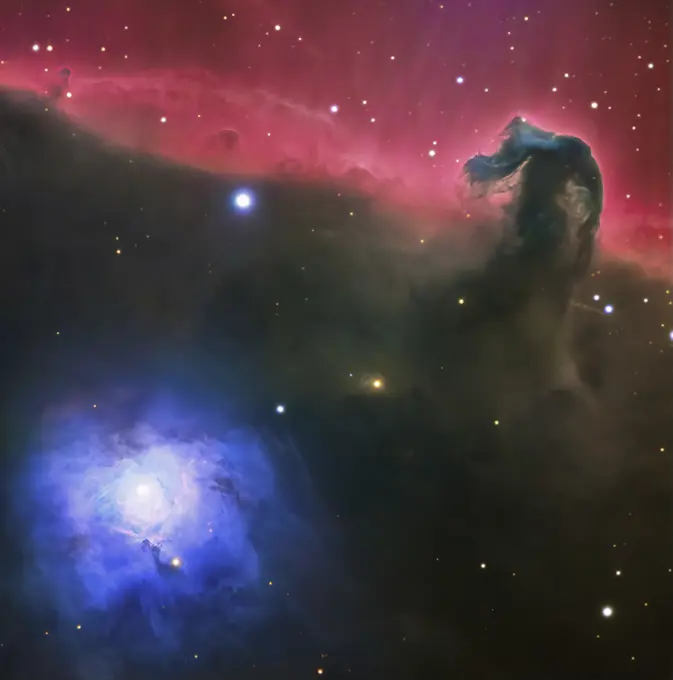
Barnard 33, the Horsehead Nebula.
1848-64917685
Space Galaxy Background, Supernova Core pulsar neutron star. Elements of this image furnished by NASA
4239-57495492
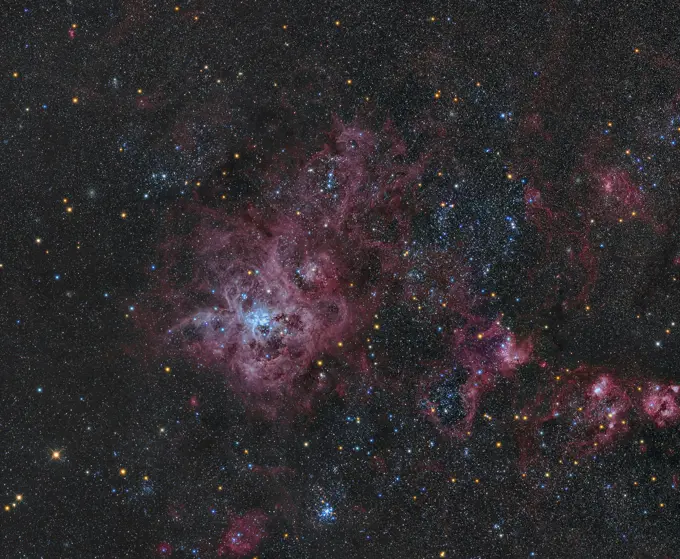
Tarantula Nebula
4239-57494179
Messier 27, a planetary nebula.
6145-44499291
Resembling the hair in Botticelli's famous portrait of the birth of Venus, an image from NASA's Hubble Space Telescope has captured softly glowing filaments streaming from hot young stars in a nearby nebula.
6145-45098978
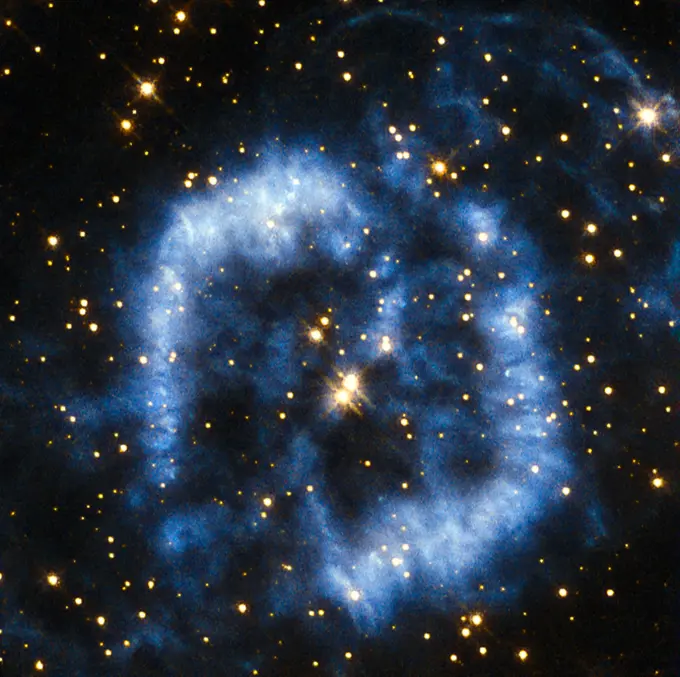
This planetary nebula is called PK 329-02.2 and is located in the constellation of Norma in the southern sky. It is also sometimes referred to as Menzel 2, or Mz 2, named after the astronomer Donald Menzel who discovered the nebula in 1922. When stars that are around the mass of the sun reach their final stages of life, they shed their outer layers into space, which appear as glowing clouds of gas called planetary nebulae. The ejection of mass in stellar burnout is irregular and not symmetrical, so that planetary nebulae can have very complex shapes. In the case of Menzel 2 the nebula forms a winding blue cloud that perfectly aligns with two stars at its center. In 1999 astronomers discovered that the star at the upper right is in fact the central star of the nebula, and the star to the lower left is probably a true physical companion of the central star. For tens of thousands of years the stellar core will be cocooned in spectacular clouds of gas and then, over a period of a few thous
4239R-20480585
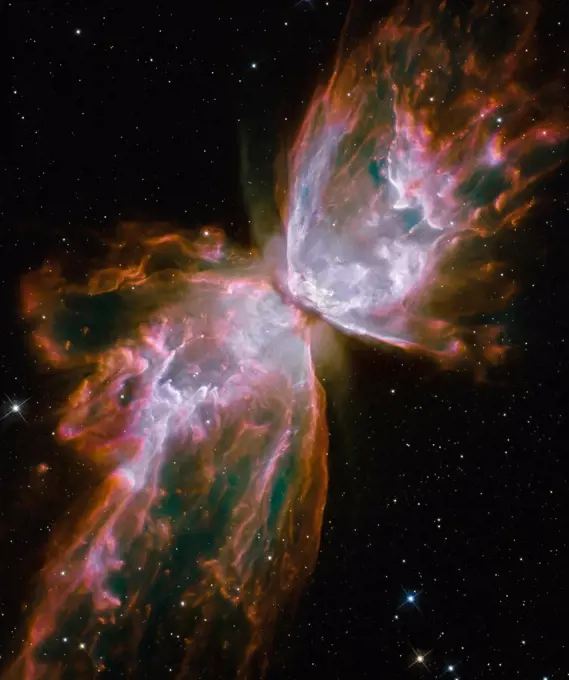
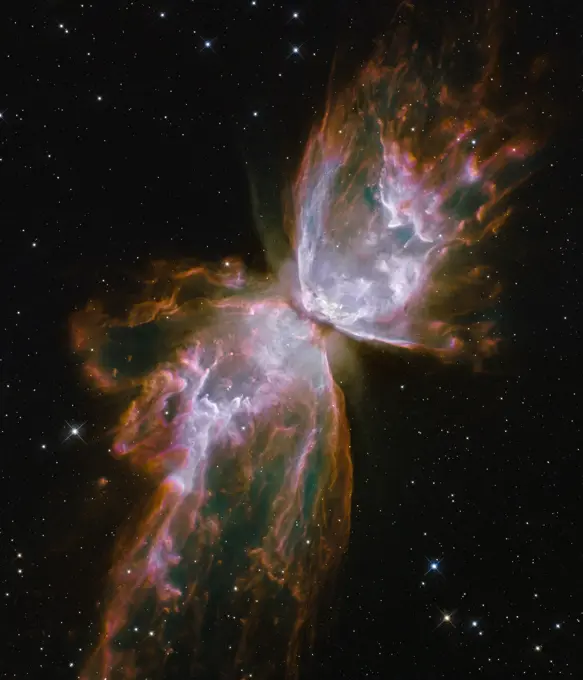
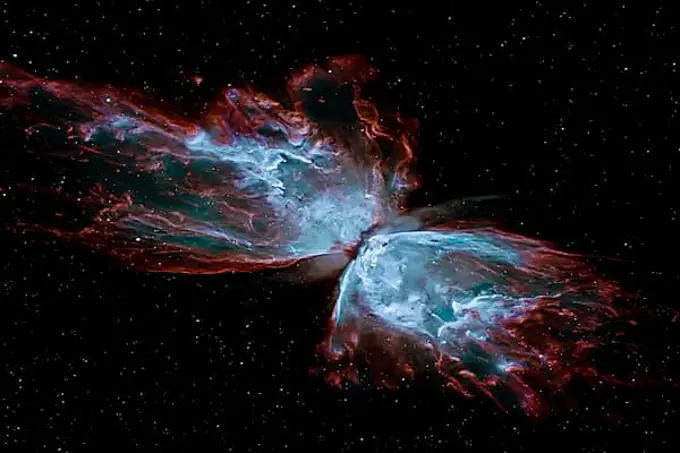
July 27, 2009 - NGC 6302, also known as the Bug Nebula or Butterfly Nebula. Butterfly Emerges from Stellar Demise in Planetary Nebula NGC 6302What resemble dainty butterfly wings are actually boiling cauldrons of gas heated to more than 36,000 degrees Fahrenheit. The gas is tearing across space at more than 600,000 miles an hour.A dying star that was once about five times the mass of the Sun is at the center of this fury. It has ejected its envelope of gases and is now unleashing a stream of
1746-19671320
A panoramic view of a vast, sculpted area of gas and dust where thousands of stars are being born in the Doradus Nebula. Hubble Space Telescope (HST).
1746-19671367
The star is ending its life by casting off its outer layers of gas, which formed a cocoon around the star's remaining core. Ultraviolet light from the dying star makes the material glow. The burned-out star, called a white dwarf, is the white dot in the center. Hubble Space Telescope (HST).
4197-62718872
Solar system, space and dust cloud with stars in universe with light, pattern and color glow cosmos. Galaxy, infinity and planets in milky way with nebula shine, dark sky and explosion in aerospace.
4239-57494090
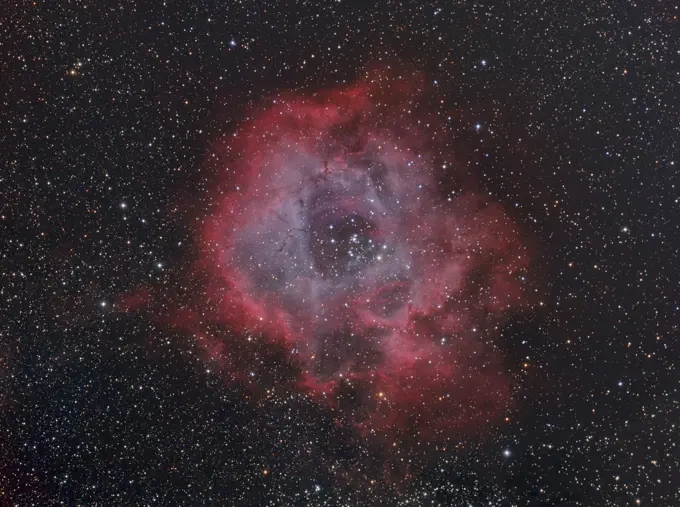
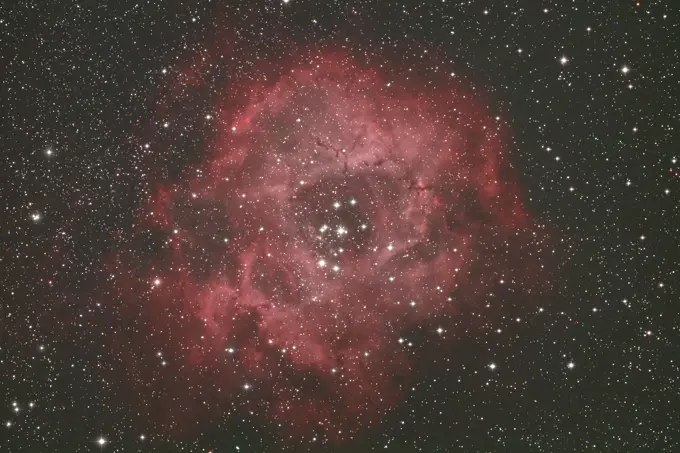
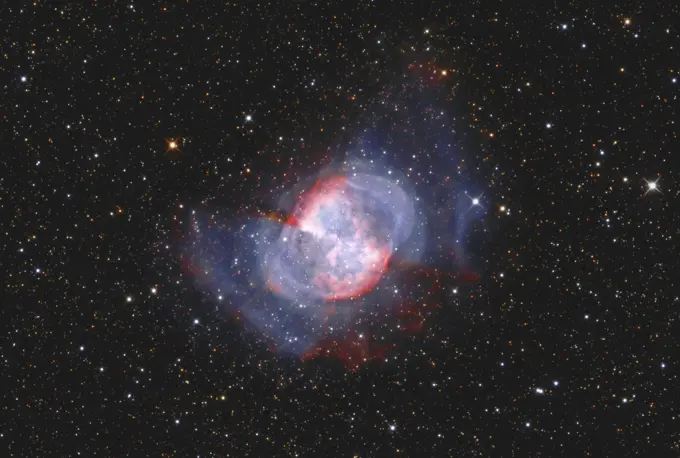
The Rosette Nebula
4239R-939
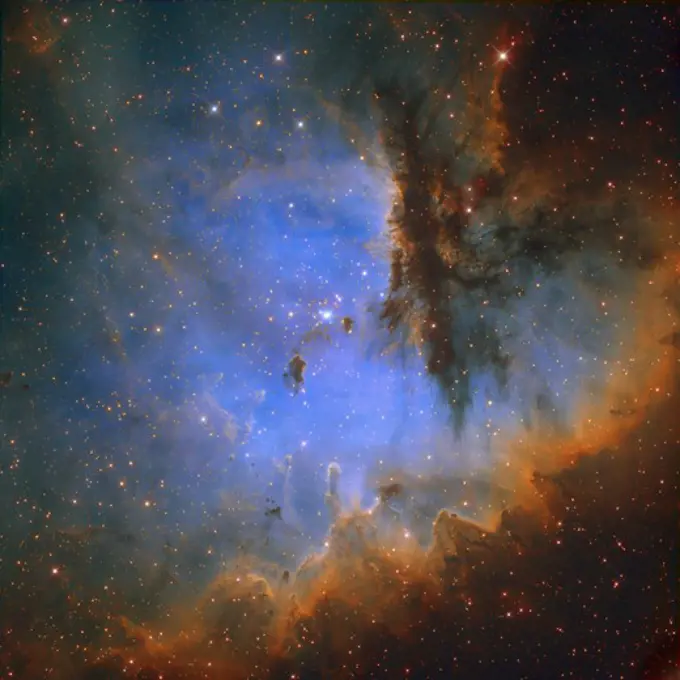
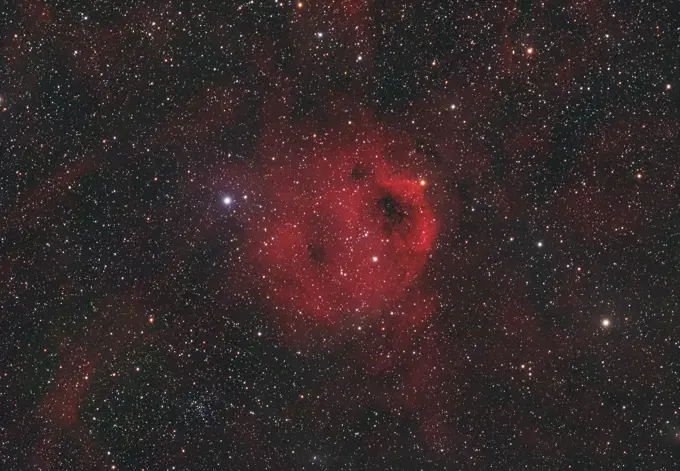
NGC 281, also known as the Pacman Nebula, is an H II region in the constellation of Cassiopeia and part of the Perseus Spiral Arm
1746-19671316
Six hundred and fifty light-years away in the constellation Aquarius, a dead star about the size of Earth, is refusing to fade away peacefully. In death, it is spewing out massive amounts of hot gas and intense ultraviolet radiation, creating a spectacular object called a 'planetary nebula.' Hubble Space Telescope (HST), Spitzer Space Telescope.
4389-2397
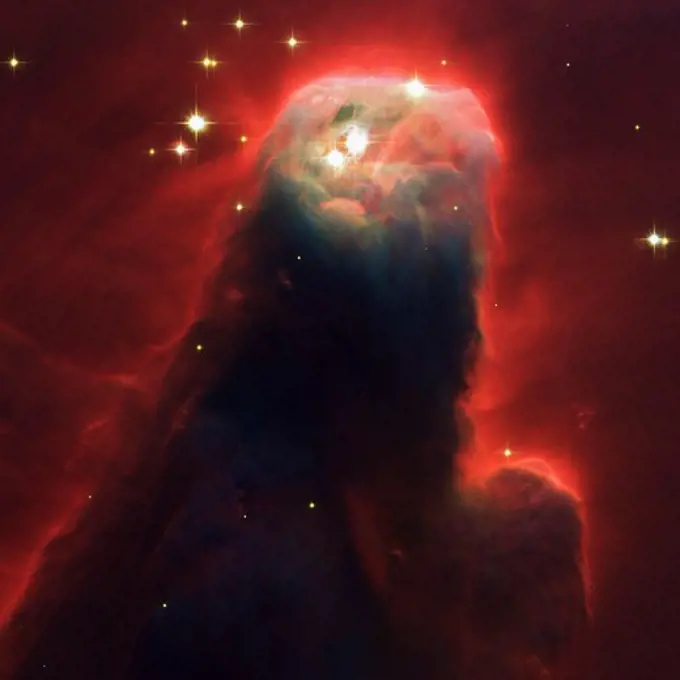
Stars Forming in Cone Nebula
6188-56052401
Awesome galaxy. Elements of this image furnished by NASA Awesome galaxy, science fiction wallpaper. Elements of this image furnished by NASA Copyright: xZoonar.com/EvgeniixPuzanovx 16770996
6145-44980036
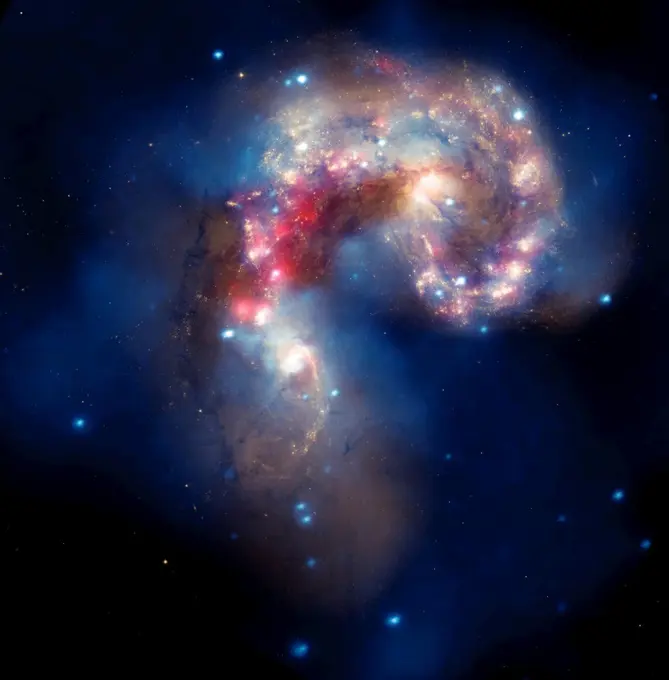
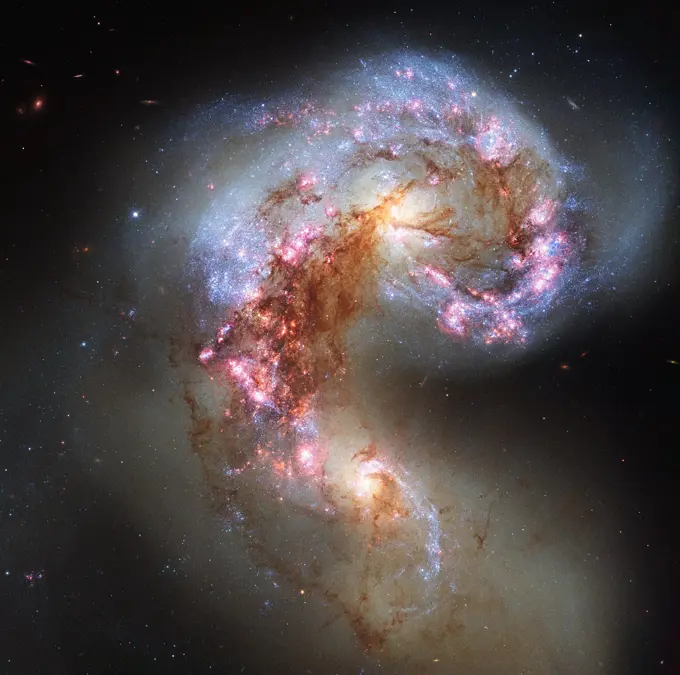
The NASA/ESA Hubble Space Telescope has snapped the best ever image of the Antennae Galaxies. Hubble has released images of these stunning galaxies twice before, once using observations from its Wide Field and Planetary Camera 2 (WFPC2) in 1997, and again in 2006 from the Advanced Camera for Surveys (ACS). Each of Hubbles images of the Antennae Galaxies has been better than the last, due to upgrades made during the famous servicing missions, the last of which took place in 2009. The galaxies — also known as NGC 4038 and NGC 4039 — are locked in a deadly embrace. Once normal, sedate spiral galaxies like the Milky Way, the pair have spent the past few hundred million years sparring with one another. This clash is so violent that stars have been ripped from their host galaxies to form a streaming arc between the two. In wide-field images of the pair the reason for their name becomes clear — far-flung stars and streamers of gas stretch out into space, creating long tidal tails reminiscent
6145-44880773
Listed as Cassiopeia A, this remnant of the supernova is one of the brightest radio sources in the known universe. More recently, NASA's WISE telescope detected infrared echoes of the flash of light rippling outwards from the supernova.
6145-45096707
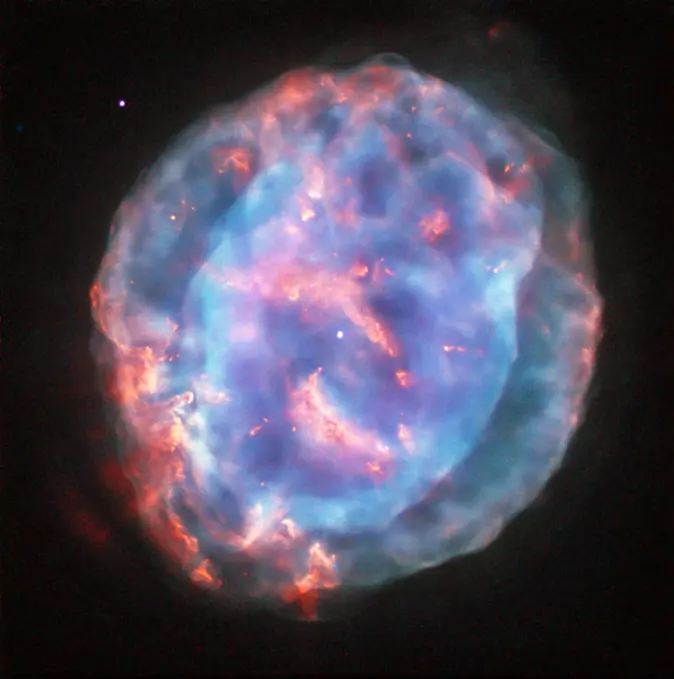
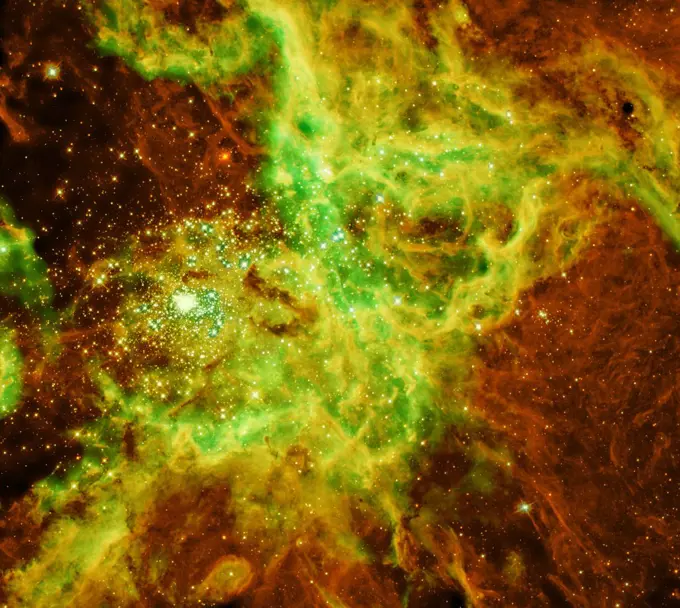
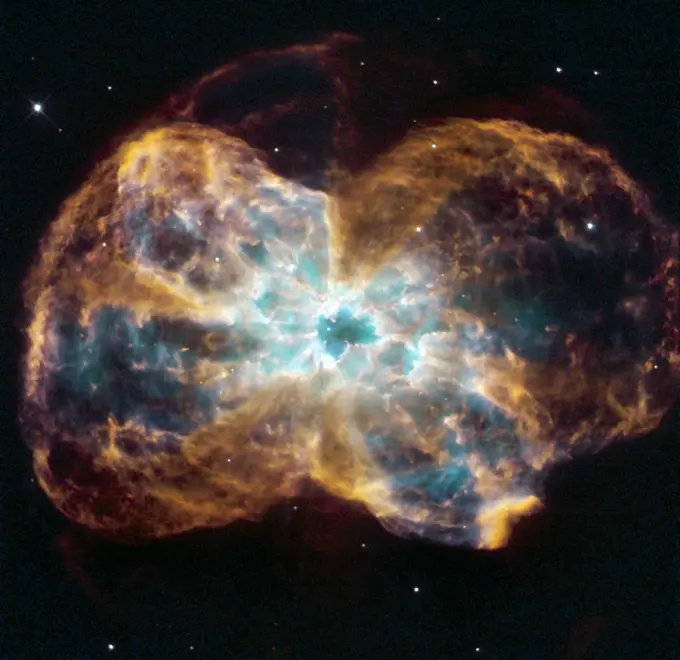
This colorful bubble is a planetary nebula called NGC 6818, also known as the Little Gem Nebula. It is located in the constellation of Sagittarius (The Archer), roughly 6,000 light-years away from us. The rich glow of the cloud is just over half a light-year across  humongous compared to its tiny central star  but still a little gem on a cosmic scale. When stars like the sun enter "retirement," they shed their outer layers into space to create glowing clouds of gas called planetary nebulae. This ejection of mass is uneven, and planetary nebulae can have very complex shapes. NGC 6818 shows knotty filament-like structures and distinct layers of material, with a bright and enclosed central bubble surrounded by a larger, more diffuse cloud. Scientists believe that the stellar wind from the central star propels the outflowing material, sculpting the elongated shape of NGC 6818. As this fast wind smashes through the slower-moving cloud it creates particularly bright blowouts at t
4239R-3182
NGC 7380 in true colors.
4239R-6185
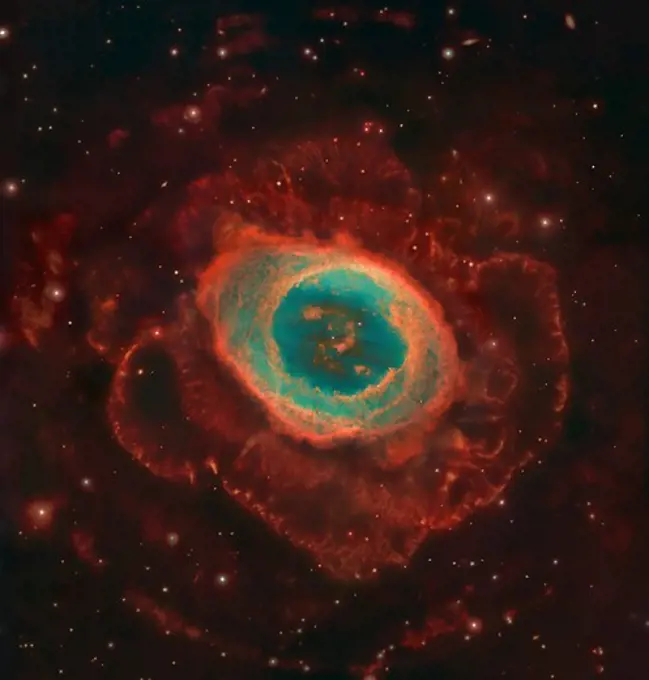
Messier 57, the Ring Nebula.
4389-1415
Planetary Nebula NGC 5307
4239-57495495
Emission nebula NGC 2626 in the constellation Vela.
6145-44839284
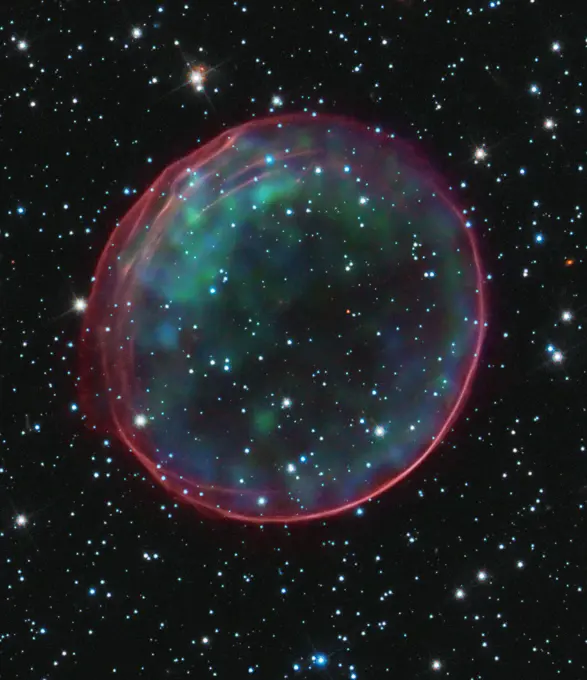
NASA image release January 11, 2012 Using NASA's Hubble Space Telescope, astronomers have solved a longstanding mystery on the type of star, or so-called progenitor, that caused a supernova in a nearby galaxy. The finding yields new observational data for pinpointing one of several scenarios that could trigger such outbursts. Based on previous observations from ground-based telescopes, astronomers knew that a kind of supernova called a Type Ia created a remnant named SNR 0509-67.5, which lies 170,000 light-years away in the Large Magellanic Cloud galaxy. The type of system that leads to this kind of supernova explosion has long been a high importance problem with various proposed solutions but no decisive answer. All these solutions involve a white dwarf star that somehow increases in mass to the highest limit. Astronomers failed to find any companion star near the center of the remnant, and this rules out all but one solution, so the only remaining possibility is that this one Type Ia
4389-2395
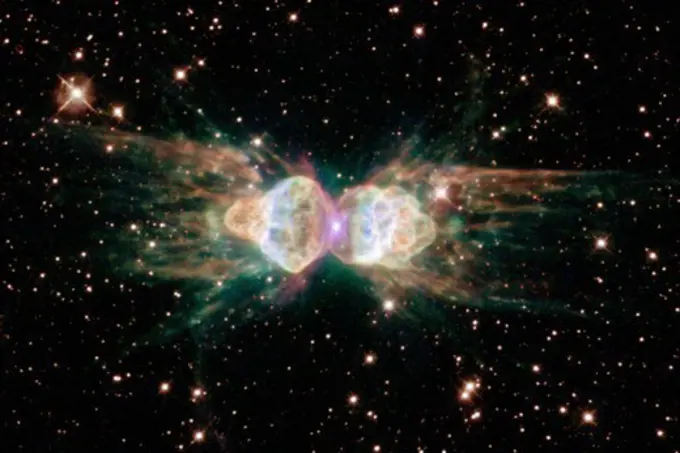
Ant Nebula Menzel 3
1606-21717247
Seine et Marne. Constellation of the Unicorn. Close-up on the spectacular Rosette nebula, a vast gas complex located some 5,000 light-years away.
1815-71554662
SH2-173 Ha emission nebula in constellation Cassiopeia wide field
1848-64915849
The Butterfly Nebula, dying star nebula, Elements of this image furnished by NASA. Retouched image
6145-45247437
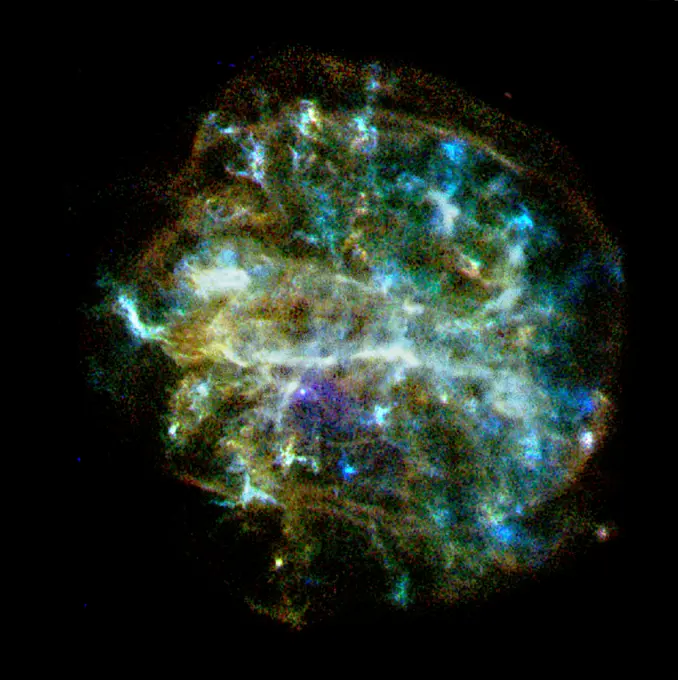
The Chandra X-Ray Observatory has captured this spectacular image of G292.0+1.8, a young, oxygen-rich supernova remnant with a pulsar at its center surrounded by outflowing material. This image shows a rapidly expanding shell of gas that is 36 light-years across and contains large amounts of elements such as oxygen, neon, magnesium, silicon and sulfur. Embedded in this cloud of multimillion-degree gas is a key piece of evidence linking neutron stars and supernovae produced by the collapse of massive stars. With an age estimated at 1,600 years, G292.0+1.8 is one of three known oxygen-rich supernovae in our galaxy. These supernovae are of great interest to astronomers because they are one of the primary sources of the heavy elements necessary to form planets and people. Scattered through the image are bluish knots of emissions containing material that is highly enriched in newly created oxygen, neon, and magnesium produced deep within the original star and ejected by the supernova explos
1889R-8009
Helix Nebula
PREVIOUS
of 2
NEXT
2401 S. Ervay, Suite 206
Dallas, Texas 75215
United States
Get Started
Free ResearchMy BoardsMy Cart
For Creators
How To License Your ContentContributor PortalFrame of Mind
Resources
API accessPricing
Contact
+1 866 236 0087help@viewpictures.co.uk Contact form
©2026 View Pictures. All Rights Reserved. -A
This site is protected by reCAPTCHA and Google Privacy Policy and Terms of Service apply.