Necklaces and Beaded Jewelry

Various necklaces, featuring unique designs and historical significance, showcasing elegant craftsmanship and diverse materials.

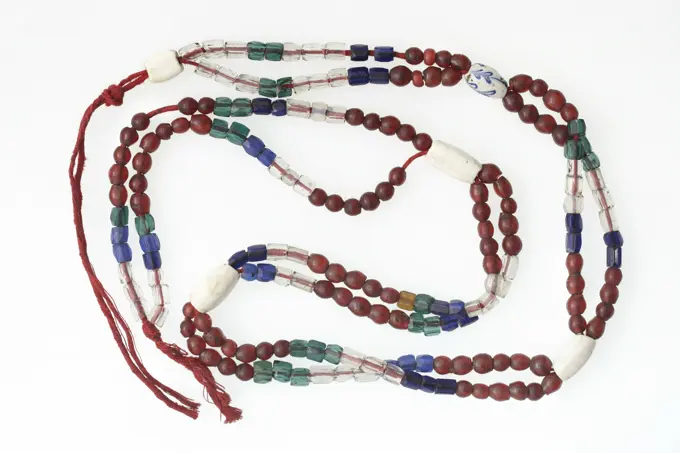
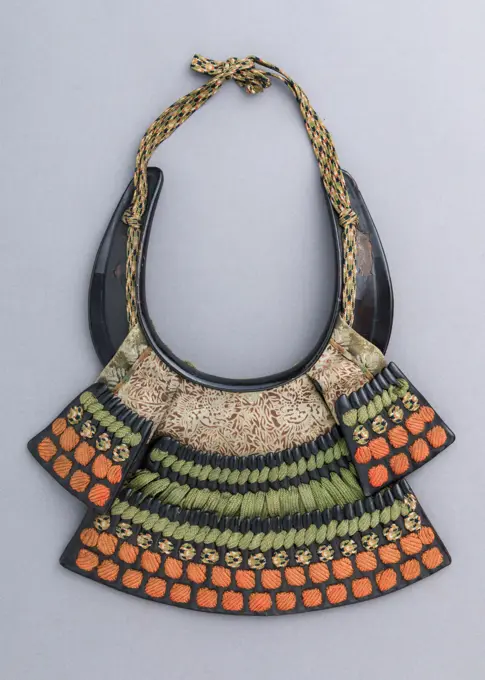
Woman's neck ornament with medallion (shitoki), late 19th century, Unknown Ainu, 21 1/16 × 7 in. (53.5 × 17.78 cm), Beads (glass), plant fiber, molded metal, lacquered wood, Japan, 19th century
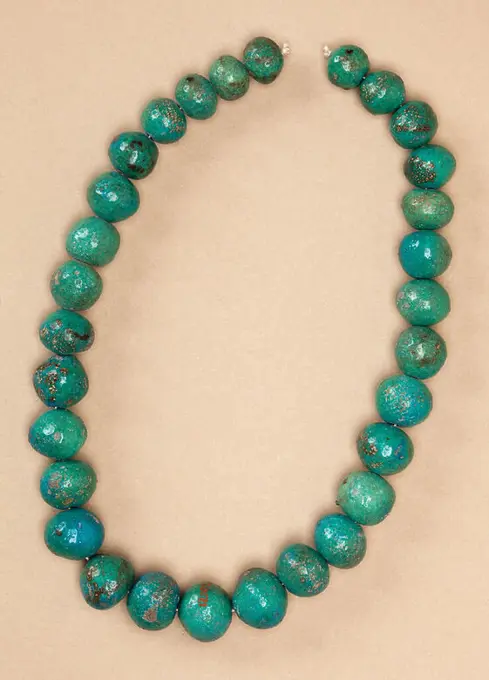
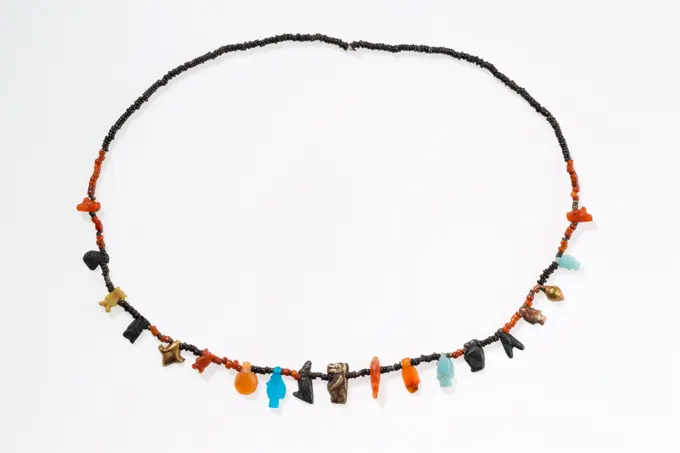
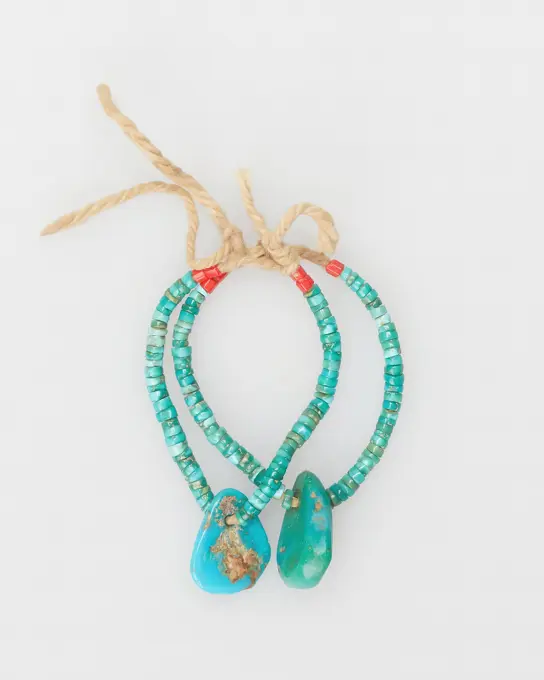
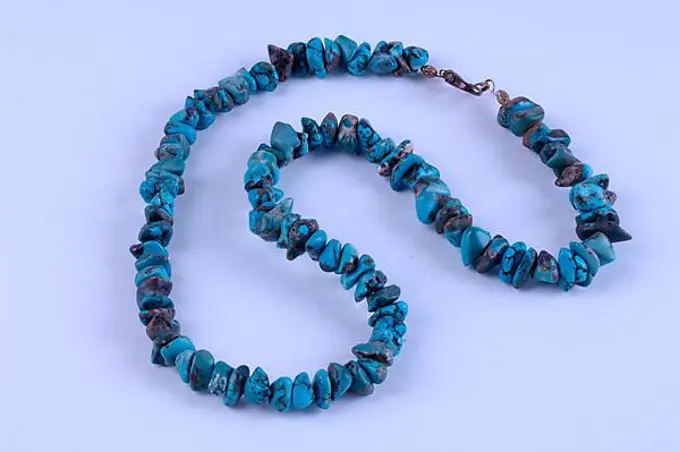
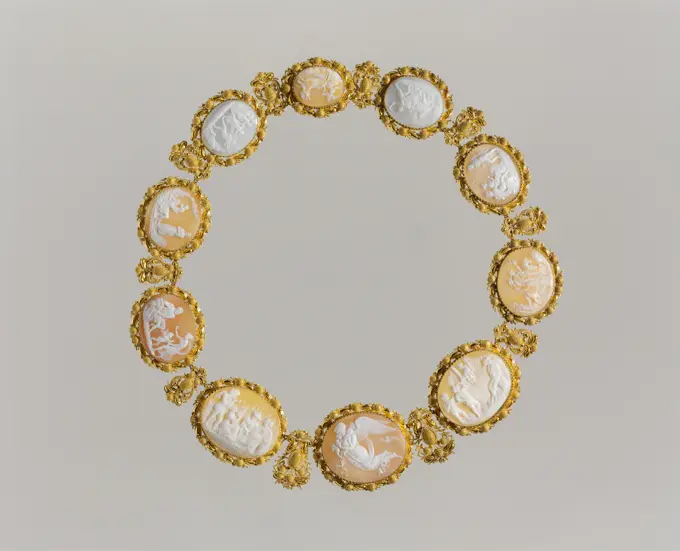
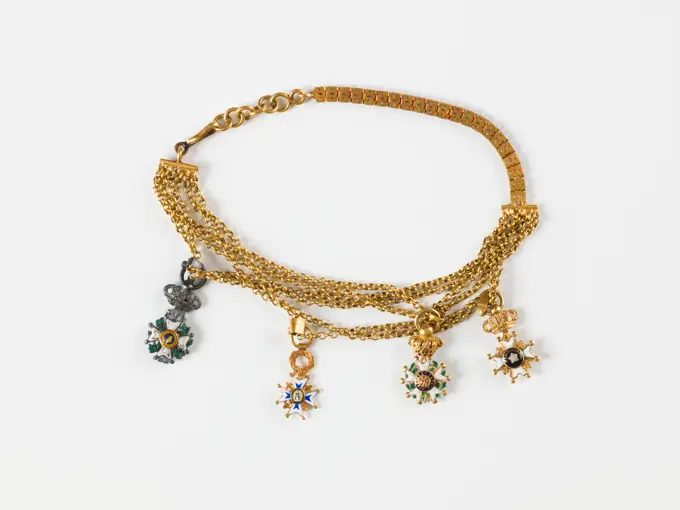
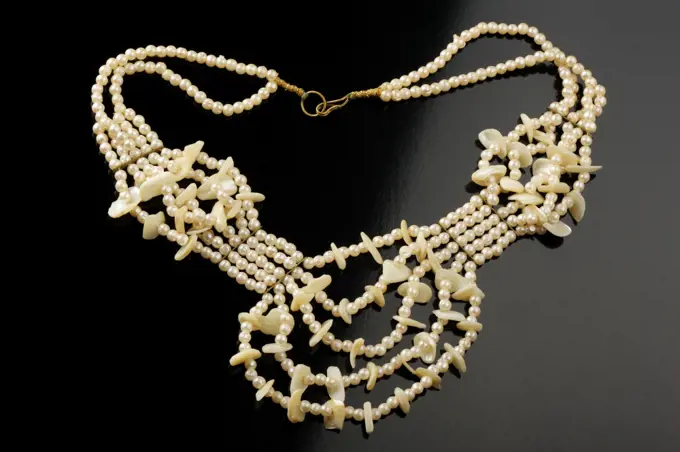
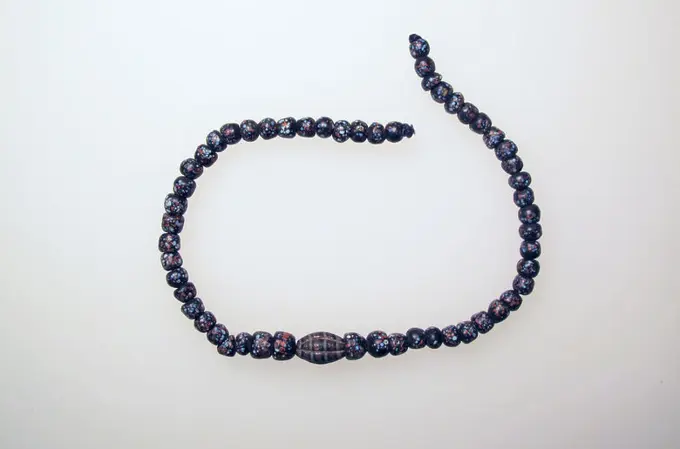
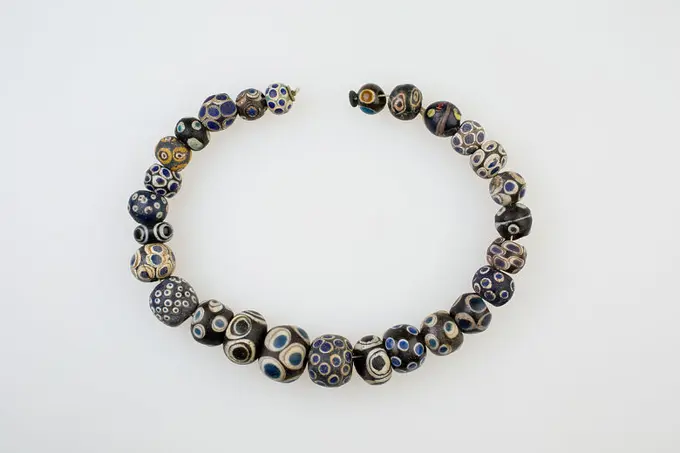
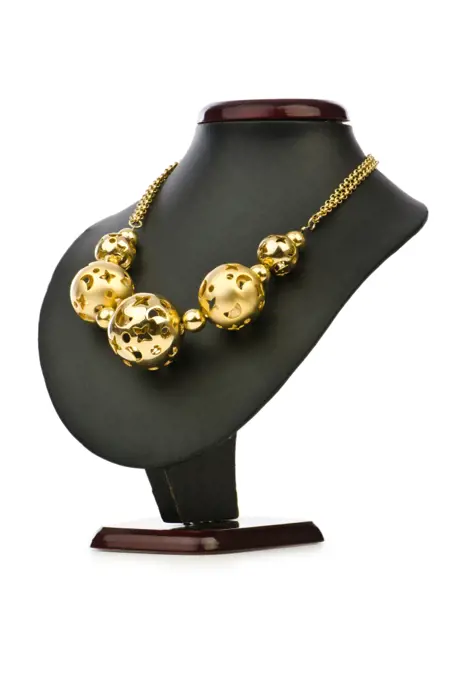
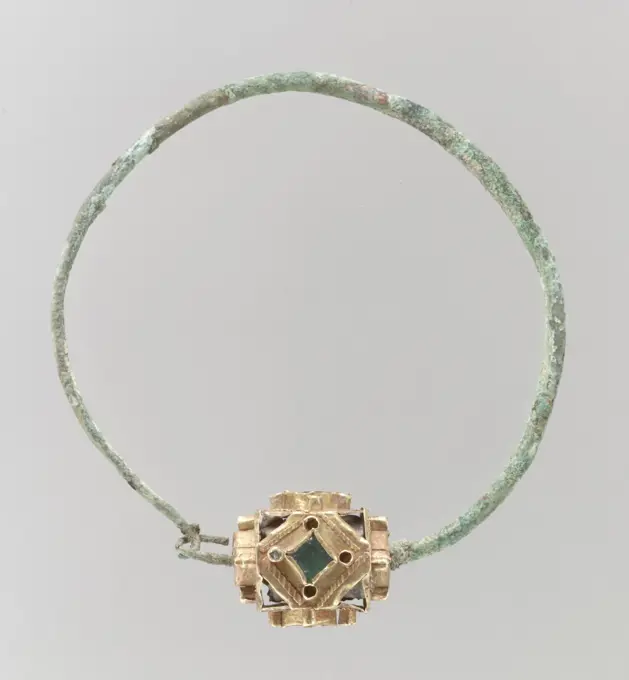
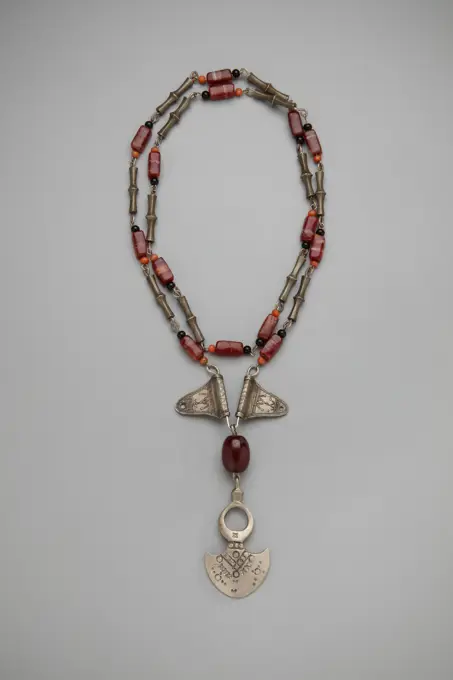
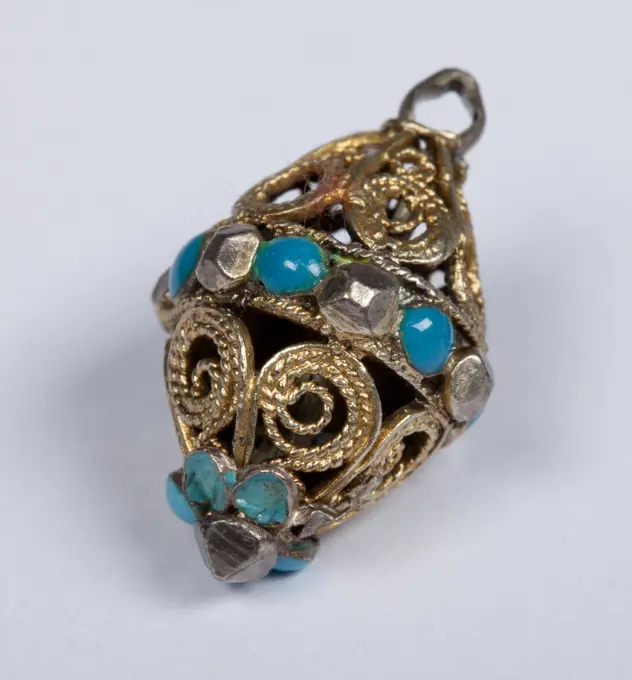
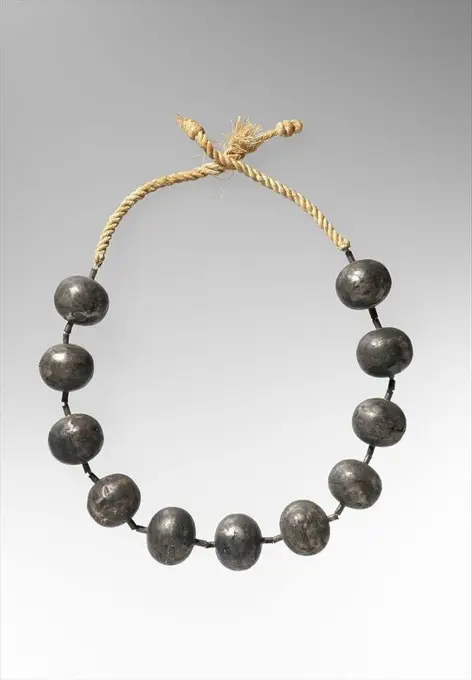
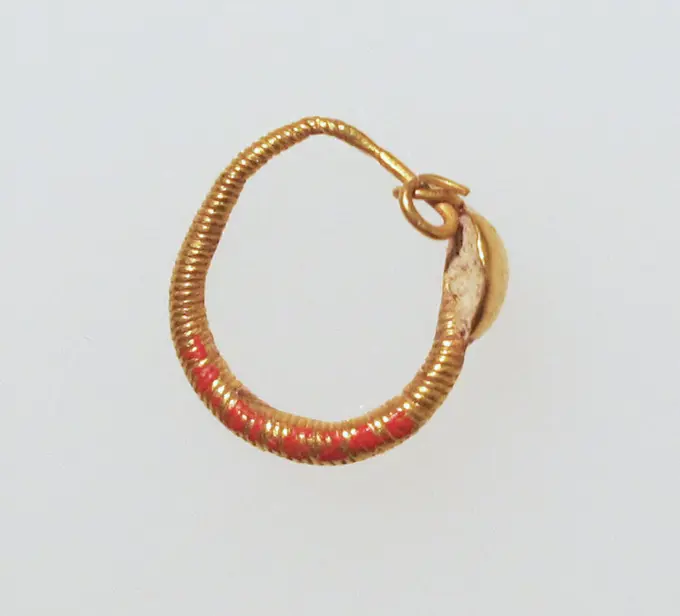
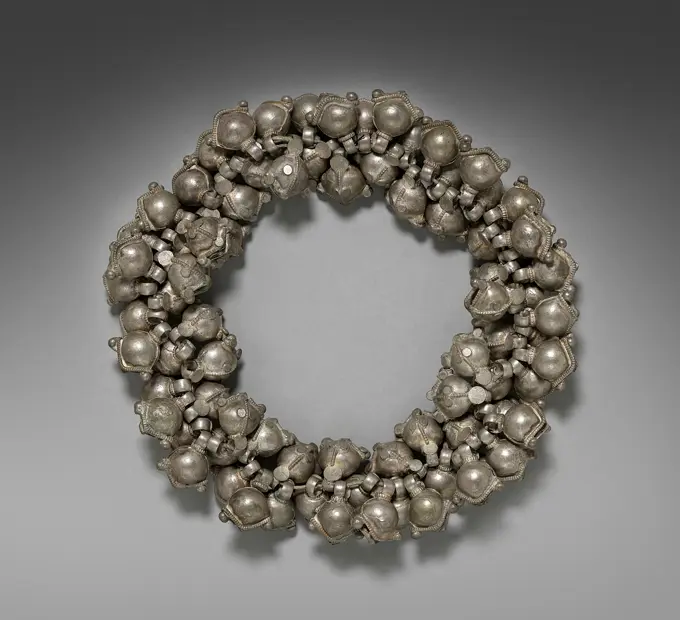
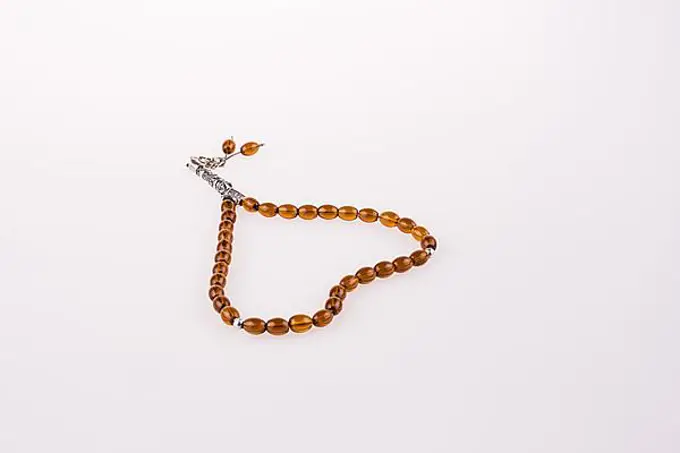
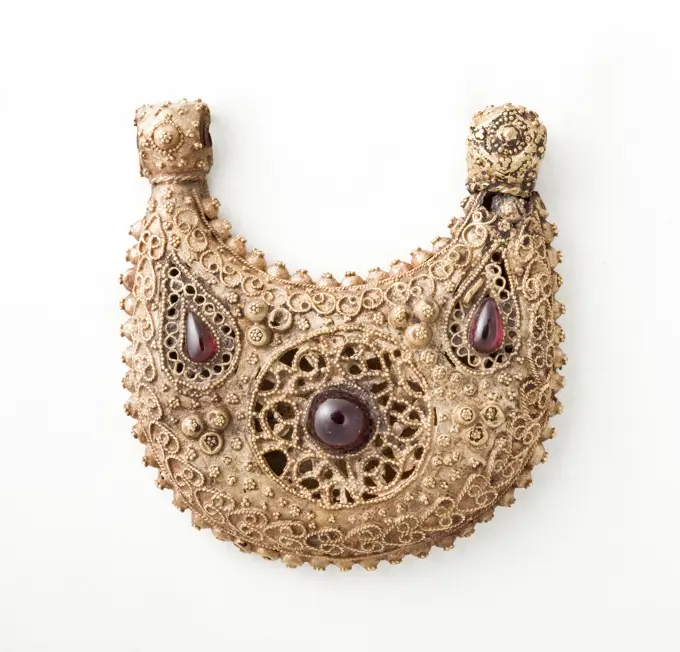
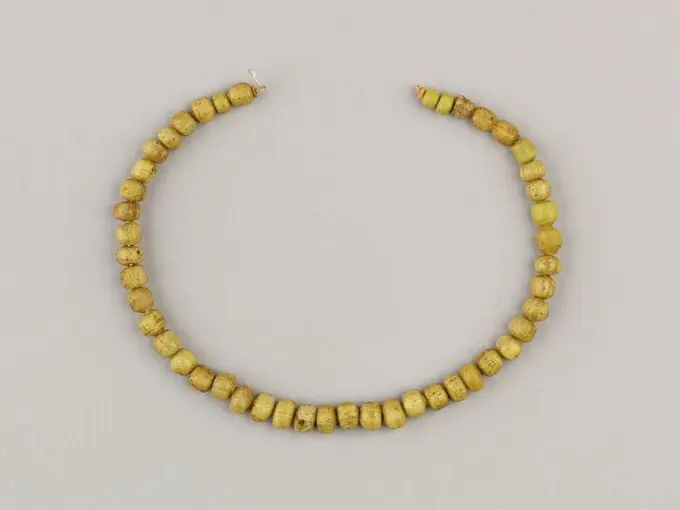
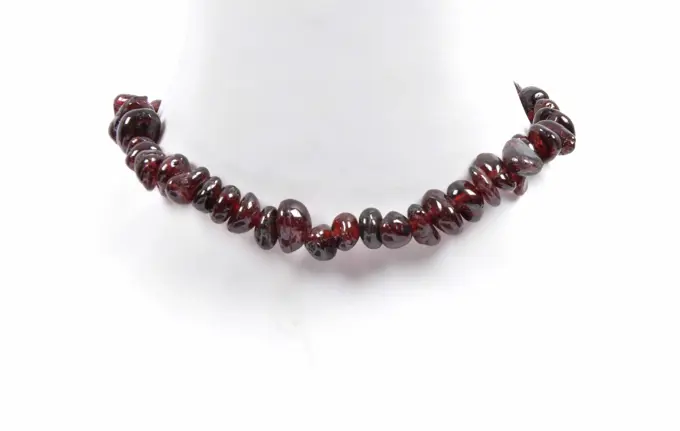
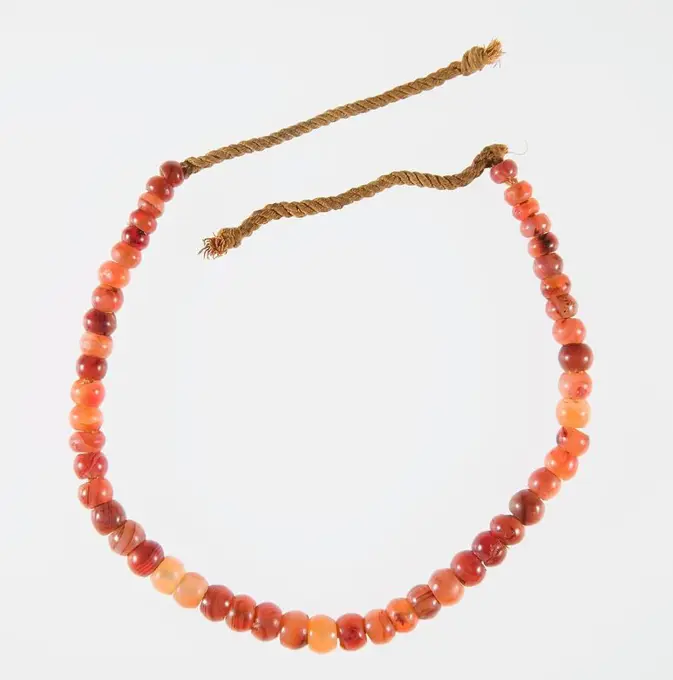
Carnelian Necklace of the Child Myt. Dimensions: L. 45 cm (17 11/16 in). Dynasty: Dynasty 11. Reign: reign of Mentuhotep II, early. Date: ca. 2051-2030 B.C..This is one of five necklaces (22.3.320-22.3.324) found on the mummy of a little girl named Myt who was buried in the temple complex of Mentuhotep II. Museum: Metropolitan Museum of Art, New York, USA.Woman necklace isolated on the white backgroundElegant necklace isolated on the white backgroundString of beads of Hapiankhtifi. Dimensions: L. 35.4 × Diam. 18 cm (13 15/16 × 7 1/16 in.). Dynasty: Dynasty 12. Date: ca. 1981-1802 B.C.. Museum: Metropolitan Museum of Art, New York, USA.Elegant necklace isolated on white backgroundWoman's neck ornament with medallion (shitoki), late 19th century, Unknown Ainu, 21 1/16 × 7 in. (53.5 × 17.78 cm), Beads (glass), plant fiber, molded metal, lacquered wood, Japan, 19th centuryCord with tassel, Medium: metallic thread, porcelain beads, glass stones, silk Technique: braided and knotted, Long cord of alternating beadwork and knotted and braided work, terminating in an urn-shaped tassel heavily studded with glass stones., Italy, Europe, late 16th-early 17th century, trimmings, Cord with tasselGold jewellery necklace with gold beads coral stones and black beads in gold chain Copyright: xVinayxParelkar/DinodiaxPhotoxNecklace with disc beads and amulets ca. 1550-1425 B.C. New Kingdom This necklace is composed of tiny disk beads interspersed with a variety of amulets, including falcons, a frog, Tawerets, a lotus, bolti fish, a shell or bullae, a hand, and a "nefer" sign. Some amulets, such as the lotus, frog, and fish, symbolize fertility, while Taweret and the falcon offer protection. The "nefer" hieroglyph conveys a good wish. This necklace was one of three stored in a small jewelry box in a man's burial.. Necklace with disc beads and amulets. ca. 1550-1425 B.C.. Carnelian, gold, silver, faience, glass, yellow stone, tin. New Kingdom. From Egypt, Upper Egypt, Thebes, Asasif, Tomb CC 37, Burial 53, Carnarvon/Carter excavations, 1911. Dynasty 18Bracelet isolated on the white backgroundPair of Bead Earrings, 20th century, 2 1/4 in. (5.72 cm), Silver ,turquoise, United States, 20th centuryCollier of Dutch pennies with Willem III, c. 1940 - c. 1950 Collier of thirty Dutch pennies with William III connected to each other through eyes and provided with a spring ring closure. Netherlands silver (metal) Collier of thirty Dutch pennies with William III connected to each other through eyes and provided with a spring ring closure. Netherlands silver (metal)Collier, Lodewijk Willem van Kooten (II), c. 1908 - c. 1911 Collier of gold, decorated with white and blue email and lapis lazuli. Amsterdam gold (metal). lapis lazuli (rock) Collier of gold, decorated with white and blue email and lapis lazuli. Amsterdam gold (metal). lapis lazuli (rock)Necklace with crystal beads. Culture: Cypriot. Dimensions: Other (71 elements): 16 3/4 in. (42.5 cm)Diameter (pendant): 3/8 × 1 1/16 in. (0.9 × 2.6 cm)Diameter (largest crystal bead): 1/2 in. (1.3 cm)Diameter (smallest chrystal bead): 1/4 in. (0.6 cm)Diameter (largest gold bead): 3/8 in. (0.9 cm)Diameter (smallesr gold bead): 1/8 in. (0.4 cm)Diameter (2 spacers): 1/16 × 3/16 in. (0.2 × 0.5 cm). Museum: Metropolitan Museum of Art, New York, USA.Pearl necklace is placed on white backgroundTurquoise necklace, turquoise, gemstones, esoteric, free plate, objectNecklace, chain. Culture: Etruscan. Dimensions: Other: 18 1/2 in. (47 cm)Other (lions): 1/2 × 3/8 × 15/16 in. (1.3 × 0.9 × 2.3 cm)Other (pendants): 7/16 × 9/16 × 1/16 in. (1.1 × 1.5 × 0.2 cm). Date: 7th-5th Century B.C.. Museum: Metropolitan Museum of Art, New York, USA.Necklace (part of a set) mid-19th century Italian, probably Naples Made to catch the eye of a shopper bent on ballroom glory, the cameos in this set of jewelry (99.33.1-.6) bear typical Grand Tour images, including (on the necklaces clasp) Guido Renis Aurora fresco of 1614 (Palazzo Pallavicini-Rospigliosi, Rome), mythological scenes, peasants of the Roman campagna, and (on both the pin and the necklace) Bertel Thorvaldsens ever-popular marble relief Night of 1815 (Thorvaldsens Museum, Copenhagen). Billing doves grace the earrings, and on one of the bracelets are a comely marine divinity and a dolphin.The rather flimsy fittings of stamped gold filigree suggest that this was costume jewelry, not meant to be worn often.. Necklace (part of a set). Italian, probably Naples. mid-19th century. Gold, shell (Cassia rufa)Gordel, anonymous, , 1620 - 1640 Belt, silver, partly gilded. The bottom belt consists of two parts, each made up of S-shaped links and closed by straight intermediate pieces. The intermediate pieces decorated with angels and flowers. The parts are interrupted by an oval, bracked bracket, and walk on one side in a battle plate with hook and on the other side at an eye. Marked on the intermediate pieces Meate sign P above HW and Ster in oval (unidentified master sign). In addition, on the final piece City Driver Adelaar with spread wings and head to the left (Frankfurt am Main). Frankfurt silver (metal) gilding Belt, silver, partly gilded. The bottom belt consists of two parts, each made up of S-shaped links and closed by straight intermediate pieces. The intermediate pieces decorated with angels and flowers. The parts are interrupted by an oval, bracked bracket, and walk on one side in a battle plate with hook and on the other side at an eye. Marked on the intermediate pieces Meate sigBraided Chain with Lotus-Shaped Finials Last quarter of the 10th-last quarter of the 15th century Indonesia (Java). Braided Chain with Lotus-Shaped Finials 50062COLLAR Y PULSERA PROCEDENTE DE ESTADOS UNIDOS - 1941 - BISUTERIA - DISEÑO DE JOSEFF OF HOLLYWOOD. Location: PRIVATE COLLECTION.Golden necklace isolated on the white backgroundPendant isolated on the white backgroundChainette (worn with the peer habit of France) in gilded metal with discounts of four decorations, from left to right: knight of the Legion of Honor, order of Charles III, officer of the Legion of Honor, order of the 'Polar Star ". Golden metal, enamel (metal technique). 1845. Paris, house of Victor Hugo. 123534-7Elegant jewellery isolated on the white backgroundfantasy necklaceElegant necklace isolated on white backgroundA necklace of artificial pearls with mother-of-pearl pieces.Part of a necklace of gold rods and emeralds. Roman, 2nd or 3rd century AD.necklace with pendants and earringsNice necklace isolated on white backgroundNecklace ca. 1991-1450 B.C. Second Intermediate Period-Early New Kingdom. Necklace. ca. 1991-1450 B.C.. Garnet, gold, carnelian, silver. Second Intermediate Period-Early New Kingdom. From Egypt, Upper Egypt, Thebes, Asasif, Carnarvon excavations. Dynasty 17-18Elegant jewellery isolated on the white backgroundGolden jewellery against gradient backgroundOriginal necklace, looks like peasHeart Scarab of Manuwai ca. 1479-1425 B.C. New Kingdom. Heart Scarab of Manuwai. ca. 1479-1425 B.C.. Green stone, gold. New Kingdom. From Egypt, Upper Egypt, Thebes, Wadi Gabbanat el-Qurud, Wadi D, Tomb of the Three Foreign Wives of Thutmose III. Dynasty 18A Flower plant on a white backgroundNecklace with 54 millefiori beads. Dimensions: Other: 12 1/2 in. (31.8 cm)Diameter (average diameter): 1/4 in. (0.7 cm)Other (Pendant bead): 9/16 x 9/16 in. (1.5 x 1.5 cm). Museum: Metropolitan Museum of Art, New York, USA.String of 27 Eye Beads. Dimensions: L. 7.8 cm (3 1/16 in.). Date: 6th-3rd century BC.Mosaic glass beads had long been popular in Egypt. The period of large intercontinental empires beginning about 500 BC initiated a period of widespread trade of these small items. These are all modern stringings; most ancient stringing patterns are lost as the string decays. Museum: Metropolitan Museum of Art, New York, USA.Golden chain isolated on the white backgroundNecklace isolated on the whiteNecklace isolated on the whiteNice necklase isolated on the whiteEarring 6th-7th century Frankish. Earring. Frankish. 6th-7th century. Gold, green and clear glass, pearls(); hoop copper alloy or base silver. Metalwork-GoldNecklace with CoralBeadsEarringPearl necklace against gradient backgroundBead pendant, with lotus flowers. Culture: Cypriot. Dimensions: Other (34 elements): 5 3/16 in. (13.2 cm)Other (average lotus): 9/16 x 1/16 x 11/16 in. (1.4 x 0.2 x 1.7 cm)Diameter (average bead): 3/16 in. (0.4 cm). Museum: Metropolitan Museum of Art, New York, USA.Belt. Culture: Transylvanian. Dimensions: H. 4.1 cm, W. 28 cm.. Date: second half 17th century. Museum: Metropolitan Museum of Art, New York, USA.Cord With Tassel (Italy); metallic thread, porcelain beads, glass stones, silkWoman necklace isolated on the white backgroundWoman's Earring 19th-early 20th century Tibet, Lhasa area. Woman's Earring. Tibet, Lhasa area. 19th-early 20th century. Gold and turquoise. JewelryNecklace 5th-7th century Frankish. Necklace 465822 Frankish, Necklace, 5th7th century, Glass, shell, glazed earthenware (faience), Overall: length of string 28 1/8 x 11/16 in. (71.5 x 1.8 cm). The Metropolitan Museum of Art, New York. Gift of J. Pierpont Morgan, 1917 (17.193.94)Beauty fashion concept with earringsCollier of chicken rings in different colors, c. 1950 - c. 1990 Collier of fifty chicken rings in the colors yellow, green, blue and red. Netherlands . Collier of fifty chicken rings in the colors yellow, green, blue and red. Netherlands .BumpWreath from Adam Mickiewiczs Funeral in Kraków HS monogramist, Jarzyna, Jancoiled necklace from faceted amber isolated top view of coiled necklace from polished faceted amber flat pieces isolated on white background Copyright: xZoonar.com/ValeryxVoennyyx 14768887Necklace of Wah. Dimensions: L. of necklace 70.5 cm (27 3/4 in.); Greatest diam. 3.2 cm (1 1/4 in.); Smallest diam. 2.5 cm (1 in.). Dynasty: Dynasty 12. Reign: reign of Amenemhat I, early. Date: ca. 1981-1975 B.C..After Wah's mummy had been partially wrapped, this necklace of silver beads was tied around the neck. The beads were strung on twelve or more strands of thread that were then twisted through ties of thick linen cord.Three other necklaces had been placed on the mummy in the same position. One of these is made of gold beads (40.3.17); one is made of blue faience beads (40.3.18); and one is strung with beads of a variety of shapes and materials (40.3.16). All these necklaces were probably worn by Wah during his lifetime. Museum: Metropolitan Museum of Art, New York, USA.Ruby And Diamond NecklaceString of beads ca. 2030-1640 B.C. Middle Kingdom. String of beads. ca. 2030-1640 B.C.. Carnelian, amethyst, hematite, garnet; modern string. Middle Kingdom. From Egypt, Northern Upper Egypt, Abadiya, Cemetery G, Tomb G6, EEF excavations 1898-99. Dynasty 12Elegant necklace isolated on the white backgroundElegant jewellery isolated on the whtie backgroundmess bone beads mess bone beads isolated on white Copyright: xZoonar.com/VVxVoennyyx 5012593Beauty Pearl Necklace on white. Studio Photo.. Beauty Pearl Necklace Studio PhotoBeads, 42. Beads, 42. Glass. GlassGolden jewellery against gradient backgroundEarring with plain loop and disc. Earring with plain loop and disc 243142Balancing of ring and spring, india, asia Copyright: xHarixMahidhar/DinodiaxPhotoxNecklace, 1800s. India. Silver; pendant: 10.2 x 7.7 cm (4 x 3 1/16 in.).Necklace, from a set of three, 13 x 13 x 5/16 in. (33.02 x 33.02 x 0.79 cm), Aluminum (), ChinaPearl necklace isolated on the whiteString of Short Cylindrical Beads. Dimensions: L. 37 cm (14 9/16 in). Dynasty: Dynasty 18. Reign: reign of Amenhotep III. Date: ca. 1390-1353 B.C.. Museum: Metropolitan Museum of Art, New York, USA.Pendant isolated on the white background	Necklace in the Form of Bells, 20th Century. India. Silver; overall: 20.4 cm (8 1/16 in.).Elegant jewellery isolated on the whtie backgroundElegant necklace isolated on white backgroundElegant necklace isolated on white backgroundBeads, 23. Beads, 23. Glass. GlassPearl necklace isolated on whiteGold Medal  isolated on white backgroundPendant on golden chain isolated on the whiteNecklace -Torque, 14 x 14 x 3 in. (35.56 x 35.56 x 7.62 cm), Silver, Chinapendant closeup with big gem at black backgroundGolden jewellery against gradient backgroundWoman necklace isolated on the white backgroundBeads, 14 Roman. Beads, 14. Roman. Glass. GlassHeart shaped prayer beads on a white backgroundAccessoryGoldsmith's art, France, 20th century. Three rows of lapis lazuli beads bracelet with turquoises and diamonds clasp, Cartier 1937.Golden jewellery against gradient backgroundPendant. Iran or Afghanistan, Khurasan, 11th century. Jewelry and Adornments. Gold with garnetsCheekpieces of a Curb Bit. Culture: German, Munich. Dimensions: H. of each 13 in. (33 cm); W. of each 4 1/4 in. (10.8 cm); Wt. 1 lb. 7.8 oz. (674.7 g). Date: 17th century.Probably used for dressage or leisure riding, this bit, of which the mouthpiece is missing, is entirely adorned with chiseled and pierced vegetal and geometrical motifs, typical of the decoration used by the spur makers in the south east of Germany in the 16th and 17th centuries. Despite their name, spur makers were not only made spurs, but also small equestrian hardware like bits, stirrups, muzzles, cavessons or curry-combs, sometimes adorned with the same intricate decoration. The object is stamped on both sides with the control mark of Munich: a monk with upraised arms, the city's heraldic device. Cities' control marks are rare on iron equestrian equipment, and Munich seems to be the only one in the 17th century to require this practice, which is also documented on contemporary stirrups (see for example 13.104).String of 46 disc beads. Dimensions: l. 21.9 cm (8 5/8 in.). Date: 30 B.C.-A.D. 364. Museum: Metropolitan Museum of Art, New York, USA.Pair of earrings isolated on the white backgroundPearl necklace isolated on whiteDragon Pendant with Sapphires, James Cromar Watt (Aberdeen, Scotland, 1862 - 1940) c. 1909Neck Guard (Nodowa) late 18th-early 19th century Japanese A nodowa is an armor component worn tied around the neck to protect the wearer's throat.. Neck Guard (Nodowa). Japanese. late 18th-early 19th century. Iron, lacquer, textile (silk), doe skin. Armor Parts-GorgetsGranat Splitterkette auf Schmuckbueste - Splintered garnet chain on bust Granat Splitterkette auf Schmuckbueste - Splintered garnet chain on bust Copyright: xZoonar.com/lantapixx 9160792